Boredom in the Time of COVID-19: The Art and Satisfaction of Writing Letters

There are no boring moments; only bored people who lack the wherewithal to explore and discover—Nina Munteanu

Cedars and roots in moss JC

Cedar trees on shore of Jackson Creek, ON (photo by Nina Munteanu)

So many of us have responded intelligently to the pandemic by respecting “lock down” measures to self-isolate and socially distance. From simply staying at home to going out less often and avoiding crowds (well, there shouldn’t be any of them right now; but there will always be an irresponsible sector who must reflex their sense of entitlement and lack of compassion).

What the pandemic and our necessary reaction to it has done more than anything is to slow us down. Many people are slowly going crazy with it: we are, after all, a gregarious species. And not all of us feel comfortable with virtual meetings. Our senses are deprived; you can’t touch and smell and feel.

But, there are wonderful ways to feed the muse and get sensual…

Cedar over water-JC

Cedar tree on Jackson Creek, ON (photo by Nina Munteanu)

My good friend and poet Merridy Cox recently told me about a Facebook friend who was feeling so bored: “GETTING SO BORED BEING AT HOME” amid the social distancing and self-isolation during the ongoing COVID-19 pandemic.

Merridy counselled her friend to go outside and watch spring unfold then find a nice place to sit and write about it. A poem, she suggested: “Little white clouds are scudding across a blue sky. Trees are budding. Birds are migrating. Don’t be bored! Get outside, find a tree and see if there is a bird in it—now, you have enough to write a poem.”

What Merridy was essentially suggesting to her friend was to look outside herself. Reach out in curiosity and discover something. Boredom will fly away with curiosity and can lead to expression through poetry (or photography, sketching, journaling, memoir, or letter writing). When you open your soul to the spirit of exploration, you will find much to discover. When you share with others, you close the gap of isolation from gregariousness and find connection through meaning. The key is in sharing.

In Gifts from the Trail, Stella Body writes that, “Being Creative is a form of self-care and caring for others. The Gift by Lewis Hyde has been cited by Margaret Atwood and many others as what inspired them to share their creative work.  Sharing is part of many religions, as part of becoming ‘holy, from the word ‘whole’.   When what you share comes from your inner creative impulse, you develop a sense of your own value as an individual.  In addition, you transcend your separateness by touching the spirit of another.  In this way, all forms of art are therapeutic.”

The key to success in this is to start with 1) motivation, move through to 2) curiosity and discovery, then on to 3) creativity and expression. Sending an old-fashioned letter and handwriting provides a rich opportunity to create and express fully. And it gives us reasons to pursue. Following these three pursuits will enrich your life and provide enrichment to others through sharing.

Pine white woodpecker hole5

Woodpecker hole in white pine tree, ON (photo by Nina Munteanu)

Step 1, MOTIVATION: Find several people you wish to communicate with on a deeper level and wish to entertain and inform. Think beyond your Facebook or Twitter audience (though, I do draw inspiration from wishing to share my photography with them). They could even be your next door neighbour! Of course, you need something to share; that’s where Step 2 comes in.

Step 2, CURIOSITY and DISCOVERY: Find a place that you can observe; the natural world is incredibly suited to discovery. Look high and low, slow your pace and use all your senses. Listen. Smell. Feel. Remember to look up. And look down on the ground. Nature hides some of her most precious gems there. Find something familiar and find something new. Invest in a guidebook.

JournalWritert FrontCover copy 2Research what you’ve found on the Internet; find out more about something you’ve observed. For instance, why does the willow have such a shaggy bark? Why do alders grow so well near the edges of streams? What role do sowbugs play in the ecosystem? What do squirrels eat? What is that bird doing on my lawn? Start a phenology study (how something changes over the seasons). Keep tabs on the birds you see and what they’re doing. You can find several examples of mine in the links below.

Step 3, CREATIVITY and EXPRESSION: Depending on your relationship with people you are writing to and their own interests, you may tailor your letters with printed pictures, sketches and drawings, maps, quotes, and news clippings. This part can be really fun and can draw on all your creative talents. Let what you see and discover inspire you. Find a “story” in it and share it with someone. You can find more examples on ways to express yourself in my guidebook on writing journals: The Journal Writer.


Cedar bench river-JC

Bench next to cedar trees on Jackson Creek, ON (photo by Nina Munteanu)

Exploring and creativity don’t just cure boredom; they are good for your health:

EcologyOfStoryExpressive writing — whether in the form of journaling, blogging, writing letters, memoir or fiction — improves health. Over the past twenty years, a growing body of literature has shown beneficial effects of writing about traumatic, emotional and stressful events on physical and emotional health. In control experiments with college students, Pennebaker and Beall (1986) demonstrated that college students who wrote about their deepest thoughts and feelings for only 15 minutes over four consecutive days, experienced significant health benefits four months later. Long term benefits of expressive writing include improved lung and liver function, reduced blood pressure, reduced depression, improved functioning memory, sporting performance and greater psychological well-being. The kind of writing that heals, however, must link the trauma or deep event with the emotions and feelings they generated. Simply writing as catharsis won’t do.

In Gifts from the Trail, Stella Body writes: “Far more than a quick Selfie, a written response explores the range of the experience.  It both saves an instant from being lost in time, and holds on to the live matter of the writer’s feeling.  If shared, both writer and audience can return to that moment and draw healing from it.  What’s more, as many studies on volunteer work have shown, the process of sharing is a healing act.”

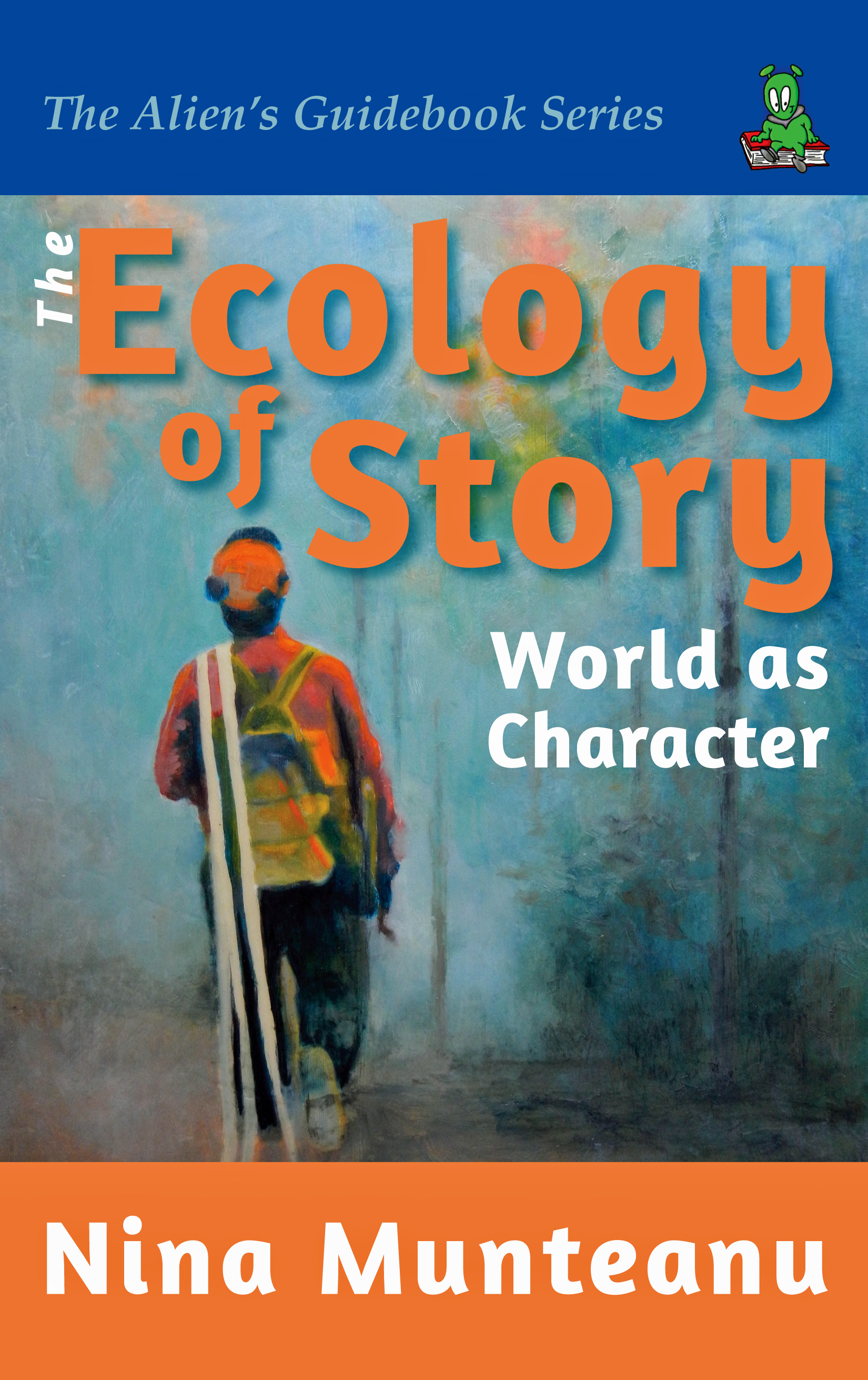
In Part 1 of my writing guidebook The Ecology of Story: World as Character, I talk about many of the interesting things in the natural world around us. In Part 2, I give many of these things meaning in story. The guidebook also has several writing exercises to capture the muse.

FictionWriter-front cover-2nd ed-webIn Chapter K of my writing guidebook The Fiction Writer: Get Published, Write Now!, I talk about writing what you know and what you discover. It’s more than you think. “In the 19th-century, John Keats wrote to a nightingale, an urn, a season. Simple, everyday things that he knew,” say Kim Addonizio and Dorianne Laux in The Writer’s Guide to Creativity. “Walt Whitman described the stars, a live oak, a field…They began with what they knew, what was at hand, what shimmered around them in the ordinary world.”

My journal writing guidebook The Journal Writer: Finding Your Voice provides advice and exercises on how to create a positive experience in observing, creating, journaling and letter or memoir writing.


Restoring the Lost Art of Handwriting
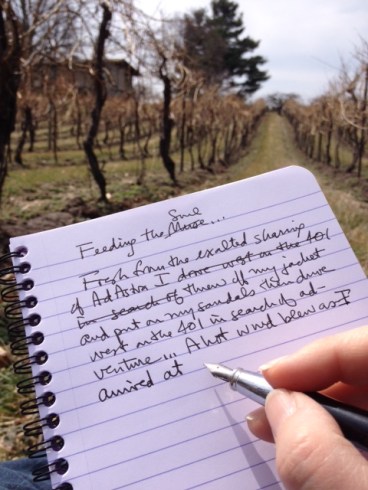
writing-notebook02

Nina writing in Niagara on the Lake (photo by Nina Munteanu)

Handwriting is a wonderful thing. It slows us down. It is a sensual and intimate way for us to express ourselves. I love my handwriting, especially when I am using my favorite pen (my handwriting changes depending on the pen), my Cross fountain pen — usually black. When you use a pen or pencil to express yourself you have more ways to express your creativity. Think of the subtleties of handwriting alone: changing the quality and intensity of strokes; designing your script, using colors, symbols, arrows or lines, using spaces creatively, combining with drawing and sketches. In combination with the paper (which could be lined, textured, colored graphed, etc.), your handwritten expression varies as your many thoughts and moods.

The very act of handwriting focuses you. Writing your words by hand connects you more tangibly to what you’re writing through the physical connection of pen to paper. Researchers have proven that just picking up a pencil and paper to write out your ideas improves your ability to think, process information and solve problems. The actual act of writing out the letters takes a little more work in your brain than just typing them on a keyboard, and that extra effort keeps your mind sharp. Researchers have also shown that writing something out by hand improves your ability to remember it. Handwriting improves memory, increases focus, and the ability to see relationships.

Handwriting fuses physical and intellectual processes. American novelist Nelson Algren wrote, “I always think of writing as a physical thing.” Hemmingway felt that his fingers did much of his thinking for him.
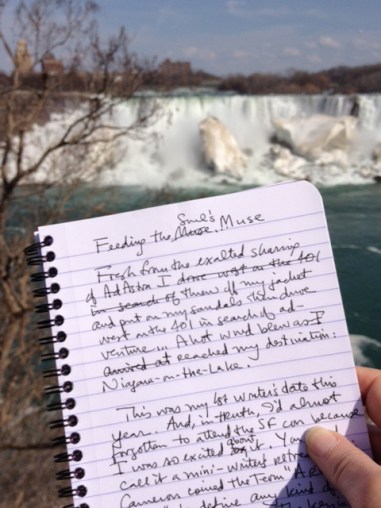
writing-notebook04According to Dr. Daniel Chandler, semiotician at Aberystwith University, when you write by hand you are more likely to discover what you want to say. When you write on a computer, you write “cleanly” by editing as you go along and deleting words (along with your first thoughts). In handwriting, everything remains, including the words you crossed out. “Handwriting, both product and process,” says Chandler, “is important … in relation to [your] sense of self.” He describes how the resistance of materials in handwriting increases the sense of self in the act of creating something. There is a stamp of ownership in the handwritten words that enhances a sense of “personal experience.”
Path-CreditRiver-oct2018

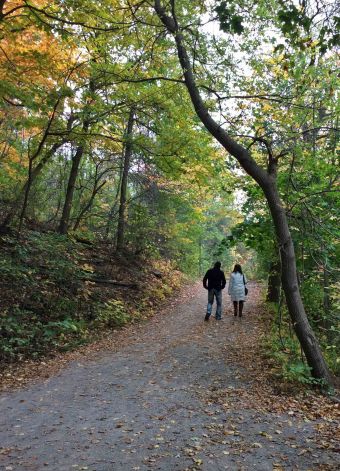
Path along Credit River, ON (photo by Nina Munteanu)

I know this is true in my own writing experience. This is why, although I do much of my drafting on the computer, I find that some of my greatest creative moments come to me through the notebook, which I always keep with me. Writing in my own hand is private and resonates with informality and spontaneity (in contrast to the fixed, formal look and public nature of print). Handwriting in a notebook is, therefore, a very supportive medium of discovery and the initial expression of ideas.

Develop interest in life as you see it; in people, things, literature, music—the world is so rich, simply throbbing with treasures, beautiful souls and interesting people. Forget yourself—Henry Miller


References:

Munteanu, Nina. 2009. The Fiction Writer: Get Published, Write Now. Starfire World Syndicate. 294pp

Munteanu, Nina. 2013. The Journal Writer: Finding Your Voice. Pixl Press. 172pp.

Munteanu, Nina. 2019. The Ecology of Story: World as Character. Pixl Press. 200pp.


Links:

The Ecology of Story: Revealing Hidden Characters of the Forest
Ecology, Story & Stranger Things
The Little Rouge in Winter: Up Close and Personal
The Phenology of the Little Rouge River and Woodland
White Willow–A Study
The Yellow Birch–A Study


nina-2014aaa

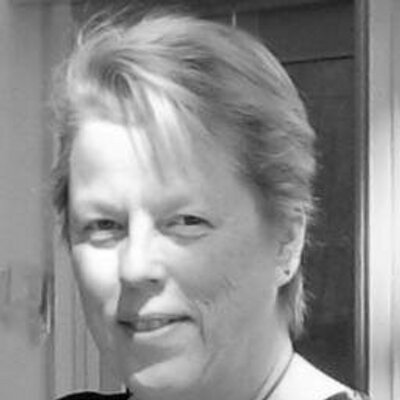
Nina Munteanu is a Canadian ecologist / limnologist and novelist. She is co-editor of Europa SF and currently teaches writing courses at George Brown College and the University of Toronto. Visit www.ninamunteanu.ca for the latest on her books. Nina’s bilingual “La natura dell’acqua / The Way of Water” was published by Mincione Edizioni in Rome. Her non-fiction book “Water Is…” by Pixl Press (Vancouver) was selected by Margaret Atwood in the New York Times ‘Year in Reading’ and was chosen as the 2017 Summer Read by Water Canada. Her novel “A Diary in the Age of Waterwill be released by Inanna Publications (Toronto) in June 2020.


Author’s Retreat: Changing the World with Your Mind and Faith

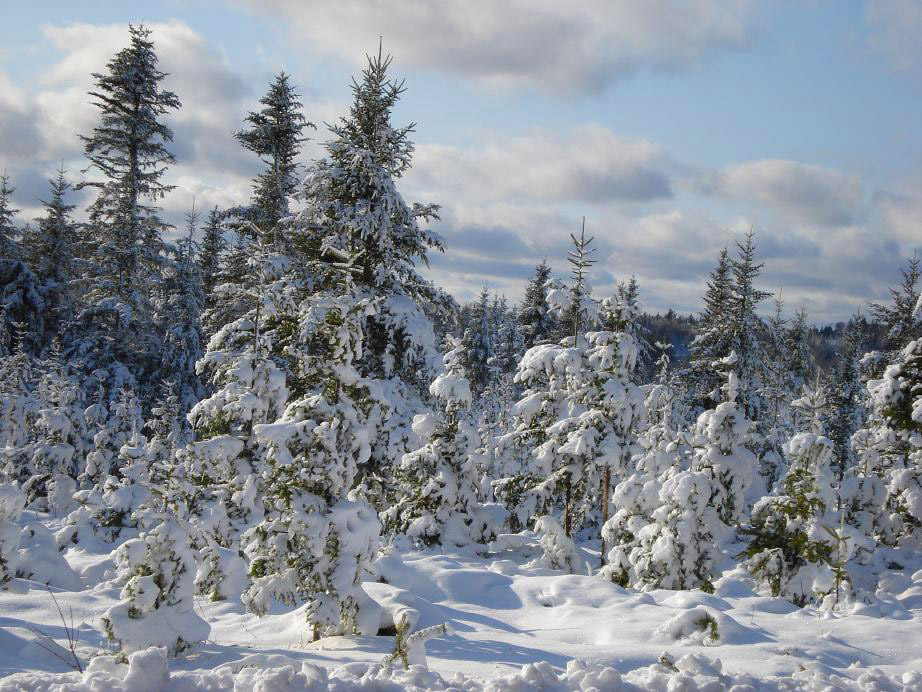
Snow hoar frost

Hoar frost-covered snow pillows, near Manning Park, B.C. (photo by Nina Munteanu)

Some time ago I went on an author’s retreat at my friend’s cabin near Manning Park in British Columbia. Some of them were going skiing at the nearby ski hill and Anne thought I’d appreciate the rustic setting as an ideal place to write. I leapt at the chance. I had lots of writing to do and had set myself up for quite a work schedule: I’d promised ten articles and some excerpts to my publisher, three articles to the online magazine I write for, a review of my manuscript contract with my other publisher, and to write as much as possible on my prequel.

zermatt-hut01

Zermatt in winter (photo by Nina Munteanu)

I’d set myself up for quite a work schedule…Hey, didn’t I say that already?…There was no internet access at the cabin. In fact, no cell phone coverage either. We were pretty isolated from the rest of the world—except for the bustling ski hill not far from us…

Then my computer refused to work…

The ski hill beckoned…

The snowshoes came out…

The sun blazed…

And the hoarfrost on the frozen lake sparkled like jewels in the snow…

…My promise to myself to write melted like giant snow crystals in the sun as I indulged in outdoor walks and diverting conversations with my friend, Anne.

Later in the evening, after the boys finally got the fire going, Anne and I got to talking about the book I’d leant her—Calculating God, by Robert J. Sawyer. We were soon discussing God and faith; what it meant to have faith in oneself and in others and ultimately what it meant to have someone show faith in you.

After returning from Manning, I ran across an article in Time that featured Dr. Andrew Newberg (professor of radiology, psychology and religious studies at the University of Pennsylvania) who’d recently authored the book, How God Changes Your Brain. What I found incredibly interesting was the connection made between faith and well-being.

manning-nina

Nina Munteanu explores with friend Kai near Manning Park

According to Newberg and other neuroscientists, when people engage in prayer or meditation they engage the frontal lobes of the brain, since they govern focus and concentration. In fact, if you pray or meditate long enough you may change your brain permanently; creating thicker frontal lobes. “People who describe themselves as highly spiritual tend to exhibit an asymmetry in the thalamus—a feature that other people can develop after just eight weeks of training in meditation skills,” says Newberg. Better functioning frontal lobes help boost memory, by the way.

manning-anne-angel

Angel-winged Anne fishes for a treat for her black lab

That faith can play a key role in how our mind and body regulate our general health and determine our own well-being is proven in experiments involving “placebos”. First described in the medical literature in the 1780s, the placebo effect has been documented in some amazing examples of mind-over-matter. Time writer Jeffrey Kluger in his February 23, 2009 article “The Biology of Belief” describes how Parkinson’s disease patients who underwent a sham surgery that they were told would boost the low dopamine levels responsible for their symptoms actually experienced a dopamine bump. Newberg described a cancer patient who regulated his tumors based on his belief of a drug’s efficacy (his tumor shrank).

manning-shrub

Hoar-frost covered shrub

In a post about Brain-Mind-Interfaces (BMI) on The Alien Next Door, I discussed the notion of using our minds to control computers and robots either inside us or close to us and the current technology that is making that possible. Then my good friend, Margaret, told me about this workshop on neurotherapy that she’d attended given by a Dr. Paul Swingle in Vancouver. “He uses biofeedback for the brain to treat attention deficit and hyperactivity

manning-hoer frost-close

Hoar frost covered buds

disorders, epilepsy, anxiety, migraine, trauma, and depression,” says Margaret. “It’s all based on the idea that we can control our brain activity and that through training, the brain can learn to modify its own electrical patterns for more efficient processing or to overcome various states of dysfunction.”


Neal Krause, a sociologist and public health expert at the University of Michigan, found that people who maintain a sense of gratitude for what’s going right in their lives have a reduced incidence of depression. In another study, he found that people who believe their lives have meaning live longer than people who don’t. Victor Frankl could have told him that!

p.s. speaking of belief, I got all my writing done in the end! My computer decided to behave itself and I got very productive…especially after the chocolate cake.

zermatt-alps03

Zermatt Alps (photo by Nina Munteanu)


nina-2014aaa

Nina Munteanu is a Canadian ecologist / limnologist and novelist. She is co-editor of Europa SF and currently teaches writing courses at George Brown College and the University of Toronto. Visit www.ninamunteanu.ca for the latest on her books. Nina’s bilingual “La natura dell’acqua / The Way of Water” was published by Mincione Edizioni in Rome. Her non-fiction book “Water Is…” by Pixl Press (Vancouver) was selected by Margaret Atwood in the New York Times ‘Year in Reading’ and was chosen as the 2017 Summer Read by Water Canada. Her novel “A Diary in the Age of Waterwill be released by Inanna Publications (Toronto) in June 2020.

Age of Water Podcast: Nina Reads from “Water Is…”

AoW Logo-smallWe are now living in the Age of Water. Water is the new “gold”, with individuals, corporations and countries positioning themselves around this precious resource. Water is changing everything. The Age of Water Podcast covers anything of interest from breaking environmental news to evergreen material. This also includes human interest stories, readings of eco-literature, discussion of film and other media productions of interest.

In this episode of Age of Water, Nina reads from her book “Water Is…The Meaning of Water”, a celebration of the varied faces of water and what they mean to us.


Water is emerging as one of the single most important resources of Planet Earth. Already scarce in some areas, it has become the new “gold” to be bought, traded, coveted, cherished, hoarded, and abused worldwide. It is currently traded on the Stock Exchange…

Water Is-COVER-webNina Munteanu’s Water Is…”represents the culmination of over twenty-five years of dedication as limnologist and aquatic ecologist in the study of water. As a research scientist and environmental consultant, Nina studied water’s role in energizing and maintaining the biomes, ecosystems, and communities of our precious planet.

During her consulting career for industry and government, Nina discovered a great disparity between humanity’s use, appreciation and understanding of water. This set in motion a quest to further explore our most incredible yet largely misunderstood and undervalued substance. Part history, part science and part philosophy and spirituality, Water Is…” combines personal journey with scientific discovery that explores water’s many “identities” and ultimately our own.


DS-2008-16 copy

Nina Munteanu kayaks in Desolation Sound off coast of British Columbia (photo by H. Klassen)

nina-2014aaa

Nina Munteanu is a Canadian ecologist / limnologist and novelist. She is co-editor of Europa SF and currently teaches writing courses at George Brown College and the University of Toronto. Visit www.ninamunteanu.ca for the latest on her books. Nina’s bilingual “La natura dell’acqua / The Way of Water” was published by Mincione Edizioni in Rome. Her non-fiction book “Water Is…” by Pixl Press (Vancouver) was selected by Margaret Atwood in the New York Times ‘Year in Reading’ and was chosen as the 2017 Summer Read by Water Canada. Her novel “A Diary in the Age of Waterwill be released by Inanna Publications (Toronto) in June 2020.

Age of Water Podcast: Interview with Candas Jane Dorsey

CandasJaneDorsey

Candas Jane Dorsey with a friend

AoW Logo-smallWe are now living in the Age of Water. Water is the new “gold”, with individuals, corporations and countries positioning themselves around this precious resource. Water is changing everything. The Age of Water Podcast covers anything of interest from breaking environmental news to evergreen material. This also includes human interest stories, readings of eco-literature, discussion of film and other media productions of interest.

Join the discussion!

In this episode of Age of Water, we join award-winning Canadian author Candas Jane Dorsey in Calgary, Alberta, where she talks about “Ice and other stories”, teaching at university, what eco-fiction means, and how writers can be “sneaky.”


CandasJaneDorsey2

Candas Jane Dorsey

CanCandas Jane Dorsey is an award-winning Canadian author of novels, short stories, and poetry. She also served as editor / publisher of several literary presses.

Ice by CandasJaneDorseyShe is best known for her science fiction writing including the novels Black Wine and A Paradigm of Earth, and has also published poetry and short stories, including her well-known short-story collection Machine Sex: And Other Stories. Her latest collection of short stories Ice and other Short Stories spans thirty years of writing. Candas teaches writing and communications at MacEwan University. She was founding president of SF Canada and was president of the Writers Guild of Alberta. Candas was awarded the Province of Alberta Centennial Gold Medal award for artistic achievement and community work and the WGA Golden Pen Award for Lifetime Achievement in the Literary Arts.


DS-2008-16 copy

Nina Munteanu kayaks in Desolation Sound, British Columbia (photo by H. Klassen)


nina-2014aaa

Nina Munteanu is a Canadian ecologist / limnologist and novelist. She is co-editor of Europa SF and currently teaches writing courses at George Brown College and the University of Toronto. Visit www.ninamunteanu.ca for the latest on her books. Nina’s bilingual “La natura dell’acqua / The Way of Water” was published by Mincione Edizioni in Rome. Her non-fiction book “Water Is…” by Pixl Press (Vancouver) was selected by Margaret Atwood in the New York Times ‘Year in Reading’ and was chosen as the 2017 Summer Read by Water Canada. Her novel “A Diary in the Age of Waterwill be released by Inanna Publications (Toronto) in June 2020.


Finding the Right Time and Place to Write

Look and you will find it—what is unsought will go undetected —Sophocles


Beaches-snow01

Snow in the Beaches, Ontario

During a time when I had a demanding job as an scientist with an environmental consulting job, was a devoted wife and mother and community volunteer, I wrote and successfully marketed five books, over a dozen short stories and many articles and reviews. Some people, including my publishers, thought I never slept (true) or had cloned myself (possibly). They couldn’t believe my productivity when I was so busy with life.

But I did what I did, because I’d worked out a system. One that I could live by. One that fit my lifestyle. One created out of respect for my art as part of my “busy” life of commitments.

The truth of it is that we all lead busy lives. If you are going to finish that novel you’ve been working on over the years or book of poems sitting in the bottom dresser drawer, you need to make a commitment. Aside from giving your art the respect it deserves, it comes down to creating a time and place to write.

It starts with being realistic about your daily schedules and routines and inclinations and picking a time and place accordingly. Try to be consistent. It’s actually best to create a routine related to both time and place; the key is to be realistic about it. Don’t fight your inclinations or habits; instead, build your writing into your lifestyle. This will ensure success.

nina-smiling-close

Nina Munteanu teaching in Mahone Bay, NS

Choose a Sacred Time

Finding the time to write is critical to succeeding. If you don’t dedicate time to write, you won’t write. Believe me, you won’t. Make it sacred.

Writer Louise DeSalvo shared a common story about her experience: “Many people I know who want to write but don’t (my husband, Ernie, for example) or who want to write more than they have but say they can’t find the time (my friend Marla) have told me that taking the time to write seems so, well, self-indulgent, self-involved, frivolous even. And that finding the time to write—even a diary, much less fiction or memoir or poetry—in their busy schedules is impossible. I’ll write when I have the time, they say.”

It doesn’t work that way. You don’t find time; you must create it. Writing of any kind is a commitment you make to yourself. So, choose a time that’s right for you. If you’re a morning person, don’t pick the end of the day when you don’t function as well. Instead, pick the early morning to write, a time before everyone else gets up and the day’s distractions pile up.

It’s actually best to create a routine related to time of the day (e.g., fixed time such as every morning or right after supper) or based on some other constant in your life, say the school calendar or your daily activities. The key is to be realistic about the time(s) you’ve chosen. In other words, your goals should be realistic and realizable.

The second part of the commitment is sharing it with your family and friends so that they will respect your sacred writing time. By sharing how important it is to you, you also give them the gift of sharing the experience with you and they are more likely to respect your time alone to write. This is also why choosing a routine makes more sense; it is something your family and friends will better remember and abide by. Making it easy for others is part of making it easy for you.

Find Your Own Rhythm

the beach-2013

The Beaches boardwalk (photo by Nina Munteanu)

There’s no rule for when and how often you write. Because frequency and schedule of writing depends on the kind of writing you do (e.g., novel, short stories, articles, research) and on your own rhythms, you must decide what works best.

Most writers recommend that you commit to a regular writing schedule that is realistic to your overall routine and biorhythms. Some recommend you write in the morning, after a refreshing sleep; others suggest you write at night, at the end of the day when your memories are more fresh with the day’s activities and stimulations. Yet others suggest you take time out during the day to jot down relevant experiences as close to the time as the muse hits you, then spend some time at the end of the day compiling it into your work.

In the end, it’s up to you to choose what works for you and your own rhythms. When is the best time for you to write? And for how long or how many pages? Once you decide, stick to that schedule.

Choose a Sacred Place

Writing is a reflective activity that requires the right environment. The best environment is a quiet one with no interruptions and where you are alone. A reflective environment will let you find a connection with your muse. You need a place where you can relax and not worry about someone barging in or other things distracting you from your reflections. You should also feel physically comfortable and the place should meet your time requirements.

Because the suitability of a place can change with the time of day, learn the rhythms that affect the place you wish to write in. For example, the kitchen may be the centre of activity during the day but an oasis of quietude during the evening. Similarly, learn what kind of environment stimulates and nurtures your writing. Does music help or do you need complete quiet? Do you respond to nature’s soft breezes and sounds or do you prefer to surround yourself with the anonymous murmur of a crowded café for company?

C'est La Vie Cafe

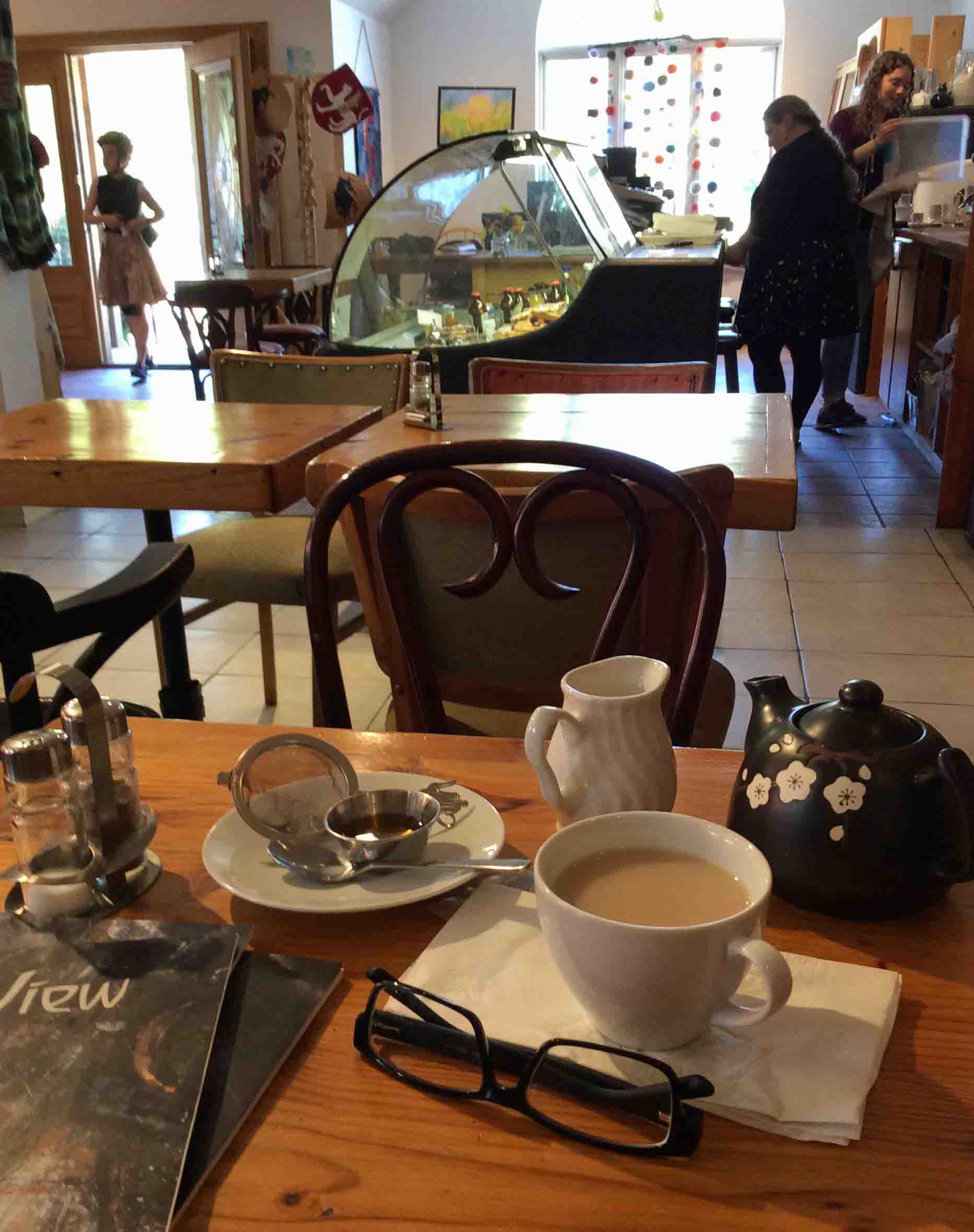
a coffee shop in Val David, Quebec (photo by Nina Munteanu)

Places that work for me include the local coffee shop, where its desultory conversations and laughter—and wonderful smells of fresh coffee—provide a pleasant living-landscape for my muse. I also enjoy my daily walk with a notebook or iPad in the park along the river near my house. I teach writing at the University of Toronto St George campus in downtown Toronto and just recently discovered an enclave that excited my muse. The outside breezeway at Knox College, with arched ceiling and columns, adorned with hanging plants, is pure magic. The breezeway cuts through an outside courtyard of gardens and yard, populated with songbirds and the gentle rustle of a refreshing breeze. Benches and small tables and chairs line the breezeway, ensuring a writer’s sanctuary.

Where you write may reflect what you’re writing and vice versa. To some extent, you are environment and environment is you. You might try a few places first and see what happens to your muse. What you write while sitting under an apple tree in the breeze hearing the birds singing may differ from what you write while sitting in your living room by the crackling fireplace with music playing or sitting at your desk in your bedroom in total silence or in a crowded café surrounded by cheerful bustle.

Again, as with your choice of time, tell your family and friends about your sacred place. Provide rules, if you have to. Let’s say it’s a desk in the study. You may, for instance, let others know that your “mess” is part of a work in progress, perhaps even explain a little about it so they understand the nature of what you’re doing and why it should not be touched or moved or used, even while you are away from it. This will ensure that they respect your things and what you’re doing.

In the end, it comes to finding the right integration and balance of time and place. Letting others know of your choices is equally important; this will ensure that they can help you, not hinder you in your writing. While writing is to a large extent an activity done in solitude, the journey is far from secluded. Ensure that you have a good support network.

This article is an excerpt from my fiction writing guidebook “The Fiction Writer: Get Published, Write Now!” (Starfire, 2009).

nina-2014aaa

Nina Munteanu is a Canadian ecologist / limnologist and novelist. She is co-editor of Europa SF and currently teaches writing courses at George Brown College and the University of Toronto. Visit www.ninamunteanu.ca for the latest on her books. Nina’s bilingual “La natura dell’acqua / The Way of Water” was published by Mincione Edizioni in Rome. Her non-fiction book “Water Is…” by Pixl Press (Vancouver) was selected by Margaret Atwood in the New York Times ‘Year in Reading’ and was chosen as the 2017 Summer Read by Water Canada. Her novel “A Diary in the Age of Waterwill be released by Inanna Publications (Toronto) in June 2020.


Reminiscing on 2019…

Diary Water cover finalThis week is a wonderful time to reflect on the past year, 2019. It’s also a good time to be thankful for the things we have: loving family, meaningful friendships, pursuits that fulfill us and a place that nurtures our soul.

It’s been a very good year for my writing…and my soul…

Last year I received a writer’s dream Christmas gift: a signed contract with Inanna Publications to publish my ninth novel: “A Diary in the Age of Water” about four generations of women and their relationship with water during a time of extreme climate change. The book will be released by Inanna in May 2020 with a launch in Toronto on May 26th at Queen Books as part of the Toronto International Festival of Authors. The book is now available on Amazon.ca for pre-order!

Publications   

LBM 2019 ClimateInCrisis2019 saw several of my publications come out. In January 2019 the reprint of my story “The Way of Water” was published by Little Blue Marble Magazine. It will reappear in a print and web anthology devoted to climate fiction called “Little Blue Marble 2019: Climate in Crisis” on December 27, 2019. That will be the sixth time “The Way of Water” has been published!

EcologyOfStoryImpakter Magazine also published my article “How Trees Can Save Us,” an essay on five writers’ perspectives on trees and humanity’s relationship with them.

In June, I published the 3rd guidebook in my Alien Writing Guidebook series—called “The Ecology of Story: Worlds as Character” with Pixl Press in Vancouver. The launch on July 4th at Type Books was well attended with presentations by several local writers and artists.

Nina GroupOfSevenReimagined

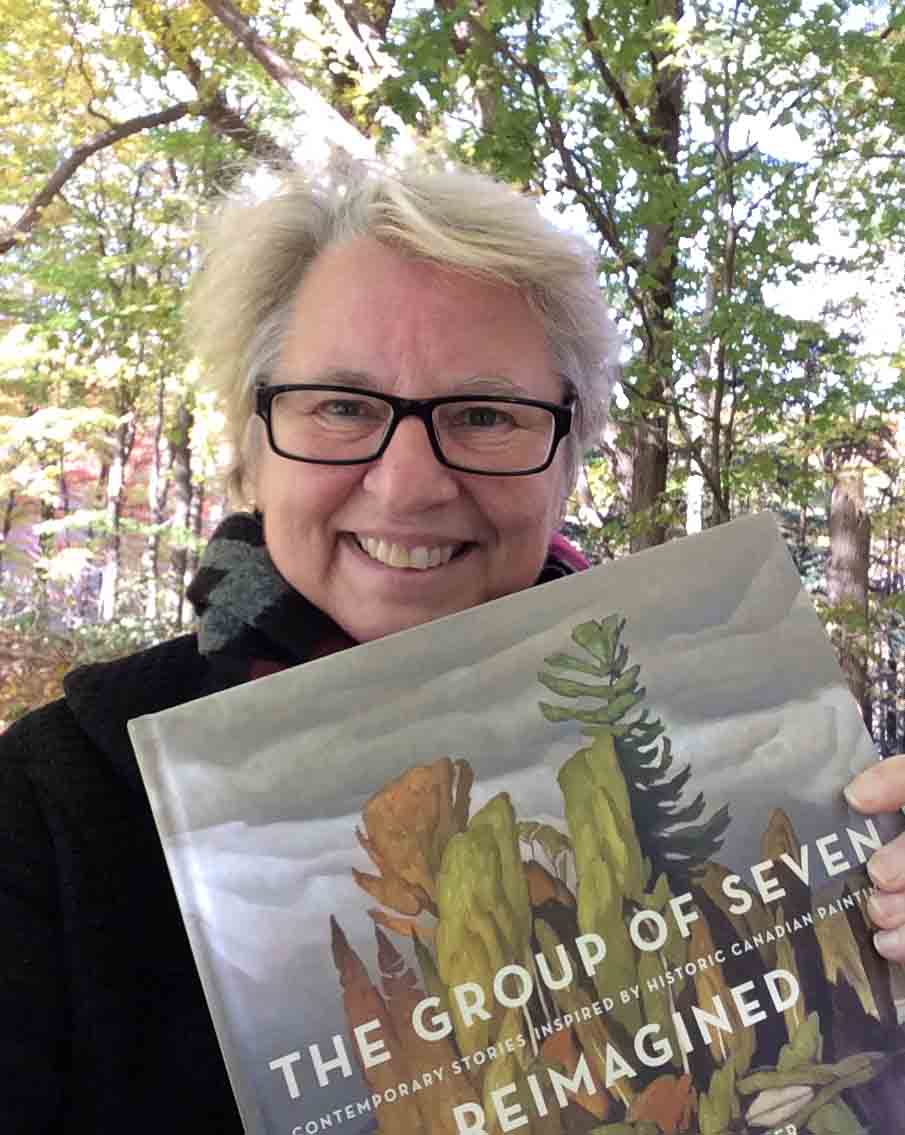
Nina Munteanu with The Group of Seven Reimagined

I was commissioned along with twenty other writers to write a piece of flash fiction for a commemorative anthology to the Group of Seven, entitled “The Group of Seven Reimagined,” with Heritage House in Vancouver.

I’d never written flash fiction before and it was both exciting and challenging to write. I was asked to pick an artist’s piece as inspiration for a flash fiction story. The beautiful hardcover book was released October 2019.

October also saw another of my pieces published. I was asked to contribute something to the Immigrant Writer’s Association’s first anthology, entitled “Building Bridges,” about the immigrant’s experience in Canada. While I’m not an immigrant, I did share my parents’ experience who had immigrated to Canada from France. I wrote a piece on the hero’s journey.


Age of Water Podcast 

AgeOfWater-HomePage

On November 22, 2019, co-host Claudiu Murgan and I launched the Age of Water podcast.  The podcast covers anything of interest from breaking environmental news to evergreen material on water and the environment. We interview scientists, journalists, writers, academia and innovators who share their knowledge and opinions about the real state of the environment and what committed individuals and groups are doing to make a difference. We talk about the problems and we talk about the solutions.

Appearances & Media / News

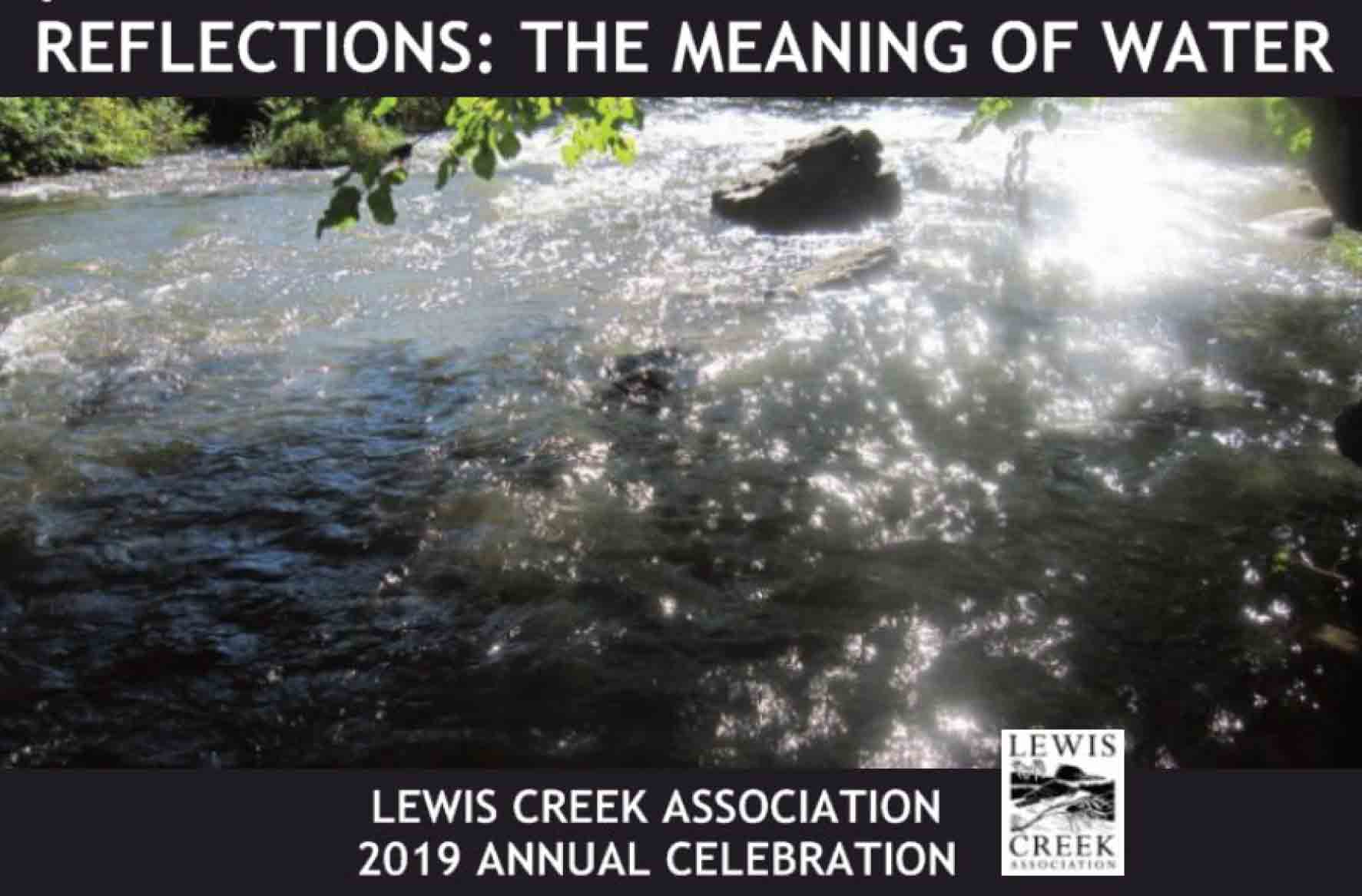
On June 22, I traveled to Port McNicoll at Georgian Bay to help give a writing intensive, hosted by publisher Cheryl Antao-Xavier at IOWI. I was also invited to speak at The Word is Wild Literary Festival in October. The event took place in Cardiff, in the Highlands of Ontario. In late October, I traveled with friend and editor Merridy Cox to Vermont to give a presentation on water to the Lewis Creek Association. Entitled “Reflections: The Meaning of Water”, the talk focused on our individual connection with water. I will be reprising this talk at several venues this year.

Nina Munteanu

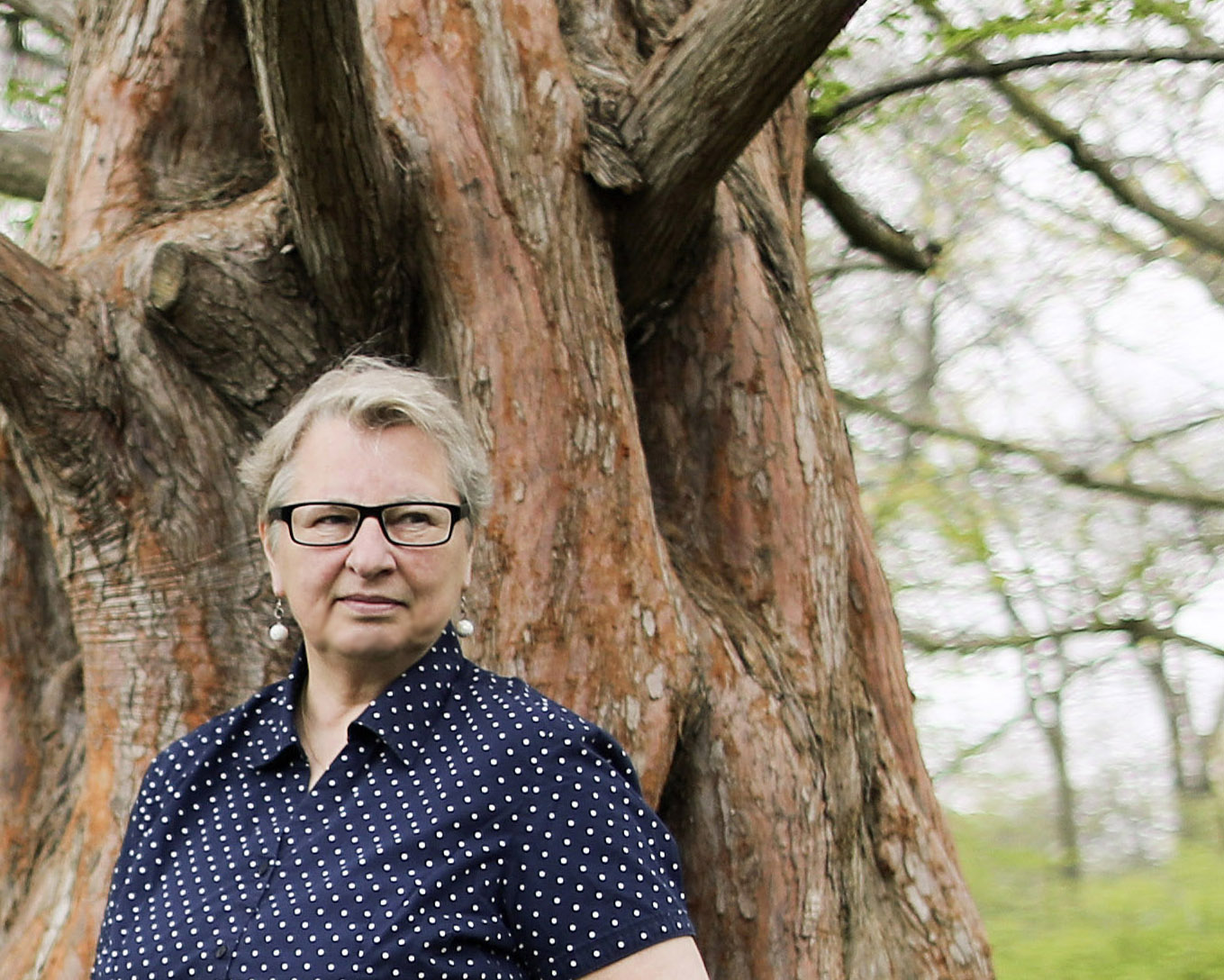
Nina Munteanu with a metasequoia in the Beaches (photo by Richard Lautens)

I was also featured in the news a few times. The Toronto Star asked me to answer two questions about climate change and the Vancouver Sun published an Oped of mine entitled “Why Women Will Save the Planet.”

Research & Adventure

Cedar Giants copy

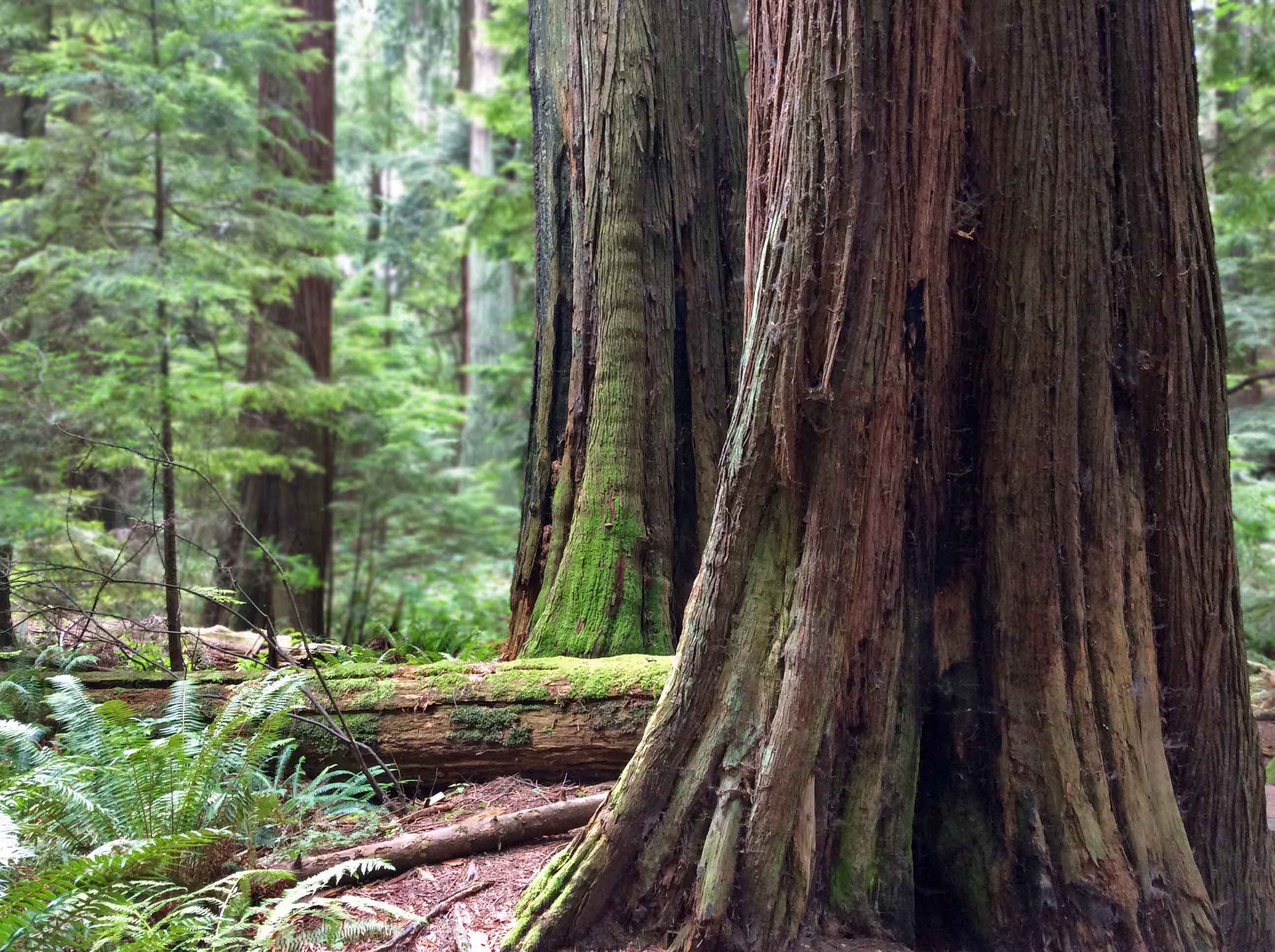
Giant red cedars in Lighthouse Park (photo by Nina Munteanu)

In Summer 2019 I travelled to British Columbia to visit friends and family in Vancouver and elsewhere. Following a dream of mine, I travelled with good friend Anne to Port Renfrew on Vancouver Island to see the ancient forests and the west coast. I had wanted to see these old-growth forests for some time since I’d been to Carmanah many years ago. The ancient forests were magnificent and breathtaking and so nourishing for the soul. Recognizing these forests as living cathedrals, I felt a deep reverence. The silent giants rose from wide buttressed bases into the mist like sentinels, piercing the heavens. A complex tangle of beauty instinct whispered in the breeze with the pungent freshness of pine, cedar and fir. Anne and I even had a chance to hug Big Lonely Doug, the second tallest Douglas fir tree in Canada.

Nina looking up dougfir copy 3

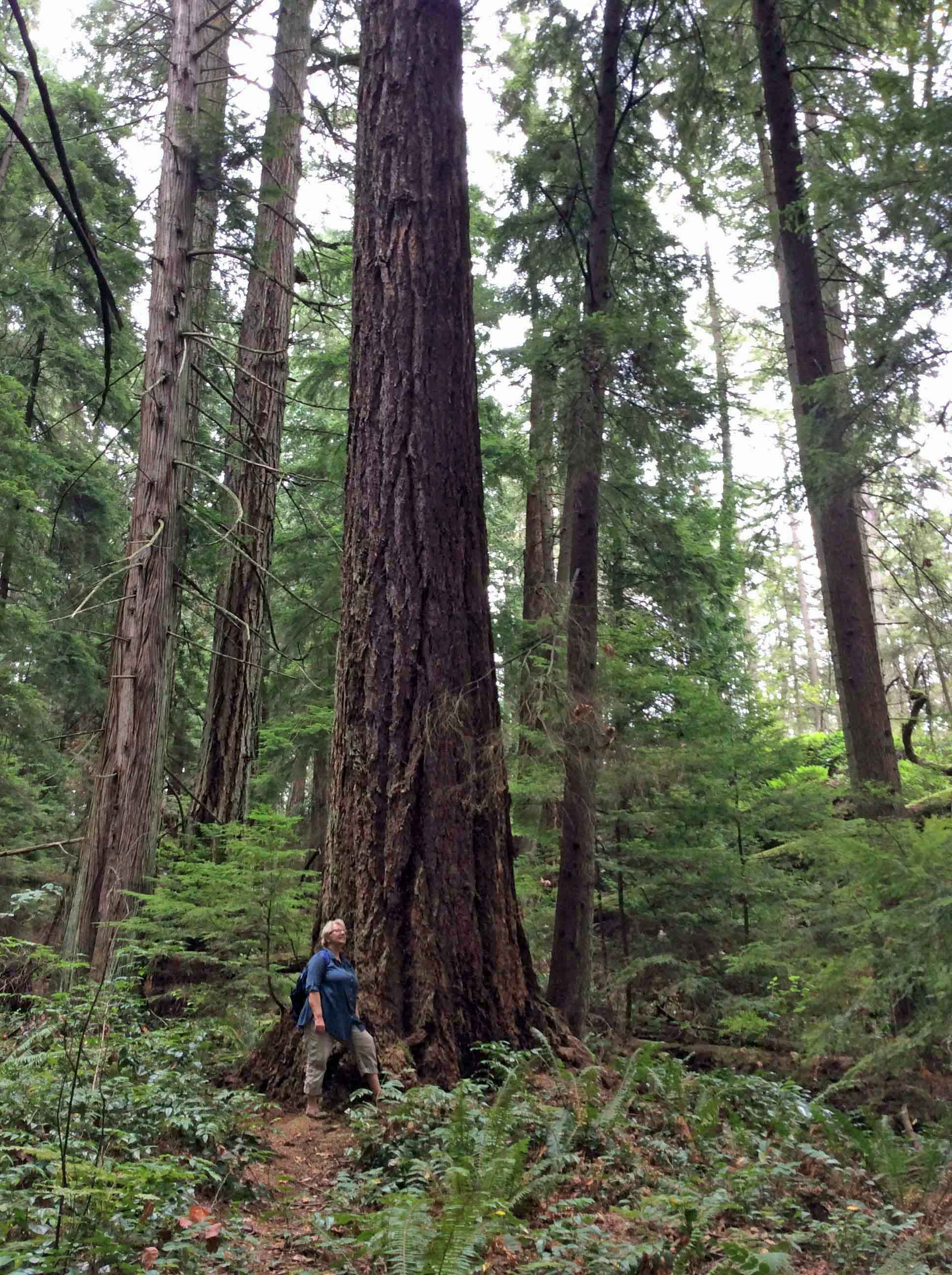
Nina Munteanu stands, dwarfed, by a Douglas fir tree in Lighthouse Park (photo by Margaret Ross)

While in British Columbia, I also visited a small enclave of old-growth forest in the heart of Vancouver at Lighthouse Park (West Vancouver). I went with son Kevin and then again with good friend Margaret. This majestic forest of redcedar, Douglas fir, spruce and hemlock is deeply awesome and humbling. And a real gem for the city.

Nina boot

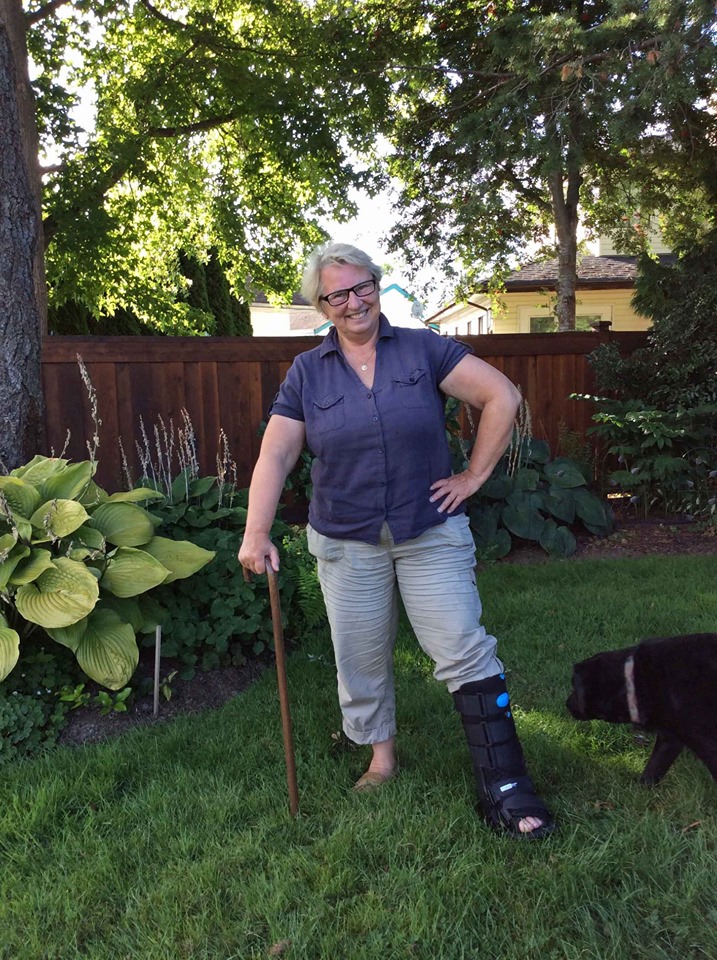
Nina Munteanu in Ladner, BC (photo by Anne Voute)

Then, with just a few days before my flight back to Toronto, I slipped and fell and broke my ankle. I got a “boot” and a cane then hobbled on the plane and went back to work at UofT.

It has been a wonderfully inspirational year for me in writing and teaching. I still actively teach at The University of Toronto in several writing centres and classes throughout the downtown campus. The students are bright and challenging. I also still coach writers to publication and have helped several finish their works in 2019.


I hope the beauty of the season has filled your heart with joy. Wishing you a wonderful 2020, filled with grace, good health, and sweet adventure!


nina-2014aaa

Nina Munteanu is a Canadian ecologist / limnologist and novelist. She is co-editor of Europa SF and currently teaches writing courses at George Brown College and the University of Toronto. Visit www.ninamunteanu.ca for the latest on her books. Nina’s bilingual “La natura dell’acqua / The Way of Water” was published by Mincione Edizioni in Rome. Her non-fiction book “Water Is…” by Pixl Press (Vancouver) was selected by Margaret Atwood in the New York Times ‘Year in Reading’ and was chosen as the 2017 Summer Read by Water Canada. Her novel “A Diary in the Age of Waterwill be released by Inanna Publications (Toronto) in June 2020.

Perr-fecting the Cat Purr Meditation…

Willow-artsy

Willow

Her name is Willow, and she helps me centre my being…

Willow is a diminutive 18-year old Russian blue cat, who I looked after for some friends in Mississauga. When I first met Willow, she responded with reticence–like all smart discerning cats. She appeared so delicate, I was scared to pick her up. I soon realized that this was a fallacy. That not only could I pick her up but that she loved to be held. I just needed to learn how.

As soon as I did, we became best friends. And it all came together with the Purring Cat Meditation.

It starts out with her finding me “doing nothing terribly important” like typing on the computer, or something. A soft but decisive tap of the paw on my leg and I have to smile at her intense look up at me with those guileless emerald eyes. I abandon my work–how can I ignore such a plea?– and pick her up. After all, I know what she wants…And so starts our journey toward “nirvana”… the meditative state that will centre our beings and ultimately save the world.

I wander the house with her. We check out each room and make our silent observations. We end up in the bedroom upstairs, where she normally sleeps (except when she’s decided to join me on my bed to sit on me and purr in my face in the middle of the night).

Willow basking

Willow teasing me

In her sanctuary, we drift to the window that faces the back yard, now in the bright colours of fall. The window is slightly open and a crisp breeze braces us with the deep scent of autumn. I breathe in the fragrance of fallen leaves, mist and bark…

Willow settles into a feather-light pose in the crook of my arms and I hardly feel her. More like she and I have joined to become one. We are both purring …

We remain in Cat-Purr-Meditation for …

Willow looking up

“Time to pick me up, Nina!” says Willow

I have no idea … It feels like moments … infinity … it encompasses and defines an entire world. We’ve just created something. Just by being.

Cats–well, most animal companions–are incredibly centring and can teach us a lot about the art of simply being.

And meditating…


I write about this more in my article entitled “Wake Up Your Muse: How my Cat Taught Me the Art of Being“.

Whenever I run across a bout of writer’s block or need to stoke my muse, instead of trying harder, I stop and reach out for my cat-friend.

And practice Cat-Purring-Meditation…

snow-scene-road-to-Wolfville_edited-1

Winter on the road to Wolfville, NS (photo by Nina Munteanu)


nina-2014aaa

Nina Munteanu is a Canadian ecologist / limnologist and novelist. She is co-editor of Europa SF and currently teaches writing courses at George Brown College and the University of Toronto. Visit www.ninamunteanu.ca for the latest on her books. Nina’s bilingual “La natura dell’acqua / The Way of Water” was published by Mincione Edizioni in Rome. Her non-fiction book “Water Is…” by Pixl Press (Vancouver) was selected by Margaret Atwood in the New York Times ‘Year in Reading’ and was chosen as the 2017 Summer Read by Water Canada. Nina’s short story collection of eco-fiction can be found in “Natural Selection” published by Pixl Press. Her novel “A Diary in the Age of Water” will be released by Inanna Publications (Toronto) in 2020.

Walking Helps Me Think and Imagine

Beaches-snow03

Walking in The Beach (photo by Nina Munteanu)

I’ve written many articles and over a dozen books and readers often remark on my imagination with something akin to awe and incredulity. I often get asked where I get my ideas. Let me tell you a story first…

A Toronto friend—himself a prolific letter writer—shares that his ideas come to him during his daily walks (you’ll find his witty, humorous and somewhat pithy letters in the National Post, Globe and Mail or Toronto Star … almost weekly). David Honigsberg doesn’t use his car (that’s reserved for when his son is in town) and he walks every opportunity he gets, whether it’s a short jaunt to the coffee shop several blocks from his work place or a long trek to his home in Mount Pleasant after a lunch engagement near Bloor and Yonge. He tells me that he uses his phone to capture his “eureka” moments in what may now be considered unorthodox—he doesn’t make digital notes (it’s not that kind of phone!) but instead leaves a series of voice mails on his home phone. When he gets home, David replays his messages and writes out his letter to the editor.

What Dave does is not new to creative thinkers all over the world and throughout time. He shares great company with people who used walking as a venue toward creative thinking (and writing); people like Aristotle, Charles Darwin, Charles Dickens, Ludwig van Beethoven, Friedrich Nietzsche, William Wordsworth, Henry David Thoreau, Steve Jobs, and Soren Kierkegaard—just to name a few. All great walkers.

Winter-Forest Hill

Snow day in Forest Hill, Ontario (photo by Nina Munteanu)

Aristotle conducted his lectures while walking the grounds of his school in Athens. His followers, who chased him as he walked, were known as the peripatelics (e.g., Greek for meandering). Darwin refined his ideas on natural selection and other topics during his frequent walks along his “thinking path”, a gravel road called Sandwalk Wood near his home in southeast England. Dickens walked for miles each day and once said, “If I could not walk far and fast, I think I should just explode and perish.” Beethoven often took solitary walks. He strolled the Viennese woods for hours, finding inspiration for his works and jotting them down on a notepad that he carried with him. Nietzsche loved his walks in the mountains. He wrote, “it is only ideas gained from walking that have any worth.” For Wordsworth, the act of walking was one in the same with the act of writing poetry.

Both involved rhythm and meter. Henry David Thoreau was known for his great walkabouts. Walking through nature for Thoreau was a pilgrimage without a destination—more discovery and rapture. “Taking a long walk was [Steve Job’s] preferred way to have a serious conversation,” wrote Job’s biographer Walter Isaacson. Writer and avid walker, Soren Kierkegaard writes:

“Above all, do not lose your desire to walk. Everyday, I walk myself into a state of well-being and walk away from every illness. I have walked myself into my best thoughts, and I know of no thought so burdensome that one cannot walk away from it.”

In the April 2014 issue of the Journal of Experimental Pshychology: Learning, Memory and Cognition, Stanford researchers Marily Oppezzo and Daniel L. Schwartz demonstrated that walking boosts creative inspiration. Using the Guildford’s Alternative Uses Test they showed that the act of walking, whether inside or outside, significantly increased creativity for 81% of the participants. Oppezzo and Schwartz were able to demonstrate that the creative ideas generated while walking were not irrelevant or far-fetched, but innovative and practical.

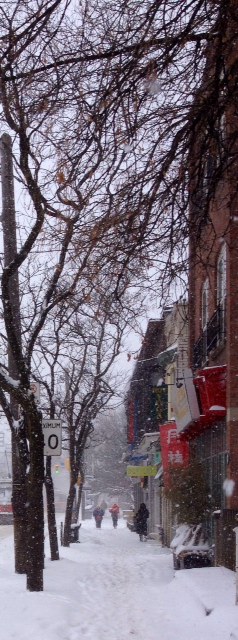
snowy street TheBeach

Snow day walk in The Beach (photo by Nina Munteanu)

In the September 3 2014 issue of The New Yorker, journalist Ferris Jabr describes why this is the case:

“The answer begins with changes to our chemistry. When we go for a walk, the heart pumps faster, circulating more blood and oxygen not just to the muscles but to all the organs—including the brain. Many experiments have shown that after or during exercise, even very mild exertion, people perform better on tests of memory and attention. Walking on a regular basis also promotes new connections between brain cells, staves off the usual withering of brain tissue that comes with age, increases the volume of the hippocampus (a brain region crucial for memory), and elevates levels of molecules that both stimulate the growth of new neurons and transmit messages between them.”

It isn’t just strolling or sauntering that stimulates the creative mind to new heights.

SONY DSC

Author hiking Highland River, Ontario (photo by Merridy Cox)

Stoking the creative artist inside you may be as simple as giving your mind the chance to wander—and taking the time to pay attention. In her book The Artist’s Way Julia Cameron talks about how “rhythm” and regular, repetitive actions play a role in priming the artistic well. She lightheartedly describes how the “s” activities work so well for this: showering, swimming, scrubbing, shaving, strolling, steering a car. I can testify to the latter—how many great plot ideas have I cooked up while driving to work! Filmmaker Steven Spielberg claimed that his best ideas came to him while he was driving the freeway. Negotiating through the flow of traffic triggered the artist-brain with images, translated into ideas. “Why do I get my best ideas in the shower?” Einstein was known to have remarked. Scientists tell us that this is because showering is an artist-brain activity.

The magic part in this is to pay attention. Pay attention to your life experiences; don’t ignore them. Sit up in the bus and watch people, play with the images, sounds and smells. Get sensual and let your eyes, ears, nose and limbs delight in the world. It’s amazing how interesting the world becomes once you start paying attention.

So, to answer the question above about where I get my ideas: in one word, everywhere.

Of course, I find those “s” activities mentioned above very helpful in quieting my mind to “listen” to my creative spirit and see; they calm and focus me. I would add another “s” word–scrawling–to the list. While Dave sends a voice message home on his phone when he gets an idea, I carry a notebook with me to jot down my eureka moments. I find writing by hand additionally helps in the creative process.  What works best for me is a walk in Nature. Nothing beats that…having a dialogue with the wind, or the chiming birds and rustling trees, the gurgling brook or surging sea or tiny insect, the soothing sun…rough bark of a fir tree… The texture of the world…


Snowy Path scarborough

Snowy path in Scarborough, Ontario (photo by Nina Munteanu)

“The texture of the world, its filigree and scrollwork, means that there is the possibility for beauty here, a beauty inexhaustible in its complexity, which opens to my knock, which answers in me a call I do not remember calling, and which trains me to the wild and extravagant nature of the spirit I seek.”—Annie Dillard, Pilgrim at Tinker Creek


References:

Cameron, Julia. 1992. “The Artist’s Way”. Penguin Putnam Inc., New York, NY. 222pp.

Dillard, Annie. 1974. Pilgrim at Tinker Creek. Harper Perennial. 304pp.

Downden, Craig. 2014. “Steve Jobs was Right About Walking” In: The National Post, December 23, 2014.

Munteanu, Nina. 2013. The Journal Writer: Finding Your Voice. Pixl Press, Vancouver, BC. 170pp.

Oppezzo, Marily and Daniel L. Schwartz. 2014. “Give Your Ideas Some Legs: The Positive Effect of Walking on Creative Thinking”, Journal of Experimental Psychology: Learning, Memory, and Cognition, Vol. 40, No. 4: 1142-1152.


nina-2014aaa

Nina Munteanu is a Canadian ecologist / limnologist and novelist. She is co-editor of Europa SF and currently teaches writing courses at George Brown College and the University of Toronto. Visit www.ninamunteanu.ca for the latest on her books. Nina’s bilingual “La natura dell’acqua / The Way of Water” was published by Mincione Edizioni in Rome. Her non-fiction book “Water Is…” by Pixl Press (Vancouver) was selected by Margaret Atwood in the New York Times ‘Year in Reading’ and was chosen as the 2017 Summer Read by Water Canada. Her novel “A Diary in the Age of Water” will be released by Inanna Publications (Toronto) in 2020.

Reflections: The Meaning of Water (a talk for the Lewis Creek Association)

Nina Louis Merridy

Nina Munteanu with Louis DuPont and Merridy Cox with Lewis Creek behind

A short time ago, I was invited to give a talk on water to the Lewis Creek Association during their annual meeting for 2019 to help celebrate their recent accomplishments. Here is their write up:

Join our special guest, Canadian ecologist and author Nina Munteanu, who will discuss the many dimensions of water. She describes personally the curiosity and emotional connection with nature that compels us to caretake our environment with love versus a sense of duty. Her book “Water Is…The Meaning of Water” is an ode to and discourse about water, the indispensable and mysterious element that is the foundation of life here on our blue planet. The book is a fascinating catalogue of the many amazing and anomalous qualities of water, and has become a favorite of several Board members. She trained in limnology, the study of lakes, and has consulted in the aquatic sciences for many years. The author of over a dozen fiction and non-fiction books, she currently teaches writing at the University of Toronto and George Brown College in Toronto, Canada. We are delighted to have Nina join us and share her insights and concerns about this substance we have been concerned with over the last 30 or so years.

Microsoft Word - Nina map Barrio cafe.docx

At Cafe Barrio in Burlington, Vermont, Nina checks the map for directions…and finds her way…

I chose to drive to Vermont from Toronto with good friend and editor Merridy Cox. We crossed into USA near Cornwall and drove through New York state to Rousse’s Point, then into Vermont over the Vermont Bridge over Lake Champlain. We took the scenic route along the islands to the village of Charlotte, where we met with some of the Lewis Creek Board members and enjoyed a wonderful home-cooked supper at executive director Marty Illick’s country home along with Board president Andrea Morgante, board member Louis DuPont, and several other guests.

Merridy-LakeChamplain marsh

Merridy Cox photographing Lake Champlain just east of the Vermont Bridge

The event took place in the large converted barn of Philo Ridge Farm, a 400-acre historic dairy farm now also running as an educational institution of sustainable practices and store and restaurant. The barn is now a state-of-the-art sustainably built facility with a combination of rustic and sophisticated in its design of rich wood walls, large windows and beams with high vaulted ceiling; ideal for a presentation.

I spoke about my roots in the Eastern Townships of Quebec…and where they led me:

I was born in a small town in the Eastern Townships of Quebec, a gently rolling and verdant farming community, where water—l’eau—bubbles and gurgles in at least two languages.

I spent a lot of my childhood days close to the ground, observing, poking, catching, prodding, destroying and creating. Perhaps it was this early induction to the organic fragrances of soil, rotting leaves and moss that set my path in later life as a limnologist, environmental consultant and writer of eco-fiction.

Nina EasternTownships

I followed my older brother and sister to the nearby forest and local stream. We stirred soil, flower petals and other interesting things with water to fuel “magic potions” that we inflicted on some poor insect. Yes, I was a bit destructive as a child—and I took a lot for granted. Like water. There was so much of it, after all. It was clean and easily accessed, fresh from the tap.

When I gave birth to my son, Kevin, I felt a miracle pass through me. Kevin became my doorway back to wonder. His curiosity was boundless and lured me into a special world of transformation.

Nina-Kevin playing

Nina Munteanu and her son hiking in B.C.

I took time off work to spend with Kevin when he was young. We went on great trips, from the local mall, where we had a hot chocolate and played with Lego, to the local beach on the Fraser River, where we explored the rocks. When he was no more than three, I took him on endless adventures in the city and its surroundings. We didn’t have to go far. The mud puddles of a new subdivision after a rain were enough to keep our attention for dozens of minutes. We became connoisseurs of mud. The best kind was “chocolate mud,” with a consistency and viscosity that created the best crater when a rock was thrown into it.

Kevin and I often explored the little woodland near our house. We made “magic potions” out of nightshade flowers, fir needles, loam and moss; we fueled our concoctions with the elixir of water from a stagnant pool. This time the little insects weren’t molested.

Travelling the world has helped me realize that I was blessed with an abundance of water. I lived my entire life in a country of plentiful and healthy water. And for most of that time I didn’t even realize it. Canada holds one fifth of the world’s fresh water in lakes, rivers, and wetlands, as well as in our underground aquifers and glaciers. Canada’s wetlands, which cover more than 1.2 million square kilometres, makes Canada the largest wetland area in the world.*

The folks who attended my presentation were wonderfully receptive, gracious and kind. They bought all my books too! I felt so welcomed by this community concerned about the land and their water. I was also impressed with the dedication, organization and knowledge of this non-profit conservation initiative.

Presentation venue

Venue

Lewis Creek Association

The Lewis Creek Association (LCA) started in 1990, when a group of concerned citizens and the Hinesburg Land Trust came together to conserve a critical stretch of wetland habitat bordering Lewis Creek in Hinesburg, Vermont. Lewis Creek is one of Vermont’s most ecologically diverse streams and suffers from increasing habitat degradation due to river encroachment by development and roads, land use change, and more extreme weather events.

LCA’s mission is to protect, maintain and restore ecological health while promoting social values that support sustainable community development in the Lewis Creek and LaPlatte watershed regions and Vermont generally. Through education and action, LCA works to:

  • Restore water quality, stream stability, and native wildlife habitat
  • Protect and restore important and diverse natural areas
  • Conserve productive and scenic lands that contribute to rural character and economy
  • Support growth compatible with important natural systems and working landscapes
  • Strengthen and support local conservation initiatives and opportunities
  • Model active participation and respect for differences

With a hard-working volunteer board and a part-time paid consultant, LCA facilitates educational, planning, and field work programs involving dozens of volunteers. This work assists town planning and facilitates the restoration and conservation of important Champlain Valley natural areas of high public value.

LCA Annual Party 2019

Their track record has been impressive. Since forming their organization, the LCA has spearheaded and conducted numerous initiatives. Highlights include: annual water quality sampling in six streams and rivers; biodiversity studies of stream corridors, conservation and restoration work in watershed towns; invasive aquatic plant control in local areas; helped educate citizens on ecological improvements; actively participated in implementing VT’s Water Quality Law, Act 64; generated Water Quality Scorecard Maps to track pollution problems; and designed the “Ahead of the Storm” education program used throughout the watershed region.

LakeChamplainBasin

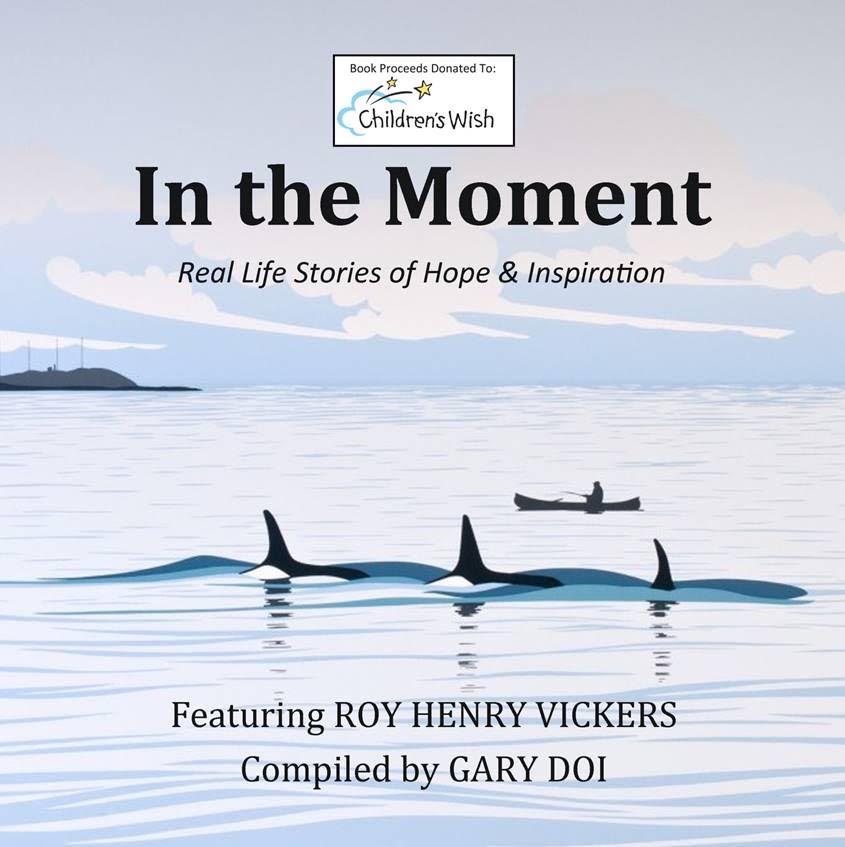
In the Moment-anthology copy*A version of this talk is available in an article I wrote called “Coming Home to Water,” which first appeared in the 2016 anthology In the Moment (A Hopeful Sign) edited by Gary Doi. It was reprinted in 2018 The Earth We Love (Mississauga Writers) edited by Elizabeth Banfalvi; and again in 2019 in The Literary Connection IV: Then and Now (IOWI) edited by Cheryl Antao Xavier.
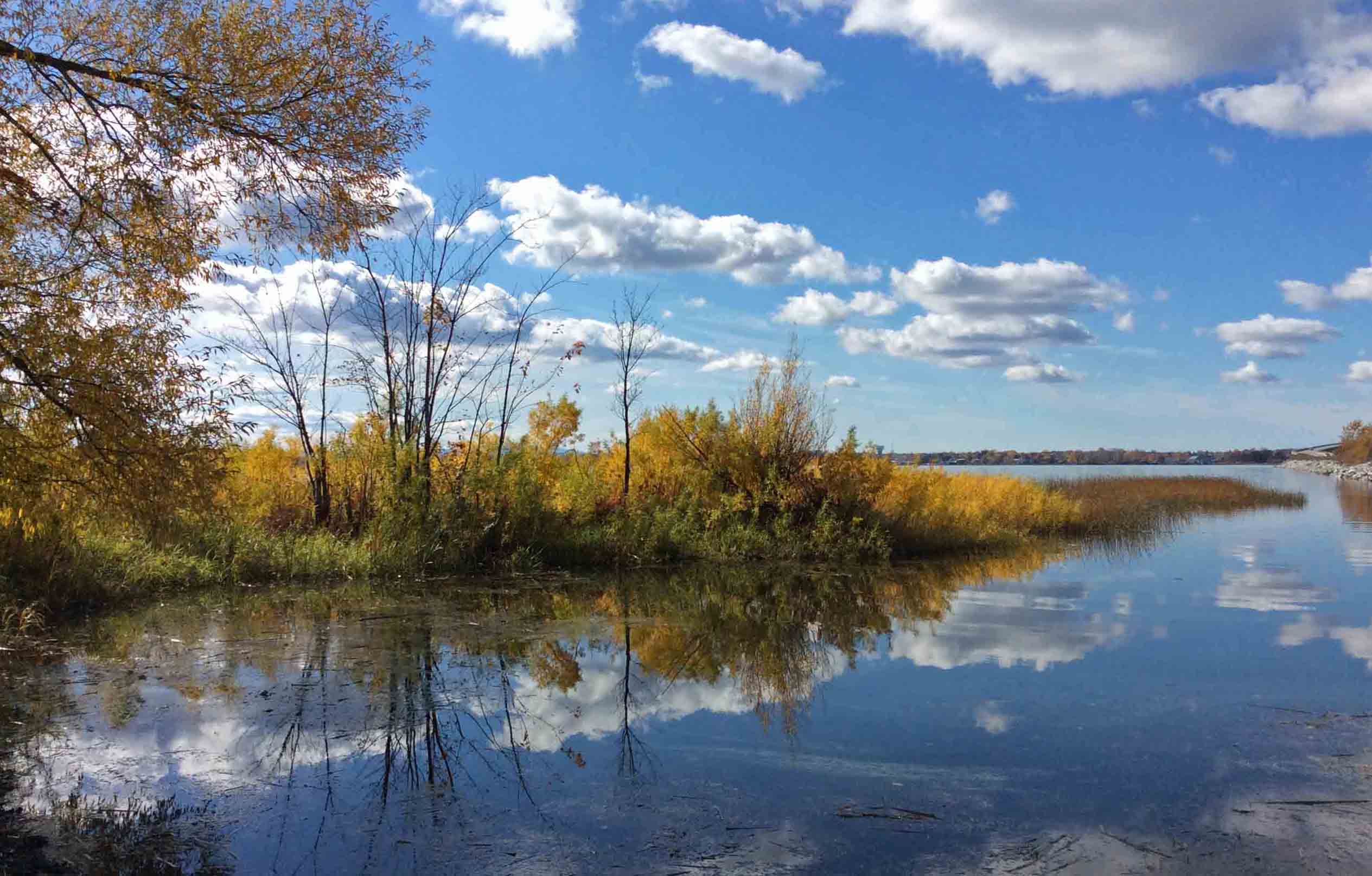


LakeChamplain-VT-NY bridge

Lake Champlain, looking west from Vermont to New York at Vermont Bridge (right) (photo by Nina Munteanu)


nina-2014aaa

Nina Munteanu is a Canadian ecologist / limnologist and novelist. She is co-editor of Europa SF and currently teaches writing courses at George Brown College and the University of Toronto. Visit www.ninamunteanu.ca for the latest on her books. Nina’s bilingual “La natura dell’acqua / The Way of Water” was published by Mincione Edizioni in Rome. Her non-fiction book “Water Is…” by Pixl Press (Vancouver) was selected by Margaret Atwood in the New York Times ‘Year in Reading’ and was chosen as the 2017 Summer Read by Water Canada. Her novel “A Diary in the Age of Water” will be released by Inanna Publications (Toronto) in 2020.

Why Women Will Save the Planet

I was recently told I was fear-mongering and missing the facts by a person on Facebook when I revealed the environmental dangers of using (and abusing) single-use plastics (specifically Styrofoam); earlier that day a gentleman called me an anarchist after I promoted individual responsibility over government and corporate responsibility on the issue of bottled water in Canada.

At the time, these accusations upset me—I’m a scientist, after all, and truth is #1. Then I realised that they were part of my journey toward activism to save this planet and humanity along with it. It was, in fact, a good day for me. I did have the facts; and they were scary. And, in revealing them and expressing my opinions, I had succeeded in breaking people’s inertia and had challenged them to think outside their comfort zone.  I had created fear in them and I had created anarchy in their ordered world. This promted a strong defensive response. The more intense their defence, the more I’d upset their comfortable inertia. That is what happens when you break through a hegemony or dogma and challenge people to re-evaluate and change their actions or habits—essentially forcing them out of their complacency and bringing it back to personal responsibility.

In both cases, I’d brought it back to personal responsibility and personal action. Too many of us settle for a narrative in which others—often not clearly identified—are responsible–not us.

So, perhaps I am inciting fear. Fear in those who have become or choose to remain too complacent. Good; we are in a planetary and existential crisis. And perhaps I am rather an anarchist; disrupting a system and self-belief that is entrenched and not sustainable.

But that comes at a price.

Greta Thunberg raincoat

Greta Thunberg begins a wave of climate activism

I’m thinking of young climate activist Greta Thunberg, who recently captured the attention of the world in her brave sail across the Atlantic to attend the UN’s Climate Summit and other meetings in the US in addition to her climate strike and rally march in Montreal, Canada, which drew close to half a million people (old and young).

Greta Thunberg Sails Carbon-neutral  Yacht To New York

Greta Thunberg

Earlier, at the World Economic Forum Annual Meeting in Davos, Switzerland, Greta delivered her now iconic speech:

“Adults keep saying we owe it to the young people, to give them hope,” Thunberg said, “But I don’t want your hope. I don’t want you to be hopeful. I want you to panic. I want you to feel the fear I feel every day. I want you to act. I want you to act as you would in a crisis. I want you to act as if the house is on fire, because it is.”

In a recent poll, one out of three Germans said that Thunberg has changed their views on climate change. But that, too, has come at a price.

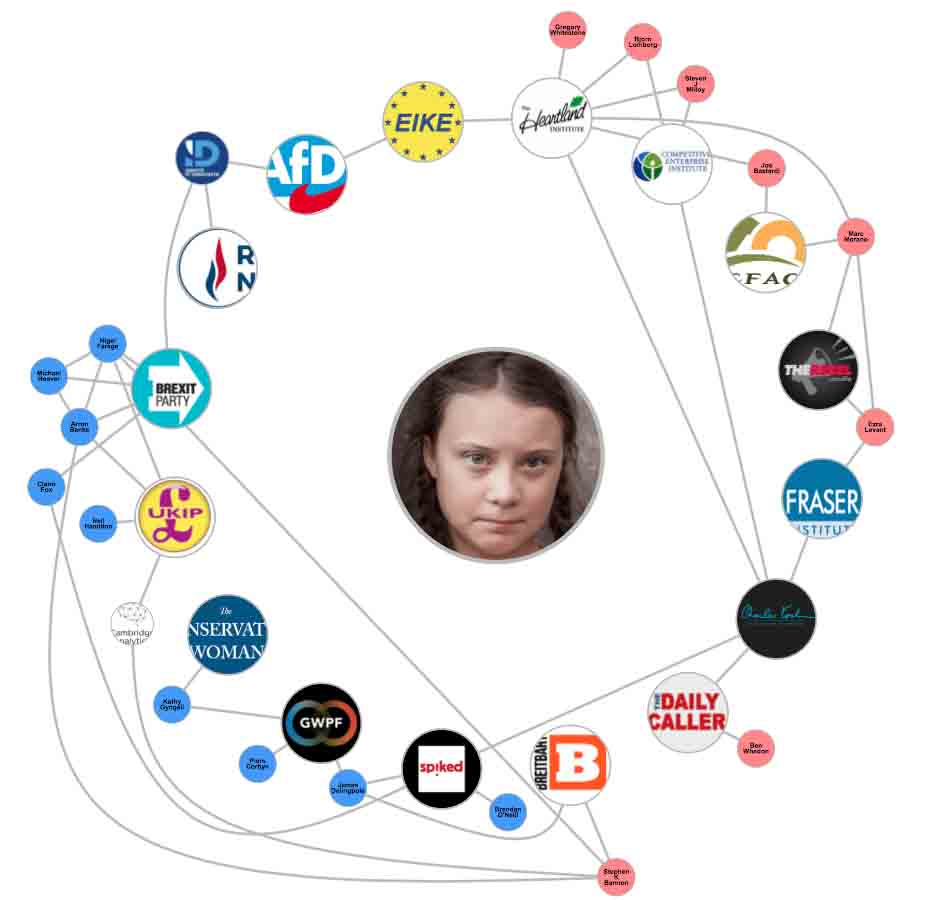
A tsunami of rage and shameless vitriol was unleashed by conservative men (many with close ties to the fossil fuel profit machine) at this young and brave girl during her 15-day trip across the Atlantic. Their attacks have grown increasingly more personal and vulgar as she has gained world attention. For example, political scientist, economist and climate “skeptic” Bjorn Lomborg (associated with the Heartland Institute and Competitive Enterprise Institute) repeatedly mocked and criticized the 16-year old activist. Using highly inappropriate and unprofessional language (the worst I won’t repeat here), he and others have accused her of being a “puppet”, “naïve”, “unrealistic”, and a “fanatic.” Others like Australian columnist Andrew Bolt have personally attacked Thunberg with reprehensible and boorish remarks about her age and mental health.

Lobbyists Against Greta

oil-profit lobbyists behind shameless vitriol against Greta Thunberg (from Desmog UK)

Andrew Mitrovica’s Opinion piece entitled “Who Is Afraid of Greta Thunberg?” provides eloquent summary: “Of course, the marauding swarm of vitriolic right-wing climate-change deniers see Thunberg—not how the prophetic Zinn envisioned her—but as a tiny, pretentious zealot who threatens the existing order. Their order. Their comforts. Their traditional ‘way of life’.”

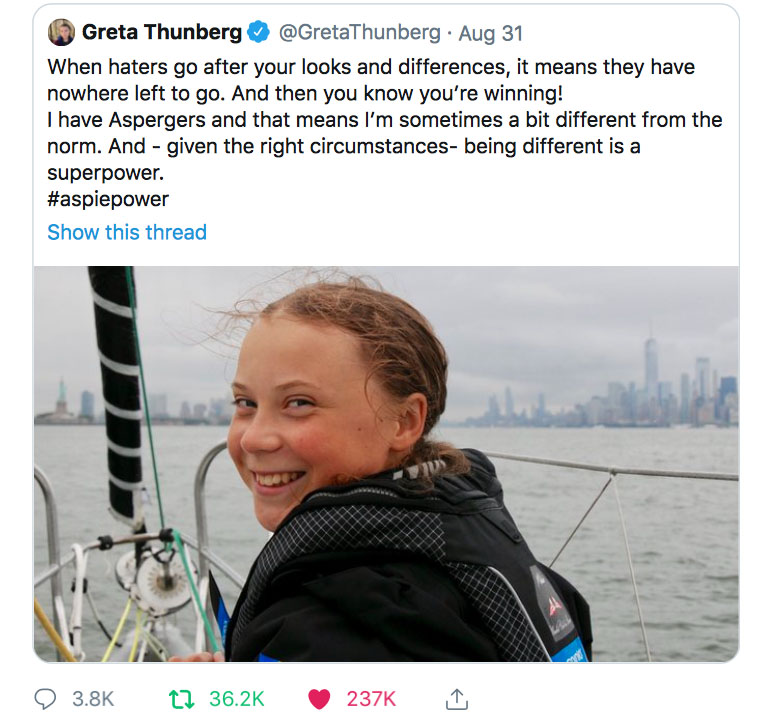
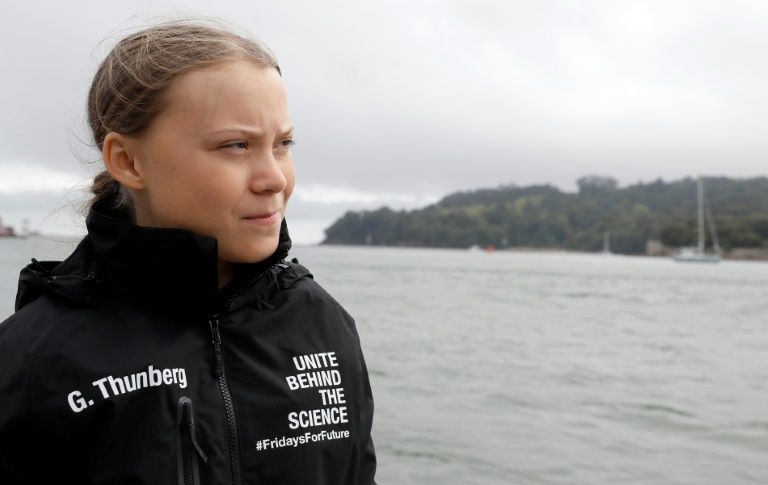
Greta—who wears a windbreaker that reads “Unite Behind the Science”— responded in a brave and wonderful tweet:

GretaThunberg-Tweet

Her tweet was followed immediately by one by Alexandria Ocasio-Cortez:


AlexandriaOcasio-Cortez Tweet

This follows a recent finding by researchers that 99% of Republicans are science illiterate and 44% believe that the scientific method can be used to produce any conclusion the researcher wants. Of course the whole point of the scientific method is to prevent this.

Soon after, Martin Gelin wrote an article entitled, “The Misogyny of Climate Deniers” in the August 2019 issue of The New Republic. The subtitle reads: “Why do right-wing men hate Greta Thunberg and Alexandria Ocasio-Cortez so much? Researchers have some troubling answers to that question.”

Greta on boat2

Greta Thunberg sailing to New York

Gelin writes, “On [Thunberg’s] first day of sailing, a multi-millionaire Brexit activist (Arron Banks) tweeted that he wished a freak accident would destroy her boat. A conservative Australian columnist (Andrew Bolt) called her a ‘deeply disturbed messiah of the global warming movement,’ while the British far-right activist David Vance attacked the ‘sheer petulance of this arrogant child.’ … Former Trump staffer Steve Milloy recently called Thunberg a ‘teenage puppet,’ and claimed that ‘the world laughs at this Greta charade,’ while a widely shared far-right meme showed Trump tipping The Statue of Liberty to crush her boat.”

Fierce and undeterred by cohorts of grown human males unable to deal with her, Greta Thunberg gave a scorching speech at the United Nations during her visit to America: “We are in the beginning of a mass extinction, and all you can talk about is money and fairy tales of eternal economic growth,” she admonished a crowd of world leaders. “How dare you.” Her equally scorching look of Donald Trump who rudely ignored her to mumble some nonsense to the press, has become a popular meme. The mashup by Fatboy Slim of Greta Thunberg’s UN speech “Right here, right now” went viral on YouTube.

Greta-trump 2

Greta Thunberg and Donald Trump at the UN climate summit

Of course, this was followed by utterly shameless and cruel vulgarisms by adult bullies that included suggestions to punish her and give her a spanking.

Disinterested in whether she’s liked and undeterred by childish name calling, the activist teenager remained resolute with her weapon: shame.  At every opportunity, Greta Thunberg steadfastly called out adults over twenty years her senior on what they have failed to do; she did it in words that are simple, precise and direct.

After Senator Tom Carper tried to placate her by telling her that young people would soon have the chance to run for office themselves, she returned: “We don’t want to become politicians; we don’t want to run for office. We want you to unite behind the science.”

Carrying herself with admirable focus and buoyed by her dedication to her cause, Greta Thunberg delivered a scintillating speech to close to half a million climate marchers in Montreal:

“Some would say we are wasting lesson time; we say we are changing the world… The people have spoken. And we will continue to speak until our leaders listen and act. We are the change and change is coming.”

greta thunberg speech in montreal

Greta Thunberg speaking in Montreal

In a recent article in the Washington Post, entitled “Greta Thunberg Weaponized Shame in an Era of Shamelessness”, Monica Hesse writes: “We live in an era that has become impervious to shame. An era defined by a president who views it as a weakness. Shame has become an antiquated emotion and a useless one. It’s advantageous, we’ve learned, to respond to charges of indecency with more indecency: attacks, misdirection, faux-victimhood.”

But real shaming—the kind that mothers do with their errant boy-bullies—is precisely what Greta is doing. This kind of shaming cuts deep, because it is the deep and recognizable truth. And it is done through the “mother archetype”—the most powerful energy on this planet.

Gelin tells us that the prominently older white men who are leading these attacks on Greta Thunberg (and by association, other prominent female climate activists such as Alexandria Ocasio-Cortez) “is consistent with a growing body of research linking gender reactionaries to climate-denialism.”

Alexandria Ocasio-Cortez

Alexandria Ocasio-Cortez

Scientists Jonas Anshelm and Martin Hultman in the journal NORMA  analyzed the language of a focus group of climate skeptics, to discover a major theme:

“for climate skeptics … it was not the environment that was threatened, it was a certain kind of modern industrial society built and dominated by their form of masculinity.”

On the heels of the #MeToo movement, climate activism—largely led by strong females—appears to threaten gender identity of conservative males. Right-wing nationalism, anti-feminism, and climate denialism appear inextricably linked. I would add that their lack of respect for and acknowledgement of indigenous peoples is by default part of the package, given that indigenous peoples are so tied to the land and the ecosystem (being destroyed). One need only look to what is currently happening in Brazil for an atrocious example of this kind of male-bully behaviour.

Climate science for skeptics becomes feminized and viewed as “oppositional to assumed entitlements of masculine primacy,” write Hultman and Paul Pule in the 2019 book “Climate Hazards, Disasters, and Gender Ramifications.” Hultman identifies a set of values and behaviours connected to a form of masculinity identified with industrial patriarchy. These males “see the world as separated between humans and nature. They believe humans are obliged to use nature and its resources to make products out of them. And they have a risk perception that nature will tolerate all types of waste. It’s a risk perception that doesn’t think of nature as vulnerable and as something that is possible to be destroyed. For them, economic growth is more important than the environment,” which they choose not to understand—just like women.

The gender gap in the United States is characterized by men who perceive climate activism as inherently feminine. This was demonstrated in a 2017 article in Scientific American entitled, “Men Resist Green Behavior as Unmanly.”  Researchers Aaron R. Brough and James E.B. Wilkie argue that “women have long surpassed men in the arena of environmental action; across age groups and countries, females tend to live a more eco-friendly lifestyle. Compared to men, women litter less, recycle more, and leave a smaller carbon footprint.” While some researchers have demonstrated that women’s prioritization of altruism may help explain this gender gap in green behaviour, the research done by Brough and Wilkie’s—involving more than 2,000 American and Chinese participants— showed that men linked eco-friendliness with femininity and a risk to their masculinity. These findings, coupled with a natural inclination for anti-feminism by older white conservative males, places them at the centre of a major reactionary backlash against climate action.

Gelin ends on a sober note: “As conservative parties become increasingly tied to nationalism, and misogynist rhetoric dominates the far-right, Hultman and his fellow researchers at Chalmers University worry that the ties between climate skeptics and misogyny will strengthen. What was once a practical problem, with general agreement on the facts, has become a matter of identity. And fear of change is powerful motivation.”

Nina-Kevin playing

Nina Munteanu hiking with her son

When fear powers motivation, we must counter with something stronger: hope through action, compassion, and community. And, again, women are in great abundance of these.

“Keep inspiring and organizing,” says Alexandria Ocasio-Cortez to young Greta. “We’re going to save the planet. All of us, together.”

We are all, after all, “the mother.” So, while the old guard of conservative immature men obsess in saving their egos and identities in this crisis, and put up walls of vitriol, name-calling, “flaming”, and “trolling,” it’s up to us, mature women, to really save the planet, the mother of us all.

So, why will women save the planet? Because “Mother Knows Best,” after all…

Time for a paradigm shift. We’re not in the fifties anymore…


nina-2014aaa

Nina Munteanu is a Canadian ecologist / limnologist and novelist. She is co-editor of Europa SF and currently teaches writing courses at George Brown College and the University of Toronto. Visit www.ninamunteanu.ca for the latest on her books. Nina’s bilingual “La natura dell’acqua / The Way of Water” was published by Mincione Edizioni in Rome. Her non-fiction book “Water Is…” by Pixl Press (Vancouver) was selected by Margaret Atwood in the New York Times ‘Year in Reading’ and was chosen as the 2017 Summer Read by Water Canada. Her novel “A Diary in the Age of Water” will be released by Inanna Publications (Toronto) in 2020.