
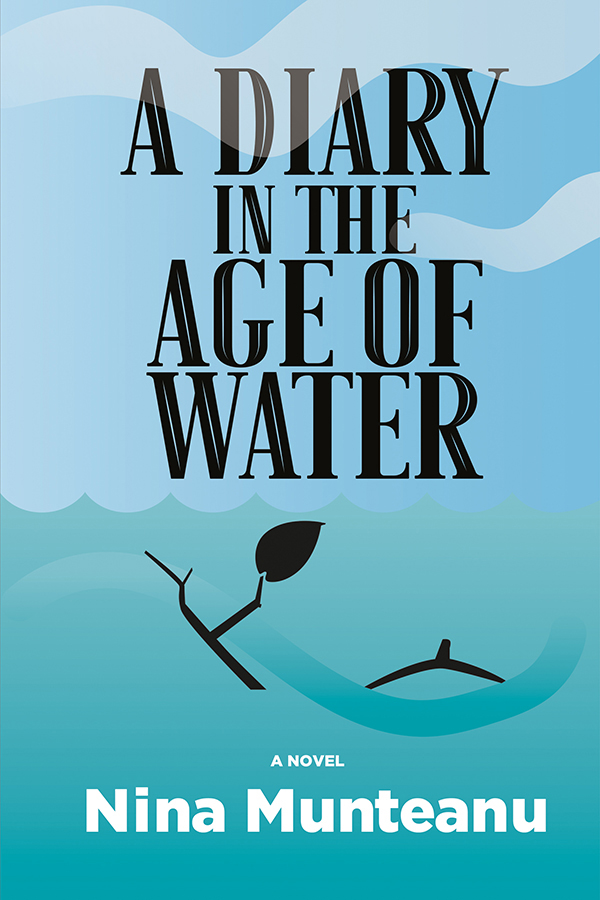
This time last year reviewer Lisa Haselton posted an interview with me on New Year’s Day of 2021 on my latest release “A Diary in the Age of Water.” 2021 saw incredible sales for my clifi eco-novel, along with several appearances on radio shows, podcasts and TV stations. It would seem that water is on everyone’s mind and what better way than a limnologist’s diary to learn more about it.
Lisa and I talked about what inspired me to write this novel and about my writing process. What follows is part of that interview. Check out this link for the complete interview with Lisa Haselton.
*****
Lisa: Please tell us about your current release.
Nina: The book tells the journey of four generations of women who have a unique relationship with water, through a time of extreme climate change and water shortage. The book spans over forty years (from the 2020s to the 2060s) and into the far future, mostly through the diary of a limnologist, which is found by a future water-being. During the diarist’s lifetime, all things to do with water are overseen and controlled by the international giant water utility CanadaCorp—with powers to arrest and detain anyone. This is a world in which China owns America and America, in turn, owns Canada. The limnologist witnesses and suffers through severe water taxes and imposed restrictions, dark intrigue through neighbourhood water betrayals, corporate spying and espionage, and repression of her scientific freedoms. Some people die. Others disappear…
Ultimately, the book carries themes of hope and forgiveness—of ourselves and each other—and compassion for all things, starting with water. Each character carries an aspect of that theme, from the diarist’s activist mother, to the diarist’s own cynical protectionism, her spiritual anarchist daughter, and lastly the innocent storm of the last generation.

Lisa: What inspired you to write ‘A Diary in the Age of Water’?
Nina: It started with a short story I was invited to write in 2015 about water and politics in Canada. I had long been thinking of potential ironies in Canada’s water-rich heritage. The premise I wanted to explore was the irony of people in a water-rich nation experiencing water scarcity: living under a government-imposed daily water quota of 5 litres as water bottling and utility companies took it all. I named the story “The Way of Water.” It was about a young woman (Hilda) in near-future Toronto who has run out of water credits for the public wTap; by this time houses no longer have potable water and their water taps have been cemented shut; the only way to get water is through the public wTaps—at great cost. She’s standing two metres from water—in a line of people waiting to use the tap—and dying of thirst.
The short story and the novel that came from it explore the nuances of corporate and government corruption and deceit together with global resource warfare. In this near-future, Canada is mined of all its water by thirsty Chinese and US multinationals—leaving nothing for the Canadians. Rain has not fallen on Canadian soil in years due to advances in geoengineering and weather manipulation that prevent rain clouds from going anywhere north of the Canada-US border. If you’re wondering if this is possible, it’s already happening in China and surrounding countries.
Lisa: As a child, what did you want to be when you grew up?
Nina: After astronaut, actress and a drummer in a rock and roll band—seriously—it was paperback writer. That’s been my dream since I was ten. I told stories long before I wrote them and long before any of them was published. I told stories in the form of cartoons. Since I was a small child, I wanted to be a cartoonist and write graphic novels (back then I knew them as comics). I created several strips with crazy characters that I drew, blending my love for drawing with my love for storytelling. My sister and I used to make up amazing adventure stories in the universe, peopled with aliens and crazy worlds. I wrote my first complete novel when I was fifteen (“Caged-In World”—which later served as a very rough draft for my first published novel, “Darwin’s Paradox” in 2007). My first published work was a non-fiction article “Environmental Citizenship” which appeared in Shared Vision Magazine in 1995. My first fiction work was a short story entitled “Arc of Time”, which was published in Armchair Aesthete in 2002.

Lisa: When did you first consider yourself a writer?
Nina: I’ve considered myself a storyteller since I was a child when I wrote and directed plays that my older brother and sister played in and drew cartoon adventure stories. My dream was to be a paperback writer (like the Beatles tune). But I didn’t think of myself seriously as an author until my first short story was published in 2002. It was called “Arc of Time” and appeared in a small magazine with a circulation of about 200. That story went on to be reprinted several times in larger magazines and led to a career of award-winning short stories—the latest appearing in the literary magazine subTerrain in 2020.
Lisa: Do you write full-time? If so, what’s your work day like? If not, what do you do other than write and how do you find time to write?
Nina: While I don’t write full-time, my career is all about writing. Every day I write and research my next novel; I also write commissioned articles and short stories for magazines and for my several writing and science blogs. When I’m not writing, I teach writing at the University of Toronto and George Brown College. I also coach writers online to publication. Finding time to write has not generally been a challenge. I’ve embraced an opportunistic process in my writing and research that allows me to write considerably. The process recognizes that there are many ways to “write” from observations and note-taking, to reading and research, to writing short vs long and fiction vs non-fiction. For instance, I can fill a short break time with meaningful research, editing, or the start of a short article; this saves longer break times for my current novel, which requires a greater stretch of uninterrupted time.
Lisa: What would you say is your interesting writing quirk?
Nina: That I am both a pantser and an outliner—with the same book. My writing process has always been a tandem kind of ‘fish and cut bait’ scene / sequel scenario with research following a premise followed by vigorous writing, which in turn engenders more research, which often reveals another plot or sub-theme that needs inclusion. It may seem a haphazard way to write, but I find it very fulfilling, fun and revealing—especially when the Universe provides with serendipitous discoveries (just when I need them).
Lisa: What exciting story are you working on next?
Nina: I’m currently researching and working on the sequel to “A Diary in the Age of Water”—a thriller about how a phenomenon brings together four lost and homeless people through a common goal to free the Earth from the manacles of human greed. The story takes place throughout Canada—from Halifax to Vancouver and the Arctic. It takes place mostly during the 2050s, and features a few ghosts, the Halifax 1917 Explosion, experimentation on humans, espionage, murder, and—of course—a plague. I’m calling it my COVID19 novel…
Use this link to read my entire interview with Lisa Haselton.
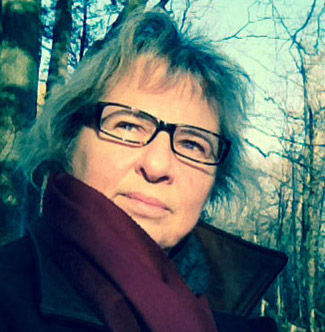
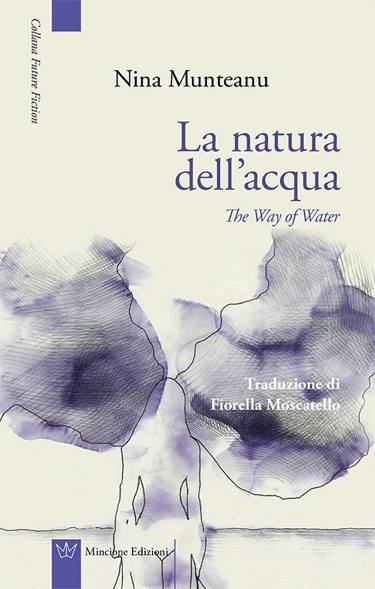
Nina Munteanu is a Canadian ecologist / limnologist and novelist. She is co-editor of Europa SF and currently teaches writing courses at George Brown College and the University of Toronto. Visit www.ninamunteanu.ca for the latest on her books. Nina’s bilingual “La natura dell’acqua / The Way of Water” was published by Mincione Edizioni in Rome. Her non-fiction book “Water Is…” by Pixl Press(Vancouver) was selected by Margaret Atwood in the New York Times ‘Year in Reading’ and was chosen as the 2017 Summer Read by Water Canada. Her novel “A Diary in the Age of Water” was released by Inanna Publications (Toronto) in June 2020.


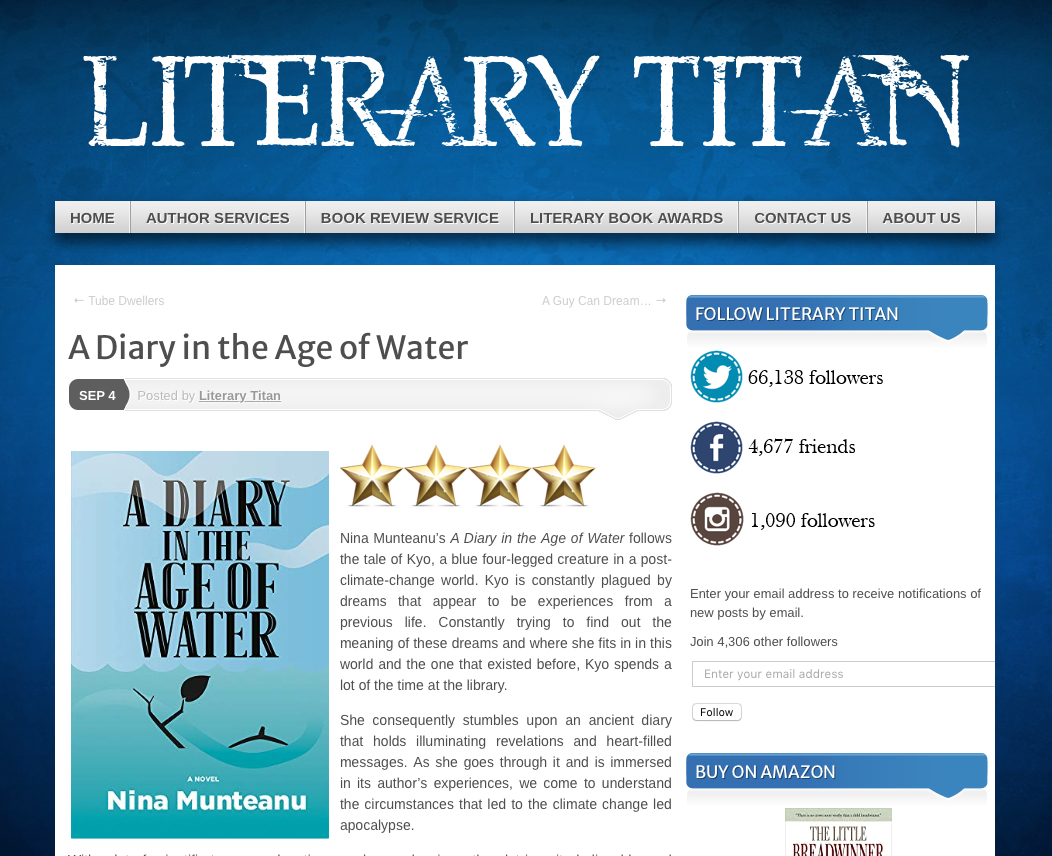



 I was recently interviewed by
  My publisher in Rome (Mincione Edizioni) had asked me for a short story on water and politics. I wanted to write about Canada and I wanted something ironic… so I chose water scarcity in Canada, a nation rich in water. The bilingual story “The Way of Water” (“La natura dell’acqua”) resulted, which has been reprinted in several magazines and anthologies, including Cli-Fi: Canadian Tales of Climate Change (Exile Editions), Future Fiction: New Dimensions in International Science Fiction (Future Fiction/Rosarium Publishing), Little Blue Marble Magazine, and Climate Crisis Anthology (Little Blue Marble). The story was about young Hilde—the daughter of the diarist (of the novel). Hilde was dying of thirst in Toronto and the story begged for more … so the novel came from it…


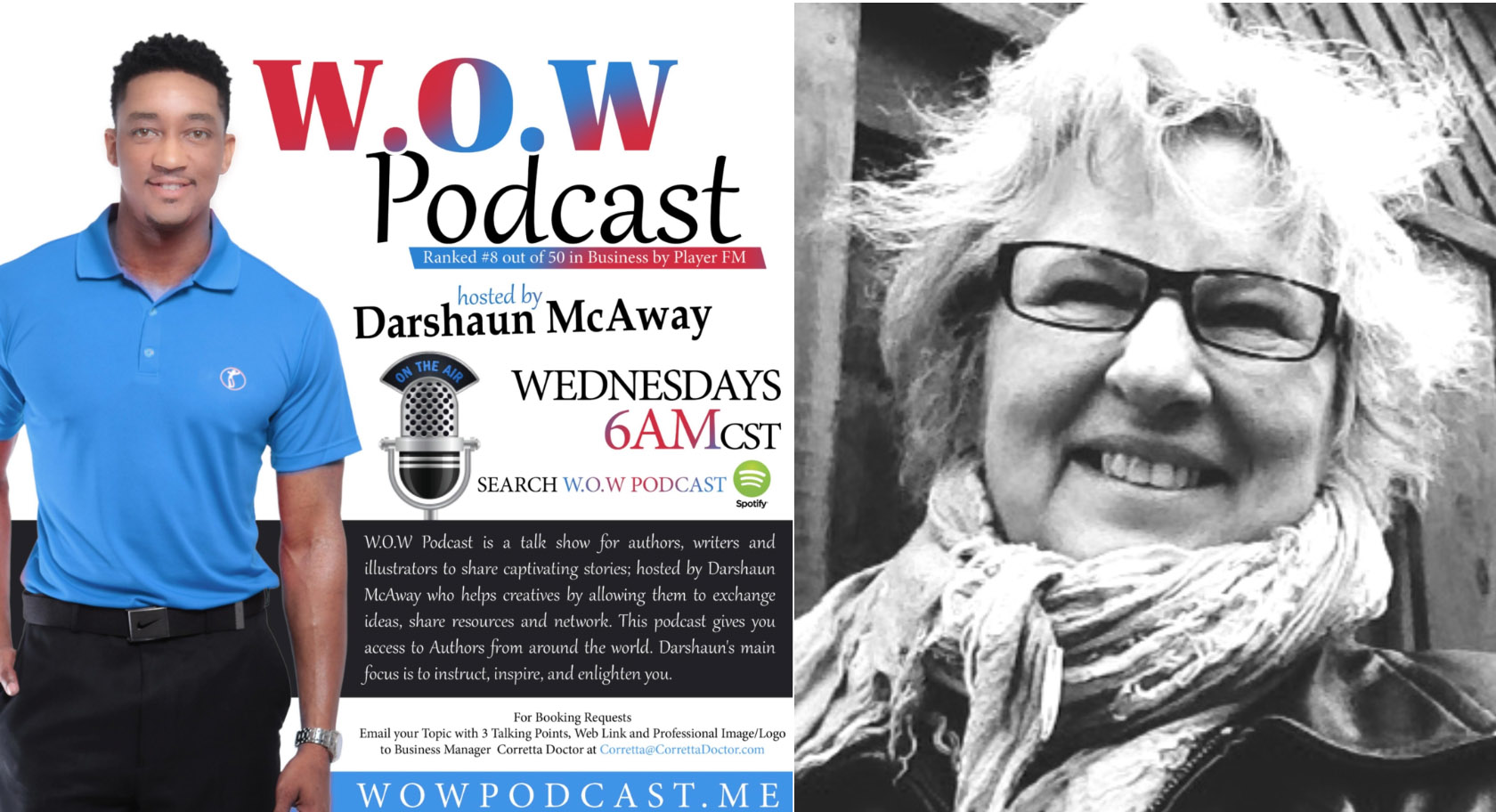
 Darshaun McAway has been hosting W.O.W. Podcast from Arkansas in the USA since 2017. With over a hundred episodes to date, Darshaun’s main focus is to instruct, inspire and enlighten through interviews with authors around the world. Other Canadian science fiction authors who have appeared on W.O.W include

 On June 18th, Toronto book publishing house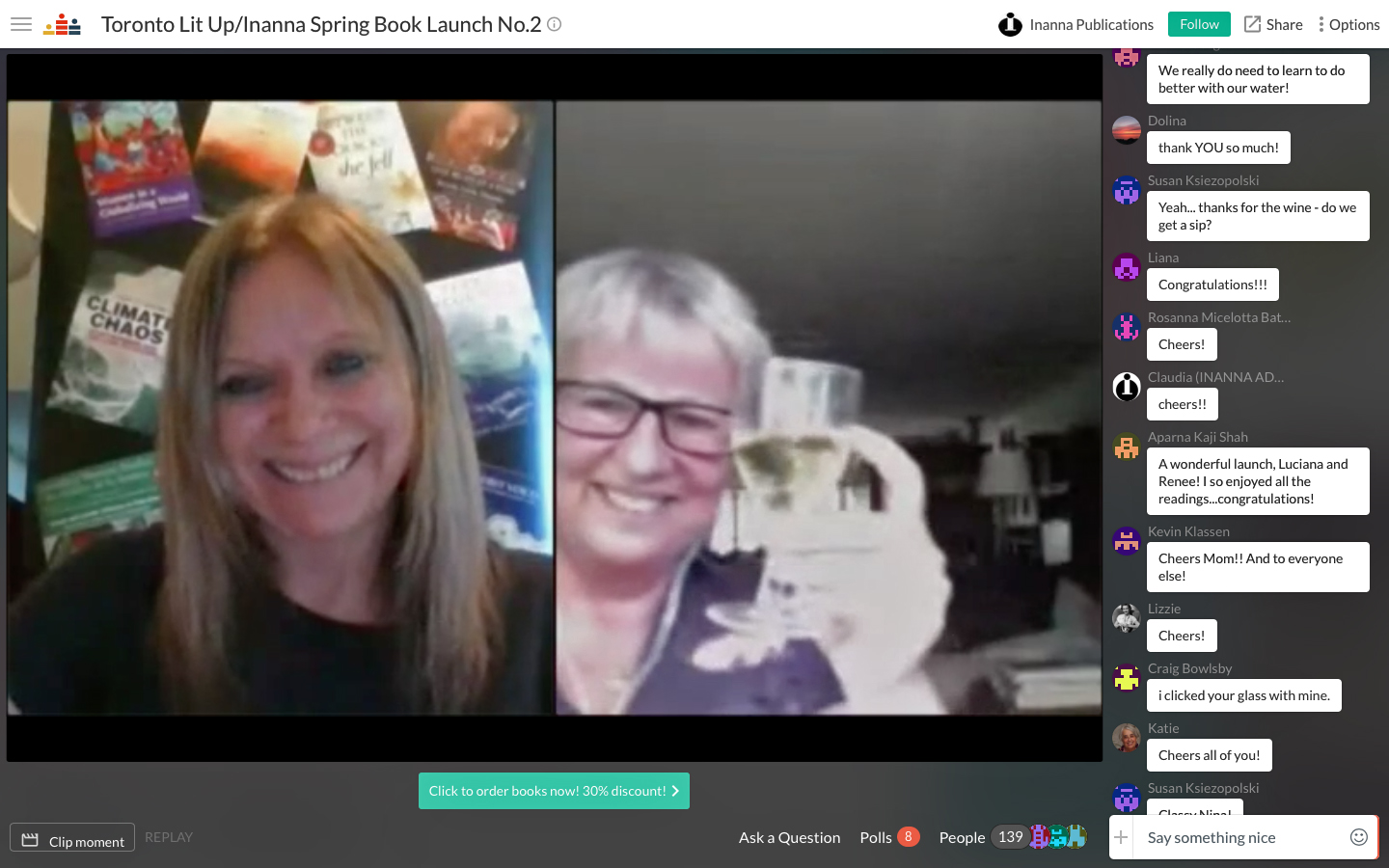
 Who really… My


 In my recent novel
  The endocrine system is a set of glands and the hormones they produce that help guide and regulate the development, growth, reproduction and behavior of most living things (yes plants too!). Some hormones are also released from parts of the body that aren’t glands, like the stomach, intestines or nerve cells. These usually act closer to where they are released. The endocrine system is made up of glands, which secrete hormones, and receptor cells which detect and react to the hormones. Hormones travel throughout the body, acting as chemical messengers, and interact with cells that contain matching receptors. The hormone binds with the receptor, like a key into a lock. Some chemicals, both natural and human-made, may interfere with the hormonal system. They’re called endocrine disruptors.


 For more on “ecology” and a good summary and description of environmental factors like
  Both Daniels are talking about the alarming rate at which
  Research shows that consumption and/or exposure to many common constituents of urban living can decrease fertility, increase miscarriage, spontaneous abortion, and lower auto-immune systems. Examples include car exhaust, pesticides, common detergents, hair dyes, cleaning solvents, oil based paints, adhesives, gasoline; and consumption of MSG, coffee, alcohol.
 Leaning on his microscope, Daniel went on, “Wherever there’s a sewage treatment plant, pulp and paper mill, or herbicides and pesticides in a stream, you get endocrine disruption, which causes more female or intersex fish populations…[Degradation products of surfactants used in commercial and household detergents] inhibit breeding in male fish. And herbicides like atrazine—”
 Dr. Marilyn F. Vine at the University of North Carolina demonstrated that smoking men had lower sperm counts by 13-17%. Smokers also had more abnormal sperm. Likewise, women who smoked experienced more spontaneous abortions, early menopause and abnormal oocytes. Follicular fluid also contained high levels of cadmium, a heavy metal present in cigarettes, and cotininie, a metabolite of nicotine.
 Nina Munteanu Writing Coach