
.
Twenty years ago, when I started seriously publishing short stories and novels, the environment was not recognized by the public or writers as an entity that deserved a literary category. Nature and environment were mostly portrayed and viewed as passive entities, to conquer, subdue, exploit and destroy at will (particularly in science fiction—with some notable exceptions such as The Martian Chronicles by Ray Bradbury). Environment and Nature were not generally considered characters on a journey like the progatonist and other major characters; the environment lacked agency and was often ‘othered’ as dangerous, treacherous and unknowable.
Despite the fact that eco-fiction has in fact been in existence for centuries, use of this literary term is quite recent. Its first recognized use was in 1971, appearing as the title in John Stadler’s anthology published by Washington Square Press, which compiled environmental scifi works from the 1930s to the 1960s.
Defining Eco-Fiction
.
Author / scholar Mary Woodbury defines eco-fiction as “made up of fictional tales that reflect important connections, dependencies, and interactions between people and their natural environments.” In her article “Eco-Fiction—The SuperGenre Hiding in Plain Sight”, Judith defines eco-fiction as literature that “portrays aspects of the natural environment and non-human life as an evolving entity with agency in its relationship between and interaction with human characters.” In the preface to his 1995 book Where the Wild Boks Are: A field guide to Eco-Fiction, Jim Dwyer provides four criteria for eco-fiction:
- The nonhuman environment is present not merely as a framing device but as a presence that begins to suggest that human history is implicated in natural history
- The human interest is understood to be not the only legitimate interest
- Human accountability to the environment is part of the text’s ethical orientation
- Some sense of the environment as a process rather than as a constant or a given is at least implicit in the text.
These designations could be easily met by prehistoric cave art and first nations artwork and storytelling. These definitions also allow for the inclusion of many classics defined as eco-fiction from Herman Melville’s Moby Dick and Thomas Hardy’s Return of the Native to John Wyndham’s Day of the Triffids.
.
Evolving Eco-Fiction & Eco-SciFi
.
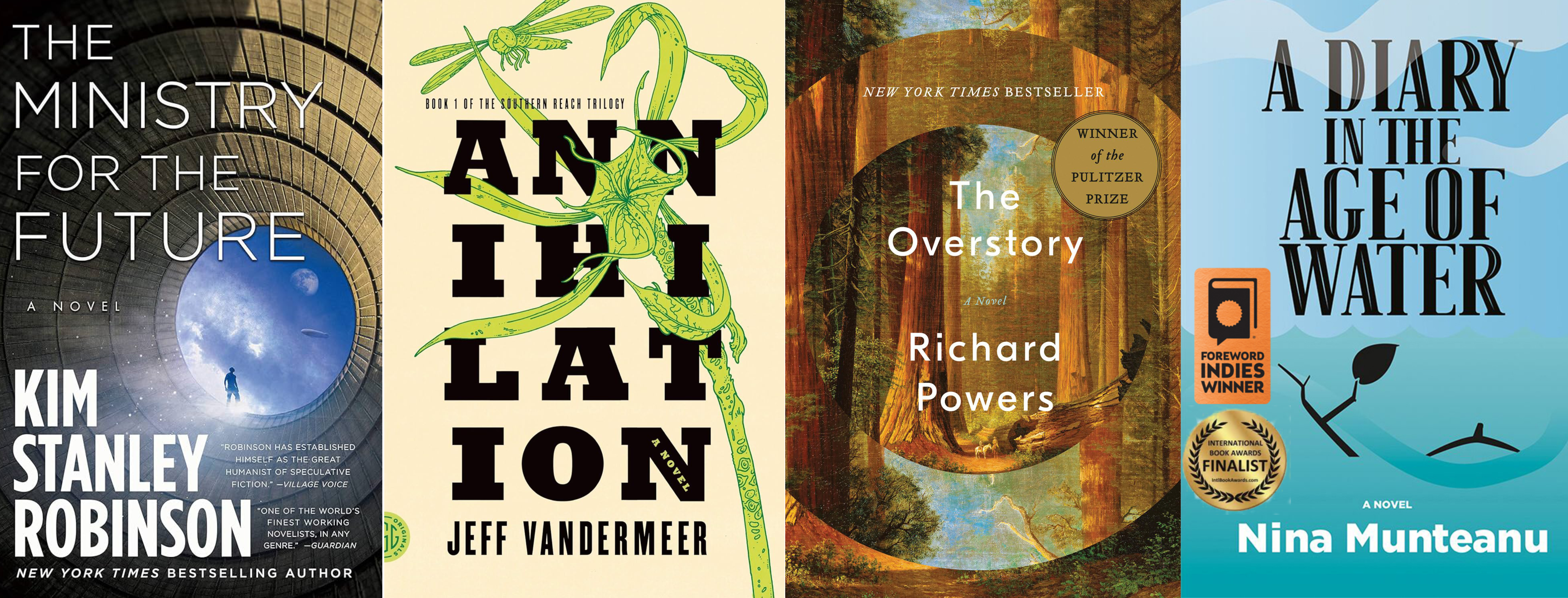
Like the environment it describes, Eco-Fiction is changing and evolving as a genre. Inventor/author Kyo Hwang Cho used the genre designation of Eco-SciFi when he recently identified me along with Kim Stanley Robinson, Jeff VanderMeer, and Richard Powers as Leading Voices in Eco-Science Fiction. Cho defines Eco-SciFi as: “a subgenre of SciFi that foregrounds ecological consciousness, blending speculative fiction with climate science, ethics, and planetary survival.” He includes a table that distinguishes Eco-SciFi from traditional Sci-Fi in several core areas from core theme, tone and motivation to protagonists and ‘message.’ The table can also be used to distinguish this sub-genre from other sub-categories within the umbrella term eco-fiction.
.
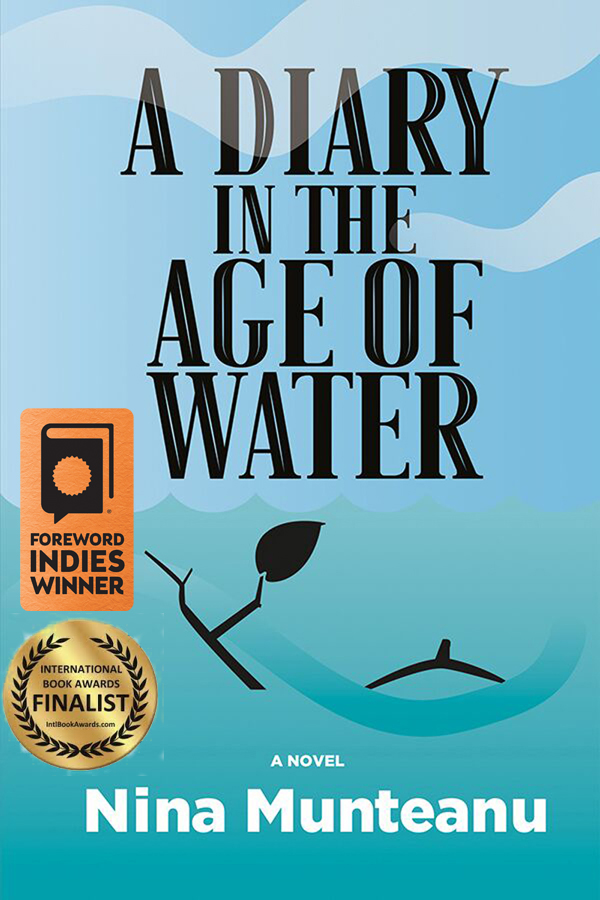
Cho described me as a Canadian ecologist and writer whose “stories explore how humans interact with the environment. Her narratives often examine the intersection of science, climate crisis, and spiritual transformation.” He described A Diary in the Age of Water as a noteworthy work of eco-science fiction: “a dystopian look at a future shaped by water scarcity, societal collapse, and ecological memory.”
.
Categories of Eco-Fiction
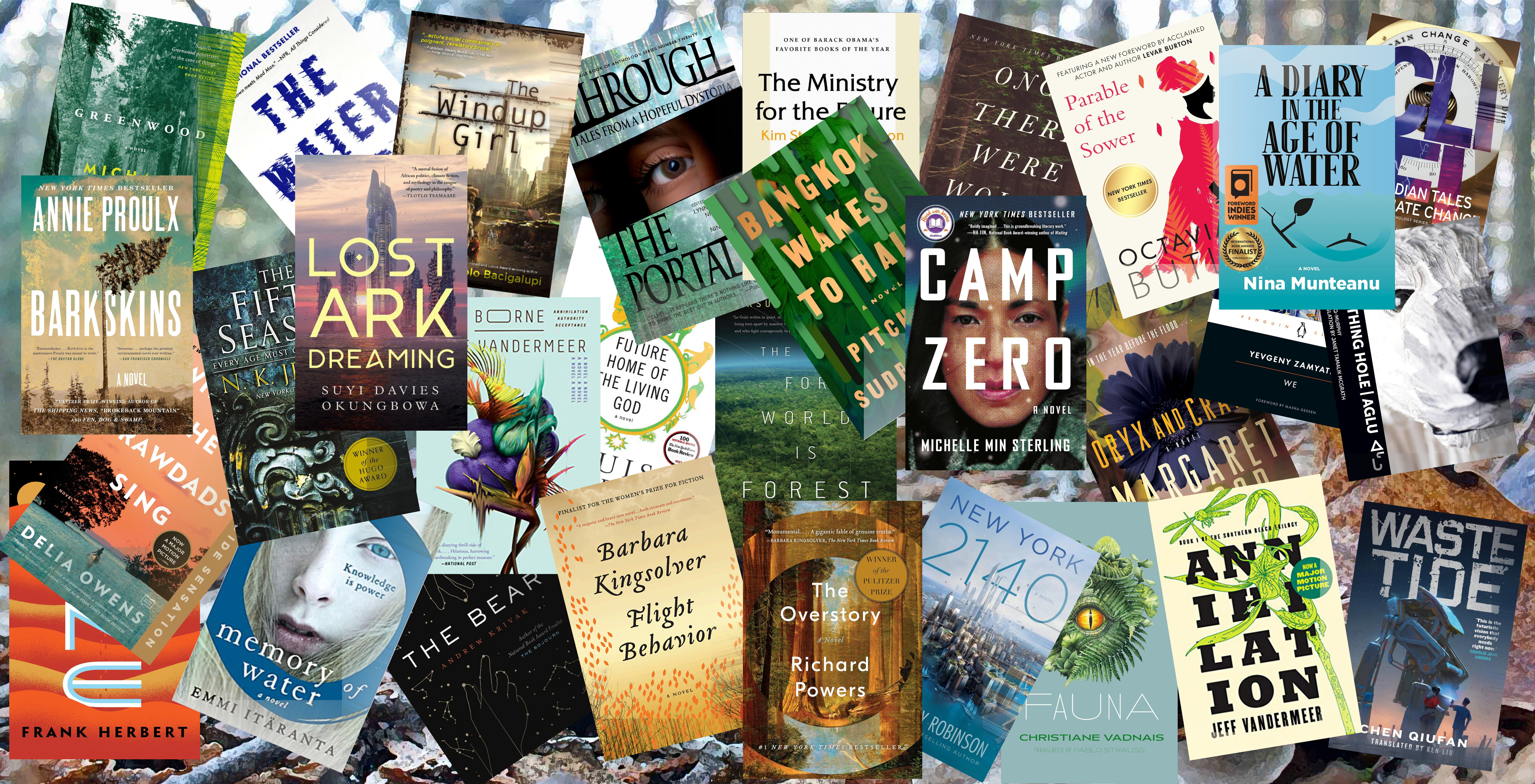
Partially due to this literature’s growing popularity there are currently many categories within and overlapping with eco-fiction; these include: climate fiction or clifi; solarpunk; eco literature, eco-horror, eco-punk, hopeful dystopia, mundane science fiction, speculative fiction, and weird fiction. Each of these focuses on particular idiosyncracies within the literary form that uniquely identify a work.
.
.
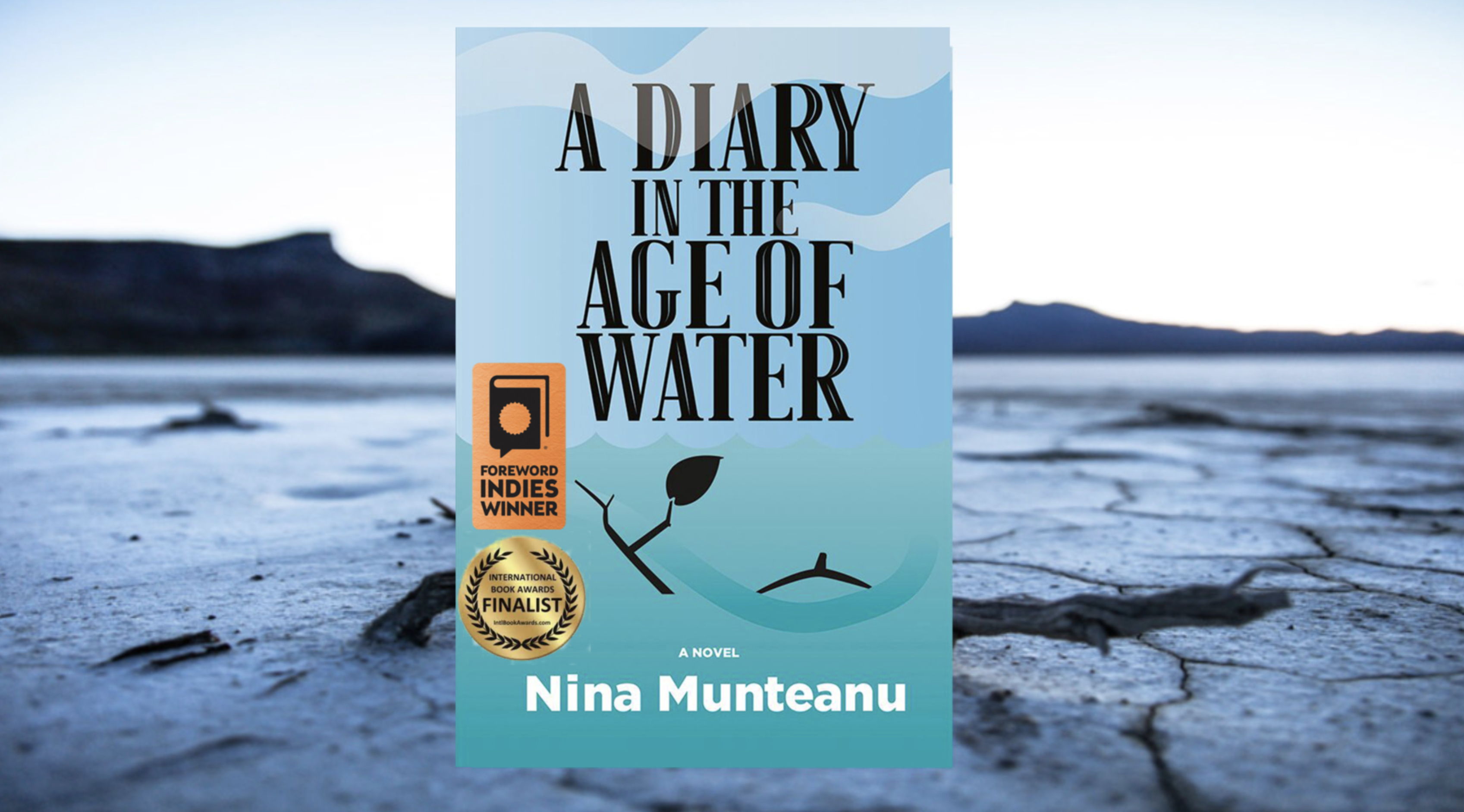
For instance, A Diary in the Age of Water has been variously described by reviewers and readers as eco-fiction, speculative fiction, science fiction or scifi, Fem-lit, mundane science fiction, hopeful dystopia, hopepunk or solarpunk, ecological science fiction or Eco-Sci-Fi. All to say that these designations and sub-genres are somewhat arbitrary and overlap; they may ultimately depend on the reader’s expectations of the work, and their own worldview and predilections. Given the still relevant reason for genre identification (to be able to best find the book in a brick and mortar or virtual bookstore), this makes sense; a work may easily satisfy several reader perspectives and therefore merit many sub-genre descriptors.
Eco-SciFi and mundane science fiction can be viewed this way. In an interview on Solarpunk Futures, I describe mundane science fiction as a sub-genre of science fiction that is very much like speculative fiction in that this sub-genre focuses on scenarios on Earth and involves matters to do with everyday life—hence the term mundane. Given the speculative aspect of mundane science fiction (e.g., set on Earth, often in the near-future), much of what Cho describes as Eco-SciFi also fits the designation of mundane science fiction. in my article “The Power of Diary in Fiction,” I describe Paolo Bacigalupi’s The Windup Girl, Emmi Itäranta’s Memory of Water and my own novel A Diary in the Age of Water as examples of mundane science fiction. Other good examples of mundane science fiction or Eco-SciFi include Kim Stanley Robinson’s New York 2041, Pitchaya Sudbanthad’s Bangkok Wakes to Rain and Michelle Min Sterling’s Camp Zero. These can all be labelled clifi as well. Min Sterling’s book also fits well under Femlit, Feminist Eco-Fiction, and Hopeful Dystopia.
The determining features provided by Cho that distinguish Eco-Sci-Fi help distinguish works that fall more easily into science fiction from those that better fit within the category of literary fiction or climate fiction.
Eco-Fiction—like Science Fiction—is a large category and provides a kind of umbrella term for all environmental fiction in which the environment plays a central role that informs the plot, theme and character-journey. In literature, it serves many literary works that do not include scifi aspects (e.g. fantastical or speculative); because of this, reserving the sub-genre of Eco-SciFi for those that do include fantastical elements makes sense. For non scifi works of Eco-Fiction, I would suggest using the term Eco-Lit (ecological literature), a term already in existence that incorporates the word ‘literature’ to suggest a type of literary fiction.
.
Ecological Literature or Eco-Lit
Eco-Lit—unlike Eco-SciFi—tends to restrict its narrative to the current time, does not include fantastical or speculative elements, and tends to use the ecological or climate elements more as metaphorical setting to examine personal drama. In all eco-fiction, however, the environmental setting/characteristic remains central to the story—as theme and/or premise— which would not work without it. Good examples of Eco-Lit include Migration and Once There Were Wolves by Charlotte McConaghy, Flight Behavior and Prodigal Summer by Barbara Kingsolver, and Greenwood by Michael Christie. In each of these works, the environmental characteristic sparks, motivates, and helps direct the actions of the main protagonist. For instance, in Flight Behavior, if the protagonist Dellarobia Turnbow had not encountered the changed migration of the monarchs (as a result of climate change), she would not have taken a drastic turn in her own journey.
Thomas Hardy’s 1878 Return of the Native was a work of powerful literary eco-fiction (Eco-Lit) that gave Egdon Heath powerful agency over the other traditional characters: destroying, enabling, enlightening, strengthening, isolating.
.
Eco-Fiction as Hyperobject
Some have suggested that eco-fiction be considered a supergenre, given that it defies strict boundaries. Elements of eco-fiction can be found in many other genres, from romance or thriller to science fiction or historical, suggesting that it is more a state of being than a category with static boundaries; more like a door or a window than a room. In my opinion, eco-fiction encompasses more than a genre or category; it is a hyperobject that has been with us since storytelling was born. In his book Hyperobjects, philosopher Timothy Morton attempts to synthesize the still divergent fields of quantum theory (weirdness of tiny objects) and relativity (weirdness of large objects), inserting them into philosophy and art. According to Morton, a hyperobject is an entity that is massively distributed in space and time, making it difficult to grasp its totality or experience it as a single, unified object. Morton argues that the hyperobjects of the Anthropocene, such as global warming, climate or oil that have extensive time/space presence, have newly become visible to humans—mainly due to the very mathematics and statistics that helped to create these disasters. Glimpsing them through our copious data, hyperobjects “compel us to think ecologically, and not the other way around.”
.

I think that much of the fiction that authors write touches on climate and environment, whether they realize it or not, whether they are conscious of it or not. Climate and environment are both large, yet penetrating at the cellular level—influencing us in so many ways from obvious and literal to subtle and visceral. Try as we might—and we have for centuries tried—to separate ourselves and ‘other’ environment, we can’t escape it. “We are always inside an object,” says Morton. Hyperobjects show us that “there is no centre and we don’t inhabit it.”
.
I’ve created my own table, fashioned after Cho’s, and adapted to include Eco-Lit with pertinent examples:
| Categories of Fiction Genres Related to Ecology and Environment | |||
| SciFi | Eco-Fiction | ||
| Eco-SciFi | Eco-Lit | ||
| Setting | Science, technology, space, time travel, AI, aliens, etc.* driven by elements of science fact or fiction | Ecological systems, environmental collapse, climate change, sustainability.* Some element of science fact or fiction; speculative fiction | Ecological systems, environmental effects, climate change, sustainability |
| Tone | Often futuristic, space-based, dystopian, or technologically advanced societies* | Earth-centred or near-future settings deeply affected by ecological factors* | Earth-centred, mostly current settings, affected in some way by ecological factors; celebrates Nature in some way |
| Motivation | Curiosity, innovation, power struggles, survival in altered realities* | Preservation, adaptation, environmental justice, ethical stewardship* | Environmental awareness and action, human justice, introspection, reflection, identity |
| Story | Can be optimistic, dystopian, neutral, techno-utopian, or apocalyptic* often focussing on human justice, alternative civilizations; allegorical | Often cautionary, reflective, grounded in real world environmental urgency* often extrapolating into dystopian future, optimistic dystopia; metaphoric | Grounded in real and usually current world with undertones of environmental urgency, reflective, illuminating; literary |
| Protagonists | Scientists, explorers, rebels, AI, aliens, engineers* others | Environmentalists, ecologists, farmers, indigenous communities, climate activists* others connected to environment | Ordinary people, often linked in some intimate and actionable way to Nature |
| Examples | Dune (Herbert) I, Robot (Asimov) Neuromancer (Gibson) 1984 (Orwell) Brave New World (Huxley) The Martian Chronicles (Bradbury) Childhood’s End (Clarke) | The Ministry for the Future (Robinson) Annihilation (VanderMeer) A Diary in the Age of Water (Munteanu) The Windup Girl (Bacigalupi) Memory of Water (Itaranta) Waste Tide (Quifan) Camp Zero (Min Sterling) Bangkok Wakes to Rain (Sudbanthad) Lost Arc Dreaming (Okungbowa) | Flight Behavior (Kingsolver) Migration by (McConaghy) Greenwood (Christie) Barkskins (Proulx) The Overstory (Powers) Oil on Water (Habila) Where the Crawdads Sing (Owens) Return of the Native (Hardy) Moby Dick (Melville) |
| Message | Broad speculative insight into human potential* & survival, future tech, and evolution of civilization | Warns pf ecological degradation, offers alternative visions of coexistence* often through personal or community perspective | Exploration of the human spirit, growth and inspiration through personal environmental awareness and action |
| Structure | Often premise-based or plot-based; environment often ‘othered’ | Theme-based and character-based; environment often with agency | Character-based; environment may be metaphoric character with or without agency |
*descriptions taken directly from Cho’s article
.
References:
Morton, Timothy. 2013. “Hyperobjects: Philosophy and Ecology After the End of the World.” University of Minnesota Press, Minneapolis. 240pp.
.
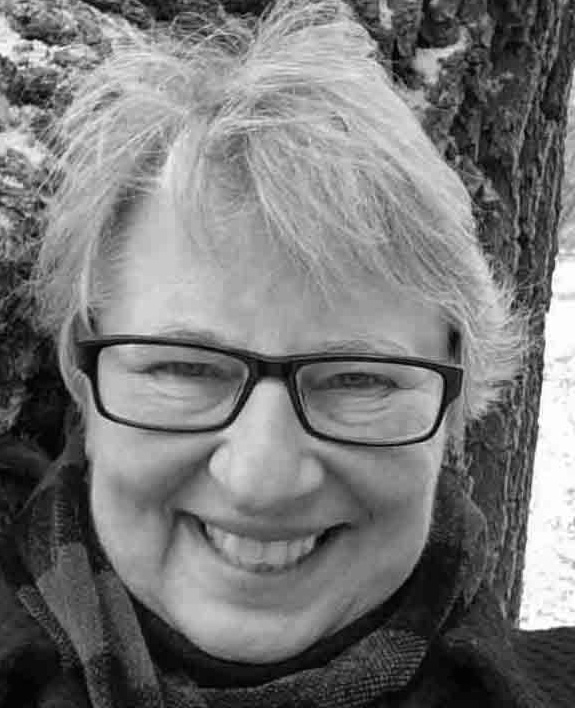
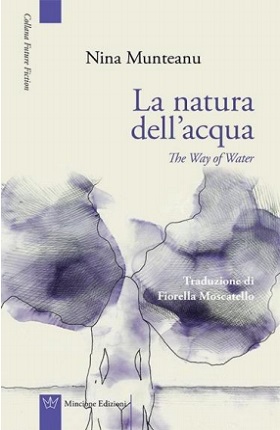
Nina Munteanu is a Canadian ecologist / limnologist and novelist. She is co-editor of Europa SF and currently teaches writing courses at George Brown College and the University of Toronto. Visit www.ninamunteanu.ca for the latest on her books. Nina’s bilingual “La natura dell’acqua / The Way of Water” was published by Mincione Edizioni in Rome. Her non-fiction book “Water Is…” by Pixl Press (Vancouver) was selected by Margaret Atwood in the New York Times ‘Year in Reading’ and was chosen as the 2017 Summer Read by Water Canada. Her novel “A Diary in the Age of Water” was released by Inanna Publications (Toronto) in June 2020.
.




 “In his introduction to this all-original set of (at times barely) futuristic tales, Meyer warns readers, “[The] imaginings of today could well become the cold, hard facts of tomorrow.” Meyer (Testing the Elements) has gathered an eclectic variety of eco-fictions from some of Canada’s top genre writers, each of which, he writes, reminds readers that “the world is speaking to us and that it is our duty, if not a covenant, to listen to what it has to say.” In these pages, scientists work desperately against human ignorance, pockets of civilization fight to balance morality and survival, and corporations cruelly control access to basic needs such as water. The most affecting tale, Wendy Bone’s “Abdul,” is also the least futuristic, an emotional story that touchingly contrasts Western guilt against the life of a captive orangutan. The anthology may be inescapably dark, but it is a necessary read, a clarion call to take action rather than, as a character in Seán Virgo’s “My Atlantis” describes it, “waiting unknowingly for the plague, the hive collapse, the entropic thunderbolt.” Luckily, it’s also vastly entertaining. It appears there’s nothing like catastrophe to bring the best out in authors in describing the worst of humankind.”
 She imagines its coolness gliding down her throat. Wet with a lingering aftertaste of fish and mud. She imagines its deep voice resonating through her in primal notes; echoes from when the dinosaurs quenched their throats in the Triassic swamps.
 A limnologist (lake ecosystem biologist) by trade, Munteanu recognizes the incredible way that water shapes life and brings attention to the fact that water connects us to each other just as water connects with other water, forming bonds. She evokes in the reader a sense of reverence for water and an awareness that the same water that flows through our bodies have flowed through the bodies of our ancestors, cycling through life since the first life forms coalesced.
 “Water covers every aspect of this science fiction story that pits the vulnerable citizen against the evil multinational corporation in a dystopian Canada sometime in our future. Water is presented in its multiplicity of facets: in the science behind its composition, in its history, in it’s symbolic nature and different physical states; water is a giver and taker of life, and is the form in which the friendship of protagonists Hilda and Hanna functions. Water is also magic and the ultimate righter of wrongs committed to it and to a humanity it gives life to. Within this framework, Munteanu spins a thought-provoking tale that projects where our headlong pursuit of profit may one day lead us to, and how nature will ultimately, with a little human coaxing, be the only one to correct the balance.”—Shane Joseph, Canadian author of Fringe Dwellers
 love; a story to read, not only to deal with the possible but, above all, to understand that the time still available for “love” might be less than what you believe.”—Simone Casavecchia,
  Nina Munteanu is an ecologist and internationally published author of award-nominated speculative novels, short stories and non-fiction. She is co-editor of Europa SF and currently teaches writing courses at George Brown College and the University of Toronto. Visit
  Nina Munteanu Writing Coach