 Early on in the recent science fiction movie Interstellar, NASA astronaut Cooper declares that “the world’s a treasure, but it’s been telling us to leave for a while now. Mankind was born on Earth; it was never meant to die here.” After showing Cooper how their last corn crops will eventually fail like the okra and wheat before them, NASA Professor Brand answers Cooper’s question of, “So, how do you plan on saving the world?” with: “We’re not meant to save the world…We’re meant to leave it.” Cooper rejoins: “I’ve got kids.” To which Brand answers: “Then go save them.”
In a 1976 NBC interview on the significance of the Viking 1 landing on Mars, astronomer Carl Sagan likened our space program to watching a dandelion gone to seed: “I can’t help but think of this as an epochal moment in planetary exploration. If you can imagine, a sort of a very patient observer, observing the earth for its four and half billion-year lifetime: for all of that period, lots of things came onto the earth, but nothing left it. And now just in the last 10 years, things are spewing off the earth.”

Apartments in Soho, New York City (photo by Nina Munteanu)
The Onset of the Anthropocene & the Great Acceleration
In a Guardian article entitled “The Holocene hangover: it is time for humanity to make fundamental changes”, Fredrick Albritton Jonsson examines Amitav Ghosh’s interpretation of climate change and considers the need to acknowledge Earth’s own powerful and changing identity—particularly through the face of climate change.
Is climate change the planet’s way of telling us that we no longer belong—like Cooper was suggesting in the movie Interstellar?
That we’ve largely orchestrated these changes may be considered ironic—or is it simply inevitable? For me, as an ecologist, this is not a new concept. Ecological succession is the process of ecosystem change and development over time (usually following a disturbance) as an establishing species impacts and alters its environment to eventually make the environment less suited to it and more to another species, which will replace it. Succession only stops when a climax community—which is in equilibrium with a stable environment—establishes. This climax stage can persist indefinitely—until the next environmental disturbance, that is. Succession occurs everywhere in Nature; examples include the recolonization of Mount St. Helen following the volcanic eruption. Natural succession occurs in human society as well. A good example can be found in any city. My landscape architect son described the natural process of “gentrification” in a large city: a process of renovation and revival of deteriorated urban areas through an influx of more affluent residents, resulting in increased property values and a displacement of lower-income families and businesses. Inherent in succession is movement and flow—something Nature is very familiar with and uses well.
“Our planet is changing into a strange and unstable new environment, in a process seemingly outside technological control,” writes Jonsson, who laments in a disillusioned patriarchal voice: “The fossil fuels that once promised mastery over nature have turned out to be tools of destruction, disturbing the basic biogeochemical processes that make our world habitable [for us]. Even the recent past is no longer what we thought it was.”
Jonsson then unleashes a litany of examples where humanity has imposed global change, including: climate change; reduced biodiversity of ecosystems; acidification of marine life and oceans capacity to absorb carbon dioxide; fresh water scarcity; ozone depletion, which threatens atmospheric stability; and disruption of global nitrogen and phosphorus cycles—to mention a few. “Indeed,” says Jonsson, “the planet’s biosphere bears so many marks of anthropogenic influence that it is no longer possible to [distinguish] between the realm of wilderness and the world of human habitation.”
 “Scientists are telling us that the whole territory of modern history, from the end of World War II to the present, forms the threshold to a new geological epoch,” adds Jonsson. This epoch succeeded the relatively stable natural variability of the Holocene Epoch that had endured for 11,700 years. Scientists Paul Crutzen and Eugene Stoermer call it the Anthropocene Epoch. Suggestions for its inception vary from the time of the Industrial Revolution in the late 1700s with the advent of the steam engine and a fossil fuel economy to the time of the Great Acceleration—the economic boom following World War II.
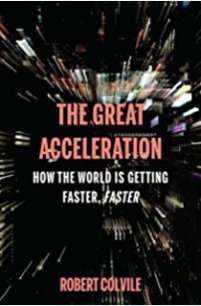 The Great Acceleration describes a kind of tipping point in planetary change and succession resulting from a rising market society.
From the devices we carry to the lives we lead, everything is getting faster, faster. The International Geosphere-Bioshpere Programme writes that “the last 60 years have without doubt seen the most profound transformation of the human relationship with the natural world in the history of humankind.” They suggest that the second half of the 20th Century is unique in the history of human existence. “Many key indicators of the functioning of the Earth system are now showing responses that are, at least in part, driven by the changing human imprint on the planet. The human imprint influences all components of the global environment – oceans, coastal zone, atmosphere, and land.”
While this notion rings hubristic, there is no question that humanity is now a major driver of planetary change: from tipping the Earth’s axis through the creation of massive water reservoirs and diverting a third of Earth’s available fresh water to increasing carbon dioxide to a levels found 800,000 years ago—changing global climate.
Geologists and historians discussed how the Anthropocene Epoch would best be identified by observers in a distant future. “Among the plausible candidates proposed are micro-plastics, metal alloys, and artificial isotopes,” writes Jonsson. “Such stratigraphic markers must be placed in their historical context. The scientific identification of the Anthropocene with the year 1945 gives us not just a plausible geological end to the Holocene, but also a watershed that fits comfortably with a great body of scholarly work about the historical consequences of World War II.”
 The Great Acceleration encompasses the notion of “planetary boundaries,” thresholds of environmental risks beyond which we can expect nonlinear and irreversible change on a planetary level. A well known one is that of carbon emissions. Emissions above 350 ppm represent unacceptable danger to the welfare of the planet in its current state; and humanity—adapted to this current state. This threshold has already been surpassed during the postwar capitalism period decades ago.
Our Literature in the Anthropocene
 In Amitav Ghosh’s diagnosis of the condition of literature and culture in the Age of the Anthropocene (The Great Derangement: Climate Change and the Unthinkable), he observes that the literary world has responded to climate change with almost complete silence. “How can we explain the fact that writers of fiction have overwhelmingly failed to grapple with the ongoing planetary crisis in their works?” continues Jonsson, who observes that, “for Ghosh, this silence is part of a broader pattern of indifference and misrepresentation. Contemporary arts and literature are characterized by ‘modes of concealment that [prevent] people from recognizing the realities of their plight.’”
“By failing to engage with climate change, artists and writers are contributing to an impoverished sense of the world, right at the moment when art and literature are most needed to galvanize a grassroots movement in favor of climate justice and carbon mitigation.”
According to Ghosh, the “great derangement” stemmed from a certain kind of rationality. Plots and characters of bourgeois novelists reflected the regularity of middle-class life and the worldview of the Victorian natural sciences, one that depended on a principle of uniformity. Change in Nature was gradual and never catastrophic. Extraordinary or bizarre happenings were left to marginal genres like the Gothic tale, romance novel, and—of course—science fiction. The strange and unlikely were externalized: hence the failure of modern novels and art to recognize anthropogenic climate change.
 Jonsson tells us that bourgeois reason takes many forms, showing affinities with classical political economy, and—I would add—in classical physics and Cartesian philosophy. From Adam Smith’s 18th Century economic vision to the conceit of bankers who drove the 2008 American housing bubble, humanity’s men have consistently espoused the myth of a constant natural world capable of absorbing infinite abuse without oscillation. When James Lovelock and Lynn Margulis proposed the Gaia Hypothesis in the 1970s, many saw its basis in a homeostatic balance of the natural order as confirmation of Nature’s infinite resilience to abuse. They failed to recognize that we are Nature and abuse of Nature is really self-abuse.
Jonsson suggests that these Enlightenment ideas are essentially ideological manifestations of Holocene stability, remnants from 11,000 years of small variability in temperature and carbon dioxide levels, giving rise to deep-seated habits and ideas about the resilience of the natural world. “The commitment to indefinite economic growth espoused by the economics profession in the postwar era is perhaps its most triumphant [and dangerous] expression.”
 Louise Fabiani of Pacific Standard suggests that novels are still the best way for us to clarify planetary issues and prepare for change—even play a meaningful part in that change. In her article “The Literature of Climate Change” she points to science fiction as helping “us prepare for radical change, just when things may be getting too comfortable.” Referring to our overwhelming reliance on technology and outsourced knowledge, Fabiani suggests that “our privileged lives (particularly in consumer-based North America) are built on unconscious trust in the mostly invisible others who make this illusion of domestic independence possible—the faith that they will never stop being there for us. And we have no back-ups in place should they let us down.” Which they will—given their short-term thinking.
“To counteract this epidemic of short-term thinking,” says Fabiani, “it might be a good idea for more of us to read science fiction, specifically the post-apocalyptic sub-genre: that is, fiction dealing with the aftermath of major societal collapse, whether due to a pandemic, nuclear fallout, or climate change.”
 In my interview with Mary Woodbury on Eco-Fiction I remind readers that “science fiction is a powerful literature of allegory and metaphor and deeply embedded in culture. By its very nature, SF is a symbolic meditation on history itself and ultimately a literature of great vision. Some of the very best of fiction falls under the category of science fiction, given the great scope of its platform. More and more literary fiction writers are embracing the science fiction genre (e.g., Margaret Atwood, Kuzuo Ishiguro, Michael Chabon, Philip Roth, Iain Banks, David Mitchell); these writers recognize its immense scope and powerful metaphoric possibilities. From science fiction to eco-fiction is a natural process. Exploring large societal and planetary issues is the purview of both.”
Let’s see more. We need it.
You can find an excellent databank of eco-fiction books on Mary Woodbury’s site Eco-Fiction. Mary Woodbury also includes “12 works of climate fiction everyone should read.” Midge Raymond of Literary Hub lists “5 important works of eco-fiction you need to read.” And then there is the Goodreads Listopia for “Best eco-fiction”
 My own works of eco science fiction can be found on my author’s website, Nina Muneanu Writer and at a quality bookstore near you.
Why not find a work of eco-fiction and share it with someone you care about this Christmas.
 Nina Munteanu is an ecologist and internationally published author of award-nominated speculative novels, short stories and non-fiction. She is co-editor of Europa SF and currently teaches writing courses at George Brown College and the University of Toronto. Visit www.ninamunteanu.ca for the latest on her books.
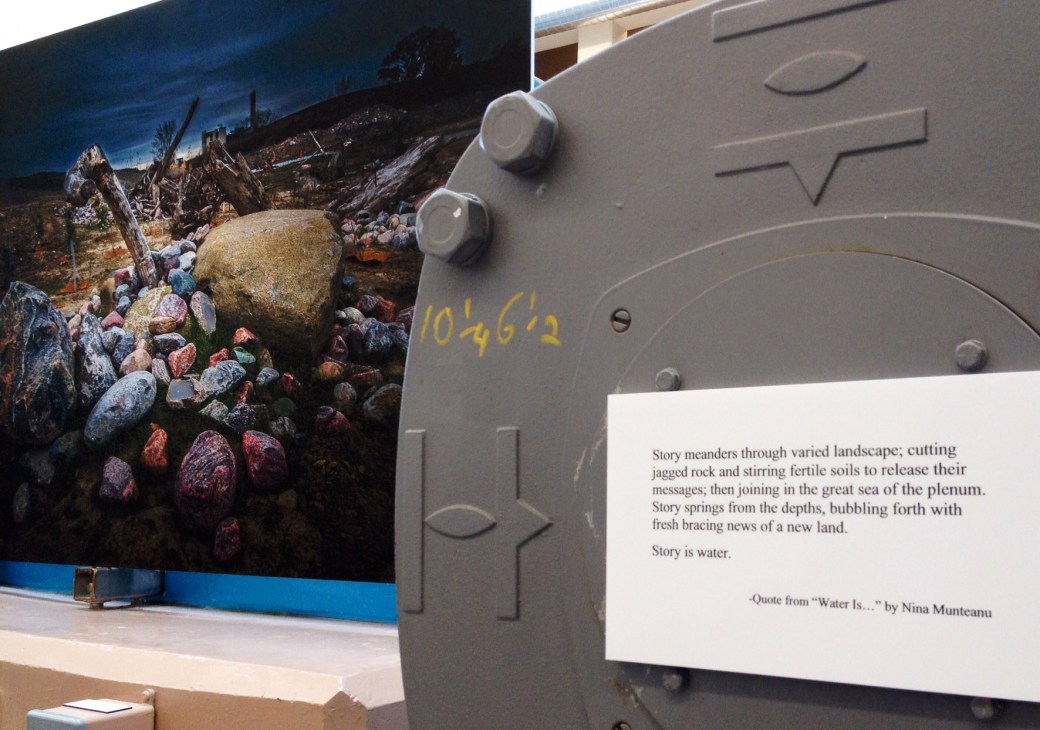

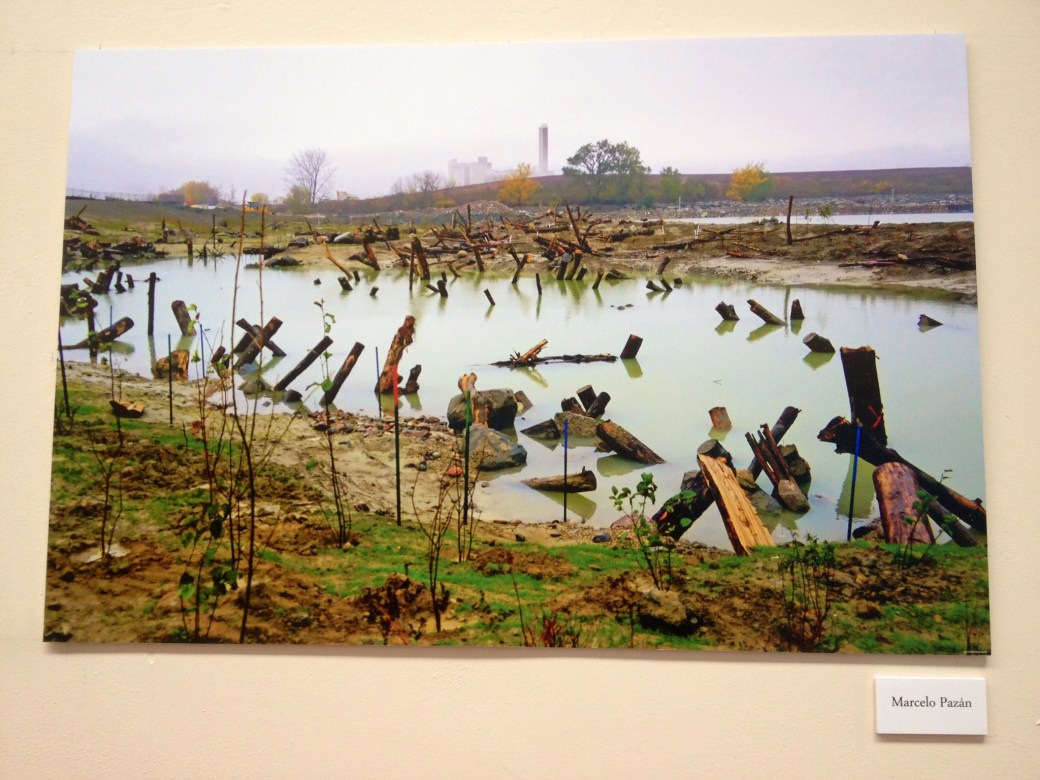
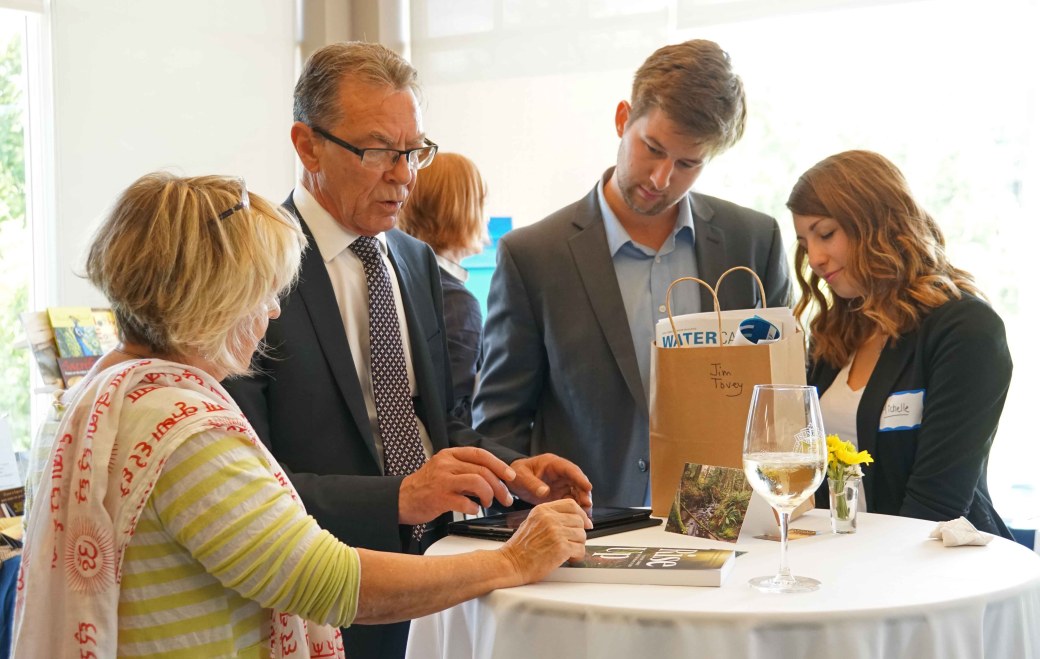
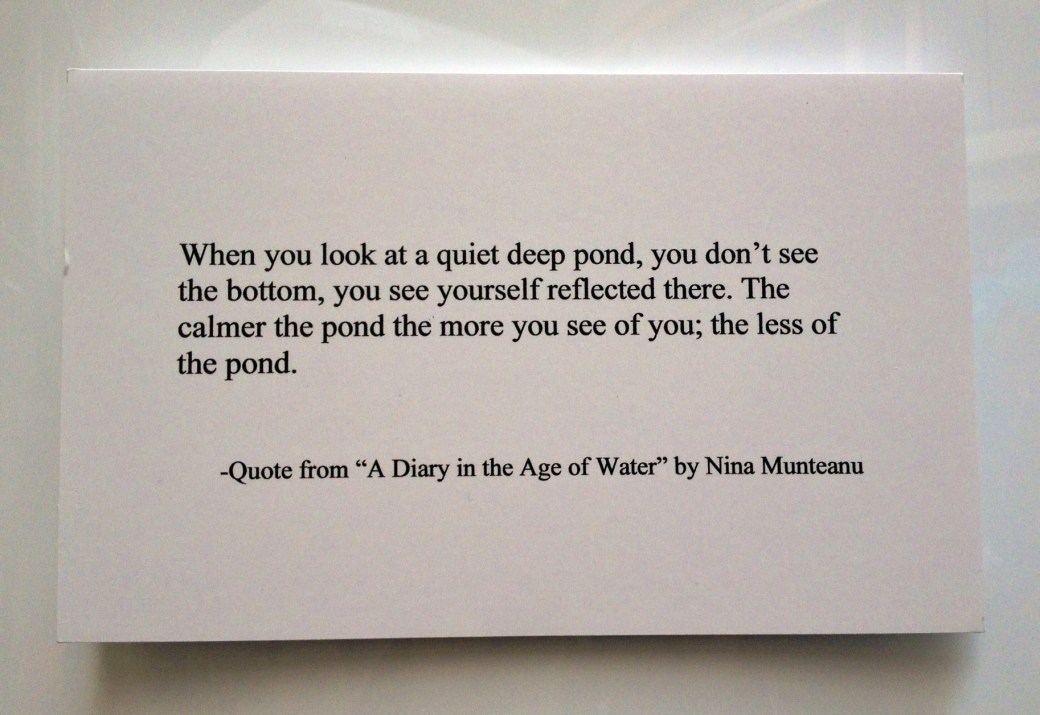 Reiterating Jim Tovey’s earlier comment on the water treatment plant as its own sculpture-art, Munteanu celebrated the location and the nature of the exhibit: “When technology, art and ecology are celebrated together, you get magic.”

 Nina Munteanu is an ecologist, limnologist and internationally published author of award-nominated speculative novels, short stories and non-fiction. She is co-editor of Europa SF and currently teaches writing courses at George Brown College and the University of Toronto. Visit www.ninamunteanu.ca for the latest on her books.
 Hi-Sci-Fi Radio (a podcast radio show out of CJSF 90.1FM in Burnaby, British Columbia) interviewed Nina Munteanu about the paradoxes of her eco-thriller
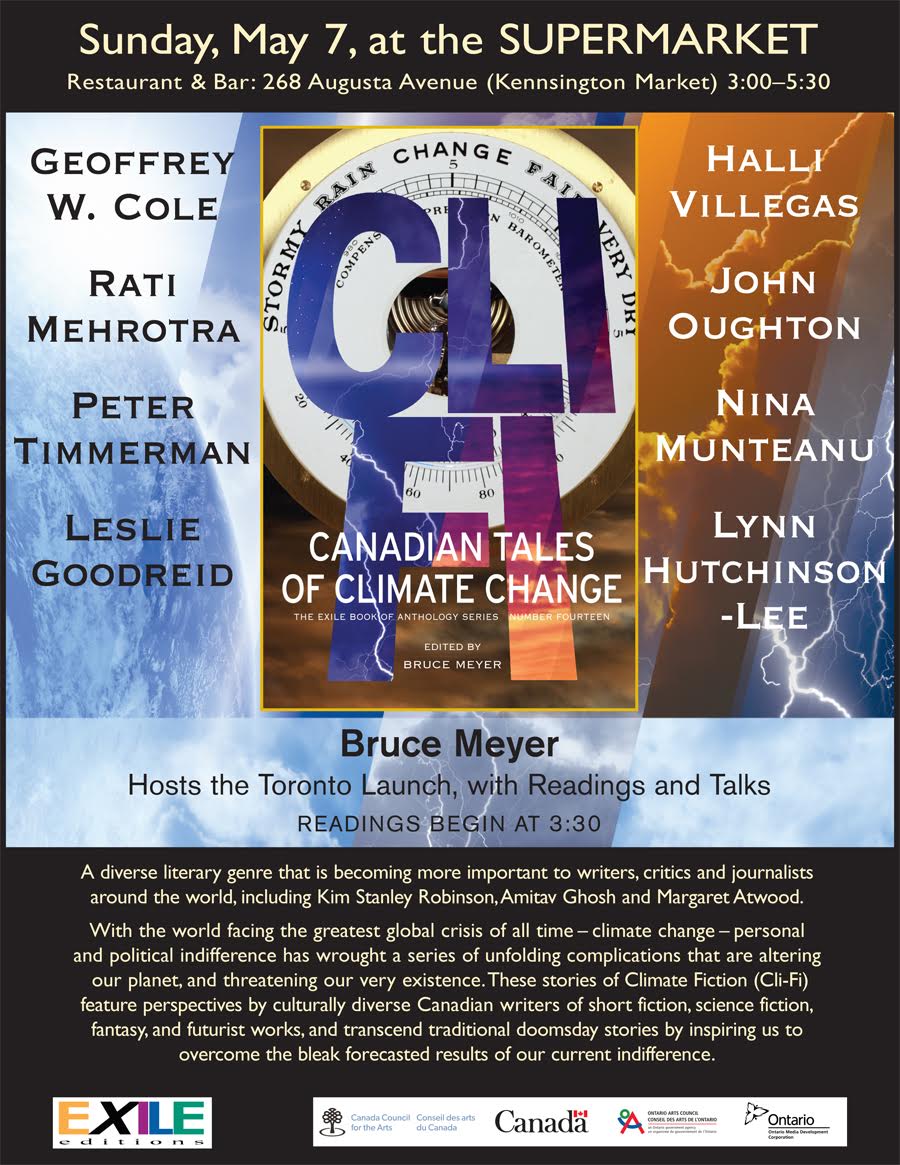
  “In his introduction to this all-original set of (at times barely) futuristic tales, Meyer warns readers, “[The] imaginings of today could well become the cold, hard facts of tomorrow.” Meyer (Testing the Elements) has gathered an eclectic variety of eco-fictions from some of Canada’s top genre writers, each of which, he writes, reminds readers that “the world is speaking to us and that it is our duty, if not a covenant, to listen to what it has to say.” In these pages, scientists work desperately against human ignorance, pockets of civilization fight to balance morality and survival, and corporations cruelly control access to basic needs such as water. The most affecting tale, Wendy Bone’s “Abdul,” is also the least futuristic, an emotional story that touchingly contrasts Western guilt against the life of a captive orangutan. The anthology may be inescapably dark, but it is a necessary read, a clarion call to take action rather than, as a character in Seán Virgo’s “My Atlantis” describes it, “waiting unknowingly for the plague, the hive collapse, the entropic thunderbolt.” Luckily, it’s also vastly entertaining. It appears there’s nothing like catastrophe to bring the best out in authors in describing the worst of humankind.”
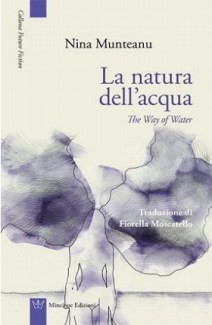 She imagines its coolness gliding down her throat. Wet with a lingering aftertaste of fish and mud. She imagines its deep voice resonating through her in primal notes; echoes from when the dinosaurs quenched their throats in the Triassic swamps.
 A limnologist (lake ecosystem biologist) by trade, Munteanu recognizes the incredible way that water shapes life and brings attention to the fact that water connects us to each other just as water connects with other water, forming bonds. She evokes in the reader a sense of reverence for water and an awareness that the same water that flows through our bodies have flowed through the bodies of our ancestors, cycling through life since the first life forms coalesced.
 “Water covers every aspect of this science fiction story that pits the vulnerable citizen against the evil multinational corporation in a dystopian Canada sometime in our future. Water is presented in its multiplicity of facets: in the science behind its composition, in its history, in it’s symbolic nature and different physical states; water is a giver and taker of life, and is the form in which the friendship of protagonists Hilda and Hanna functions. Water is also magic and the ultimate righter of wrongs committed to it and to a humanity it gives life to. Within this framework, Munteanu spins a thought-provoking tale that projects where our headlong pursuit of profit may one day lead us to, and how nature will ultimately, with a little human coaxing, be the only one to correct the balance.”—Shane Joseph, Canadian author of Fringe Dwellers
 love; a story to read, not only to deal with the possible but, above all, to understand that the time still available for “love” might be less than what you believe.”—Simone Casavecchia,


 Every year, near Christmas,
  Margaret Atwood is a winner of the Arthur C. Clarke Award and the Prince of Asturias Award for Literature as well as the Booker Prize (several times) and the Governor General’s Award. Animals and the environment feature in many of her books, particularly her speculative fiction, which reflects a strong view on environmental issues.
 “
“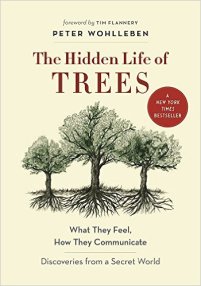 “The Hidden Life of Trees: What They Feel, How They Communicate—Discoveries From a Secret World” (Greystone Books) by Peter Wohlleben. In The Hidden Life of Trees, Peter Wohlleben shares his deep love of woods and forests and explains the amazing processes of life, death, and regeneration he has observed in the woodland and the amazing scientific processes behind the wonders of which we are blissfully unaware. Much like human families, tree parents live together with their children, communicate with them, and support them as they grow, sharing nutrients with those who are sick or struggling and creating an ecosystem that mitigates the impact of extremes of heat and cold for the whole group. As a result of such interactions, trees in a family or community are protected and can live to be very old. In contrast, solitary trees, like street kids, have a tough time of it and in most cases die much earlier than those in a group. Drawing on groundbreaking new discoveries, Wohlleben presents the science behind the secret and previously unknown life of trees and their communication abilities; he describes how these discoveries have informed his own practices in the forest around him. As he says, a happy forest is a healthy forest, and he believes that eco-friendly practices not only are economically sustainable but also benefit the health of our planet and the mental and physical health of all who live on Earth.
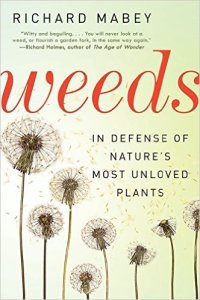 “Weeds: In Defense of Nature’s Most Unloved Plants” (Ecco) by Richard Mabey. “They’re better for you than you think,” says Atwood. “They hold the waste spaces of the world in place, and you can eat some of them.” Ever since the first human settlements 10,000 years ago, weeds have dogged our footsteps. They are there as the punishment of ‘thorns and thistles’ in Genesis and , two millennia later, as a symbol of Flanders Field. They are civilisations’ familiars, invading farmland and building-sites, war-zones and flower-beds across the globe. Yet living so intimately with us, they have been a blessing too. Weeds were the first crops, the first medicines. Burdock was the inspiration for Velcro. Cow parsley has become the fashionable adornment of Spring weddings. Weaving together the insights of botanists, gardeners, artists and poets with his own life-long fascination, Richard Mabey examines how we have tried to define them, explain their persistence, and draw moral lessons from them. One persons weed is another’s wild beauty.
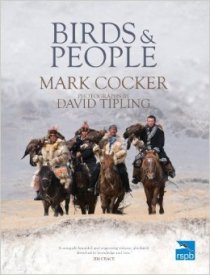 “Birds and People” (Jonathan Cape) by Mark Cocker. “Vast, historical, contemporary, many-levelled,” says Atwood. “We’ve been inseparable from birds for millenniums. They’re crucial to our imaginative life and our human heritage, and part of our economic realities.” Vast in both scope and scale, the book draws upon Mark Cocker’s forty years of observing and thinking about birds. Part natural history and part cultural study, it describes and maps the entire spectrum of our engagements with birds, drawing in themes of history, literature, art, cuisine, language, lore, politics and the environment. In the end, this is a book as much about us as it is about birds.

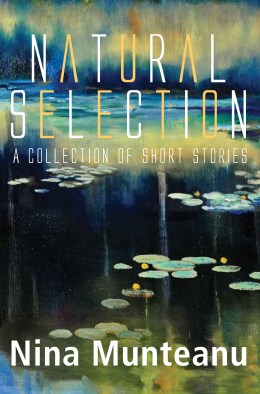 At Calgary’s When Words Collide this past August, I moderated a panel on Eco-Fiction with publisher/writer Hayden Trenholm, and writers Michael J. Martineck, Sarah Kades, and Susan Forest. The panel was well attended; panelists and audience discussed and argued what eco-fiction was, its role in literature and storytelling generally, and even some of the risks of identifying a work as eco-fiction.
 I submit that if we are noticing it more, we are also writing it more. Artists are cultural leaders and reporters, after all. My own experience in the science fiction classes I teach at UofT and George Brown College, is that I have noted a trend of increasing “eco-fiction” in the works in progress that students are bringing in to workshop in class. Students were not aware that they were writing eco-fiction, but they were indeed writing it.
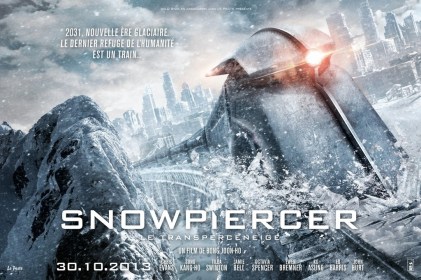 Just as Bong Joon-Ho’s 2014 science fiction movie Snowpiercer wasn’t so much about climate change as it was about exploring class struggle, the capitalist decadence of entitlement, disrespect and prejudice through the premise of climate catastrophe. Though, one could argue that these form a closed loop of cause and effect (and responsibility).
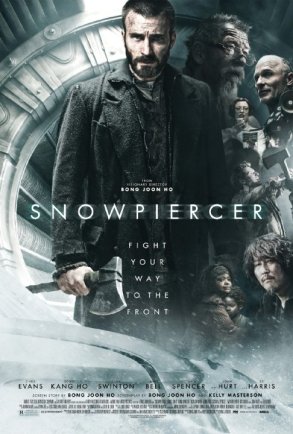 The self-contained closed ecosystem of the Snowpiercer train is maintained by an ordered social system, imposed by a stony militia. Those at the front of the train enjoy privileges and luxurious living conditions, though most drown in a debauched drug stupor; those at the back live on next to nothing and must resort to savage means to survive. Revolution brews from the back, lead by Curtis Everett (Chris Evans), a man whose two intact arms suggest he hasn’t done his part to serve the community yet.
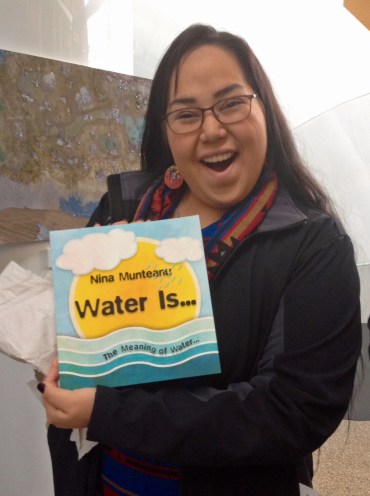
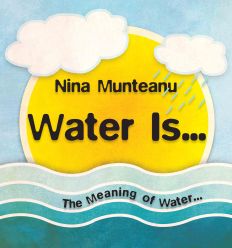
 In my latest book Water Is… I define an ecotone as the transition zone between two overlapping systems. It is essentially where two communities exchange information and integrate. Ecotones typically support varied and rich communities, representing a boiling pot of two colliding worlds. An estuary—where fresh water meets salt water. The edge of a forest with a meadow. The shoreline of a lake or pond.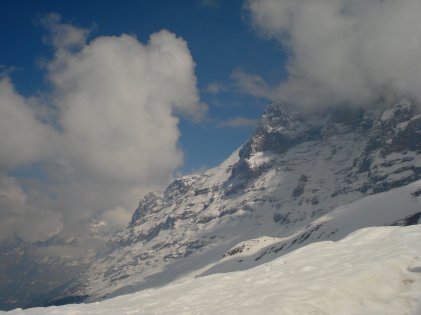
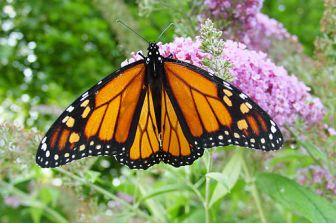
 Barbara Kingsolver’s 2012 novel Flight Behavior was, according to


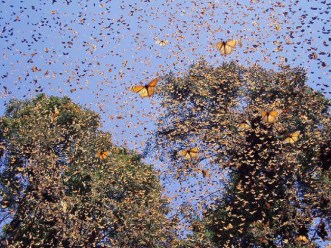 Kathleen Byrne of The Globe and Mail
 We—humanity—may not be around here for much longer. Nature will endure without us. Planet Earth will continue, in some form and Nature and life will endure, evolve, and flourish—in its own way. It will change, perhaps grow more unruly than it is already, but Gaia will continue after she has kicked us off. Ecologists have long recognized the pattern of colonization, exploitation, decadence and succession. How hubristic of humanity not to include itself in that cycle. The cycle of continuing change. We grasp—we clamor—for the world we knew—even as we senselessly impose irreparable change. Shaving forests to the ground so water has no where else to go but down and in a torrent. Creating hot deserts by diverting great rivers somewhere else. Mining vast oil and mineral reserves by scraping the earth until it “bleeds” from unhealable wounds.
 Nina Munteanu is an ecologist and internationally published author of award-nominated speculative novels, short stories and non-fiction. She is co-editor of Europa SF and currently teaches writing courses at George Brown College and the University of Toronto. Visit


 Nina Munteanu Writing Coach