Nina Reads About Water at Oakville Literary Café in Joshua Creek Art Centre

House-road copy

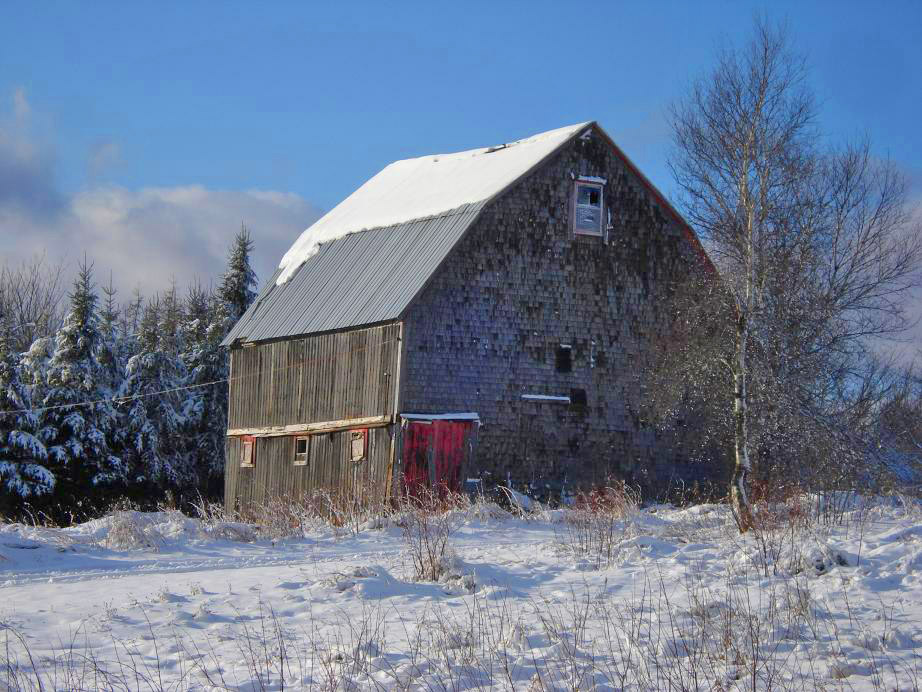
Joshua Creek Art Centre (photo by Nina Munteanu)

In late May, I was invited to read from my short story “The Way of Water” and my recent book “Water Is…” at the Oakville Literary Café, held at the Joshua Creek Art Centre.


The Way of Water

“The Way of Water” has appeared in several collections and anthologies in Europe and North America and received praise from around the world, including: The National Observer, Prism International Magazine, Speculating Canada, SoloLibri in Italy, and most recently in Orson Scott Card’s The Intergalactic Medicine Show.
Lilac2-JoshuaCreekArtCentre

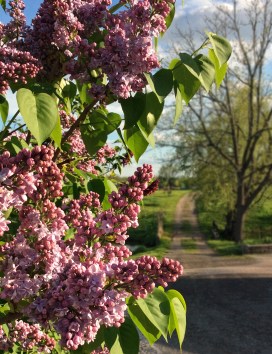
Joshua Creek Art Centre (photo by Nina Munteanu)

“The Chinese multinationals have exchanged the public debt of other states with their water reserves with which, now, they can control the climate, deciding when and where it will rain.Who understands this dirty game has been silenced, like Hilda’s mother, a limnologist, inexplicably arrested and never returned; like the daughter of two water vendors, mysteriously disappeared, after having decided not to bow to economic powers: Hanna, who now prefers secure virtual identities to evanescent real appearances. Water. The two, like the covalent bond of a complex molecule, develop a relationship of attraction and repulsion that will first make them meet and then, little by little, will change into a tormented love but, at the same time, so pure as to cause Hilda at great risk, to make an extreme decision that will allow Hanna to realize the strange prophecy that the internal voice, perhaps the consciousness of water, had resonated in the two women for a long time.” —Simone Casavecchia, SoloLibri.net

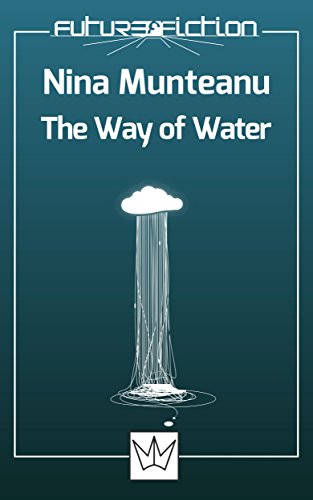
The Way of Water-COVERShe imagines its coolness gliding down her throat. Wet with a lingering aftertaste of fish and mud. She imagines its deep voice resonating through her in primal notes; echoes from when the dinosaurs quenched their throats in the Triassic swamps.

Water is a shape shifter.

It changes yet stays the same, shifting its face with the climate. It wanders the earth like a gypsy, stealing from where it is needed and giving whimsically where it isn’t wanted.

Dizzy and shivering in the blistering heat, Hilda shuffles forward with the snaking line of people in the dusty square in front of University College where her mother used to teach. The sun beats down, crawling on her skin like an insect. She’s been standing for an hour in the queue for the public water tap.

Exile-CanTales ClimateChange copyEmilie Moorhouse of Prism International wrote: “Soon after I finished reading the book, Cape Town—known in precolonial times as “the place where clouds gather”—announced that it was only a few months away from what it called “Day Zero,” the day the city would officially run out of water, making the similarities between fiction and reality more than unsettling. Munteanu’s story is set in a futuristic Canada that has been mined of all its water by thirsty corporations who have taken over control of the resource. Rain has not fallen on Canadian soil in years due to advances in geoengineering and weather manipulation preventing rain clouds from going anywhere north of the Canada-US border.”

“In ‘The Way of Water’, Nina Munteanu pens her love letter to water, exulting it as a liquid that has semi-magical properties…’The Way of Water’ evokes a sense of awareness about issues of access to water and about the dangers of imbalances in that access.”—Derek Newman-Stille, Speculating Canada

FF - Rosarium Cover copy“…In an interesting scarcity future in which we follow the fate of a character abandoned by her mother, water itself becomes a character. In the second paragraph we’re told that “Water is a shape shifter,” and in the next page we encounter the following description: “Water was paradox. Aggressive yet yielding. Life-giving yet dangerous. Floods. Droughts. Mudslides. Tsunamis. Water cut recursive patterns of creative destruction through the landscape, an ouroboros remembering.” These descriptive musings cleverly turn out to be more than metaphors and tie in directly to the tale’s surprising ending.”—Alvaro Zinos-Amaro, IntergalacticMedicineShow.com
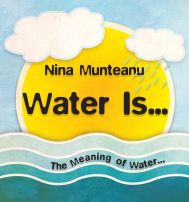
 

Water Is-COVER-webWater Is… The Meaning of Water

I also read from my non-fiction book “Water Is… The Meaning of Water.” I read several quotes from “Water Is…”. The water quotes had earlier been displayed at a photographic art exhibition in the Great Hall of the Mississauga Civic Centre. The art exhibition celebrated the Waterfront Connection wetland construction, a realized vision of the late Jim Tovey.

Morphology-Looking Up

Photo Art in the Great Hall of the Mississauga Civic Centre

WaterIs story-photo

Quote from Nina Munteanu’s “Water Is…” displayed alongside photo art

Water-travel

Quote from “Water Is…” displayed at the Civic Centre in Mississauga


Joshua Creek Heritage Art Centre

JoshuaCreekArtCentre

Back patio of Joshua Creek Art Centre (photo by Nina Munteanu)

Envisioned by Sybil Rampen as a place to meet, collaborate and cultivate relationships, the Joshua Creek Heritage Art Centre was established at the 1827 heritage house on Rampen’s family farm on Burnhamthorpe Road in Oakville. The art centre serves the community as a gathering place—creative media workshops, films, musical events, lectures and weddings. The facility promotes local heritage and accessibility. Ecological integrity remains central to its activities.

Joshua Creek
JoshuaCreek

JoshuaCk05

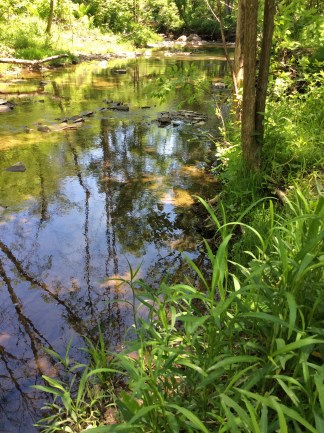
Joshua Creek (photo by Nina Munteanu)

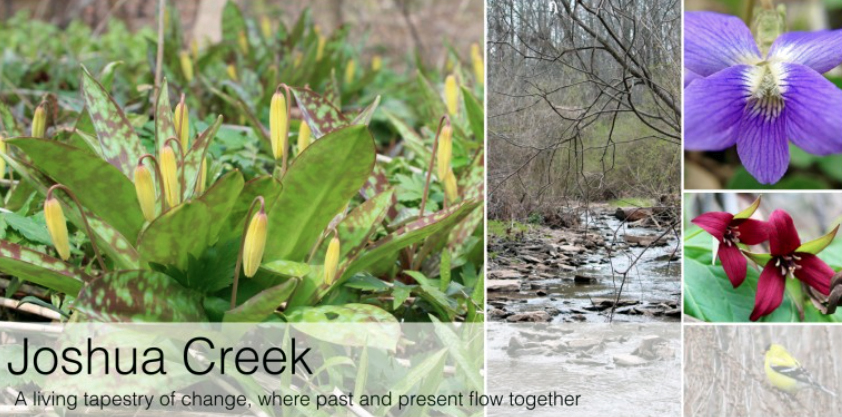
Joshua Creek originates near the art centre north of Burnhamthorpe Road and flows about 6 km south through the farm then mostly forest, eventually emptying into Lake Ontario. I was told that the creek has good water quality, apparently the best in the county. Oakvillegreen.org provides some history on Joshua Creek:

“Joshua Creek exists as a patchwork of past glories and present changes on a very dynamic and human-controlled landscape… many of its lands were cleared and altered beyond recognition, with only certain key areas left mostly to nature. In spite of these influences, Joshua Creek is home to 3 small Environmentally Sensitive Areas (ESAs), although two of these – Joshua Creek Valley and Wildflower Woods – have declined since they were highlighted in the 1970’s, and while still valuable, may no longer qualify as ESAs in the future. In only a handful of decades, development has quickly covered most of the lower two thirds of the creek’s land base, including important parts of its ESAs. In several areas, Joshua’s natural winding “meander” has been artificially straightened in order to efficiently use the land on either side. And in many places, foreign species have invaded the natural areas of the creek, changing the ecosystem in a big way.

JoshuaCk03But Joshua is a spirited creek – in spite of all it has been through, Joshua Creek is among the top two urban creeks for healthy water quality, and is still inhabited by a variety of aquatic animals like small fish and insects. Joshua Creek is home to forests, wetlands and thickets with around 150 plant species, and provides an important natural habitat corridor for the movement of birds and other animals, including migratory species. Rather than exclusively shrinking, there are also areas of Joshua Creek that are actually in the middle of regrowing their forests, and in spite of everything, Joshua still retains some beautiful gems of natural areas.”

nina-2014aaa

Nina Munteanu is an ecologist, limnologist and internationally published author of award-nominated speculative novels, short stories and non-fiction. She is co-editor of Europa SF and currently teaches writing courses at George Brown College and the University of Toronto. Visit www.ninamunteanu.ca for the latest on her books.
JoshuaCreek-WaterBanner


When Do You Know Your Story Is Finished?

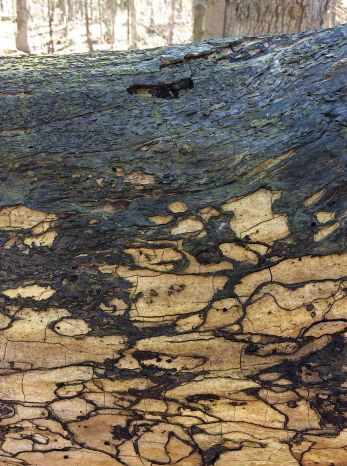
patterns-Spalting-LR

Spalted maple log (photo by Nina Munteanu)

A student of mine once asked me how many drafts it took to get the final version of a story. I answered cagily: as many as you need. I wasn’t trying to be cheeky or elusive. In truth, this is a question that only you can answer; and it will be different with each story you write.

George Lucas once said in an interview about the remaking of Star Wars that in the film industry, projects were never finished; only abandoned. What he meant by this was that at some point in the creative and revision process of polishing a story, you have to stop and show it to the world. Let your baby walk and stand on its own.

This is a big step for all beginning writers and many will freeze. Terrified at the idea of failure or censure, they end up sabotaging their own work. If you’re emotionally or psychologically not ready for the consequences of getting published, then you will falter, procrastinate, forever fuss over your creations and convince yourself that it isn’t ready. In truth, it’s you who aren’t ready.

This is a shame because to have written an entire novel is a great accomplishment. You’ve already done what over 80% of those who embark on a book don’t do: finish it. To halt the process by entering a perpetual cycle of revision is admitting defeat when you have really won the major battle. It’s like that fatal stumble on the last leg of a homerun.

If the idea is to publish, then you need to give yourself a kind of deadline or goal, based on something that makes sense to you and is achievable. This could even include a time deadline.

Robert J. Sawyer’s response to the question of “when do you stop revising?” was: “When you’ve taken out all the boring bits.” That may seem on the face of it either too simple or too abstract. But, in fact, he is right on the mark. However, to truly achieve that conclusion and consequently get your manuscript to where it is meant to be without you lingering like a frightened ghost, you need to accurately perceive what “boring” is. In order to do this you need to do several things.

The first is to gain objectivity of your work. You accomplish this by setting it aside for a while and letting it “breathe” (really, you’re letting yourself breathe). By distancing yourself a little from your work, you are able to return with a fresh outlook and read it more like a reader. Your “boring” meter will be running better this way and you will be in a better position to pick out redundancies, overly long exposition and detail, lack of context, “talking heads”, lack of action or tension, and confusing or awkward sentences. The other thing you gain with distance is the ability to describe your book’s theme and major plot. What is it really about? You need to reach the point where you can describe it in a couple of sentences or even a few words as you would describe a movie you like to a curious friend who hasn’t seen it yet.

patterns-Spalting log and blu-green stain fungus LR

Carbon cushion fungus spalting maple log (photo by Nina Munteanu)

Once you’ve gained some objectivity, you can critique each scene and each character for his or her plot purpose within that central plot and theme. You can also assess each sub-plot’s role within the major plot and theme. When every paragraph within every scene within every chapter of your story scintillates with purpose and meaning, you have accomplished your task of removing the boring bits. Now you have a story that is finished.

Art is self-expression and expression is a reflection of the culture and time in which you live. Stories are a snapshot of time and place. Treat your art like life; some revision is good but at some point you need to just LIVE. Let go of your work and move on to the next chapter.


Nina MunteanuNina Munteanu is an ecologist, limnologist and internationally published author of award-nominated speculative novels, short stories and non-fiction. She is co-editor of Europa SF and currently teaches writing courses at George Brown College and the University of Toronto. Visit www.ninamunteanu.ca for the latest on her books.
 

What Did You Do Before You Were Famous…?

Vanc Library-Atrium2

Vancouver Central Library (photo by Nina Munteanu)

So, you’re a famous author now…

You’ve published several books and they sold more than a dozen copies each. In fact, a few have been translated and are in second printings. You’ve received some recognition and awards and a bazillion nominations. You’ve landed some speaking engagements with writing and reader groups and a movie producer is soliciting a treatment from you. You have a following…Fans who “stalk” you at the writer conventions you participate in. Fans who want to co-write the sequel to your current bestseller with you, because they understand your universe—and your characters—so well. You discover that some fans have gone ahead and written fan-fic about your main character and universe on the Internet—a sign of adoration. Really.

But you weren’t always famous…

Neither was John Steinbeck, Ursula Le Guin, J.D. Salinger, Harper Lee or J.K. Rowling…

When did the transition occur for them? It’s not that easy to peg and it isn’t that obvious. This is partly because, it depends on each writer’s own criteria for success and fame. Particularly given that many writers aren’t, in fact, seeking fame, per se.

However, what every career writer wants, which often comes alongside fame is this: autonomy and the ability to write for a living without having to sneak it in at midnight after you’re finished your “real” job.

No one is “born” a writer; most of us start out doing something else to make a living. In the meantime, we work hard on what we love and what feeds our souls and our passion for storytelling. We assiduously write on stolen time and submit queries and letters. We do research and marketing. We write drafts, do revisions, attend classes and read books. All hoping to eventually write full time.

Let’s look at the humble roots of some famed writers and what key moment signified their move into the light of career novelist:

JK RowlingJ.K. Rowling was an unemployed single mother on public assistance when she wrote the first book. The book was rejected by over a dozen publishers before a small British publisher, Bloomsbury, said yes.

JohnSteinbeckJohn Steinbeck worked through many odd jobs before earning enough to work as a full time writer. His day jobs included: apprentice painter, fruit picker, estate caretaker and Madison Square Garden construction worker. He also ran a fish hatchery in Lake Tahoe and did guided tours there.

MargaretAtwoodMargaret Atwood worked in a coffee shop. She says her first job experience was NOT ideal: She had to deal with a difficult cash register, a rude ex-boyfriend who would come by just to stare at her and barely tip, and fellow employees who were definitely not friendship material.

WilliamFaulknerBefore his writing career blossomed, William Faulkner worked for the postal service, as postmaster at the University of Mississippi. In his resignation note, he summarized the struggle of art and commerce faced by most authors: “As long as I live under the capitalist system I expect to have my life influenced by the demands of moneyed people. But I will be damned if I propose to be at the beck and call of every itinerant scoundrel who has two cents to invest in a postage stamp. This, sir, is my resignation.”

JD SallingerIn a 1953 interview, J.D. Salinger shared that he had served as entertainment director on the HMS Kungsholm, a Swedish luxury liner. He drew on the experience for his short story “Teddy”, which takes place on a liner.

Ursula_Le_GuinUrsula Le Guin struggled initially to be published in the mainstream fiction world, but her first three novels, Rocannon’s World, Planet of Exile and City of Illusions, put her on the sci-fi map.

JamesJoyceAn accomplished tenor, James Joyce made money singing for his supper before his work was published.

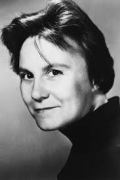
HarperLeeHarper Lee worked as a reservation clerk for Eastern Air Lines for several years, writing stories in her spare time. A windfall came when a friend offered her a Chirsmas gift of one year’s wages and one year off to write whatever she pleased; she wrote the first draft of “To Kill a Mockingbird”.

stephen kingStephen King was a janitor for a high school as he struggled to get his fiction published. His time wheeling the cart through the halls inspired him to write the opening girl’s locker room scene in “Carrie”, his breakout novel.

KurtVonnegutKurt Vonnegut managed Americas first Saab dealership in Cape Cod during the late 1950s, a job he joked about in a 2004 essay, “I now believe my failure as a dealer … explains what would otherwise remain a deep mystery: why the Swedes have never given me a Nobel prize for literature.”

Virginia_WoolfWhen Virginia Woolf’s brilliant novels failed to find a publisher, she and her husband Leonard bought a printing press and set up their own publishing compay Hogarth Press in their living room. They published Woolf’s masterful novels, such as Orlando and To The Lighthouse, as well as T.S. Eliot’s The Waste Land, among other classics of the era.

TS EliotT.S. Eliot worked as a clerk for Lloyds Bank of London. During that time, he composed “The Waste Land”.

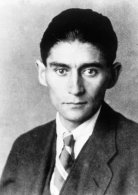
Franz KafkaFranz Kafka served as the Chief Legal Secretary of the Workmen’s Accident Insurance Institute. Obviously.

Douglas Adams was a bodyguard. Even published authors often have to work other jobs to make ends meet, Douglas Adamsand The Hitchhiker’s Guide to the Galaxy author Douglas Adams was no exception: At one point, he served as a bodyguard for a wealthy Arabian family while he wrote for radio shows and Monty Python. Good writers are good multitaskers!

James_michenerJames A. Michener was a teacher before writing only at age 40. He Michener is notable more for his output than his age. The Tales of the South Pacific author (whose Pulitzer Prize-winning book would later be adapted into a Broadway musical) wrote a staggering 40 books after the age of 40—nearly a George_Orwellbook a year—after spending much of his life as a teacher.

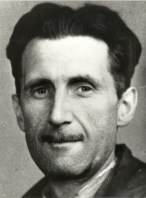
Before he wrote 1984, George Orwell served as an officer of the Indian Imperial Police in Burma, where he was known for his “sense of utter fairness.”


nina-2014-BWNina Munteanu is an ecologist, limnologist and internationally published author of award-nominated speculative novels, short stories and non-fiction. She is co-editor of Europa SF and currently teaches writing courses at George Brown College and the University of Toronto. Visit www.ninamunteanu.ca for the latest on her books.
 

Sensual Writing and Why I Love the Smell of Smoke

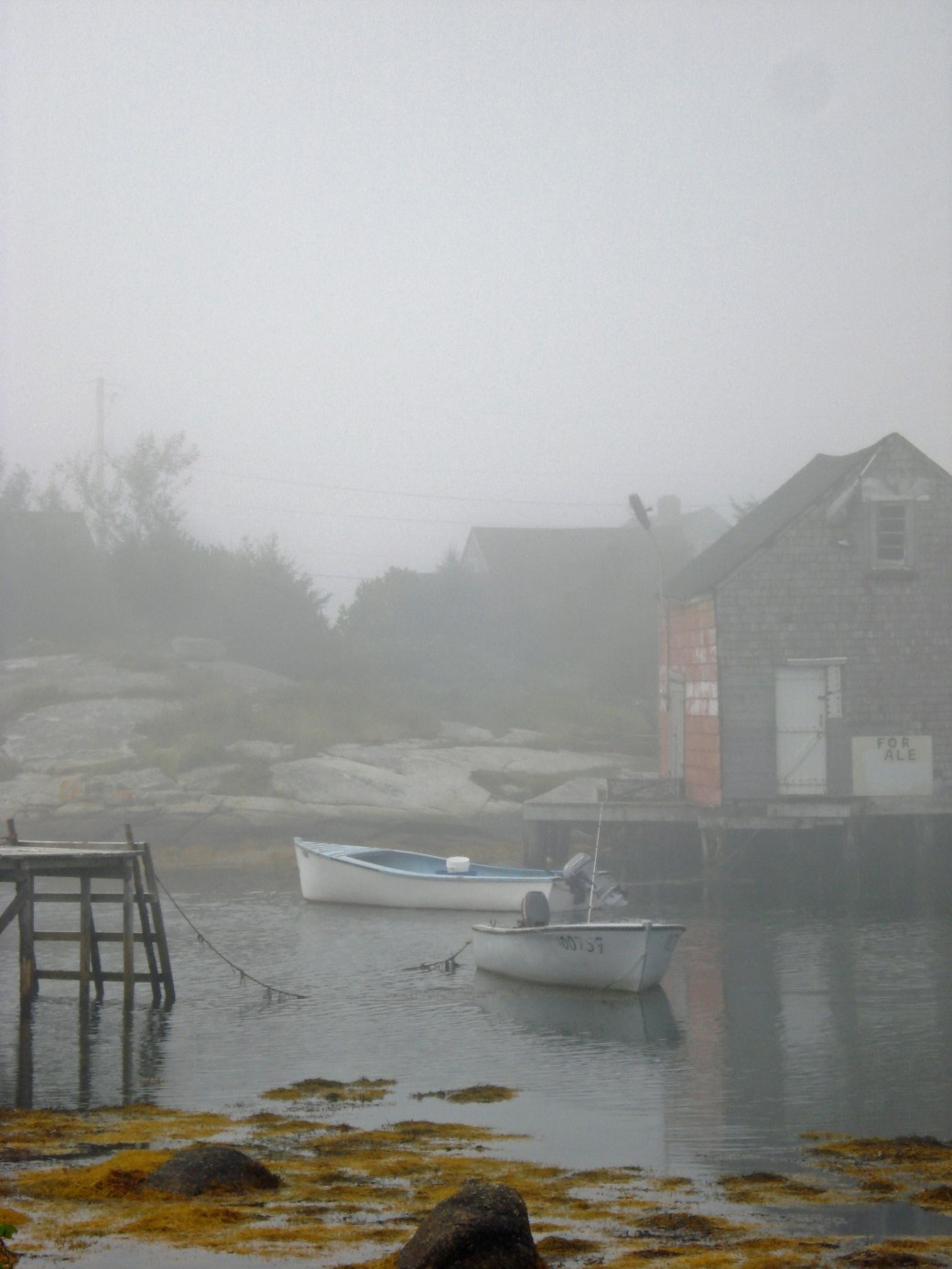
Prospect Point-fog

Prospect Point, NS (photo by Nina Munteanu)

Last week, as I was driving along a winding country road on my way to Bridgewater from Lunenburg, I ran across the smoke of a small fire. They were obviously doing some roadside spring clearing.

Without thinking, I slid the window open and inhaled deeply. I was preparing to experience the exquisite “taste of home”. As I breathed in the aroma of burning vegetation, memories of outdoor campfires and old wood-burning stoves flooded in from my childhood. A goofy smile slid across my face as I bathed in the joyful innocence of adventure, wonder and the comfort of the hearth. I’d had a wonderful childhood and the smell of smoke brought it back to me in its full glory.

What does this have to do with sensual writing? Everything. Storytelling shares universal truth through metaphor, delivered from the heart. Sensual writing doesn’t just involve making sure to include at least a few senses like sight, sound, smell, taste and touch in your narrative. To write sensually involves much more than the simple description of a sense, though this is certainly the first step (and something all too often neglected by novice writers). To not connect a described sense to a memory or emotion is to miss a very important opportunity as a storyteller: that of enlightening the reader on some aspect of the point of view (POV) character experiencing the sense (things like their history, the quality and nature of their relationships, their viewpoints, education, prejudices, how and what they’ve experienced in their life).

Here’s what I mean:

EXAMPLE 1: Ben walked into the Grand Banker Pub and immediately caught the tantalizing aroma of garlic and pears amid the din of jubilant laughter, cackles and desultory conversation. The amber light enhanced the rich tones of nautical oak. Ben saw some friends drinking in the corner and sauntered toward them, smiling.

farm in fog-Liverpool NS

Farm near Liverpool, NS (photo by Nina Munteanu)

EXAMPLE 2: Ben stopped at the door of the Grand Banker Pub, inhaling the exquisite aroma of garlic and pears amid the din of jubilant laughter, cackles and desultory conversation. For a moment he was back on the boat, reliving the party that changed his life. He’d stopped eating pears after that. Ben caught sight of his friends drinking in the corner, beneath the amber light. Like a sailor seizing a rope, he sauntered toward them, a huge smile pasted on his face.

The first example describes; the second example emotes. The first example nicely describes the place but it doesn’t provide us with any information about Ben, except that he likes the aroma of garlic and pears. We don’t know why. In the second example, his senses are used to hint at intrigue linked to memories that, in turn, are linked to the associated sense—in this case the smell of garlic and pears. This is the power of sensual writing. Bringing it back home.

Nina MunteanuNina Munteanu is an ecologist, limnologist and internationally published author of award-nominated speculative novels, short stories and non-fiction. She is co-editor of Europa SF and currently teaches writing courses at George Brown College and the University of Toronto. Visit www.ninamunteanu.ca for the latest on her books.
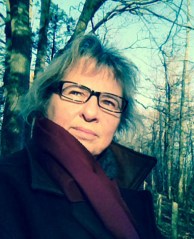
Nina Munteanu’s “The Way of Water” Receives More Praise

Exile-CanTales ClimateChange copyNina Munteanu’s near-future speculative short story “The Way of Water” in Bruce Meyer’s (editor) “Cli Fi: Canadian Tales of Climate Change”, published by Exile Editions in 2017, will appear again in Rosarium Publishing / Future Fiction’s anthology “New Dimensions in International Science Fiction in April 2018.

She imagines its coolness gliding down her throat. Wet with a lingering aftertaste of fish and mud. She imagines its deep voice resonating through her in primal notes; echoes from when the dinosaurs quenched their throats in the Triassic swamps.

Water is a shape shifter.

It changes yet stays the same, shifting its face with the climate. It wanders the earth like a gypsy, stealing from where it is needed and giving whimsically where it isn’t wanted.

Dizzy and shivering in the blistering heat, Hilda shuffles forward with the snaking line of people in the dusty square in front of University College where her mother used to teach. The sun beats down, crawling on her skin like an insect. She’s been standing for an hour in the queue for the public water tap.

“The Way of Water” is a near-future vision that explores the nuances of corporate and government corruption and deceit together with resource warfare. An ecologist and technologist, Nina Munteanu uses both fiction and non-fiction to examine our humanity in the face of climate change and our changing relationship with technology and Nature.

A recent review of the anthology by Emilie Moorhouse in Prism International Magazine, entitled “Courage and Imagination in Cli-Fi: Canadian Tales of Climate Change” and carried by the National Observer, describes it this way:

“The seventeen stories in this book edited by Bruce Meyer examine how humankind might struggle with the potential devastation of climate change in the near or distant future. Soon after I finished reading the book, Cape Town—known in precolonial times as “the place where clouds gather”—announced that it was only a few months away from what it called “Day Zero,” the day the city would officially run out of water, making the similarities between fiction and reality more than unsettling. Munteanu’s story is set in a futuristic Canada that has been mined of all its water by thirsty corporations who have taken over control of the resource. Rain has not fallen on Canadian soil in years due to advances in geoengineering and weather manipulation preventing rain clouds from going anywhere north of the Canada-US border…I believe that fiction offers up two much-needed ingredients in the fight to prevent climate change: courage and imagination. It is my hope that more fiction writers will take up the task of writing in this promising new genre and use their imagination to inspire readers to collectively work towards a more sustainable future.”—Emilie Moorhouse, Prism International


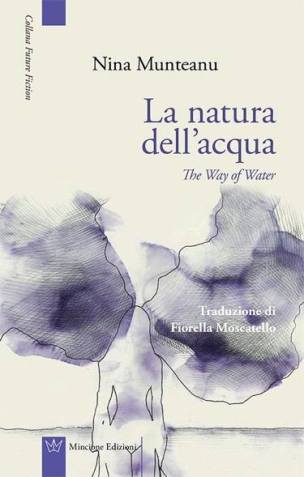
The Way of Water-COVERA bilingual print book by Mincione Edizioni (Rome) showcased “The Way of Water” in Italian (“La natura dell’acqua”, translated by Fiorella Moscatello) and English along with a recounting of what inspired it: “The Story of Water” (“La storia dell’acqua”) in 2016.

“In ‘The Way of Water’, Nina Munteanu pens her love letter to water, exulting it as a liquid that has semi-magical properties…’The Way of Water’ evokes a sense of awareness about issues of access to water and about the dangers of imbalances in that access.”—Derek Newman-Stille, Speculating Canada


“In a short story in which every word has its weight, Nina Munteanu manages to describe a dystopia with ecological, political, social and economic elements and Hilda’s reactions to her situation with a great emotional intensity. To avoid thirst, Hilda ends up embracing an extreme idea, a last hope linked to water.

‘The Way of Water’ is a story of the kind you hope is science fiction but you fear is not.”—Massimo Luciani


FF-TheWayOfWater” ‘The Way of Water’ is to be ‘a shapeshifter,’ says Nina Munteanu in her dystopian narrative, where she draws a dark scenario and, unfortunately, not too improbable in the near future. In the universe of the story water has become a very precious commodity: rationed consumption, credits (always of water) accounted for and debts collected…The Chinese multinationals have exchanged the public debt of other states with their water reserves with which, now, they can control the climate, deciding when and where it will rain. Who understands this dirty game has been silenced, like Hilda’s mother, a limnologist, inexplicably arrested and never returned; like the daughter of two water vendors, mysteriously disappeared, after having decided not to bow to economic powers: Hanna, who now prefers secure virtual identities to evanescent real appearances. Water. The two, like the covalent bond of a complex molecule, develop a relationship of attraction and repulsion that will first make them meet and then, little by little, will change into a tormented love but, at the same time, so pure as to cause Hilda at great risk, to make an extreme decision that will allow Hanna to realize the strange prophecy that the internal voice, perhaps the consciousness of water, had resonated in the two women for a long time.

Nina Munteanu recounts that this element is also a form of love; a story to read, not only to deal with the possible but, above all, to understand that the time still available to “love” may be less than what we believe.”—Simone Casavecchia, SoloLibri.net

FF - Rosarium Cover copy“The Way of Water” will also appear alongside a collection of international works (including authors from Greece, Nigeria, China, India, Russia, Mexico, USA, UK, Italy, Canada (yours truly), Cuba, and Zimbabwe) in Bill Campbell and Francesco Verso’s Rosarium Publishing / Future Fiction’s anthology “New Dimensions in International Science Fiction” in April 2018.

“Nina Munteanu’s “The Way of Water” is perhaps more esoteric in its focus and more abstract in its approach, but I likewise found it to be a strong story. In an interesting scarcity future in which we follow the fate of a character abandoned by her mother, water itself becomes a character. In the second paragraph we’re told that “Water is a shape shifter,” and in the next page we encounter the following description: “Water was paradox. Aggressive yet yielding. Life-giving yet dangerous. Floods. Droughts. Mudslides. Tsunamis. Water cut recursive patterns of creative destruction through the landscape, an ouroboros remembering.” These descriptive musings cleverly turn out to be more than metaphors and tie in directly to the tale’s surprising ending.”—Alvaro Zinos-Amaro, IntergalacticMedicineShow.com


Nina MunteanuNina Munteanu is an ecologist, limnologist and internationally published author of award-nominated speculative novels, short stories and non-fiction. She is co-editor of Europa SF and currently teaches writing courses at George Brown College and the University of Toronto. Visit www.ninamunteanu.ca for the latest on her books.


The Gestalt Nature of Passion & Success

What is to give light must endure burning —Victor Frankl


Tree Deer Lake

Deer Lake Park, BC (photo by Nina Munteanu)

“Any writing lays the writer open to judgment about the quality of his work and thought,” writes Ralph Keyes, author of The Courage to Write. “The closer [the writer] gets to painful personal truths, the more fear mounts—not just about what he might reveal, but about what he might discover should he venture too deeply inside. But to write well, that’s exactly where we must venture.”

So, why do it, then? Why bother? Is it worth it to make yourself totally vulnerable to the possible censure and ridicule of your peers, friends, and relatives? To serve up your heart on a platter to just have them drag it around as Stevie Nicks would say?…

Welcome to the threshold of your career as a writer. This is where many aspiring writers stop: in abject fear, not just of failure but of success. The only difference between those that don’t and those that do, is that the former come to terms with their fears, in fact learn to use them as a barometer to what is important.

“Everyone is afraid to write,” says Keyes. “They should be. Writing is dangerous…To love writing, fear writing and pray for the courage to write is no contradiction. It’s the essence of what we do.”

Unravelling the Secret…

How do you get past the fear of being exposed, past the anticipated disappointment of peers, past the terror of success?

The answer is passion. If you are writing about something you are passionate about, you will find the courage to see it through. “The more I read, and write,” says Keyes:

The more convinced I am that the best writing flows less from acquired skill than conviction expressed with courage. By this I don’t mean moral convictions, but the sense that what one has to say is something others need to know.—Ralph Keyes

This is ultimately what drives a writer to not just write but to publish: the need to share one’s story, over and over again. To prevail, persist, and ultimately succeed, a writer must have conviction and believe in his or her writing. You must believe that you have something to say that others want to read. Ask yourself why you are a writer. Your answer might surprise you.

Every writer is an artist. And every artist is a cultural reporter. One who sometimes holds the world accountable. “Real art,” says Susan Sontag, “makes us nervous.”

The first step, then, is to acknowledge your passion and own it. Flaunt it, even. Find your conviction, define what matters and explore it to the fullest. You will find that such an acknowledgement will give you the strength and fortitude to persist and persevere, particularly in the face of those fears. Use the fears to guide you into that journey of personal truths. Frederick Busch described it this way: “You go to dark places so that you can get there, steal the trophy and get out.”

John Steinbeck, author of Grapes of Wrath, said:

If there is a magic in story writing, and I am convinced that there is, no one has ever been able to reduce it to a recipe that can be passed from one person to another. The formula seems to lie solely in the aching urge of the writer to convey something he feels important to the reader.—John Steinbeck

Finding Success Through Meaning

Victor Frankl survived Auschwitz to become an important neurologist and psychiatrist of our time and to write Man’s Search for Meaning.

Blogger Gavin Ortlund wrote: “What gripped me most about [Frankl’s] book, and has stayed with me to this day, is not the horror and barbarity of his experiences in concentration camps—when you pick up a book about the holocaust, you expect that. What really struck me was Frankl’s repeated insistence that even there, in the most inhumane and horrific conditions imaginable, the greatest struggle is not mere survival. The greatest struggle is finding meaning. As I was reading, I was struck with this thought: going to a concentration camp is not the worst thing that can happen to a person. The worst that can happen to a person is not having a transcendent reason to live. Life is about more than finding comfort and avoiding suffering: it’s about finding what is ultimate, whatever the cost.”

Victor Frankl wisely said:

The more you aim at success and make it a target, the more you are going to miss it. Success, like happiness, cannot be pursued; it must ensue, and it only does so as the unintended side effect of one’s personal dedication to a cause greater than oneself or as the by-product of one’s surrender to a person other than oneself. Happiness must happen, and the same holds for success: you have to let it happen by not caring about it. I want you to listen to what your conscience commands you to do and go on to carry it out to the best of your knowledge. Then you will live to see that in the long-run—in the long-run, I say!—success will follow you precisely because you had forgotten to think about it.—Victor Frankl

Frankl is talking about passion. “If you long to excel as a writer,” says Margot Finke, author of How to Keep Your Passion and Survive as a Writer, “treasure the passion that is unique within yourself. Take the irreplaceable elements of your life and craft them into your own personal contribution to the world.” It’s what has you up to 2 am, pounding the keys. It follows you down the street and to work with thoughts of another world. It puts a notebook and pen in your hand as you drive to the store, ready to record thoughts about a character, scene or place. “For the passionate, writing is not a choice; it’s a force that cannot be denied.”

tree water deer lake

Deer Lake, BC (photo by Nina Munteanu)

Finke says it astutely: You need to be passionate about everything to do with your book—the writing and rewriting, your critique group, your research, your search for the best agent/editor, plus your query letter. Not to mention the passion that goes into promoting your book. Nothing less will assure your survival—and success—as a writer.

Follow your inner moonlight, don’t hide the madness—Allen Ginsberg, American poet

This article is an excerpt from The Fiction Writer: Get Published, Write Now! by Nina Munteanu

References:

Finke, Margot. 2008. “How to Keep Your Passion and Survive as a Writer.” In: The Purple Crayonhttp://www.underdown.org/mf_ writing_passion

Frankl, Victor. (1946) 1997. Man’s Search for Meaning. Pocket Books. 224 pp.

Keyes, Ralph. 1999. The Writer’s Guide to Creativity. Writer’s Digest, 1999.

Munteanu, Nina. 2009. The Fiction Writer: Get Published, Write Now. Starfire World Syndicate. 294pp

Ortlund, Gavin. 2008. “Frankl, the holocaust and meaning.” In: Let Us Hold Fast. http://gro1983.blogspot.com/2008/02/frankl-holocaust-and-meaning.html

Slonim Aronie, Nancy. 1998. Writing from the Heart: Tapping the Power of Your Inner Voice. Hyperion. 256pp.


nina-2014aaaNina Munteanu is an ecologist, limnologist and internationally published author of award-nominated speculative novels, short stories and non-fiction. She is co-editor of Europa SF and currently teaches writing courses at George Brown College and the University of Toronto. Visit www.ninamunteanu.ca for the latest on her books.


Write About What You Know

Cedar trunk base-LR

Base of cedar tree, Little Rouge woodland (photo by Nina Munteanu)

How many times have you been told to write about what you know? And how many times have you trusted that advice? Well, how interesting is that?!? We think our lives are dull, boring, and mundane. We write – and read – to get away from it, don’t we?

Well, yes…and no…

In the final analysis, even good “escapist” writing, like some science fiction, despite its alien settings and creatures of imagination, is grounded in the realities of our every-day lives, which form the basis of human nature. Love, ambition, trust, hate, envy, honor, courage. All these are universal human traits which the writer taps into and ultimately writes about.

“In the 19th century, John Keats wrote to a nightingale, an urn, a season. Simple, everyday things that he knew,” say Kim Addonizio and Dorianne Laux in The Writer’s Guide to Creativity. “Walt Whitman described the stars, a live oak, a field. They began with what they knew, what was at hand, what shimmered around them in the ordinary world.”

The advice, “write what you know” isn’t about literal truths; it’s about what you know inside. As SF author Marg Gilks says, “You know more than you think.”

Twisted Truths & Inner Knowledge

In an article in Writing World, Gilks discusses how a writer can use her own knowledge and experiences in everyday life and translate them into something far from ordinary. You start with universal experiences.

Get Emotional

What excites you; what frightens you; what angers you, makes you sad, happy. These are emotions we all feel. When we give our characters experiences similar to our own, we breathe life into both character and experience and provide the reader an anchor for her heart.

Get Sensational

You know how it feels when the sun shines on your face or the rain drenches you. You know how it feels to have your knees shake with fatigue after a long climb on a hot day or the invigorating freshness of a cool lake in summer.

Get People Around You

My neighbor has a funny way of focusing his gaze slightly off me when he talks, like he can’t look me directly in the eyes. When he approaches my house to deliver the paper, Dennis strides with a lilting gait as he listens to hip-hop on his ipod.

Drawing from what you observe and know of the people around you is one of a writer’s most treasured resources for character description. I always carry a notebook with me no matter where I go, even if it’s only to the grocery store.

The Magic of Storytelling

A writer is like a magician. You play upon what readers all “know” then surprise them with the unexpected.

Unleashing your imagination and letting it soar while grounding yourself in the realities of universal truths is the stuff of which stories are made. This is what most of us mean when we say “write what you know.”

“Unless you are writing about a personal tragedy,” says Tina Morgan of Fiction Factor, “you will have to use your imagination. Use the creativity that drives you to write in the first place. Take those feelings you have every day and amplify them. Make them more intense, more vivid. Before you know it, you will be ‘writing what you know’.”

“Next time you hear ‘write what you know,’ ” says Gilks, “you’ll realize that you know an awful lot about what matters most in a story’s success. It’s waiting only to be shaped by your imagination.”

Write Real

Literary Agent, Rachelle Gardner, provided a great definition of “write what you know” on her blog. Here’s an excerpt:

Most people think “write what you know” means you have to put characters in situations you’re personally familiar with. If you’re a mom with five kids, you should write a mom story. If you’ve fought cancer and won, you should write about that. But in my opinion, that’s not what it means.

Write what you know means write with authenticity about thoughts, feelings, experiences of life. Be honest. Write from a deep place. Don’t write from the surface. Whether you’re writing about parenthood or cancer or anything else… be real.

Don’t reflect what you know from other people or the media… write what you know from your own inner life.

Nina MunteanuNina Munteanu is an ecologist, limnologist and internationally published author of award-nominated speculative novels, short stories and non-fiction. She is co-editor of Europa SF and currently teaches writing courses at George Brown College and the University of Toronto. Visit www.ninamunteanu.ca for the latest on her books.
 

On Conducting Interviews…

Nina-SiriusXM-Radio 2016

Nina Munteanu doing an interview on SiriusXM Radio

Being a Smart Reporter

Whether you’re writing non-fiction or fiction, at some point in your research you may need to conduct an interview. It might be a local police officer who handled a case similar to something you are writing about; it might be a scientist in the university who has critical information on something covered in your story; it might be a friend who has experienced something you wish to get first-hand knowledge of for one of your characters. Either way, you need to conduct your interview professionally, efficiently and with sufficient thoroughness and accuracy to get what you need.

In other words, you need to be a good journalist.

Pillars of Good Journalism

The pillars of good journalism include: 1) thoroughness; 2) accuracy; 3) fairness; and 4) transparency.

These days, thoroughness means more than exhausting your resources, real or virtual. It also includes getting input from your readers, says Robin Good, online publisher and new media communication expert.

Likewise, says Good, being accurate may include saying what you don’t know and being open to input from your readership; this invites dialogue between you and your respected reader. The key, of course, is respect.

Which brings us to fairness: this includes listening to different viewpoints and incorporating them into your journalism. Fairness, says Good, is about letting people respond and listening to them, particularly if they disagree with you. Both learn from the experience.

And, lastly, part of being transparent is revealing and making accessible to your readers your source material.

Things to Consider When Doing That Interview

As a writer it’s guaranteed that you will at some time require information from a real person. Depending on the nature of your research and its intended destination and audience, you may wish to conduct anything from a casual phone or email enquiry to a full-blown formal face-to-face interview. This will also depend on who you are interviewing, from a neighbor to a government official.

In an article in Writer’s Digest, Joy Lanzendorfer suggests that you adopt the following tactics to get your interview further than the basics and to fully take advantage of your source (oh, I didn’t mean it that way!):

  • Do your research ahead of time: read up on your subject and include both sides of an issue (if that’s relevant). This helps you to respond intelligently with better follow-up questions.
  • Ask open-ended questions: avoid yes and no questions and get them to elaborate. Asking “why” solicits explanation, which will give your article depth.
  • Ask for examples: this provides a personal aspect to the article that gives it warmth and makes it more interesting.
  • Ask personal questions: what’s the worst thing that can happen? They can simply say “no”; the up side is you may get a gem. The personal angle from the interviewee’s perspective gives your article some potential emotional aspect that gives it human-interest.
  • Ask the interviewee for any further thoughts to share: it’s an innocuous question, but can offer-up more gems. What it provides you with is the possibility of getting something you might not have thought of, sparked by your conversation.

Don’t be afraid to confirm names, places or any facts your interviewee brings up. This will inspire confidence in them about the thoroughness and accuracy in your reporting.

What NOT to Say…

In an article in Writer’s Digest, Nancie Hudson gives the following excellent advice about what you should never say to a source:

  • “There’s no rush.”—never reveal your deadline. Think about it; what do you normally do when there’s a deadline? Right … If you’re going to share a deadline, say it’s sooner than it really is.
  • “I’ve never covered this topic before.”—this kind of information is inappropriate and may make your interviewee uncomfortable (and worried about your unproven abilities to properly interview her instead of focusing on herself and what you’re interviewing her about). Besides, it’s not what you know but what you learn that counts.
  • “I’ll be using what you say extensively.”—don’t assume and make promises you may not be able to keep, until after the interview.
  • “I don’t get it.”—if you don’t understand something, get clarification rather than making a negative remark that tends to stop them dead in their tracks.
  • “you can review the piece before it’s published.”—this is something that can be dealt with over the phone to confirm facts; the source doesn’t need to see the whole piece before it’s published.
  • “This is going to be a fantastic article!”—keep your tone professional; there’s nothing wrong with being positive, but you should maintain a professional attitude that inspires confidence in the interviewee rather than giddy wild energy. 


References

Good, Robin. “The Pillars of Good Journalism”. In: Master New Media:  http://www.masternewmedia.org/news/2005/01/29/the_pillars_of_good_journalism.htm

Hudson, Nancie. 2007. “6 Things You Should Never Say to a Source”. In: Writer’s Digest. April, 2007.

Lanzendorfer, Joy. 2008. “Interview Tactics”. In: Writer’s Digest. February, 2008.

Munteanu, Nina. 2009. “The Fiction Writer: Get Published, Write Now!” Starfire World Syndicate. Chapter “I”.


Nina Munteanu

Nina Munteanu is an ecologist, limnologist and internationally published author of award-nominated speculative novels, short stories and non-fiction. She is co-editor of Europa SF and currently teaches writing courses at George Brown College and the University of Toronto. Visit www.ninamunteanu.ca for the latest on her books.


Find Your Focus This Christmas–Reprise

snow-scene-road-to-Wolfville-barn_edited-1

Barn on road to Wolfville, NS (photo by Nina Munteanu)

How many of you are still running around preparing for the Christmas celebration or secular family festivity? Buying that last minute gift you’d forgotten or were chasing down since a bazillion days ago? Or making last minute changes to your travel plans, house-cleaning for guests, mailing of cards or parcels or meal preparations?

Well, you’re reading this blog post … That means you’re sitting down and taking a minute to relax and regroup. That’s good. Remember to breathe… while I tell you a story…

I’d just finished a three-day drive through snow and rain storms from Mahone Bay, Nova Scotia, to Toronto, Ontario, where I was staying for a few days before catching a flight to Vancouver to spend Christmas with my son and good friends on the west coast. Talk about fast living.

I move around a lot these days. It helps me to appreciate some of the most simple things in life and reminds me of what I love most about Christmas: how it focuses my heart and reconnects me. I don’t mean just with relatives and friends either, although the season certainly does that. I’m talking about my soul and the universe itself. Before I became an itinerant, Christmas bustled with my responsibilities as primary caregiver, social coordinator and hostess of major parties. After I’d said goodbye to our visiting friends and done the dishes and tidied the house; after my husband and son had gone to bed, I sat in the dark living room lit only with the Christmas Tree lights and the flickering candle, and listened to soft Christmas music, primed to write.

snow-christmas2008-sammy

Sammy

My male cat, smelling fresh from outside, found his rightful place on my lap and settled there, pinning me down with love. And there, as I breathed in the scent of wax and fir and cat I found myself again.

Most of us think of Christmas as a busy time, of getting together (often dutifully) with family and friends, exchanging presents and feasting. Christmas is certainly this, but that is only a shallow view of a far deeper event; and I don’t mean only for Christians.

Whether celebrating the holy light of Hannukah or the birth of Jesus, or the winter solstice, this season provides us with the opportunity to meditate on far more than the surficial nature of the symbols we have come to associate with the season: the Christmas tree, presents, turkey dinner, Santa Claus or Saint Nicholas—most of which originate from pagan tradition, by the way.

Says Lama Christie McNally (author of The Tibetan Book of Meditation), “once you dive below the surface, you will discover a beautiful clear place—like a diamond hidden beneath the rubble. It is your own mind, uncovered … Tibetans say we have only just begun the process of awakening—that we still have quite a way to go in our evolutionary process. And it has nothing to do with building spaceships or computers. The next step in our evolution takes place within.”

Christmas is, more than anything, a time of embracing paradox. It is an opportunity to still oneself amid the bustle; to find joy in duty; to give of one’s precious time when others have none, to embrace selflessness when surrounded by promoted selfishness, and to be genuine in a commercial and dishonest world. If one were to look beyond the rhetoric and imposed tradition, the Christmas season represents a time of focus, a time to reflect on one’s genuine nature and altruistic destiny. A time to reconnect with the harmony and balance in our lives.

A time to sit with our cat, pinned with love, and write our next novel.

Merry Christmas!


Nina Munteanu is an ecologist and internationally published author of award-nominated speculative novels, short stories and non-fiction. She is co-editor of Europa SF and currently teaches writing courses at George Brown College and the University of Toronto. Visit www.ninamunteanu.ca for the latest on her books.

Why & When Should You Write a Synopsis?

cat typewriterWhen I was just beginning as a novelist, the publisher guideline request “submit a synopsis and sample chapters” was intimidating to say the least. There was something terrifyingly daunting about writing a succinct compelling summary of my 300-page novel packaged into just a few pages. As author Katherine Eliska Kimbriel said, “The instinctive response [of the author] is to clap on a helmet and start digging a trench.” I had a right to be terrified. In some ways the synopsis is the hardest thing for a novelist to write. Yet it is the first thing most publishers and agents want (and have time) to see of your cherished project (aside from those sample chapters, of course). Every fiction writer who wants to sell in the current market must know how to write a synopsis because that’s what an editor wants to see first. Most editors (if they’re good) are overworked with scarce enough time to answer their phones, much less their emails.

I’m not going to describe how to write a synopsis in this post. If you want to see an excellent summary of what a good synopsis should look like, there are many excellent descriptions by professional editors, agents and other writers who describe what a synopsis is and even give examples—including my own book “The Fiction Writer: Get Published, Write Now!”, Chapter “O.” Elizabeth Lyon also describes the synopsis (as opposed to an outline) in several of her how-to books.cat-on-typewriter

Instead, I present here why you should write that dreaded synopsis, and way before you finish your book, too.

Synopsis vs. Outline

A synopsis is not an outline. Both are useful to the writer, yet each serves a very different purpose. An outline is a tool (usually just for the writer) that sketches plot items of a book. It provides a skeleton or framework of people, places and their relationships to the storyline that permits the writer to ultimately gauge scene, setting, and character depth or even determine whether a character is required (every character must have a reason to be in the book, usually to move the plot). For writers just beginning, this is an excellent tool to keep the narrative spare and compelling and to remove superfluous characters and other things (a common beginning writer inclination). A synopsis, on the other hand, is an in-depth summary of the entire book that weaves in thematic elements with plot to portray a compelling often multi-level story arc. This is usually what an editor wants to see, although I have seen them request an outline as well. To put it basically, the outline describes what happens when and to whom, while the synopsis includes the “why” part.

What a synopsis does (along with the sample chapters and extremely important query letter) is get your manuscript read by an editor. That’s the real purpose of a synopsis. An editor makes his/her decision to look at your manuscript based on these three items: query letter (intro to you); sample chapters; and your synopsis. Ultimately, their decision resides with whether your project fits their own imprint at the time.

If that isn’t reason enough to write a synopsis of your novel, below are two others:

Synopsis as Storytelling Prompt

cat typewriter2A synopsis of your novel goes beyond the outline to help polish elements of story arc, characterization with plot and setting with story. The synopsis can answer questions perplexing the author, stuck on a scene or plot item. It helps you weave your novel’s elements into a well-integrated story that is compelling at many levels. Because the synopsis is based on emotional turning points (related to theme), character dramatization of the premise is a key foundation. It makes sense to write drafts of your synopsis as you go along in the novel; that way it’s useful to both you and to the editor and then it’s more or less written when you need to submit it along with sample chapters…and not quite as daunting a task either.

Synopsis as Marketing Summary

Your well-written synopsis is often used internally by the publishing house staff (e.g., by artist, copywriter, and sales department) once your novel has been accepted.

I advise you to write it now. Don’t wait. Make the synopsis work for you throughout your novel’s journey.


nina-2014aaNina Munteanu is an ecologist and internationally published author of award-nominated speculative novels, short stories and non-fiction. She is co-editor of Europa SF and currently teaches writing courses at George Brown College and the University of Toronto. Visit www.ninamunteanu.ca for the latest on her books.