Limestone Genre Expo—One of Kingston’s Gems

Nina-Hali-clifi2

Nina Munteanu and Halli Villegas

I recently attended the Limestone Genre Expo in Kingston, Ontario. Held at the St. Lawrence College campus—ideally suited to a literary festival—the expo featured panels, readings, and workshops.

The festival was well attended by local, Canadian and international authors, editors, publishers, and readers—all committed to exploring literature, the arts and to having a good time.

Authors included Tanya Huff, Nancy Kilpatrick, Caro Soles, Violette Malan, Rick Blechta, Matthew Bin and Eve Langlais, among many others.

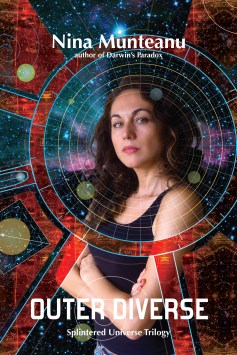
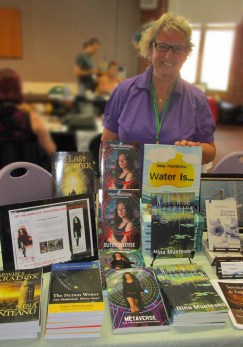
Nina-books-Limestone2016

Science Fiction GOH in 2016

Publishers included Exile Editions, Chizine Publications, Bundoran Press and others. Exile Editions recently published their anthology “Cli Fi: Canadian Tales of Climate Change” in which my story “The Way of Water” appears.

I was Limestone’s Science Fiction Guest of Honour last year; this year I got to relax and I sat on three panels.

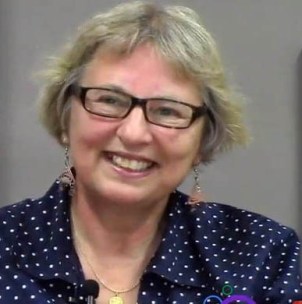
NancyKilpatrick-limestone

Nancy Kilpatrick

In “Alternative Histories to Cyberpunk“, I was joined on the panel by Matthew Bin, Maldonado Skaff-Koren, Eric Desmarais, Michael Romaric, Dominic Bercier, and A.A. Jankiewicz with moderator Sean Moreland. We mostly discussed the literary device of alternative timelines and unanimously concluded that visionary science fiction that “failed” to predict the future was successful alternative “history”. This theme continued in the science fiction panel.

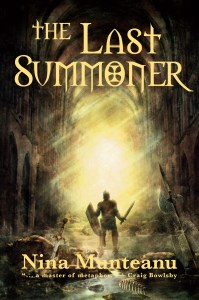
Cover1_LastSummoner-frontcoverI brought up the notion of history’s quantum properties, a braided flow of multi-dimensional and entangled realities. This served as premise for my alternative historical time-travel fantasy The Last Summoner, which takes place in fifteenth century Poland. On her fourteenth birthday, the baroness Vivianne Von Grunwald discovers that she can change history as an aeon; but she soon realizes that, while she is able to change some disastrous historic event, its entangled “destiny” indelibly moves closer to the original consequence than her intended one: yet another disaster. My scientific approach to alternate history is what excited me to write this, my only fantasy so far among a dozen science fiction novels.

CaroSoles

Caro Soles

In the panel “The Science behind Science Fiction” I was joined by Katherine Prairie, Anita Dolman, Matthew Bin, Lisa Tooey, Kristen Kiomall, and A.A. Jankiewicz with moderator Caroline Frechette. We discussed the utility and risk of using pseudoscience in a science fiction story, a genre known for expectations of accuracy and prescience. In 1979, Ray Bradbury wrote: People ask me to predict the future, when all I want to do is prevent it. Better yet, build it. Predicting the future is much too easy, anyway. You look at the people around you, the street you stand on, the visible air you breathe, and predict more of the same. To hell with more. I want better.”

TanyaHuff-signing

Tanya Huff signs one of her books

Depending on whether the story is considered hard SF or soft SF, this level of accuracy in both actual science presented as premise and ability to predict science and technology will vary. Given that science fiction is largely metaphoric, the predictability of an SF story is secondary to the story’s value as metaphor and allegory. The consensus of the panel was that the audience determined the importance of precision and accuracy. In the final analysis, if the story is grounded in its own consistency, anything is possible.

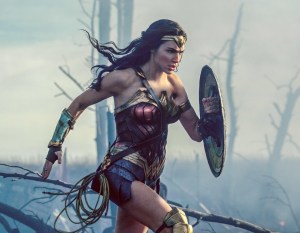
WonderWoman

Wonder Woman (Gal Gadot)

In “Women in Genre” I was joined by Violette Malan, Nancy Kilpatrick, Eve Langland, Alyssa Cooper, Janet Kellogg, and Liz Lindsay with moderator Sandra Kasturi. The banter was by turns fun and edgy, all lubricated with good humour by all participants. As a writer of science fiction and fantasy of which 90% feature a “strong female protagonist”, I brought up the controversy of what, in fact, determines a good female lead in story. Why do so many heroines still provide just a kick-ass version of a male hero? Why are so many female protagonist heroes still defined by the rules of what makes a male a hero? Where are the real women?

Politics south of us aside—along with Margaret Atwood’s all too realistic Handmaid’s Tale (currently playing on Bravo TV), we discussed the recent push-back in Texas on the all-women showing of “Wonder Woman,” which prompted many heated tweets. The Atlantic recently published an article on the film—and surrounding events—entitled “Wonder Woman, Heroine of the Post-Truth Age.”wonder-woman-movie-poster

Wonder Woman is set at the height of World War I, but is otherwise a decidedly modern movie,” writes Megan Garber of The Atlantic. “It stars a woman (Gal Gadot) and treats a man, Steve (Chris Pine), as its damsel-in-distress. It has managed, even before its release, to enrage men’s-rights activists, which is quickly becoming a reliable measure of a movie’s modernity.”

wonderwoman-golden lassoWonder Woman uses a unique weapon, the Golden Lasso, known as the Lasso of Truth—because it compels anyone wrapped by it to reveal the truth.

When William Moulton Marston—scientist and inventor of the polygraph machine— created the Wonder Woman character, he envisioned a warrior who was also an investigator of truth. “Frankly,” he said, “Wonder Woman is psychological propaganda for the new type of woman who should, I believe, rule the world.” He believed that a world that gave women more power—politically and otherwise—would be more peaceful, more empathetic, more worthy, writes Garber. “And so Wonder Woman is a work that is decidedly at home, across its dimensions, in the world of 2017—a world that is on the one hand newly recognizing women’s widespread capabilities, but that is on the other deeply anxious about ‘alternative facts,’ about ‘fake news,’ about politically weaponized lies, about falsehoods that are uttered with no seeming consequence. The princess’s lasso, that shimmering metaphor for objective truth, is a symbol of aspiration; seen in another way, though, it is a symbol of despair. Here, in this wobbling weapon, is “wonder” as in awe; here, too, is “wonder” as in uncertainty. Here is a tool of truth that is decidedly ambivalent about its own powers. “How do I know you’re not lying to me right now?” the princess asks the spy. And the only way she can know for sure is to trust, paradoxically, in magic.”

Magic is OK, though. It is, after all, the stuff from which we draw when we write.

Nina-SF GOH-Limestone Genre Expo

Nina Munteanu, Science Fiction GOH at Limestone Genre Expo 2016

nina-2014aaNina Munteanu is an ecologist and internationally published author of award-nominated speculative novels, short stories and non-fiction. She is co-editor of Europa SF and currently teaches writing courses at George Brown College and the University of Toronto. Visit www.ninamunteanu.ca for the latest on her books.

“Water Is…” Recommended Summer Read by Water Canada Magazine

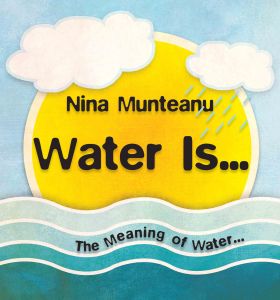
water-is-cover-web“Water Is…” (Pixl Press) by Nina Munteanu was among several books recommended by Water Canada as a good summer read for 2017.

One of Canada’s premiere magazines on issues of water and water management, Water Canada suggested recharging this summer with “the latest selection of winning water management fiction and non-fiction.” The list comprised mostly of 2017 publications, but included a few late arrivals from 2016.

Recommendations included:

schmidt comps.indd“Water, Abundance, Scarcity, and Security in the Age of Humanity” (NYU Press) by Jeremy Schmidt is an intellectual history of America’s water management philosophy. Debates over how human impacts on the planet, writes Water Canada, are connected to a new geological epoch—“the Anthropocene”—tend to focus on either the social causes of environmental crises or scientific assessments of the Earth system. Schmidt shows how, when it comes to water, the two are one and the same. The very way we think about managing water resources validates putting ever more water to use for some human purposes at the expense of others.


ARiverCaptured“A River Captured: The Columbia River Treaty and Catastrophic Change” (RMB Books) By Eileen Delehanty Pearkes reviews key historical events that preceded the Treaty, including the Depression-era construction of Grand Coulee Dam in central Washington, a project that resulted in the extirpation of prolific runs of chinook, coho and sockeye into B.C. Prompted by concerns over the 1948 flood, American and Canadian political leaders began to focus their policy energy on governing the flow of the snow-charged Columbia to suit agricultural and industrial interests. Water Canada writes, “Referring to national and provincial politics, First Nations history, and ecology, the narrative weaves from the present day to the past and back again in an engaging and unflinching examination of how and why Canada decided to sell water storage rights to American interests. The resulting Treaty flooded three major river valleys with four dams, all constructed in a single decade.”


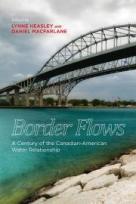
borderflows“Border Flows: A Century of the Canadian-American Water Relationship” (University of Calgary Press), Lynne Heasley and Daniel Macfarlane, editors, explore and discuss Canada-U.S. governance. Water Canada writes, “Ranging across the continent, from the Great Lakes to the Northwest Passage to the Salish Sea, the histories in Border Flows offer critical insights into the historical struggle to care for these vital waters. From multiple perspectives, the book reveals alternative paradigms in water history, law, and policy at scales from the local to the transnational. Students, concerned citizens, and policymakers alike will benefit from the lessons to be found along this critical international border.”


NewYork2140“New York 2140” (Orbit) by Kim Stanley Robinson is a novel set in New York City following major sea level rises due to climate change. Water Canada writes, “The book explores a full eight separate narratives: the market trader, who finds opportunities where others find trouble; the detective, whose work will never disappear, along with the lawyers, of course; an Internet star; a building’s manager; and two boys who don’t live there, but have no other home—and who are more important to its future than anyone might imagine. Lastly there are the coders, temporary residents on the roof, whose disappearance triggers a sequence of events that threatens the existence of all– and even the long-hidden foundations on which the city rests.”


Death and Life of Great Lakes_FINAL 1129.indd“The Death and Life of the Great Lakes” (WW Norton & Company Inc. Press) by Dan Egan is a frank discussion of the threat under which the five Great Lakes currently suffer. This book, writes Water Canada is “prize-winning reporter Dan Egan’s compulsively readable portrait of an ecological catastrophe happening right before our eyes, blending the epic story of the lakes with an examination of the perils they face and the ways we can restore and preserve them for generations to come…Egan explores why outbreaks of toxic algae stemming from the over-application of farm fertilizer have left massive biological “dead zones” that threaten the supply of fresh water. He examines fluctuations in the levels of the lakes caused by manmade climate change and overzealous dredging of shipping channels. And he reports on the chronic threats to siphon off Great Lakes water to slake drier regions of America or to be sold abroad.”


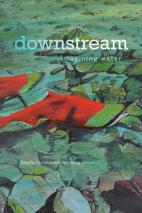
downstream“Downstream: reimagining water” (Wilfred Laurier University Press) by Dorothy Christian & Rita Wong “brings together artists, writers, scientists, scholars, environmentalists, and activists who understand that our shared human need for clean water is crucial to building peace and good relationships with one another and the planet. This book explores the key roles that culture, arts, and the humanities play in supporting healthy water-based ecology and provides local, global, and Indigenous perspectives on water that help to guide our societies in a time of global warming. The contributions range from practical to visionary, and each of the four sections closes with a poem to encourage personal freedom along with collective care,” writes Water Canada.


water-is-cover-webWater Is…The Meaning of Water (Pixl Press) by Nina Munteanu “explores the many dimension of H2O—the practical, the physical, and the magical. Water Is… represents the culmination of over twenty-five years of her study of water. During her consulting career for industry and government, Munteanu discovered a great disparity between humanity’s use, appreciation, and understanding of water. This set in motion a quest to further explore our most incredible yet largely misunderstood and undervalued substance. Part history, part science and part philosophy and spirituality, Water Is… combines personal journey with scientific discovery that explores water’s many “identities” and ultimately our own,” writes Water CanadaWater Is…  was recommended by Margaret Atwood as her premiere choice in the New York Times ‘The Year in Reading‘ for 2016.


WaterCanada-LOGO

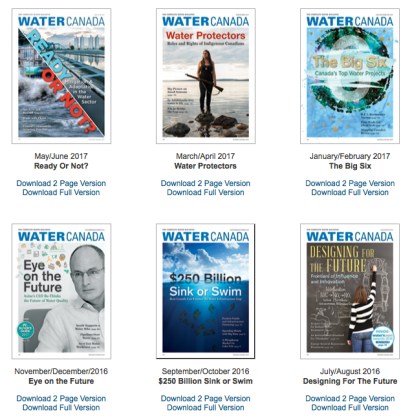
WaterCanada-coversWater Canada is a Canadian magazine that provides news and feature articles on water and water management. They currently co-host the Canadian Water Summit, a gathering of professionals from the water industry including academia, NGOs, local communities, cleantech, industry associations, manufacturing and government. “Delegates will explore opportunities to collaborate on water technology and infrastructure finance, ‘blue economy’ growth and climate change resilience through progressive policies, smart business and bold investment leadership.” This year’s summit will occur June 22, 2017 at the Sheraton Centre Hotel in Toronto.

DS-2008-16 copy

Nina Munteanu kayaking Desolation Sound on the west coast of British Columbia


#CanadaReads #Canada150 #WhatIsWATER #TheMeaningOfWater #WaterCanada


Canadian Tales of Climate Change–Launch in Toronto, May 7th 2017

Launching CLI-FI: Canadian Tales of Climate Change (anthology)

CliFiAnthologyLaunch-Exile
Sunday, May 7, at the SUPERMARKET Restaurant & Bar
268 Augusta Avenue (Kennsington Market) 3:00–5:30

Toronto, ON

Readings start at 3:30

Featuring:

Geoffrey W. Cole, Rati Mehrotra

Peter Timmerman, Leslie Goodreid, Halli Villegas

John Oughton, Nina Munteanu, Lynn Hutchinson-Lee

“With the world facing the greatest global crisis of all time – climate change – personal and political indifference has wrought a series of unfolding complications that are altering our planet, and threatening our very existence. These stories of Climate Fiction (Cli-Fi) feature perspectives by culturally diverse Canadian writers of short fiction, science fiction, fantasy, and futurist works, and transcend traditional doomsday stories by inspiring us to overcome the bleak forecasted results of our current indifference.”
amazing-picture-of-earth-as-seen-from-space

Creating the Right Time and Place to Write

Look and you will find it—what is unsought will go undetected —Sophocles

Snowy Path scarborough

Snowy path, Scarborough (photo by Nina Munteanu)

During a time when I had a demanding job as an scientist, wife and mother and community volunteer, I wrote and successfully marketed five books, over a dozen short stories and many articles and reviews. Some people, including my publishers, thought I never slept (true) or cloned myself (possibly). They couldn’t believe my productivity when I was so busy with life.

But I did what I did, because I’d worked out a system. One that I could live by. One that fit my lifestyle. One created out of respect for my art as part of my “busy” life of commitments.

The truth of it is that we all lead busy lives. If you are going to finish that novel you’ve been working on over the years or book of poems sitting in the bottom dresser drawer, you need to make a commitment. Aside from giving your art the respect it deserves, it comes down to creating a time and place to write.

It starts with being realistic about your daily schedules and routines and inclinations and picking a time and place accordingly. Try to be consistent. It’s actually best to create a routine related to both time and place; the key is to be realistic about it. Don’t fight your inclinations or habits; instead, build your writing into your lifestyle. This will ensure success.

Choose a Sacred Time

Finding the time to write is critical to succeeding. If you don’t dedicate time to write you won’t. Believe me, you won’t. Make it sacred.

Writer Louise DeSalvo shared a common story about her experience: “Many people I know who want to write but don’t (my husband, Ernie, for example) or who want to write more than they have but say they can’t find the time (my friend Marla) have told me that taking the time to write seems so, well, self-indulgent, self-involved, frivolous even. And that finding the time to write—even a diary, much less fiction or memoir or poetry—in their busy schedules is impossible. I’ll write when I have the time, they say.”

It doesn’t work that way. You don’t find time; you must create it.

Writing of any kind is a commitment you make to yourself. So, choose a time that’s right for you. If you’re a morning person, don’t pick the end of the day when you don’t function as well. Instead, pick the early morning to write, a time before everyone else gets up and the day’s distractions pile up.

It’s actually best to create a routine related to time of the day (e.g., fixed time such as every morning or right after supper) or based on some other constant in your life, say the school calendar or your daily activities. The key is to be realistic about the time(s) you’ve chosen. In other words, your goals should be realistic and realizable.

The second part of the commitment is sharing it with your family and friends so that they will respect your sacred writing time. By sharing how important it is to you, you also give them the gift of sharing the experience with you and they are more likely to respect your time alone to write. This is also why choosing a routine makes more sense; it is something your family and friends will better remember and abide by. Making it easy for others is part of making it easy for you.

Find Your Own Rhythm

There’s no rule for when and how often you write. Because frequency and schedule of writing depends on the kind of writing you do (e.g., novel, short stories, articles, research) and on your own rhythms, you must decide what works best.

Most writers recommend that you commit to a regular writing schedule that is realistic to your overall routine and biorhythms. Some recommend you write in the morning, after a refreshing sleep; others suggest you write at night, at the end of the day when your memories are more fresh with the day’s activities and stimulations. Yet others suggest you take time out during the day to jot down relevant experiences as close to the time as the muse hits you, then spend some time at the end of the day compiling it into your work.

In the end, it’s up to you to choose what works for you and your own rhythms. When is the best time for you to write? And for how long or how many pages? Once you decide, stick to that schedule.

Choose a Sacred Place

Writing is a reflective activity that requires the right environment. The best environment is a quiet one with no interruptions and where you are alone. A reflective environment will let you find a connection with your muse. You need a place where you can relax and not worry about someone barging in or other things distracting you from your reflections. You should also feel physically comfortable and the place should meet your time requirements.

Because the suitability of a place can change with the time of day, learn the rhythms that affect the place you wish to write in. For example, the kitchen may be the centre of activity during the day but an oasis of quietude during the evening. Similarly, learn what kind of environment stimulates and nurtures your writing. Does music help or do you need complete quiet? Do you respond to nature’s soft breezes and sounds or do you prefer to surround yourself with the anonymous murmur of a crowded café for company?

Places that work for me include the local coffee shop, a park near my house, a library or other quiet place where I can enjoy uninterrupted anonymity. Where you write may reflect what you’re writing and vice versa. To some extent, you are environment and environment is you. You might try a few places first and see what happens to your muse. What you write while sitting under an apple tree in the breeze hearing the birds singing may differ from what you write while sitting in your living room by the crackling fireplace with music playing or sitting at your desk in your bedroom in total silence or in a crowded café surrounded by cheerful bustle.

Again, as with your choice of time, tell your family and friends about your sacred place. Provide rules, if you have to. Let’s say it’s a desk in the study. You may, for instance, let others know that your “mess” is part of a work in progress, perhaps even explain a little about it so they understand the nature of what you’re doing and why it should not be touched or moved or used, even while you are away from it. This will ensure that they respect your things and what you’re doing.

Credit Riv path in snow

Path along Credit River (photo by Nina Munteanu)

In the end it comes to finding the right integration and balance of time and place. Letting others know of your choices is equally important; this will ensure that they can help you, not hinder you in your writing. While writing is to a large extent an activity done in solitude, the journey is far from secluded. Ensure that you have a good support network.

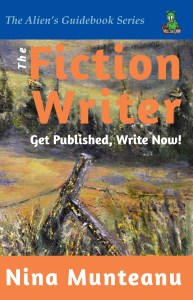
This article is an excerpt from my fiction writing guidebooks The Fiction Writer: Get Published, Write Now! (Starfire, 2009) and The Journal Writer: Finding Your Voice (Pixl Press, 2013), part of the Alien Guidebook Series.


Nina Munteanu is an ecologist and internationally published author of award-nominated speculative novels, short stories and non-fiction. She is co-editor of Europa SF and currently teaches writing courses at George Brown College and the University of Toronto. Visit www.ninamunteanu.ca for the latest on her books.


Make Your Opening Count

Beech-leaves-trunk LR

Beach leaves (photo by Nina Munteanu)

When I began marketing my short stories and novels, I was often puzzled by the request to just see the first page of my work. “I only need to see the first page to know whether your book is good or ready to publish,” they would say. I was aghast. How presumptuous! Surely, that wasn’t enough! Surely they were just putting me off and not really interested in the first place! That couldn’t be enough…

I was wrong. It often is.

Years later—and currently a seasoned writer of over a dozen published books, short stories, and a writing teacher & coach—I can tell you that it is generally true. The opening page is usually enough for me to know whether the author is professional, knows their ending, writes a compelling and directed story, and whether the story is ready to be published. Does that sound pompous of me?

If you think so, then read no further. If you’re not sure, read on and I hope to convince you that your opening is more than likely the most important part of your novel or short story. That doesn’t mean that you should inordinately concentrate on polishing it over and over and over at the expense of the rest of your work. That won’t work either; this is because a good opening relies on a good story. Think of it as the introduction to the core issue of your story. Think of it as a long title. If you don’t know where your story is going or what it is about, then your opening will undeniably reflect this.

A good opening resonates with the theme of your story; a great opening creatively illuminates that theme with intrigue.

My post entitled “How to Hook Your Reader and Deliver” discusses the three-step model of hooking the reader in an opening and how to maintain their interest throughout the length of your story. You can read it there, so I won’t go into it here (e.g., the steps are 1) arouse; 2) delay; and 3) reward). What I wanted to talk about here is more about what goes into a first page of any piece of writing to make it a great opening.

“A novel is like a car,” says Sol Stein (Sol Stein on Writing). “It won’t go anywhere until you start the engine.” Take a look at the opening of your WIP and see if its engine is running.

Openings should:

  • Begin with something happening to a major character
  • Arouse the Reader’s interest (with intrigue)
    • Introduce conflict
    • Threaten a likeable character
    • Reveal an unusual character or situation
  • Begin with a “scene” (action; “showing”) not a “sequel” (reflection; “telling”)

“Start your book with a scene where something is happening, and action takes place; show the drama not the reaction to it,” says Elizabeth Lyon (The Sell Your Novel Toolkit). Start in the middle, not the beginning of your story. Dwight Swain (Techniques of the Selling Writer) tells us that scenes and their corresponding sequels form an integral part of a story’s larger plot movement. And to apply sound story-building, this dynamic relationship must be first understood. You “show” in a scene, which plays out the goal, conflict and inevitable disaster of the protagonist; sequels, in turn, often “tell” of the protagonist’s reaction, dilemma, and decision (which propels the character on to the next scene). Yet, time and again, I read openings that are actually sequels (leading to action; but not action themselves). They may languish and even entertain with clever intellectual description, but they do not scintillate with intrigue or direction. It is a little like reading the review of a movie before watching it for yourself (one of the reasons why I never consult a review before I watch a movie—because I want to live it with the characters first hand, or at least give myself the chance to).

Another way of thinking of the scene / sequel dynamic is to see them as cause and effect or action and reaction. An opening in action is more likely to grip the reader in its visceral intrigue and promise of the story’s direction than an intellectualization of an event that happened off stage.

The table below provides a few suggestions on what to include and what not to in an opening page.

Good Openings Don’t… Instead They…
Contain lots of back story Integrate back story in with scene as needed in the appropriate place
Contain lots of exposition, setting, character description, etc. Reveal place and character detail with action as needed
Start with reflection, explanations – particularly about something “off-stage” in time or space Start with action / conflict / turmoil / discovery – start mid-stride with intrigue, then reveal after…
Start with a dream or waking up or other ordinary / mundane scenario heading towards the action or conflict Start with something HAPPENING … Start with a SCENE in “the NOW” as it is happening
TELL SHOW


Beech-leaves-trunk LRThere are many ways to manage the fine balance of exposition, telling and showing and
other challenges in grabbing and keeping the reader’s interest; all very pertinent to your opening page. But that’s another article.


Nina Munteanu is an ecologist and internationally published author of award-nominated speculative novels, short stories and non-fiction. She is co-editor of Europa SF and currently teaches writing courses at George Brown College and the University of Toronto. Visit www.ninamunteanu.ca for the latest on her books.

The Introverted Writer: Using Radio to Sell Your Book

nina-coop-radio05Like most authors, I’m somewhat of an introvert. I don’t mind talking in front of people, but I don’t crave it and I often need a place to relax and recharge after. One thing I know I can do lots more of is talk about my books and the writing process on a more one-on-one mode. I think most authors do: How and why we write; what made us write that particular one; why it’s important; how it can help others.

Radio offers a much less intrusive and intimate way to reach out to the public. Talk shows, podcasts and online radio shows are popular among the mobile public who are often looking for an easy way to entertain as they travel. I’ve done many radio interviews and have found them very rewarding and successful in getting publicity for my books.

RadioGuestList.com (on BookMarketingTools.com) gives sound advice on how to get booked on talk shows to promote your book: “Radio DJ’s, talk show hosts, and podcast producers need to fill their air time.” They say. “If you can offer them credible, interesting discussion that keeps their audience tuned-in, you can likely get on the air to tell their audience about your book(s).”

RadioGuestList.com provides tips to help get you on the air about your book and I’ve provided several of them here:

  1. find shows interested in topics covered in your book: use Google, Twitter or BlogTalkRadio.com.
  2. choose an angle: offer story, topic and “how to” discussion topics. If you can “newsjack” onto a current trend or issue, even better!
  3. Write a short pitch that focuses on how the show’s audience can benefit from your interview. Offer to promote the show on your social media, which is a win-win for you and the station.
  4. Include vital contact information so they can find you easily. These can include email, phone number, Skype handle, bio and website.
  5. Provide potential focal points to discuss; you can even suggest questions, which all make the interview potentially easier to run.
  6. Offer and provide cover art, headshot, bio and related media that the show can use to promote your appearance. Include your social media accounts and website, etc. so they can add them. Let them know how you will promote the show too.

I’ve done several types of radio/podcast interview and they fall into three general camps: 1) those where I knew what the questions were going to be in advance; 2) those where I may have had an idea of topics to cover, and 3) those where I had no idea what we were going to talk about—except that it would involve my book in some way. In my opinion, the interviews that worked out the best were those in the last category.

Really!

The reason is that these interviews tended to be hosted by experienced and confident radio hosts and the interview was allowed to proceed organically, flowing like a real conversation—which made it more fun for me, the host and for the listening audience. These interviews often generated spontaneous laughter and travelled into surprising and crazy good places. I found that my voice relaxed as I just let the conversation flow and gave my confidence to the host—something the audience can also sense. A good interview is a little like doing a slow dance with a partner who is a good lead. Let your host lead and enjoy where it takes you. This doesn’t mean that you can’t nudge the topic into surprising new directions. That’s also part of the fun. They lead, you follow through, they pick up from that and so on.

Here are some tips for creating a great listening experience:

  1. Know your material; do the diligence of researching topics you may wish to discuss and have material with you if you feel comfortable consulting it (the material would need to be very accessible and you shouldn’t read long tracts of anything).
  2. Relax and enjoy the interview. Let the process flow naturally. It may take a turn you didn’t anticipate; just go with it. Let it be a conversation between host and guest; giving, receiving, learning, teaching.
  3. Don’t monopolize the discussion. The host often has something very interesting to add, which will journey into something interesting for the listeners. Give the host space to do that. Then bring in interesting answers.
  4. Be gracious and thank the host at the end. Let them—and your audience know—how much you enjoyed the experience.

RadioGuestList also wisely suggests that you (or your publicist) follow through with a quick email to thank the show’s producer and/or host. It’s also good to let them know how you will promote your interview and/or inform them when you do.

If the show went well you may wish to let them know that you’d love to do a repeat radiointerviewappearance. I have done that with several of my interview appearances with wonderful return visits.

For those of you conducting interviews—either for your book or an article you’re writing—I go over some dos and don’ts in Chapter I: Interviews & Other Weird Interactions of my fiction writing guide “The Fiction Writer: Get Published, Write Now!” They involve the four pillars of good journalism: thoroughness, accuracy, fairness, and transparency. Understanding what makes a good interviewer can help make you a better interviewee.


Nina Munteanu is an ecologist and internationally published author of award-nominated speculative novels, short stories and non-fiction. She is co-editor of Europa SF and currently teaches writing courses at George Brown College and the University of Toronto. Visit www.ninamunteanu.ca for the latest on her books.


Atwood, Water & The New York Times

“Water Is…” leads Atwood’s Pick for Books of 2016

Microsoft Word - Atwoods Picks-NYTimes.docx

ny-times-theyearinreaingEvery year, near Christmas, The New York Times puts out “The Year in Reading” in which they ask notably avid readers—who also happen to be poets, musicians, diplomats, filmmakers, novelists, actors and artists—to share the books that accompanied them through that year.

For the 2016 Year In Reading, The Times asked a prestigious and diverse readership, including Junot Diaz, Paul Simon, Carl Bernstein, Kareem Abdul-Jabbar, Elizabeth Banks, Samantha Power, Philip Pullman, Ann Pratchett, Orhan Pamuk, Drew Gilpin Fause, Anne Tyler, and many others to share their books of 2016.

There was also Booker Prize-winning and celebrated Canadian author and poet Margaret Atwood.

atwood-margaretMargaret Atwood is a winner of the Arthur C. Clarke Award and the Prince of Asturias Award for Literature as well as the Booker Prize (several times) and the Governor General’s Award. Animals and the environment feature in many of her books, particularly her speculative fiction, which reflects a strong view on environmental issues.atwood-angel-catbird

Several of her latest works (e.g., Oryx and Crake, Year of the Flood, MaddAddam) are eco-fiction and may be considered climate fiction. Atwood and partner, novelist Graeme Gibson, are the joint honorary presidents of the Rare Bird Club within BirdLife International. Atwood’s highly popular graphic novel Angel Catbird reflects an environmental sensitivity to the balance between wildlife and humans and their pets in urban settings.

Atwood’s choice for 2016 books came from her active, astute and compassionate environmentalism. Suggesting that many of her ‘The Year in Reading’ co-readers would emphasize fiction, history and politics, Atwood chose her books “instead from a still-neglected sector. All hail, elemental spirits! You’re making a comeback!”

Here are the four books Atwood recommends and why:

  1. water-is-cover-webWater Is…: The Meaning of Water” (Pixl Press) by Nina Munteanu. “We can’t live without it, so maybe we should start respecting it,” says Atwood. “This beautifully designed book by a limnologist looks at water from 12 different angles, from life and motion and vibration to beauty and prayer.” Water is emerging as one of the single most important resources of Planet Earth. Already scarce in some areas, it has become the new “gold” to be bought, traded, coveted, cherished, hoarded, and abused worldwide. It is currently traded on the Stock Exchange…Some see water as a commodity like everything else that can make them rich; they will claim it as their own to sell. Yet it cannot be “owned” or kept. Ultimately, water will do its job to energize you and give you life then quietly take its leave; it will move mountains particle by particle with a subtle hand; it will paint the world with beauty then return to its fold and rejoice; it will travel through the universe and transform worlds; it will transcend time and space to share and teach.
  1. hiddenlifeoftreesThe Hidden Life of Trees: What They Feel, How They Communicate—Discoveries From a Secret World” (Greystone Books) by Peter Wohlleben. In The Hidden Life of Trees, Peter Wohlleben shares his deep love of woods and forests and explains the amazing processes of life, death, and regeneration he has observed in the woodland and the amazing scientific processes behind the wonders of which we are blissfully unaware. Much like human families, tree parents live together with their children, communicate with them, and support them as they grow, sharing nutrients with those who are sick or struggling and creating an ecosystem that mitigates the impact of extremes of heat and cold for the whole group. As a result of such interactions, trees in a family or community are protected and can live to be very old. In contrast, solitary trees, like street kids, have a tough time of it and in most cases die much earlier than those in a group. Drawing on groundbreaking new discoveries, Wohlleben presents the science behind the secret and previously unknown life of trees and their communication abilities; he describes how these discoveries have informed his own practices in the forest around him. As he says, a happy forest is a healthy forest, and he believes that eco-friendly practices not only are economically sustainable but also benefit the health of our planet and the mental and physical health of all who live on Earth.
  1. weeds-mabeyWeeds: In Defense of Nature’s Most Unloved Plants” (Ecco) by Richard Mabey. “They’re better for you than you think,” says Atwood. “They hold the waste spaces of the world in place, and you can eat some of them.” Ever since the first human settlements 10,000 years ago, weeds have dogged our footsteps. They are there as the punishment of ‘thorns and thistles’ in Genesis and , two millennia later, as a symbol of Flanders Field. They are civilisations’ familiars, invading farmland and building-sites, war-zones and flower-beds across the globe. Yet living so intimately with us, they have been a blessing too. Weeds were the first crops, the first medicines. Burdock was the inspiration for Velcro. Cow parsley has become the fashionable adornment of Spring weddings. Weaving together the insights of botanists, gardeners, artists and poets with his own life-long fascination, Richard Mabey examines how we have tried to define them, explain their persistence, and draw moral lessons from them. One persons weed is another’s wild beauty.
  1. birds-and-peopleBirds and People” (Jonathan Cape) by Mark Cocker. “Vast, historical, contemporary, many-levelled,” says Atwood. “We’ve been inseparable from birds for millenniums. They’re crucial to our imaginative life and our human heritage, and part of our economic realities.” Vast in both scope and scale, the book draws upon Mark Cocker’s forty years of observing and thinking about birds. Part natural history and part cultural study, it describes and maps the entire spectrum of our engagements with birds, drawing in themes of history, literature, art, cuisine, language, lore, politics and the environment. In the end, this is a book as much about us as it is about birds.

“Time to pay attention to the nonhuman life around us, without which human life would fail,” Atwood concludes.

As we enter a new year of great uncertainty, particularly on how we and our environment will fare in a shifting political wind, these books offer diverse insight, a fresh and needed perspective and critical connection with our natural world–and each other through it.

Buy them, discuss them, share them. And save this planet.

Happy New Year!

jungfrau04

Jungfrau, Switzerland (photo by Nina Munteanu)

Nina Munteanu is an ecologist and internationally published author of award-nominated speculative novels, short stories and non-fiction. She is co-editor of Europa SF and currently teaches writing courses at George Brown College and the University of Toronto. Visit www.ninamunteanu.ca for the latest on her books.

Who’s Your Audience and Why Should You Care?

beach-boardwalk

The Beaches, Toronto (photo by Nina Munteanu)

The artistic process, whether painting or prose, is admittedly the child of self-expression. The long-standing image of the artist cloistered in her studio—hunched over a writing desk or standing before a canvas to create from the depths of his/her soul—is surely a truism. Artists create from the heart; we dive deep inside our often-tortured souls and closeted past to draw out the universal metaphors that speak to humanity and share—

Ay, there’s the rub. For to share is to have a dialogue and to have a meaningful dialogue is to demonstrate consideration of the other. Somewhere in that journey that began with self, others entered. It is, in fact, something of a paradox and a conundrum for many artists. One that has challenged the artistic community for centuries. It is also why many artists have relied on agents, benefactors, and advocates to effectively communicate, target — and even interpret—their often abstruse “message” to appropriate audiences.

Purists will tell you that a true artist need not consider her audience; because her self-expression naturally finds relevance with the culture and zeitgeist from which she writes through universally understood metaphor: her story is their story.

But is that enough?

I suppose it finally comes down to whether you are interested in sharing. I don’t know any published authors who don’t wish their books to sell. Every storyteller needs an audience to connect with and engage. That is ultimately what good storytelling does: engage, connect, rouse emotions and evoke empathic feelings. Make an impact.

Does identifying and targeting a specific audience result in more satisfied readers and ultimately better sales? Of course it does. The more you—and whoever is helping you market your work—know about your audience, the more likely you are going to attract them to your book, convince them to buy it and ultimately connect with them through story.

That’s the irony of art: it is a treasure that is created out of the depths of solitude but ultimately brought into the light and shared with the world. For your art to have impact, you must know and understand your world.

Knowing your audience will affect every aspect of your book project. It will help determine:

  • What your story is about and how you write it (e.g., language, “voice” or personality, narrative style, tone or mood/attitude, characters, setting and theme, even length)
  • What genre and sub-genre(s) it lies under
  • The look and tone of the cover and blurb (one that matches the story and its audience; I previously wrote about book jacket blurbs and book covers )
  • All aspects of promotion, including the language and images you use, where you direct your marketing and how (e.g., medium, timing, etc.)

For your work to succeed, it’s important to consider the following:

  • collision-with-paradise-smallWrite to the audience’s expectations (given the promise of your work): success of stories with readers will rely on the alignment of expected story structure, tone and endings. My romance SF therefore reads differently from my hard SF in so many ways.
  • darwins-paradoxWrite to the understanding level of your intended audience: how and what I write for my hard science fiction audience (with expectations on accurate and intelligent exploration and extrapolation on science) is different from the style I use for my historical fantasy. This will include “voice”, language and use of specific vocabulary, terms and concepts, sentence structure and pace.
  • Write with the knowledge of your relationship to the reader: how will you gain their empathy and buy-in to your story? This will depend on the genre of your work and expectations of its associated readership.


Understand Your Audience

Who is going to read your work? To what age group to they belong? What culture and sub-culture? What gender(s)? What education and intellectual capacity? Economic status? What regions? What political leanings? Prejudices and beliefs? What knowledge-base? For instance, you wouldn’t use a lot of multi-sylabic latinisms in an action thriller; but you might in a literary fiction or even high fantasy. If you research and create a profile of your intended reader, this will help you identify who you are writing to.  “Knowing or anticipating who will be reading what you have written is key to effective writing,” says SkillsYouNeed.com.

It isn’t enough to know who is reading, but why they are reading your writing. Ask yourself these two questions:

  1. Who do I want to read this? Who are you writing for? They are your primary audience; the ones you will truly resonate with your story; they will be your fans: who are they?
  2. Who else is likely to read this? This is your secondary audience, readers who may not necessarily read your genre but are interested in the issues or premise of your story or will appreciate how you’ve handled it in your story: who might they be? 


Writers are Solopreneurs

In his 2014 article in Forbes, Jayson DeMers shares that: “Market research was once the purview of only big companies. If you weren’t a Fortune 1000 brand, investing in any form of customer research was outside the scope of what many businesses could afford. Today, advances in market research technology have opened a whole range of services to even the smallest businesses. Small enterprises and solopreneurs routinely test ideas before they take them to market, saving tens of thousands of dollars and years of time developing products and services that fall flat with the market.”

Given the current publishing paradigm—which offers less and less to the author, writers are now more than ever required to understand their audience, given their need to be solopreneurs, succeeding on their own know-how, rather than relying on some marketing department that no longer exists.

To know your audience is to know your story better.

A previous version of this article was published in the Clarion Foundation blog and presented by Lynda Williams.


nina-2014aaNina Munteanu is an ecologist and internationally published author of award-nominated speculative novels, short stories and non-fiction. She is co-editor of Europa SF and currently teaches writing courses at George Brown College and the University of Toronto. Visit www.ninamunteanu.ca for the latest on her books.

Find Your Focus This Christmas–Reprise

christmas-ballsHow many of you are still running around preparing for the Christmas celebration or secular family festivity? Buying that last minute gift you’d forgotten or were chasing down since a bazillion days ago? Or making last minute changes to your travel plans, house-cleaning for guests, mailing of cards or parcels or meal preparations?

Well, you’re reading this blog post … That means you’re sitting down and taking a minute to relax and regroup. That’s good. Remember to breathe… while I tell you a story…

I’d just finished a three-day drive through snow and rain storms from Mahone Bay, Nova Scotia, to Toronto, Ontario, where I was staying for a few days before catching a flight to Vancouver to spend Christmas with my son and good friends on the west coast. Talk about fast living.

I move around a lot these days. It helps me to appreciate some of the most simple things in life and reminds me of what I love most about Christmas: how it focuses my heart and reconnects me. I don’t mean just with relatives and friends either, although the season certainly does that. I’m talking about my soul and the universe itself. Before I became an itinerant, Christmas bustled with my responsibilities as primary caregiver, social coordinator and hostess of major parties. After I’d said goodbye to our visiting friends and done the dishes and tidied the house; after my husband and son had gone to bed, I sat in the dark living room lit only with the Christmas Tree lights and the flickering candle, and listened to soft Christmas music, primed to write.

snow-christmas2008-sammyMy male cat, smelling fresh from outside, found his rightful place on my lap and settled there, pinning me down with love. And there, as I breathed in the scent of wax and fir and cat I found myself again.

Most of us think of Christmas as a busy time, of getting together (often dutifully) with family and friends, exchanging presents and feasting. Christmas is certainly this, but that is only a shallow view of a far deeper event; and I don’t mean only for Christians.

Whether celebrating the holy light of Hannukah or the birth of Jesus, or the winter solstice, this season provides us with the opportunity to meditate on far more than the surficial nature of the symbols we have come to associate with the season: the Christmas tree, presents, turkey dinner, Santa Claus or Saint Nicholas—most of which originate from pagan tradition, by the way.

Says Lama Christie McNally (author of The Tibetan Book of Meditation), “once you dive below the surface, you will discover a beautiful clear place—like a diamond hidden beneath the rubble. It is your own mind, uncovered … Tibetans say we have only just begun the process of awakening—that we still have quite a way to go in our evolutionary process. And it has nothing to do with building spaceships or computers. The next step in our evolution takes place within.”

snow-scene-road-to-Wolfville-barn_edited-1

Barn on the road to Wolfville, NS (photo by Nina Munteanu)

Christmas is, more than anything, a time of embracing paradox. It is an opportunity to still oneself amid the bustle; to find joy in duty; to give of one’s precious time when others have none, to embrace selflessness when surrounded by promoted selfishness, and to be genuine in a commercial and dishonest world. If one were to look beyond the rhetoric and imposed tradition, the Christmas season represents a time of focus, a time to reflect on one’s genuine nature and altruistic destiny. A time to reconnect with the harmony and balance in our lives.

A time to sit with our cat, pinned with love, and write our next novel.

Merry Christmas!


Nina Munteanu is an ecologist and internationally published author of award-nominated speculative novels, short stories and non-fiction. She is co-editor of Europa SF and currently teaches writing courses at George Brown College and the University of Toronto. Visit www.ninamunteanu.ca for the latest on her books.

Crossing into the Ecotone to Write Meaningful Eco-Fiction

If you have an apple and I have an apple and we exchange apples then you and I will still each have one apple. But if you have an idea and I have an idea and we exchange these ideas, then each of us will have two ideas.”—George Bernard Shaw


naturalselectionAt Calgary’s When Words Collide this past August, I moderated a panel on Eco-Fiction with publisher/writer Hayden Trenholm, and writers Michael J. Martineck, Sarah Kades, and Susan Forest. The panel was well attended; panelists and audience discussed and argued what eco-fiction was, its role in literature and storytelling generally, and even some of the risks of identifying a work as eco-fiction.

Someone in the audience brought up the notion that “awareness-guided perception” may suggest an increase of ecological awareness in literature when it is more that readers are just noticing what was always there. Authors agreed and pointed out that environmental fiction has been written for years and it is only now—partly with the genesis of the term eco-fiction—that the “character” and significance of environment is being acknowledged beyond its metaphor; for its actual value. It may also be that the metaphoric symbols of environment in certain classics are being “retooled” through our current awareness much in the same way that Aldous Huxley’s Brave New World or George Orwell’s Nineteen Eighty Four are being re-interpreted—and newly appreciated— in today’s world of pervasive surveillance and bio-engineering.

darwins-paradoxI submit that if we are noticing it more, we are also writing it more. Artists are cultural leaders and reporters, after all. My own experience in the science fiction classes I teach at UofT and George Brown College, is that I have noted a trend of increasing “eco-fiction” in the works in progress that students are bringing in to workshop in class. Students were not aware that they were writing eco-fiction, but they were indeed writing it.

I started branding my writing as eco-fiction a few years ago. Prior to that—even though my stories were strongly driven by an ecological premise and strong environmental setting—I described them as science fiction and many as technological thrillers. Environment’s role remained subtle and—at times—insidious. Climate change. Water shortage. Environmental disease. A city’s collapse. War. I’ve used these as backdrops to explore relationships, values (such as honour and loyalty), philosophies, moralities, ethics, and agencies of action. The stuff of storytelling.

Environment, and ecological characteristics were less “theme” than “character,” with which the protagonist and major characters related in important ways.

Snowpiercer-frenchJust as Bong Joon-Ho’s 2014 science fiction movie Snowpiercer wasn’t so much about climate change as it was about exploring class struggle, the capitalist decadence of entitlement, disrespect and prejudice through the premise of climate catastrophe. Though, one could argue that these form a closed loop of cause and effect (and responsibility).

snowpiercer-posterThe self-contained closed ecosystem of the Snowpiercer train is maintained by an ordered social system, imposed by a stony militia. Those at the front of the train enjoy privileges and luxurious living conditions, though most drown in a debauched drug stupor; those at the back live on next to nothing and must resort to savage means to survive. Revolution brews from the back, lead by Curtis Everett (Chris Evans), a man whose two intact arms suggest he hasn’t done his part to serve the community yet.

Minister Mason (Tilda Swinton), an imperious yet simpering figure who serves the ruling class without quite being part of it, reminds the lower class that:

We must all of us on this train of life remain in our allotted station. We must each of us occupy our preordained particular position. Would you wear a shoe on your head? Of course you wouldn’t wear a shoe on your head. A shoe doesn’t belong on your head. A shoe belongs on your foot. A hat belongs on your head. I am a hat. You are a shoe. I belong on the head. You belong on the foot. Yes? So it is.  snowpiercer-mason

In the beginning, order was prescribed by your ticket: First Class, Economy, and freeloaders like you…Now, as in the beginning, I belong to the front. You belong to the tail. When the foot seeks the place of the head, the sacred line is crossed. Know your place. Keep your place. Be a shoe.”

Ecotones are places where “lines are crossed,” where barriers are breached, where “words collide” and new opportunities arise. Sometimes from calamity. Sometimes from tragedy. Sometimes from serendipity.

When environment shapes a story as archetype—hero, victim, trickster, shadow or shape shifter—we get strong eco-fiction. Good eco-fiction, like any good story, explores the choices we make and the consequences of those choices. Good eco-fiction ventures into the ecotone of overlap, collision, exchange and ultimate change.

water-is-webIn my latest book Water Is… I define an ecotone as the transition zone between two overlapping systems. It is essentially where two communities exchange information and integrate. Ecotones typically support varied and rich communities, representing a boiling pot of two colliding worlds. An estuary—where fresh water meets salt water. The edge of a forest with a meadow. The shoreline of a lake or pond.

For me, this is a fitting metaphor for life, given that the big choices we must face usually involve a collision of ideas, beliefs, lifestyles or worldviews: these often prove to enrich our lives the most for having gone through them. Evolution (any significant change) doesn’t happen within a stable system; adaptation and growth occur only when stable systems come together, disturb the equilibrium, and create opportunity. Good social examples include a close friendship or a marriage in which the process of “I” and “you” becomes a dynamic “we” (the ecotone) through exchange and reciprocation. Another version of Bernard Shaw’s quote, above, by the Missouri Pacific Agriculture Development Bulletin reads: “You have an idea. I have an idea. We swap. Now, you have two ideas and so do I. Both are richer. What you gave you have. What you got I did not lose. This is cooperation.” This is ecotone.

Jungfrau-peak

Jungfrau, Switzerland (photo by Nina Munteanu)

I think we are seeing more eco-fiction out there because ecosystems, ecology and environment are becoming more integral to story: as characters in their own right. I think we are seeing more eco-fiction out there because we are ready to see it. Just as quantum physics emerged when it did and not sooner, an idea—a thought—crystalizes when we are ready for it.

Don’t stay a shoe … go find an ecotone. Then write about it.


nina-2014aaNina Munteanu is an ecologist and internationally published author of award-nominated speculative novels, short stories and non-fiction. She is co-editor of Europa SF and currently teaches writing courses at George Brown College and the University of Toronto. Visit www.ninamunteanu.ca for the latest on her books.