Why Ya Gotta Listen to The Splintered Universe Audiobook Trilogy

CoverI04

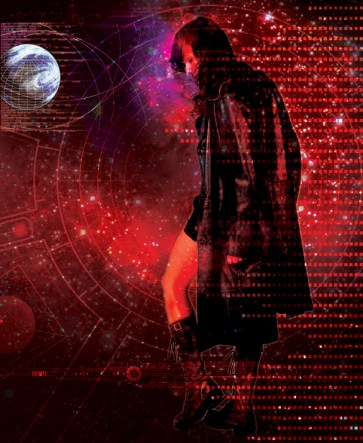
Rhea Hawke (Vali Gurgu)

Because of Dawn Harvey. It’s that simple.

If you haven’t listened to a book narration by voice actor Dawn Harvey before, you’re in for a treat. When I first embarked on this audiobook project, I had no idea what to expect. I give full credit to the original audiobook publisher, Iambik, who have since closed their doors (my books are currently carried and produced by Audible). Iambik introduced me to Dawn Harvey. She was one of three narrators they’d short-listed for me to audition. I had a short bio of each narrator along with a sample of their reading.

You can listen to samples from all three books on Audible:

audible listen

I knew nothing about the process of narration or turning my print book into an audiobook. But, I did know what I needed in the voice of my book:

  1. The story is told in the first person by Galactic Guardian Rhea Hawke, a cynical angry human in a world of aliens; Rhea hates the colleagues she works with. They consider her puny and incompetent and rash and they continually remind her of some of her earlier disastrous mistakes. Rhea’s voice had to reflect a gritty hardness and sarcasm, while betraying a hidden compassion and kindness. Dawn’s voice nailed it. Dark and rich like a good cup of coffee, Dawn captured Rhea completely. The grit. The hardness. The irony. The vulnerability lurking beneath it all.
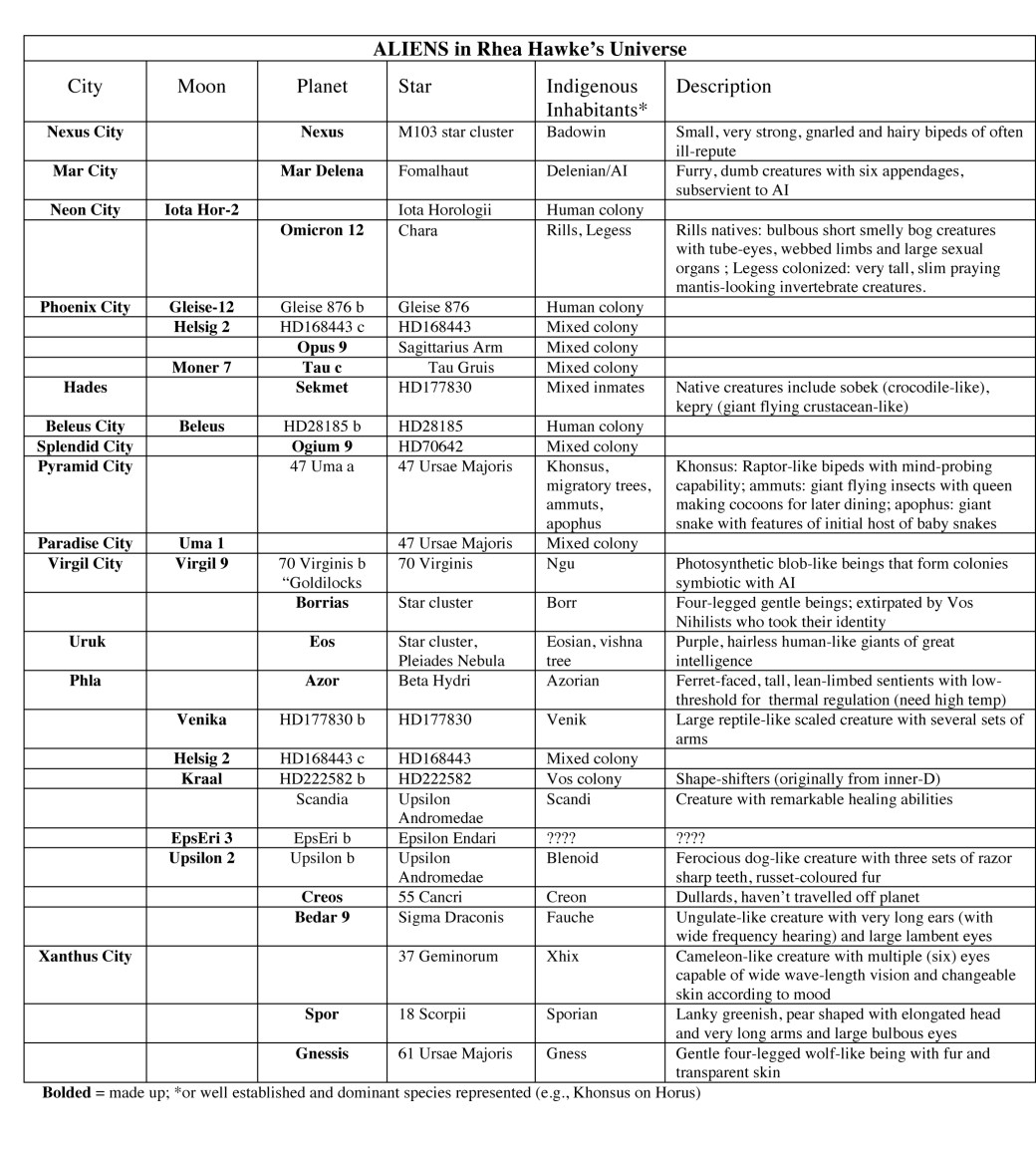
  2. The story takes place throughout the galaxy and Rhea encounters over twenty different alien species—all of which needed a distinct voice when conversing with her. Dawn showed incredible versatility in capturing their voices according to the alien’s morphology and culture, which I provided. One of the aliens has five mouths and speaks in a multi-timbral voice; Dawn successfully portrayed it.

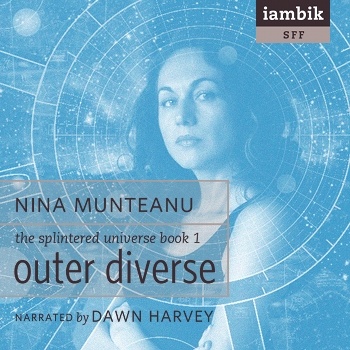
OuterDiverse-audiobook-IambikI was so impressed when I listened to the final recording of Outer Diverse (the first book in the trilogy). It was as though I was experiencing the story for the first time—as if I hadn’t written it myself—I was right there, exploring with Rhea Hawke, journeying to the outer planets of the galaxy. Dawn had breathed life into my character and my story. I was totally unprepared for my reaction. Voice artists would explain her techniques: her prepared pauses, tone, speed, inflections, etc. I knew they were there. But that didn’t seem to matter; what mattered was that she’d embraced both my main character and the story and it all came out in her voice.

So, give The Splintered Universe Audiobook trilogy a listen and treat yourself to the entertaining narration of Dawn Harvey. Check out the fawn-like Fauche, raptor-like Khonsus, Azorians, burly Badowins, the amoeba-like Ngu and chameleon-like Xhix. Tell me what you think.

Microsoft Word - Document1

The audiobook trilogy consists of Outer Diverse, Inner Diverse, and Metaverse. The Splintered Universe Trilogy is also available in ALL THREE FORMATS: print, ebook, and audiobook. You can listen to a sample recording of all three audiobooks through Audible.

audible listen

Microsoft Word - Trilogy-Vcon-AD-2.docx

An addictive start to the trilogy!Book Addict

A feast for the senses; glorious worlds with complex inhabitants hurtle towards our unprepared ears—QuirkyMezzo23

I want to grow up to be Rhea HawkeDabOfDarkness

Microsoft Word - SplinteredUniverseTrilogy Audiobooks.docx

Rhea courtyard03

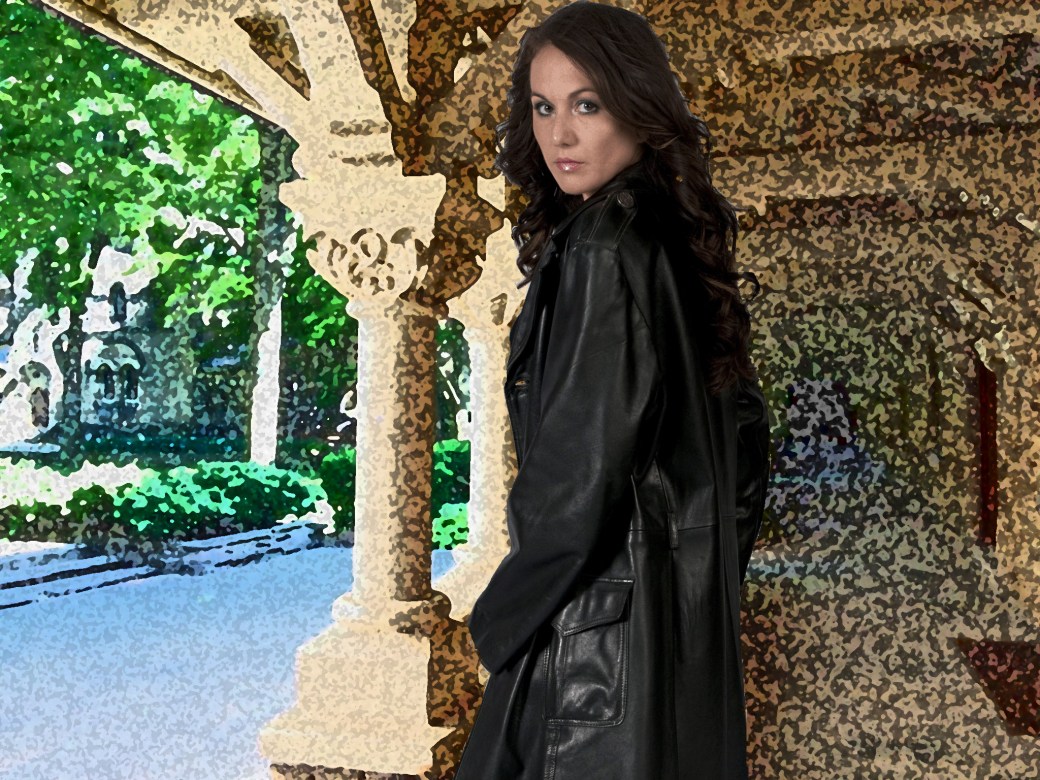
Detective Rhea Hawke (Vali Gurgu)

nina-2014aaa

Nina Munteanu is a Canadian ecologist / limnologist and novelist. She is co-editor of Europa SF and currently teaches writing courses at George Brown College and the University of Toronto. Visit www.ninamunteanu.ca for the latest on her books. Nina’s bilingual “La natura dell’acqua / The Way of Water” was published by Mincione Edizioni in Rome. Her non-fiction book “Water Is…” by Pixl Press (Vancouver) was selected by Margaret Atwood in the New York Times ‘Year in Reading’ and was chosen as the 2017 Summer Read by Water Canada. Her novel “A Diary in the Age of Water” will be released by Inanna Publications (Toronto) in 2020.

The Splintered Universe Audiobook Series–at When Words Collide, 2019

Rhea library02

Rhea Hawke (Vali Gurgu)

In August 2019 I participated in several panels and workshops at Calgary’s writer and reader festival When Words Collide (WWC). One of them was a presentation I shared with voice actor Dawn Harvey.

Dawn had impeccably narrated the audiobooks of my science fiction / space adventure trilogyThe Splintered Universe: a rollicking, fast-paced detective adventure that features a complex character and her sentient great coat, unique weaponry, aliens, bio-technology, intelligent space ships and compelling intrigue.

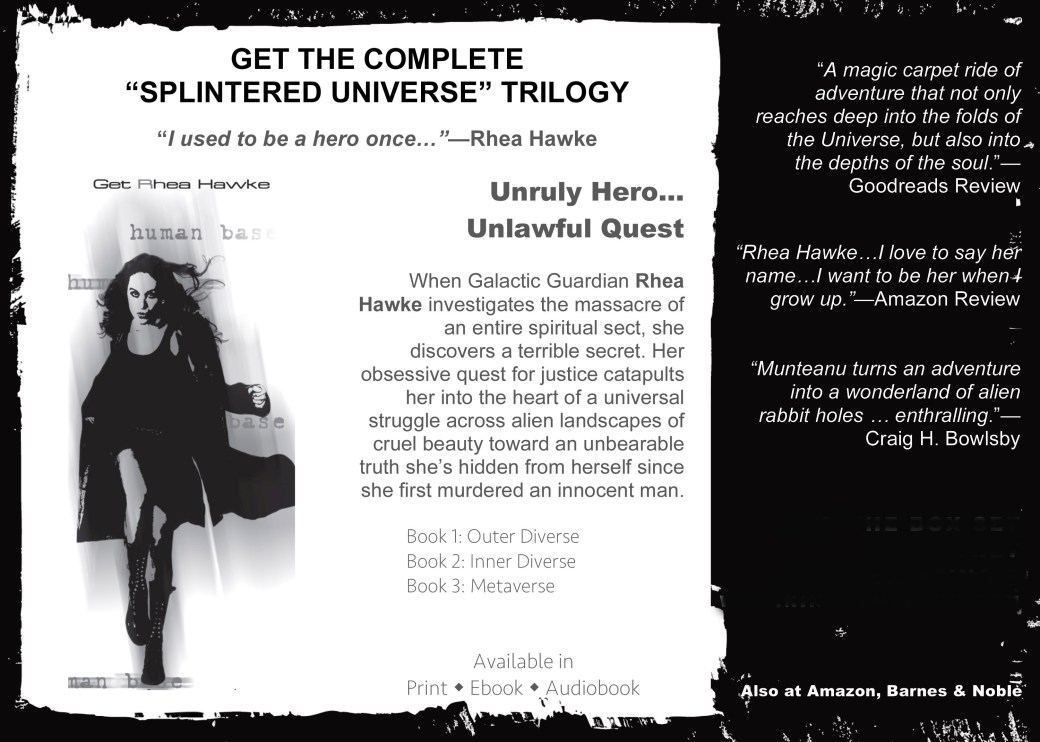
When Galactic Guardian Rhea Hawke investigates the genocide of an entire spiritual sect, she collides not only with dark intrigue but with her own tarnished past. Her quest for justice catapults Rhea into the heart of a universal struggle across alien landscapes of cruel beauty and toward an unbearable truth she’s hidden from herself since she murdered an innocent man.

The trilogy consists of Outer Diverse, Inner Diverse, and Metaverse. and is available in ALL THREE FORMATS: print, ebook, and audiobook.

You can listen to a sample recording of all three audiobooks through Audible. Read the Splintered Universe reviews on Goodreads.

Microsoft Word - trilogy-poster03.docx

In the WWC presentation, Dawn and I shared our experience with the auditioning process, the partnership between author and narrator, and the actual production of an audiobook. Dawn (who is a lawyer) brought thirty pages of notes and you can guess that we only covered a portion of them in the hour-long presentation; she needs to come back and have more time for an audience clamoring for more. The blurb for the WWC presentation read:

While paper sales dwindle, audiobooks continue to be the fastest growing segment of the publishing world with sales increasing by 30% year over year for the past decade. With our fast paced and connected society, audiobooks are the way of the 21st century and it’s high time you got on the bandwagon! Join author Nina Munteanu and audiobook narrator and producer Dawn Harvey to learn what it takes to turn your masterpiece into an audiobook.

I’ve been told by many that this trilogy would make a cool TV series or movie: the strong and strange female protagonist, weird technology and worlds, create a visually stunning and compelling narrative. The audiobook series is a first step toward increased depth in a series just bursting with the energy to express beyond the confines of written narrative.

*****

The Splintered Universe Trilogy Twitter Cover

The narration is addictive, leaving you wanting moreKeeps you listening far into the night—Book Addict

rhea-contemplative01

Rhea Hawke (Vali Gurgu)

RA feast for the senses; glorious worlds with complex inhabitants hurtle towards our unprepared ears!—QuirkyMezzo23

There’s so much I have enjoyed about this series so far. Rhea is a fascinating character from the start and she continues to grow throughout the tale. There’s her AI ship, Benny, her sentient great coat, her special made gun, and her own hidden shapeshifting abilities. Then there’s a cast of interesting characters, good guys and bad guys. I love that I don’t know how things will turn out; the plot keeps me guessing—Dab of Darkness

Full of surprises, action and twists!—Lilly’s Book World

nina-2014aaa

Nina Munteanu is a Canadian ecologist / limnologist and novelist. She is co-editor of Europa SF and currently teaches writing courses at George Brown College and the University of Toronto. Visit www.ninamunteanu.ca for the latest on her books. Nina’s bilingual “La natura dell’acqua / The Way of Water” was published by Mincione Edizioni in Rome. Her non-fiction book “Water Is…” by Pixl Press (Vancouver) was selected by Margaret Atwood in the New York Times ‘Year in Reading’ and was chosen as the 2017 Summer Read by Water Canada. Her novel “A Diary in the Age of Water” will be released by Inanna Publications (Toronto) in 2020.

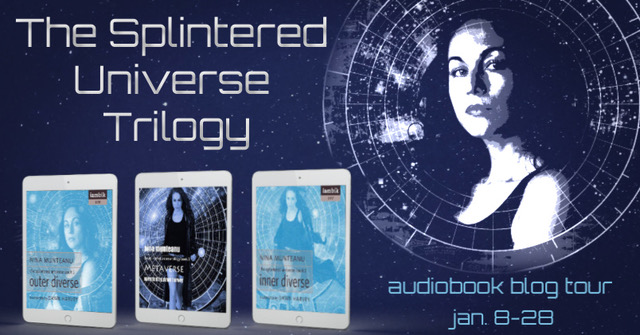
Audiobook Blog Tour of The Splintered Universe Trilogy: Book 3 “Metaverse”

We continue our Audiobook series blog tour with Book 3 “Metaverse” of Nina Munteanu’s “The Splintered Universe Trilogy,” a science fiction detective adventure, starring the indomitable Galactic Guardian, Rhea Hawke.

full-cover-final copy


“Dawn Harvey breathed incredible life into the lead character, Rhea Hawke–both sarcastic and vulnerable at the same time; a detective with a cynical edge, and sultry voice tinged with wiry sarcasm. The story unfolded through Rhea’s narrative like an old film noir as she unraveled mysteries that led to the greatest one: her own.”–Amazon Review

Book 1, Outer Diverse: January 8-14
Book 2, Inner Diverse: January 15-21
Book 3, Metaverse: January 21-28

The tour with blog sites includes spotlights, reviews, audio excerpts, Rhea’s proverbs, character profiles, guest posts, interviews of author, narrator (and character Rhea Hawke!)

Join the third part of the audiobook tour with “Metaverse“, the last book of the trilogy.

iota-hor-rhea_edited-1

In Metaverse (Book Three) the scintillating conclusion of the Splintered Universe Trilogy, Rhea Hawke travels back to Earth, hoping to convince an eccentric mystic to help her defend humanity from an impending Vos attack–only to find herself trapped in a deception that promises to change her and her two worlds forever.


“An action packed adventure! I really enjoyed the narration by Harvey for this second book. She has a large cast of characters to portray and she did them all excellently! I felt like each was easily distinguishable and had their own quirks. The story … had a great amount of action to keep me interested the whole time. I feel like I truly understand more about this crazy and exciting world. I can’t wait to see how this all ends up, but I’m now 100% invested in Reah and her companions! ”–The Book Addict 

TOUR SCHEDULE for METAVERSE

Follow the itinerary for “METAVERSE“, Book 3 of the trilogy (Jan 22-28):

Jan. 22nd:
Assorted Nonsense (Spotlight + Audio Excerpt, Rhea’s Proverbs)

Jan. 23rd:
Lilly’s Book World (Review, Spotlight + Audio Excerpt)

Jan. 24th:
Book Addict (Review, Spotlight + Audio Excerpt, Interview with Rhea Hawke, Rhea’s lexicon Giveaway)

Jan. 25th:
Dab of Darkness Book Reviews (Review, Interview with Rhea Hawke, Splintered Universe Lexicon)

Jan. 26th:
Jazzy Book Reviews (Spotlight + Audio Excerpt, Rhea’s lexicon, Giveaway)

Jan. 27th:
The Book Addict’s Reviews (Audio Excerpt, Character Interview, Rhea’s lexicon)

Jan. 28th:
Chapter Break (Spotlight + Audio Excerpt, Character Interview)

rhea-serge-space copy

“A master of metaphor, Munteanu turns an adventure story into a wonderland of alien rabbit holes… a fascinating and enthralling read.” (Craig Bowlsby, author of Commander’s Log)

“A rollicking science fiction plot with all the trappings…Hawke is a maverick in the wild west tradition…a genetic mystery with lethal powers.” (Lynda Williams, author of Okal Rel series)

the splintered universe trilogy banner (1)

What a rollicking tour it’s been! If you missed any of it, just go back to the previous posts here to find the archived blog posts of the tour.

Audiobook Blog Tour of The Splintered Universe Trilogy: Book 2 “Inner Diverse”

We continue our Audiobook series blog tour with Book 2Inner Diverse” of Nina Munteanu’s “The Splintered Universe Trilogy,” a science fiction detective adventure, starring the indomitable Galactic Guardian, Rhea Hawke.

inner-diverse-full-cover copy

“Dawn Harvey breathed incredible life into the lead character, Rhea Hawke–both sarcastic and vulnerable at the same time; a detective with a cynical edge, and sultry voice tinged with wiry sarcasm. The story unfolded through Rhea’s narrative like an old film noir as she unraveled mysteries that led to the greatest one: her own.”–Amazon Review

Book 1, Outer Diverse: January 8-14
Book 2, Inner Diverse: January 15-21
Book 3, Metaverse: January 21-28

The tour with blog sites includes spotlights, reviews, audio excerpts, guest posts, interviews of author, narrator (and character Rhea Hawke!)

Join the second part of the audiobook tour with “Inner Diverse“, Book 2 of the trilogy.

rhea-contemplative01

Rhea Hawke (Vali Gurgu)

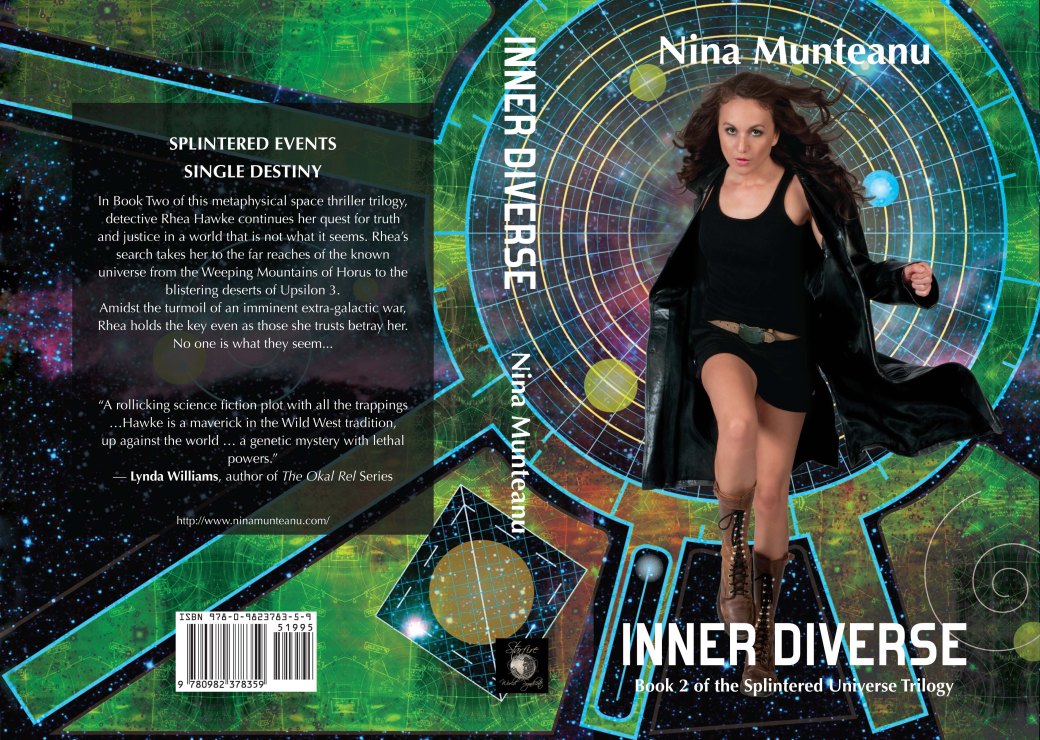
In Inner Diverse (Book Two) of this metaphysical space thriller trilogy, detective Rhea Hawke continues her quest for truth and justice in a world that is not what it seems. Rhea’s search takes her to the far reaches of the known universe from the Weeping Mountains of Horus to the blistering deserts of Upsilon 3. Amidst the turmoil of an imminent extra-galactic war, Rhea holds the key even as those she trusts betray her. No one is what they seem…


“An action packed adventure! I really enjoyed the narration by Harvey for this second book. She has a large cast of characters to portray and she did them all excellently! I felt like each was easily distinguishable and had their own quirks. The story … had a great amount of action to keep me interested the whole time. I feel like I truly understand more about this crazy and exciting world. I can’t wait to see how this all ends up, but I’m now 100% invested in Reah and her companions! ”–The Book Addict 

TOUR SCHEDULE for INNER DIVERSE

Follow the itinerary for “Inner Diverse“, Book 2 of the trilogy (Jan 15-21):

Jan. 15th:
Assorted Nonsense (Narrator Interview)

Jan. 16th:
Lilly’s Book World (Review, Spotlight + Audio Excerpt)

Jan. 17th:
Jazzy Book Reviews (Spotlight + Audio Excerpt, Rhea’s Proverbs, Giveaway)

Jan. 18th:
Dab of Darkness Book Reviews (Review, Narrator Interview & testimonial, Rhea’s Proverbs)

Jan. 19th:
The Book Addict’s Reviews (Review, Audio Excerpt, Narrator Interview & testimonial, Rhea’s Proverbs)

Jan. 20th:
Book Addict (Review, Spotlight + Audio Excerpt, Narrator Interview, Giveaway)

Jan. 21st:
Chapter Break (Spotlight + Audio Excerpt, Narrator Interview, Guest Post)


“A master of metaphor, Munteanu turns an adventure story into a wonderland of alien rabbit holes… a fascinating and enthralling read.” (Craig Bowlsby, author of Commander’s Log)

“A rollicking science fiction plot with all the trappings…Hawke is a maverick in the wild west tradition…a genetic mystery with lethal powers.” (Lynda Williams, author of Okal Rel series)

the splintered universe trilogy banner (1)

Remaining tour continues with Book 3 (“Metaverse“) Jan 22-28. Come join us and share your thoughts.

Nina Delivers Words and Worlds at WWC

SmokeSun-Rockies2

Smoky sun overlooking Rockies (photo by Nina Munteanu)

I recently travelled from Vancouver with Pixl Press director Anne Voute through the smoky Rockies to the 8th ‘When Words Collide’ writers festival in Calgary. The festival was held August 10-12, 2018 and brought together just under a thousand readers and writers in multi-genres to attend presentations and panels on writing and publishing.

The three-day writers’ festival ran a 10-track program that included informative panels, Blue Pencil Café, Editors Speed Mingle, pitch sessions with agents and publishers, and challenging workshops.

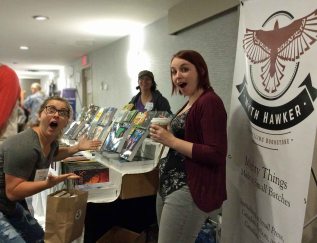
MythHawker table-WWC2018

Selling books at Myth Hawker

My books were on sale in the Merchant’s room at Sentry Box (a local Calgary bookstore) and Myth Hawker Travelling Bookstore. By the third day, Myth Hawker sold all available copies of Water Is…

I participated in panels, Blue Pencil Café, Editors speed mingle and several presentations and workshops:

  • You Oughta Be in Audio: a discussion between me and audiobook narrator and producer Dawn Harvey on the making of the audiobooks for The Splintered Universe—now available in three formats, print, ebook, and audiobook. While paper sales dwindle, audiobooks continue to be the fastest growing segment of the publishing world with sales increasing by 30% year over year for the past decade.

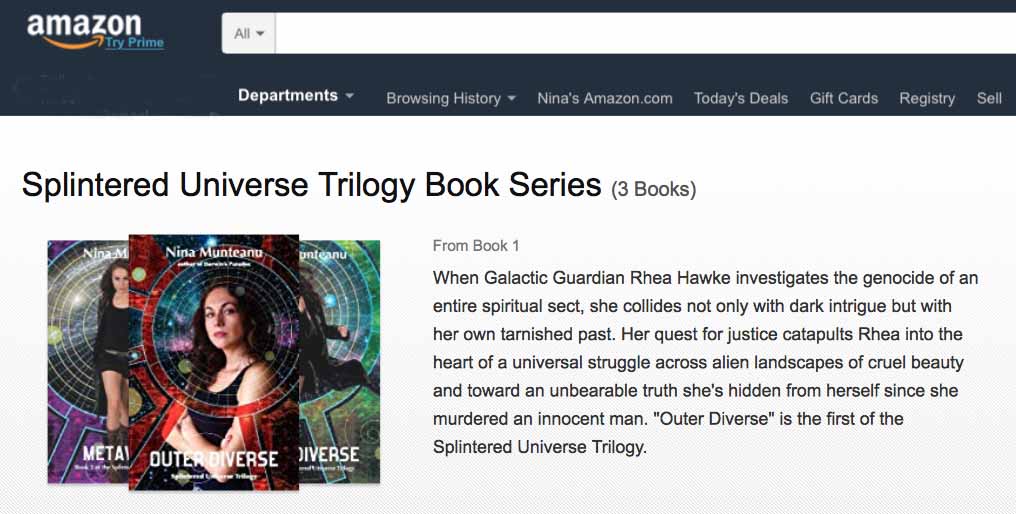
Amazon-SplinteredUniverseTrilogy

  • World As Character: a presentation on creating a world with meaning. In most science fiction and fantasy, the world that we create is often very different from our own; in speculative fiction it’s often very similar; in contemporary fiction it is virtually the same. In all cases the world you build should embed in your story with layered metaphoric meaning. Nina Munteanu will discuss how to build a world that interacts with character to inform greater meaning in story.

FictionWriter-front cover-2nd ed-web copyJournal Writer-FRONT-cover-WEB copyI also networked my writing community for world examples to use in my Alien Guidebook on world building: The Ecology of Story: World as Character. Anticipated release by Pixl Press of this third guidebook in the Alien Guidebook series is Summer of 2019. In keeping with the branding of the series, artist Anne Moody is providing the cover illustration and Costi Gurgu the cover design for The Ecology of Story. Covers for the previous two books were also done by Anne and Costi.

Cover-everyday hero

‘Everyday Hero’ by Anne Moody

Earlier in the month, I travelled north with the Pixl Press director to Anne’s ranch in Vanderhoof to requisition a cover from her for the guidebook. After days of discussion and “show and tell” and after several pieces of art were tentatively selected, Anne pulled out a piece that stopped our search dead. ‘Everyday Hero’ depicts a lonely firefighter, trudging in the burning forest, tired gaze to the burning crown of a tree. Considering the subject matter and our world today, we thought this was perfect for my book.

MockUpEcology-2

cover design by Costi Gurgu, illustration by Anne Moody

Depicted in shades of blue, charcoal and brilliant red, the cover contrasts and harmonizes well with the brand typology and cover design by Toronto graphic artist Costi Gurgu.

.


nina-munteanuNina Munteanu is an ecologist, limnologist and internationally published author of award-nominated speculative novels, short stories and non-fiction. She is co-editor of Europa SF and currently teaches writing courses at George Brown College and the University of Toronto. Visit www.ninamunteanu.ca for the latest on her books.

The Resurgence of Oral Storytelling: the Audio Book


arth-pasture-tree

Cows pasturing in Arth, Switzerland (photo by Nina Munteanu)

Griot. Raconteur. Bard. Jongleur. Seanchai. Skop. Troubadors and minstrals. Spinner of yarns. Any way you call them they are storytellers. And storytellers have shaped our societies and reflected our cultures for all of recorded history, and before—from the time of cave paintings, songs and campfires.

Because oral storytelling is told through memory it spreads with a fluid and dynamic quality whose effect is alive, immediate and visceral.

Being Romanian Helped…

When I was a young girl, I wanted to be an actress. I enjoyed telling stories to my brother and sister. My sister and I shared a bazillion adventure stories (most of them twisted and funny) about two twin brothers and sisters who solved mysteries in outer space. Because our cast and stories were epic, we dispensed with the limitations of set (not enough dolls and stuffed animals) and went straight into the oral storytelling tradition: we liberated ourselves and shared our stories anywhere and anytime we chose. While I never did participate in theatre or drama in school, I did cultivate the art of oral storytelling. An art I may have come by quite honestly as a Romanian. Romanians are consummate storytellers; the country is brim with imaginative and compelling folktales, myth and supernatural phenomena.

Romanian oral epic includes a large body of heroic songs, fantastic and mythological songs, haiduc songs (on the exploits of heroic social outlaws), and balladic narrative songs of a more lyric nature.

When my son was growing up, I used to read him stories at bedtime. It was a time of incredible bonding: sharing stories and laughter. I did all the voices and sound effects. It didn’t stop there; soon I was making up scenarios all my own with a cast of hundreds and my son leapt in with both feet. It was like when I was younger, creating stories with my sister. My son and I created worlds peopled by fantastic characters; there was “little girl” (me) and there was Baby Poopy and Baby Bang Bang (him) and a host of others. My son played some parts (usually the rational ones) and I played others (usually the silly ones). Using Leggo, we even created a whole new twisted StarWars universe where Luke Skywalker had a falsetto voice and Darth Vader had given up his evil ways and turned into an old grumpy hermit with a flatulence problem, growing beans in his garden. There were no boundaries to our imaginative play.

The Age of Oral Storytelling

Oral storytelling is an ancient tradition and the most personal and intimate form of storytelling. The storyteller and the listeners are physically close and, through the story connection, psychically close. Storytellers bring their own personality and character to the story; they ultimately reveal and share themselves through their telling and the listeners reveal and share themselves through their reception of the story. The intimacy and connection is deepened by the flexibility of oral storytelling which allows the tale to be molded to each audience and location or environment where it’s being told. Listeners experience the immediacy of a creative process taking place in their presence and, even more than that, they experience the empowerment of being a part of that creative process (which is often interactive).

Early storytelling combined stories, poetry, music, and dance. Storytelling was natural for everyone but those who excelled at it became the entertainers, educators, cultural advisors and historians of their community. The history of a culture was handed down from generation to generation through its oral storytellers.

The 9th century fictional storyteller Scheherazade in “1001 Arabian Nights” saves herself from execution by telling tales. Centuries before Scheherazade the storyteller Vyasa at the beginning of the Indian epic Mahabharata says, “If you listen carefully, at the end you’ll be someone else.”

During the Middle Ages storytellers told their stories in market places and became honored members in royal courts. According to storyteller Ruth Sawyer, Medieval storytellers were expected to know all the current tales. They were expected to “repeat all the noteworthy theses from the universities, to be well informed on court scandal, to know the healing power of herbs and simples (medicines), to be able to compose verses to a lord or lady at a moment’s notice, and to play on at least two of the instruments then in favor at court.”

The Age of Audiobooks and iPhone

An audio book is a recording of the contents of a book read aloud. They have been around for over 70 years, but their popularity has swiftly grown to an all time high.

Ubiquitous mobile devices like iPods, iPhones have made audiobooks much more accessible and easy to download and portably listen to. Audiobooks are also valuable learning tools due to their format. They are convenient in multi-tasking scenarios.

Audiobooks on cassette or CD are typically more expensive than hardcovers because of the added expense of recording and the lack of the economy of scale in high “print” runs that are available in print book publishing. However, downloadable audiobooks cost less than hardcovers and can even be less than their paperback equivalents. Market penetration of audiobooks is still substantially lower than for their printed counterparts despite the high market penetration of the hardware (MP3 and WMA players) and despite the massive market penetration achieved by audio music products. But this is changing.

Downloadable audiobooks don’t carry mass production costs; they don’t require storage of a large inventory, physical packaging or transportation and even if “returned” don’t require a cost of physical return or destruction/disposal. Like the downloadable ebook, audiobooks are taking the storytelling industry by storm.

Amy Harmon of the New York Times recounts this scenario: “Jim Harris, a lifelong bookworm, cracked the covers of only four books last year. But he listened to 54, all unabridged. He listened to Harry Potter and “Moby-Dick, Don DeLillo and Stephen King. He listened in the car, eating lunch, doing the dishes, sitting in doctors’ offices and climbing the stairs at work.” Harmon recounts how 53 year old Mr. Harris, a computer programmer in Memphis, hadn’t read that much since he was in college. Of course, for some diehard literary types “listening” isn’t the same as “reading”.

Fortunately for Mr. Harris, the ranks of the reading purists are dwindling, says Harmon. “Fewer Americans are reading books than a decade ago, according to the National Endowment for the Arts, but almost a third more are listening to them on tapes, CD’s and iPods and iPhones.”

For a growing group of devoted listeners, the popularity of audio books is redefining the notion of reading, which for centuries has been centered on the written word. Audio books, says Harmon, have seduced members of a literate but busy crowd by allowing them to read while doing something else. “Digital audio that can be zapped onto an MP3 player is also luring converts. Audio books, which still represent only about 3 percent of all books sold, do not exactly herald a return to the Homeric tradition. But their growing popularity has sparked debate among readers, writers and cultural critics about the best way to consume literature.”

For me, the audiobook represents more. Audiobooks aren’t just another aspect of our convenient, fast-paced, multitasking culture. Audio books provide a different form of creative storytelling that is both refreshing and thoroughly engaging.

Of course, some books are better told this way than others and the storyteller’s role is paramount. Inflection, cadence, passion and voice all play a critical role in the oral narrative.

My Audiobooks

OuterDiverse-audiobook-IambikMy space detective adventure book “Outer Diverse” was originally released by Iambik Audiobooks as an audiobook, narrated by Dawn Harvey. It and its second “Inner Diverse” (and soon third book “Metaverse” of the Splintered Universe Trilogy) are now available on Audiobook.com, through Amazon and on iTunes. And I am ecstatic! When I first listened to the proof, I was blown away. It was as though Dawn had created a whole new story, as though she’d breathed life into Rhea Hawke and the myriad of alien characters in Rhea’s universe. Dawn had applied cadence, inflection, joy and humor into each character and set. Remember how Orsen Wells created mass hysteria with his rendition of “War of the Worlds”?

Give the gift of pure joy with audiobooks.

 

Nina Munteanu is an ecologist and internationally published author of award-nominated speculative novels, short stories and non-fiction. She is co-editor of Europa SF and currently teaches writing courses at George Brown College and the University of Toronto. Visit www.ninamunteanu.ca for the latest on her books.

How We Will Tell Stories in the Future

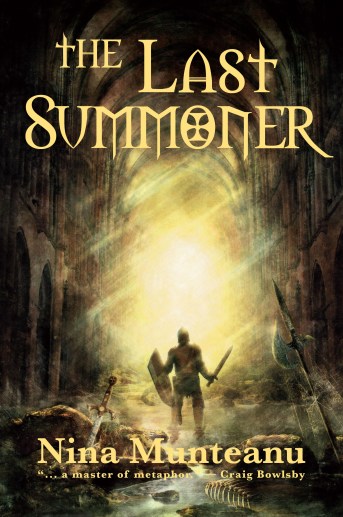
Cover1_LastSummoner-frontcoverIn the early 1400s, when Lady Vivianne Schoen (the hero of my book  The Last Summoner) lived, one of the largest libraries in Europe was at the University of Cambridge; it held an impressive list of 122 books. That library currently houses over 7 million books.

Books were a work of art in the 1400s. And part of an elite. Delicate, large and beautiful, they were created in the language of the church—Latin—and in turn copied entirely by hand by the monks. With the dimensions of a current newspaper, but much thicker, these large illuminated manuscripts sometimes weighed more than 50 pounds.

There is a scene early on in The Last Summoner where, under the tutelage of Pere Daniel at her father’s castle in Grunwald, Vivianne learns this arcain craft of manuscript copying.

An illuminated manuscript, the exemplar, and its parchment copy, still in progress, lay on the desk top; both were held down from curling by several hanging weights. Ink pots, gold leaf, a pen knife and a quill lay beside the sloped desk-top—the scribe’s tools.

Père Daniel had studied the art of manuscript illumination, scribing, binding and even parchment-making at the Sorbonne. Last year he’d begun to teach Vivianne the art of creating illuminated manuscripts and she had eagerly begun her own, finding that she had a steady hand at illumination. Père Daniel had shown her how to make parchment from the skins of deer that the Baron brought back from his hunts in the Grunwald forest. Despite the availability of paper, parchment was preferred “because it is velvety, folds easily and gives an agreeable flexibility to pen strokes compared with the unyielding flatness of writing on paper,” the chaplain reasoned. He always gave a reason for the painstaking preparation that involved flaying, soaking, stretching and scraping: “Parchment wants to curl onto its darker, grain side; and hastily prepared parchment wants to do it more.” Nothing was better than parchment made from game “because the vein marks left from blood in the skin when the animal died is the animal’s contribution to the art of illumination,” he attested with the fervency of a man with a passion.

Père demonstrated with exacting care and infinite patience how to use the illuminator’s tools and create a professional-looking manuscript. He provided Vivianne with parchment, a quill for a left-handed scribe, a penknife to sharpen her quills, a pot of ink and a sloping desktop. He taught her how to make iron-gall ink by mixing a solution of tannic acids and copperas with added gum arabic from the dried-up sap of the acacia tree as thickener. It was important, said the Père, to pick a mature oak-gall, one that bore a hole from the matured wasp that had developed inside and left a juicy concoction of gallic acids. The galls were then crushed up and boiled for a long as it took to recite the Pater Noster three times, he’d said. The blackness, he told her, resulted from the chemical reaction of the oak-gall potion when copperas was stirred in. He’d shown her how to create the vermillion color, commonly used in headings, which he made from brazilwood chips infused in urine and stirred with gum arabic. Vivianne never asked Père Daniel where he got his urine. She and Père also raided Theobald’s kitchen to hunt down the outer right wing pinions of a goose for making a quill pen that naturally curved to the left, because she was left-handed.

knight-cameoPère showed Vivianne how the height of the written area should equal the width of the whole page in a well-proportioned manuscript. Père also showed her how to rule the guidelines for the script and make the initial under-drawing of her illumination in plummet then in ink after which the gold leaf was applied. Vivianne had become adept at applying the gold leaf over the raised gesso, that she made of slaked lime and white lead mixed with pink clay, sugar, a dash of gum and egg glair glue. After painstakingly painting the gesso where she wanted the gold leaf to remain and letting it dry, Vivianne then carefully lowered the fragile tissue-thin leaf over the gesso and pressed down through a piece of silk then buffed the gold to a brilliant finish with a dog’s tooth by vigorously rubbing back and forth until it was smooth and the edges where there was no gessocrumbled away.

Making books was called “black art” from the black ink that stained the worker’s hands after a long day of creating type. Readers were mostly scholars and the religious elite. In fact, reading was an elite occupation. The majority of people at the time were illiterate and had no interest in books. Moreover, books were written in the language of the church, not in the commonly spoken language of the countryside such as English, French, German or Spanish.

So, when Johannes Gutenberg invented the revolutionary printing press in 1452 to publish the Gutenberg Bible, neither monk nor Joe peasant took much notice. The monks considered the product inferior to their works of art and dismissed the new technology—until it had largely replaced their trade.

chillon-inner courtyard

Inner courtyard of Chilean Castle, Switzerland (photo by Nina Munteanu)

In fact, the presses formed the very basis of the artistic Renaissance, the religious reformations and the scientific revolution, wrote Elizabeth Eisenstein in The Printing Press as an Agent of Change. “The printing press allowed the spread of information that couldn’t be controlled by the clergy, kings, politicians, or the religious elite,” adds New York Times technology reporter Nick Bilton in I Live in the Future and Here’s How It Works. Storytelling was no longer confined to an elite clergy; books could be created by anyone and shared in the spoken languages of the people.

Bilton shares another interesting fact: Gutenberg’s printed books were as heavy and unwieldy as the original handmade books of the monks. It was much later, in 1502, that Aldus Manutius of Venice invented a more portable book that could fit in a large jacket pocket; essentially inventing “the mobile phone of his day” wrote Bilton.

Historian Alistair McCleery wrote that the political and religious leaders initially panicked over the potential for the uncensored sharing of new and varied ideas among the lay public (which brings to mind similar fears of what the internet was providing to and enabling in the lay public: uncensored self-expression by the masses for the masses). Up until then, sharing stories among the common folk was limited to oral storytelling, which suffered from inconsistency and other limitations of the oral tradition. Within a short period of time, the ability to record and share “stories” had moved from a closeted elite to the world citizen. That is what the printing press—and the Internet today—did. Both have shifted the zeitgeist of an entire world.

Storytelling today is changing again. While many people still read books and go to the cinema, watch pre-programmed TV or rent DVDs, many more enjoy their stories through other devices like computers, downloads, mobile phones and e-readers that provide material through other media and venues such as Indie and self-publishing, amateur YouTube videos, interactive games and social networks. We stand poised on the edge of a wonderful cliff that celebrates the expression — and consumer choice — of the individual. The music industry shows this the best, where people dismissed the prepackaged albums and CDs and opted to create their own unique playlists through individual song downloads. The publishing industry is currently struggling with its own painful yet thrilling metamorphosis as is the visual arts industry. In fact, they are all blurring into one large integrated amalgam of artistic expression.

NYC-times-square-lawn-chairs

Times Square in New York City (photo by Nina Munteanu)

The information you get today is coming “more and more through your friends and through your social network. It’s being distributed through channels of trust and the trust isn’t necessarily the BBCor The New York Times. It’s people,” says B.J. Fogg founder of the Persuasive Technology Lab at Stanford University.

new-york-toulouse-officer-montalvo

New York policeman sports my friend Toulouse on his gun (photo by Nina Munteanu)

During the days of packaged content, leading storytellers were published authors, journalists and writers of newspapers and magazines. “Now distribution channels matter less and anyone with an appropriate device can be a storyteller,” says Bilton, who shares that on the internet we tend to follow individuals we trust (e.g., Clive Thompson or David Carr) as much if not more than established organizations (like Wired Magazine or The New York Times). Accessible technology, platforms, free applications and software has truly enabled the individual.  No longer confined to the written word via paper books or visual expression through movies or TV shows, storytelling has embraced many forms. Amateur and professional have equally blurred.

It comes down to content. Technology and format aside, nothing compares to a good solid story. We all listen to or watch stories. We all tell or show stories, some of us more than others and some better than others.

With the advent of new and accessible technologies and applications available to individuals, the art of storytelling has entered a new renaissance. Good stories, like good content, will always prevail and surface into prominence, like cream in milk. They have just been released into a sea of possibilities like a stream previously confined in a gorge, spilling joyfully into the ocean.

Front Cover ONLY-webHarnessing the opening range of technologies available to us will only give us more choices to tell our stories. For instance, my latest book Outer Diverse (the first book of The Splintered Universe Trilogy) was published by Starfire World Syndicate in print form and e-format and will soon be available in audiobook format through Audible. I have also created associated YouTube promotional videos and am working with colleagues to produce a short story musical video on the book. Another colleague has embraced the image of the strong female hero with a jewelry line called the Rhea Hawke Collection and is looking at other “storytelling” merchandise. I am discussing with other colleagues possibilities for a graphic novel and an interactive video game version of the trilogy that will offer reader participation in storytelling.

The future embraces story in all its possible facets. Our role as storytellers is to embrace the future in all its facets.


Nina Munteanu is an ecologist and internationally published author of award-nominated speculative novels, short stories and non-fiction. She is co-editor of Europa SF and currently teaches writing courses at George Brown College and the University of Toronto. Visit www.ninamunteanu.ca for the latest on her books.