Col-o-ni-zation: 1) the action by a plant or animal of establishing itself in a [new] area; 2) the action of appropriating a place or domain for one’s own use; 3) the action or process of settling among and establishing control over the indigenous people [or other native species] of an area.

Ash tree decays with help from colonizing blue stain fungus (photo by Nina Munteanu)
In a previous article, I wrote about how escaped Atlantic salmon from farm pens in the Pacific posed a threat to the wild Pacific salmon. Some argue that these interlopers will outcompete their Pacific cousins for habitat and food like many exotics when they are first introduced (think of Purple loosestrife in Canada).
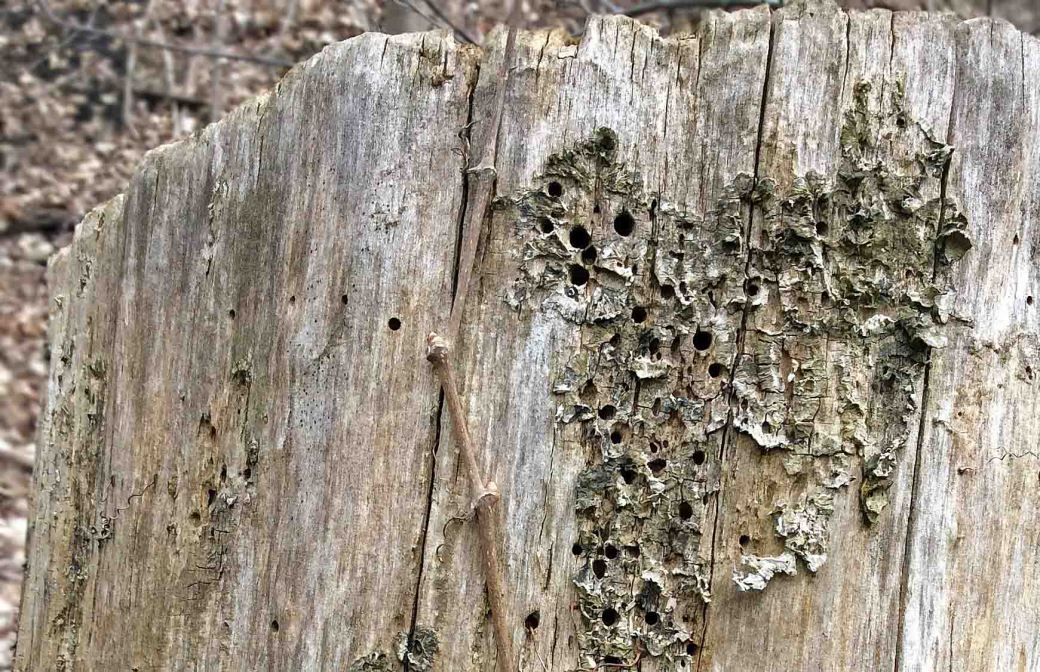
Insect bore holes in dead tree (photo by Nina Munteanu)
Purple loosestrife spread rapidly across North America’s wetlands, roadsides and disturbed areas after it was introduced in the 1800s when its seeds were included in soil used as ballast in European sailing ships and discarded here; Purple loosestrife is present in nearly every Canadian province and almost every U.S. state. This plant can produce as many as two million seeds in a growing season, causing dense stands of purple loosestrife and outcompeting native plants for habitat. This results in changes to ecosystem functions such as reductions in nesting sites, shelter and food for the native birds, as well as an overall decline in biodiversity (which causes ecosystem fragility).
What we often forget to consider is the indirect impact of the invasive: disease. What something considered innocuous brings with it. When the Atlantic salmon was brought from its native Atlantic habitat to be farmed in the Pacific (because it grew so fast), it brought its toolkit of adaptations—and what it carried—that was unfamiliar to a vulnerable Pacific wild population. The piscine orthoreovirus (PRV) that makes the Atlantic salmon sick, kills the Pacific native (think how the European settlers inadvertently brought in smallpox that killed thousands of indigenous people in Canada).

Ash tree succumbs to Agrilus in Rouge Park (photo by Nina Munteanu)
The emerald ash borer (Agrilus planipennis) is a “disease” inadvertently brought in by Chinese or Russian traders to North America that is destroying the native ash tree (e.g. green ash, Fraxinus pennsylvanica; American ash, Fraxinus Americana; Black ash, F.nigra; Blue ash, F. quadrangulata). A native to East Asia, including China and the Russian Far East, the ash borer has no natural predator here. It was likely brought to North America on wood packaging materials in the early 1990s. They were first detected in Detroit, Michigan and Windsor, Ontario in 2002; and have since spread to more than 30 states and 5 provinces since. Most species of North American ash trees are vulnerable to the beetle, which has already killed millions of trees in Canada in forested and urban areas. No North American natural predators (e.g., woodpeckers, other insects or parasites) have slowed the spread of the emerald ash borer. Up to 99% of all ash trees are killed within 8-10 years once the beetle arrives in the area.
In a note on the text of his small collection of stories entitled “Trees Hate Us” (Odourless Press, 2019) E. Martin Nolan writes on behalf of the Ash tree:
The Emerald Ash Borer hasn’t a real predator here. Don’t blame it for doing what it does, for being in the crates humans ship across oceans. Killed 30 million in Michigan, where it was first found. It’ll kill clear to the ocean.
I am a living ash. For my own safety, I cannot disclose my name or location. Call me Last Ash. The humans do not understand why I lived. I believe it to be a curse—one I’m prepared to live out. Perhaps I contain a deformity that kills the beetle. Maybe I don’t attract it. Call that evolution. Your words will always be your words.
I have watched all of my kind die around me. Dying gives them the art of poetry. Foreknowledge of death opens their language so a human can hear it. One human. Immune, I am left alone like a city tree, to converse in prose among strange maples, birches, pines and firs reluctant to share speech with a member of so plagued a species. As I live out my natural days, these poems—at least the middle bit—will bring me some small contentment. And we may yet return. The trees’ story is long and slow, despite this lightning-fast shrapnel from the human timeline.
 E Martin Nolan is a poet, essayist and editor. He edits interviews at The Puritan, where he’s also published numerous essays, interviews and blog posts. He teaches in the Engineering Communication Program at The University of Toronto, and is a PhD Candidate in Applied Linguistics at York University. Born and raised in Detroit, he received his Bachelor’s Degree in English Writing at Loyola University New Orleans, and received his Master’s in the Field of Creative Writing from the University of Toronto.

Nina Munteanu is a Canadian ecologist / limnologist and novelist. She is co-editor of Europa SF and currently teaches writing courses at George Brown College and the University of Toronto. Visit www.ninamunteanu.ca for the latest on her books. Nina’s bilingual “La natura dell’acqua / The Way of Water” was published by Mincione Edizioni in Rome. Her non-fiction book “Water Is…” by Pixl Press (Vancouver) was selected by Margaret Atwood in the New York Times ‘Year in Reading’ and was chosen as the 2017 Summer Read by Water Canada. Her novel “A Diary in the Age of Water” will be released by Inanna Publications (Toronto) in June 2020.
 We are now living in the Age of Water. Water is the new “gold”, with individuals, corporations and countries positioning themselves around this precious resource. Water is changing everything. The Age of Water Podcast covers anything of interest from breaking environmental news to evergreen material. This also includes human interest stories, readings of eco-literature, discussion of film and other media productions of interest.
 Nina Munteanu’s

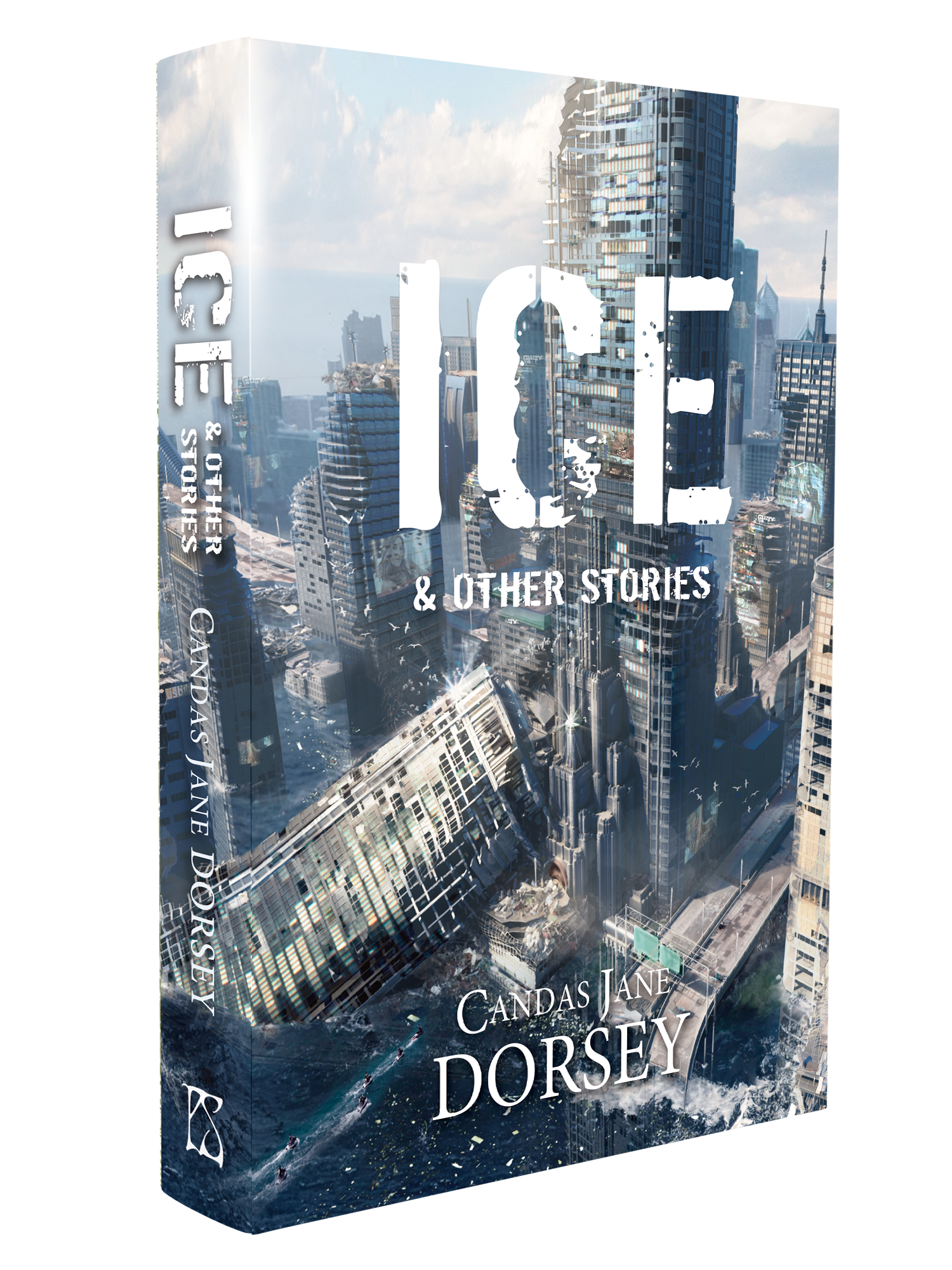 She is best known for her science fiction writing including the novels Black Wine and A Paradigm of Earth, and has also published poetry and short stories, including her well-known short-story collection Machine Sex: And Other Stories. Her latest collection of short stories Ice and other Short Stories spans thirty years of writing. Candas teaches writing and communications at MacEwan University. She was founding president of SF Canada and was president of the Writers Guild of Alberta. Candas was awarded the Province of Alberta Centennial Gold Medal award for artistic achievement and community work and the WGA Golden Pen Award for Lifetime Achievement in the Literary Arts.
 Claudiu suggested doing the podcast during a discussion we had about what we could do to make a difference and to help bring more awareness about the environmental challenges we face in water issues and geopolitics.








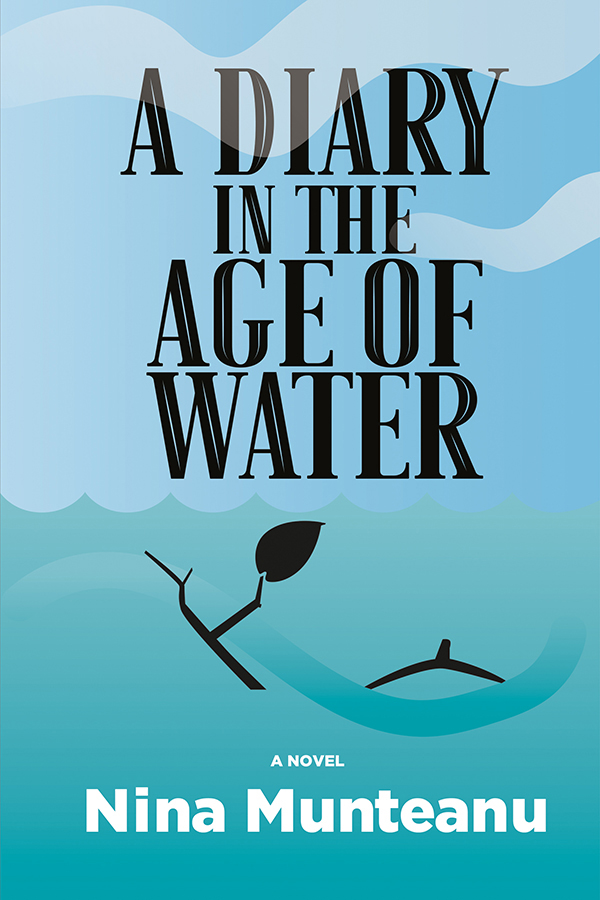 Kyo finds a copy of Robert Wetzel’s Limnology on a lower shelf of the “L” section. It stands tall with a thick green-coloured spine. This is the book that Hilda, one of the Water Twins, had saved from the book burnings of the Water Age. A present from her limnologist mother. Hilda kept it hidden under her mattress. When CanadaCorp police burst into their home and dragged her mother away, Hilda was left alone with Wetzel. The limnology textbook was forbidden reading because its facts were no longer facts.
 Notice how the use of active verbs also unclutters sentences and makes them more succinct and accurate. This was achieved not only by choosing active verbs but power-verbs that more accurately portray the mood and feel of the action. Most of the verbs used in the Passive column are weak and can be interpreted in many ways; words such as “walk” “were” “sit” and “stare”; each of these verbs begs the question ‘how’, hence the inevitable adverb. So we end up with “walk slowly” “were now struggling” “sit up” and “stare angrily.” When activated with power-verbs, we end up with “sidle” “struggled” “rear up” and “glared”—all more succinctly and accurately conveying a mood and feeling behind the action.
 This week is a wonderful time to reflect on the past year, 2019. It’s also a good time to be thankful for the things we have: loving family, meaningful friendships, pursuits that fulfill us and a place that nurtures our soul.
 2019 saw several of my publications come out. In January 2019 the reprint of my story “
 Impakter Magazine