The Legacy of Trees: Purposefully Wandering Vancouver’s Stanley Park

Winter on Sea Wall StanleyPark

Winter on the sea wall (Heritage House)

“In the gorgeously colourful fall of 2017, I had a sudden thought: “I live next to Stanley Park, one of the world’s most beloved and best parks. How have I not noticed? Of course I had noticed, but I hadn’t taken that awareness inside. I barely knew the park. I have lived beside this park for twenty-five years. I first saw the crescent beach of English Bay and the storytelling totems in the park in 1961, fifty-nine years ago. Have I been asleep? Can I wake up? Is it time?

If I am going to get to know this park—this Stanley Park—and call it “my park,” I will have to wander it purposefully, path by path, plaque by plaque, monument by monument, rock by rock, tree by tree, blossom by flowering blossom, through every season, and allow its layers of history to seep into me as though it were a living, breathing being.

Actually, it is.

Legacy of Trees Nina Shoroplova

This is how Nina Shoroplova begins her book “The Legacy of Trees” by Heritage House, 2020, a book all about “Purposeful Wandering in Vancouver’s Stanley Park.”

The beautifully laid out 288-page book with colour photos is a feast for the mind and the heart. Although the book provides an excellent human and natural history of the park—from its pre-colonial existence, and logging history, to its creation and uses and description—at its root is an expression of wonder for this natural gem in the middle of a bustling city and a true love of trees.

Shoroplova approaches the forest with the heart of a poet. Her passion for nature—and trees, particularly—lights each page with joyful discovery. Shoroplova brings this passion to Stanley Park, one of Canada’s iconic parks, and one worth both visiting and knowing through many aspects from history to ecology and from forest ecosystem to legacy tree.

Each year, Stanley Park welcomes more than eight million visitors from around the world. In the summer of 2013, Travel & Leisure magazine ranked Stanley Park second among the world’s twenty-eight most beautiful city parks in the world. In 2014, TripAdvisor named Stanley Park the best park in the world. The park features 400-hectares of natural coastal temperate rainforest with 27 km of trails and scenic views of water, mountains, and truly majestic trees. The rainforest holds an old-growth forest of +400-year old Douglas-firs and some of the largest grand firs in the world. The park also features an 8.8 km seawall, totem poles and six beautiful gardens.

Map of Stanley Park

Map of Stanley Park, Vancouver

Early in the book, Shoroplova describes a particular experience with a weeping beech in Shakespeare Garden with something close to reverence:

“When I first walked under its canopy of falling dark green drapery, tears came to my eyes. Somehow, the generosity of that tree, offering its shade and comfort to all who stand, walk, and drive underneath its south-facing leaves, opened my heart.” She then added, “As a friend says, ‘trees are divine beings.’”

Shoroplova shares why she feels calmed, centred, and connected in a forest, particularly in Stanley Park:

Hemlock on Cedar StanleyPark

Hemlock growing on cedar stump (Heritage House)

Maybe it’s because the change in a forest is constant yet unobservable, unobtrusive. Maybe it’s because I, as a human being, am so insignificant in size compared with the giants around me. Or because I, as a human being, have lived for such a short time compared with the ancient living beings around me. Or the green and the tree pheromones are so calming…

I used to feel this way when I skied downhill and when I breastfed my babies. I feel this way when I stand in the ocean and await the next wave and the next. I feel this way with my grandchildren. That’s what being in the forest does for us…It brings us to the present moment. That’s the gift.”

Victorian woman giant trees 1901

Woman wanders among the Seven Sisters giants, 1901 (Heritage House)

There is an abiding quality about trees and a living forest that is reassuring. “Trees are supportive, yet ambitious,” writes Shoropova. They are “quiet yet communicative, flexible yet strong, adaptive yet true to type.” They connect us to a larger world in a way that is both awe-inspiring and familiar.

“Learning the histories of the legacy trees in Stanley Park deepens our knowledge of the people of Vancouver—our history, our origins, our values,” Shoroplova explains in her opening chapter. These stories also show how Vancouver is maturing and evolving alongside its park forests and gardens. “We are shaking off the colonial identity that the park exhibited for so many decades and embracing the values of reconciliation with the first inhabitants of this land, the Squamish, Musqueam, and Tsleil-Waututh. We are also reclaiming what we can of the original nature of this land while honouring our communal history.”

Loggers springboard system Douglas-fir-1890s

Loggers using springboards to chop down a Douglas-fir giant, Stanley Park, 1890s (Heritage House)

Shoroplova arranged her tree stories into three parts: Part 1: The Trees Were Always There—trees that were already growing on the peninsula headland that became the federal reserve and then Stanley Park; Part 2: The First Trees Are Planted—those that were planted during the colonial and imperial years of the park (up to 1960); Part 3: The Park Grows Up—the years of growing independence.

Complete with old photos and original maps, Shoroplova offers several well-described and mapped routes to learn about and appreciate the beauty of the park. Her accurate science and historical accounts are dispensed in easily-digested and understood parcels through the language of conversation. The narrative is both charming and intriguing from the sad tale of the sentinel big Douglas-fir at the entrance to Stanley Park in 1894 to the princess-poet Pauline Johnson’s naming of Lost Lagoon and stories of historic events.

GeorgiaSt Entrance StanleyPark-bigfir-1894

Georgia Street entrance to Stanley Park in 1894 (Heritage House)

In a particularly engaging chapter of the book (Chapter 8), Shoroplova compares humans to trees and, through some interesting observations on tree physiology and behaviour, she draws some interesting conclusions. One example is her description of a tree’s heartbeat: how trunk and branches use a very slow pulse of contraction and expansion to send water up and out to every branchlet and leaf. Or how trees essentially breathe in more oxygen during the day (during active photosynthesis) and breathe out more carbon dioxide at night (during respiration without photosynthesis). Shoroplova likens it to “one slow breath for every twenty-four hours.” Shoroplova extends this fractal idea to the “suggestion that the northern hemisphere of Earth breathes in every summer and breathes out every winter. One slow planetary breath for every twelve months.”

Shoroplova also discusses two theories that explain the phenomenon of crown shyness, only seen in deciduous trees: “One is that trees of the same species avoid both being shaded by and shading each other. They take up space that is not already filled, allowing each other space to grow and breathe and capture the sun’s rays. The opposing theory is that stormy weather breaks off branches that are very close to each other. I suspect a mixture of both theories is at work.”

NurseryTree StanleyPark

Decaying log provides nutrients and substrate for other life (Heritage House)

Shoroplova continues her comparison in describing the life and death of a tree. “The death of a tree is a very drawn-out affair, taking years and even decades, as the tree changes from being healthy to having its health impinged on in some way, to losing more of its branches … to becoming a standing snag, and finally to falling to the forest floor. The decomposition—the composting—of one tree provides the soil for the birth and regeneration of many others. When a tree falls in the forest, its fallen form—minerals, fibre, and glucose—nourishes all the other life forms in its environment…Fallen trees become nurse logs for seedling trees, especially for western hemlocks.” In Chapter 9, Shoroplova shares how the forest—like the ocean—releases negative ions that help in general feelings of wellness as these ions “neutralize all the free radicals that result from our natural body processes or that exist as environmental toxins.”

RemainingSevenSister burl

Western red cedar with burl, remaining Seven Sister in Stanley Park (Heritage House)

In Chapter 12, Shoroplova describes the cathedral-like grandeur of the Seven Sisters grove of western redcedars and Douglas-firs as witnessed by Mohawk poet E. Pauline Johnson in 1911 and the sad narrative that followed. The fame of this stately grove of giants became their undoing—in the early 1950s the Park Board cut them down, citing safety reasons. The seven stately trees became seven sad stumps—with just one western redcedar with a large burl of the originals remaining. In 1988 the Park Board planted seven young Douglas-fir trees to replace the Seven Sisters. It will take time but eventually they may rival the Seven Sisters in majestic height. The single original sister still stands, prompting Shoroplova to “return to feel the history embedded in this single sibling.”

PaulineJohnson feather

E. Pauline Johnson

“But in all the world there is no cathedral whose marble or onyx columns can vie with those straight, clean, brown tree-boles that team with the sap and blood of life. There is no fresco that can rival the delicacy of lace-work they have festooned between you and the far skies. No tiles, no mosaic or inlaid marbles are as fascinating as the bare, russet, fragrant floor outspreading about their feet. They are the acme of Nature’s architecture, and in building them she has outrivalled all her erstwhile conceptions. She will never originate a more faultless design, never erect a more perfect edifice. But the divinely moulded trees and the man-made cathedral have one exquisite characteristic in common. It is the atmosphere of holiness.”—E. Pauline Johnson, Legends of Vancouver, 1911.

ProspectPoint 1891

Prospect Point, Stanley Park, 1891 (Heritage House)

Subsequent chapters are devoted to singular trees and charming stories throughout the various gardens and paths of Stanley Park. Shoroplova brings them all to life with an animated history that weaves through the park to the present day.

Nina looking up dougfir-LHP

Nina Munteanu looks up at giant Douglas-fir in Lighthouse Park, BC (photo by M. Ross)

She ends on a high note for me by invoking the wisdom of UBC ecologist and forester Suzanne Simard, who parses out four simple solutions to forest managers. They include: 1) know the local region and ecology and act accordingly; 2) stop or at least curtail most logging of the old-growth forests; 3) save the legacies, the mother trees and networks so they can pass their wisdom onto the next generation of trees; 4) help regenerate the biodiversity of forest ecosystems by planting and allowing natural regeneration. “Forests aren’t just a bunch of trees competing with each other; they’re super-cooperators,” says Simard in a TED talk in June 2016. From Simard’s message I travelled to Ira Sutherland’s TEDx talk in October 2019, about the giant trees in Vancouver, which include Stanley Park; his message was also direct: 1) this is our story; and 2) Nature proves resilient.

I give Shoroplova a top score for ending her wonderful exposé on Stanley Park trees with action. Once we have connected with a forest and with a particular tree, we have walked through a door into awareness and ultimately responsibility. The wisdom and actionable message is clear. It isn’t enough to be a bystander. Just as E. Pauline Johnson raised the flag of awareness a hundred years ago for indigenous peoples and Nature by association, we must do the same. Or it will disappear. Sutherland points out that many of the sites where he has documented giant mother trees are not protected.

Bill Stephen, superintendent of urban forestry (retired), in his foreword to the book, wisely suggests how to use the book:

Read it first in a leisurely manner at home, and internalize the park’s history since its dedication in 1888. Then tuck it into your backpack and take it with you as a companion on your park wanderings. Take it on your smartphone or tablet as an ebook. Follow the maps, and use a maps app to enter the latitude/longitude coordinates of your place of interest for the day. Re-read its tales in the presence of the very trees about which it speaks, time travel with them, and return to the city with a richer sense of the connections between the trees of this great park and its human and animal actors. Then repeat…”

Vancouver StanleyPark bridge

North side of Sea Wall with view of north shore and Lion’s Gate Bridge, Stanley Park, BC (photo by Nina Munteanu)

References:

Johnson, E. Pauline 1911. “Legends of Vancouver.” Library of Alexandria. 196pp. E. Pauline Johnson (Takehionwake) was a daughter of a Mohawk Chief and a white mother.  She was one of Canada’s most famous performers, poet, feminist and indigenous activist of the Victorian era. Pauline Johnson documented legends, told to her by her great friend, Squamish Chief Joe Capilano, in the Vancouver newspaper, The Daily Province, and then a book, ‘Legends of Vancouver’, in print now for over 100 years.

Nombre, Antonio Donato. 2010. “The Magic of the Amazon: A river that flows invisibly all around us.” TEDx Talk, 21:27 min. November, 2010. The Amazon River is like a heart, pumping water from the seas through it, and up into the atmosphere through 600 billion trees, which act like lungs. Clouds form, rain falls and the forest thrives. In a lyrical talk, Antonio Donato Nobre talks us through the interconnected systems of this region, and how they provide environmental services to the entire world. A parable for the extraordinary symphony that is nature.

Simard, Suzanne. 2016. “How Trees Talk to Each Other.” TED Talk, 18:20 min. June, 2016. “A forest is much more than what you see,” says ecologist Suzanne Simard. Her 30 years of research in Canadian forests have led to an astounding discovery — trees talk, often and over vast distances. Learn more about the harmonious yet complicated social lives of trees and prepare to see the natural world with new eyes.

Shoroplova, Nina. 2020. “Legacy of Trees: Purposeful Wandering in Vancouver’s Stanley Park.” Heritage House Publishing Co.Ltd., Vancouver. 288pp.

Sutherland, Ira. 2019. “The Great Vancouver Forest: A Story of Place.” TEDx Talk, 21:04 min. Oct. 2019. Growing up among the tall forests near UBC, Ira Sutherland developed an appreciation and curiosity for forests early on. This talk invites his audience to explore Vancouver’s extensive forests and to hopefully see trees in a new light (for more information, see http://www.vancouversbigtrees.com)


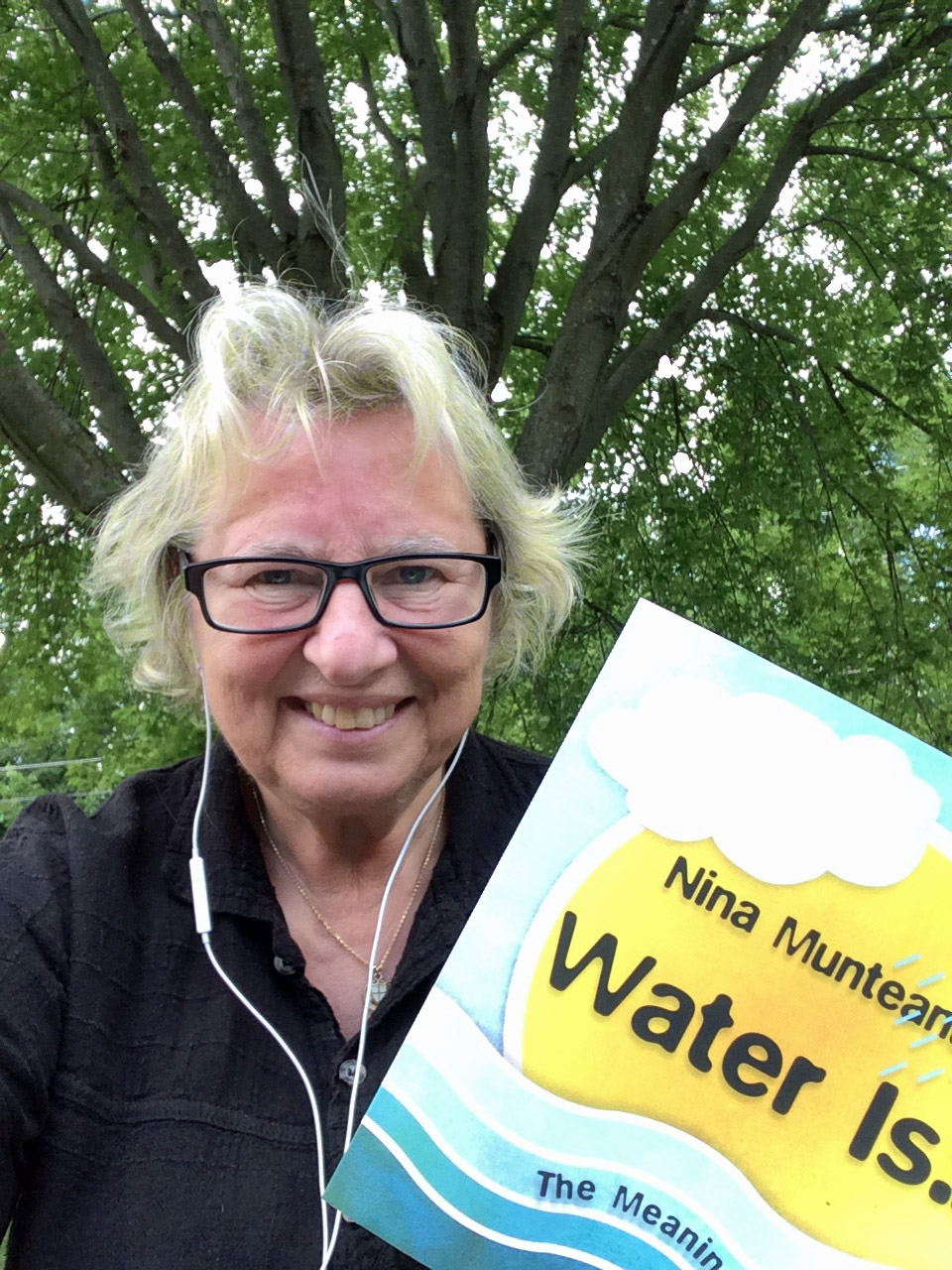
nina-2014aaa

Nina Munteanu is a Canadian ecologist / limnologist and novelist. She is co-editor of Europa SF and currently teaches writing courses at George Brown College and the University of Toronto. Visit www.ninamunteanu.ca for the latest on her books. Nina’s bilingual “La natura dell’acqua / The Way of Water” was published by Mincione Edizioni in Rome. Her non-fiction book “Water Is…” by Pixl Press(Vancouver) was selected by Margaret Atwood in the New York Times‘Year in Reading’ and was chosen as the 2017 Summer Read by Water Canada. Her novel “A Diary in the Age of Waterwas released by Inanna Publications (Toronto) in June 2020.

Launch of “A Diary in the Age of Water” by Nina Munteanu

june 18 launch evite1

Diary Water cover finalOn June 18th, Toronto book publishing house Inanna Publications launched its second spring series and A Diary in the Age of Water, my near-future/far-future speculative fiction book was among them.

A Diary in the Age of Water follows the climate-induced journey of Earth and humanity through four generations of women, each with a unique relationship to water.

Evoking Ursula LeGuin’s unflinching humane and moral authority, Nina Munteanu takes us into the lives of four generations of women and their battles against a global giant that controls and manipulates Earth’s water. In a diary that entwines acute scientific observation with poignant personal reflection, Lynna’s story unfolds incrementally, like climate change itself. Particularly harrowing are the neighbourhood water betrayals, along with Lynna’s deliberately dehydrated appearance meant to deflect attention from her own clandestine water collection. Her estrangement from her beloved daughter, her “dark cascade” who embarks upon a deadly path of her own, is heartwrenching. Munteanu elegantly transports us between Lynna’s exuberant youth and her tormented present, between microcosm and macrocosm, linking her story and struggles – and those of her mother, daughter and granddaughter – to the life force manifest in water itself. In language both gritty and hauntingly poetic, Munteanu delivers an uncompromising warning of our future.

—Lynn Hutchinson Lee


NINA-RENEE-TOAST2a

Renee Knapp and Nina Munteanu toast Inanna and all participants at the launch

A Diary in the Age of Water starts with young Kyo in the dying boreal forest of what used to be northern Canada. Kyo yearns inordinately for the Age of Water, a turbulent time of great change, before the “Water Twins” destroyed humanity. Looking for answers and plagued by vivid dreams of this holocaust, Kyo discovers the diary of Lynna, a limnologist from a time just prior to the destruction.

At the book launch, I read from Lynna’s first diary entry—in 2045. I then answered questions from audience members who came from Canada’s coast to coast:


What inspired you to write this book?

The Way of Water-COVERWho really… My publisher in Rome (Mincione Edizioni) had asked me for a short story on water and politics. I wanted to write about Canada and I wanted something ironic… so I chose water scarcity in Canada, a nation rich in water. “The Way of Water” (“La natura dell’acqua”) resulted, which has been reprinted in several magazines and anthologies, including Cli-Fi: Canadian Tales of Climate Change (Exile Editions), Future Fiction: New Dimensions in International Science Fiction (Future Fiction/Rosarium Publishing), Little Blue Marble Magazine, and Climate Crisis Anthology (Little Blue Marble). The story was about young Hilde—the daughter of the diarist—dying of thirst in Toronto… It begged for more … so the novel came from it…


Why did you choose to write your novel as a diary?

I was writing about both the far and the near future and much of it was based—like Margaret Atwood and her books—on real events and even real people. I wanted personal relevance to what’s going on, particularly with climate change.  I also wanted to achieve a gritty realism of the mundane and a diary felt right. The diarist—Lynna—is also a reclusive inexpressive character, so I thought a personal diary would help bring out her thoughts and feelings. There’s nothing like eves-dropping to make the mundane exciting.


If the oceans are rising because the ice caps are melting, is the ocean actually getting less salty?

The short answer is “yes.” As glaciers melt and introduce fresh water to the ocean—contributing to the rise in sea level—salinity is reduced in the surrounding sea. This has far-reaching consequences that lie beyond just rising sea levels and promise to affect all ocean life. Because freshwater is less dense than seawater—hence the saltwater wedge we experience on the lower Fraser River in Vancouver—freshwater increase in seawater will interfere with the pattern, mixing, and movement of ocean currents; this could be devastating to ocean life. The overall movement of ocean currents throughout the planet is called the Great Ocean Conveyor—or Atlantic Meridional Overturning Circulation (AMOC)—which circulates ocean water very much like in a lake, with dense water sinking beneath warmer, less salty water. As my diarist in the book writes, dumping in more and more freshwater into the ocean has slowed the sinking (and mixing) and the whole machine is slowing down. Freshwater is jamming the conveyor. If it stalls, this would unbalance the heat flux of the planet with more climate devastation.

Illustration 17 AMOC

Sketch of Atlantic Meridional Overturning Circulation (AMOC) from “A Diary in the Age of Water” Inanna Publications (sketch by Nina Munteanu)

The main protagonist is a limnologist; so are you; is there any resemblance?

Oh yes! Well, apart from the obvious—we both chose the same scientific discipline, we have similar views on the environment and humanity’s place in it. I might even have some of her foibles…hopefully not ALL of them… But, I’d say that all good characters have a piece of ourselves in them. Some dark and some light. The resemblance is heightened because she is depicted through her diary, which adds a gritty realism and a highly personal aspect to the fiction. In truth there’s a piece of me in each of the four women depicted in the story.


What is happening to the water in Ontario?

Water quality in Ontario waterways has not improved in the last decade and this can be placed squarely on the shoulders of local, regional and provincial governments and their failure to legislate and act. Inaction varies from lack of regulations and policing of industry to lack of city infrastructure and lack of ecological foresight.

SONY DSC

Cladophora alga in Lake Ontario

Lake Ontario itself receives pollution from Chicago, Sarnia, Detroit, Cleveland, Buffalo, Hamilton and Toronto. Pollution includes agricultural runoff (such as excess nutrients and cancer-causing pesticides and herbicides), disease-carrying sewage, and hormone-disrupting storm water runoff. Nine million people rely on the lake for drinking water. Greatest threats to the lake’s health come from urban development, electricity generation, sewage, and storm water contamination. In cities with large amounts of impervious surfaces, storm water runs over pavement and parking lots, picking up oil and other pollutants before flowing into a nearby river or stream. Flash floods are often accompanied by sewage overflow, which carries numerous pathogens. In addition, storm water picks up toxic heavy metals, endocrine disrupting chemicals and pharmaceuticals. All with devastating consequences to humans, never mind aquatic life and other wildlife.

Every five years the Conservation Authority Watershed Report Cards provide an assessment of ground and surface water quality in various watersheds of Ontario. The latest one by the TRCA (Toronto and Region Conservation Authority) in 2018 gave an overall grade of “D” (unchanged from 2013). They cited storm water runoff and lack of its management improvement as the chief reason for the poor grade. Increasing chloride concentrations in the Toronto region (mostly from liberal use of road salt) poses a real problem to aquatic life.


Log over water forest-DeasPark copy

Forest swamp in Deas Park, BC (photo by Nina Munteanu)

You mentioned that each of the four generations of women have a singular relationship with water. What role does water play in the book?

Well, in some important way, water is the fifth character. You could say even the main character. Water is the theme that carries each woman on her personal journey with climate change and the devastation that occurs—through water, I might add. Climate change is a water phenomenon, after all… So, water—like place and setting—plays a subtle yet powerful role in the story, influencing each character in her own way and bringing them together in the overall journey of humanity during a time of great and catastrophic change.


Are there other ages/epochs?

Yes. The story begins in the far future with young Kyo during the Age of Trees, after the end of the Age of Water. It is, in fact, the end of that age as well and that is why she prepares for the Exodus to “humanity’s” new home.

All Inanna titles are 30% off with coupon code: summer20. Please also consider purchasing “A Diary in the Age of Water” from an independent bookstore this summer. Find your local bookstore: http://open-book.ca/News/Your-Community-Your-Bookstore. And here is the current map of independent bookstores that are doing curbside pick up and delivery across Canada.


Beach stones foam HB-NS drybrush

Surf on Hirtle Beach, NS (photo and illustration by Nina Munteanu)

nina-2014aaa

Nina Munteanu is a Canadian ecologist / limnologist and novelist. She is co-editor of Europa SF and currently teaches writing courses at George Brown College and the University of Toronto. Visit www.ninamunteanu.ca for the latest on her books. Nina’s bilingual “La natura dell’acqua / The Way of Water” was published by Mincione Edizioni in Rome. Her non-fiction book “Water Is…” by Pixl Press(Vancouver) was selected by Margaret Atwood in the New York Times‘Year in Reading’ and was chosen as the 2017 Summer Read by Water Canada. Her novel “A Diary in the Age of Waterwas released by Inanna Publications (Toronto) in June 2020.


Endocrine Disruption in The Age of Water

Diary Water cover finalIn my recent novel A Diary in the Age of Water published by Inanna Publications Lynna, the diarist, talks with colleague Daniel about the increase in human infertility related to endocrine disruption. Daniel starts with a litany of reasons for human infertility:

“Scientists all agree that environmental factors are the main triggers for male and female infertility through epigenetics. The list of exposure triggers is endless. You know the main culprits: heavy metals, pesticides, PCBs, PAHs, VOCs, car exhaust, tobacco smoke … mostly chemicals with hormonal properties” Leaning on his microscope, Daniel went on, “Wherever there’s a sewage treatment plant, pulp and paper mill, or herbicides and pesticides in a stream, you get endocrine disruption, which causes more female or intersex fish populations. Then there’s nonylphenols—”

“—Degradation products of surfactants used in commercial and household detergents,” I ended for him and leaned against the doorway.

He nodded. “They inhibit breeding in male fish. And herbicides like atrazine—”

“—Create feminized males with female eggs, along with reduced immunity to disease,” I finished for him.

I knew all this. Hormonal disruption is global. Environmental toxicologists have been finding it in many aquatic animals like fish, turtles, alligators and frogs. And some terrestrial animals…Even humans…Was it also causing the steep rise in ambiguous sex in humans? Apparently 1 in 30 now have bodies that differ notably from standard male or female. Klinefelter, androgen insensitivity syndrome, presence of ovotestes, mixed gonadal dysgenesis, and mosaic genetics are all on the rise.

Daniel added, “The environment is changing us faster than most think and it’s doing it through epigenetics and HGT.”

Their discussion, which leads to something far more disastrous, is based on the reality of today.

endocrine systemThe endocrine system is a set of glands and the hormones they produce that help guide and regulate the development, growth, reproduction and behavior of most living things (yes plants too!). Some hormones are also released from parts of the body that aren’t glands, like the stomach, intestines or nerve cells. These usually act closer to where they are released. The endocrine system is made up of glands, which secrete hormones, and receptor cells which detect and react to the hormones. Hormones travel throughout the body, acting as chemical messengers, and interact with cells that contain matching receptors. The hormone binds with the receptor, like a key into a lock. Some chemicals, both natural and human-made, may interfere with the hormonal system. They’re called endocrine disruptors.

Endocrine (hormone) disruptors are substances that interfere with an organism’s endocrine system and disrupt the physiologic function of hormones. Studies have linked endocrine disruptors to adverse biological effects in animals, giving rise to valid concerns that low-level exposure can cause similar effects in human beings.

common endocrine disruptors

Common endocrine disruptors


Disruption of the endocrine system via Endocrine Disrupting Chemicals (EDCs) or Hormone Disrupting Chemicals (HDCs) happens in different ways. Some chemicals mimic a natural hormone, fooling the body into over-responding to the stimulus, or responding at inappropriate times. Other endocrine disruptors curtail the effects of a hormone from certain receptors by blocking the receptor site on a cell. Still others directly stimulate or inhibit the endocrine system and cause overproduction or underproduction of hormones.

EDC path

The effects of endocrine disruptors in humans include:

  • Reduction of male fertility;
  • Abnormalities in male reproductive organs;
  • Female reproductive diseases;
  • Earlier puberty; and,
  • Declines in the numbers of males born.

Some EDCs can also affect the development of the nervous and immune systems. Some well-known examples of EDCs include the contraceptive pill (17-alpha ethinylestradiol), dioxins, PCBs, PAHs, furans, phenols and several organic pesticides (most prominently DDT and its derivatives).

Pathways of endocrine disruptors

Pathophysiological pathways of EDCs

Sources for common EDCs in our daily lives are provided by Hormone Health Network in the table below:

Common EDCs: Used In:
DDT, Chlorpyrifos, Atrazine, 2, 4-D, Glyphosate Pesticides
Lead, Phthalates, Cadmium Children’s Products
Polychlorinated biphenyls (PCBs) and Dioxins Industrial Solvents or Lubricants and their Byproducts
Bisphenol A (BPA), Phthalates, Phenol Plastics and Food Storage Materials
Brominated Flame Retardants, PCBs Electronics and Building Materials
Phthalates, Parabeans, UV Filters Personal Care Products, Medical Tubing, Suncreen
Triclosan Anti-Bacterial Soaps, Colgate Total
Perfluorochemicals Textiles, Clothing, Non-Stick Food Wrappers, Mircowave Popcorn Bags, Old Teflon Cookware

Several chemicals have been found to disrupt the endocrine systems of animals in laboratory studies, and strong evidence exists that chemical exposure has been associated with adverse developmental and reproductive effects on fish and wildlife. The relationship of human diseases of the endocrine system and exposure to environmental contaminants, however, is still poorly understood (Kavlock et al., 1996, EPA, 1997).

One example of the devastating consequences of the exposure of developing animals, including humans, to endocrine disruptors is the case of the potent drug diethylstilbestrol (DES), a synthetic estrogen. Prior to its ban in the early 1970s, doctors mistakenly prescribed DES to as many as five million pregnant women to block spontaneous abortion and promote fetal growth. It was discovered after the children went through puberty that DES affected the development of the reproductive system and caused vaginal cancer. In addition to disruption of reproductive hormones, modulation of adrenal, thyroid and growth hormone function have also been described for various compounds in both humans and some animals, although the significance of these effects have not yet been fully determined.

Chemicals with affinities for estrogen receptors may cause lowered sperm count and other related reproductive abnormalities. Male fetuses exposed to high doses of estrogens may develop many female characteristics. Lower doses may alter the differentiation and multiplication of the germ cells that eventually give rise to sperm. Dr. John A. McLachlan, director of intramural research at the National Institute of Environmental Health Sciences noted that “some of the environmental chemicals that have estrogenic activity also seem to have a long half-life and can bioaccumulate” in the body’s fat tissue. Most endocrine disrupting chemicals are fat-soluble. This means that they do not get rapidly flushed out of the body, but are stored in fat. These chemicals bioaccumulate up the food chain. As a result, an individual will accumulate more of these chemicals throughout his/her lifetime. Major routes of removing these chemicals involve transfer from mother to child, through the placenta and in breast milk.

In 1992 researchers at Lake Apopka in Florida associated a declining alligator population with a depressed reproduction rate. Many of the male alligators had tiny penises that prevented successful reproduction. These developmental problems were connected to a large organochlorine pesticide spill several years earlier; although the water tested clean, the alligators and their eggs contained detectable levels of endocrine disrupting pesticides.

Atrazine male female frogs

Fish in the Great Lakes, which are heavily contaminated with polychlorinated biphenyls (PCBs) and other organochlorines, exhibit numerous reproductive function problems and swelling of the thyroid gland. Fish-eating birds, such as eagles, terns, and gulls are also showing similar health effects, as are mink, a mammal that also eats fish from the Great Lakes. These findings are consistent with lab studies that indicate that PCBs interfere with thyroid function and with sex hormones.

The environment is a global entity that recognizes no political boundaries. Issuing a plea for wise action, the National Resources Defense Council state: “Dioxin from a paper mill in the US can accumulate within livestock that is exported to another country; water vapor carrying DDT (now banned in the US) from Mexico can be rained down in Minnesota. Individuals living near the North Pole, where DDT has never been used, have surprisingly high levels of it in their body fat. The laws that ban the production and use of specific chemicals in the United States do little to regulate against exposure via imported products from countries that allow the use of these chemicals.”

Given the common use of sources (in industry, agriculture and residential) that contain and distribute endocrine disruptive chemicals by the human population, and given their bioaccumulation in human tissue, I can practically guarantee that virtually all humans carry some endocrine disruptive chemical in their bodies. How much depends on your life style, where you live and work, your eating habits and your physiology.

freighter-rowers-sailboat-web

Freighter in Toronto Harbour (photo by Nina Munteanu)


Recommended Reading:

Lauretta, Rosa, Andrea Sansone, Missimiliano Sansone, Francesco Romanelli and Marialuisa Appetecchia. 2019. “Endocrine Disrupting Chemicals: Effects on Endocrine Glands.” Front. Endocrinol. Online: https://www.frontiersin.org/articles/10.3389/fendo.2019.00178/full

Colborn, Theo, Dianne Dumanoski, and John Peterson Myers. 1996. “Our stolen future : are we threatening our fertility, intelligence, and survival? : a scientific detective story.” Dutton, New York.  306 pp.

Hormone Health Network. 2020. “Endocrine-Disrupting Chemicals EDCs.” Website: https://www.hormone.org/your-health-and-hormones/endocrine-disrupting-chemicals-edcs

National Institute of Environmental Health Sciences. 2019. “Endocrine Disruptors.” Website: https://www.niehs.nih.gov/health/topics/agents/endocrine/index.cfm

NRDC. 2016. “9 Ways to Avoid Hormone-Disrupting Chemicals.” Website: http://www.nrdc.org/health/effects/bendrep.asp


More on A Diary in the Age of Water:


nina-2014aaa

Nina Munteanu is a Canadian ecologist / limnologist and novelist. She is co-editor of Europa SF and currently teaches writing courses at George Brown College and the University of Toronto. Visit www.ninamunteanu.ca for the latest on her books. Nina’s bilingual “La natura dell’acqua / The Way of Water” was published by Mincione Edizioni in Rome. Her non-fiction book “Water Is…” by Pixl Press (Vancouver) was selected by Margaret Atwood in the New York Times ‘Year in Reading’ and was chosen as the 2017 Summer Read by Water Canada. Her novel “A Diary in the Age of Waterwas released by Inanna Publications (Toronto) in June 2020.


Age of Water Podcast: Interview with Emmi Itäranta

Emmi Itaranta 1

Emmi Itäranta

We are now living in the Age of Water. Water is the new “gold”, with individuals, corporations and countries positioning themselves around this precious resource. Water is changing everything. The Age of Water Podcast covers anything of interest from breaking environmental news to evergreen material. This also includes human interest stories, readings of eco-literature, discussion of film and other media productions of interest.

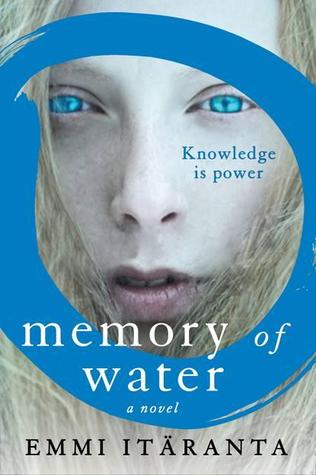
In this episode of Age of Water, we join award-winning Finnish author Emmi Itäranta in the UK, where she talks about her eco-fiction including The Memory of Water and how her childhood in Finland helped shape her own activism.

ListenNow button


Emmi ItarantamemoryofwaterEmmi Itäranta is an award-winning Finnish author. She holds a MA in Drama from the University of Tampere and worked as a columnist, theatre critic, script writer and press officer. She wrote her debut novel Memory of Water simultaneously in Finnish and English during a creative writing course. The English version was published by HarperCollins in 2014 in the United States, United Kingdom and Australia and was nominated for the 2014 Philip K. Dick Award, and the Golden Tentacle Award and the Arthur C. Clarke Award. The book was translated into over a dozen languages throughout the world. Her novel The City of Woven Streets (The Weaver) won the City of Tampere Literary Award. Emmi Itäranta lives in Canterbury, United Kingdom.


nina-2014aaa

Nina Munteanu is a Canadian ecologist / limnologist and novelist. She is co-editor of Europa SF and currently teaches writing courses at George Brown College and the University of Toronto. Visit www.ninamunteanu.ca for the latest on her books. Nina’s bilingual “La natura dell’acqua / The Way of Water” was published by Mincione Edizioni in Rome. Her non-fiction book “Water Is…” by Pixl Press (Vancouver) was selected by Margaret Atwood in the New York Times ‘Year in Reading’ and was chosen as the 2017 Summer Read by Water Canada. Her novel “A Diary in the Age of Water” will be released by Inanna Publications (Toronto) in June 2020.

Vision 2020 and Water Is…

BHNCDSB_STEM_Poster_36x24-4.pdf

In February 2020, I was invited to speak and do workshops with over a hundred Grade 11 and 12 students about the future in the “2020 Vision into the Future” conference at Wilfrid Laurier University in Brantford, Ontario.

FutureOfFuture-GLindsay

Keynote speaker Greg Lindsay talks to students at Sanderson Centre

AerotropolisJournalist, urbanist and futurist Greg Lindsay gave a rousing keynote speech to start the conference. Greg spoke about the future of cities, technology, and mobility. He is the director of applied research at NewCities and director of strategy at its mobility offshoot CoMotion. He also co-authored the international bestseller Aerotropolis: The Way We’ll Live Next.

I joined a suite of technologists, visionaries and other scientists in presenting various scenarios of the future through workshops and seminars.

Workshop subjects included quantum cryptography, autonomous vehicles, flying cars, robotic surgery, zero waste, computer glasses, and my workshop “writing science fiction.”

Instructive seminars included topics such as feeding 9 billion people, mental health, AI & computers, the science and meaning of water, urban development, the future of transportation and space exploration.

How to Write Science Fiction

the-city-cgtrader copy

Top choice image prompt for storytelling

I gave two workshops on how to write science fiction. The workshop began with a brief discussion on what a story is (and is not) and a summary of the key tools of writing good story (e.g. premise, plot, theme, character, and setting) with a focus on world-building and the role of science.

Each group then set out to create the framework for a story based on a premise from an image prompt and shared what they’d put together. In one session we all worked together with me scribing on one whiteboard, creating together as a class; in another session, small groups formed and created their own story among four to five members as I went from team to team.

everyday hero-2 copy

Next popular storytelling image (cover illustration for “Ecology of Story” by Anne Moody)

Amazing stories emerged in both cases from the image prompts chosen. Students demonstrated imaginative, mature and original premises and carried through with thoughtful and imaginative plot, theme and character journeys. I was very impressed.

The Science and Meaning of Water

In this seminar I gave a summary of water’s life-giving anomalous properties on Earth and discussed the history and field of limnology (study of freshwater). I explored our history with water (including our impacts) and the implications of climate change on our future with water on the planet. Points of interest included water’s many weird properties, water’s ubiquity and its origins, the hydrological cycle, and the often strange adaptations of life with (or without) water.

Water Is-COVER-webWe then discussed future implications of water scarcity (and geopolitical conflict) and some of the things individuals and communities can do. Much of the talk drew from my recent book Water Is… The Meaning of Water.


nina-2014aaa

Nina Munteanu is a Canadian ecologist / limnologist and novelist. She is co-editor of Europa SF and currently teaches writing courses at George Brown College and the University of Toronto. Visit www.ninamunteanu.ca for the latest on her books. Nina’s bilingual “La natura dell’acqua / The Way of Water” was published by Mincione Edizioni in Rome. Her non-fiction book “Water Is…” by Pixl Press (Vancouver) was selected by Margaret Atwood in the New York Times ‘Year in Reading’ and was chosen as the 2017 Summer Read by Water Canada. Her novel “A Diary in the Age of Waterwill be released by Inanna Publications (Toronto) in June 2020.


Book Review: Craig Russell’s “Fragment” in the time of COVID-19

Fragment-CraigRussellCraig Russell begins his eco-thriller Fragment with a TV interview of glaciologist Kate Sexsmith in Scott Base Antarctica. The interview is interrupted by what turns out to be four runaway glaciers that have avalanched into the back of the Ross Ice Shelf and a fragment the size of Switzerland surges out into the open sea. Hence the title: Fragment.

The original slide / wave and ensuing tsunami wipes out both Scott Station and the American McMurdo Station. The TV station records the moment:

Where Kate had stood to touch the map of Antarctica moments before, something hit the wall like an artillery round. It left a ragged hole through wall and map alike, framing an eerie light-show. A sheet of jewels flickered, glinting greens and blues, until a white mountain appeared and the screen went black.

Ross Ice Shelf 4

Ross Ice Shelf, Antartica

With astute prescience, Russell reveals humanity’s behaviour in the stress of such a momentous event: from scientists who understand the global significance of this rogue fragment to those who minimize its effect such as the media and tourist industry who wish to exploit this anomaly and self-centred politicians obsessed with protecting their status.

antarctic-glaciers

Antartica


snowball in senate

Senator Inhofe and infamous snow ball

My first thought was: he’s stereotyping a little. Then COVID-19 broke out to become a global pandemic. The reactions of scientists, media and certain politicians (e.g. the Trumps of the world) have played out with COVID-19 just as Russell had predicted with Fragment. Then again, good science fiction reaches deeply into a society’s core being, our motivations, fears and strengths; this is why science fiction is so eerily good at predicting. The best way to predict possibilities of the future is to understand the present and, as Russell demonstrates, science fiction writers are in touch with the zeitgeist of the world.

Reflecting the American government’s ridiculous denial of climate change, and calling to mind Republican Senator Inhofe’s snow ball in the senate scene, Russell’s character David Rookland (Washington’s Science Advisor) uses the glacier avalanche and fragment that he (purposely) misunderstands to illustrate with equal lack of logic the same misguided myth: “these theorists claim that around the world, glaciers have been receding. Thankfully, as you can see in the second photo, dear old Mother Nature has proven them wrong again.”

blue whale 2

Blue whale


Russell’s chapters devoted to the POV of character Ring, a young blue whale also fragmented from his pod, are particularly touching and powerful. Chased alternatively by Killer whales and human hunters, Ring must warn his kind of the danger posed by the fragment. In one chapter Ring observes that “there’s a special taste to the air here, a tang carried north from the twin Smoking Mountains, which send their steamy vapors into the sky forever.”

Russell then weaves an inspiring legend among the blues about a whale named Long-Throat and the “hard/noisy things” that came to hunt. Men slaughtered so many and scattered the pods in all directions. According to the legend of Long-Throat, the faint bitter smell of the Smoking Mountains brought the pods together again. This had been a time, thinks Ring, when the pods were not afraid to be different, or of new places and strange experiences. But no more. “The Slaughter scarred his race and young Blues are fed fear with their mother’s milk. Fear that never heals, never sleeps. Fight it though he may, that fear lives inside him too.” Ring hopes that, by facing this new fear of the fragment and its incredible power to devastate (any whale caught under its massive moving force will drown), “the old fear can be allowed to sink away.” His course is clear: he must compose a new song to warn other blues. Ring ends up doing far more than sound the warning of the moving behemoth to his people when he is discovered by an American nuclear missile submarine. What follows is what I think is the real story and its magic.

Ross Ice Shelf

Ross ice shelf, Antarctica

The book is appropriately titled Fragment because in some ways the fragment is a main character, carrying the theme. It is herald, harbinger, and misunderstood by many. Its power is greatly underestimated by others, and it is set apart from its fold to become something else. Like Ring and his people. Like humanity, even. Just as the Corona virus pandemic (currently ravaging the world as I write this article) promises to change every aspect of our world, so too does the fragment.

The fragment: “….Its northern rim is a world of chaos. Pack-ice, bulldozed by the Fragment, has been swept up into a bramble, miles deep, piled up and over itself in a frozen explosion. The corpses of countless penguins lie within, broken by the onslaught. Behind this jumble rises the Wall. A hundred metres above the water line and six hundred below, the Shelf is old, formed before Columbus stumbled his way across the Atlantic. In the Fragment’s back, imbedded like spears, are vast sections of the four glaciers. Byrd, Nimrod, Beardmore, and Shackleton. Truly ancient, each is a fortress, hard as granite, laminated layer upon layer over millennia…The creatures of the sea meet the wall in their millions. The air breathers, penguins, seals, dolphins, and so on, have no hope. They swim and die, exhausted and drowned. For many of the water breathers like fish and squid, the drop in temperature near the Fragment is too much…Some species of fish, well able to withstand the cold, succumb instead to the unfamiliar fresh water that has begun to pool around the Fragment.”–Craig Russell, Fragment

In a scene near the end of the book, which could be taken out of our current COVID-19 crisis, Russell describes how carefully considered warnings by scientists are downplayed as “alarmist” resulting in devastating inaction:

When Kate Sexsmith presents a possible scenario of the Fragment smashing into Europe, the Chairman of the European Fragment Conference counters with “in that highly unlikely event” all is under control by the world community. To this dangerous platitude, Sexsmith challenges (only to receive a mealy-mouthed double-speak reply):

“Respectfully, Mr. Chairman, [says Sexsmith] the world has faced plenty of hurricanes, tidal waves, and earthquakes. But we have no historical event to compare with the Fragment. And Europe isn’t the only place in danger. There are millions of people at risk on the Caribeean islands. Many are poorly educated and have no resources of their own. When do we mov them? How do we move them? Who is prepared to take them in? And based on Stanley [which was totally destroyed by the Fragment] who is prepared to take them in on a permanent basis?”

“We are not blind to these concerns, Doctor [says the chairman]. But we must take a balanced view. We cannot simply adopt an alarmist approach. Our scientific community’s reputation for sound council is too important to risk…”

But when great disaster strikes, all peoples (whales and humanity) come together in solidarity. With new humility, kindness and wisdom. I was astonished at the way Russell pulled things together toward a unique resolution. I give Craig Russell five stars for the courage to end his book the way he did. It was pure magic. The kind of magic we all want to see more of in this currently beleaguered, divisive and consumer-obsessed world.

Antarctica ice

Antartica

As Dutch trends forecaster Li Edelkoort said of COVID-19, the Fragment “might just turn the world around for the better [as] an amazing grace for the planet.”

Antarctica melting

Antarctica melting


Whales and Intelligence:

Scientists are still finding ways to assess “intelligence”, particularly in life that isn’t human. Whales have been shown to have emotional intelligence. They show signs of empathy, grief, joy, and playfulness. All of these learned behaviors, types of intelligence, and signs of teamwork have led scientists to think about groups of whales in new ways.

blue-whales-commercial-whaling-shipping-population-endangered-species-ocean-sea-whale-whaling-hunting-recovery

Blue whale

Most humans believe that our ability to communicate is far more complex and evolved than that of other animals, but cetaceans may be superior. According to a comparison of cetacean to primate brains from Michigan State University, “They have the distinct advantage over us in that their primary sense is the same as their primary means of communication, both are auditory. With primates, the primary sense is visual and the primary means of communication is auditory.” Communication is so great in cetaceans that there is a strong possibility they are able to literally project an “auditory image” that replicates a sonar message they may receive.  MSU describes it this way: “So a dolphin wishing to convey the image of a fish to another dolphin can literally send the image of a fish to the other animal. The equivalent of this in humans would be the ability to create instantaneous holographic pictures to convey images to other people.”

Specialized brain cells called spindle neurons are most often associated with an organism’s ability to “recognize, remember, reason, communicate, perceive, adapt to change, problem solve and understand.” Spindle neurons have been isolated in the brains of both whales and dolphins, which suggests that whales do a lot more thinking than previously thought. Dolphins, for example, have been known to recognize themselves in mirrors, solve problems, follow recipes, and associate a part of their anatomy with that of a human’s (such as when a dolphin waves it’s fin whenever a trainer waves their arm). Recent studies even indicate that dolphins are capable of creating personalized whistles that act as names for individual members of a pod. With this name, dolphins are able to communicate more efficiently while roaming the open seas.

mother calf humpback whale

Mother humpback and her calf

In a Scientific American article entitled “Are Whales Smarter Then We Are?” R. Douglas Fields writes: Logically, brain function and intelligence must relate to the number of neurons. Intelligence resides in the neocortex (the thin, convuluted “rind” of the brain) rather than in other, underlying areas devoted to controlling vital housekeeping functions for the body, so Eriksen and Pakkenberg focused their investigation there. The frontal lobes of the dolphin brain are comparatively smaller than in other mammals, but the researchers found that the neocortex of the Minke whale was surprisingly thick. The whale neocortex is thicker than that of other mammals and roughly equal to that of humans (2.63 mm). However, the layered structure of the whale neocortex is known to be simpler than that of humans and most other mammals. In particular, whales lack cortical layer IV, and thus have five neocortical layers to humankind’s six. This means that the wiring of connections into and out of the neocortex is much different in whales than in other mammals. The researchers’ cellular census revealed that the total number of neocortical neurons in the Minke whale was 12.8 billion. This is 13 times that of the rhesus monkey and 500 times more than rats, but only 2/3 that of the human neocortex. What can account for the fact that whales have bigger brains — and similarly thick neocortexes — but fewer neurons? Eriksen and Pakkenberg found that there were 98.2 billion non-neuronal cells, called glia, in the Minke whale neocortex. This is the highest number of glial cells in neocortex seen in any mammal studied to date. The ratio of neocortical glial cells to neocortical neurons is 7.7 to 1 in Minke whales and only 1.4 to 1 in humans. This finding may indicate a tendency for larger glia/neuron ratios as brain mass increases to support the growing neurons. But when one considers other recent research revealing that glia play an important role in information processing (see “The Other Half of the Brain,” fromn Sci. Am. April 2004), one is left to wonder. Is the whale brain intellectually weaker than the human brain, or just different? They have fewer neurons but more glia, and in traditional views of the glia, the neurons count for much more.

In her article in One Green Planet entitled “Whales and Dolphins Might Be The Smartest Animals”, Madison Montgomery leaves us a strong message and exhortation: “While it appears that cetaceans have incredible abilities to feel emotions, understand complex problems and communicate in ways we can’t even imagine, humans don’t seem to value this. Because we assume we are so smart, we put the other creatures of the world underneath us. Knowing how dynamic cetaceans are, keeping them in glorified bathtubs and forcing them to do tricks for food is insulting and cruel. Could you imagine the pain of living in a small room your entire life and having to do flips to be fed? Sounds like a miserable existence, doesn’t it?”

As a postscript, Fragment was selected by the American National Oceanic and Atmospheric Administration (NOAA) for their “Planet Stewards” 2023-2024 Book Club.

nina-2014aaa

Nina Munteanu is a Canadian ecologist / limnologist and novelist. She is co-editor of Europa SF and currently teaches writing courses at George Brown College and the University of Toronto. Visit www.ninamunteanu.ca for the latest on her books. Nina’s bilingual “La natura dell’acqua / The Way of Water” was published by Mincione Edizioni in Rome. Her non-fiction book “Water Is…” by Pixl Press (Vancouver) was selected by Margaret Atwood in the New York Times ‘Year in Reading’ and was chosen as the 2017 Summer Read by Water Canada. Her novel “A Diary in the Age of Waterwill be released by Inanna Publications (Toronto) in June 2020.


A Diary in the Age of Water: The Rocky Mountain Trench Inland Sea

Diary Water cover finalIn my novel A Diary in the Age of Water (Inanna Publications) the diarist writes about the huge 800-km reservoir complex built in the late 2020s in the Rocky Mountain Trench to rehydrate the United States. Of course, it’s science fiction, but it was based on real plans that went all the way to Congress in the 1960s.

Snaking along the length of the Rocky Mountain Trench, the reservoir promised to submerge numerous British Columbia towns such as Dunster, McBride and Valemount and pose an existential threat to northern communities of BC and Alaska.

The Trench

The Rocky Mountain Trench is a long and deep valley walled by sedimentary, volcanic and igneous rock that extends about 1,500 km from Flathead Lake and the ‘banana but’ of the Bitterroot Valley of western Montana through British Columbia to the Liard Plain just south of the Yukon Territory. Blanketed mostly by white and black spruce, subalpine fir and lodgepole pine, the northern trench stretches 3–20 km wide to accommodate the major river systems that snake along its mostly flat floor. This rich ecosystem is home to bears, caribou, moose and wolves. To the south, where the valley meanders more at lower elevation, the forest opens up and gives way to grasslands, marsh and farmland. The Trench is sometimes referred to as the “Valley of a Thousand Peaks” because of the towering mountain ranges on either side: the Rocky Mountains to the east and the Columbia, Omineca and Cassiar mountains to the west.

The Trench is a large fault—a crack in the Earth’s crust—and bordered along much of its length by smaller faults. Major structural features resulted from the shifting and thrusting of tectonic plates of the crust during the early Cenozoic Era, some 65 million years ago to form mountains. The ridges of fractured crust then pulled apart and the land in between dropped, creating the floor of the Trench.

RMT near Golden-south of Kinbasket

Rocky Mountain Trench, near Golden, B.C.

Among the major rivers that flow through the trench are the Fraser, Liard, Peace and Columbia rivers. Construction of hydroelectric projects—particularly those at Peace Canyon and Mica Dam—have disrupted the seven major rivers that once flowed through the Trench. All but the Fraser and Kechika rivers now empty into reservoirs on the valley floor; these include several reservoirs along the Columbia River in the southern trench such as the Kinbasket reservoir (created by the Mica Dam in 1973 to form Canoe Reach), and Revelstoke Lake (created by the Revelstoke Dam in 1984). Williston Lake was formed by the A.C. Bennet Dam on the Peace River in 1968. I had studied the effects of pulp mill activities for the federal government’s Environmental Effects Monitoring (EEM) Program.

Mackenzie-RMT

The Rocky Mountain Trench is topographically visible as it follows the BC-Alberta border south from Williston Lake

The Inland Sea

Like pseudopods of a hunting amoeba, the Rocky Mountain Trench reservoir system would have sent tendrils of water up river arms, and drowned swaths of ancient oroboreal rainforest. The rainforest corridor of Robson Valley—a conservation area that continues to experience existential risk due to development, resource harvest, and other disturbance—would have been one of the many casualties.

Cedar base-old growth copy 2

Ancient Redcedars in old-growth rainforest (photo by Nina Munteanu)

Una stopped the car and we stared out across the longest reservoir in North America. What had once been a breathtaking view of the valley floor of the Rocky Mountain Trench was now a spectacular inland sea. It ran north-south over eight hundred kilometres and stretched several kilometres across to the foothills of the Cariboo Mountain Range. Una pointed to Mount Mica, Mount Pierre Elliot Trudeau and several other snow-covered peaks. They stood above the inland sea like sentinels of another time. Una then pointed down to what used to be Jackman Flats—mostly inundated along with McLellan River and the town of Valemont to the south. Hugging the shore of what was left of Jackman Flats was a tiny village. “That’s the new Tête Jaune Cache,” my mother told me.

If villages had karma this one was fated to drown over and over until it got it right.  Once a bustling trading town on the Grand Trunk Pacific railway, Tête Jaune Cache drowned in the early 1900s when the Fraser naturally flooded. The village relocated to the junction of the original Yellowhead 16 and 5 Highways. Villagers settled close to where the Fraser, Tête Creek, and the McLellan River joined, all fed by the meltwater from the glaciers and icefields of the Premiere Range of the Cariboo Mountains. The village drowned again in 2025. I imagined the pool halls, restaurants, saloons and trading posts crushed by the flood.

“This area used to be a prime Chinook spawning ground,” Una said. “They swam over 1,200 km from the Pacific Ocean to lay their eggs right there.” She pointed to the cobalt blue water below us.

Kinbasket Lake-RMT

Kinbasket Reservoir

The reservoir sparkled in the sun like an ocean. Steep shores rose into majestic snow-capped mountains. The village lay in a kind of cruel paradise, I thought. It was surrounded by a multi-hued forest of Lodgepole pine, Western red cedar, Douglas fir, paper birch and trembling Aspen. Directly behind the village was Mount Terry Fox and across the Robson valley mouth, to the northeast, rose Mount Goslin. Behind it, Mount Robson cut a jagged pyramid against a stunning blue sky. Wispy clouds veiled its crown. I couldn’t help thinking it was the most beautiful place I’d seen. And yet, for all its beauty, the villagers had lost their principle livelihood and food. The reservoir had destroyed the wildlife habitats and the fishery. And its people with it.

Una pointed to where the giant reservoir snaked northwest and where towns like Croydon, Dunster, and McBride lay submerged beneath a silent wall of water. Her eyes suddenly misted as she told me about Slim Creek Provincial Park, between what used to be Slim and Driscoll Creeks just northwest of what used to be the community of Urling. She told me about the Oroboreal rainforest, called an “Antique Rainforest”—ancient cedar-hemlock stands over a 1000-years old. She described how massive trunks the width of a small house once rose straight up toward a kinder sun. The Primordial Grove was once home to bears, the gray wolf, cougar, lynx, wolverine and ungulates. It was the last valley in North America where the grizzly bear once fished ocean-going salmon. Now even the salmon were no longer there, she said. Then she bent low beside me and pulled me close to her in a hug. She quietly said to me, “This is what killed Trudeau.”

I stared at her and firmly corrected, “but that was an accident.”

“Yes,” she agreed. Then added, “a planned one.”

A Diary in the Age of Water

NAWAPA (North America Water Power Alliance)

The original NAWAPA Plan was drawn up by the Pasadena-based firm of Ralph M. Parsons Co. in 1964, and had a favorable review by Congress for completion in the 1990s. The plan—thankfully never completed—was drafted by the US Army Corps of Engineers and entailed the southward diversion of a portion (if not all) of the Mackenzie and Yukon rivers in northern Canada and Alaska, now flowing into the Arctic Ocean as well as the Peace, Liard and other rivers flowing into the Pacific by creating massive dams in the north. This would cause the rivers to flow backwards into the mountains to form vast reservoirs that would flood one-tenth of British Columbia. The water would be channeled south through the 800-km Rocky Mountain Trench Reservoir into the Northern USA, and from there along various routes into the dry regions of the South, to California and reaching as far as Mexico.

NAWAPA proposal Ralph M. ParsonsCo-1960s copy

NAWAPA was envisioned as the largest construction effort of all times, comprising some 369 separate projects of dams, canals, and tunnels, for water diversion. The water diversion would be accomplished through a series of connecting tunnels, canals, lakes, dams, and pump-lifts, as the trench itself is located at an elevation of 914 m (3,000 feet). To the east, a 9 m (thirty-foot) deep canal would be cut from the Peace River to Lake Superior. NAWAPA’s largest proposed dam would be 518 m (1,700 feet) tall, more than twice the height of Hoover Dam (at 221 m) and taller than any dam in the world today, including the Jinping-I Dam in China (at 305 m).

Conspiracy theorist and convicted fraudster Lyndon LaRouche was a principle proponent of the environmentally destructive NAWAPA plan. Although the plan was scrapped in the 1970s due to environmental concerns, it resurfaced in 1982 particularly by Parsons engineer Roland Kelley, who wrote a report called NAWAPA Plan Can Work. LaRouche and his movement revived interest more recently. In 2012 the LaRouche Political Action Committee released their NAWAPA XXI special report, which contained a detailed plan for the revival of an updated and expanded version of NAWAPA. The LaRouche movement continues to promote this outlandish plan today with support from various American politicians and industrialists.

In his book Cadillac Desert, environmental writer Marc Reisner described the plan as one of “brutal magnificence” and “unprecedented destructiveness.” Historian Ted Steinberg suggested that NAWAPA summed up “the sheer arrogance and imperial ambitions of the modern hydraulic West.”

NAWAPA copy 2

Expanded NAWAPA XXI plan

Rocky Mountain Trench near Radium Hot Springs, BC

Rocky Mountain Trench near Radium Hot Springs

nina-2014aaa

Nina Munteanu is a Canadian ecologist / limnologist and novelist. She is co-editor of Europa SF and currently teaches writing courses at George Brown College and the University of Toronto. Visit www.ninamunteanu.ca for the latest on her books. Nina’s bilingual “La natura dell’acqua / The Way of Water” was published by Mincione Edizioni in Rome. Her non-fiction book “Water Is…” by Pixl Press (Vancouver) was selected by Margaret Atwood in the New York Times ‘Year in Reading’ and was chosen as the 2017 Summer Read by Water Canada. Her novel “A Diary in the Age of Waterwill be released by Inanna Publications (Toronto) in June 2020.

Boredom in the Time of COVID-19: The Art and Satisfaction of Writing Letters

There are no boring moments; only bored people who lack the wherewithal to explore and discover—Nina Munteanu

Cedars and roots in moss JC

Cedar trees on shore of Jackson Creek, ON (photo by Nina Munteanu)

So many of us have responded intelligently to the pandemic by respecting “lock down” measures to self-isolate and socially distance. From simply staying at home to going out less often and avoiding crowds (well, there shouldn’t be any of them right now; but there will always be an irresponsible sector who must reflex their sense of entitlement and lack of compassion).

What the pandemic and our necessary reaction to it has done more than anything is to slow us down. Many people are slowly going crazy with it: we are, after all, a gregarious species. And not all of us feel comfortable with virtual meetings. Our senses are deprived; you can’t touch and smell and feel.

But, there are wonderful ways to feed the muse and get sensual…

Cedar over water-JC

Cedar tree on Jackson Creek, ON (photo by Nina Munteanu)

My good friend and poet Merridy Cox recently told me about a Facebook friend who was feeling so bored: “GETTING SO BORED BEING AT HOME” amid the social distancing and self-isolation during the ongoing COVID-19 pandemic.

Merridy counselled her friend to go outside and watch spring unfold then find a nice place to sit and write about it. A poem, she suggested: “Little white clouds are scudding across a blue sky. Trees are budding. Birds are migrating. Don’t be bored! Get outside, find a tree and see if there is a bird in it—now, you have enough to write a poem.”

What Merridy was essentially suggesting to her friend was to look outside herself. Reach out in curiosity and discover something. Boredom will fly away with curiosity and can lead to expression through poetry (or photography, sketching, journaling, memoir, or letter writing). When you open your soul to the spirit of exploration, you will find much to discover. When you share with others, you close the gap of isolation from gregariousness and find connection through meaning. The key is in sharing.

In Gifts from the Trail, Stella Body writes that, “Being Creative is a form of self-care and caring for others. The Gift by Lewis Hyde has been cited by Margaret Atwood and many others as what inspired them to share their creative work.  Sharing is part of many religions, as part of becoming ‘holy, from the word ‘whole’.   When what you share comes from your inner creative impulse, you develop a sense of your own value as an individual.  In addition, you transcend your separateness by touching the spirit of another.  In this way, all forms of art are therapeutic.”

The key to success in this is to start with 1) motivation, move through to 2) curiosity and discovery, then on to 3) creativity and expression. Sending an old-fashioned letter and handwriting provides a rich opportunity to create and express fully. And it gives us reasons to pursue. Following these three pursuits will enrich your life and provide enrichment to others through sharing.

Pine white woodpecker hole5

Woodpecker hole in white pine tree, ON (photo by Nina Munteanu)

Step 1, MOTIVATION: Find several people you wish to communicate with on a deeper level and wish to entertain and inform. Think beyond your Facebook or Twitter audience (though, I do draw inspiration from wishing to share my photography with them). They could even be your next door neighbour! Of course, you need something to share; that’s where Step 2 comes in.

Step 2, CURIOSITY and DISCOVERY: Find a place that you can observe; the natural world is incredibly suited to discovery. Look high and low, slow your pace and use all your senses. Listen. Smell. Feel. Remember to look up. And look down on the ground. Nature hides some of her most precious gems there. Find something familiar and find something new. Invest in a guidebook.

JournalWritert FrontCover copy 2Research what you’ve found on the Internet; find out more about something you’ve observed. For instance, why does the willow have such a shaggy bark? Why do alders grow so well near the edges of streams? What role do sowbugs play in the ecosystem? What do squirrels eat? What is that bird doing on my lawn? Start a phenology study (how something changes over the seasons). Keep tabs on the birds you see and what they’re doing. You can find several examples of mine in the links below.

Step 3, CREATIVITY and EXPRESSION: Depending on your relationship with people you are writing to and their own interests, you may tailor your letters with printed pictures, sketches and drawings, maps, quotes, and news clippings. This part can be really fun and can draw on all your creative talents. Let what you see and discover inspire you. Find a “story” in it and share it with someone. You can find more examples on ways to express yourself in my guidebook on writing journals: The Journal Writer.


Cedar bench river-JC

Bench next to cedar trees on Jackson Creek, ON (photo by Nina Munteanu)

Exploring and creativity don’t just cure boredom; they are good for your health:

EcologyOfStoryExpressive writing — whether in the form of journaling, blogging, writing letters, memoir or fiction — improves health. Over the past twenty years, a growing body of literature has shown beneficial effects of writing about traumatic, emotional and stressful events on physical and emotional health. In control experiments with college students, Pennebaker and Beall (1986) demonstrated that college students who wrote about their deepest thoughts and feelings for only 15 minutes over four consecutive days, experienced significant health benefits four months later. Long term benefits of expressive writing include improved lung and liver function, reduced blood pressure, reduced depression, improved functioning memory, sporting performance and greater psychological well-being. The kind of writing that heals, however, must link the trauma or deep event with the emotions and feelings they generated. Simply writing as catharsis won’t do.

In Gifts from the Trail, Stella Body writes: “Far more than a quick Selfie, a written response explores the range of the experience.  It both saves an instant from being lost in time, and holds on to the live matter of the writer’s feeling.  If shared, both writer and audience can return to that moment and draw healing from it.  What’s more, as many studies on volunteer work have shown, the process of sharing is a healing act.”

In Part 1 of my writing guidebook The Ecology of Story: World as Character, I talk about many of the interesting things in the natural world around us. In Part 2, I give many of these things meaning in story. The guidebook also has several writing exercises to capture the muse.

FictionWriter-front cover-2nd ed-webIn Chapter K of my writing guidebook The Fiction Writer: Get Published, Write Now!, I talk about writing what you know and what you discover. It’s more than you think. “In the 19th-century, John Keats wrote to a nightingale, an urn, a season. Simple, everyday things that he knew,” say Kim Addonizio and Dorianne Laux in The Writer’s Guide to Creativity. “Walt Whitman described the stars, a live oak, a field…They began with what they knew, what was at hand, what shimmered around them in the ordinary world.”

My journal writing guidebook The Journal Writer: Finding Your Voice provides advice and exercises on how to create a positive experience in observing, creating, journaling and letter or memoir writing.


Restoring the Lost Art of Handwriting

writing-notebook02

Nina writing in Niagara on the Lake (photo by Nina Munteanu)

Handwriting is a wonderful thing. It slows us down. It is a sensual and intimate way for us to express ourselves. I love my handwriting, especially when I am using my favorite pen (my handwriting changes depending on the pen), my Cross fountain pen — usually black. When you use a pen or pencil to express yourself you have more ways to express your creativity. Think of the subtleties of handwriting alone: changing the quality and intensity of strokes; designing your script, using colors, symbols, arrows or lines, using spaces creatively, combining with drawing and sketches. In combination with the paper (which could be lined, textured, colored graphed, etc.), your handwritten expression varies as your many thoughts and moods.

The very act of handwriting focuses you. Writing your words by hand connects you more tangibly to what you’re writing through the physical connection of pen to paper. Researchers have proven that just picking up a pencil and paper to write out your ideas improves your ability to think, process information and solve problems. The actual act of writing out the letters takes a little more work in your brain than just typing them on a keyboard, and that extra effort keeps your mind sharp. Researchers have also shown that writing something out by hand improves your ability to remember it. Handwriting improves memory, increases focus, and the ability to see relationships.

Handwriting fuses physical and intellectual processes. American novelist Nelson Algren wrote, “I always think of writing as a physical thing.” Hemmingway felt that his fingers did much of his thinking for him.

writing-notebook04According to Dr. Daniel Chandler, semiotician at Aberystwith University, when you write by hand you are more likely to discover what you want to say. When you write on a computer, you write “cleanly” by editing as you go along and deleting words (along with your first thoughts). In handwriting, everything remains, including the words you crossed out. “Handwriting, both product and process,” says Chandler, “is important … in relation to [your] sense of self.” He describes how the resistance of materials in handwriting increases the sense of self in the act of creating something. There is a stamp of ownership in the handwritten words that enhances a sense of “personal experience.”

Path-CreditRiver-oct2018

Path along Credit River, ON (photo by Nina Munteanu)

I know this is true in my own writing experience. This is why, although I do much of my drafting on the computer, I find that some of my greatest creative moments come to me through the notebook, which I always keep with me. Writing in my own hand is private and resonates with informality and spontaneity (in contrast to the fixed, formal look and public nature of print). Handwriting in a notebook is, therefore, a very supportive medium of discovery and the initial expression of ideas.

Develop interest in life as you see it; in people, things, literature, music—the world is so rich, simply throbbing with treasures, beautiful souls and interesting people. Forget yourself—Henry Miller


References:

Munteanu, Nina. 2009. The Fiction Writer: Get Published, Write Now. Starfire World Syndicate. 294pp

Munteanu, Nina. 2013. The Journal Writer: Finding Your Voice. Pixl Press. 172pp.

Munteanu, Nina. 2019. The Ecology of Story: World as Character. Pixl Press. 200pp.
 

Links:

The Ecology of Story: Revealing Hidden Characters of the Forest
Ecology, Story & Stranger Things
The Little Rouge in Winter: Up Close and Personal
The Phenology of the Little Rouge River and Woodland
White Willow–A Study
The Yellow Birch–A Study


nina-2014aaa

Nina Munteanu is a Canadian ecologist / limnologist and novelist. She is co-editor of Europa SF and currently teaches writing courses at George Brown College and the University of Toronto. Visit www.ninamunteanu.ca for the latest on her books. Nina’s bilingual “La natura dell’acqua / The Way of Water” was published by Mincione Edizioni in Rome. Her non-fiction book “Water Is…” by Pixl Press (Vancouver) was selected by Margaret Atwood in the New York Times ‘Year in Reading’ and was chosen as the 2017 Summer Read by Water Canada. Her novel “A Diary in the Age of Waterwill be released by Inanna Publications (Toronto) in June 2020.


The Ecology of Story: Revealing Hidden Characters of the Forest

 Story is place, and place is character—Nina Munteanu

EcologyOfStory coverI remember a wonderful conversation I had several years ago at a conference with another science fiction writer on weird and wonderful protagonists and antagonists. Derek knew me as an ecologist—in fact I’d been invited to do a lecture at that conference entitled “The Ecology of Story” (also the name of my writing guidebook on treating setting and place as a character). We discussed the role that ecology plays in creating setting that resonates with theme and how to provide characters enlivened with metaphor.

Derek was fascinated by saprotrophs and their qualities. Saprotrophs take their nutrition from dead and decaying matter such as decaying pieces of plants or animals by dissolving them and absorbing the energy through their body surface. They accomplish this by secreting digestive enzymes into the dead/decaying matter to absorb the soluble organic nutrients. The process—called lysotrophic nutrition—occurs through microscopic lysis of detritus. Examples of saprotrophs include mushrooms, slime mold, and bacteria.

Recipearium CostiGurguI recall Derek’s eagerness to create a story that involved characters who demonstrate saprotrophic traits or even were genuine saprotrophs (in science fiction you can do that—it’s not hard. Check out Costi Gurgu’s astonishing novel Recipearium for a thrilling example). I wonder if Derek fulfilled his imagination.

I think of what Derek said, as I walk in my favourite woodland. It is early spring and the river that had swollen with snow melt just a week before, now flows with more restraint. I can see the cobbles and clay of scoured banks under the water. Further on, part of the path along the river has collapsed from a major bank scour the previous week. The little river is rather big and capricious, I ponder; then I consider that the entire forest sways to similar vagaries of wind, season, precipitation and unforeseen events. Despite its steadfast appearance the forest flows—like the river—in a constant state of flux and change, cycling irrevocably through life and death.

Cedar trunk base

Cedar tree (photo by Nina Munteanu)

As I’m writing this, the entire world struggles with life and death in the deep throws of a viral pandemic. COVID-19 has sent many cities into severe lock down to prevent viral spread in a life and death conflict. I’ve left the city and I’m walking in a quiet forest in southern Ontario in early spring. The forest is also experiencing life and death. But here, this intricate dance has seamlessly partnered death and decay with the living being of the forest. Without the firm embrace of death and decay, life cannot dance. In fact, life would be impossible. What strikes me here in the forest is how the two dance so well.

cedar log patterns2 copy

Cedar log, patterns in sapwood (photo by Nina Munteanu)

I walk slowly, eyes cast to the forest floor to the thick layer of dead leaves, and discover seeds and nuts—the promise of new life. I aim my gaze past trees and shrubs to the nearby snags and fallen logs. I’m looking for hidden gifts. One fallen cedar log reveals swirling impressionistic patterns of wood grain, dusted with moss and lichen. Nature’s death clothed in beauty.

The bark of a large pine tree that has fallen is riddled with tiny beetle holes drilled into its bark. Where the bark has sloughed off, a gallery of larval tracks in the sapwood create a map of meandering texture, form and colour.

Beetle bore holes pine log

White pine bark scales with tiny beetle bore holes, Little Rouge, ON (photo by Nina Munteanu)

larval tracks in pine wood

Beetle larval tracks in pine sapwood (photo by Nina Munteanu)

Nearby, another giant pine stands tall in the forest. Its roughly chiselled bark is dusted in lichens, moss and fungus. The broad thick ridges of the bark seem arranged like in a jigsaw puzzle with scales that resemble metal plates. They form a colourful layered mosaic of copper to gray and greenish-gray. At the base of the tree, I notice that some critter has burrowed a home in a notch between two of the pine’s feet. Then just around the corner, at the base of a cedar, I spot several half-eaten black walnuts strewn in a pile—no doubt brought and left there by some hungry and industrious squirrel who prefers to dine here.

The forest is littered with snags and fallen trees in different stages of breakdown, decomposition and decay. I spot several large cedar, pine, oak and maple snags with woodpecker holes. The snags may remain for many decades before finally falling to the ground.

Fallen Heroes, Mother Archetypes & Saprophyte Characters

WoodpeckerHole on cedar

Woodpecker hole in a snag (photo by Nina Munteanu)

The forest ecosystem supports a diverse community of organisms in various stages of life and death and decay. Trees lie at the heart of this ecosystem, supporting a complex and dynamic cycle of evolving life. Even in death, the trees continue to support thriving detrivore and saprophytic communities that, in turn, provide nutrients and soil for the next generation of living trees. It’s a partnership.

Decomposition and decay are the yin to the yang of growth, writes Trees for Life; and together they form two halves of the whole that is the closed-loop cycle of natural ecosystems.

Snags and rotting logs on the forest floor provide damp shelter and food for many plants and animals. Most are decomposers, including earthworms, fungi, and bacteria. As the wood decays, nutrients in the log break down and recycle in the forest ecosystem. Insects, mosses, lichens, and ferns recycle the nutrients and put them back into the soil for other forest plants to use. Dead wood is an important reservoir of organic matter in forests and a source of soil formation. Decaying and dead wood host diverse communities of bacteria and fungi.

TurkeyTail fungus on tree-LR

Turkey tail fungus, Little Rouge woodland (photo by Nina Munteanu)

Mother Archetypes

Wood tissues of tree stems include the outer bark, cork cambium, inner bark (phloem), vascular cambium, outer xylem (living sapwood), and the inner xylem (non-living heartwood). The outer bark provides a non-living barrier between the inner tree and harmful factors in the environment, such as fire, insects, and diseases. The cork cambium (phellogen) produces bark cells. The vascular cambium produces both the phloem cells (principal food-conducting tissue) and xylem cells of the sapwood (the main water storage and conducting tissue) and heartwood.

stages of tree life

Forest ecologists defined five broad stages in tree decay, shown by the condition of the bark and wood and presence of insects and other animals. The first two stages evolve rapidly; much more time elapses in the later stages, when the tree sags to the ground. These latter stages can take decades for the tree to break down completely and surrender all of itself back to the forest. A fallen tree nurtures, much like a “mother” archetype; it provides food, shelter, and protection to a vast community—from bears and small mammals to salamanders, invertebrates, fungus, moss and lichens. This is why fallen trees are called “nursing logs.”

uprooted stump carbon cushion fungus

Uprooted tree covered in fungi, lichen and moss, Little Rouge, ON (photo by Nina Munteanu)


Heralds, Tricksters and Enablers

rotting maple log2

Rotting maple log (photo by Nina Munteanu)

I stop to inspect another fallen tree lying on a bed of decaying maple, beech and oak leaves. When a fallen tree decomposes, unique new habitats are created within its body as the outer and inner bark, sapwood, and heartwood decompose at different rates, based in part on their characteristics for fine dining. For instance, the outer layers of the tree are rich in protein; inner layers are high in carbohydrates. This log—probably a sugar maple judging from what bark is left—has surrendered itself with the help of detrivores and saprophytes to decomposition and decay. The outer bark has mostly rotted and fallen away revealing an inner sapwood layer rich in varied colours, textures and incredible patterns—mostly from fungal infestations. In fact, this tree is a rich ecosystem for dozens of organisms. Wood-boring beetle larvae tunnel through the bark and wood, building their chambers and inoculating the tree with microbes. They open the tree to colonization by other microbes and small invertebrates. Slime molds, lichen, moss and fungi join in. The march of decay follows a succession of steps. Even fungi are followed by yet other fungi in the process as one form creates the right condition for another form.

rotting maple log

Rotting maple log, covered in carbon cushion fungus, Little Rouge, ON (photo by Nina Munteanu)

Most hardwoods take several decades to decompose and surrender all of themselves back to the forest. In western Canada in the westcoast old growth forest, trees like cedars can take over a hundred years to decay once they’re down. The maple log I’m studying in this Carolinian forest looks like it’s been lying on the ground for a while, certainly several years. The bark has fragmented and mostly fallen away, revealing layers of sapwood in differing stages of infestation and decay. Some sapwood is fragmented and cracked into blocks and in places looks like stacked bones.

Black lines as though drawn by a child’s paintbrush flow through much of the sapwood; these winding thick streaks of black known as “zone lines” are in fact clumps of dark mycelia, which cause “spalting,” the colouration of wood by fungus. According to mycologist Jens Petersen, these zone lines prevent “a hostile takeover by mycelia” from any interloping fungi. Most common trees that experience spalting include birch, maple, and beech. Two common fungi that cause spalting have colonized my maple log. They’re both carbon cushion fungi.

Spalting

Spalting through zone lines by carbon cushion fungus, Little Rouge, ON (photo by Nina Munteanu)

hypoxylon-close

Hypoxylon fungus (photo N. Munteanu)

Brittle cinder (Kretzschmaria deusta) resembles burnt wood at maturity. Deusta means “burned up” referring to the charred appearance of the fungus. Hypoxylon forms a “velvety” grey-greenish cushion or mat (stroma). As the Hypoxylon ages, it blackens and hardens and tiny, embedded fruitbodies (perithecia) show up like pimples over the surface of the crust.

Blue-green fungus on log

Green and Blue Stain fungus (photo N. Munteanu)

Much of the exposed outer wood layer looks as though it has been spray painted with a green to blue-black layer. The “paint” is caused by the green-stain fungus (Chlorociboria) and blue-stain fungus (Ceratocystis). The blue-green stain is a metabolite called xylindein. Chlorociboria and Ceratocystis are also spalter fungi, producing a pigment that changes the color of the wood where they grow. While zone lines that create spalting don’t damage wood, the fungus responsible most likely does.

Spalting is common because of the way fungi colonize, in waves of primary and secondary colonizers. Primary colonizers initially capture and control the resource, change the pH and structure of the wood, then must defend against the secondary colonizers now able to colonize the changed wood.

Intarsia using blue-green spalted wood

Details of 16th century German bureaus containing blue-green spalted wood by the elf-cup fungus Chlorociboria aeruginascens

Wood that is stained green, blue or blue-green by spalting fungi has been and continues to be valued for inlaid woodwork. In an article called “Exquisite Rot: Spalted Wood and the Lost Art of Intarsia” Daniel Elkind writes of how “the technique of intarsia–the fitting together of pieces of intricately cut wood to make often complex images–has produced some of the most awe-inspiring pieces of Renaissance craftsmanship.” The article explores “the history of this masterful art, and how an added dash of colour arose from the most unlikely source: lumber ridden with fungus.”

Shapeshifting Characters

moss hiding under leaves

Moss in forest litter (photo by Nina Munteanu)

I find moss everywhere in the forest, including beneath the forest floor. Moss is a ubiquitous character, adapting itself to different situations and scenarios. Like a shapeshifter, moss is at once coy, hiding beneath rotting leaf litter, stealthy and curious as it creeps up the feet of huge cedars, and exuberant as it unabashedly drapes itself over every possible surface such as logs, twigs and rocks, and then proceeds to procreate for all to see.

Moss is a non-vascular plant that helps create soil; moss also filters and retains water, stabilizes the ground and removes CO2 from the atmosphere. Science tells us that mosses are important regulators of soil hydroclimate and nutrient cycling in forests, particularly in boreal ecosystems, bolstering their resilience. Mosses help with nutrient cycling because they can fix nitrogen from the air, making it available to other plants.

Moss with spores water drops2

Green moss gametophyte with sporophytes growing out of it (photo by Nina Munteanu)

Mosses thrive in the wet winter and spring, providing brilliant green to an otherwise brown-gray environment. Even when covered in snow (or a bed of leaves), moss continues its growth cycle, usually in the leafy gametophyte stage. When the winter is moderate, like it is near Toronto, sporophyte structures can already appear on stalks that hold a capsule full of spores.  In the spring the capsules release spores that can each create a new moss individual. Moss is quietly, gloriously profligate.

Symbiotic Characters

Many twigs strewn on the leaf-covered forest floor are covered in grey-green lichen with leaf-like, lobes. On close inspection, the lichen thallus contains abundant cup-shaped fruiting bodies. I identify the lichen as Physchia stellaris, common and widespread in Ontario and typically pioneering on the bark of twigs—especially of poplars, and alders.

Lichen fruiting-best-2 copy

Physchia stellaris lichen with fruiting bodies (apothecia), Little Rouge, ON (photo by Nina Munteanu)

Lichens are a cooperative character; two characters in one, really. Lichens are a complex symbiotic association of two or more fungi and algae (some also partner up with a yeast). The algae in lichens (called phycobiont or photobiont) photosynthesize and the fungus (mycobiont) provides protection for the photobiont. Both the algae and fungus absorb water, minerals, and pollutants from the air, through rain and dust. In sexual reproduction, the mycobiont produces fruiting bodies, often cup-shaped, called apothecia that release ascospores. The spores must find a compatible photobiont to create a lichen. They depend on each other for resources—from food to shelter and protection.

Forest as Character

Sunset 1 Niagara

Sunset in Niagara on the Lake (photo by Nina Munteanu)

In Far from the Madding Crowd, Thomas Hardy personified trees as interpreters between Nature and humanity: from the “sobbing breaths” of a fir plantation to the stillness of trees in a quiet fog, standing “in an attitude of intentness, as if they waited longingly for a wind to come and rock them.” Trees, meadows, winding brooks and country roads were far more than back-drop for Hardy’s world and his stories. Elements of the natural world were characters in their own right that impacted the other characters in a world dominated by nature.

Place ultimately portrays what lies at the heart of the story. Place as character serves as an archetype that story characters connect with and navigate in ways that depend on the theme of the story, particularly in allegories that rely strongly on metaphor. A story’s theme is essentially the “so what part” of the story. What is at stake for the character on their journey. Theme is the backbone—the heart—of the story, driving characters to journey through time and place toward some kind of fulfillment. There is no story without theme. And there is no theme without place.
—excerpted from The Ecology of Story: World as Character


nina-2014aaa

Nina Munteanu is a Canadian ecologist / limnologist and novelist. She is co-editor of Europa SF and currently teaches writing courses at George Brown College and the University of Toronto. Visit www.ninamunteanu.ca for the latest on her books. Nina’s bilingual “La natura dell’acqua / The Way of Water” was published by Mincione Edizioni in Rome. Her non-fiction book “Water Is…” by Pixl Press (Vancouver) was selected by Margaret Atwood in the New York Times ‘Year in Reading’ and was chosen as the 2017 Summer Read by Water Canada. Her novel “A Diary in the Age of Waterwill be released by Inanna Publications (Toronto) in June 2020.
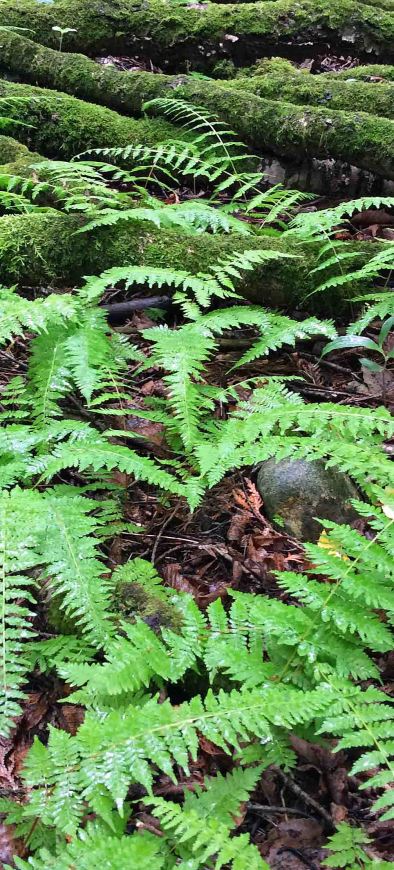


Infertility in the Age of Water

Diary Water cover finalIn a scene of my near-future eco-thriller A Diary in the Age of Water (Inanna Publications, 2020) the diarist’s young colleague Daniel rather too enthusiastically proclaims the impending extinction of males.

“Scientists all agree that environmental factors are the main triggers for male and female infertility through epigenetics…Epigenetics rules climate change-related adaptations. And everything appears stacked heavily for females and intersex humans. Males might go extinct with climate change!”

–A Diary in the Age of Water

Lynna Dresden, the diarist in A Diary in the Age of Water, thinks Daniel rather buffoonish and a traitor to his male kind. Then again, here is how another Daniel starts his article in a 2018 issue of GQ Magazine entitled “Sperm Count Zero“:

Men are doomed. Everybody knows this. We’re obviously all doomed, the women too, everybody in general, just a waiting game until one or another of the stupid things our stupid species is up to finally gets us. But as it turns out, no surprise: men first. Second instance of no surprise: We’re going to take the women down with us.

There has always been evidence that men, throughout life, are at higher risk of early death—from the beginning, a higher male incidence of Death by Mastodon Stomping, a higher incidence of Spiked Club to the Brainpan, a statistically significant disparity between how many men and how many women die of Accidentally Shooting Themselves in the Face or Getting Really Fat and Having a Heart Attack. The male of the species dies younger than the female—about five years on average. Divide a population into groups by birth year, and by the time each cohort reaches 85, there are two women left for every man alive. In fact, the male wins every age class: Baby boys die more often than baby girls; little boys die more often than little girls; teenage boys; young men; middle-aged men. Death champions across the board.

Now it seems that early death isn’t enough for us—we’re on track instead to void the species entirely.

–Daniel Noah Halpern, GQ Magazine

sperm_decline_chartBoth Daniels are talking about the alarming rate at which sperm counts worldwide are falling. They’ve dropped by half in the last fifty years in North America, Europe, Australia and New Zealand—according to a 2017 paper by researchers at Hebrew University and Mount Sinai medical school and more recent studies in 2018.

While an unhealthy lifestyle (being overweight or obese, smoking, stress and alcohol or recreational drug use) is most often implicated, more insidious causes exist.

PHTHALATESResearch shows that consumption and/or exposure to many common constituents of urban living can decrease fertility, increase miscarriage, spontaneous abortion, and lower auto-immune systems. Examples include car exhaust, pesticides, common detergents, hair dyes, cleaning solvents, oil based paints, adhesives, gasoline; and consumption of MSG, coffee, alcohol.

A 2019 study by scientists at Nottingham University identified two chemicals common in home environments that damage sperm in men and dogs. GQ Daniel goes on to explain: “Phthalates and BPA [used to make plastic soft and flexible or harder and stronger] for example, mimic estrogen in the bloodstream. If you’re a man with a lot of phthalates in his system, you’ll produce less testosterone and fewer sperm. If exposed to phthalates in utero, a male fetus’s reproductive system itself will be altered: He will develop to be less male.”

sperm count and platics

This leads Age of Water Daniel to bring up the rise in intersex mammals (individuals born with any of several variations in sex characteristics including chromosomes, gonads, sex hormones or genitals that do not fit the “strict definitions for ‘male’ or ‘female’ bodies”). A 2016 article in Environmental Health Insights by Rich et al. attribute an increasing number of human children born with intersex variation to an increase in hormone disrupting chemicals in our environment.

Phthalates bookLeaning on his microscope, Daniel went on, “Wherever there’s a sewage treatment plant, pulp and paper mill, or herbicides and pesticides in a stream, you get endocrine disruption, which causes more female or intersex fish populations…[Degradation products of surfactants used in commercial and household detergents] inhibit breeding in male fish. And herbicides like atrazine—”

“—Create feminized males with female eggs, along with reduced immunity to disease,” I finished for him.

I knew all this. Hormonal disruption is global. Environmental toxicologists have been finding it in many aquatic animals like fish, turtles, alligators and frogs. And some terrestrial animals…Even humans…Was it also causing the steep rise in ambiguous sex in humans? Is Daniel an intersex human? Apparently 1 in 30 now have bodies that differ notably from standard male or female. Klinefelter, androgen insensitivity syndrome, presence of ovotestes, mixed gonadal dysgenesis, and mosaic genetics are all on the rise. Which was he?

As if he knew what I was thinking, Daniel said dramatically, “The environment is changing us faster than most think and it’s doing it through epigenetics and HGT.”

–A Diary in the Age of Water

Phthalates and BPA can be found everywhere. GQ Daniel lists them: “BPA can be found in water bottles and food containers and sales receipts. Phthalates are even more common: They are in the coatings of pills and nutritional supplements; they’re used in gelling agents, lubricants, binders, emulsifying agents, and suspending agents. Not to mention medical devices, detergents and packaging, paint and modeling clay, pharmaceuticals and textiles and sex toys and nail polish and liquid soap and hair spray. They are used in tubing that processes food, so you’ll find them in milk, yogurt, sauces, soups, and even, in small amounts, in eggs, fruits, vegetables, pasta, noodles, rice, and water. The CDC determined that just about everyone in the United States has measurable levels of phthalates in his or her body—they’re unavoidable.”

These chemicals affect sperm’s ability to swim, navigate and fertilize an egg. DNA fragmentation in the sperm head also occurs, which is basically equivalent to a sperm having a brain hemorrhage. Recent studies suggest that 20-30% of young men today have sperm counts in a range that is associated with reduced fertility. Sarbjit Kaur at the Punjab Agricultural University found that men who live in industrial cities had six times more abnormal sperm than men living in a relatively clean rural town.

TheHandmaid'sTale-bookDr. Marilyn F. Vine at the University of North Carolina demonstrated that smoking men had lower sperm counts by 13-17%. Smokers also had more abnormal sperm. Likewise, women who smoked experienced more spontaneous abortions, early menopause and abnormal oocytes. Follicular fluid also contained high levels of cadmium, a heavy metal present in cigarettes, and cotininie, a metabolite of nicotine.

A growing concern for infertility has entered our general mindset, reflected in the theme of infertility in literature and motion pictures.

Notable examples include Margaret Atwood’s The Handmaid’s Tale (1985), Raising Arizona (1987), Aeon Flux (2005), The Children of Men (2006), Private Life (2018) and my own A Diary in the Age of Water (2020).

Although we are not close to experiencing the global infertility pandemic portrayed in the barren 2027 world of The Children of Men, this cautionary tale of a world gone mad with grief should linger like the whispered truth of a fairy tale.

children of men scene

scene from “Children of Men” motion picture


Suggested Reading:

Carr, Teresa. 2019. “Sperm counts are on the decline—could plastics be to blame?” The Guardian.

Belluz, Julia. 2019. “Sperm counts are falling. This isn’t the reproductive apocalypse—yet” Vox.

Halpern, Daniel Noah. 2018. “Sperm Count Zero.” GQ Magazine.

Fetters, Ashley. 2018. “Sperm Counts Continue to Fall.” The Atlantic.

Stein, Rob. 2017. “Sperm Counts Plummet in Western Men, Study Finds.” NPR.


nina-2014aaa

Nina Munteanu is a Canadian ecologist / limnologist and novelist. She is co-editor of Europa SF and currently teaches writing courses at George Brown College and the University of Toronto. Visit www.ninamunteanu.ca for the latest on her books. Nina’s bilingual “La natura dell’acqua / The Way of Water” was published by Mincione Edizioni in Rome. Her non-fiction book “Water Is…” by Pixl Press (Vancouver) was selected by Margaret Atwood in the New York Times ‘Year in Reading’ and was chosen as the 2017 Summer Read by Water Canada. Her novel “A Diary in the Age of Waterwill be released by Inanna Publications (Toronto) in June 2020.