The Resurgence of Oral Storytelling: the Audio Book


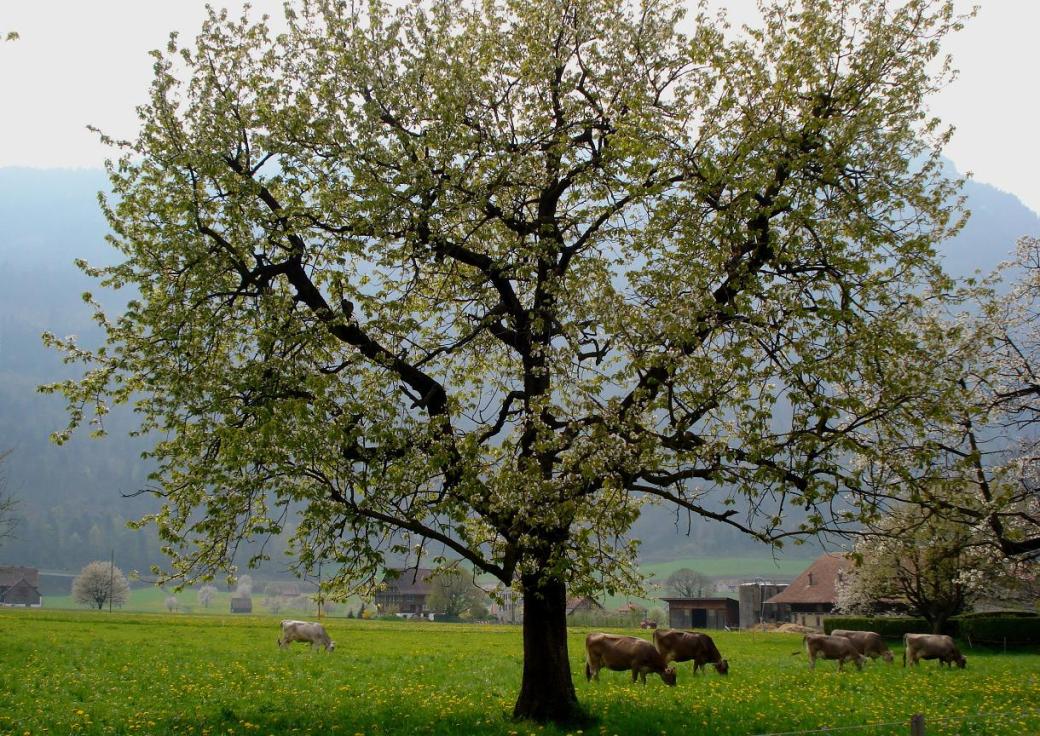
arth-pasture-tree

Cows pasturing in Arth, Switzerland (photo by Nina Munteanu)

Griot. Raconteur. Bard. Jongleur. Seanchai. Skop. Troubadors and minstrals. Spinner of yarns. Any way you call them they are storytellers. And storytellers have shaped our societies and reflected our cultures for all of recorded history, and before—from the time of cave paintings, songs and campfires.

Because oral storytelling is told through memory it spreads with a fluid and dynamic quality whose effect is alive, immediate and visceral.

Being Romanian Helped…

When I was a young girl, I wanted to be an actress. I enjoyed telling stories to my brother and sister. My sister and I shared a bazillion adventure stories (most of them twisted and funny) about two twin brothers and sisters who solved mysteries in outer space. Because our cast and stories were epic, we dispensed with the limitations of set (not enough dolls and stuffed animals) and went straight into the oral storytelling tradition: we liberated ourselves and shared our stories anywhere and anytime we chose. While I never did participate in theatre or drama in school, I did cultivate the art of oral storytelling. An art I may have come by quite honestly as a Romanian. Romanians are consummate storytellers; the country is brim with imaginative and compelling folktales, myth and supernatural phenomena.

Romanian oral epic includes a large body of heroic songs, fantastic and mythological songs, haiduc songs (on the exploits of heroic social outlaws), and balladic narrative songs of a more lyric nature.

When my son was growing up, I used to read him stories at bedtime. It was a time of incredible bonding: sharing stories and laughter. I did all the voices and sound effects. It didn’t stop there; soon I was making up scenarios all my own with a cast of hundreds and my son leapt in with both feet. It was like when I was younger, creating stories with my sister. My son and I created worlds peopled by fantastic characters; there was “little girl” (me) and there was Baby Poopy and Baby Bang Bang (him) and a host of others. My son played some parts (usually the rational ones) and I played others (usually the silly ones). Using Leggo, we even created a whole new twisted StarWars universe where Luke Skywalker had a falsetto voice and Darth Vader had given up his evil ways and turned into an old grumpy hermit with a flatulence problem, growing beans in his garden. There were no boundaries to our imaginative play.

The Age of Oral Storytelling

Oral storytelling is an ancient tradition and the most personal and intimate form of storytelling. The storyteller and the listeners are physically close and, through the story connection, psychically close. Storytellers bring their own personality and character to the story; they ultimately reveal and share themselves through their telling and the listeners reveal and share themselves through their reception of the story. The intimacy and connection is deepened by the flexibility of oral storytelling which allows the tale to be molded to each audience and location or environment where it’s being told. Listeners experience the immediacy of a creative process taking place in their presence and, even more than that, they experience the empowerment of being a part of that creative process (which is often interactive).

Early storytelling combined stories, poetry, music, and dance. Storytelling was natural for everyone but those who excelled at it became the entertainers, educators, cultural advisors and historians of their community. The history of a culture was handed down from generation to generation through its oral storytellers.

The 9th century fictional storyteller Scheherazade in “1001 Arabian Nights” saves herself from execution by telling tales. Centuries before Scheherazade the storyteller Vyasa at the beginning of the Indian epic Mahabharata says, “If you listen carefully, at the end you’ll be someone else.”

During the Middle Ages storytellers told their stories in market places and became honored members in royal courts. According to storyteller Ruth Sawyer, Medieval storytellers were expected to know all the current tales. They were expected to “repeat all the noteworthy theses from the universities, to be well informed on court scandal, to know the healing power of herbs and simples (medicines), to be able to compose verses to a lord or lady at a moment’s notice, and to play on at least two of the instruments then in favor at court.”

The Age of Audiobooks and iPhone

An audio book is a recording of the contents of a book read aloud. They have been around for over 70 years, but their popularity has swiftly grown to an all time high.

Ubiquitous mobile devices like iPods, iPhones have made audiobooks much more accessible and easy to download and portably listen to. Audiobooks are also valuable learning tools due to their format. They are convenient in multi-tasking scenarios.

Audiobooks on cassette or CD are typically more expensive than hardcovers because of the added expense of recording and the lack of the economy of scale in high “print” runs that are available in print book publishing. However, downloadable audiobooks cost less than hardcovers and can even be less than their paperback equivalents. Market penetration of audiobooks is still substantially lower than for their printed counterparts despite the high market penetration of the hardware (MP3 and WMA players) and despite the massive market penetration achieved by audio music products. But this is changing.

Downloadable audiobooks don’t carry mass production costs; they don’t require storage of a large inventory, physical packaging or transportation and even if “returned” don’t require a cost of physical return or destruction/disposal. Like the downloadable ebook, audiobooks are taking the storytelling industry by storm.

Amy Harmon of the New York Times recounts this scenario: “Jim Harris, a lifelong bookworm, cracked the covers of only four books last year. But he listened to 54, all unabridged. He listened to Harry Potter and “Moby-Dick, Don DeLillo and Stephen King. He listened in the car, eating lunch, doing the dishes, sitting in doctors’ offices and climbing the stairs at work.” Harmon recounts how 53 year old Mr. Harris, a computer programmer in Memphis, hadn’t read that much since he was in college. Of course, for some diehard literary types “listening” isn’t the same as “reading”.

Fortunately for Mr. Harris, the ranks of the reading purists are dwindling, says Harmon. “Fewer Americans are reading books than a decade ago, according to the National Endowment for the Arts, but almost a third more are listening to them on tapes, CD’s and iPods and iPhones.”

For a growing group of devoted listeners, the popularity of audio books is redefining the notion of reading, which for centuries has been centered on the written word. Audio books, says Harmon, have seduced members of a literate but busy crowd by allowing them to read while doing something else. “Digital audio that can be zapped onto an MP3 player is also luring converts. Audio books, which still represent only about 3 percent of all books sold, do not exactly herald a return to the Homeric tradition. But their growing popularity has sparked debate among readers, writers and cultural critics about the best way to consume literature.”

For me, the audiobook represents more. Audiobooks aren’t just another aspect of our convenient, fast-paced, multitasking culture. Audio books provide a different form of creative storytelling that is both refreshing and thoroughly engaging.

Of course, some books are better told this way than others and the storyteller’s role is paramount. Inflection, cadence, passion and voice all play a critical role in the oral narrative.
My Audiobooks

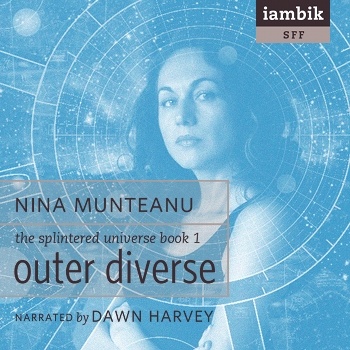
OuterDiverse-audiobook-IambikMy space detective adventure book “Outer Diverse” was originally released by Iambik Audiobooks as an audiobook, narrated by Dawn Harvey. It and its second “Inner Diverse” (and soon third book “Metaverse” of the Splintered Universe Trilogy) are now available on Audiobook.com, through Amazon and on iTunes. And I am ecstatic! When I first listened to the proof, I was blown away. It was as though Dawn had created a whole new story, as though she’d breathed life into Rhea Hawke and the myriad of alien characters in Rhea’s universe. Dawn had applied cadence, inflection, joy and humor into each character and set. Remember how Orsen Wells created mass hysteria with his rendition of “War of the Worlds”?

Give the gift of pure joy with audiobooks.


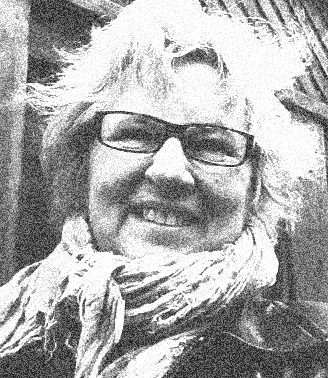
Nina Munteanu is an ecologist and internationally published author of award-nominated speculative novels, short stories and non-fiction. She is co-editor of Europa SF and currently teaches writing courses at George Brown College and the University of Toronto. Visit www.ninamunteanu.ca for the latest on her books.

Surfing the Hybrid Wave of Publishing

Botanical Beach tidal pools

Botanical Beach, BC (photo by Nina Munteanu)

Bestsellers have been migrating online since Amazon.com opened its virtual doors in 1995. Now ¾ of them are online, e-books and print combined. A few years ago Borders shut its doors. Mike Shatzkin of the Shatzkin Files tells me that Barnes & Noble continues to close stores as leases expire.

Our very own Chapters/Indigo in Canada is rapidly turning into a gift store. Mid-listed and lower listed authors are finding their print books returned to them (I know; I’m one of them). Further to that, I can also state that the digital version of my books—available in multi-formats including print, audio, e-book, and graphic novel—is selling at a ratio of at least 5 to 1 over any other format sold. Amazon recently revealed that Indie and small-press books account for half of the e-book sales in its most popular and bestselling genres. In a startling and controversial statistical report, Writer Hugh Howey determined that 92% of the top-100 best-selling books in the top-selling genres (based on Amazon sales) are e-books.

Despite the challenge on the use of statistics and data reporting in the Howey study, some of the overall trends he discussed (though the study may not have proven this) are becoming obvious.

Over the past six years a mass migration into e-books has occurred—thanks to Kindle and Kobo (and several other online venues). We’ve had three years of great “hand-held delivery” of graphics—thanks to the iPad. Novels and non-fiction have blossomed over the Internet and into our cherished smart phones and other portable devices. It’s only time before consumers of illustrated books and children’s books embrace this market. One of my colleagues is counting on it. She has just completed an annotated version of an Edwardian illustrated guide to pets that is splendid with old plates and wonderful anecdotes. And it will be sold only as an e-book.

A bazillion ebook retailing models are sprouting to embrace the flourishing of individual expression and readers who use Kindle, Kobo, and other portable reading devices. For instance there’s Safari, 24symbols, Oyster, Scribd, Entitle, and Librify. Then there’s Amazon’s PRIME, a kind of “library” lending service for its subscribers. They also have Kindle Fire for kids.

The big publishers have shifted majorly to ebooks to improve their margins and profitability. Even literary agents are dabbling in the publishing business now (e.g., E-Reads, Diversion, Rosetta, Curtis Brown, Writer’s House).

This is all great news for the self-published author, who is increasingly relying on the ebook format and Internet distribution platform of social media to earn a living as a writer.

The number of self-published books that succeed is still a tiny fraction of the number of books published overall. However, this needs to be seen in the greater context: the number of successful books (as gauged by various measures of “bestselling-status”), no matter how published, has always been a crap shoot, with many books not enjoying the kind of success their authors would wish—or deserve. The number of books mid-listed and below has always been a very high percentage of the total. As with most niche markets, publishing success and sales has followed and continues to follow a long tail, with the few earning a lot stretching its long tail to the many earning a little. “The number of people reading wasn’t enough to support the number of authors publishing traditionally,” author Hugh Howey points out in an article called “I See it Half-Full”; no matter how a book is published or by whom.

What does this mean to those of you just getting started and still choosing which route to follow?

Those of us in the industry have been hearing some interesting back and forths spanning from writers like John Green who passionately maintains that he would “never self-publish” and that there is an advantage to publishing the traditional route to others like Brenna Aubrey who turned down an auctioned offer from a Big Five publisher to self-publish with no regrets and to great success.

In an article entitled “the Third Way of Book Publishing”, successful self-published author Mathew Mather argues for a hybrid approach. In the article, he shares how he became a successfully published author without the help of any of the Big Five publishers and the results were incredible:

“By self-publishing and without any help from the Big Five, I’ve gathered nearly 200,000 readers in under two years. This was only possible because of the new platforms and outlets that became available to authors in the past few years. Without them, I wouldn’t be an author, or at least, not a ‘published author’. And, because of my self-publishing success, 20th Century Fox purchased the film rights to my second novel, CyberStorm.”

Mather suggests an alternative paradigm that mixes self-publishing with traditional publishing and involves the author’s rights. Mather says that “If a writer manages to get out a self-published book that is successful, they can separate out rights for: domestic US, Canada, UK, rest of world country by country, audio rights, film and TV rights and so on.” Mather himself kept self-publishing in the US domestic market (both print and electronic) and sold off rights for foreign markets through an agent or through larger traditional publishers.

Mather cites the example of Hugh Howey, who kept his electronic publishing rights while doing print deals with other publishers.

I’ve done the same for several of my books. While I collect small royalties (12%) from my American Indie publishing house who has bought the rights to the print version of The Splintered Universe, I kept the rights to the e-book version, which I sell on Amazon KDP for a much higher royalty (70%). I make more per e-book despite its reduced retail price; and, as I mentioned above, I sell more e-books than print books, by about 5:1. Howey provides more interesting statistics for writers to consider.

This is an exciting time. The writing and publishing industry is experiencing a tidal wave of change. If you like waves and don’t mind getting a little wet, chances are you’ll enjoy an awesome ride. Publishing success now and in the future will not rely on any single model. It doesn’t matter if you use a longboard, gun, fish or bonzer. Just get up and surf that wave.

As with other facets of business, art and expression that have been touched by the Internet, storytelling is currently experiencing a renaissance of individual expression that will involve many different ways to express, communicate and distribute “story”—some yet to be imagined.


Nina Munteanu is an ecologist and internationally published author of award-nominated speculative novels, short stories and non-fiction. She is co-editor of Europa SF and currently teaches writing courses at George Brown College and the University of Toronto. Visit www.ninamunteanu.ca for the latest on her books.


Beating Today’s “S” Curve (or Why an Editor is Every Writer’s Best Friend)

the beach-2013

Man on the beach, Toronto (photo by Nina Munteanu)

I’m an ecologist and a limnologist. I conducted environmental research and investigations for over twenty years; as senior scientist I investigated and reported on environmental phenomena to both the scientific and lay community. I find it interesting when something I’ve been reporting on for over twenty years finally makes it to the mainstream; like it’s news. So, when a New York City cab driver turned to me recently and lectured me on global warming like it was the new thing, I nodded slowly in mute agreement and didn’t tell him that I’d been studying it for over twenty years.

There’s an interesting phenomenon going on out there right now. Maybe you noticed it. Economists are all abuzz with it. Social scientists and psychologists are gossiping to each other about it: the exponential growth curve—or “S” curve—that we are currently in the middle of is fueling our food shortages, oil shortages, inflation, economic collapses, tensions between countries, population rise, and everything else to do with humanity on this planet.

S curve

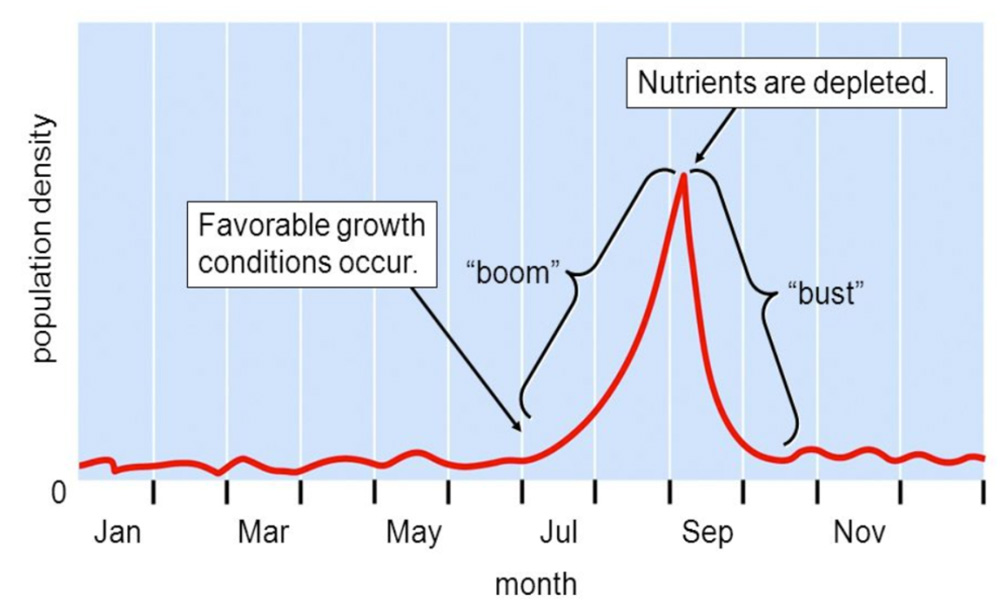
Ecologists have long been studying this biological—and sociological—phenomenon in nature. The typical “S” curve has three parts to it: 1) the beginning, where it lags and shows a slow rate of rise; 2) then the steep rise of exponential growth; and 3) the eventual leveling off when the supposed carrying capacity is reached. There is another kind of curve, the “boom and bust” curve that instead of plateauing at the end toward sustainability, plummets just as steeply back to or below levels in the first step (that’s a whole other topic and blog post).

BoomBustGraph

The ‘boom-bust’ population cycle. Note the resemblance of the human population growth curve in Fig. 1 to the exponential ‘boom’ phase of the cycle. The world community can still choose to influence the speed and depth of the coming bust phase. Source of graph: Biology: Life on Earth, 8th ed., Fig. 26-3. (taken from The Tyee Magazine)

Why am I talking to you about this? Because it has everything to do with your writing. The publishing industry is currently experiencing its own version of the “S” curve and the “boom and bust” curve (for traditional publishing houses, I’m afraid). We are currently witnessing a growing influx and legitimization of self-publishing and Indie publishing. Thanks to a few crazy success stories and the new affordable paradigm of POD digital publishing, publishing hasn’t been easier. This new model heralds an unprecedented renaissance of self-expression and creativity, shared worldwide.

Consider these statistics: in 2009, Publishers Weekly reported over 750,000 self-published/micro publisher titles, over twice the number of traditionally published titles that same year. The figures (I couldn’t find more recent ones—let me know when you do) are assuredly much higher today. From 8,000 to 11,000 new publishers currently enter the field every year and most of them are self-publishers or small indie publishers. Seventy-eight percent of titles brought out come from a small press or self-publisher. Fifty-two percent of books sold are not sold in bookstores; they are merchandised through mail order, online, in discount or warehouse stores, through book clubs, and nontraditional retail outlets.

As a function of this renaissance of self-expression, the number of books hitting the market is rising at an exponential rate. There’s that “S” curve again. Check out Amazon: they have over seven million books on their virtual shelves. And now, thanks to their new policies, it’s growing exponentially. What does this mean for you?

It used to be that the screening for excellence in books occurred behind the closed doors of prestigious publishing houses; if a book wasn’t deemed worthy of the standards or didn’t fit the style of that publishing house (with its own reputation), it was not accepted and didn’t see the light of day. The rejected and dejected author often went back to the drawing board to improve their artistic work before resubmitting. That was then. Now, works are published without prejudice in the open for the world to see.  It used to be that writers complained of their writing being “sterilized” by the editor of the publishing house, which was only conforming to the house style and their vision of what is salable. Now, authors wishing for creative control simply self-publish.

Self-publishing has created a kind of anarchy in publishing; anything can be published (so long as you have the money). And while this is incredibly liberating for authors around the world, it is also incredibly dangerous. Here’s why: once you publish your material, it will be out there for the world to see forever. That means FOREVER. It becomes a permanent record of your standards of excellence and taste; essentially a statement of who and what you are. You had better be proud of it then and for a very long time. It is no longer the responsibility of the publisher to determine publishing worthiness; the onus is on YOU, the writer. What will you do to ensure the best possible work for your readers?

Competition will become ever more fierce AFTER you’ve invested and AFTER you’ve published; your book will then compete with a world of self-published authors in addition to those published by traditional publishing houses. In order for your book to rise above the massive competition, it’s more important than ever to produce a concise, clean, clear, polished-to-perfection manuscript that you are proud of. With an awesome cover (see my July 2013 post on book jacket covers).

Self-published author Dave Bricker shares that, “Poor editing is the number one complaint heard from critics of the independent publishing industry. Though the standards of mainstream publishing houses are overrated, I’ve read many indie books where spotty spelling and lack of polished prose present barriers to enjoyable reading. Unedited authors sully the publishing waters for the rest of us.” He’s talking about poor packaging. Poor manuscript presentation can seriously undermine an author’s chances of being taken seriously. A good reputation is earned slowly and tenuously; a poor reputation, like the plummeting “boom and bust” curve can end a writer’s career.

“Why not produce a pressure-tested product that has already withstood the scrutiny of a professional critic whose standards are much higher than those of the average reader?” says Bricker. “As with your typesetting and cover design, the best route to success is to engage a professional.” He is right. If you want to be treated as a professional (by readers) then be professional and engage professionals.

What do professional editors do?

heather-short-story-Page_1

Sample of story editing (with permission of author)

Editors aren’t proofreaders, although this might be one task in several they can provide. Most editors are what are variously called structural or story editors; someone capable of commenting on the work objectively and with competence. Is the story believable? Are there unexpected temporal jumps or unexplained threads in the narrative? Are the article’s assertions properly supported? As with affairs of the heart, it’s easy to understand the problems of others and difficult to acknowledge what we’re too close to see—and if you think writing isn’t an affair of the heart, you haven’t started your book yet. Get that third-party perspective.

No one likes to be edited. Of course you feel protective of your material; that is natural. You’ve put so much into it; how could a stranger possibly understand and treat it with the respect it deserves?

Professional editors are accustomed to interacting with authors in a mutually respectful relationship. Editors have to make a living, and they would quickly find themselves unable to if they treated their clients in any way other than professionally and respectfully. A professional editor is more likely to serve your true interests in getting published than a friend or relative who likely knows little of “storytelling”, plot and character; and may side-wind you with inappropriate advice or platitudes. In fact, showing your work to a friend or relative may be the reason why you have decided that you “don’t like to be edited.” Before I was published, I once showed my work in progress to my husband, who was too close to the subject and its writer; he made very unprofessional remarks that were more damaging than helpful. If you go with a professional you will not have this problem.

Throughout history, authors have relied on their editors to be their sounding boards, to represent the eye and ear of the reader, and to help bring a viewpoint that can’t arise spontaneously in the author’s head. In the past, the traditional publishing house has typically provided this service. Many publishing houses now expect the writer to provide a manuscript that has already been edited. Indie and self-publishing scenarios leave the onus on the writer.

Two of the most common excuses that authors find for not engaging a professional editor include cost and venue.

I can’t afford an Editor: can you afford to put out a book for the world to see that is full of mistakes? If you aren’t serious enough about writing and publishing to invest in your career with good guidebooks, courses & workshops and coaching and editing, then perhaps you should rethink your career. No one would think twice about training and getting professional help to become a successful nurse or pilot. Writing is the same. For it to be successful, it requires investment. Especially if you are considering self-publishing.

Self-published author Dick Margulis reminds us that “Self-publishing is a business – the publishing business – and if you hope to succeed in it, you have to manage it like a business. You have to look at your skill set and decide which of the many tasks associated with publishing you are suited to doing yourself and which can be done more effectively and more economically by others. Your time has value, and you have to decide how it is best spent.”

It’s Just an E-Book: a common mistake, particularly with digitally published books, is the notion that because you haven’t invested in typesetting or printing you can fix the mistakes later. That is a poor notion. And a risky approach that smacks of laziness. Letting your readers find your mistakes for you is a poor show and will hurt your reputation as a writer (no matter who publishes you). With books, no matter what format, the first impression is critical. For some readers that may be the first and last time they meet you and your work. Make sure it counts. Word gets around pretty fast on the Internet. Ensure that it’s a good word.

So, now you want to find a good editor… Where can you find them?

Here, in Canada, most good professional editors belong to the professional editors association known as EAC (Editors Association of Canada). You can browse the association website for an editor’s profile with information.

Many good writers also freelance edit, like myself (see what I do as writing coach and editor under the Coaching/Teaching tab here). My Major Services Page describes my services in more detail.

the beach-2013i

Boardwalk on The Beach, Toronto (photo by Nina Munteanu)

Hiring an author/editor is a good fit, particularly if the author/editor writes in your genre interest.  SF Canada, a professional writers organization in the science fiction and fantasy genres, is another good place to find author/editors in that genre.

I know and have worked with several excellent editors, including non-fiction, technical editors, fiction editors, etc. You can drop me a line if you are looking.

And, while you’re looking, check out my interview with Jennifer D. Foster of Boldface (Toronto Branch of EAC blog) On the Author / Editor Relationship and what makes a good editor.


Nina Munteanu is an ecologist and internationally published author of award-nominated speculative novels, short stories and non-fiction. She is co-editor of Europa SF and currently teaches writing courses at George Brown College and the University of Toronto. Visit www.ninamunteanu.ca for the latest on her books.

Women Heroes in Literature, Movies and Pop Culture

rita vrataski-3

Rita Vrataski (Emily Blunt) fights a war against aliens

Some time ago on my birthday, I watched the popular — and somewhat controversial — Hunger Games. Well, controversial among some critics and followers of critics, anyway. I came across a particularly juicy article by critic Jeffrey Wells on Hollywood Elsewhere, in which he attributed the movie’s success to “reviews by certain female critics” who are “susceptible to the lore of this young-female-adult-propelled franchise.”

Whether this was true or not — and I highly doubt this — it brings up another stirring question: that of gender-bias. Is it truly still hard for a man like Wells to accept and enjoy a story which feature’s a female heroine?  Is it so hard to see a woman as a person first: championing a cause, delivering a world from evil and injustice, overcoming a great obstacle to become enlightened?

I think of my favorite stories in literature, peopled by men and women; all heroes: Tess of the d’Urbervilles, Fahrenheit 451, King Lear, Solaris, The Grapes of Wrath, 1984, Doctor Zhivago, Brave New World, Martian Chronicles, and To Kill a Mockingbird — to name just a few. The gender of the hero I empathized with was irrelevant. What remained important was their sensibilities and their actions.

Katniss fights the system in Hunger Games

Katniss fights the system in Hunger Games

It got me thinking … What does it take to be a hero—a female hero— particularly? And does there need to be a difference? The tweets and FB-talk and Internet buzz imply that male heroes differ from female heroes; they embrace differing quests and archetypal roles and reflect different qualities. In his 2013 web-article “Saving Science Fiction From Strong Female Characters” SF author John C. Wright attempted to elucidate a more realistic portrayal of women heroes in science fiction. Unfortunately, the article relied heavily on well-established androcratic stereotypes.

The male hero stereotype in literature and films of western culture—and science fiction particularly—is often characterized by strength, courage, integrity & honor, intelligence, assertiveness, single-mindedness, faith in his quest, and boundless determination: he is the altruist warrior, often acting alone against an unfair society through his conscience. All traits honored, respected and esteemed in men. In a woman, these Boadicean qualities often qualify her as “a bitch” or a “tomboy”. She may be considered unwomanly, unlady-like, intimidating, and with lesbian tendencies. Not the sort of girl you would take home to Mummy. The exciting Becky Sharp to the prosaic but sweet Amelia. And God forbid that she is more intelligent than her male counterpart!

Kara Thrace (Starbuck) fights Cylons in Battlestar Galactica

Kara Thrace (Starbuck) fights Cylons in Battlestar Galactica

For a woman to qualify as “hero” then, must she shed her feminine qualities of compassion, kindness, tenderness, and nurturing, to express those hero-defining qualities that are typically considered “male” to become less than either? Goddess untouchable? Women deserve better than that in literature and other story media.  I have seen too many 2-dimensional female characters limited by their own stereotype in the science fiction genre—particularly in the adventure/thriller sub-genre. If they aren’t untouchable goddesses or “witches” in a gynocratic paradigm (woman-dominating), they are often delegated to the role of enabling the “real hero” on his journey through their belief in him: as Trinity enables Neo; Hermione enables Harry; Mary Jane enables Spiderman; Lois enables Superman; etc. etc. etc.

aeryn sun gun

Aeryn Sun (Claudia Black) fights “humans” in Farscape

In an opinion piece in The Detroit News, Tom Long tells us that the women in top hero-style movies have usually been and still are portrayed in “romantic, sidekick or comedic roles. Often they’re waiting to be rescued (think Princess Leia). And some of them are part of action ensembles [think X-men].” Token figures to provide added “spice”, edge and diversity. This is, according to Gitesh Pandya, editor of a box office analyst site, because female-driven action movies have a hard time selling. “Most of the action films that have become huge hits are either male-driven or ensemble.” Pandya goes on to suggest that this is because more tickets are purchased by men than by women. “The film industry has been male-dominated for so long, the people who are creating and financing these films typically put men in there as heroes.” And yet women read far more fiction than men (by a 4:1 ratio according to some sources). We are in dire need of balance and we hunger for a female hero.

Lucy: victim, predator or neither?

Lucy: victim, predator or neither?

“What does it mean for our nation or our world if we treat [women] by a different script? What are we clinging to when we cling to that script that women need men’s protection?” said Ann Folino White, assistant professor at Michigan State University. She does well to call it a script when the storytellers of a culture define our humanity: who and what we are, our values and what we strive to be. Storytellers are the shamans of our culture and our time. We are the visionaries of our future.

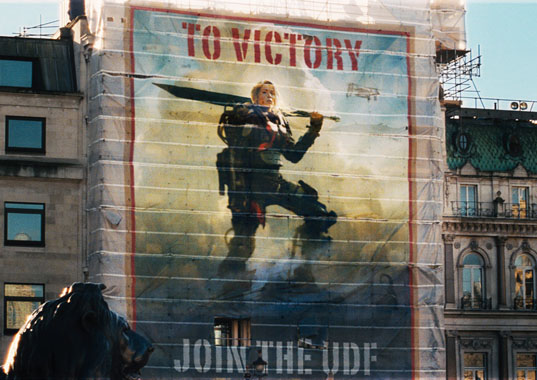
The recent SF action film Edge of Tomorrow provided a refreshing kind of woman hero; Rita Vrataski (Emily Blunt) is equal—in fact superior—to her male protagonist, William Cage (played by Tom Cruise) in skill, intelligence and heroic stature. What I mean by heroic stature is that her heroic journey of transformation does not play subservient to her male counterpart’s journey.

trinity-syndromeIn so many androcratic storylines, the female—no matter how complex, interesting and tough she starts out being—must demure to the male lead; as if only by bowing down to his superior abilities can she help ensure his heroic stature. Returning us right back to the cliché role of the woman supporting the leading man to complete his hero’s journey. And this often means serving as the prize for his chivalry. We see this in so many action thrillers and action adventures today: Valka in How to Train Your Dragon, Wyldstyle in The Lego Movie, Neytiri in Avatar, Trinity in The Matrix, and so many more. There’s even a name for it: the Trinity Syndrome.

Tasha Robinson writes in her excellent article entitled, We’re losing all our Strong Female Characters to Trinity Syndrome: “The idea of the Strong Female Character—someone with her own identity, agenda, and story purpose—has thoroughly pervaded the conversation about what’s wrong with the way women are often perceived and portrayed today, in comics, video-games, and film especially…it’s still rare to see films in the mainstream action/horror/science-fiction/fantasy realm introduce women with any kind of meaningful strength, or women who go past a few simple stereotypes.”

edge-of-tomorrow-emily-blunt-victory

Rita Vrataski poster girl for the war

I give Edge of Tomorrow full marks for not doing this. For example, after Cage makes his case to his Squadron to go on a mission, they remain reluctant until Vrataski emerges. “I don’t expect you to follow me,” says Cage. “I do expect you to follow her.” The Angel of Verdun—or better yet, the badass Full Metal Bitch.

When a female lead is stronger than the male protagonist, some reviewers (OK—male reviewers) categorize that movie as a “woman’s story”. I’ve been told by some of my male friends that they couldn’t possibly empathize with such a character—mainly because she is a woman and she is stronger than the male lead that “they want to be”.  It would appear that men are less willing to empathize with a woman character than a woman is willing to empathize with a male character; something in itself interesting. Invariably, in many of these “goddess” stories, the male counterpart is so much “milk-toast” compared to that awesome female-warrior. And have you ever noticed that, while the male hero gets the girl, the female hero usually ends up alone? Great examples include: Buffy the Vampire Slayer; Xena: Warrior Princess; Sarah in The Terminator and of course Vasquez in Aliens. These women are amazons; they stand apart, goddess-like, unrelenting, unflinching—untouchable. It’s actually no wonder that my ex-husband dislikes Sigourney Weaver to this day—she could crush him underfoot and eat him for breakfast at a moment’s notice. And probably would!

In a superb article in NewStatesman entitled I hate Strong Female Characters, Sophia McDougall says:Divergent

“…I want to point out two things that Richard II has, that Bond and Captain America and Batman also have, that Peggy (Carter of Captain America), however strong she is, cannot attain. They are very simple things, even more fundamental than “agency”

  • Richard has the spotlight. However weak or distressed or passive he may be, he’s the main goddamn character

  • Richard has a huge range of other characters of his own gender around him, so that he never has to act as any kind of ambassador or representative for maleness. Even dethroned and imprisoned, he is free to be uniquely himself. On the posters [women are] posed way in the back of the shot behind the men, in the trailers they may pout or smile or kick things, but they remain silent. Their strength lets them, briefly, dominate bystanders but never dominate the plot. It’s an anodyne, a sop, a Trojan Horse – it’s there to distract and confuse you, so you forget to ask for more.”

There is another type of female hero. She is equal to her male counterpart. Her story is not secondary to his story; her heroic status and hero’s journey is equal to his and not because he’s been reduced to a lesser character, diminished by her or overshadowed by her; in fact they may share the same journey. Examples include: Bonnie and Clyde; Peter Chang’s Aeon Flux; Aeryn Sun and John Crichton in Farscape; Starbuck and Apollo in Battlestar Galactica…And now Vrataski and Cage in Edge of Tomorrow.

rita vrataski-cage

Cage and Vrataski discuss strategy

As with the above examples, Vrataski and Cage in Edge of Tomorrow form a team, in which together they are more than the sum of their parts. A marriage of independent autopoiesis, combining skills, abilities and vision. This is also why, in my opinion, the ending of Edge of Tomorrow is totally appropriate: not because it’s “the happy ending”; but because it carries the message of enduring collaboration of equals in a gylanic society.

So, in the end, I do agree with John C. Wright that science fiction requires whole female characters, but not for the reasons he gives.

The gylanic hero is emerging in science fiction and action-thrillers, one who will teach us more about what humanity needs now more than ever: the heroic gifts of altruism, compassion, faith, courage, passion, and endurance. She is already there, in movies and TV shows like Lucy, Edge of Tomorrow, Hunger Games, Divergence, Orphan Black, FarscapeBattlestar Galactica: fighting the dragons of prejudice, ignorance, cruelty, greed and intolerance–in partnership with her male counterpart.

image15

Aeryn Sun and John Crichton collaborate in Farscape

A list of SF books with whole and relevant female heroes–gylanic heroes– follows below. There are many more. I’ve listed these because they are ones I enjoyed and know, several being my own. Please add yours:

GYLANIC HEROES

  • The Hunger Games by Suzanne Collins (Scholastic Press). 2008. A series of books about teens forced to fight to the death on television.
  • The Steel Seraglio by Mike Carey, Linda Carey, Louise Carey and Nimit Malavia (Chizine Publications). 2012. A novel about the women of a harem in an ancient Middle Eastern kingdom, who forge themselves into an army after they’re exiled from the city of their birth — and then return to claim the city for themselves.
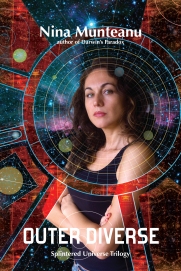
  • Front Cover ONLY-webThe Splintered Universe Trilogy by Nina Munteanu (Starfire). 2011-2014. This trilogy, starting with Outer Diverse, follows the quest of Galactic Guardian Rhea Hawke, a wounded hero who must solve the massacre of a spiritual sect that takes her on her own metaphoric journey of self-discovery to realize power in compassion and forgiveness.
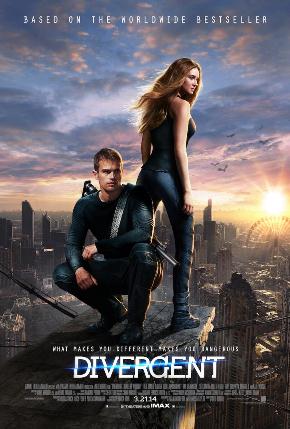
  • Divergent by Veronica Roth (Katherine Tegen Books) 2012. a young girl overcomes her assigned caste in a dystopian Chicago to realize her true self-identity, revealed to be dangerous to the very existence of her ordered society
  • Cordelia’s Honor by Lois McMaster Bujold (Baen). 1999. A woman’s journey through deception and betrayal to find honour.
  • Contact by Carl Sagan (Simon and Schuster) 1985. A woman’s quest into the unknown for benevolent intelligence in the universe.
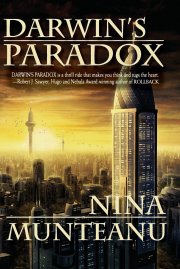
  • Darwins Paradox-2nd coverDarwin’s Paradox by Nina Munteanu (Dragon Moon Press). 2007. An eco-thriller about a woman unjustly exiled for murder and her quest for justice in a world ruled by technology and scientists.
  • Beggars in Spain by Nancy Kress (Harper Collins). 1993. A story that examines social consequences to transhumanist generic engineering.
  • His Dark Materials Trilogy by Philip Pullman (Laurel Leaf). 2003. A fantasy alternate world adventure about a young girl who discovers that the fate of the universe lies in her hands.
  • A Handmaid’s Tale by Margaret Atwood (Anchor). 1998. A chilling fable of the near future, about a monotheocratic government where women are strictly controlled and assigned roles.
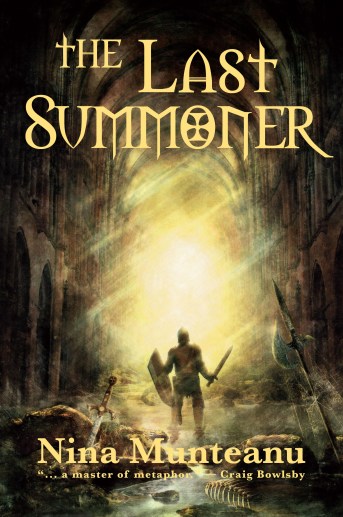
  • Cover1_LastSummoner-frontcoverThe Last Summoner by Nina Munteanu (Starfire). 2012. A young baroness discovers that her strange powers enable her to change history … but at a cost. Vivianne begins her journey in the year 1410, on the eve of a great battle. She dreams of her Ritter (knight), who will save her from her ill-fated marriage and the strange events that follow. But early on, she realizes that she is the Ritter she keeps dreaming about. She must save herself and her world.

Other Relevant Articles of Interest from The Alien Next Door:

Gylany: a social system based on equality of men and women

Androcracy: a form of governing system in which rulers are male

Riane Eisler (in The Chalice and the Blade) provides examples of sociobiologists who draw on nineteenth-century Darwinism by citing Edge-of-Tomorrow-emily bluntinsect societies to support their androcratic (social and political rule by men) theories. If humanity is to truly rise victorious over the scourge of climate change—a function of our current lifestyle and paradigms—we will need to adopt a cultural evolution that embraces a partnership society heralded by new and renewed symbology, language and “myth”: It starts with embracing gylanic heroes in literature and movies. Watching them, reading about them, writing and sharing these stories for the future they speak to.

Nina Munteanu is an ecologist and internationally published author of award-nominated speculative novels, short stories and non-fiction. She is co-editor of Europa SF and currently teaches writing courses at George Brown College and the University of Toronto. Visit www.ninamunteanu.ca for the latest on her books.
The Indie Book Tidal Wave …What Does it Mean for Bookstores, Publishers & Writers?

botanical beach tidal pools copy

Tidal pools, Botany Bay, BC (photo by Nina Munteanu)

We’re all agreed: the publishing industry is in upheaval. A kind of change that ripples in fractal waves throughout its entire expression and existence. A kind of change that creates a great paradigm shift. A kind of change that heralds in a new world.

Of course, much of this is due to a change in perspective: how we approach things and direct ourselves; the models and designs we use as our vehicles of expression; and how we apply them in relationship with our world.

So, what I’m saying is that the publishing industry is changing because we are changing, not the other way around. We are directing that change. We are directing that change every bit as much as we are directing changes in other important elements in our lives.

You don’t need to embrace new-age spirituality, mystery school teachings, non-locality particle physics, quantum entanglement or “intuitive science” to appreciate that our entire existence as a species, a living community and a planet is in upheaval.

You know what I mean. Wherever you look, it’s crazy (put your own examples here; there are too many). And in the midst of all this, miracles happen. What does this have to do with indie publishing? Well, nothing…well, everything. Let me tell you a little about me and my books…

paris-04

Bouquinistes along River Seine, Paris (photo by Nina Munteanu)

I’ve had over a dozen books published with small to mid-sized presses as well as my own small press, recently started up. My first book made it to the shelves of big bookstores like Chapters/Indigo and Barnes & Noble. I’ve seen my books on the shelves of small indie bookstores in Toronto and Vancouver areas and in a Paris bookstore. I’ve also had the heartache of seeing too many of my books returned from these same large bookstores, no longer “stocking” a particular title (although they kept it in their online catalogue). Over the years my thinking as both writer and publisher has shifted: mostly to do with what bookstores are doing; who to publish with; and what formats to provide my readership (e.g., e-book, print, audiobook).

Along with that shift, my definition of “big thinking” also changed. The possibilities are endless in a world where an unknown individual can achieve worldwide fame through a single twitter feed.

In the first in a new series of articles devoted to “Killing the Top Ten Sacred Cows of Indie Publishing” Dean Wesley Smith recently shared some interesting facts and opinions about how changes in book production along with reader technology has affected the industry.

He dispels the notion of many indies that their books can’t easily get into bookstores. Distribution channels for books, particularly indie books, are more than arcane. Smith advises indie publishers and writers that, “If you are already doing some things correctly, there’s a big chance your books are already in bookstores and you don’t even know it.” He’s right. I’ve published several of my books with indie publishers and both my publisher and I were unaware of some of the bookstores my books ended up in all over the world! I only found out because I frequently google my books for just such surprises. “And of course, in this new world,” Smith continues, “you don’t even know what it means ‘to have your books in a bookstore’.”

What does it mean to have your book in a bookstore? It’s in the store if it is sitting on one of the shelves, says Smith. It’s also “in the store” if it’s in the bookstore’s online database, which is where most indie books end up—virtually there, if not actually there. Considering how most people shop for books these days, and the inadequacy of shelf exposure (only so many books can appear on the shelf with their covers visible as opposed to their less compelling spine), this is not necessarily a lesser thing for the indie writer and publisher.

Botanical Beach beachcombing

Investigating the tidal pools of Botanical Beach, BC (photo by Nina Munteanu)

Ten years ago, says Smith, most bookstores used to order “to stock”. Today smart bookstores order “to replace”. This is now possible because of quicker distribution, and swift and high quality digital POD methods of book production (including neat quirky things like Espresso Book Machines or EBMs). Along with this new policy comes another potential change in the transaction model—that of returns. Smith reports that the returns system is “drifting away and is now under 18% standard and still dropping.” They were more like 50% not too long ago, which can be potentially disastrous to a small publishing company or self-published author with small revenue-base. Smith reports that many large publishers are even offering no-return choices, usually with higher discounts, which bookstores are accepting. This is great news again to small and new publishers, who cannot afford the uncertain and sudden cost of returns. Of course, returns will likely remain as a reassurance to booksellers when picking up unknown titles. In fact, this practice was adopted to permit booksellers to carry more new and untried authors without putting them at grave risk.

Smith confirms something I envisioned a while ago: that bookstores won’t disappear; instead they will morph into a more diverse set of small and specialized stores, stocking less numbers of any one book (one or two copies tops) for show with the ability to order new books and get them quickly. This is the new model Smith talks about: stock low and order to replace. So, “instead of ten of the last Patterson, there are two of the Patterson and eight other author’s books in the same shelf space,” says Smith.

So, for indie book publishers and writers, and bookstores who carry them, we are seeing the rise of a new paradigm; new trade arrangements that include consignment agreements, small but diverse inventory, and huge opportunity.

botanical beach sandstone cliffbeach

Sandstone beach in Botanical Beach near Port Renfrew, BC (photo by Nina Munteanu)


Nina Munteanu is an ecologist and internationally published author of award-nominated speculative novels, short stories and non-fiction. She is co-editor of Europa SF and currently teaches writing courses at George Brown College and the University of Toronto. Visit www.ninamunteanu.ca for the latest on her books.

How We Will Tell Stories in the Future

Cover1_LastSummoner-frontcoverIn the early 1400s, when Lady Vivianne Schoen (the hero of my book  The Last Summoner) lived, one of the largest libraries in Europe was at the University of Cambridge; it held an impressive list of 122 books. That library currently houses over 7 million books.

Books were a work of art in the 1400s. And part of an elite. Delicate, large and beautiful, they were created in the language of the church—Latin—and in turn copied entirely by hand by the monks. With the dimensions of a current newspaper, but much thicker, these large illuminated manuscripts sometimes weighed more than 50 pounds.

There is a scene early on in The Last Summoner where, under the tutelage of Pere Daniel at her father’s castle in Grunwald, Vivianne learns this arcain craft of manuscript copying.

An illuminated manuscript, the exemplar, and its parchment copy, still in progress, lay on the desk top; both were held down from curling by several hanging weights. Ink pots, gold leaf, a pen knife and a quill lay beside the sloped desk-top—the scribe’s tools.

Père Daniel had studied the art of manuscript illumination, scribing, binding and even parchment-making at the Sorbonne. Last year he’d begun to teach Vivianne the art of creating illuminated manuscripts and she had eagerly begun her own, finding that she had a steady hand at illumination. Père Daniel had shown her how to make parchment from the skins of deer that the Baron brought back from his hunts in the Grunwald forest. Despite the availability of paper, parchment was preferred “because it is velvety, folds easily and gives an agreeable flexibility to pen strokes compared with the unyielding flatness of writing on paper,” the chaplain reasoned. He always gave a reason for the painstaking preparation that involved flaying, soaking, stretching and scraping: “Parchment wants to curl onto its darker, grain side; and hastily prepared parchment wants to do it more.” Nothing was better than parchment made from game “because the vein marks left from blood in the skin when the animal died is the animal’s contribution to the art of illumination,” he attested with the fervency of a man with a passion.

Père demonstrated with exacting care and infinite patience how to use the illuminator’s tools and create a professional-looking manuscript. He provided Vivianne with parchment, a quill for a left-handed scribe, a penknife to sharpen her quills, a pot of ink and a sloping desktop. He taught her how to make iron-gall ink by mixing a solution of tannic acids and copperas with added gum arabic from the dried-up sap of the acacia tree as thickener. It was important, said the Père, to pick a mature oak-gall, one that bore a hole from the matured wasp that had developed inside and left a juicy concoction of gallic acids. The galls were then crushed up and boiled for a long as it took to recite the Pater Noster three times, he’d said. The blackness, he told her, resulted from the chemical reaction of the oak-gall potion when copperas was stirred in. He’d shown her how to create the vermillion color, commonly used in headings, which he made from brazilwood chips infused in urine and stirred with gum arabic. Vivianne never asked Père Daniel where he got his urine. She and Père also raided Theobald’s kitchen to hunt down the outer right wing pinions of a goose for making a quill pen that naturally curved to the left, because she was left-handed.

knight-cameoPère showed Vivianne how the height of the written area should equal the width of the whole page in a well-proportioned manuscript. Père also showed her how to rule the guidelines for the script and make the initial under-drawing of her illumination in plummet then in ink after which the gold leaf was applied. Vivianne had become adept at applying the gold leaf over the raised gesso, that she made of slaked lime and white lead mixed with pink clay, sugar, a dash of gum and egg glair glue. After painstakingly painting the gesso where she wanted the gold leaf to remain and letting it dry, Vivianne then carefully lowered the fragile tissue-thin leaf over the gesso and pressed down through a piece of silk then buffed the gold to a brilliant finish with a dog’s tooth by vigorously rubbing back and forth until it was smooth and the edges where there was no gessocrumbled away.

Making books was called “black art” from the black ink that stained the worker’s hands after a long day of creating type. Readers were mostly scholars and the religious elite. In fact, reading was an elite occupation. The majority of people at the time were illiterate and had no interest in books. Moreover, books were written in the language of the church, not in the commonly spoken language of the countryside such as English, French, German or Spanish.

So, when Johannes Gutenberg invented the revolutionary printing press in 1452 to publish the Gutenberg Bible, neither monk nor Joe peasant took much notice. The monks considered the product inferior to their works of art and dismissed the new technology—until it had largely replaced their trade.

chillon-inner courtyard

Inner courtyard of Chilean Castle, Switzerland (photo by Nina Munteanu)

In fact, the presses formed the very basis of the artistic Renaissance, the religious reformations and the scientific revolution, wrote Elizabeth Eisenstein in The Printing Press as an Agent of Change. “The printing press allowed the spread of information that couldn’t be controlled by the clergy, kings, politicians, or the religious elite,” adds New York Times technology reporter Nick Bilton in I Live in the Future and Here’s How It Works. Storytelling was no longer confined to an elite clergy; books could be created by anyone and shared in the spoken languages of the people.

Bilton shares another interesting fact: Gutenberg’s printed books were as heavy and unwieldy as the original handmade books of the monks. It was much later, in 1502, that Aldus Manutius of Venice invented a more portable book that could fit in a large jacket pocket; essentially inventing “the mobile phone of his day” wrote Bilton.

Historian Alistair McCleery wrote that the political and religious leaders initially panicked over the potential for the uncensored sharing of new and varied ideas among the lay public (which brings to mind similar fears of what the internet was providing to and enabling in the lay public: uncensored self-expression by the masses for the masses). Up until then, sharing stories among the common folk was limited to oral storytelling, which suffered from inconsistency and other limitations of the oral tradition. Within a short period of time, the ability to record and share “stories” had moved from a closeted elite to the world citizen. That is what the printing press—and the Internet today—did. Both have shifted the zeitgeist of an entire world.

Storytelling today is changing again. While many people still read books and go to the cinema, watch pre-programmed TV or rent DVDs, many more enjoy their stories through other devices like computers, downloads, mobile phones and e-readers that provide material through other media and venues such as Indie and self-publishing, amateur YouTube videos, interactive games and social networks. We stand poised on the edge of a wonderful cliff that celebrates the expression — and consumer choice — of the individual. The music industry shows this the best, where people dismissed the prepackaged albums and CDs and opted to create their own unique playlists through individual song downloads. The publishing industry is currently struggling with its own painful yet thrilling metamorphosis as is the visual arts industry. In fact, they are all blurring into one large integrated amalgam of artistic expression.

NYC-times-square-lawn-chairs

Times Square in New York City (photo by Nina Munteanu)

The information you get today is coming “more and more through your friends and through your social network. It’s being distributed through channels of trust and the trust isn’t necessarily the BBCor The New York Times. It’s people,” says B.J. Fogg founder of the Persuasive Technology Lab at Stanford University.

new-york-toulouse-officer-montalvo

New York policeman sports my friend Toulouse on his gun (photo by Nina Munteanu)

During the days of packaged content, leading storytellers were published authors, journalists and writers of newspapers and magazines. “Now distribution channels matter less and anyone with an appropriate device can be a storyteller,” says Bilton, who shares that on the internet we tend to follow individuals we trust (e.g., Clive Thompson or David Carr) as much if not more than established organizations (like Wired Magazine or The New York Times). Accessible technology, platforms, free applications and software has truly enabled the individual.  No longer confined to the written word via paper books or visual expression through movies or TV shows, storytelling has embraced many forms. Amateur and professional have equally blurred.

It comes down to content. Technology and format aside, nothing compares to a good solid story. We all listen to or watch stories. We all tell or show stories, some of us more than others and some better than others.

With the advent of new and accessible technologies and applications available to individuals, the art of storytelling has entered a new renaissance. Good stories, like good content, will always prevail and surface into prominence, like cream in milk. They have just been released into a sea of possibilities like a stream previously confined in a gorge, spilling joyfully into the ocean.

Front Cover ONLY-webHarnessing the opening range of technologies available to us will only give us more choices to tell our stories. For instance, my latest book Outer Diverse (the first book of The Splintered Universe Trilogy) was published by Starfire World Syndicate in print form and e-format and will soon be available in audiobook format through Audible. I have also created associated YouTube promotional videos and am working with colleagues to produce a short story musical video on the book. Another colleague has embraced the image of the strong female hero with a jewelry line called the Rhea Hawke Collection and is looking at other “storytelling” merchandise. I am discussing with other colleagues possibilities for a graphic novel and an interactive video game version of the trilogy that will offer reader participation in storytelling.

The future embraces story in all its possible facets. Our role as storytellers is to embrace the future in all its facets.


Nina Munteanu is an ecologist and internationally published author of award-nominated speculative novels, short stories and non-fiction. She is co-editor of Europa SF and currently teaches writing courses at George Brown College and the University of Toronto. Visit www.ninamunteanu.ca for the latest on her books.

Celebrating 2014, the Year of the Horse

nina-2015-BWgrainJanuary 31st of 2014 begins the Year of the Wood Horse in the Chinese calendar as part of the sexagenary cycle of sixty 2-character terms. Each term (representing a year) consists of a “Heavenly stem” character and an “Earthly-branch” character; these combine to generate 60 unique terms that then repeat; in this case every 60 years. This means that the Year of the Wood Horse will only occur every 60 years.


I was born 60 years ago, so this is very much my year!

The Horse (馬 午)

In Chinese culture, the Horse symbolizes nobility, class, speed and perseverance.

The magical horse is heroic, strong and can fly. Think Pegasus, Tianma, Sleipnir, Epona’s horses, the Hippocamp, the white horse of Rhiannon, the unicorn, the dragon-horse of Xuanzang, the kelpie, and the bailongma. The white celestial cloud horse, sacred to the Chinese Goddess Kwan Yin—goddess of compassion—flies in the heavens and brings peace and blessings. The horse is linked to Varuna and equated to the cosmos. The white horse is also believed to be the last incarnation of Vishnu. Buddha is said to have left this physical plane riding a white horse.

SONY DSC

Nina hiking (photo by Merridy Cox)

Horses love to run, or fly in the case of mythic horses. They love freedom. They’re sexy, elegant and beautiful and embody the qualities of power, grace, nobility, strength, victory and freedom. In Native American lore, the horse symbol combines the grounded power of the earth with the whispers of wisdom found in the spirit wind. The Celts considered the horse noble, embodying qualities of stability, honor, trust, intelligence and strength. The horse was considered a vehicle and guide for transcendence, able to invoke courage and determination. The Celtic Ogham equates the horse with the Oak tree (a strong, stable life-affirming symbol, recognized for its tendency to attract lightning, symbolic of divine light and spiritual rebirth).

Some metaphysical writings describe the Horse as a “triangle” or “trinity” of hypostases: 1) bearing the gift of presence, elegance, and journey; 2) offering the energy of freedom, nomadic spirit, and endurance; and 3) holding the magic of telepathy and spirit messenger.

The Wood Horse (木馬 午)

Nina-giant cedar03

Nina leans against giant cedar in Revelstoke Park, BC (photo by Anne Voute)

2014 isn’t just the year of the Horse; it is the year of the Wood Horse, also called the Green Horse (wood being related to a growing tree and the color of young growth). The wood element is associated with spring, growth and vitality.

tall cedar-moss

Mossy cedar tree, Revelstoke Park, BC (photo by Nina Munteanu)

Mossy cedar, Revelstoke Park, BC (photo by Nina Munteanu)

Wood represents the first phase of Wu Xing, an ancient mnemonic for systems with five stages or movements, used to explain a diversity of phenomena from cosmic cycles to the interaction between internal organs and from the succession of political regimes to the properties of medicines. The five elements include wood, fire, earth, metal, and water.

As one of the generative cyclical engendering five elements, wood feeds fire; fire creates Earth (ash); Earth bears metal; metal enriches water (e.g., water with minerals is more beneficial to the body than pure water); and water nourishes wood.

Wood is yang in character and associated with the planet Jupiter (and Zeus, the god of thunder and lightning), the color blue, green, and the wind. It is also associated with the Azure Dragon (Qing Long) of the east, one of the four mythological creatures of the Chinese constellations. The Azure Dragon is represented in the Kiyomizu Temple in eastern Kyoto, Japan, where I visited in Spring 2013.

bamboo-close01 copy

Bamboo stand near Kyoto, Japan (photo by Nina Munteanu)

In Chinese Taoist thought, Wood is characterized by strength and flexibility (think bamboo and willow). Wood reflects qualities of warmth, generosity, co-operation and idealism. Wood heralds the beginning of life and embraces springtime and buds, sensuality and fecundity. Wood needs moisture to thrive. Wood, in turn, feeds fire. Wood burns. A Wood person is considered expansive, outgoing and socially conscious.

The wooden horse is a potent symbol. Perhaps the best known wooden horse is the Trojan Horse, used by the Greeks in the Trojan war to gain entry into Troy and destroy the city. As told in the Latin epic poem The Aeneid by Virgil: after a 10-year siege, the Greeks constructed a huge wooden horse—the emblem of Troy—and hid soldiers inside then pretended to leave. The horse was apparently left as a peace offering to the Trojans and to the goddess Athena to ensure safe passage home. Despite the priest Loacoon’s warning—“Don’t trust the horse! I fear Greeks, even those bearing gifts”—the Trojans pulled the horse into their city as a victory trophy. That night the elite force crept out of the horse and opened the gates for the rest of the army, which had hidden under cover of night. The Greeks won the conflict as a result of this brilliant subterfuge. This is why malicious computer programs that trick users into running them as useful or interesting are called Trojan Horses.

Today, the Trojan Horse that stands in front of ancient Troy (Truva) symbolizes vigilant peace and freedom. It is a daily reminder to thousands of tourists of the power of deception in the guise of candy-coated “truths”. The ancient Greeks cleverly subverted a noble symbol of honor, grace and power through crafty deception. The noble Wooden Horse, like any symbol, is only as good as those who embrace its original truths and noble meanings. Think swastika, the pentagram, the cross.

Were you born in the year of the horse?

Maple-sugar spring-LR

Nina’s sugar maple in Little Rouge River woodland (photo by Nina Munteanu)

Horse years include: 2014, 2002, 1990, 1978, 1966, 1954, 1942, 1930, 1918, and 1906. Horse people are bright, cheerful, popular and fun loving (big giant grin). People born in the Year of the Horse are smart fabulous speakers who have a gift for getting through to other people. They find people and crowds exciting and love parties. Hehe… Horse’s childish innocence, sunny disposition, and natural charm attract many friends. HAR! The horse is a very intuitive animal; horse-people follow their hunches. Luckily our keen judgment and natural intuition help us make the right decisions with those crazy hunches.

Rules constrain the proud horse that needs freedom to run. Horses are elegant, beautiful and highly intuitive animals. Horse people are frank and will tell you exactly what is on their mind; they dislike hidden agendas. The Horse is complex and paradoxical: considered proud yet sweet-natured, arrogant yet oddly modest in their approach to love, envious but tolerant, conceited yet humble. They want to belong, yet they need to be independent. They crave intimacy, yet refuse to be corralled or tamed. One astrologer tells us that, “The Horse will give up everything for love.”

Nina Highland Cr 1

Nina hiking Highland Creek, Ontario (photo by Merridy Cox)

What does it all mean?…

So, what does all of this have to do with you, 2014 and the Year of the Horse? Why, nothing… Perhaps everything.

It depends on whether you are mindful of the symbols around you; whether you think and write metaphorically; whether you are fanciful and whimsical; whether you appreciate the ancient wisdom of humanity and its link to the divine… Whatever your inclination, I wish you a wonderful and productive year of transformation and wonderful surprises. I for one am looking forward to 2014. I’ve embraced it as my year with its spontaneous “horse” energy for fast action and flow—my style, actually.

I expect no middle ground. It’s a year of extremes, strong fluctuations, general chaos and great opportunity. A time of fast victories and unexpected adventure. A year to travel, especially off the beaten path. A year to connect with Nature and embrace Gaia’s radiant energy. Decisive action, not procrastination, brings victory. But you have to act fast to catch up with this horse. My book about water, which I started last year (the year of the water snake), will run its course to publication this year. It is half-written and I will finish it—and get it published—this year.

Horse energy is pure unbridled spirit. Playful, wild, and independent. Horse has a refined instinct that flows through action and movement. Leap. Fly. Follow your instincts. Chase your dream. Catch it by the tail. Finish that novel. Send it off. Present that proposal. Go to that convention. Meet that publisher or agent. Assert your honesty and openness. The horse demands it.

I wish you an exciting and wonderful 2014!


Nina Munteanu is an ecologist and internationally published author of award-nominated speculative novels, short stories and non-fiction. She is co-editor of Europa SF and currently teaches writing courses at George Brown College and the University of Toronto. Visit www.ninamunteanu.ca for the latest on her books.