The Exotic Worlds of Rhea Hawke’s Universe

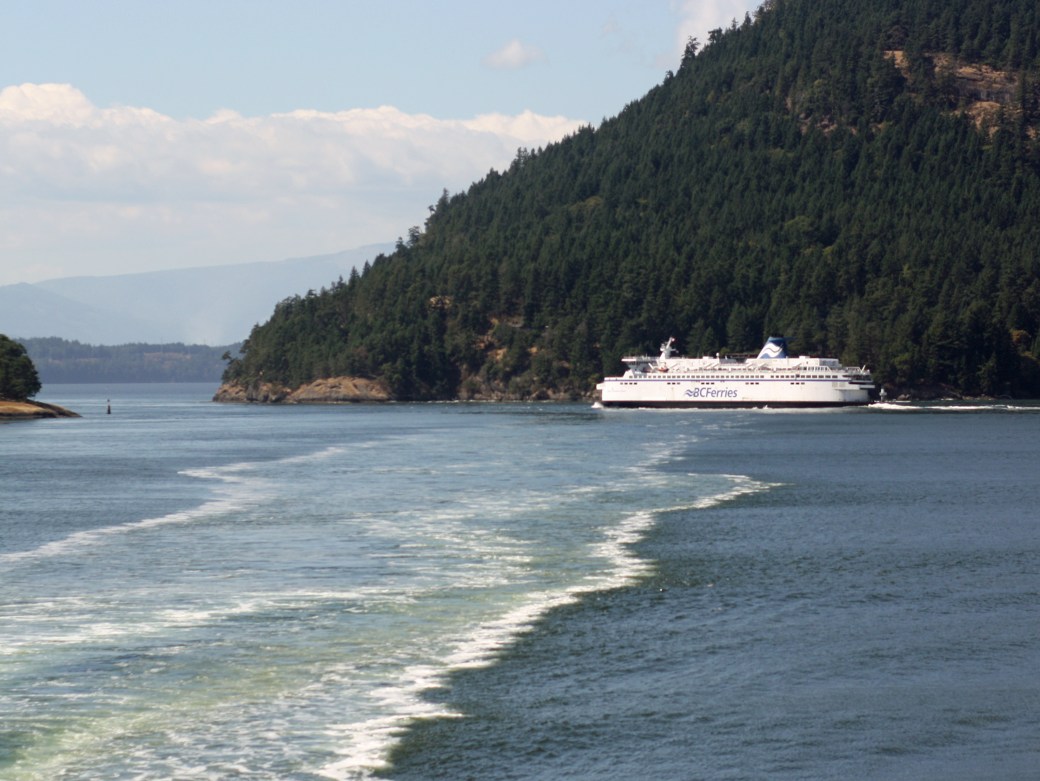
To catch her criminals, Galactic Guardian Detective Rhea Hawke travels far and wide through the Galaxy and beyond in her Ray Class sentient ship Benny. From the oozing Weeping Mountains of Horus to the debauched crime-ridden glassy Splendid City of Ogium 9, here are just some of the worlds Rhea must navigate in The Splintered Universe Trilogy

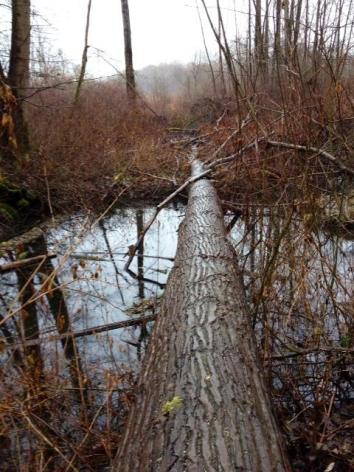
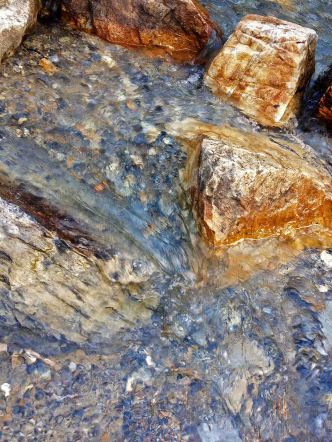
raindrops creek 05-Pb

Acid rain of Mar Delena (photo by Nina Munteanu)

The Acid Rains of Mar Delena (Book 1)

The trilogy begins on Mar Delena, a water planet in the Fomalhaut system, where Rhea has chased the Dust smuggler V’mer to the AI-run Del City. Unfortunately, she encounters more than the smuggler there, experiencing first-hand what Dust can do…

I found myself absently curling a lock of my hair around one finger and resting my leg on the console as Benny eased into a large circle of Del City. I peered down into the darkness and barely made out the AI city sprawled on a large island surrounded by a rough sea. The dark sea occupied 98 percent of this bleak water planet.

“Mar Delena’s ocean is toxic with a pH of less than two,” Benny informed me. My ship’s voice was a calm tenor. I dropped my leg to lean forward and gazed down at the lights of the city. I made adjustments to the primary controls as Benny descended. Sheets of rain veiled the sentient city in shifting curtains of a shimmering skyscape. “That’s because the sulphurous rain has a pH of three,” Benny went on. “The caustic rain is a maintenance chore for the AIs that run the city’s infrastructure. They’re always repairing. That’s why all the streets are just left as dirt. The dirt lets the acid rain percolate into the ground. Of course it makes for a muddy place, but the Delenians don’t seem to mind.”

“Wonderful,” I muttered, gazing at the towering buildings, whose rounded roofs encouraged the corrosive rain to sheer off harmlessly to the ground. “Remind me to come here for my summer vacation …”

“There it is, Rhea,” Benny said.

“I see it.” I peered out my portside window through the rain and recognized V’mer’s small scythe-wing below. The ship resembled a bird of prey with a head-like cockpit flanked by crescent-shaped wings that flared out to the bow in a point. By analyzing its heat signature, Benny confirmed that the scythe-wing had only set down moments ago.

We’d just jacked the particle-wave stream thousands of light-years to this ancient dusty solar system. I chased V’mer here from a mining colony on Nexus, where the Badowin ran the largest illicit manufacture of Dust in the galaxy for Dark Sun—all cleverly under cover of a mining operation for Spice, a less dangerous narcotic. A little Dust showed you ‘God’; but in larger quantities it threw you convulsing over the precipice straight to chaos.

The Volcanoes of Gliese-876b (Book 1)

Rhea swiftly goes from detective on the hunt to hunted fugitive, wanted by her own Galactic Guardians and local PD for theft and other misdeeds. Disguised, Rhea sneaks into Phoenix City on the moon Gleise-12—home of a major Guardian precinct—in search of her truant and estranged mother to ensure she hasn’t been hurt by Vos terrorists. It doesn’t turn out well…

Gliese-12’s ecosystem wasn’t as friendly to its inhabitants as Iota Hor-2, I thought, gazing with a yawn down at the rich yellow-ochre tones that veiled the hazy moon of Gliese 876-b. Bathed in warm shades of a constant sunset, Phoenix City had been built under a giant energy-shield dome to protect its inhabitants from the incessant incoming stellar debris. As a result, we required special clearance to make port. Playing it safe, Benny had provided us both with an alias, in case the Iota Hor-2 Guardian precinct’s APB on my theft had already reached the Gliese precinct through the Galactic Net…

I strode with forced casual steps out of the Phoenix Sky Port and pulled out a stick of gum. I glanced at the security men and women as I passed the RADs unnoticed, chewing slowly to the rhythm of my steps, then emerged with a smug smile under a permanently blushing sky into the heat and sweet mesquite smell of Phoenix City.

Generally hotter, redder and louder than Neon City, the town was densely populated with towering buildings that rippled in the heat and glowed like burning embers under the fire of Gliese 876.  Many of the tallest buildings were capped with glass-domed promenades, gardens, restaurants, and landing platforms. Their orange reflections glinted like exotic lanky mushrooms.

The city bustled with the thrum of commerce; air vehicles of all sizes zinged overhead in a constant rush. Phoenix City was a major banking centre. Even the Galactic Bank, my bank, had their head office here. All of the tallest towers were banking facilities. Save one, the Guardian precinct.

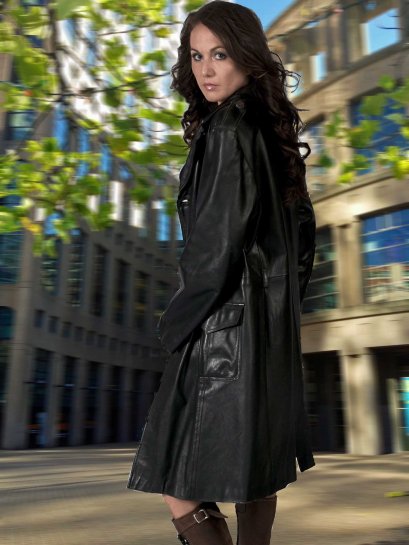
VancCenLibJPG

Inside a building in Splendid City (photo by Nina Munteanu)

Dangerous Glitter of Ogium 9’s Splendid City (Book 1)

I’d set a course for Ogium 9, a small terrestrial planet orbiting HD70642, a bright star ninety light-years from Earth. I hoped to get information on the whereabouts of the itinerant Ulysses space station from Zec in Splendid City. The very thought of returning to that nest of crime made me uneasy. I’d spent a significant portion of my youth there, surviving by using my brain and keeping my emotions in check. The last time I’d seen Zec, he’d sworn to kill me for jagging him—he nearly did.

Splendid City was, on the surface, quite splendid. I strode along one of the pedestrian air tubes that swayed over a thousand meters above the ground and gazed past my gravity boots through the transparent floor to the city, glowing in the warm blaze of the setting sun. Splendid City sprawled beneath me in a complex thrum and filigree of multi-shaped, rounded, and peaked rooftops. Translucent walkways snaked in and out of them. Catching the sun’s fire, they formed golden streaks across the sky. Air vehicles buzzed around the towers and walkways in swarms of synchronous order.

For some reason, Splendid City had become a Mecca for architects, and each building was a celebration of unique design. Several were modeled on biological creatures: tentacled jellyfish, or arachnids, spiked echinoids, or giant pollen shapes.  The poet Goethe had described architecture as frozen art. I thought it no more apt than here, in Splendid City, where practical design and imagination conspired in the myriad shapes, textures and colors that rose up boldly towards the heavens.

The buildings sparkled like jewels. But the glitter of the throbbing city lay just on the surface, I thought solemnly. Beneath those resplendent spires and glass towers lay a filthy dark underworld devoted to crime. Splendid City was built by crime lords from all across the galaxy. It had been a good place for me when I sold my weapons designs; the place was ripe with young scoundrels, eager to build their little empires by trading one illicit merchandise for another. I’d had no problem finding customers. My challenge had been to keep from getting swallowed up by them…

When the door slid open, I saw Zec right away, feet up on his giant gadpie desk, eyeing me critically with scorn. He was handsome as always with dark, slick hair drawn back in a loose ponytail, with beautiful large heavy-lidded eyes the color of Earth’s ocean, and the lashes of a girl. He wore an expensive silk jacket imported from Earth over a charcoal gray T-shirt and tacky lumi-trousers. Behind him the large windows provided a spectacular view of the city lights in the deepening lavender of dusk. A lecherous smile slid over his face as he looked me up and down approvingly. He’d fancied me as his girlfriend when we’d slummed together in the lower levels. Even tried to kiss me once. He had the scar to prove it.

I met his gaze head on, then glanced down with a smirk to where his tight pants bulged and decided to make the first move. Tongue brushing my upper lip in mock seductiveness, I sneered: “Is that a Q-gun in your pocket or are you just happy to see me?”

jungfrau04 copy

Uma 1 (photo by Nina Munteanu)

The Treacherous Cold of Uma 1 (Book 2)

Rhea travels to the frigid moon Uma 1, to warn the Schiss leader Rashomon of a plan to assassinate him—only to inadvertently cause his gruesome murder and receive her own injuries. She then spots Serge. He bolts and she chases his fleeing figure into the frigid snow and ice sheet of Uma 1…

I pounded after him, ignoring my burning lungs and the pain that flamed up my leg. “Stop!”

He didn’t. An insane rage boiled inside me. It balled my fists and fired my legs into a galloping run. I was gaining on him.

He darted to the skipboats that lined the dock and untied one. He tripped the canopy open and slid into the boat with a sharp glance backward at me.

Just as I reached the skipboat, chest heaving with exertion, Serge started up the engine, and the boat leapt out into the water, accelerating with a high-pitched whine. It threw a pair of five-meter rooster tails behind, splashing the dock and soaking me with a slam of cold water. It almost knocked me off the wharf.

I recovered and scrambled, slipping off balance for a careless moment on the wet wharf, to the next skipboat and found the button to open the canopy. I untied the boat, dropped into the seat with a grunt of pain, closed the canopy, and started up the engine. It sputtered into a vibrating whine. Pressing my lips into a snarl of determination, I slammed on the foot pedal and was thrown back with sudden acceleration. Within seconds I’d reached his wake, skipboat screaming at top speed.

I could make out the end of the thermal shield, where the water abruptly ended in a vast sheet of crusted ice. Serge plunged into the cold, skipboat hitting the lip of ice at full speed and bouncing high. Hot on his heels, I kept my vehicle in full tilt and flinched when it crashed through the icy lip, soaring then landing with a painful jolt on the ice sheet. The vehicle’s thin pontoons allowed the skipboat to skate effortlessly at breakneck speed along the creaking ice sheet that covered the giant underwater city. My lip curled in a wicked smile as I noticed that I was catching up to him.

“Rhea!” the com spattered on with Serge’s voice. “Is that you?”

After a long pause I stabbed the com button and responded savagely, “Yes it’s me. Stand down, Serge.”

He didn’t respond.

“I repeat, STAND DOWN!”

“Listen, Rhea, I didn’t kill Rashomon,” he said in an almost pleading voice.

“No,” I retorted with scornful mockery. “I did.”

“I mean, I wasn’t involved in setting you up.”

“No, your sister did that,” I bit out. You were the bait. “You were probably just back up, in case I jagged up.”

“It wasn’t like that,” Serge protested, betraying some frustration. Why was he even trying to convince me of his innocence? Why did he jagging care what I thought?

“If it wasn’t like that, then what are you doing here, Serge?” I scoffed, forcing out words through shallow painful breaths. The windswept icy surface grew rippled and pitted with blocks of frozen ridges and pockets of water.

“The same as you. Trying to prevent his assassination. You have to believe me, Rhea.”

Serge skirted around several large ice buttresses and domes in quick succession, his vehicle pounding over frozen waves and curtained layers of debris and ice. I kept up, turning each time with grunts of painful effort and feeling each jar like a hard kick in my chest.

“Now, why is it that I don’t?” I snarled. “Maybe it’s because you’ve lied to me ever since we met … V’ser.” I realized that I was panting. “Everything you’ve ever said to me was a lie.”

The com went silent. The scene began to feel painfully surreal. A few times, I saw spots in front of my eyes and realized I was fighting from blacking out.

Serge continued to maneuver through what resembled a giant storm that had been flash-frozen. Where the chaos was he taking us? The turbulent wind blew the snow into eddies of swirling sleet, and it became harder to keep on Serge’s tail. I pounded in and out of dips and waves, painfully chasing the shadow of Serge’s yellow skipboat. Serge led us through a series of looming ice columns toward a rise in the topography. It looked like a giant frozen wave twenty meters tall. Maybe it was …

In a rush of new determination, I pushed out my jaw and felt my teeth gnash.

“Stand down, Serge!” I snorted out the words through panting breaths. “Give yourself up. It’ll end up better for you with the Guardians if you do.” God! Even I didn’t believe that.

He obviously didn’t either. I winced at his sharp laugh of derision.

“My dear Rhea. Always the Enforcer, even when you aren’t. And always in control—even when you obviously aren’t.”

“Jag you, Serge. And I’m not your dear!”

“Well, in that case you’ll have to catch me and stop me first!”

“If you insist.”

I slammed on the accelerator. We reached the rise and were climbing. It was steeper than I had initially thought, and I had to fight the wheel to keep from tipping over on my side as Serge led me on a diagonal vector up the ice and snow slope. Face puckered in a tight snarl, I forced my skipboat to skirt around Serge’s, flanking him on the high side. I caught sight of his tense face through the canopy as he threw alarmed glances at me.

“Rhea, you don’t have any weapons and you’re hurt. I hear it in your voice. How are you going to stop me? With your bare hands?”

“If I have to.”

I came up beside him, nosing toward him to force him down.

We crested the hill at the same time with my vehicle on the outside and—Oh, God! My pulse raced. I knew what lay on the other side before I saw it.

A sheer cliff! More than that, it turned into an inverted cliff at the bottom. I realized that this was just another dome and we’d climbed the windward side where snow and ice had piled to form an incline. I felt myself slide uncontrollably into that awful dreamstate and watched in horror as it played out like I knew it would:

In a panic, Serge overcompensated. I was too close! His tail skidded in counterpoint and collided hard against mine, forcing me over the cliff. Heart surging in a spike of alarm, I fought the wheel as my skipboat slid straight down the dome then hurtled into freefall …

“Rhea! NO!—”

I saw the icy ground rushing toward me then smashed into darkness.

seelisberg-view06 copy

Boiling Sea of Horus (photo by Nina Munteanu)

The Boiling Sea of Horus (Book 2)

In search of answers to her past from her elusive grandmother—who has transformed into a giant snake-like Apophus—Rhea returns to the misty narcotic Boiling Sea within the Oily Range (Weeping Mountains) whose oily residue settles over everything like a clammy soporific slime:

I pulled out a second wad of soyka gum and chewed nervously then resumed paddling, eyes sharp for any boiling masses of water snakes. With each stroke of the paddle I disturbed the surface scum and left a wake of swirling colour. It released a foul stench of rotting compost. The brown mist hovered like a cobweb over the oily film. I searched for any sign of agitation and listened over the gentle chortling of the water between each paddle stroke…

I swept the hair back from my face and squinted, trying to see beyond the ten meters of visibility the dank mist allowed. Following my internal compass, I negotiated the towering islands with unease. The only warning that I was approaching one of their vertical cliffs came in the sudden slap, slosh and gurgle of the waves against the sheer rock face. Then within a heartbeat the slimy dark rock would thrust up like an apparition through the oily mist and I’d steer clear with a sharp intake of air. I must have passed at least a dozen islands as I continued toward my destination, a place in my mind, perhaps planted there by those beasts that had taken brief residence inside me. Ever watchful for the apophus, the giant snake that had previously batted my ship out of the sky then set its babies to consume me, I was acutely aware of my vulnerability in this small canoe. If the apophus was hungry it could easily overturn my boat and spill me into the churning water to either consume me directly or feed me in slow agonizing ecstasy to those nasty babies of hers.

My head began to spin and I felt slightly nauseous…the cloying smell was overpowering. Was I going the right way? Some compass in my head had compelled me to bear toward a northern point on the convoluted shoreline. I’d been paddling for hours, but I could make out nothing in the thick fog. I shook my head to clear my mind and pulled out another soyka gum wad then joined it to the mass already in my mouth. My gaze settled on the iridescent swirling patterns of the whirlpools left in the wake of the draw of my paddle…

…Why did all the women in my family do atrocious things? If Shlsh was telling the truth, my grandmother had been the worst. She’d betrayed all of humanity by letting the Vos into my world. It was inconceivable. How could someone, a single person, have that kind of power? 

>I didn’t…It wasn’t just me…I had help, Vos help…

“What—” I inhaled my gum and my hand slipped on the paddle. It fell into the oily water and drifted away from the canoe. I flung out my arms to retrieve it, throwing the boat into a violent rock. Warm water flooded into the boat with a burst of rank fumes and I jerked back, pitching the boat into a counter rock and nearly fell out. I threw myself onto my stomach and groped for the slippery handle floating in the iridescent scum. Hands scrabbling, I found purchase, bringing more water in. As I pulled the oil-covered paddle into the boat and kneeled to wipe the slime off my arms with shaky hands, the voice returned: 

>I was in love and I fell. Love tricks you. Love blinds you. I think you know about that, Rhea…

“Shut up!” I shouted, clamping slime-covered hands over my ears. But the voice was inside my head. I raked back the hair off my face in a brisk sweep and in a more subdued tone I asked, “Who are you?” 

>Come this way. You will have your answers soon enough. Are you brave enough to handle them? You are almost there…
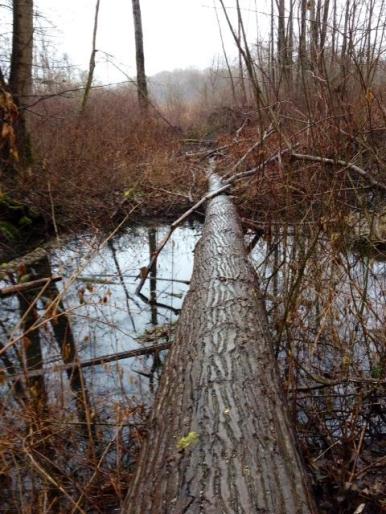
Swamp03 TNS

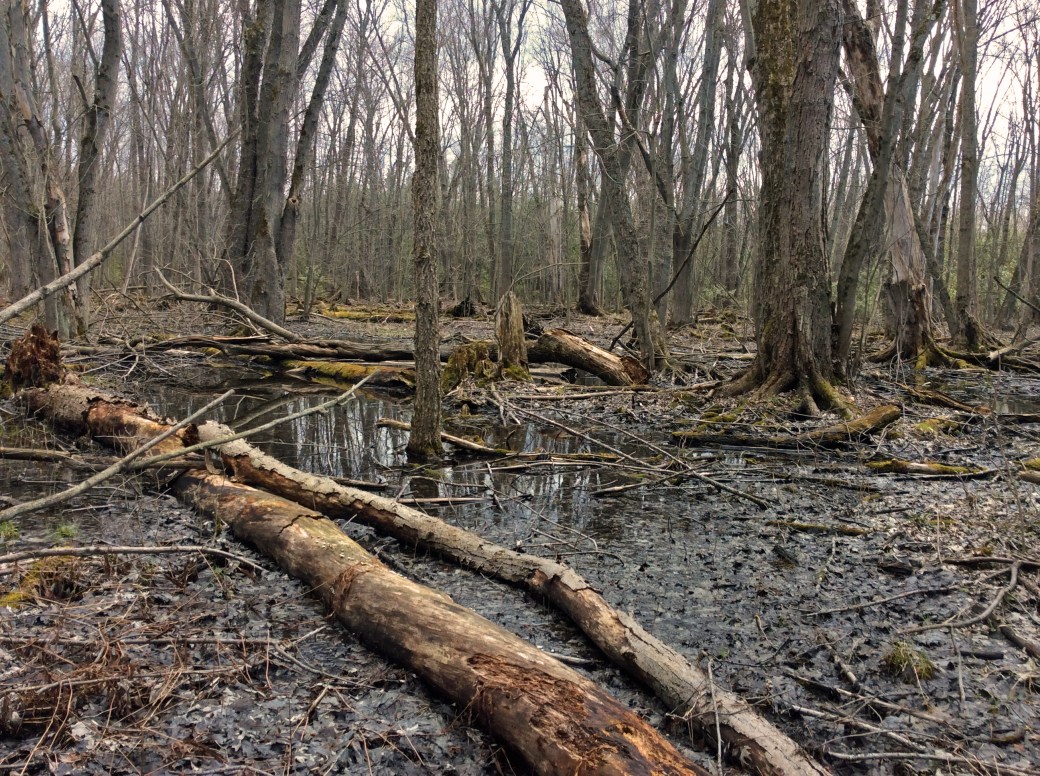
Migratory trees of Horus swamp (photo by Nina Munteanu)

The Migratory Trees of Horus (Book 2)

Once the apophus captures Rhea, it takes her across the Boiling Sea to a swamp where Rhea encounters the legendary migrating trees and—when she escapes the apophus—she collides with something worse—carnivorous ammuts:

The pungent smell of anaerobic mud and crushed vegetation stirred my nostrils and I looked up. I saw that the serpent was lumbering into a narrow canyon toward a ghostly grove of lanky trees. They resembled mangroves in the swirling mist. Within moments the snake began to make those same lyrical sounds that had intoxicated me the first time I’d come here. At the time I didn’t know who or what had made the eerie but beautiful sounds. Within moments an equally beautiful and more eerie multi-timbral chorus of feral ‘voices’ echoed off the canyon walls as if riding on the moving mist. I concluded against my own logic that this was some sort of communication between the apophus and…what? Surely not the trees? I narrowed my eyes with sudden amazement. Was I seeing clearly? Were the trees moving?…

I pulled myself out of the brown-stained pond and waded in a hobble through the warm swamp, Great Coat trailing like floating sails on the water. The canyon eventually opened to a wide valley, surrounded by towering oil-covered cliffs.

A loud pop and crackle ahead made me skid to a halt. I watched with amazement as a ten-foot oval structure made of earth and debris emerged from the muck, creating a small wake in the black water just meters in front of me. I flinched as it snapped open at the top, releasing a sharp odour of clove and burning matches. I considered backing away slowly and took a step back then stopped dead in my tracks and held my breath as two long deep crimson ‘tails’ slowly whipped out. They looked suspiciously like motion-sensing antennae.

When a vicious insect-like head emerged, attached to the ‘tails’ and dripping slime from a long proboscis, I abandoned stealth and bolted through the knee-deep swamp, not waiting to see the rest of the creature. Oh, God! These were the carnivorous larval stage of the ammut that Ka had told me about. I’d picked a great time to return to Horus: the beginning of the ‘season of the dead’ when the ferocious ammut hatched and swarmed.

Within moments, I heard an ominous loud clap and buzz behind me. I forced myself to turn and dared a glance. I clamped terrified eyes on a creature rising in the air, then lost my balance and fell backward into the swamp. A twelve-foot long insect-like creature had unfurled four narrow dragon-fly wings that flapped furiously. Twelve jointed legs dangled below its thick body. Huge multi-faceted amber eyes roamed below its crimson antennae and its long proboscis twitched, hungry for its first meal. Catching my breath, I scrambled under a drowned shrub and the ammut flew past me, the machine-gun flutter of its huge wings reverberating in my gut. I swallowed down my terror and wondered what an adult looked like if this thing was its larval stage.

I backed further into the bush and heard the sounds that I dreaded—more popping and crackling. I stared at the emerging swarm of eggs in the wide valley. Like popcorn, they started with a few snaps here and there. Within moments a cacophony of eruptions and the heady odour of clove and burning matches pervaded. According to Ka these carnivorous larvae left a swath of destruction in the wake of their swarm. No wonder the migrating trees were heading out of the valley!

…Ankle throbbing, I sat in murky marsh water to my waist, Great Coat billowing up around me, and back pressed against a bush. I listened to the chaotic clamber of ammuts emerging and flying. It grew dark overhead as their swarming bodies veiled the orange sky with black. The deafening machine-gun stutter of their wings filled my head and throbbed in my gut. Any moment a stray would find me, sniff me out with its long blood-red antennae, and I’d have to run…and die. In a sudden flash of regret, I wished I’d kissed Serge one final time….

Heart pumping, I dashed out from my temporary cover and fell with a loud splash as my leg gave out painfully under me. Alerted, several ammuts veered down straight for me. Heart slamming, I scrambled into a painful run as the first ammut’s antennae whipped out. It lashed my face and leg with a crackling snap and drew blood. I cried out with the agonizing sting and smelled burning flesh and cloves. I immediately felt a weak numbness spread through my body. Suddenly losing all strength, I stumbled and fell backward into the knee-deep swamp with a gasp. My face plunged into the stained water. I managed to right myself, coughing out black water, and thrashed to keep from sinking in the soft mud. By then more ammuts had buzzed in. Seizing in sobbing breaths, I backed away by scrabbling on my rump, too weak to rise to my feet. The soft bottom kept giving way underneath my hands. They sunk into soft mud and debris.

I watched in terrified revulsion as the nearest ammut descended upon me then I gasped as its chitinous legs poked my breast, as if testing its texture. To my horror, the giant invertebrate then settled partly on top of me and slowly pumped its body up and down, as if excited, effectively pushing me further down into the murky swamp until my head was barely out of the water… I gazed up at the creature’s head, chittering directly above mine, and fought down a moan of terror. Slobber from the creature’s proboscis dripped over my head then plopped, reeking of cloves and sulfur, on my face. I jerked my hand to wipe off the slime, then seized my MEC from its holster in blind panic. I aimed it at the ammut’s head and, pressing the trigger, dialed through every setting I could think of with my other fingers. Nothing worked.

Dear God, I prayed, releasing an involuntary moan, make it quick

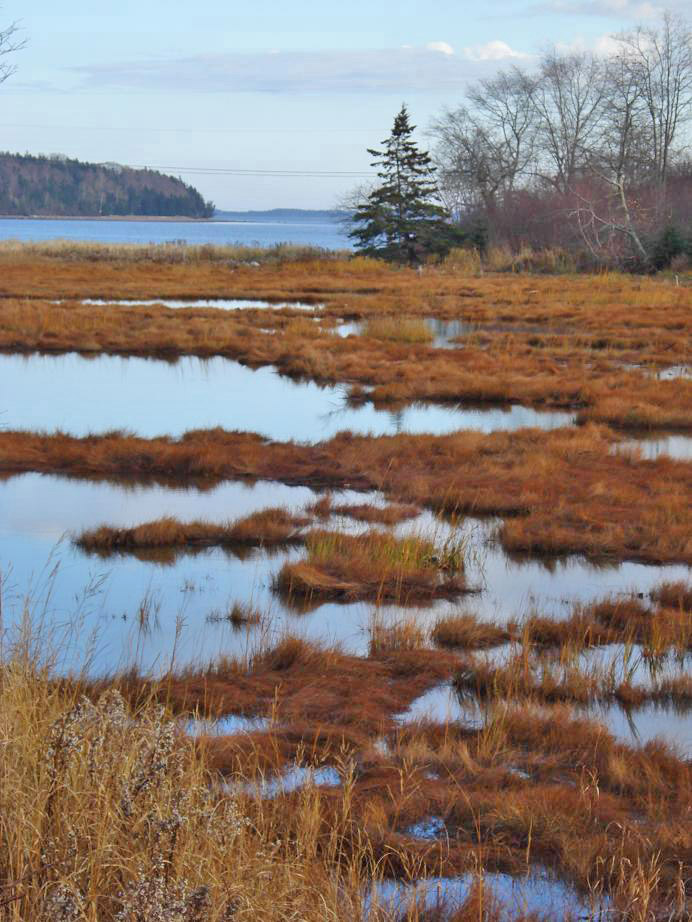
Wetland-Trent3

Swamp and marshland of Sekmet (photo by Nina Munteanu)

The Blanket Bogs of Sekmet (Book 2)

When Rhea is captured for several murders she didn’t commit, she is sent to the penal planet Sekmet to serve her life-sentence in Hades, a 2-kilometre mining barge floating on the peat bog.

I gazed out my porthole at the barren patchwork of the small wetland-dominated planet, whose surface resembled an early impressionist’s painting. Dominated by sombre russet and indigo tones, the raised bog was dotted by a hasty spray of cobalt lakes and pools.

Although it was mid-morning on the planet, the mostly grey sky was saturated in low cloud and it was drizzling outside. Spates of wind drove sheets of rain hailing sporadically against my porthole. It was a wet desolate place. But then again, “A drowning man is not troubled by rain—Persian Proverb, Rhea,” I said quietly to myself. The weather was the least of my concerns.

As the ship descended, I could make out the individual pool system of the blanket bog with its inhospitable tapestry of dark and wet shapes. I dispassionately reviewed what I knew of the planet. Its cool wet climate and rich iron deposits promoted the development of muskeg, string bogs, darkly forested swamps and wildflower-filled fens. This was Sekmet, an Earth-sized planet that orbited the KO star, HD177830 in the constellation Vulpecula. My new home. Where I was going to die.

Within moments the ship landed with a sharp jolt in the open landing bay of the floating colony. Then the exit hatch door opened and the AI droned, “This is your destination, Rhea Hawke. Please disembark.”

My chest clenched. I swallowed down my fear and stepped out onto the platform of Sekmet’s landing bay, catching the faint sulphurous smell of the bog. The doors of the ship abruptly closed behind me, making me involuntarily flinch. Annoyed at my reaction, I gathered my composure and swiftly assessed the empty platform, hearing only the hum of the ship’s engine. My gaze rested on the endless hummocks and large meandering ponds of tea-stained water outside.

As the ship made ready to leave, I felt my heart pounding with the sudden urge to bolt. I had a panicked notion to leap off the platform into the murky bog. Swim, wade, scrabble to eventual safety in the wilderness of Sekmet in those distant hills. The ship lifted off the ground in a turmoil of dust and thunder. My face twisted with indecision as I tensed, poised to flee—

A male Azorian burst in from the adjoining chamber and I braced for an attack. He pelted right past me then leapt into the murky water. I watched him thrash through the undulating bog, stumbling, submerging and trying to swim—his left arm was amputated at the elbow. I was about to follow when laser shots peppered the water around him for several heartbeats. As suddenly as the shots began, they ended and the Azorian slowly sank until only his head remained above the water. I stood stiff, trembling hands over my mouth, and breathing hard. I stared at the head bobbing slowly in the water.

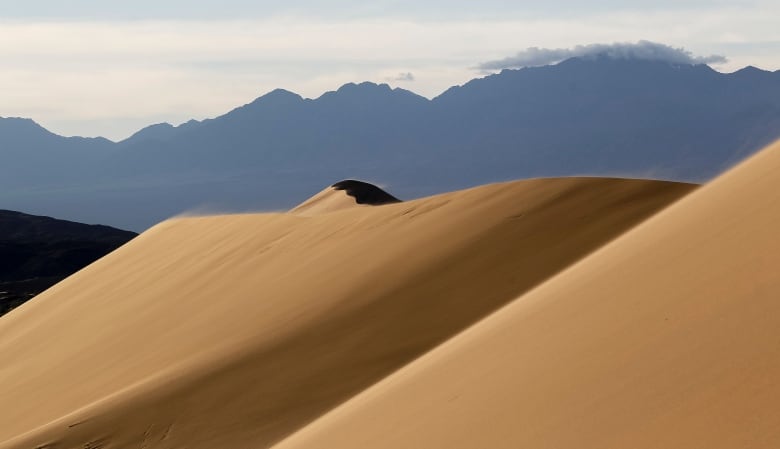
Sand dunes Oregon3

Dunes of Upsilon-3 (photo by Nina Munteanu)

The Barkhan Deserts of Upsilon-3 (Book 2)

In a desperate attempt to find the Ancient One—the key to the mystery killings—Rhea steals a Vos ship and the Vos Commander. She forces the terrorist A’ler at gunpoint to take them to Upsilon-3, the inhospitable desert planet where the Ancient One has settled in an enclave created by an ancient civilization. It is also where Rhea was almost killed once in a rabid blenoid attack. She will meet these vicious predators again…

Bleary-eyed and very cross, A’ler took us down to the arid planet, piercing the cerulean atmosphere with a view of mostly ruddy sand dotted with grey-green scrub below. We then crossed a vast expanse of open desert. I gazed down at the waved pattern of cresent-shaped dunes, obviously formed by a constant wind. It was a harsh and miserable environment, I thought.

“Barkhans,” A’ler offered, pointing to the dunes and breaking her taciturn silence. “That’s the West Ghouroud. No one’s ever crossed it and lived.” She eyed me with a dismissive look of disgust as much as to imply, especially a puny like you.

I didn’t respond and let my gaze stray back to the dune sea. The dunes looked like the capped waves of a red ocean, the deep ochre of their shaded slipfaces contrasting with the harsh bright windward sides, still baking in the sun. The dunes looked small, but I guessed that some were at least three hundred meters high.

I’d been there before. I’d tracked and dispatched an Azorian assassin to the small ephemeral town there once—but at the cost of a blenoid attack. In his desperation, the Azorian had fled the ghost town into the arid wilderness, and if I hadn’t shot him, the blenoids would have torn him apart. If they hadn’t, he would have died a horrible death of severe hypothermia. As it turned out, my shot infuriated a pack of sleeping blenoids and I became the subject of their fury instead.
botanical beach tidal pools2

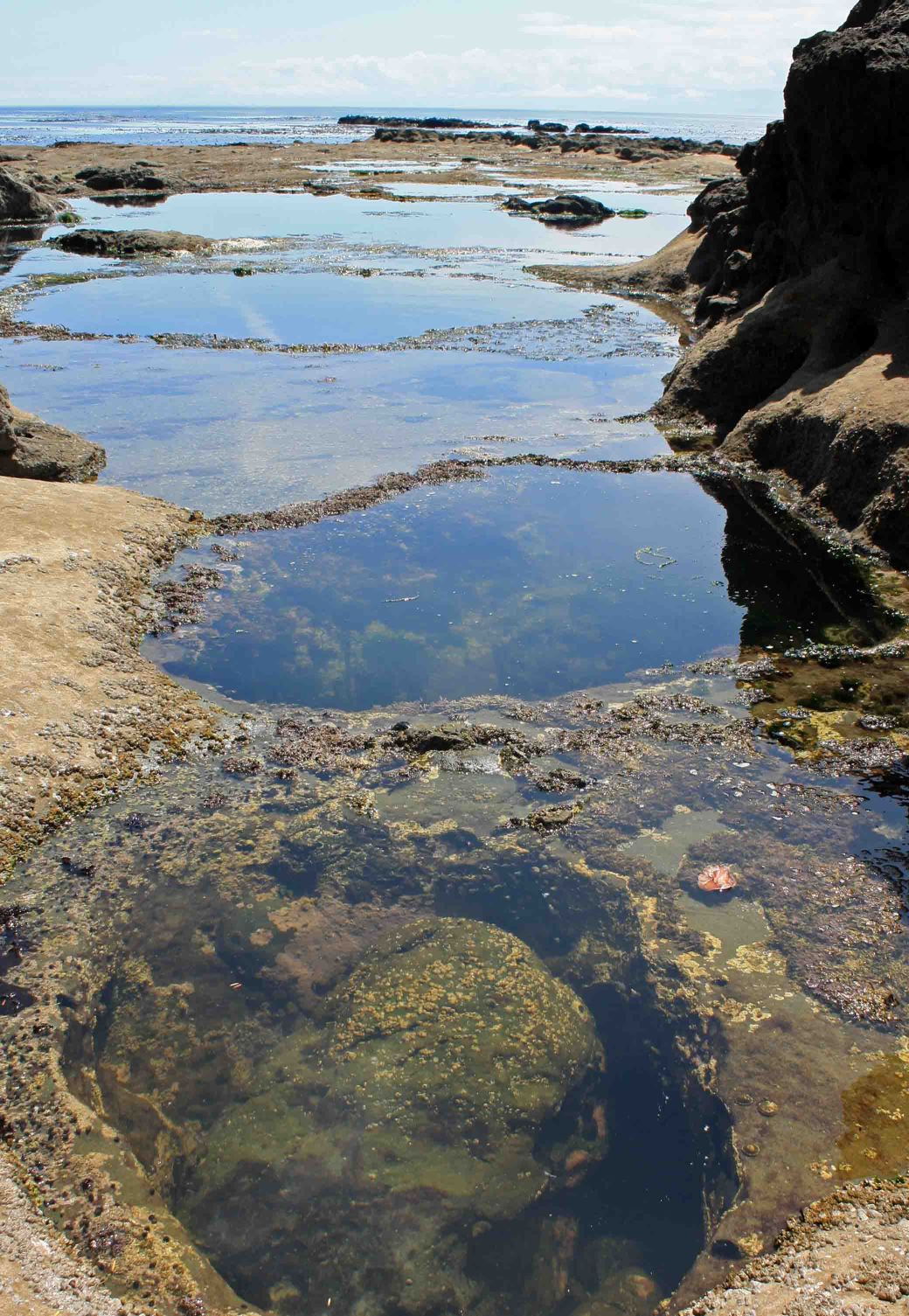
Clear toxic water of the Beleus Sea (photo by Nina Munteanu)

The Toxic sea of Beleus (Book 3)

Rhea makes a daring rescue of the bookseller Serge Bastion (Serge’s outer diverse twin), injured in a med-centre in Beleus City on Beleus. When Bastion refused to jump out the window to safety, Rhea belts him then gets him own by unconventional means to a nearby park.

I spotted it; a small peewee, parked a block away on the side of the road. The small two-seater resembled an ancient Earth motorcycle, except that it could fly. I pelted toward it and, after a brisk glance over my shoulder, straddled the vehicle and jimmied the starter lock then kick-started the engine. The vehicle stuttered on and I drove it to the bush where I’d stowed Bastion. I leapt off and pulled Bastion out from under the bush.  After struggling with his dead weight, I finally got him, still in his pajamas, in the back-supported passenger seat and seat-belted his slumped form in. I jumped in the pilot’s seat, grabbed his limp arms so he was leaning against me and secured his arms around my waist by lashing them together with chord from my pocket. Then we were soaring up just as several Eosian guards ran up to us, waving nokerig pistols and shooting. 

Nihilists had perched themselves on the roof and caught my peewee in a salvo of torpedoes. I veered us out to sea but not before one grazed the vehicle. I felt the hard jerk to the right and craned to look over my shoulder. I noticed to my dismay that a green cloud of hesium fuel was spraying out of the fuselage. But we’d at least cleared the distance they could shoot. I had no idea where I was going, except that it was far from the Med-Facility and the city.

For now I spotted no pursuit. That would change quickly, I thought, glancing down at my options. We were heading out to sea toward a long string of islands. The Beleus Sea shimmered in the sunlight with mercurial hues of lavender, deep purple, aqua green and blue. So different from the oily seas of Horus, the Beleus Ocean was extremely clear, reflecting the shifting light of the planet’s atmosphere in an exotic glitter.

Bastion stirred, head still lolling against my shoulder, and I reached behind me to jab him awake.

“Where are we?” I said gruffly. “We’re low on fuel.” I didn’t tell him we were losing fuel. “And we need to land somewhere fast…and safe!”

I had to give him credit; he sobered fast and unfastened his hands then leaned forward to point to our left, toward a cluster of extremely tall islands. “There. Go there, to the Broken Islands. They won’t find us there.”

That was what I needed to hear. I veered hard to port and heard Bastion grab my waist again and moan out some expletive at me. I glanced over my shoulder and found him glaring at me and rubbing one hand over his sore jaw.

“Sorry,” I muttered. “You weren’t going to jump.”

“What’d you do? Throw me over?” he asked in a sarcastic voice and felt himself gingerly.

“No, I just changed into a bird and flew you down to this vehicle that was waiting for us,” I said, meeting his sarcastic tone.

He remained silent. The truth is always more bizarre than any made up story, I thought dismally.

We were fast approaching the tall island spires. Hundreds of them dotted the iridescent sea. It was obvious to me that we’d reached the Broken Islands. And good thing too, because the engine began to stutter. It spluttered and whined as if in objection as I gunned it. Then I hiked in my breath as we went into a silent glide.

“Are we—” Bastion stopped himself.

He decided that he didn’t want to know; unfortunately I didn’t have that luxury. It’s not enough to know to ride; you must also know how to fall—Mexican proverb. Ok…here we go…

Mont Sacre-Coeur Granby, QC

Original seminary in Granby, Quebec on Earth

The Re-Imagined Earth (Book 3)

Rhea returns to Earth—now transformed by the Eosians who have settled there—She goes there with her inner diverse twin and Serge to warn the eccentric Gnostic Rafael Martinez of plans to assassinate him and also to borrow some of his elite guard to find the hidden Vos weapons facilities and destroy them. But Martinez turns out to be far more than an eccentric priest, challenging Rhea existentially a key to her past and her future…

Martinez had taken up residence in an old Catholic seminary just outside a derelict town in what used to be the rural Eastern Townships of Québec. I thought it apt that he chose a theological school for his Gnostic teachings.

As Benny entered atmosphere and circled down, I gazed through my starboard porthole at the familiar landforms and water masses of Earth. It was a lot greener than the last time I’d seen Earth through my view port aboard the shuttle that had taken me away from my home. Since the Eosians had colonized the planet thirty years ago, Earth had reverted mostly back to wilderness. Eosians were master ecologists who had honed their healthy symbiotic skills with nature into an art.

The planet, Gaia, was certainly healthier and happier now that her ancient prodigal civilization had returned. These former Atlanteans had brought back the wisdom of millennia about living in concert with and through nature’s arcane powers. They’d torn down humanity’s great cities and replaced concrete and glass with natural organic, living materials. They’d uprooted the roads and bridges and introduced their native scree, an intelligent giant raptor, as transportation. They’d let nature absorb the massive agricultural fields and clear-cuts, to harvest and recycle her bounty in beneficial ways. They planted their native tree, the vishna, everywhere. They’d restored the natural environment from the ravages of strip mines, oil fields and gas plants and replaced them with their non-intrusive crystal technology.

I gazed at the endless rolling hills covered in a lush purple and green carpet of young vishna and native trees. It was a monument to a simple and gentle life, a respectful pantheistic life. I could have wept; it was so beautiful. But it wasn’t Earth anymore….

V’rae wept for me. She and Serge had come beside me to watch once we’d entered atmosphere over North America. She said in a wavering voice, “It’s so beautiful…but it isn’t Earth anymore.” Then she burst into tears.

Martinez’s estate, the Solstice, was an island of lavish order in a green frothy sea of mixed wild forest. The derelict farming town of Granby had been demolished and absorbed back into nature since the Eosians had taken over as Earth’s new custodians. I could barely make out a criss-cross pattern of lighter greens in the forest mosaic that betrayed where old foundations and roads had previously lain not far from the current estate. Martinez’s estate was one of the few human-built structures that the Eosians hadn’t torn down and replaced with their symbiotic organic structures or left to natural and enhanced regeneration.

Martinez’s estate, the Solstice, was an island of lavish order in a green frothy sea of mixed wild forest. The derelict farming town of Granby had been demolished and absorbed back into nature since the Eosians had taken over as Earth’s new custodians. I could barely make out a criss-cross pattern of lighter greens in the forest mosaic that betrayed where old foundations and roads had previously lain not far from the current estate. Martinez’s estate was one of the few human-built structures that the Eosians hadn’t torn down and replaced with their symbiotic organic structures or left to natural and enhanced regeneration.

I frowned at him and saw V’rae look puzzled and clutch his arm. “Well, be that as it may,” I returned coolly, “he’s on the hit list and we still have to warn him. Plus he does have the largest and most capable independent Eosian guard in the galaxy.”

His brows came together. Then he bolted forward, bumping past my shoulder with his face so close to mine I could feel the heat coming off him. His arm brushed mine to touch the navigation screen. “I really think we should reconsider and—”

V’rae seized his other hand and pulled him back. “Let her land the ship, V’ser,” she commanded quietly. “We’re here now.” She was right and Serge knew it. He straightened with a sigh and I started to breathe again.

Metaverse-FRONT-web copyThen we were being hailed and I got on with the task at hand. “Strap yourselves in,” I instructed once I’d been given the go ahead to take port in Hanger B, below the seminary. After a long intake of air, I took us down.

In Metaverse, the third and last book of The Splintered Universe Trilogy, Detective Rhea Hawke travels back to Earth, hoping to convince an eccentric mystic to help her defend humanity from an impending Vos attack—only to find herself trapped in a deception that promises to change her and her two worlds forever.

You can listen to a sample recording of Outer Diverse, Inner Diverse, and Metaverse through Audible. Get the complete Splintered Universe Trilogy Audiobooks on Audible or any other format you prefer from quality bookstores. Find Splintered Universe Trilogy reviews on Goodreads.

audible listen

Microsoft Word - trilogy-poster03.docx

nina-2014aaa

Nina Munteanu is a Canadian ecologist / limnologist and novelist. She is co-editor of Europa SF and currently teaches writing courses at George Brown College and the University of Toronto. Visit www.ninamunteanu.ca for the latest on her books. Nina’s bilingual “La natura dell’acqua / The Way of Water” was published by Mincione Edizioni in Rome. Her non-fiction book “Water Is…” by Pixl Press (Vancouver) was selected by Margaret Atwood in the New York Times ‘Year in Reading’ and was chosen as the 2017 Summer Read by Water Canada. Her novel “A Diary in the Age of Water” will be released by Inanna Publications (Toronto) in 2020.

Rhea and Her Sentient Ship Benny

Rhea library02

Rhea Hawke (Vali Gurgu)

People who have read the trilogy often tell me that Rhea’s sentient spaceship Benny is one of their favourite characters. He certainly was for Dawn Harvey, the voice actor who narrated the three audiobooks of The Splintered Universe Trilogy. She gave Benny a cultured and intelligent but unassuming voice that resonated with a gentle kindness. Just what Rhea needs. And she often needs Benny’s unique abilities to get her out of trouble.

Peering through the door’s window, my gaze swept the hangar, and I spotted what I was looking for. Benny stood at the far end, unscathed but decidedly lonely. My beautiful ship, my brown-green camouflage two-man interstellar craft with his elegant and practical design took my breath away. His long snub-ended snout was flanked on either side by narrow concave triangular fuel-scoops. Foil wings at his stern folded up over his fuel scoops. They’d left the pilot’s canopy shield up to give the inside of the AI-ship some air.

Benny was a rare retro/state-of-the-art Fauche design, which used old-fashioned Earth sleep technology along with a sophisticated Fauche kappa particle fuel system. Two hundred years ago, harvesting dream-time theta waves was considered an innovative use of required hibernation during long space voyages. Now, with new particle-stream travel, hibernation was no longer necessary. But the innovative Fauche had improved the archaic bio-technology for short-time use. The ray was the smallest ship capable of long distance star travel along the ‘stream,’ thanks to the Fauches’ inventive fuel technology. Benny was the first—and almost last—of his kind. There were only four others that I knew of in existence. But Tangent Shipping could find no interested buyers, which was why I got Benny.

In Outer Diverse, Rhea meets a stranger who becomes very curious about her and manages to find a little bit about how she came to name her sentient ship:

“So, why did you become a Guardian? I mean, you’re pretty unconventional for one. Galaxy News described you as a loner who drives a non-regulation ship.”

I looked up sharply. “I didn’t choose the Fauche ship,” I said defensively, glad of the chance to respond to his added comment and avoid the difficult question. “No one else wanted Benny, so I took him.”

“Benny?” He smiled with amused curiosity.

I returned him a wry smile. “After the brother I never had.”

We find early on—particularly in their conversations and actions—that Benny and Rhea resonate with good understanding. Part of it, we realize, is from Rhea’s programming; but given that Benny is sentient and capable of learning, it goes far beyond Rhea’s input. Benny is far more than just a smart spaceship; Benny serves as caretaker, butler, organizer, medic, secretary, and companion for Rhea.

In the first pages of Outer Diverse, Benny must save Rhea’s life after a chase goes south and she gets dusted with a fatal dose of Glitter Dust. Not liked at the Precinct (she’s the only human in an all-Eosian force), Rhea must endure snide ridicule about her and Benny. The day of her return to the Precinct from her near-death encounter with Dust, Rhea walks past several of the old guard loitering by the entrance to the Precinct, as if waiting for her:

“Lucky for the kid, her creon of a ship rescued her—again!”

My lips tightened, hearing the barrage of laughter. I didn’t bother to acknowledge Euaimon by turning my head, but I blew out a casual bubble with my gum then brought it back lazily into my mouth.

“You two belong together, Hawke!” Euaimon jeered. “You jag up and that hunk of junk saves your sorry blenoid ass!”

I passed the mob and tried to hasten my steps without making it obvious.

When Rhea is fired as a Guardian Enforcer—weapons, coat and badge taken and Benny impounded—she wanders the streets of Neon City on Iota Hor-2, ruminating on her short career:

rhea-contemplative01

Rhea Hawke (Vali Gurgu)

Night shadows crept in and kept me company as I wandered aimlessly. Iota Hor b glowed orange in the night sky, bathing Neon City with its warm light like a harvest moon. I stopped for a moment and let my gaze drift away from the luminescent planet toward the night sky…

My hands dove deep into the pockets of my flight jacket as I recalled the first time I’d seen the Milky Way on Earth. I remembered the night my mother had sat with me on Ambleside Beach and first pointed it out. She’d explained that it was a huge spiral galaxy of billions of stars about fourteen billion years old. Fascinated, I dreamed of travelling to the farthest arms of the Milky Way.

When I’d joined up as an Enforcer, the Guardians gave me my own starship, a rare ray-class retro Earth/alien design that no one else wanted. It didn’t matter to me. Benny was mine. Thanks to Benny’s plasma shields, we’d weathered treacherous ionic storms, gamma-ray bursts, and the high-velocity clouds of the breathing galaxy. We jacked the Magellanic Stream and travelled to the farthest arms of the spiral galaxy, surfing scalar fields into thrilling particle stream shortcuts. We’d even slingshot our way around the black hole in the galactic core using its immense gravitational field and high-energy emissions. I’d witnessed many galactic wonders like the terrifying beauty of nebulas: tangled filaments of dust and ionized gas that poured out in jets and waves from the stellar corpse of a neutron star. Pulsing electromagnetic energy, the shock wave of material flung from the supernova created a spectacular lightshow that shredded anything in its path, drawing me into breathless wonder.

And now the adventure was over, I concluded and dropped my gaze from the stars to the dimly lit street. I was grounded. Benny wasn’t mine anymore. I was only twenty-three and I was already a has-been.

When Rhea finds out that Benny is headed for the scrap yard (no one wants it: it’s too small, old and weird), she steals Benny in a daring rescue with the help of her colleague Bas. Rhea breaks into the hanger where Benny is being held, leaps inside and fires up the engines.

Rhea-marsh02

Rhea Hawke (Vali Gurgu)

“Rhea? Is that you?” Benny piped up.

“It’s me, Benny,” I said, chewing madly and seizing the controls. “I’ve come to rescue you from the scrap yard.”

“I’m so glad to see you!”

“I missed you too, Benny. But there’s no time to chat now. You have to let me get us out of here.”

“Done.”

I swung Benny around and shot out of the hangar bay as the guard fired on us.

“Yeah, I owe you for that one, Bas,” I murmured with a grateful but sad smile as Benny sailed into the upper atmosphere of Iota Hor-2. “Big time, buddy.”

“I guess we’re both fugitives now,” Benny said as we shot past the Athena, Iota Hor-2’s orbiting defense/research station, without incident.

I blinked. “Yeah,” I agreed solemnly, gazing at the long solar panels that surrounded the station. I didn’t have the heart to tell Benny that no one was likely to be chasing us on his account. Even the scrappers had better metalloid to chase.

In Metaverse, the third and last book of The Splintered Universe Trilogy, Detective Rhea Hawke travels back to Earth, hoping to convince an eccentric mystic to help her defend humanity from an impending Vos attack—only to find herself trapped in a deception that promises to change her and her two worlds forever.

You can listen to a sample recording of Outer Diverse, Inner Diverse, and Metaverse through Audible. Read The Splintered Universe reviews on Goodreads.

audible listen

Microsoft Word - trilogy-poster03.docx

nina-2014aaa

Nina Munteanu is a Canadian ecologist / limnologist and novelist. She is co-editor of Europa SF and currently teaches writing courses at George Brown College and the University of Toronto. Visit www.ninamunteanu.ca for the latest on her books. Nina’s bilingual “La natura dell’acqua / The Way of Water” was published by Mincione Edizioni in Rome. Her non-fiction book “Water Is…” by Pixl Press (Vancouver) was selected by Margaret Atwood in the New York Times ‘Year in Reading’ and was chosen as the 2017 Summer Read by Water Canada. Her novel “A Diary in the Age of Water” will be released by Inanna Publications (Toronto) in 2020.

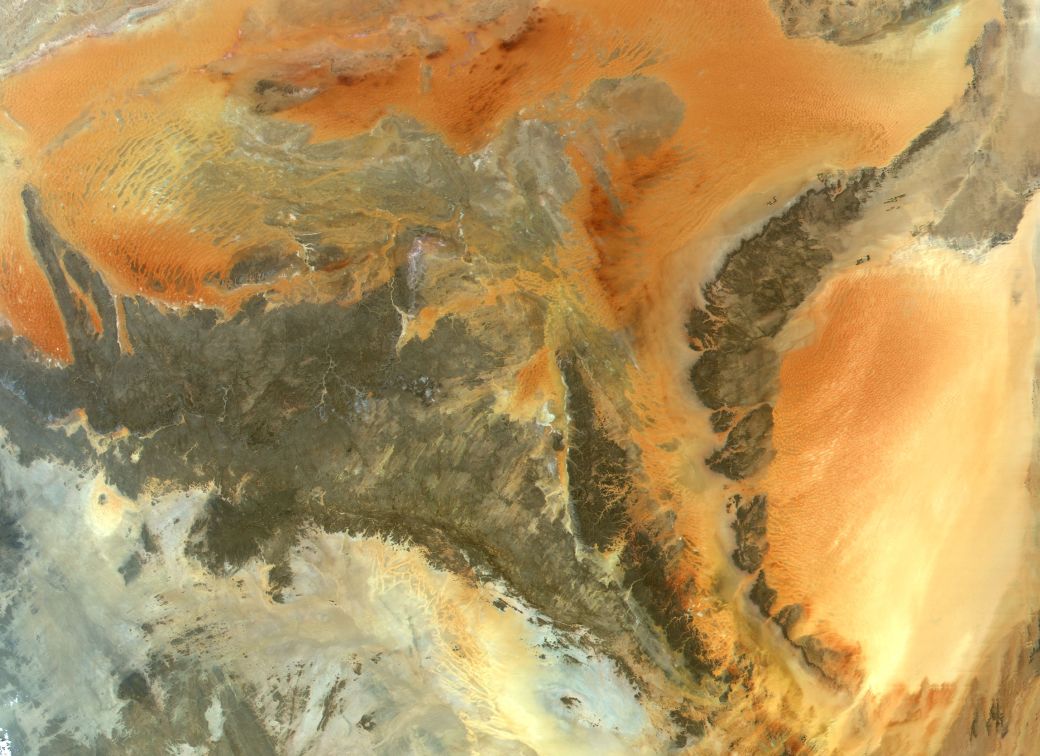
The Deserts of Upsilon-3 and the Problem with Blenoids

desert planet

Upsilon-3

EXCERPT from Inner Diverse, Book 2 of The Splintered Universe Trilogy: In a desperate attempt to find the Ancient One—the key to the mysterious killings—Detective Rhea Hawke steals a Vos ship and the Vos leader, forcing the terrorist A’ler at gunpoint into taking her to Upsilon-3.

Upsilon-3 is a desert planet with a thin atmosphere, heavy gravity and highly fluctuating temperatures—uncomfortable for any species, save its indigenous small creatures and the blenoids who eat them. Upsilon-3 is one of the moons of Upsilon b, a ringed gas giant. The moon is about Earth-size, an arid wasteland that diurnally shifts between extreme temperatures. During the height of midday, it easily reaches 45ºC, an Azorian’s dream, and in the deep of night it is often below freezing, an Azorian’s nightmare. And speaking of mad blenoids, the planet is full of them…Rhea knows first hand:

Sand dunes Oregon3

Dunes of Epsilon 3

I’d been there before. I’d tracked and dispatched an Azorian assassin to the small ephemeral town there once—but at the cost of a blenoid attack. In his desperation, the Azorian had fled the ghost town into the arid wilderness, and if I hadn’t shot him, the blenoids would have torn him apart. If they hadn’t, he would have died a horrible death of severe hypothermia. As it turned out, my shot infuriated a pack of sleeping blenoids and I became the subject of their fury instead.

Ferocious and unpredictable, with dull brains and razor sharp teeth, blenoids were the galaxy’s most dangerous predators; but beneath their tough hide, blenoid meat was considered a galactic delicacy, so long as you stayed away from their organs. Their eating habits made them akin to the seagulls of Earth; they ate everything and anything, including their own and what came out of them. And they were prolific. Blenoids weren’t very large. They stood about a meter long and almost that high but with the anatomy and mad tenaciousness of a pit bull and the rough ochre hide of a rhino.

Adapted to the arid heat of the Upsilon desert, they resembled hyenas with extremely large ears and paws to increase surface area and promote heat loss. Five beady eyes, two on either side of their massive head and one centrally located, were adapted to the harsh bright sunlight of the Upsilon 3 dessert. Their massive powerful jaws contained three layers of razor-sharp teeth. Once they bit down on a prey, the jaw locked into a vice-like grip that either ground deeper or tore out deep muscle. Blenoid saliva contained a powerful narcotic and poison that dulled its victims and caused severe infection that spread swiftly. My grandmother was right; most blenoid attack victims died from shock. Those who’d survived, and there weren’t many, had only done so due to drastic measures like having a limb immediately severed to save the rest of their body. Blenoids attacked anything, no matter what its size and tore it to shreds. They were even known to rip one another apart in a frenzy of aroused anger or if they sensed any weakness. It was natural selection at its cruellest, I considered…

The Galactic meat-traders didn’t stay beyond the time it took to hunt and prepare the blenoid meat for galaxy-wide sale. Apart from the Gnostics who’d claimed one cluster of the ancient alien buildings as their temple of worship, no one lived here—except the Ancient One, that is. So, between the Venik slave traders, the blenoid meat traders, the Gnostic priests and the Nihilists, this backwater planet was actually getting crowded.

desert planet from above

desert moon Upsilon-3 seen from above

As A’ler banks the ship to the arid planet, Rhea observes the vast expanse of open desert:

I gazed down at the waved pattern of cresent-shaped dunes, obviously formed by a constant wind. It was a harsh and miserable environment, I thought.

“Barkhans,” A’ler offered, pointing to the dunes and breaking her taciturn silence. “That’s the West Ghouroud. No one’s ever crossed it and lived.” She eyed me with a dismissive look of disgust as much as to imply, especially a puny human like you.

I didn’t respond and let my gaze stray back to the dune sea. The dunes looked like the capped waves of a red ocean, the deep ochre of their shaded slipfaces contrasting with the harsh bright windward sides, still baking in the sun. The dunes looked small, but I guessed that some were at least three hundred meters high.

sand dunes

Sand dunes (Barkhans)

When they reach their destination—an enclave of strange buildings built by some ancient civilization—Rhea is hit with the harsh environment:

A’ler opened the hatch and a blast of furnace-hot air knocked me gasping and recoiling…Even at sunset, I could feel the stifling heat as we awkwardly disembarked. I inhaled a cloyingly sweet fragrance, reminiscent of cabbage, sewage and rotting flesh: blenoids, I concluded. And remembered; they stank… I followed her gaze and let mine take in the wide expanse of shifting red sands, dotted with islands of low creeping grey-green scrub. My gaze settled to the east.

upsilonandromadae d copy

View of Upsilon b and its ring bisecting the star Upsilon Andromedae

Upsilon Andromedae sat poised over the horizon. I could manage only a glance at the large bluish sphere of Upsilon b above the sun, its huge-diameter ring extending vertically down beyond the horizon and cutting a knife-sharp blade through the sun that cast a long shadow of the ring across the russet expanse. I stared, struck by the terrible beauty of this harsh landscape and just made out what looked like a dust storm on the horizon.

When both her Vos enemy and she are abandoned in the open desert, Rhea must use all her skills to survive the beating heat of the sun, wild blenoids, quicksand, sinkholes and killer plankton as they journey toward a far settlement, hoping for reprieve.

desert playa

desert playa

We’d left the flats of the playa and were heading toward rougher terrain. By tomorrow we would enter the desert proper, the ghouroud, with its massive barkhans that I’d seen from A’ler’s ship. I could already see them looming in the distance. I heard their low stuttering roar as the wind sang through them. And dreaded the crossing. Not only would it be treacherous with more possible quicksand traps, but it would serve a tortuous climb for A’ler up the slipface of the barkhans then down the soft sand on the other side…

The desert became a frozen sea, red clouds of sand rising off huge cresting waves that boomed and creaked like an old boat pitching at sea. The wind whistled like a chorus of laughing witches, hurling red grit into our faces. Our pace slowed to a crawl as our wading steps in the hot yielding sand turned to stumbles and falls.

When they finally reach a settlement, they collide with sadistic meat-traders. There Rhea will learn the grim truth about blenoid physiology, ecology and behaviour—and herself.

Get the complete Splintered Universe Trilogy. Available in ALL THREE FORMATS: print, ebook, and audiobook. You can listen to a sample recording of all three audiobooks through Audible.

audible listen

Microsoft Word - trilogy-poster03.docx

nina-2014aaa

Nina Munteanu is a Canadian ecologist / limnologist and novelist. She is co-editor of Europa SF and currently teaches writing courses at George Brown College and the University of Toronto. Visit www.ninamunteanu.ca for the latest on her books. Nina’s bilingual “La natura dell’acqua / The Way of Water” was published by Mincione Edizioni in Rome. Her non-fiction book “Water Is…” by Pixl Press (Vancouver) was selected by Margaret Atwood in the New York Times ‘Year in Reading’ and was chosen as the 2017 Summer Read by Water Canada. Her novel “A Diary in the Age of Water” will be released by Inanna Publications (Toronto) in 2020.

The Pit of Despair…

EXCERPT from Inner Diverse, Book 2 of The Splintered Universe: When Rhea is sent to Sekmet to live out her remaining life run by the scum of the criminal community—all addicted to the drugged food—she finds herself reviled as a puny human and an ex-enforcer—she’d put some of them there, after all. Knowing her days are numbered and finding herself without a safe place to bed-down, Rhea makes a desperate bid to survive. Taking a Rill’s advice, she agrees to be sponsored by the ruffian Bondar as a contestant in The Game—a game of survival involving strength, courage and wits to an audience, who bet on a winner. It is a simple contest with one winner and one loser: the simple task is to immobilize or kill the opponent and capture the “magical” wakesh root—a highly sought after elixir that can break her from the soporific addiction of the prison’s drugged food:

rhea-contemplative01

Rhea Hawke (Vali Gurgu)

I stood in the centre of the five hectare blood-stained arena, facing the semi-circular bleachers where Bondar and Barbariccia and an audience of several dozen aliens sat, packed like blood hounds smelling death.

I inhaled the rank smell of unwashed bodies, sweat and old blood and privately wondered what I was doing here. Bondar seemed to think I was capable enough; he’d gleefully accepted me as his candidate and now looked smug, seated not far from Barbariccia, who ignored him and studied me with a look of amusement on his calm face… Suddenly aware of my soiled clothes, I grew self-conscious and nervously fidgeted as I waited for Barbariccia’s candidate to enter the arena.

Bondar abruptly stood up and held up my original jacket in one hand and my slacks in the other.

“I’m still looking for a buyer for these!” he announced happily in a multi-timbral chorus. “Great clothes of impeccable quality. Original Enforcer clothes.”

Which they weren’t, I thought scathingly. They were just ordinary flight clothes. Damn that Bondar! The bastard was selling my clothes right in front of me, his own candidate. It showed me what kind of team we were…and what he thought of my chances.

“Are they intelligent?” someone in the audience asked.

Bondar brought both my jacket and pants up to his reptilian face and buried his snout in them with a deep inhale. All he smelled was me, I thought, wincing inside. I felt my face tighten to a grimace as I watched him smear my clothes over his face: it seemed that essence of Rhea was a perfume for him because his doleful eyes flickered dreamily shut and his many mouths smiled lecherously. Several inmates cackled.

“You can’t tell by smelling it, creon!” someone scoffed.

“They’re far too small!” said another. “She’s just a puny little pip.”

My gaze involuntarily flickered down my own torso. I wasn’t that small, I thought petulantly. I was almost six feet tall.

Bondar bent down and lifted up my boots. “What about these? Real gravity boots. They instantly adjust according to the weight of the wearer to the gravitational pull of any planet you travelled to—”

“No one’s going anywhere, you buffoon!”

They started booing him and shouted for him to sit down.

I dropped my gaze to the dirty blood-stained floor as the jeers and slanders spread to me. I heard several pointed insults aimed at the human race. What was I doing here besides inviting abuse?

Mayling had sagely waited until just before I entered the arena, when it was too late to back out, to fully explain the game to me: “It’s a simple contest: just find and takes possession of the wakesh root, hidden in the obstacle course of the arena, before the opponent does—and keep it by immobilizing the other contestant. This is usually done by killing the opponent but youz don’t haves to…” I had repeated the part about usually killing the opponent and Mayling ignored me to continue: “Whatever youz do, don’t let yourself falls into the pit.”

“Pit?” I had repeated with a hard swallow.

“No one ever gets out. Usually youz just hears a lot of splashing then a lots of silence. Sometimes a sobeks wanders in and manages to eludes the peat saws and turbines, then youz also hear thrashing and lots of awful cries of terrors and pains as the sobek bites off a limb and—”

“I get it,” I cut in.

“There are two ways to plays the games,” Mayling went on. “Defeats your opponent first then looks for the root ats your leisure, or finds the root first and use its to defeats your opponent. Which way youz goes depends on your personal strengths. Considering your present status and your humans abilities, I suggests youz first finds the root, then takes a bite of the root immediately to gives yourselfs a decided advantage over your opponent.”

That only worked if I got it first. And that was unlikely, given the wave-sensitive eyesight of the Xhix, who’d just entered the arena through an adjacent door. Wonderful, I thought with growing despair. Xhix could see through objects.

Holding a mining shovel in one hand, the Xhix waved to the cheering crowd with his other. I dismally recalled the crowd’s jeers and catcalls when I’d entered the arena. It was obvious who they thought would win.

I was contemplating the misnomer of Mayling’s use of the term obstacle course, when Barbariccia stood and shouted, “Let the contest begin!”

I kept a sharp eye on the Xhix, who stood poised several meters from me. Maybe I could outsmart him. I might be more swift, if I let him lead me to the root. The Xhix seemed to realize what I was thinking. He faced me with a smirk and turned black, tapping his shovel with his paw. He wasn’t about to give away the whereabouts of the root.

The floor rumbled and, just a meter from where I stood, it abruptly separated, giving off a strong waft of sulfur. The gap in the floor groaned into a long chasm that continued to widen. Both the Xhix and I stepped back. This must be the infamous pit Mayling had referred to. I carefully leaned over to catch a glimpse of what lay below. I made out murky bog and peat, moving slowly across the gaping opening as the penal facility rolled along, churning up peat and mire some ten meters below—

Something hard and painful struck my head, throwing me off balance into the gap with a startled grunt. I briefly registered the Xhix’s victorious laugh as I pitched forward and blacked out.

I jerked awake, inhaling water. I’d plunged into black cold churning water and broke the surface with gasping breaths.

saltwater marsh-NS copy

Marsh on Sekmet

Inner-diverse-front-cover-WEBInner Diverse is the second book of The Splintered Universe Trilogy:

When Galactic Guardian Rhea Hawke investigates the genocide of an entire spiritual sect, she collides not only with dark intrigue but with her own tarnished past. Her quest for justice catapults Rhea into the heart of a universal struggle across alien landscapes of cruel beauty and toward an unbearable truth she’s hidden from herself since she murdered an innocent man.

Get the complete Splintered Universe Trilogy. Available in ALL THREE FORMATS: print, ebook, and audiobook. You can listen to a sample recording of all three audiobooks through Audible. Read the Splintered Universe reviews on Goodreads.

audible listen

Microsoft Word - trilogy-poster03.docx

nina-2014aaa

Nina Munteanu is a Canadian ecologist / limnologist and novelist. She is co-editor of Europa SF and currently teaches writing courses at George Brown College and the University of Toronto. Visit www.ninamunteanu.ca for the latest on her books. Nina’s bilingual “La natura dell’acqua / The Way of Water” was published by Mincione Edizioni in Rome. Her non-fiction book “Water Is…” by Pixl Press (Vancouver) was selected by Margaret Atwood in the New York Times ‘Year in Reading’ and was chosen as the 2017 Summer Read by Water Canada. Her novel “A Diary in the Age of Water” will be released by Inanna Publications (Toronto) in 2020.

Sekmet, Mistress of Dread

Bog Planet wholeSekmet is the penal planet from which no one ever escapes. The planet is a giant bog-marsh and the prison itself is a massive 2-kilometre barge that travels the wetland planet and mines the peat. The very word evokes fear. Sekmet is the bogeyman. Early on, in Outer Diverse, Rhea’s colleague Bas warns her to be careful or she might end up on Sekmet for her transgressions; Rhea scoffs that only senseless killers go to that bog planet to die and rot. But soon Rhea will alter her cavalier defence. Things will change for her…
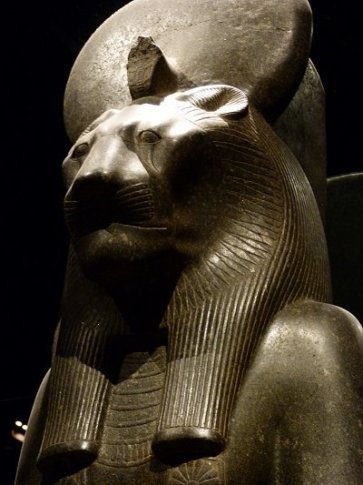
Sekhmet

Sekhmet

Sekmet is named after the lioness-headed Egyptian warrior goddess (Sekhmet). Variously known as “the one who is powerful or mighty”, “One before whom evil trembles”, “mistress of dread”, and “Lady of Slaughter”, Sekhmet is often depicted in red, the colour of blood.

In Inner Diverse, Bas’s warning is realized; Rhea is hunted and captured then after a hasty “trial” she is sent to Sekmet. There, she, too, will meet the goddess’s wrath—and tremble.

As the AI ship takes Rhea down to the planet surface, she has a good view of the wetland planet:

I gazed out my porthole at the barren patchwork of the small wetland-dominated planet, whose surface resembled an early impressionist’s painting. Dominated by sombre russet and indigo tones, the raised bog was dotted by a hasty spray of cobalt lakes and pools.

Although it was mid-morning on the planet, the mostly grey sky was saturated in low cloud and it was drizzling outside. Spates of wind drove sheets of rain hailing sporadically against my porthole. It was a wet desolate place. But then again, “A drowning man is not troubled by rain—Persian Proverb, Rhea,” I said quietly to myself. The weather was the least of my concerns.

Wetland-Trent6

Swamp on Sekmet

As the ship descended, I could make out the individual pool system of the blanket bog with its inhospitable tapestry of dark and wet shapes. I dispassionately reviewed what I knew of the planet. Its cool wet climate and rich iron deposits promoted the development of muskeg, string bogs, darkly forested swamps and wildflower-filled fens. This was Sekmet, a less than Earth sized planet that orbited the KO star, HD177830 in the constellation Vulpecula. My new home. Where I was going to die.

As the ship turned, I made out the actual penal colony with its dozens of grey tapered stacks billowing out white smoke. The facility resembled a huge factory, floating on a glistening wet mosaic of multi-textured and coloured vegetation. The facility, appropriately named Hades by its inmates, was in fact a huge peat mine that migrated across the huge blanket bog, extracting peat for sale to maintain the colony.

The life span of inmates on Sekmet was usually less than a year and I wasn’t sure I was going to be all that tenacious. The Eosian Guardian who’d shoved me into this AI ship had offered his own prognosis with a sinister laugh: “You won’t last a jagging week, human. They despise Enforcers. They’ll eat you alive then excrete you as bog fertilizer!”

The ship had informed me earlier that Hades contained an inordinately high number of Rills as inmates. If any one alien race had the right to despise me, the Rill did. I’d single-handedly subverted their one and only attempt at obtaining freedom from a long life of oppression by the Legess. I decided that Sekmet was going to be my personalized purgatory.

They will eat the fruit of their ways and be filled with the fruit of their schemes,” I recited the lines from Proverbs in a quiet breath.

When the AI ship lands on the huge barge platform, Rhea is instructed to get off.

Log over water forest-DeasPark copy

Wetland on Sekmet

The exit hatch door opened and the AI droned, “This is your destination, Rhea Hawke. Please disembark.”

My chest clenched. I swallowed down my fear and stepped out onto the platform of Sekmet’s landing bay, catching the faint sulphurous smell of the bog. The doors of the ship abruptly closed behind me, making me involuntarily flinch. Annoyed at my reaction, I gathered my composure and swiftly assessed the empty platform, hearing only the hum of the ship’s engine. My gaze rested on the endless hummocks and large meandering ponds of tea-stained water outside.

As the ship made ready to leave, I felt my heart pounding with the sudden urge to bolt. I had a panicked notion to leap off the platform into the murky bog. Swim, wade, scrabble to eventual safety in the wilderness of Sekmet in those distant hills. The ship lifted off the ground in a turmoil of dust and thunder. My face twisted with indecision as I tensed, poised to flee—

A male Azorian burst in from the adjoining chamber and I braced for an attack. He pelted right past me then leapt into the murky water. I watched him thrash through the undulating bog, stumbling, submerging and trying to swim—his left arm was amputated at the elbow. I was about to follow when laser shots peppered the water around him for several heartbeats. I flinched. As suddenly as the shots began, they ended and the Azorian slowly sank until only his head remained above the water. I stood stiff, trembling hands over my mouth, and breathing hard. I stared at the head bobbing slowly in the water.

With the ship departed, chaotic sounds drifted in from inside the colony. Faint echoes of shrill outcries, mad laughter and raucous groans filtered in with the light breeze. It sent a chill through me—

“The stupids ones stills thinks theys cans escapes thats ways,” a nasal voice said behind me.

Startled, I spun around. When I saw the female Rill waddle toward me, huge arm—weapon—stretched out, I instinctively went for my MEC and caught air. My MEC was, of course, no longer holstered on my hip. That damned gesture and ominous paw got me every time, I thought and let the tension drain from my posture. I grimaced and murmured to myself, “Speak of the devil.”

At the entrance from the platform inside the penal barge, Rhea passes the looming statues of Anubis—ancient Egyptian jackal god (who took part in judging a person’s guilt) and the lion-headed Sekhmet. High between the massive statues, a makeshift sign has been erected that hangs above the open doorway. Words inscribed in a messy but clear scrawl read: I am the way into eternal grief; abandon every hope, all you who enter.

*****

Inner-diverse-front-cover-WEBInner Diverse is the second book of The Splintered Universe Trilogy:

When Galactic Guardian Rhea Hawke investigates the genocide of an entire spiritual sect, she collides not only with dark intrigue but with her own tarnished past. Her quest for justice catapults Rhea into the heart of a universal struggle across alien landscapes of cruel beauty and toward an unbearable truth she’s hidden from herself since she murdered an innocent man.

Get the complete Splintered Universe Trilogy. Available in ALL THREE FORMATS: print, ebook, and audiobook. You can listen to a sample recording of any of the three audiobooks through Audible. Read the Splintered Universe reviews on Goodreads.

audible listen

Microsoft Word - trilogy-poster03.docx

nina-2014aaa

Nina Munteanu is a Canadian ecologist / limnologist and novelist. She is co-editor of Europa SF and currently teaches writing courses at George Brown College and the University of Toronto. Visit www.ninamunteanu.ca for the latest on her books. Nina’s bilingual “La natura dell’acqua / The Way of Water” was published by Mincione Edizioni in Rome. Her non-fiction book “Water Is…” by Pixl Press (Vancouver) was selected by Margaret Atwood in the New York Times ‘Year in Reading’ and was chosen as the 2017 Summer Read by Water Canada. Her novel “A Diary in the Age of Water” will be released by Inanna Publications (Toronto) in 2020.

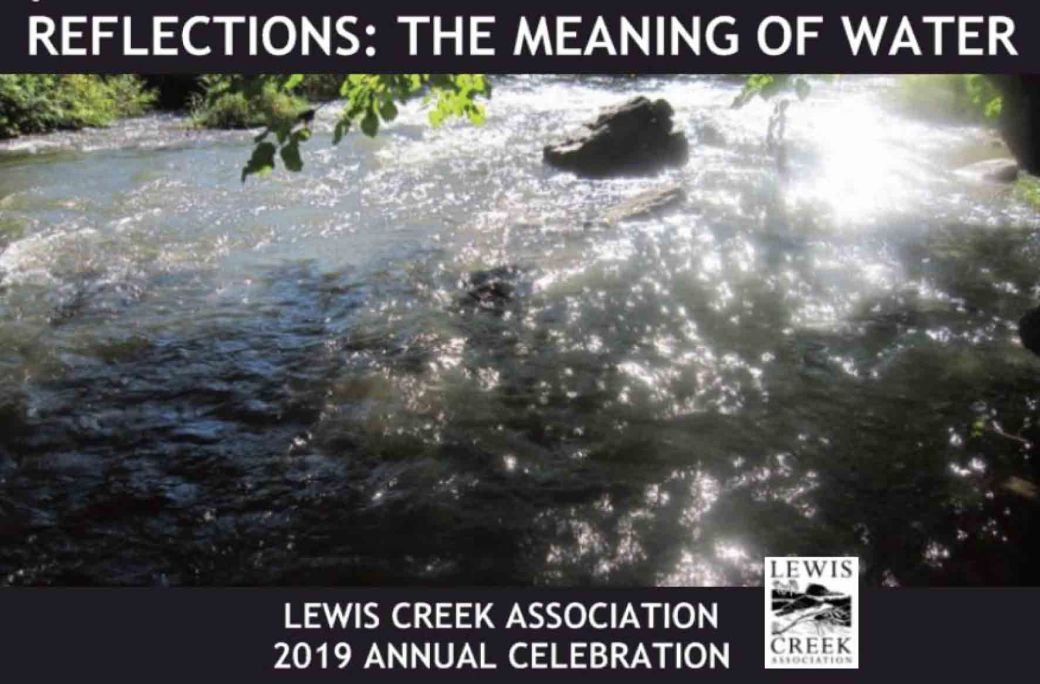
Reflections: The Meaning of Water (a talk for the Lewis Creek Association)

Nina Louis Merridy

Nina Munteanu with Louis DuPont and Merridy Cox with Lewis Creek behind

A short time ago, I was invited to give a talk on water to the Lewis Creek Association during their annual meeting for 2019 to help celebrate their recent accomplishments. Here is their write up:

Join our special guest, Canadian ecologist and author Nina Munteanu, who will discuss the many dimensions of water. She describes personally the curiosity and emotional connection with nature that compels us to caretake our environment with love versus a sense of duty. Her book “Water Is…The Meaning of Water” is an ode to and discourse about water, the indispensable and mysterious element that is the foundation of life here on our blue planet. The book is a fascinating catalogue of the many amazing and anomalous qualities of water, and has become a favorite of several Board members. She trained in limnology, the study of lakes, and has consulted in the aquatic sciences for many years. The author of over a dozen fiction and non-fiction books, she currently teaches writing at the University of Toronto and George Brown College in Toronto, Canada. We are delighted to have Nina join us and share her insights and concerns about this substance we have been concerned with over the last 30 or so years.

Microsoft Word - Nina map Barrio cafe.docx

At Cafe Barrio in Burlington, Vermont, Nina checks the map for directions…and finds her way…

I chose to drive to Vermont from Toronto with good friend and editor Merridy Cox. We crossed into USA near Cornwall and drove through New York state to Rousse’s Point, then into Vermont over the Vermont Bridge over Lake Champlain. We took the scenic route along the islands to the village of Charlotte, where we met with some of the Lewis Creek Board members and enjoyed a wonderful home-cooked supper at executive director Marty Illick’s country home along with Board president Andrea Morgante, board member Louis DuPont, and several other guests.

Merridy-LakeChamplain marsh

Merridy Cox photographing Lake Champlain just east of the Vermont Bridge

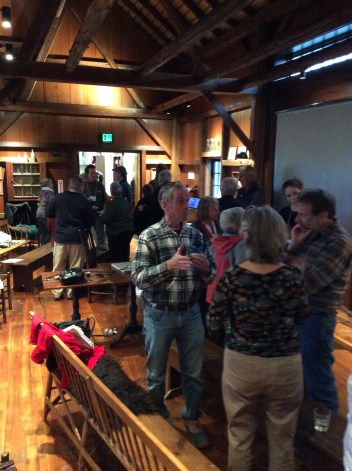
The event took place in the large converted barn of Philo Ridge Farm, a 400-acre historic dairy farm now also running as an educational institution of sustainable practices and store and restaurant. The barn is now a state-of-the-art sustainably built facility with a combination of rustic and sophisticated in its design of rich wood walls, large windows and beams with high vaulted ceiling; ideal for a presentation.

I spoke about my roots in the Eastern Townships of Quebec…and where they led me:

I was born in a small town in the Eastern Townships of Quebec, a gently rolling and verdant farming community, where water—l’eau—bubbles and gurgles in at least two languages.

I spent a lot of my childhood days close to the ground, observing, poking, catching, prodding, destroying and creating. Perhaps it was this early induction to the organic fragrances of soil, rotting leaves and moss that set my path in later life as a limnologist, environmental consultant and writer of eco-fiction.

Nina EasternTownships

I followed my older brother and sister to the nearby forest and local stream. We stirred soil, flower petals and other interesting things with water to fuel “magic potions” that we inflicted on some poor insect. Yes, I was a bit destructive as a child—and I took a lot for granted. Like water. There was so much of it, after all. It was clean and easily accessed, fresh from the tap.

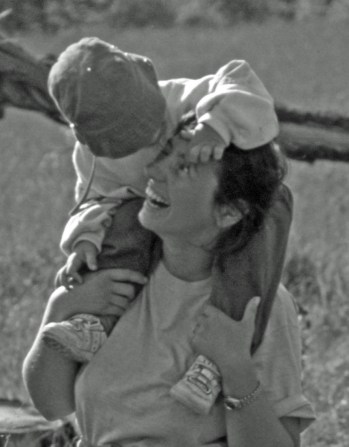
When I gave birth to my son, Kevin, I felt a miracle pass through me. Kevin became my doorway back to wonder. His curiosity was boundless and lured me into a special world of transformation.

Nina-Kevin playing

Nina Munteanu and her son hiking in B.C.

I took time off work to spend with Kevin when he was young. We went on great trips, from the local mall, where we had a hot chocolate and played with Lego, to the local beach on the Fraser River, where we explored the rocks. When he was no more than three, I took him on endless adventures in the city and its surroundings. We didn’t have to go far. The mud puddles of a new subdivision after a rain were enough to keep our attention for dozens of minutes. We became connoisseurs of mud. The best kind was “chocolate mud,” with a consistency and viscosity that created the best crater when a rock was thrown into it.

Kevin and I often explored the little woodland near our house. We made “magic potions” out of nightshade flowers, fir needles, loam and moss; we fueled our concoctions with the elixir of water from a stagnant pool. This time the little insects weren’t molested.

Travelling the world has helped me realize that I was blessed with an abundance of water. I lived my entire life in a country of plentiful and healthy water. And for most of that time I didn’t even realize it. Canada holds one fifth of the world’s fresh water in lakes, rivers, and wetlands, as well as in our underground aquifers and glaciers. Canada’s wetlands, which cover more than 1.2 million square kilometres, makes Canada the largest wetland area in the world.*

The folks who attended my presentation were wonderfully receptive, gracious and kind. They bought all my books too! I felt so welcomed by this community concerned about the land and their water. I was also impressed with the dedication, organization and knowledge of this non-profit conservation initiative.

Presentation venue

Venue

Lewis Creek Association

The Lewis Creek Association (LCA) started in 1990, when a group of concerned citizens and the Hinesburg Land Trust came together to conserve a critical stretch of wetland habitat bordering Lewis Creek in Hinesburg, Vermont. Lewis Creek is one of Vermont’s most ecologically diverse streams and suffers from increasing habitat degradation due to river encroachment by development and roads, land use change, and more extreme weather events.

LCA’s mission is to protect, maintain and restore ecological health while promoting social values that support sustainable community development in the Lewis Creek and LaPlatte watershed regions and Vermont generally. Through education and action, LCA works to:

  • Restore water quality, stream stability, and native wildlife habitat
  • Protect and restore important and diverse natural areas
  • Conserve productive and scenic lands that contribute to rural character and economy
  • Support growth compatible with important natural systems and working landscapes
  • Strengthen and support local conservation initiatives and opportunities
  • Model active participation and respect for differences

With a hard-working volunteer board and a part-time paid consultant, LCA facilitates educational, planning, and field work programs involving dozens of volunteers. This work assists town planning and facilitates the restoration and conservation of important Champlain Valley natural areas of high public value.

LCA Annual Party 2019

Their track record has been impressive. Since forming their organization, the LCA has spearheaded and conducted numerous initiatives. Highlights include: annual water quality sampling in six streams and rivers; biodiversity studies of stream corridors, conservation and restoration work in watershed towns; invasive aquatic plant control in local areas; helped educate citizens on ecological improvements; actively participated in implementing VT’s Water Quality Law, Act 64; generated Water Quality Scorecard Maps to track pollution problems; and designed the “Ahead of the Storm” education program used throughout the watershed region.

LakeChamplainBasin

In the Moment-anthology copy*A version of this talk is available in an article I wrote called “Coming Home to Water,” which first appeared in the 2016 anthology In the Moment (A Hopeful Sign) edited by Gary Doi. It was reprinted in 2018 The Earth We Love (Mississauga Writers) edited by Elizabeth Banfalvi; and again in 2019 in The Literary Connection IV: Then and Now (IOWI) edited by Cheryl Antao Xavier.


LakeChamplain-VT-NY bridge

Lake Champlain, looking west from Vermont to New York at Vermont Bridge (right) (photo by Nina Munteanu)


nina-2014aaa

Nina Munteanu is a Canadian ecologist / limnologist and novelist. She is co-editor of Europa SF and currently teaches writing courses at George Brown College and the University of Toronto. Visit www.ninamunteanu.ca for the latest on her books. Nina’s bilingual “La natura dell’acqua / The Way of Water” was published by Mincione Edizioni in Rome. Her non-fiction book “Water Is…” by Pixl Press (Vancouver) was selected by Margaret Atwood in the New York Times ‘Year in Reading’ and was chosen as the 2017 Summer Read by Water Canada. Her novel “A Diary in the Age of Water” will be released by Inanna Publications (Toronto) in 2020.

Why Women Will Save the Planet

I was recently told I was fear-mongering and missing the facts by a person on Facebook when I revealed the environmental dangers of using (and abusing) single-use plastics (specifically Styrofoam); earlier that day a gentleman called me an anarchist after I promoted individual responsibility over government and corporate responsibility on the issue of bottled water in Canada.

At the time, these accusations upset me—I’m a scientist, after all, and truth is #1. Then I realised that they were part of my journey toward activism to save this planet and humanity along with it. It was, in fact, a good day for me. I did have the facts; and they were scary. And, in revealing them and expressing my opinions, I had succeeded in breaking people’s inertia and had challenged them to think outside their comfort zone.  I had created fear in them and I had created anarchy in their ordered world. This promted a strong defensive response. The more intense their defence, the more I’d upset their comfortable inertia. That is what happens when you break through a hegemony or dogma and challenge people to re-evaluate and change their actions or habits—essentially forcing them out of their complacency and bringing it back to personal responsibility.

In both cases, I’d brought it back to personal responsibility and personal action. Too many of us settle for a narrative in which others—often not clearly identified—are responsible–not us.

So, perhaps I am inciting fear. Fear in those who have become or choose to remain too complacent. Good; we are in a planetary and existential crisis. And perhaps I am rather an anarchist; disrupting a system and self-belief that is entrenched and not sustainable.

But that comes at a price.

Greta Thunberg raincoat

Greta Thunberg begins a wave of climate activism

I’m thinking of young climate activist Greta Thunberg, who recently captured the attention of the world in her brave sail across the Atlantic to attend the UN’s Climate Summit and other meetings in the US in addition to her climate strike and rally march in Montreal, Canada, which drew close to half a million people (old and young).

Greta Thunberg Sails Carbon-neutral  Yacht To New York

Greta Thunberg

Earlier, at the World Economic Forum Annual Meeting in Davos, Switzerland, Greta delivered her now iconic speech:

“Adults keep saying we owe it to the young people, to give them hope,” Thunberg said, “But I don’t want your hope. I don’t want you to be hopeful. I want you to panic. I want you to feel the fear I feel every day. I want you to act. I want you to act as you would in a crisis. I want you to act as if the house is on fire, because it is.”

In a recent poll, one out of three Germans said that Thunberg has changed their views on climate change. But that, too, has come at a price.

A tsunami of rage and shameless vitriol was unleashed by conservative men (many with close ties to the fossil fuel profit machine) at this young and brave girl during her 15-day trip across the Atlantic. Their attacks have grown increasingly more personal and vulgar as she has gained world attention. For example, political scientist, economist and climate “skeptic” Bjorn Lomborg (associated with the Heartland Institute and Competitive Enterprise Institute) repeatedly mocked and criticized the 16-year old activist. Using highly inappropriate and unprofessional language (the worst I won’t repeat here), he and others have accused her of being a “puppet”, “naïve”, “unrealistic”, and a “fanatic.” Others like Australian columnist Andrew Bolt have personally attacked Thunberg with reprehensible and boorish remarks about her age and mental health.

Lobbyists Against Greta

oil-profit lobbyists behind shameless vitriol against Greta Thunberg (from Desmog UK)

Andrew Mitrovica’s Opinion piece entitled “Who Is Afraid of Greta Thunberg?” provides eloquent summary: “Of course, the marauding swarm of vitriolic right-wing climate-change deniers see Thunberg—not how the prophetic Zinn envisioned her—but as a tiny, pretentious zealot who threatens the existing order. Their order. Their comforts. Their traditional ‘way of life’.”

Greta—who wears a windbreaker that reads “Unite Behind the Science”— responded in a brave and wonderful tweet:

GretaThunberg-Tweet

Her tweet was followed immediately by one by Alexandria Ocasio-Cortez:


AlexandriaOcasio-Cortez Tweet

This follows a recent finding by researchers that 99% of Republicans are science illiterate and 44% believe that the scientific method can be used to produce any conclusion the researcher wants. Of course the whole point of the scientific method is to prevent this.

Soon after, Martin Gelin wrote an article entitled, “The Misogyny of Climate Deniers” in the August 2019 issue of The New Republic. The subtitle reads: “Why do right-wing men hate Greta Thunberg and Alexandria Ocasio-Cortez so much? Researchers have some troubling answers to that question.”

Greta on boat2

Greta Thunberg sailing to New York

Gelin writes, “On [Thunberg’s] first day of sailing, a multi-millionaire Brexit activist (Arron Banks) tweeted that he wished a freak accident would destroy her boat. A conservative Australian columnist (Andrew Bolt) called her a ‘deeply disturbed messiah of the global warming movement,’ while the British far-right activist David Vance attacked the ‘sheer petulance of this arrogant child.’ … Former Trump staffer Steve Milloy recently called Thunberg a ‘teenage puppet,’ and claimed that ‘the world laughs at this Greta charade,’ while a widely shared far-right meme showed Trump tipping The Statue of Liberty to crush her boat.”

Fierce and undeterred by cohorts of grown human males unable to deal with her, Greta Thunberg gave a scorching speech at the United Nations during her visit to America: “We are in the beginning of a mass extinction, and all you can talk about is money and fairy tales of eternal economic growth,” she admonished a crowd of world leaders. “How dare you.” Her equally scorching look of Donald Trump who rudely ignored her to mumble some nonsense to the press, has become a popular meme. The mashup by Fatboy Slim of Greta Thunberg’s UN speech “Right here, right now” went viral on YouTube.

Greta-trump 2

Greta Thunberg and Donald Trump at the UN climate summit

Of course, this was followed by utterly shameless and cruel vulgarisms by adult bullies that included suggestions to punish her and give her a spanking.

Disinterested in whether she’s liked and undeterred by childish name calling, the activist teenager remained resolute with her weapon: shame.  At every opportunity, Greta Thunberg steadfastly called out adults over twenty years her senior on what they have failed to do; she did it in words that are simple, precise and direct.

After Senator Tom Carper tried to placate her by telling her that young people would soon have the chance to run for office themselves, she returned: “We don’t want to become politicians; we don’t want to run for office. We want you to unite behind the science.”

Carrying herself with admirable focus and buoyed by her dedication to her cause, Greta Thunberg delivered a scintillating speech to close to half a million climate marchers in Montreal:

“Some would say we are wasting lesson time; we say we are changing the world… The people have spoken. And we will continue to speak until our leaders listen and act. We are the change and change is coming.”

greta thunberg speech in montreal

Greta Thunberg speaking in Montreal

In a recent article in the Washington Post, entitled “Greta Thunberg Weaponized Shame in an Era of Shamelessness”, Monica Hesse writes: “We live in an era that has become impervious to shame. An era defined by a president who views it as a weakness. Shame has become an antiquated emotion and a useless one. It’s advantageous, we’ve learned, to respond to charges of indecency with more indecency: attacks, misdirection, faux-victimhood.”

But real shaming—the kind that mothers do with their errant boy-bullies—is precisely what Greta is doing. This kind of shaming cuts deep, because it is the deep and recognizable truth. And it is done through the “mother archetype”—the most powerful energy on this planet.

Gelin tells us that the prominently older white men who are leading these attacks on Greta Thunberg (and by association, other prominent female climate activists such as Alexandria Ocasio-Cortez) “is consistent with a growing body of research linking gender reactionaries to climate-denialism.”

Alexandria Ocasio-Cortez

Alexandria Ocasio-Cortez

Scientists Jonas Anshelm and Martin Hultman in the journal NORMA  analyzed the language of a focus group of climate skeptics, to discover a major theme:

“for climate skeptics … it was not the environment that was threatened, it was a certain kind of modern industrial society built and dominated by their form of masculinity.”

On the heels of the #MeToo movement, climate activism—largely led by strong females—appears to threaten gender identity of conservative males. Right-wing nationalism, anti-feminism, and climate denialism appear inextricably linked. I would add that their lack of respect for and acknowledgement of indigenous peoples is by default part of the package, given that indigenous peoples are so tied to the land and the ecosystem (being destroyed). One need only look to what is currently happening in Brazil for an atrocious example of this kind of male-bully behaviour.

Climate science for skeptics becomes feminized and viewed as “oppositional to assumed entitlements of masculine primacy,” write Hultman and Paul Pule in the 2019 book “Climate Hazards, Disasters, and Gender Ramifications.” Hultman identifies a set of values and behaviours connected to a form of masculinity identified with industrial patriarchy. These males “see the world as separated between humans and nature. They believe humans are obliged to use nature and its resources to make products out of them. And they have a risk perception that nature will tolerate all types of waste. It’s a risk perception that doesn’t think of nature as vulnerable and as something that is possible to be destroyed. For them, economic growth is more important than the environment,” which they choose not to understand—just like women.

The gender gap in the United States is characterized by men who perceive climate activism as inherently feminine. This was demonstrated in a 2017 article in Scientific American entitled, “Men Resist Green Behavior as Unmanly.”  Researchers Aaron R. Brough and James E.B. Wilkie argue that “women have long surpassed men in the arena of environmental action; across age groups and countries, females tend to live a more eco-friendly lifestyle. Compared to men, women litter less, recycle more, and leave a smaller carbon footprint.” While some researchers have demonstrated that women’s prioritization of altruism may help explain this gender gap in green behaviour, the research done by Brough and Wilkie’s—involving more than 2,000 American and Chinese participants— showed that men linked eco-friendliness with femininity and a risk to their masculinity. These findings, coupled with a natural inclination for anti-feminism by older white conservative males, places them at the centre of a major reactionary backlash against climate action.

Gelin ends on a sober note: “As conservative parties become increasingly tied to nationalism, and misogynist rhetoric dominates the far-right, Hultman and his fellow researchers at Chalmers University worry that the ties between climate skeptics and misogyny will strengthen. What was once a practical problem, with general agreement on the facts, has become a matter of identity. And fear of change is powerful motivation.”

Nina-Kevin playing

Nina Munteanu hiking with her son

When fear powers motivation, we must counter with something stronger: hope through action, compassion, and community. And, again, women are in great abundance of these.

“Keep inspiring and organizing,” says Alexandria Ocasio-Cortez to young Greta. “We’re going to save the planet. All of us, together.”

We are all, after all, “the mother.” So, while the old guard of conservative immature men obsess in saving their egos and identities in this crisis, and put up walls of vitriol, name-calling, “flaming”, and “trolling,” it’s up to us, mature women, to really save the planet, the mother of us all.

So, why will women save the planet? Because “Mother Knows Best,” after all…

Time for a paradigm shift. We’re not in the fifties anymore…


nina-2014aaa

Nina Munteanu is a Canadian ecologist / limnologist and novelist. She is co-editor of Europa SF and currently teaches writing courses at George Brown College and the University of Toronto. Visit www.ninamunteanu.ca for the latest on her books. Nina’s bilingual “La natura dell’acqua / The Way of Water” was published by Mincione Edizioni in Rome. Her non-fiction book “Water Is…” by Pixl Press (Vancouver) was selected by Margaret Atwood in the New York Times ‘Year in Reading’ and was chosen as the 2017 Summer Read by Water Canada. Her novel “A Diary in the Age of Water” will be released by Inanna Publications (Toronto) in 2020.


A True Rocky Mountain Gem: The Antique Forest of Robson Valley

In my novel A Diary in the Age of Water (Inanna Publications) the diarist writes about the huge reservoir complex that was built in the late 2020s in the Rocky Mountain Trench to create an 800 km long reservoir system to rehydrate the United States. Of course, it’s science fiction, but it was based on real plans (NAWAPA) that went all the way to congress in the 1960s. That reservoir might have drowned the rainforest conservation corridor of Robson Valley—a conservation area that continues to experience existential risk due to development, resource harvest, and other disturbance.

Cedar-boardwalk-Anne

Friend Anne walks the boardwalk of the ancient forest park

In Robson Valley—tucked between the Rocky and Cariboo Mountains of East-Central British Columbia, the Fraser River nourishes an ancient rainforest matched nowhere on Earth. Massive Western Redcedar (Thuja plicata)—some over 1200 years-old, 3.5 meters in diameter, and 45 meters high—thrive in this valley, nurtured by abundant groundwater flow and high humidity for healthy tree growth and reduced fire risk. “Unfortunately, this requirement for growth in wet toe-slope positions has had negative consequences for ancient cedar stands. Historically, roads and railroads were placed at the base of mountain slopes, where easy access on level roadside terrain meant that ancient cedar stands were often among the first sites chosen for logging. Ancient cedar stands now represent less than 5% of forested landscapes within the Upper Fraser River watershed.” (UNBC Plant Ecology)

GiantCedars boardwalk2

Moss-covered giant Redcedar in foreground to boardwalk

This valley contains the most extensive inland rainforest in the northern hemisphere and is the only valley in the Rocky Mountains where grizzly bears still feed on wild ocean-going salmon.

Old Cedar-RobsonPark2019

Western Redcedar with wide buttresses

The Save-The-Cedar League also tells us that the Robson Rainforest is oroboreal: mountain-caused with boreal biome characteristics—unlike typical rainforests which are temperate-coastal or tropical. “Antique Forest” is a term used for ancient cedar-hemlock stands that have endured for more than 1000 years. One stand in Primordial Grove can be seen via a well-constructed boardwalk in a small park off Highway 16.

When I entered the ancient forest of magnificent giants with wide buttressed bases, a deep reverence came over me. No other word comes close to describing what I experienced or felt. I was enthralled and humbled by these magnificent trees, silent giants that rose into the mist like sentinels, piercing the heavens. It had rained that morning and the forest dripped with living moisture. Greens of all shades created a living mosaic of hue and texture. Moss covered everything. Lichen dripped off branches and clothed trees in crenulated patterns. The fragrance was intoxicating, a fresh pungency that woke something inside me. The smell has been variously described as “lingering”, “fresh”, “sweet”, “like pineapple when crushed”, or “almost like fresh water.” Even the breeze took on a different voice inside this living cathedral. A kind of deep hush that whispered of sacred grandness.

Cedar-up

Western Redcedar

I knew I was in a sacred place.

This ancient forest had been here at least a millennium; long before the arrival of Christopher Columbus to the Atlantic shores of North America. Long before us. Referred to as “the cornerstone of northwest coastal Indian culture,” the Western Redcedar is known as the “tree of life” and “life giver.” Groves of ancient cedars were symbols of power, and gathering places for ceremonies, retreat, and contemplation.

I kept to the boardwalk—to help prevent unwanted trampling and soil compression. The boardwalk snaked past giant buttressed trees that towered several stories high and formed a feathered canopy way above me. Whenever the boardwalk came close to a giant cedar, I had to stop and touch it. The reddish bark was smooth. I smiled; many others had done the same. In unavoidable reverence.

Breathing in the tree’s exquisite fragrance, I scanned my surroundings. A rich understory of red-berried Devil’s Club (Oplopanax horridus), huckleberry, fern, moss, liverworts and dense ground cover painted the forest floor in varying form and colour. I imagined the diversity of invertebrates, amphibians, reptiles, birds and mammals that flourished here. I’m told that scientists are still finding new species in this rainforest. UBC scientists tell us that arboreal lichen communities of the inland rainforest, especially the epiphytic cyanolichen assemblages on conifers, are among the richest in the world.

Nina-giant cedar03

Nina Munteanu leans against a well-loved giant Western Redcedar


Gentle Giant of North Temporate Rainforest: Western Redcedar (Thuja plicata)

tall cedar-moss

Western Redcedar

The Western Redcedar (Thuja plicata) is one of the most magnificent conifers in Pacific Northwest forests (both coastal and inland); it flourishes along the coastal fog belt from Alaska to northern California, and inland from the Pacific Ocean to Montana. The Western Redcedar is actually an arborvitae—not a true cedar; acknowledged by its name “redcedar”. True cedars only grow in the Mediterranean regions of the world. “Thuja,” is the latinism for the ancient Greek word for a now unknown, long-lost aromatic evergreen wood; “plicata,” means “folded into plaits,” which may refer to the tree’s characteristic foliage or its furrowed, stringy bark. The heartwood is pink- to red-brown to deep warm brown and highly resistant to moisture, decay and insect infestation due to the oils and acids (polyoxylphenols) it produces; it’s the phenols, in fact, that give the cedar its distinctive and pleasant aroma.

Given their extensive root system, cedars can remain standing long after they die. Western Redcedar snags (standing dead trees) can remain intact for up to 125 years. The large snags provide habitat for many cavity-nesting birds and mammals. Many species that require snags for habitats also prey on insects that use trees in a fine balance of a functional ecosystem. Examples include the pileated woodpecker, squirrels, weasels, martens, bats, owls and ducks. A fallen cedar can remain on the forest floor for over a century. “This durability is the result of a natural preservative that is toxic to decay-causing fungi. This ability does not decrease with age; in fact, it increases,” writes Jeri Chase, Oregon forester.

DevilsClub Hemlock-CedarGrove

Devil’s Club

Several of these live ancient cedar trees grow out of the trunks of other live ancient cedars, following a 180 million-year-old pattern observed in the closely-related redwoods (Sequoia). Basal shoots of the trunk yield genetically-superior mature trees when compared to seeds, root sprouts, other shoots or other layering phenomena.

Western Redcedar reproduces from root or branch development on fallen trees—the classic “nurse logs” often seen in northwest forests that also nourish other forest species. The magnificent bark of the Redcedar ranges in color from grey to reddish brown, and is deeply furrowed, forming long flat fibrous plates that peel and shed easily. Wildlife use the cedar in many ways. The foliage is an important winter food for elk and is browsed year-long by deer and rodents. Black bears den in the hollowed-out trunks of old trees and the cedar-dominated old growth forests provide valuable habitat for spotted owls and Vaux swifts.

Functional Ecosystem & Symbiosis

red-backed_vole

Red-backed vole

The Robson Valley cedar-hemlock rainforest supports a diverse and efficient ecosystem from apex and keystone predator—the grizzly—to black bear, gray wolf, cougar, lynx, wolverine, coyote, and seven ungulate species (including the Mountain caribou); all feeding on a diversity of prey and primary producers. The Mountain caribou feeds on mountain boxwood shrubs which are sheltered by the cedar and hemlock canopy layer.

An example of the symbiotic nature of the old growth cedar-hemlock forest is the red-backed vole, which resembles a large plump mouse. This forest mammal eats truffles—a type of fungus that lives underground. After digesting the truffles, voles spread the fungus around the litter layer of the forest through their droppings. The truffles help tree roots absorb soil minerals and the trees produce sugars necessary for the truffles: a win-win symbiotic relationship. The cedar and the hemlock require this alliance with truffles and voles to grow so large in the nutrient-poor soil.

The Inland Sea of the Rocky Mountain Trench (NAWAPA)

Diary Water cover finalUna stopped the car and we stared out across the longest reservoir in North America. What had once been a breathtaking view of the valley floor of the Rocky Mountain Trench was now a spectacular inland sea. It ran north-south over eight hundred kilometres and stretched several kilometres across to the foothills of the Cariboo Mountain Range. Una pointed to Mount Mica, Mount Pierre Elliot Trudeau and several other snow-covered peaks. They stood above the inland sea like sentinels of another time. Una then pointed down to what used to be Jackman Flats—mostly inundated along with McLellan River and the town of Valemont to the south. Hugging the shore of what was left of Jackman Flats was a tiny village. “That’s the new Tête Jaune Cache,” my mother told me.

If villages had karma this one was fated to drown over and over until it got it right.  Once a bustling trading town on the Grand Trunk Pacific railway, Tête Jaune Cache drowned in the early 1900s when the Fraser naturally flooded. The village relocated to the junction of the original Yellowhead 16 and 5 Highways. Villagers settled close to where the Fraser, Tête Creek, and the McLellan River joined, all fed by the meltwater from the glaciers and icefields of the Premiere Range of the Cariboo Mountains. The village drowned again in 2025. I imagined the pool halls, restaurants, saloons and trading posts crushed by the flood.

“This area used to be a prime Chinook spawning ground,” Una said. “They swam over 1,200 km from the Pacific Ocean to lay their eggs right there.” She pointed to the cobalt blue water below us.

The reservoir sparkled in the sun like an ocean. Steep shores rose into majestic snow-capped mountains. The village lay in a kind of cruel paradise, I thought. It was surrounded by a multi-hued forest of Lodgepole pine, Western red cedar, Douglas fir, paper birch and trembling Aspen. Directly behind the village was Mount Terry Fox and across the Robson valley mouth, to the northeast, rose Mount Goslin. Behind it, Mount Robson cut a jagged pyramid against a stunning blue sky. Wispy clouds veiled its crown. I couldn’t help thinking it was the most beautiful place I’d seen. And yet, for all its beauty, the villagers had lost their principle livelihood and food. The reservoir had destroyed the wildlife habitats and the fishery. And its people with it.

Una pointed to where the giant reservoir snaked northwest and where towns like Dunster, McBride and Prince George lay submerged beneath a silent wall of water. Her eyes suddenly misted as she told me about Slim Creek Provincial Park, between what used to be Slim and Driscoll Creeks just northwest of what used to be the community of Urling. She told me about the Oroboreal rainforest, called an “Antique Rainforest”—ancient cedar-hemlock stands over a 1000 years old. She described how massive trunks the width of a small house once rose straight up toward a kinder sun. The Primordial Grove was once home to bears, the gray wolf, cougar, lynx, wolverine and ungulates. It was the last valley in North America where the grizzly bear once fished ocean-going salmon. Now even the salmon were no longer there, she said. Then she bent low beside me and pulled me close to her in a hug. She quietly said to me, “This is what killed Trudeau.”

I stared at her and firmly corrected, “but that was an accident.”

“Yes,” she agreed. Then added, “a planned one.”

A Diary in the Age of Water

tall cedar-moss2 copy

Moss-covered Western Redcedar


NAWAPA (North America Water Power Alliance)

The original NAWAPA Plan was drawn up by the Pasadena-based firm of Ralph M. Parsons Co. in 1964, and had a favorable review by Congress for completion in the 1990s. The plan—thankfully never completed—was drafted by the US Army Corps of Engineers and entailed the southward diversion of a portion (if not all) of the Mackenzie and Yukon rivers in northern Canada and Alaska, now flowing into the Arctic Ocean as well as the Peace, Liard and other rivers flowing into the Pacific by creating massive dams in the north. This would cause the rivers to flow backwards into the mountains to form vast reservoirs that would flood one-tenth of British Columbia. The water would be channeled south through the 800-km Rocky Mountain Trench Reservoir into the Northern USA, and from there along various routes into the dry regions of the South, to California and reaching as far as Mexico.

NAWAPA copy

Expanded NAWAPA XXI plan to hydrate the USA with Canadian water

NAWAPA was envisioned as the largest construction effort of all times, comprising some 369 separate projects of dams, canals, and tunnels, for water diversion. The water diversion would be accomplished through a series of connecting tunnels, canals, lakes, dams, and pump-lifts, as the trench itself is located at an elevation of 914 m (3,000 feet). To the east, a 9 m (thirty-foot) deep canal would be cut from the Peace River to Lake Superior. Its largest proposed dam would be 518 m (1,700 feet) tall, more than twice the height of Hoover Dam (at 221 m) and taller than any dam in the world today, including the Jinping-I Dam in China (at 305 m).

Conspiracy theorist and convicted fraudster Lyndon LaRouche was a principle proponent of the environmentally destructive NAWAPA plan. Although the plan was scrapped in the 1970s due to environmental concerns, it resurfaced in 1982 particularly by Parsons engineer Roland Kelley, who wrote a report called NAWAPA Plan Can Work. LaRouche and his movement revived interest more recently. In 2012 the LaRouche Political Action Committee released their NAWAPA XXI special report, which contained a detailed plan for the revival of an updated and expanded version of NAWAPA. The LaRouche movement continues to promote this outlandish plan today with support from various American politicians and industrialists.

In his book Cadillac Desert, environmental writer Marc Reisner described the plan as one of “brutal magnificence” and “unprecedented destructiveness.” Historian Ted Steinberg suggested that NAWAPA summed up “the sheer arrogance and imperial ambitions of the modern hydraulic West.”

Forest-Cedar giant-marg drybr-LHP

Old growth Redcedar-Douglas fir forest near Vancouver, BC (photo and illustration by Nina Munteanu)

nina-2014aaa

Nina Munteanu is a Canadian ecologist / limnologist and novelist. She is co-editor of Europa SF and currently teaches writing courses at George Brown College and the University of Toronto. Visit www.ninamunteanu.ca for the latest on her books. Nina’s bilingual “La natura dell’acqua / The Way of Water” was published by Mincione Edizioni in Rome. Her non-fiction book “Water Is…” by Pixl Press (Vancouver) was selected by Margaret Atwood in the New York Times ‘Year in Reading’ and was chosen as the 2017 Summer Read by Water Canada. Her novel “A Diary in the Age of Water” will be released by Inanna Publications (Toronto) in 2020.

Climate Change: What We Can Do—Nina talks to the Toronto Star

Nina Munteanu

Nina Munteanu (photo by Richard Lautens)

The Toronto Star recently spoke to Nina Munteanu with two questions about climate change. These were included in a recent handbook published by the Star entitled “Undeniable: Canada’s Changing Climate—What We Can Do Now.” In it, The Star showed how the majority of Canadians place climate change as a top priority. In “Let’s Talk” The Star interviews computer scientist and head of UofT’s School of the Environment Steve Easterbrook. Questions involving local community action and the importance of hope.

In “Your Carbon Footprint” The Star showed how China and the US together produce over half of the entire greenhouse gases emitted annually by the top ten countries that include EU 28, India, Russia, Japan, Brazil, Indonesia, Canada, and Iran. These ten countries currently emit seventy percent of the world’s greenhouse gases. China (11.912 Mt CO2) continues to lead in greenhouse gas emissions, being over twice the US, the next large emitter (6.371 Mt CO2).

Top Ten GreenhouseGas Countries

However, when The Star looked at per capita greenhouse emissions, Canada jumped to the top rank at 21 tonnes per person annually, followed by the US (20 tonnes/person). By comparison, China—ranked the highest for total emissions—measured only 8.73 tonnes per person annually. And Bangladesh measured 1.1 tonnes/person.

GreenhouseGases-PerCapita

“Most scientists agree that in the coming decades we need to limit our individual annual carbon footprint to 1-2 tons,” says The Star. This entails making personal changes to cut our carbon output. One example is driving less or converting to a hybrid or electric car. “Our behaviours, whether good or bad, are contagious,” says The Star. I agree. It is important to not only do what we can but to share with others and provide our reasons. Seth Wynes, a geographer at the University of British Columbia concurs: “It’s not just about what you do, it’s about setting an example for others.” Research suggests, for example that homeowners are more likely to install solar panels when someone else does it first in their neighbourhood. Wynes in 2017 co-authored a study that ranks the most effective lifestyle changes to curb an individual’s carbon footprint.

In “Four Things You Can Do”, The Star suggests the following key initiatives:

  1. Eat less beef
  2. Live car-free or go hybrid / electric
  3. Invest in green infrastructure
  4. Reduce air travel

Greenhouse Gases-FOOD

The Star also provided good advice on how to talk to children about our changing climate. They provide excellent examples of children empowering themselves by making a difference—instead of becoming depressed with what they are inheriting. In “Political Checkup” The Star discusses with experts how we can best interact with our political leaders to engage and ensure positive change. In “Faith and Community” The Star showcases examples of faith communities addressing our waste stream.

In “The ChangeMakers” The Star asked the same two questions of five Canadians who are making climate change a top priority. They included:

  • Franny Ladell Yakelashek: 12-year old environmental rights activist from Victoria, BC
  • Jocelyn Joe-Strack: Indigenous scientist and storyteller, Whitehorse, Yukon
  • Kathy Bardswick: director of the Institute for Clean Growth and Climate Change, Guelph, ON
  • Gordon McBean: climatologist and professor emeritus at Western University, London, ON
  • Nina Munteanu: ecologist, instructor at The University of Toronto and author of eco-fiction and climate fiction, Toronto, ON.

Q1: What is the one thing about climate change that keeps you up at night?

Nina: I worry that my son and his kids will end up experiencing one of my dystopias from one of my books. My son lives in Vancouver, and my main concern is that he and his kids won’t have the chance to live safely and enjoy a stable and beautiful planet because we have wrecked it for them.

That leads me to the second thing that keeps me up at night, which is that nobody cares. Or that they are scared to care. We’re still going about our business like nothing is happening.

That really frustrates me. I’m a scientist and we’ve been talking about this for a long time; for me it’s been decades. My frustration is that we are still debating climate change, and we should be acting on it.

Q2: What is the one thing Canadians can do to act on climate change?

Nina: I think it has to be three things. First, plant a tree; make an actual difference through action. By doing that, we get out from hiding under the bed and face the monster of climate change and show that we care and that we are not alone. And that — taking direct action — will give us courage and hope.

Second, vote for green politicians. Politicians need to hear directly from their communities, they need you to push them to act on climate change.

Third, find your tribe and create a movement. Everyone says that people have the power, but that power comes best through numbers and solidarity. Find your tribe, and you’ll find yourself more motivated.

For answers to these two questions by the other changemakers, please go to the Toronto Star’s “What You Can Do About Climate Change” site.


nina-2014aaa

Nina Munteanu is a Canadian ecologist / limnologist and novelist. She is co-editor of Europa SF and currently teaches writing courses at George Brown College and the University of Toronto. Visit www.ninamunteanu.ca for the latest on her books. Nina’s bilingual “La natura dell’acqua / The Way of Water” was published by Mincione Edizioni in Rome. Her non-fiction book “Water Is…” by Pixl Press (Vancouver) was selected by Margaret Atwood in the New York Times ‘Year in Reading’ and was chosen as the 2017 Summer Read by Water Canada. Nina’s short story collection of eco-fiction can be found in “Natural Selection” published by Pixl Press. Her novel “A Diary in the Age of Water” will be released by Inanna Publications (Toronto) in 2020.

International Writers’ Festival at Val David

ValDavid-group inside1

International Writers’ Festival & Retreat with Flavia Cosma, Val David

In the middle of June 2019, I drove to Val David, Quebec, with poet-songstress and friend Honey Novick. We had been invited to participate in Les Mots du Monde, the nineteenth international writers’ and artists’ festival of readings, songs, and discussions. The location was the residence of international poet Flavia Cosma. Cosma has been hosting the writer’s event for close to a decade in her large house in the forest just outside the resort town of Val David in the Laurentians.

The program spanned two days of lecture, readings, performance and art by artists and writers from Argentina, Romania, Mexico, USA, Laval, Montreal, and Toronto.

Festival-group outside

International Festival among the trees

Poets, writers, musicians and artists included Honey Novick, Hélène Dorion, Tito Alvarado, Dinorah Gutiérrez Andana, Flavia Cosma, Gerette Buglion, Yvan-Denis Dupuis, EcologyOfStoryJeremiah Wall, Nina Munteanu, Nancy R. Lange, Nicole Davidson, Carmen Doreal, MarieAnnie Soleil, Luis Raúl Calvo, Louis-Philippe Hébert, Melania Rusu Caragioiu, Anna-Louise Fontaine.

I talked about my experience and process of writing my upcoming speculative novel “A Diary in the Age of Water”, coming out in 2020 with Inanna Publications. The novel chronicles four generations of women and their relationship with water during a time of extreme change.

I also shared examples of my recently launched writing guidebook “The Ecology of Story: World as Character” (Pixl Press). The 3rd guidebook in my Alien Guidebook Series, “Ecology of Story” focuses on place and environment and how these form the heart of a good story.

Throughout the festival, we were treated to magnificent ethnic food and refreshments. Interesting discussions on the international literary scene over wine and desert followed.

lunch 2

Lunch at Flavia’s

I shared good conversation with fellow poet and water advocate Nancy R. Lange. She had given a compelling presentation on her recent book “Les Cantiques de l’eau” (Marcel Broquet) and knew about my book “Water Is: The Meaning of Water” (Pixl Press). Of course, the best thing to do was exchange books—which we did. Nancy is the literary ambassador for the Eau Secours organization and has promoted responsible water stewardship through her writing and presentations for many years.

Microsoft Word - WaterBooks.docx

“It is not the cliff that shapes the ocean. It is the ocean that shapes the cliff. Fluidity is always the greater force than rigidity.”—Nancy R. Lange


On the final day, the writers and artists put on a public performance at the Val David Centre d’Exposition.

C'est La Vie Cafe

C’est la Vie Cafe, Val David

Val David

Val David is a small resort town located in the Laurentian Mountains about 80 kilometers from Montreal, Quebec. The village is known for its food scene and its artistic character. When I was there, I sampled the local cafes and experienced the street market, which offered a diversity of locally made and sourced produce and crafts.


nina-2014aaa

Nina Munteanu is a Canadian ecologist / limnologist and novelist. She is co-editor of Europa SF and currently teaches writing courses at George Brown College and the University of Toronto. Visit www.ninamunteanu.ca for the latest on her books. Nina’s bilingual “La natura dell’acqua / The Way of Water” was published by Mincione Edizioni in Rome. Her non-fiction book “Water Is…” by Pixl Press (Vancouver) was selected by Margaret Atwood in the New York Times ‘Year in Reading’ and was chosen as the 2017 Summer Read by Water Canada. Her novel “A Diary in the Age of Water” will be released by Inanna Publications (Toronto) in 2020.