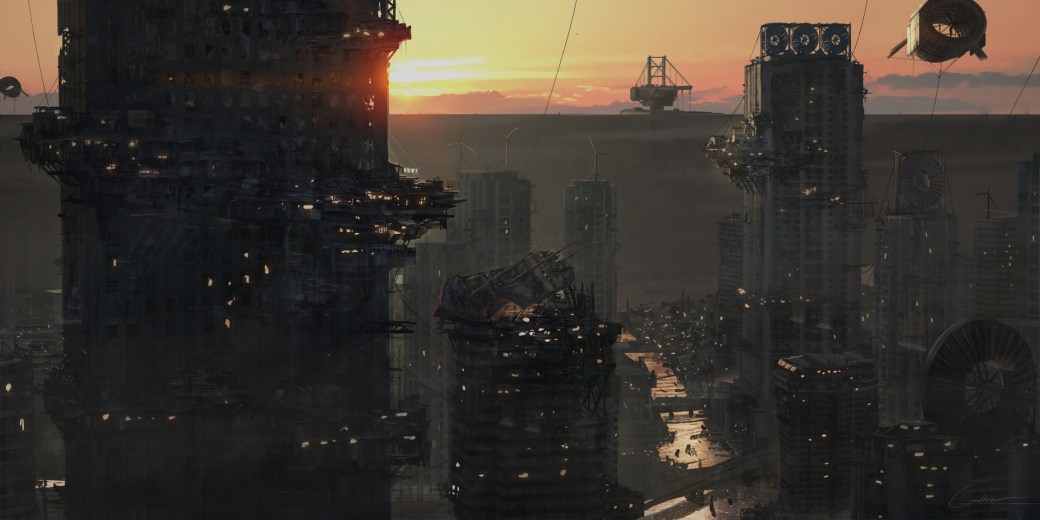
Illustration by Ionuț Bănuță
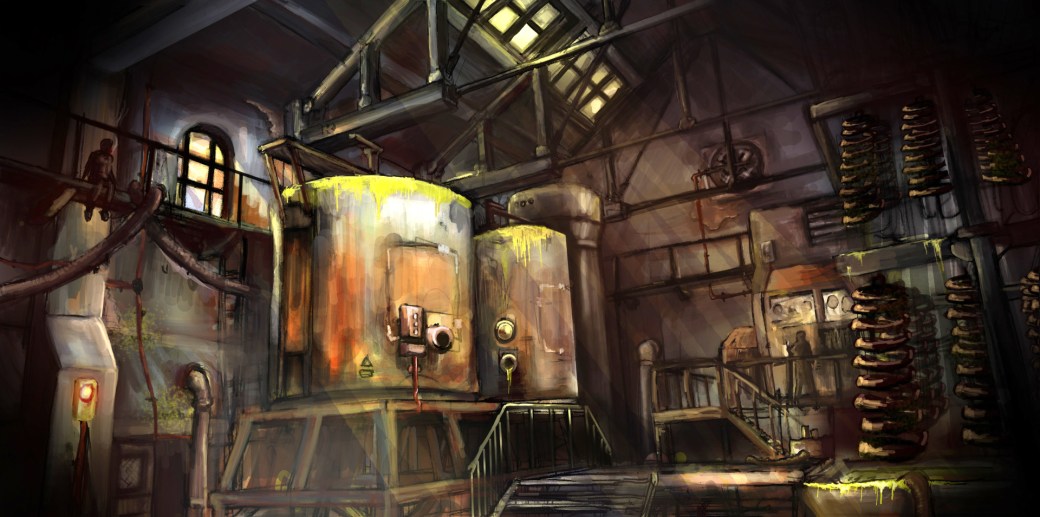
Sarah reached the summit, panting for breath, and grinned at her prize. She’d just caught the sun trembling over the horizon, before it dipped out of sight and left a glowing sky under pewter clouds. She glanced behind her, where the towers of Icaria blazed like embers catching fire. Struck by their beauty, Sarah admired their smooth, clean surfaces. When she looked back toward the path, the sanguine images burnt into her eyes.
Which way should she go? The deer path she’d followed now diverged into two smaller ones. She shifted her mind to veemeld with her AI, DEX. Which way should we go, DEX?
Her AI answered in her head: Sarah, shouldn’t you be returning inside? It’s dangerous to stay out this long. Statistics are now against you for getting caught—
Just a few more minutes, DEX. How about to the right?

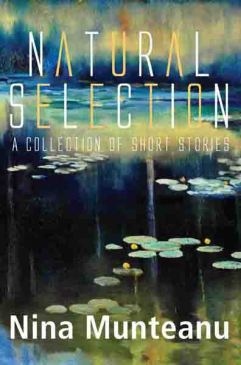
“Natural Selection” tells the story of Sarah, an unruly veemeld who can speak to the machine world that runs Icaria. Given her immunity to the environmental disease ravaging the enclosed city, Sarah—at least her genetic material—is sought after by the Ecologist government in a bid to maintain order and reshape humanity through “selection”; but Sarah fraternizes with unsavory friends and her truant behaviour poses a great risk to her freedom and survival.
 “Natural Selection” first appeared in 2013 in my short story collection of the same name by Pixl Press. The story returns in Issue #1 of Eagle Literary Magazine, Pan European Science Fiction & Fantasy Collection (Summer 2019; Nexus Project) edited by Mugur Cornilă and featuring the impeccable artwork of Ionuț Bănuță.
In the 2013 Pixl Press short story collection my introduction describes the theme that embraces the nine stories in the collection:
How do we define today a concept that Darwin originated 200 years ago in a time without bio-engineering, nano-technology, chaos theory, quantum mechanics and the internet? We live in an exciting era of complicated change, where science based on the limitation of traditional biology is being challenged and stretched by pioneers into areas some scientists might call heretical. Endosymbiosis, synchronicity, autopoiesis & self-organization, morphic resonance, Gaia Hypothesis and planetary intelligence. Some of these might more aptly be described through the language of meta physics. But should they be so confined? It comes down to language and how we communicate.
Is it possible for an individual to evolve in one’s own lifetime? To become more than oneself? And then pass on one’s personal experience irrevocably to others—laterally and vertically?
On the vertical argument, the French naturalist Jean-Baptiste Lamark developed a theory of biological evolution in the early 19th century considered so ridiculous that it spawned a name: Lamarkism. His notion — that acquired traits could be passed along to offspring—was ridiculed for over two hundred years. Until he was proven right. Evolutionary biologists at Tel Aviv University in Israel showed that all sorts of cellular machinery — an intelligence of sorts — played a vital role in how DNA sequences were inherited. When researchers inserted foreign genes into the DNA of lab animals and plants, something strange happened. The genes worked at first; then they were “silenced”. Generation after generation. The host cells had tagged the foreign genes with an “off switch” that made the gene inoperable. And although the new gene was passed onto offspring, so was the off switch. It was Larmarkism in action: the parent’s experience had influenced its offspring’s inheritance. Evolutionists gave it a new name. They called it soft inheritance [also known as epigenetics].
Illustration by Ionuț Bănuță
Horizontal gene transfer (HGT) is the movement of genetic material between organisms other than by vertical transmission of DNA from parent to offspring. Jumping genes (transposons) are mobile segments of DNA that may pick up a gene and insert it into a plastic or chromosome. Pieces of DNA move from one locus to another of a genome without parent-to-offspring by horizontal transposon transfer (HTT). Epigenetics describes the modification of DNA expression through DNA methylation—and results in “Lamarkism.” Transgenerational epigenetic inheritance is the new black: genes and environments interacting. Where do we end and where does environment begin? Researchers have proven the significant role of environmental feedback through HGT in evolutionary success. Researchers showed that up to 20% of a bdelloid rotifer’s genome is made of foreign genes that they stole from the environment through horizontal gene transfer and gene conversion. This compares to about 1% for humans and a fifth for tardigrades.
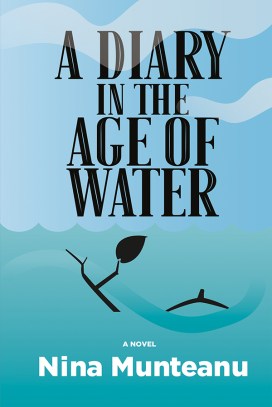
—excerpts from “A Diary in the Age of Water” due for release in 2020 by Inanna Publications.

 As for passing on one’s experience and acquisitions to others laterally, education in all its facets surely provides a mechanism. This may run the gamut from wise mentors, spiritual leaders, storytellers, courageous heroes to our kindergarten teacher. Who’s to say that these too are not irrevocable? This relies, after all, on how we learn, and how we “remember”.
Evolution is choice. It is a choice made on many levels, from the intuitive mind to the intelligent cell. The controversial British botanist Rupert Sheldrake proposed that the physical forms we take on are not necessarily contained inside our genes, which he suggested may be more analogous to transistors tuned in to the proper frequencies for translating invisible information into visible form. According to Sheldrake’s morphic resonance, any form always looks alike because it ‘remembers’ its form through repetition and that any new form having similar characteristics will use the pattern of already existing forms as a guide for its appearance. This notion is conveyed through other phenomena, which truly lie in the realm of metaphysics and lateral evolution; concepts like bilocation, psychic telegraphing, telekinesis and manifestation. Critics condemn these as crazy notions. Or is it just limited vision again? Our future cannot be foretold in our present language; that has yet to be written. Shakespeare knew this…
There are more things in heaven and earth , Horatio, than are dreamt of in your philosophy—Shakespeare
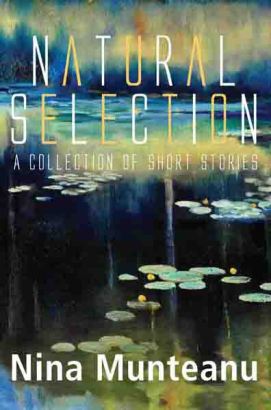 Each story in the “Natural Selection” short story collection reflects a perspective on what it means to be human and evolve in a world that is rapidly changing technologically and environmentally. How we relate to our rapidly changing fractal environments—from our cells to our ecosystems, our planet and ultimately our universe—will determine our path and our destiny and those we touch in some way.
My friend Heidi Lampietti, publisher of Redjack Books, expressed it eloquently, “For me, one of the most important themes that came through in the collection is the incredible difficulty, complexity, and importance of making conscious choices — and how these choices, large and small, impact our survival, either as individual humans, as a community, a species, or a world.”
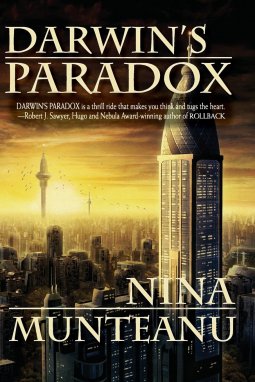
 “Natural Selection” also features the sprawling semi-underground AI-run city of Icaria (a post-industrial plague Toronto) that was first introduced in my novel “Darwin’s Paradox” and is a character itself. Sarah is a “gifted” and troubled misfit—not in sync with the rest of the population. Yet her choices—and how she is treated by her community— will influence an entire species and world.
You can purchase Issue #1 of Eagle Literary Magazine in the United Kingdom, United States, Spain, Italy, France, Germany, Japan, Canada.
 Nina is a Canadian scientist and novelist. She worked for 25 years as an environmental consultant in the field of aquatic ecology and limnology, publishing papers and technical reports on water quality and impacts to aquatic systems. Nina has written over a dozen eco-fiction, science fiction and fantasy novels. An award-winning short story writer, and essayist, Nina currently lives in Toronto where she teaches writing at the University of Toronto and George Brown College. Her non-fiction book “Water Is…”—a scientific study and personal journey as limnologist, mother, teacher and environmentalist—was picked by Margaret Atwood in the New York Times as 2016 ‘The Year in Reading’. Nina’s most recent novel “A Diary in the Age of Water”— about four generations of women and their relationship to water in a rapidly changing world—will be released in 2020 by Inanna Publications.
 Paolo Bacigalupi’s 2015 biopunk science fiction novel The Windup Girl occurs in 23rd century post-food crash Thailand after global warming has raised sea levels and carbon fuel sources are depleted. Thailand struggles under the tyrannical boot of ag-biotech multinational giants such as AgriGen, RedStar, and PurCal—predatory companies who have fomented corruption and political strife through their plague-inducing and sterilizing genetic manipulations. The story’s premise could very easily be described as “what would happen if Monsanto got its way?”
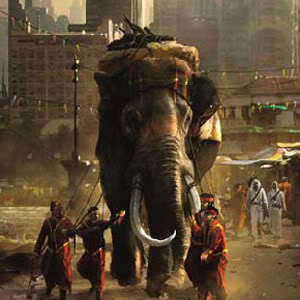 It’s difficult not to always be aware of those high walls and the pressure of the water beyond. Difficult not to think of the City of Divine Beings as anything other than a disaster waiting to happen. But the Thais are stubborn and have fought to keep their revered city of Krung Thep from drowning. With coal-burning pumps and leveed labor and a deep faith in the visionary leadership of their Chakri Dynasty they have so far kept at bay that thing which has swallowed New York and Rangoon, Mumbai and New Orleans.





 In Summer of 2016, I attended a talk given by Maude Barlow on water justice. The radical talk was based on her recent book “Boiling Point”, a comprehensive exploration of Canada’s water crisis—a crisis that most Canadians weren’t—and still aren’t—aware. Canada is steward to a fifth of the world’s fresh water, after all. It is a water-rich country. Of the dozen largest inland lakes in the world, Canada holds eight of them. So, why water crisis? Well, Maude explains. And you should read “Boiling Point.” It will open your eyes to the politics of water and how multinational corporations—like Nestlé—are already grabbing and funneling water away from Canadians and into the global profit machine.
 I named the story “
 The story first appeared in 2015 in
  After the success of this short story, I realized that I needed to tell the larger story—how did the world—Canada—get to where Hilda was? Her mysterious mother, the limnologist Lynna who was taken away by the RCMP in 2063, clamored for more attention. I remembered that four-year old girl and her mother in the gallery at Maude Barlow’s talk on water politics. And I thought of my characters: young Lynna and her mother Una. How does a daughter of an activist mother behave and think? How best to express her voice?
 I had earlier written a short story that was a mix of correspondence (emails) and third person narrative (“The Arc of Time” in
  I had a lot of material; I had already been researching water issues and climate change in my activism as a science reporter. I had recently published
  Like water itself, A Diary in the Age of Water expresses through many vessels and in many perspectives, spanning hundreds of years—and four generations of women—with a context wider than human life. Through its characters, A Diary in the Age of Water explores the big question of humanity’s deadlock with planetary wellness and whether one is worth saving at the expense of the other. One of the characters asks Lynna the hard question: “If you had the chance to save the planet [stop the mass extinctions, deforestation and pollution ravaging the planet], but it was at the expense of humanity, would you do it?”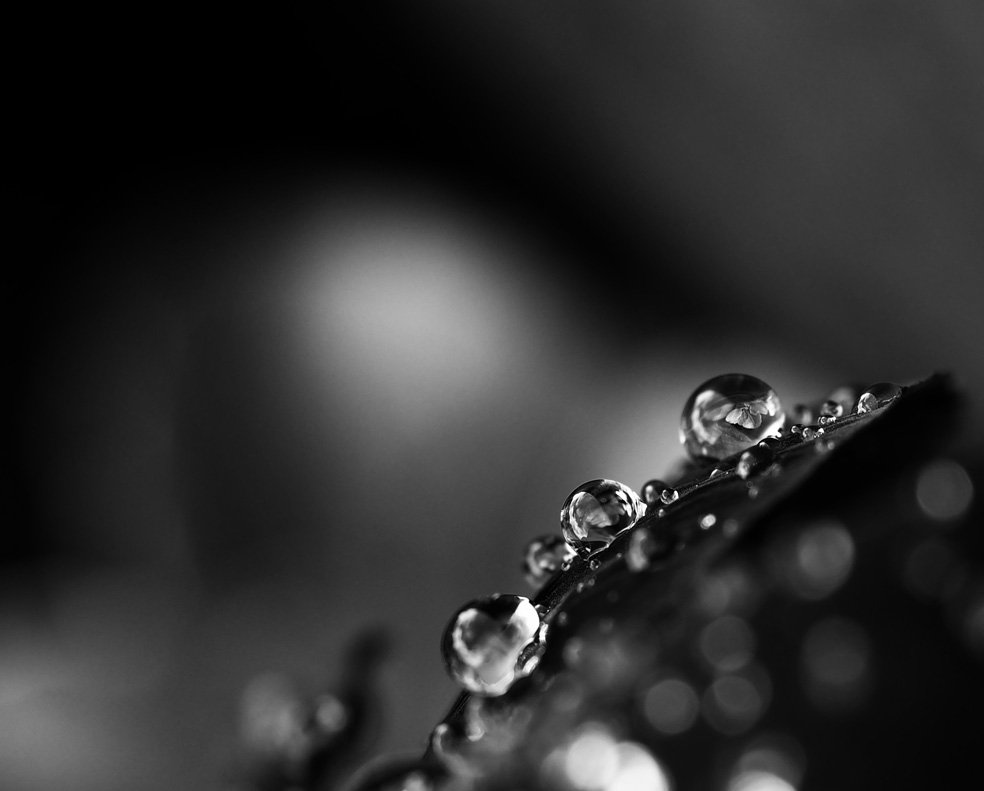
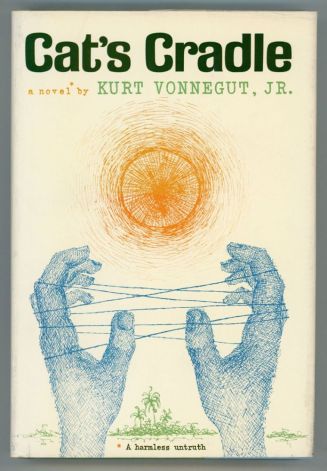 In 1963 science fiction writer Kurt Vonnegut used the fictionalized concept of ice-IX—a crystalline polymorph of ice that remains stable at room temperature—in his novel Cat’s Cradle. Ice-nine was a form of water so stable that it never melted and would crystallize all water it touched. It was the Ebola of water…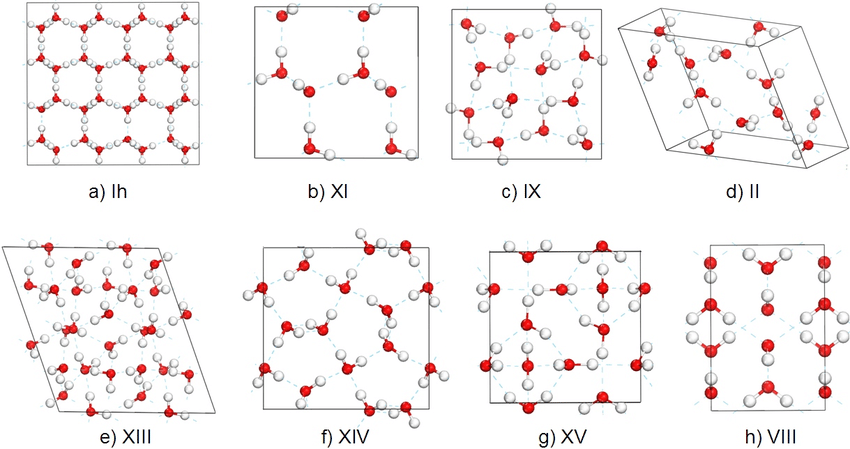


 The media spread a panic about polywater-contaminated oceans of “jelly” aka Vonnegut’s novel Cat’s Cradle.

 They came because they were afraid or unafraid, happy or unhappy. There was a reason for each man. They were coming to find something or get something, or to dig up something or bury something. They were coming with small dreams or big dreams or none at all.
 In Emmi Itäranta’s Memory of Water—about a post-climate change world of sea level rise—water is a powerful archetype, whose secret tea masters guard with their lives:
 Water, with its life-giving properties and other strange qualities, has been used as a powerful metaphor and archetype in many stories: from vast oceans of mystery, beauty and danger—to the relentless flow of an inland stream. Margaret Atwood’s The Penelopiad is just one example:
 This article is an excerpt from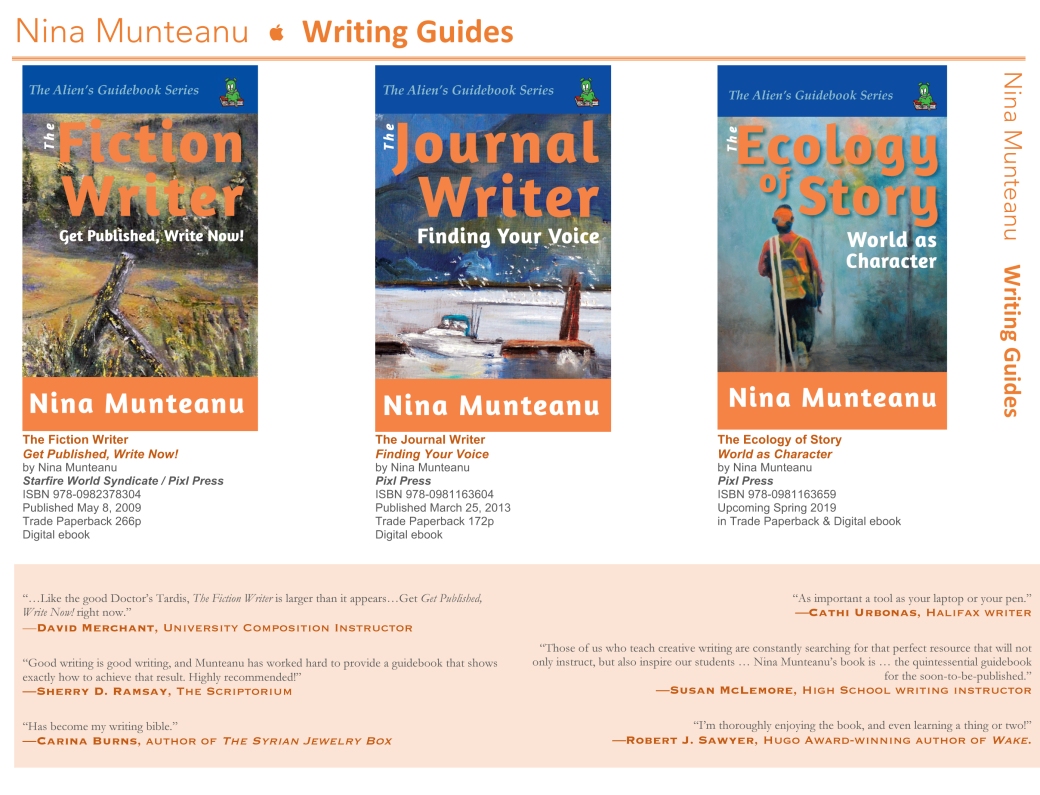
 In an article I’d written some time ago on my blog
 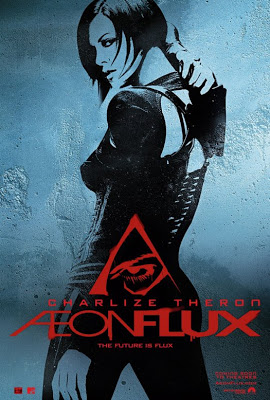 Today’s Christ-like hero suffers for the sins of the world and prepares himself (often struggling with this considerably) to deliver salvation, usually through fighting or violent confrontation and often with an incredible arsenal of weapons. I was swiftly brought to mind of the many action shoot-em up films whose tortured hero redeems him(her)self through some selfless, though violent action (e.g., Omega Man, V for Vendetta, Ultra Violet, Aeon Flux — all sci-fi movies, by the way, and ones I enjoyed immensely. And what about all those superhero movies, like Spiderman, X-Men, Green Lantern, etc. These films represent one version of Joseph Campbell’s “Hero’s Journey”, where the original hero leaves his ‘ordinary world’ wherein he/she has some major flaw to overcome (like apathy, greed, distrust, anger, fear of strawberries…etc.) to answer ‘the call’ to be the hero he/she was destined to become. This is a very familiar trope. Erik suggested that Western culture’s “concept of Redemption has invariably separated from the Grace that created it.” Jesus the Teacher had somehow fallen to the wayside to make room for Christ the Redeemer. According to Erik: “Jesus the Teacher said to ‘turn the other cheek’, but today’s Redeemers kick ass. Jesus the Teacher told us that what is done in love is blessed, but today’s Redeemers have more personal and interior motivations.” The two have simply become two different people, says Erik and “the latter is a superstar” compared to the former.” He ends his post with these compelling thoughts:
 If you still don’t get what Erik and I are talking about, go watch the poignant film Pay It Forward and then contrast its main character with the one in Ultra Violet or The Matrix.
 While I agree with Erik on the apparent separation of Christ figure in today’s popular fiction, perhaps there is another way to look at these tales that resolves this apparent dichotomy to some degree. My suggestion is to view them more as allegories with traits and values represented in several characters woven together in a complete and whole tapestry. To do so is to include the secondary character as being equally important. Let’s take Matrix, for instance. In fact, Neo isn’t the only Jesus-figure. His two female opposites (Trinity/Oracle) demonstrate Christ-like traits that embody grace, mercy, love (the holy spirit) and wisdom. Okay, so Trinity kicks major ass too; but her character also provides the chief motivation for our main ‘kick-ass’ hero through her selfless love and humility.


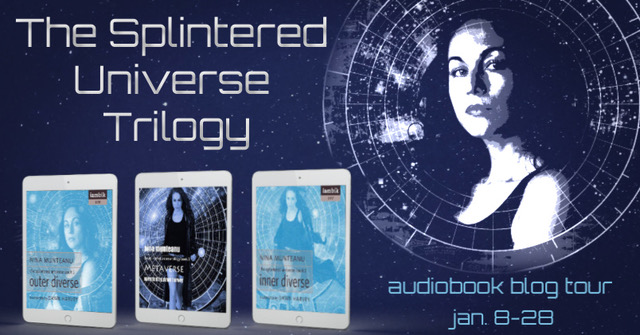
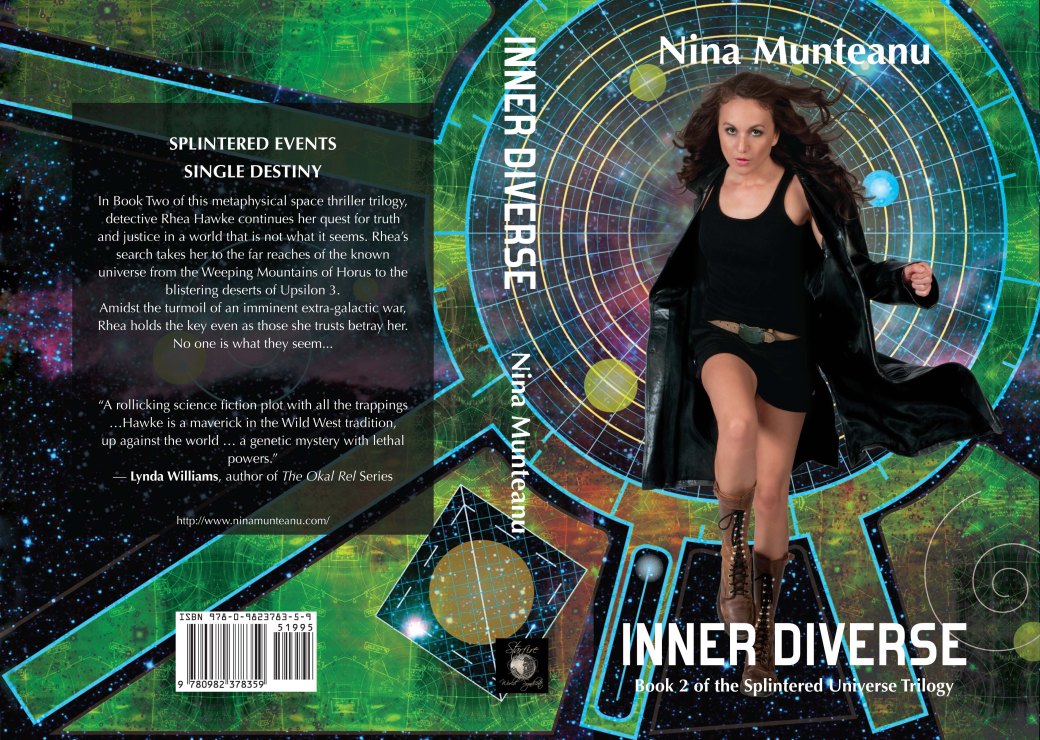

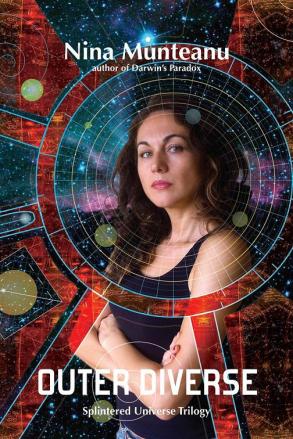
 Outer Diverse is the first book of the Splintered Universe Trilogy, set in and around the Milky Way Galaxy. The first book begins as Galactic Guardian Rhea Hawke intestigates the massacre of an entire religious sect, catapulting her into a treacherous storm of politics, conspiracy and self-discovery. Her quest for justice leads her into the heart of a universal struggle and toward an unbearable truth she’s hidden from herself since she murdered an innocent man.

 Creative destruction … sounds like a paradox, doesn’t it? Nature—and God— is full of contradiction and paradox. There is so much that we do not understand (at least on the surface)… and apparent contradiction proves that to me. In
  In my speculative fiction novel,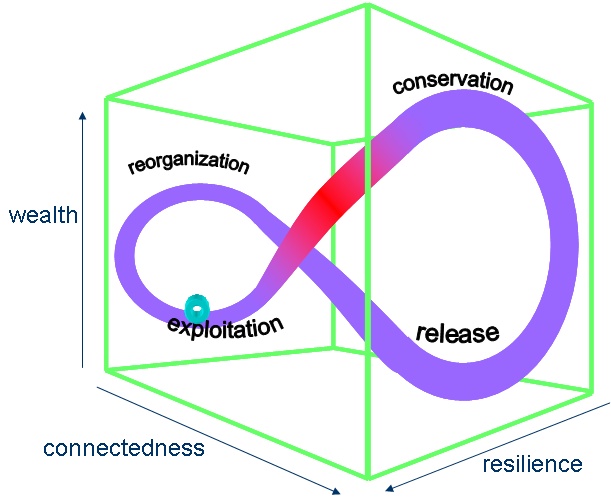
 Suppression of spruce budworm populations in eastern Canada using insecticides partially protected the forest but left it vulnerable to an outbreak covering an area and of an intensity never experienced before;
 In my book

