Beating Today’s “S” Curve (or Why an Editor is Every Writer’s Best Friend)

the beach-2013

Man on the beach, Toronto (photo by Nina Munteanu)

I’m an ecologist and a limnologist. I conducted environmental research and investigations for over twenty years; as senior scientist I investigated and reported on environmental phenomena to both the scientific and lay community. I find it interesting when something I’ve been reporting on for over twenty years finally makes it to the mainstream; like it’s news. So, when a New York City cab driver turned to me recently and lectured me on global warming like it was the new thing, I nodded slowly in mute agreement and didn’t tell him that I’d been studying it for over twenty years.

There’s an interesting phenomenon going on out there right now. Maybe you noticed it. Economists are all abuzz with it. Social scientists and psychologists are gossiping to each other about it: the exponential growth curve—or “S” curve—that we are currently in the middle of is fueling our food shortages, oil shortages, inflation, economic collapses, tensions between countries, population rise, and everything else to do with humanity on this planet.

S curve

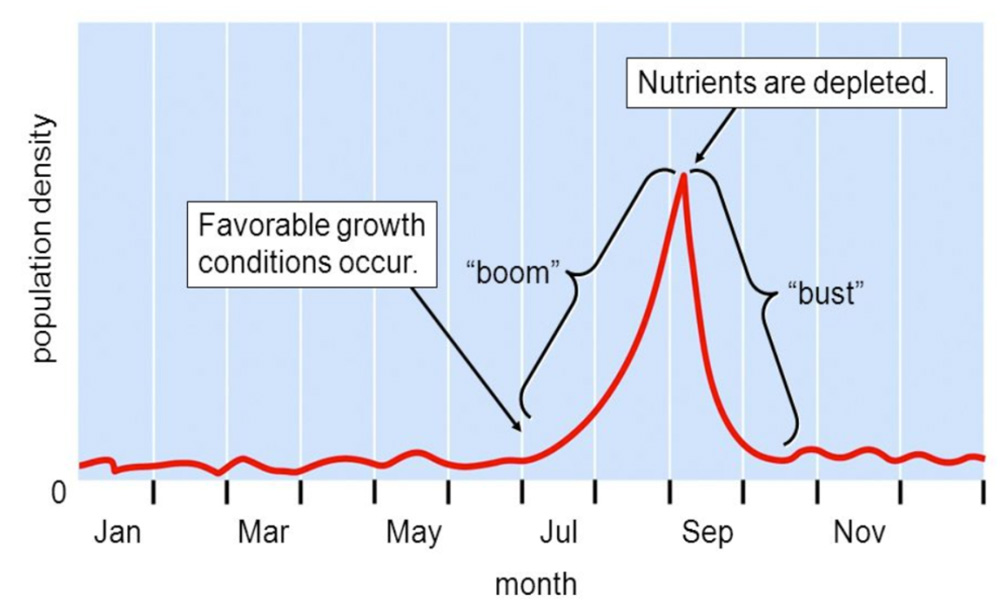
Ecologists have long been studying this biological—and sociological—phenomenon in nature. The typical “S” curve has three parts to it: 1) the beginning, where it lags and shows a slow rate of rise; 2) then the steep rise of exponential growth; and 3) the eventual leveling off when the supposed carrying capacity is reached. There is another kind of curve, the “boom and bust” curve that instead of plateauing at the end toward sustainability, plummets just as steeply back to or below levels in the first step (that’s a whole other topic and blog post).

BoomBustGraph

The ‘boom-bust’ population cycle. Note the resemblance of the human population growth curve in Fig. 1 to the exponential ‘boom’ phase of the cycle. The world community can still choose to influence the speed and depth of the coming bust phase. Source of graph: Biology: Life on Earth, 8th ed., Fig. 26-3. (taken from The Tyee Magazine)

Why am I talking to you about this? Because it has everything to do with your writing. The publishing industry is currently experiencing its own version of the “S” curve and the “boom and bust” curve (for traditional publishing houses, I’m afraid). We are currently witnessing a growing influx and legitimization of self-publishing and Indie publishing. Thanks to a few crazy success stories and the new affordable paradigm of POD digital publishing, publishing hasn’t been easier. This new model heralds an unprecedented renaissance of self-expression and creativity, shared worldwide.

Consider these statistics: in 2009, Publishers Weekly reported over 750,000 self-published/micro publisher titles, over twice the number of traditionally published titles that same year. The figures (I couldn’t find more recent ones—let me know when you do) are assuredly much higher today. From 8,000 to 11,000 new publishers currently enter the field every year and most of them are self-publishers or small indie publishers. Seventy-eight percent of titles brought out come from a small press or self-publisher. Fifty-two percent of books sold are not sold in bookstores; they are merchandised through mail order, online, in discount or warehouse stores, through book clubs, and nontraditional retail outlets.

As a function of this renaissance of self-expression, the number of books hitting the market is rising at an exponential rate. There’s that “S” curve again. Check out Amazon: they have over seven million books on their virtual shelves. And now, thanks to their new policies, it’s growing exponentially. What does this mean for you?

It used to be that the screening for excellence in books occurred behind the closed doors of prestigious publishing houses; if a book wasn’t deemed worthy of the standards or didn’t fit the style of that publishing house (with its own reputation), it was not accepted and didn’t see the light of day. The rejected and dejected author often went back to the drawing board to improve their artistic work before resubmitting. That was then. Now, works are published without prejudice in the open for the world to see.  It used to be that writers complained of their writing being “sterilized” by the editor of the publishing house, which was only conforming to the house style and their vision of what is salable. Now, authors wishing for creative control simply self-publish.

Self-publishing has created a kind of anarchy in publishing; anything can be published (so long as you have the money). And while this is incredibly liberating for authors around the world, it is also incredibly dangerous. Here’s why: once you publish your material, it will be out there for the world to see forever. That means FOREVER. It becomes a permanent record of your standards of excellence and taste; essentially a statement of who and what you are. You had better be proud of it then and for a very long time. It is no longer the responsibility of the publisher to determine publishing worthiness; the onus is on YOU, the writer. What will you do to ensure the best possible work for your readers?

Competition will become ever more fierce AFTER you’ve invested and AFTER you’ve published; your book will then compete with a world of self-published authors in addition to those published by traditional publishing houses. In order for your book to rise above the massive competition, it’s more important than ever to produce a concise, clean, clear, polished-to-perfection manuscript that you are proud of. With an awesome cover (see my July 2013 post on book jacket covers).

Self-published author Dave Bricker shares that, “Poor editing is the number one complaint heard from critics of the independent publishing industry. Though the standards of mainstream publishing houses are overrated, I’ve read many indie books where spotty spelling and lack of polished prose present barriers to enjoyable reading. Unedited authors sully the publishing waters for the rest of us.” He’s talking about poor packaging. Poor manuscript presentation can seriously undermine an author’s chances of being taken seriously. A good reputation is earned slowly and tenuously; a poor reputation, like the plummeting “boom and bust” curve can end a writer’s career.

“Why not produce a pressure-tested product that has already withstood the scrutiny of a professional critic whose standards are much higher than those of the average reader?” says Bricker. “As with your typesetting and cover design, the best route to success is to engage a professional.” He is right. If you want to be treated as a professional (by readers) then be professional and engage professionals.

What do professional editors do?

heather-short-story-Page_1

Sample of story editing (with permission of author)

Editors aren’t proofreaders, although this might be one task in several they can provide. Most editors are what are variously called structural or story editors; someone capable of commenting on the work objectively and with competence. Is the story believable? Are there unexpected temporal jumps or unexplained threads in the narrative? Are the article’s assertions properly supported? As with affairs of the heart, it’s easy to understand the problems of others and difficult to acknowledge what we’re too close to see—and if you think writing isn’t an affair of the heart, you haven’t started your book yet. Get that third-party perspective.

No one likes to be edited. Of course you feel protective of your material; that is natural. You’ve put so much into it; how could a stranger possibly understand and treat it with the respect it deserves?

Professional editors are accustomed to interacting with authors in a mutually respectful relationship. Editors have to make a living, and they would quickly find themselves unable to if they treated their clients in any way other than professionally and respectfully. A professional editor is more likely to serve your true interests in getting published than a friend or relative who likely knows little of “storytelling”, plot and character; and may side-wind you with inappropriate advice or platitudes. In fact, showing your work to a friend or relative may be the reason why you have decided that you “don’t like to be edited.” Before I was published, I once showed my work in progress to my husband, who was too close to the subject and its writer; he made very unprofessional remarks that were more damaging than helpful. If you go with a professional you will not have this problem.

Throughout history, authors have relied on their editors to be their sounding boards, to represent the eye and ear of the reader, and to help bring a viewpoint that can’t arise spontaneously in the author’s head. In the past, the traditional publishing house has typically provided this service. Many publishing houses now expect the writer to provide a manuscript that has already been edited. Indie and self-publishing scenarios leave the onus on the writer.

Two of the most common excuses that authors find for not engaging a professional editor include cost and venue.

I can’t afford an Editor: can you afford to put out a book for the world to see that is full of mistakes? If you aren’t serious enough about writing and publishing to invest in your career with good guidebooks, courses & workshops and coaching and editing, then perhaps you should rethink your career. No one would think twice about training and getting professional help to become a successful nurse or pilot. Writing is the same. For it to be successful, it requires investment. Especially if you are considering self-publishing.

Self-published author Dick Margulis reminds us that “Self-publishing is a business – the publishing business – and if you hope to succeed in it, you have to manage it like a business. You have to look at your skill set and decide which of the many tasks associated with publishing you are suited to doing yourself and which can be done more effectively and more economically by others. Your time has value, and you have to decide how it is best spent.”

It’s Just an E-Book: a common mistake, particularly with digitally published books, is the notion that because you haven’t invested in typesetting or printing you can fix the mistakes later. That is a poor notion. And a risky approach that smacks of laziness. Letting your readers find your mistakes for you is a poor show and will hurt your reputation as a writer (no matter who publishes you). With books, no matter what format, the first impression is critical. For some readers that may be the first and last time they meet you and your work. Make sure it counts. Word gets around pretty fast on the Internet. Ensure that it’s a good word.

So, now you want to find a good editor… Where can you find them?

Here, in Canada, most good professional editors belong to the professional editors association known as EAC (Editors Association of Canada). You can browse the association website for an editor’s profile with information.

Many good writers also freelance edit, like myself (see what I do as writing coach and editor under the Coaching/Teaching tab here). My Major Services Page describes my services in more detail.

the beach-2013i

Boardwalk on The Beach, Toronto (photo by Nina Munteanu)

Hiring an author/editor is a good fit, particularly if the author/editor writes in your genre interest.  SF Canada, a professional writers organization in the science fiction and fantasy genres, is another good place to find author/editors in that genre.

I know and have worked with several excellent editors, including non-fiction, technical editors, fiction editors, etc. You can drop me a line if you are looking.

And, while you’re looking, check out my interview with Jennifer D. Foster of Boldface (Toronto Branch of EAC blog) On the Author / Editor Relationship and what makes a good editor.


Nina Munteanu is an ecologist and internationally published author of award-nominated speculative novels, short stories and non-fiction. She is co-editor of Europa SF and currently teaches writing courses at George Brown College and the University of Toronto. Visit www.ninamunteanu.ca for the latest on her books.

The Indie Book Tidal Wave …What Does it Mean for Bookstores, Publishers & Writers?

botanical beach tidal pools copy

Tidal pools, Botany Bay, BC (photo by Nina Munteanu)

We’re all agreed: the publishing industry is in upheaval. A kind of change that ripples in fractal waves throughout its entire expression and existence. A kind of change that creates a great paradigm shift. A kind of change that heralds in a new world.

Of course, much of this is due to a change in perspective: how we approach things and direct ourselves; the models and designs we use as our vehicles of expression; and how we apply them in relationship with our world.

So, what I’m saying is that the publishing industry is changing because we are changing, not the other way around. We are directing that change. We are directing that change every bit as much as we are directing changes in other important elements in our lives.

You don’t need to embrace new-age spirituality, mystery school teachings, non-locality particle physics, quantum entanglement or “intuitive science” to appreciate that our entire existence as a species, a living community and a planet is in upheaval.

You know what I mean. Wherever you look, it’s crazy (put your own examples here; there are too many). And in the midst of all this, miracles happen. What does this have to do with indie publishing? Well, nothing…well, everything. Let me tell you a little about me and my books…

paris-04

Bouquinistes along River Seine, Paris (photo by Nina Munteanu)

I’ve had over a dozen books published with small to mid-sized presses as well as my own small press, recently started up. My first book made it to the shelves of big bookstores like Chapters/Indigo and Barnes & Noble. I’ve seen my books on the shelves of small indie bookstores in Toronto and Vancouver areas and in a Paris bookstore. I’ve also had the heartache of seeing too many of my books returned from these same large bookstores, no longer “stocking” a particular title (although they kept it in their online catalogue). Over the years my thinking as both writer and publisher has shifted: mostly to do with what bookstores are doing; who to publish with; and what formats to provide my readership (e.g., e-book, print, audiobook).

Along with that shift, my definition of “big thinking” also changed. The possibilities are endless in a world where an unknown individual can achieve worldwide fame through a single twitter feed.

In the first in a new series of articles devoted to “Killing the Top Ten Sacred Cows of Indie Publishing” Dean Wesley Smith recently shared some interesting facts and opinions about how changes in book production along with reader technology has affected the industry.

He dispels the notion of many indies that their books can’t easily get into bookstores. Distribution channels for books, particularly indie books, are more than arcane. Smith advises indie publishers and writers that, “If you are already doing some things correctly, there’s a big chance your books are already in bookstores and you don’t even know it.” He’s right. I’ve published several of my books with indie publishers and both my publisher and I were unaware of some of the bookstores my books ended up in all over the world! I only found out because I frequently google my books for just such surprises. “And of course, in this new world,” Smith continues, “you don’t even know what it means ‘to have your books in a bookstore’.”

What does it mean to have your book in a bookstore? It’s in the store if it is sitting on one of the shelves, says Smith. It’s also “in the store” if it’s in the bookstore’s online database, which is where most indie books end up—virtually there, if not actually there. Considering how most people shop for books these days, and the inadequacy of shelf exposure (only so many books can appear on the shelf with their covers visible as opposed to their less compelling spine), this is not necessarily a lesser thing for the indie writer and publisher.

Botanical Beach beachcombing

Investigating the tidal pools of Botanical Beach, BC (photo by Nina Munteanu)

Ten years ago, says Smith, most bookstores used to order “to stock”. Today smart bookstores order “to replace”. This is now possible because of quicker distribution, and swift and high quality digital POD methods of book production (including neat quirky things like Espresso Book Machines or EBMs). Along with this new policy comes another potential change in the transaction model—that of returns. Smith reports that the returns system is “drifting away and is now under 18% standard and still dropping.” They were more like 50% not too long ago, which can be potentially disastrous to a small publishing company or self-published author with small revenue-base. Smith reports that many large publishers are even offering no-return choices, usually with higher discounts, which bookstores are accepting. This is great news again to small and new publishers, who cannot afford the uncertain and sudden cost of returns. Of course, returns will likely remain as a reassurance to booksellers when picking up unknown titles. In fact, this practice was adopted to permit booksellers to carry more new and untried authors without putting them at grave risk.

Smith confirms something I envisioned a while ago: that bookstores won’t disappear; instead they will morph into a more diverse set of small and specialized stores, stocking less numbers of any one book (one or two copies tops) for show with the ability to order new books and get them quickly. This is the new model Smith talks about: stock low and order to replace. So, “instead of ten of the last Patterson, there are two of the Patterson and eight other author’s books in the same shelf space,” says Smith.

So, for indie book publishers and writers, and bookstores who carry them, we are seeing the rise of a new paradigm; new trade arrangements that include consignment agreements, small but diverse inventory, and huge opportunity.

botanical beach sandstone cliffbeach

Sandstone beach in Botanical Beach near Port Renfrew, BC (photo by Nina Munteanu)


Nina Munteanu is an ecologist and internationally published author of award-nominated speculative novels, short stories and non-fiction. She is co-editor of Europa SF and currently teaches writing courses at George Brown College and the University of Toronto. Visit www.ninamunteanu.ca for the latest on her books.

Finding the Courage to Write…and Publish

jungfrau04

Jungfrau, Switzerland (photo by Nina Munteanu)

“Being creative means giving yourself the freedom to be who you really are,” says Nancy Slonim Aronie, author of Writing from the Heart: Tapping the Power of Your Inner Voice.

But that takes courage. A lot of courage.

Ralph Keyes, author of The Courage to Write, admits that “what makes writing so scary is the perpetual vulnerability of the writer. It’s not the writing as such that provokes our fear so much as other people’s reaction to our writing.” In fact, adds Keyes, “the most common disguise is fear of them, their opinion of us, when it’s actually our own opinion of ourselves that we’re worried about.” Keyes suggests that ultimately “mastering techniques [of style and craft] will do far less to improve writing than finding the will, the nerve, the guts to put on paper what you really want to say.”

zermatt-alps01-close

Peaks at Zermatt, Switzerland (Nina Munteanu)

In fall of 2013, I attended a writers’ conference, where I launched my short story collection about evolution “Natural Selection” along with several other authors launching their works. I recall one admitting to feeling terror when her first short story—whose main antagonist was based on her mother—was accepted by a magazine. Her first thought was: OMG! What have I done?

Says Keyes: “Any writing lays the writer open to judgment about the quality of his work and thought. The closer he gets to painful personal truths, the more fear mounts—not just about what he might reveal, but about what he might discover should he venture too deeply inside. But to write well, that’s exactly where we must venture.”

So, why do it, then? Why bother? Is it worth it to make yourself totally vulnerable to the possible censure and ridicule of your peers, friends, and relatives? To serve up your heart on a platter to just have them “drag it around” as Stevie Nicks would say…

zermatt-hut01

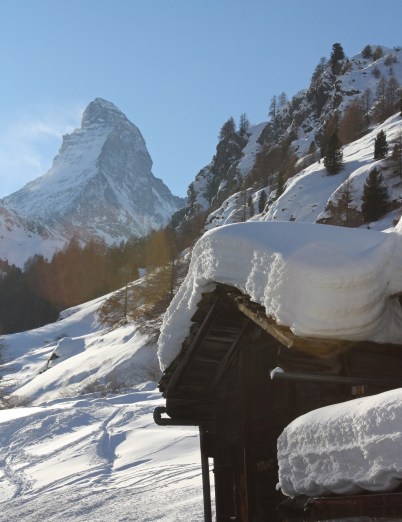
Ski hut in Zermatt, view of Matterhorn, Switzerland (photo by Nina Munteanu)

Welcome to the threshold of your career as a writer. This is where many aspiring writers stop: in abject fear, not of failure but of “success”. The only difference between those that don’t and those that do, is that the former come to terms with their fears, in fact learn to use them as a barometer to what is important.

How do you get past the fear of being “exposed”, past the anticipated disappointment of peers, past the terror of success?

The answer is passion.

If you are writing about something you are passionate about, you will find the courage to see it through. Says Keyes, “the best writing flows less from acquired skill than conviction expressed with courage. By this I don’t mean moral convictions, but the sense that what one has to say is something others need to know.”

This is ultimately what drives a writer to not just write but to publish: the need to share one’s story, over and over again. To prevail, persist, and ultimately succeed, a writer must have conviction and believe in his or her writing. You must believe that you have something to say that others want to read. Ask yourself why you are a writer. Your answer might surprise you.

Every writer is an artist. And every artist is a cultural reporter, whose business is to report the truth and sometimes hold a culture accountable.

“Real art,” says Susan Sontag, “makes us nervous.”

The first step is to acknowledge your passion and own it. Flaunt it, even. Find your conviction, define what matters and explore it to the fullest. You will find that such an acknowledgement will give you the strength and fortitude to persist and persevere, particularly in the face of those fears. Use the fears to guide you into that journey of personal truths. Frederick Busch described it this way: “You go to dark places … to steal the trophy and get out.”

Every writer, like his or her protagonist, is on a Hero’s Journey (see my other posts here). Like the Hero of our epic, we too must acknowledge the call, pass the threshold guardian, maneuver the abyss and face the beast before we can return “home” with our prize.

“If you long to excel as a writer,” says Finke, “treasure the passion that is unique within yourself. Take the irreplaceable elements of your life and craft them into your own personal contribution to the world.” And worry about the rest later.

Are you afraid to write, to answer the call of your creative urges? Good. If you’re not scared, you’re not writing.—Ralph Keyes

zermatt-matterhorn02

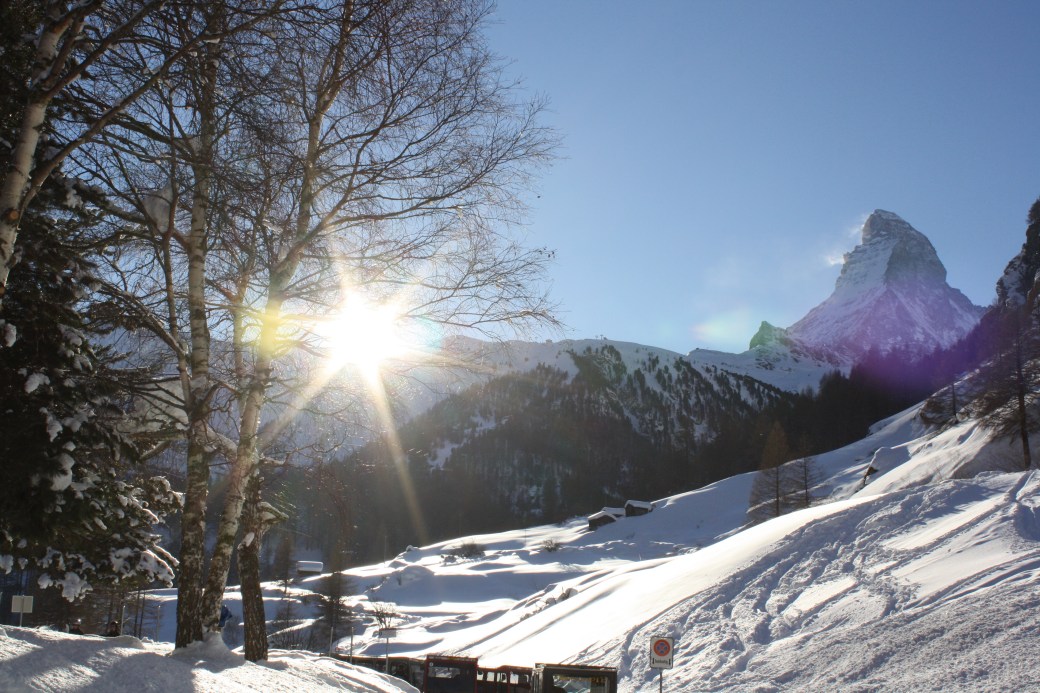
View of Matterhorn from Zermatt, Switzerland (photo by Nina Munteanu)

Nina Munteanu is an ecologist and internationally published author of award-nominated speculative novels, short stories and non-fiction. She is co-editor of Europa SF and currently teaches writing courses at George Brown College and the University of Toronto. Visit www.ninamunteanu.ca for the latest on her books.