The Art & Science of World Building: The Tools You Need to Make a Believable World

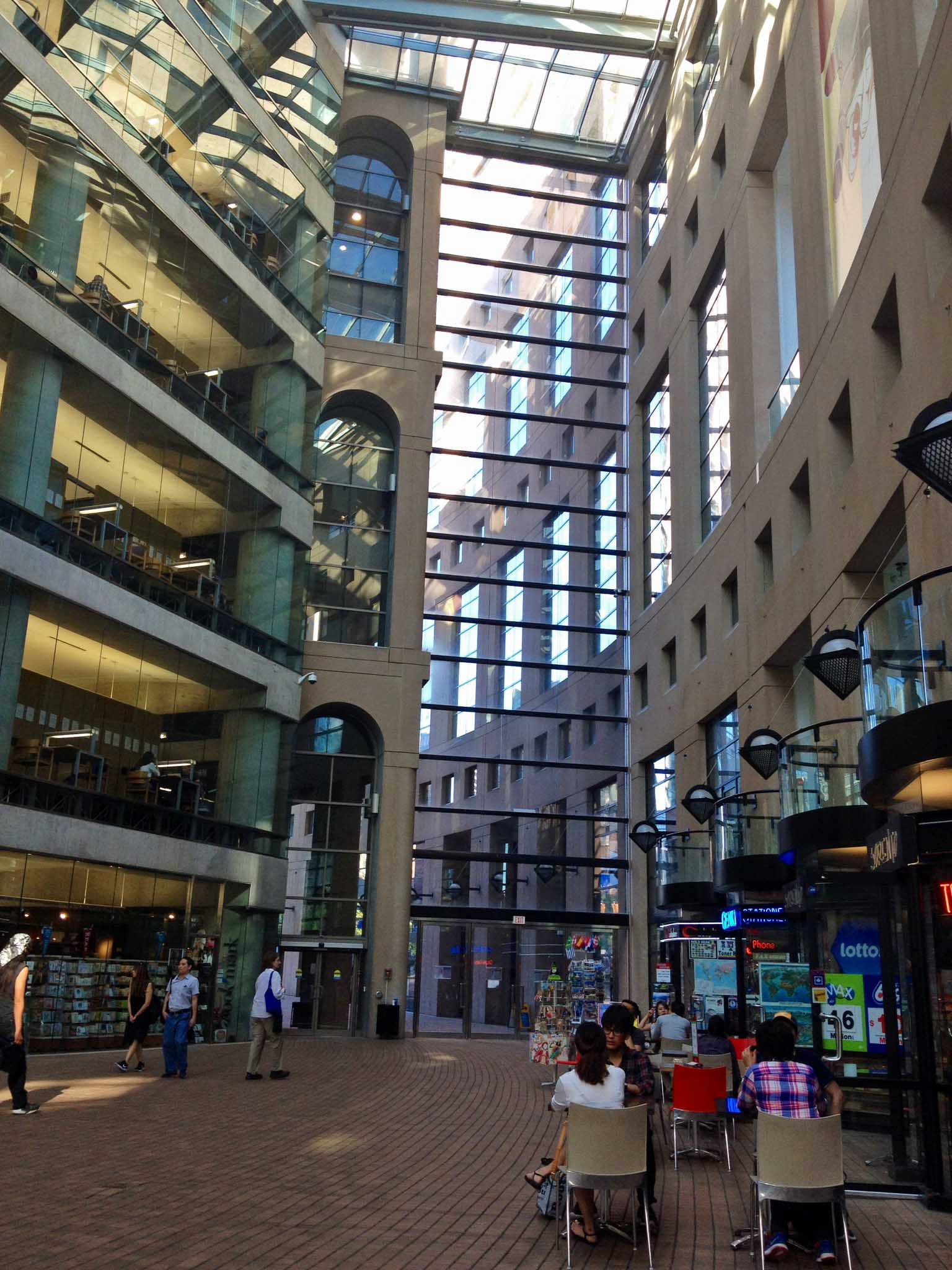
Vanc Library-Atrium2
Vancouver Central Library (photo by Nina Munteanu)

Most fantasy and science fiction novels require major world-building, which involves both real and imagined aspects.

World building spices real physical and social facts with the author’s imagination to create a civilization, a political structure, a culture and zeitgeist as backdrop and influence to story. Writers define world-building as the process of constructing an imaginary world, usually associated with a fictional universe.

Popularized at science fiction workshops during the 1970s, the term describes the development of an imaginary setting that is coherent and possesses a history, geography, and ecology that is rich, unique and resonates with the story’s premise.

The list below provides things to consider when first building your world:

  • The world (e.g., on Earth or not)
  • Physical and historical features (climate, geography, resources)
  • Magic and magicians (e.g., rules of magic, technology)
  • Peoples and customs (e.g., language, ethics and values, religion)
  • Social organization & structure (e.g., government, politics, conflicts, fashion, entertainment)
  • Commerce & trade (e.g., industry, transportation, communication)

Science vs. Art In World-Building

EcologyOfStory

If a novel is a historical fantasy set on Earth, science is not a critical part of world building; if a novel is set on some probable planet in the Andromeda Galaxy, then science becomes an integral part. But, in both cases the writer needs to do his or her research. In the case of the historical fantasy, world building will be based on accurate historical information, even if an alternate history is being written.

Part of the reason people read historical epics is to learn more about that particular civilization and time period. The reader trusts that the writer will give him or her the facts on the world, while taking liberties on the remaining story elements. Similarly, a science fiction reader opens the first book in Larry Niven’s Ringworld series with the expectation of learning about a made-up world based on accurate principals of science.

A lot of science fiction is written by nonscientists. That said, many science fiction readers— particularly those who enjoy hard science fiction—expect your science to be not only plausible but somewhat proven and your premise to be based upon sound scientific principle. They expect your research to be impeccable because they are expecting to learn something—in science.

World-Builder’s Disease? 
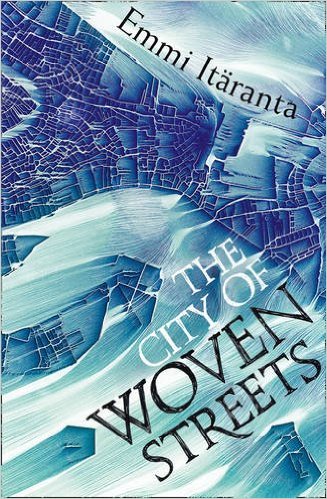
City of Woven Streets

“Fantasy writers have a penchant for working up histories of imaginary empires that can run for hundreds of pages, full of maps and chronologies and genealogical trees a yard long,” says Ansen Dibell, author of The Elements of Writing Fiction: Plot. “Similarly, science fiction writers can fall in love with their hardware and want to show it off,” he adds and describes this as a kind of narrative cancer, a “World-Builder’s disease.”

Most writers who world-build keep extensive files of background information on their worlds. In some cases, these can be published as companions to the main book series (e.g., J.K. Rowling’s books on Quiddich or magical creatures, which most certainly came from her extensive background notes). Dibell’s point is that this information doesn’t belong in the main book, where it can interfere with the process of storytelling. It becomes “info dump”, which is often very static, lacks drama, and proves ultimately boring.

Tying Your World to Theme and Plot
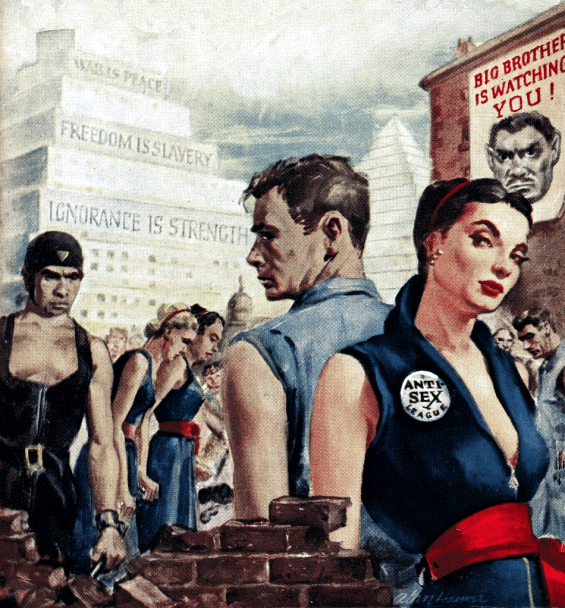
NineteenEightyFour
“Nineteen Eighty Four” by George Orwell

What’s important to remember is that the world you build is part of the story. It isn’t just a lot of “interesting” detail. The world you build, like a character in your story, plays a role in defining and supporting its theme. The major qualities of your world are, therefore, best derived for plot and thematic reasons—which come from “story”. The rest—the details—are things you can find in books, websites or get from experts in your local university, etc.  Don’t let science intimidate you; but ensure that you get it right by using your resources and verifying your information with an expert. Use your local libraries, universities, colleges, and online resources. Interview scientists, technical people and other writers. That’s part of being a writer too.

Nina Munteanu is an ecologist and internationally published author of award-nominated speculative novels, short stories and non-fiction. She is co-editor of Europa SF and currently teaches writing courses at George Brown College and the University of Toronto. Visit www.ninamunteanu.ca for the latest on her books.

Canadian Tales of Climate Change–Launch in Toronto, May 7th 2017

Launching CLI-FI: Canadian Tales of Climate Change (anthology)

CliFiAnthologyLaunch-Exile
Sunday, May 7, at the SUPERMARKET Restaurant & Bar
268 Augusta Avenue (Kennsington Market) 3:00–5:30

Toronto, ON

Readings start at 3:30

Featuring:

Geoffrey W. Cole, Rati Mehrotra

Peter Timmerman, Leslie Goodreid, Halli Villegas

John Oughton, Nina Munteanu, Lynn Hutchinson-Lee

“With the world facing the greatest global crisis of all time – climate change – personal and political indifference has wrought a series of unfolding complications that are altering our planet, and threatening our very existence. These stories of Climate Fiction (Cli-Fi) feature perspectives by culturally diverse Canadian writers of short fiction, science fiction, fantasy, and futurist works, and transcend traditional doomsday stories by inspiring us to overcome the bleak forecasted results of our current indifference.”
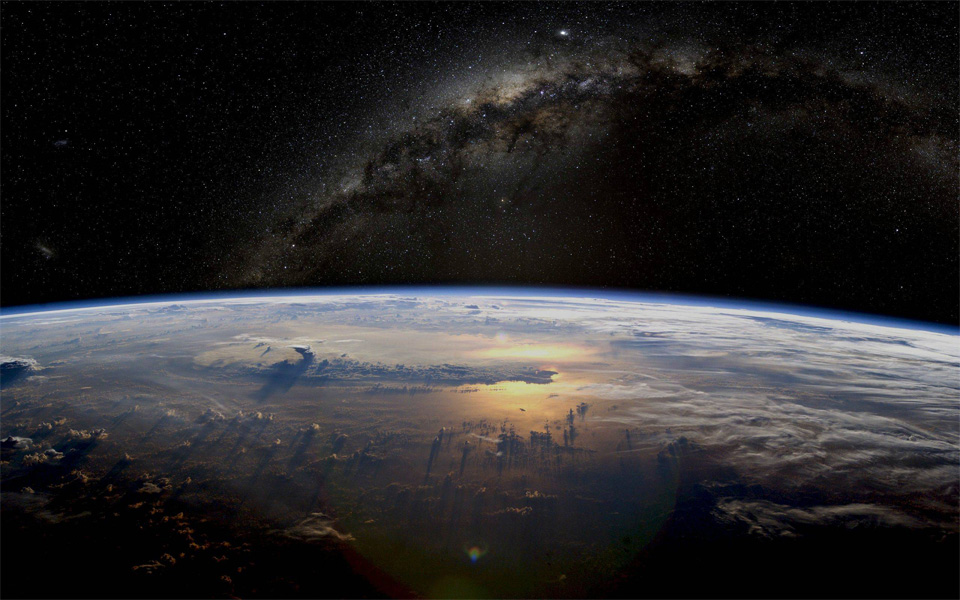
amazing-picture-of-earth-as-seen-from-space

The Power of Myth in Storytelling

If a being from another world were to ask you, ‘How can I learn what it’s like to be human?’ a good answer would be, ‘Study mythology.’ ”—Joseph Campbell

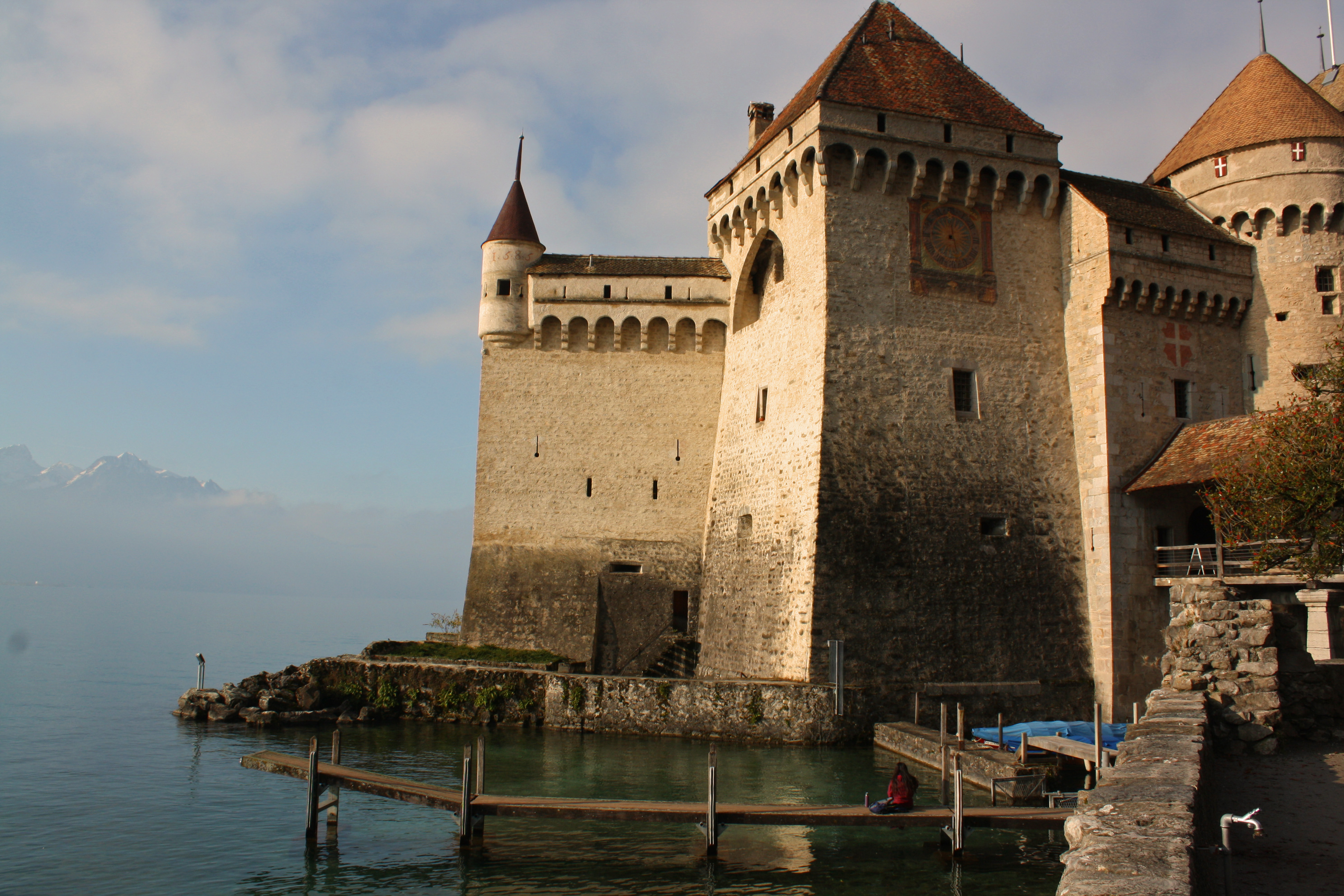
chillon-dungeon-storeroom

the dungeons of Chillon Castle, Switzerland (photo by Nina Munteanu)

For Joseph Campbell, perhaps our era’s most influential student of mythology, myths express our basic need to explain, celebrate and immortalize the essence of life. Given that life itself has no “meaning”—it simply is—it is our stories (pulled from the ethers of our “muse”) that give meaning to life. We tell stories about how the world began, our struggles to survive, our victories against greed and evil. Each culture clothes its stories according to the place and time and associated issues. And each defines its heroes and villains accordingly. At the root of all these lies a universal and timeless human experience; where metaphor and imagery of myth transcend culture, time and place to encompass all of humanity and our striving journey toward truth, grace and peace. This is why all myth, from Plutarch’s Theseus & the Minotaur to George Lucus’s Star Wars, resonates with us, regardless of whether it was created yesterday or thousands of years ago.

Greek, Roman, Norse, African and Asian myths all address fundamental questions about our humanity: the fall of Icarus, Jason and the Argonauts, Romulus and Remus, Oedipus, Medusa, Perseus, King Arthur, Oedisseus, Vassilisa, Siegfried and the Nibelungenleid, Beowulf and Grendel, Jonah and the whale, Isolde and Tristan, Persephone and the underworld, Orpheus and Eurydice, Hercules, Osiris, Gilgamesh … the list is endless.

Artist as Mythmaker … and Shaman

“There’s an old romantic idea in German, das Volk dichtet, which says that the ideas and poetry of the traditional cultures come out of the folk. They do not,” says Campbell. “They come out of an elite experience, the experience of people particularly gifted, whose ears are open to the song of the universe.” He is referring to the artist, who speaks to “the folk”, who answer and create an interaction. “The first impulse in the shaping of the folk tradition,” says Campbell, “comes from above, not from below.” He is referring to the divine source, the muse, the gift of “seeing” bestowed on those willing to open themselves to it. According to Campbell, “The function of the artist is the mythologization of the environment and the world.” Like the shamans of ancient times, the storyteller— whether painter, writer, actor, singer or filmmaker— interprets the divinity in nature for others. We interpret unseen things for a tangible world.

Artists are the mythmakers — the shamans — of today. The ancient shaman’s authority came from individual psychological experience, not a social ordination (like a priest). A shaman’s powers were symbolized through his own familiars and the deities of his own personal experience. His personal truth. As artists we wholly participate in our “landscape”. Like Dante, we journey to the depths of our world, become its deepest truths to emerge later and share.

The Mythic Hero’s Journey in Story

In my opinion, the best stories follow the mythic hero’s journey plot structure. This is because “hero’s journey” stories are transformative for not only the protagonist (our hero) but for readers following along and identifying with her. Stories that pull a reader through the three steps of a human being’s evolution (separation, transformation, and return) promise great depth and fulfillment. This is what great storytelling does: they take us on a transformative journey of learning, through challenges of change to realize a prevailing victory. Writers are the shamans of today and the heroes we write about are our agents of change. Through our artistic drama of metaphor, we make commentary on the world and what it means to be human.

The hero archetype is particularly interesting, given that he or she is essentially us as we journey to prevail over the obstacles of our fears, weaknesses, and disappointments. Every hero is on a quest or mission (whether she realizes it or not). The true mark of a hero is in her willingness to sacrifice something of value, perhaps even her life, on behalf of an ideal or a group and ultimately for the greater good. A hero is the ultimate altruist. And she is you, the artist.

The Power of Mythologist

chateau-chillon-lake-geneva

Chateau Chillon, Lake Geneva, Switzerland (photo by Nina Munteanu)

I recall a discussion with a young friend some time ago about her knowledge of writers vs. book titles (she knew few names of writers, even those whose works she had enjoyed, but could happily recite book titles). I realized that she chose her books based on their cover and the promised story within—with no attention placed on the author and no intention of following the author’s other works.

“When you find an author who really grabs you, read everything s/he has done,” says Campbell. “Don’t say, ‘oh, I want to know what so-and-so did’—and don’t read the best-seller list. Just read what this one author has given you … the world opens up in a way that is consistent with a certain point of view … When you go from one author to another, you may be able to tell us the date when each wrote such and such —but he hasn’t said anything to you.”

Nina Munteanu is an ecologist and internationally published author of award-nominated speculative novels, short stories and non-fiction. She is co-editor of Europa SF and currently teaches writing courses at George Brown College and the University of Toronto. Visit www.ninamunteanu.ca for the latest on her books.

Make Your Opening Count

Beech-leaves-trunk LR

Beach leaves (photo by Nina Munteanu)

When I began marketing my short stories and novels, I was often puzzled by the request to just see the first page of my work. “I only need to see the first page to know whether your book is good or ready to publish,” they would say. I was aghast. How presumptuous! Surely, that wasn’t enough! Surely they were just putting me off and not really interested in the first place! That couldn’t be enough…

I was wrong. It often is.

Years later—and currently a seasoned writer of over a dozen published books, short stories, and a writing teacher & coach—I can tell you that it is generally true. The opening page is usually enough for me to know whether the author is professional, knows their ending, writes a compelling and directed story, and whether the story is ready to be published. Does that sound pompous of me?

If you think so, then read no further. If you’re not sure, read on and I hope to convince you that your opening is more than likely the most important part of your novel or short story. That doesn’t mean that you should inordinately concentrate on polishing it over and over and over at the expense of the rest of your work. That won’t work either; this is because a good opening relies on a good story. Think of it as the introduction to the core issue of your story. Think of it as a long title. If you don’t know where your story is going or what it is about, then your opening will undeniably reflect this.

A good opening resonates with the theme of your story; a great opening creatively illuminates that theme with intrigue.

My post entitled “How to Hook Your Reader and Deliver” discusses the three-step model of hooking the reader in an opening and how to maintain their interest throughout the length of your story. You can read it there, so I won’t go into it here (e.g., the steps are 1) arouse; 2) delay; and 3) reward). What I wanted to talk about here is more about what goes into a first page of any piece of writing to make it a great opening.

“A novel is like a car,” says Sol Stein (Sol Stein on Writing). “It won’t go anywhere until you start the engine.” Take a look at the opening of your WIP and see if its engine is running.

Openings should:

  • Begin with something happening to a major character
  • Arouse the Reader’s interest (with intrigue)
    • Introduce conflict
    • Threaten a likeable character
    • Reveal an unusual character or situation
  • Begin with a “scene” (action; “showing”) not a “sequel” (reflection; “telling”)

“Start your book with a scene where something is happening, and action takes place; show the drama not the reaction to it,” says Elizabeth Lyon (The Sell Your Novel Toolkit). Start in the middle, not the beginning of your story. Dwight Swain (Techniques of the Selling Writer) tells us that scenes and their corresponding sequels form an integral part of a story’s larger plot movement. And to apply sound story-building, this dynamic relationship must be first understood. You “show” in a scene, which plays out the goal, conflict and inevitable disaster of the protagonist; sequels, in turn, often “tell” of the protagonist’s reaction, dilemma, and decision (which propels the character on to the next scene). Yet, time and again, I read openings that are actually sequels (leading to action; but not action themselves). They may languish and even entertain with clever intellectual description, but they do not scintillate with intrigue or direction. It is a little like reading the review of a movie before watching it for yourself (one of the reasons why I never consult a review before I watch a movie—because I want to live it with the characters first hand, or at least give myself the chance to).

Another way of thinking of the scene / sequel dynamic is to see them as cause and effect or action and reaction. An opening in action is more likely to grip the reader in its visceral intrigue and promise of the story’s direction than an intellectualization of an event that happened off stage.

The table below provides a few suggestions on what to include and what not to in an opening page.

Good Openings Don’t… Instead They…
Contain lots of back story Integrate back story in with scene as needed in the appropriate place
Contain lots of exposition, setting, character description, etc. Reveal place and character detail with action as needed
Start with reflection, explanations – particularly about something “off-stage” in time or space Start with action / conflict / turmoil / discovery – start mid-stride with intrigue, then reveal after…
Start with a dream or waking up or other ordinary / mundane scenario heading towards the action or conflict Start with something HAPPENING … Start with a SCENE in “the NOW” as it is happening
TELL SHOW


Beech-leaves-trunk LRThere are many ways to manage the fine balance of exposition, telling and showing and
other challenges in grabbing and keeping the reader’s interest; all very pertinent to your opening page. But that’s another article.


Nina Munteanu is an ecologist and internationally published author of award-nominated speculative novels, short stories and non-fiction. She is co-editor of Europa SF and currently teaches writing courses at George Brown College and the University of Toronto. Visit www.ninamunteanu.ca for the latest on her books.
Atwood, Water & The New York Times

“Water Is…” leads Atwood’s Pick for Books of 2016

Microsoft Word - Atwoods Picks-NYTimes.docx

ny-times-theyearinreaingEvery year, near Christmas, The New York Times puts out “The Year in Reading” in which they ask notably avid readers—who also happen to be poets, musicians, diplomats, filmmakers, novelists, actors and artists—to share the books that accompanied them through that year.

For the 2016 Year In Reading, The Times asked a prestigious and diverse readership, including Junot Diaz, Paul Simon, Carl Bernstein, Kareem Abdul-Jabbar, Elizabeth Banks, Samantha Power, Philip Pullman, Ann Pratchett, Orhan Pamuk, Drew Gilpin Fause, Anne Tyler, and many others to share their books of 2016.

There was also Booker Prize-winning and celebrated Canadian author and poet Margaret Atwood.

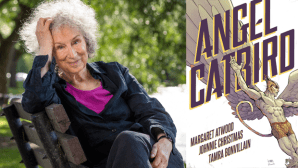
atwood-margaretMargaret Atwood is a winner of the Arthur C. Clarke Award and the Prince of Asturias Award for Literature as well as the Booker Prize (several times) and the Governor General’s Award. Animals and the environment feature in many of her books, particularly her speculative fiction, which reflects a strong view on environmental issues.atwood-angel-catbird

Several of her latest works (e.g., Oryx and Crake, Year of the Flood, MaddAddam) are eco-fiction and may be considered climate fiction. Atwood and partner, novelist Graeme Gibson, are the joint honorary presidents of the Rare Bird Club within BirdLife International. Atwood’s highly popular graphic novel Angel Catbird reflects an environmental sensitivity to the balance between wildlife and humans and their pets in urban settings.

Atwood’s choice for 2016 books came from her active, astute and compassionate environmentalism. Suggesting that many of her ‘The Year in Reading’ co-readers would emphasize fiction, history and politics, Atwood chose her books “instead from a still-neglected sector. All hail, elemental spirits! You’re making a comeback!”

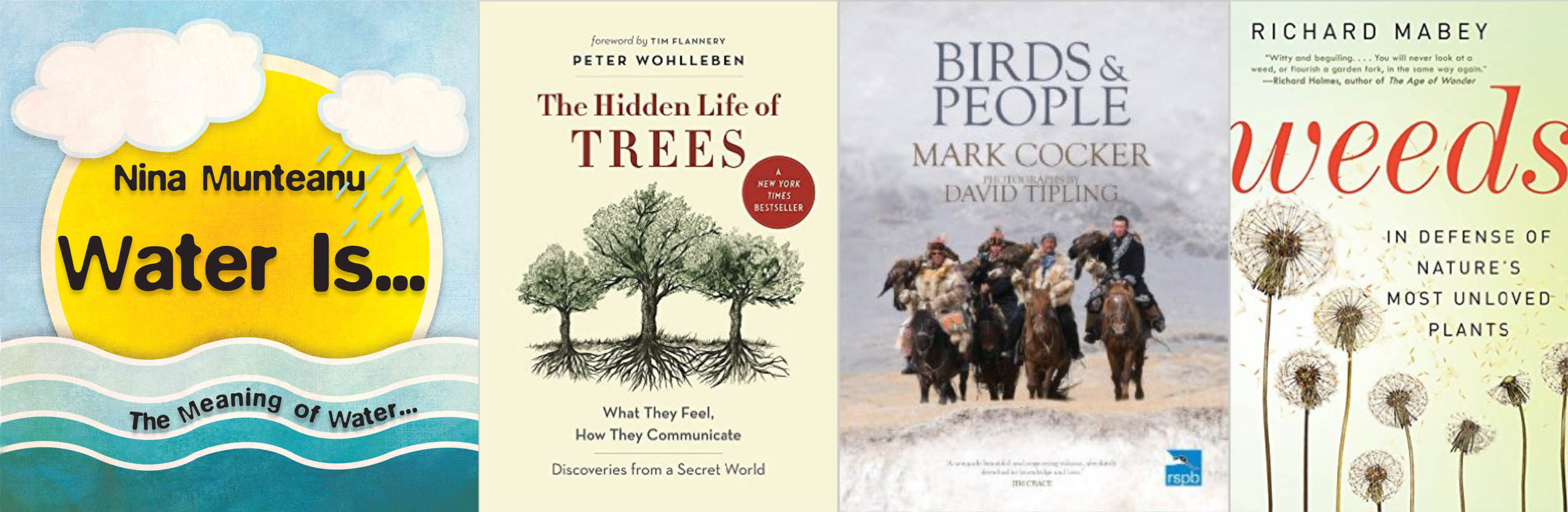
Here are the four books Atwood recommends and why:

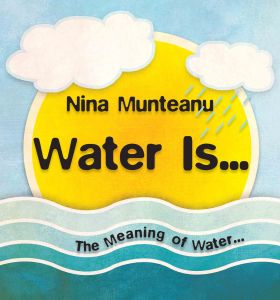
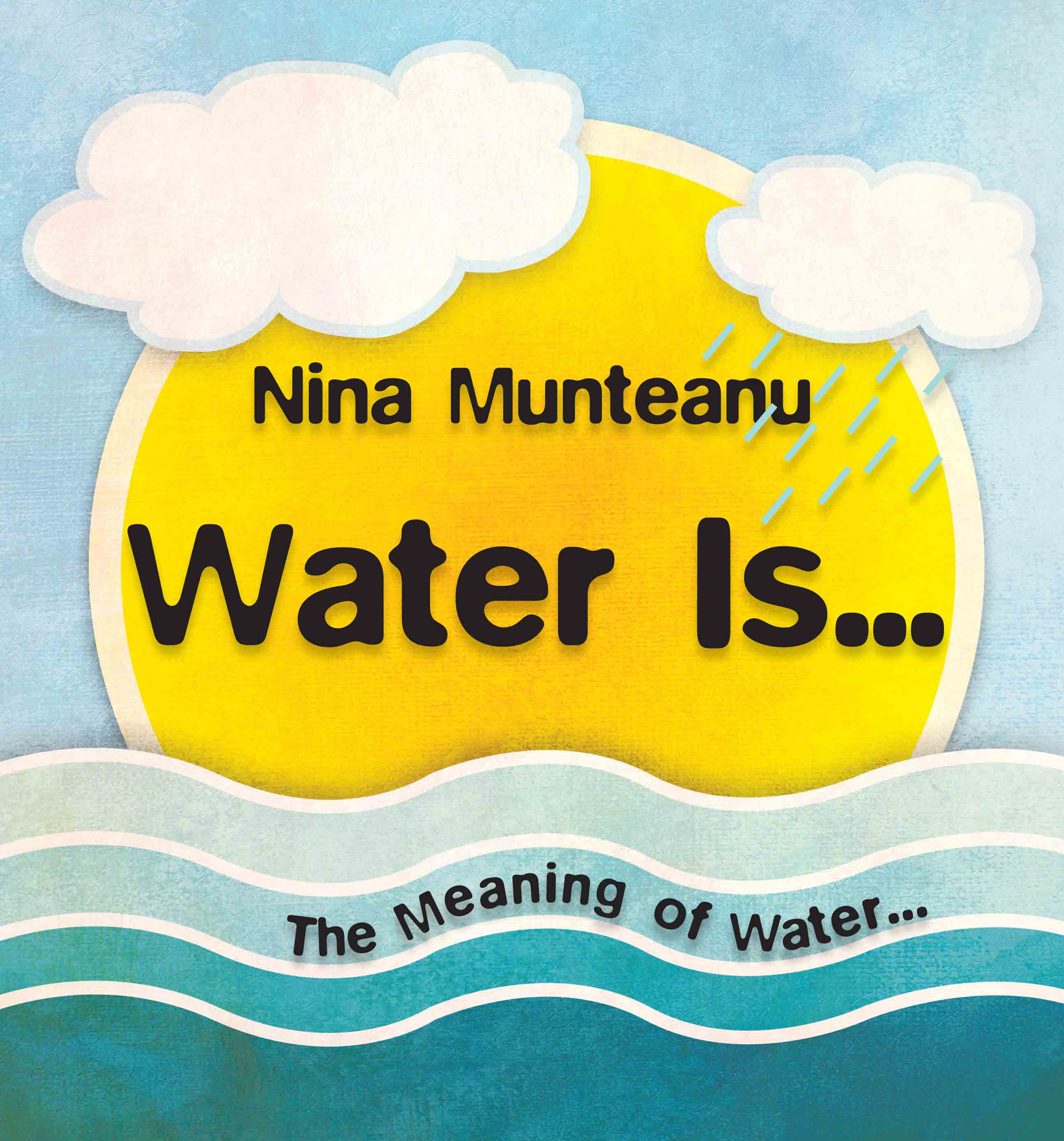
  1. water-is-cover-webWater Is…: The Meaning of Water” (Pixl Press) by Nina Munteanu. “We can’t live without it, so maybe we should start respecting it,” says Atwood. “This beautifully designed book by a limnologist looks at water from 12 different angles, from life and motion and vibration to beauty and prayer.” Water is emerging as one of the single most important resources of Planet Earth. Already scarce in some areas, it has become the new “gold” to be bought, traded, coveted, cherished, hoarded, and abused worldwide. It is currently traded on the Stock Exchange…Some see water as a commodity like everything else that can make them rich; they will claim it as their own to sell. Yet it cannot be “owned” or kept. Ultimately, water will do its job to energize you and give you life then quietly take its leave; it will move mountains particle by particle with a subtle hand; it will paint the world with beauty then return to its fold and rejoice; it will travel through the universe and transform worlds; it will transcend time and space to share and teach.
  1. hiddenlifeoftreesThe Hidden Life of Trees: What They Feel, How They Communicate—Discoveries From a Secret World” (Greystone Books) by Peter Wohlleben. In The Hidden Life of Trees, Peter Wohlleben shares his deep love of woods and forests and explains the amazing processes of life, death, and regeneration he has observed in the woodland and the amazing scientific processes behind the wonders of which we are blissfully unaware. Much like human families, tree parents live together with their children, communicate with them, and support them as they grow, sharing nutrients with those who are sick or struggling and creating an ecosystem that mitigates the impact of extremes of heat and cold for the whole group. As a result of such interactions, trees in a family or community are protected and can live to be very old. In contrast, solitary trees, like street kids, have a tough time of it and in most cases die much earlier than those in a group. Drawing on groundbreaking new discoveries, Wohlleben presents the science behind the secret and previously unknown life of trees and their communication abilities; he describes how these discoveries have informed his own practices in the forest around him. As he says, a happy forest is a healthy forest, and he believes that eco-friendly practices not only are economically sustainable but also benefit the health of our planet and the mental and physical health of all who live on Earth.
  1. weeds-mabeyWeeds: In Defense of Nature’s Most Unloved Plants” (Ecco) by Richard Mabey. “They’re better for you than you think,” says Atwood. “They hold the waste spaces of the world in place, and you can eat some of them.” Ever since the first human settlements 10,000 years ago, weeds have dogged our footsteps. They are there as the punishment of ‘thorns and thistles’ in Genesis and , two millennia later, as a symbol of Flanders Field. They are civilisations’ familiars, invading farmland and building-sites, war-zones and flower-beds across the globe. Yet living so intimately with us, they have been a blessing too. Weeds were the first crops, the first medicines. Burdock was the inspiration for Velcro. Cow parsley has become the fashionable adornment of Spring weddings. Weaving together the insights of botanists, gardeners, artists and poets with his own life-long fascination, Richard Mabey examines how we have tried to define them, explain their persistence, and draw moral lessons from them. One persons weed is another’s wild beauty.
  1. birds-and-peopleBirds and People” (Jonathan Cape) by Mark Cocker. “Vast, historical, contemporary, many-levelled,” says Atwood. “We’ve been inseparable from birds for millenniums. They’re crucial to our imaginative life and our human heritage, and part of our economic realities.” Vast in both scope and scale, the book draws upon Mark Cocker’s forty years of observing and thinking about birds. Part natural history and part cultural study, it describes and maps the entire spectrum of our engagements with birds, drawing in themes of history, literature, art, cuisine, language, lore, politics and the environment. In the end, this is a book as much about us as it is about birds.

“Time to pay attention to the nonhuman life around us, without which human life would fail,” Atwood concludes.

As we enter a new year of great uncertainty, particularly on how we and our environment will fare in a shifting political wind, these books offer diverse insight, a fresh and needed perspective and critical connection with our natural world–and each other through it.

Buy them, discuss them, share them. And save this planet.

Happy New Year!

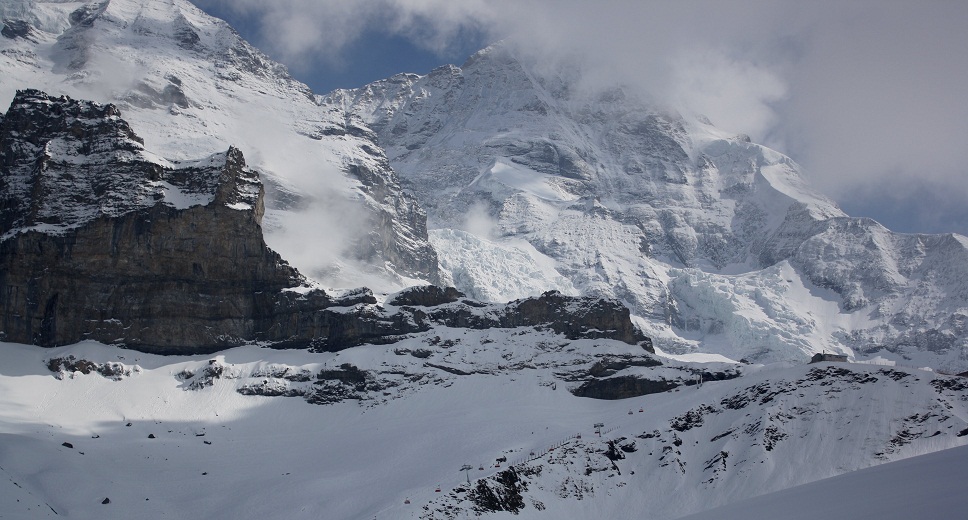
jungfrau04

Jungfrau, Switzerland (photo by Nina Munteanu)

Nina Munteanu is an ecologist and internationally published author of award-nominated speculative novels, short stories and non-fiction. She is co-editor of Europa SF and currently teaches writing courses at George Brown College and the University of Toronto. Visit www.ninamunteanu.ca for the latest on her books.

Who’s Your Audience and Why Should You Care?

beach-boardwalk

The Beaches, Toronto (photo by Nina Munteanu)

The artistic process, whether painting or prose, is admittedly the child of self-expression. The long-standing image of the artist cloistered in her studio—hunched over a writing desk or standing before a canvas to create from the depths of his/her soul—is surely a truism. Artists create from the heart; we dive deep inside our often-tortured souls and closeted past to draw out the universal metaphors that speak to humanity and share—

Ay, there’s the rub. For to share is to have a dialogue and to have a meaningful dialogue is to demonstrate consideration of the other. Somewhere in that journey that began with self, others entered. It is, in fact, something of a paradox and a conundrum for many artists. One that has challenged the artistic community for centuries. It is also why many artists have relied on agents, benefactors, and advocates to effectively communicate, target — and even interpret—their often abstruse “message” to appropriate audiences.

Purists will tell you that a true artist need not consider her audience; because her self-expression naturally finds relevance with the culture and zeitgeist from which she writes through universally understood metaphor: her story is their story.

But is that enough?

I suppose it finally comes down to whether you are interested in sharing. I don’t know any published authors who don’t wish their books to sell. Every storyteller needs an audience to connect with and engage. That is ultimately what good storytelling does: engage, connect, rouse emotions and evoke empathic feelings. Make an impact.

Does identifying and targeting a specific audience result in more satisfied readers and ultimately better sales? Of course it does. The more you—and whoever is helping you market your work—know about your audience, the more likely you are going to attract them to your book, convince them to buy it and ultimately connect with them through story.

That’s the irony of art: it is a treasure that is created out of the depths of solitude but ultimately brought into the light and shared with the world. For your art to have impact, you must know and understand your world.

Knowing your audience will affect every aspect of your book project. It will help determine:

  • What your story is about and how you write it (e.g., language, “voice” or personality, narrative style, tone or mood/attitude, characters, setting and theme, even length)
  • What genre and sub-genre(s) it lies under
  • The look and tone of the cover and blurb (one that matches the story and its audience; I previously wrote about book jacket blurbs and book covers )
  • All aspects of promotion, including the language and images you use, where you direct your marketing and how (e.g., medium, timing, etc.)

For your work to succeed, it’s important to consider the following:

  • collision-with-paradise-smallWrite to the audience’s expectations (given the promise of your work): success of stories with readers will rely on the alignment of expected story structure, tone and endings. My romance SF therefore reads differently from my hard SF in so many ways.
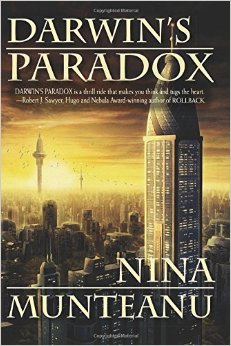
  • darwins-paradoxWrite to the understanding level of your intended audience: how and what I write for my hard science fiction audience (with expectations on accurate and intelligent exploration and extrapolation on science) is different from the style I use for my historical fantasy. This will include “voice”, language and use of specific vocabulary, terms and concepts, sentence structure and pace.
  • Write with the knowledge of your relationship to the reader: how will you gain their empathy and buy-in to your story? This will depend on the genre of your work and expectations of its associated readership.


Understand Your Audience

Who is going to read your work? To what age group to they belong? What culture and sub-culture? What gender(s)? What education and intellectual capacity? Economic status? What regions? What political leanings? Prejudices and beliefs? What knowledge-base? For instance, you wouldn’t use a lot of multi-sylabic latinisms in an action thriller; but you might in a literary fiction or even high fantasy. If you research and create a profile of your intended reader, this will help you identify who you are writing to.  “Knowing or anticipating who will be reading what you have written is key to effective writing,” says SkillsYouNeed.com.

It isn’t enough to know who is reading, but why they are reading your writing. Ask yourself these two questions:

  1. Who do I want to read this? Who are you writing for? They are your primary audience; the ones you will truly resonate with your story; they will be your fans: who are they?
  2. Who else is likely to read this? This is your secondary audience, readers who may not necessarily read your genre but are interested in the issues or premise of your story or will appreciate how you’ve handled it in your story: who might they be? 


Writers are Solopreneurs

In his 2014 article in Forbes, Jayson DeMers shares that: “Market research was once the purview of only big companies. If you weren’t a Fortune 1000 brand, investing in any form of customer research was outside the scope of what many businesses could afford. Today, advances in market research technology have opened a whole range of services to even the smallest businesses. Small enterprises and solopreneurs routinely test ideas before they take them to market, saving tens of thousands of dollars and years of time developing products and services that fall flat with the market.”

Given the current publishing paradigm—which offers less and less to the author, writers are now more than ever required to understand their audience, given their need to be solopreneurs, succeeding on their own know-how, rather than relying on some marketing department that no longer exists.

To know your audience is to know your story better.

A previous version of this article was published in the Clarion Foundation blog and presented by Lynda Williams.


nina-2014aaNina Munteanu is an ecologist and internationally published author of award-nominated speculative novels, short stories and non-fiction. She is co-editor of Europa SF and currently teaches writing courses at George Brown College and the University of Toronto. Visit www.ninamunteanu.ca for the latest on her books.
Find Your Focus This Christmas–Reprise

christmas-ballsHow many of you are still running around preparing for the Christmas celebration or secular family festivity? Buying that last minute gift you’d forgotten or were chasing down since a bazillion days ago? Or making last minute changes to your travel plans, house-cleaning for guests, mailing of cards or parcels or meal preparations?

Well, you’re reading this blog post … That means you’re sitting down and taking a minute to relax and regroup. That’s good. Remember to breathe… while I tell you a story…

I’d just finished a three-day drive through snow and rain storms from Mahone Bay, Nova Scotia, to Toronto, Ontario, where I was staying for a few days before catching a flight to Vancouver to spend Christmas with my son and good friends on the west coast. Talk about fast living.

I move around a lot these days. It helps me to appreciate some of the most simple things in life and reminds me of what I love most about Christmas: how it focuses my heart and reconnects me. I don’t mean just with relatives and friends either, although the season certainly does that. I’m talking about my soul and the universe itself. Before I became an itinerant, Christmas bustled with my responsibilities as primary caregiver, social coordinator and hostess of major parties. After I’d said goodbye to our visiting friends and done the dishes and tidied the house; after my husband and son had gone to bed, I sat in the dark living room lit only with the Christmas Tree lights and the flickering candle, and listened to soft Christmas music, primed to write.

snow-christmas2008-sammyMy male cat, smelling fresh from outside, found his rightful place on my lap and settled there, pinning me down with love. And there, as I breathed in the scent of wax and fir and cat I found myself again.

Most of us think of Christmas as a busy time, of getting together (often dutifully) with family and friends, exchanging presents and feasting. Christmas is certainly this, but that is only a shallow view of a far deeper event; and I don’t mean only for Christians.

Whether celebrating the holy light of Hannukah or the birth of Jesus, or the winter solstice, this season provides us with the opportunity to meditate on far more than the surficial nature of the symbols we have come to associate with the season: the Christmas tree, presents, turkey dinner, Santa Claus or Saint Nicholas—most of which originate from pagan tradition, by the way.

Says Lama Christie McNally (author of The Tibetan Book of Meditation), “once you dive below the surface, you will discover a beautiful clear place—like a diamond hidden beneath the rubble. It is your own mind, uncovered … Tibetans say we have only just begun the process of awakening—that we still have quite a way to go in our evolutionary process. And it has nothing to do with building spaceships or computers. The next step in our evolution takes place within.”

snow-scene-road-to-Wolfville-barn_edited-1

Barn on the road to Wolfville, NS (photo by Nina Munteanu)

Christmas is, more than anything, a time of embracing paradox. It is an opportunity to still oneself amid the bustle; to find joy in duty; to give of one’s precious time when others have none, to embrace selflessness when surrounded by promoted selfishness, and to be genuine in a commercial and dishonest world. If one were to look beyond the rhetoric and imposed tradition, the Christmas season represents a time of focus, a time to reflect on one’s genuine nature and altruistic destiny. A time to reconnect with the harmony and balance in our lives.

A time to sit with our cat, pinned with love, and write our next novel.

Merry Christmas!


Nina Munteanu is an ecologist and internationally published author of award-nominated speculative novels, short stories and non-fiction. She is co-editor of Europa SF and currently teaches writing courses at George Brown College and the University of Toronto. Visit www.ninamunteanu.ca for the latest on her books.

Buy and Give a Book for Christmas

farm in fog-Liverpool NS

shack on road to Wolfville, NS (photo by Nina Munteanu)

There are many reasons to look at buying and giving books for Christmas; not the least to maintain and encourage our literacy, culture and artistic spirit, but also to promote the industry you and I rely on as writers and readers.

According to Literary Statistics Canada, 42% of Canadian adults between the ages of 16 and 65 have low literacy skills. 55% of working age adults in Canada are estimated to have less than adequate health literacy skills. Shockingly, 88% of adults over the age of 65 appear to be in this situation.

Literacy is the ability to identify, understand, interpret, create, communicate, compute and use printed and written materials associated with varying contexts. Literacy involves a continuum of learning to enable an individual to achieve his or her goals, to develop his or her knowledge and potential, and to participate fully in the wider society. — UNESCO

Reading fiction greatly improves our quality of life. Reading is just plain smart. In a study entitled “Reading Literary Fiction Improves Theory of Mind” in the October 2013 issue of Science, researchers Kidd and Castano reported that reading literary fiction led to better performance on tests of affective and cognitive Theory of Mind compared with reading nonfiction, popular fiction or nothing at all. Theory of Mind (ToM) describes the ability to understand others’ mental states, a crucial skill in complex social relationships that characterize human societies. Check out my article on reading fiction, which discusses how it improves empathy, sharpens your brain, helps you sleep better and helps against Alzheimer’s Disease.

I’ve compiled a list of books that I have recently purchased and have or will be giving away this Christmas. Looking at the list, I realize that it represents an eclectic range of style, form and subject matter. That’s good. Diversity is good. Here’s my list:

water-is-webWater Is… by Nina Munteanu. Part history, part science and part philosophy and spirituality, “Water Is…” combines personal journey with scientific discovery that explores water’s many identities and ultimately our own. From water’s many scientific anomalies to its metaphoric archetype with humanity’s evolution and ubiquitous existence in the universe, water remains our most precious and mysterious substance.


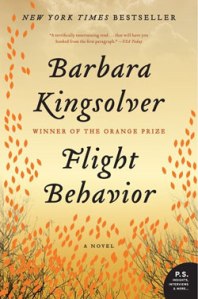
flight-behaviorFlight Behavior by Barbara Kingsolver. A multi-layered meditation on individual responsibility, told through the discovery by a rural family of the climate-changed behaviour of the monarch butterfly. See my review of Flight Behavior.


threebodyproblem-cixin-liuThe Three Body Problem by Cixin Liu. In this Hugo Award-winning first of three books on first contact, Liu weaves in metaphoric layers of significance—from the Chinese Cultural Revolution to Rachel Carson’s Silent Spring—to reflect on the perspectives of intelligent beings.


boilingpoint-maude-barlowBoiling Point by Maude Barlow. Barlow lays bare the issues facing Canada water reserves, including long-outdated water laws, unmapped and unprotected groundwater reserves, agricultural pollution, deforestation and climate change. With its focus on Canada, this book provides an “action” companion to my own “Water Is…”


memory-of-water-emmi-itarantaMemory of Water by Emmi Itaranta. This award-winning speculative post-climate change story is dark and reflective like a silent river of unknowable depth, “Memory of Water” flows with a meaning that lingers with you—like the organic scent of soil after a rainstorm—long after you have put the book down. Told in subtle tone and nuance, like an Ingmar Bergman film, the story of a young tea master in a post climate change world unravels a quiet and insidious oppression. Master Noria must navigate the police state to hide her secrets about water. Water remembers…


quantum-nightQuantum Night by Robert J. Sawyer (autographed). Told through a high paced psychological-political thriller, the story explores the thin line between good and evil and the world of the political sociopath from a Canadian perspective. I braved a snowstorm to attend Robert’s Toronto launch of this book, whose haunting story has persisted with me still; the mark of a great work.


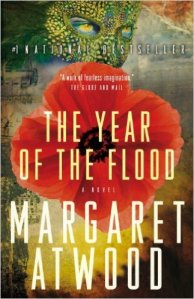
year-of-the-flood-atwoodThe Year of the Flood by Margaret Atwood (autographed). Set in the visionary future of Atwood’s acclaimed Oryx and Crake, The Year of the Flood is at once a moving tale of lasting friendship and a landmark work of speculative fiction. In this second book of the MaddAddam trilogy, the long-feared waterless flood has occurred, altering Earth as we know it and obliterating most human life. At a recent talk she gave, I thanked Margaret for her environmental efforts and gave her a copy of my own book, Water Is…


freenetFreenet by Steve Stanton. The novel is about the power of free information in a post-digital age. Told as a thriller with interesting characters and world building, the book explores what digital immortality means. See my review of Freenet.


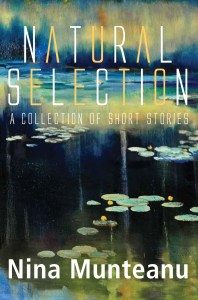
naturalselectionNatural Selection by Nina Munteanu. This short story collection explores humanity’s co-evolution with our environment and technology. A man uses cyber-eavesdropping to make love. A technocratic government uses gifted people as tools to recast humanity. The ruins of a city serve as battleground between pro-technologists and pro-naturalists. From time-space guardians to cybersex, GMO, and biotech implants, this short story collection is a journey of great scope, imagination and vision. “…a stunning example of good storytelling with an excellent setting and cast of characters.”—Tangent Online


silent-spring-rachel-carsonSilent Spring by Rachel Carson. Written in the 1960s, Carson’s cautionary book remains as relevant and powerful today as it was 50 years ago. Worth reading for her outlook on the awareness and protection of the natural environment just as Jane Jacobs was on the urban environment


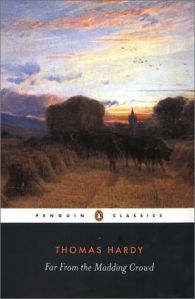
far-from-the-madding-crowd-cover-imageFar from the Madding Crowd by Thomas .Hardy. A classic to be savoured. Thomas Hardy weaves a rich pastoral tale that examines the foibles of humanity: pride, vanity, greed, passion…and gives us a touching love story with a realistic ending. Set in Hardy’s Wessex country, the setting is as much a character as his cornucopia of delightful human characters. What I love best about Hardy is how his setting evokes (like a Greek god) story. Through beautiful description, imagery and evocative language, this is not the sort of book you want to race through to see what happens; but to read slowly and savored like a dark, rich coffee. Breathe in its hypnotic scent and let it linger.


martian-chronicles-copyMartian Chronicles by Ray Bradbury. The Martian Chronicles isn’t really about Mars. It’s about us. Who we are, what we are, and what we may become. What we inadvertently do—to others, and finally to ourselves—and how the irony of chance can change everything. The 1970 Bantam book jacket so aptly calls The Martian Chronicles, “a story of familiar people and familiar passions set against incredible beauties of a new world … A skillful blending of fancy and satire, terror and tenderness, wonder and contempt.” See my 2012 article on Ray.


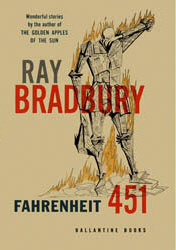
fahrenheit-451-ray-bradburyFahrenheit 451 by Ray Bradbury. A classic tale by a master of the craft of metaphor. Bradbury uses the fireman in a world where they make fires instead of putting them out, to explore the phenomenon of censorship in a world obsessed with being “good”. Scenes in his book were reminiscent of what the Nazis did in Opernplatz, Berlin. In fact, of this event Bradbury made this poignant statement: “It follows then that when Hitler burned a book I felt it as keenly, please forgive me, as his killing a human, for in the long sum of history they are one in the same flesh.”


darwins-paradoxDarwin’s Paradox / Angel of Chaos duology by Nina Munteanu. This duology explores human-technological symbiosis, AI consciousness, transhumanism and our reconciliation with Nature. I give this duo away every Christmas because they are quite simply my most popular fiction books.


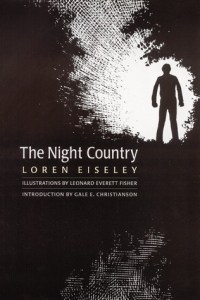
night-country-loren-eiseleyNight Country by Loren Eiseley. Eiseley reflects on the mystery of life, throwing light on those dark places traversed by himself and centuries of humankind. The Night Country is a gift of wisdom and beauty from the famed anthropologist.


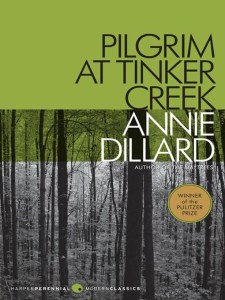
pilgrim-at-tinker-creekPilgrim at Tinker Creek by Annie Dillard. A personal narrative of the author’s explorations on foot in her neighbourhood as she witnesses astonishing incidents of “beauty tangled in a rapture with violence.”


novel-shortstorywritersmarket20172017 Novel & Short Story Writer’s Market by Writer’s Digest. An excellent resource for writers, which includes (besides hundreds of listings for book publishers, literary agents, fiction publications, and contests), erudite and useful articles—including “Creative Cures for Writer’s Block” for which I was consulted.


What’s on your list?


nina-2014aaNina Munteanu is an ecologist and internationally published author of award-nominated speculative novels, short stories and non-fiction. She is co-editor of Europa SF and currently teaches writing courses at George Brown College and the University of Toronto. Visit www.ninamunteanu.ca for the latest on her books.


Sharing Nature’s Secrets And When Trees Share the Dirt…

EcologyOfStoryOne of the lectures I give to my science fiction writing students is called “Ecology in Storytelling”. It’s usually well attended by writers hoping to gain better insight into world-building and how to master the layering-in of metaphoric connections between setting and character.1

I talk about the adaptations of organisms to their changing environments. I describe the trophic (energy) relationships from producers to consumers and destroyers in a complex cycle of creative destruction. Students perk up when I discuss some of the more strange and interesting adaptations of organisms to their environment: twisted stories of adaptations and strategies that involve feeding, locomotion, reproduction and shelter.

Purposeful Miscommunication & Other Lies

For instance, the Alcon blue butterfly hoodwinks ants into caring alconbluebutterfly-antsfor its larvae. They do this by secreting a chemical that mimics how ants communicate; the ants in turn adopt the newly hatched caterpillars for two years. There’s a terrible side to this story of deception. The Ichneumon wasp, upon finding an Alcon caterpillar inside an ant colony, secretes a pheromone that drives the ants into confused chaos; allowing it to slip through the confusion and lay its eggs inside the poor caterpillar. When the caterpillar turns into a chrysalis, the wasp eggs hatch and consume it from inside.

This reads like something out of a noir thriller. Or better yet, a horror story. Nature is large, profligate, complex and paradoxical. She is by turns gentle and cruel. Creative and destructive. Competitive and cooperative. Idle and nurturing.

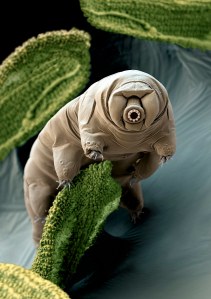
When I bring in extremophiles, who thrive in places you and I would cringe to set foot in, students’ imaginations run wild with ideas. I describe a panoply of weird adaptations in Nature—involving poisons, mimicry and deception, phototaxis and something called anhydrobiosis, which permits the tiny tardigrade to shrivel into a tun in the absence of water then revive after a 100 years with just a drop of water.

water-bear03

Tardigrade

All this adaptation hinges on communication. How an organism or population communicates with its environment and among its own. Examples of “strange” communication are the purview of the science fiction writer … and already the nature of our current world—if you only know where to look. The scope of how Nature communicates—her devices and intentions—embraces the strange to the astonishing. From using infrasound to chemical receptors and sensing magnetic fields. To allelopathy. Aggressive symbiosis. And so much more.

When Trees Share the Dirt

“Trees are the foundation of a forest, but a forest is much more than what you see,” says University of British Columbia forest ecologist Suzanne Simard.

suzanne-simard-portrait

Suzanne Simard

Simard, who has published hundreds of papers over 30 years of research, suggests a kind of “intelligence” when she describes the underground world “of infinite biological pathways that connect trees and allow them to communicate” In a forest. This communication allows the forest to behave as if it was a single organism, says Simard. Her early in situ experiments showed solid evidence that tree species, such as Paper Birch and Douglas Fir communicated in a cooperative manner underground through an underground mutualistic-symbiosis involving mycorrhizae (e.g., fungus-root). These trees were conversing in the language of carbon and nitrogen, phosphorus, water, defense signals, allelo-chemicals, and hormones via a network of mycelia. Fungal threads form a mycelium that infects and colonizes the roots of all the trees and plants. Simard compares this dense network to the Internet, which also has nodes and links—just as the forest.

forest-conversing

Myccorhyzae and fungal highways

Fungal highways link each tree and plant to its community, with busiest nodes called hub trees or mother trees. Calling them mother trees is appropriate, given that they nurture their young in the understory; sending excess carbon to the understory trees, which receive less light for photosynthesis. “In a single forest,” says Simard, “a mother tree can be connected to hundreds of other trees.” These mature trees act as nodal anchors—like major hub sites on the Internet—for tree groupings; according to Simard, they look after their families, nurture seedlings and even share wisdom—information—when they are injured or dying.

Simard made another incredible discovery: that mother trees “recognize their kin.” In experiments her team ran using related and unrelated seedlings, the mother tree preferentially sent its excess carbon to kin over non-kin seedlings.

These discoveries pose some serious implications in how we do and should manage our forests. “You can take out one or two hub trees, but there’s a tipping point,” says Simard. “You take out one too many and the whole system collapses.”

Simard shared that “in 2014 the World Resources Institute reported that Canada in the past decade has had the highest forest disturbance rate of any country worldwide…In Canada it’s 3.6% per year…about four times the rate that is sustainable.”

“Massive disturbance at this scale is known to affect hydrological cycles, degrade wildlife habitat and emit greenhouse gases back to the atmosphere, which creates more disturbance and more tree die-backs,” says Simard. She adds that the practice of planting commercially valued species at the expense of the indigenous aspens and birches lacks complexity and promotes vulnerability to disease. It’s creating “a perfect storm,” Simard concludes.

Trees & Climate Change

A major international report on climate change shows that wildlife habitats will be dramatically impacted around the world. In Canada, this could fundamentally alter 65 per cent of its existing natural habitat in the boreal and Arctic regions, where warming will be the greatest. The report says that seven Canadian provinces – Ontario, Quebec, Alberta, British Columbia, the Yukon, Newfoundland and Labrador and Manitoba – will have more than half of their natural habitat at risk.

Simard asks: “Instead of weakening our forests, how can we reinforce them and help them deal with climate change?” She suggests four simple solutions:

  1. Get out into the forest and re-establish local involvement in our forests, using management techniques based on local knowledge
  2. Save our old-growth forests, the repositories of genetic material, mother trees and micorhizal networks
  3. Save the mother trees when cutting trees
  4. Regenerate our forests with a diversity of species types and structures

“Forests aren’t just a bunch of trees competing with each other; they are super-cooperators,” Simard points out. “The great thing about forests,” she reminds us, “is that as complex systems, they have an enormous capacity to self-heal.”

How Healing Trees Can Heal Us

Aside from being highly evolved water management specialists, trees are chemical factories that broadcast a host of aerosols into the atmosphere around them. Researchers have found over 120 substances, of which only half could be identified. These aerosols are part of a sophisticated survival strategy, writes botanist and biochemist Diana Beresford-Kroeger. Studies have shown that willows, poplars and maples warn each other about insect attacks; undamaged trees then pump bug-repelling chemicals to ward off the attack. Black walnut trees emit juglone, an aerosol that repels competing nearby plants and some insects. Scientists demonstrated that airborne communication between individual sagebrush plants (called “eavesdropping”) helped neighbouring plants resist attacks. The monoterpenes like pinene and linene can relieve asthma and even fight cancer.

Water Is-COVERYou can read more about this in my book “Water Is… (Pixl Press).

1I give several lectures based on this general topic of world building for writers. One I gave recently, at CanCon2016 in Ottawa, focused on aquatic worlds, my scientific area of expertise. These lectures are based on my upcoming guidebook “The Ecology of Story: World as Character”

.

.

nina-2014aaNina Munteanu is an ecologist and internationally published author of award-nominated speculative novels, short stories and non-fiction. She is co-editor of Europa SF and currently teaches writing courses at George Brown College and the University of Toronto. Visit www.ninamunteanu.ca for the latest on her books. Read Nina’s climate/eco-fiction Darwin’s ParadoxAngel of Chaos and Natural Selection.