
shack on road to Wolfville, NS (photo by Nina Munteanu)
There are many reasons to look at buying and giving books for Christmas; not the least to maintain and encourage our literacy, culture and artistic spirit, but also to promote the industry you and I rely on as writers and readers.
According to Literary Statistics Canada, 42% of Canadian adults between the ages of 16 and 65 have low literacy skills. 55% of working age adults in Canada are estimated to have less than adequate health literacy skills. Shockingly, 88% of adults over the age of 65 appear to be in this situation.
Literacy is the ability to identify, understand, interpret, create, communicate, compute and use printed and written materials associated with varying contexts. Literacy involves a continuum of learning to enable an individual to achieve his or her goals, to develop his or her knowledge and potential, and to participate fully in the wider society. — UNESCO
Reading fiction greatly improves our quality of life. Reading is just plain smart. In a study entitled “Reading Literary Fiction Improves Theory of Mind” in the October 2013 issue of Science, researchers Kidd and Castano reported that reading literary fiction led to better performance on tests of affective and cognitive Theory of Mind compared with reading nonfiction, popular fiction or nothing at all. Theory of Mind (ToM) describes the ability to understand others’ mental states, a crucial skill in complex social relationships that characterize human societies. Check out my article on reading fiction, which discusses how it improves empathy, sharpens your brain, helps you sleep better and helps against Alzheimer’s Disease.
I’ve compiled a list of books that I have recently purchased and have or will be giving away this Christmas. Looking at the list, I realize that it represents an eclectic range of style, form and subject matter. That’s good. Diversity is good. Here’s my list:
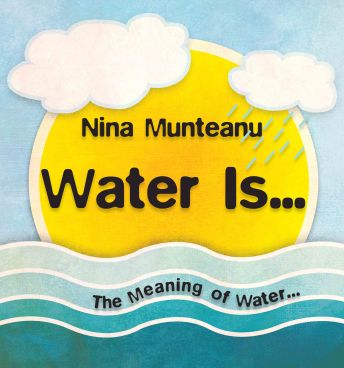
 Water Is… by Nina Munteanu. Part history, part science and part philosophy and spirituality, “Water Is…” combines personal journey with scientific discovery that explores water’s many identities and ultimately our own. From water’s many scientific anomalies to its metaphoric archetype with humanity’s evolution and ubiquitous existence in the universe, water remains our most precious and mysterious substance.
 Flight Behavior by Barbara Kingsolver. A multi-layered meditation on individual responsibility, told through the discovery by a rural family of the climate-changed behaviour of the monarch butterfly. See my review of Flight Behavior.
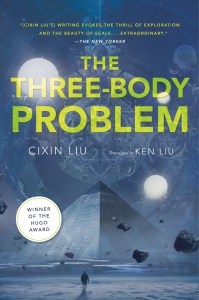 The Three Body Problem by Cixin Liu. In this Hugo Award-winning first of three books on first contact, Liu weaves in metaphoric layers of significance—from the Chinese Cultural Revolution to Rachel Carson’s Silent Spring—to reflect on the perspectives of intelligent beings.
 Boiling Point by Maude Barlow. Barlow lays bare the issues facing Canada water reserves, including long-outdated water laws, unmapped and unprotected groundwater reserves, agricultural pollution, deforestation and climate change. With its focus on Canada, this book provides an “action” companion to my own “Water Is…”
 Memory of Water by Emmi Itaranta. This award-winning speculative post-climate change story is dark and reflective like a silent river of unknowable depth, “Memory of Water” flows with a meaning that lingers with you—like the organic scent of soil after a rainstorm—long after you have put the book down. Told in subtle tone and nuance, like an Ingmar Bergman film, the story of a young tea master in a post climate change world unravels a quiet and insidious oppression. Master Noria must navigate the police state to hide her secrets about water. Water remembers…
 Quantum Night by Robert J. Sawyer (autographed). Told through a high paced psychological-political thriller, the story explores the thin line between good and evil and the world of the political sociopath from a Canadian perspective. I braved a snowstorm to attend Robert’s Toronto launch of this book, whose haunting story has persisted with me still; the mark of a great work.
 The Year of the Flood by Margaret Atwood (autographed). Set in the visionary future of Atwood’s acclaimed Oryx and Crake, The Year of the Flood is at once a moving tale of lasting friendship and a landmark work of speculative fiction. In this second book of the MaddAddam trilogy, the long-feared waterless flood has occurred, altering Earth as we know it and obliterating most human life. At a recent talk she gave, I thanked Margaret for her environmental efforts and gave her a copy of my own book, Water Is…
 Freenet by Steve Stanton. The novel is about the power of free information in a post-digital age. Told as a thriller with interesting characters and world building, the book explores what digital immortality means. See my review of Freenet.
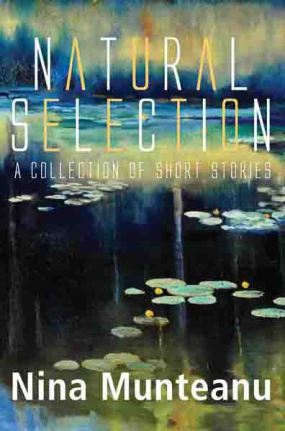
 Natural Selection by Nina Munteanu. This short story collection explores humanity’s co-evolution with our environment and technology. A man uses cyber-eavesdropping to make love. A technocratic government uses gifted people as tools to recast humanity. The ruins of a city serve as battleground between pro-technologists and pro-naturalists. From time-space guardians to cybersex, GMO, and biotech implants, this short story collection is a journey of great scope, imagination and vision. “…a stunning example of good storytelling with an excellent setting and cast of characters.”—Tangent Online
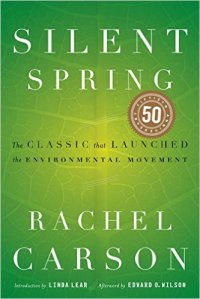 Silent Spring by Rachel Carson. Written in the 1960s, Carson’s cautionary book remains as relevant and powerful today as it was 50 years ago. Worth reading for her outlook on the awareness and protection of the natural environment just as Jane Jacobs was on the urban environment
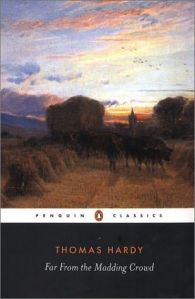 Far from the Madding Crowd by Thomas .Hardy. A classic to be savoured. Thomas Hardy weaves a rich pastoral tale that examines the foibles of humanity: pride, vanity, greed, passion…and gives us a touching love story with a realistic ending. Set in Hardy’s Wessex country, the setting is as much a character as his cornucopia of delightful human characters. What I love best about Hardy is how his setting evokes (like a Greek god) story. Through beautiful description, imagery and evocative language, this is not the sort of book you want to race through to see what happens; but to read slowly and savored like a dark, rich coffee. Breathe in its hypnotic scent and let it linger.
 Martian Chronicles by Ray Bradbury. The Martian Chronicles isn’t really about Mars. It’s about us. Who we are, what we are, and what we may become. What we inadvertently do—to others, and finally to ourselves—and how the irony of chance can change everything. The 1970 Bantam book jacket so aptly calls The Martian Chronicles, “a story of familiar people and familiar passions set against incredible beauties of a new world … A skillful blending of fancy and satire, terror and tenderness, wonder and contempt.” See my 2012 article on Ray.
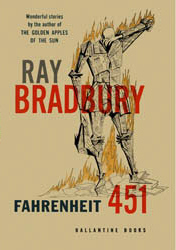 Fahrenheit 451 by Ray Bradbury. A classic tale by a master of the craft of metaphor. Bradbury uses the fireman in a world where they make fires instead of putting them out, to explore the phenomenon of censorship in a world obsessed with being “good”. Scenes in his book were reminiscent of what the Nazis did in Opernplatz, Berlin. In fact, of this event Bradbury made this poignant statement: “It follows then that when Hitler burned a book I felt it as keenly, please forgive me, as his killing a human, for in the long sum of history they are one in the same flesh.”
 Darwin’s Paradox / Angel of Chaos duology by Nina Munteanu. This duology explores human-technological symbiosis, AI consciousness, transhumanism and our reconciliation with Nature. I give this duo away every Christmas because they are quite simply my most popular fiction books.
 Night Country by Loren Eiseley. Eiseley reflects on the mystery of life, throwing light on those dark places traversed by himself and centuries of humankind. The Night Country is a gift of wisdom and beauty from the famed anthropologist.
 Pilgrim at Tinker Creek by Annie Dillard. A personal narrative of the author’s explorations on foot in her neighbourhood as she witnesses astonishing incidents of “beauty tangled in a rapture with violence.”
 2017 Novel & Short Story Writer’s Market by Writer’s Digest. An excellent resource for writers, which includes (besides hundreds of listings for book publishers, literary agents, fiction publications, and contests), erudite and useful articles—including “Creative Cures for Writer’s Block” for which I was consulted.
What’s on your list?
 Nina Munteanu is an ecologist and internationally published author of award-nominated speculative novels, short stories and non-fiction. She is co-editor of Europa SF and currently teaches writing courses at George Brown College and the University of Toronto. Visit www.ninamunteanu.ca for the latest on her books.
 How many of you are still running around preparing for the Christmas celebration or secular family festivity? Buying that last minute gift you’d forgotten or were chasing down since a bazillion days ago? Or making last minute changes to your travel plans, house-cleaning for guests, mailing of cards or parcels or meal preparations?
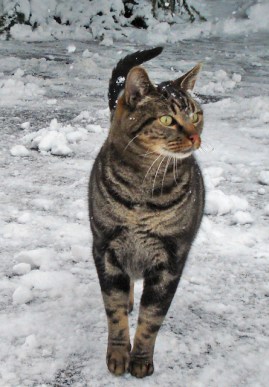 My male cat, smelling fresh from outside, found his rightful place on my lap and settled there, pinning me down with love. And there, as I breathed in the scent of wax and fir and cat I found myself again.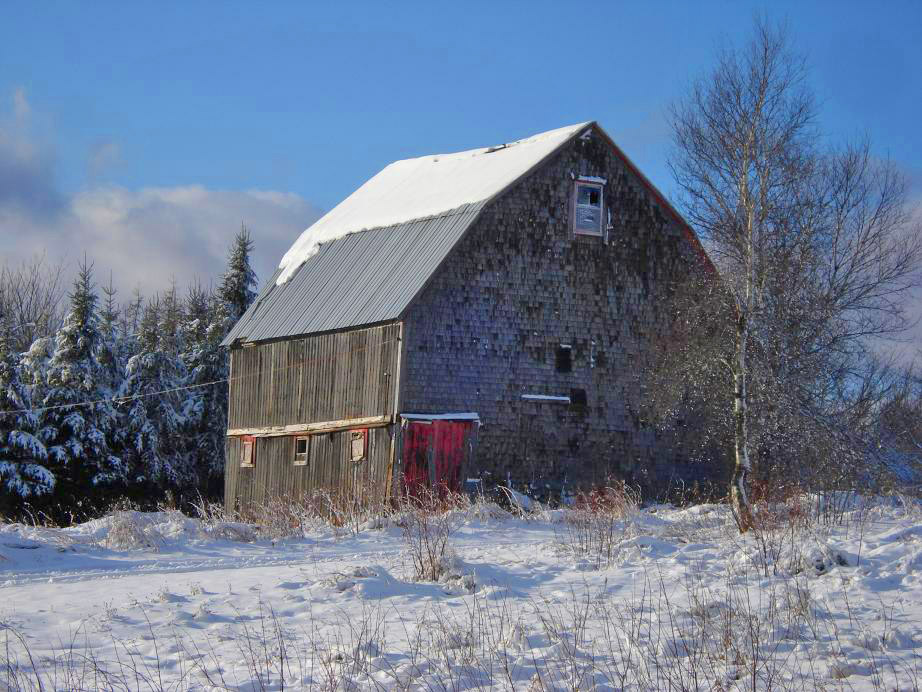
 Nina Munteanu is an ecologist and internationally published author of award-nominated speculative novels, short stories and non-fiction. She is co-editor of Europa SF and currently teaches writing courses at George Brown College and the University of Toronto. Visit www.ninamunteanu.ca for the latest on her books.
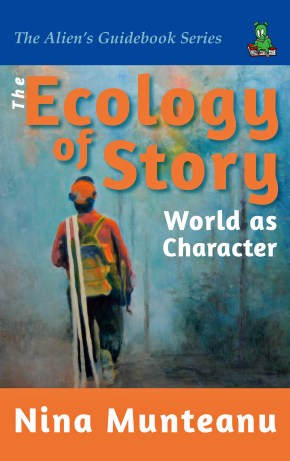 One of the lectures I give to my science fiction writing students is called “Ecology in Storytelling”. It’s usually well attended by writers hoping to gain better insight into world-building and how to master the layering-in of metaphoric connections between setting and character.1
 for its larvae. They do this by secreting a chemical that mimics how ants communicate; the ants in turn adopt the newly hatched caterpillars for two years. There’s a terrible side to this story of deception. The Ichneumon wasp, upon finding an Alcon caterpillar inside an ant colony, secretes a pheromone that drives the ants into confused chaos; allowing it to slip through the confusion and lay its eggs inside the poor caterpillar. When the caterpillar turns into a chrysalis, the wasp eggs hatch and consume it from inside.

 You can read more about this in my book “


 She imagines its coolness gliding down her throat. Wet with a lingering aftertaste of fish and mud. She imagines its deep voice resonating through her in primal notes; echoes from when the dinosaurs quenched their throats in the Triassic swamps.
 After the release of the print book, Future Fiction released “The Way of Water” (“La natura dell’acqua”) in ebook format. The ebook contains the “Way of Water” story and another story, “Virtually Yours” (“Virtualmente tua”) alongside “The Story of Water” (non-fiction), which can be purchased in either Italian or Engish versions.
 Ebook (Italian OR English) with additional short story “Virtually Yours” through Future Fiction (Mincione Edizioni) for €1,99 at:

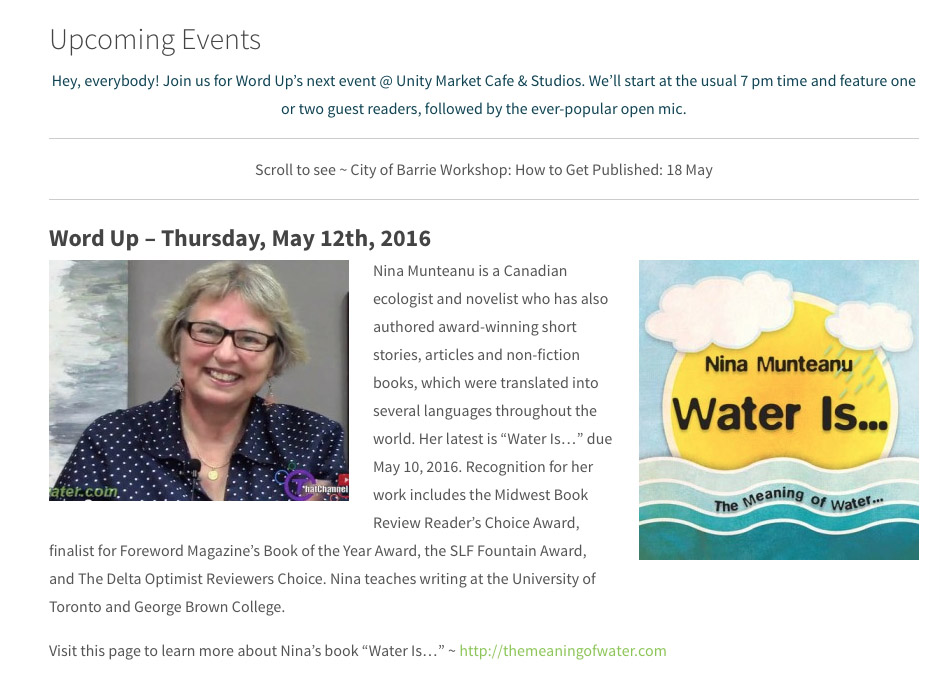
 Nina Munteanu is an ecologist and internationally published author of award-nominated speculative novels, short stories and non-fiction. She is co-editor of Europa SF and currently teaches writing courses at George Brown College and the University of Toronto. Visit
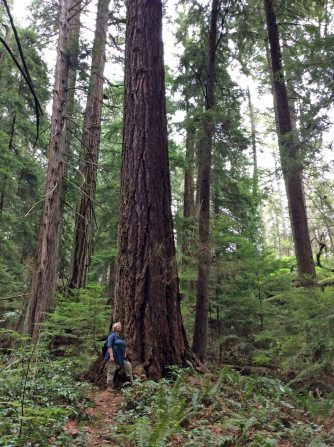
 For me this represents a palpable and gestalt cultural awakening in the realm of the “feminine archetype”.
 I mentioned that the majority of my stories are science fiction (SF). SF is a literature of allegory and metaphor and deeply embedded in culture. It draws me because it is the literature of consequence exploring large issues faced by humankind. In a February 2013 interview in The Globe and Mail I described how by its very nature SF is a symbolic meditation on history itself and ultimately a literature of great vision: “Speaking for myself, and for the other women I know who read science fiction, the need is for good stories featuring intelligent women who are directed in some way to make a difference in the world…The heroism [of women] may manifest itself through co-operation and leadership in community, which is [often] different from their die-hard male counterparts who want to tackle the world on their own. Science fiction provides a new paradigm for heroism and a new definition of hero as it balances technology and science with human issues and needs.”
 We’ve progressed from the biological to the mechanical to the purely mental, from the natural world to a manufactured world to a virtual world, writes philosopher and writer Charles Eisenstein. According to Carolyn Merchant, professor at UC Berkley, early scientists of the 1600s used metaphor, rhetoric, and myth to develop a new method of interrogating nature as “part of a larger project to create a new method that would allow humanity to control and dominate the natural world.”
 Competition is a natural reaction based on distrust—of both the environment and of the “other”—both aspects of “self” (as part) separated from “self” (as whole). The greed for more than is sustainable reflects an urgent fear of failure and a sense of being separate. It ultimately perpetuates actions dominated by self-interest and is the harbinger of “the Tragedy of the Commons”.
 Examples of creative cooperatives exist throughout the world, offering an alternative to the traditional model of competition. Cultural creatives are changing the world, Ruche tells us. These creatives, while being community-oriented with an awareness of planet-wide issues, honor and embody feminine values, such as empathy, solidarity, spiritual and personal development, and relationships. Mechanisms include reciprocity, trust, communication, fairness, and a group-sense of belonging. I give examples in my upcoming book “Water Is…” by Pixl Press, due in Spring 2016.


