Find Your Focus This Christmas–Reprise

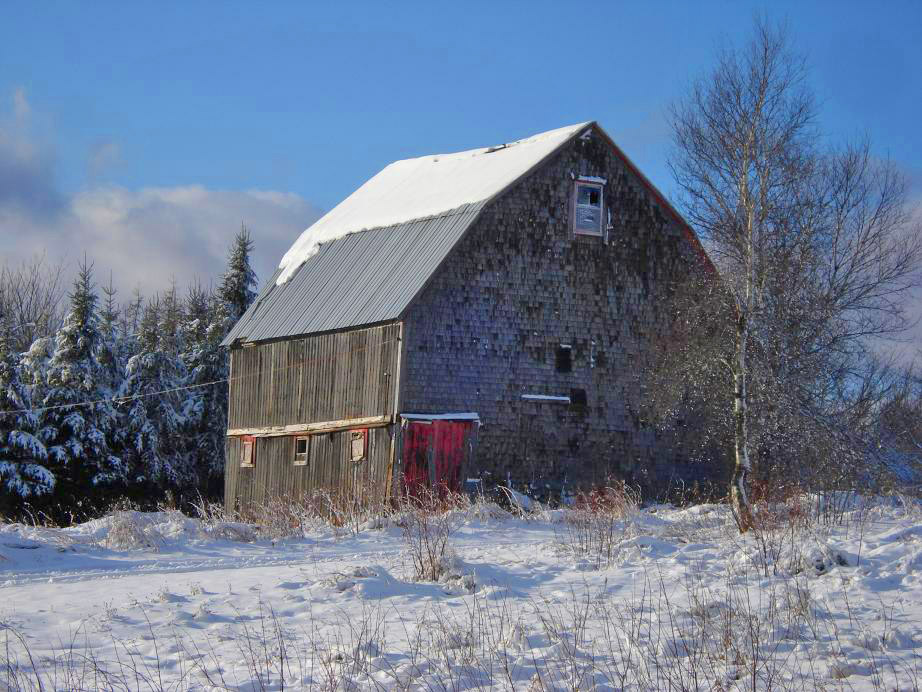
snow-scene-road-to-Wolfville-barn_edited-1

Barn on road to Wolfville, NS (photo by Nina Munteanu)

How many of you are still running around preparing for the Christmas celebration or secular family festivity? Buying that last minute gift you’d forgotten or were chasing down since a bazillion days ago? Or making last minute changes to your travel plans, house-cleaning for guests, mailing of cards or parcels or meal preparations?

Well, you’re reading this blog post … That means you’re sitting down and taking a minute to relax and regroup. That’s good. Remember to breathe… while I tell you a story…

I’d just finished a three-day drive through snow and rain storms from Mahone Bay, Nova Scotia, to Toronto, Ontario, where I was staying for a few days before catching a flight to Vancouver to spend Christmas with my son and good friends on the west coast. Talk about fast living.

I move around a lot these days. It helps me to appreciate some of the most simple things in life and reminds me of what I love most about Christmas: how it focuses my heart and reconnects me. I don’t mean just with relatives and friends either, although the season certainly does that. I’m talking about my soul and the universe itself. Before I became an itinerant, Christmas bustled with my responsibilities as primary caregiver, social coordinator and hostess of major parties. After I’d said goodbye to our visiting friends and done the dishes and tidied the house; after my husband and son had gone to bed, I sat in the dark living room lit only with the Christmas Tree lights and the flickering candle, and listened to soft Christmas music, primed to write.

snow-christmas2008-sammy

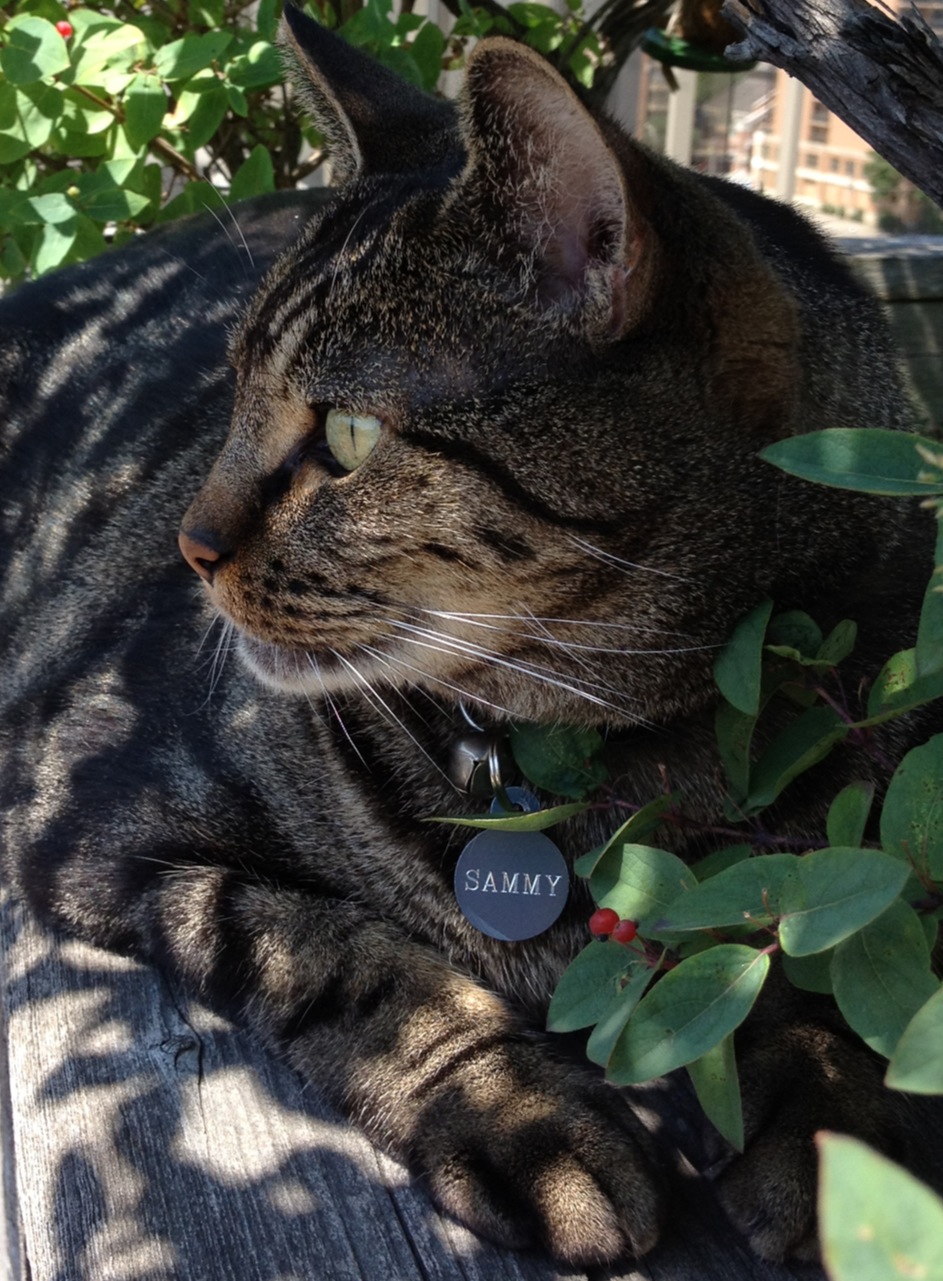
Sammy

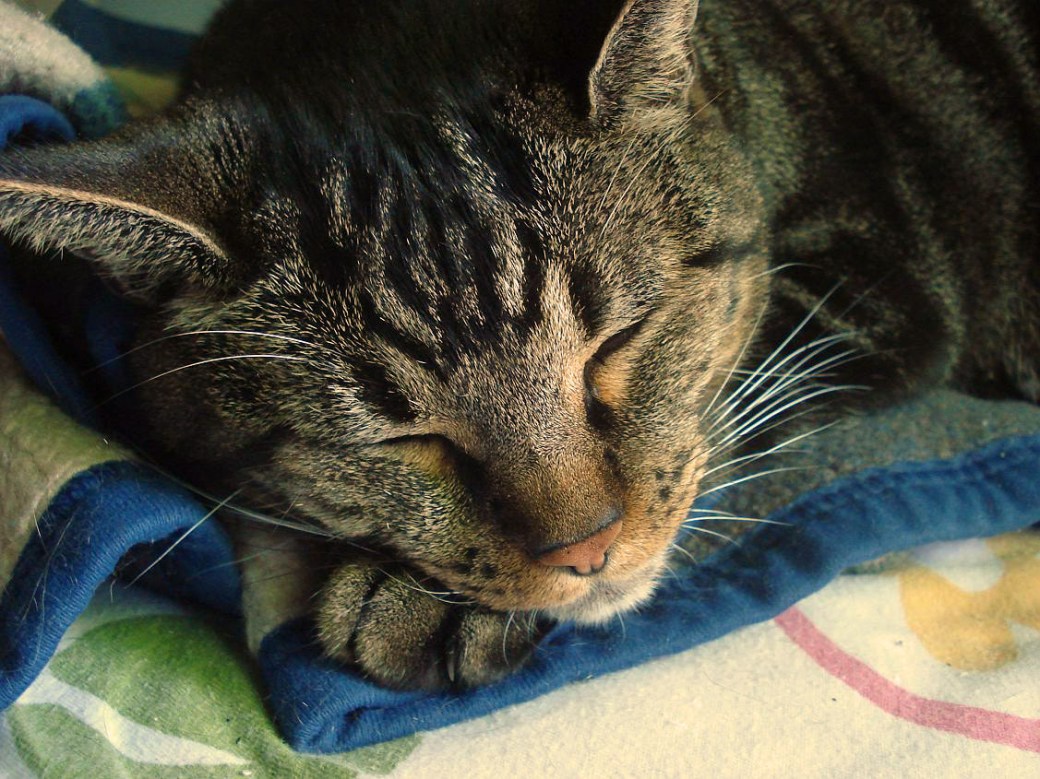
My male cat, smelling fresh from outside, found his rightful place on my lap and settled there, pinning me down with love. And there, as I breathed in the scent of wax and fir and cat I found myself again.

Most of us think of Christmas as a busy time, of getting together (often dutifully) with family and friends, exchanging presents and feasting. Christmas is certainly this, but that is only a shallow view of a far deeper event; and I don’t mean only for Christians.

Whether celebrating the holy light of Hannukah or the birth of Jesus, or the winter solstice, this season provides us with the opportunity to meditate on far more than the surficial nature of the symbols we have come to associate with the season: the Christmas tree, presents, turkey dinner, Santa Claus or Saint Nicholas—most of which originate from pagan tradition, by the way.

Says Lama Christie McNally (author of The Tibetan Book of Meditation), “once you dive below the surface, you will discover a beautiful clear place—like a diamond hidden beneath the rubble. It is your own mind, uncovered … Tibetans say we have only just begun the process of awakening—that we still have quite a way to go in our evolutionary process. And it has nothing to do with building spaceships or computers. The next step in our evolution takes place within.”

Christmas is, more than anything, a time of embracing paradox. It is an opportunity to still oneself amid the bustle; to find joy in duty; to give of one’s precious time when others have none, to embrace selflessness when surrounded by promoted selfishness, and to be genuine in a commercial and dishonest world. If one were to look beyond the rhetoric and imposed tradition, the Christmas season represents a time of focus, a time to reflect on one’s genuine nature and altruistic destiny. A time to reconnect with the harmony and balance in our lives.

A time to sit with our cat, pinned with love, and write our next novel.

Merry Christmas!


Nina Munteanu is an ecologist and internationally published author of award-nominated speculative novels, short stories and non-fiction. She is co-editor of Europa SF and currently teaches writing courses at George Brown College and the University of Toronto. Visit www.ninamunteanu.ca for the latest on her books.

Wake up Your Muse–How my Cat Taught Me the Art of Being…

SammyI’m not a very patient person. I make no time for writer’s block or lingering in useless limbo over some plot issue or misbehaving minor character. I write pretty much to a tight schedule: this short story to that market by this date; edits to this book to the editor by that date; blog posts created by such and such a time; an article to another market by another date. It goes on and on. When I go to my computer to write, I write.

Then there’s Sammy. My cat.

Who likes to jump on my lap, make himself all comfortable and then lie over my arm — trapping it along with five of my typing digits. Now what??? Some of you would advise me to simply pull out my pinned arm and/or shove him off. But how can I disturb such a blissful creature? He is so content furled on me, so satisfied that he has captured that wandering appendage of business that is all his now. Content in the bliss of now. In the bliss of cat-purr-meditation…

sammy-2010-01_edited-1Pinned in the moment, my mind first struggles with the need to pound out the next line. My mind then rephrases and teases out nuances of that line. Finally, it wanders out with my gaze and I find myself daydreaming in a kind of trance. Giving in to the cat-purr-meditation.

And it is here that magic happens. In the being; not in the doing.

This is the irony of writing and the muse. To write we need to live; we need to have something to write about and we need to be in that state of mind that allows us to set it to print. I am at my best as a writer when I am focused on the essence of the story, its heart and soul beating through me with a life of its own.

My cat Sammy isn’t the only vehicle to my magical muses.


Waking up the Muse

Here are a few things that help me entice those capricious muses into action:

snow-christmas2008-sammy

Sammy hunting

Music: music moves me in inexplicable ways. I use music to inspire my “muse”. Every book I write has its thematic music, which I play while I write and when I drive to and from work (where I do my best plot/theme thinking). I even go so far as to have a musical theme for each character.

Walks: going for a walk, particularly in a natural environment, uncluttered with human-made distractions, also unclutters the mind and soul. It grounds you back to the simplicity of life, a good place to start.

Cycling: one of my favorite ways to clear my mind is to cycle (I think any form of exercise would suffice); just getting your heart rate up and pumping those endorphins through you soothes the soul and unleashes the brain to freely run the field.

Attend writer’s functions: go to the library and listen to a writer read from her work. You never know how it might inspire you. Browse the bookshelves of the library or bookstore. Attend a writer’s convention or conference.

Visit an art gallery, go to a movie: art of any kind can inspire creativity. Fine art is open to interpretation and can provoke your mind in ways you hadn’t thought before. If you go with an appreciative friend and discuss what you’ve seen you add another element to the experience.

snow-scene-road-to-Wolfville-stream3

Road to Wolfville, NS (photo by Nina Munteanu)

Go on a trip with a friend: tour the city or, better yet, take a road trip with a good friend or alone (if you are comfortable with it). I find that travelling is a great way to help me focus outward, forget myself, and open my mind and soul to adventure and learning something new. Road trips are metaphoric journeys of the soul.

Form a writer’s group: sharing ideas with people of like mind (or not, but of respectful mind) can both inspire you and provide the seeds of ideas.

Practice Cat-Purr-Meditation: you need a willing cat for this; I find that I need tostudy my cat’s meditative practices; where does he most like to relax? Mine loves to look outside the window onto the back yard and garden. That’s where I take him and there, together, we breathe deep and “purr” in the moment…You can read more about purring cat meditation in my Alien Next Door post, “Perfecting the Cat Purr Meditation


Nina Munteanu is an ecologist and internationally published author of award-nominated speculative novels, short stories and non-fiction. She is co-editor of Europa SF and currently teaches writing courses at George Brown College and the University of Toronto. Visit www.ninamunteanu.ca for the latest on her books.

Everything Change Climate Fiction Contest–2018

climate fiction contestArizona State University’s Imagination and Climate Futures Initiative is again hosting a Climate Fiction Short Story Contest. In years past they invited writers from around the world to submit speculative fiction stories that explore climate change to narrate a world in flux. Previous contests received submissions from 67 different countries and 12 finalists were published in a digital anthology “Everything Change”.

everything change

The 2018 Climate Fiction Short Story Contest invites submissions in all genres, including speculative, realistic, literary, experimental, hybrid forms, and more.

The context will again be judged by science fiction writer Kim Stanley Robinson, award-winning author of many foundational works in climate fiction, including New York 2140.

The winning story will receive a $1,000 prize. Nine finalists will receive $50 each. The winner and finalists will be published in an online anthology, which will be free to download, read, and share.

The deadline for submission is February 28, 2018, with the finalists announced in summer 2018. All submissions must be received through their online submissions manager at https://everythingchange.submittable.com.

For more details on submission guidelines and eligibility go to the climate imagination site.

PolarBear-facepalm

Don’t be shy.  Write your best and submit.


On Censorship and Intellectual Freedom…

 “He that would make his own liberty secure, must guard even his enemy from opposition: for if he violates this duty he establishes a precedent that will reach to himself. ”— Thomas Paine, Dissertation On First Principles Of Government

What Is Intellectual Freedom?book burning nazi boys

Intellectual freedom is the right of every individual to both seek and receive information from all points of view without restriction. It provides for free access to all expressions of ideas through which any and all sides of a question, cause or movement may be explored.

Why Is Intellectual Freedom Important?

Intellectual freedom is the basis for our democratic system. We expect our people to be self-governors. But to do so responsibly, our citizenry must be well-informed. Libraries provide the ideas and information, in a variety of formats, to allow people to inform themselves.

Intellectual freedom encompasses the freedom to hold, receive and disseminate ideas.

What Is Censorship?

Censorship is the suppression of ideas and information that certain persons—individuals, groups or government officials—find objectionable or dangerous. It is no more complicated than someone saying, “Don’t let anyone read this book, or buy that magazine, or view that film, because I object to it! ” Censors try to use the power of the state to impose their view of what is truthful and appropriate, or offensive and objectionable, on everyone else. Censors pressure public institutions, like libraries, to suppress and remove from public access information they judge inappropriate or dangerous, so that no one else has the chance to read or view the material and make up their own minds about it. The censor wants to prejudge materials for everyone.

How Does Censorship Happen?

Censorship occurs when expressive materials, like books, magazines, films and videos, or works of art, are removed or kept from public access. Individuals and pressure groups identify materials to which they object. Sometimes they succeed in pressuring schools not to use them, libraries not to shelve them, book and video stores not to carry them, publishers not to publish them, or art galleries not to display them. Censorship also occurs when materials are restricted to particular audiences, based on their age or other characteristics.


nina-2014aaNina Munteanu is an ecologist and internationally published author of award-nominated speculative novels, short stories and non-fiction. She is co-editor of Europa SF and currently teaches writing courses at George Brown College and the University of Toronto. Visit www.ninamunteanu.ca for the latest on her books.

The Forbidden Library

VancCenLibJPG

Vancouver Central Library (photo by Nina Munteanu)

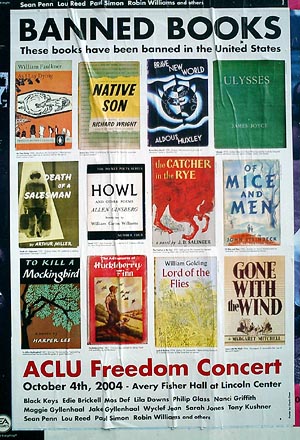
Imagine the place. Dark and subversive, oozing with ‘blasphemous’, ‘racial’, ‘offensive’, ‘obscene’, ‘Satanic’, and ‘anarchistic’ literature. Its librarian, Janet Yanosko, added her own pithy remarks to a long list of books that were banned for their offensive nature. Books like:

  • Fahrenheit 451 by Ray Bradbury: a book on censorship gets censored!
  • James and the Giant Peach by Roald Dahl: promotes drugs and disobedience
  • Where’s Waldo by Martin Handford: for nudity
  • 1984 by George Orwell: for being pro-communist
  • The Lorax by Doctor Seuss: because it criminalizes the logging industry
  • Zen Buddhism: selected writings by D.T. Suzuki: because it portrays Buddhism as appealing
  • Slaughterhouse Five by Kurt Vonnegut: for its foul languagebanned_books2

The irony is that The Forbidden Library seems itself to have found obscurity, joining the ranks of great ancient libraries that were destroyed … and silenced.

Books have been banned (and burned) on many occasions by many societies over humankind’s history of existence. Books considered critical of governments or societies with power were a common target. So were books that dealt with criminal matter or promoted views counter with popular worldviews, or were considered distasteful or disturbing.

The Bible, the Qur’an and other religious works were banned (and burned) over the years. In Medieval Europe, the Roman Catholic Church dealt with dissenting printed opinion through a program called the Index Librorum Prohibitorum (index of prohibited books).

I found a partial list on Wikipedia and share it here with you. I’ve bolded the ones I’ve read. How many did YOU read?

  • Alice’s Adventures in Wonderland by Lewis Carroll: for portraying animals and humans on the same level
  • The Age of Reason by Thomas Paine: banned in UK for blasphemy in 18th C
  • All Quiet on the Western Front by Erich Maria Remaraque: banned in Nazi Germany for demoralizing and insulting the Wehrmacht
  • Animal Farm by George Orwell: banned for anti-Stalin theme
  • Adventures of Huckleberry Finn by Mark Twain: banned in some U.S. schools for use of racial slurs
  • Bible: banned by the Index Librorum Prohibitorum in Catholic Church
  • Black Beauty by Anna Sewell: banned in South Africa for using the word ‘black’
  • Brave New World byAldous Huxley: banned for centering around negative activity
  • Canterbury Tales by Geoffrey Chaucer: banned for sexual content
  • Catcher in the Rye by J.D. Salinger: banned in some U.S. schools and libraries for sexual situations, immorality and other themes of impropriety and anti-Christian sentiments
  • Civil Disobedience by Henry David Thoreau: banned in U.S. during McCarthyism
  • Clan of the Cave Bear by Jean Auel: banned because of hardcore graphic sexual content
  • The Communist Manifesto by Karl Marx and Friedrich Engels: banned in anti-Communist countries during the Red scare
  • Doctor Zhivago by Boris Pasternak: banned in USSR for criticism of the Bolshevik Party
  • Fahrenheit 451 by Ray Bradbury: for issues on censorship
  • For Whom the Bell Tolls by Ernest Hemingway: banned in Spain during Francisco Franco’s rule for its pro-Republican views
  • Gone with the Wind by Margaret Mitchell: banned in part of U.S. because of the use of the word ‘nigger’
  • Grapes of Wrath by John Steinbeck: banned in some U.S. schools for use of the name God and Jesus in a vain and profane manner along with inappropriate sexual references
  • Gulliver’s Travels by Jonathan Swift: banned in Ireland as wicked and obscene
  • Hamlet by William Shakespeare: banned in Ethiopia
  • Harry Potter by J.K. Rowling: banned in some U.S. school libraries for use of witchcraft and supposedly Satanic views
  • King Lear by William Shakespeare: banned in UK out of respect to King George III’s aleged insanity
  • Lady Chatterley’s Lover by D.H. Lawrence: banned in U.S. and UK for obsenity
  • The Lion, the Witch and the Wardrobe by C.S. Lewis: challenged in part of U.S. for depicting graphic violence, mysticism and gore
  • The Lorax by Dr. Seuss: banned in parts of U.S. for being an allegorical political commentary
  • The Martian Chronicles by Ray Bradbury: challenged in U.S. for profanity
  • Mein Kampf by Adolf Hitler: reproduction and sale is forbidden outside Germany, Austria and Netherlands for promoting Nazism
  • Le Morte D’Arthur by Sir Thomas Malory: challenged in UK as ‘junk’
  • 1984 by George Orwell: banned in USSR for political reasons; banned in U.S. for being pro-communist and for explicit sexual matter
  • Of Mice and Men by John Steinbeck: banned in some U.S. schools and libraries for promoting ‘euthanasia’ and for profanity
  • The Odyssey by Homer: Plato suggested expurgating it for immature readers and Caligula tried to suppress it for expressing Greek ideals of freedom
  • On the Origin of Species by Charles Darwin: banned in various places for promoting the evolutionary theory
  • Paradise Lost by John Milton: listed on the Indx Librorum Prohibitorum in Rome
  • To Kill a Mockingbird by Harper Lee: challenged due to racial themes
  • Ulysses by James Joyce: banned in U.S. for its sexual content
  • Uncle Tom’s Cabin by Harriet Beecher Stowe: banned in southern States and Czarist Russia for racist portrayal of African Americans and use of word ‘nigger’.

book-burning-1682This all begs the question of what art truly is and should be. Susan Sontag suggested that “real art makes us nervous.” The genius of art skirts the edge of propriety and comfort to ask the questions that help us define our own humanity. Oscar Wilde remarked, “an idea that is not dangerous is unworthy of being an idea at all.” Benjamin Franklin suggested that, “if all printers were determined not to print anything till they were sure it would offend nobody, there would be very little printed.

Lillian Hellman, who was subpoenaed to appear before the House of Un-American Activities Commitee in 1952, exclaimed, “I cannot and will not cut my conscience to fit this year’s fashions.”

Live and write from the heart.


nina-2014aaNina Munteanu is an ecologist and internationally published author of award-nominated speculative novels, short stories and non-fiction. She is co-editor of Europa SF and currently teaches writing courses at George Brown College and the University of Toronto. Visit www.ninamunteanu.ca for the latest on her books.

Resonating with the Universe

Eramosa River 3

Eramosa River, Guelph (photo by Nina Munteanu)

Does art imitate life or does life imitate art? Which came first? Story or reality? Do we dream about our past or of another reality? What is déjà vu…really?  What came BEFORE the Big Bang? Did time even exist before we defined it?

The most frequent question asked of writers is “where do you get your ideas?” to which we often bumble some inadequate reply and evoke that indefinable abstruse term MUSE. But what is muse…really? Intuition? Divine inspiration?

In a quote from his autobiographical essay, Philip Pullman says, “It’s important to put it like that: not ‘I am a writer’ but rather ‘I write stories’. If you put the emphasis on yourself rather than your work, you’re in danger of thinking that you’re the most important thing. But you’re not. The story is what matters and you’re only the servant, and your job is to get it out on time and in good order.” But where do they come from, Philip?

In my 2012 historical fantasy “The Last Summoner” (Starfire), the young Baroness Vivianne discovered that she could alter History. Having travelled into the future (e.g., 2010 from 1410 Poland), she used hindsight to recreate a new path for humanity, one devoid of two world wars and the evils consequently unleashed. Vivianne traveled back in time and tried to subvert critical events (time/space nodes) involving Emperor Wilhelm II, Annie Oakley, Nikola Tesla and others. In each case, her interference failed to alter the event in the way she had hoped. In fact, while the details of History differed, the end result remained pretty much the same. For instance, it seemed that no matter what she did to prevent World War I, it happened anyway.

Vivianne discovered that she was unable to alter History the way she’d intended. She found to her dismay that every time she set out to alter a crucial event, quirky consequences ensued and events did not yield to her clever manipulations—as though History had an uncooperative conscience and a predetermined destiny to fulfill.

OK… That’s just me being the writer, subverting the protagonist with obstacles played out in ever-twisting plots and subplots. But, what if…

What if… History (as in any realized reality) is predetermined through its harmonic relationship with other realizable realities? Given that all mass and energy is governed and expressed through frequency, and given that in physics (and music) frequencies exist as multiples of some fundamental frequency; then does it not follow that threads of realizable realities, intertwined around a fundamental path (of history), would move inexorably toward a common destiny?

A recent article I ran across on a writer’s forum discussed how artists tend to mimic each other’s ideas, or come up with the same ideas at the same time. Aside from outright stealing (which happens a lot less than people think), multiple and independent formulation of same ideas is also more common than people think. And it’s increasing. Multiple-independent discoveries (and inventions) have increased in society a thousand-fold since the nineteenth century. Some followers of Jungian thought suggest that this is because the fabric of our society is acting more and more like a neural network, learning, interacting and sharing toward the achievement of a common zeitgeist.

What if… the whole of our society behaves like an autopoietic system, self-organized, adaptive, evolving and tapping into—and possibly influencing—a common super consciousness? One related to a fundamental frequency?

Ray Tomes of the Alexandria City Meeting in 1996 suggested that “the pattern of cycles found in every field of study on earth, in astronomy and also in music are all explained by a simple rule that says that a single initial frequency will generate harmonics and each of these will do the same.”

Why do galaxies and stars form where they do? Toss a handful of sand on a drum and then beat it (not at the centre); you will find that the sand moves to certain places and congregates into predetermined patterns. These are the nodes of the standing waves in the drum. The standing waves are electromagnetic waves (e.g., radio waves, light and x-rays etc). Consider the “predetermined” beauty of natural phenomena. Consider the Fibonacci numbers and the golden mean in nature. Consider fractals and the Mandelbrot Set, quantum entanglement, and Schumann Resonance. Consider synchronicity, autopoiesis and self-organization…

Einstein tells us that, “everything in life is vibration.” Schroedinger’s wave function describes us as vibrating waves.

The normal standing wave created in the Schumann Cavity (the cavity formed by the Earth’s conducting surface and the ionosphere) occurs at a wavelength equal to the circumference of the Earth, and at a base frequency (and highest intensity) of between 6-8 Hz (7.83 Hz). This is called Schumann Resonance Frequency, after the man who formulated it mathematically in 1954 (after Nikola Tesla described it in the late 1800s). Some call this basic frequency the Earth’s “heartbeat” or the “tuning fork” of the planet, suggesting that it generates natural healing properties when living things are entrained to its rhythm. It turns out that all biological systems resonate at this same frequency range. The electrical resonance of the Earth lies between 6-8 Hz. This coincides with alpha rhythms produced by the human brain during meditation, relaxation and creativity.

“Vibrations are dynamic things not unlike living things,” John Keely, researcher in harmonics, adds. “They are active and prolific in their dynamics as are their harmonic offspring. These discrete tones of the harmonics interact with each other… They will in a very natural way mix, merge and divide among themselves just like living cells.”

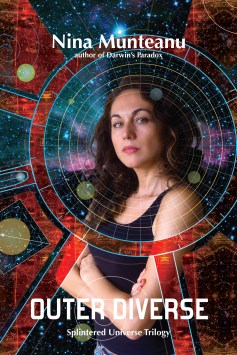
Get-Rhea-Hawke01 copyIn “Outer Diverse”, the first book of “The Splintered Universe Trilogy” (Starfire), Galactic Guardian Rhea Hawke speaks with Ka, an alien mystic, about music, frequency and harmony. And something called “the music of the spheres”. Says Ka:

“…The particular tone of the planet’s song is dependent upon the ratio of its orbit, just like the relationship of a keynote to its octave. The cosmic beauty of the octave is that it divides wholeness into two audibly distinguishable parts, yet remains recognizable as the same musical note…We, of course, now know that ratios in frequencies of spectra of elements compare to intervals in a musical chord,” Ka went on, leaning forward on his massive feathered arms. “Given that a pitch of sound is analogous to the color of light, both being caused by the frequencies of their waves, we can characterize entire worlds based on these properties,” he ended, beak-mouth breaking into a beaming grin that showed his round little teeth.  “It was your Kepler—a scientist I believe—who suggested that when planets formed angles equivalent to particular harmonic ratios, a resonance was created both in the archetypal ‘Earth soul’ and in the souls of individuals born under those configurations…He called it a celestial Front Cover ONLY-webimprint,” Ka continued, now leaning forward with his cup in both hands, “and said that in the vital power of the human being, ignited at birth, that remembered image glows. That geometric-harmonic imprint is the music that impels each listener to dance … from the particle to the cosmic. Your own heart finds its shifting harmony between excessive order and complete randomness, encompassing complex variability—a symphony—in its beating pattern. Sound—vibration—is the language of the mind and the secret to creation.”
We are creatures of this planet, co-evolved with Earth’s environment through the helix structure of our DNA and the water coursing through us; this is reflected in our behavior, culture, intelligence and beliefs. Our entire bodies resonate with all other life at a similar frequency as the planet Earth. Our brains in their most “divine” state of creativity, prayer or meditation reflect the same frequency. We are a gestalt culmination of light, wave-pulse, matter and motion resonating with this beloved planet Earth. Our minds, bodies and souls “sing” its choral aria. What is muse if not this wonderful “intent”?

So, which came first? Story or reality?


nina-2014aaNina Munteanu is an ecologist and internationally published author of award-nominated speculative novels, short stories and non-fiction. She is co-editor of Europa SF and currently teaches writing courses at George Brown College and the University of Toronto. Visit www.ninamunteanu.ca for the latest on her books.
 

Nina Talks Writing on Dragon Page

michael-stackpoleSome years ago, I was interviewed by Michael Stackpole (New York Times bestselling author of over 40 novels, including “I, Jedi” and “Rogue Squadron”) and Michael Mennenga (CEO of “Slice of Sci-Fi”) on Dragon Page Cover to Cover.

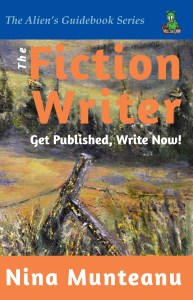
michael mennengaWe talked about my book “The Fiction Writer: Get Published, Write Now!” and what new writers fret over. A lot of the discussion focused on how to handle rejection and I shared my “bus terminal” model (also in my book), which worked very well. For details on our discussion about the industry and craft of writing, listen below:


DragonPage-FictionWriter

The Bus Terminal Model:

FictionWriter-front cover-2nd ed-webHere is an excerpt from The Fiction Writer, Chapter R:

One way to see your way through rejection is to find ways to distance yourself from your story once you’ve sent it off and to see the whole process of submission-rejection-acceptance as a business. The very best way to do this is to submit lots of stories and to keep submitting them. With novels, this is a little harder to do but you can certainly be working on the next one once you’ve submitted the first.

When I was writing short stories, I kept a list of what and where I submitted, along with the most important item: where to submit NEXT. At any given time, I made sure that I had at least x-number of submissions out there and each story had a designated place to go if it returned. As soon as a story came back from magazine A, I simply re-packaged it and sent it to magazine B. The critical part of the list was to have a contingency for each story: the next place where I would send the story once it returned. I was planning on the story being rejected with the hope that it would be accepted; that way, a rejection became part of a story’s journey rather than a final comment.

I ran my submissions like a bus terminal. A story was in and out so fast it never had a chance to cool off. And, since I had five other pieces out there, I could do this with little emotion. I was running a fast-paced “story depot”, after all. All my stories had to be out there as soon as possible; if they were sitting in the terminal, they were doing nothing for me.


nina-2014aaNina Munteanu is an ecologist and internationally published author of award-nominated speculative novels, short stories and non-fiction. She is co-editor of Europa SF and currently teaches writing courses at George Brown College and the University of Toronto. Visit www.ninamunteanu.ca for the latest on her books.

Call for Submissions: Water Anthology

Reality Skimming Press is looking for submissions to their first anthology in their hard science optimistic series. This first anthology is a Water Anthology, obviously based on the theme of water. The project coordinator is Ellen Michelle. The water anthology will be edited by scientist and author Nina Munteanu.

Story requirements:

Stories must use real or realistic science based on the theme of water in the near future (50-100 years from 2017). Your story must be considered optimistic—this does not mean that bad things can’t happen in your story, but there has to be an optimistic twist and an optimistic ending (a happy ending or hope for a happy ending). For example, your main character can die at the end as long as their death brings hope for others. Any stories that are not deemed optimistic will not be considered.

How to submit:

Stories can be submitted to realityskimmingpress@outlook.com with Water Submission in the subject. Any emails without this subject heading will be ignored by the system.

Submission requirements:

  • Stories must not exceed 5,000 words
  • Stories must be accompanied by a short cover letter in the body of the submissions email explaining your past publications or other accreditation including any science education or background you may have. *Note that we do often publish first time authors, so having no previous publications is not detrimental to your submission.
  • Submit your story as an attachment to the email in Word document format only (.doc or .docx).
  • Authors must be Canadian, permanent residents of Canada, or otherwise have a Canadian connection. If you are not Canadian by birth please explain your Canadian connection in the cover letter.
  • Authors may submit only one story to the anthology.
  • Previously published stories are accepted as long as you have the rights to republish it.
  • If you have submitted your story for consideration elsewhere, or plan to do so, please state that in your cover letter.
  • Authors will be paid $30 for their stories if accepted into the anthology.
  • Submission deadline is midnight July 22nd (extended for some groups).

See Submission guidelines here.


Nina MunteanuNina Munteanu is an ecologist and internationally published author of award-nominated speculative novels, short stories and non-fiction. She is co-editor of Europa SF and currently teaches writing courses at George Brown College and the University of Toronto. Visit www.ninamunteanu.ca for the latest on her books.


Story and Metaphor in Art Form: How Writing and Painting Whisper or Shout Their Truths

God whispers to us in our pleasures, speaks in our conscience, but shouts in our pains; it is His megaphone to rouse a deaf world—C.S. Lewis

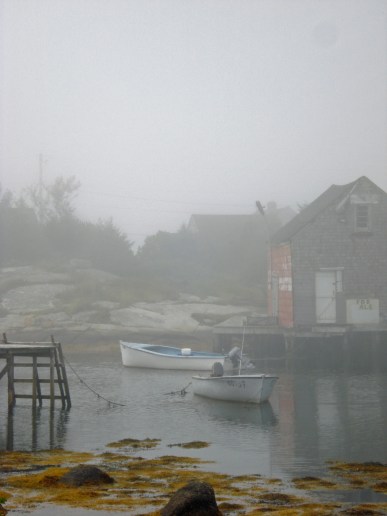
Prospect Point-fog

Prospect Point in the fog, NS (photo by Nina Munteanu)

A short while ago I painted on a canvas for the first time in over twenty years…okay, thirty years. It was a thrilling experience but also refreshing and freeing to use a different medium to express myself and tap into that place—that force—that resides inside us and speaks to us.

Part of the thrill was that I was being coached by a good friend of mine who is a master painter and teacher. What’s interesting is that while she instructed me on some of the painting methods, it struck us both how many similarities existed in composition, technique and structure between visual art and storytelling.

Take direction, for instance. A writer uses plot and subplots to move a story and its characters through a textured and colored tapestry of theme. According to my friend, every painting flows, often directionally (like many photographs) from the lower left to upper right, leading the eye from one place to another, exploring a theme, idea or emotion. Plot is motion. So is the paint brush.

You think only writers tell stories. Well, look again at visual art. Every work of art expresses an artist’s feelings, thoughts and emotions; an artist’s story. We are all stories, after all, and we all have many stories inside us. The writer’s medium is the word; the painter’s is the visual image. Isn’t it a truism that a picture is worth a thousand words? The range and type of story varies equally in both media. For instance, writing ranges from poetry or poetic prose (e.g., Ulysses by James Joyce) that requires substantial interpretation to allegory (obvious symbols) or creative non-fiction (like this blog post) whose artistry lies mostly in its composition and reporting style. Paintings also display a range from the poetry of abstract or surrealistic art (e.g., the surrealism of Salvadore Dali), which requires more interpretation, to realistic “photographic” art whose interpretation lies more in its composition (e.g., the detailed realism of Tomislav Tikulin).

The “language” that writers and painters use finds its parallels in form, structure and intent.

For example, let’s take metaphor. The writer uses one concept or image to evoke the feeling of another; “raining cats and dogs” for instance. The painter can evoke the feeling of one medium with another, achieving the same effect through metaphor—producing a stronger more compelling image through oblique metaphor and another perspective. For instance, a painter using acrylics may evoke the tone and emotion of a watercolor by using soft brushstrokes or another medium (e.g., using a sponge or cloth to apply the paint) and lighter softer colors to achieve that signature wash.

A story’s depth is achieved through animating three-dimensional characters that reflect a multi-layered theme. A painting’s depth works through the dance of light, shadows and textures and the use of techniques like fading and detail. Chiaroscuro in story and in painting play on contrast, perspective and the interplay of light and color to pull the viewer and reader deep into the artwork.

Painters echo elements from one part of a painting to another to make it cohesive and provide a “complete” piece that is ultimately satisfying to the viewer. Painters do this by using repeated elements like shapes, curves, and color schemes to get the same flow, or using a faded version of a similar image elsewhere. Techniques that writers use to achieve the same echoing effects for a satisfying story include parallel plotting, mirrored plots, framing (particularly of story promise with climax and dénouement), and themed beginnings and endings.

You’ve heard of writer’s block? There’s also painter’s block; the painter staring at the white canvas, paint brush poised to make that first stroke. Luckily, there’s something called painting-over the dry; not unlike editing a paragraph using the control-shift “x” and “v” key on the computer. Writers continually revise their first drafts, cutting out extraneous exposition and adding thematic details. The writer’s revision process is all about fine-tuning, simplifying and polishing. Painters also “edit” their art through similar means. We even use similar language for both media: “polishing”, “adding color”, “making it flow”, “adding texture”, etc.

Every artist is a reporter of life and truth; every artist chooses the medium that best expresses his or her art. I started out in the visual arts. I was all ready to pursue a fine arts degree in university to become a commercial artist. Then, right on registration day, I opted out of art altogether and went into the science program. Heck, I went all the way to getting a Masters of Science degree, taught university science courses and consulted in the environment. Now, here I am writing science fiction and eco-fiction and teaching writing to engineers and scientists and science fiction writers. Cool, how we choose our path…


nina-2014aaNina Munteanu is an ecologist and internationally published author of award-nominated speculative novels, short stories and non-fiction. She is co-editor of Europa SF and currently teaches writing courses at George Brown College and the University of Toronto. Visit www.ninamunteanu.ca for the latest on her books.
“Water Is…” Recommended Summer Read by Water Canada Magazine

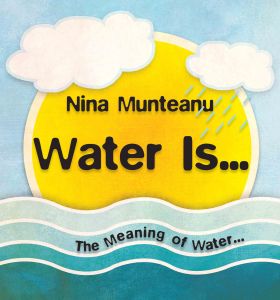
water-is-cover-web“Water Is…” (Pixl Press) by Nina Munteanu was among several books recommended by Water Canada as a good summer read for 2017.

One of Canada’s premiere magazines on issues of water and water management, Water Canada suggested recharging this summer with “the latest selection of winning water management fiction and non-fiction.” The list comprised mostly of 2017 publications, but included a few late arrivals from 2016.

Recommendations included:

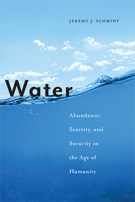
schmidt comps.indd“Water, Abundance, Scarcity, and Security in the Age of Humanity” (NYU Press) by Jeremy Schmidt is an intellectual history of America’s water management philosophy. Debates over how human impacts on the planet, writes Water Canada, are connected to a new geological epoch—“the Anthropocene”—tend to focus on either the social causes of environmental crises or scientific assessments of the Earth system. Schmidt shows how, when it comes to water, the two are one and the same. The very way we think about managing water resources validates putting ever more water to use for some human purposes at the expense of others.
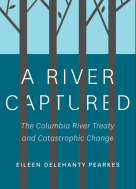
 

ARiverCaptured“A River Captured: The Columbia River Treaty and Catastrophic Change” (RMB Books) By Eileen Delehanty Pearkes reviews key historical events that preceded the Treaty, including the Depression-era construction of Grand Coulee Dam in central Washington, a project that resulted in the extirpation of prolific runs of chinook, coho and sockeye into B.C. Prompted by concerns over the 1948 flood, American and Canadian political leaders began to focus their policy energy on governing the flow of the snow-charged Columbia to suit agricultural and industrial interests. Water Canada writes, “Referring to national and provincial politics, First Nations history, and ecology, the narrative weaves from the present day to the past and back again in an engaging and unflinching examination of how and why Canada decided to sell water storage rights to American interests. The resulting Treaty flooded three major river valleys with four dams, all constructed in a single decade.”

 

borderflows“Border Flows: A Century of the Canadian-American Water Relationship” (University of Calgary Press), Lynne Heasley and Daniel Macfarlane, editors, explore and discuss Canada-U.S. governance. Water Canada writes, “Ranging across the continent, from the Great Lakes to the Northwest Passage to the Salish Sea, the histories in Border Flows offer critical insights into the historical struggle to care for these vital waters. From multiple perspectives, the book reveals alternative paradigms in water history, law, and policy at scales from the local to the transnational. Students, concerned citizens, and policymakers alike will benefit from the lessons to be found along this critical international border.”


NewYork2140“New York 2140” (Orbit) by Kim Stanley Robinson is a novel set in New York City following major sea level rises due to climate change. Water Canada writes, “The book explores a full eight separate narratives: the market trader, who finds opportunities where others find trouble; the detective, whose work will never disappear, along with the lawyers, of course; an Internet star; a building’s manager; and two boys who don’t live there, but have no other home—and who are more important to its future than anyone might imagine. Lastly there are the coders, temporary residents on the roof, whose disappearance triggers a sequence of events that threatens the existence of all– and even the long-hidden foundations on which the city rests.”


Death and Life of Great Lakes_FINAL 1129.indd“The Death and Life of the Great Lakes” (WW Norton & Company Inc. Press) by Dan Egan is a frank discussion of the threat under which the five Great Lakes currently suffer. This book, writes Water Canada is “prize-winning reporter Dan Egan’s compulsively readable portrait of an ecological catastrophe happening right before our eyes, blending the epic story of the lakes with an examination of the perils they face and the ways we can restore and preserve them for generations to come…Egan explores why outbreaks of toxic algae stemming from the over-application of farm fertilizer have left massive biological “dead zones” that threaten the supply of fresh water. He examines fluctuations in the levels of the lakes caused by manmade climate change and overzealous dredging of shipping channels. And he reports on the chronic threats to siphon off Great Lakes water to slake drier regions of America or to be sold abroad.”
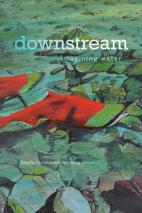
 

downstream“Downstream: reimagining water” (Wilfred Laurier University Press) by Dorothy Christian & Rita Wong “brings together artists, writers, scientists, scholars, environmentalists, and activists who understand that our shared human need for clean water is crucial to building peace and good relationships with one another and the planet. This book explores the key roles that culture, arts, and the humanities play in supporting healthy water-based ecology and provides local, global, and Indigenous perspectives on water that help to guide our societies in a time of global warming. The contributions range from practical to visionary, and each of the four sections closes with a poem to encourage personal freedom along with collective care,” writes Water Canada.


water-is-cover-webWater Is…The Meaning of Water (Pixl Press) by Nina Munteanu “explores the many dimension of H2O—the practical, the physical, and the magical. Water Is… represents the culmination of over twenty-five years of her study of water. During her consulting career for industry and government, Munteanu discovered a great disparity between humanity’s use, appreciation, and understanding of water. This set in motion a quest to further explore our most incredible yet largely misunderstood and undervalued substance. Part history, part science and part philosophy and spirituality, Water Is… combines personal journey with scientific discovery that explores water’s many “identities” and ultimately our own,” writes Water CanadaWater Is…  was recommended by Margaret Atwood as her premiere choice in the New York Times ‘The Year in Reading‘ for 2016.


WaterCanada-LOGO

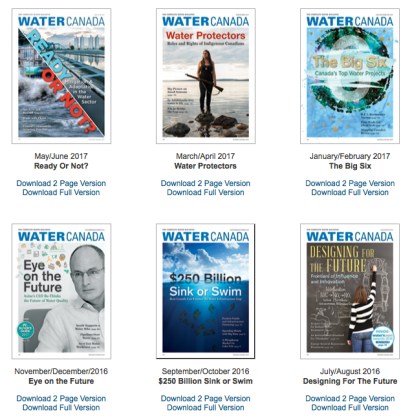
WaterCanada-coversWater Canada is a Canadian magazine that provides news and feature articles on water and water management. They currently co-host the Canadian Water Summit, a gathering of professionals from the water industry including academia, NGOs, local communities, cleantech, industry associations, manufacturing and government. “Delegates will explore opportunities to collaborate on water technology and infrastructure finance, ‘blue economy’ growth and climate change resilience through progressive policies, smart business and bold investment leadership.” This year’s summit will occur June 22, 2017 at the Sheraton Centre Hotel in Toronto.

DS-2008-16 copy

Nina Munteanu kayaking Desolation Sound on the west coast of British Columbia


#CanadaReads #Canada150 #WhatIsWATER #TheMeaningOfWater #WaterCanada