“Water Is…” Appears in Morphology Exhibit at In Situ Multi Arts Festival 2018

Water meanders-diary

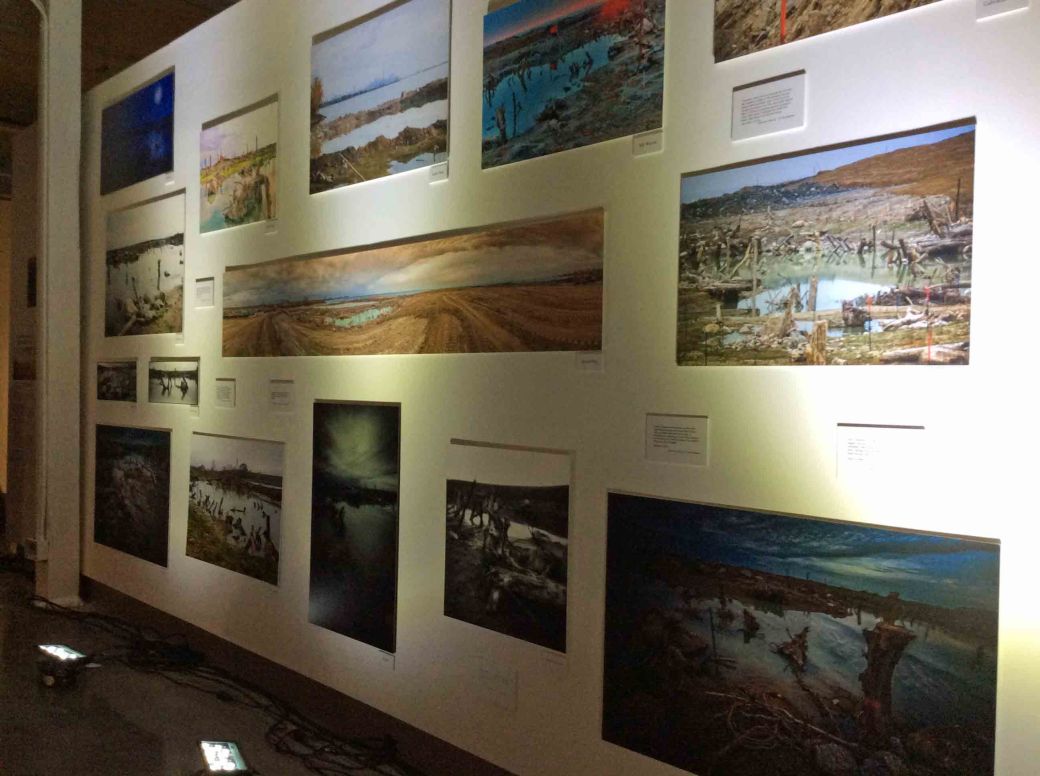
It was a blustery cold evening when I entered the industrial brick building on Lakeshore Drive for Day 3 of the In Situ Art Festival. I wound my way through cinderblock halls painted in pre-war colours and emerged into a large high ceilinged hall. Morphology occupied an entire 40-foot long wall. Two huge screens, showing a bird’s eye view of the marsh site as well as other images, flanked the photo exhibit.
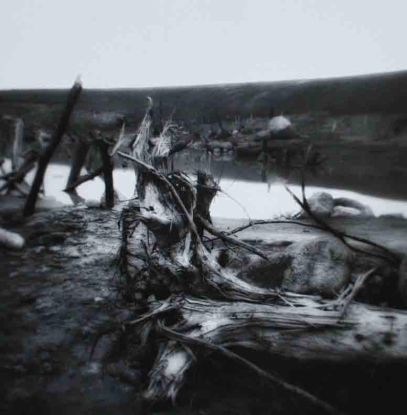
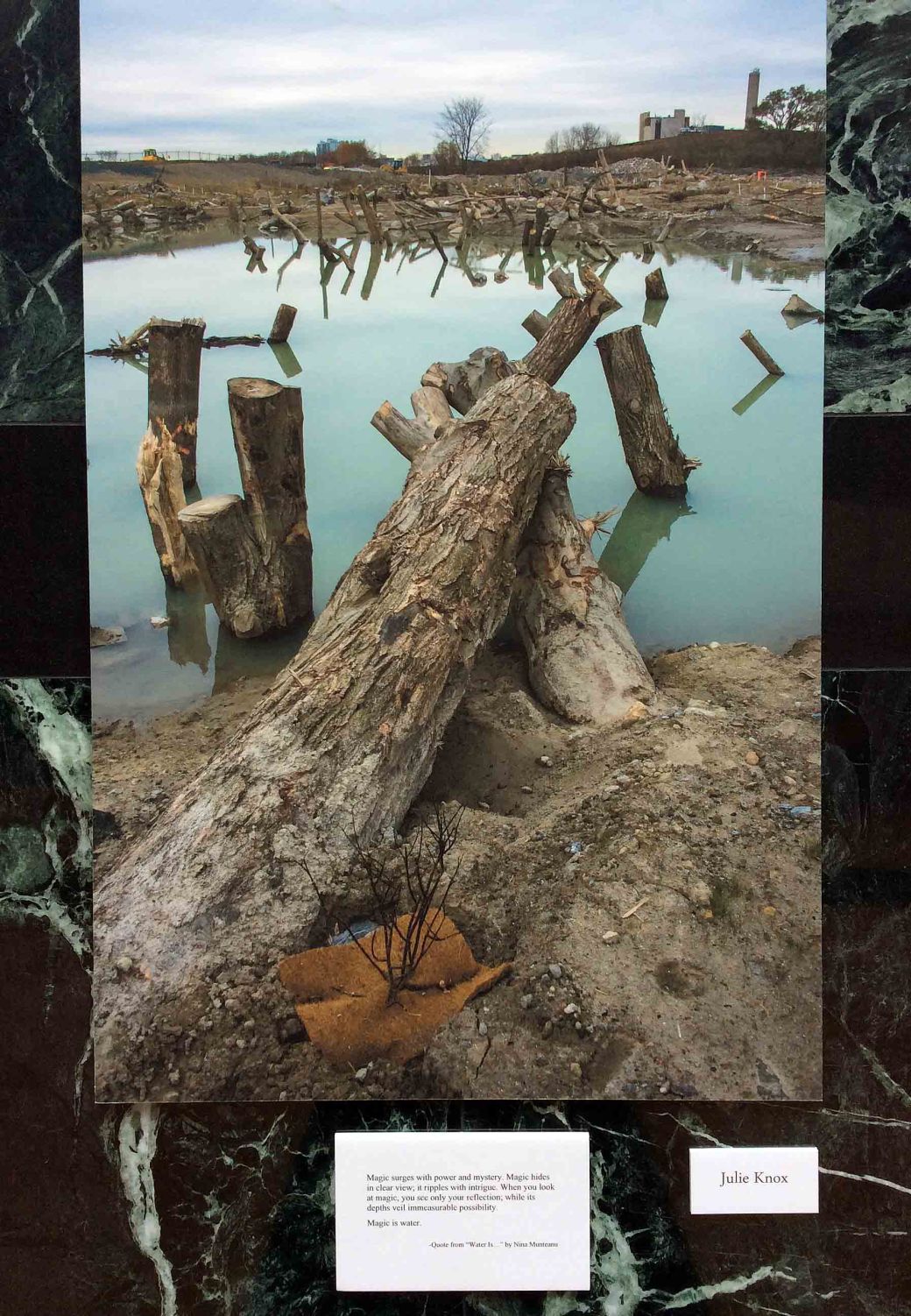
PhotoArt2-Morphology copyThis was Morphology—created by the late Jim Tovey and continued by his wife Lee Tovey—a photo and writing exhibit celebrating the 26-hectare park and marsh creation on Mississauga’s Lake Ontario shore.

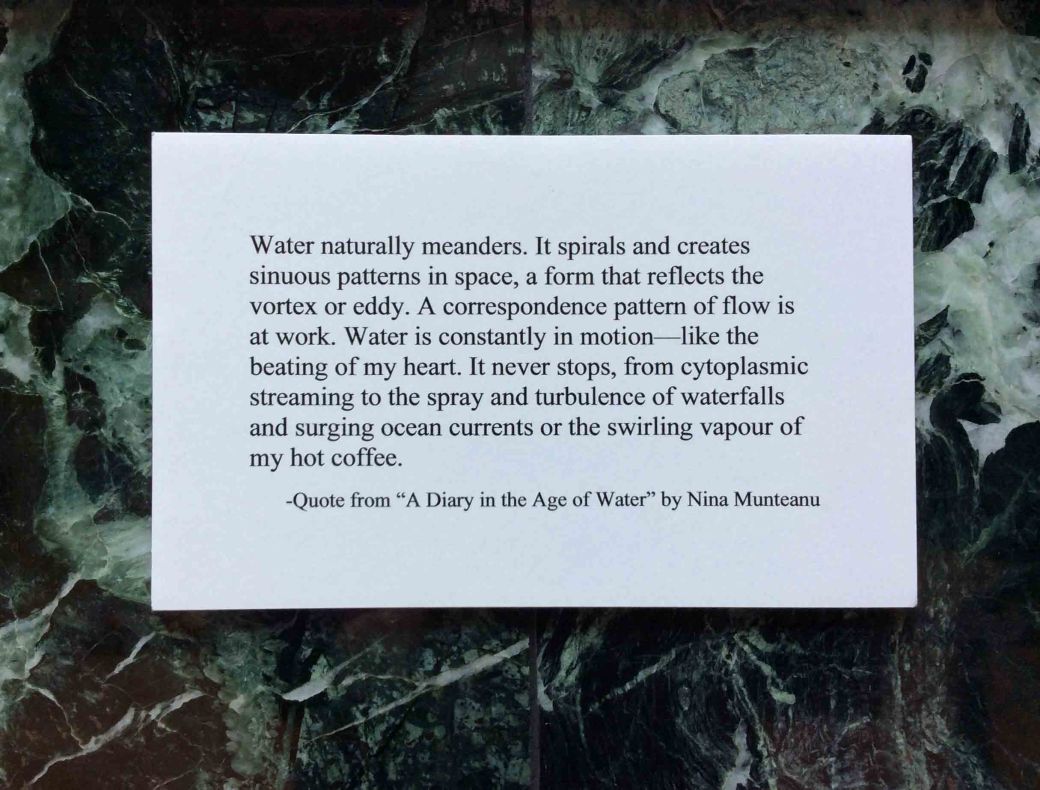
Over two dozen photographs by eleven photographers and a dozen quotes from my book “Water Is…” and upcoming novel “A Diary in the Age of Water” were on display. The photographs provided a range of perspectives on the early phase of the marsh construction that featureed aquatic habitat structures built four metres below the level of Lake Ontario. Councillor Tovey had earlier said of the construction project: “It sort of looks like a Salvador Dali surrealistic sculpture garden…and what an interesting way to really celebrate all of this.”

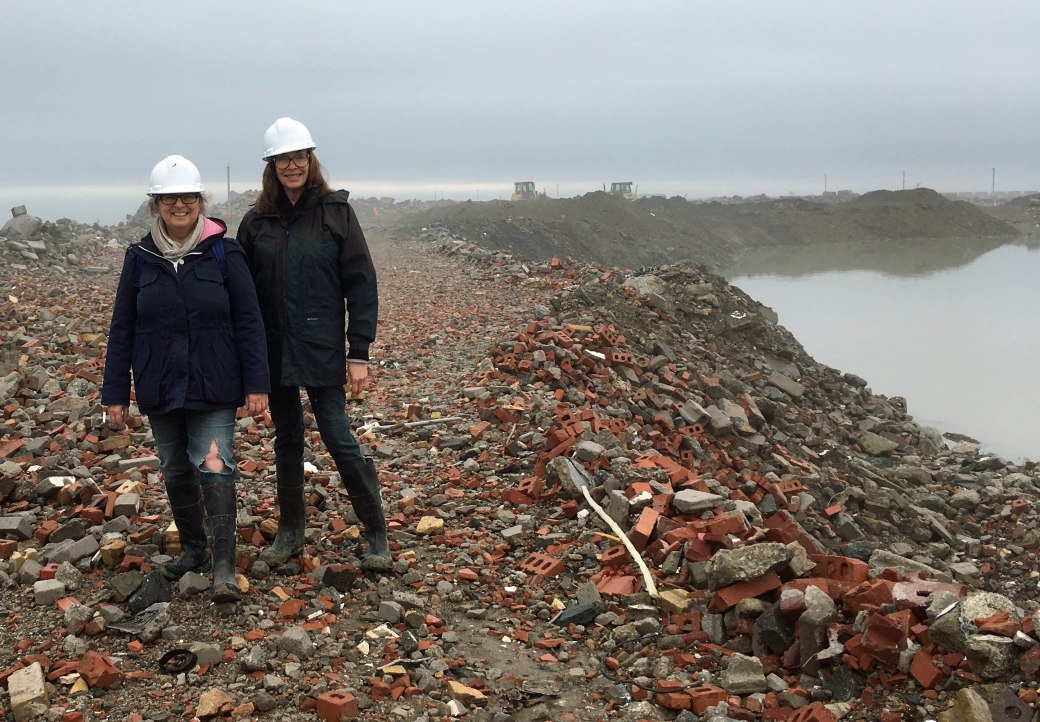
I’d walked the undulating “moonscape” with Lee Tovey earlier. Rolling berms snaked around pooled and dry depressions that disappeared in the fog. The smell of rain and mud pervaded as we set out in ankle-deep mud toward the snaking berms. I scrambled over rip rap chunks larger than me to glimpse Lake Ontario—its new shoreline re-imagined. Beyond, the lake vanished in a veil of fog. I was told that on a clear day you could see the Toronto Waterfront and the CN Tower. All I could make out was a few ghost trees that marked the nearby eastern shoreline.
Nina-Lee-marsh bermZ

Nina Munteanu and Lee Tovey walk the site

Lee took me along a dyke embankment of clean fill made of red brick and cement riprap from various construction sites. “Clean fill” refers to anything like brick, top soil, gravel, and cement that has been tested for possible contaminants, as opposed to plastic, glass, or metals.

photo-pj bellLee pointed left and right of us to depressions (containment cells) where Lake Ontario was being reclaimed for marsh-building. The depression on my left was still full of water; but the one on my right was fairly dry and already populated with anchored logs and shrub plantings to consolidate the wetland and provide refuge for marsh life. I could hear the large pump actively removing lake water at the south end of the evolving wetland. Beyond the high berm of human-sized riprap was the lake, its shoreline now redefined.

As I gazed over the brown monochromatic landscape, I imagined a tapestry of greens in Councillor Jim Tovey’s vision: 26 hectares of future wetlands, forest and meadow and beach spanning the Lake Ontario shoreline from the old Lakeview generating station to the Toronto line at Marie Curtis Park. Part of the Inspiration Lakeview development, the marsh and wetland park have now been named The Jim Tovey Lakeview Conservation Area.
JimTovey-Dowd-Morphology-JStewart

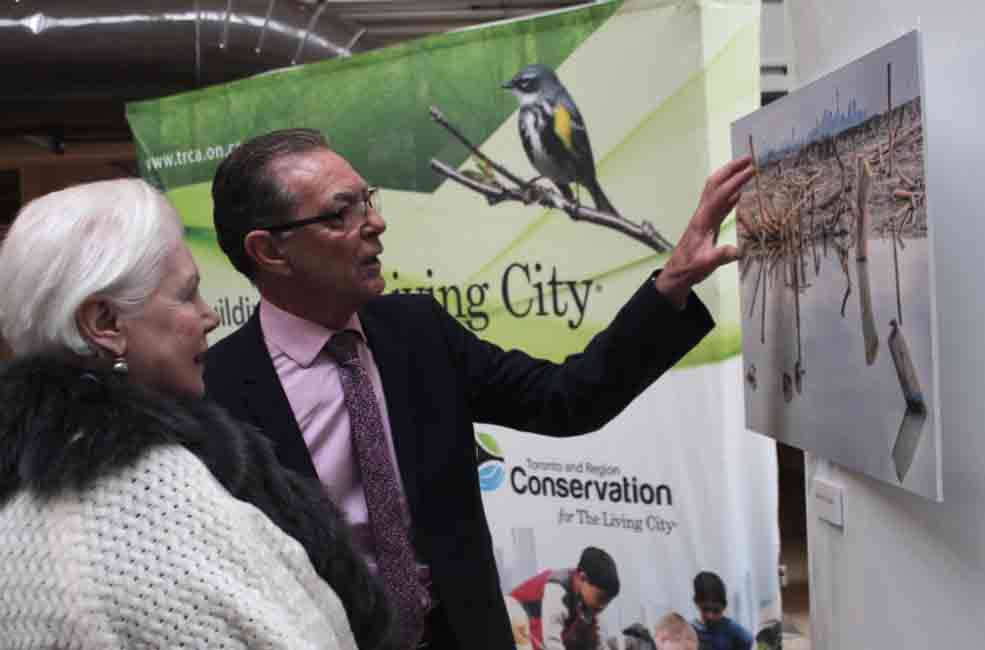
Jim Tovey and Elizabeth Dowdeswell, Lieutenant Governor General of Ontario

Small Arms Inspection Building

The 1940 Small Arms Inspection Building is the only surviving building on the original site of a munitions plant that manufactured guns and small arms for the Allied Forces during World War II. The 1910 water tower also stands nearby—a visible landmark. The industrial building was restored and designated an Ontario Heritage site. It currently functions as a multi-purpose site for community activities such as CreativeHub 1352 and the In Situ annual festival.

Morphology

InSitu-rhythmMorphology was conceived by the late visionary councillor Jim Tovey who envisioned an evolving photography and writing exhibit to follow the progress of the marsh creation project of what is now the Jim Tovey Lakeview Conservation Area. Spearheaded and nurtured by Councillor Tovey, the marsh construction was part of 26 hectares of future wetlands, forest and meadow and beach. The Lakeview Waterfront Connection will span the Lake Ontario shoreline from the old Lakeview generating station to the Toronto line at Marie Curtis Park. Part of the Inspiration Lakeview development, it will restore pedestrian and cyclist access to a previously forbidden section of the waterfront to “connect 9.5 kilometers of shoreline for water’s edge experience for the public,” said Councillor Tovey.

To celebrate the residential / park development, eleven professional photographers were invited to photograph the marsh construction during its early phases. These images, along with water-inspired narrative provided by limnologist-author Nina Munteanu, were first displayed in an exhibit during a gala event January 14 2018, hosted at the Lakeview water treatment plant. Following Councillor Tovey’s untimely passing, his wife Lee Tovey and others (e.g., TRCA, CVC, Region of Peel) are continuing the project. Morphology was displayed for the public in March of 2018 at the Great Hall in the Mississauga Civic Centre. Its third appearance was at the In Situ Multi Arts Festival in November 2018. The artist showcase is expected to become an annual event, highlighting the progress of constructed ecosystem.

Morphology features works from: Gabriella Bank, Sandor Bank, PJ Bell, Darren Clarke, Julie Knox, Nina Munteanu, Lachlan McVie, Marcelo Leonardo Pazán, Martin Pinker, Annette Seip, Stephen Uhraney and Bob Warren.
InSitu-Morphology2

East wall of Morphology Exhibit at In Situ

InSitu-Morphology4

West wall of Morphology Exhibit at In Situ

Water-destroys creates-Diary

Water travel-photo

WaterIs story-photo

WaterIs magic-photo

nina-2014aaaNina Munteanu is an ecologist and internationally published author of award-nominated speculative novels, short stories and non-fiction. She is co-editor of Europa SF and currently teaches writing courses at George Brown College and the University of Toronto. Visit www.ninamunteanu.ca for the latest on her books. Nina’s recent book is the bilingual “La natura dell’acqua / The Way of Water” (Mincione Edizioni, Rome). Her latest “Water Is…” is currently an Amazon Bestseller and NY Times ‘year in reading’ choice of Margaret Atwood.


The Ontario Climate Symposium: Adaptive Urban Habitats by Design

SONY DSC

Nina presents Diana Beresford-Kroeger with a copy of “Water Is…”

I recently participated in the 2018 Ontario Climate Symposium “Adaptive Urban Habitats by Design” at OCAD University in Toronto, hosted by the Ontario Climate Consortium and the Toronto and Region Conservation Authority.

Day 1 opened with a ceremony by Chief R. Stacey Laforme of the Mississauga of the New Credit First Nation, followed by keynote address by Dr. Faisal Moola, associate professor of the University of Guelph.

A three-track panel stream provided diverse and comprehensive programming that helped further the goal to foster important discussions for how art and design can play a role in developing adaptive, low carbon cities. Panels sparked much networking among a diverse group of participants, who clustered around the refreshments in the Great Hall, where my “Water Is…” exhibit was located.

OCS-venue

The Great Hall, where participants networked over refreshments

WaterIs...at OCS2

one participant clutches “Water Is…”

Water Is… was also there for sale, as part of my exhibit on water, along with Environment and Climate Change Canada, Green Roofs, Waste, and the Environmental Commissioner of Ontario. I had several lively and insightful conversations with participants and I’m glad to say that Water Is… made it into several people’s hands at the symposium. Water is, after all, a key component of climate and climate action.

The film “Call of the Forest: The Forgotten Wisdom of Trees” was screened and scientist Diana Beresford-Kroeger participated in a question and answer period then signed her latest book.

diana_and_the_tree_

Call of the Forest” was called “a folksy and educational documentary with a poetic sort of alarmism about disappearing forests,” by the Globe and Mail. The film “takes us on a journey to the ancient forests of the northern hemisphere, revealing the profound connection that exists between trees and human life and the vital ways that trees sustain all life on this planet.” The movie describes the numerous health-giving aerosols that trees use to communicate. Diana’s genuine and earnest concern illuminates her simple yet powerful narrative, such as when she says that the forests are “haunted by silence and a certain quality of mercy.” Featuring forests from Japan and Germany’s Black Forest to Canada’s boreal forest, this documentary is a powerful manifesto for sustainability.

DianaBeresfordKroeger

Diana lecturing in High Park

On Day 2, I toured the Black Oak savanna in High Park with Diana Beresford-Kroeger (author of The Global Forest). The tour was refreshing and enlightening. Diana is a genuine advocate for the forest and showed some of the medicinal properties of forest plants. An example is the common weed, Goldenrod; its astringent and antiseptic qualities tighten and tone the urinary system and bladder, making goldenrod useful for UTI infections; Its kidney tropho-restorative abilities both nourishe and restore balance to the kidneys.

Diana spoke from the heart and brought a wealth of scientific knowledge to us in ways easy to understand—like the biochemistry of photosynthesis or quantum coherence. Diana shared how over 200 tree aerosols help combat anything from asthma to cancer. I also talk about this in the “Water Is Life” chapter of my book, Water Is…, which I gave a copy to Diana.

lunenburg-shop01

Shops in Lunenburg, NS (photo by Nina Munteanu)


nina-munteanuNina Munteanu is an ecologist, limnologist and internationally published author of award-nominated speculative novels, short stories and non-fiction. She is co-editor of Europa SF and currently teaches writing courses at George Brown College and the University of Toronto. Visit www.ninamunteanu.ca for the latest on her books.

Ecology, Story & Stranger Things

MockUpEcology-2

Illustration by Anne Moody, typology & design by Costi Gurgu

One of the lectures I give in my science fiction writing course and conference workshops is called “Ecology in Storytelling”. It’s usually well attended by writers hoping to gain better insight into world-building and how to master the layering-in of metaphoric connections between setting and character. My upcoming writing guidebook “Ecology of Story: World as Character” addresses this subject with examples from a wide range of published fiction. The book will be released in June/July of 2019 by Pixl Press.

In my lecture (and book) I talk about the adaptations of organisms to their changing environments. I describe the trophic (energy) relationships from producers to consumers and destroyers in a complex cycle of creative destruction.

Students perk up when I bring up some of the more strange and interesting adaptations of organisms to their environment: twisted stories of adaptations and strategies that involve feeding, locomotion, reproduction and shelter.

Purposeful Miscommunication & Other Lies

alconbluebutterfly-ants

Alcon blue butterfly and caterpillar with ant

For instance, the Alcon blue butterfly hoodwinks ants into caring for its larvae. They do this by secreting a chemical that mimics how ants communicate; the ants in turn adopt the newly hatched caterpillars for two years. There’s a terrible side to this story of deception. The Ichneumon wasp, upon finding an Alcon caterpillar inside an ant colony, secretes a pheromone that drives the ants into confused chaos; allowing it to slip through the confusion and lay its eggs inside the poor caterpillar. When the caterpillar turns into a chrysalis, the wasp eggs hatch and consume it from inside.

This reads like something out of a noir thriller. Or better yet, a horror story. Nature is large, profligate, complex and paradoxical. She is by turns gentle and cruel. Creative and destructive. Competitive and cooperative. Idle and nurturing.

Extremophiles & Anhydrobiosis

water-bear03

Tardigrade on moss

When I bring in the subject of extremophiles, who thrive in places you and I would cringe to set foot in, students’ imaginations run wild with ideas.

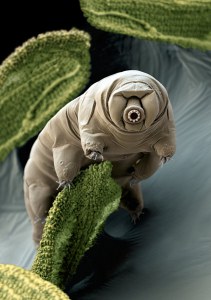
I describe a panoply of weird adaptations in Nature—involving poisons, mimicry and deception, phototaxis and something called anhydrobiosis, which permits the tiny tardigrade to shrivel into a tun in the absence of water then revive after a 100 years with just a drop of water.

All this adaptation hinges on communication. How an organism or population communicates with its environment and among its own.

Examples of “strange” communication are the purview of the science fiction writer … and already the nature of our current world—if you only know where to look. The scope of how Nature communicates—her devices and intentions—embraces the strange to the astonishing. From using infrasound to chemical receptors and sensing magnetic fields. To allelopathy. Aggressive symbiosis. And so much more.

Talking Trees

suzanne-simard-portrait

Dr. Suzanne Simard

UBC researcher Suzanne Simard, who has published hundreds of papers over 30 years of research, suggests a kind of “intelligence” when she describes the underground world “of infinite biological pathways that connect trees and allow them to communicate” In a forest.

This communication allows the forest to behave as if it was a single organism, says Simard. Her early in situ experiments showed solid evidence that tree species, such as Paper Birch and Douglas Fir communicated in a cooperative manner underground through an underground mutualistic-symbiosis involving mycorrhizae (e.g., fungus-root).

forest-conversing

mycelium connects trees underground

These trees were conversing in the language of carbon and nitrogen, phosphorus, water, defense signals, allelo-chemicals, and hormones via a network of mycelia. Fungal threads form a mycelium that infects and colonizes the roots of all the trees and plants. Simard compares this dense network to the Internet, which also has nodes and links—just as the forest.

Fungal highways link each tree and plant to its community, with busiest nodes called hub trees or mother trees. Calling them mother trees is appropriate, given that they nurture their young in the understory; sending excess carbon to the understory trees, which receive less light for photosynthesis. “In a single forest,” says Simard, “a mother tree can be connected to hundreds of other trees.” These mature trees act as nodal anchors—like major hub sites on the Internet—for tree groupings; according to Simard, they look after their families, nurture seedlings and even share wisdom—information—when they are injured or dying.

Fatal Attractions & Natural Bullies

bracken fern copy

Bracken fern fronds

The “ordinary” Bracken fern thrives in a wide range of conditions on virtually every continent (except Antarctica). That’s because it plays the “long game” by having several strategies to outlive and outcompete its surrounding nemeses.

ant on bracken copy

The symbiosis of Bracken fern and ant

Strategies include a loose lifestyle such as several ways to reproduce and grow to accommodate seasons, drought and burning; a shady arrangement with the local thugs (aggressive ants) who protect it for its tasty nectar; use of cyanide and ecdysones by its young shoots; and tough carcinogenic fronds that contain glass-like silicates.

Despite its many uses by humans (e.g., used for potash fertilizer, heating fuel, roofing, bedding for animals), the Bracken fern is considered a pest. In truth, it is a hardy versatile adapter to changing environments. And that is what our climate changing world is fast becoming.

I highly recommend the works of Annie Dillard and Loren Eiseley for wonderful and bizarre examples of natural wonders that resonate with metaphor.

Fallen log stream-2012

Stream in coastal rainforest on Vancouver Island, BC (photo by Kevin Klassen)

I also recommend my upcoming book “Ecology of Story” (Pixl Press), which will showcase a diverse set of examples from the literature of metaphoric environment and creatures. “Ecology of Story” is due for release in Summer of 2019. Look for it on Amazon, Kobo, and a fine bookstore near you. Two other books in my writing guide series include: “The Fiction Writer” and “The Journal Writer“.

Microsoft Word - Three Writing Guides.docx

nina-2014aaaNina Munteanu is an ecologist and internationally published author of award-nominated speculative novels, short stories and non-fiction. She is co-editor of Europa SF and currently teaches writing courses at George Brown College and the University of Toronto. Visit www.ninamunteanu.ca for the latest on her books. Nina’s recent book is the bilingual “La natura dell’acqua / The Way of Water” (Mincione Edizioni, Rome). Her latest “Water Is…” is currently an Amazon Bestseller and NY Times ‘year in reading’ choice of Margaret Atwood.


Creating the Ecotone at ToRo Fest

ToRoFestOn October 5, 6 2018, I participated in the second ToRo Fest International Salon of Literature, Visual Arts & Music, put on by Tradicious at the Centre for Culture, Arts, Media and Education on 918 Bathurst Ave.

After attending the gala opening on Friday, I arrived early Saturday morning and had a chance to wander the two art galleries of the fest before the crowds came. One gallery featured the deep narrative art of nine-year old Sophia Leopold-Muresan. Bright and flowing with child-wisdom, her art was playful, whimsical and thoughtful.

Otilia Gruneantu Scriuba

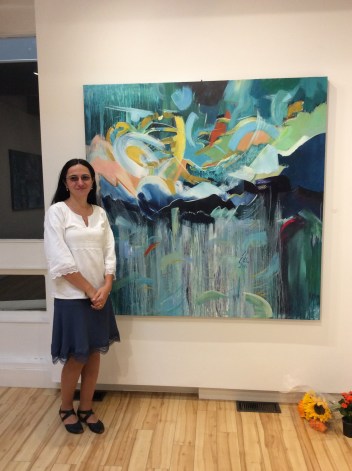
Otilia Greneantu Scriuba stands next to “Fusion”

Otilia Greneantu Scriuba’s abstract art featured cultural symbols such as water, the wave, the horizontal line to convey personal and deep-rooted narratives. The description on her website reads: “Otilia’s art orients images within collages. Parts of her paintings juxtapose original disparate fragments with origins drawn from different historic epochs and through different geographical spaces. Throughout her work she employs important cultural symbols such as: the water, the wave, the horizontal line, the square, the horse, the butterfly, the fish, the egg, the shell and the feather. In addition, she uses other symbols from some of the most important artistic periods: Victoria by Samotrace, human figures by Fidias Metopes, and Venus by Botticelli. Otilia Gruneantu Scriuba creates complex compositions while managing to harmonize her found elements in a unitary image.”

Cioata-Haunted House

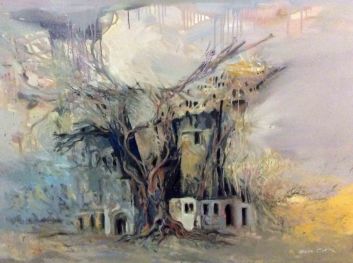
“Haunted House” by Doru Ciota

The surreal realism of Romanian artist Doru Cioata—a mix of detailed graphic design, intricate sketches and paintings—evoked a powerful metaphoric narrative. Seeing this art reminded me of the power of image in writing and my own adventure with image and writing. Several months ago, I was invited to write a flash fiction story based on a chosen Group of Seven painting for an anthology coming out next year. It was one of the most thrilling, fun and difficult projects I’d embarked on—and the most fulfilling. See my article on how visual art and writing communicate.

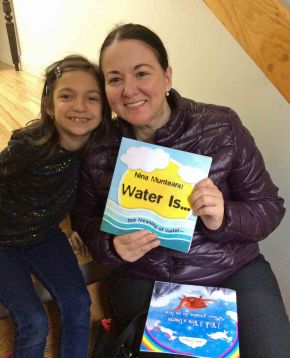
Alice WaterIs

Alice with “Water Is…”

The three-track ToRo Fest ran the whole day with over fifteen book launches, literary presentations—including my talk on “Water Is…”—games, poetry readings, and panels, in addition to excellent live music from piano to guitar and drums.

I participated with Costi Gurgu (author of Aurora-nominated RecipeArium) in Claudiu Murgan’s panel on publishing models: “Publishing your book is not what it used to be: think hard and pick one: traditional vs. self-publishing vs. hybrid.” Costi, Claudiu and I discussed the pros and cons of each model, providing our experiences with these publishing types.

Nina-Costi-Claudiu-panel

Costi Gurgu, Nina Munteanu, and Claudiu Morgan discuss publishing models

I reprised this subject with my lecture on hybrid publishing at the Mississauga Writers Group meeting on October 13 (at the South Common Community Centre, 11 am). I will also be giving this Hybrid Publishing lecture/workshop in the Toronto City Hall through the Immigrant Writers Association’s “writing and publishing series” of their “Learn with IWA” initiative (October 26, 7-9 pm). The lecture/workshop is open to members (zero to $10) and non-members (fee $15).

Absolutism4

Vali Gurgu makes her move in “Absolutism”

Professor Nicolae Gavriliu of the Antiochian House of Studies gave an interesting lecture on the theology and art of the icon. I also attended a student presentation on global issues faced by marginalized groups from Roma in Romania to married children in Lebanon.

Costi and Vali Gurgu brought their new game Absolutism, a funny card game about surviving dictatorship (which should sell very well in the USA…). Several intrepid players tried their hand at dictatorship—and slavery, depending on whether they were losing or winning. I could hear the laughter clear to the lobby. See more about Absolutism, a fascinating, clever and witty game by author-lawyers who did, in fact, survive a dictatorship.

water is-blood

Ad for “Water Is…” on TTC subway

Several of my science fiction, eco-fiction and historical fantasy books were for sale and some sold out. Alice caught up to me for an autograph and joyfully shared that she’d seen the Pixl Press Water Is… ad on the Toronto subway and had told herself, “I need to meet this person.” Then she did—at ToRo!

A week prior to the festival, I was interviewed by Andreea Demirgian of “Radio Encounters” who called me “The Absolute Dame of Canadian Eco-Fiction”! I was flattered … and humbled. In truth, eco-fiction has become my passion and brand in writing. I realized only recently (in the last few years) that I’d been writing eco-fiction for twenty years but had branded my writing under science fiction. Sometimes, it takes a while to find one’s true voice–and niche. Thanks, Andreea! You can listen to the interview below:


GreenBeanery-myFlatWhite

enjoying my flat white at the Green Beanery

After much panelling, talking, selling out of my books, and discovering delicious Romanian pastries, I slipped out into the brisk drizzle with a mission: I was in search of good coffee. I spotted the Green Beanery, looking comfortable in an old brick building on the corner of Bathurst and Bloor. I smiled; I knew I’d found my coffee haven. I ordered my favourite from the barista—a flat white— and relaxed in the funky-hipster atmosphere of the café.

It turns out that the Green Beanery is a Canadian trust, created and staffed by environmentalists at Probe International. All earnings support the charity that protects lands and people’s livelihoods. The Green Beanery promotes small coffee farmers who produce niche coffees with characteristics as distinctive and extraordinary as their local ecology and who are less likely to use pesticides or fertilizers (like their larger counterparts). Green Beanery also encourages neighbourhood-based micro-roasting in small coffee shops and local roasteries. Creating niche markets for little known coffee bean varieties helps maintain the world’s store of genetic diversity.

Nina-Juliana-Crina

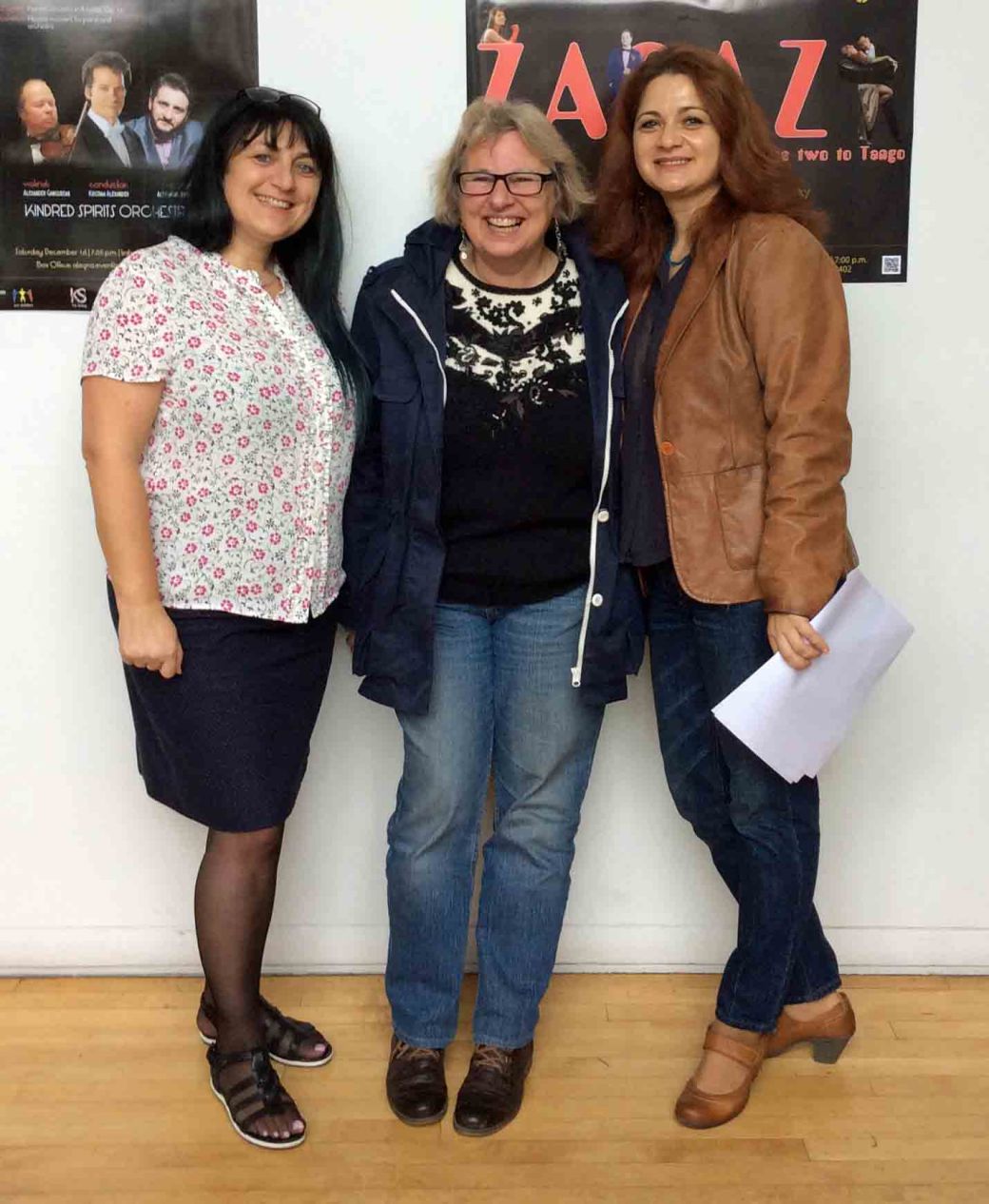
Nina stands between Juliana Pacso and Crina Bud of Tradicious

As I returned refreshed to ToRo, I realized that Tradicious was doing the same thing as Green Beanery: they had brought in a diversity of international artists in music, visual arts, fiction and poetry, philosophy and even socio-politics to meet, share, and discuss. Tradicious had created an ecotone (where worlds and ideas meet, share and learn) where diversity flourishes.

Well done, Tradicious!

nina-2014aaaNina Munteanu is an ecologist and internationally published author of award-nominated speculative novels, short stories and non-fiction. She is co-editor of Europa SF and currently teaches writing courses at George Brown College and the University of Toronto. Visit www.ninamunteanu.ca for the latest on her books. Nina’s recent book is the bilingual “La natura dell’acqua / The Way of Water” (Mincione Edizioni, Rome). Her latest “Water Is…” is currently an Amazon Bestseller and NY Times ‘year in reading’ choice of Margaret Atwood.

How Creative Destruction Embraces Paradox…

“Very well, then, I contradict myself; I am large—I contain multitudes.”—Walt Whitman

OuterDiverse-cover-webCreative destruction … sounds like a paradox, doesn’t it? Nature—and God— is full of contradiction and paradox. There is so much that we do not understand (at least on the surface)… and apparent contradiction proves that to me. In Outer Diverse, Book One of The Splintered Universe Trilogy, my character Serge says:

“… somewhere between the infinities of [worlds] you would experience paradox: black holes, quasars; intuition, déjà vu, clairvoyance… order in chaos…darkness at the heart of all beauty… beauty in the heart of all darkness…a mathematician with faith …the strength of surrender…loving your enemy…dying to live…”

Paradox lies undeniably at the heart of the clash of two realms.

I understand something of paradox. As an ecologist, I deal with it all the time.

Destruction in creation and creation in destruction is ingrained in the life-cycles of everything on this planet, indeed in this universe. A forest fire can destroy life but in so doing creates a more vibrant, healthier forest.

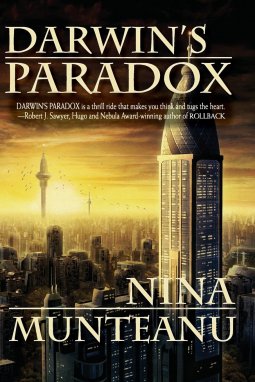
Darwins Paradox-2nd coverIn my speculative fiction novel, Darwin’s Paradox, Julie applies her father’s ecological precept to describe her observations on the rise and fall of a civilization, an ecosystem and an entire world. The precept was based on C.S. Holling’s 1987 ecological model of creative destruction:

Fire was a constant hazard in the heath. Yet, fire served the heath by discouraging invasive shrubs and halting succession. The grazing deer populations completed the job of keeping the heath from reverting to woodland. So, fire had its place as creative destroyer in the natural cycle of ecosystem behavior. Stable chaos, according to her father. It was a harsh and rude environment, Julie concluded. Like thieves in the night, bell heather, gorse and purple loosestrife snatched everything for themselves, leaving nothing for the others. Like many things in nature, the heath plants, though beautiful and fragrant, were ruthlessly greedy. . .

Creative destruction was first introduced as a term in 1942 by the economist, Joseph Schumpeter to describe the process of industrial transformation that accompanies radical innovation. According to Schumpeter’s view of capitalism, innovative entry by entrepreneurs sustained long-term economic growth, even as it destroyed the value of established companies that enjoyed some degree of monopoly power. An example is Xerox, who has seen its profits fall and its dominance vanish as rivals launched improved designs or cut manufacturing costs, drawing customers away.

The Science of Creative Destruction

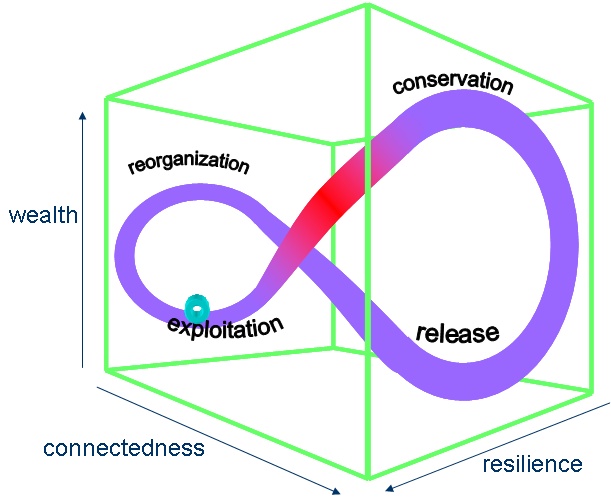
In his classic paper, entitled: “Simplifying the complex: the paradigms of ecological function and structure” (1987) C.S. Holling applied Schumpeter’s term to ecology. Holling’s model of ecosystem behaviour recognized ecosystems as non-linear, self-organizing and continually adapting through cycles of change from expansion and prosperity to creative destruction and reorganization.

creative-destruction-model

Holling presented several paradigms that ecologists use to describe the causes and behaviour (and management) of ecosystems, including an equilibrium-centred view (based on the constancy of behaviour over time), which Simon Forge described as “driving using the rear-view mirror”—trying to judge the road ahead by what went on behind. Holling advocated a “nature evolving” view, which describes ecosystems as undergoing sharp, discontinuous changes that are internally organized and balanced (I like his mobius loop to describe the closed ouroborus-like cycle of creation and destruction in nature). Holling described four phases of natural ecosystem succession within his “nature evolving” paradigm. It starts out with the exploitation phase, in which new opportunities are realized through rapid colonization and competition. Natural forces of conservation (e.g., nurturing, consolidation) lead to vulnerable systems (e.g., old growth forests), as stabilizing factors lose strength and the system evolves from having few interrelationships to having many. The result is often an abrupt change that both destroys systems and creates opportunity (creative destruction) through fire, storms, pests, senescence. Mobilization of bound, stored “capital” (e.g., carbon, nutrients and energy) through physicochemical and biological processes like decomposition and mineralization completes the dynamic cycle of functional ecosystems.

What this means for the ecosystem manager is that efforts to detect responses to changes, including human interventions like restoration activities, are confounded. Traditional (equilibrium-centred) ecosystem management may be misdirected, resulting in pathological “surprises” of ecosystem response and a spiralling vigilance and cost in control measures. Examples of traditional equilibrium-centred management of forests, fish and other organisms of terrestrial and aquatic environments with devastating consequences include:

  • firecycle copySuppression of spruce budworm populations in eastern Canada using insecticides partially protected the forest but left it vulnerable to an outbreak covering an area and of an intensity never experienced before;
  • Forest fire suppression reduced the probability of fire in the national parks of the United States but the consequence has been the accumulation of fuel to produce fires of an extent and cost never experienced before;
  • Semi-arid savanna ecosystems have been turned into productive cattle grazing systems in the Sahel zone of Africa, southern and east Africa, and other parts of the world. However, changes in grass composition have promoted an irreversible switch to woody vegetation and the systems have become highly susceptible to collapse, often triggered by drought; and,
  • Protection and enhancement of salmon spawning on the west coast of North America may have led to some success regarding enhanced stocks (e.g., hatchery-grown fish), but fishing industry is left precariously dependent on a few enhanced stocks which are vulnerable to collapse.

In each of these examples, the policy succeeded in its immediate objective. But in each case the system evolved into something with different properties and each “solution” led to a larger problem. In short, the biophysical environment had evolved into one that was more fragile, more dependent on vigilance and error-free management. Something Holling called “Nature Engineered.”

In his classic 1987 paper, Holling suggests that ecosystems be viewed—and managed—as “Resilient Nature”, where the experience of instability maintains the structure and general patterns of ecosystem behaviour; in other words, that Nature ‘learns’ and accommodates with time. In the final analysis, it is a matter of scale.

We are seeing that now as global warming takes force and we step solidly into the depths of the Anthropocene Age where green is the colour of resilience.

The Narrative of Creative Destruction

Water Is-COVER-webIn my book Water Is… I write: “Destruction in creation and creation in destruction are ingrained in the life cycles of everything on this planet and in the universe. A forest fire can destroy life but in so doing creates a more vibrant, healthier forest. Holling and I, in our separate studies, were really drawing on the ancient knowledge of polarity and cycles in nature. The opposing forces of polarity generate ongoing cycles of creation and destruction. The Ouroboros, remembering.”

The Ouroboros is an ancient symbol that depicts a serpent or dragon swallowing its own tail to form a circle. As a serpent devouring its own tail, the Ouroboros symbolizes the cyclic nature of the Universe: creation out of destruction, Life out of Death. The Ouroboros eats its own tail to sustain its life, in an eternal cycle of renewal. In the Gnosis scriptures, it symbolizes eternity and the soul of the world.

“in the Chinese I Ching, the hexagram for “crisis” also represents “opportunity.” This is because when we are in stasis (which represents lack of movement), we do not recognize our path; perspective only comes with movement. In this way, calamity, initially seen as disaster, may be viewed as unexpected opportunity for creative change. The unpredictable nature of water provides the opportunity to teach and learn.” The “crisis” of change and “destruction” provides opportunity, just as collision of viewpoints bring new ideas.”

Tree-YellowBirch winter-LR

Yellow birch tree in Little Rouge woodland (photo by Nina Munteanu)


Recommended Reading:

Holling, C.S. 1987. Simplifying the complex: the paradigms of ecological function and structure. Eur. J. Oper. Rel. 30: 139-146.

Holling, C.S. 1973. Resilience and stability of ecological systems. Annual Rev. Ecol. Syst. 4: 1-23.

Holling, C.S. 1977. Myths of ecology and energy. In: Proceedings Symposium on Future Strategies for Energy Development, Oak Ridge, Tenn., 20-21 October, 1976. Oxford University Press, New York, N.Y.

Munteanu, N. 2016. Water Is… The Meaning of Water. Pixl Press, Vancouver. 586pp.


nina-2014aaaNina Munteanu is an ecologist and internationally published author of award-nominated speculative novels, short stories and non-fiction. She is co-editor of Europa SF and currently teaches writing courses at George Brown College and the University of Toronto. Visit www.ninamunteanu.ca for the latest on her books. Nina’s recent book is the bilingual “La natura dell’acqua / The Way of Water” (Mincione Edizioni, Rome). Her latest “Water Is…” is currently an Amazon Bestseller and NY Times ‘year in reading’ choice of Margaret Atwood.
 

Vancouver Coffee Marathon—Four Coffee Shops in Four Hours

First Hour: Nusa Coffee

asian-palm-civet3

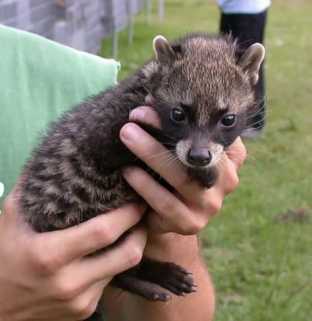
The Asian Palm Civet

I started my coffee marathon at Nusa Coffee, on 4th Avenue in Kitsilano. Nusa means “islands” and, indeed, Marcus, one of the partners, told me that most of their coffee comes from Indonesia, an archipelago of over 17,000 islands stretching an expanse the length of Canada.

Nusa features coffee from beans grown in the Ngada region of Flores, the Toraja Highlands of central Sulawesi, the Kintamani Highlands of Bali and the Gayo Highlands in Sumatra Gayo.

Asian-Palm-Civet

Asian Palm Civet

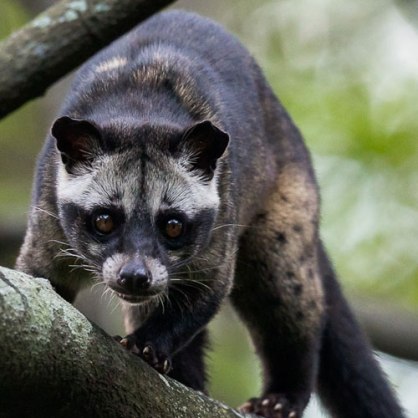
But I’d come for kopi luwak—otherwise known as cat poop coffee—made from coffee beans that have been digested by a small Indonesian cat called an Asian Palm Civet (Paradosorus hermaphroditus)—a small viverrid native to South and Southeast Asia. They help maintain tropical forest ecosystems through seed dispersal as they feed on pulpy fruits such as mango, rambutan and coffee.

Why was I doing this? Well, since I’d heard about it, I just had to try it out for myself. According to The Vancouver Coffee Snob the civets feast on ripe coffee cherries, which start to digest and ferment in their stomachs.

Nusa-coffee pour

Marcus does the pour over

The enzymes allegedly remove the acidic tastes from the coffee, imparting new flavours. The cat then poops what’s left and farmers collect the poop, clean them, process and roast the beans. Civet coffee beans are harder and more brittle because they have been modified by the digestive juices of the civet.

Because of the new trend for Kopi Luwak, civets are being increasingly captured from the wild and fed coffee beans to mass-produce this blend. Many of the captured civets are housed and treated unethically. The impact of all these captures on the wild population and consequent ecosystems they live in, is not yet known. The lesson here is: do your research to ensure that the product you’re buying has been ethically collected from wild Civet poop. Nusa Coffee is one of them.

NUSA-Catpoo Coffee

Kopi Luwak at Nusa Coffee in Vancouver

Marcus let me smell the beans before grinding them. The aroma was deep, pleasant and nutty. That carried into the coffee pour over (which is more gentle than using an espresso machine). Then it came to tasting it: I found it unpretentious, earthy with subtle tones that lingered in the back of the throat. As I breathed in the kopi luwak, I thought of the jungle where the civet lives…and poos. Nusa Coffee is also unpretentious; a cozy café with wood benches and tables and no overbearing music.

Second Hour: Platform 7

Platform7 cafe

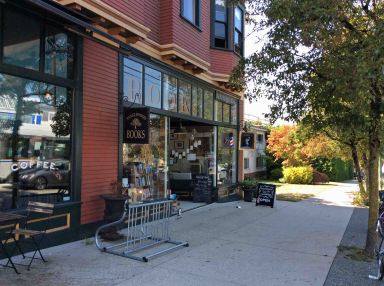
Platform 7 and bookstore in Kits (photo by Nina Munteanu)

My second stop was Platform 7, on Broadway and Vine, where I stopped for lunch. Located in an old house next to a character-book store (a great combination for a writer!), Platform 7 is a creative take on a bustling “Victorian London train station in East Vancouver and a Belle-Époque Parisienne train station in Kits.”

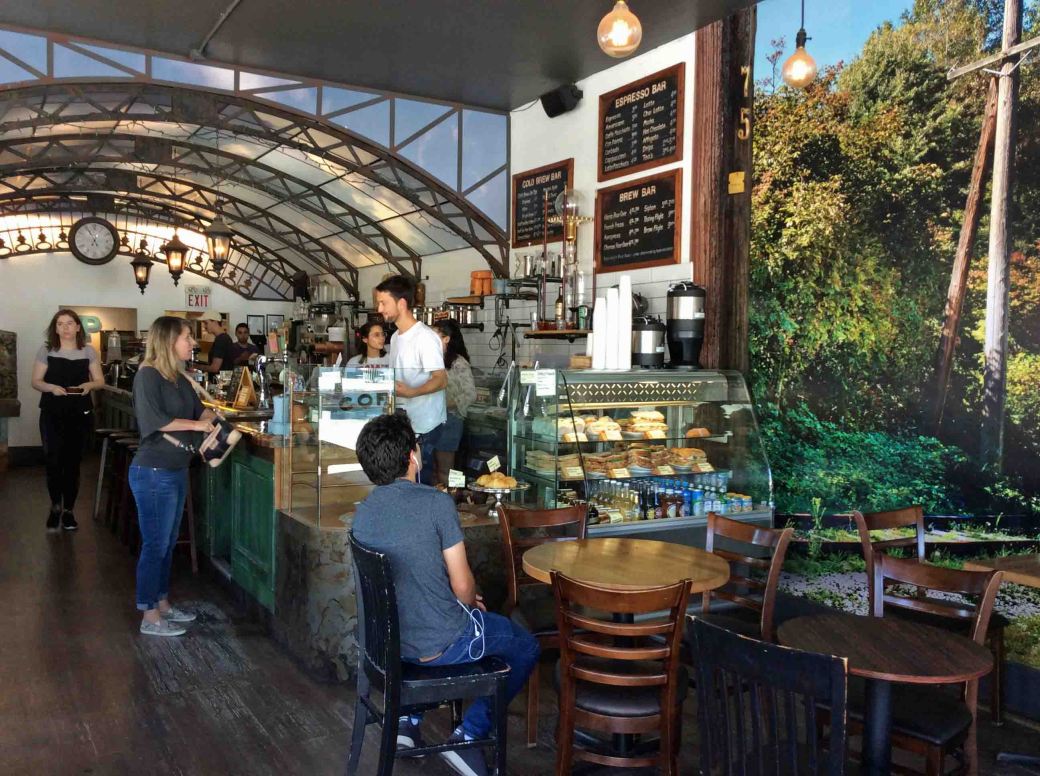
The café offers a large variety of coffees from their espresso bar, cold bar and brew bar. I enjoyed friendly service and pleasant jazz-fusion music as I ate lunch, a deliciously grilled turkey with cranberry sandwich.

Platform7-interior

Inside Platform 7 Coffee (photo by Nina Munteanu)

Third Hour: Federal Store

Federal Store outside3

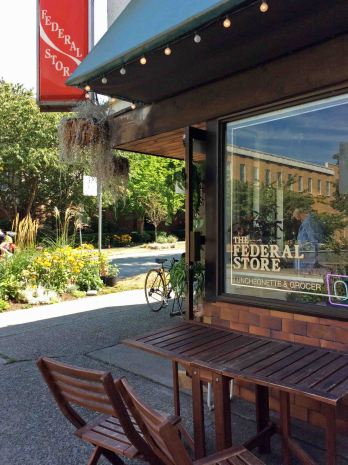
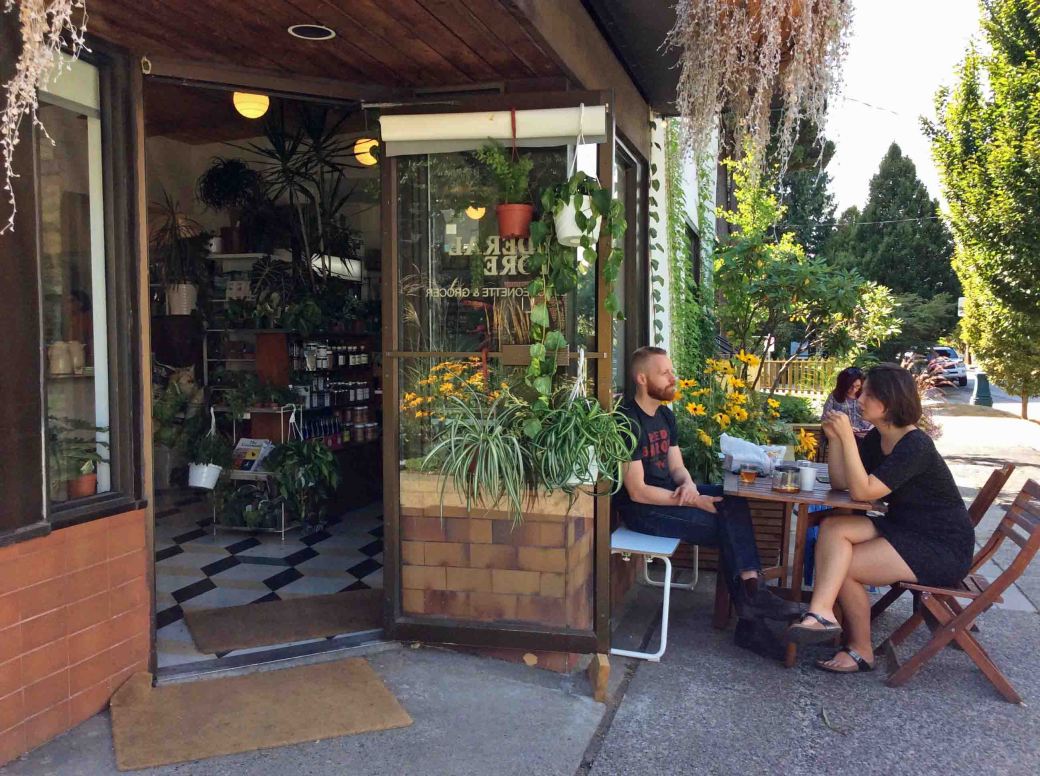
The Federal Store (photo by Nina Munteanu)

I continued east across town along Broadway into Mount Pleasant and walked south along Quebec Street toward 10th Avenue, where the Federal Store greeted me on the corner. Surrounded with cheerful flowers on all sides and a vegetable garden in the back, the café-grocer beckons me inside. I enter and feel like I’ve entered an alternative past: an integration of ’50s trompe l’oeil 3-D checker floor, plants, and homemade baking in the display with the avant-garde chic of wood and white.

I ordered an Earl Grey tea (for a change from coffee) and sat outside, where I enjoyed the loose tea as birds sang around me and bees buzzed among the flowers.

Mia Stainsby of the Vancouver Sun writes, “One block away, Main Street hyperventilates and cars exhale carbon monoxide. But here at Federal Store, it’s quiet and I’m caught in a time warp. The vintage room stirs up romantic notions of simpler times.”

Federal Store entrance2

The Federal Store (photo by Nina Munteanu)

Fourth Hour: Le Marché St. George

It grew hot as the day progressed, but I kept cool under the thick canopy of maples, chestnuts and ash trees as I proceeded southeast to my next destination. Once I’d topped the hill, I turned east on 28th and as I neared my next destination, I realized that I’d saved the best for last.

Le Marche St George-outside

Le Marche St. George (photo by Nina Munteanu)

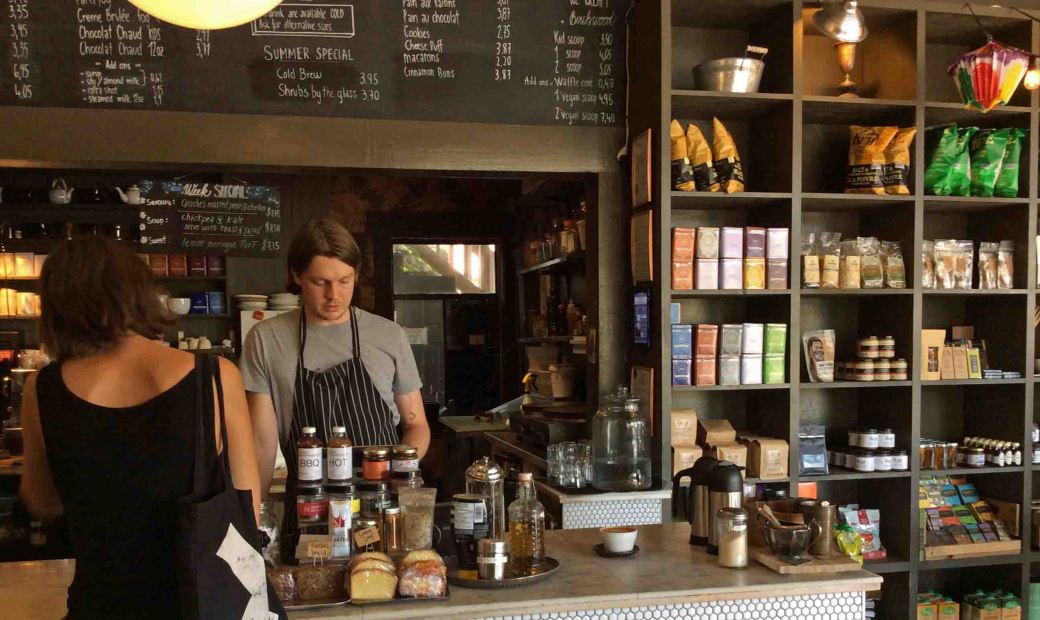
When I caught sight of Le Marché St. George, tucked behind several large poplar trees on the residential corner of 28th and St. George, I had to smile like a pilgrim finding a rest stop. Edith Piaff’s sultry voice sang through the open door of the large old house as cyclists and locals sat outside, drinking coffee and discussing their day. I entered the café-general store, walls high with diverse produce. It was no ordinary general store. This was the kind of place—I recalled my son telling me earlier—where you could buy your next Christmas gift. A cornucopia of interesting flotsam beckoned: from Woodlot candles and Maison Orphée mustard to black cyprus flake sea salt, flat breads, gourmet honey and pasta.

LeMarche StGeorge-inside

Inside Le Marche St. George (photo by Nina Munteanu)

I ordered a flat white, which turned into a cappuccino. The barista—let’s call him Etienne—apologized and was ready to start over but I accepted the drink with a smile; I’d noted that he’d really made a European cappuccino, which is essentially a flat white (a cappuccino with no dry foam). I took the coffee and sat outside under the shade of a poplar tree and opened my book, “Barkskins” by Annie Proulx.

Beside me, two young Asian men were discussing an article they’d read about how men get into and out of a bathtub. I realized I’d read the same line of my book several times when one fellow confided to the other that he thought he had sleep apnea and was slowly dying from oxygen deprivation over nights of not quite sleeping.

All in a summer’s day, I thought, and closed the book and my eyes, then put my feet up on the planter and smiled the smile of pure contentment.

mercurio-swanpuffs

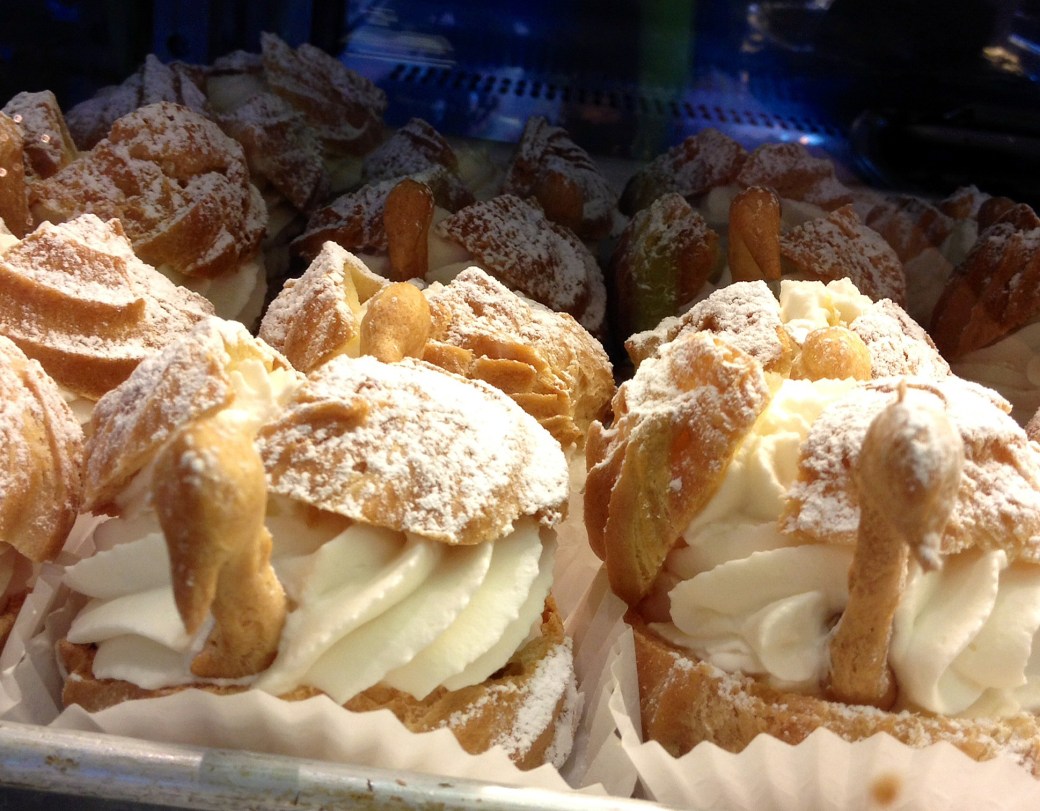
Swan cream puffs (at Mercuro L’Espresso Bar) (photo by Nina Munteanu)

p.s. No good sojourn is without its conclusion and mine began with the bus ride home as it neared the supper hour … It seems that by then all that caffein in my system was truly kicking in; I could hardly sit still during the forty minute ride and if I’d had a computer or pen and paper, surely would have speed written a tome the size of War and Peace by the end of my journey.

But I didn’t. So, I didn’t (tiny smile).

nina-munteanuNina Munteanu is an ecologist, limnologist and internationally published author of award-nominated speculative novels, short stories and non-fiction. She is co-editor of Europa SF and currently teaches writing courses at George Brown College and the University of Toronto. Visit www.ninamunteanu.ca for the latest on her books.

Nina Delivers Words and Worlds at WWC

SmokeSun-Rockies2

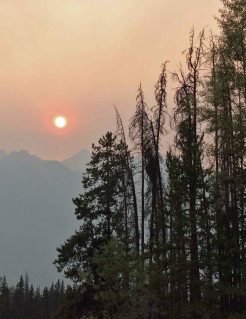
Smoky sun overlooking Rockies (photo by Nina Munteanu)

I recently travelled from Vancouver with Pixl Press director Anne Voute through the smoky Rockies to the 8th ‘When Words Collide’ writers festival in Calgary. The festival was held August 10-12, 2018 and brought together just under a thousand readers and writers in multi-genres to attend presentations and panels on writing and publishing.

The three-day writers’ festival ran a 10-track program that included informative panels, Blue Pencil Café, Editors Speed Mingle, pitch sessions with agents and publishers, and challenging workshops.

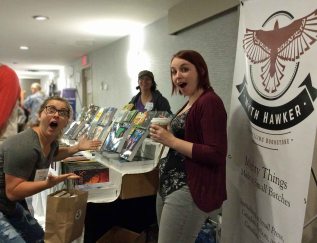
MythHawker table-WWC2018

Selling books at Myth Hawker

My books were on sale in the Merchant’s room at Sentry Box (a local Calgary bookstore) and Myth Hawker Travelling Bookstore. By the third day, Myth Hawker sold all available copies of Water Is…

I participated in panels, Blue Pencil Café, Editors speed mingle and several presentations and workshops:

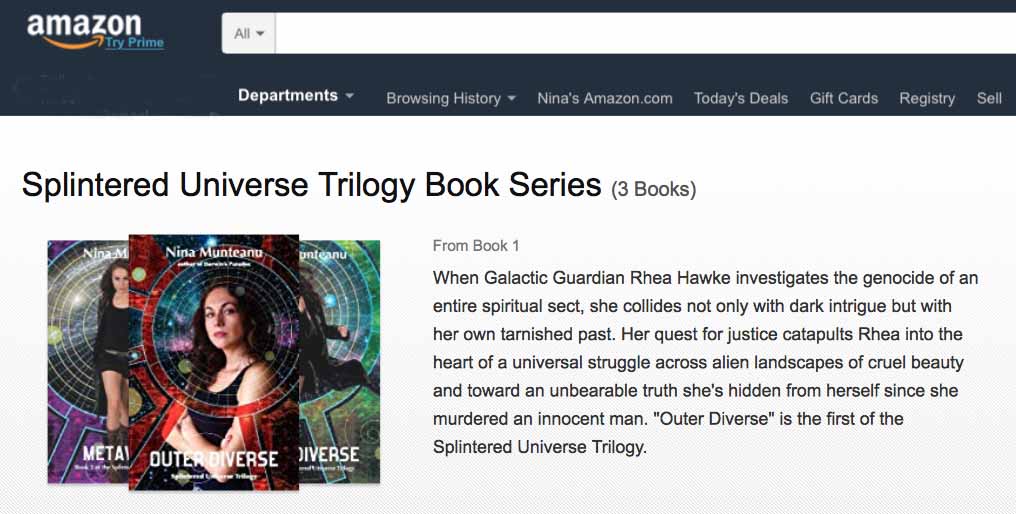
  • You Oughta Be in Audio: a discussion between me and audiobook narrator and producer Dawn Harvey on the making of the audiobooks for The Splintered Universe—now available in three formats, print, ebook, and audiobook. While paper sales dwindle, audiobooks continue to be the fastest growing segment of the publishing world with sales increasing by 30% year over year for the past decade.

Amazon-SplinteredUniverseTrilogy

  • World As Character: a presentation on creating a world with meaning. In most science fiction and fantasy, the world that we create is often very different from our own; in speculative fiction it’s often very similar; in contemporary fiction it is virtually the same. In all cases the world you build should embed in your story with layered metaphoric meaning. Nina Munteanu will discuss how to build a world that interacts with character to inform greater meaning in story.

FictionWriter-front cover-2nd ed-web copyJournal Writer-FRONT-cover-WEB copyI also networked my writing community for world examples to use in my Alien Guidebook on world building: The Ecology of Story: World as Character. Anticipated release by Pixl Press of this third guidebook in the Alien Guidebook series is Summer of 2019. In keeping with the branding of the series, artist Anne Moody is providing the cover illustration and Costi Gurgu the cover design for The Ecology of Story. Covers for the previous two books were also done by Anne and Costi.

Cover-everyday hero

‘Everyday Hero’ by Anne Moody

Earlier in the month, I travelled north with the Pixl Press director to Anne’s ranch in Vanderhoof to requisition a cover from her for the guidebook. After days of discussion and “show and tell” and after several pieces of art were tentatively selected, Anne pulled out a piece that stopped our search dead. ‘Everyday Hero’ depicts a lonely firefighter, trudging in the burning forest, tired gaze to the burning crown of a tree. Considering the subject matter and our world today, we thought this was perfect for my book.

MockUpEcology-2

cover design by Costi Gurgu, illustration by Anne Moody

Depicted in shades of blue, charcoal and brilliant red, the cover contrasts and harmonizes well with the brand typology and cover design by Toronto graphic artist Costi Gurgu.

.


nina-munteanuNina Munteanu is an ecologist, limnologist and internationally published author of award-nominated speculative novels, short stories and non-fiction. She is co-editor of Europa SF and currently teaches writing courses at George Brown College and the University of Toronto. Visit www.ninamunteanu.ca for the latest on her books.

Smoke Descending

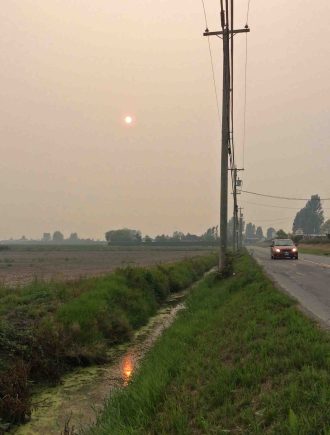
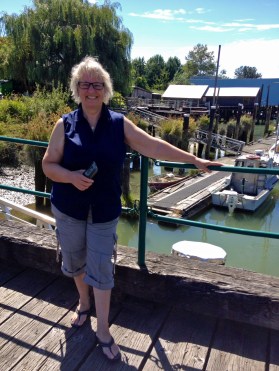
smoky sun-Ladner 6pm

Port Guichon in Ladner at 6 pm (photo by Nina Munteanu

Today—as writing friend Sylvia and I decided to have our coffees inside Stir Coffee House rather than its pleasant patio under the peach-coloured haze of Ladner—much of British Columbia was under high evacuation alert, was being evacuated or was under an air quality advisement. More than 20,000 people have evacuated their homes or are on alert while over 500 fires burn across the province.

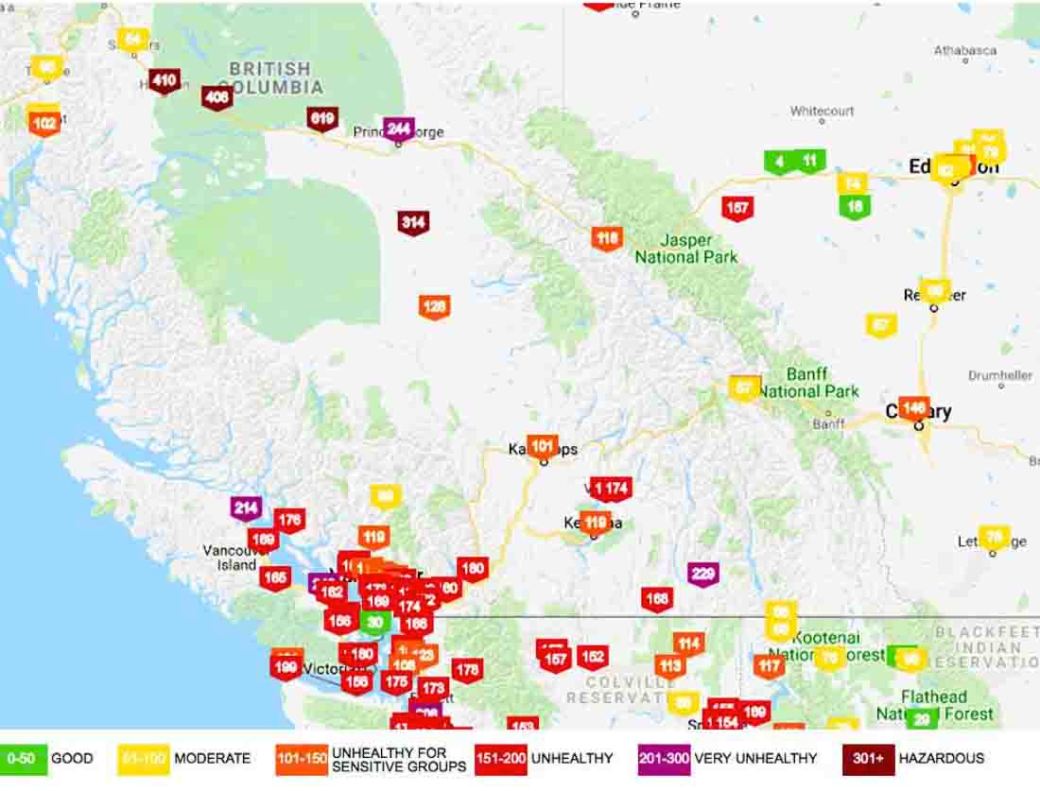
In Vanderhoof, where good friend Anne lives on her ranch, the air quality index is beyond the high limit of the scale (over 600 on a scale that only runs to 500).

An air quality advisory was issued for Metro Vancouver and the Fraser Valley on Tuesday. Then the smoke from higher elevations descended that night. Wednesday morning, I walked into Ladner village through a haze that smelled of old fire. An uneasy disquiet stirred inside me. Then I realized it; the air wasn’t that easy to breathe. The AQI was over 150 and steadily climbing. By the time Sylvia and I left the café, the AQI would measure over 200 (considered “very unhealthy”).


According to Environment Canada meteorologist Lisa Coldwells, a broad dome of high pressure is sitting on top of the province, providing only slight winds even at high altitudes. “The smoke doesn’t have a chance to dissipate. It just comes up off the fire(s) and it’s just sort of gently moving towards Vancouver, the southern tip of Vancouver Island and the most populated areas,” she says. A temperature inversion is making the situation worse, effectively trapping the smoke.

Fine particulate matter, also known as PM2.5 (measured as particles at or smaller than 2.5 µm) is causing most of the haze and driving the health warnings. These particles pose the greatest health risk. Much smaller than the width of a human hair these particles can go deep into the lungs and bloodstream, resulting in oxidative stress and affecting the heart. Smoke will also carry coarse particulate matter, known as PM10 (particles that measure 10 µm to 2.5 µm). Coarse particles are of less concern, given they are more easily caught by our filtering systems (like nose hairs and phlegm) but can irritate your eyes, nose and throat. Concentrations of PM2.5 greater than 25 micrograms per cubic metre prompt health warnings. According to Chris Carlsten, UBC public health associate professor, these higher levels dysregulate the normal balance in the lungs, leading to inflammation that causes difficulty in breathing and wheezing.

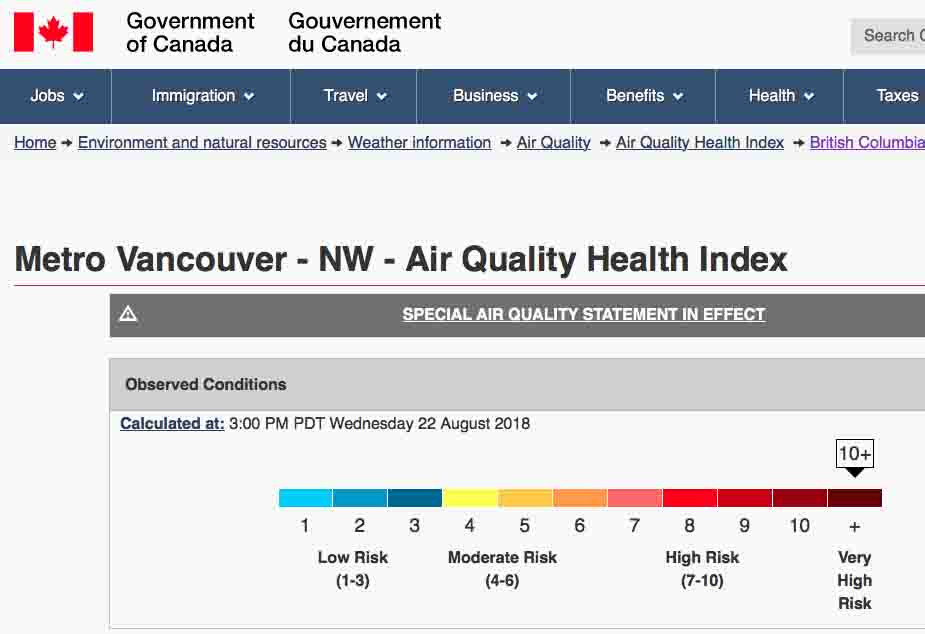
AQHI-MetroVancouver

The Air Quality Health Index (AQHI) was developed by Environment Canada, the BC Ministry of Environment and BC Ministry of Health, Metro Vancouver and the BC Lung Association to measure air quality on a scale. The index typically goes from 0 to 10 with 7-10 representing “high risk” conditions. Numbers higher than 10 are unusual and indicate a very high risk to health. The 0 to 10 index corresponds roughly to the Air Quality Index (AQI), which measures concentrations of particulate matter, sulfur dioxide, carbon monoxide, nitrogen dioxide and ozone and converts these to a number on a scale of 0 to 500.

AirQuality-Map

As you can see, an AQI of over 100 is moderately polluted and considered unhealthy, particularly for sensitive groups such as people with asthma, respiratory issues, elderly or small children. Today, Ladner’s AQI rose steadily during the day until it was well over 200, considered very unhealthy.

AQI-concentrations-health

According to Tiffany Crawford of the Vancouver Sun, the air quality in Vanderhoof—30 kilometres south of the more than 86,000-hectare Shovel Lake wildfire—measured over 600 on the AQI; more than double the level considered hazardous to health. The AQI in Houston measured 410 and in Burns Lake it was 408—all levels way beyond ‘hazardous’.

To give you an idea of how that feels, someone developed an app using Berkley Earth’s findings on the equivalence between air pollution and cigarette smoking. According to Berkley’s formula one cigarette smoked per day equals 22 µg/m3 of fine particulate matter.

PM2.5-cigaretts

The current air quality rating in Vancouver measured 10 today, which is like smoking 7.4 cigarettes. In Abbotsford in the Fraser Valley, that comes to 8.3 cigarettes. Further north in Fort St. John you’re smoking 11.8 cigarettes and in Prince George you’re smoking 16.7 cigarettes. By contrast, in Gwallior India—one of the most air-polluted places in the world—the equivalent daily cigarettes smoked is only 3.5.

SmokySun Ladner

Smoky sun over Ladner at 6 pm (photo by Nina Munteanu)

As the coffee machines ground and wheezed with the sweet aroma of coffee, Sylvia and I talked about an exciting project that involved ecology and empowerment. Of course, we talked about the wildfires too. How could we not? It was on everyone’s mind today. With such overt signs, who couldn’t think of them. It was the smoke. We saw it coil and loiter along the street corners. We smelled it. Breathed it in. Felt it inside us. The remains of so many trees that had burned to the ground. “The souls of trees,” as good friend Anne had blurted out. Their ashes and smoke had soared high into the atmosphere and now descended on us, kilometres away. I couldn’t help feeling a sadness. Not just for so many people in hardship. But for so much living tissue, burnt up in smoke.

Sylvia later told me that she didn’t make her next appointment in Vancouver. Feeling the effects of the smoke, she had decided to go home, where her HEPA filter awaited. Smart move, Sylvia.


nina-munteanuNina Munteanu is an ecologist, limnologist and internationally published author of award-nominated speculative novels, short stories and non-fiction. She is co-editor of Europa SF and currently teaches writing courses at George Brown College and the University of Toronto. Visit www.ninamunteanu.ca for the latest on her books.


Coming Home to Water at Stir Coffee House

Nina-LadnerPier copy

Nina on Ladner pier

For several years I’ve been returning from Toronto—where I teach at The University of Toronto and George Brown College—to Ladner, BC to spend my summers.

I cherish the time as a chance to see family and friends and to enjoy a different pace of life—one I enjoyed when I used to live and work here and where I brought up my family. We lived in a comfortable house on a quiet street and our back yard faced one of Ladner’s sloughs and beyond that a vast tract of farmland, most often scored with rows of potato plants. My son Kevin had grown up swimming in the slough and jumping off the rope swing his dad had constructed. Pilgrims from close and far came to use that swing and enjoy the murky waters of our back slough.

Rope swing copy

Kevin on the rope swing

Parties at our place always involved water and getting wet. We even had a fleet of kayaks and canoes that we took on paddling adventures through farmland and under highways, with the occasional siting of muskrat, carp, heron, or eagle. Coyotes whined and barked at night as bats dipped through the night air, foraging for food. My female cat poised for the hunt and sometimes brought in her “catch of the day.”

Cathleen-Nina-Ladner1 copy

Cathleen and Nina at Stir

This summer, good friend and writer Cathleen Chance Vecchiato decided I should give a talk to my old community on Water Is… my recent bestselling book on water. With that, she immediately made it happen. The venue was already decided: the best café in Ladner, Stir Coffee House. I’d taken Cathleen there the previous year as part of a tour of the old farming and fishing village. Cathleen was charmed by the village atmosphere.

Stir Coffee House was happy to host a talk and Robert and Cathleen proceeded to plan it. Ian Jacques at The Delta Optimist wrote a wonderful piece on my journey, the talk and the book.

Nina-WaterIs-OPTIMIST2018 copy

On the evening of August 16th a growing crowd of people, eager for more on this precious substance flowed into the café until there was hardly a seat left in the cozy venue. I recognized some locals as well as colleagues from my environmental consulting days in Vancouver. It was a good crowd.

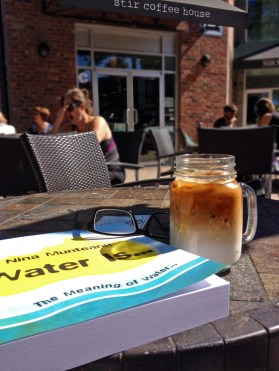
Coffee-Water-StirCoffeeHouse copy

Water Is… snug against an iced latte

I shared the story of how I came to write this book—not a limnology book for non-scientists, as I thought I was going to write—but something that was more than science. Something that encompassed so much more about water: what it means to each of us and how we still don’t understand its many magical anomalous properties. I confided my discovery that the synchronicity of important moments in my life were all connected to water, which compelled the book to evolve into a study of “what water means to us.” Good friend Emmi Itäranta, author of Memory of Water, called Water Is… a biography of water.

Travelling the world has helped me realize that I was blessed with an abundance of water. I lived my entire life in a country of plentiful and healthy water. And for most of that time I didn’t even realize it. Canada holds one fifth of the world’s fresh water in lakes, rivers, and wetlands, as well as in our underground aquifers and glaciers. Canada’s wetlands, which cover more than 1.2 million square kilometres, makes Canada the largest wetland area in the world.

Nina-Hope-Trevor Stir copy

Nina with hosts Hope and Trevor

Perhaps it is no coincidence that Canada is steward of the world’s largest wetlands. Wetlands include marshes, swamps, fens, and bogs, all irreplaceable habitat for a huge diversity of nesting, feeding and staging waterfowl, reptiles, amphibians and mammals—many at risk. Wetlands provide a major filtration system, removing contaminants, improving water quality and renewing water’s vitality; wetlands serve as reservoirs, controlling and reducing flooding toward a more balanced hydrological cycle. Wetlands are a source of oxygen and water vapour, serving a vital role in our global atmospheric and climatic cycles. As ecotones— transitional areas—wetlands protect coasts from erosion and provide exceptional opportunity for boundary interaction and the emergence of vitality. Like a good metaphor, wetlands “recognize” and encompass similarities between dissimilarities. Wetlands powerfully connect. Canada’s strong multi-cultural policies and its open tolerance in embracing and celebrating diversity makes it the “wetland” of the world.

When I turn on the water tap in my house in Canada, it is pure drinking water. I don’t need to boil it or filter it or test it for impurities and toxins. I am confident that it will nourish and hydrate me like water should. I can bathe without restriction. I can play with it.

My water hasn’t changed; but I have. I do not take it for granted. I know that I am blessed.

I am home and I am so grateful.


In the Moment-anthology copyPart of this article is an excerpt from Nina Munteanu’s “Coming Home to Water” first published in “In the Moment” (A Hopeful Sign) edited by Gary Doi, September 2016; reprinted in “The Earth We Love” (Mississauga Writers) edited by Elizabeth Banfalvi, September 2018; and “The Literary Connection IV: Then and Now” (IOWI) edited by Cheryl Antao Xavier, upcoming 2018.


nina-munteanuNina Munteanu is an ecologist, limnologist and internationally published author of award-nominated speculative novels, short stories and non-fiction. She is co-editor of Europa SF and currently teaches writing courses at George Brown College and the University of Toronto. Visit www.ninamunteanu.ca for the latest on her books.


“Water Is…” at The Bookshelf Book Fair in Newmarket

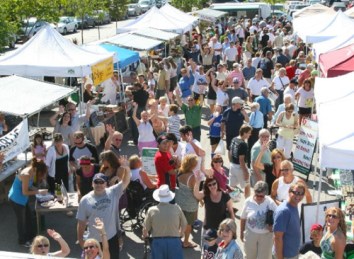
Newmarket-farmers market

Newmarket farmer’s market

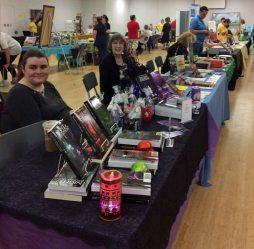
Every summer, the Writers’ Community of York Region (WYRC) holds a book fair (The Bookshelf) at the Newmarket Community Centre & Lions Hall, next to the farmer’s market. The fair showcases over 40 local authors, publishers and artisans through readings, discussions and a tradeshow that features writers’ works in a variety of genres from science fiction and fantasy to mystery, inspiration, science, history, self-help and children’s literature. I participated in this year’s festival on July 7, 2018.

Reading from “Water Is…The Meaning of Water

Nina-Bookshelf booksale1

Nina at her book table

At the Reading Lounge onstage in the adjoining Farmers’ Market, I read from my Amazon-bestselling “science-for-lay public” book Water Is…The Meaning of Water. As children and their parents played in the main water feature behind me, I introduced the term “limnology” (someone who studies freshwater) and talked briefly about the meaning of water with an audience eager to learn.

“We can’t live without it, so maybe we should start respecting it; this beautifully designed book by a limnologist looks at water from 12 different angles, from life and motion and vibration to beauty and prayer,” said Canadian author Margaret Atwood when she selected Water Is… as her first pick in the New York Times ‘Year in Reading.’

Water Is-COVER-webEach of the 12 chapters completes the phrase “Water is…” with terms that evolve from science into philosophy and spirituality; terms such as “magic”, “life”, “motion”, “communication”, “memory”, “rhythm”, “vibration”, “beauty”, “story”, “wisdom”, “prayer”, and finally “joy”.

The book is, after all, a celebration of water.

I first shared some history on the making of the book. I shared that the pursuit of this book was oddly serendipitous and “entangled.”

kevin-nina-close

Nina and son go hiking

“Early on, during the research and writing of this book, I discovered that this project on water had become a gestalt watershed for all the important moments in my life. Places I’ve been. Things I’ve learned. People I’ve met and with whom I’d had surprising discussions and realizations. All spanning many years. And many of them totally unrelated. And yet, now, with a sudden flood of context, their significance has transcended into a new fabric of meaning through surprising connection. Like puzzle pieces cooperatively arranging themselves into a symbiotic pattern of synchronicity.”

Writer and philosopher Jake Kotze suggests that, “Synchronicity happens when we notice the bleed-through from one seemingly separate thing into another—or when we for a brief moment move beyond the mind’s divisions of the world.” Synchronicity and serendipitous discovery, like metaphor, appear when we change the way we look at things.

“Serendipitous discovery comes to us through peripheral vision. Like our muse, it doesn’t happen by chasing after it; it sneaks up on us when we’re not looking. It comes to us when we focus outward and embrace our wonder for this world. When we quiet our minds and nurture our souls with beauty. It is then that what we had been seeking naturally comes to us. Like a gift.”

For my reading, I chose several summary quotes that appear at the end of each chapter of the book. These quotes were also featured earlier this year in “Morphology”, an art exhibit in Mississauga that honored the creation of a marsh park as part of Jim Tovey’s vision for the Lakeview Site and the Waterfront Connection:

Water-travel

Quote from “Water Is…” on display at Mississauga Civic Centre

Wonder Woman Respects Water

“Respect water!” says Wonder Woman (aka cosplayer Jes Tongio). Wonder Woman was careful to point out with her wise Amazonian sword of Athena (goddess of wisdom)—forged by Hephaestus—that “Water Is…” provides a doorway to wonder and responsible action.

WonderWoman-WaterIs2a

Wonder Woman (Yes Tongio) with “Water Is…”

Other Authors at The Bookshelf

Bookshelf-venue2

Clair McIntyre and Merridy Cox

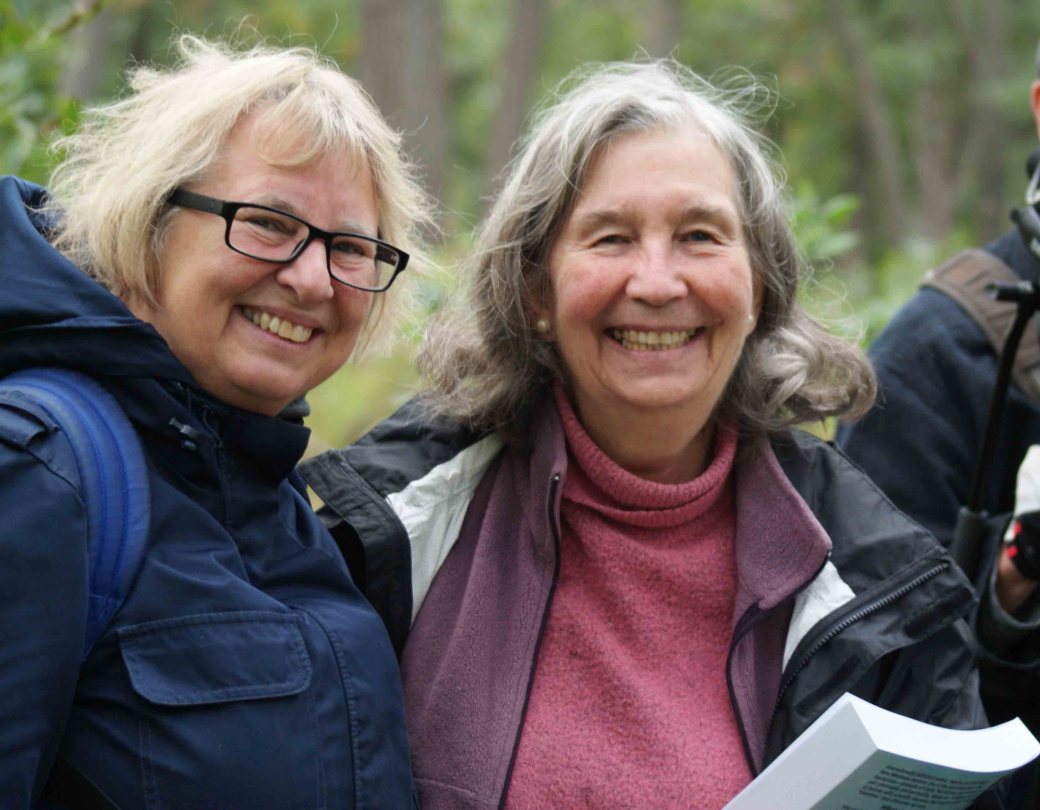
I met and visited with other fellow writers, including Clair McIntyre, author of YA/fantasy, and crime writer Joan O’Callaghan.

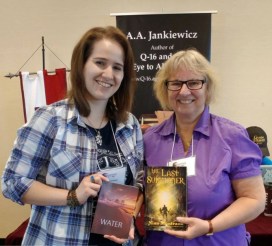
Fellow authors who read at Reading Lounge included Douglas Smith, award-winning author of “Wolf at the End of the World”; and A.A. Jankewicz,

Nina-Agnes-LIMESTONE

A.A. Jankewicz with Nina Munteanu

fantasy author of Q16, and who’s short story appears in the Water Anthology I edited for Reality Skimming Press; and Gabriela Casineanu read from her bestselling book Introverts: Leverage Your Strengths for an Effective Job Search.

Claudiu Murgan read from Decadence of the Soul; he is launching his recent science fiction novel Water Entanglement next month.

Myth Hawker Travelling Bookstore was also at the festival. Specializing in Canadian authors, Canadian content, and Canadian small press, they  carry an extensive list of local Canadian authors wherever they go across Canada.

The Immigrant Writers Association (IWA)

Nina-IWA-BookshelfinNewcastle

Gabriela, the two Andreeas, Nina and Claudiu

Nina IWA memberThe IWA was also represented, along with member-writers Gabriela Casineanu, Andreea Munteanu, Claudiu Murgan and Andreea Demirgian.

The Immigrant Writers Association provides programs, activities, and services that empower and support immigrant writers in their journeys. According to their website, the goal of the IWA is to  “encourage immigrants to express themselves through writing, to bring more awareness, compassion, and peace into the world.”

As second-generation immigrant daughter to German and Romanian parents, I recently joined the IWA. I look forward to mentoring new writers and providing workshops and lectures to share my experience as a writer, editor, and teacher of fiction and non-fiction.


MJ Moores-Bookshelf

M.J. Moores, chair of the board and founder of Bookshelf

nina-munteanuNina Munteanu is an ecologist, limnologist and internationally published author of award-nominated speculative novels, short stories and non-fiction. She is co-editor of Europa SF and currently teaches writing courses at George Brown College and the University of Toronto. Visit www.ninamunteanu.ca for the latest on her books.