The Invasion of Giant Crayfish Clones & A Diary in the Age of Water

OLYMPUS DIGITAL CAMERA

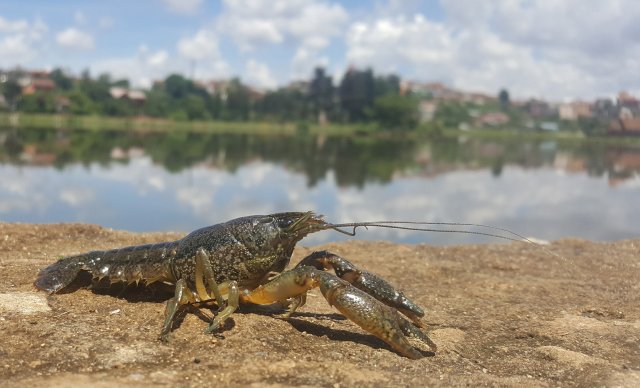
Marmorkrebs, giant marbled crayfish

In 2018, scientists reported that the giant marbled crayfish (Marmorkrebs [German]: Procambarus fallax f. virginalis) recently developed the strategy of being entirely female and cloning itself via parthenogenesis1; the female doesn’t require a male crayfish to fertilize its eggs. Despite the cloning procedure that makes them virtually identical genetically, the crayfish vary in size and pattern—no doubt due to epigenetics.2

First discovered by a German aquarium in the mid-1990s, these crayfish that developed from Florida-Native crayfish have migrated into the wild and are aggressively spreading in Europe, at the expense of the native European crayfish. The 8 to 12 cm long Marmorkrebs has been observed in Germany, Italy, Slovakia, Sweden, Japan, and Madagascar. The marbled crayfish prefers a warm and humid climate, suggesting that climate change may influence its distribution and success. The clones also thrive in a wide range of habitats—from abandoned coal fields in Germany to rice paddies in Madagascar, writes Carl Zimmer of the New York Times.

Given that every individual Marmorkrebs can reproduce (the advantage of parthenogenesis is that the female crayfish doesn’t need to find a mate—it just gives birth), one European scientist has dramatically suggested that, “we’re being invaded by an army of clones.” Zimmer shares the results of Dr Lyko and his team on how the all-female Marbokrebs came to be:

“Scientists concluded that the new species got its start when two slough crayfish mated. One of them had a mutation in a sex cell — whether it was an egg or sperm, the scientists can’t tell. Normal sex cells contain a single copy of each chromosome. But the mutant crayfish sex cell had two. Somehow the two sex cells fused and produced a female crayfish embryo with three copies of each chromosome instead of the normal two. Somehow, too, the new crayfish didn’t suffer any deformities as a result of all that extra DNA.” 

In its first couple decades, [Marmorkrebs] is doing extremely well, writes Zimmer. But sooner or later, the marbled crayfish’s fortunes may well turn, he adds. “Maybe they just survive for 100,000 years,” Dr. Lyko speculated. “That would be a long time for me personally, but in evolution it would just be a blip on the radar.”

marbled-crayfish2

Marmorkrebs

But what if this speculation isn’t the whole scenario? What if Marmorkrebs is just another example of climate change-induced adaptation and change through epigenetics? While climate forcing and habitat destruction is causing the extinction of many species; other species are, no doubt, adapting and exploiting the change. These generalists (born with change inside them) are poised to take over in Nature’s successional march.3

Bdelloid-rotifer-Philodina-gregaria

Bdelloid rotifer

Parthenogenesis and epigenetic change isn’t new. In fact, it’s very old … All-female bdelloid rotifers have been cloning a sisterhood for millions of years and using incorporated foreign genes through horizontal gene transfer4 (essentially stealing genetic material from their environment) to maintain a healthy diverse population. What’s new and weird is that this crayfish “suddenly” developed this ability—probably through epigenetic means (given this entire group is versatile in reproductive strategies in general). The real question none of the articles that covered this phenonemon ask is: WHY? Why is it happening NOW?

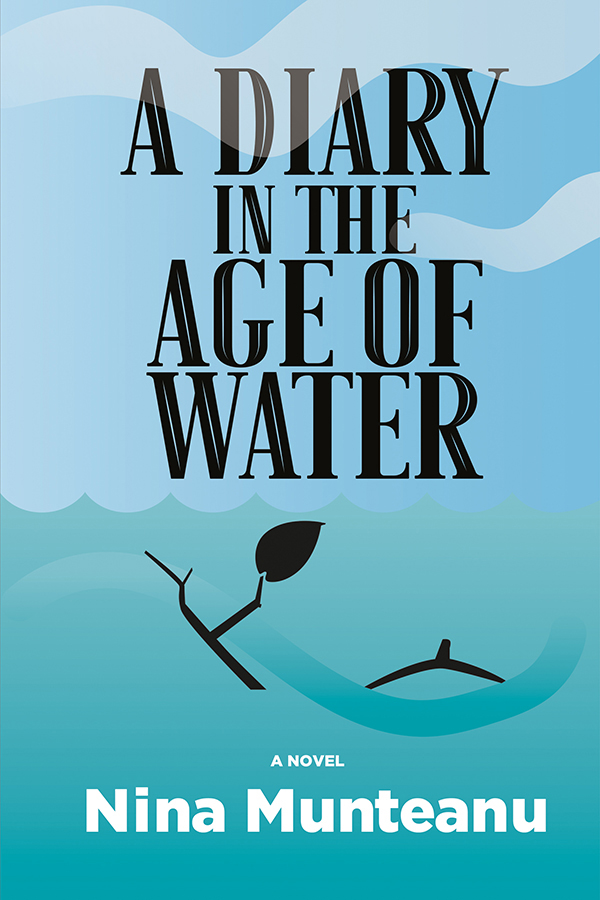
In my latest book A Diary in the Age of Water (due for release in May 2020 by Inanna Publications) I explore this “change” in a unique way:

Diary Water cover finalKyo finds a copy of Robert Wetzel’s Limnology on a lower shelf of the “L” section. It stands tall with a thick green-coloured spine. This is the book that Hilda, one of the Water Twins, had saved from the book burnings of the Water Age. A present from her limnologist mother. Hilda kept it hidden under her mattress. When CanadaCorp police burst into their home and dragged her mother away, Hilda was left alone with Wetzel. The limnology textbook was forbidden reading because its facts were no longer facts. 

After some coaxing, Myo shared a most bizarre tale of that time which led to the catastrophic storms and flood. What the governments hadn’t told their citizens—but what each citizen felt and knew—was that humans had lost the ability to reproduce. Then a spate of “virgin births” throughout the world spawned what seemed a new race of girls—‘deformed’, blue and often with strange abilities. Many considered them abominations, a terrible sign of what was in store for humanity—a punishment for their evil ways. Then, as quickly as they’d populated the world, these strange blue girls all disappeared without a trace. They simply vanished and became the Disappeared. Myo told her that some people called it a Rapture, a portent of the end times. Others suggested that the girls had all been murdered—a genocide, organized by what was left of the world government. 

Then … the storms … changed the world.

–“A Diary in the Age of Water” 

  1. Spontaneous Parthenogenesis: From the Greek Parthenon “virgin” and genesis “creation”, parthenogenesis is a natural form of asexual reproduction in which growth and development of embryos occur without fertilization. In animals it involves development of an embryo from an unfertilized egg; in plants it proceeds through apomixis. The production of only female offspring by parthenogenesis (such as with bdelloid rotifers) is called thelytoky.
  2. Epigenetics is the study of changes in organisms caused by the modification of gene expression (such as environmental triggers) rather than alteration of the genetic code itself. If genetics represents the hardrive of a computer, epigenetics is its software.
  3. Niche (the role or job of an organism or population) can be broad (for generalists) or narrow (for specialists). A specialist has superior abilities to exploit the narrow environmental conditions it lives in and is splendidly adapted to a fixed stable environment; generalists, less successful at exploiting than the specialist but more widely adaptive, can thrive in less stable environments that present a wider range of conditions.
  4. Horizontal gene transfer is the movement of genetic material between organisms other than by the vertical transmission of DNA from parent to offspring through reproduction. HGT is an important factor in the evolution of many organisms.

A Diary in the Age of Water will be released in May 2020 by Inanna Publications, Toronto, Canada.


nina-2014aaa

Nina Munteanu is a Canadian ecologist / limnologist and novelist. She is co-editor of Europa SF and currently teaches writing courses at George Brown College and the University of Toronto. Visit www.ninamunteanu.ca for the latest on her books. Nina’s bilingual “La natura dell’acqua / The Way of Water” was published by Mincione Edizioni in Rome. Her non-fiction book “Water Is…” by Pixl Press (Vancouver) was selected by Margaret Atwood in the New York Times ‘Year in Reading’ and was chosen as the 2017 Summer Read by Water Canada. Her novel “A Diary in the Age of Waterwill be released by Inanna Publications (Toronto) in June 2020.

Reminiscing on 2019…

Diary Water cover finalThis week is a wonderful time to reflect on the past year, 2019. It’s also a good time to be thankful for the things we have: loving family, meaningful friendships, pursuits that fulfill us and a place that nurtures our soul.

It’s been a very good year for my writing…and my soul…

Last year I received a writer’s dream Christmas gift: a signed contract with Inanna Publications to publish my ninth novel: “A Diary in the Age of Water” about four generations of women and their relationship with water during a time of extreme climate change. The book will be released by Inanna in May 2020 with a launch in Toronto on May 26th at Queen Books as part of the Toronto International Festival of Authors. The book is now available on Amazon.ca for pre-order!

Publications   

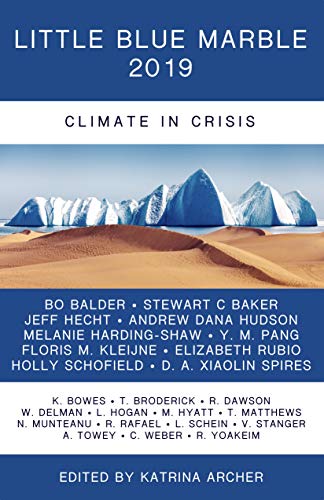
LBM 2019 ClimateInCrisis2019 saw several of my publications come out. In January 2019 the reprint of my story “The Way of Water” was published by Little Blue Marble Magazine. It will reappear in a print and web anthology devoted to climate fiction called “Little Blue Marble 2019: Climate in Crisis” on December 27, 2019. That will be the sixth time “The Way of Water” has been published!

EcologyOfStoryImpakter Magazine also published my article “How Trees Can Save Us,” an essay on five writers’ perspectives on trees and humanity’s relationship with them.

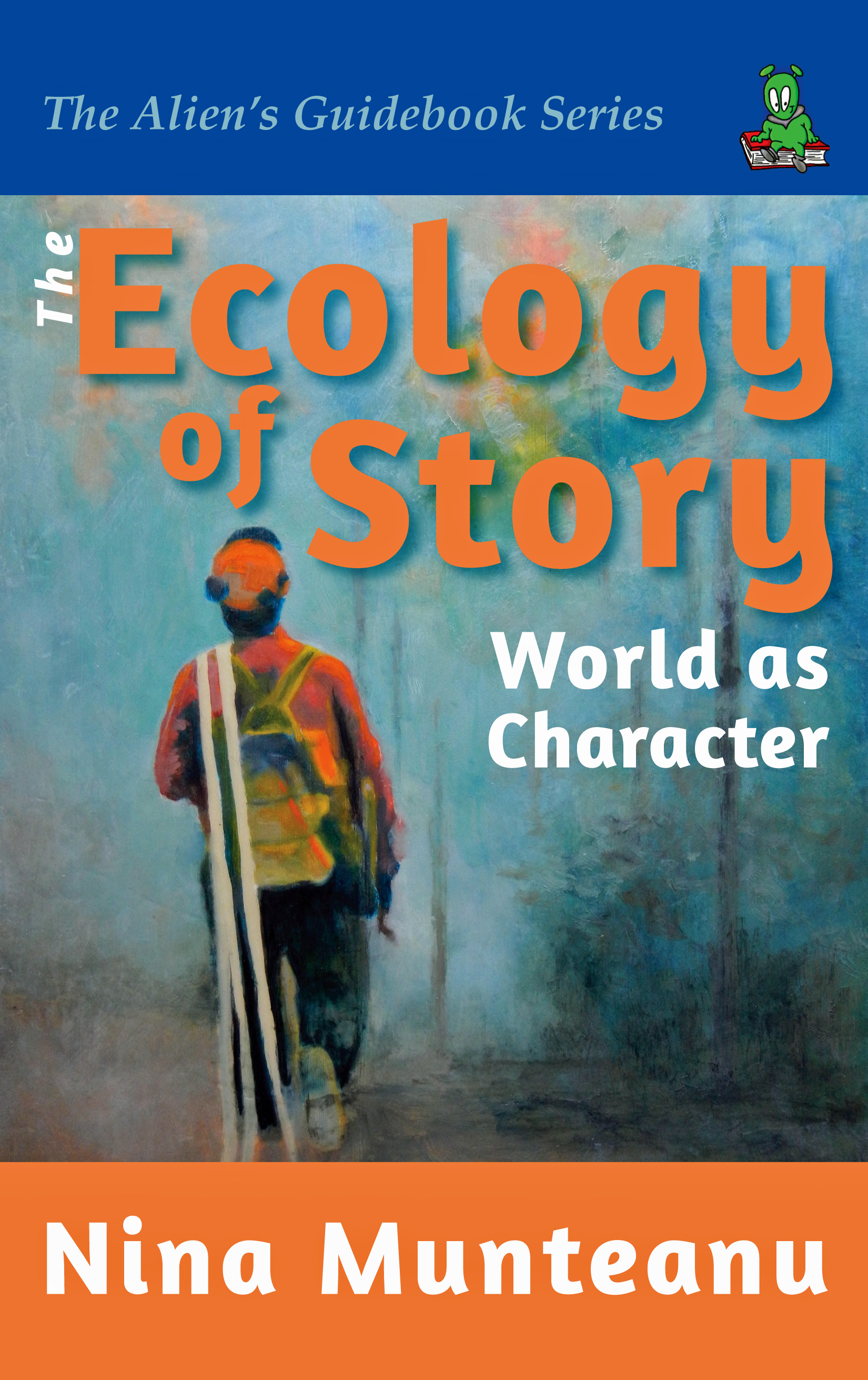
In June, I published the 3rd guidebook in my Alien Writing Guidebook series—called “The Ecology of Story: Worlds as Character” with Pixl Press in Vancouver. The launch on July 4th at Type Books was well attended with presentations by several local writers and artists.

Nina GroupOfSevenReimagined

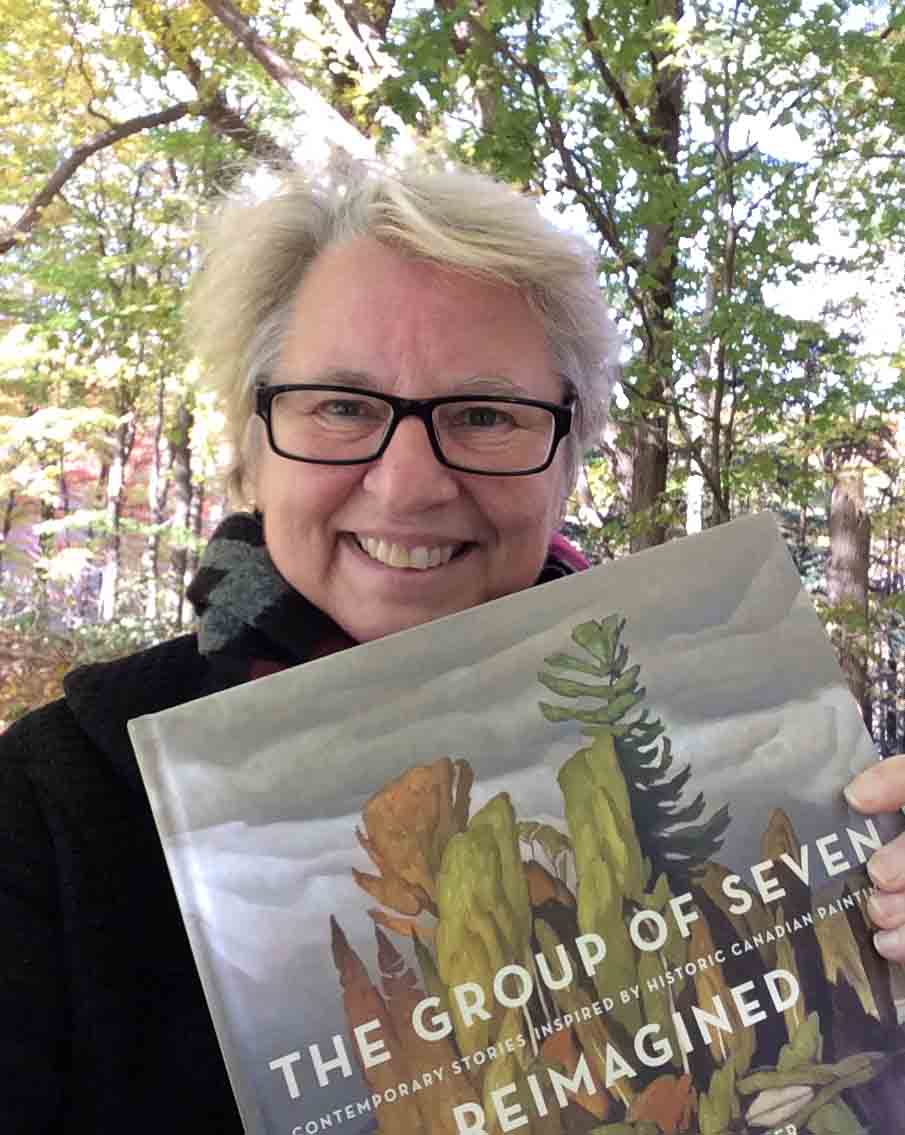
Nina Munteanu with The Group of Seven Reimagined

I was commissioned along with twenty other writers to write a piece of flash fiction for a commemorative anthology to the Group of Seven, entitled “The Group of Seven Reimagined,” with Heritage House in Vancouver.

I’d never written flash fiction before and it was both exciting and challenging to write. I was asked to pick an artist’s piece as inspiration for a flash fiction story. The beautiful hardcover book was released October 2019.

October also saw another of my pieces published. I was asked to contribute something to the Immigrant Writer’s Association’s first anthology, entitled “Building Bridges,” about the immigrant’s experience in Canada. While I’m not an immigrant, I did share my parents’ experience who had immigrated to Canada from France. I wrote a piece on the hero’s journey.


Age of Water Podcast 

AgeOfWater-HomePage

On November 22, 2019, co-host Claudiu Murgan and I launched the Age of Water podcast.  The podcast covers anything of interest from breaking environmental news to evergreen material on water and the environment. We interview scientists, journalists, writers, academia and innovators who share their knowledge and opinions about the real state of the environment and what committed individuals and groups are doing to make a difference. We talk about the problems and we talk about the solutions.

Appearances & Media / News

On June 22, I traveled to Port McNicoll at Georgian Bay to help give a writing intensive, hosted by publisher Cheryl Antao-Xavier at IOWI. I was also invited to speak at The Word is Wild Literary Festival in October. The event took place in Cardiff, in the Highlands of Ontario. In late October, I traveled with friend and editor Merridy Cox to Vermont to give a presentation on water to the Lewis Creek Association. Entitled “Reflections: The Meaning of Water”, the talk focused on our individual connection with water. I will be reprising this talk at several venues this year.

Nina Munteanu

Nina Munteanu with a metasequoia in the Beaches (photo by Richard Lautens)

I was also featured in the news a few times. The Toronto Star asked me to answer two questions about climate change and the Vancouver Sun published an Oped of mine entitled “Why Women Will Save the Planet.”

Research & Adventure

Cedar Giants copy

Giant red cedars in Lighthouse Park (photo by Nina Munteanu)

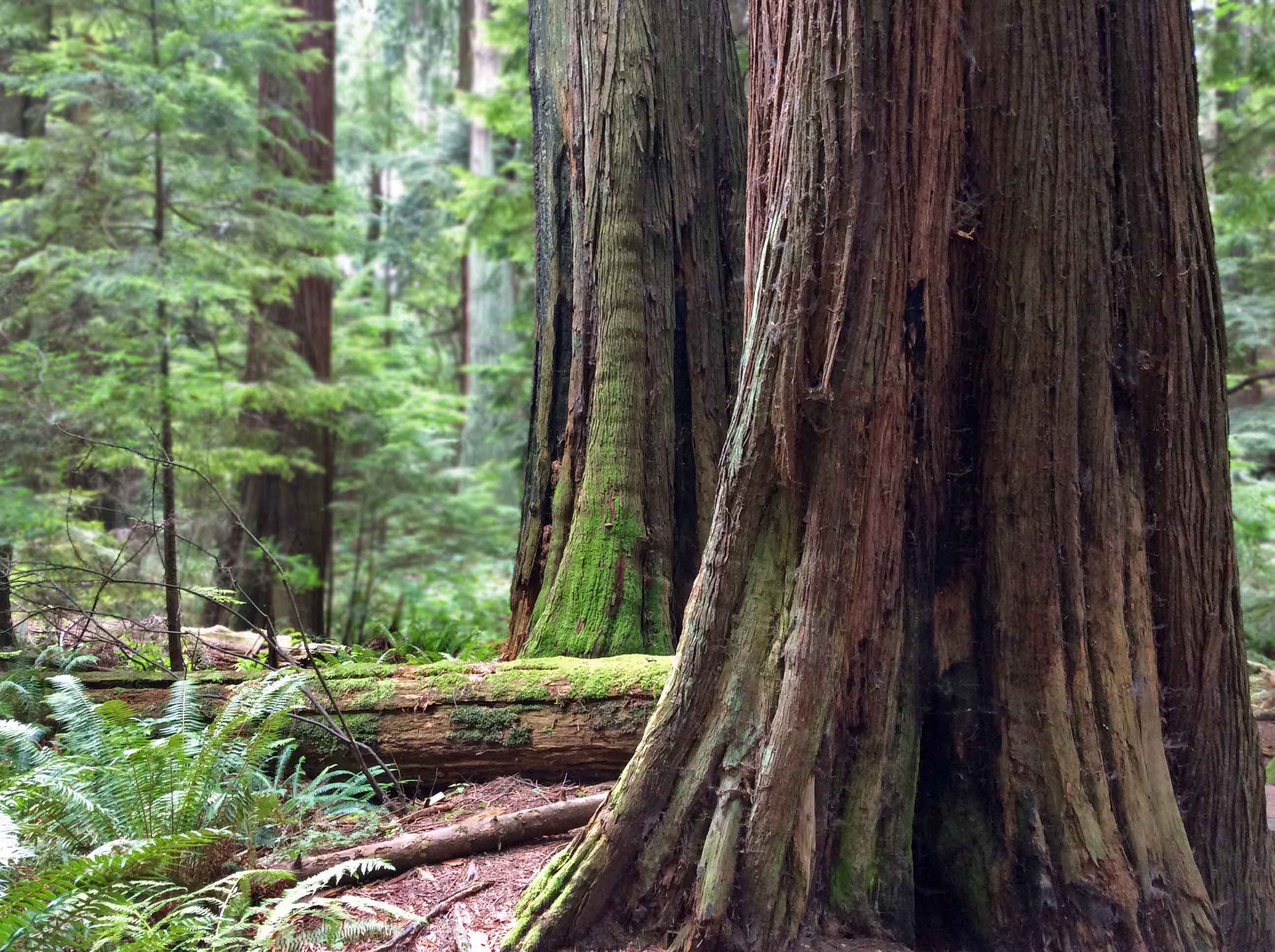
In Summer 2019 I travelled to British Columbia to visit friends and family in Vancouver and elsewhere. Following a dream of mine, I travelled with good friend Anne to Port Renfrew on Vancouver Island to see the ancient forests and the west coast. I had wanted to see these old-growth forests for some time since I’d been to Carmanah many years ago. The ancient forests were magnificent and breathtaking and so nourishing for the soul. Recognizing these forests as living cathedrals, I felt a deep reverence. The silent giants rose from wide buttressed bases into the mist like sentinels, piercing the heavens. A complex tangle of beauty instinct whispered in the breeze with the pungent freshness of pine, cedar and fir. Anne and I even had a chance to hug Big Lonely Doug, the second tallest Douglas fir tree in Canada.

Nina looking up dougfir copy 3

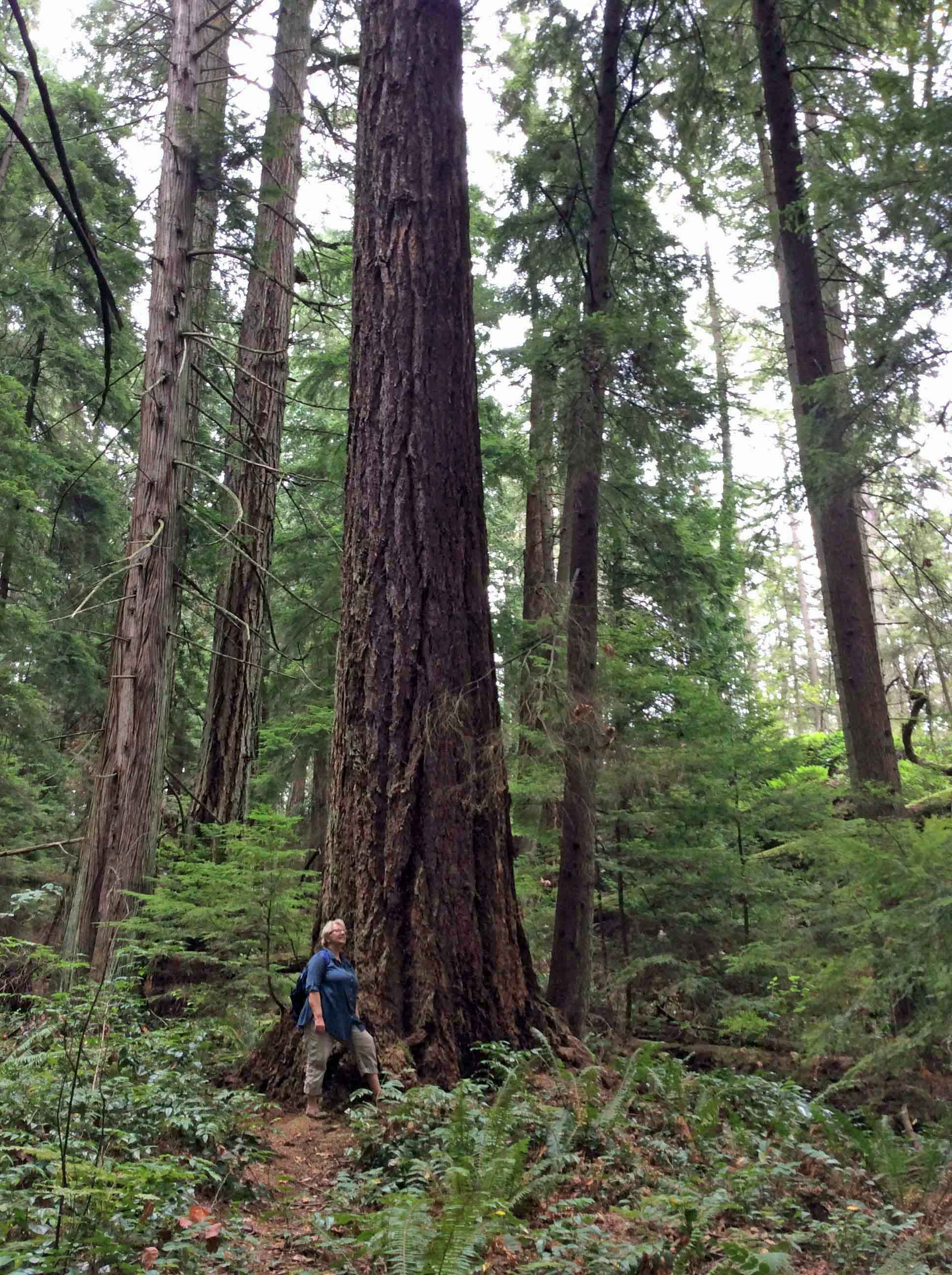
Nina Munteanu stands, dwarfed, by a Douglas fir tree in Lighthouse Park (photo by Margaret Ross)

While in British Columbia, I also visited a small enclave of old-growth forest in the heart of Vancouver at Lighthouse Park (West Vancouver). I went with son Kevin and then again with good friend Margaret. This majestic forest of redcedar, Douglas fir, spruce and hemlock is deeply awesome and humbling. And a real gem for the city.

Nina boot

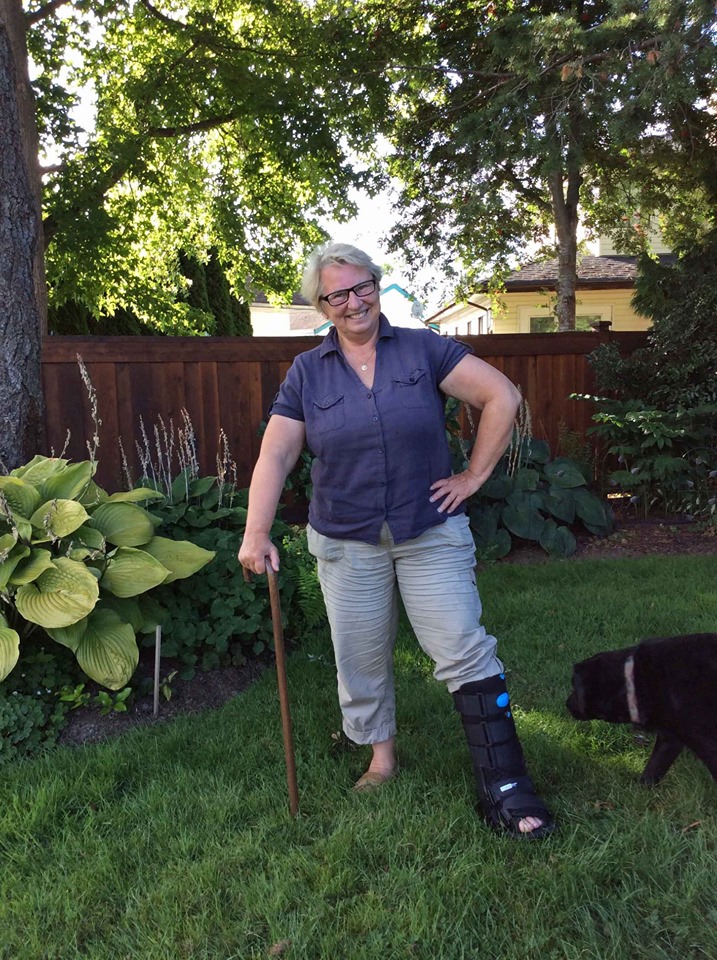
Nina Munteanu in Ladner, BC (photo by Anne Voute)

Then, with just a few days before my flight back to Toronto, I slipped and fell and broke my ankle. I got a “boot” and a cane then hobbled on the plane and went back to work at UofT.

It has been a wonderfully inspirational year for me in writing and teaching. I still actively teach at The University of Toronto in several writing centres and classes throughout the downtown campus. The students are bright and challenging. I also still coach writers to publication and have helped several finish their works in 2019.


I hope the beauty of the season has filled your heart with joy. Wishing you a wonderful 2020, filled with grace, good health, and sweet adventure!


nina-2014aaa

Nina Munteanu is a Canadian ecologist / limnologist and novelist. She is co-editor of Europa SF and currently teaches writing courses at George Brown College and the University of Toronto. Visit www.ninamunteanu.ca for the latest on her books. Nina’s bilingual “La natura dell’acqua / The Way of Water” was published by Mincione Edizioni in Rome. Her non-fiction book “Water Is…” by Pixl Press (Vancouver) was selected by Margaret Atwood in the New York Times ‘Year in Reading’ and was chosen as the 2017 Summer Read by Water Canada. Her novel “A Diary in the Age of Waterwill be released by Inanna Publications (Toronto) in June 2020.

When Media Gets the Science Wrong We ALL Suffer

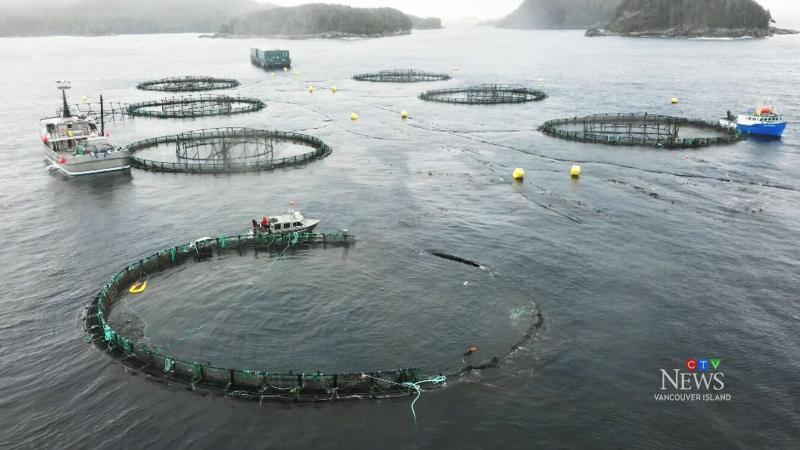
Atlantic salmon farm escape

I was dismayed by a recent news story on CTV on the escape of farm fish into native fish waters. I was dismayed for two reasons: 1) the ecological impacts of this accident; and 2) the failure of CTV in appropriately reporting the seriousness of it.


Shoddy Reporting by CTV 

In late December 2019, a fire at the Mowi fish farm in BC waters near Port Hardy resulted in the escape of over twenty thousand Atlantic salmon. The news story by the CTV media proved biased, incomplete and erroneous—and ultimately dangerous—in its reporting.

CTV targeted “environmentalists and indigenous groups” as worried that “it could have devastating impacts on [Pacific] wild salmon…Escape presents ecological and environmental risks to an already fragile wild salmon population.” But CTV failed to include concerns by environmental scientists in this matter: government or academics with real expertise and authority.

CTV talked to some “so-called” experts to counter the position of the environmentalists. This included comments by a vet (Dr. Hugh Mitchell), who works for the fish farm: “[Atlantic salmon] are brought up on prepared fish pellets from since they start feeding …They don’t know how to forage. They don’t know how to find rivers and reproduce. They get eaten by predators or they die of starvation after they escape.” (see below for proof against this). A vet (who will have some expertise in fish physiology and biology) does not have the same expertise as a fish population biologist, oceanographer, ecologist or geneticist—all of who would better understand the potential impact of released exotic species to native species in a region. But CTV didn’t interview any of these experts. Instead, they interviewed a vet who works for the farm. CTV ends its story with a remark by the managing director of Mowi who said, “Data would suggest there’s a very low risk to the [Atlantic] salmon making it to any rivers and an even lower risk of them establishing successful populations within the BC environment.”

But where’s the data to prove this? And who provided it to Mowi? CTV fails to mention that or show any of “the data”.

This is clearly careless reporting that provides no substantiation for the claims made by Mowi; nor does CTV provide a more robust inquiry into potential risks. Risks posed by more than Atlantic salmon just outcompeting native fish; risks posed by disease and other indirect challenges to native fish—not addressed by Mitchell and Mowi.

Log over water forest-DeasPark

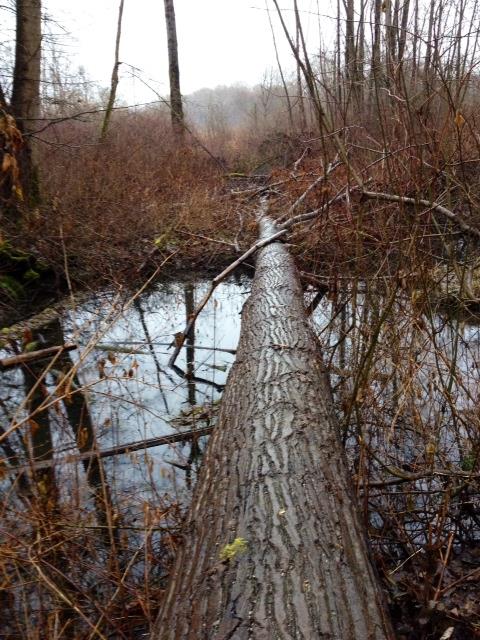
BC wetland (photo by Nina Munteanu)

CTV provided no statement by DFO scientists or academia. Where were the UBC or UVic scientists? Why weren’t these unbiased authorities consulted for their expertise instead of a vet who works for the aquaculture industry? This is very sloppy reporting.


The Vancouver Sun, which also covered this story, showed a little more balance in its reporting. However, when it came time for the Sun to report on DFO’s response, it was less than clear: “Among the feedback the federal government has received through early consultations on the legislation is a need for a more effective risk management framework and support for Indigenous involvement and rights in the sector, it says.”

The Georgia Straight used the right word—claimed—to describe Mowi’s unsubstantiated statements: “The company claimed that the escaped fish are easy prey because they are ‘unaccustomed to living in the wild, and thus unable to forage for their own food.’” The Straight also balanced that claim with another by Ernest Alfred of the ‘Ngamis First Nation and videographer and wild-salmon advocate Tavis Campbell, who suggested that the presence of Atlantic salmon in ocean water “presents a serious threat to native Pacific salmon through transfer of pathogens and other associated risks”. The Straight then followed up with some relevant historic precedence: “After a large number of Atlantic salmon escaped from a Washington state fish farm near Bellingham in 2017, these species were found as far away as the Saanich Inlet and Harrison River.” Hardly the weaklings described by Mowi and Mitchell…

Global News provides a more in-depth examination of the August 2017 net pens collapse in the waters off northwest Washington—pens owned by Canadian company Cooke Aquaculture Pacific — the largest Atlantic salmon farmer in the U.S.

“Up to 263,000 invasive Atlantic salmon escaped into Puget Sound, raising fears about the impact on native Pacific salmon runs. The incident inspired Washington state to introduce legislation that would phase out marine farming of non-native fish by 2022. Groups like the Pacific Salmon Foundation have called for the B.C. and federal governments to do the same in Canada.”


Declining Pacific Wild Salmon 

Stream longshutter-warmed-close01 copy

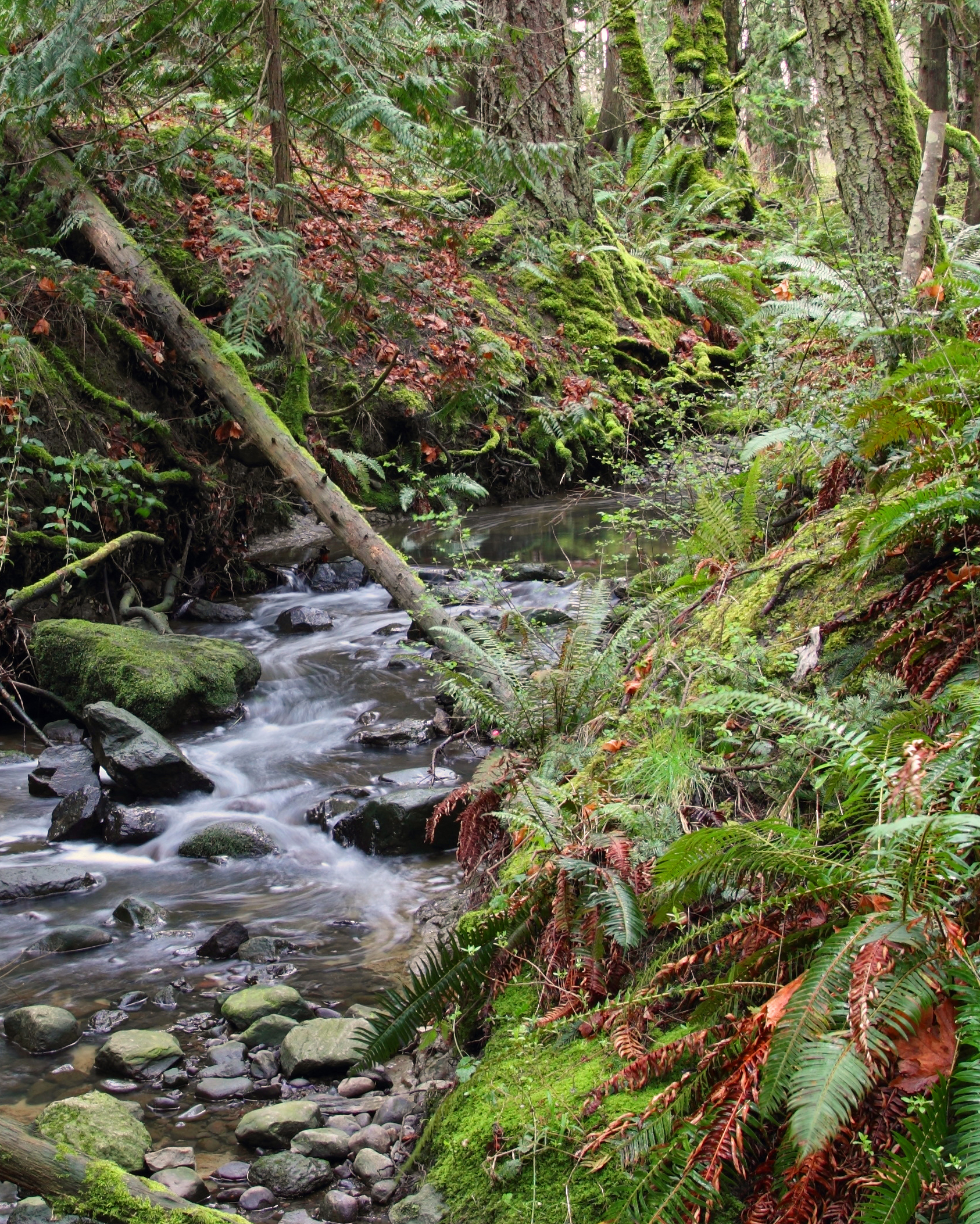
Westcoast forest stream, BC (photo by Kevin Klassen)

Wild Pacific salmon have been declining for decades off the BC coast and streams. Human interference is primarily responsible, which includes habitat destruction, diversions for agriculture and hydro-power, and climate change. Habitat destruction—both quantity and quality—has occurred mainly from logging, road construction, urban development, mining, agriculture and recreation. Added to that list is the aquaculture industry that uses Atlantic salmon, an exotic to the Pacific Ocean.

A recent study conducted by the Strategic Salmon Health Initiative (SSHI) revealed that the piscine reovirus (PRV) found in farmed Atlantic salmon is linked to disease in Pacific Chinook salmon. The SSHI is an initiative made up of scientists from the Department of Fisheries and Oceans (DFO), Genome B.C., and the Pacific Salmon Foundation (PSF).

The findings show that the same strain of PRV, known to cause heart and skeletal muscle inflammation (HSMI) in farmed Atlantic salmon, is causing Chinook salmon to develop jaundice – anemia, a condition that ruptures red blood cells, and causes organ failure in the fish. The disease could cause a serious threat to wild salmon migrating past open-net fish farms in coastal waters in B.C.

In B.C., concerns about the decline of Pacific salmon have already risen to peak levels after the Big Bar landslide in the Fraser River near Kamloops; scientists say this could result in the extinction of multiple salmon runs by 2020. The federal Liberal government has pledged to transition BC’s open-net pen salmon farms to closed inland containment systems by 2025.

All this corroborates the serious risk of Atlantic salmon farming. Accidents must be expected to happen. They always do. Risk analysis must include the certainty of this inevitability—just as water engineers must account for 100-year storms, which do happen.

Need for Better Risk Management (Type I and Type II Errors in Risk Assessment) 

The scientific method relies on accurately measuring certainty and therefore reliably predicting risk. This means accounting for all biases and errors within an experiment or exploration. In my work as a field scientist and environmental consultant representing a client, we often based our formal hypotheses in statistics, which considered two types of error: Type I and Type II errors. Type I errors are false positives: a researcher states that a specific relationship exists when in fact it does not. This is akin to an alarm sounding when there’s no fire. Type II errors are false negatives: the researcher states that no relationship occurs when in fact it does. This is akin to no alarm sounding during a fire.

The reason why remarks made by vet Mitchell and Mowi are so dangerous is because they make assumptions that are akin to not sounding an alarm when there is a fire; they are committing a Type II error. And in risk assessment, this is irresponsible. And dangerous.

Instead of targeting “environmentalists” “activists” and certain groups for opinions on issues, I strongly urge CTV and other media to seek out evidence-based science through scientists with relevant knowledge (e.g. an ecologist—NOT an economist or a vet—for an environmental issue). My advice to Media: DO YOUR HOMEWORK AND GET THE FACTS STRAIGHT! You need to talk to academics and scientists with no ties to perpetrators and with relevant knowledge on the topic in question.

The Need for The Precautionary Principle in Environmental Science and Reporting 

FinCreek 4-RockyM

Fin Creek, Rocky Mountains, BC (photo by Nina Munteanu)

Environmental scientists generally pride themselves on the use of the Precautionary Principle when dealing with issues of sustainability and environmental management. According to the Precautionary Principle, “one shall take action to avoid potentially damaging impacts on nature even when there is no scientific evidence to prove a causal link between activities and effects.” The environment should be protected against substances (such as an exotic species) which can be assumed potentially harmful to the current ecosystem, even when full scientific certainty is lacking.

Unfortunately, politicians, engineers and the scientists who work for them tend to focus on avoiding Type I rather than Type II statistical errors. In fact, by traditionally avoiding Type I errors, scientists increase the risk of committing Type II errors, which increases the risk that an effect will not be observed, in turn increasing risk to environment.

In describing the case of the eutrophication of a Skagerrak (a marine inlet), Lene Buhl-Mortensen asks which is worse: risk a Type II error and destroy the soft bottom habitat of Skagerrak and perhaps some benthic species, or risk a Type I error and spend money on cleaning the outfalls to Skagerrak when in fact there is no eutrophication? “Scientists have argued that cleaning up is too expensive and should not be done in vain,” writes Buhl-Mortensen. “But more often the opposite is the case. The increased eutrophication of Skagerrak could end up more costly than reducing the outfalls of nutrients [to the inlet].”

“Because threats to the environment are threats to human welfare, ecologists have a prima facie ethical obligation to minimize Type II errors,” argues Buhl-Mortensen in the journal Marine Pollution Bulletin. Use of the precautionary principle will save costs—and lives—in the end.

ferry wake active pass copy

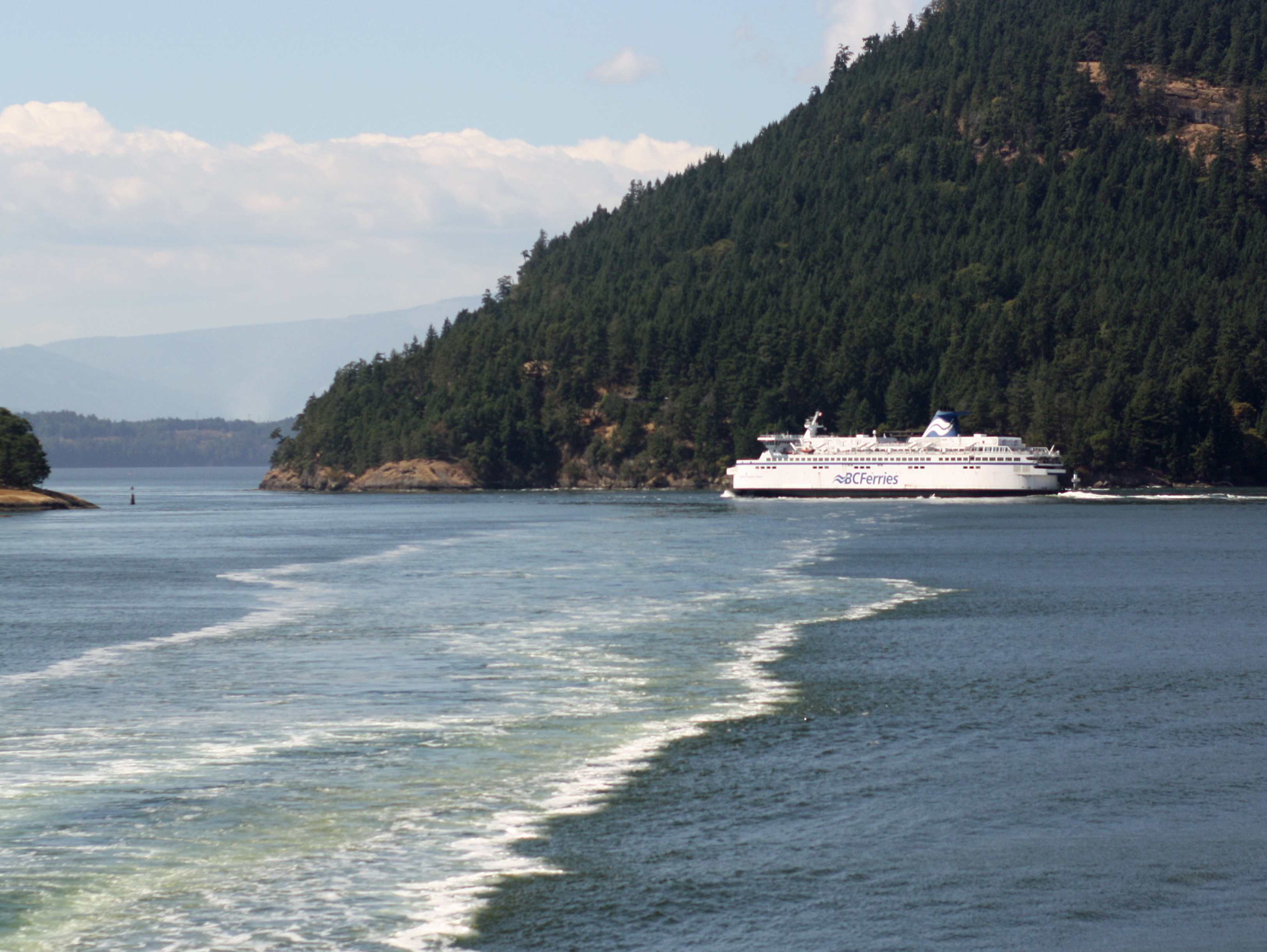
Ferry crossing with wake in foreground, BC coast (photo by Nina Munteanu)


nina-2014aaa

Nina Munteanu is a Canadian ecologist / limnologist and novelist. She is co-editor of Europa SF and currently teaches writing courses at George Brown College and the University of Toronto. Visit www.ninamunteanu.ca for the latest on her books. Nina’s bilingual “La natura dell’acqua / The Way of Water” was published by Mincione Edizioni in Rome. Her non-fiction book “Water Is…” by Pixl Press (Vancouver) was selected by Margaret Atwood in the New York Times ‘Year in Reading’ and was chosen as the 2017 Summer Read by Water Canada. Her novel “A Diary in the Age of Waterwill be released by Inanna Publications (Toronto) in June 2020.


Lexicon of  “The Splintered Universe”

Aeon \ Æ-ôn \ n : in Gnosticism, a divine power or nature emanating from the Supreme Being and playing various roles in the operation of the universe

Ae•on Sun•tel•ia \ Æ-ôn-sün-tel-ia \ n : 1 : the End of the Age according to the ancient Greeks, described by Plato as a cycle of catastrophe 2 : a prediction made recently by Raphael Martinez, leader of the Hermetic Order of a violent end of an age; the destruction of the old world  according to self-proclaimed prophet “will be signified by the joining of twin soul-mates who will herald the coming of a New Age.” 

al•tru•ism \ ôl-trü-ism \ n : the principle or practice of unselfish concern for or devotion to the welfare of others; a motivation to provide something of value to a part other than oneself; pure altruism consists of sacrificing something (e.g., time, energy, possessions) for someone other than the self with no expectation of compensation or benefits, direct or indirect

al•tru•is•tic \ ôl-trü-is-tik \ adj : describes the action of altruism

ammut \ am-mut \ n : a large invertebrate that makes its eggshells of swamp detritus. During their larval stage, they are extremely carnivorous and will devastate the swamp wildlife. They hatch and swarm during the season of the dead on Horus. The ammut eat the young apophus. As adults they become vegetarian and serve as food for the apophus

anti-Nihilist \ an-tē-nī-a-list \ n : someone who opposes either philosophically or through action the activities and philosophy of the Nihilists.

apophus \ A-pô-fəs \ n : a gigantic snake-like creature known through local myth that inhabits the Boiling Sea in the Weeping Mountains are of the planet Horus (47 Uma a) in the 47 Ursae Majoris system

Azorian \ A-zór-ēən \ n : a tall, heat-loving lean-limbed biped species with tough sand-paper hide, long snout and ferret face from Azor in the Beta Hydri system 

Bado•win \ badō-in \ n  1: a small, very strong, gnarled and hairy biped species of often ill-repute, originating on the planet Nexus in the M103 star cluster

Sand dunes Oregon3

Dunes on Upsilon 3

barkhan (also barchan) \ bär-kən \ n : cresent-shaped migrating sand dunes that are wider than long. These dunes form under winds that blow consistently from one direction and may move over desert surfaces with remarkable speed, particular to Upsilon 3.

bastet \ bas-tet \ n : a genetically produced mammal that displayed aggressive co-evolution and wiped out the domestic cat population and Earth’s large feral cats.

Biomimetic \ bīó-mi-met-ic \ adj : the application of biological methods and systems in nature, particularly in living organisms, in the design by sentient beings of items they use such as houses, engineering structures, vehicles, etc. 

marsh-bog Rhea

Marsh-bog on Sekmet

blanket bog \ blanket bôg \ n  1: an extensive peatland (wet spongy perched water ecosystem) formed in a climate of high rainfall and low level of evapo-transpiration, allowing peat development not only in wet hollows but over large expanses of undulating ground; an ecosystem usually consisting of hummocks and pools with specifically adapted plant and animal life; an extensive bog-fen landscape   

blenoid \ blen-óid \ n  1: a ferocious and dull-witted four-legged dog-like animal with three sets of razor sharp teeth, massive head with three eyes and tough red hide; indigenous to Upsilon 2 in the Epsilon Endari system 2 : term used for a person with these traits : CRAZY; MAD 

Bo•bo Bar \ bō-bō bär \ n : a snack bar comprising of chewy bobouris fruit jerky and artificial chocolate.
seelisberg-view06

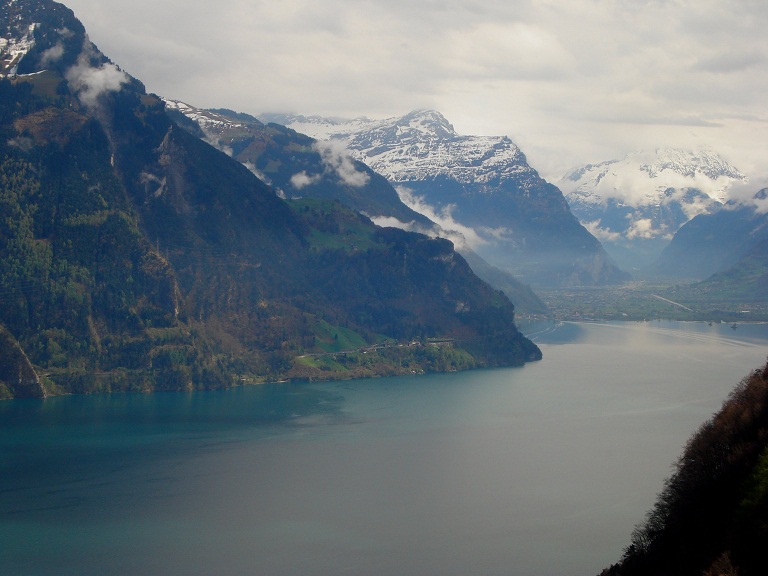
Boiling Sea, Horus

Boiling Sea \ boēl-ēng sē \ n : term used for the great convoluted inland sea surrounded by the Weeping Mountains, on the planet Horus

Borr \ bōr \ n 1 : four-legged gentle species, indigenous to the planet Borrias and extirpated by the Vos Nihilists 2 : a shape-shifting species thought to be from Borrias

buma \ bü-mä \ n : the inside muscle of the buiuma’s digestive tract that sloughs off as the buiuma inverts itself. This event occurs twice a year, during kelm, the wet season of the Eosian jungle. It is considered an Eosian delicacy.

Cerberus / Cər-bər-əs / n : the term Rhea coined for the tall cylinders that dispensed the drugged nourishment on the penal colony of Sekmet : “Each cylinder with its swollen bulbous reservoirs, resembled a three-headed cyber-beast, with flexible teets suckling its deformed young.”

chaos \ kā-ôs \ n 1 : the confused unorganized state existing before the creation of distinct forms 2 : complete disorder syn confusion 3 : common expletive to denote less than optimal to utterly calamitous or disastrous conditions syn “hell”

co•bal \ cō-bôl \ n :  a small vole-like burrowing rodent native to the deserts of Upsilon 3 and the mainstay prey of the blenoid

cozu shrub \ co-zü shrub \ n :  a silver-green small shrub with thorns, and “popping” seed pods, indigenous to the desert of Upsilon 3

creel \ crēəl \ n : a fungus from Omega 6 that grows naturally into a metallic burnished hard surface and used by biomimetic architects on Horus to build their floors.

creon \ crē-ôn \ n 1 : an individual of the main species from the planet Creos in the 55 Cancri system; known for their laziness, lack of good judgement and imagination 2 : term used to indicate an individual with these traits : FOOL; IDIOT; DULLARD

Delenean \ Də-le-nē-en \ n : furry simple creatures with six appendages, native to Mar Delena in the Fomalhaut system. This species is subservient to the AI community that runs Mar Delena

Diverse \ dī-vərs \ n : a term that describes the existence of two parallel and divergent universes that comprise a metaverse

Dreccaline \ drec-ca-lēn \ n : a non-specific highly potent nerve poison that kills all life

Du•en•de \ Du-en-de \ n : an old Spanish word that describes a heightened state of emotion, expression and authenticity, loosely meaning “having soul”; promoted and discussed by Spanish poet Frederico Garcia Lorca  as an inner transcendent emotional response and spirit of evocation with roots from Spanish mythology.

dust \ dəst \ n : a psychoactive drug that produces mild euphoria and drowsiness in most sentient species

endo•rheic \ en-dō-rē-ik \ adj : pertaining to a closed drainage basin (a lake) that retains water and allows no outflow to other external bodies of water such as rivers or oceans; a self-enclosed system equilibrated through evaporation

Eos \ Ē-ôs \ n : ringed jungle Planet in the Pleiades Nebula; original home of the vishna tree
collision with paradise-no title

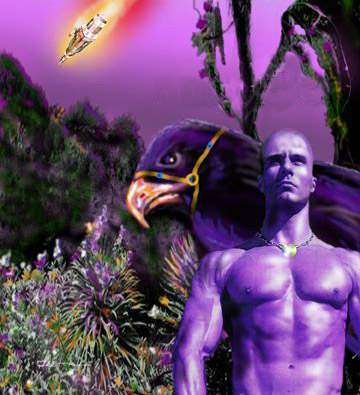
Eosian with Scree on Eos

Eosian \ Ē-ōs-ē-ən \ n : principal sentient being from Eos in the Pleiades Nebula; originally from Earth (Atlantis) and responsible for establishing the Galactic Guardian force in the Milky Way Galaxy

Epoptes \ Ē-pôp-tes \ n : shape-shifting god worshipped by the Eosian species, and from whom the Eosians presumably take their instruction through dreams

Fauche \ Fōsh\ n : an ungulate-like biped species with very long ears, wide frequency hearing and large lustrous eyes, originating from Bedar 9 in the Sigma Draconis system

fok \ fôk \ n : excrement from a blenoid

gadpie \ gad-pī \ n  1: a tree indigenous to Iota Hor-2, the moon of Horologii b  2: the wood of the gadpie tree

ghost \ gōst \ n : a person acting as a portal, capable of recalling aspects of the other diverse through their other soul-half in a déjà vu experience. If they are capable of soul-drifting—locking into someone else’s dream or trance—a ghost can manipulate both the dreams and real aspects of that other person’s life in the other diverse, usually in the form of a lengthy déjà vu

ghou•roud \ gü-rüd \ n : 1 : Original French term for moving dunes;  2 :  fields of moving dunes (barkhans) resulting from shifting sands, particularly found in Upsilon 3

glit•ter \ glit-tər \ n : 1 : a psycho-active drug used by Gnostics to see God; 2 : a refined form of dust, glitter is obtained through the major drug cartel of Dark Sun, run by Barbaricca on Sekmet; also known as glitter dust; also see dust

Gness \ ness \ n : a gentle wolf-like species with translucent skin from the 61 Ursae Majoris system

Gnosis \ nōs-sis \ n : knowledge of God

Gnostic \ nôs-tic \ n : a follower of Gnosticism

Gnosticism \ nôs-ti-sizm \ n : a belief system based on early Christianity, Helenistic Judaism, Greco-roman mystery religions, Zoroastrianism and neoplatonism, which teaches that some esoteric knowledge (gnosis) is necessary for salvation from the material world, created by an intermediary (demiurge; considered evil or merely imperfect) to God

Gnostic Hermetic Order of Québec \ nôs-tic hər-met-ic or-dər of qā-bec \ n : an order devoted to Gnosticism. Founded by Rafael Martinez, the Hermetic Order is based on Earth but has several outposts throughout the universe

Gnostic Schiss Order \ nôs-tic shiss ōr-dər \ n : a very small Hermetic order devoted to Gnosticism with mostly non-human members. Targeted by an Eclipse assassin, the Schiss Order was nearly extirpated. Its remnants is currently based on Uma 1

Rhea library02

Rhea in her Great Coat

Great Coat \ grāt cōt \ n : part of the uniform and weapons arsenal of the Galactic Guardian; millions of thixtropic nano-sensors incorporated into its durable yet flexible fabric let it respond to any number of internal and external stresses, providing its wearer with a shield from the cold or from a weapon’s discharge

hedon \ he-dən \ n 1 : a mildly euphoric recreational drug that is smoked and produces a pungent yellow smoke 2 : used colloquially to indicate incredulity (as in “you must be blowing hedon”)

Her•metic Or•der  (see Gnostic Hermetic Order)

hes•i•um fuel \ hēs- ē-um feü-əl \ n : a highly inflammable and incendiary rocket fuel used by most Zeas Corporation ships

inner diverse \ innər dīvers \ n : the world or existence comprised within the inner twin universe of the metaverse and linked to its twin existence, the outer diverse, through transitional phenomena such as black holes and intuition

jag \ jag \ vb  1 : the act of straying off the space-time stream of faster-than-light travel and often accompanied by dangerous ship stress  2 : used colloquially to indicate a serious misjudgement (as in “he jags up all the time”)

jagging \ jag-gēng \ vb  1 : describing a ship that is straying off the space-time stream 2 : vb; adv : used as an expletive to  describe a person, concept or action that lacks sense or causes harm, embarrassment or discomfort (as in, “he’s jagging with your mind” or “she’s so jagging stupid”)

jagged \ jagd \ vb1 : past tense verb of straying off the space-time stream of faster-than-light travel  2. adj : colloquial expletive term for a serious error or bad circumstance; SCREWED, MESSED UP (as in, “we’re jagged”)

kappa particles \kap-pa pär-ti-cəlz\ n : energy particles that concentrate in the upper atmosphere of several gas giants; retrieved by Fauche ray class sentient ships for fuel using specialized fuel scoops

kelm \ kelm \ n : the wet season on the planet Eos

kepry \ kep-rē \ n : a flying crustacean-like creature on Sekmet that lives in the dung piles left by the sobek

Khonsus \ kón-səs \ n : tall, feathered biped creature with raptor head, wings, and liquid amber eyes able to mind-probe, origin unknown but currently in 47 Ursae Majoris system; these hawk-like people achieve their powers through a symbiotic interaction with the planet’s energy and forces

Legess \ lə-gess \ n : tall, slim praying mantis-like invertebrate creatures who colonized Chara and enslaved native Rills

L’Ordre de l’Arbre Sac•ré  n : see Order of the Sacred Tree

mandala \ man-da-lä \ n : an ornate, highly detailed geometric design made of colored sand and symbolic of the universe. Used in a sacred ceremony by Tibetan Buddist monks, it is painstakingly created over many days and represents their sacred world of balance held together by spirit. Once work of art is finished and revered in a short ceremony, it is destroyed

MEC \ mek \  n : acronym for Magnetic-Electro Concussion pistol, created by Rhea Hawke, which uses electro-magnetic wave energy to focus sub-atomic quintle particles into resonance with specific DNA

Metaverse \ met-a-vərs \ n :  a theoretical term that describes the composition of all matter and energy encompassed by divergent diverses; a whole quantum cosmos that includes all that was and will be

mev•lan•i \ mev-lan-ē \ n : term used on Sekmet to describe the leader of the penal colony

Swamp03 TNS

Migratory trees of Horus

Migra•tor•y Trees \ mī-grə-to-rē trēz \ n : a tree known in myth to migrate from one location to another in the Weeping Mountains area of the planet Horus; according to myth the Khonsus inhabited the trees in ancient times

nexus portal \ nex-əs por-təl \ n : a person who enters the state of acting as a portal with ease through meditation or a self-induced trance. See portal

Ngu \ nü \ n : a photosynthetic amoeboid-like creature with protuberances as sense organs that lives symbiotically with AI-machinery; from Virgil 9 in the 70 Virginis system

Nuyu \ noo-ēü \ n : a nano-chemical mixture, imbibed as a liquid, that acts at the genetic level to temporarily change small aspects of outer appearance such as skin, eyes, hair; used as make-up

Nihilist \ Nī-ə-list \ n  1 : a member of a militant splinter group of the Vos  2 : a specially trained death squad of shapeshifter assassins on the Vos payroll

Order of the Sacred Tree  n : a closed membership in Quebec on Earth, devoted to the divine nature of the vishna tree, considered the tree of life and knowledge and the answer to achieving the balance of all things. The Order believes in the notion that a messiah, connected to the tree, will bring balance and begin a new age of enlightenment and peace

Orichalkon \ o-rich-al-kon \ n : 1 : the durable alloy that the mythical Epoptes bestowed to the Eosians in Atlantis; 2 : an elite guard of five squadrons of highly skilled sleuth Eosian warriors (squadrons include Cadmus, Odysseus, Peometheus, Perseus and Daedalus) dedicated to guard Mon Seigneur Martinez and his Hermetic Gnostic Order

Ouroboros

Ouroboros

Ouroboros \ u-rō-bōr-ōs \ n : a mythical serpent eating its own tail; connected with the Suntelia Aeon that refers to the serpent of light residing in the heavens (the Milky Way); the ouroboros symbolizes an Aeon

outer diverse \ outər dīvers \ n : the world or existence comprised within the outer twin universe of the metaverse and linked to its twin existence, the inner diverse, through transitional phenomena such as black holes and intuition

Peeka \ pēka \ n : a small monotreme creature that produces eggs and lives in the marshes of Omicron 12

play•a \ plī-ä \ n : a dry desert lake that contains water for a short while after a sudden downpour, causing a flood; an endorheic lake that is smooth hardpan most of the time

plock nectar \ plôk nectər \ n : 1 : a tasty nectar that is normally a mixture of juices from various planets with 50% of the juice made from the plock root of Scandia; 2 :  100% nectar from the plock root, known for its medicinal properties

polysynth fiber \ pôlē-sinth fīber \ n  : nano-strings that resonate with matter

pocket \ pôk-et \ n : acronym for  PulsOniC Kinetic Energy Tracker created by Rhea Hawke , which tracks a target once the gun has identified their signature

pockta \ pôkta \ n : a highly nutritional leguminous plant from whose giant seeds a rich thick soup is made

poi mash \ pói mash \ n : a substance like tobacco that is either smoked or chewed.

Portal \ pór-təl \ n : 1 : a person capable of entering into the other diverse and through their experience capable of seeing into the future of their current diverse; 2 : a person in the act of said action; 3 : a person, when acting as a portal, during dreamtime or meditation, may open a gate to the other diverse.

pro•max•in \ pró-max-in \ n : a sleep drug activated by metabolism

pul•son wave \ pəl-sôn wāv \ n : 1 : an electromagnetic green energy wave emitted by a long range stun cannon to disable a ship; 2 : a wave discharged by a weapon used in ships of Tangent Shipping design

quintle \ quin-təl \ n  1 : dark energy particle found in everything  2 : destructive energy discharged from a weapon (Q-gun created by shape-shifters) that resonates with matter to dematerialize an object  3 : used colloquially to express something of importance (as in: “who gives a quintle about spice?”)

Rill n : a short, stout and smelly bog being with tube-eyes, webbed limbs, large genitals and sloughing outer skin from Omicron 12 in the Chara system

sabkha \ sab-kä \ n : a desert feature of Upsilon 3, in which the sand worm hides while waiting for prey

Scandi \ skan-dē \ n : a lizard-like lean-limbed biped with remarkable healing abilities; indigenous to the Upsilon Andromedae system

Schiss \ shiss \ n : a hermetic order of peaceful Gnostic priests, devoted to the use of dream-meditation, particularly lucid dreaming, to achieve transcendence and evolve closer to God and the universal consciousness; several of its older founders experienced the Gate Hallucination; targeted by Eclipse and massacred into near extirpation during a meeting in Paradise City on Uma 1

shallik oil \ shal-lik oil \ n : an oil that possesses natural narcotic properties that numb the nervous system of those in contact with it and make them docile; the oil is produced by microbes indigenous to the Weeping Mountains area of the planet Horus; when ingested, the oil ill make one very ill

shapeshifter \ shāp shiftər \ n : a being able to change his or her physical appearance and associated physiology into several other forms; considered an ability possessed by the Borr species from Borrias

SGT n : Standard Galactic Time; based on a decimal system from the basis of the Earth 24 hour diurnal cycle, with ten days equal to one month and ten months equal to one year; zero SGT is set at the moment of first alien contact with Earth

skipboat \ skip-bōt \ n : a two-man vehicle with skates/skis that is able to move rapidly over water, ice and snow; used by settlers of Uma-1

slave \ slāv \ n : 1 : a derogatory term indicating one of lesser standing, often in actual indentured status : 2 : a term used by crime lords to their own hirelings or any considered lesser being

sling rif•le \ sling rīf-əl \ n : harpoon-like weapon used by hunters, primarily blenoid hunters on Upsilon 3. The sling’s sharp harpooned projectile seldom kills. “Killing wasn’t its objective; maiming, injuring and demobilizing was the intent. The sling was popular with hunters and gamers looking to satisfy their brutal sport of tormenting lesser beings.” – Rhea Hawke
Wetland-Trent3

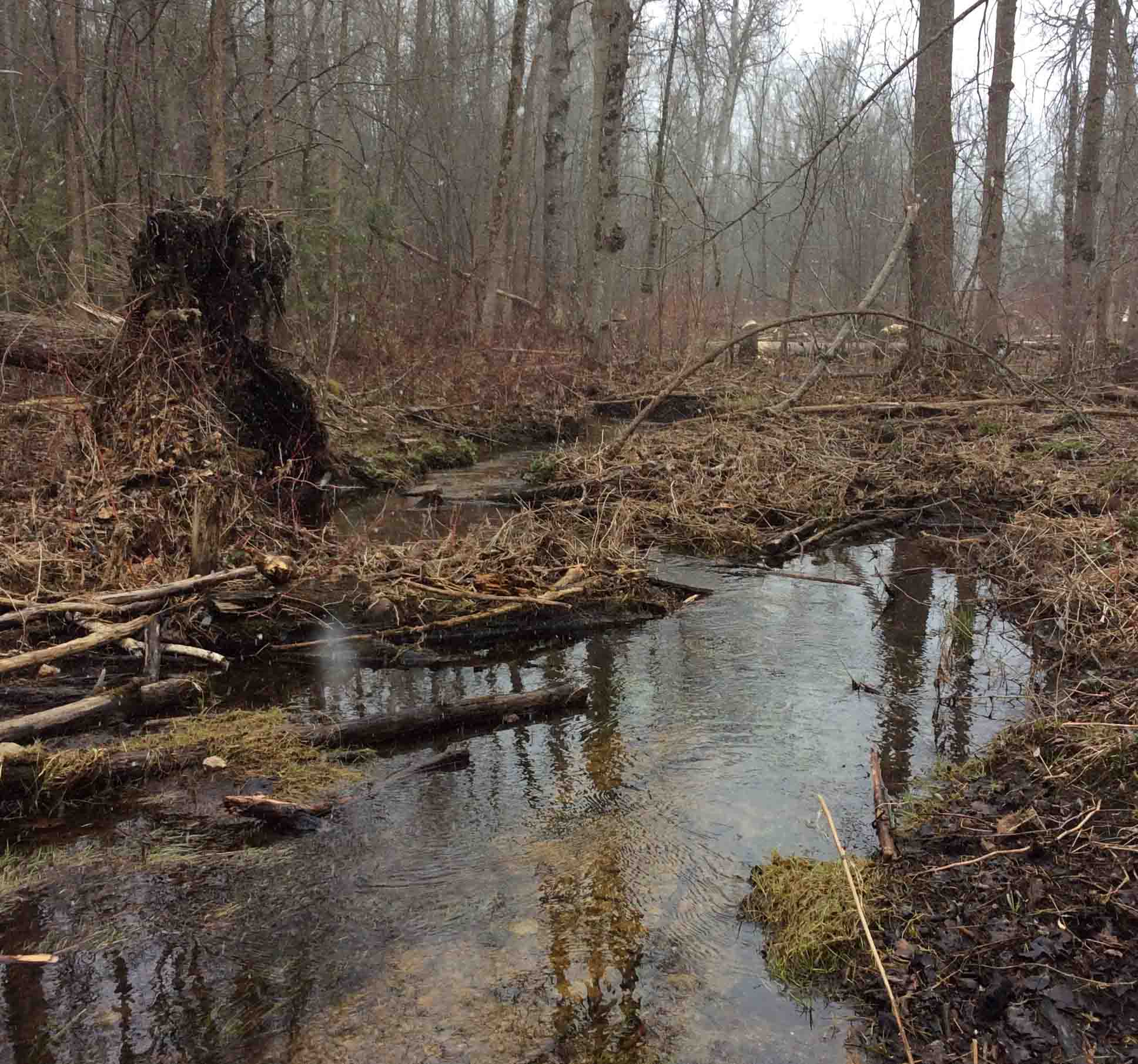
Habitat of the sober

sobek \ sōbek \ n : a fierce crocodile-like native of Sekmet that digs underwater tunnels in the peat and drowns its victims

soul-drift \ sōl drift \ vb : the practice of entering another’s dreams, even one’s own, and change“reality” through them

soyka \ sói-kä \ n : a soy-based warm drink like coffee; stimulant

Spice \ spīs \ n : a mild psychoactive drug in common usage

Sporian \ spó-rē-ən \ n : a very tall, pear-shaped lanky greenish species with elongated head and leather-like skin, long limbs and large bulbous eyes from Spor in the 18 Scorpii system

stun stick \ stun stik \ n :  a high-energy weapon that resembles a staff. It is used by the Orichalkon, an Eosian elite guard of Mon Seigneur Martinez assigned to guard his gnostic order in their various outposts in the universe. The weapon is wielded like a staff in Tai Chi movements and discharges an energy wave that stuns all in it contacts

Sun•tel•ia Ae•on \ sün-tel-ia Æ-ôn \ n : 1 : the End of the Age according to the ancient Greeks; see Aeon suntelia

synthflesh \ sinth-flesh \ n : real skin molecules and synthetic materials combined by nano-technology, used in synthplast

synthplast \ sinth-plast \ n : prosthetic made of a combination of real skin molecules and synthetic flesh combined by nano-technology

Tangent Shipping \ Tan-gent Ship-pēng \ n : the name of a Fauche ship building company

tappin \ tap-pin \ n : a small domesticated cat-like mammal with fangs and three tails, indigenous to Iota Hor-2

tatsuk \ tat-sək \ n : 1 : original Turkish Earth term meaning prisoner  2 : used by the galactic crime sub-culture, particularly Black Sun, to designate someone under indentured servitude; 3 : slave

1teck \ tek \ n : a permanent genetic change induced through nano-technology developed by Eosians by acting at the DNA level

2teck \ tek \ vb : the act of applying a teck, usually done by a qualified nano-genetics doctor

thix•tro•pic \ thiks-trô-pic \ adj : describes the intelligent nano-sensors incorporated into the durable yet flexible material of a Great Coat, which respond to ongoing environmental stresses that protect its wearer from a range of assaults including disease, weapon discharge, extreme temperature, etc.; see Great Coat

Tocan \ tō-can \ n : a rare insect-like creature indigenous to the Upsion Andromedae system from whose larvae a natural protein fibre is spun to create the shimmering tocanai fabric used in the creation of expensive suits

Tocanai \ tō-can-aē \ n :  the name give to the fabric produced from the fibre spun from the tocan larva

Tree Cult of Earth \ trē cəlt of ərth \ n : see Order of the Sacred Tree

U•ly•sses \ eu-lis-sēz \ n : a space station built by Zeta Corp Aeronotics of Earth; a self-sufficient long term agrarian colony in the vein of an O’Neill Colony with a set of large rotating cylinders many kilometres long and thousands of meters across with large gimballed mirrors; the station maintains a circular motion of 1 rpm to create artificial gravity

Ve•nik \ Ve-nik \ n : a large reptilian-like scaled creature from the HD177830 system with indolent eyes with several sets of arms with poisonous claws and “mouths” or orifices; Veniks are known for their violent and unprincipled nature; they are one of the few species that still actively trade in slaves

vish•na \ vish-nä \ n : a species of tree with thorns and violet flowers, thought to be sentient and linked to an ancient soul, of unknown origin but currently found as the major component of Eosian and Earth forest ecosystems

vizion \ viz-ēôn \ n  1 : a small very strong and tenacious mammalian creature of unknown origin  adj  2 : a term used to describe a powerful grip based on the vizion  

Vos \ Vôs \ n : presumed extragalactic war-like species of which very little is known

wakesh root \ wä-kesh root \ n : edible root, indigenous to the planet Sekmet, with strong psychoactive properties 

Weep•ing Moun•tains \ wēpēng Mountənz \ n : extremely steep and jagged mountains that define and surround the Boiling Seas of the planet Horus (47 Uma a). Microbes, created in the mountains and coat the surface of the Boiling Sea, excrete a narcotic oil (shallik oil) that numbs and hypnotizes prey 

Xhix \ ziks \ n : a chameleon-like species with multiple eyes capable of wide wave-length vision and changeable skin according to mood, indigenous to the 37 Geminorum system

Zar•zo•za \ zar-zō-za \ n : the name for the Gnostic Sanctuary of the Hermetic Order of Québec on Upsilon 3

Zeas Corporation \ zēss cōr-pōr-ā-shän \ n : a galactic trading company specializing in exotic foods and merchandize

ZetaCorp Aeronautics \ ze-ta-cōrp ā-rōnô-tics \ n : a major galactic ship builder originating on Earth

Zi•bar \ zi-bär \ n : an ephemeral desert town on Upsilon 3, where blenoid traders congregate to hunt and process blenoid meat for export

Phonetic symbols based on Merriam Webster’s Collegiate Dictionary and the Dictionary of Pronunciation by Abraham Lass and Betty Lass.

You can listen to a sample recording of Outer Diverse, Inner Diverse, and Metaverse through Audible. The entire Splintered Universe Trilogy in Audiobook formhttps://www.audible.ca/series/The-Splintered-Universe-Audiobooks/B072BTX7ZD is available through Audible.

audible listen

Get the complete Splintered Universe Trilogy on Amazon and other quality bookstores in the format you prefer. Read the Splintered Universe reviews on Goodreads.
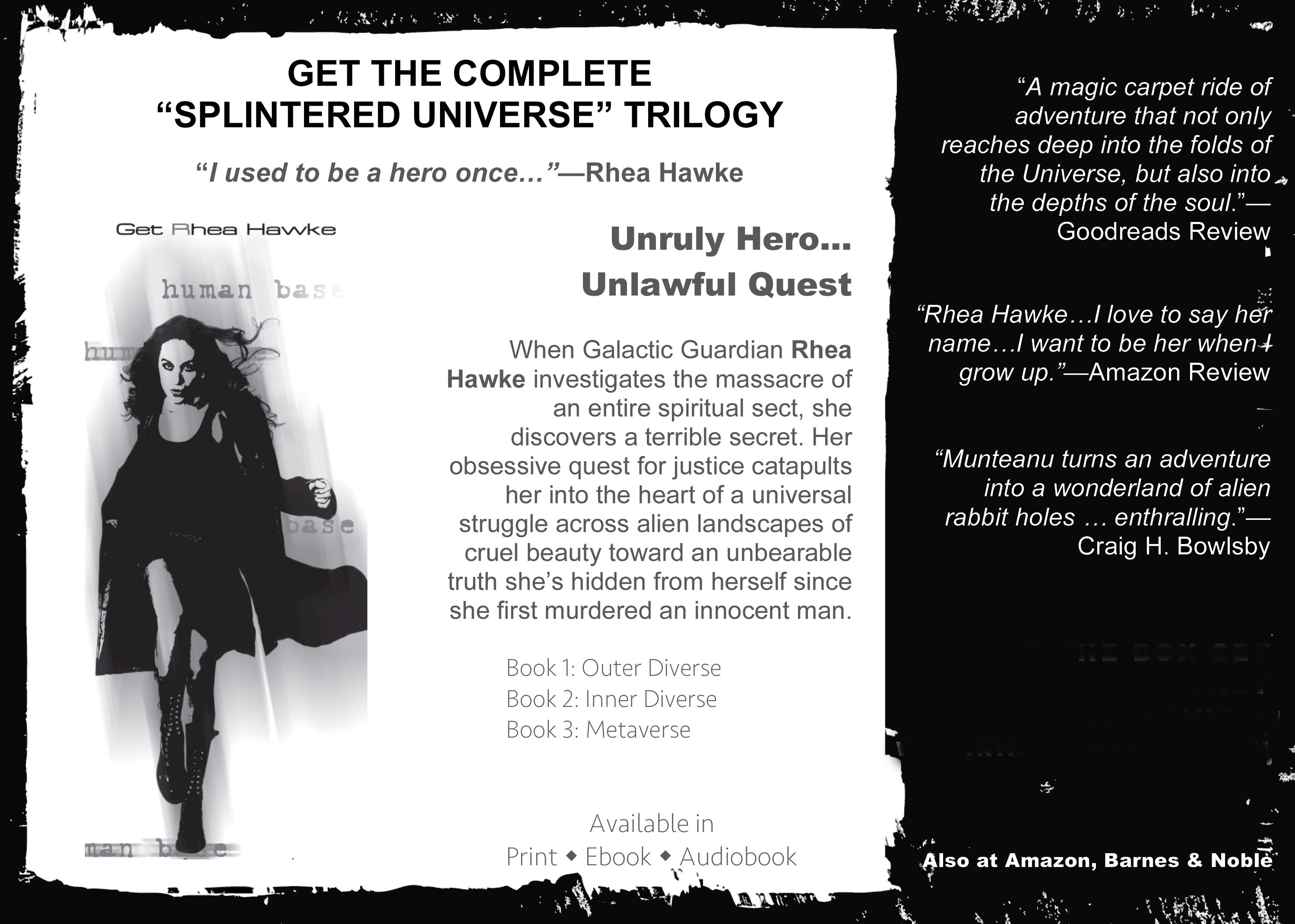
Microsoft Word - Trilogy-Vcon-AD-2.docx

nina-2014aaa

Nina Munteanu is a Canadian ecologist / limnologist and novelist. She is co-editor of Europa SF and currently teaches writing courses at George Brown College and the University of Toronto. Visit www.ninamunteanu.ca for the latest on her books. Nina’s bilingual “La natura dell’acqua / The Way of Water” was published by Mincione Edizioni in Rome. Her non-fiction book “Water Is…” by Pixl Press (Vancouver) was selected by Margaret Atwood in the New York Times ‘Year in Reading’ and was chosen as the 2017 Summer Read by Water Canada. Her novel “A Diary in the Age of Water” will be released by Inanna Publications (Toronto) in 2020.

Rhea Hawke’s Ultimate Weapon: the MEC

Rhea gun03

Rhea and her MEC

Rhea Hawke and weapons seem inexorably linked. As a Galactic Guardian Enforcer in a large galaxy of alien technology, Rhea Hawke knows her weapons. She’s used and been shot at by many. During her pre-Enforcer days, when she slummed with gangster Zec Zebalion on Ogium 9, Rhea made a dubious living as an arms dealer. She even designed some (like the Pocket and the MEC). Now, as ex-Enforcer, she finds her designs in high demand…

The Q-gun

The Q-gun is a shapeshifter’s preferred weapon; the handgun discharges dark energy quintle particles that resonate with matter to dematerialize it. In the first scene of Outer Diverse, Rhea is held at Q-gunpoint by the dust smuggler, V’mer on the rainy planet of Mar Delena. Later in Book 1, Rhea visits her old gangster “friend” Zec in Splendid City on Ogium 9, hoping for some information:

I met his gaze head on, then glanced down with a smirk to where his tight pants bulged and decided to make the first move. Tongue brushing my upper lip in mock seductiveness, I sneered: “Is that a Q-gun in your pocket or are you just happy to see me?”

Rhea library02

Rhea Hawke (Vali Gurgu)

The Q-bomb

Q-bombs are genetic-specific explosives with nano-bots that can be programmed for a specific frequency wave or genetic signature such as DNA. The Q-bomb (or its cousin Q-gel) is used often by various people, including Rhea, throughout the trilogy. In Inner Diverse, Rhea’s bookseller friend Serge Bastion (outer diverse twin to inner diverse V’ser) is supposedly killed by a Q-bomb, rigged into a book by a Vos terrorist, who had booby-trapped it with a DNA-sensing device linked to an inverse Q-bomb.  Later in Inner Diverse, Rhea embarks on an ambitious mission to blow up a Nihilist weapons facility using a set of Q-bombs. But to do that, she must visit her slimy “friend” Zec:

He glared at me with new respect and some fear. “What do you want, Hawke? I know you didn’t bring me my payment.”

“For what?” I challenged him, sauntering closer to him with my MEC still levelled at his crotch. “You’re half right, though. I do have payment. But for a Q-bomb, fifth quintle level with a five hundred charge. And I need it now.”

He threw his head back and laughed. “Whose ship are you blowing up this time?”

I smiled wryly. “Do you want the credits or not?”

I’d never known Zec to say no to a potential deal to make money. “Five thousand,” he said with a sneer.

“Up front.”

“That’s…” I began in a flustered tone, feigning affront.

“Particle-stream robbery?” He grinned. “That’s the deal.”

I looked directly at him with a hard gaze. “I pay only on delivery. And only if it’s within the hour. That’s the deal.”

Rhea marsh02

Rhea Hawke (Vali Gurgu)

Q-gel

Q-gel was used by the Nihilists in Metaverse to kill Rhea Hawke and Serge Bastion at the Beleus City Med Facility. Like the bomb, the intelligent blue-green slime is driven by nano-bots, and can be programmed to detonate with a specified distance from a specific object.

Then I saw it: a blue-green slime, seeping under the door…

We had seconds. I leapt onto Bastion, seizing him as he yelped, and rolled us off the bed toward the window. We thudded to the floor and I winced at his cry of pain. Calling forth an invisible burst of Badowin strength, I heaved the bed onto its side in front of us and pushed Bastion gruffly down just as the gel ignited with a loud ear-splitting bang.

The blast threw the bed against us and together we collided into the far wall as the windows shattered. Shards of tiny glass rained on us. Bastion squeaked then whimpered.

“You okay?” I asked once I’d gotten my breath back. My voice sounded like I was underwater and my ears were ringing.

He nodded, grimacing tightly with wide eyes. I saw blood trickle out of both his ears and felt a warm flow down my left one. The blast had probably burst our eardrums. We were lucky, I thought, that it hadn’t done more.

“Come on,” I said, pushing the bed off us and scrambling to my feet. “This is our exit call.” I lowered my hand to help him up. He just stared. All around us, embedded in the walls and the far side of the bed were thousands of knife-like spicules. Dozens would have impaled us had we not been shielded behind the bed.

Bastion shivered.

The Kappa rifle

The Kappa rifle with its metre-long barrel acts like a chemical weapon discharging kappa particles that slowly eat away flesh. Kappa particles are also used by Fauche shipbuilders as a fuel system for their ships. In Outer Diverse, Rhea first runs across a kappa rifle pointed at her by the bounty hunter Pentas in the Tangent Shipping hanger in Pyramid City on Horus:

Pulse racing, I turned and beheld two large purple Eosians standing at the entranceway. The larger one was in a Great Coat, snarling, and pointing a pocket pistol at me. The other wore a faded ranger and pointed his Kappa rifle with its meter-long barrel at me. I stared at the Kappa rifle. It was a cruel weapon, killing slowly. Mistakenly classified as a Class C weapon, [the Kappa rifle] was released as regulation issue to civilians like this bounty hunter. Guardians and bounty hunters often worked in pairs to find their quarry, usually splitting the reward. I’d done the same on a few occasions.

In Inner Diverse, on the planet Kraal, the terrorist A’ler shoots her brother Serge with a Kappa rifle:

Serge gave his sister a confident smile. “You wouldn’t shoot your own brother—”

The loud report of the kappa rifle made me flinch. Serge’s eyes widened in shocked disbelief then he looked down at the small wound in his chest.

Feeling a sympathetic stab of pain in my tight chest, I stifled a shriek and helplessly watched Serge fall to his knees then lose consciousness and flop over into a heap on the ground.

“NO!” I rushed to Serge’s limp body and knelt over him. I opened his shirt and gaped at the very small but deep wound. It leaked a small bit of blood mixed with kappa-induced fluid. The wound didn’t look like much now but already the flesh surrounding the small hole was reacting. It raged like an angry red boil. Serge’s face was grey with shock. Kappa particles didn’t usually kill right away but they were relentlessly deadly as they ate away the flesh of any creature they entered. It was a painful, long, but usually inevitable death.

“Enough blenoid crap!” A’ler shrilled. “He’ll die for sure if you don’t tell me where you put the bomb. Right now!”

zermatt-alps01-close copy

Kraal

The Concussion rifle

The Concussion rifle, used mostly by Guardians, first makes its appearance in Outer Diverse in the ship hanger in Pyramid City on Horus when two Eosian Guardians emerge from a falcon ship to neutralize Rhea as she attempts to steal a viper. The concussion rifle operates mostly like an old 20th century ballistic firearm.

Flicking my gaze in rapid fire between the console I was trying to un-encrypt and the falcon ship, I eventually caught sight of two Eosians emerging from the falcon, bearing concussion rifles. They were heading in my general direction.

I continued to fiddle with the ID key pad, feeling panic edge in as the Eosians approached. For the love of Creos! I’d opened hundreds of these before. They’d been the easiest ships to steal during my dubious career as arms dealer. And I’d practically taught the vehicle BNE lessons in Stealth 101 at the Guardian academy—

They’d spotted me and were running toward me!

The engine sputtered into a reluctant idling whine. I seized the controls and the viper lurched into the air just as they opened fire.

Chaos! My heart slammed as a few shots pinged across the vehicle’s hull. I carved a tight turn and whipped over my two pursuers, forcing them to instinctively duck, and soared out of the hangar into the sunset.

The Sling rifle

The Sling rifle is a harpoon-like weapon used by hunters, primarily blenoid hunters and meat traders on Upsilon 3—many of whom are smugglers and thieves. The rifle is essentially a harpoon with narcotic discharged with a sling line. in Inner Diverse, Rhea meets up with a gang of nasty meat-traders, who capture her and A’ler:

Lars laughed loudly and spit again, brown spittle landing on A’ler this time. “I do smell myself a barbeque.” Without a second thought, he aimed his sling rifle and shot. The rifle cracked, followed by the whiz of the harpooned sling line. The blenoid yelped then slumped, instantly knocked out by the strong narcotic. I flinched. He’d shot the leader of the pack and I knew what would happen next as the foreman released his sling. The blenoids fell upon their unconscious leader, flaying her alive to shreds…The men shouted with excitement, waving their sling rifles in the air.

The sling rifles discharged, cracking the air like whips, followed by their singing lines. As each blenoid tumbled under the deep penetrating harpoon hook, the men reeled them up as the remaining blenoids charged and dragged down their unconscious mates. It was a cruel game of cat and mouse and the sling rifle was luridly suited to it. A primitive weapon, the sling’s sharp harpooned projectile seldom killed. Killing wasn’t its objective; maiming, injuring and demobilizing was the intent. The sling was popular with hunters and gamers looking to satisfy their brutal sport of tormenting lesser beings. And torment they did. I watched in sick disgust as the men screamed with malicious amusement and reeled in the harpooned blenoids like fish in a writhing sea.

Sand dunes Oregon3

the dunes of Upsilon-3

The Stun stick

The Stun stick is a high-energy weapon that resembles a staff. It is used by the Orichalkon, an Eosian elite guard of Mon Seigneur Martinez assigned to guard his Gnostic order in their various outposts in the universe. The weapon is wielded like a staff in Tai Chi movements and discharges an energy wave that stuns all in it contacts. In Inner Diverse, Rhea is rescued by them when she is thrown by the traders into the blenoid pit to die:

The blenoids never reached me. They yelped and wailed and flew in all directions. Two large Eosians, garbed in jet black had dropped from the crane arm to the pit. They wielded stun sticks in swift fluid motion like acrobats, flinging stunned blenoids away from the platform. The Eosians’ choreographed dance reminded me of my Tai Chi form as they knocked every blenoid unconscious.

The Nokerig Pistol 

In Metaverse, Nokerig pistols were deployed by Nihilists in an attempt to immobilize Rhea during her rescue of Serge Bastion from the Beleus Med Facility.

The guard at the exit was expecting me but not my MEC. I burst out shooting and caught him as he raised his weapon. He fell with a thud. I raced down the hall to the exit on the far end and bolted down the stairs to the third floor, hearing my pursuers clattering behind me. More shots zinged past me from the stairwell and I felt a sharp sting on my left arm.

I hissed out a curse and threw open a door into a narrow corridor with my good arm. I looked down at my bleeding arm. They were using Class D nokerig pistols, ancient ballistic weapons with projectiles that festered in your body wherever they embedded. Although it hurt like chaos and bled copiously, the bullet had only grazed my arm, I noticed with relief.

The Pocket

Rhea designed her own weapons with great success. One currently used exclusively by the Guardians is the Pocket (PulsOniC Kinetic Energy Tracker)—a small lightweight pulse pistol that can track a target once the gun has identified their signature.

Rhea mountain02

Rhea Hawke (Vali Gurgu)

Rhea’s MEC (Magnetic-Electro Concussion) Pistol

Before she joined the Guardians, Rhea had hung out with the gangster Zec on Ogium 9, dealing illegal drugs and weapons.  But Rhea’s claim to fame in the galaxy of criminals and enforcers is her MEC, a coveted weapon of her own design and, in some ways, the ultimate weapon.

“I’ve got you, creon,” I whispered smugly, slowing to a walk and raising my MEC pistol.

Unfortunately, everyone and their tappin wants her MEC and its design. In the opening scene to Outer Diverse, Rhea is ambushed by the dust smuggler and shapeshifter V’mer:

He dropped the Q-gun and scooped up my MEC then squatted gleefully down beside me, keeping my arms pinned.

“Ah, the MEC.” He ran the thick gun barrel through my wet hair and leaned closer. “Operates like a sophisticated Q-gun.”

He couldn’t have been more wrong. The Magnetic-Electro Concussion pistol was the best—and worst—thing I’d ever made. The image of Officer Asphalios’s face melting in front of me came back to haunt me. Out of hubristic genius, I’d tailored the MEC to behave uniquely by species, based on their DNA structure. I could sweep my MEC in a crowded room and melt all the shapeshifters, only knock out Eosians and leave humans totally unscathed. But Asphalios hadn’t been what I’d thought he was. He wasn’t what anyone thought he was. And I was still paying for that.

After Rhea is fired from the Precinct for her last blunder (killing the only lead to a spiritual sect massacre), she meets the attractive stranger Serge, who asks her rather unusual questions:

He broke the silence with a question: “So, this MEC of yours … did you design it all by yourself?”

I raised my head and eyed him warily. “Why do you ask?”

“I just thought it was an interesting sideline for a Guardian Enforcer, that’s all. So, are they complicated and do you do it in your head or on some holo design program?”

My eyes narrowed with distrust. “Everything’s up here.” I tapped my head with my finger. “I make it a point not to keep records.”

Later in Outer Diverse, Rhea makes a daring gambit to flush out where the fugitive Serge has gone from his terrorist sister A’ler by disguising herself as an arms dealer for the MEC design and travelling to the Ulysses, an Eclipse space station:

I held up my MEC. “You were after this, weren’t you?” Among other things. I let my smile turn into a smirk. “Well, here it is. But you’re going to have to pay for it, fair and square, like anyone else.” I had the satisfaction of seeing A’ler’s eyes light up with self-absorbed interest. “It’s called a MEC, which stands for Magnetic-Electro Concussion pistol,” I continued, making my pitch. “It uses electro-magnetic wave energy to focus subatomic quintle particles to resonate with specific DNA, rather than randomly concentrating energy on tissue like your Q-gun does.”

“Ah, very clever,” A’ler said, eying the weapon. She held out her hand to inspect it. I hesitated, then reluctantly handed it over and watched, tight-lipped and fidgeting, as A’ler casually played with the controls.

“It’s lighter than I’d thought,” she shared.

“The MEC has three possible settings, based on three unique DNA signatures,” I explained, nervously watching A’ler play with it as though it was a toy. “The first is to kill by essentially melting the tissue that its electromagnetic wave resonates with. The second setting acts as a concussion wave and knocks out the target with matching DNA. The third setting does nothing except scan. One can, of course, choose any combination of the three settings. For instance you could choose to scan three different species or kill three different species.”

“So, it can have these three settings on three different DNA types at the same time?”

I nodded. “With one single sweep of the MEC in a crowd, you could kill all of one genetic type, knock out another, and leave the third intact but scanned and targeted. I’ve catalogued over 200 DNA types.”

“Impressive,” A’ler said, nodding. “Does it have a universal setting?”

“Of course,” I said, a little impatient. “You can choose to scan every DNA type on the MEC’s database—”

“Or kill every DNA type?”

I frowned and curled up my lip in a snarl of confused disgust. “That defeats the purpose of the MEC. You could just as soon use a Q-gun for that,” I said. “The MEC’s advantage lies in its ability to discriminate.”

A’ler stunned me with her next question: “Can you set the MEC to recognize and alert you of a specific DNA type?”

It was a question no one had ever thought to ask and a feature I tended to keep to myself. “Yes,” I admitted with some discomfort at revealing this ultimate property of the MEC. “But only from a limited proximity.”

“How close?” A’ler seemed hardly able to contain a glowing smile of glee.

“The subject has to be within five meters of the MEC.”

“Really!” Her eyes flashed. “And?” she prompted.

“It alerts you by vibrating against your body with a silent Beta frequency.”

A’ler nodded, forcing on a pensive frown. “A Beta frequency, eh?” She looked like she was pretending to know what I was talking about but didn’t. “So, how do you do that?” She turned the MEC over in her hand several times.

“You have to set it on permanent scan.”

“Show me,” she said…

Rhea discovers too late why A’ler asked her to demonstrate these MEC qualities. When she meets the remaining Schiss priest, a Gness named Rashomon, to warn him of his planned assassination by terrorists, it is her own weapon that kills him. When A’ler had briefly handled her MEC, she had surreptitiously set it to recognize the presence of a Gness. Rashomon—known for his obsession with weaponry—had expectedly wanted to handle her unique weapon. A’ler had set the bomb and Rhea had delivered it right into his hands.

I recognized the effects of a Q-bomb. What a fool I’d been. Tricked into playing the role of a weapon again. I’d set out to save this alien and ended up killing him instead. A’ler had obviously planted a Beta-frequency detonator on the MEC. She’d planted the tiny but lethal Q-bomb after she’d tricked me into setting the MEC to scan and alert me with a Beta-frequency in the presence of a Gness.  Then all A’ler needed to do was lead me to Rashomon, by cleverly providing me with the one thing I so obviously desired: Serge.

Throughout the trilogy, Rhea must finally come to terms with one of the largest blunders of her ill-fated career as an Enforcer: her slaughter of seventy-seven Rills on Omicron-12.

The Rill possessed two very different arms. His right arm was particularly large and clawed and resembled a weapon. It was tailored no doubt for digging in the bogs of Omicron 12. It had been my undoing, that weapon-like arm.

rhea-contemplative01

Rhea Hawke (Vali Gurgu)

Just before she’s fired by her boss, Ennos in Outer Diverse, he lets her know what he thinks of her mass-execution:

“I say monitor a native uprising on Omicron 12 and you exterminate a whole insurgent army singlehandedly with that genocidal weapon of yours.”

Not even Ennos believed me about mistakenly setting my MEC to kill instead of stun those Rills; my reputation for anti-alienism had preceded me. Despite repeatedly telling myself that they were just vulgar Rills and murdering terrorists, I suffered guilty nightmares of the incident and had secretly wondered why the Guardians hadn’t thrown me into Sekmet for it. Finally, I’d rightfully come to the conclusion that the insane cruelty of the incident had not bothered Ennos, so long as I hadn’t embarrassed him in front of the Legess with whom the Guardians had a relationship; Ennos didn’t care about the Rills anymore than the rest of the Galaxy did.

Wetland-Trent3

Swamp-bog of Sekmet

In Inner Diverse, Ka challenges Rhea to the core of her prejudiced mind:

Isn’t that really why you made the MEC? To rid the galaxy of those unsavoury races? Isn’t that what you were doing on Omicron 12?”

I swallowed convulsively and tightened my hold on the MEC. It was slipping in my clammy hands. “I’m not a fascist.”

“Aren’t you?” Ka challenged. “Admit it, Rhea, you mercilessly killed all those Rills without the slightest remorse—”

“It was a mistake. My MEC was—I wasn’t used to its settings and—”

“There are no mistakes, Rhea,” Ka cut in. “There is only duende. And for every action a reason, and a consequence, even if unclear to the doer.” Then he leaned forward. “You’ve long harboured anti-alien sentiments. And you particularly despise baldies.”

Even in Hades on Sekmet, the prison planet, the mevlani (prisoner in charge) Barbariccia berates Rhea for her treachery:

“When you were an Enforcer you self-righteously and viciously dispensed your version of law and order,” he said in a voice of open contempt. “Death was your calling card and your answer for everything. Over a standard galactic year ago, on Omicron 12, you went way beyond your mandate with the Legess and intruded on a revolutionary meeting of key insurgents. You crushed a whole race with ruthless precision, killing seventy-seven unarmed Rills with that menacing weapon of yours.”

Swamp-Log-DeasPark

Swamp-bog of Omicron 12

I bit back a retort and felt saliva collect in my mouth. I’d convinced myself that they were armed, but they weren’t. It was a lot easier to justify why I kept shooting even after I realized that my MEC was spitting out fatal waves rather than debilitating ones. My tormented mind had repeatedly gone over that lurid scene, trying to sort out what had triggered my tragic blunder of insanity. I couldn’t help my panicked reflex of misguided self-defence; it was the rationale that I’d fed myself later that shamed me now. They were only Rills, I’d thought. Only Rills…. I had wondered briefly at the time why Ennos hadn’t sent me to Sekmet for my overly ambitious deed. The non-native Legess were clearly the aggressors, enslaving the obsequious Rill, and for decades had exploited their labour for keen profit…with the full support of the Guardians—perhaps the real reason I hadn’t been sent to Sekmet for my act of treachery. Although it looked bad, I’d done exactly what both the Legess and the Guardians quietly wanted: I’d crushed their revolution.

As the trilogy progresses, Rhea’s MEC design plays a pivotal role in the war brewing in the galaxy. Her MEC technology is coveted by Guardians, Eclipse criminals and Vos Nihilist terrorists alike as a weapon of genocide. Rhea finally realizes that she cannot distinguish ally from foe in the chess game to seize her weapon of destruction. Once she trades the MEC design to a Nihilist for the life of a colleague—setting in motion a treacherous escalation toward galactic war—Rhea must fight to save the galaxy and ultimately reconcile what she started with the Rill uprising on Omicron-12.

In Metaverse, the third and last book of The Splintered Universe Trilogy, Detective Rhea Hawke travels back to Earth, hoping to convince an eccentric mystic to help her defend humanity from an impending Vos attack—only to find herself trapped in a deception that promises to change her and her two worlds forever.

You can listen to a sample recording of Outer Diverse, Inner Diverse, and Metaverse through Audible. Read The Splintered Universe reviews on Goodreads.

audible listen

Microsoft Word - trilogy-poster03.docx

nina-2014aaa

Nina Munteanu is a Canadian ecologist / limnologist and novelist. She is co-editor of Europa SF and currently teaches writing courses at George Brown College and the University of Toronto. Visit www.ninamunteanu.ca for the latest on her books. Nina’s bilingual “La natura dell’acqua / The Way of Water” was published by Mincione Edizioni in Rome. Her non-fiction book “Water Is…” by Pixl Press (Vancouver) was selected by Margaret Atwood in the New York Times ‘Year in Reading’ and was chosen as the 2017 Summer Read by Water Canada. Her novel “A Diary in the Age of Water” will be released by Inanna Publications (Toronto) in 2020.
The Deserts of Upsilon-3 and the Problem with Blenoids

desert planet

Upsilon-3

EXCERPT from Inner Diverse, Book 2 of The Splintered Universe Trilogy: In a desperate attempt to find the Ancient One—the key to the mysterious killings—Detective Rhea Hawke steals a Vos ship and the Vos leader, forcing the terrorist A’ler at gunpoint into taking her to Upsilon-3.

Upsilon-3 is a desert planet with a thin atmosphere, heavy gravity and highly fluctuating temperatures—uncomfortable for any species, save its indigenous small creatures and the blenoids who eat them. Upsilon-3 is one of the moons of Upsilon b, a ringed gas giant. The moon is about Earth-size, an arid wasteland that diurnally shifts between extreme temperatures. During the height of midday, it easily reaches 45ºC, an Azorian’s dream, and in the deep of night it is often below freezing, an Azorian’s nightmare. And speaking of mad blenoids, the planet is full of them…Rhea knows first hand:

Sand dunes Oregon3

Dunes of Epsilon 3

I’d been there before. I’d tracked and dispatched an Azorian assassin to the small ephemeral town there once—but at the cost of a blenoid attack. In his desperation, the Azorian had fled the ghost town into the arid wilderness, and if I hadn’t shot him, the blenoids would have torn him apart. If they hadn’t, he would have died a horrible death of severe hypothermia. As it turned out, my shot infuriated a pack of sleeping blenoids and I became the subject of their fury instead.

Ferocious and unpredictable, with dull brains and razor sharp teeth, blenoids were the galaxy’s most dangerous predators; but beneath their tough hide, blenoid meat was considered a galactic delicacy, so long as you stayed away from their organs. Their eating habits made them akin to the seagulls of Earth; they ate everything and anything, including their own and what came out of them. And they were prolific. Blenoids weren’t very large. They stood about a meter long and almost that high but with the anatomy and mad tenaciousness of a pit bull and the rough ochre hide of a rhino.

Adapted to the arid heat of the Upsilon desert, they resembled hyenas with extremely large ears and paws to increase surface area and promote heat loss. Five beady eyes, two on either side of their massive head and one centrally located, were adapted to the harsh bright sunlight of the Upsilon 3 dessert. Their massive powerful jaws contained three layers of razor-sharp teeth. Once they bit down on a prey, the jaw locked into a vice-like grip that either ground deeper or tore out deep muscle. Blenoid saliva contained a powerful narcotic and poison that dulled its victims and caused severe infection that spread swiftly. My grandmother was right; most blenoid attack victims died from shock. Those who’d survived, and there weren’t many, had only done so due to drastic measures like having a limb immediately severed to save the rest of their body. Blenoids attacked anything, no matter what its size and tore it to shreds. They were even known to rip one another apart in a frenzy of aroused anger or if they sensed any weakness. It was natural selection at its cruellest, I considered…

The Galactic meat-traders didn’t stay beyond the time it took to hunt and prepare the blenoid meat for galaxy-wide sale. Apart from the Gnostics who’d claimed one cluster of the ancient alien buildings as their temple of worship, no one lived here—except the Ancient One, that is. So, between the Venik slave traders, the blenoid meat traders, the Gnostic priests and the Nihilists, this backwater planet was actually getting crowded.

desert planet from above

desert moon Upsilon-3 seen from above

As A’ler banks the ship to the arid planet, Rhea observes the vast expanse of open desert:

I gazed down at the waved pattern of cresent-shaped dunes, obviously formed by a constant wind. It was a harsh and miserable environment, I thought.

“Barkhans,” A’ler offered, pointing to the dunes and breaking her taciturn silence. “That’s the West Ghouroud. No one’s ever crossed it and lived.” She eyed me with a dismissive look of disgust as much as to imply, especially a puny human like you.

I didn’t respond and let my gaze stray back to the dune sea. The dunes looked like the capped waves of a red ocean, the deep ochre of their shaded slipfaces contrasting with the harsh bright windward sides, still baking in the sun. The dunes looked small, but I guessed that some were at least three hundred meters high.

sand dunes

Sand dunes (Barkhans)

When they reach their destination—an enclave of strange buildings built by some ancient civilization—Rhea is hit with the harsh environment:

A’ler opened the hatch and a blast of furnace-hot air knocked me gasping and recoiling…Even at sunset, I could feel the stifling heat as we awkwardly disembarked. I inhaled a cloyingly sweet fragrance, reminiscent of cabbage, sewage and rotting flesh: blenoids, I concluded. And remembered; they stank… I followed her gaze and let mine take in the wide expanse of shifting red sands, dotted with islands of low creeping grey-green scrub. My gaze settled to the east.

upsilonandromadae d copy

View of Upsilon b and its ring bisecting the star Upsilon Andromedae

Upsilon Andromedae sat poised over the horizon. I could manage only a glance at the large bluish sphere of Upsilon b above the sun, its huge-diameter ring extending vertically down beyond the horizon and cutting a knife-sharp blade through the sun that cast a long shadow of the ring across the russet expanse. I stared, struck by the terrible beauty of this harsh landscape and just made out what looked like a dust storm on the horizon.

When both her Vos enemy and she are abandoned in the open desert, Rhea must use all her skills to survive the beating heat of the sun, wild blenoids, quicksand, sinkholes and killer plankton as they journey toward a far settlement, hoping for reprieve.

desert playa

desert playa

We’d left the flats of the playa and were heading toward rougher terrain. By tomorrow we would enter the desert proper, the ghouroud, with its massive barkhans that I’d seen from A’ler’s ship. I could already see them looming in the distance. I heard their low stuttering roar as the wind sang through them. And dreaded the crossing. Not only would it be treacherous with more possible quicksand traps, but it would serve a tortuous climb for A’ler up the slipface of the barkhans then down the soft sand on the other side…

The desert became a frozen sea, red clouds of sand rising off huge cresting waves that boomed and creaked like an old boat pitching at sea. The wind whistled like a chorus of laughing witches, hurling red grit into our faces. Our pace slowed to a crawl as our wading steps in the hot yielding sand turned to stumbles and falls.

When they finally reach a settlement, they collide with sadistic meat-traders. There Rhea will learn the grim truth about blenoid physiology, ecology and behaviour—and herself.

Get the complete Splintered Universe Trilogy. Available in ALL THREE FORMATS: print, ebook, and audiobook. You can listen to a sample recording of all three audiobooks through Audible.

audible listen

Microsoft Word - trilogy-poster03.docx

nina-2014aaa

Nina Munteanu is a Canadian ecologist / limnologist and novelist. She is co-editor of Europa SF and currently teaches writing courses at George Brown College and the University of Toronto. Visit www.ninamunteanu.ca for the latest on her books. Nina’s bilingual “La natura dell’acqua / The Way of Water” was published by Mincione Edizioni in Rome. Her non-fiction book “Water Is…” by Pixl Press (Vancouver) was selected by Margaret Atwood in the New York Times ‘Year in Reading’ and was chosen as the 2017 Summer Read by Water Canada. Her novel “A Diary in the Age of Water” will be released by Inanna Publications (Toronto) in 2020.

Love Among the Ruins…


Log over water forest-DeasPark copy

Swamp on Sekmet

EXCERPT from Inner Diverse, Book 2 of The Splintered Universe Trilogy: after a daring escape from Hades on the bog planet of Sekmet, Rhea finds herself stumbling through thick wet scrub, past gnarly drowned trees then plunging with gasps into surprisingly deep crevices filled with bog water. The glacial wind whips her hair and wails through her shivering body as rain pelts her. Her breaths stutter and gut burns with black longing for the wakesh root. She sobs in her breaths, struggling over islands of soggy hummocks that cave under her weight, plunging her into deep frigid murky pools and thrashes her way across deep bog water. As a convulsive tremor of withdrawal runs through her, Rhea despairs and begins to wonder if she will survive her escape. No one got off Sekmet, after all, so the saying goes. Then she remembers glimpsing Serge at the penal colony. Her lover. Her nemesis. Had it been a dream? Had he come to rescue her only to disappear?

Rhea-marsh02

Rhea Hawke (Vali Gurgu)

A twig snapped behind me and I jumped, heightened senses inhaling musk and strawberries.

Serge!

“Rhea.”

Relief and panic competed inside me. Serge was the last person I wanted to catch me this way: filthy, junked-up, vulnerable…and longing for him. Suddenly tearful, I scrambled to my feet with a grunt of effort. I fled into a staggering run, tripping and stumbling over a tangle of roots in the muck. I didn’t dare look back.

“What?” I heard him quip. “No warm welcome like: ‘It’s so good to see you Serge, I missed you so much.’” Then after a pause of huffing breaths, he added in exasperation, “Rhea! Wait up!”

“Why are you following me?” I threw a withering look over my shoulder at him. He’d gone back to being a human, those ugly lumi pants recklessly low-riding his hips and revealing taut abdomen muscles and the alluring curve of his pelvis. I noticed with some satisfaction that he was having a hard time negotiating the underwater root tangle as well.

“What do you think?” he answered in a sarcastic tone.

“I don’t need your help!”

“That’s a matter of opinion. You’re hurt and you’re crying—”

“You’re the one making me cry.” I glared at him. I hadn’t noticed I was crying. “This is all your fault. I never cried before I met you.”

He barked out an exasperated laugh then added, “That’s because I woke up your senses. I made you alive.”

“You made me miserable!”

“Alive and miserable, then,” he conceded. “Let me help you.” He broke into a sprint, splashing in awkward steps.

“I told you, I don’t need help from a lying scoundrel,” I huffed and threw myself into a frenzied lopsided gallop to keep ahead of him. “I don’t need help from a God-damned Vos, Nihilist, anti-Nihilist, spy, thief—whatever you are!” I tripped and fell. Serge was bending over me, pulling me up, even as I struggled to get free. My chest heaved. Black bog juice dripped off my face. I turned to face him and caught his intoxicating smell: a cottonwood forest in spring cut by musk and a hint of strawberry. It overwhelmed my senses and made me dizzy with desire. I stared up into his face and longed to fling my arms around him and kiss him. I bit out, “I’m perfectly fine on my own.”

“Oh, you are, are you?” he retorted. “In case you didn’t notice, I saved your scrawny flat butt.” His face was close to mine, eyes blazing and breathing hard.

“Where were you the rest of the time? Sun tanning in the penthouse suite? Get off me!” I twitched my face from his and pushed away. I didn’t like how he’d described my butt.

“It took me over a month just to get in,” he huffed out, clinging to me and fighting off my struggles. “By then you were already running the place. I was stunned. I’m amazed at your talents, particularly in escaping. Frankly, Rhea, I didn’t expect you to be in any shape to do anything—”

“Well, thanks for the encouraging thoughts and incredible faith in my abilities,” I said tartly. “I had a little help from several friends and none of them was you.” I thrashed out furiously to get free. “I didn’t ask for your help back there. I could have managed, damn you!”

“You ungrateful little witch!” he growled, pinning my arms in a forceful embrace. He glared at me. “You’re too jagging proud to admit that you need my help.”

Lips snarling, I jerked out of his grasp but slipped in the wet sod with a shriek and took him down with me. We fell with a splat, black oily mud oozing over both of us. He scrambled on top of me, straddling my hips, and pinned my flailing arms with his hands.

For a hesitant moment I inhaled his heady aroma and felt myself tumbling dangerously into his tempest eyes. He held my gaze and I drew in a shuddering breath. So much passed between us in that gaze and for a moment we were staring at each other like the time when we’d first made love. It was an exquisite moment of infinite devotion, wonder and tenderness. And mutual surrender. And I felt as though I’d loved him and trusted him all my life—

Desperate, I shifted with a shrill grunt into a massive Venik, realizing too late that my clothes tore to shreds off of me. I struck out. Within a heartbeat, Serge matched my form, lumi-pants ripping off, and countered. I tried an Azorian. He matched. A Khonsus—he was already one! I finally returned to my human form and Serge followed suit, barking out a laugh and breathing hard like me. His dark eyes grew large. We were both naked.

“Good try,” he panted with a rough laugh. He glanced down my body before locking eyes with mine. “Just look at you…You’ve chopped off your beautiful hair. The drugs have wasted your skin, done something to your eyes…But you’re still so…”

I dreaded what he saw and met his thunderstorm gaze with my own vulnerable gaze. I knew I was a spectacle: wet and bedraggled hair plastered over my face in tangles of mud—yet I returned him a plaintive thirsty look…How I’d missed those eyes.

They blazed into mine. “…so beautiful,” he finished in a hoarse voice. Then he slammed his mouth against mine in a crushing embrace. Like a spring released I yielded and we kissed. I flung my arms around him, clasping his neck and pulling him close, feeling the hard heat of his response. I savoured his body stirring over mine as I rocked my hips up against him. His lips flamed over my face, defining every feature, and I trembled at the tantalizing rasp of his whiskers. His hands mauled my body with uncontrollable ardour. I was all his…except—

“No!” I slithered out from beneath him and kicked out. He barked out a yelp. I scrambled to my wavering feet, slipping, and stuttered out in a shaky voice, “I won’t let you take advantage of me.”

“Advantage!” he exclaimed and rubbed his thigh. “You want it too, damn it. You were kissing back.”


Inner-diverse-front-cover-WEBInner Diverse is the second book of The Splintered Universe Trilogy:

When Galactic Guardian Rhea Hawke investigates the genocide of an entire spiritual sect, she collides not only with dark intrigue but with her own tarnished past. Her quest for justice catapults Rhea into the heart of a universal struggle across alien landscapes of cruel beauty and toward an unbearable truth she’s hidden from herself since she murdered an innocent man.

Get the complete Splintered Universe Trilogy. Available in ALL THREE FORMATS: print, ebook, and audiobook. You can listen to a sample recording of Outer Diverse, Inner Diverse, and Metaverse through Audible.

audible listen

Microsoft Word - trilogy-poster03.docx

GIVE AWAY! GIVE AWAY! GIVE AWAY! GIVE AWAY! GIVE AWAY! GIVE AWAY!

Rhea likes to use proverbs as barbs and to unhinge her opponent when she gets nervous or feels trapped. Send me a good proverb for Rhea to use and I will send you a code to obtain a free Audiobook from Audible. Codes are limited, so it will be first come, first serve until we’re out. Send your proverb to Nina Munteanu at: nina.sfgirl[at]gmail.com.


nina-2014aaa

Nina Munteanu is a Canadian ecologist / limnologist and novelist. She is co-editor of Europa SF and currently teaches writing courses at George Brown College and the University of Toronto. Visit www.ninamunteanu.ca for the latest on her books. Nina’s bilingual “La natura dell’acqua / The Way of Water” was published by Mincione Edizioni in Rome. Her non-fiction book “Water Is…” by Pixl Press (Vancouver) was selected by Margaret Atwood in the New York Times ‘Year in Reading’ and was chosen as the 2017 Summer Read by Water Canada. Her novel “A Diary in the Age of Water” will be released by Inanna Publications (Toronto) in 2020.


The Pit of Despair…

EXCERPT from Inner Diverse, Book 2 of The Splintered Universe: When Rhea is sent to Sekmet to live out her remaining life run by the scum of the criminal community—all addicted to the drugged food—she finds herself reviled as a puny human and an ex-enforcer—she’d put some of them there, after all. Knowing her days are numbered and finding herself without a safe place to bed-down, Rhea makes a desperate bid to survive. Taking a Rill’s advice, she agrees to be sponsored by the ruffian Bondar as a contestant in The Game—a game of survival involving strength, courage and wits to an audience, who bet on a winner. It is a simple contest with one winner and one loser: the simple task is to immobilize or kill the opponent and capture the “magical” wakesh root—a highly sought after elixir that can break her from the soporific addiction of the prison’s drugged food:

rhea-contemplative01

Rhea Hawke (Vali Gurgu)

I stood in the centre of the five hectare blood-stained arena, facing the semi-circular bleachers where Bondar and Barbariccia and an audience of several dozen aliens sat, packed like blood hounds smelling death.

I inhaled the rank smell of unwashed bodies, sweat and old blood and privately wondered what I was doing here. Bondar seemed to think I was capable enough; he’d gleefully accepted me as his candidate and now looked smug, seated not far from Barbariccia, who ignored him and studied me with a look of amusement on his calm face… Suddenly aware of my soiled clothes, I grew self-conscious and nervously fidgeted as I waited for Barbariccia’s candidate to enter the arena.

Bondar abruptly stood up and held up my original jacket in one hand and my slacks in the other.

“I’m still looking for a buyer for these!” he announced happily in a multi-timbral chorus. “Great clothes of impeccable quality. Original Enforcer clothes.”

Which they weren’t, I thought scathingly. They were just ordinary flight clothes. Damn that Bondar! The bastard was selling my clothes right in front of me, his own candidate. It showed me what kind of team we were…and what he thought of my chances.

“Are they intelligent?” someone in the audience asked.

Bondar brought both my jacket and pants up to his reptilian face and buried his snout in them with a deep inhale. All he smelled was me, I thought, wincing inside. I felt my face tighten to a grimace as I watched him smear my clothes over his face: it seemed that essence of Rhea was a perfume for him because his doleful eyes flickered dreamily shut and his many mouths smiled lecherously. Several inmates cackled.

“You can’t tell by smelling it, creon!” someone scoffed.

“They’re far too small!” said another. “She’s just a puny little pip.”

My gaze involuntarily flickered down my own torso. I wasn’t that small, I thought petulantly. I was almost six feet tall.

Bondar bent down and lifted up my boots. “What about these? Real gravity boots. They instantly adjust according to the weight of the wearer to the gravitational pull of any planet you travelled to—”

“No one’s going anywhere, you buffoon!”

They started booing him and shouted for him to sit down.

I dropped my gaze to the dirty blood-stained floor as the jeers and slanders spread to me. I heard several pointed insults aimed at the human race. What was I doing here besides inviting abuse?

Mayling had sagely waited until just before I entered the arena, when it was too late to back out, to fully explain the game to me: “It’s a simple contest: just find and takes possession of the wakesh root, hidden in the obstacle course of the arena, before the opponent does—and keep it by immobilizing the other contestant. This is usually done by killing the opponent but youz don’t haves to…” I had repeated the part about usually killing the opponent and Mayling ignored me to continue: “Whatever youz do, don’t let yourself falls into the pit.”

“Pit?” I had repeated with a hard swallow.

“No one ever gets out. Usually youz just hears a lot of splashing then a lots of silence. Sometimes a sobeks wanders in and manages to eludes the peat saws and turbines, then youz also hear thrashing and lots of awful cries of terrors and pains as the sobek bites off a limb and—”

“I get it,” I cut in.

“There are two ways to plays the games,” Mayling went on. “Defeats your opponent first then looks for the root ats your leisure, or finds the root first and use its to defeats your opponent. Which way youz goes depends on your personal strengths. Considering your present status and your humans abilities, I suggests youz first finds the root, then takes a bite of the root immediately to gives yourselfs a decided advantage over your opponent.”

That only worked if I got it first. And that was unlikely, given the wave-sensitive eyesight of the Xhix, who’d just entered the arena through an adjacent door. Wonderful, I thought with growing despair. Xhix could see through objects.

Holding a mining shovel in one hand, the Xhix waved to the cheering crowd with his other. I dismally recalled the crowd’s jeers and catcalls when I’d entered the arena. It was obvious who they thought would win.

I was contemplating the misnomer of Mayling’s use of the term obstacle course, when Barbariccia stood and shouted, “Let the contest begin!”

I kept a sharp eye on the Xhix, who stood poised several meters from me. Maybe I could outsmart him. I might be more swift, if I let him lead me to the root. The Xhix seemed to realize what I was thinking. He faced me with a smirk and turned black, tapping his shovel with his paw. He wasn’t about to give away the whereabouts of the root.

The floor rumbled and, just a meter from where I stood, it abruptly separated, giving off a strong waft of sulfur. The gap in the floor groaned into a long chasm that continued to widen. Both the Xhix and I stepped back. This must be the infamous pit Mayling had referred to. I carefully leaned over to catch a glimpse of what lay below. I made out murky bog and peat, moving slowly across the gaping opening as the penal facility rolled along, churning up peat and mire some ten meters below—

Something hard and painful struck my head, throwing me off balance into the gap with a startled grunt. I briefly registered the Xhix’s victorious laugh as I pitched forward and blacked out.

I jerked awake, inhaling water. I’d plunged into black cold churning water and broke the surface with gasping breaths.

saltwater marsh-NS copy

Marsh on Sekmet

Inner-diverse-front-cover-WEBInner Diverse is the second book of The Splintered Universe Trilogy:

When Galactic Guardian Rhea Hawke investigates the genocide of an entire spiritual sect, she collides not only with dark intrigue but with her own tarnished past. Her quest for justice catapults Rhea into the heart of a universal struggle across alien landscapes of cruel beauty and toward an unbearable truth she’s hidden from herself since she murdered an innocent man.

Get the complete Splintered Universe Trilogy. Available in ALL THREE FORMATS: print, ebook, and audiobook. You can listen to a sample recording of all three audiobooks through Audible. Read the Splintered Universe reviews on Goodreads.

audible listen

Microsoft Word - trilogy-poster03.docx

nina-2014aaa

Nina Munteanu is a Canadian ecologist / limnologist and novelist. She is co-editor of Europa SF and currently teaches writing courses at George Brown College and the University of Toronto. Visit www.ninamunteanu.ca for the latest on her books. Nina’s bilingual “La natura dell’acqua / The Way of Water” was published by Mincione Edizioni in Rome. Her non-fiction book “Water Is…” by Pixl Press (Vancouver) was selected by Margaret Atwood in the New York Times ‘Year in Reading’ and was chosen as the 2017 Summer Read by Water Canada. Her novel “A Diary in the Age of Water” will be released by Inanna Publications (Toronto) in 2020.

Sekmet, Mistress of Dread

Bog Planet wholeSekmet is the penal planet from which no one ever escapes. The planet is a giant bog-marsh and the prison itself is a massive 2-kilometre barge that travels the wetland planet and mines the peat. The very word evokes fear. Sekmet is the bogeyman. Early on, in Outer Diverse, Rhea’s colleague Bas warns her to be careful or she might end up on Sekmet for her transgressions; Rhea scoffs that only senseless killers go to that bog planet to die and rot. But soon Rhea will alter her cavalier defence. Things will change for her…

Sekhmet

Sekhmet

Sekmet is named after the lioness-headed Egyptian warrior goddess (Sekhmet). Variously known as “the one who is powerful or mighty”, “One before whom evil trembles”, “mistress of dread”, and “Lady of Slaughter”, Sekhmet is often depicted in red, the colour of blood.

In Inner Diverse, Bas’s warning is realized; Rhea is hunted and captured then after a hasty “trial” she is sent to Sekmet. There, she, too, will meet the goddess’s wrath—and tremble.

As the AI ship takes Rhea down to the planet surface, she has a good view of the wetland planet:

I gazed out my porthole at the barren patchwork of the small wetland-dominated planet, whose surface resembled an early impressionist’s painting. Dominated by sombre russet and indigo tones, the raised bog was dotted by a hasty spray of cobalt lakes and pools.

Although it was mid-morning on the planet, the mostly grey sky was saturated in low cloud and it was drizzling outside. Spates of wind drove sheets of rain hailing sporadically against my porthole. It was a wet desolate place. But then again, “A drowning man is not troubled by rain—Persian Proverb, Rhea,” I said quietly to myself. The weather was the least of my concerns.

Wetland-Trent6

Swamp on Sekmet

As the ship descended, I could make out the individual pool system of the blanket bog with its inhospitable tapestry of dark and wet shapes. I dispassionately reviewed what I knew of the planet. Its cool wet climate and rich iron deposits promoted the development of muskeg, string bogs, darkly forested swamps and wildflower-filled fens. This was Sekmet, a less than Earth sized planet that orbited the KO star, HD177830 in the constellation Vulpecula. My new home. Where I was going to die.

As the ship turned, I made out the actual penal colony with its dozens of grey tapered stacks billowing out white smoke. The facility resembled a huge factory, floating on a glistening wet mosaic of multi-textured and coloured vegetation. The facility, appropriately named Hades by its inmates, was in fact a huge peat mine that migrated across the huge blanket bog, extracting peat for sale to maintain the colony.

The life span of inmates on Sekmet was usually less than a year and I wasn’t sure I was going to be all that tenacious. The Eosian Guardian who’d shoved me into this AI ship had offered his own prognosis with a sinister laugh: “You won’t last a jagging week, human. They despise Enforcers. They’ll eat you alive then excrete you as bog fertilizer!”

The ship had informed me earlier that Hades contained an inordinately high number of Rills as inmates. If any one alien race had the right to despise me, the Rill did. I’d single-handedly subverted their one and only attempt at obtaining freedom from a long life of oppression by the Legess. I decided that Sekmet was going to be my personalized purgatory.

They will eat the fruit of their ways and be filled with the fruit of their schemes,” I recited the lines from Proverbs in a quiet breath.

When the AI ship lands on the huge barge platform, Rhea is instructed to get off.

Log over water forest-DeasPark copy

Wetland on Sekmet

The exit hatch door opened and the AI droned, “This is your destination, Rhea Hawke. Please disembark.”

My chest clenched. I swallowed down my fear and stepped out onto the platform of Sekmet’s landing bay, catching the faint sulphurous smell of the bog. The doors of the ship abruptly closed behind me, making me involuntarily flinch. Annoyed at my reaction, I gathered my composure and swiftly assessed the empty platform, hearing only the hum of the ship’s engine. My gaze rested on the endless hummocks and large meandering ponds of tea-stained water outside.

As the ship made ready to leave, I felt my heart pounding with the sudden urge to bolt. I had a panicked notion to leap off the platform into the murky bog. Swim, wade, scrabble to eventual safety in the wilderness of Sekmet in those distant hills. The ship lifted off the ground in a turmoil of dust and thunder. My face twisted with indecision as I tensed, poised to flee—

A male Azorian burst in from the adjoining chamber and I braced for an attack. He pelted right past me then leapt into the murky water. I watched him thrash through the undulating bog, stumbling, submerging and trying to swim—his left arm was amputated at the elbow. I was about to follow when laser shots peppered the water around him for several heartbeats. I flinched. As suddenly as the shots began, they ended and the Azorian slowly sank until only his head remained above the water. I stood stiff, trembling hands over my mouth, and breathing hard. I stared at the head bobbing slowly in the water.

With the ship departed, chaotic sounds drifted in from inside the colony. Faint echoes of shrill outcries, mad laughter and raucous groans filtered in with the light breeze. It sent a chill through me—

“The stupids ones stills thinks theys cans escapes thats ways,” a nasal voice said behind me.

Startled, I spun around. When I saw the female Rill waddle toward me, huge arm—weapon—stretched out, I instinctively went for my MEC and caught air. My MEC was, of course, no longer holstered on my hip. That damned gesture and ominous paw got me every time, I thought and let the tension drain from my posture. I grimaced and murmured to myself, “Speak of the devil.”

At the entrance from the platform inside the penal barge, Rhea passes the looming statues of Anubis—ancient Egyptian jackal god (who took part in judging a person’s guilt) and the lion-headed Sekhmet. High between the massive statues, a makeshift sign has been erected that hangs above the open doorway. Words inscribed in a messy but clear scrawl read: I am the way into eternal grief; abandon every hope, all you who enter.

*****

Inner-diverse-front-cover-WEBInner Diverse is the second book of The Splintered Universe Trilogy:

When Galactic Guardian Rhea Hawke investigates the genocide of an entire spiritual sect, she collides not only with dark intrigue but with her own tarnished past. Her quest for justice catapults Rhea into the heart of a universal struggle across alien landscapes of cruel beauty and toward an unbearable truth she’s hidden from herself since she murdered an innocent man.

Get the complete Splintered Universe Trilogy. Available in ALL THREE FORMATS: print, ebook, and audiobook. You can listen to a sample recording of any of the three audiobooks through Audible. Read the Splintered Universe reviews on Goodreads.

audible listen

Microsoft Word - trilogy-poster03.docx

nina-2014aaa

Nina Munteanu is a Canadian ecologist / limnologist and novelist. She is co-editor of Europa SF and currently teaches writing courses at George Brown College and the University of Toronto. Visit www.ninamunteanu.ca for the latest on her books. Nina’s bilingual “La natura dell’acqua / The Way of Water” was published by Mincione Edizioni in Rome. Her non-fiction book “Water Is…” by Pixl Press (Vancouver) was selected by Margaret Atwood in the New York Times ‘Year in Reading’ and was chosen as the 2017 Summer Read by Water Canada. Her novel “A Diary in the Age of Water” will be released by Inanna Publications (Toronto) in 2020.

Reflections: The Meaning of Water (a talk for the Lewis Creek Association)

Nina Louis Merridy

Nina Munteanu with Louis DuPont and Merridy Cox with Lewis Creek behind

A short time ago, I was invited to give a talk on water to the Lewis Creek Association during their annual meeting for 2019 to help celebrate their recent accomplishments. Here is their write up:

Join our special guest, Canadian ecologist and author Nina Munteanu, who will discuss the many dimensions of water. She describes personally the curiosity and emotional connection with nature that compels us to caretake our environment with love versus a sense of duty. Her book “Water Is…The Meaning of Water” is an ode to and discourse about water, the indispensable and mysterious element that is the foundation of life here on our blue planet. The book is a fascinating catalogue of the many amazing and anomalous qualities of water, and has become a favorite of several Board members. She trained in limnology, the study of lakes, and has consulted in the aquatic sciences for many years. The author of over a dozen fiction and non-fiction books, she currently teaches writing at the University of Toronto and George Brown College in Toronto, Canada. We are delighted to have Nina join us and share her insights and concerns about this substance we have been concerned with over the last 30 or so years.

Microsoft Word - Nina map Barrio cafe.docx

At Cafe Barrio in Burlington, Vermont, Nina checks the map for directions…and finds her way…

I chose to drive to Vermont from Toronto with good friend and editor Merridy Cox. We crossed into USA near Cornwall and drove through New York state to Rousse’s Point, then into Vermont over the Vermont Bridge over Lake Champlain. We took the scenic route along the islands to the village of Charlotte, where we met with some of the Lewis Creek Board members and enjoyed a wonderful home-cooked supper at executive director Marty Illick’s country home along with Board president Andrea Morgante, board member Louis DuPont, and several other guests.

Merridy-LakeChamplain marsh

Merridy Cox photographing Lake Champlain just east of the Vermont Bridge

The event took place in the large converted barn of Philo Ridge Farm, a 400-acre historic dairy farm now also running as an educational institution of sustainable practices and store and restaurant. The barn is now a state-of-the-art sustainably built facility with a combination of rustic and sophisticated in its design of rich wood walls, large windows and beams with high vaulted ceiling; ideal for a presentation.

I spoke about my roots in the Eastern Townships of Quebec…and where they led me:

I was born in a small town in the Eastern Townships of Quebec, a gently rolling and verdant farming community, where water—l’eau—bubbles and gurgles in at least two languages.

I spent a lot of my childhood days close to the ground, observing, poking, catching, prodding, destroying and creating. Perhaps it was this early induction to the organic fragrances of soil, rotting leaves and moss that set my path in later life as a limnologist, environmental consultant and writer of eco-fiction.

Nina EasternTownships

I followed my older brother and sister to the nearby forest and local stream. We stirred soil, flower petals and other interesting things with water to fuel “magic potions” that we inflicted on some poor insect. Yes, I was a bit destructive as a child—and I took a lot for granted. Like water. There was so much of it, after all. It was clean and easily accessed, fresh from the tap.

When I gave birth to my son, Kevin, I felt a miracle pass through me. Kevin became my doorway back to wonder. His curiosity was boundless and lured me into a special world of transformation.

Nina-Kevin playing

Nina Munteanu and her son hiking in B.C.

I took time off work to spend with Kevin when he was young. We went on great trips, from the local mall, where we had a hot chocolate and played with Lego, to the local beach on the Fraser River, where we explored the rocks. When he was no more than three, I took him on endless adventures in the city and its surroundings. We didn’t have to go far. The mud puddles of a new subdivision after a rain were enough to keep our attention for dozens of minutes. We became connoisseurs of mud. The best kind was “chocolate mud,” with a consistency and viscosity that created the best crater when a rock was thrown into it.

Kevin and I often explored the little woodland near our house. We made “magic potions” out of nightshade flowers, fir needles, loam and moss; we fueled our concoctions with the elixir of water from a stagnant pool. This time the little insects weren’t molested.

Travelling the world has helped me realize that I was blessed with an abundance of water. I lived my entire life in a country of plentiful and healthy water. And for most of that time I didn’t even realize it. Canada holds one fifth of the world’s fresh water in lakes, rivers, and wetlands, as well as in our underground aquifers and glaciers. Canada’s wetlands, which cover more than 1.2 million square kilometres, makes Canada the largest wetland area in the world.*

The folks who attended my presentation were wonderfully receptive, gracious and kind. They bought all my books too! I felt so welcomed by this community concerned about the land and their water. I was also impressed with the dedication, organization and knowledge of this non-profit conservation initiative.

Presentation venue

Venue

Lewis Creek Association

The Lewis Creek Association (LCA) started in 1990, when a group of concerned citizens and the Hinesburg Land Trust came together to conserve a critical stretch of wetland habitat bordering Lewis Creek in Hinesburg, Vermont. Lewis Creek is one of Vermont’s most ecologically diverse streams and suffers from increasing habitat degradation due to river encroachment by development and roads, land use change, and more extreme weather events.

LCA’s mission is to protect, maintain and restore ecological health while promoting social values that support sustainable community development in the Lewis Creek and LaPlatte watershed regions and Vermont generally. Through education and action, LCA works to:

  • Restore water quality, stream stability, and native wildlife habitat
  • Protect and restore important and diverse natural areas
  • Conserve productive and scenic lands that contribute to rural character and economy
  • Support growth compatible with important natural systems and working landscapes
  • Strengthen and support local conservation initiatives and opportunities
  • Model active participation and respect for differences

With a hard-working volunteer board and a part-time paid consultant, LCA facilitates educational, planning, and field work programs involving dozens of volunteers. This work assists town planning and facilitates the restoration and conservation of important Champlain Valley natural areas of high public value.

LCA Annual Party 2019

Their track record has been impressive. Since forming their organization, the LCA has spearheaded and conducted numerous initiatives. Highlights include: annual water quality sampling in six streams and rivers; biodiversity studies of stream corridors, conservation and restoration work in watershed towns; invasive aquatic plant control in local areas; helped educate citizens on ecological improvements; actively participated in implementing VT’s Water Quality Law, Act 64; generated Water Quality Scorecard Maps to track pollution problems; and designed the “Ahead of the Storm” education program used throughout the watershed region.

LakeChamplainBasin

In the Moment-anthology copy*A version of this talk is available in an article I wrote called “Coming Home to Water,” which first appeared in the 2016 anthology In the Moment (A Hopeful Sign) edited by Gary Doi. It was reprinted in 2018 The Earth We Love (Mississauga Writers) edited by Elizabeth Banfalvi; and again in 2019 in The Literary Connection IV: Then and Now (IOWI) edited by Cheryl Antao Xavier.


LakeChamplain-VT-NY bridge

Lake Champlain, looking west from Vermont to New York at Vermont Bridge (right) (photo by Nina Munteanu)


nina-2014aaa

Nina Munteanu is a Canadian ecologist / limnologist and novelist. She is co-editor of Europa SF and currently teaches writing courses at George Brown College and the University of Toronto. Visit www.ninamunteanu.ca for the latest on her books. Nina’s bilingual “La natura dell’acqua / The Way of Water” was published by Mincione Edizioni in Rome. Her non-fiction book “Water Is…” by Pixl Press (Vancouver) was selected by Margaret Atwood in the New York Times ‘Year in Reading’ and was chosen as the 2017 Summer Read by Water Canada. Her novel “A Diary in the Age of Water” will be released by Inanna Publications (Toronto) in 2020.