My Drive Across Canada: Part 4—The Rockies & Beyond

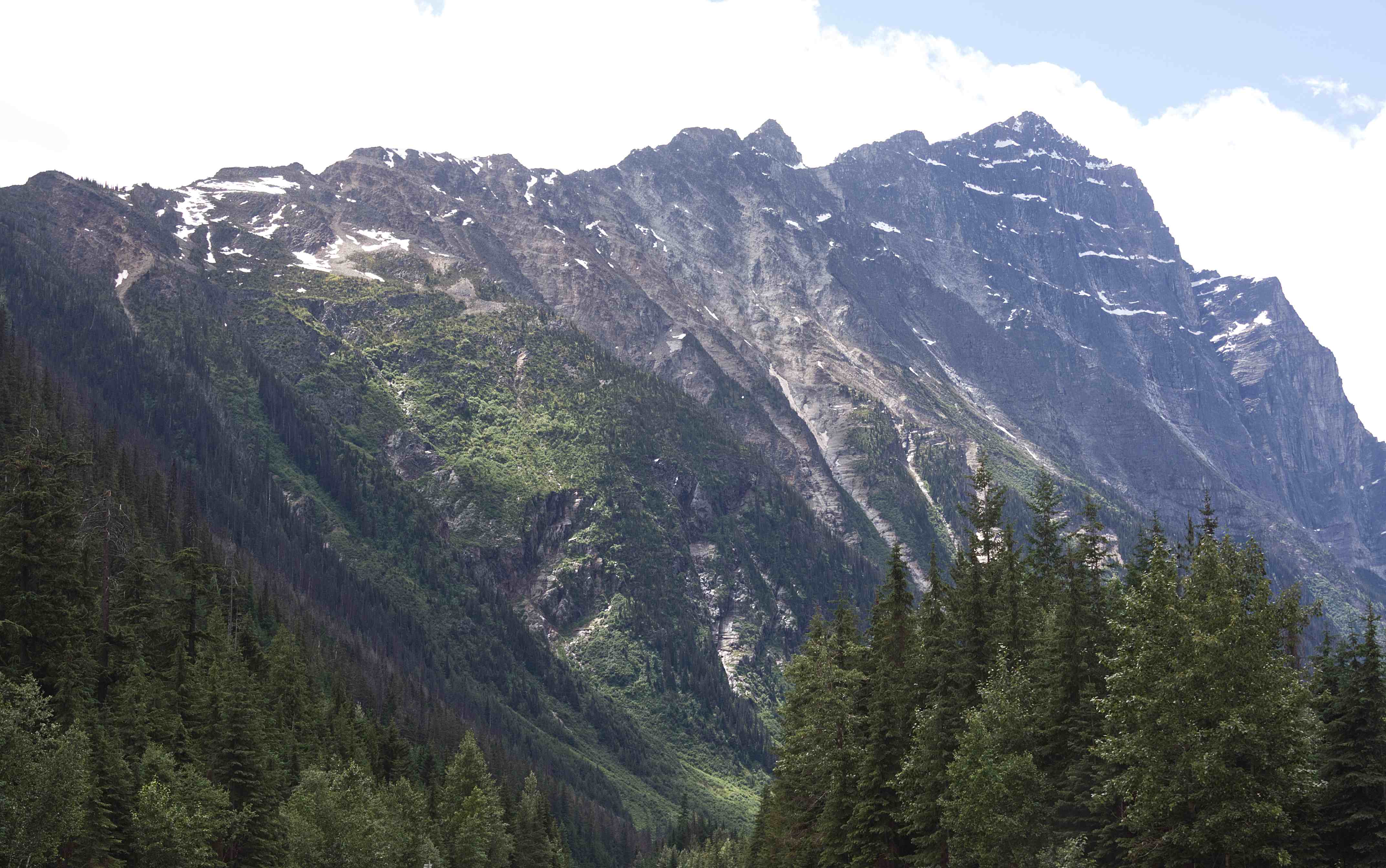
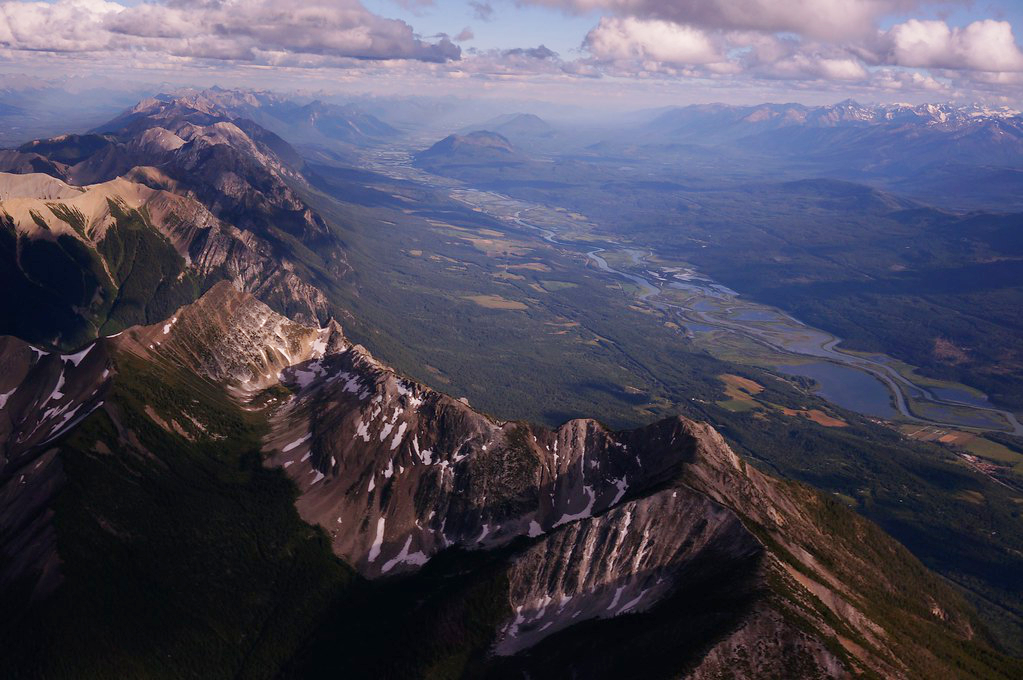
From the rolling Prairies I ascended up the foothills of the Rocky Mountains in Alberta. As I neared the mountains, they seemed to cut the sky with jagged peaks of steely grey. Rugged and unabashedly wild, they teased my spirits into flight.

Rocky Mountains, Alberta (photo by Nina Munteanu)
Canadian Rockies, AB (photo by Nina Munteanu)

The Rockies are such a wonder! I found myself thinking—well, wishing—that I had a geologist sitting in the passenger seat (instead of my companions Toulouse, Mouse and a car full of plants), telling me all about these stately mountains and their formations. All that folding, thrusting, scraping and eroding! So fascinating!

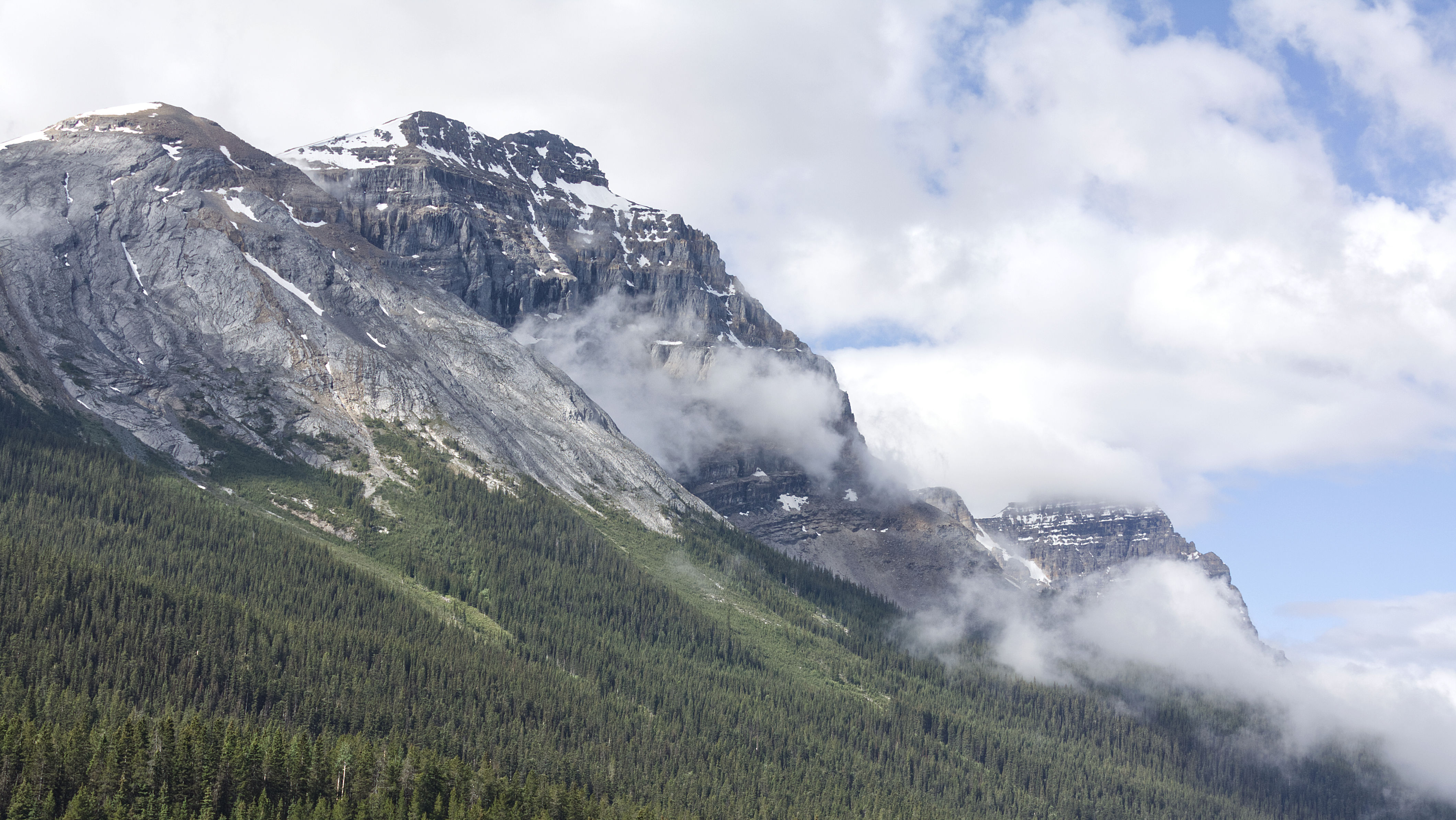
Rockies west of Banff, AB (photo by Nina Munteanu)

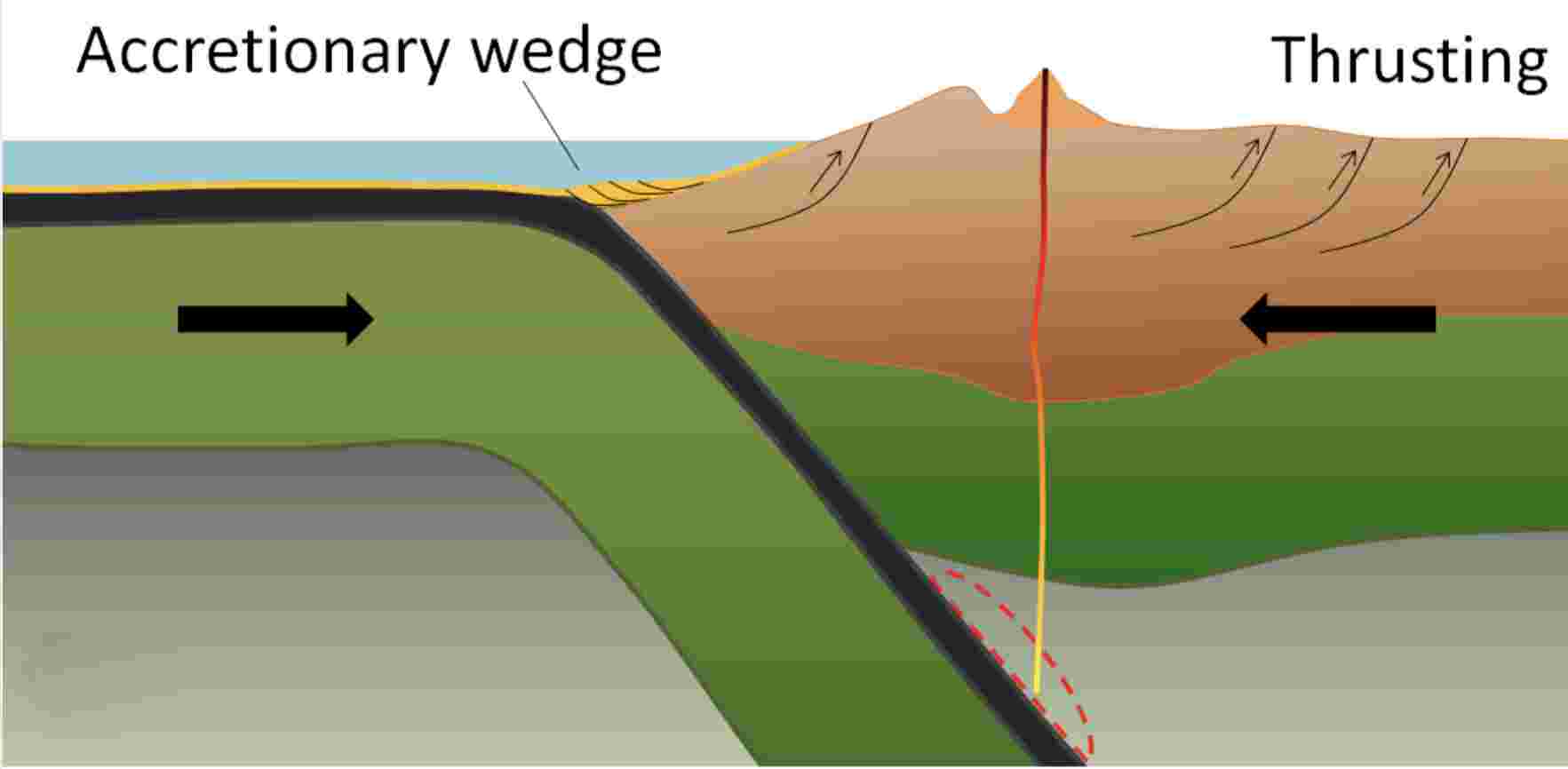
I did some research into The Canadian Rocky Mountains and discovered that they were formed through a combination of subduction and thrust faulting with an oceanic plate subducting beneath the North American plate.

Sketch showing subduction of ocean plate beneath the North American plate with accompanying accretionary wedge and thrusting action (image by Earle and Panchuk)

The Canadian Rocky Mountains were originally part of an ancient shallow sea half a billion years ago and formed from pieces of continental crust over a billion years old during an intense period of plate tectonic activity. Their jagged peaks of mostly sedimentary limestone (originally part of the continental shelf) and shale (originally part of the deeper ocean waters) belonged to an ancient sea floor; during the Paleozoic Era (~5-2 hundred million years ago), western North America lay beneath a shallow sea, depositing kilometers of limestone and dolomite.

Rocky Mountains near Canmore, AB (photo by Nina Munteanu)

The current Canadian Rocky Mountains were raised by the Cordilleran Orogeny, a process of mountain-building when tectonic plates started colliding ~ 200 million years ago during much of the Mesozoic Era, which extends over 187 million years from the beginning of the Triassic (252 Ma) to the end of the Cretaceous (65 Ma). This era, I’m told, was a particularly important period for the geology of western Canada. During the plate and land mass collisions, ancient seabed layers were scraped, folded and thrust upwards (through a process called thrust faulting). As plates converged, entire sheets of sedimentary rock were slowly pushed on top of other sheets, creating a situation where older rocks lie on top of younger ones.

Castle Mountain overlooks the Bow River, Canadian Rockies, AB (photo by Nina Munteanu)

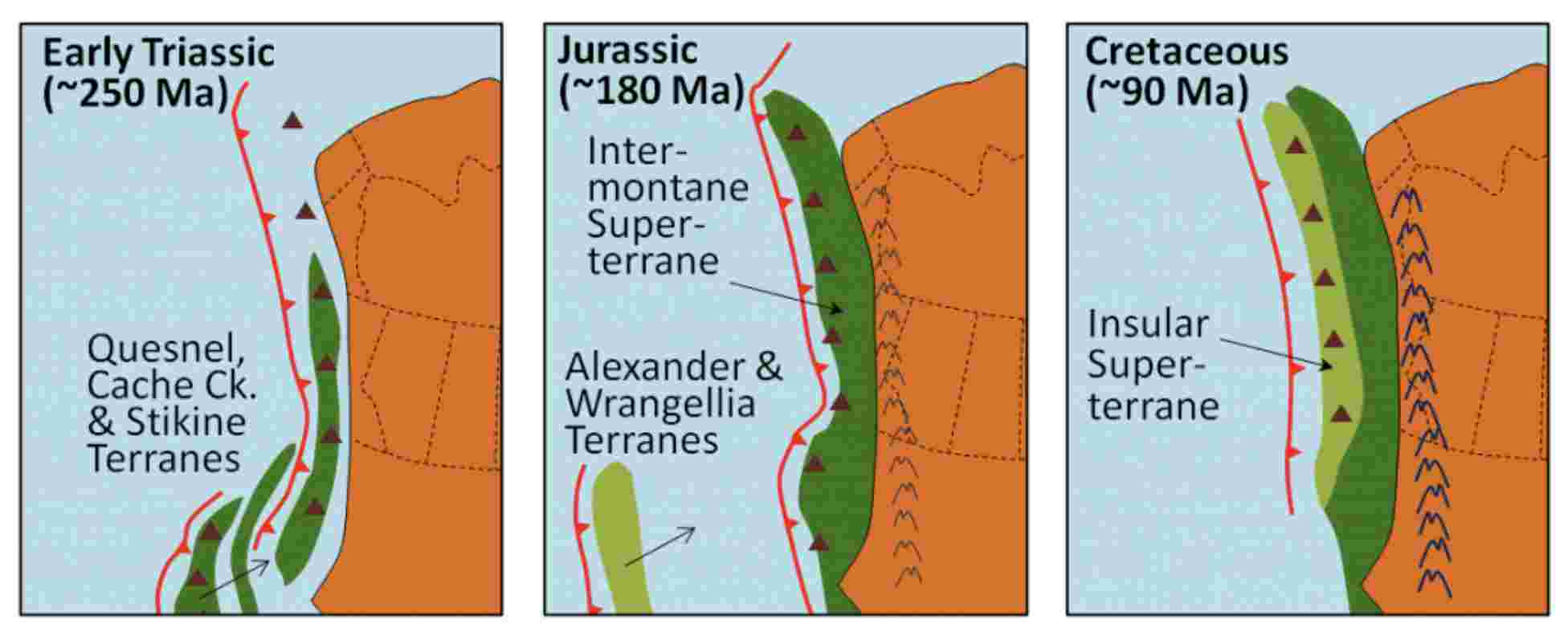
According to Earle and Panchuk, several continental collisions occurred along the west coast over the Mesozoic, resulting in the formation of the Rocky Mountains and the accretion (addition) of much of British Columbia’s land mass. Starting in the early Triassic (~250 Ma) through to the Cretaceous Period (~90 Ma), continued subduction sent several continental terranes (land masses) colliding into and accreting to the western edge of North America. The Quesnel, Cache Creek, and Stikine Terranes formed the Intermontane Superterrane, which now forms BC’s interior plateau between the Rockies and the Coast Range. A hundred million years later, during the Jurassic Period, a pair of terranes—Alexander and Wrangellia—collided with the west coast to form most of Vancouver Island and Haida Gwaii as well as part of Alaska. During the Cenozoic Era, more terranes accreted with the western edge of North America.

Model of the accretion of the Superterranes to the west coast of North America during the Mesozoic Era; red toothed lines=subduction zones; dark red triangles=volcanoes (images by Earle and Panchuk, 2019)

In the Jurassic Period, the Intermontane Superterrane acted like a giant bulldozer, pushing, folding, and thrusting the existing Proterozoic and Paleozoic west coast sediments eastward and upward to form the Rocky Mountains. The same process continued into the Cretaceous as the Insular Superterrane collided with North America and pushed the Intermontane Superterrane farther east.

Cross-section of the accretion of the Intermontane Superterrane to the west coast of North America in Jurassic and early Cretaceous, with resulting compression folding and thrusting of sedimentary rocks. Late Cretaceous Insular Superterrane further pushed against the Intermontane Superterrane to create massive folding and thrusting (image from Earle and Panchuk, 2019)

Canadian geologist/author Ben Gadd explains the Canadian Rocky Mountain building through the metaphor of a rug being pushed on a hardwood floor: the rug bunches up and forms wrinkles (mountains). In Canada, the subduction (downward movement) of an oceanic tectonic plate and the terranes (slabs of land) smashing into the continent are the feet pushing the rug, the ancestral rocks are the rug, and the Canadian Shield in the middle of the continent is the hardwood floor. The Rockies, writes Gadd, were like Tibet: a high plateau, 6,000 metres above sea level. Then, in the last 60 million years, glaciers—creeping forward at 50 feet per year—stripped away the high rocks, revealing the ancestral rocks beneath and carving out steep U-shaped valleys to form the current landscape of the Rockies: jagged peaks of soft sedimentary limestone and shale overlooking steep gorges and valleys. You can watch an excellent video of the 200-million-year formation of the Rocky Mountains by Spark.

Castle Mountain, Canadian Rockies, AB (photo by Nina Munteanu)
Rockies west of Lake Louise, Alberta (photo by Nina Munteanu)

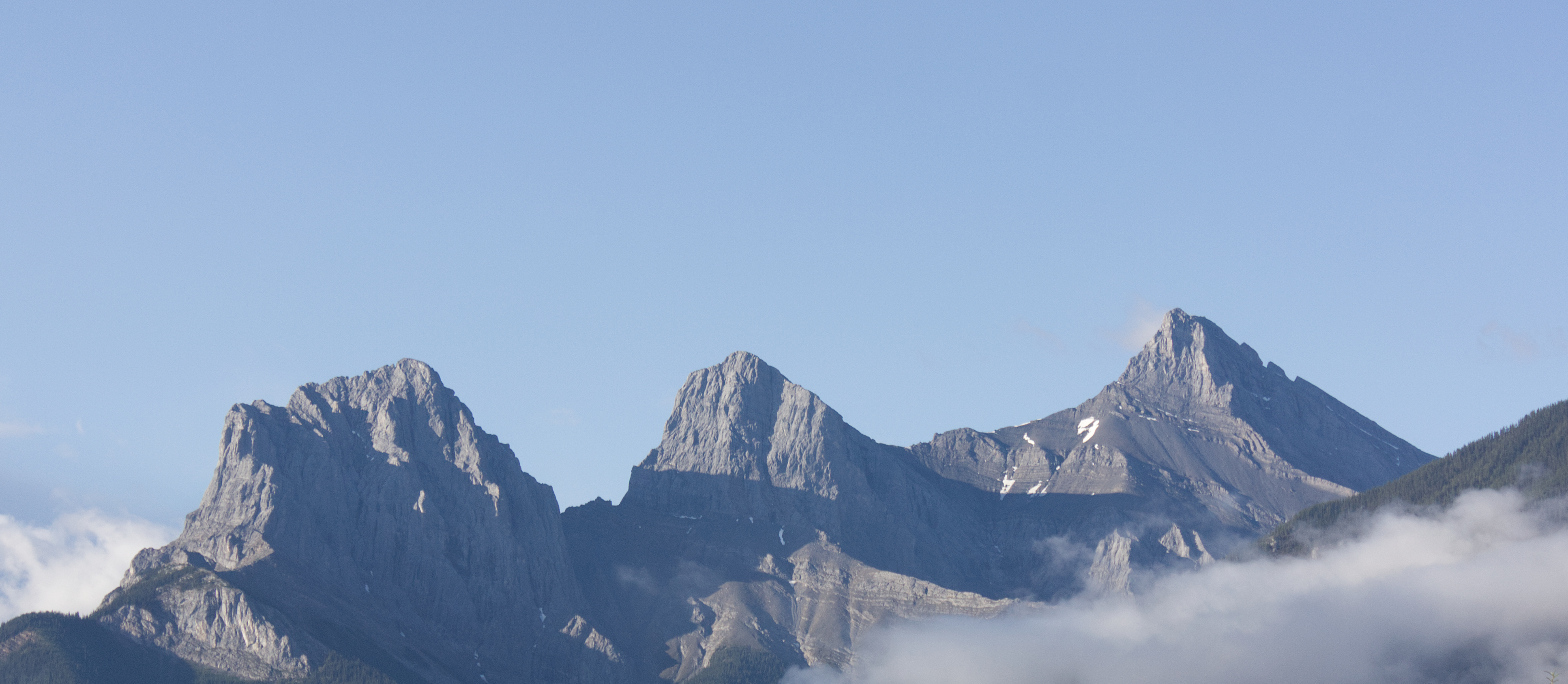
When I stopped in Canmore, Alberta, for the night, I found all the hotels solidly booked, except for a few very expensive rooms in high end hotels. It was the weekend of the Calgary Stampede and the crowds had spilled out this far, I was told. I also acknowledged that I was plum in the middle of tourist season too. But I was dead tired and it would be dark soon; so, I bit the bullet and booked an expensive room in an expensive hotel. I recalled that I was repeating my mother’s trip across Canada to settle in Victoria many years ago; she’d also driven through here in her old Datsun, brim with plants, like my Benny, and stopped in Canmore for the night. Only, she found very reasonable accommodations when she came through over four decades ago. Canmore is located in the front ranges of the Rockies, with a wonderful view of the Three Sisters and Ha Ling Peak from my hotel room.

The Three Sisters, Canmore, AB (photo by Nina Munteanu)
Temple Mountain, west of Lake Louise, Alberta (photo by NIna Munteanu)

I gave Banff and Lake Louise a miss and opted for a breakfast at some remote viewpoint after crossing the border into British Columbia. As I ate my cereal from the tailgate of my car, I felt a strange but lovely warm joy spread through me like a deep soothing balm.

I was home…

Faeder Lake, Yoho National Park, BC (photo by Nina Munteanu)

I stopped at Faeder Lake, on the western side of Yoho National Park, with a view of the Ottertail Range and Mount Vaux. Faeder Lake’s clear tourquise water—a result of fine particles of rock dust called glacial flour—enticed me for a swim.  

I stopped briefly for lunch in Golden in the Rocky Mountain Trench. The Rocky Mountain Trench is a long and deep valley walled by sedimentary, volcanic and igneous rock that extends some 1,500 km north south, spanning from Montana through British Columbia. The Trench is sometimes referred to as the “Valley of a Thousand Peaks” because of the towering mountain ranges on either side: the Rocky Mountains to the east and the Columbia, Omineca and Cassiar mountains to the west.

Rocky Mountain Trench near Golden, BC

The Trench is a large fault—a crack in the Earth’s crust—and bordered along much of its length by smaller faults. Major structural features resulted from the shifting and thrusting of tectonic plates of the crust during the early Cenozoic Era (65 million years ago) during mountain formation discussed above. The ridges of fractured crust pulled apart and the land in between dropped, creating the floor of the Trench. Major rivers that flow through the trench include the Fraser, Liard, Peace and Columbia rivers.

The Rocky Mountain Trench features in two of my books: A Diary in the Age of Water (Inanna Publications) and upcoming novel Thalweg. In both novels, which take place in the near future, the trench has been flooded to create a giant inland sea to serve as water reservoir and hydropower to the USA. You can read an excerpt in my article “A Diary in the Age of Water: The Rocky Mountain Trench Inland Sea.” The article also talks about the original 1960s NAWAPA plan by Parsons Engineering to flood the trench to service dry sections of the US by diverting and storing massive amounts of Canadian water. Proponents are still talking about it!

Mount Macdonald, Rogers Pass, BC (photo by Nina Munteanu)

I entered Glacier National Park, driving through several snow & avalanche sheds at Rogers Pass, in the heart of the Selkirk Range of the Columbia Mountains. This part of the drive was spectacular as mountains towered close and steep above me like sky scrapers, fanning out as the bright green vegetation crept resolutely up their scree slopes.

Selkirk Mountains and Mount Macdonald in Roger’s Pass; Google location (image by Google Maps)
Selkirk Range at Rogers Pass, BC (photos by Nina Munteanu)

The highway followed the Illecillewaet River as it wound southwest to Arrow Lake from it’s the glaciers east. I soon reached Revelstoke National Park and stopped at the Giant Cedars Boardwalk Trail, located about 30 km east of Revelstoke, between the Monashee Mountains, west, and the Selkirk Range, east.

.
Boardwalk through ferns, devils club and giant cedars, Giant Cedar Boardwalk, Revelstoke National Park, BC (photo by Nina Munteanu)

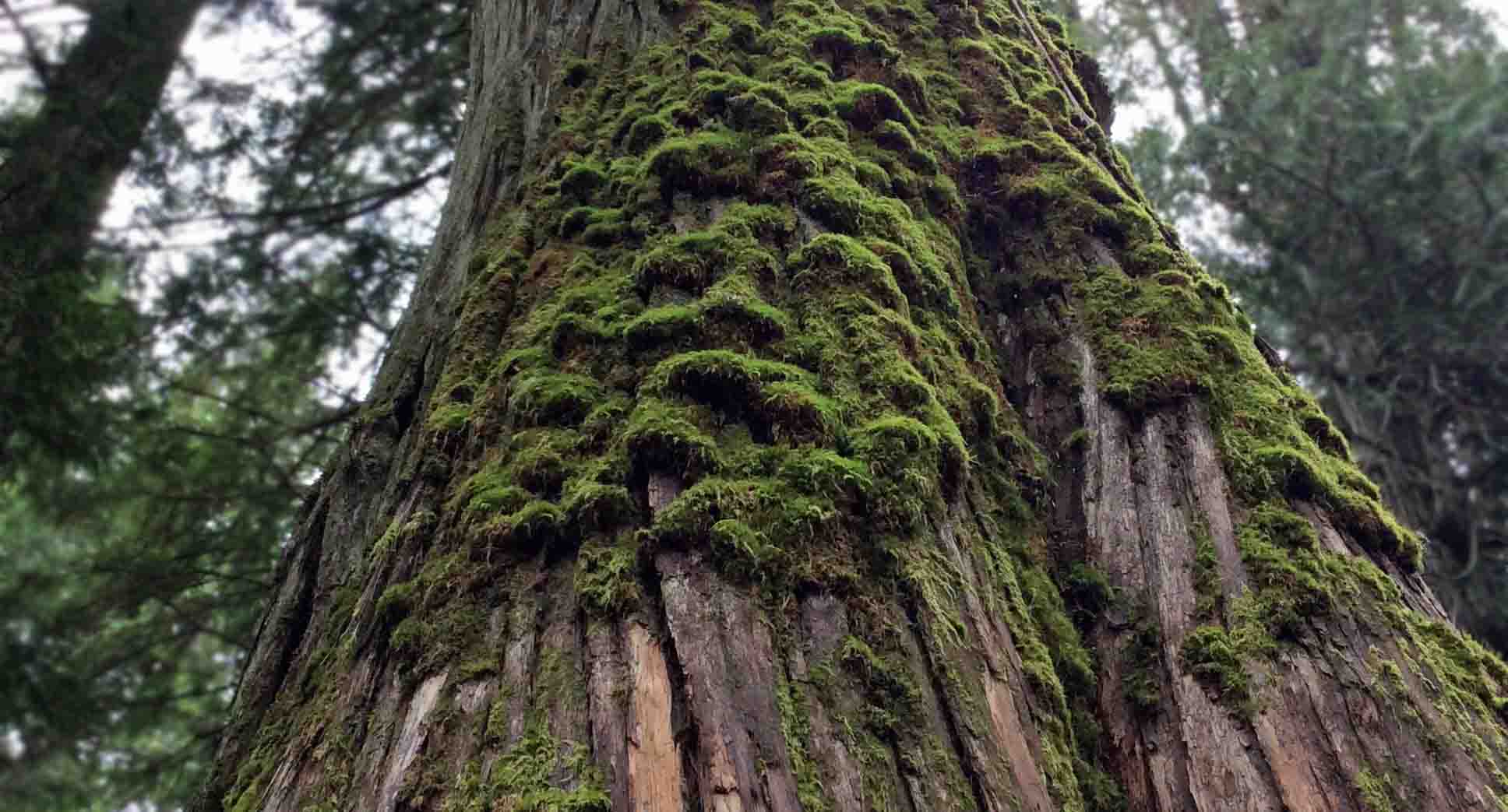
The Giant Cedars Boardwalk Park is a rare inland temperate rainforest ecosystem, receiving significant precipitation from Pacific weather systems that rise over the Columbia Mountains and dump here. It is a lush and humid old-growth forest with rich diversity of plant and animal life that resembles a coastal rainforest. Dominated by Western Red Cedars and Western Hemlocks—with some Douglas fir, paper birch and Bigleaf maple—the forest floor is a rich understory of salal, devil’s club, several berry shrubs and a diversity of ferns—oak fern, sword fern, and licorice fern. All was covered with a dense carpet of mosses, lichens, liverworts and fungi.

Above: moss-covered Red Cedar; Below: Devil’s club; Giant Cedar Boardwalk Trail, Revelstoke National Park, BC (photos by Nina Munteanu)

I followed the boardwalk through a cathedral of towering trees, among ancient cedars, whose fibrous, thick trunks loomed high to pierce the sky. Some are over 500 years old. I found that one large cedar trunk beside the boardwalk was ‘smooth from loving’ as I leaned against it and stroked its bark, no longer fibrous but burnished smooth and shiny. 

.
Nina leans against a giant red cedar, fibrous bark smoothed from copious stroking of hands, Giant Cedar Boardwalk Park, BC (photo by Anne Voute)

I reached Revelstoke just after 6 pm and, to celebrate, I booked a room at the Regent Hotel. After a walk through the ski resort town, alive with young tourists, I returned to the hotel restaurant, I treated myself to a celebratory salmon dinner with garlic mashed potatoes and mixed veggies. I even I had a dessert—Tiramisu with a cup of tea—and went to bed sated, happy and tired. As soon as my head hit the pillow, I was in dreamland.
Revelstoke and the Regent Hotel; my celebratory meal there (photos by Nina Munteanu)
Chaparral near Merritt, BC (photo by Nina Munteanu)
Two types of sage brush near Merritt, BC (photo by Nina Munteanu)

The next day, I descended southwest from the Selkirk Range, passing through Kamloops and then arriving at Merritt, in the heart of the Nicola Valley, an area of dry forests, grasslands, sagebrush, alpine meadows, and wetlands. This was range country, dry, golden and rolling with the peppery scent of sage. The most visible and dominant vegetation included big sage (Artemisia tridentata) and bluebunch wheatgrass (Pseudoroegneria spicata) with the odd Ponderosa Pine (Pinus ponderosa) dotting the dry landscape.

Sagebrush country at Merritt, BC (photo by NIna Munteanu)
Sagebrush country near Merritt, BC (photo by Nina Munteanu)

From there, I drove south along the Coquihalla Highway in the Cascades Range to Hope, where I treated myself to an ice cream cone and ate it overlooking the mighty Fraser River. I followed the Fraser west to Vancouver, where it empties into the Pacific Ocean.

My last stop before reaching my good friend’s place in Ladner (where I would stay until I found my own place) was the Four Winds Brewery on Tilbury Road, where I bought a case of beer for the pizza we would share once I got there.

Home sweet home.

References:

Gadd, Ben. 2008. “Canadian Rockies Geology Road Tours.” Corax Press.

Earle, Steven and Karla Panchuk. 2019. “Physical Geology”, 2nd edition: Chapter 21: Geological History of Western Canada, 21.4, Western Canada during the Mesozoic.” BCcampus. OpenTextBC/Physical Geology

Munteanu, Nina. 2020. “A Diary in the Age of Water.” Inanna Publications, Toronto. 328 pp.

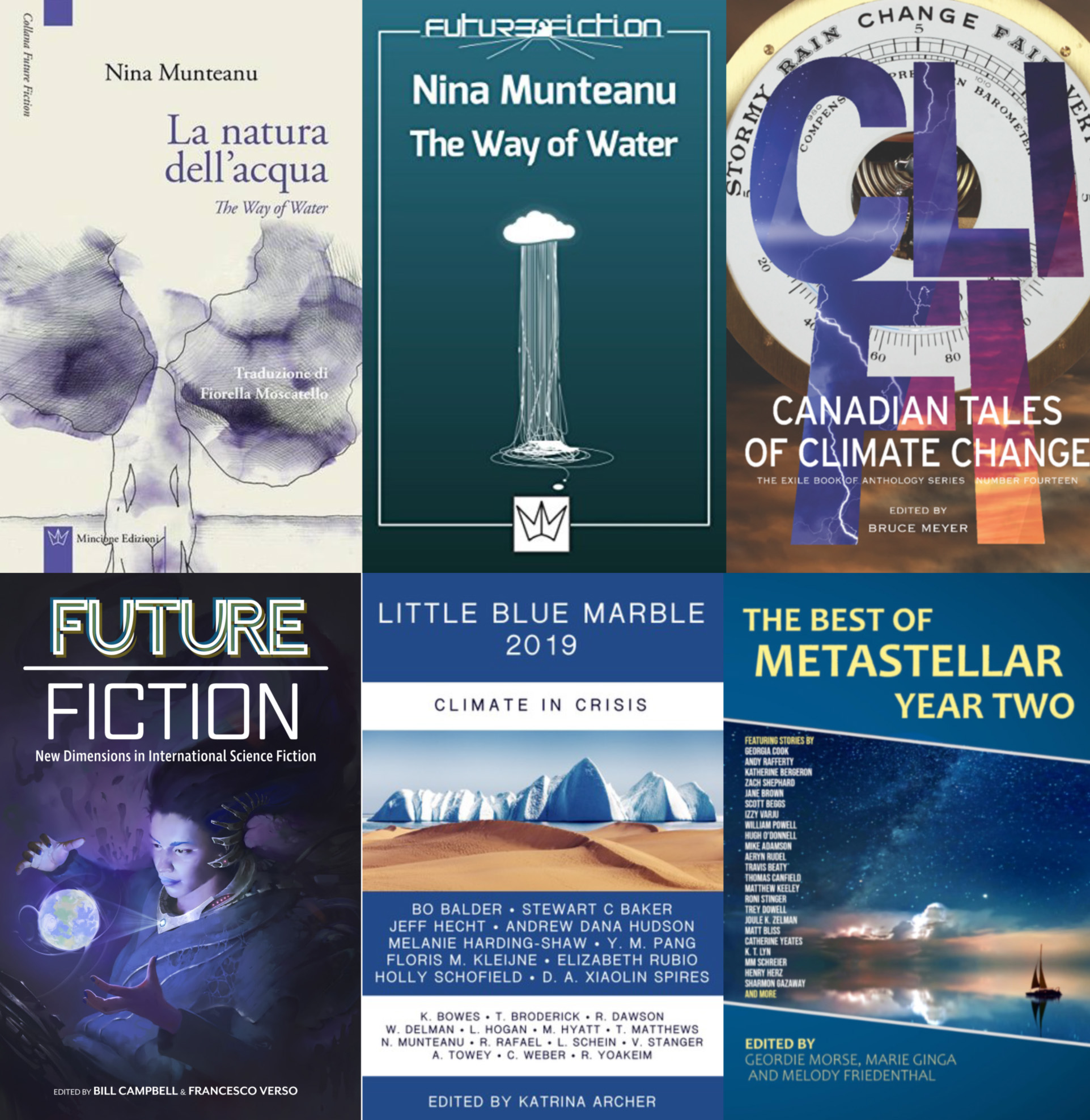
Nina Munteanu is a Canadian ecologist / limnologist and novelist. She is co-editor of Europa SF and currently teaches writing courses at George Brown College and the University of Toronto. Visit www.ninamunteanu.ca for the latest on her books. Nina’s bilingual “La natura dell’acqua / The Way of Water” was published by Mincione Edizioni in Rome. Her non-fiction book “Water Is…” by Pixl Press (Vancouver) was selected by Margaret Atwood in the New York Times ‘Year in Reading’ and was chosen as the 2017 Summer Read by Water Canada. Her novel “A Diary in the Age of Water” was released by Inanna Publications (Toronto) in June 2020.

My Drive Across Canada: Part 3—The Prairies

I emerged from the Lake of the Woods boreal forest into Manitoba’s true flatlands as I neared Winnipeg. Though, the eastern part of Manitoba was similar to the boreal hills of Ontario, it soon leveled out into flat stretches of prairie grasslands, and expansive fields of various crops including bright yellow fields of blooming canola.

Canola field in Saskatchewan (photo by Nina Munteanu)

It was early July and I’d caught it at its peak in flowering. Bright waves of yellow continued from Manitoba into Saskatchewan, where canola seemed to take over the land. At times all I saw was lemon yellow all the way to the horizon in all directions. Canola accounts for the largest area of land dedicated to any single crop in Saskatchewan. I’m told that there are over 22 million acres of canola growing in that province.

Train lumbers across a horizon of canola, west of Winnipeg, Manitoba (photo by Nina Munteanu)

Canola is a member of the crucifer family; it is a cool season crop that grows particularly well on the prairies, where cool nights and hot days allow it to develop its unique fatty acid profile. The name Canola was registered as a trademark in Canada in 1978. The name is essentially an acronym for CANadian Oil Low Acid. Prior to canola oil, most of the oil Canadians used for food purposes was imported. The canola plant was developed by two Canadian prairie plant scientists, Dr. Baldur Stefansson and Dr. Keith Downey, who bred rapeseed populations to develop a crop that would meet consumer demand for a healthy, edible oil product. Harvested seeds are crushed to produce canola oil, with the remainder used to create a high-protein meal for livestock and human consumption. Canola is kind of cool, given its versatile use from cooking oil pant-based protein, biofuel, animal feed to possibly even clothing!

Bridge across the Assiniboine River for the Trans Canada Highway

Before reaching Winnipeg, I crossed the Red River at Selkirk. This large river floods almost every  spring, covering large areas of flat land with muddy water. I touched on the Red River in an article I wrote about the impact of current agricultural practices on river dynamics and eventual flooding in the Niverville Citizen.

Nina Munteanu talks about watersheds in the Niverville Citizen

After passing through Winnipeg, near Portage La Prairie, Manitoba, I crossed the iconic Assiniboine River, as it flows from Saskatchewan and parallels the Trans Canada Highway as it flows east to Winnipeg to join the Red River.

Train crossing the Trans Canada Highway in Saskatchewan (photo by Nina Munteanu)

Driving through the prairies on the Trans Canada Highway, I often had to stop for a train crossing or slow down as a slow farm vehicle cut across my path on the highway. Here, the Trans Canada was just another country road and I was competing with tractors, farm vehicles and, in some cases, horse and wagon.

I made good time, driving the straight roads along flat and gently rolling landscapes sculpted by wind and water. This was big sky country, and I recalled that this was all a giant shallow and warm inland sea in prehistoric times.

Depiction of the prehistoric inland sea in Canada

Called the Western Interior Seaway, this Cretaceous inland sea stretched from the Arctic Ocean down to the Gulf of Mexico, connecting the two oceans and separating the continent into eastern (Appalachia) and western (Laramidia) landmasses and covering what is now most of Manitoba, Saskatchewan and part of Alberta. Existing from about 100 to 66 million years ago, this shallow marine sea supported a rich and diverse marine life, including the shell-crushing durophagous Ptychodus mortoni, apparently 10 metres long. I thought all this as I raced across a giant dry ocean of grass waving in the wind. I imagined myself a crab scuttling along the ocean floor beneath 760 m of water as giant sharks, 13-metre long mosasaurs and other exotic creatures swam leisurely above me. Is that why I found myself speeding along the highway and crossing into Saskatchewan before I knew it?

Sodium sulphate deposits of salt mine near Chaplin Lake, Saskatchewan (photo by NIna Munteanu)

Near the village of Chaplin, Saskatchewan, I stumbled on a moonscape of white chalk-like hills. This was the sodium sulphate mine on the northern shore of Chaplin Lake, a salt lake that is a major stop over for migratory birds that feed on its brine shrimp. I discovered that the lake formed in the late Pleistocene when glaciers shaped the landscape and deposited salts and other minerals into the soil and bedrock. As the glaciers receded in the late Pleistocene, meltwater channels dried and left isolated depressions filled with meltwater and groundwater rich in dissolved salts from underlying glacial deposits. Hot, dry summers and persistent winds common in the Saskatchewan prairies increased evaporation and concentrated salts, leading to crystalline sodium sulphate deposits, which created the salt lake. The salt mine started in 1947 and today is one of the largest producers of anhydrous sodium sulphate in North America with production capability of 285,000 tons per year.

Map showing Chaplin Lake
Salt deposits on the side of the road, near Chaplin, Sask (photo by NIna Munteanu)
Flat sage-grasslands plain under a darkening sky, near Piapot, Saskatchewan (photo by NIna Munteanu)

I continued through the Great Plains, west toward Alberta, across a rolling grassland mingled with sage. Along the stretch from Chaplin Lake past Swift Current through Piapot, the terrain grew distinctly dry and chaparral-like. I spotted various types of sage everywhere.  

I saw two types of native sage: left is Artemisia frigida; right is Artemisia ludoviciana (photos by NIna Munteanu)

Three types of native sage live in the grasslands of Saskatchewan: Pasture Sage or Prairie Sagewort (Artemisia frigida), Prairie Sage (Artemisia ludoviciana), and Silver Sagebrush (Artemisia cana). Pasture sage is an ‘increaser’ species; its population grows as rangeland condition deteriorates. It is a good indicator of overgrazing.

I also found ‘frothy’ clusters of pretty tiny white 5-petaled flowers that I finally identified as Prairie Baby’s Breath (Gypsophila paniculata), growing by the roadside and in the grasslands of Saskatchewan. The pretty tiny white 5-petaled flowers It’s a much branched perennial, the inflorescence often giving the plant a dome shape. Foliage is glaucous and plants are glabrous except for small hairs on the calyx. This plant has been designated a noxious weed in Saskatchewan.

Bunches of Gypsophila paniculata in a Saskatchewan grassland (photo by Nina Munteanu)
Close up of Gypsophila paniculata, Sask (photo by Nina Munteanu)

Then, in no time, I crossed the border and was approaching Medicine Hat in Alberta. But that’s Part 4 of this journey.

Rolling prairie hills near Medicine Hat, AB (photo by Nina Munteanu)

Nina Munteanu is a Canadian ecologist / limnologist and novelist. She is co-editor of Europa SF and currently teaches writing courses at George Brown College and the University of Toronto. Visit  www.ninamunteanu.ca for the latest on her books. Nina’s bilingual “La natura dell’acqua / The Way of Water” was published by Mincione Edizioni in Rome. Her non-fiction book “Water Is…” by Pixl Press (Vancouver) was selected by Margaret Atwood in the New York Times ‘Year in Reading’ and was chosen as the 2017 Summer Read by Water Canada. Her novel “A Diary in the Age of Water” was released by Inanna Publications (Toronto) in June 2020.

My Drive Across Canada: Part 2—Boreal Forest

The second leg of my drive west from Peterborough, took me past Thunder Bay, northwest from Lake Superior and into the heart of the boreal forest. Named after Boreas, the Greek god of the Northwind, the boreal forest is also called taiga (a Russian word from Yakut origin that means “untraversable forest”). Canada’s boreal forest is considered the largest intact forest on Earth, with around three million square kilometres still undisturbed by roads, cities and industrial development.

Canaada’s Boreal Forest

The boreal forest is the largest forest region in Ontario, covering two thirds of the province—some 50 million hectares—from the Great Lakes-St. Lawrence forest to the Hudson Bay Lowlands. 

I drove the Trans-Canada Highway (Hwy 17) through mixed coniferous forest, wetlands and marsh. The highway generally marks the boundary or transition zone between true Boreal Forest and the Great Lakes-St. Lawrence Forest, both dominated by coniferous trees.

Marshy river and spruce forest, north of Wawa, ON (photo by Nina Munteanu)

I stopped at English River overnight and the following morning woke to the echoing calls of two loons on the lake. I left at dawn with a peach sky behind me and a dark charcoal sky ahead of me. Soon the dark clouds unburdened themselves and the rain fell in a deluge as I continued west, barely making out the dense forest through flapping windshield wipers. The forest here was a mix of balsam fir, white and black spruce, white pine, aspen and white birch.

Spruce forest with birch and ground cover of moss and lichen, off Trans-Canada Highway, ON (photo by Nina Munteanu)

When the rain abated to a steady sprinkle, I ventured out to photograph the spruce-moss-lichen forest by the side of the road. I stood in the drizzle and set up my tripod and camera to take my shots, careful not to tread on the reindeer lichen. Reindeer lichen is highly susceptible to trampling. Branches break off easily and they take decades to recover. This foliose lichen is a key food source for reindeer and caribou during the winter; it also helps stabilize soil and recycles nutrients.

Spruce-moss-lichen forest off Trans-Canada Highway, ON (photo by Nina Munteanu)
Spruce-moss-lichen forest by Trans-Canada Highway, ON (photo by Nina Munteanu)

I drove into the tiny community of Vermillion Bay on Highway 17, looking forward to stopping in Quacker’s Diner for a hearty breakfast as advertised by a fetchy sign on the road. Alas, the place had closed long ago, according to the lady at the Moose Creek Trading Co., and hadn’t been replaced. And she couldn’t suggest anything else in the village. Disappointed, I felt I was truly in the middle of nowhere…

Sign for Nowhere, ON (photo by Nina Munteanu)

Then, a ways down the main road, I spotted the sign: “Nowhere Craft Chocolate & Coffee Roastery” and felt like I’d entered a dream-state where the north was run by hipsters.

Benny reaches Nowhere in Ontario, Vermillion Bay (photo by Nina Munteanu)

It was a husband and wife team who ran this wonderful craft bean-to-bar chocolate making and coffee roasting enterprise.

Filling my dark roast coffee order (photo by Nina Munteanu)

No sooner had I started to feel like I was back in trendy southern Ontario, when I met one of the locals, Simon, who worked in the bush and was patiently waiting for some dark roasts to take back to his buddies. We got to chatting and he shared some colourful stories about ‘the bush’ and folks who live in it, reminding me where I really was.

Coffee in hand, Simon stands next to his ATV with cooler, ready to return to ‘the bush’ (photo by Nina Munteanu)

When I mentioned the experience to a friend, she made the astute comment: “It is somehow satisfying to think of loggers and trappers and campers emerging out of the forests to go have a great cup of coffee and a hunk of chocolate. Why does that seem totally normal for Canada?”

Coffees from Nowhere
Chocolates from Nowhere

The Nowhere craft chocolate I bought—dark chocolate infused with ginger and Colombian coffee—was the best chocolate I’ve tasted this side of Switzerland. I bought some dark blends of Nowhere Coffee and continued my journey, happy despite no breakfast.

Black Spruce Forest

The black spruce (Picea mariana) dominates much of Canada’s boreal forests, frequently occurring in the Canadian Shield ecoregion where it forms extensive stands with groundcover of various mosses and reindeer lichen. Which of the two groundcover types depends on soil conditions and gaps in the forest from disturbance or fire.

Black spruce forest with moss and lichen ground cover, east of Dryden, ON (photo by Nina Munteanu)

The black spruce tree thrives in acidic peatlands, bogs and poorly drained mineral soils in wet, cold environments, but also grows in drier soils. It is particularly common on histosols (soils with peat and muck) on the Canadian Shield. Fires play a significant role in its regeneration as it replaces pioneer species such as white birch and tamarack after a fire, and grows with lichen and moss.

Marshland with black spruce, boreal forest north of Wawa, ON (photo by Nina Munteanu)

Mosses & Lichen Groundcover of Spruce-Dominated Forest

Both mosses and lichen (particularly reindeer lichen) help cool the forest by regulating evaporation and soil temperature; they can also fix nitrogen from the air, providing this key nutrient to an often nitrogen-limited ecosystem.

Spruce forest with feathermoss ground cover, ON (photo by Nina Munteanu)

This spruce-moss woodland is typified by fairly dense closed canopy of black spruce (Picea mariana), along with white spruce (Picea glauca), balsam fir (Abies balsamea), paper birch (Betula papyrifera) and trembling aspen (Populus tremuloides); this association creates a fairly shaded environment on the forest floor, inviting groundcover of various mosses such as feathermosses and Sphagnum that thrive in stable moist, shaded conditions.

Various mosses that typify the spruce-moss woodland in the boreal forest: A. Ostrich Plume Moss (photo by iNaturist); B. Red-Stemmed Feathermoss (photo by Ohio Moss and Lichen Association); C. Glittering Feathermoss; and D. Haircap moss with sundew (photographs by Nina Munteanu)

Common mosses in the spruce-dominated forest include Knight’s Plume Moss (Ptilium crista-castrensis), Red-Stemmed Feathermoss (Pleurozium schreberi), Glittering Feathermoss (Hylocomium splendens), and various species of Sphagnum. Knight’s Plume Moss and Sphagnum are key carbon cyclers in the poorly drained acidic boreal forest, contributing significantly to net primary productivity. They decompose slowly, leading to substantial organic matter accumulation.  Sphagnum in particular influences soil organic matter and carbon consumption during wildfires. Due to their ability to retain water, their acidity and resistance to decay, Sphagnum plays a crucial role in both the development and long-term persistence of peatlands where black spruce likes to live.

Various species of Sphagnum: A. Sphagnum squarrosum; B.Sphagnum papillosum; C. Sphagnum magellanicum; and D. Sphagnum papillosum (photos by Nina Munteanu)
Gray Reindeer Lichen (Cladonia rangiferina) colonizing granite outcrop in Catchacoma Forest, ON (photo by Nina Munteanu)

Spruce-lichen woodlands are characterized by an open canopy of black spruce trees, often with jack pine (Pinus banksiana) and white birch (Betula papyrifera) and a ground layer of mostly lichens, particularly fruticose species such as Cladonia rangiferina, C. mitis and C. stellaris.  This association is typically found on well-drained, often drier soils and may experience more extreme temperature fluctuations than spruce-moss associations. Through their release of acids that break down rock and organic matter, fruticose lichens contribute to soil formation.

Close up of a similar reindeer lichen species, Cladonia uncialis with Bristly Haircap Moss, on Catch Rock, ON (photo by Nina Munteanu)

A dense Cladonia mat also creates a microclimate that helps retain moisture. Lichen may also inhibit spruce regeneration, maintaining the open, park-like nature of lichen woodlands through the release of allelochemicals, such as usnic acid, that inhibit growth of plants and other lichen. Spruce-lichen woodlands may represent a stage in forest succession moving toward a closed-crown forest and may result from fire and insect disturbances that create openings in the forest canopy.

Spruce forest, showing reindeer lichen ground cover in foreground closest to the highway and moss ground cover upslope, ON (photo by Nina Munteanu)

This is what I observed where I’d stopped the car by the side of the road; closer to the disturbance of the open road, reindeer lichens—likely Cladonia rangiferina, C. mitis and C. stellaris—formed a thick continuous mat on the ground, which was fairly open with young spruce growing here and there. Further up the slope, where the canopy became more closed with mature trees, the mosses dominated the ground.

Boreal Wetlands & Kabenung Lake

Wetland north of Wawa, ON (photo by Nina Munteanu)

On my drive through the boreal forest north of Wawa, I encountered extensive wetlands—mostly marshes, bogs and fens, forming winding networks of water habitats. These water features are key to the environment’s water regulation, excellent carbon stores and provide habitat for many species. Boreal wetlands are seasonally or permanently waterlogged (up to 2 metres deep) with plant life adapted to wet conditions, including trees, shrubs, grasses, moss and lichen. Organic wetlands (peatlands or muskegs) such as bogs and fens accrue deep organic deposits. Mineral wetlands (marshes, swamps and open water) have shallow organic deposits; these open water systems have nutrient-rich soils.

Kabenung Lake, ON (photo by Nina Munteanu)

I stopped at Kabenung Lake, considered a prime fishing lake, supporting diverse populations that include Northern Pike, Whitefish, Bass, Walleye, Brook Trout, Lake Trout, and Perch. Judging by the map, I had only a small view of the large convoluted 16 km long lake from the highway. The angler’s bathymetric map suggests a maximum depth of fifteen metres near the lake’s centre.

Kabenung Lake, north of Wawa, ON (photo by Nina Munteanu)

Before my journey west took me out of Ontario (and the boreal forest) into Manitoba’s flat prairie, I continued on the Canadian Shield across rugged terrain dominated by conifer trees with ancient Archean rock outcrops of granite and gneiss revealed in rock cuts on the highway. I reached Kenora, a charming old town with character architecture and a vibrant downtown. The town is located in the Lake of the Woods area, near the transition to the Great Lakes-St. Lawrence Forest to the south and the Aspen Parkland to the west. I saw lots of spruce, fir and pine alongside birch, maple and poplar. Lake of the Woods is a huge lake about 4349 km2 with over 14,000 islands with a highly convoluted shoreline and serves as an active hub for fishing, recreation and sightseeing.

Lake of the Woods Brewing Company, Kenora, ON (photo by Nina Munteanu)

In Kenora, I made a short stop at the craft brewery Lake of the Woods Brewing Company, bought some Sneaky Peach Pale Ale to take with me, and continued west to the Manitoba border.

Nina with her Sneaky Peach Ale, Kenora, ON

On my way, I had to stop the car to let a red fox cross the road. It looked like it owned the road, just sashaying across in a confident trot and smiling at me…Yes, smiling!

Benny on a road in the boreal forest, east of Kenora, ON (photo by Nina Munteanu)

References:

Houle, Gilles and Louise Fillon. 2003. “The effects of lichens on white spruce seedling establishment and juvenile growth in a spruce-lichen woodland of subarctic Québec.” Ecoscience 10(1): 80-84.

Payette, Serge, Najat Bhiry, Ann Delwaide and Martin Simard. 2000. “Origin of the lichen woodland at its southern range limit in eastern Canada: the catastrophic impact of insect defoliators and fire on the spruce-moss forest.” Canadian J. of Forest Res. 20(2).

Rydin, Håkan, Urban Gunnarsson, and Sebastian Sunberg. 2006. “The Role of Sphagnum in Peatland Development and Persistence.” In: Boreal Peatland Ecology, Ecological Studies 188, R. K. Wieder and D. H. Vitt (eds) Springer-Verlag Berlin Heidelberg, pp 47-65.

Nina Munteanu is a Canadian ecologist / limnologist and novelist. She is co-editor of Europa SF and currently teaches writing courses at George Brown College and the University of Toronto. Visit  www.ninamunteanu.ca for the latest on her books. Nina’s bilingual “La natura dell’acqua / The Way of Water” was published by Mincione Edizioni in Rome. Her non-fiction book “Water Is…” by Pixl Press(Vancouver) was selected by Margaret Atwood in the New York Times ‘Year in Reading’ and was chosen as the 2017 Summer Read by Water Canada. Her novel “A Diary in the Age of Water” was released by Inanna Publications (Toronto) in June 2020.

My Drive Across Canada: Part 1—Lake Superior

It was time to go back out west for me. So, I packed up my car Benny with my precious treasures—including all my plants—and drove west from Peterborough, Ontario (where I’d been living for a decade). My destination was Vancouver, BC, where my son and sister and good friends live.

Stone Beach, Lake Superior, ON (photo by Nina Munteanu)

I looked forward to the drive through the boreal forest of the Canadian Shield—spectacular country of mostly black spruce forest, rugged billion-year old rocks and ancient inland seas. Because I’m a limnologist and ecologist, I particularly looked forward to driving along the northern shores of Lake Superior. Distinguished by iconic terraced cobble shores, vast sand beaches, steep gnarly cliffs and brooding headlands, Lake Superior was certain to be a highlight of my trip. I anticipated experiencing this Great Lake with the giddy excitement of a child.

Water-carved sandstone and granite / rhyolite boulders form shore of Stone Beach, ON (photo by Nina Munteanu)

Sandy Katherine Bay, Lake Superior, ON (photo by Nina Munteanu)
Contour and trail map of Lake Superior

I got my first glimpses of this massive lake at Sault Saint Marie, a charming town on the southeastern shore of Lake Superior and the location of the lake’s outlet, St. Marys River. My first stop for a more immersive experience of the lake was Batchawana Bay, part of Pancake Bay Provincial Park, where I explored the mostly sand coast and shore forest. I’m told that the name Batchawana comes from the Ojibwe word Badjiwanung that means “water that bubbles up”, referring to the bubbling current at Sand Point.

Benny, laden with my plants, parks beside Batchawana Beach of Lake Superior, ON (photo by Nina Munteanu)

Batchewana Bay is not only a main access point to several trails of the Lake Superior Water Trail; it also serves as a popular place for boaters and kayak paddlers to launch their craft for water adventure. The cold water and high wind fetch often make for treacherous boating. The Lake Superior Watershed Conservancy put up a sign at Batchewana Bay warning paddlers about dangerous and wily currents, including rip currents and channel currents and effects of offshore winds, accompanied by sudden surges.

Chippewa Falls, ON (photo by Nina Munteanu)

From Batchawana Bay, I continued north along the lake’s eastern shore, past Chippewa Falls, formed on 2.7 billion year old pink granite bedrock, covered by a later basalt flow; here, the Harmony River tumbles some 6 metres before emptying into Lake Superior.

I found access points including Stone Beach, Alona Bay, Agawa Bay, and Katherine Bay, variously dominated by pebbled shores with rocky granite outcrops and finely sculpted sandstone—all overseen by windswept pine, cedar and spruce. This part of the lake lies in the Great Lakes-St. Lawrence Forest area, dominated by mixed forest of fir, spruce, cedar and paper birch.

Sorted cobble shore with scupted rocky bluffs of granite / rhyolite and black spruce, Alona Bay, Lake Superior, ON (photo by Nina Munteanu)
Rugged coastline of Alona Bay showing terraces of water-worn cobbles and granite / rhyolite bluffs, Lake Superior, ON (photo by Nina Munteanu)

Along the cobble shores of Alona Bay, I met a trio of rock hounds, looking for distinct Lake Superior agate, quite fetchy with its rich red, orange and yellow colours. I was told that the colours are caused by the oxidation of iron that leached from rocks. Fascinated by their varied colours and rounded shapes, I fell into a hypnotic meditation, picking up pebbles, rubbing them wet to reveal their bright colours and examining them close up.

Local rock hounds collecting choice pebbles at Alona Bay, Lake Superior (photo by Nina Munteanu)

Rusavskia elegans along with Aspicillia cinerea and Lecidea sp. cover granite boulder, Alona Bay, Lake Superior, ON (photo by Nina Munteanu)

On the pink granite in Alona Bay, I found some brilliant lichen, which I confirmed was Elegant Starburst Lichen (Rusavskia elegans formerly Xanthoria elagans)—documented by other lichenologists as common on Lake Superior’s granite shores. I also saw patches of Rock Disk Lichen (Lecidella stigmatea).

Lake Superior northern shore near Rossport; top left: Encrusted Saxifrage tucked into granite crack; top right: Sunburst Lichen carpets granite boulder; bottom cobbled beach (photos by Nina Munteanu)
Shoreline of terraced cobbles in Alona Bay, Lake Superior, ON (photo by Nina Munteanu)
Boulder-strewn shore of Lake Superior at Agawa Bay, ON (photo by Nina Munteanu)

Agawa Bay and surrounding high points provide magnificent views of the Lake Superior shoreline and surrounding country. The high rising hills are easily one of the most rugged and beautiful in Ontario. The area is underlain mostly by over two billion year old granitic rocks of igneous origin that form part of a large batholitic mass formed in the Algoman period of Precambrian time.

Trail to Agawa Rock, Lake Superior, ON

It’s a short hike (0.8 km) through the woods on a trail that leads to the Agawa Rock Pictographs, an amazing collection of Aboriginal pictographs that sends one’s senses soaring with imagination. Beautiful representations of real and mythical animals fill the granite canvas;, one is Mishipeshu, the Great Lynx. This mythical creature is a water dwelling dragon-like animal that also resembles a lynx with horns and a back tail covered in scales. Mishipeshu is believed to cause rough and dangerous water conditions claiming numerous victims.

Great Lynx pictograph, Agawa Rock, Lake Superior

The trail it itself a highlight, takes you up a steep rock-hewn staircase, with steep cliff faces looming overhead, and along rocky pathways. The pictographs are viewed from a rock ledge below the 15-story high cliff that faces Lake Superior.

Two views of the rock-hewn staircase of the Agawa Rock trail, Lake Superior, ON
Rugged shoreline of Agawa Bay with birchleaf spirea in foreground, Lake Superior, ON (photo by Nina Munteanu)

My second night stop was Wawa, on the edge of the boreal forest of the Canadian Shield, known for its giant ugly goose sculptures. The name Wawa comes from the Ojibwe word wewe for “wild goose.” The town, which resembles a modern-day version of an old pioneer town included the colourful Young’s General Store, where you could purchase anything from moccasins and fishing tackle to homemade fudge and ice cream.

Left: Young’s General Store in Wawa; Right: (in)famous goose statue (photos by Nina Munteanu)

From Wawa, I drove west along the most northerly shores of Lake Superior, stopping at access points including Schreiber Beach, Cavers and Rossport. I found this stretch of Lake Superior’s northern coast from Terrace Bay to Nipigon particularly enchanting. Here I found several access points off the road that drew me like Alice into wondrous boreal landscapes, offering windows to an ancient time before humans walked the earth.

Near Schreiber, I stopped on the road to explore deep pink smooth granite outcrops covered in foliose Cumberland Rock Shield Lichen (Xanthoparmelia cumberlandia) and cushions of fruticose Reindeer Lichen (Cladonia spp.) where shallow soil pockets had grown. 

Granite outcrop with Xanthoparmelia cumberlandia and Cladonia spp. off Trans Canada Highway on shore of Lake Superior, near Schreiber, ON. (photo by Nina Munteanu)

The Lake Superior shoreline at Rossport consists mostly of exposed primordial granite, worn smooth by wave action. The granite here is mostly pink feldspar, quartz, and black mica. According to E.G. Pye, this rock is called porphyritic granite, an igneous rock that crystalized from a natural melt, or magma.

Though it lies in the boreal forest (typified by black spruce), the northern shoreline of Lake Superior in fact also supports species more characteristic of the Great Lakes-St. Lawrence Forest (e.g. white spruce, white cedar, red maple, paper birch). The northern shoreline of Lake Superior is therefore considered a transition zone between these two types of forest ecosystems.

Saxifrage flowers bloom in the cracks and corners of granite / gneiss rock, Lake Superior near Rossport, ON (photo by Nina Munteanu)

Nestled in the rocky cracks and crevices of Lake Superior’s wild rocky shores, I discovered several cold-loving plants that normally grow in high alpine areas of the Arctic. Botanists refer to them as “Arctic-alpine disjunct plants,” separated from their usual arctic-alpine habitat and regarded as possible relicts of the last glaciation. Typically, such plants grow much farther north; but these plants have adapted to the unique cold micro-environment of Lake Superior’s northern shores. Examples include encrusted saxifrage (Saxifraga paniculata), black crowberry (Empetrum nigrum), bilberry (Vaccinium uliginosum), arctic fir clubmoss (Huperzia selago), elegant groundsel (Packera indecora), and the carnivorous English sundew (Drosera anglica).

Rhizocarpon geographicum and Lecidea sp. on granite rocks at Katherine Bay, Lake Superior, ON (photo by Nina Munteanu)
Lecidella stigmata on granite rock, Lake Superior, ON (photo by Nina Munteanu)

I met old friends on the lake’s wild shores, lichens that made their homes on the water-smoothed rock surfaces and gnarly rock cliffs and boulders. Random patches of the crustose Yellow Map Lichen (Rhizocarpon geographicum), rosettes of the foliose Cumberland Rock Shield Lichen (Xanthoparmelia cumberlandia) and Tile Lichen (Lecidea sp.)—all lichens I’d encountered on my studied Catch Rock, a granite outcrop in the Catchacoma old-growth hemlock forest near Gooderham.

Rhizocarpon geographicum and Xanthoparmelia cumberlandia on granite outcrop, near Schrieber off Lake Superior, ON (photo by Nina Munteanu)

Circular patches of bright tangerine-orange Elegant Starburst Lichen (Rusavskia elegans formerly Xanthoria elegans) graced many of the rocky surfaces. I particularly noted them on the exposed granite slabs of Schreiber Beach and Rossport, often accompanied by Peppered Rock-Shield Lichen (Xanthoparmelia conspersa) and grey Cinder Lichen (Aspicillia cinerea).

Rusavskia elegans and Aspicillia cinerea, Lichen colonizing granite near Rossport on Lake Superior, ON (photo by Nina Munteanu)
Rusavskia elegans colonizes granite boulders on shore of Lake Superior near Rossport, ON (photo by Nina Munteanu)

William Purvis writes that R. elegans is a nitrophile (nitrogen lover) and is common at sites that are regularly fertilized by birds. In other words, they like bird poop. Inuit hunters knew that orange lichen meant small mammals like marmots probably lived nearby (the poop connection again). The orange colour comes from the carotenoid pigment, which acts like sunscreen to protect the lichen from UV radiation. This was the lichen that made it into space in 2005, exposed to the extremes of space (e.g. temperature, radiation and vacuum) for 1.5 years. Most of the samples continued to photosynthesize when they returned to Earth. 

Lichen colonizing granite near Rossport on Lake Superior, ON. A. Rusavskia elegans and Xanthoparmelia conspersa; B. Rusavskia elegans and Aspicillia cinerea (photo by Nina Munteanu)

Limnology & Geology of Lake Superior & Watershed

Morphometric map of Lake Superior (image by World Lake Database)

Lake Superior was formed 10,000 years ago when glacial melt-water filled a billion-year-old volcanic basin. The lake is the size of Austria, covering an area of about 82,100 km3 and making it the largest lake in the world by surface area. Lake Superior holds 10% of the Earth’s surface freshwater—enough to fill the other Great Lakes plus three more Lake Eries, making it the third largest lake in the world by volume. The Ojibwe call the lake gichi-gami (great sea), which so aptly describes this inland sea.

Slabs of granite rocks scatter along the shore of Lake Superior near Rossport, ON (photo by Nina Munteanu)

For a comprehensive summary of Lake Superior’s geologic history and rock formations see E.G. Pye’s 1969 guidebook “Geology and Scenery: North Shore of Lake Superior.”

Lake Superior is considered an oligotrophic lake of low productivity, characterized by cold, deep, nutrient-poor nutrients (particularly phosphorus and nitrogen). Its mean depth is 147 meters with a maximum depth of 406 meters. Fed by 200 rivers, Lake Superior holds 12,100 km3 of freshwater—enough to cover the entire North and South American continents with 30 cm of water. The lake’s volume is sufficiently large that it takes almost two centuries for a drop of water to circulate the lake before leaving through St. Marys River—its only natural outflow at Sault Ste. Marie—which flows into Lake Huron. Lake Superior also experiences seasonal circulation; the lake stratifies into two major temperature layers in summer and winter and undergoes mixing (turnover) twice in spring and fall, making it a dimictic lake.

Because of lack of plankton and turbidity from silt (due to cold waters low in nutrients), the lake is super clear with Secchi disk depths of 20-23 meters observed. Samuel Eddy at the University of Minnesota provided a summary of zooplankton and phytoplankton in the lake.

Macrophytes appeared nonexistent on the wave-washed shallows, though some boulders were covered in periphyton (e.g. attached algae, mostly diatoms). I also noticed some filamentous algae on the shore rocks near Rossport, likely Cladophora and Spirogyra, known to occur in the sheltered waters of the lake.

Granite shore near Rossport with green filamentous algae (photo by Nina Munteanu)

Seiches in lakes (image from University of Michigan)

Because of its size, Lake Superior provides long distances for wind to push water from one end to the other; these distances, called fetches, can exceed 500 km on Lake Superior. As a result, the lake experiences ‘tides’ called seiches—essentially oscillations in water level caused by strong winds and changes in atmospheric pressure. This causes a sloshing effect across the lake (of about a metre), much like a cup of coffee as it’s being carried, and exposes shorelines to dramatic fluctuations in shoreline levels with large waves, which can be as high as 6 m during storms.

Rocky shore off Agawa Bay, Lake Superior, ON (photo by Nina Munteanu)

The rocks of the lake’s northern shore date back to the early history of the earth, during the Precambrian Era (4.5 billion to 540 million years ago) when magma forcing its way to the surface created the intrusive granites of the Canadian Shield. With a watershed rich in minerals such as copper, iron, silver, gold and nickel, the lake lies in long-extinct Mesoproterozoic rift valley (Midcontinent Rift). Over time eroding mountains deposited layers of sediments that compacted to become limestone, dolomite, taconite and shale. As magma injected between layers of sedimentary rock, forming diabase sills, flat-topped mesa formed (particularly in the Thunder Bay area), where amethyst formed in some cavities of the rift. Lava eruptions also formed black basalt, near Michipichoten Island.

During the Wisconsin glaciation 10,000 years ago, ice as high as 2 km covered the region; the ice sheet advance and retreat left gravel, sand, clay and boulder deposits as glacial meltwater gathered in the Superior basin

Although the lake currently freezes over completely every two decades, scientists speculate that by 2040 Lake Superior may remain ice-free due to climate change. Warmer temperatures may also lead to more snow along the shores of the lake.

Rock-strewn Katherine Bay, Lake Superior, ON (photo by Nina Munteanu)

Lake Superior & Watershed Characteristics
ParameterValue
Age10,000 years
Trophic StatusOligotrophic
Visibility (Secchi Depth)8-30 m
Thermal Stratificationdimictic
Length563 km
Breadth257 km
Mean Depth147 m
Maximum Depth406 m
Volume12,100 km3
Lake Surface Area82,100 km2
Watershed Area127,700 km2
Shoreline Length4,385 km
Water Residence / Flushing Rate191 years
Fetch500 km
OutletSt Marys River
Viking cruise ship from Minnesota off sandy shore of Terrace Bay, Lake Superior, ON (photo by Nina Munteanu)

References:

Brandt et. al. 2015. “Viability of the lichen Xanthoria elegans and its symbionts after 18 months of space exposure and simulated Mars conditions on the ISS.” International Journal of Astrobiology.

Purvis, William. 2000. “Lichens.” Smithsonian Institution Press, Washington, D.C. 112pp.

Stone Beach, Lake Superior, ON (photo by Nina Munteanu)

Nina Munteanu is a Canadian ecologist / limnologist and novelist. She is co-editor of Europa SF and currently teaches writing courses at George Brown College and the University of Toronto. Visit www.ninamunteanu.ca for the latest on her books. Nina’s bilingual “La natura dell’acqua / The Way of Water” was published by Mincione Edizioni in Rome. Her non-fiction book “Water Is…” by Pixl Press (Vancouver) was selected by Margaret Atwood in the New York Times ‘Year in Reading’ and was chosen as the 2017 Summer Read by Water Canada. Her novel “A Diary in the Age of Water” was released by Inanna Publications (Toronto) in June 2020.

Nina Munteanu Identified as a Leading Voice in Eco-SciFi Fiction

Inventor/author Kyo Hwang Cho recently identified Nina Munteanu, Kim Stanley Robinson, Jeff VanderMeer, and Richard Powers as Leading Voices in Eco-Science Fiction in an article on the LinkedIn Skyhome Newsletter.

Cho wrote:

Kim Stanley Robinson: Robinson is renowned for integrating ecological themes into his narratives. His works like The Ministry for the Future and the Mars Trilogy explore climate change, sustainability, and alternative socio-economic systems. His stories often centre around scientists striving for environmental reform.

Jeff VanderMeer: Best known for the Southern Reach Trilogy, beginning with Annihilation, VanderMeer delves into a nature-reclaimed mystery zone called Area X. His work blends ecological concerns with surreal and speculative storytelling, offering a unique lens on environmental collapse.

Richard Powers: While not strictly a science fiction author, Powers’s novels such as The Overstory and Playground revolve around nature’s impact on human lives and vice versa. His writing emphasizes the deep interconnectedness of species and ecosystems.

Nina Munteanu: A Canadian ecologist and writer, Munteanu’s stories explore how humans interact with the environment. Her narratives often examine the intersection of science, climate crisis, and spiritual transformation.

Cho included the following Noteworthy Eco-Science Fiction Works:

  • “The Ministry for the Future”: A speculative exploration of global climate crisis responses through policy, activism, and emergent technology.
  • “Annihilation”: A surreal expedition into a wilderness zone that defies scientific explanation, echoing the unpredictability of nature itself.
  • “The Overstory”: A web of interconnected lives bound by trees, showing how the natural world can act as both witness and protagonist. [Inclusion of this book in the eco-SciFi subgenre is a stretch: however, like my own book, there are elements of speculation, and some subtle fantastical elements that one can argue place it in a scifi setting]
  • “A Diary in the Age of Water”: A dystopian look at a future shaped by water scarcity, societal collapse, and ecological memory.

Cho defines Eco-SciFi this way: “Eco-SciFi is a subgenre of SciFi that foregrounds ecological consciousness, blending speculative fiction with climate science, ethics, and planetary survival.” He includes a table that distinguishes Eco-SciFi from traditional Sci-Fi in several core areas from core theme, tone and motivation to protagonists and ‘message.’

Nina Munteanu is a Canadian ecologist / limnologist and novelist. She is co-editor of Europa SF and currently teaches writing courses at George Brown College and the University of Toronto. Visit  www.ninamunteanu.ca for the latest on her books. Nina’s bilingual “La natura dell’acqua / The Way of Water” was published by Mincione Edizioni in Rome. Her non-fiction book “Water Is…” by Pixl Press (Vancouver) was selected by Margaret Atwood in the New York Times ‘Year in Reading’ and was chosen as the 2017 Summer Read by Water Canada. Her novel “A Diary in the Age of Water” was released by Inanna Publications (Toronto) in June 2020.

What Genre Is My Story? Is it Eco-Fiction or Something Else?

Illustration depicting Ray Bradbury’s ‘Rocket Summer’ in The Martian Chronicles (image from The Black Cat Moan)

Twenty years ago, when I started seriously publishing short stories and novels, the environment was not recognized by the public or writers as an entity that deserved a literary category. Nature and environment were mostly portrayed and viewed as passive entities, to conquer, subdue, exploit and destroy at will (particularly in science fiction—with some notable exceptions such as The Martian Chronicles by Ray Bradbury). Environment and Nature were not generally considered characters on a journey like the progatonist and other major characters; the environment lacked agency and was often ‘othered’ as dangerous, treacherous and unknowable.

Despite the fact that eco-fiction has in fact been in existence for centuries, use of this literary term is quite recent. Its first recognized use was in 1971, appearing as the title in John Stadler’s anthology published by Washington Square Press, which compiled environmental scifi works from the 1930s to the 1960s.

Defining Eco-Fiction

Thirty works of impactful eco-fiction

Author / scholar Mary Woodbury defines eco-fiction as “made up of fictional tales that reflect important connections, dependencies, and interactions between people and their natural environments.” In her article “Eco-Fiction—The SuperGenre Hiding in Plain Sight”, Judith defines eco-fiction as literature that “portrays aspects of the natural environment and non-human life as an evolving entity with agency in its relationship between and interaction with human characters.” In the preface to his 1995 book Where the Wild Boks Are: A field guide to Eco-Fiction, Jim Dwyer provides four criteria for eco-fiction:

  1. The nonhuman environment is present not merely as a framing device but as a presence that begins to suggest that human history is implicated in natural history
  2. The human interest is understood to be not the only legitimate interest
  3. Human accountability to the environment is part of the text’s ethical orientation
  4. Some sense of the environment as a process rather than as a constant or a given is at least implicit in the text.

These designations could be easily met by prehistoric cave art and first nations artwork and storytelling. These definitions also allow for the inclusion of many classics defined as eco-fiction from Herman Melville’s Moby Dick and Thomas Hardy’s Return of the Native to John Wyndham’s Day of the Triffids.

Evolving Eco-Fiction & Eco-SciFi

Like the environment it describes, Eco-Fiction is changing and evolving as a genre. Inventor/author Kyo Hwang Cho used the genre designation of Eco-SciFi when he recently identified me along with Kim Stanley Robinson, Jeff VanderMeer, and Richard Powers as Leading Voices in Eco-Science Fiction. Cho defines Eco-SciFi as: “a subgenre of SciFi that foregrounds ecological consciousness, blending speculative fiction with climate science, ethics, and planetary survival.” He includes a table that distinguishes Eco-SciFi from traditional Sci-Fi in several core areas from core theme, tone and motivation to protagonists and ‘message.’ The table can also be used to distinguish this sub-genre from other sub-categories within the umbrella term eco-fiction.

Cho described me as a Canadian ecologist and writer whose “stories explore how humans interact with the environment. Her narratives often examine the intersection of science, climate crisis, and spiritual transformation.” He described A Diary in the Age of Water as a noteworthy work of eco-science fiction: “a dystopian look at a future shaped by water scarcity, societal collapse, and ecological memory.”

Categories of Eco-Fiction

Partially due to this literature’s growing popularity there are currently many categories within and overlapping with eco-fiction; these include: climate fiction or clifi; solarpunk; eco literature, eco-horror, eco-punk, hopeful dystopia, mundane science fiction, speculative fiction, and weird fiction. Each of these focuses on particular idiosyncracies within the literary form that uniquely identify a work.

For instance, A Diary in the Age of Water has been variously described by reviewers and readers as eco-fiction, speculative fiction, science fiction or scifi, Fem-lit, mundane science fiction, hopeful dystopia, hopepunk or solarpunk, ecological science fiction or Eco-Sci-Fi. All to say that these designations and sub-genres are somewhat arbitrary and overlap; they may ultimately depend on the reader’s expectations of the work, and their own worldview and predilections. Given the still relevant reason for genre identification (to be able to best find the book in a brick and mortar or virtual bookstore), this makes sense; a work may easily satisfy several reader perspectives and therefore merit many sub-genre descriptors.

Eco-SciFi and mundane science fiction can be viewed this way. In an interview on Solarpunk Futures, I describe mundane science fiction as a sub-genre of science fiction that is very much like speculative fiction in that this sub-genre focuses on scenarios on Earth and involves matters to do with everyday life—hence the term mundane. Given the speculative aspect of mundane science fiction (e.g., set on Earth, often in the near-future), much of what Cho describes as Eco-SciFi also fits the designation of mundane science fiction. in my article “The Power of Diary in Fiction,” I describe Paolo Bacigalupi’s The Windup Girl, Emmi Itäranta’s Memory of Water and my own novel A Diary in the Age of Water as examples of mundane science fiction. Other good examples of mundane science fiction or Eco-SciFi include Kim Stanley Robinson’s New York 2041, Pitchaya Sudbanthad’s Bangkok Wakes to Rain and Michelle Min Sterling’s Camp Zero. These can all be labelled clifi as well. Min Sterling’s book also fits well under Femlit, Feminist Eco-Fiction, and Hopeful Dystopia.

The determining features provided by Cho that distinguish Eco-Sci-Fi help distinguish works that fall more easily into science fiction from those that better fit within the category of literary fiction or climate fiction.

Eco-Fiction—like Science Fiction—is a large category and provides a kind of umbrella term for all environmental fiction in which the environment plays a central role that informs the plot, theme and character-journey. In literature, it serves many literary works that do not include scifi aspects (e.g. fantastical or speculative); because of this, reserving the sub-genre of Eco-SciFi for those that do include fantastical elements makes sense. For non scifi works of Eco-Fiction, I would suggest using the term Eco-Lit (ecological literature), a term already in existence that incorporates the word ‘literature’ to suggest a type of literary fiction.

Ecological Literature or Eco-Lit

Eco-Lit—unlike Eco-SciFi—tends to restrict its narrative to the current time, does not include fantastical or speculative elements, and tends to use the ecological or climate elements more as metaphorical setting to examine personal drama. In all eco-fiction, however, the environmental setting/characteristic remains central to the story—as theme and/or premise— which would not work without it. Good examples of Eco-Lit include Migration and Once There Were Wolves by Charlotte McConaghy, Flight Behavior and Prodigal Summer by Barbara Kingsolver, and Greenwood by Michael Christie. In each of these works, the environmental characteristic sparks, motivates, and helps direct the actions of the main protagonist. For instance, in Flight Behavior, if the protagonist Dellarobia Turnbow had not encountered the changed migration of the monarchs (as a result of climate change), she would not have taken a drastic turn in her own journey.  

Thomas Hardy’s 1878 Return of the Native was a work of powerful literary eco-fiction (Eco-Lit) that gave Egdon Heath powerful agency over the other traditional characters: destroying, enabling, enlightening, strengthening, isolating. 

Eco-Fiction as Hyperobject

Some have suggested that eco-fiction be considered a supergenre, given that it defies strict boundaries. Elements of eco-fiction can be found in many other genres, from romance or thriller to science fiction or historical, suggesting that it is more a state of being than a category with static boundaries; more like a door or a window than a room. In my opinion, eco-fiction encompasses more than a genre or category; it is a hyperobject that has been with us since storytelling was born.  In his book Hyperobjects, philosopher Timothy Morton attempts to synthesize the still divergent fields of quantum theory (weirdness of tiny objects) and relativity (weirdness of large objects), inserting them into philosophy and art. According to Morton, a hyperobject is an entity that is massively distributed in space and time, making it difficult to grasp its totality or experience it as a single, unified object. Morton argues that the hyperobjects of the Anthropocene, such as global warming, climate or oil that have extensive time/space presence, have newly become visible to humans—mainly due to the very mathematics and statistics that helped to create these disasters. Glimpsing them through our copious data, hyperobjects “compel us to think ecologically, and not the other way around.”

I think that much of the fiction that authors write touches on climate and environment, whether they realize it or not, whether they are conscious of it or not. Climate and environment are both large, yet penetrating at the cellular level—influencing us in so many ways from obvious and literal to subtle and visceral. Try as we might—and we have for centuries tried—to separate ourselves and ‘other’ environment, we can’t escape it. “We are always inside an object,” says Morton. Hyperobjects show us that “there is no centre and we don’t inhabit it.”

I’ve created my own table, fashioned after Cho’s, and adapted to include Eco-Lit with pertinent examples:

Categories of Fiction Genres Related to Ecology and Environment
 SciFiEco-Fiction
Eco-SciFiEco-Lit
SettingScience, technology, space, time travel, AI, aliens, etc.* driven by elements of science fact or fictionEcological systems, environmental collapse, climate change, sustainability.* Some element of science fact or fiction; speculative fictionEcological systems, environmental effects, climate change, sustainability
ToneOften futuristic, space-based, dystopian, or technologically advanced societies*Earth-centred or near-future settings deeply affected by ecological factors*Earth-centred, mostly current settings, affected in some way by ecological factors; celebrates Nature in some way
MotivationCuriosity, innovation, power struggles, survival in altered realities*Preservation, adaptation, environmental justice, ethical stewardship*Environmental awareness and action, human justice, introspection, reflection, identity
StoryCan be optimistic, dystopian, neutral, techno-utopian, or apocalyptic* often focussing on human justice, alternative civilizations; allegoricalOften cautionary, reflective, grounded in real world environmental urgency* often extrapolating into dystopian future, optimistic dystopia; metaphoricGrounded in real and usually current world with undertones of environmental urgency, reflective, illuminating; literary
ProtagonistsScientists, explorers, rebels, AI, aliens, engineers* othersEnvironmentalists, ecologists, farmers, indigenous communities, climate activists* others connected to environmentOrdinary people, often linked in some intimate and actionable way to Nature
ExamplesDune (Herbert) I, Robot (Asimov) Neuromancer (Gibson) 1984 (Orwell) Brave New World (Huxley) The Martian Chronicles (Bradbury) Childhood’s End (Clarke)The Ministry for the Future (Robinson) Annihilation (VanderMeer) A Diary in the Age of Water (Munteanu) The Windup Girl (Bacigalupi) Memory of Water (Itaranta) Waste Tide (Quifan) Camp Zero (Min Sterling) Bangkok Wakes to Rain (Sudbanthad) Lost Arc Dreaming (Okungbowa)Flight Behavior (Kingsolver) Migration by (McConaghy) Greenwood (Christie) Barkskins (Proulx) The Overstory (Powers) Oil on Water (Habila) Where the Crawdads Sing (Owens) Return of the Native (Hardy) Moby Dick (Melville)
MessageBroad speculative insight into human potential* & survival, future tech, and evolution of civilizationWarns pf ecological degradation, offers alternative visions of coexistence* often through personal or community perspectiveExploration of the human spirit, growth and inspiration through personal environmental awareness and action
StructureOften premise-based or plot-based; environment often ‘othered’Theme-based and character-based; environment often with agencyCharacter-based; environment may be metaphoric character with or without agency

*descriptions taken directly from Cho’s article

References:

Morton, Timothy. 2013. “Hyperobjects: Philosophy and Ecology After the End of the World.” University of Minnesota Press, Minneapolis. 240pp.

Nina Munteanu is a Canadian ecologist / limnologist and novelist. She is co-editor of Europa SF and currently teaches writing courses at George Brown College and the University of Toronto. Visit www.ninamunteanu.ca for the latest on her books. Nina’s bilingual “La natura dell’acqua / The Way of Water” was published by Mincione Edizioni in Rome. Her non-fiction book “Water Is…” by Pixl Press (Vancouver) was selected by Margaret Atwood in the New York Times ‘Year in Reading’ and was chosen as the 2017 Summer Read by Water Canada. Her novel “A Diary in the Age of Water” was released by Inanna Publications (Toronto) in June 2020.

My Short Story “The Polywater Equation” (Die Polywasser-Gleichung) in “Tales of Science II” Anthology

Author Nina Munteanu holding copy of Tales of Science II (photo by Jane Raptor)

A few weeks ago, I looked into my mail box and found my contributor’s copy of “Tales of Science II” Anthology (edited by Marianne Labisch & Kiran Ramakrishnan) with my short story Die Polywasser-Gleichung (“The Polywater Equation”) inside. Beaming, I did a little dance because the anthology was marvelous looking! And it was all in German! (My mother is German, so I could actually read it; bonus!).

This science-fiction anthology, for which I was invited to contribute, collected seventeen short stories, all based on sound science. Here’s how the book jacket blurb (translated from German) describes the anthology:

It’s all just fiction. Someone made it up; it has nothing to do with reality, right? Well, in this anthology, there’s at least a grain of truth in all the stories, because scientific sponsors collaborated with authors. Here, they looked into the future based on current research What does such an experiment look like? See for yourself what the authors and scientific sponsors have come up with: about finding a way to communicate with out descendants, finding the ideal partner, conveying human emotions to an AI, strange water phenomena [that’s my story], unexpected research findings, lonely bots, and much more. The occasion for this experiment is the 20th anniversary of the microsystems technology cluster microTEC Südwest e. V.

(cover image and illustrations by Mario Franke and Uli Benkick)

In our initial correspondence, editor Marianne Labisch mentioned that they were “looking for short stories by scientists based on their research but ‘spun on’ to create a science fiction story;” she knew I was a limnologist and was hoping I would contribute something about water. I was glad to oblige her, having some ideas whirling in my head already. That is how “The Polywater Equation” (Die Polywasser-Gleichung) was born.

I’d been thinking of writing something that drew on my earlier research on patterns of colonization by periphyton (attached algae, mostly diatoms) in streams using concepts of fluid mechanics. Elements that worked themselves into the story and the main character, herself a limnologist, reflected some aspects of my own conflicts as a scientist interpreting algal and water data (you have to read the story to figure that out).

My Work with Periphyton

As I mentioned, the short story drew on my scientific work, which you can read about in the scientific journal Hydrobiologia. I was studying the community structure of periphyton (attached algae) that settled on surfaces in freshwater streams. My study involved placing glass slides in various locations in my control and experimental streams and in various orientations (parallel or facing the current), exposing them to colonizing algae. What I didn’t expect to see was that the community colonized the slides in a non-random way. What resulted was a scientific paper entitled “the effect of current on the distribution of diatoms settling on submerged glass slides.”

A. Distribution of diatoms on a submerged glass slide parallel to the current; treated diatom frustules are white on a dark background. B. diagram of water movement around a submerged glass slide showing laminar flow on the inner face and turbulent flow on the edges (micrograph photo and illustration by Nina Munteanu)

For more details of my work with periphyton, you can go to my article called Championing Change. How all this connects to the concept of polywater is something you need to read in the story itself.

The Phenomenon of Polywater

The phenomenon started well before the 1960s, with a 19th century theory by Lord Kelvin (for a detailed account see The Rise and Fall of Polywater in Distillations Magazine). Kelvin had found that individual water droplets evaporated faster than water in a bowl. He also noticed that water in a glass tube evaporated even more slowly. This suggested to Kelvin that the curvature of the water’s surface affected how quickly it evaporated.

Soviet chemist Boris Deryagin peers through a microscope in his lab

In the 1960s, Nikolai Fedyakin picked up on Lord Kelvin’s work at the Kostroma Technological Institute and through careful experimentation, concluded that the liquid at the bottom of the glass tube was denser than ordinary water and published his findings. Boris Deryagin, director of the Institute of Physical Chemistry in Moscow, was intrigued and his team confirmed that the substance at the bottom of the glass tube was denser and thicker than ordinary water and had additional anomalous properties. This phase of water had a thick, gel-like consistency; it also had a higher stability, like a polymer, over bulk water. It demonstrated a lower freezing point, a higher boiling point, and much higher density and viscosity than ordinary water. It expanded more than ordinary water when heated and bent light differently. Deryagin became convinced that this “modified water” was the most thermodynamically stable form of water and that any water that came into contact with it would become modified as well. In 1966, Deryagin shared his work in a paper entitled “Effects of Lyophile Surfaces on the Properties of Boundary Liquid Films.” British scientist Brian Pethica confirmed Deryagin’s findings with his own experiments—calling the odd liquid “anomalous water”—and published in Nature. In 1969, Ellis Lippincott and colleagues published their work using spectroscopic evidence of this anomalous water, showing that it was arranged in a honeycomb-shaped network, making a polymer of water—and dubbed it “polywater.” Scientists proposed that instead of the weak Van der Waals forces that normally draw water molecules together, the molecules of ‘polywater’ were locked in place by stronger bonds, catalyzed somehow by the nature of the surface they were adjacent to.

Molecular structure of polywater

This sparked both excitement and fear in the scientific community, press and the public. Industrialists soon came up with ways to exploit this strange state of water such as an industrial lubricant or a way to desalinate seawater. Scientists further argued for the natural existence of ‘polywater’ in small quantities by suggesting that this form of water was responsible for the ability of winter wheat seeds to survive in frozen ground and how animals can lower their body temperature below zero degrees Celsius without freezing.

When one scientist discounted the phenomenon and blamed it on contamination by the experimenters’ own sweat, the significance of the results was abandoned in the Kuddelmuddel of scientific embarrassment. By 1973 ‘polywater’ was considered a joke and an example of ‘pathological science.’ This, despite earlier work by Henniker and Szent-Györgyi, which showed that water organized itself close to surfaces such as cell membranes. Forty years later Gerald Pollack at the University of Washington identified a fourth phase of water, an interfacial water zone that was more stable, more viscous and more ordered, and, according to biochemist Martin Chaplin of South Bank University, also hydrophobic, stiffer, more slippery and thermally more stable. How was this not polywater?

The Polywater Equation

In my story, which takes place in Berlin, 2045, retired limnologist Professor Engel grapples with a new catastrophic water phenomenon that looks suspiciously like the original 1960s polywater incident:

The first known case of polywater occurred on June 19, 2044 in Newark, United States. Housewife Doris Buchanan charged into the local Water Department office on Broad Street with a complaint that her faucet had clogged up with some kind of pollutant. She claimed that the faucet just coughed up a blob of gel that dangled like clear snot out of the spout and refused to drop. Where was her water? she demanded. She’d paid her bill. But when she showed them her small gel sample, there was only plain liquid water in her sample jar. They sent her home and logged the incident as a prank. But then over fifty turbines of the combined Niagara power plants in New York and Ontario ground to a halt as everything went to gel; a third of the state and province went dark. That was soon followed by a near disaster at the Pickering Nuclear Generating Station in Ajax, Ontario when the cooling water inside a reactor vessel gummed up, and the fuel rods—immersed in gel instead of cooling water—came dangerously close to overheating, with potentially catastrophic results. Luckily, the gel state didn’t last and all went back to normal again.

If you read German, you can pick up a copy of the anthology in Dussmann das KulturKaufhaus or Thalia, both located in Berlin but also available through their online outlets. You’ll have to wait to read the English version; like polywater, it’s not out yet.

References:

Chaplin, Martin. 2015. “Interfacial water and water-gas interfaces.” Online: “Water Structure and Science”: http://www1.lsbu.ac.uk/water/interfacial_water.html  

Chaplin, Martin. 2015. “Anomalous properties of water.” Online: “Water Structure and Science: http://www1.lsbu.ac.uk/water/water_anomalies.html  

Henniker, J.C. 1949. “The depth of the surface zone of a liquid”. Rev. Mod. Phys. 21(2): 322–341.

Kelderman, Keene, et. al. 2022. “The Clean Water Act at 50: Promises Half Kept at the Half-Century Mark.” Environmental Integrity Project (EIP). March 17. 75pp.

Munteanu, N. & E. J. Maly, 1981. The effect of current on the distribution of diatoms settling on submerged glass slides. Hydrobiologia 78: 273–282.

Munteanu, Nina. 2016. “Water Is…The Meaning of Water.” Pixl Press, Delta, BC. 584 pp.

Pollack, Gerald. 2013. “The Fourth Phase of Water: Beyond Solid, Liquid and Vapor.” Ebner & Sons Publishers, Seattle WA. 357 pp. 

Ramirez, Ainissa. 2020. “The Rise and Fall of Polywater.” Distillations Magazine, February 25, 2020.

Szent-Györgyi, A. 1960. “Introduction to a Supramolecular Biology.” Academic Press, New York. 135 pp. 

Roemer, Stephen C., Kyle D. Hoagland, and James R. Rosowski. 1984. “Development of a freshwater periphyton community as influenced by diatom mucilages.” Can. J. Bot. 62: 1799-1813.

Schwenk, Theodor. 1996. “Sensitive Chaos.” Rudolf Steiner Press, London. 232 pp.

Szent-Györgyi, A. 1960. “Introduction to a Supramolecular Biology.” Academic Press, New York. 135 pp. 

Wilkens, Andreas, Michael Jacobi, Wolfram Schwenk. 2005. “Understanding Water”. Floris Books, Edinburgh. 107 pp.

Nina Munteanu is a Canadian ecologist / limnologist and novelist. She is co-editor of Europa SF and currently teaches writing courses at George Brown College and the University of Toronto. Visit www.ninamunteanu.ca for the latest on her books. Nina’s bilingual “La natura dell’acqua / The Way of Water” was published by Mincione Edizioni in Rome. Her non-fiction book “Water Is…” by Pixl Press (Vancouver) was selected by Margaret Atwood in the New York Times ‘Year in Reading’ and was chosen as the 2017 Summer Read by Water Canada. Her novel “A Diary in the Age of Water” was released by Inanna Publications (Toronto) in June 2020.

Confessions of a Teenage Eco-Warrior

When I was little, I wanted to be a storyteller, a cartoonist specifically. I was reading graphic novels before I could read. That didn’t stop me from understanding what was going on. Being a virtual learner and an artist, I understood context: expressions, body language…

Nina, age three, pretending to read (photo by Martha Munteanu)

I wrote and drew wild adventure thriller detective stories and stories about exploring other planets. While my first love was telling stories, I was called by the needs of the environment. This percolated through me as I grew up and wouldn’t let go. When I could read and write, I still read graphic novels; I wrote and illustrated short stories about the environment, dystopian tales that focussed on how we were destroying our planet.

At school, I loitered in the hallways, pasting subversive posters on the walls. They were a call to action: Restrain … Reuse … Repurpose … Recycle … Remain true to the environment. I wrote in the school paper. I quoted global statistics, mentioned global warming (yes, people knew about it back in the ‘60s and ‘70s), and submitted cheesy emotional drawings of pollution and toxic waste.

I was a teenage eco-warrior.

By the time I was ready to go to university (I’d been accepted early into the fine arts program at Concordia University in Montreal), I switched my major on registration day. Like a horse bolting from a fire, I charged out of the arts and into the sciences. I’d heard environment’s call for help and had notions of becoming an environmental lawyer. I kept a few arts courses as electives but focused on a biology degree in the environmental sciences. I understood that the tools I needed to wield as an eco-warrior in law were rooted in science.

A twenty-some old Nina exploring the forest

I learned something about ecology, botany, animal, plant, and cell physiology, genetics and biochemistry, and limnology (the study of water systems). The sciences fascinated me and I became entranced in the study of how the natural world worked. I was particularly attracted by lichens, plant-like organisms called cryptogams that grow like miniature forests on substrates—trees, fence posts, rock, cement. My attraction was partly because these often overlooked organisms were actually more of a symbiotic community or mini-ecosystem: an intriguing community of fungi, algae, cyanobacteria, bacteria and yeast growing together. I felt that on some level, lichen had much to teach us on lifestyle and approach to living on this planet. They’d been around for millennia, a lot longer than we’ve been.

Having long abandoned law (I convinced myself that I wasn’t cut out for it; maybe I was but that’s another universe), I decided to pursue lichen ecology for my masters degree. But fate had another path in mind for me. The botany professor who I wished to study under was retiring and no one was taking her place. She referred me to the limnology professor and he got me interested in another microscopic community: periphyton (the algae and associated organisms that colonize plants, rock and cement in water).

I published some papers, moved out west and eventually got married and raised a beautiful son. My limnological expertise led me to a position at the local university and as a scientist with several environmental consulting firms, where I consulted with clients, did field research, wrote reports, and published and presented papers at conferences.

Nina and son Kevin explore nature (photo by Herb Klassen)

I’d come somewhat full circle to be an eco-warrior, pursuing environmental problems (and corporate mischief) through biology rather than law. I designed and conducted environmental impact assessments and recommended mitigation, restoration, and remediation procedures to various clients from lakefront communities and city planners to mining companies dealing with leaky tailings ponds and pulp mills discharging effluent into the ocean.

Various reports, scientific papers and articles I’ve written or been interviewed for

It worked for me. I consulted for twenty-some years. It was for the most part both satisfying and encouraging. I felt as though I was making a difference: mostly through educating my clients. But that became less and less the case as the consulting firms I worked for, and the corporations they worked for, seemed to have less and less integrity. They also seemed to care less about the environment and more about profit.

So, just as I’d done on the day of registration at university, I bolted like a horse in a fire and quit my job as a consultant. I never returned to consulting.

Nina photographing pollution of a small creek entering a drinking water source (photo by Matthew Barker, Peterborough Examiner)
My article in the Niverville Citizen on understanding watersheds

My sights went back to storytelling, journalism, and reporting/interviews. Mostly eco-fiction. Creating narratives that would hopefully move people, nudge them to act for the environment. Change their worldview somewhat into eco-friendly territory. Make them care. I’m still an eco-warrior, but my pen and my storytelling is my tool.

The word is a powerful tool. And the stories that carry them are vehicles of change.

Nina Munteanu wandering the Emily Tract forest, ON (photo by Merridy Cox)

Nina Munteanu is a Canadian ecologist / limnologist and novelist. She is co-editor of Europa SF and currently teaches writing courses at George Brown College and the University of Toronto. Visit www.ninamunteanu.ca for the latest on her books. Nina’s bilingual “La natura dell’acqua / The Way of Water” was published by Mincione Edizioni in Rome. Her non-fiction book “Water Is…” by Pixl Press (Vancouver) was selected by Margaret Atwood in the New York Times ‘Year in Reading’ and was chosen as the 2017 Summer Read by Water Canada. Her novel “A Diary in the Age of Water” was released by Inanna Publications (Toronto) in June 2020.

My Eco-Journey with DuPont…                           

In his 2006 book The Seven Basic Plots: Why We Write Stories, Christopher Booker tells us that there are seven types of plots in story. One is entitled “Overcoming the Monster,” an underdog story where the hero sets out to destroy an evil to restore safety to the land. It is a story I admire and never tire of. The evil force is typically much larger than the hero, who must find a way, often through great courage, strength, inventive cunning—and help from her community—to defeat the evil force. This is the story of David and Goliath, of Beowulf and Grendel, of Luke Skywalker and Darth Vader in Star Wars, of Jake Sully and Miles Quaritchs in Avatar—notice, all men who, for the most part, do their hero-ing alone. I may get to that later (in another post)…

The “Overcoming the Monster” plot, whether told literally or through metaphor, reflects an imbalance in the world—usually of power—that the hero must help right.

Enter the “Monster” DuPont…

DuPont Washington Works plant in Parkersburg, West Virginia

The true story of DuPont’s decades-long evil maleficence reflects the great power imbalance of many large corporations and the evil they enact through willful deception and mischief to increase profit, their god.

This brings me to my heroic journey. For in some terrible way, the story of DuPont is also my story. One of power imbalance, of deception and ignorance. Their deception; my ignorance:

In 1954, the year I was born, during the ramp up for the Teflon rollout at DuPont’s Washington Works plant in Parkersburg, toxicologist R.A. Dickison noted possible toxicity of the surfactant C8 (PFOA or Perfluorooctanoic Acid) used to make Teflon. DuPont ignored the warning and proceeded to roll it out for mass use.

1950s DuPont ad for the Teflon “Happy Pan”

In 1961, while I was contending with recess bullies in grade two, DuPont rolled out their Teflon-coated “Happy Pan” with the full knowledge that C8 was a toxic endocrine disruptor and caused cancer. DuPont’s chief toxicologist Dorothy Hood cautioned executives in a memo that the substance was toxic and should be “handled with extreme care.” She explained that a new study had found enlarged livers in rats and rabbits exposed to C8, confirming that the chemical was toxic. It didn’t stop the roll out.

In 1962, while I was exploring my artistic talents at school, DuPont scientists conducted tests on humans, asking a group of volunteers to smoke cigarettes laced with C8. Nine out of ten people in the highest-dosed group were noticeably ill for an average of nine hours with flu-like symptoms that included chills, backache, fever, and coughing. Further experiments by DuPont linked C8 exposure to the enlargement of rats’ testes, adrenal glands, and kidneys.

In 1964, I was ten years old and struggling with my Grade 5 teacher who was trying to curb my unique self-expression. I was already aware of environmental imbalance and destruction in the world. My pet peeve was littering because it demonstrated great disrespect for others and the environment. I told environmental stories. That year DuPont had already begun its great deception; having confirmed the toxicity of C8, they simply watched (and recorded) as this cancer-causing endocrine disruptor injured, maimed and killed their own workers. The company did nothing to prevent it and they told no one.

In 1965, I was in the process of figuring out my heroic self and my unique gift to the world in Grade seven: was it in fine arts and advertising? Writing and storytelling? Environmentalism and law? Internal DuPont memos revealed that preliminary studies showed even low doses of a related surfactant to Teflon could increase the size of rats’ livers, a classic response to poison.

In the mid- to late-60s, I became an environmental activist, putting up posters and writing in the school paper. I wrote letters to industry and politicians, trying to incite interest in being good corporate citizens and promoting global environmental action. I remember a well-meaning teacher chiding me for my extravagant worldview. “Stick to little things and your community—like recycling,” he suggested patronizingly. I remember the shock of realizing that not everyone felt the planet like I did. Perhaps it was a teenage-thing, or a girl-thing, or a nina-thing. I prayed it wasn’t just a nina-thing

I started writing stories in high school. Mostly eco-fiction, though I didn’t know that’s what it was at the time. There was no genre called eco-fiction back then. It all went under the umbrella of scifi.

In 1969, at fifteen, I wrote my first dystopia, Caged in World.  The eco-novel was about a subway train driver and a data analyst caught in the trap of a huge lie. The story later morphed into Escape from Utopia. Several drafts and years later the novel became the eco-medical thriller Angel of Chaos, published in 2010. The story is set in 2095 as humanity struggles with Darwin’s Disease—a mysterious neurological environmental pandemic assaulting Icaria 5, an enclosed city within the slowly recovering toxic wasteland of North America. The city is run by deep ecologists who call themselves Gaians, and consider themselves guardians of the planet. The Gaians’ secret is that they are keeping humanity “inside” not to protect humanity from a toxic wasteland but to protect the environment from a toxic humanity.

Lawyer Robert Bilott (Mark Ruffalo) investigates leachate-infected cows from nearby DuPont landfill (photo from film “Dark Waters”)

In the early 1970s, I entered university and contemplated becoming an environmental lawyer; I wrote short stories, mostly eco-fiction, and joined marches protesting environmental destruction by large corporations.  DuPont confirmed that C8 not only persisted in the environment; it bioaccumulated in animals. In 1979, when I graduated with a Master of Science degree in limnology/ecology, DuPont circulated an internal memo in which humans exposed to C8 were referred to as “receptors,” describing how scientists found “significantly higher incidence of allergic, endocrine and metabolic disorders” as well as “excess risk of developing liver disease.”  DuPont kept this knowledge to themselves and withheld it from EPA.  

In the late 1970s early ‘80s, while I was addressing local environmental issues as a practicing limnological consultant, DuPont was dumping 7,100 tons of PFOA-laced sludge into unlined ‘‘digestion ponds’’: open, unlined pits on the Washington Works property, from which the chemical could seep straight into the ground. PFOA entered the local water table, which supplied drinking water to the communities of Parkersburg, Vienna, Little Hocking and Lubeck — more than 100,000 people.

Effects of PFOA (birth defect in Bucky Bailey whose mother was on the Teflon line without protection during her first trimester; blackening teeth from the excessive fluoride, from scene in “Dark Waters”)

In 1981, when I got my first job as a limnologist and environmental consultant in Vancouver, DuPont confirmed that C8 caused birth defects in its own workers—and did not warn its workers. A DuPont pathologist confirmed that the observed fetal eye defects were due to C8. With that confirmation the pregnancy study was quietly abandoned and a decision made not to inform EPA. Less than a year later DuPont created false data for EPA then moved women of childbearing age back into areas with C8 exposure. Many in the company coined the term “Teflon flu” to describe the ill-effects of working close to the compound. By 1982, DuPont had confirmed the high toxicity of C8/PFOA in humans.

In 1984, a year after I formed my own consulting company Limnology Services in Vancouver, DuPont staffers secretly tested their community’s drinking water and found it to contain alarming levels of C8. Deciding that any cleanup was likely to cost too much and tarnish their reputation, DuPont chose to do nothing. In fact, they scaled up their use of C8 in Teflon products and bought land to dump their toxic sludge in unlined landfills. Deaths in DuPont workers from leukemia and kidney cancer climbed.

In 1989, at 35 years old, and still blissfully unaware of DuPont’s nefarious activities, I continued consulting for my own company Limnology Services, addressing mostly local environment issues with communities and local governments. By that year, DuPont employees found an elevated number of leukemia deaths at the West Virginia plant, followed by an inordinately high number of kidney cancers among male workers. Earl Tennant, whose farm was close to the DuPont landfill at Dry Run creek, sent videos of foamy water and diseased cows to the West Virginia Department of Environmental Protection; state regulators documented “numerous deficiencies in the landfill operation and erosion gullies that funnelled waste into Dry Run creek; DuPont made a deal with the department: the company paid a $250,000 fine and the department took no further action against the landfill. (The official who negotiated the deal later became a DuPont consultant.)

Throughout the 90s, I started teaching college biology and university environmental education courses in Vancouver. The magazine Shared Vision Magazine published my first article “Environmental Citizenship” in 1995. Meantime, DuPont’s Washington Works plant pumped hundreds of thousands of pounds of PFOA sludge, powder and vapor through stacks into the atmosphere and outfall pipes into the Ohio River.

In 1996, I was consulting for local industry and municipalities. By then, C8 was in the drinking water of Parkersburg and other communities. Despite what they knew of C8’s toxicity, DuPont kept it a secret (no one else was testing for PFOA because it was unregulated).

Farmer Tennant and lawyer Rob Billot encounter a leachate-infected mad cow in the 2019 film “Dark Waters”

In 1999, still serving as environmental consultant to mining and pulp mill companies, I still knew nothing about DuPont’s duplicitous environmental atrocities. 3M—troubled by its studies on C8 with monkeys—notified EPA and phased out PFOS and PFOA; DuPont started producing its own PFOA. On behalf of Earl Tennant whose cattle were dying adjacent to DuPont’s landfill site, lawyer Rob Bilott filed a small suit against DuPont to gain legal discovery and starting the decade-long process of finally unravelling the buried truth of their insidious criminality–over thirty years after DuPont knew and did nothing.

In 2003, I continued consulting as an environmental scientist in ignorance of DuPont’s misdealings, though by now much had come out in the press. By that year, DuPont had knowingly dispersed almost 2.5 million pounds of harmful C8 from its Washington Works plant into the air and water of the mid-Ohio River Valley area.

DuPont’s Washington Works plant in Parkersburg, West Virginia

In 2004, DuPont agreed to settle the class-action suit filed by lawyer Rob Bilott. Under the terms of the settlement, the company was not obliged to pull C8 from the market. The best the EPA could negotiate was a voluntary phase-out by 2015. That same year There It Is reported on how DuPont denied poisoning consumers with Teflon products. The dangers and spread of PFOA and other forever chemicals appeared more and more in the scientific literature (see the reference list below, which is by no means exhaustive).

In 2007, Darwin’s Paradox, my eco-fiction novel about an environmental pandemic, was published by Dragon Moon Press in Calgary, Alberta. Four years earlier, the law had finally caught up to DuPont, but not before they had dispersed 2.5 million pounds of harmful C8 from their Washington Works plant into the air and water of the mid-Ohio River Valley area. It would be another twelve years before DuPont would stop making C8 (in 2015) and another four years after that when C8 would be banned from use globally (2019). PFOA is still unregulated by EPA; the best they can do is issue a non-enforceable health advisory set at 70 parts per trillion.

In 2012, shortly after I moved to Nova Scotia to write for a living (having quit environmental consulting due to disillusionment with integrity of companies I worked for), the C8 Science Panel, tasked to study the possible health effects of PFOA in a highly exposed population in the mid-Ohio Valley, determined a probable link between C8 exposure and six disease categories: kidney cancer, testicular cancer, ulcerative colitis, thyroid disease, preeclampsia, and high cholesterol.  

In 2015, two years after I began teaching writing at the University of Toronto, DuPont began a series of complex transactions that transferred its responsibility for environmental obligations and liabilities associated with PFAS (C8) onto other entities such as Chemours, Corteva, and NewDupont. A year later New York Times Magazine ran a story “The Lawyer Who Became DuPont’s Worst Nightmare” and Sharon Lerner of The Intercept ran an in-depth series on DuPont’s duplicitous criminality: “The Teflon Toxin: DuPont and the Chemistry of Deception.”

In 2017, DuPont and its spinoff company Chemours agreed to settle a lawsuit with roughly 3,500 people living near the Parkersburg plant in both West Virginia and Ohio and many ailing from toxicity-related problems. The company agreed to pay $671 million. That’s one day’s sales in a $27 billion annual profit stream. The Fayetteville Observer reported that this “Discontinued chemical [was] still in well water” after DuPont agreed in 2009 to stop using C8. They noted that the company was facing a class action lawsuit from thousands of people in Ohio and West Virginia for discharging the toxic chemical into the Ohio River since the 1950s.

In 2019—sixty-seven years after DuPont knew PFOA was toxic and did nothing—this forever chemical was finally banned globally under the Stockholm Convention. Unfortunately, by 2019, PFOA was already literally everywhere on the planet in concentrations considered unsafe. Given its high water-solubility, long-range transport potential, and lack of degradation in the environment, PFOA persists in groundwater and is ubiquitously present in oceans and other surface water around the globe. It is found in remote areas of the Arctic and Antarctic (where it was not used or manufactured), no doubt transported there through ocean currents and in the air, bound on particles. NBC News ran a news piece about ‘forever chemicals’ contaminating drinking water near military bases. The Guardian ran a news article: “Companies deny responsibility for toxic ‘forever chemicals.’” In Maine, The Portland Press Herald ran a story: “Households are awash in ‘forever chemicals’.”

In 2020, NBC News revealed that DuPont was still avoiding its responsibility to clean up its C8 mess and compensate those harmed by DuPont’s negligence.

In 2022, I finally learned about DuPont’s decades-long environmental dispersal of toxic PFOA (C8) and their criminal deception throughout this life time. I’d lived through DuPont’s entire six decades of deception in ignorance.

Poster for the 2019 film “Dark Waters” on DuPont’s criminal activities and the lawyer who exposed them

In 2022, three years after its release, I chanced upon “Dark Waters,” the 2019 film starring Mark Ruffalo who plays lawyer Robert Bilott, the man who took DuPont to court in 2002. I found out seven years after DuPont was forced to stop using PFOA and a lifetime after they started their egregious pollution and deception in the 1950s. For over six decades, from when I was born to well into my sixties, DuPont executives chose to:

1. continue using toxic C8 despite its proven toxicity;
2. expose C8 to their own workers without telling them (and even testing their workers without telling them why);
3. dispose of C8 unsafely, releasing the toxin into the communities and the environment;
4. cover up and deny that they did, when they were caught in the act.

No one went to jail.

Below are the faces of the DuPont men and women who sanctioned–encouraged–the willful harm of other life. Despite knowing the danger posed by exposure to PFOAs to people, these DuPont CEOs chose to: 1) continue to poison the environment and people, 2) cover up their actions from authorities, and 3) fight the courts and regulators from doing the right thing when they were caught. No one went to jail. No one was fired. They just paid $$$ and shamefully kept going. These people are criminals. 

DuPont CEOs from 1950-2019 who sanctioned release of PFOA into the environment then covered it up: Crawford H. Greenewalt, Lammot Copeland, Charles B. McCoy, Edward G. Jefferson, Richard E. Heckert, Edgar S. Woolard, John A. Krol, Charles O. Holliday Jr., Ellen Kullman, Edward D. Breen

It’s not over either; DuPont currently uses other PFAS compounds that are unregulated but whose toxicity is being found to be as potent. And, of course, these other ‘forever chemicals’ are finding themselves everywhere. I was ignorant of all this the whole time. Meantime, I am drinking DuPont’s forever chemicals, I am eating DuPont’s forever chemicals, and I am feeling DuPont’s forever chemicals falling on my face in the rain.

My hard lesson: Ignorance breeds complacency and hubris; both will lead to downfall.

To return to the “Overcoming the Monster” story plot and the monster archetype, I’m convinced that it isn’t the Darth Vaders or Miles Quaritchs we must overcome. Yes, they are monsters, but they serve a greater monster. For Vader it was Emperor Palpatine and for Quaritch it was the executives of the RDA Corporation. While Vader and Quaritch may be the face of evil, true evil lurks behind them, orchestrating, in the shadows. It is an evil we must fight internally, because each of us carries that potential evil inside us—in the urge to cheat on our taxes; in looking for the free ride (there are no free rides); in coveting what others have when what we have is enough; in embracing self-deception through unsubstantiated narratives and confabulation; and in choosing to remain ignorant to suit a short-sighted and self-serving agenda. I’m guilty too.

I hope some aspects of the hero that live in me, as with everyone, are helping to overcome the monster by writing about it in articles I share here and elsewhere and by presenting a different narrative—one of resistance and hope—through my fiction.

A recent example is the December 31, 2024 release of Through the Portal: Tales from a Hopeful Dystopia, published by Exile Editions and edited by Lynn Hutchinson Lee and me. The anthology features over thirty eco-fiction short stories, flash fiction, and poetry that celebrate the spirit of humanity in a changing world.

In a post on The Meaning of Water, I list which CEO was on watch and responsible for each criminal atrocity enacted. The post also goes into more detail on the six decade history of DuPont’s criminal atrocities and great deception. For more detail on each decade of atrocity and deception, check out my posts by decade: 1950s, 1960s, 1970s, 1980s, 1990s, and 2000s. What follows into the present day is perhaps even more atrocious, given that all is supposedly out in the open. This predatory company continues to bribe officials, lie and deny, threaten the weak, and so much more.

p.s. To understand the nature of industrial duplicity of large corporations such as DuPont, I highly recommend reading the 2023 study by Nadia Gaber and colleagues in the Annals of Global Health. The authors evaluated previously secret industry documents on PFAS to understand the significant delayed disclosure of harm posed by PFAS: from its production in the 1940s, to suggestions of toxicity in the 1950s, to irrefutable knowledge of PFAS toxicity in the 1960s, and–due to lack of transparency and suppression of scientific findings–public knowledge of this only arising in the late 1990s (mainly because of legal suits and discovery).

References:

Ahrens L. 2011. “Polyfluoroalkyl compounds in the aquatic environment: a review of their occurrence and fate.” J Environ Monit 13: 20–31. 10.1039/c0em00373e

Barton CA, Butler LE, Zarzecki CJ, Laherty JM. 2006. Characterizing perfluorooctanoate in ambient air near the fence line of a manufacturing facility: comparing modeled and monitored values.” J Air Waste Manage Assoc 56: 48–55. 10.1080/10473289.2006.10464429

Barton CA, Kaiser MA, Russell MH. 2007. “Partitioning and removal of perfluorooctanoate during rain events: the importance of physical-chemical properties.” J Environ Monit 9: 839–846. 10.1039/b703510a

Busch J, Ahrens L, Xie Z, Sturm R, Ebinghaus R. 2010. “Polyfluoroalkyl compounds in the East Greenland Arctic Ocean.” J Environ Monit 12: 1242–1246. 10.1039/c002242j

Gaber, Nadia, Lisa Bero, and Tracey J. Woodruff. 2023. “The Devil they Knew: Chemical Documents Analysis of Industry Influenc on PFAS Science.” Ann Glob Health 89(1): 37.

McMurdo CJ, Ellis DA, Webster E, Butler J, Christensen RD, Reid LK. 2008. “Aerosol enrichment of the surfactant PFO and mediation of the water-air transport of gaseous PFOA.” Environ Sci Technol 42: 3969–3974. 10.1021/es7032026

Paustenbach, Dennis, Julie Panko, Paul K. Scott, and Kenneth M. Unice. 2007. “A Methodology for Estimating Human Exposure to Perfluorooctanoic Acid (PFOA): A Retrospective Exposure Assessment of a Community (1951-2003)” Journal of Toxicology and Environmental Health

Prevedouros K, Cousins IT, Buck RC, Korzeniowski SH. 2006. “Sources, fate and transport of perfluorocarboxylates” Environ Sci Technol 40: 32–44. 10.1021/es0512475

Velez, M.P., T.E. Arbuckle, W.D. Fraser. 2015. “Maternal exposure to perfluorinated chemicals and reduced fecundity: the MIREC study.” Human Reproduction 30(3): 701-9.

Vierke, Lena, Claudia Staude, Annegret Biegel-Engler, Wiebke Drost, and Christoph Schulte. 2012. “Perflurorooctanoic acid (PFOA)–main concerns and regulatory developments in Europe from an environmental point of view.” Environmental Sciences Europe 24: 16

Yamashita N, Kannan K, Taniyasu S, Horii Y, Petrick G, Gamo T. 2005. “A global survey of perfluorinated acids in oceans.” Mar Pollut Bull 51: 658–668. 10.1016/j.marpolbul.2005.04.026

Nina Munteanu is a Canadian ecologist / limnologist and novelist. She is co-editor of Europa SF and currently teaches writing courses at George Brown College and the University of Toronto. Visit www.ninamunteanu.ca for the latest on her books. Nina’s bilingual “La natura dell’acqua / The Way of Water” was published by Mincione Edizioni in Rome. Her non-fiction book “Water Is…” by Pixl Press (Vancouver) was selected by Margaret Atwood in the New York Times ‘Year in Reading’ and was chosen as the 2017 Summer Read by Water Canada. Her novel “A Diary in the Age of Water” was released by Inanna Publications (Toronto) in June 2020.

Best of Metastellar Three and Virtually Yours

The third of Metastellar Magazines ‘Best of’ anthologies The Best of Metastellar Year Three was recently released and is available at numerous booksellers. Available in print and ebook, the anthology hosts forty-six riveting short stories of science fiction, fantasy and horror. This anthology also features my dark speculative story “Virtually Yours.” Their second ‘Best of’ anthology contained my short story “The Way of Water.”

Virtually Yours in The Best of Metastellar Year Three: In a world of seamless surveillance where virtual and real coalesce in a teasing dance, love is the trickster…

The Way of Water in The Best of Metastellar Year Two: A woman stands two metres from a public water tap, dying of thirst in a water-scarce world rife with corporate/government corruption…

You can purchase the previous anthologies on Amazon here: The Best of Metastellar Year One and The Best of Metastellar Year Two.

Nina tickled when her copy of “The Best of Metastellar Anthology Three” arrives in the mail

Nina Munteanu is a Canadian ecologist / limnologist and novelist. She is co-editor of Europa SF and currently teaches writing courses at George Brown College and the University of Toronto. Visit  www.ninamunteanu.ca for the latest on her books. Nina’s bilingual “La natura dell’acqua / The Way of Water” was published by Mincione Edizioni in Rome. Her non-fiction book “Water Is…” by Pixl Press (Vancouver) was selected by Margaret Atwood in the New York Times ‘Year in Reading’ and was chosen as the 2017 Summer Read by Water Canada. Her novel “A Diary in the Age of Water” was released by Inanna Publications (Toronto) in June 2020.