“Gaia’s Revolution”, Life After Capitalism: The Promise & Spectre of Deep Ecology—Part 2

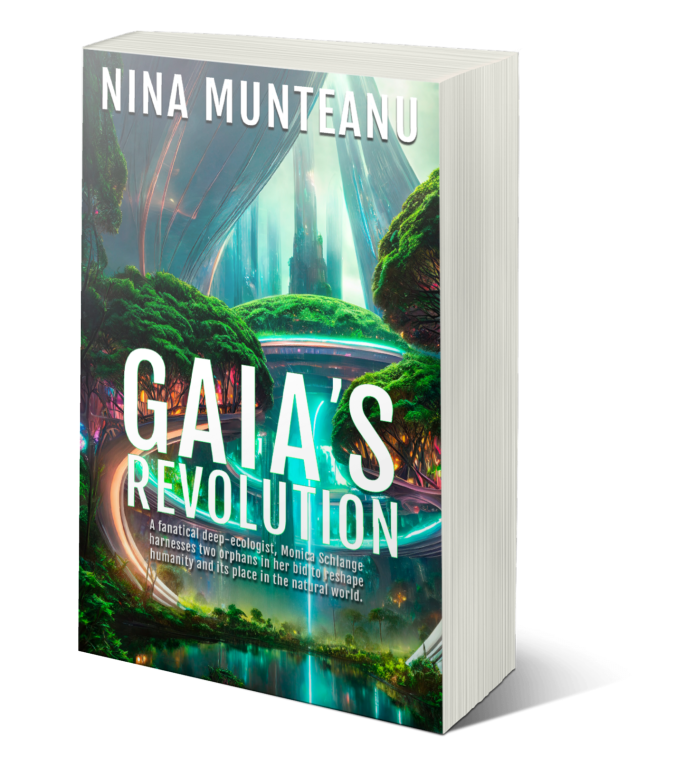
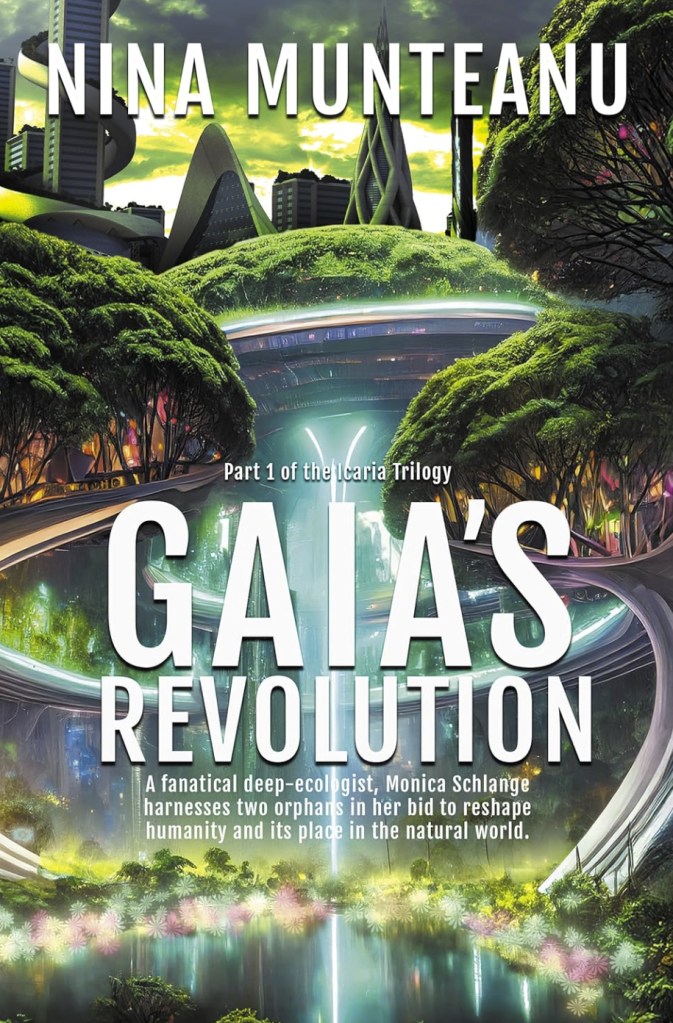
A fanatical deep-ecologist, Monica Schlange, harnesses two orphans in her bid to reshape humanity and its place in the natural world.

My novel Gaia’s Revolution, Book 1 of The Icaria Trilogy—which released March 10, 2026, by Dragon Moon Press—explores a collapsing capitalist society in Canada through ravages of climate change, water shortages, plague, and a failing technology.

The story begins in Berlin in 2022, with maverick scholar Damien Vogel, a deep ecologist and environmentalist who joined the climate activist group Letzte Generation* to do acts of civil disobedience to bring public awareness to climate offenders. The novel progresses from acts of civil disobedience to genuine eco-terrorism as Damien follows his revolutionary anarchist twin brother Eric to Canada and forms the Gaians, a radical eco-activist group, recruiting fanatic Monica Schlange—herself a sly eco-terrorist. Monica is an unscrupulous deep ecologist, proficient in using sabotage and internet tampering to disrupt and hurt climate offenders. The twin brothers end up on opposite sides of a violent revolution as Monica—guided by her own agenda as an extremist planetary guardian—plays them both.

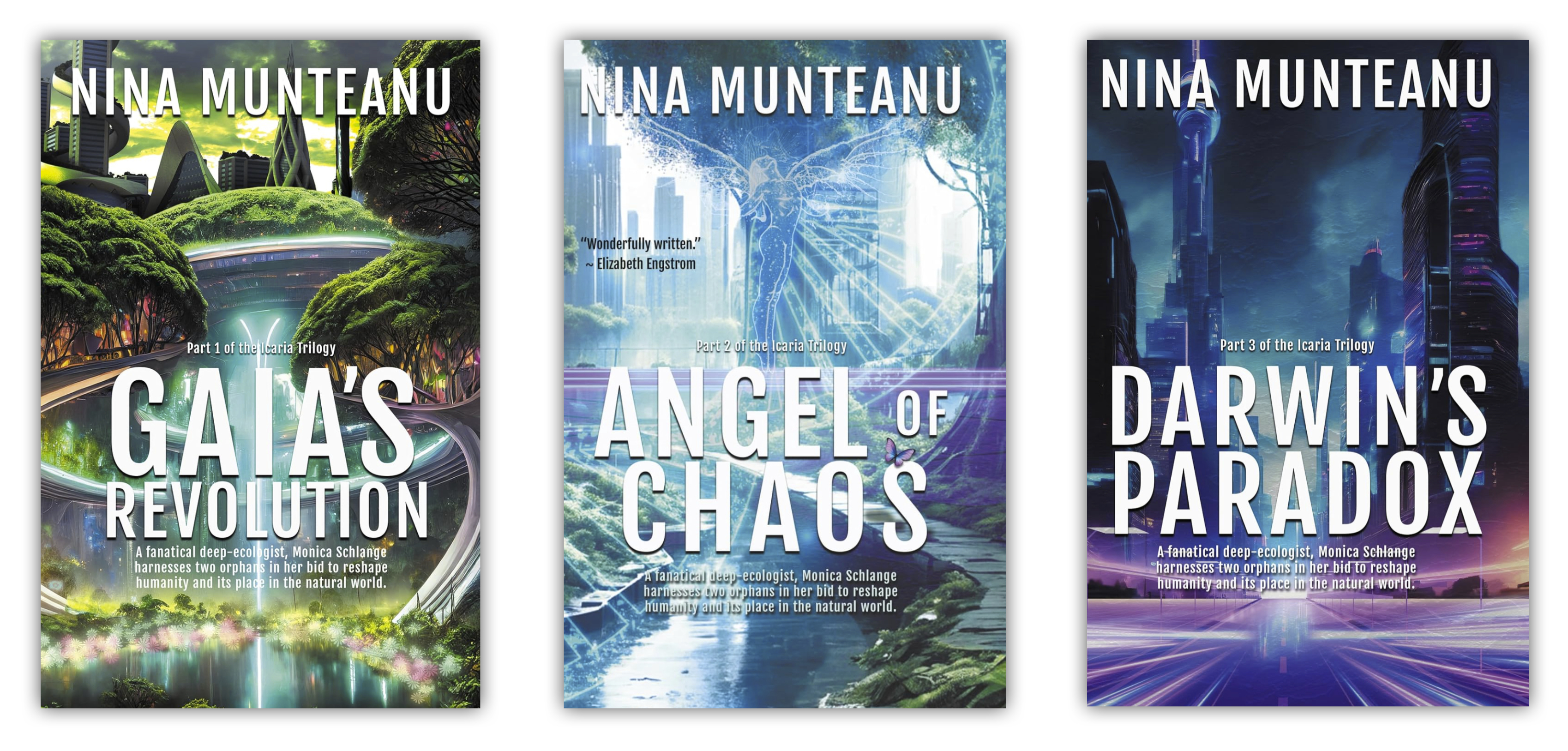
The Icaria Trilogy by Dragon Moon Press

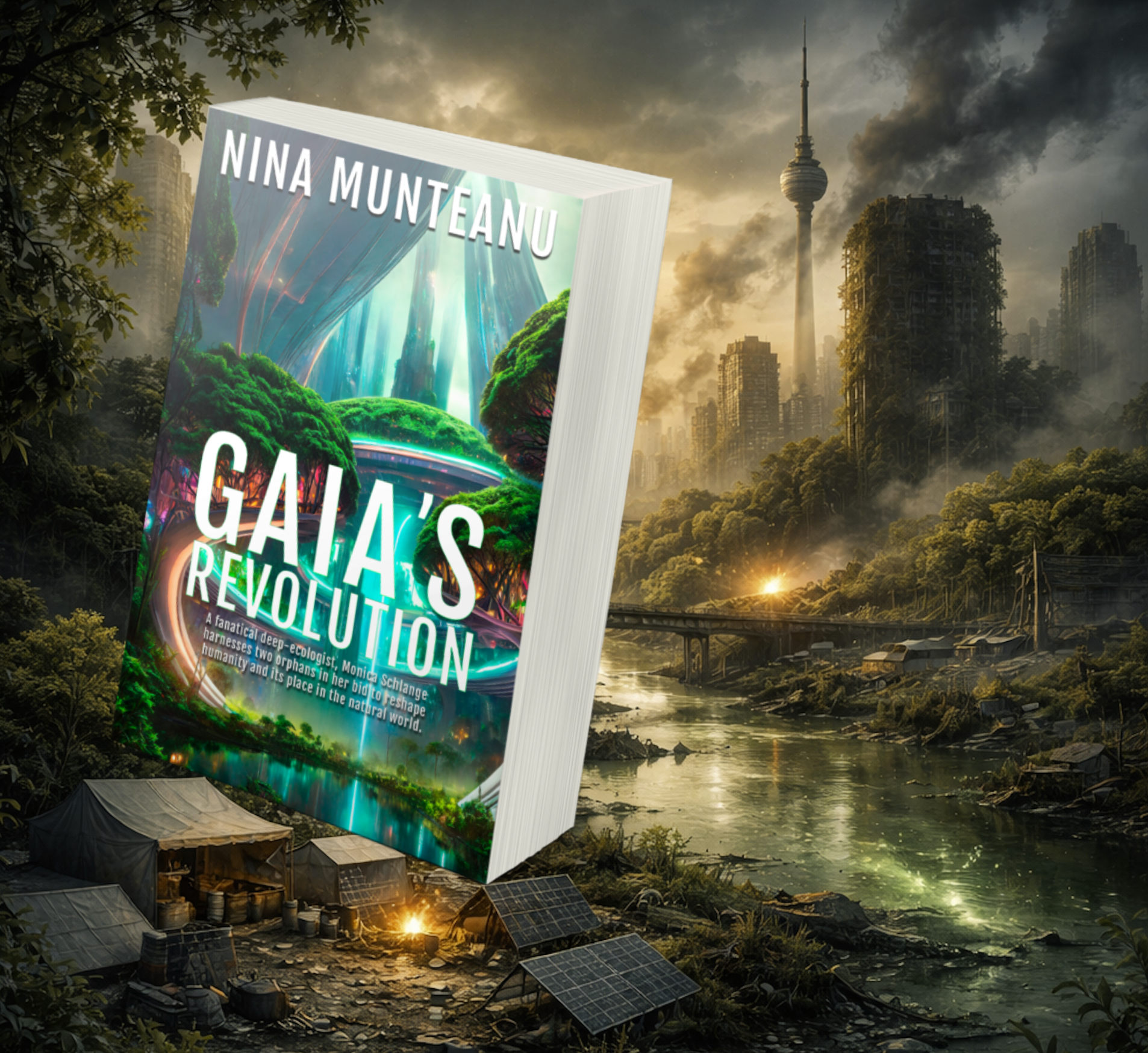
By 2095 (Book 2 Angel of Chaos and Book 3 Darwin’s Paradox), humanity has fled inside environmental dome cities called Icarias*, chased inside by an unruly environment. Icarians struggle with Darwin’s Disease—a mysterious neurological environmental pandemic. Icaria 5 is one of many enclosed cities within the slowly recovering toxic wasteland of North America, and where the protagonist Julie Crane (daughter of one of the orphans in Gaia’s Revolution) lives and works. Icarias are run by The Circle, a governing body of deep ecologists who call themselves Gaians. The Gaians’ secret is that they are keeping humanity “inside” not to protect humanity from a toxic wasteland but to protect the environment from a toxic humanity.

Ecology vs. Deep Ecology vs. Eco-Terrorism

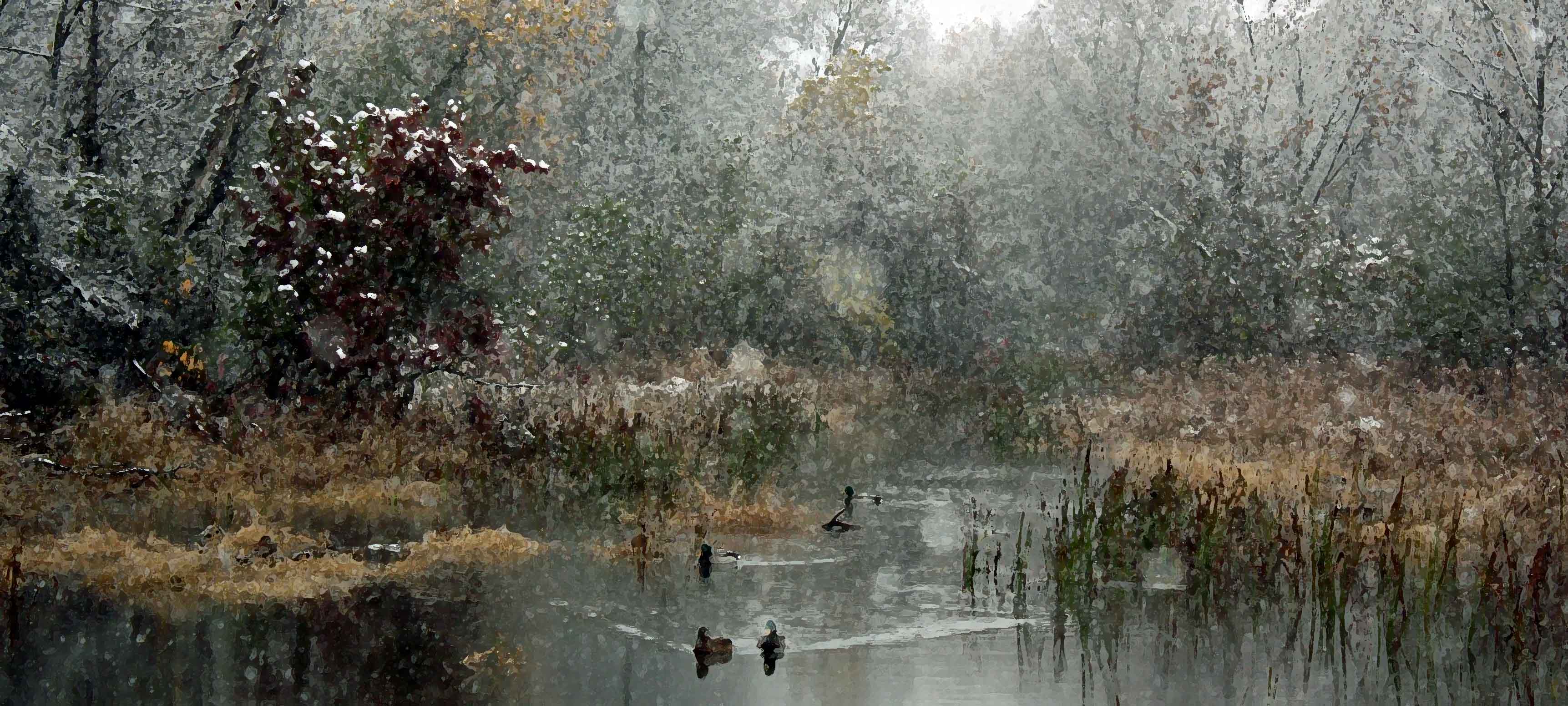
Snow falls on a Scots Pine forest, ON (photo and rendition by Nina Munteanu)

Ecology: Ecology is the science of relationships. Ecologists study ecosystems (aquatic and terrestrial), how they form, their structure and function, and how they relate to one another within the biosphere. Ecologists look at the relationship of all biota and non-biota, at individuals and communities, how all evolve (succession), at community richness, perturbations and recoveries, and natural enrichment. Ecologists model the flow of energy and cycling of matter over time and space.  

Deep Ecology: Deep ecologists are usually ecologists themselves, who have adopted 

An environmental philosophy and social movement advocating that all living beings have intrinsic value, independent of their utility to human needs. The philosophy promotes a holistic, ecocentric worldview—often termed “ecosophy”—that demands radical, structural changes to human society to prioritize nature’s flourishing. See the Eight Basic Principles of Deep Ecology.

Eco-Terrorism: Both ecologists and deep ecologists may grow cynical, seeing humanity as an existential threat, a virus that impacts the rest of life on Earth and exacerbates hyperobjects like climate change, loss of biodiversity and habitat destruction. This may lead to activism which some with a fanatical and destructive warrior spirit may move toward eco-terrorism such as criminal actions to halt development, and various acts of violence (e.g. arson, destruction of research facilities, threats against individuals).

Ecologists, Deep Ecologists & Eco-Terrorists in The Icaria Trilogy

In Gaia’s Revolution deep ecologist / scholar Damien Vogel and his nihilist revolutionary twin brother Eric Vogel trigger a violent revolution and eventual migration of humanity into the enclosed worlds of Icaria. While Damien follows deep ecology as an intellectual and scholar, believing in the eight basic principles of deep ecology, Eric uses the principles to enact merciless ‘solutions’ through brutal acts of eco-terrorism. Deep ecologist / eco-terrorist Monica Schlange insinuates herself into both brother’s plans to orchestrate her own unique vision of the world. Monica differs from Eric in her sense of humanity; a consummate and ruthless eco-terrorist and subversive, she is bent on entirely destroying the capitalist-technocratic machinery of which Eric is a part—to save the planet at the expense of human domination.

Damien and Christian Isabo meet to discuss recruiting her into their radical group:

Christian says, leaning forward, “She’s a bit of a wild card and possibly a genuine eco-terrorist. For instance, I discovered that she was behind the viral social media fiasco that embarrassed Prime Minister Robinson last year and almost cost him his seat. You know the one—those pictures of him fooling around with the German Chancellor, Magda Zimmermann, who’s married with two kids… Damien. I think that she’s extremely resourceful, stealthy, good at subterfuge and covers her tracks impeccably. Of course, there are definitely anger issues there. But, I also think we can count on her because her motives to help the environment lie on a deep visceral level, tied to her childhood experience and love of Nature.”

Damien studies her image on his phone with a thoughtful frown. He looks up at Christian. “What do we know about her?”

“Well, to begin with, she’s an only child and grew up on one of the last independent dairy farms in Ontario, near Guelph. Her father was strict and encouraged a strong work ethic and love for the natural world. He doted on her but died of a heart attack when she was only thirteen, the year their farm was seized by the Technocrats and converted into a Corporation Farm using scientific agriculture. In fact, their seizure may have precipitated the father’s heart attack. Her mother was assigned as a scullery maid in the farm kitchen; she took to drink then ran off with some truck driver travelling across Canada from Surrey, BC. He didn’t treat the girl well and she ran away before they reached Halifax. She ended up living with her aunt—her father’s sister—in the Beaches. The aunt worked as a librarian at York University and was a fervent member of Extinction Rebellion before it dissolved. She was a real bohemian, a deep ecologist herself, and encouraged the girl.”

While Monica shows the same level of dedication, she betrays a lack of integrity in her less than altruistic motivations and means, thinks Damien. The fact that she’s with Eric [his twin brother and nemesis] proves this. But even that—especially that—can work in their favour. It would seem that, without knowing it, she is already working as an undercover spy for their revolution. He can work with that, Damien thinks. Yes, he can certainly do that. And more. It’s my turn now, brother…

“OK. Set up a meeting,” Damien says. “Let’s get her into the fold.”

Mist over swelling spring stream, ON (photo and rendition by Nina Munteanu)

Leonard Crane—one of the three orphans impacted by the revolution and both rescued and tormented by Monica Schlange—studies ecology under new Gaian rule and is eventually inducted into the prestigious Department of Industrial Ecology (DIE) where he works on subversive ecological theories about Icaria’s inevitable demise and is eventually ostracised from the scientific community for his unpopular work. His legacy echoes throughout Books 2 and 3 of the trilogy.

Books 2 and 3 follow Julie Crane (Leonard’s daughter), a self-taught ecologist. In Angel of Chaos and Darwin’s Paradox, her skills as an amateur ecologist (in a world where ecology is not taught) are tested by the ruthless deep ecologist Gaia, head of The Circle. Gaia denigrates Julie’s ecological pursuits as shallow and ineffectual. When a subordinate of hers asks her if Julie would make a good candidate for The Circle (the governing body of Icaria), Gaia scoffs:

“You mistake a good scientific ecologist with someone who possesses a genuine empathy for deep ecology,” she said. Her eyes sparkled like sapphires. “No one enters our elite cadre without having impeccable qualifications and submitting to many more initiations than she is capable of passing. She may be an ecologist but she is not a deep ecologist. The science of ecology does not ask what kind of society would be the best suited to maintain a particular ecosystem. Our greater concern is with questions aimed at the level of organic wholeness and ‘Earth wisdom’. She knows nothing of these things.”—Gaia, Angel of Chaos

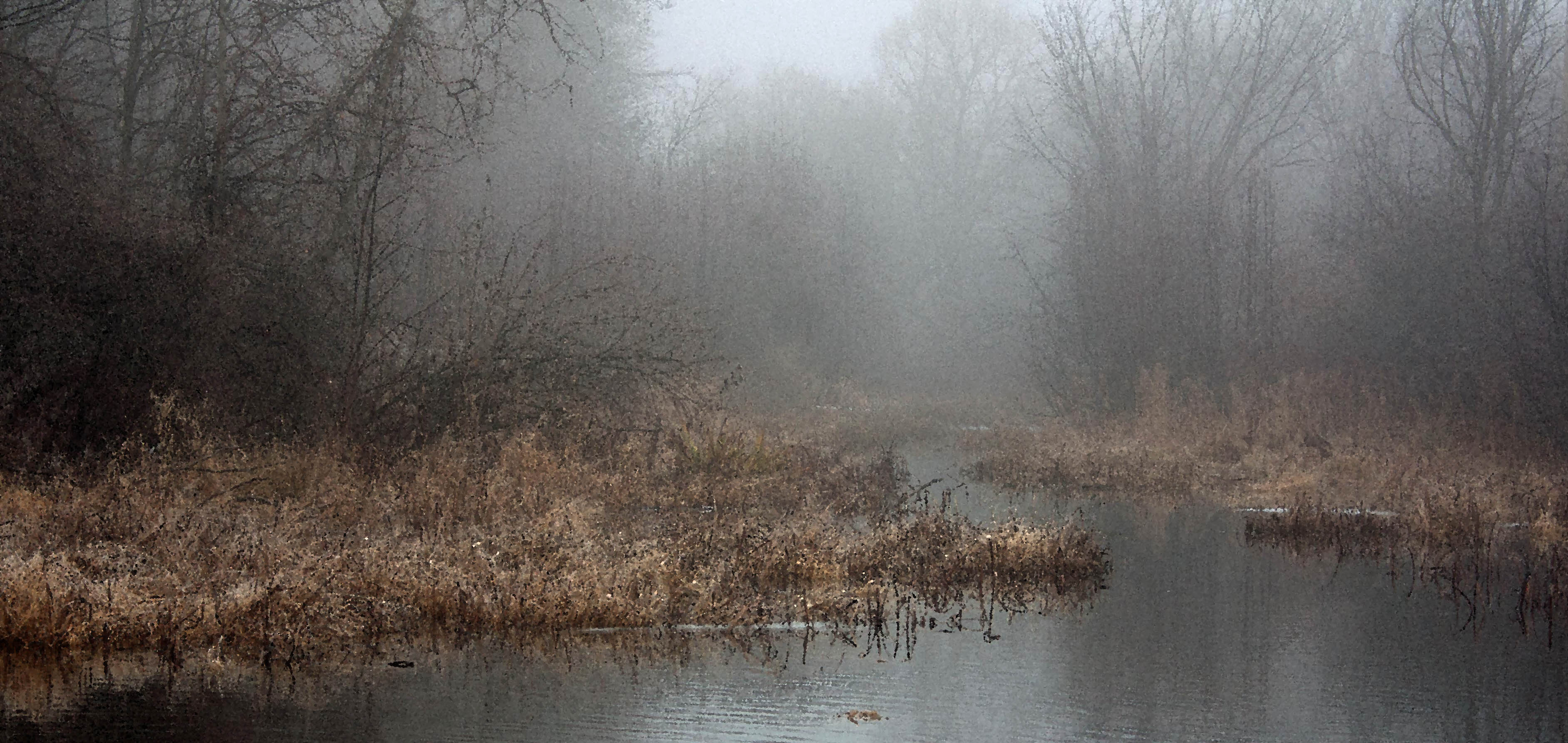
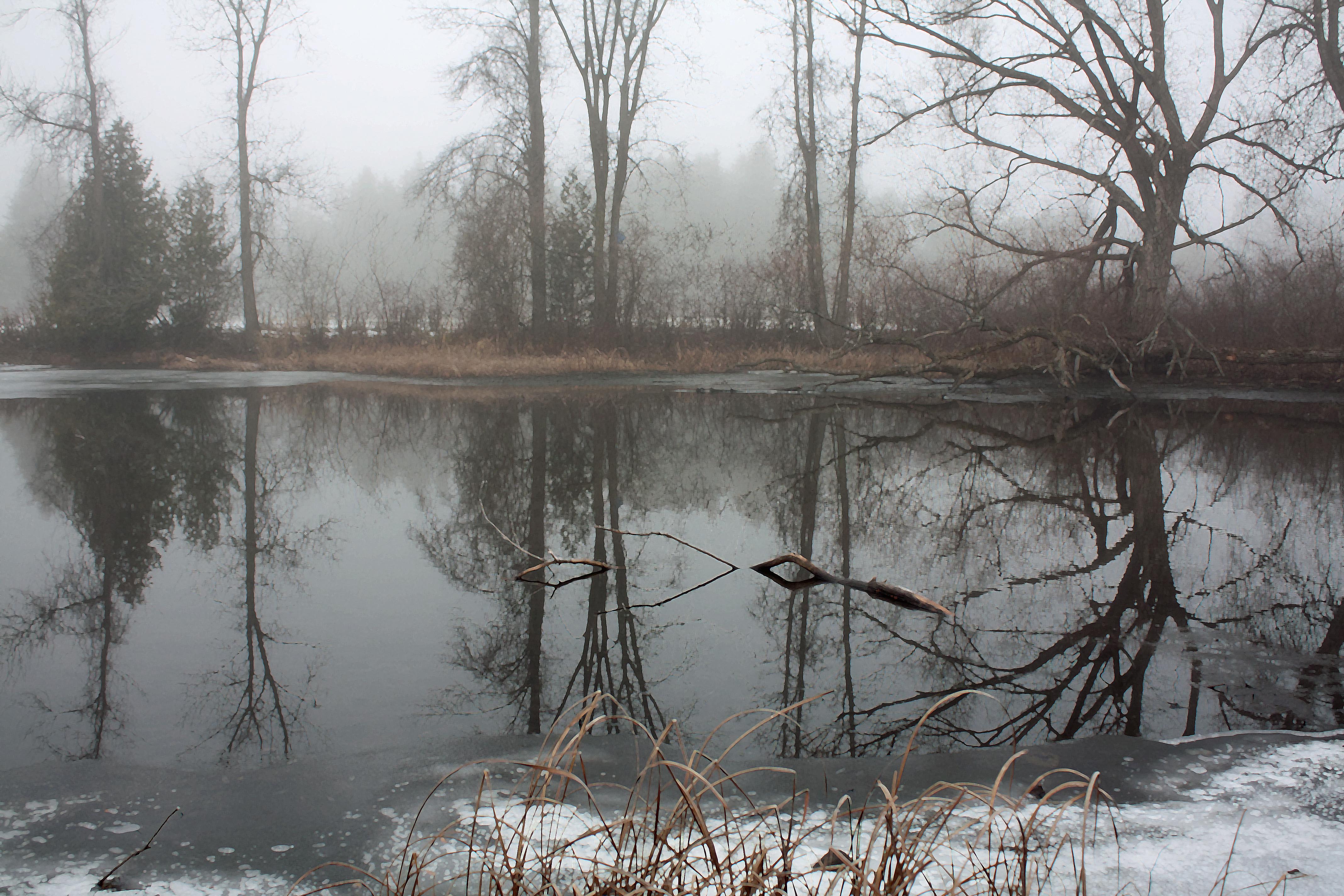
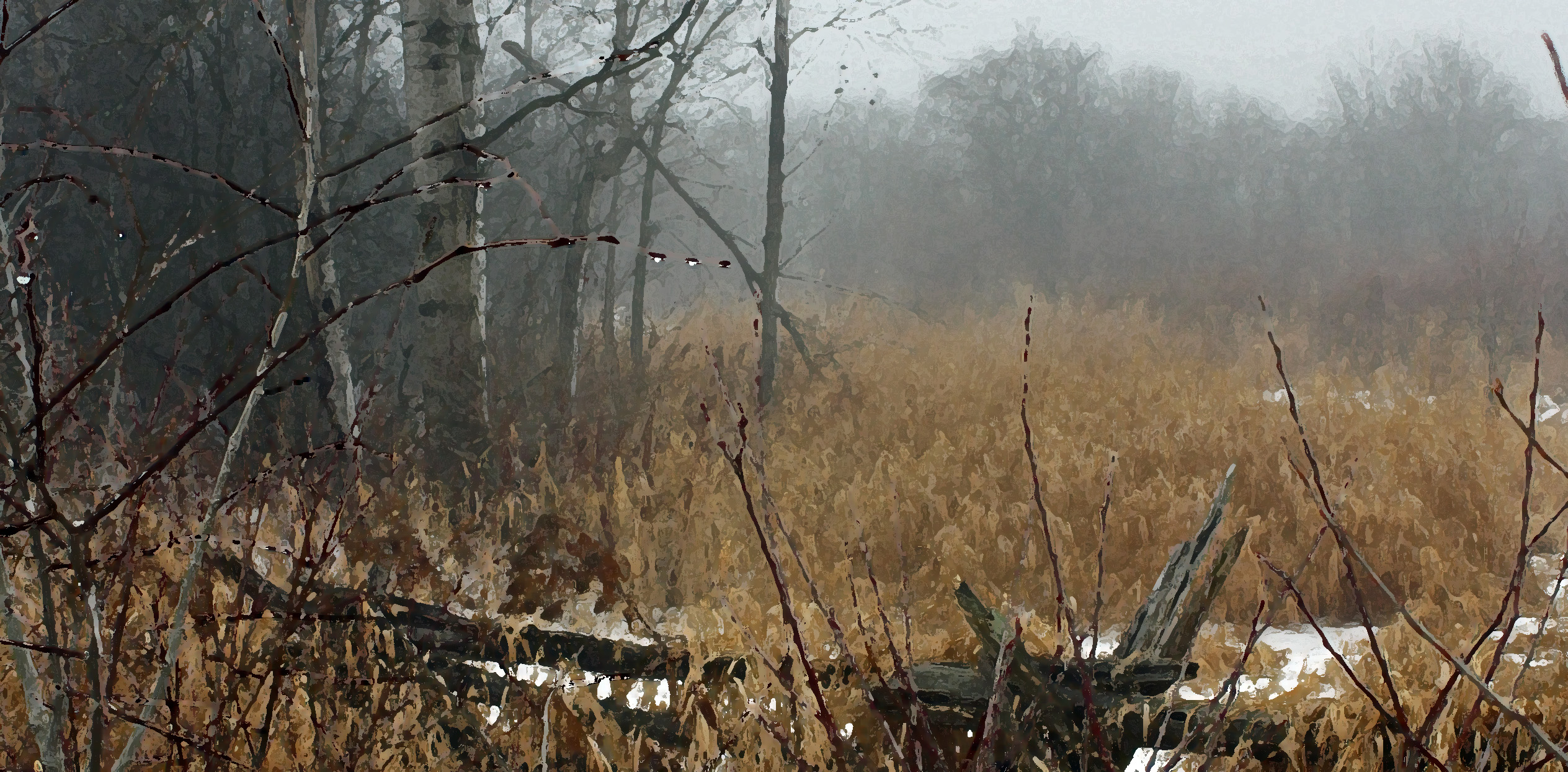
Fog enshrouded marsh in early winter, ON (photo and rendition by Nina Munteanu)

You can order “Gaia’s Revolution” on Amazon. Release date for both ebook and print book was March 10, 2026. Book 2 (Angel of Chaos) and Book 3 (Darwin’s Paradox) of theIcaria Trilogy are already available in both ebook and print form.

References:

Munteanu, Nina. 2026. “Gaia’s Revolution, Part 1 of Icaria Trilogy.” Dragon Moon Press, Calgary, AB. 369 pp.

Munteanu, Nina. 2010. “Angel of Chaos, Part 2 of Icaria Trilogy.” Dragon Moon Press, Calgary, AB. 518 pp.

Munteanu, Nina. 2007. “Darwin’s Paradox, Part 3 of Icaria Trilogy.” Dragon Moon Press, Calgary, AB. 294 pp.

Sessions, George, Bill Devall. 2000. “Deep Ecology: Living as if Nature Mattered.” Gibbs Smith. 267pp.

Skinner, B.F. 1948. “Walden Two” The Macmillan Company, New York. 301pp.

Terminology:

*Deep Ecology: An environmental philosophy and social movement advocating that all living beings have intrinsic value, independent of their utility to human needs. Coined by Arne Næss in 1972, it promotes a holistic, ecocentric worldview—often termed “ecosophy”—that demands radical, structural changes to human society to prioritize nature’s flourishing.

*Icaria: the name of Étienne Cabet’s utopia. Cabet was a French lawyer in Dijon, who published his novel Voyage en Icarie in 1839. The novel was a sort of manifesto-blueprint of utopian socialism, with elements of communism (abolished private property and individual enterprise), influenced by Fourierist and Owenite thinking. Key elements, such as the four-hour work day, are reflected in B.F. Skinner’s Walden Two. Cabet’s novel explores a society in which capitalist production is replaced by workers’ cooperatives with a focus on small communities.

*Letzte Generation: a prominent European climate activist group, founded in 2021, known for its acts of civil disobedience—such as roadblocks, defacing art, and vandalizing structures—to pressure governments on climate action. The term was chosen because they considered themselves to be the last generation before tipping points in the earth’s climate system would be reached. They are mostly active in Germany, Italy, Poland and Canada. In Germany, they have faced accusations of forming a criminal organization, leading to police raids.

Nina Munteanu is an award-winning novelist and short story writer of eco-fiction, science fiction and fantasy. She also has three writing guides out: The Fiction Writer; The Journal Writer; and The Ecology of Writing and teaches fiction writing and technical writing at university and online. Check the Publications page on this site for a summary of what she has out there. Nina teaches writing at the University of Toronto and has been coaching fiction and non-fiction authors for over 20 years. You can find Nina’s short podcasts on writing on YouTube. Check out this site for more author advice from how to write a synopsis to finding your muse and the art and science of writing.

The Icaria Trilogy: The Story Behind the Prequel to the Prequel…


Today my eco-fiction novel Gaia’s Revolution (Book 1 of The Icaria Trilogy) releases through Dragon Moon Press in paperback and ebook form on Amazon (and other book retailers).

Gaia’s Revolution explores a collapsing capitalist society in Canada through ravages of climate change and a failing technology. The story is told through the lives of ambitious twin brothers Eric and Damien Vogel, and the woman who plays them like chess pieces in her gambit to ‘rule the world.’ The novel starts out in Berlin—with a scuffle between police and climate activists of Letzte Generation-then moves to Toronto Canada, where an unlikely revolution is brewing… 

Book 2 (Angel of Chaos) and Book 3 (Darwin’s Paradox of The Icaria Trilogy are already available in bookstores worldwide in both ebook and print form.

The Icaria Trilogy by Dragon Moon Press

This day is special for me in a number of ways. Today is also my dad’s birthday. He passed away a while ago, but I know he is here with me as this is happening. You see, when I was just 15, I’d written my first book, an early version of Angel of Chaos. My dad, who had met and befriended an editor at Doubleday, and proud of my accomplishment, arranged a meeting with me and the editor to look at my book. I put on my highest pumps—I could barely walk in them!—and best outfit and met with the gentleman. He did not take my book for publication but praised my work and gave me some wonderful advice. “Keep writing!” he said. I have carried that meeting and advice to this day and thank my dad for his belief in me as a writer—particularly given that he had been pushing for me to become a teacher or nurse. Four decades later, a more polished version of that same book was published in 2010 by Dragon Moon Press (as Angel of Chaos, the prequel to Darwin’s Paradox, which was published in 2007). 

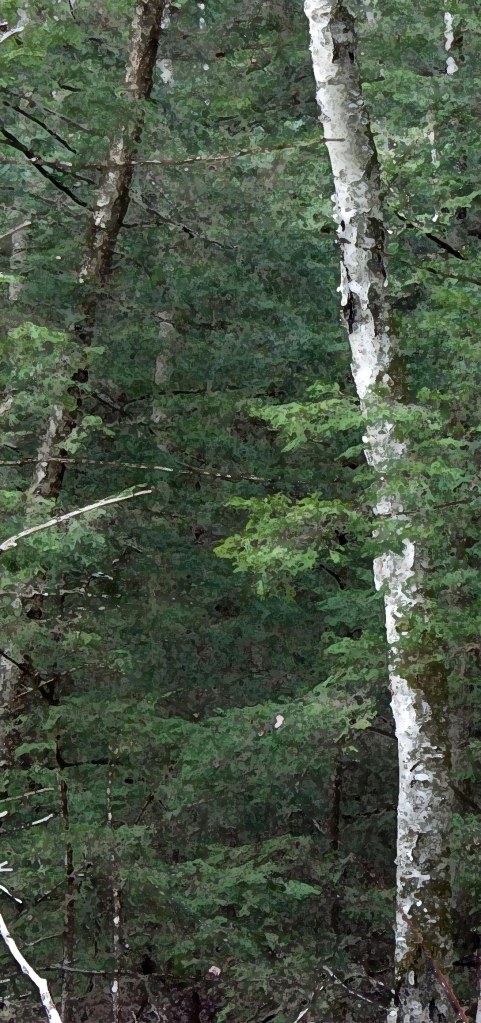
Birch forest in Ontario (photo and rendition by Nina Munteanu)

The Icaria Trilogy by Dragon Moon Press

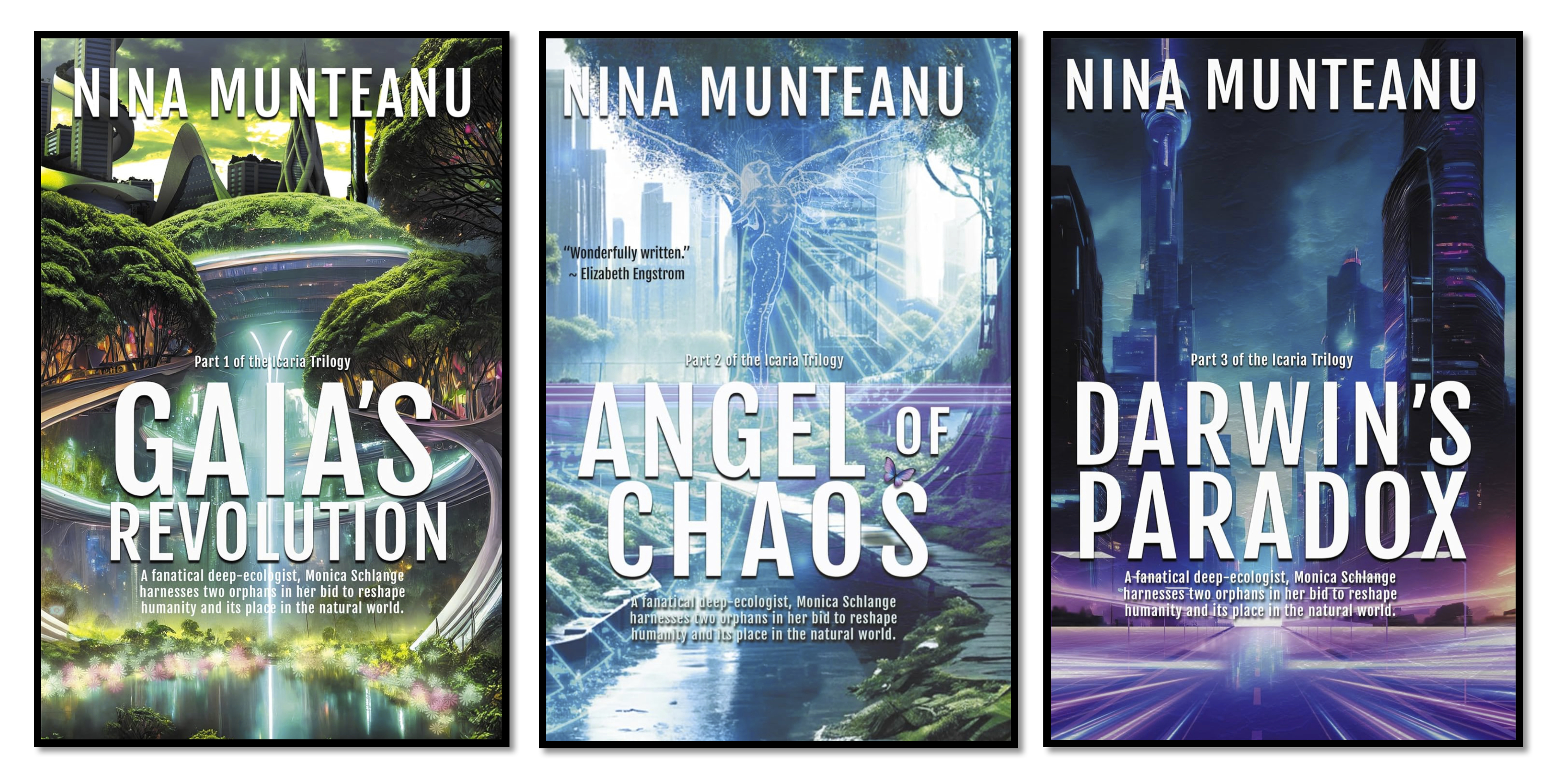
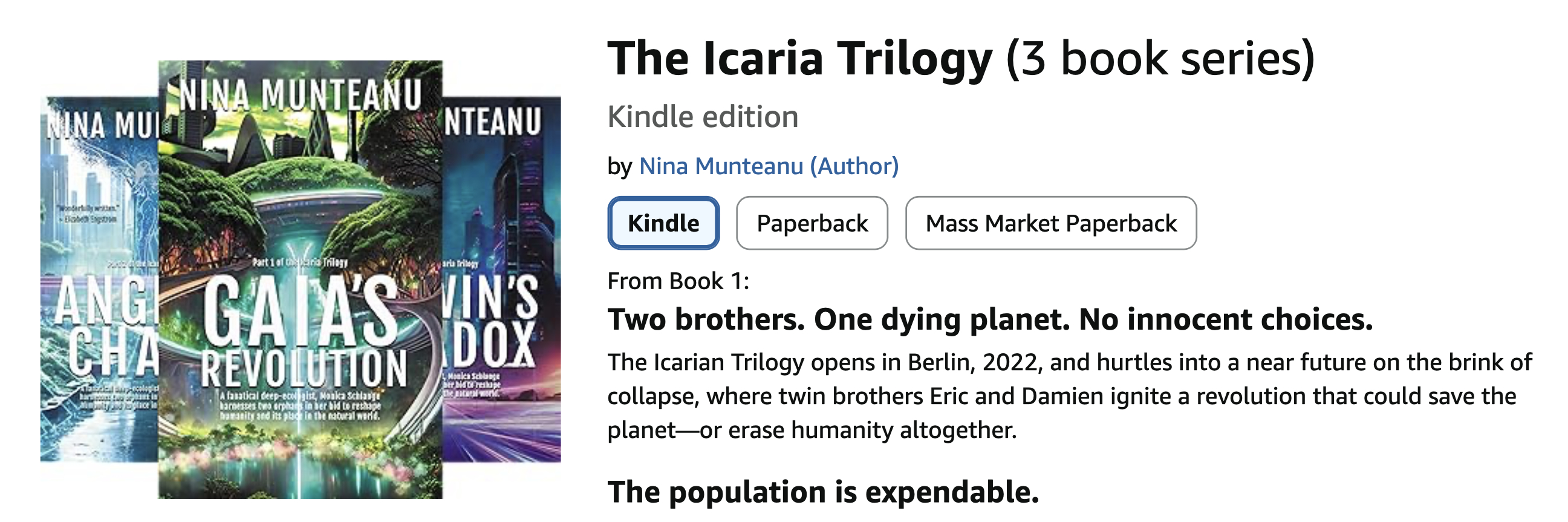
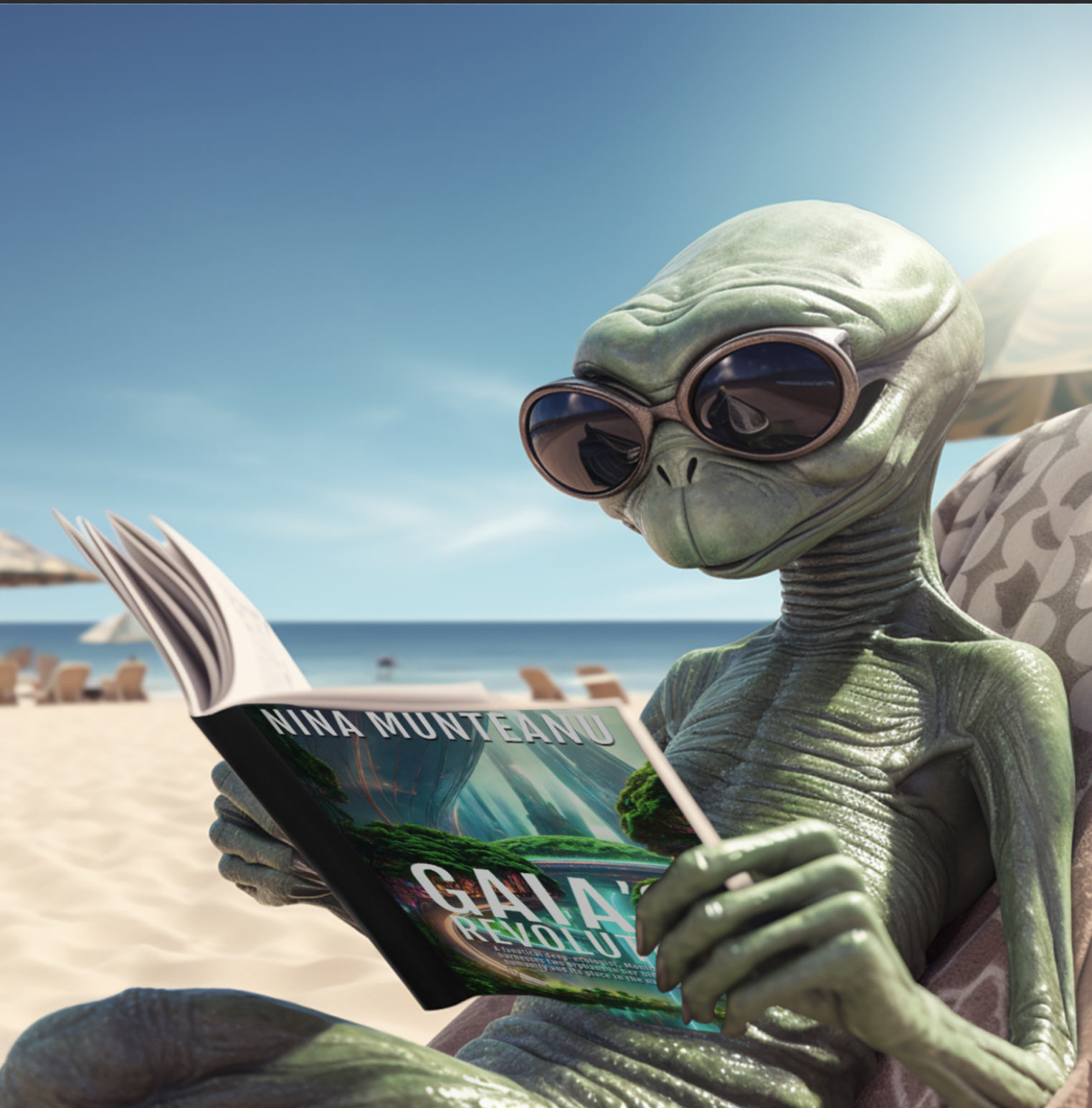
Now, with newly written Gaia’s Revolution (the prequel to the prequel) released, Dragon Moon has reissued new covers for the entire trilogy. Here they are! Oh! And look who’s already reading Gaia’s Revolution!

Aliens get to read everything before we do…

Nina Munteanu is an award-winning novelist and short story writer of eco-fiction, science fiction and fantasy. She also has three writing guides out: The Fiction Writer; The Journal Writer; and The Ecology of Writing and teaches fiction writing and technical writing at university and online. Check the Publications page on this site for a summary of what she has out there. Nina teaches writing at the University of Toronto and has been coaching fiction and non-fiction authors for over 20 years. You can find Nina’s short podcasts on writing on YouTube. Check out this site for more author advice from how to write a synopsis to finding your muse and the art and science of writing.

“Gaia’s Revolution”, Life After Capitalism: The Promise & Spectre of Deep Ecology—Part 1

Twin brothers—a brilliant scientist and a gifted engineer—escape the growing racial violence of Berlin, to ‘peaceful’ Canada in a rivalry to control the evolution of the human race.

My novel Gaia’s Revolution, the first of The Icaria Trilogy—releasing March 10, 2026, by Dragon Moon Press—explores a collapsing capitalist society in Canada through ravages of climate change, water shortages, plague, and a failing technology. The story is told through the lives of ambitious twin brothers Eric and Damien Vogel, and the woman who plays them like chess pieces in her gambit to rule the world.

The novel starts on December 13th, 2022, in Berlin, the day several members of the climate activist group Letzte Generation* to which Damien belongs, are raided by police who seize their computers and phones. Damien is a quiet scholar, an introvert and deep ecologist*, devoted to the teachings of Arne Næss and George Sessions, who promoted an environmental philosophy of eight basic principles of deep ecology.  Næss and Sessions advocated that all living beings have intrinsic value, independent of their utility to human needs. Their philosophy has become a movement that promotes a holistic, eco-centric worldview demanding radical, structural changes to human society to prioritize nature’s flourishing.  

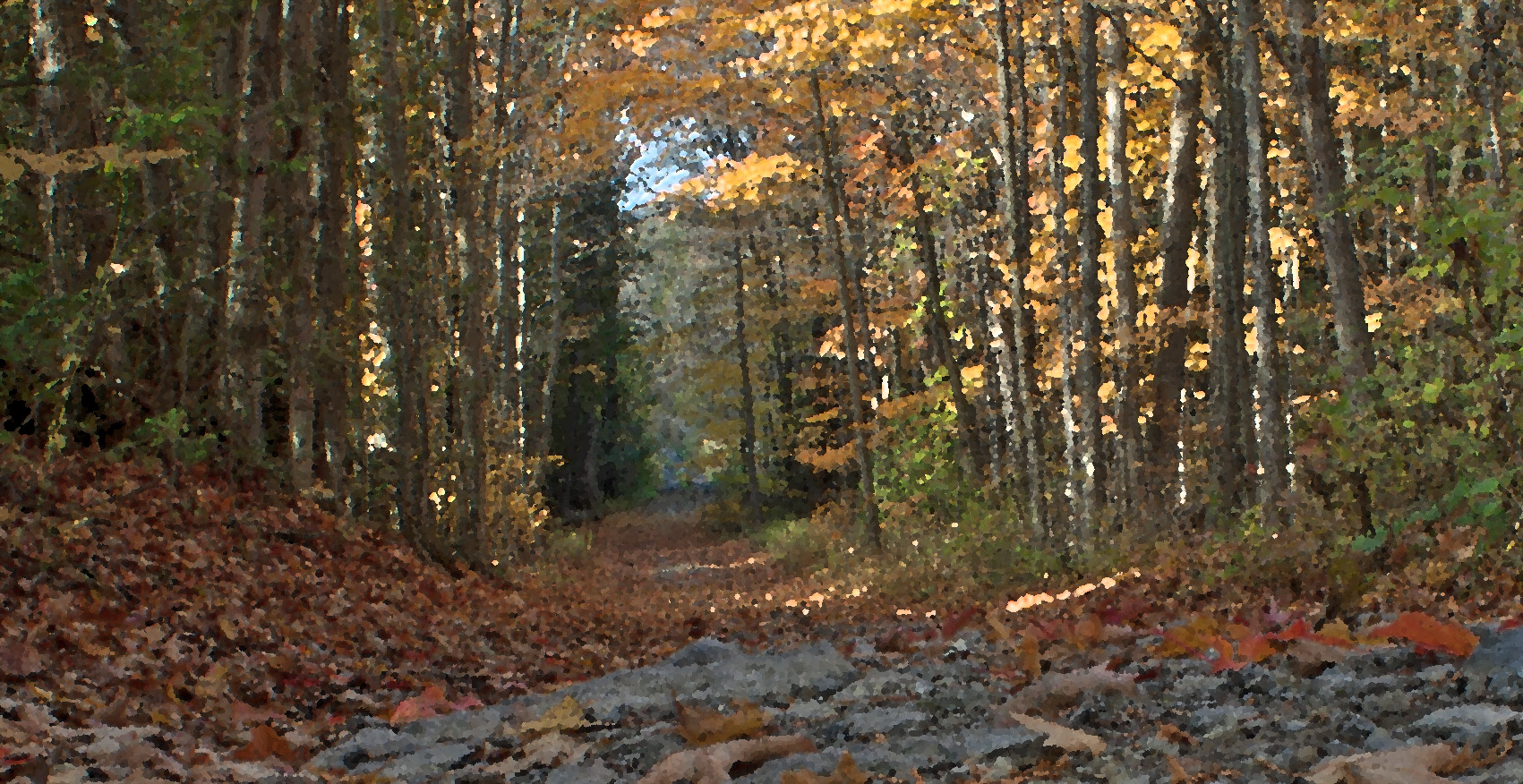
Road through a beech tree forest, ON (photo and rendition by Nina Munteanu)

Damien later meets with his extrovert anarchist brother in Treffpunkt, near the university campus, and they argue ideology and revolution. Eric contends that the only way humanity will survive is to adapt to climate change by somehow overthrowing the bourgeois plutocrats through violent revolution: preventing the small ruling class carving out a comfortable life for itself while the rest of the world suffers terrible deprivation. Eric pulls out the worn copy of B.F. Skinner’s Walden Two from his jacket pocket, slaps it on the table and pushes it toward Damien. “That’s the answer, Dame.”

Each brother plans to create a new humanity: Eric’s plan is to control humanity through gene manipulation and behaviour engineering (aka Walden Two); Damien’s plan is to draw on deep ecology and use environmental triggers with biotechnologies to empower humanity with physical/chemical abilities to adapt to climate and its changing environment via transhumanist AI.

Neither addresses the elephant in the room: population. Only a much-reduced population will ensure success for either plan.

To this point, Eric, who is far more cynical and ruthless, thinks Damien naïve and feckless in his deep ecological view:

Damien too easily prescribes to the old leftist shibboleth of Nature being the answer to everything and Market being evil. His deep ecology utopia would spring from an atavistic rejection of modern life, a return to ‘the ancient farm.’ But how that fantasy could be achieved without a drastic population reduction is beyond his brother’s imagination. Damien fetishizes the natural world. Just like he does their mother. The naïve fool is a blind romantic, refusing to see reality right in front of him: that Nature is ultimately cruel, cold, and preoccupied with its own survival. Just like their mother.–Eric Vogel, Gaia’s Revolution

Foggy morning on an Ontario marsh in winter (photo and rendition by Nina Munteanu)

Eight Basic Principles of Deep Ecology*

In 1984, ecologists Arne Næss and George Sessions set out the following Basic Principles of Deep Ecology:

  • The well-being and flourishing of human and nonhuman Life on Earth have value in themselves (synonyms: intrinsic value, inherent value). These values are independent of the usefulness of the non-human world for human purposes.
  • Richness and diversity of life forms contribute to the realization of these values and are also values in themselves.
  • Humans have no right to reduce this richness and diversity except to satisfy vital needs.
  • The flourishing of human life and cultures is compatible with a substantial decrease of the human population. The flourishing of nonhuman life requires such a decrease.
  • Present human interference with the nonhuman world is excessive, and the situation is rapidly worsening.
  • Policies must therefore be changed. These policies affect basic economic, technological, and ideological structures. The resulting state of affairs will be deeply different from the present.
  • The ideological change is mainly that of appreciating life quality (dwelling in situations of inherent value) rather than adhering to an increasingly higher standard of living. There will be a profound awareness of the difference between big and great.
  • Those who subscribe to the foregoing points have an obligation directly or indirectly to try to implement the necessary changes.
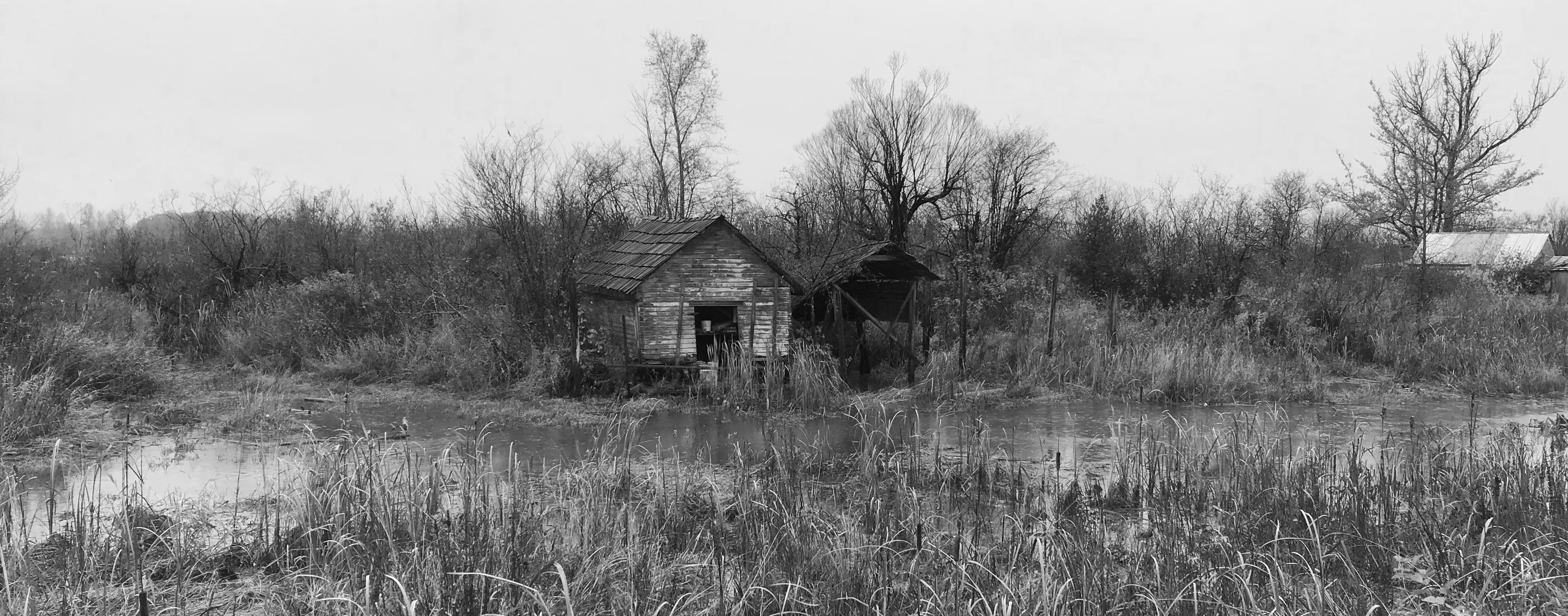
Finn Slough old shed, BC (photo by Nina Munteanu)

Eric plans to address the 5th Basic Principle of Deep Ecology—present human interference with the nonhuman world is excessive and the situation is rapidly worsening— by using nefarious means to meet the 4th Basic Principle of Deep Ecology: the flourishing of human life and cultures is compatible with a substantial decrease of the human population and the flourishing of nonhuman life requires such a decrease. With a reduced population, he plans to make the remaining principles (e.g. 6th and 7th) realizable through his behaviour engineering.

But Eric hasn’t accounted for fanatical deep ecologist / eco-terrorist Monica Schlange in his plan… (More on this shapeshifting character in Part 2).

The Icaria Trilogy by Dragon Moon Press

You can pre-order the ebook of Gaia’s Revolution by Dragon Moon Press on Amazon. Release date is March 10, 2026. The print version will release soon after. Book 2 (Angel of Chaos) and Book 3 (Darwin’s Paradox) of theThe Icaria Trilogy are already available in both ebook and print form.

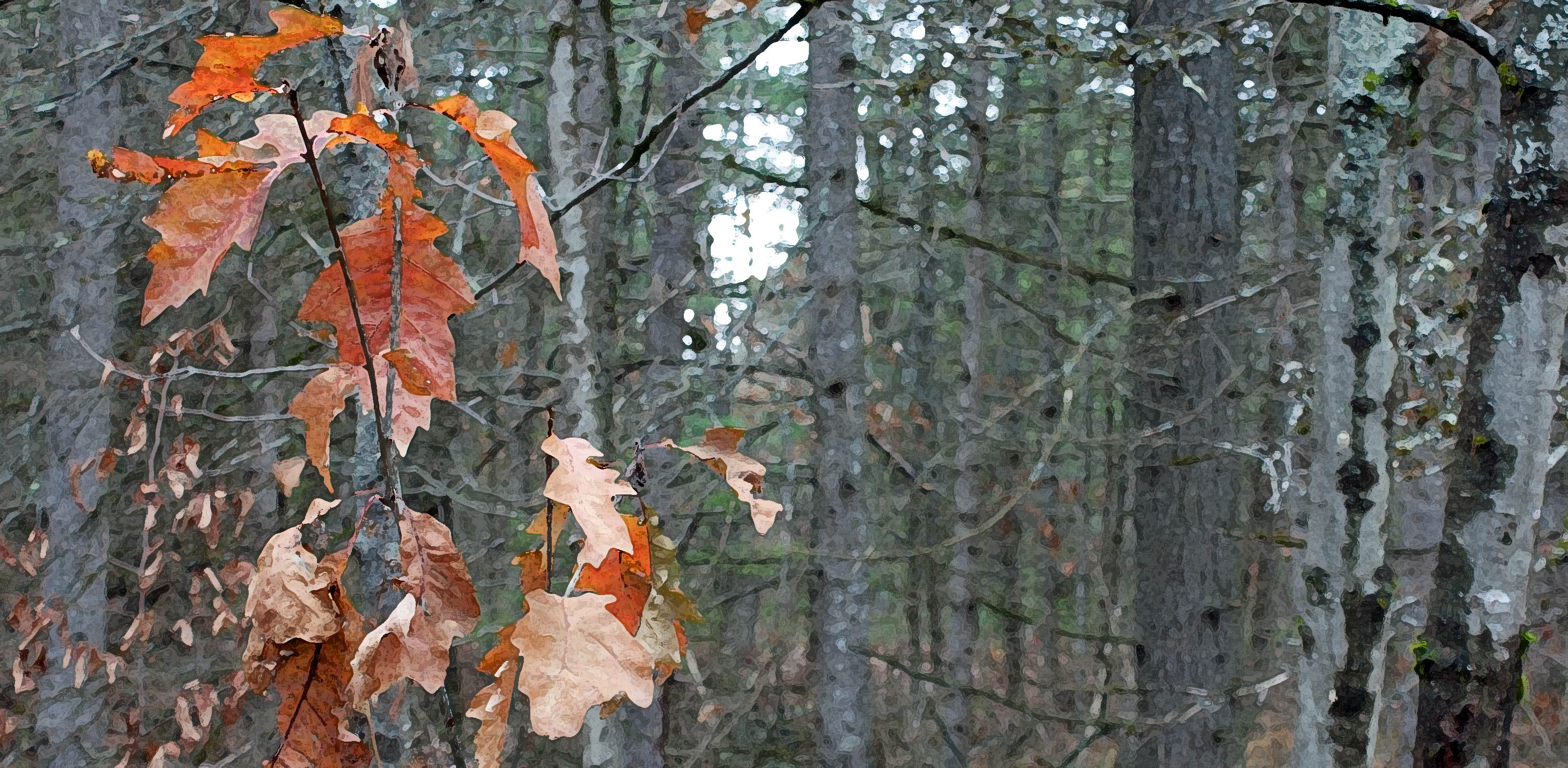
Oak leaves light up a dark pine forest in fall, ON (photo by Nina Munteanu)

References:

Munteanu, Nina. 2026. “Gaia’s Revolution, Part 1 of Icaria Trilogy.” Dragon Moon Press, Calgary, AB. 369 pp.

Munteanu, Nina. 2010. “Angel of Chaos, Part 2 of Icaria Trilogy.” Dragon Moon Press, Calgary, AB. 518 pp.

Munteanu, Nina. 2007. “Darwin’s Paradox, Part 3 of Icaria Trilogy.” Dragon Moon Press, Calgary, AB. 294 pp.

Sessions, George, Bill Devall. 2000. “Deep Ecology: Living as if Nature Mattered.” Gibbs Smith. 267pp.

Skinner, B.F. 1948. “Walden Two” The Macmillan Company, New York. 301pp.

Terminology:

*Deep Ecology: An environmental philosophy and social movement advocating that all living beings have intrinsic value, independent of their utility to human needs. Coined by Arne Næss in 1972, it promotes a holistic, ecocentric worldview—often termed “ecosophy”—that demands radical, structural changes to human society to prioritize nature’s flourishing.

*Letzte Generation: a prominent European climate activist group, founded in 2021, known for its acts of civil disobedience—such as roadblocks, defacing art, and vandalizing structures—to pressure governments on climate action. The term was chosen because they considered themselves to be the last generation before tipping points in the earth’s climate system would be reached. They are mostly active in Germany, Italy, Poland and Canada. In Germany, they have faced accusations of forming a criminal organization, leading to police raids.

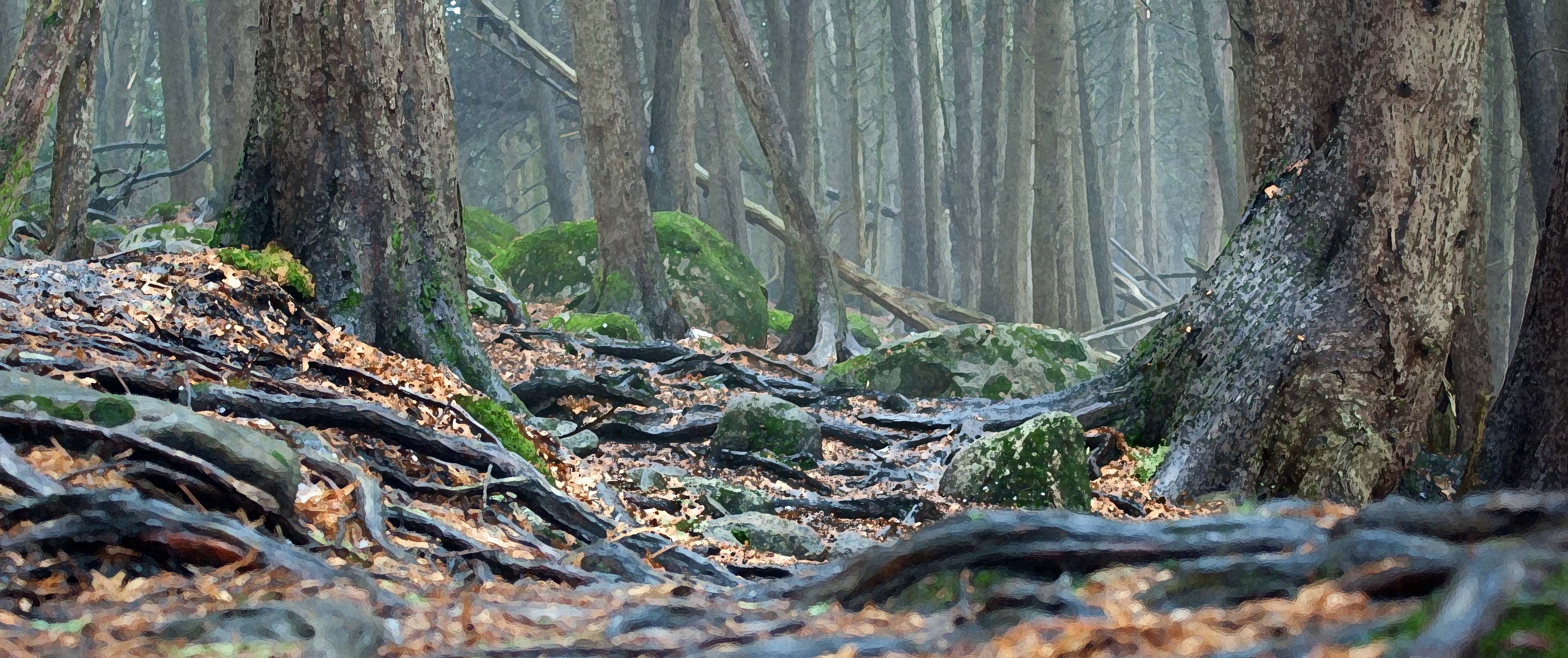
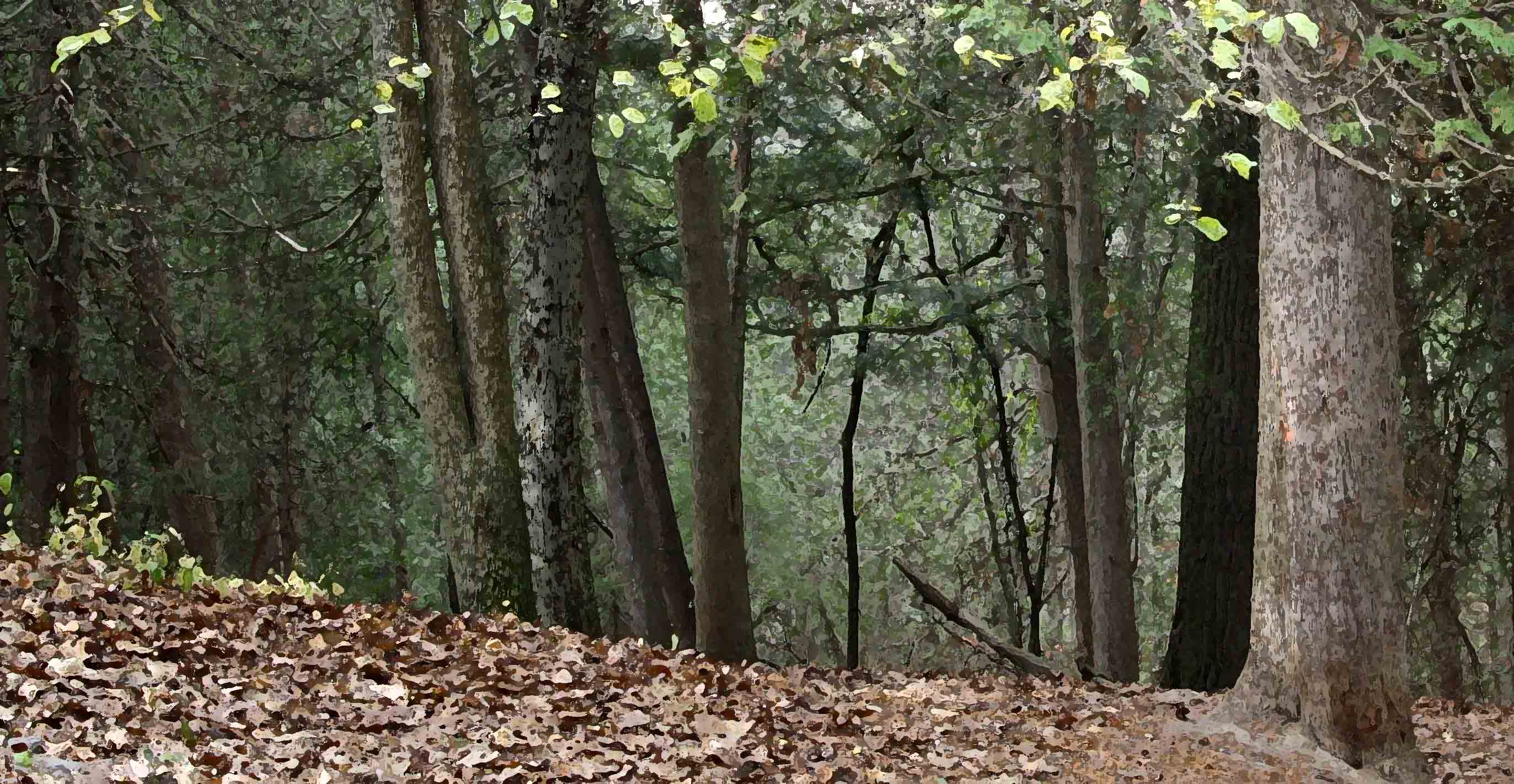
Root-covered cedar-pine forest in early winter, ON (photo and rendition by Nina Munteanu)

Nina Munteanu is a Canadian ecologist / limnologist and novelist. She is co-editor of Europa SF and currently teaches writing courses at George Brown College and the University of Toronto. For the latest on her books, visit www.ninamunteanu.ca. Nina’s bilingual “La natura dell’acqua / The Way of Water” was published by Mincione Edizioni in Rome. Her non-fiction book “Water Is…” by Pixl Press (Vancouver) was selected by Margaret Atwood in the New York Times ‘Year in Reading’ and was chosen as the 2017 Summer Read by Water Canada. Her novel “A Diary in the Age of Water” was released by Inanna Publications (Toronto) in June 2020.

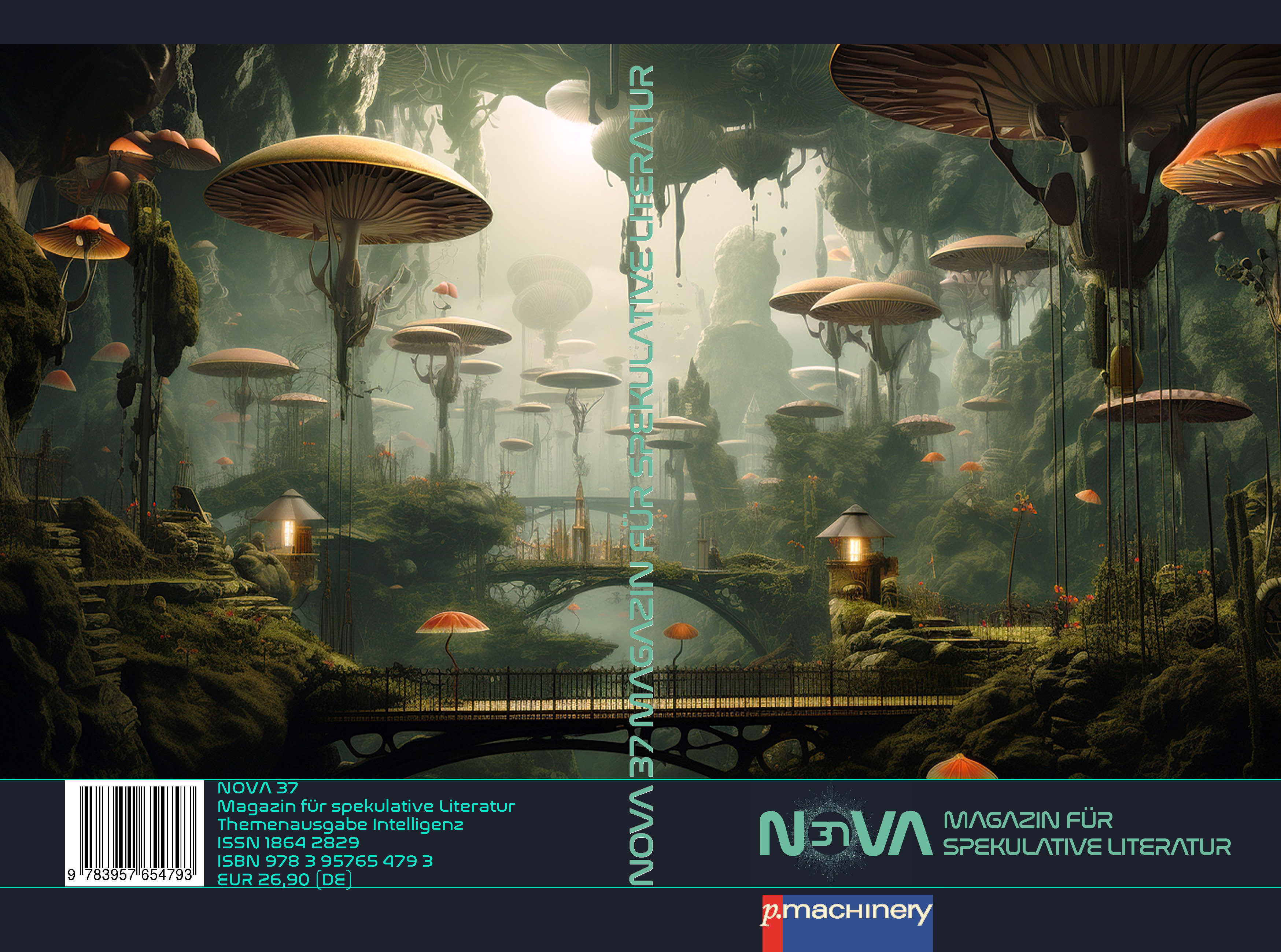
‘The Way of Water’ Translated into German and Published in Nova Magazin für spekulative Literatur

My short story “The Way of Water” was recently translated into German (“Der Weg des Wassers”) and published in Nova 37. The issue has illustrations for each story and a beautiful cover. When I got my author’s copy in the mail, I was blown away! It was as though they had tapped my love for mushrooms. Bright orange and floating in a sea of green vegetation, the aerial fungi that hovered over a jungle village resembled giant Micenas.

“The Way of Water” follows a young woman (Hilda) in near-future Toronto who has run out of water credits for the public iTap; by this time houses no longer have potable water and their water taps have been cemented shut (as was done in Detroit in 2014); the only way to get water is through the public iTaps—at great cost. She’s standing two metres from water—in a line of people waiting to use the tap—and dying of thirst.

“The Way of Water” captures a vision that explores the nuances of corporate and government corruption and deceit together with global resource warfare. In this near-future, Canada is mined of all its water by thirsty Chinese and US multinationals—leaving nothing for the Canadians. Rain has not fallen on Canadian soil in years due to advances in geoengineering and weather manipulation that prevent rain clouds from going anywhere north of the Canada-US border. If you’re wondering if this is possible, it’s already happening in China and surrounding countries.

I’ve written several articles on how The Way of Water came about. Briefly, it all started with an invitation in 2015 by my publisher in Rome to write about water and politics in Canada. I had long been thinking of potential ironies in Canada’s water-rich heritage. The premise I wanted to explore was the irony of people in a water-rich nation experiencing water scarcity: living under a government-imposed daily water quota of 5 litres as water bottling and utility companies took it all.

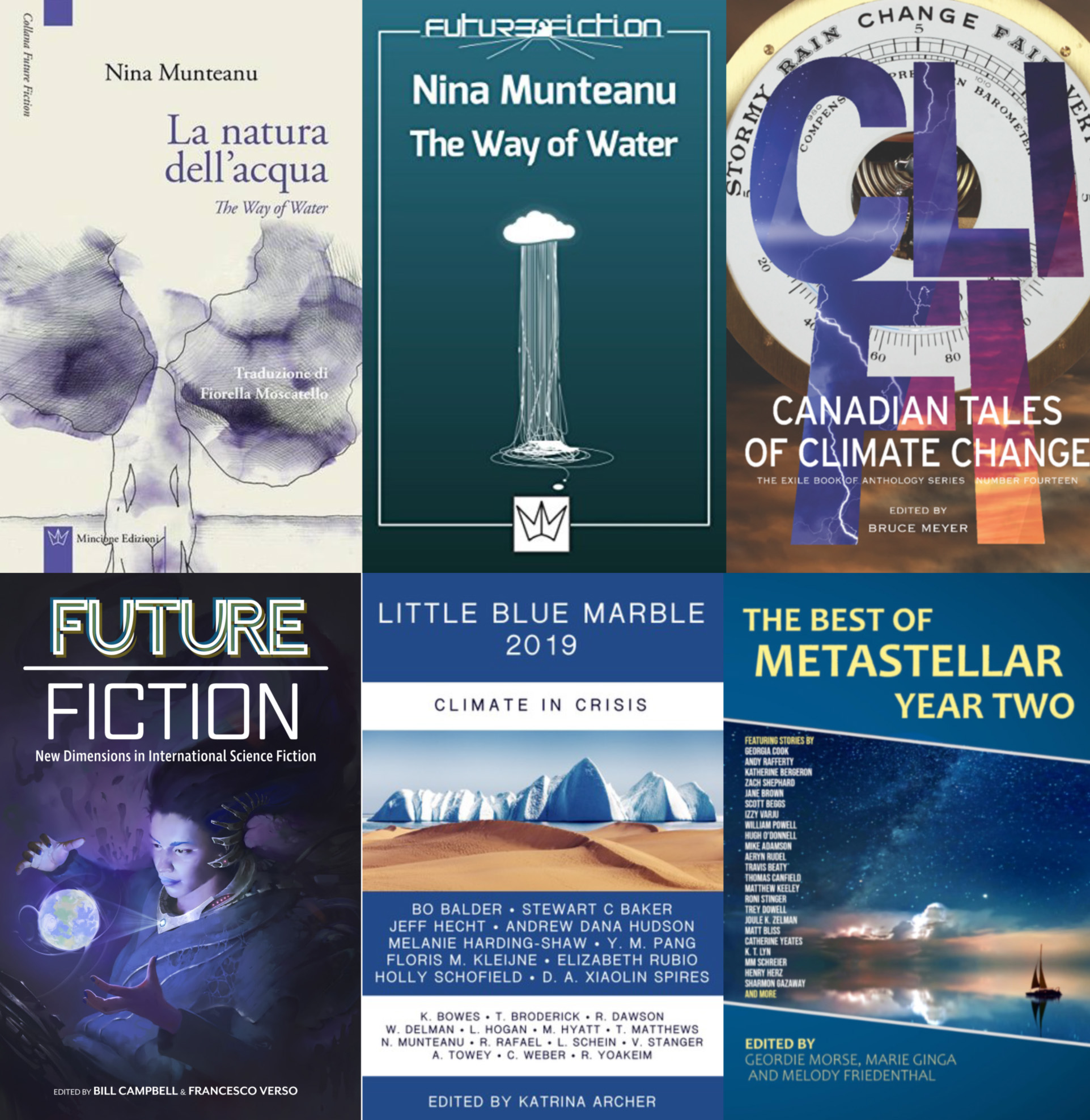
Various publications in which my short story “The Way of Water” has appeared

The Way of Water was first published in 2016 as a bilingual print book by Mincione Edizioni (Rome) in Italian (La natura dell’acqua, translated by Fiorella Moscatello), and English along with a recounting of what inspired it: The Story of Water (La storia dell’acqua). To date, The Way of Water has been published and republished eight times throughout the world and translated into Italian and German. Anthologies include, among others, Metastellar something, “Canadian Tales of Climate Change” (Exile Editions) edited by Bruce Meyer, “Future Fiction” Anthology (publisher), and “Climate in Crisis” (Little Blue Marble). I think this success is less a reflection of my writing than the immediacy and importance of the topic covered: growing water scarcity, its commodification, and its politicization.

This latest publication of The Way of Water (Der Weg des Wassers) in Nova 37 represents its eighth publication. Nova Magazin für spekulative Literatur is one of the most respected short story and essay magazines for science fiction in the German-speaking world. Most recently it was called “NOVA Science-Fiction,” and since issue 31 it has been “NOVA – Magazine for Speculative Literature”; the name change reflects the desire to broaden the readership and interest beyond the pure science fiction scene. The magazine’s website is now part of the larger pmachinery.de news feed.

“In a short story in which every word has its weight, Nina Munteanu manages to describe a dystopia with ecological, political, social and economic elements and Hilda’s reactions to her situation with a great intensity. To avoid thirst, Hilda ends up embracing an extreme idea, a last hope linked to water. The Way of Water is a story of the kind you hope is science fiction but you fear is not.”—Massimo Luciani

“In the Way to Water, Nina Munteanu pens her love letter to water, exulting it as a liquid that has semi-magical properties… The Way of Water evokes a sense of awareness about issues of access to water and about the dangers of imbalances in that access.”—Derek Newman-Stille, Speculating Canada

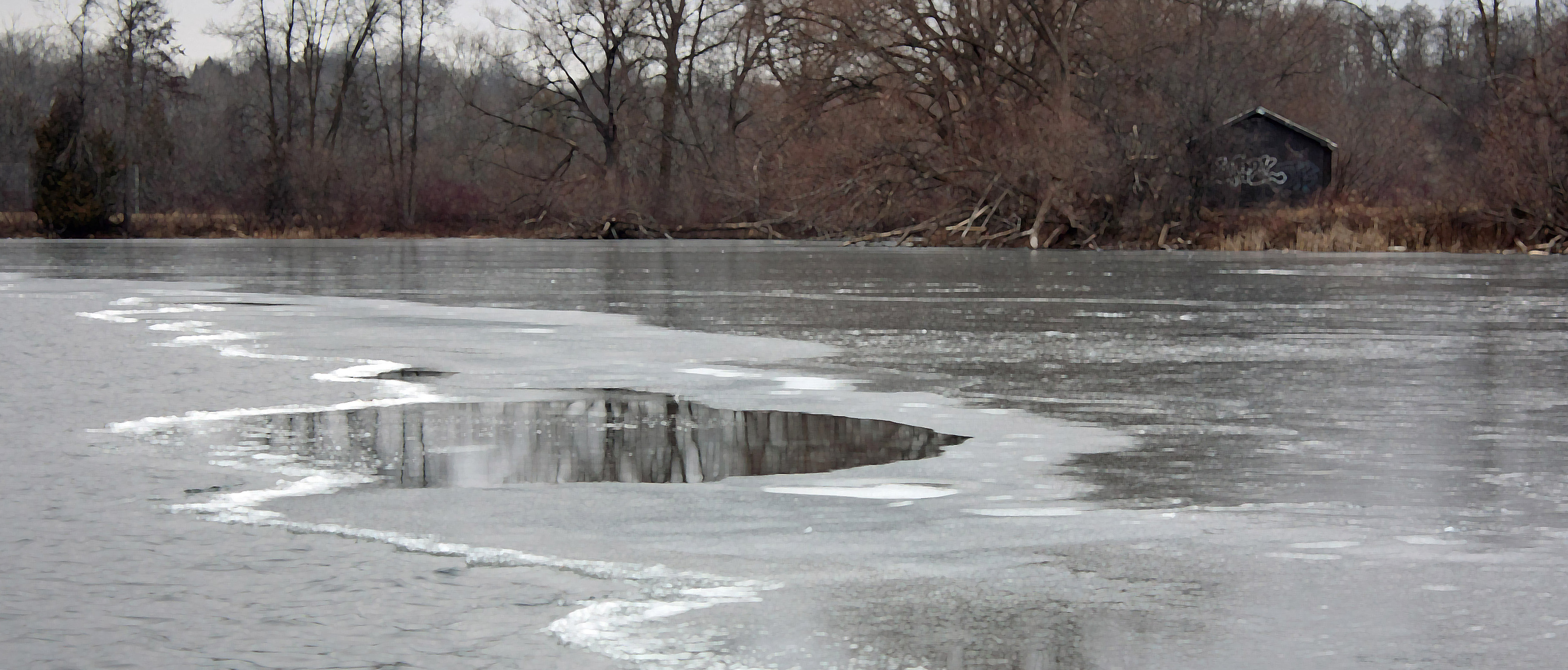
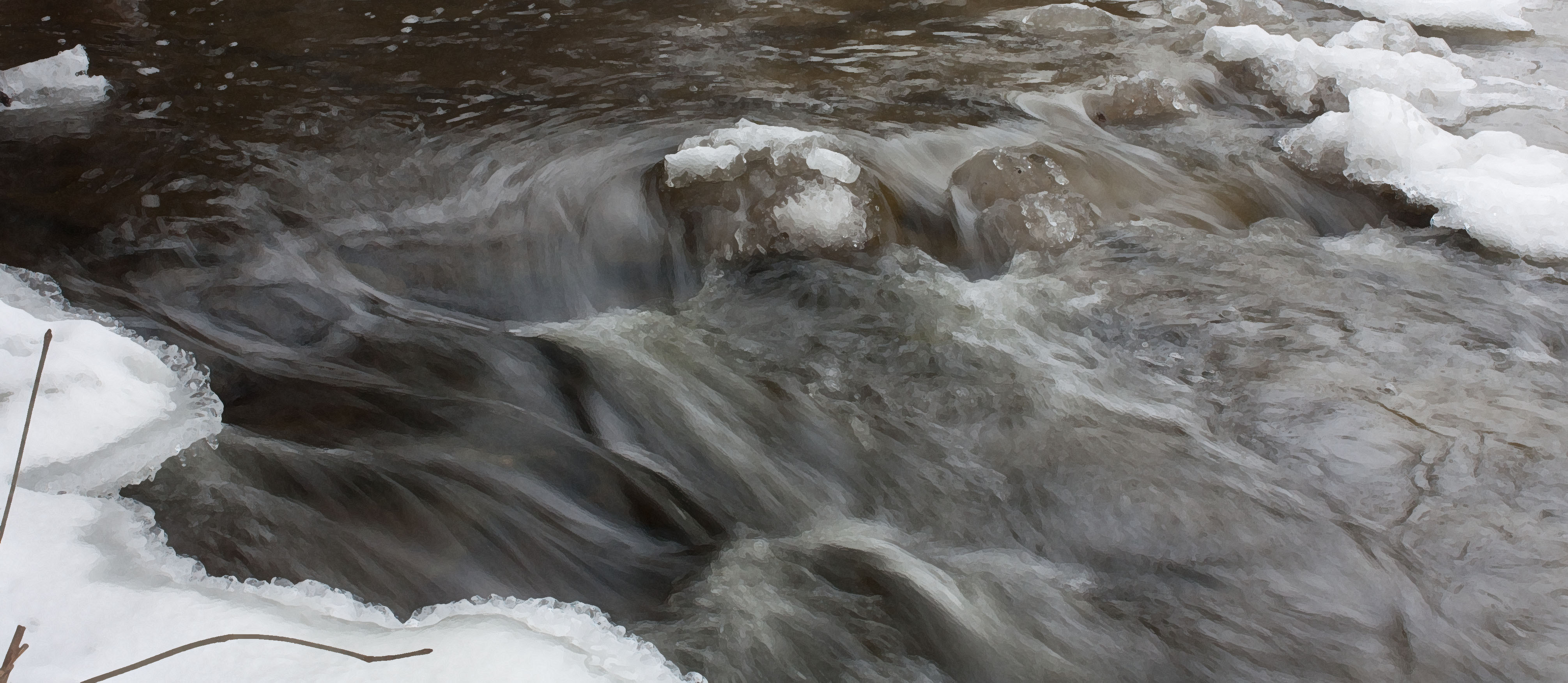
Ice edge on the Otonabee River, ON (photo and rendition by Nina Munteanu)

In her masters thesis published in November 2025 at the University of Graz, Austria, Seyma Yonar uses my short story The Way of Water, along with several others to explore and discuss the importance of eco-literature in establishing ecological awareness and ultimately ecological and sustainable action.

“The Way of Water is a strong eco-story that possesses many layers and elements that strengthen its narrative while encouraging readers to engage with its world…The notion what water constitutes the essence of life is the central theme of the story … Munteanu’s knowledge as a scientist enables her to create a convincing scientist protagonist whom she embeds into a powerful fictional story. Water, particularly in this eco-story acts not only as a symbolic entity but also as a body of force…the agency of water is presented as a dynamic, living entity, central to the narrative’s ecological themes.”

“Munteanu’s impactful storytelling highlights her significant contribution to Canadian literature, particularly through her engagement with pressing environmental issues and her commitment to fostering ecological awareness through fiction.”

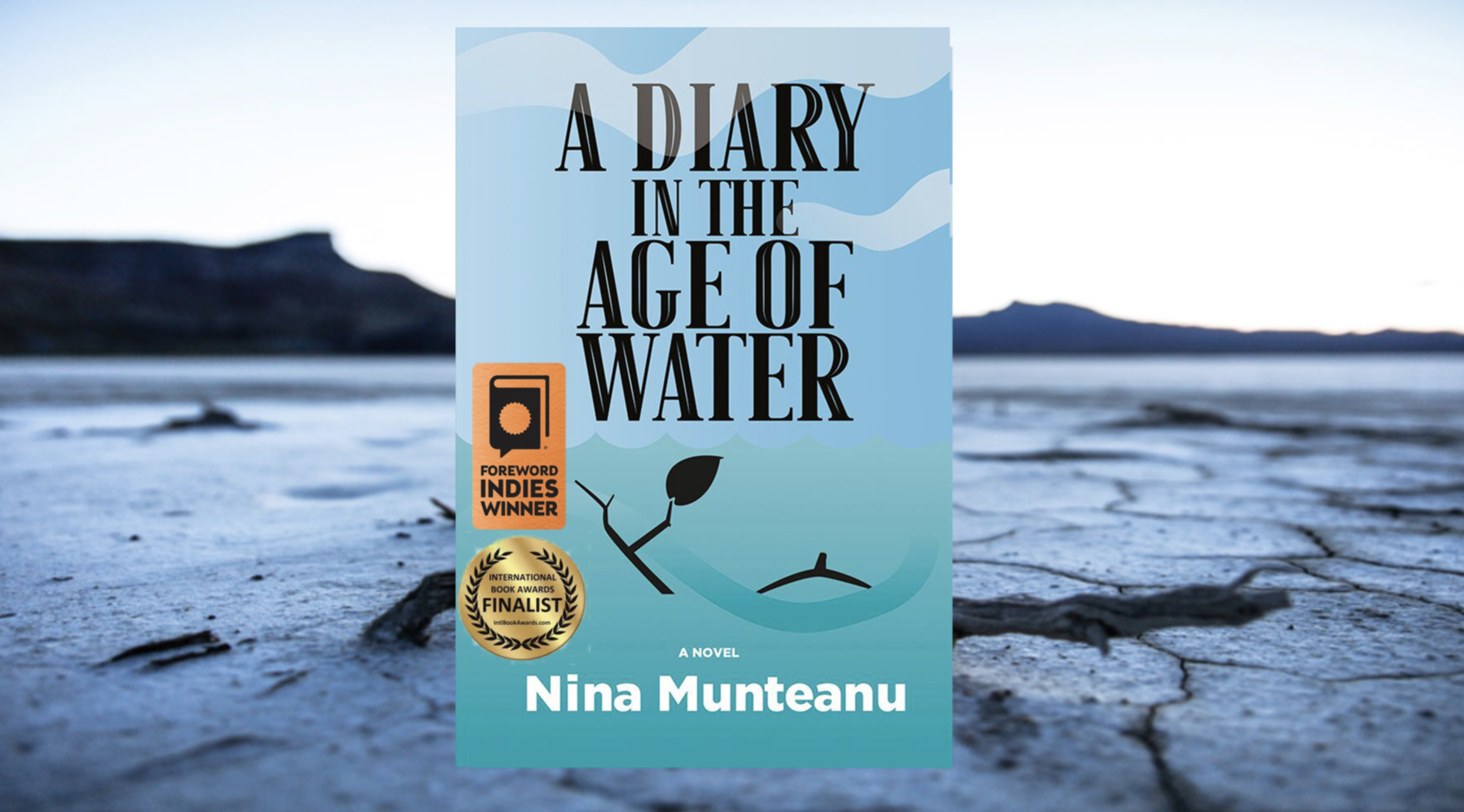
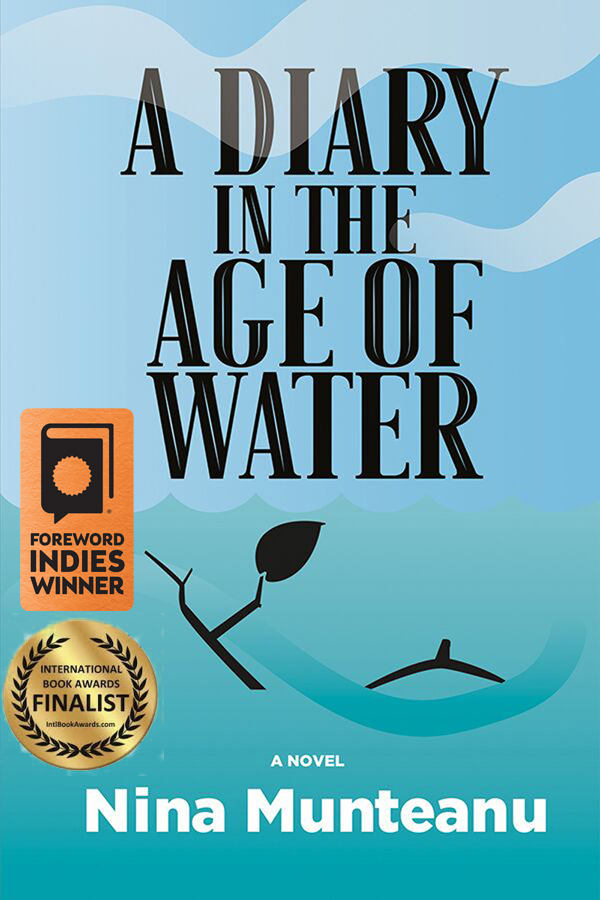
The Way of Water, in turn, inspired my dystopian novel A Diary in the Age of Water (Inanna Publications, 2020), which chronicles the lives of four generations of women and their relationship to water during a time of severe water restriction and calamitous climate change. The novel features the main character Hilda from The Way of Water and her limnologist mother; A Diary in the Age of Water is essentially the mother’s diary embedded in a larger story. Through a series of entries, the diarist reflects on the subtle though catastrophic occurrences that will eventually lead to humanity’s demise.

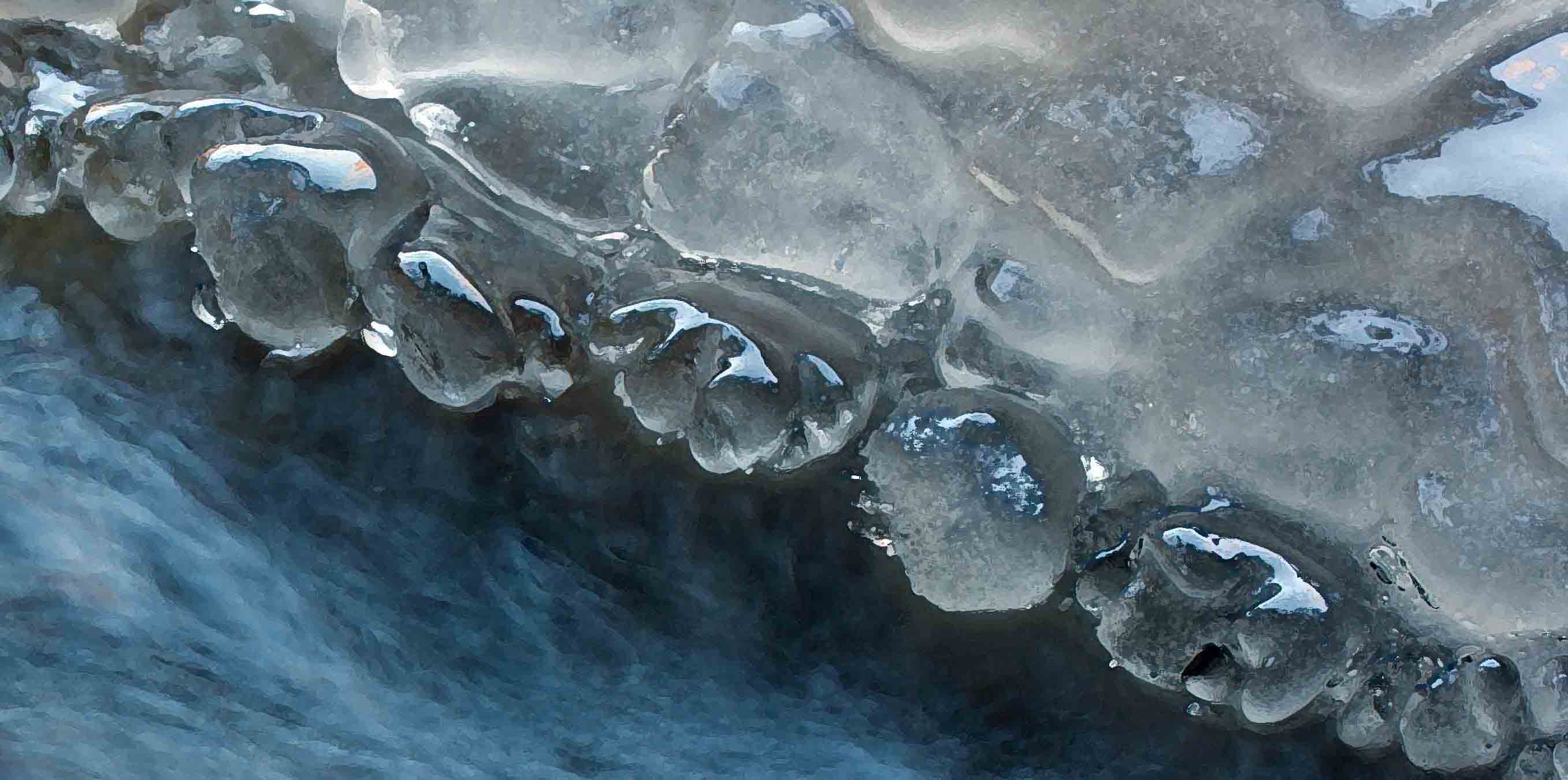
Ice pearls forming in Jackson Creek, ON (photo and rendition by Nina Munteanu)

References:

Munteanu, Nina. “The Way of Water” Mincione Edizioni, Rome. 113pp.

Munteanu, Nina. “A Diary in the Age of Water.” Inanna Publications, Toronto, ON. 328pp.

Meyer, Bruce. 2017. “Introduction to “Cli Fi: Canadian Tales of Climate Change“

Fi: Anthology #14. Edited by Bruce Meyer. Exile Editions, Toronto.304pp.

Yonar, Seyma. 2025. “Short Texts—Long Term Effects: The Canadian Eco-Story.” Masters Thesis, University of Graz, Austria. 70pp.

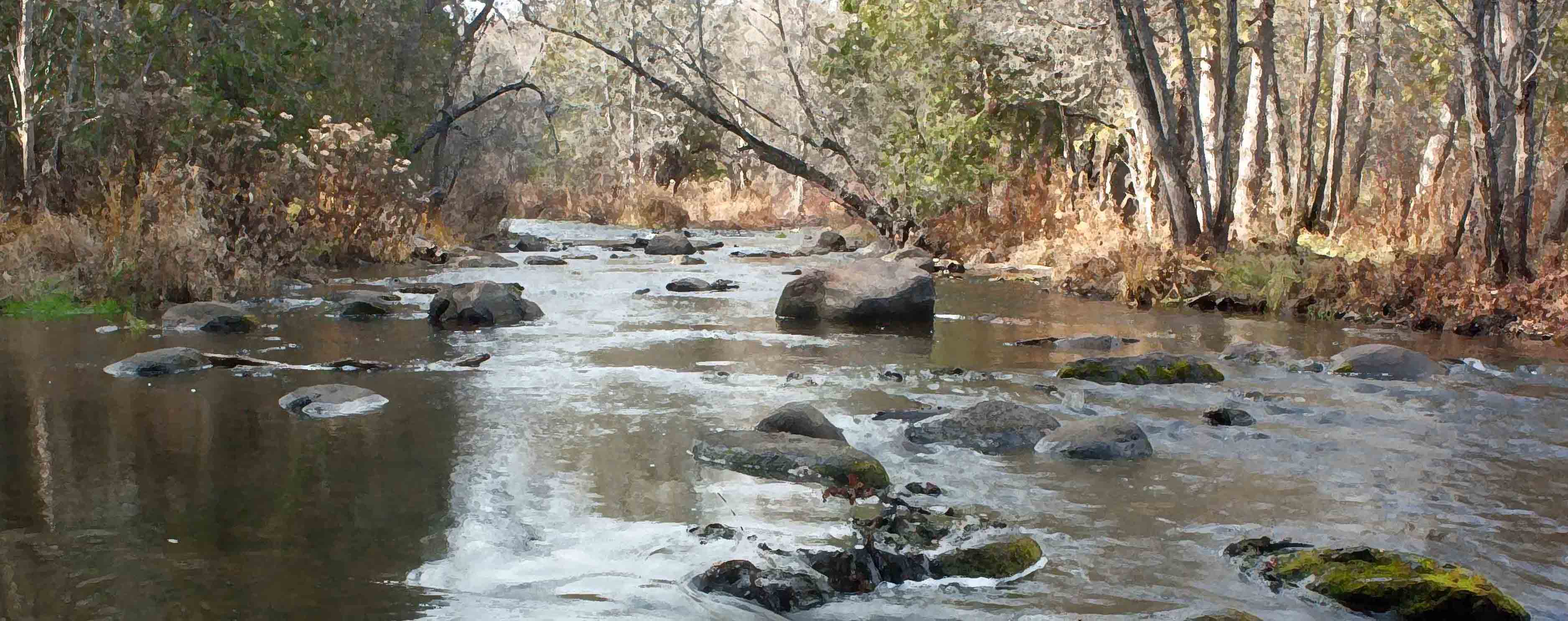
Jackson Creek in the fall, ON (photo and rendition by Nina Munteanu)

Nina Munteanu is an award-winning novelist and short story writer of eco-fiction, science fiction and fantasy. She also has three writing guides out: The Fiction Writer; The Journal Writer; and The Ecology of Writing and teaches fiction writing and technical writing at university and online. Check the Publications page on this site for a summary of what she has out there. Nina teaches writing at the University of Toronto and has been coaching fiction and non-fiction authors for over 20 years. You can find Nina’s short podcasts on writing on YouTube. Check out this site for more author advice from how to write a synopsis to finding your muse and the art and science of writing. For more on her work as a limnologist and ecologist, see The Meaning of Water.

“Gaia’s Revolution”, Life after Capitalism: A Canadian Story…

A fanatical deep-ecologist, Monica Schlange, harnesses two orphans in her bid to reshape humanity and its place in the natural world.

My upcoming book Gaia’s Revolution (Book 1 of The Icaria Trilogy by Dragon Moon Press) explores a collapsing capitalist society in Canada through ravages of climate change and a failing technology. The story is told through the lives of ambitious twin brothers Eric—a gifted engineer—and Damien Vogel—a brilliant scientist and deep ecologist*—and the woman who plays them like chess pieces in her gambit to ‘rule the world.’

The brothers meet at Treffpunkt, a café near Humboldt University in Berlin, nursing Kellerbiers over a late lunch of Einsbein mit Sauerkraut. They argue ideology and reform. Canada represents an ideal canvas for revolution, argues Eric. Damien is puzzled by this. To him Canada represents a quietly reposed nation of polite intellectuals who accept a healthy multicultural society and whose practical leaders are connected with their people. Not a restive rabble ripe for change.

As if reading his brother’s mind, Eric replies:

“Because it’s a huge nation with a lot of space and few people,” Eric argues. “Did you know that Canada holds on average only 4 people per square kilometer? Germany stuffs 240 people in the same area. And China, which is virtually the same size as Canada, holds 153 people per square kilometer.” He picks up Walden Two and waves it at Damien. “Canada is a perfect place to start these [Walden Two colonies called Icarias*]. And, with global warming, we could settle in the boreal.” He then slides the book back in his pocket and leans back, eyes sparkling with purpose. “But the real reason to start a revolution there is because, like you, Canadians are naïve. Even their leaders. And this is because, unlike the rest of the world, they are still asleep…

“Climate is not our enemy, Dame; it’s our friend. Climate is our fierce archangel of change. And let’s not forget that ‘crisis is opportunity…” … He grins, self-pleased, like a wolf in a hen house. Then he practically snarls out, “We must first destroy before we can create. We must be unruly like climate. We must be relentless like climate. We must ride that wave before we can become the wave, Bruder. And then by being that wave, we change the world.”  

Pine cedar forest in Ontario (photo and rendition by Nina Munteanu)

The brothers escape the growing racial violence of Berlin, to ‘peaceful’ Canada in a rivalry to control the evolution of the human race. Years later, Eric Vogel, who has created a niche for himself in the technocratic government*, sits in the Canadian prime minister’s office and imagines what a post-capitalist world will look like and how his twin brother Damien—left behind in Germany—would disagree with his vision:

Damien too easily prescribes to the old leftist shibboleth of Nature being the answer to everything and Market being evil. His deep ecology utopia would spring from an atavistic rejection of modern life, a return to ‘the ancient farm.’ But how that fantasy could be achieved without a drastic population reduction is beyond his brother’s imagination. Damien fetishizes the natural world. Just like he does their mother. The naïve fool is a blind romantic, refusing to see reality right in front of him: that Nature is ultimately cruel, cold, and preoccupied with its own survival. Just like their mother.

First snow in an Ontario marsh (photo and rendition by Nina Munteanu)

Each brother plans to create a new humanity: one to control through gene manipulation and behaviour engineering; the other to empower through biotechnology and transhumanist AI. The warring brothers end up in Canada and set off a violent revolution that destroys the Canadian technocratic government and whose weapons ultimately risk the survival of humanity. Deep ecologist Monica Schlange snares the brothers in her gambit to reshape humanity and its place in the natural world. Three orphaned children, caught in the web of intrigue and violence, will ultimately determine the direction of humanity by introducing the first veemelds (people who can communicate with machines), a new environmental disease (Darwin), and a new set of rules neither brother envisioned.

The Icaria Trilogy by Nina Munteanu

You can pre-order the ebook of Gaia’s Revolution on Amazon. Release date is March 10, 2026. The print version will release soon after. Book 2 (Angel of Chaos) and Book 3 (Darwin’s Paradox) of The Icaria Trilogy are already available in both ebook and print form.

Birch trees in a winter marsh, ON (photo and rendition by Nina Munteanu)

References:

Munteanu, Nina. 2026. “Gaia’s Revolution, Part 1 of Icaria Trilogy.” Dragon Moon Press, Calgary, AB. 369 pp.

Munteanu, Nina. 2010. “Angel of Chaos, Part 2 of Icaria Trilogy.” Dragon Moon Press, Calgary, AB. 518 pp.

Munteanu, Nina. 2007. “Darwin’s Paradox, Part 3 of Icaria Trilogy.” Dragon Moon Press, Calgary, AB. 294 pp.

Sessions, George, Bill Devall. 2000. “Deep Ecology: Living as if Nature Mattered.” Gibbs Smith. 267pp.

Skinner, B.F. 1948. “Walden Two” The Macmillan Company, New York. 301pp.

Jackson Creek in the fall, ON (photo and rendition by Nina Munteanu)

Terminology:

*Deep Ecology: An environmental philosophy and social movement advocating that all living beings have intrinsic value, independent of their utility to human needs. Coined by Arne Naess in 1972, it promotes a holistic, ecocentric worldview—often termed “ecosophy”—that demands radical, structural changes to human society to prioritize nature’s flourishing.

*Icaria: the name of Étienne Cabet’s utopia. Cabet was a French lawyer in Dijon, who published his novel Voyage en Icarie in 1839. The novel was a sort of manifesto-blueprint of utopian socialism, with elements of communism (abolished private property and individual enterprise), influenced by Fourierist and Owenite thinking. Key elements, such as the four-hour work day, are reflected in B.F. Skinner’s Walden Two. The novel explores a society in which capitalist production is replaced by workers’ cooperatives with a focus on small communities.

*Technocracy: A form of government in which the decision-maker(s) are selected based on their expertise in a given area; any portion of a bureaucracy run by technologists. Technocracies control society or industry through an elite of technical experts. The term was initially used to signify the application of the scientific method to solving social problems.

Nina Munteanu is an award-winning novelist and short story writer of eco-fiction, science fiction and fantasy. She also has three writing guides out: The Fiction Writer; The Journal Writer; and The Ecology of Writing and teaches fiction writing and technical writing at university and online. Check the Publications page on this site for a summary of what she has out there. Nina teaches writing at the University of Toronto and has been coaching fiction and non-fiction authors for over 20 years. You can find Nina’s short podcasts on writing on YouTube. Check out this site for more author advice from how to write a synopsis to finding your muse and the art and science of writing.

“Gaia’s Revolution”, Life After Capitalism: Will the Environment—And We Along With It—Survive?…

“Bourgeois society stands at the crossroads, either transition to socialism or regression into barbarism.”—Rosa Luxemburg, 1915

I wrote my first novel in 1969 when I was fifteen. Caged in World was a hundred-page speculative story about a world that had moved “inside” to escape the ravages of a post climate-change environment. It would later become Book 2 of The Icaria Trilogy. I was already disillusioned with my world. I saw how corporations and governments and society in general—individuals around me—‘othered’ the environment by either treating it with disrespect and apathy or outright ignoring it in a kind of torpor of obliviousness. As though it didn’t exist.

I remember being chastised by a school teacher for thinking globally about what was happening to the planet at our hands: worldwide deforestation (e.g., clearcutting the old-growth forests of Canada), infilling saltwater and freshwater marshes, massive use of pesticides and fertilizers, contamination of lakes, unregulated mining and toxic pollution, and ultimately climate change. Stick to local concerns, he advised me; recycling and such.

I remember wondering if I was just being weird. That my odd sensibility for the planet-entire was just a nina-thing. I prayed that I was not alone and it wasn’t just a nina-thing.

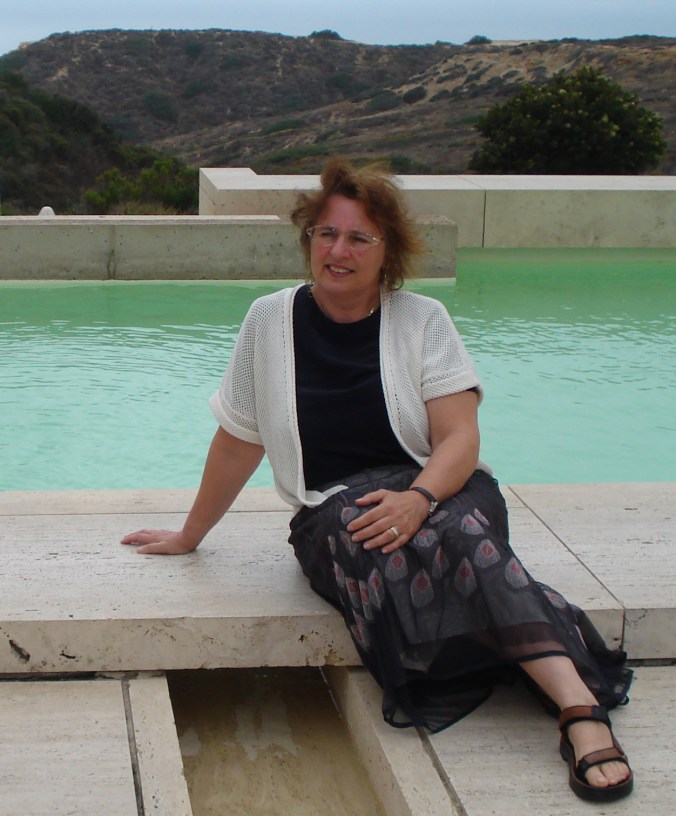
(Photo: Nina Munteanu, Salk Institute, California)

For a description of how the books of the trilogy came to be (for instance, they were published in backward order!) see my article entitled “Nina Munteanu Reflects on Her Eco-Fiction Journey at Orchard Park Secondary School”.

Throughout high school and university, I read scientific papers, news articles and books on revolution. I became a student of climate change long before the term entered the zeitgeist. I studied industrial capitalism and its roots in neoliberalism and colonialism. I noted how the post-war expansion of capitalism shifted from Fordist mass production to flexible automation, technology and AI. I saw the rise of multinational corporations, income inequality, and the commodification of everything—from water to human beings (Foucault’s homo economicus).

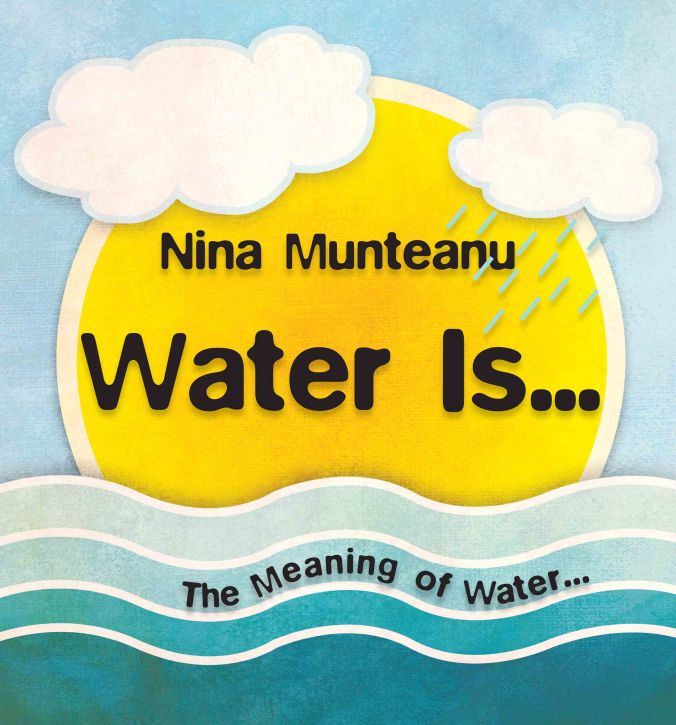
I pursued a university degree in ecology and limnology to study and help protect the environment and educate industry and their governments in the process. I became an expert on water. See my book Water Is…The Meaning of Water, which celebrates water from twelve perspectives (and got a shout out from Margaret Atwood!).

I soon concluded that a hegemony that follows the economic system of late capitalism inevitably commodifies and ‘others’ with ruthless purpose. Once something (or someone) is commodified, they are given a finite value and purpose outside their own existence. They become an object, a symbol to use and trade. They become a resource to manipulate, exchange, and dispose of with impunity. And through this surrender to utility, they become ‘othered.’ The consumer. The trees of the forest. Water. Homo sacer*. Each has a role to play in the late capitalist narrative of digital abundance and physical scarcity.

Capitalism hasn’t been kind to the environment. Economic pundits and sociologists insist that Capitalism is devolving. But what will replace it? Cloud capital? Technofeudalism? Something else?

Deep Ecology* & Gaia’s Revolution

The Icaria Trilogy (Dragon Moon Press)

My three Icaria novels—starting with Gaia’s Revolution, (the first of The Icaria Trilogy, releasing March 10, 2026, by Dragon Moon Press)—chronicle the collapse of a capitalist society in Canada as climate change, water shortages, habitat destruction, plague and a failing technology devastate the Canadian population.

Gaia’s Revolution (Book 1 of The Icaria Trilogy) explores a transition in Canada from semi-socialized capitalist system to a technocratic* meritocracy of technologists and scientists. Triggered by catastrophic environmental and sociological tipping points and following violent revolution, a dictatorship of deep ecologists* called Gaians seize power. By the end of the book, enclosed cities called Icarias* now populate North America. Separated from their environment, humans now live inside domes protecting them from a hostile and toxic environment.

In truth, the deep ecologists are keeping people “inside” not to protect humanity from a toxic wasteland but to protect the environment from a toxic humanity.

How realistic is this vision? Well, it is science fiction, after all, and though it takes liberties with its narrative, it is science-based and ultimately draws on precedent. As Margaret Atwood so astutely attested of her cautionary SF book The Handmaid’s Tale: “I didn’t put in anything that we haven’t already done, we’re not already doing, we’re seriously trying to do, coupled with trends that are already in progress.”

Science fiction is itself powerful metaphor; it is the fiction of political and social allegory or satire and makes astute social commentary about a world and civilization: how it has come to be, how it works—or doesn’t—and how it may evolve.

So, it is visionary and predictive? I prefer to think as Ray Bradbury:

“The function of science fiction is not only to predict the future, but to prevent it.”–Ray Bradbury

Jackson Creek in winter, ON (photo and rendition by Nina Munteanu)

References:

Angus, Ian. 1012. “The Spectre of 21st Century Barbarism.” Climate & Capitalism, August 20, 2012.

Atwood, Margaret. 2004. “The Handmaid’s Tale and Oryx and Crake ‘In Context'”. PMLA. 119 (3): 513–517.

Atwood, Margaret. 2018. “Margaret Atwood on How She Came to Write The Handmaid’s Tale”. Literary Hub. April 25, 2018.

Bradbury, Ray. 1991. “Yestermorrow: Obvious Answers to Impossible Futures” and “Beyond 1984: The People Machines” by Ray Bradbury, dated 1982, Page 155, Joshua Odell Editions: Capra Press, Santa Barbara, California.

Foucault, Michel. 2010. “The Birth of Biopolitics (Naissance de la biopolitique): Lectures at the Collège de France, 1978-1979.” Picador. 368pp.

Luxemburg, Rosa. 1915. “The Junius Pamphlet: The Crisis in the German Democracy”, Marxist.org.

Munteanu, Nina. 2026. “Gaia’s Revolution, Part 1 of Icaria Trilogy.” Dragon Moon Press, Calgary, AB. 369 pp.

Munteanu, Nina. 2010. “Angel of Chaos, Part 2 of Icaria Trilogy.” Dragon Moon Press, Calgary, AB. 518 pp.

Munteanu, Nina. 2007. “Darwin’s Paradox, Part 3 of Icaria Trilogy.” Dragon Moon Press, Calgary, AB. 294 pp.

Neuman, Sally. 2006. “‘Just a Backlash’: Margaret Atwood, Feminism, and The Handmaid’s Tale“. University of Toronto Quarterly. 75 (3): 857–868.

Sessions, George, Bill Devall. 2000. “Deep Ecology: Living as if Nature Mattered.” Gibbs Smith. 267pp.

Skinner, B.F. 1948. “Walden Two” The Macmillan Company, New York. 301pp.

Streeck, Wolfgang. 2014. “How Will Capitalism End?” New Left Review 2 (87): 47p.

Terminology:

*Deep Ecology: An environmental philosophy and social movement advocating that all living beings have intrinsic value, independent of their utility to human needs. Coined by Arne Næss in 1972, it promotes a holistic, ecocentric worldview—often termed “ecosophy”—that demands radical, structural changes to human society to prioritize nature’s flourishing.

*Homo sacer: a figure from Roman law denoting a person excluded from society who is outside human law (can be killed) and divine law (cannot be sacrificed). The term represents “bare life”: stripped of political rights, legal protection, and social value. Philosopher Giorgo Agamben popularized the term to describe individuals excluded from the political community, such as refugees, stateless persons, or camp detainees. The term illustrates the power of a sovereign in deciding which lives are worthy of protection and which are not.

*Icaria: the name of Étienne Cabet’s utopia. Cabet was a French lawyer in Dijon, who published his novel Voyage en Icarie in 1839. The novel was a sort of manifesto-blueprint of utopian socialism, with elements of communism (abolished private property and individual enterprise), influenced by Fourierist and Owenite thinking. Key elements, such as the four-hour work day, are reflected in B.F. Skinner’s Walden Two. Cabet’s novel explores a society in which capitalist production is replaced by workers’ cooperatives with a focus on small communities.

*Letzte Generation: a prominent European climate activist group, founded in 2021, known for its acts of civil disobedience—such as roadblocks, defacing art, and vandalizing structures—to pressure governments on climate action. The term was chosen because they considered themselves to be the last generation before tipping points in the earth’s climate system would be reached. They are mostly active in Germany, Italy, Poland and Canada. In Germany, they have faced accusations of forming a criminal organization, leading to police raids.

*Technocracy: A form of government in which the decision-maker(s) are selected based on their expertise in a given area; any portion of a bureaucracy run by technologists. Technocracies control society or industry through an elite of technical experts. The term was initially used to signify the application of the scientific method to solving social problems.

Nina Munteanu is an award-winning novelist and short story writer of eco-fiction, science fiction and fantasy. She also has three writing guides out: The Fiction Writer; The Journal Writer; and The Ecology of Writing and teaches fiction writing and technical writing at university and online. Check the Publications page on this site for a summary of what she has out there. Nina teaches writing at the University of Toronto and has been coaching fiction and non-fiction authors for over 20 years. You can find Nina’s short podcasts on writing on YouTube. Check out this site for more author advice from how to write a synopsis to finding your muse and the art and science of writing.

Alien Landscape Reprinted in Your Sudden Flash

My flash fiction story “Alien Landscape” was recently accepted by the online magazine Sudden Flash and released on December 30, 2025—making it my last story published that year.  The story follows Blika who crash lands in potential hostile territory of an alien planet after responding to a distress call. What Blika discovers is not what she expected…

You can read Alien Landscape on Your Sudden Flash.

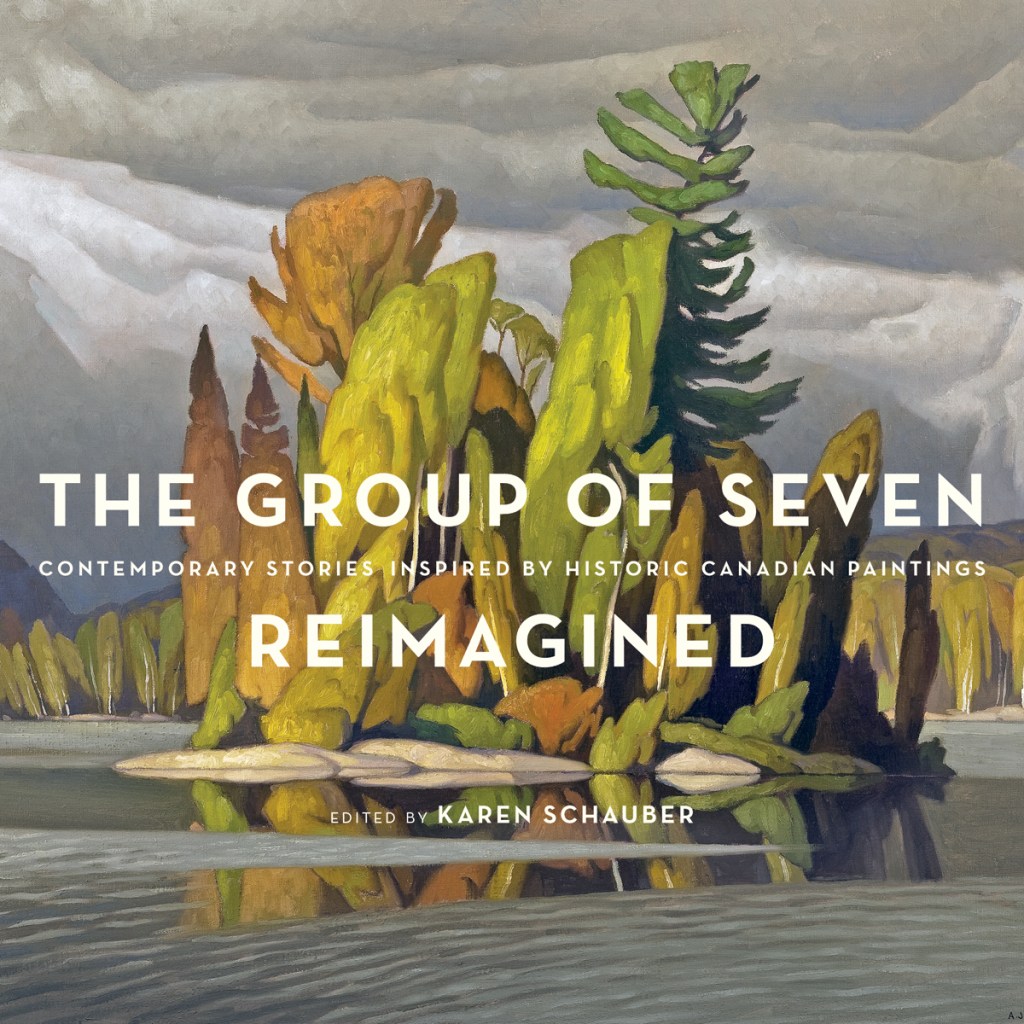
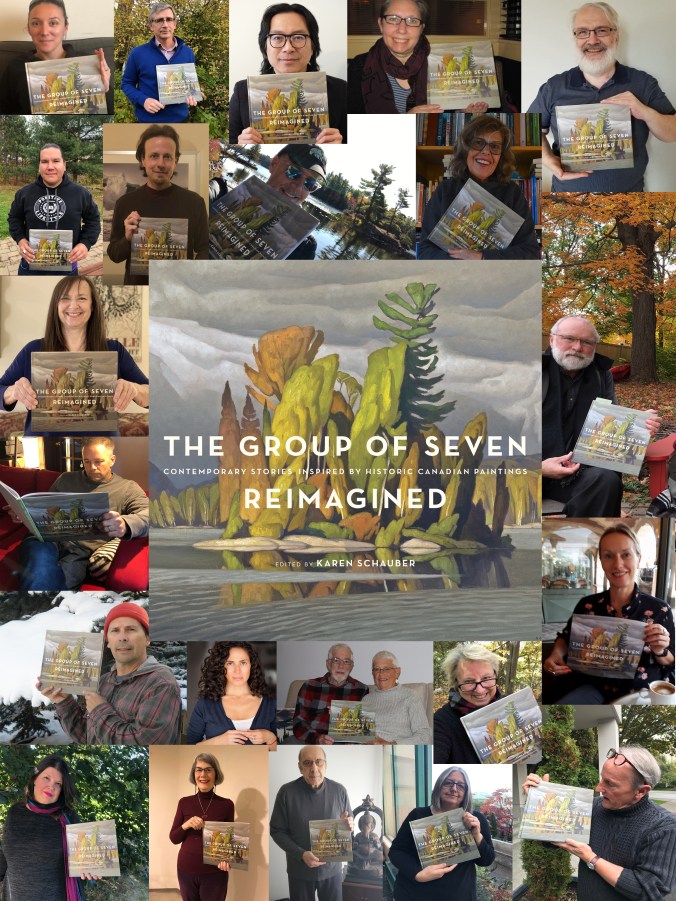
“Alien Landscape” first appeared in the 2019 celebratory ekphrastic anthology, edited by Karen Schauber and published by Heritage House: “The Group of Seven Reimagined.” The anthology celebrated the centenary of the formation of the Canadian iconic Group of Seven artists. Check my article which describes more about the Group of Seven movement. The Group of Seven movement “dragged Canadian art into the modern age,” writes Christine Sismondo of The Toronto Star in her review of “The Group of Seven Reimagined.” Sismondo astutely identifies and encapsulates the resonant meaning of the Group of Seven, then and now:

“A hundred years ago, seven Canadian painters got together and decided to start a movement. It was born out of the horrors of war. Now, the potential horrors of climate change are giving the movement an unexpected new life and meaning.”

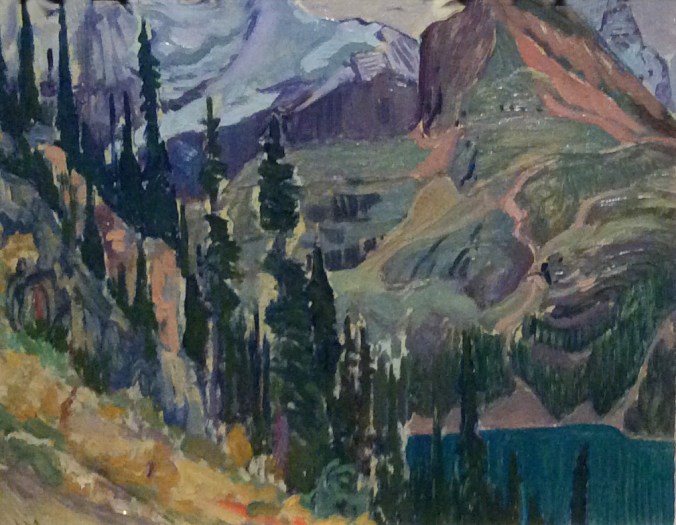
I joined twenty other flash fiction authors who linked our flash fiction to one the Group of Seven’s works. My “Alien Landscape” was inspired by J.E.H. MacDonald’s Lake O’Hara.

Lake O’Hara by J.E.H. MacDonald

Karen had invited me to contribute a piece of flash fiction (a piece of less than 500 words), inspired by a Group of Seven piece I would choose to inspire me. I took my time; this would be the first flash fiction piece I would write. It was an art form I was not familiar with, but was happy to experiment with. But I waited too long to decide and when I finally submitted my first choice for a painting, Karen informed me that it had already been selected by another writer. To my great frustration, this went on for a few pieces.

I finally took a short trip to the McMichael Gallery in Kleinburg to find my piece. In the main hall, I passed the pieces already claimed by my twenty colleagues; I sighed that I had waited so long. By chance, a large selection of artwork by J.E.H. MacDonald—one of the founders of the group—was currently on exhibit on the second floor. That was where I first saw the original oil sketch called Lake O’Hara by MacDonald. It was perfect! My story “Alien Landscape” emerged from the sketch like they had always belonged together.

Christine Sismondo of The Toronto Star wrote: “while you might expect a lot of peaceful communing with nature on the page, a surprising number of the written pieces are actually dark tales of conflict and danger—forest fires, mining accidents, boat thieves and murderous plots in the woods.

Nina Munteanu, a Canadian ecologist and science-fiction writer, takes J.E.H. MacDonald’s Lake O’Hara in a novel direction in ‘Alien Landscape’ by reimagining it as a refuge for a space heroine fleeing a world that had destroyed nature in pursuit of progress and ended in post-apocalyptic chaos.”

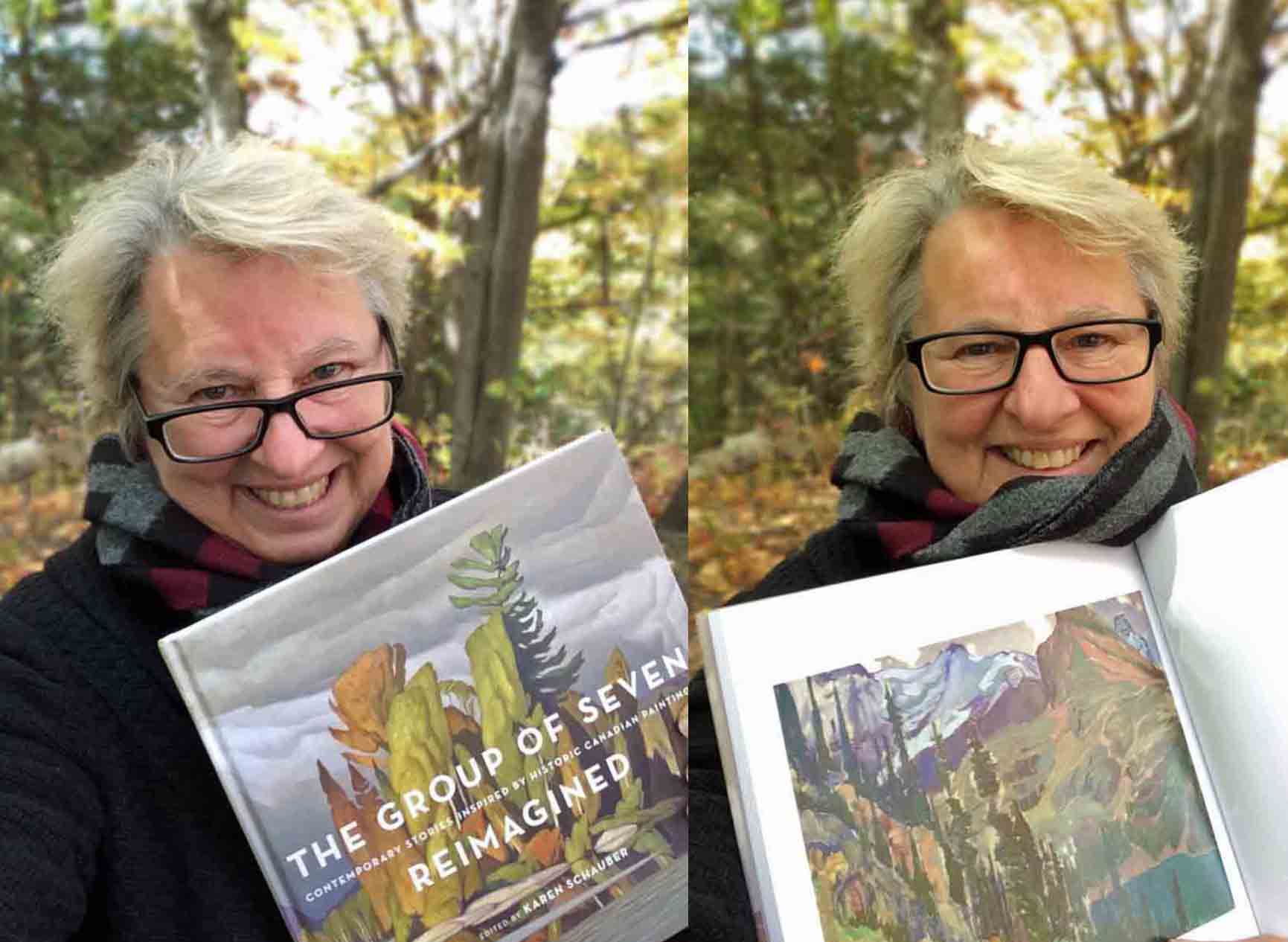
Nina Munteanu with cover and selected Group of Seven art to write about

Nina Munteanu is an award-winning novelist and short story writer of eco-fiction, science fiction and fantasy. She also has three writing guides out: The Fiction Writer; The Journal Writer; and The Ecology of Writing and teaches fiction writing and technical writing at university and online. Check the Publications page on this site for a summary of what she has out there. Nina teaches writing at the University of Toronto and has been coaching fiction and non-fiction authors for over 20 years. You can find Nina’s short podcasts on writing on YouTube. Check out this site for more author advice from how to write a synopsis to finding your muse and the art and science of writing.

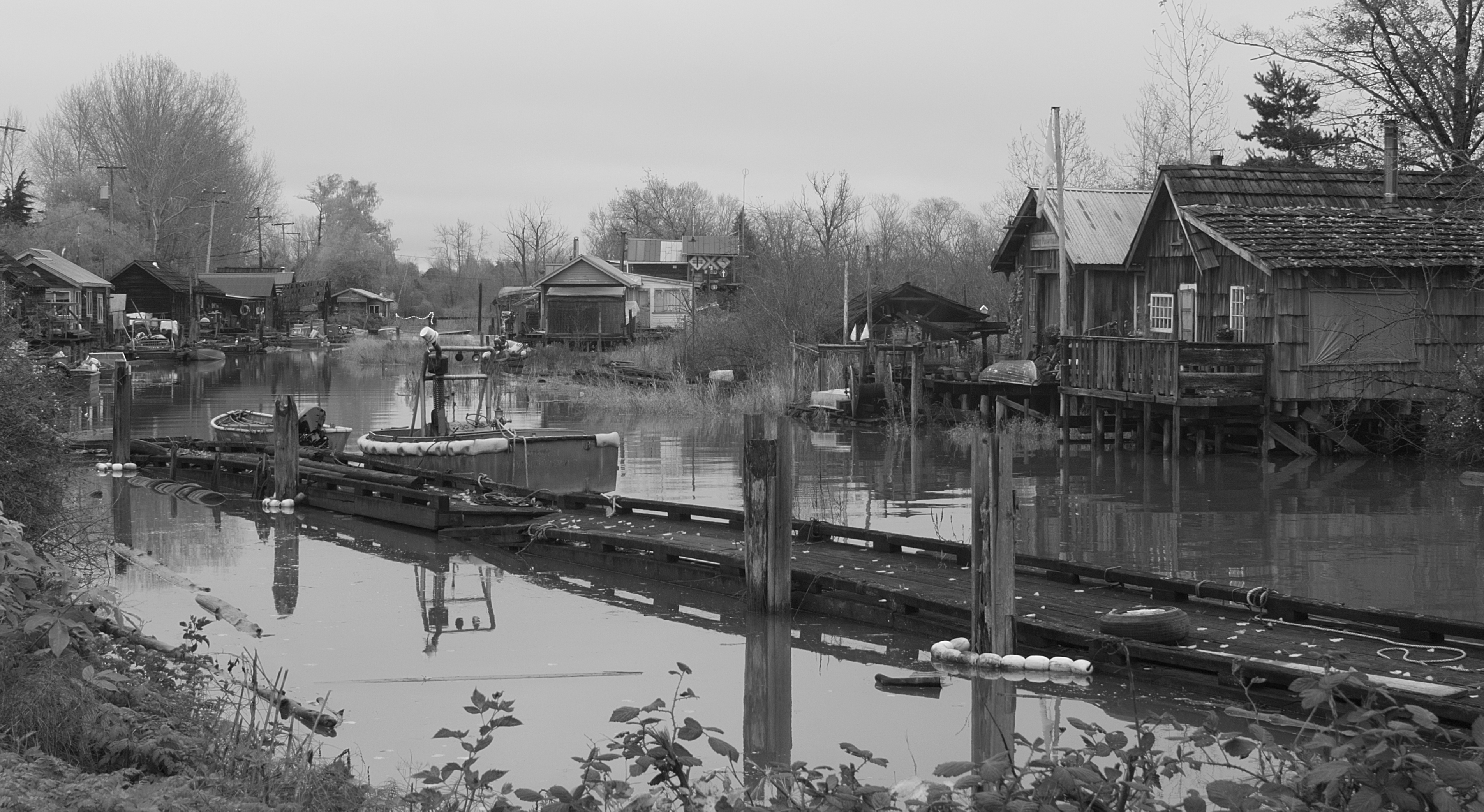
The Unique Community of Finn Slough: Charmed or Doomed?

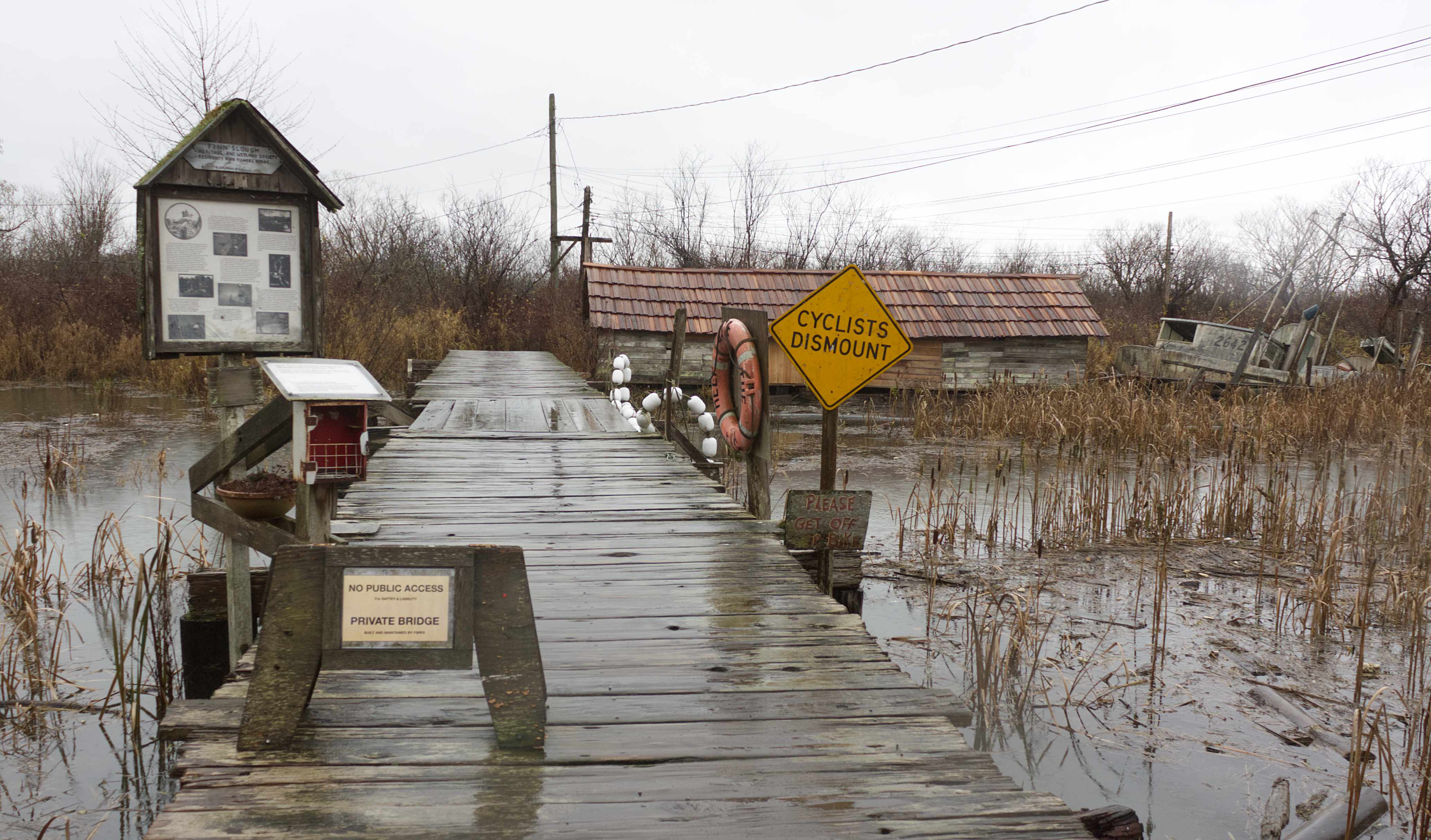
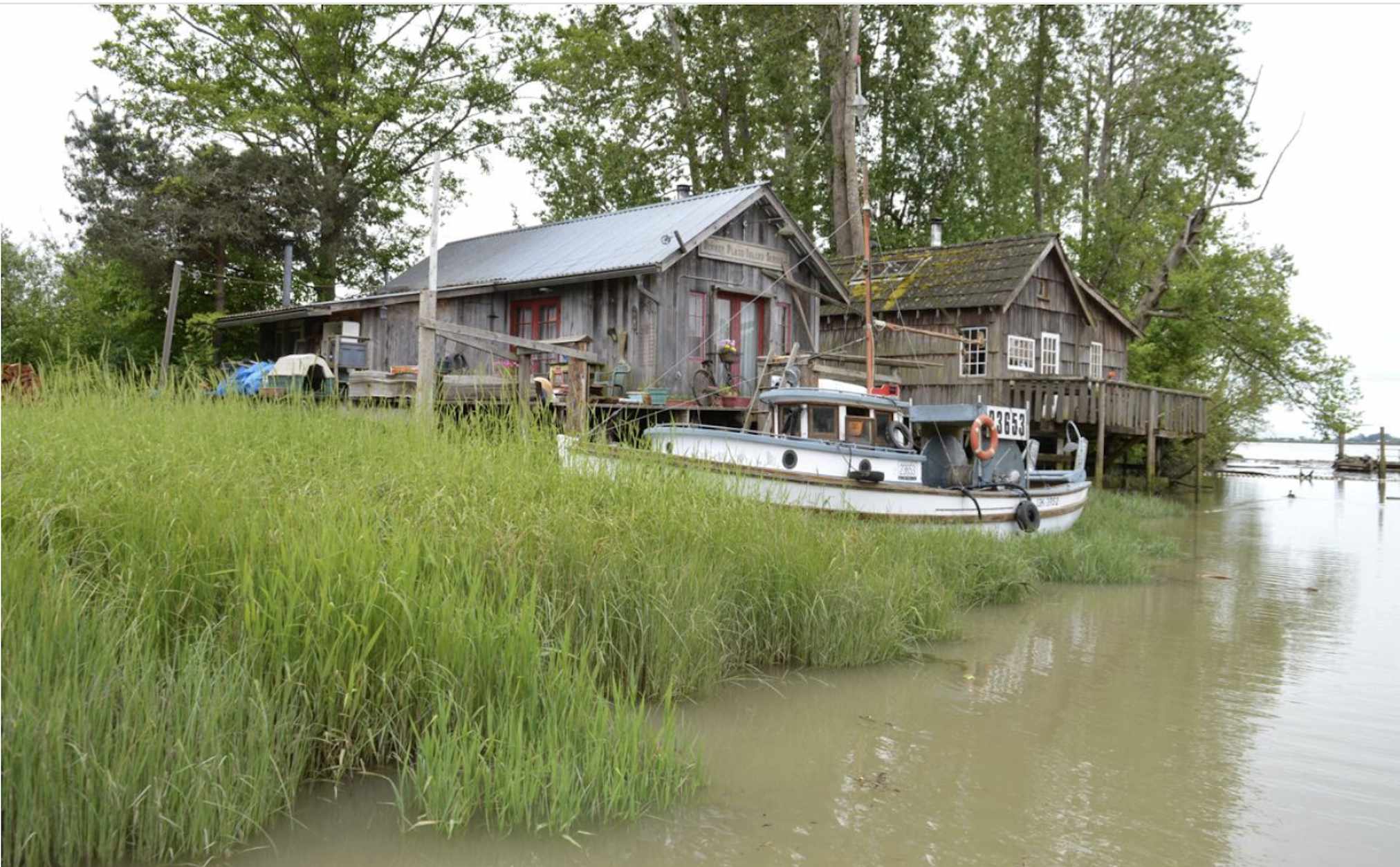
Finn Slough village, BC (photo by Nina Munteanu)

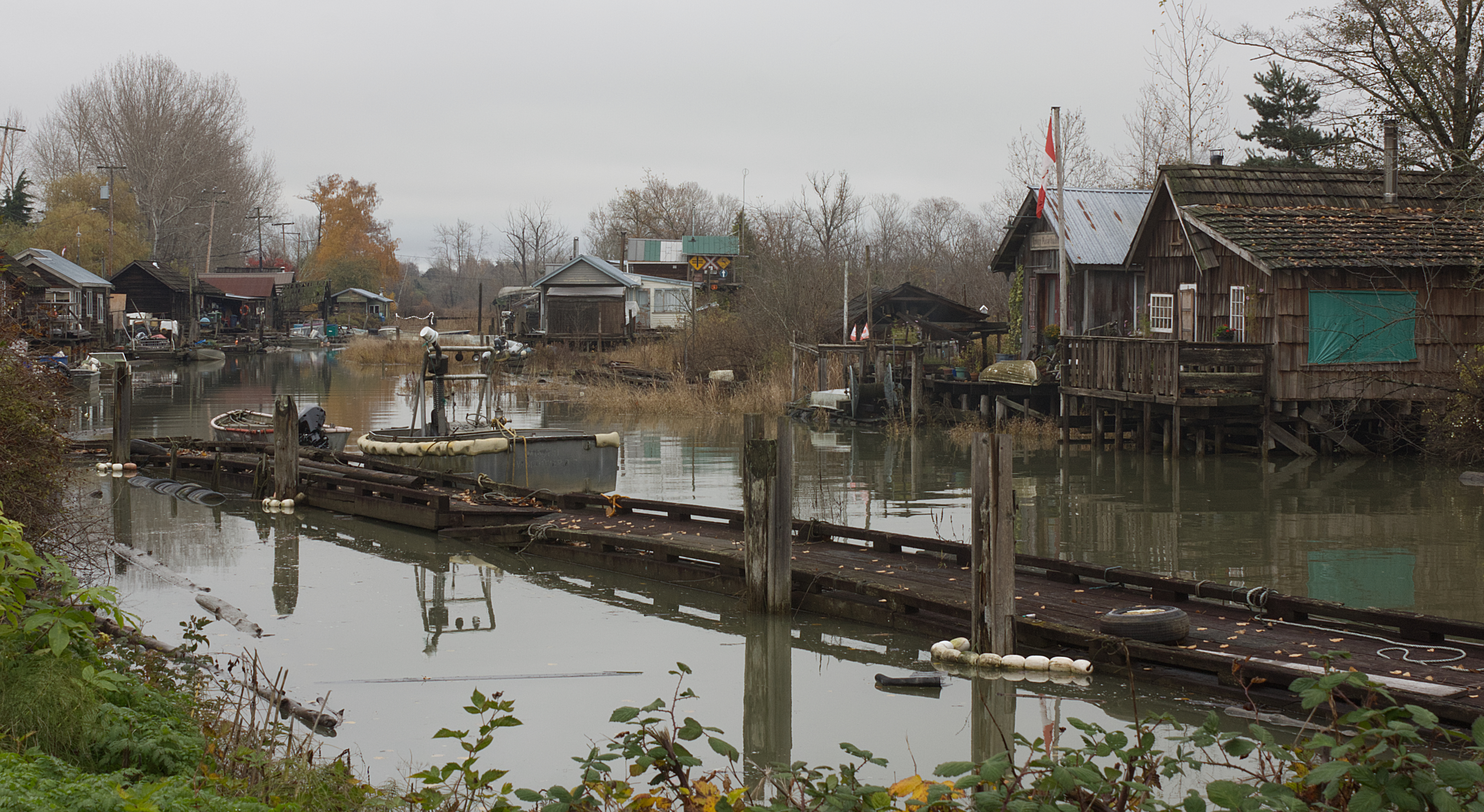
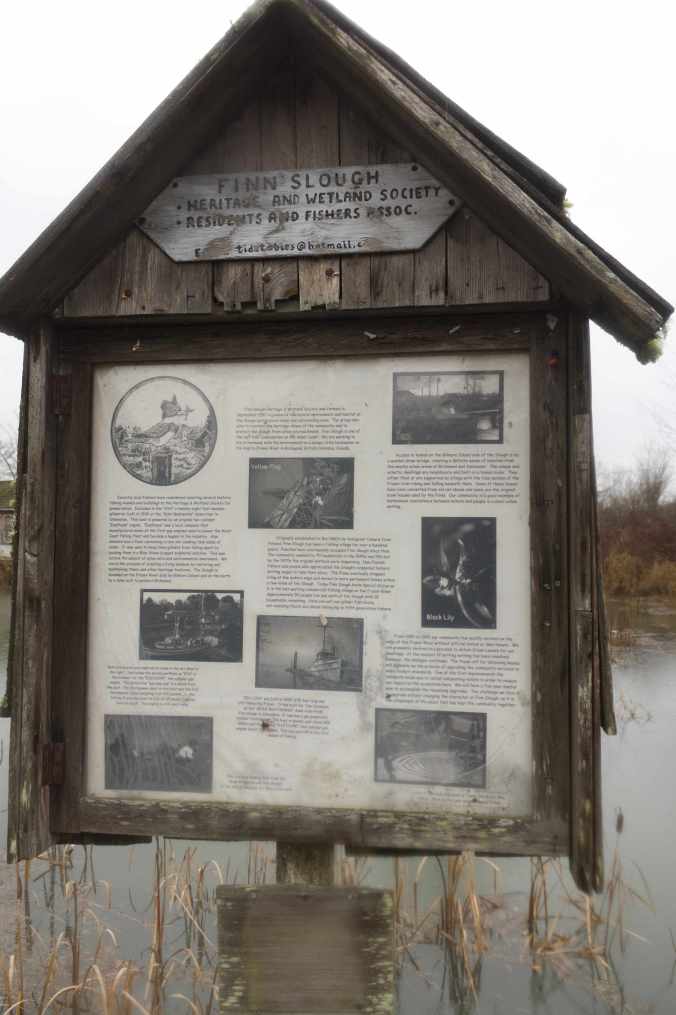
Not long ago, I went for a drive through the pastoral area of Lulu Island and ended up heading south along No. 4 Road in Steveston. As I wound my way toward Dyke Road, I found myself revisiting an old haunt from years ago: the little homesteader community—former Finnish fishing village—of Finn Slough. I remember first discovering this rather charming and eclectic settlement perched on stilted houses along the marsh of Finn Slough back in the 1980s when I briefly lived in Richmond. A sign by the bridge across the slough to Gilmour Island, where Number 4 Road meets Dyke Rd, provides a history of the Finnish community by Historian and Archivist David Dorrington who describes Finn Slough as a place “where nature and history gently coexist.”

Finn Slough bridge to Gilmour Island, BC (photo by Nina Munteanu)

The area was settled in the late 1880s by immigrant Finnish fishermen and their families, seeking a new life from the poverty and repression of the Russian empire in Finland. They built their buildings on pilings to accommodate the changing tides. One of the first and most important buildings was a sauna. The fishing community also built bluestone tanks, used to clean their linen nets. They also had rack floats and net sheds. In those days—when downtown Richmond didn’t exist—it would take an entire day to go one way from Finn Slough to Vancouver (now a 30-minute drive). Steveston was pretty much only canneries. Once a week, says the sign, the Finnish community would dress up in their ‘best clothes’ and take several boats to Steveston, Ladner or New Westminster to buy the week’s supplies. And if the weather was good, they would have a picnic on one of the river islands and sing along with accordion music. The homesteader village established without property boundaries, city ordinances, provincial regulations or any governing body.

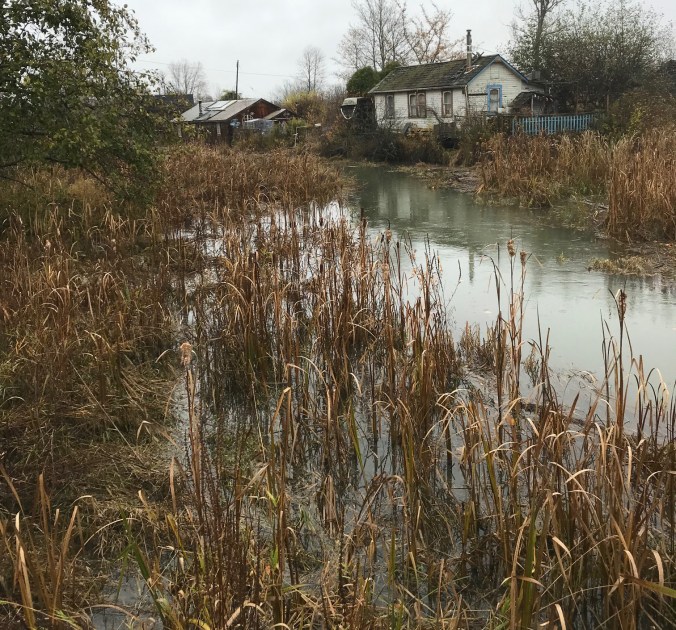
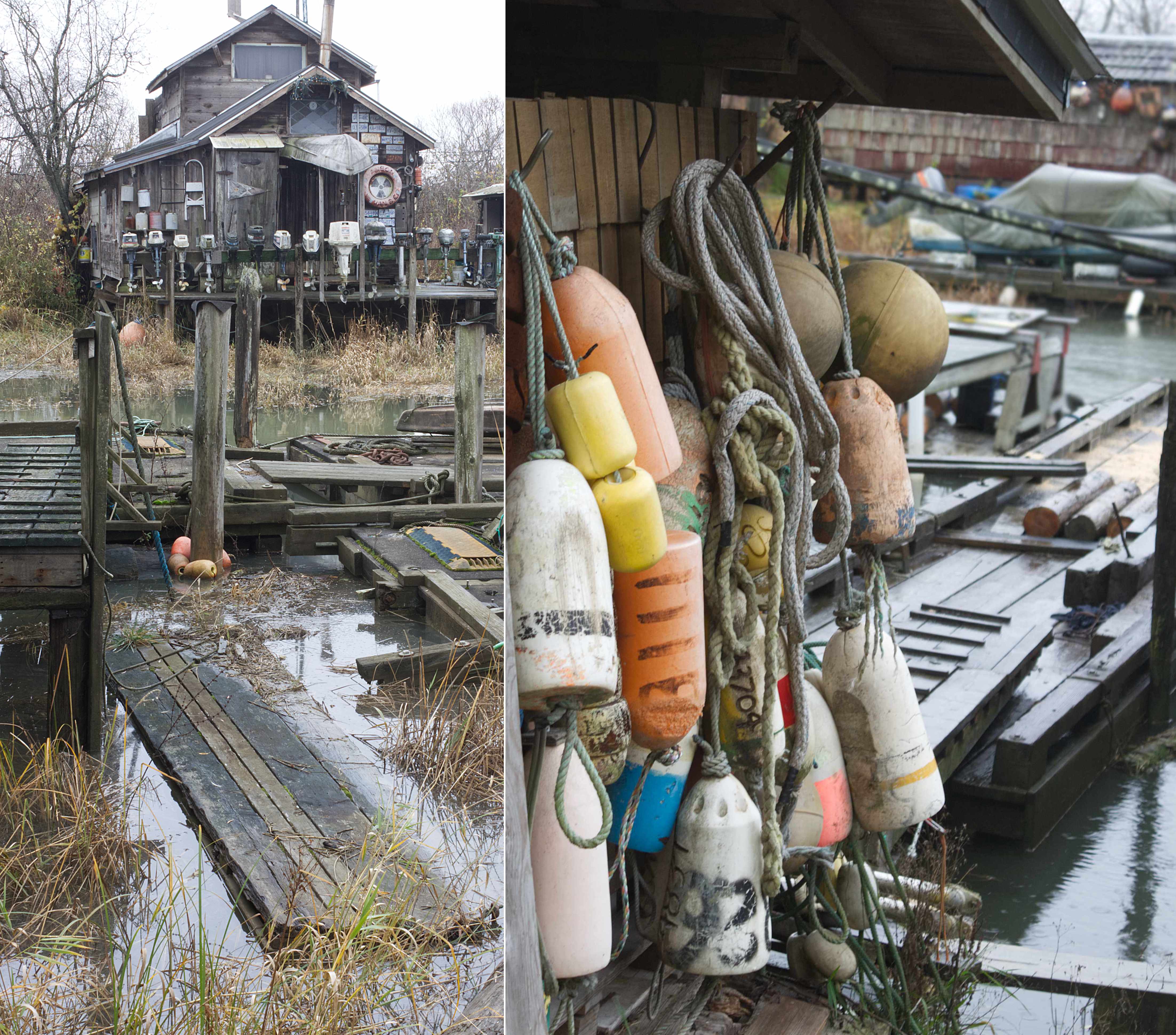
It was raining as I got out my camera to capture some of the eccentric houses on pilings, half-collapsed sheds, beached boats at low tide, old fishnet shacks with funky marine décor, scow houses with signs like “Don’t Mess with Nature”, and house boats floating with the tides. One stilted house featured an entrance way roof made by an inverted boat and a porch railing made of boat engines.

Finn Slough, BC (photo by Nina Munteanu)

Marine-decorated houses on pilings in Finn Slough, BC (photos by Nina Munteanu)

This settlement was built by Finnish fishermen over a hundred years ago. I had visions of people rowing their boats around the slough—to the various wharfs, boardwalks, houses on pilings, and shores. Fishing for various Pacific Salmon (Chinook, Coho, Pink and Sockeye), Steelhead, Lingcod, Halibut, and Sturgeon. I’m told that this relic fishing village was one of several fishing shantytowns scattered along the shores of the Fraser River. Around 70 households existed in Finn Slough in the ‘40s to ‘50s; 30 people live there now. Most, I’m told, are an eclectic mixture of artists, musicians, and actors. Dorrington writes: “This historic settler village and important natural habitat is an intertidal Slough—a place of transitions, with the ebb and flow of tides, migrating birds, indigenous plants and animals. This Slough is an important safe haven for juvenile Salmon and other wildlife, as with all wetlands, it is an important ecosystem.”

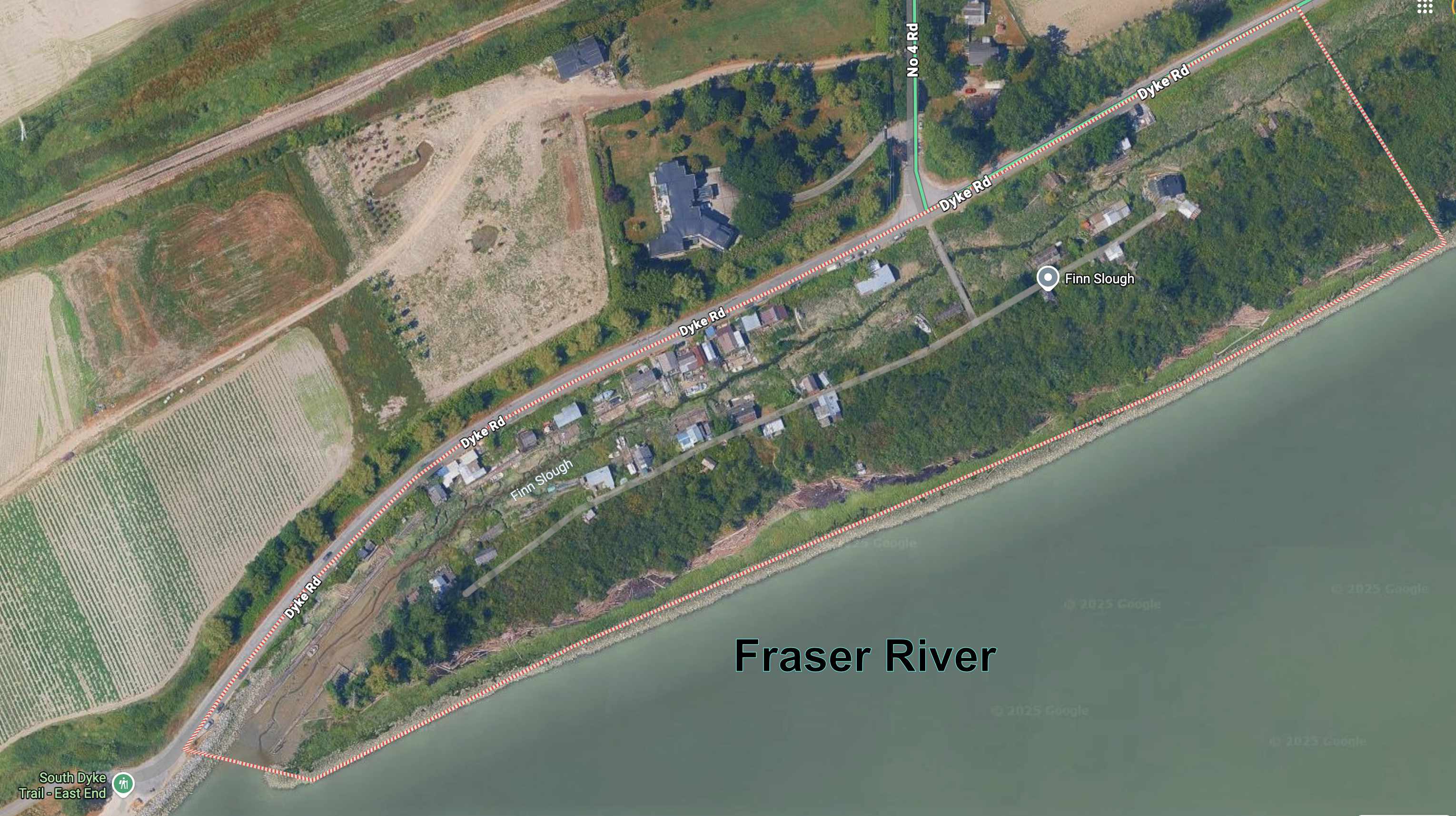
Aerial photo showing Finn Slough in relation to the Fraser River (image by Google)

Blogger Eve Lazarus contemplates the colourful history of this unique settlement that some call charming and others would describe as a chaotic decrepit mess of squatters in a drowning marsh: “the back-to-the-landers, the evil property developer from back east who wants to pave over the shanty town with condos and a park, and a few levels of government that would rather fill pot holes than be caught up in this drama. Ironically, it’s the red tape that seems to be the saviour in this story.”

I walked gingerly on the rickety wooden bridge that leads to several homes on Gilmour Island and stopped at the sign warning me that I was crossing at my own risk. I found myself thinking ‘who lives here? What kind of person chooses to stay here, in this uncertain environment where the direct effects of climate change relentlessly threaten?

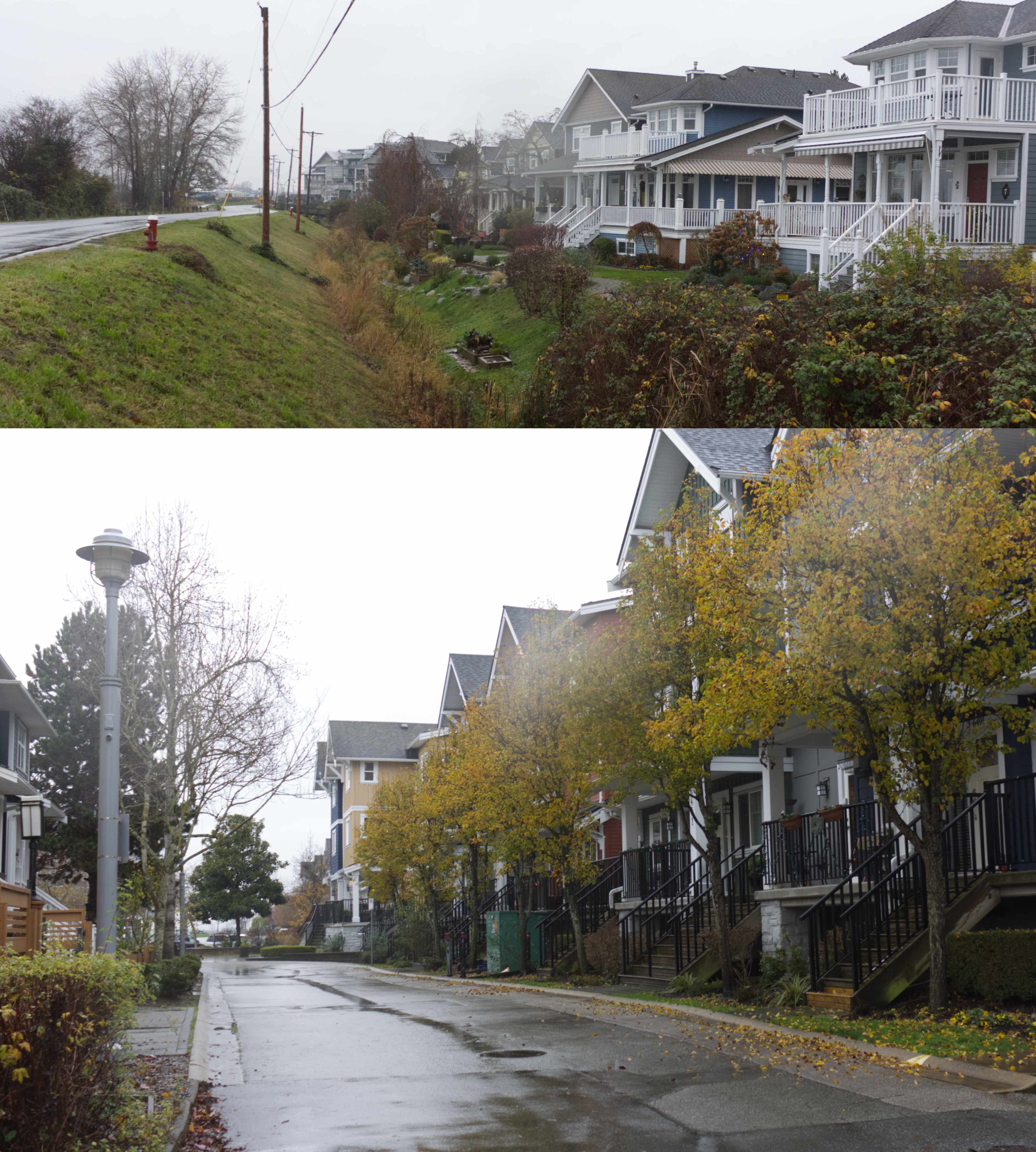
I thought of this as I drove west along Dyke Road toward No. 2 Road and encountered the contrast of posh Steveston Waterfront Estate houses with safe river views from behind dykes.

Sign on history of Finn Slough, BC (photo by Nina Munteanu)

New riverview subdivision of townhomes in Steveston, BC (photos by Nina Munteanu)

Finn Slough & Climate Change

Finn Slough close to mouth to Fraser River (photo by Gordon Katic, CBC)

Gordon Katic of CBC tells us that Finn Slough lies on the front lines of climate change. “Nestled on the banks of the Fraser River, this community will eventually be overcome by flooding as sea levels rise.” I’m not surprised; the slough community lies on the edge of a saltwater marsh. Coastal erosion from increased tanker traffic in the Fraser River has also increased, impacting the marsh’s ability to act as a buffer for wave action.

As climate-change increases the frequency and severity of flooding and coastal storm surges, BC municipalities are preparing for the sea level to rise by half a meter by the year 2050. Actions include investment in protective dikes. But Finn Slough’s homesteader community sits outside the dike system. Several homes have already flooded from seasonal high tides. Even the boardwalks that connected the homes flooded, leaving people stranded. Tamsin Lyle, engineer with Ebbwater Consulting says bleakly, “It’s not a good news story. Probably 60-70 years from now, this entire piece of land is going to be underwater every single day.”

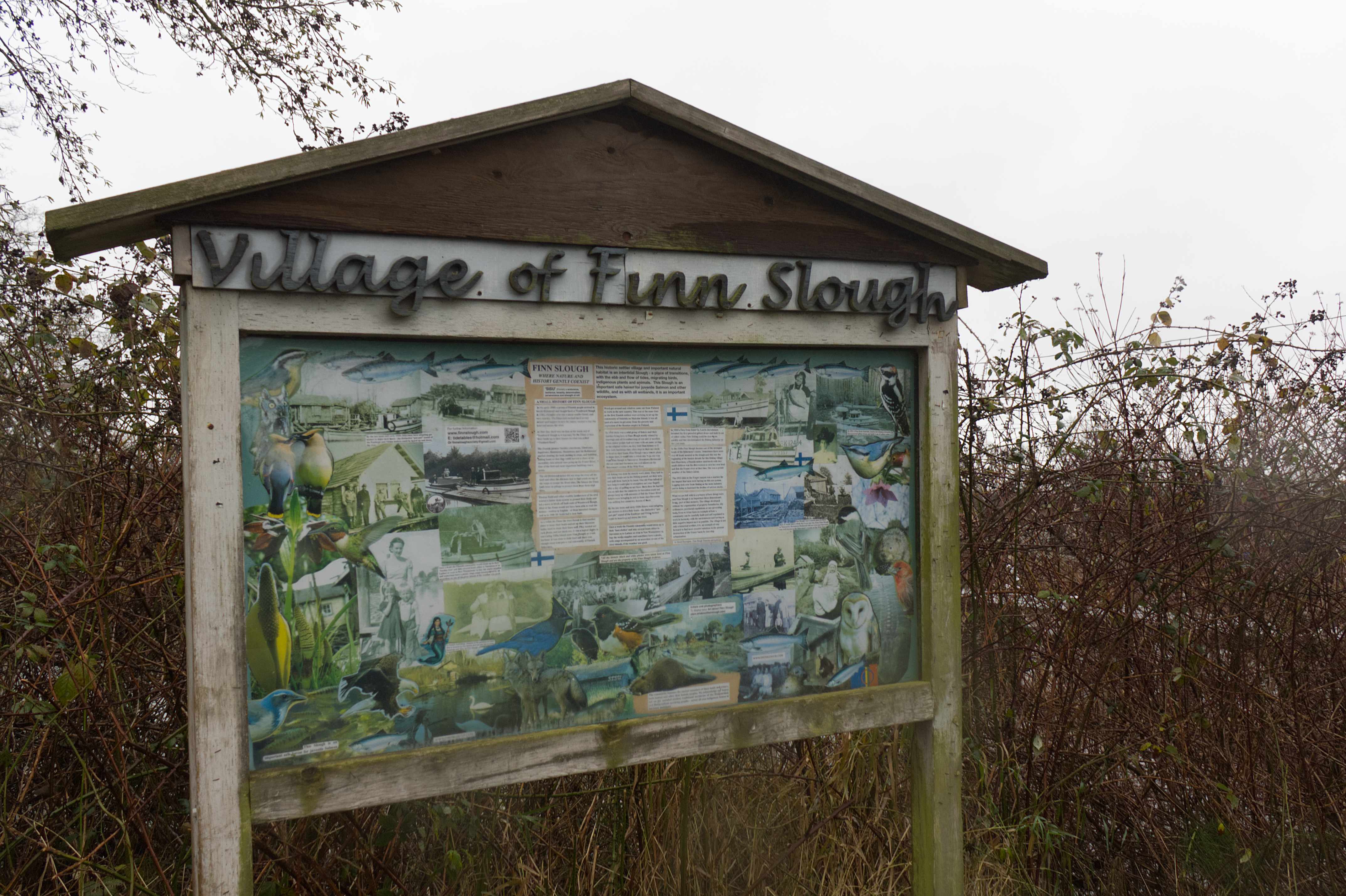
Meantime, the community is finding ways to cope with the rise. One is simply to raise the houses currently on stilts. Gus Jacobson, community elder of Finn Slough, told the CBC that over his lifetime living there, the water has risen at least 18 inches. Jacobson is helping others in the community to raise their houses, docks, boardwalks and bridge. According to Jacobson, Finn Slough’s motto is “sisu”, a Finnish word that roughly translates to “stubborn perseverance.” The sign in front of the bridge defines “sisu” as Finnish for: endurance, resilience, tenacity, determination, perseverance and strength of will.

Finn Slough village sign on Dyke Road, Steveston, BC (photo by Nina Munteanu)

Stephen Sheppard, professor of landscape planning at the University of British Columbia, noted that the best option is a managed retreat: “Managed retreat refers to a strategy where over time the community or infrastructure that is at risk to sea level rise would get pulled back—literally removed—or in essence, relocated, or they might relocate themselves.”

Finn Slough is one of the last tidal communities on the West Coast and the last working commercial fishing village on the Fraser River. For over a hundred years this community has existed without official status or land tenure.

Charmed or doomed by climate change? Will the community adapt and prevail or exodus in the frustration and defeat of a ‘managed retreat’? Lyle gave CBC her prognosis: “I suspect that Finn Slough is going to be our canary in the region [Lulu Island].”

Finn Slough, BC (photo by Nina Munteanu)

References:

Dorrington, David. “Finn Slough: where nature and history gently coexist,” sign located at Dyke Rd. at end of No. 4 Rd.

Katic, Gordon. 2017. “As a BC fishing village is slowly submerged, meet the people who refuse to leave.” CBC Radio, October 2. 2017

Lazarus, Eva. 2013. “Steveston’s Finn Slough.” Eve Lazarus Blog, September, 2013.

Finn Slough old shed, BC (photo by Nina Munteanu)

Nina Munteanu is an award-winning novelist and short story writer of eco-fiction, science fiction and fantasy. She also has three writing guides out: The Fiction Writer; The Journal Writer; and The Ecology of Writing and teaches fiction writing and technical writing at university and online. Check the Publications page on this site for a summary of what she has out there. Nina teaches writing at the University of Toronto and has been coaching fiction and non-fiction authors for over 20 years. You can find Nina’s short podcasts on writing on YouTube. Check out this site for more author advice from how to write a synopsis to finding your muse and the art and science of writing.

My Drive Across Canada: Part 4—The Rockies & Beyond

From the rolling Prairies I ascended up the foothills of the Rocky Mountains in Alberta. As I neared the mountains, they seemed to cut the sky with jagged peaks of steely grey. Rugged and unabashedly wild, they teased my spirits into flight.

Rocky Mountains, Alberta (photo by Nina Munteanu)
Canadian Rockies, AB (photo by Nina Munteanu)

The Rockies are such a wonder! I found myself thinking—well, wishing—that I had a geologist sitting in the passenger seat (instead of my companions Toulouse, Mouse and a car full of plants), telling me all about these stately mountains and their formations. All that folding, thrusting, scraping and eroding! So fascinating!

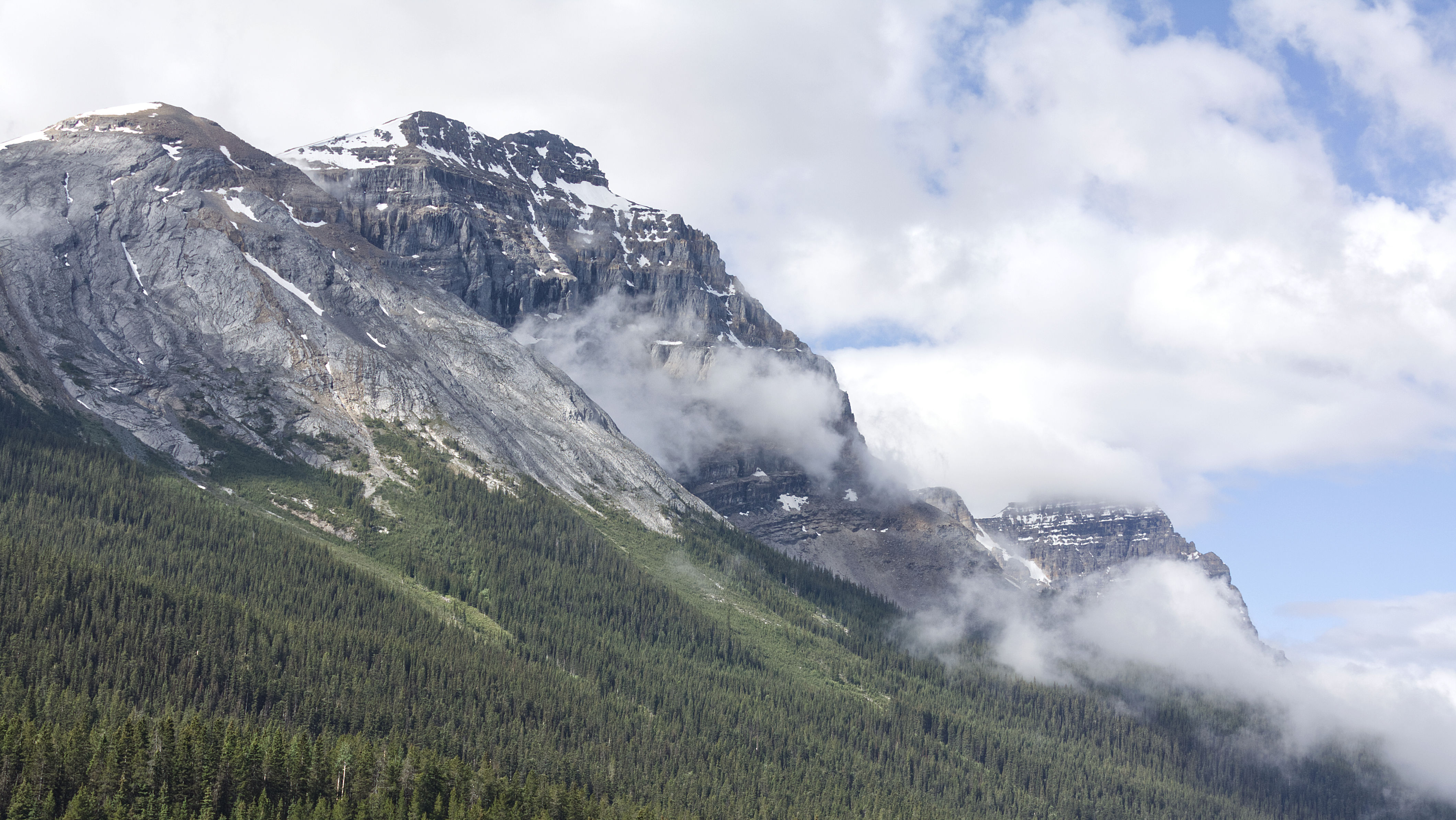
Rockies west of Banff, AB (photo by Nina Munteanu)

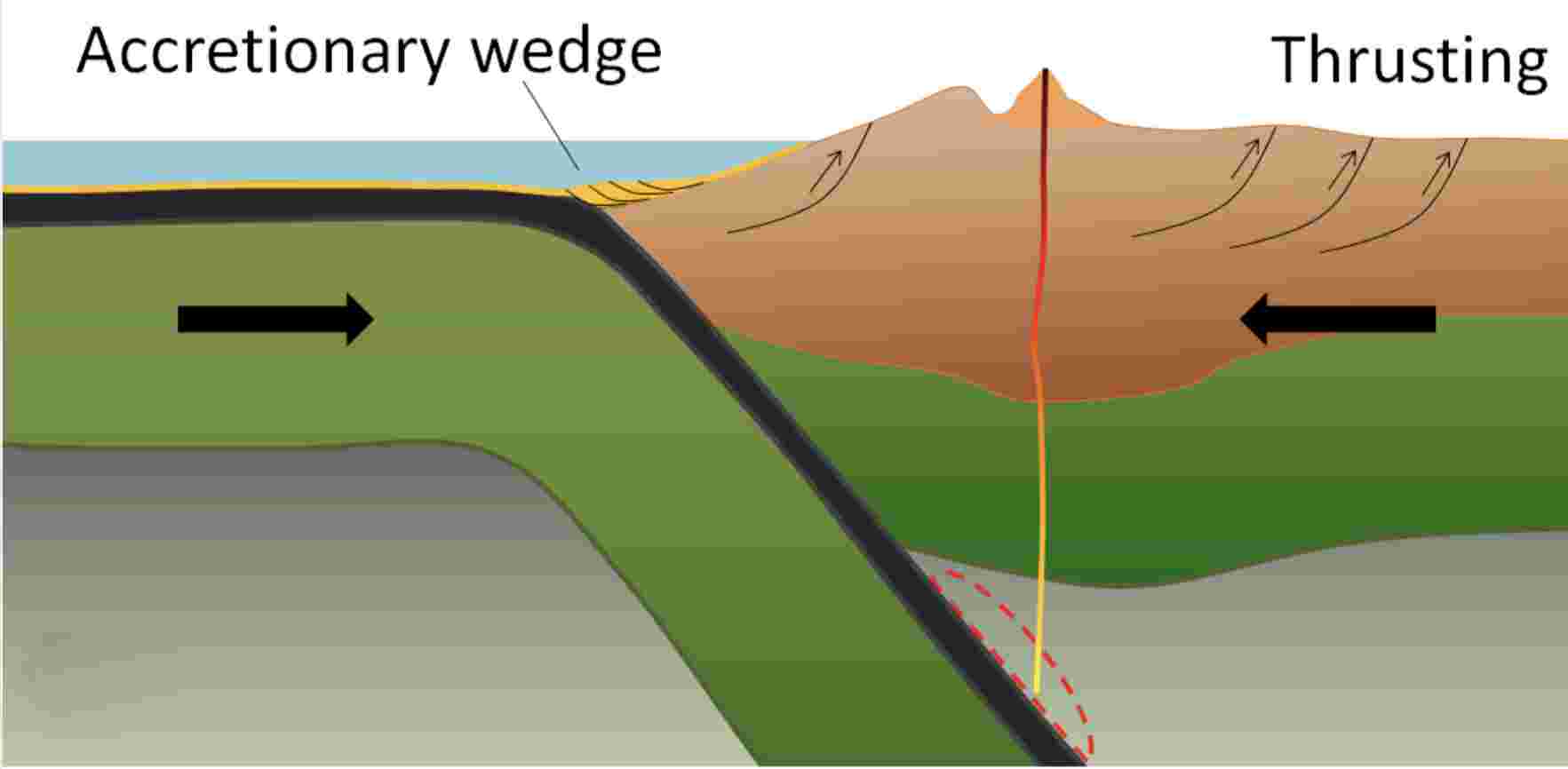
I did some research into The Canadian Rocky Mountains and discovered that they were formed through a combination of subduction and thrust faulting with an oceanic plate subducting beneath the North American plate.

Sketch showing subduction of ocean plate beneath the North American plate with accompanying accretionary wedge and thrusting action (image by Earle and Panchuk)

The Canadian Rocky Mountains were originally part of an ancient shallow sea half a billion years ago and formed from pieces of continental crust over a billion years old during an intense period of plate tectonic activity. Their jagged peaks of mostly sedimentary limestone (originally part of the continental shelf) and shale (originally part of the deeper ocean waters) belonged to an ancient sea floor; during the Paleozoic Era (~5-2 hundred million years ago), western North America lay beneath a shallow sea, depositing kilometers of limestone and dolomite.

Rocky Mountains near Canmore, AB (photo by Nina Munteanu)

The current Canadian Rocky Mountains were raised by the Cordilleran Orogeny, a process of mountain-building when tectonic plates started colliding ~ 200 million years ago during much of the Mesozoic Era, which extends over 187 million years from the beginning of the Triassic (252 Ma) to the end of the Cretaceous (65 Ma). This era, I’m told, was a particularly important period for the geology of western Canada. During the plate and land mass collisions, ancient seabed layers were scraped, folded and thrust upwards (through a process called thrust faulting). As plates converged, entire sheets of sedimentary rock were slowly pushed on top of other sheets, creating a situation where older rocks lie on top of younger ones.

Castle Mountain overlooks the Bow River, Canadian Rockies, AB (photo by Nina Munteanu)

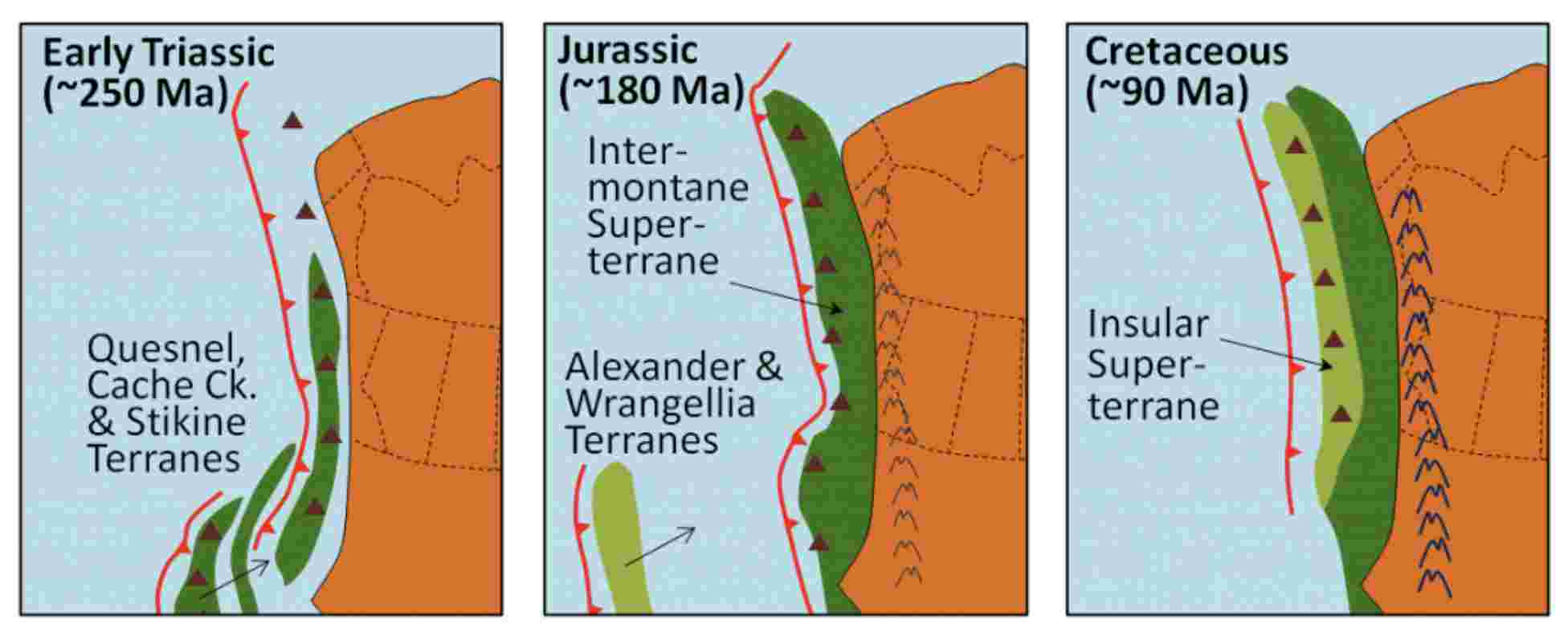
According to Earle and Panchuk, several continental collisions occurred along the west coast over the Mesozoic, resulting in the formation of the Rocky Mountains and the accretion (addition) of much of British Columbia’s land mass. Starting in the early Triassic (~250 Ma) through to the Cretaceous Period (~90 Ma), continued subduction sent several continental terranes (land masses) colliding into and accreting to the western edge of North America. The Quesnel, Cache Creek, and Stikine Terranes formed the Intermontane Superterrane, which now forms BC’s interior plateau between the Rockies and the Coast Range. A hundred million years later, during the Jurassic Period, a pair of terranes—Alexander and Wrangellia—collided with the west coast to form most of Vancouver Island and Haida Gwaii as well as part of Alaska. During the Cenozoic Era, more terranes accreted with the western edge of North America.

Model of the accretion of the Superterranes to the west coast of North America during the Mesozoic Era; red toothed lines=subduction zones; dark red triangles=volcanoes (images by Earle and Panchuk, 2019)

In the Jurassic Period, the Intermontane Superterrane acted like a giant bulldozer, pushing, folding, and thrusting the existing Proterozoic and Paleozoic west coast sediments eastward and upward to form the Rocky Mountains. The same process continued into the Cretaceous as the Insular Superterrane collided with North America and pushed the Intermontane Superterrane farther east.

Cross-section of the accretion of the Intermontane Superterrane to the west coast of North America in Jurassic and early Cretaceous, with resulting compression folding and thrusting of sedimentary rocks. Late Cretaceous Insular Superterrane further pushed against the Intermontane Superterrane to create massive folding and thrusting (image from Earle and Panchuk, 2019)

Canadian geologist/author Ben Gadd explains the Canadian Rocky Mountain building through the metaphor of a rug being pushed on a hardwood floor: the rug bunches up and forms wrinkles (mountains). In Canada, the subduction (downward movement) of an oceanic tectonic plate and the terranes (slabs of land) smashing into the continent are the feet pushing the rug, the ancestral rocks are the rug, and the Canadian Shield in the middle of the continent is the hardwood floor. The Rockies, writes Gadd, were like Tibet: a high plateau, 6,000 metres above sea level. Then, in the last 60 million years, glaciers—creeping forward at 50 feet per year—stripped away the high rocks, revealing the ancestral rocks beneath and carving out steep U-shaped valleys to form the current landscape of the Rockies: jagged peaks of soft sedimentary limestone and shale overlooking steep gorges and valleys. You can watch an excellent video of the 200-million-year formation of the Rocky Mountains by Spark.

Castle Mountain, Canadian Rockies, AB (photo by Nina Munteanu)
Rockies west of Lake Louise, Alberta (photo by Nina Munteanu)

When I stopped in Canmore, Alberta, for the night, I found all the hotels solidly booked, except for a few very expensive rooms in high end hotels. It was the weekend of the Calgary Stampede and the crowds had spilled out this far, I was told. I also acknowledged that I was plum in the middle of tourist season too. But I was dead tired and it would be dark soon; so, I bit the bullet and booked an expensive room in an expensive hotel. I recalled that I was repeating my mother’s trip across Canada to settle in Victoria many years ago; she’d also driven through here in her old Datsun, brim with plants, like my Benny, and stopped in Canmore for the night. Only, she found very reasonable accommodations when she came through over four decades ago. Canmore is located in the front ranges of the Rockies, with a wonderful view of the Three Sisters and Ha Ling Peak from my hotel room.

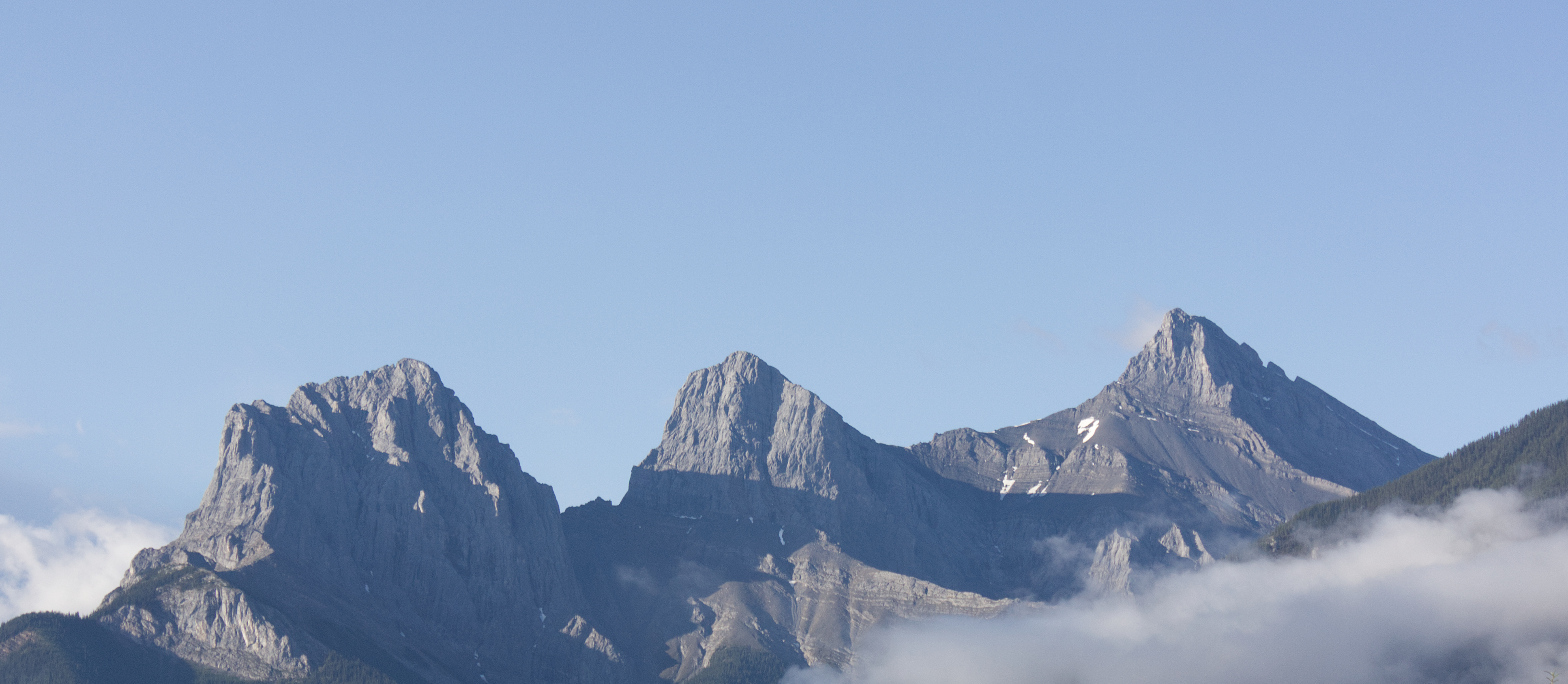
The Three Sisters, Canmore, AB (photo by Nina Munteanu)
Temple Mountain, west of Lake Louise, Alberta (photo by NIna Munteanu)

I gave Banff and Lake Louise a miss and opted for a breakfast at some remote viewpoint after crossing the border into British Columbia. As I ate my cereal from the tailgate of my car, I felt a strange but lovely warm joy spread through me like a deep soothing balm.

I was home…

Faeder Lake, Yoho National Park, BC (photo by Nina Munteanu)

I stopped at Faeder Lake, on the western side of Yoho National Park, with a view of the Ottertail Range and Mount Vaux. Faeder Lake’s clear tourquise water—a result of fine particles of rock dust called glacial flour—enticed me for a swim.  

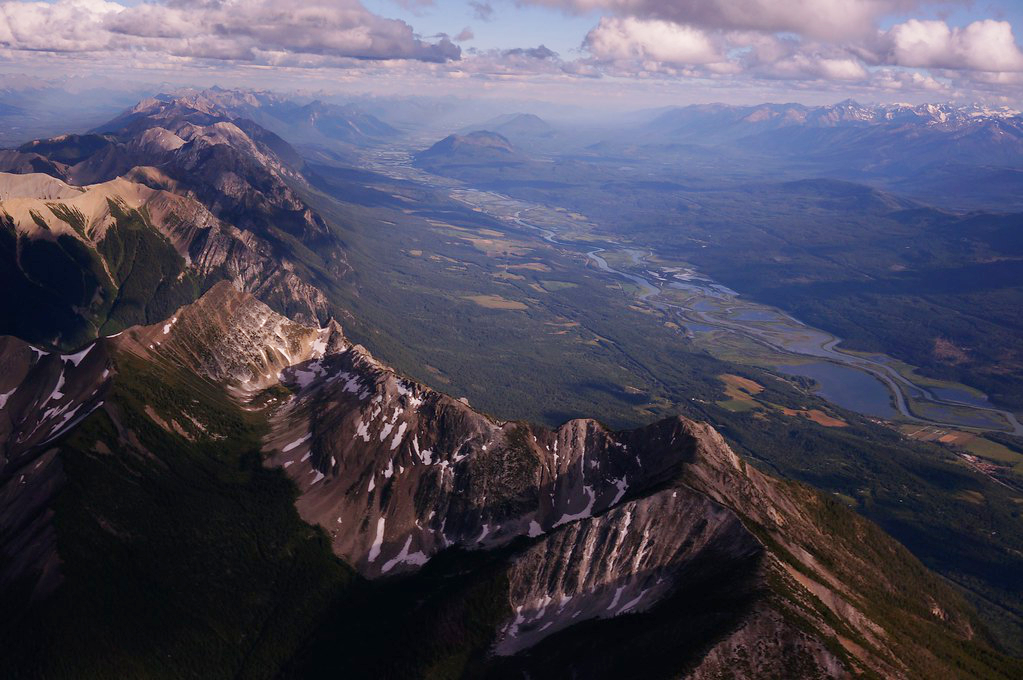
I stopped briefly for lunch in Golden in the Rocky Mountain Trench. The Rocky Mountain Trench is a long and deep valley walled by sedimentary, volcanic and igneous rock that extends some 1,500 km north south, spanning from Montana through British Columbia. The Trench is sometimes referred to as the “Valley of a Thousand Peaks” because of the towering mountain ranges on either side: the Rocky Mountains to the east and the Columbia, Omineca and Cassiar mountains to the west.

Rocky Mountain Trench near Golden, BC

The Trench is a large fault—a crack in the Earth’s crust—and bordered along much of its length by smaller faults. Major structural features resulted from the shifting and thrusting of tectonic plates of the crust during the early Cenozoic Era (65 million years ago) during mountain formation discussed above. The ridges of fractured crust pulled apart and the land in between dropped, creating the floor of the Trench. Major rivers that flow through the trench include the Fraser, Liard, Peace and Columbia rivers.

The Rocky Mountain Trench features in two of my books: A Diary in the Age of Water (Inanna Publications) and upcoming novel Thalweg. In both novels, which take place in the near future, the trench has been flooded to create a giant inland sea to serve as water reservoir and hydropower to the USA. You can read an excerpt in my article “A Diary in the Age of Water: The Rocky Mountain Trench Inland Sea.” The article also talks about the original 1960s NAWAPA plan by Parsons Engineering to flood the trench to service dry sections of the US by diverting and storing massive amounts of Canadian water. Proponents are still talking about it!

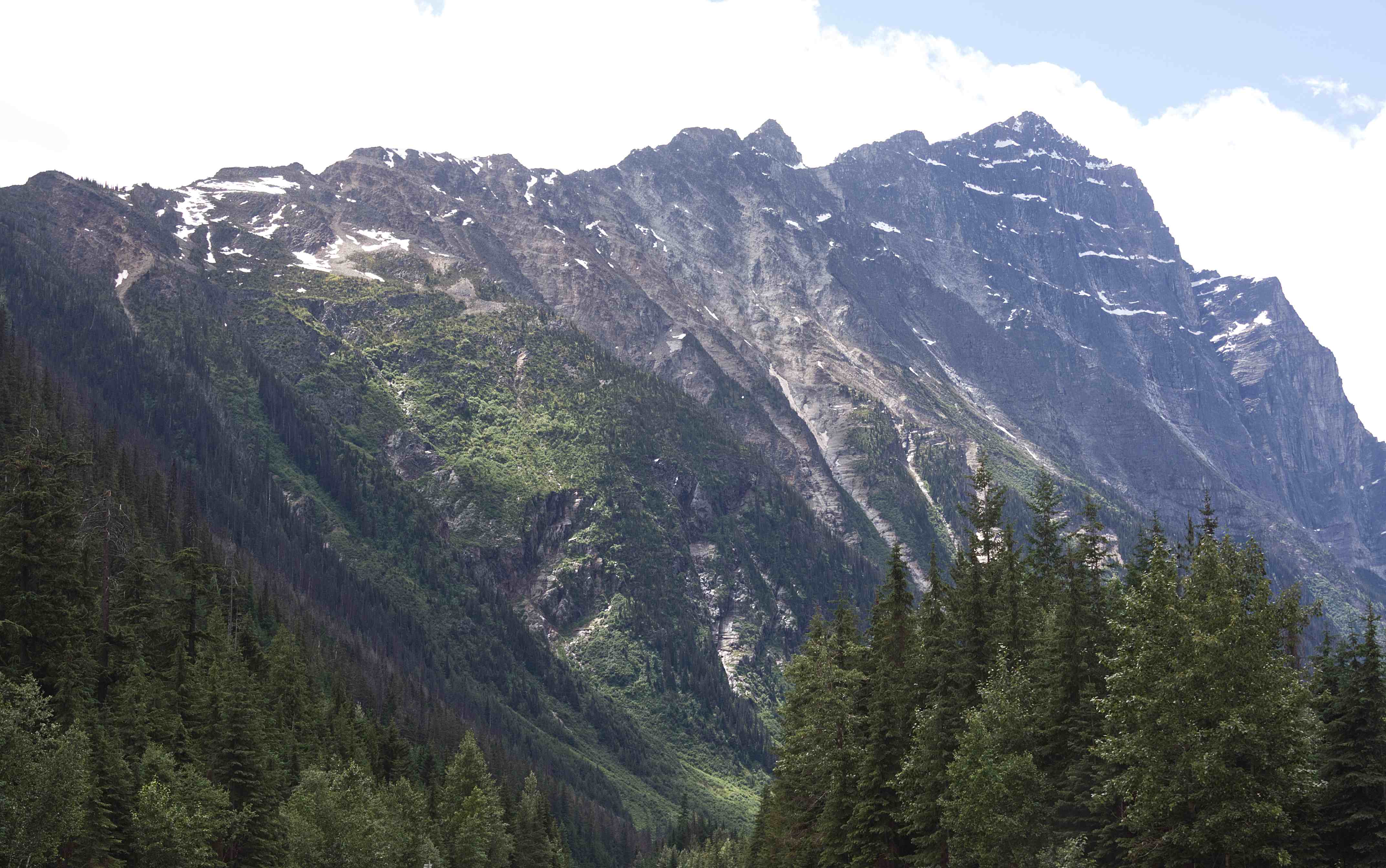
Mount Macdonald, Rogers Pass, BC (photo by Nina Munteanu)

I entered Glacier National Park, driving through several snow & avalanche sheds at Rogers Pass, in the heart of the Selkirk Range of the Columbia Mountains. This part of the drive was spectacular as mountains towered close and steep above me like sky scrapers, fanning out as the bright green vegetation crept resolutely up their scree slopes.

Selkirk Mountains and Mount Macdonald in Roger’s Pass; Google location (image by Google Maps)
Selkirk Range at Rogers Pass, BC (photos by Nina Munteanu)

The highway followed the Illecillewaet River as it wound southwest to Arrow Lake from it’s the glaciers east. I soon reached Revelstoke National Park and stopped at the Giant Cedars Boardwalk Trail, located about 30 km east of Revelstoke, between the Monashee Mountains, west, and the Selkirk Range, east.

.
Boardwalk through ferns, devils club and giant cedars, Giant Cedar Boardwalk, Revelstoke National Park, BC (photo by Nina Munteanu)

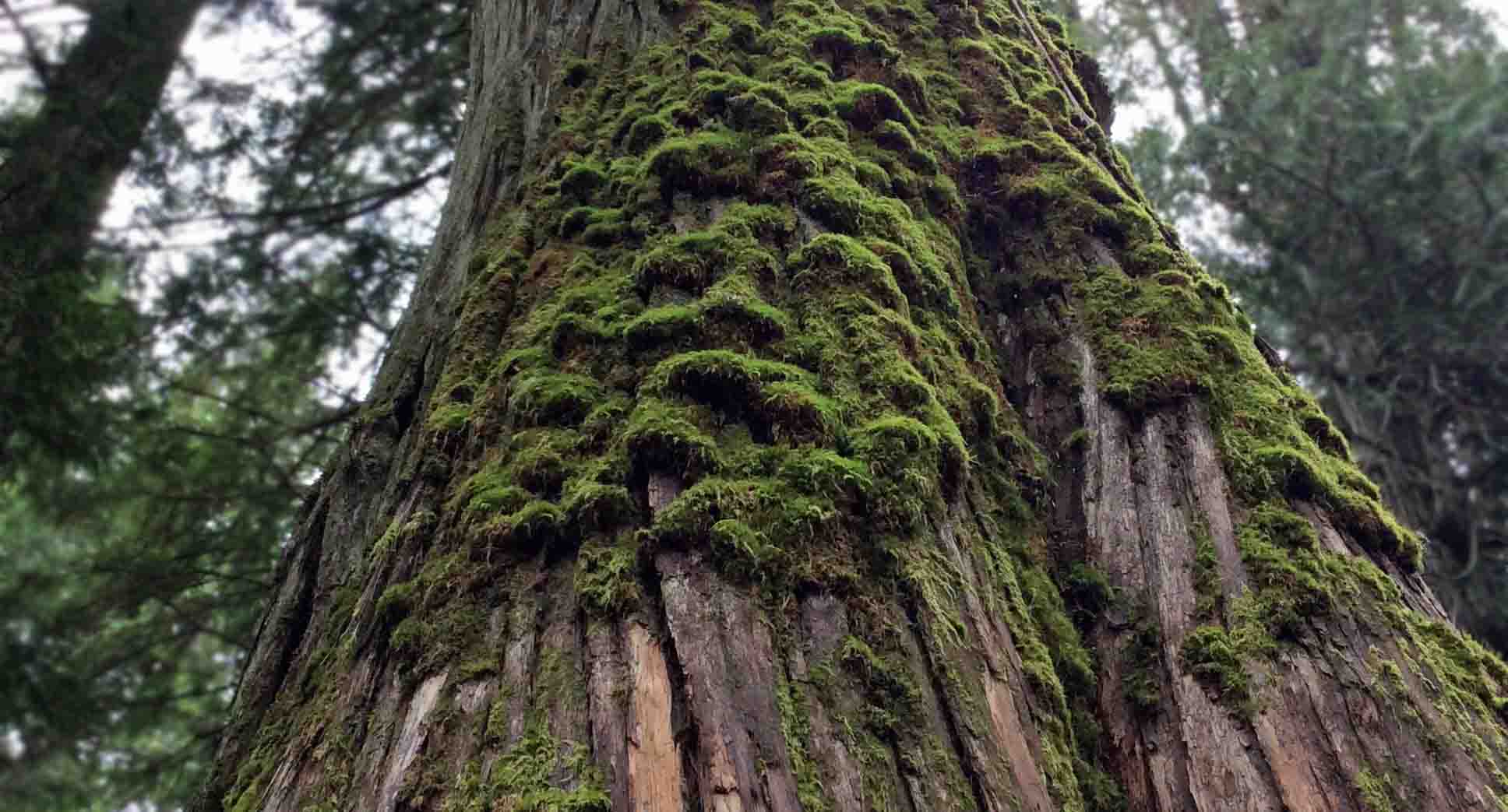
The Giant Cedars Boardwalk Park is a rare inland temperate rainforest ecosystem, receiving significant precipitation from Pacific weather systems that rise over the Columbia Mountains and dump here. It is a lush and humid old-growth forest with rich diversity of plant and animal life that resembles a coastal rainforest. Dominated by Western Red Cedars and Western Hemlocks—with some Douglas fir, paper birch and Bigleaf maple—the forest floor is a rich understory of salal, devil’s club, several berry shrubs and a diversity of ferns—oak fern, sword fern, and licorice fern. All was covered with a dense carpet of mosses, lichens, liverworts and fungi.

Above: moss-covered Red Cedar; Below: Devil’s club; Giant Cedar Boardwalk Trail, Revelstoke National Park, BC (photos by Nina Munteanu)

I followed the boardwalk through a cathedral of towering trees, among ancient cedars, whose fibrous, thick trunks loomed high to pierce the sky. Some are over 500 years old. I found that one large cedar trunk beside the boardwalk was ‘smooth from loving’ as I leaned against it and stroked its bark, no longer fibrous but burnished smooth and shiny. 

.
Nina leans against a giant red cedar, fibrous bark smoothed from copious stroking of hands, Giant Cedar Boardwalk Park, BC (photo by Anne Voute)

I reached Revelstoke just after 6 pm and, to celebrate, I booked a room at the Regent Hotel. After a walk through the ski resort town, alive with young tourists, I returned to the hotel restaurant, I treated myself to a celebratory salmon dinner with garlic mashed potatoes and mixed veggies. I even I had a dessert—Tiramisu with a cup of tea—and went to bed sated, happy and tired. As soon as my head hit the pillow, I was in dreamland.

Revelstoke and the Regent Hotel; my celebratory meal there (photos by Nina Munteanu)
Chaparral near Merritt, BC (photo by Nina Munteanu)
Two types of sage brush near Merritt, BC (photo by Nina Munteanu)

The next day, I descended southwest from the Selkirk Range, passing through Kamloops and then arriving at Merritt, in the heart of the Nicola Valley, an area of dry forests, grasslands, sagebrush, alpine meadows, and wetlands. This was range country, dry, golden and rolling with the peppery scent of sage. The most visible and dominant vegetation included big sage (Artemisia tridentata) and bluebunch wheatgrass (Pseudoroegneria spicata) with the odd Ponderosa Pine (Pinus ponderosa) dotting the dry landscape.

Sagebrush country at Merritt, BC (photo by NIna Munteanu)
Sagebrush country near Merritt, BC (photo by Nina Munteanu)

From there, I drove south along the Coquihalla Highway in the Cascades Range to Hope, where I treated myself to an ice cream cone and ate it overlooking the mighty Fraser River. I followed the Fraser west to Vancouver, where it empties into the Pacific Ocean.

My last stop before reaching my good friend’s place in Ladner (where I would stay until I found my own place) was the Four Winds Brewery on Tilbury Road, where I bought a case of beer for the pizza we would share once I got there.

Home sweet home.

References:

Gadd, Ben. 2008. “Canadian Rockies Geology Road Tours.” Corax Press.

Earle, Steven and Karla Panchuk. 2019. “Physical Geology”, 2nd edition: Chapter 21: Geological History of Western Canada, 21.4, Western Canada during the Mesozoic.” BCcampus. OpenTextBC/Physical Geology

Munteanu, Nina. 2020. “A Diary in the Age of Water.” Inanna Publications, Toronto. 328 pp.

Nina Munteanu is a Canadian ecologist / limnologist and novelist. She is co-editor of Europa SF and currently teaches writing courses at George Brown College and the University of Toronto. Visit www.ninamunteanu.ca for the latest on her books. Nina’s bilingual “La natura dell’acqua / The Way of Water” was published by Mincione Edizioni in Rome. Her non-fiction book “Water Is…” by Pixl Press (Vancouver) was selected by Margaret Atwood in the New York Times ‘Year in Reading’ and was chosen as the 2017 Summer Read by Water Canada. Her novel “A Diary in the Age of Water” was released by Inanna Publications (Toronto) in June 2020.

My Drive Across Canada: Part 3—The Prairies

I emerged from the Lake of the Woods boreal forest into Manitoba’s true flatlands as I neared Winnipeg. Though, the eastern part of Manitoba was similar to the boreal hills of Ontario, it soon leveled out into flat stretches of prairie grasslands, and expansive fields of various crops including bright yellow fields of blooming canola.

Canola field in Saskatchewan (photo by Nina Munteanu)

It was early July and I’d caught it at its peak in flowering. Bright waves of yellow continued from Manitoba into Saskatchewan, where canola seemed to take over the land. At times all I saw was lemon yellow all the way to the horizon in all directions. Canola accounts for the largest area of land dedicated to any single crop in Saskatchewan. I’m told that there are over 22 million acres of canola growing in that province.

Train lumbers across a horizon of canola, west of Winnipeg, Manitoba (photo by Nina Munteanu)

Canola is a member of the crucifer family; it is a cool season crop that grows particularly well on the prairies, where cool nights and hot days allow it to develop its unique fatty acid profile. The name Canola was registered as a trademark in Canada in 1978. The name is essentially an acronym for CANadian Oil Low Acid. Prior to canola oil, most of the oil Canadians used for food purposes was imported. The canola plant was developed by two Canadian prairie plant scientists, Dr. Baldur Stefansson and Dr. Keith Downey, who bred rapeseed populations to develop a crop that would meet consumer demand for a healthy, edible oil product. Harvested seeds are crushed to produce canola oil, with the remainder used to create a high-protein meal for livestock and human consumption. Canola is kind of cool, given its versatile use from cooking oil pant-based protein, biofuel, animal feed to possibly even clothing!

Bridge across the Assiniboine River for the Trans Canada Highway

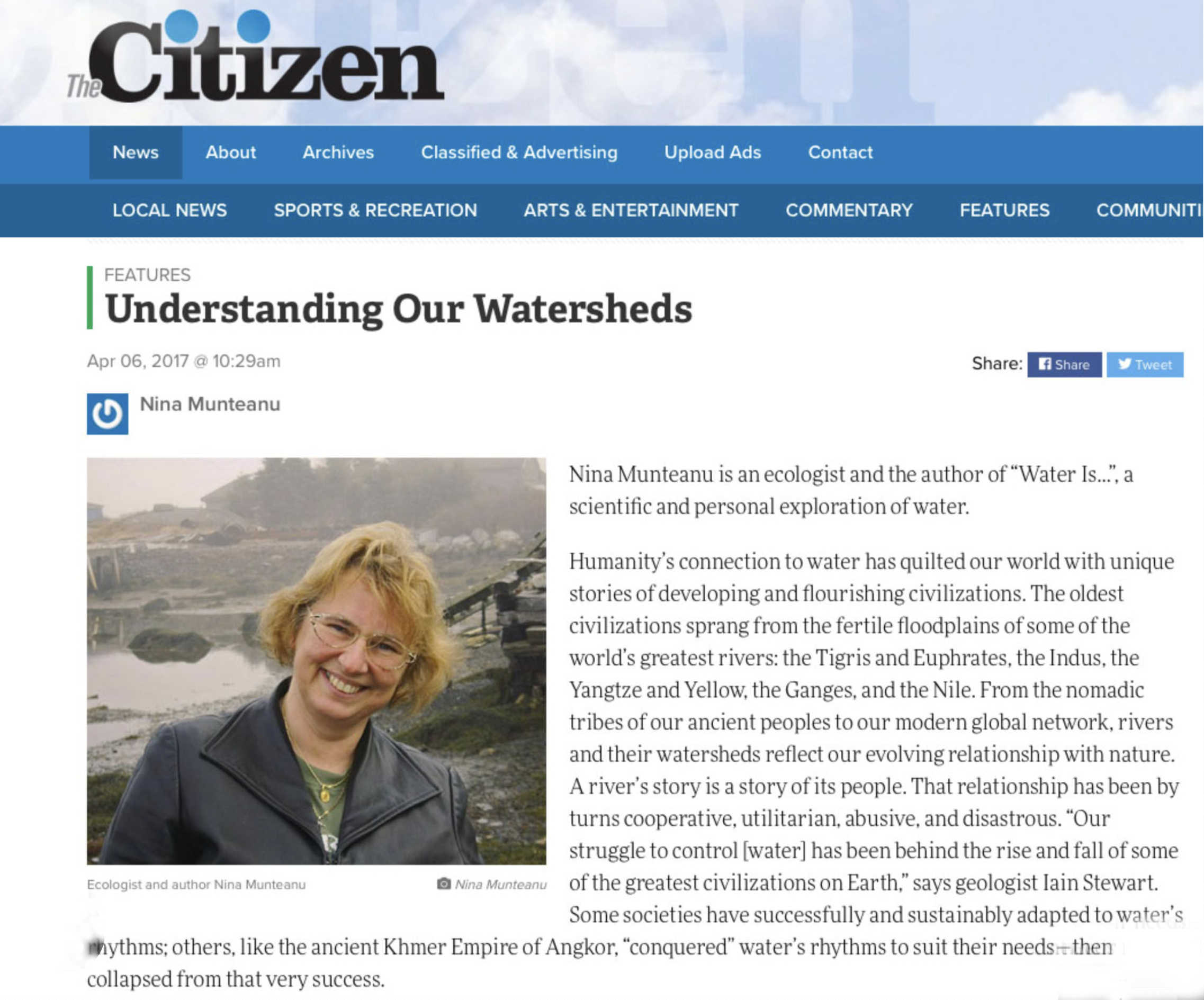
Before reaching Winnipeg, I crossed the Red River at Selkirk. This large river floods almost every  spring, covering large areas of flat land with muddy water. I touched on the Red River in an article I wrote about the impact of current agricultural practices on river dynamics and eventual flooding in the Niverville Citizen.

Nina Munteanu talks about watersheds in the Niverville Citizen

After passing through Winnipeg, near Portage La Prairie, Manitoba, I crossed the iconic Assiniboine River, as it flows from Saskatchewan and parallels the Trans Canada Highway as it flows east to Winnipeg to join the Red River.

Train crossing the Trans Canada Highway in Saskatchewan (photo by Nina Munteanu)

Driving through the prairies on the Trans Canada Highway, I often had to stop for a train crossing or slow down as a slow farm vehicle cut across my path on the highway. Here, the Trans Canada was just another country road and I was competing with tractors, farm vehicles and, in some cases, horse and wagon.

I made good time, driving the straight roads along flat and gently rolling landscapes sculpted by wind and water. This was big sky country, and I recalled that this was all a giant shallow and warm inland sea in prehistoric times.

Depiction of the prehistoric inland sea in Canada

Called the Western Interior Seaway, this Cretaceous inland sea stretched from the Arctic Ocean down to the Gulf of Mexico, connecting the two oceans and separating the continent into eastern (Appalachia) and western (Laramidia) landmasses and covering what is now most of Manitoba, Saskatchewan and part of Alberta. Existing from about 100 to 66 million years ago, this shallow marine sea supported a rich and diverse marine life, including the shell-crushing durophagous Ptychodus mortoni, apparently 10 metres long. I thought all this as I raced across a giant dry ocean of grass waving in the wind. I imagined myself a crab scuttling along the ocean floor beneath 760 m of water as giant sharks, 13-metre long mosasaurs and other exotic creatures swam leisurely above me. Is that why I found myself speeding along the highway and crossing into Saskatchewan before I knew it?

Sodium sulphate deposits of salt mine near Chaplin Lake, Saskatchewan (photo by NIna Munteanu)

Near the village of Chaplin, Saskatchewan, I stumbled on a moonscape of white chalk-like hills. This was the sodium sulphate mine on the northern shore of Chaplin Lake, a salt lake that is a major stop over for migratory birds that feed on its brine shrimp. I discovered that the lake formed in the late Pleistocene when glaciers shaped the landscape and deposited salts and other minerals into the soil and bedrock. As the glaciers receded in the late Pleistocene, meltwater channels dried and left isolated depressions filled with meltwater and groundwater rich in dissolved salts from underlying glacial deposits. Hot, dry summers and persistent winds common in the Saskatchewan prairies increased evaporation and concentrated salts, leading to crystalline sodium sulphate deposits, which created the salt lake. The salt mine started in 1947 and today is one of the largest producers of anhydrous sodium sulphate in North America with production capability of 285,000 tons per year.

Map showing Chaplin Lake
Salt deposits on the side of the road, near Chaplin, Sask (photo by NIna Munteanu)
Flat sage-grasslands plain under a darkening sky, near Piapot, Saskatchewan (photo by NIna Munteanu)

I continued through the Great Plains, west toward Alberta, across a rolling grassland mingled with sage. Along the stretch from Chaplin Lake past Swift Current through Piapot, the terrain grew distinctly dry and chaparral-like. I spotted various types of sage everywhere.  

I saw two types of native sage: left is Artemisia frigida; right is Artemisia ludoviciana (photos by NIna Munteanu)

Three types of native sage live in the grasslands of Saskatchewan: Pasture Sage or Prairie Sagewort (Artemisia frigida), Prairie Sage (Artemisia ludoviciana), and Silver Sagebrush (Artemisia cana). Pasture sage is an ‘increaser’ species; its population grows as rangeland condition deteriorates. It is a good indicator of overgrazing.

I also found ‘frothy’ clusters of pretty tiny white 5-petaled flowers that I finally identified as Prairie Baby’s Breath (Gypsophila paniculata), growing by the roadside and in the grasslands of Saskatchewan. The pretty tiny white 5-petaled flowers It’s a much branched perennial, the inflorescence often giving the plant a dome shape. Foliage is glaucous and plants are glabrous except for small hairs on the calyx. This plant has been designated a noxious weed in Saskatchewan.

Bunches of Gypsophila paniculata in a Saskatchewan grassland (photo by Nina Munteanu)
Close up of Gypsophila paniculata, Sask (photo by Nina Munteanu)

Then, in no time, I crossed the border and was approaching Medicine Hat in Alberta. But that’s Part 4 of this journey.

Rolling prairie hills near Medicine Hat, AB (photo by Nina Munteanu)

Nina Munteanu is a Canadian ecologist / limnologist and novelist. She is co-editor of Europa SF and currently teaches writing courses at George Brown College and the University of Toronto. Visit  www.ninamunteanu.ca for the latest on her books. Nina’s bilingual “La natura dell’acqua / The Way of Water” was published by Mincione Edizioni in Rome. Her non-fiction book “Water Is…” by Pixl Press (Vancouver) was selected by Margaret Atwood in the New York Times ‘Year in Reading’ and was chosen as the 2017 Summer Read by Water Canada. Her novel “A Diary in the Age of Water” was released by Inanna Publications (Toronto) in June 2020.