Limestone Genre Expo—July 2015

I recently attended the inaugural festival of the Limestone Genre Expo (July 25, 2015) for writers in Kingston, Ontario. The festival gets its name from the city’s moniker, based on the many heritage buildings constructed there using local limestone.

It would have been a very long trip from my digs in Nova Scotia; but I’m currently in Toronto, teaching writing at UofT and George Brown College. I still had to get up earlier than I normally do to get to the 1-day festival that started at ten in the morning.venue

It was worth it.

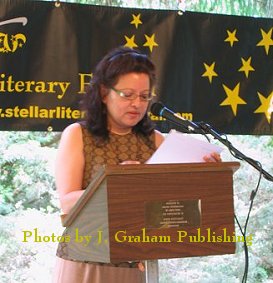
Organizers Liz Strange, Barry King, Delina MacDonald and Marlene Smith nailed everything right. Being the first of hopefully many more, this writers’ festival wisely started small. But, like the good Doctor’s tardis, the venue belied its size by being dense with quality and diversity.

Alison Sinclair

Alison Sinclair

The Ongwandada Resource Centre, where the festival was held, had lots of parking with a friendly well-lit ambience inside under an atrium with tables and chairs for gathering and several rooms for panels and workshops.

The festival covered several of the major genres such as fantasy, science fiction, horror, romance and mystery, with representation by well-known authors in each. Organizers offered a triple track program from 10 am to 5 pm that included panels, informative workshops, readings, novel pitch sessions with CZP

Sandra Kasturi of CZP

Sandra Kasturi of CZP

and Bundoran Press and first page critiques with Caro Soles. Festival organizers populated their program with well-established writers from their own communities. Readers of genre fiction and writers looking to learn and network were given the opportunity to meet some of the top genre writers in the region. The venue included a book fair, box lunches and a snack stand. The only thing missing was a primo coffee bar.

Marie Bilodeau

Marie Bilodeau

The small venue provided an intimate setting for great networking. I had a chance to meet many of my old friends and to make new ones. Marie Bilodeau, an Ottawa fantasy writer, gave an exquisite reading of her new series “Nigh”. Alison Sinclair, recently moved to Ottawa, beamed as she showed me the new release of her Eyre series, “Contagion” by Bundoran Press. Aurora-winning short story author Douglas Smith gave

Doug Smith

Doug Smith

an informative workshop on how to market and sell your short stories. His excellent guidebook “Playing the Short Game” sold for a special festival price. I caught Derek Newman-Stille sitting in the lounge over a box lunch and discussed his radio show in Peterborough and traded stories with Hayden Trenholm, publisher of Bundoran Press and aurora-winning author of the Steeles Chronicles. Other writers who I had a chance to visit

Alyssa Cooper

Alyssa Cooper

with and meet included Caro Soles, Sandra Kasturi (of Chizine), Alyssa Cooper, Eve Langlais, Matt Moore, Nancy Kilpatrick, Matthew Johnson, and Violette Malan.

The organizers—themselves published genre writers (Strange writes fantasy, horror and mystery and just released her first science fiction novel, “Erased”; King writes science fiction)—started the festival in response to an observed need to showcase genre writers in the Kingston area, otherwise rich in non-genre writing festivals. “Kingston is in an interesting position because we do have so many writers and we do have the WritersFest and so on,” explained King to Peter Hendra of the Kingston Whig-Standard. King felt there was room to showcase this literature in Kingston and the surrounding area.

Derek Newman-Stille

Derek Newman-Stille

“I find that genre fiction can sometimes be seen on a lower status as ‘literary fiction’, and that stings,” Strange confided to me. “I thought [the LGE] would succeed because there are not that many festivals of this sort, and after we put feelers out to see who might be interested in attending the positive responses were overwhelming.”

Caro Soles

Caro Soles

Strange added that “nerd culture” these days is more mainstream than in the past, thanks to George R.R. Martin’s Game of Thrones and Stephanie Meyer’s Twilight series. Strange concluded that this is a good thing for writers of romance, sci-fi, horror, mystery and fantasy and observed that genres are blending a lot more (e.g., historical fantasy, paranormal romance, etc.). I personally write mostly blended genres: science fiction thrillers; SF eco-fiction; historical fantasy and romantic SF.

Violette Malan

Violette Malan

I asked Strange for her opinion on whether the festival was a success and what the organizers plan to do for next year. She gave a resounding yes; they had double the numbers they’d hoped for and didn’t lose money (a common challenge with writing festivals). With most events tending to be in spring or fall, they chose summer, which worked well and showed off Kingston.

Liz Strange, Marlene Smith, Barry King, Delina MacDonald

Liz Strange, Marlene Smith, Barry King, Delina MacDonald

Based on the feedback and success of the con, it looks like the festival next year will run two days.

Now that’s great news!

.

.

.

nina-2014aaNina Munteanu is an ecologist and internationally published author of award-nominated speculative novels, short stories and non-fiction. She is co-editor of Europa SF and currently teaches writing courses at George Brown College and the University of Toronto. Visit www.ninamunteanu.ca for the latest on her books.

The Hidden Costs of Self-Publishing, Part 1: The Solution to “Author Solutions”

author-solutions-friendsWhat do Simon & Schuster, Hay House, Barnes and Noble and Reader’s Digest have in common? Each of these reputable and famous names in publishing has forged a partnership with Author Solutions. What is significant about that? Well…In a detailed article written in April of 2015, author David Gaughran tells us why this is distressing news to authors and I discuss this further below.

Many beginning authors wishing to “self-publish” are looking for a service that will easily and painlessly “publish” their cherished creative as well as help them get it out into the reading world. Naive about what it takes to “get out into the reading world”, many authors are signing up with service-publishers who will “publish” anything so long as the author is willing to pay. You know who they are; I mention some of them below. Although the Internet is populated with excellent book-publishing services by freelance editors, cover artists, layout specialists and various accompanying software and apps, many authors are unwilling to go the a la carte route of experts. Instead, they look for an easy and convenient solution: a one-stop shop to sell their book. The “expertise” and “services” are usually anonymous and nameless, hidden behind the company name. I’ve seen some horrid examples of extremely poor editing in books that had presumably been professionally edited by a service-publisher for which a writer had paid good money. The writer was himself/herself clueless of the poor quality (for some of them, English is not their first language), and couldn’t tell me who had edited their work. When I did some digging into two of these service-publishers, I finally found, in the fine print, that the service-publisher used students. Another client of mine complained bitterly about how he had not received the services promised in the package that he’d paid dearly for. This sort of thing is rampant in the “self-publishing” industry right now.

As with all short cuts, there are hidden costs. Let’s take Author Solutions as a good example.

.

The “Anti-Solution”

Author Solutions provides a “publishing” service to any writer willing to pay.  Typical of virtually all the vanity publishers, Author Solutions and its many affiliates (likely the company you are using) offers several packages for the author, from basic printing services to the deluxe package with promised media coverage and excellent PR. Unfortunately, what they promise and what they deliver can be two different things. Far from providing solutions to an author, Author Solutions operates “more like a telemarketing company whose customer base is the authors themselves,” write plaintiffs Wheeler and Heightsman as part of their 2015 class action law suit against the firm. Some of Author Solutions’ long-standing issues faced by customers include:

  • improperly reporting royalty information
  • non-payment of royalties
  • breach of contract
  • predatory and harassing sales calls
  • excessive markups on review and advertising services
  • failure to deliver marketing services as promised
  • telling customers their add-ons will only cost hundreds of dollars and then charging their credit cards thousands of dollars
  • ignoring customer complaints
  • shaming and banning customers who go public with their stories.

“Despite Author Solutions’ mounting legal troubles and an unending stream of complaints against the company from both its own customers and a whole host of writers’ organizers and campaigners, companies are still queuing up to partner with Author solutions,” writes Gaughran. Is it because its corporate parent is Penguin Random House? Some “Partner Imprints” (in brackets) run by Author Solutions as a self-publishing service for the partner publishing house include:

  • Simon & Schuster (Archway Publishing)
  • Lulu
  • Harlequin (DelleArte Press) – partnership terminated 2015
  • Hay House (Balboa US, Balboa Australia)
  • Barnes & Noble (Nook Press Author Services)
  • Crossbooks (LifeWay) – partnership terminated 2014
  • Penguin (Partridge India, Partridge Singapore, Partridge Africa)
  • HarperCollins/Thomas Nelson/Zondervan (Westbow Press)
  • Random House (MeGustaEscribir)
  • Writer’s Digest (Abbott Press) – partnership terminated 2014

Many authors aren’t aware that these “Partner Imprints” are all run by the same company; or that Author Solutions’ own in-house imprints include iUniverse, Trafford, Palibrio, AuthorHouse, BookTango, and Xlibris. According to Gaughran, this came about as a “solution” for traditional publishing houses to monetize their slush pile. That’s the pile of unsolicited works most beginning writers send to publishing houses that end up in a huge heap in some room that in the past was relegated to new underling editors to cut their teeth on. Now the manuscripts simply go to a company only interested in making money from writers willing to pay for their largely unedited works. Books that would never have been accepted by these traditional publishing houses are now finding a “home”. But what kind of “home” is it and what does the writer really achieve for her many dollars spent? According to Gaughran’s sources at Penguin, the primary directive of Author Solutions is to sell (to the author) the most expensive publishing package they can and encourage authors to buy their own books. When depositions were made public, they revealed that two thirds of Author Solutions revenue comes from selling publishing and marketing packages and one third from selling books—with a vast majority of those book sales coming from authors buying their own books. What about the cool opportunities for book signings at literary events, book displays, advertising space, TV and reviews that they promised? Gaughran provides a staggering list that includes Publishers Weekly, New York Times, Kirkus and the New York Review of Books, and my personal favorite Word on the Street Festival Toronto. “These partnerships don’t provide any real value to Author Solutions customers,” says Gaughran. In an earlier class action lawsuit against Author Solutions by law firm Giskan Solotaroff Anderson & Stewart representing three authors, Publishers Weekly wrote:

The suit, which seeks class action status, alleges that Author Solutions misrepresents itself, luring authors in with claims that its books can compete with “traditional publishers,” offering “greater speed, higher royalties, and more control for its authors.” The company then profits from “fraudulent” practices, the complaint alleges, including “delaying publication, publishing manuscripts with errors to generate fees, and selling worthless services, or services that fail to accomplish what they promise.” The suit also alleges that Author Solutions fails to pay its authors the royalties they are due.

According to the law firm representing the authors:

Author Solutions preys upon the dreams of authors by selling them expensive services that sound exciting but do not actually sell any books. Their defense: They aren’t being deceptive because they aren’t trying to sell books. Of course, for nearly 200,000 authors who have paid thousands (if not tens of thousands) of dollars to buy expensive services that promised to promote their books, Author Solutions’s indifference to book sales comes as more than a bit of a surprise.”

.

The Solution—But You May Not Like It…

So, what’s the solution? For those of you starting out, it’s important to know that firstly there are a lot of genuinely good publishing houses out there potentially interested in your book and willing to work with you in partnership toward a successful book that will sell. And they don’t want your money; they want quality. The book publishing industry is booming in many different ways. And while the predatory arm of the mercenary would like to seduce you with glamour and unrealistic dreams—so long as you pay—a whole cadre of small presses are growing who are producing high quality works by emerging writers. These local Indie publishing houses are worth seeking out and submitting to. But they don’t want to see your book until it is ready. Reader ready. This puts the responsibility back on you, the writer, to produce the very best you can. I tell my writing students at the University of Toronto and George Brown College that if you want to publish, you need to:

  1. write the very best story you can
  2. get it edited, preferably by a professional editor or a writing coach of good repute
  3. research the book publishing market and submit to a traditional publisher (not a service-publisher who wants your money)
  4. rewrite (if you feel the need to) and resubmit to another publisher
  5. resubmit to another publisher

If you decide to self-publish, find a reputable printing house and learn what it takes to create a book. Find someone who does layout and covers professionally. There are good ones out there; I know—I use them myself. Learn some marketing skills or find a marketing specialist or PR specialist who has a sound track record and you can trust. The book industry was and still is based on sound relationships. Writers with editors; publishers with marketers and distributors; writers with readers; and so on.

In the end, it’s up to you. Take charge of your career and bring the “self” back into self-publishing.

In Part 2, I discuss the significance of first impressions and “branding” in self-publishing. Of course with examples.

.

nina-2014aa

Nina Munteanu is an ecologist and internationally published author of award-nominated speculative novels, short stories and non-fiction. She is co-editor of Europa SF and currently teaches writing courses at George Brown College and the University of Toronto. Visit www.ninamunteanu.ca for the latest on her books.  

To Expose or Not to Expose…That is the Question

CreditRiverWalk-oct2018

Walking the path along the Credit River, Ontario (photo by Nina Munteanu)

In fiction, exposition breaks away from the ongoing action of a scene to give information. It can be a paragraph or go on for several pages. Exposition often provides contextual information critical for the reader to buy-in to character-motivation or the ideas promoted in the story. It gives a story its perspective and larger meaning by linking the reader with the thematic elements. If scene is action and plot, exposition feeds reflection and theme. Exposition can appear in the form of background, setting, back story, or overview. It is most often expressed through a POV character’s reflection and observation.

There are points in almost every story where exposition is necessary. Most stories would suffer without information that adds past, context and overview.

WardIsland wall in forest

Ward Island, Ontario (photo by Nina Munteanu)

Exposition in writing lets you:

  • Describe a person in detail
  • Describe a place for more than a phrase or two (important especially if a place serves as a “character”)
  • Skip over periods of time when nothing important or compelling is happening, without a jarring break in the narrative
  • Draw back from a close-focus action scene to give the reader a meaningful overview (and to say how things got that way)
  • Give some background and history of characters, location, event, etc.

You need to balance the show and tell part of your narrative and to maintain a rhythm in your pace and tone. This means doing several things, including:

  • Restrain yourself and keep your notes to yourself: I’ve seen excellent writers add too much exposition on a subject that obviously excited them but didn’t necessarily excite me. This often occurs when a writer feels impelled to share their invention or discovery at the expense of story-telling. Doing your “homework” in writing (e.g., research) also includes keeping it to yourself, no matter how much you want to share it. Doing your homework is the “iceberg” and the story is the “tip”. Many genre books (e.g., science fiction, thrillers, mysteries, etc.) must be supported by solid research. The writer takes what she needs for the story and keeps the rest.
  • Arouse then explain: introduce your character by letting her act and show herself and engage the reader’s curiosity and sympathy, then explain how and why she got there.
  • Build exposition into the scene: get creative and include expository information as props in a scene. This is a great way to add information seamlessly.
  • Put exposition in between scenes: instead of interrupting a scene in action, exposition can be used to give the reader a breather from a high paced scene to reflect along with the protagonist on what just happened. This is a more appropriate place to read exposition, when the reader has calmed down.
  • Let a character explain: have your characters provide the information by one questioning and the other replying. There is a danger in this kind of exposition, in that the dialogue can become encumbered by long stretches of explanation. Take care to make this realistic and enjoyable to the reader. If done well, this type of exposition can also reveal things about the characters.
  • Use interior monologue: use a character’s inner reflections to reveal information, which also reveals something of the character herself. Be careful not to turn this into polemic, however.

Now, go and have fun exposing!

For more writing tips on writing fiction (and non-fiction or memoir) check out “The Alien Guidebook Series” on writing.

nina-2014aaNina Munteanu is an ecologist and internationally published author of award-nominated speculative novels, short stories and non-fiction. She is co-editor of Europa SF and currently teaches writing courses at George Brown College and the University of Toronto. Visit www.ninamunteanu.ca for the latest on her books.

The Careful Writer: Some Notes on Composition

Log patterns 6

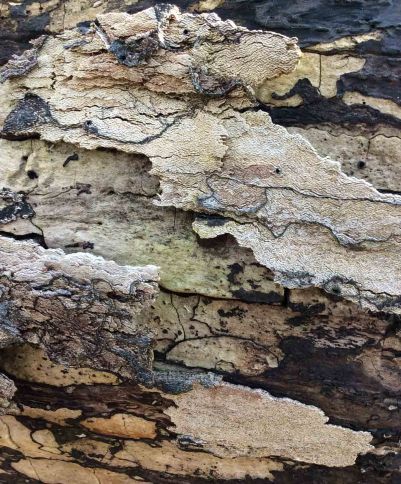
Spalted log (photo by Nina Munteanu)

During my recent reread of Strunk and White’s “The Elements of Style”, this little book yielded more good advice that I wish to share with you.

“The shape of our language is not rigid,” they tell us. “We have no lawgiver whose word is final.” This is because language is fluid and ever-evolving as the artist’s tool of communication. The artist interprets the world; the writer interprets the language to reflect it.

And yet, a basic structural design underlies every kind of writing. To be effective, Strunk and White assert, “writing must follow closely the thoughts of the writer, but not necessarily in the order in which those thoughts occur.”

In some cases the best design is no design at all (as in a love letter or a casual essay, which is an acceptable stream of conscious flow). But, in most cases—particularly in “storytelling”—planning helps. The first principle of composition is “to determine the shape of what is to come and pursue that shape.”

Jack Bickham, author of Elements of Writing Fiction: Scene and Structure reminds us that, “a thorough understanding and use of fiction’s classic structural patterns frees the writer from having to worry about the wrong things and allows her to concentrate her imagination on characters and events.” Structure, explains Bickham, is the internal part of the story, like the braces of your house; while form is external, what you do with the structure. Structure and form link to construct “story” in a series of scenes that “interconnect in a very clear way to form a long narrative with linear development form posing the story question at the outset to the answering of that question at the climax.”

Strunk and White discuss twenty-two elementary principles of basic composition. Here are a few choice ones.

The 14th Elementary Principle: Use the Active Voice

The active voice is often more direct and vigorous than the passive. Strunk and White note that activating a sentence not only makes it stronger but shorter. “Thus, brevity is a by-product of vigor,” they say. Here’s one of their examples:

Passive: My first visit to Boston will always be remembered by me.

Passive, indefinite: My first visit to Boston will always be remembered.

Active: I shall always remember my first visit to Boston.

Activating the verb breathes life into the sentence, gives it motion and direction, and empowers both subject and object.

The 15th Elementary Principle: Put Statements in Positive Form

Make definite assertions. Avoid tame, colorless, hesitating and noncommittal language. “Use the word ‘not’ as a means of denial or in antithesis, never as a means of evasion.” Here are a few examples:

Negative Positive
He was not very often on time. He usually came late.
She did not think that studying Latin was a sensible way to use one’s time. She thought the study of Latin a waste of time.

The 16th Elementary Principle: Use Definite, Specific, Concrete Language

Prefer “the specific to the general, the definite to the vague, the concrete to the abstract,” they say. The surest way to arouse and hold the reader’s attention is by being specific, definite and concrete. The greatest writers use words that call up pictures. The key is to know what details matter.

Author Jordan Rosenfeld describes your novel as a world in which your reader enters and wants to stay in for a while. You make it easy for the reader by adding concrete details for her to envision and relate to. Ground your readers in vivid setting, rich but unobtrusive detail. Don’t abandon your characters to a generic, vague and prosaic setting, drinking “beverages” and driving “vehicles” on “roads”; instead, brighten up their lives by having them speed along Highway 66 in a 1959 red Corvette, sipping a Pinot Noir.

The 17th Elementary Principle: Omit Needless Words

“Vigorous writing is concise,” Strunk and White tell us. Ray Bradbury once told me that “every word counts” in a story, from the name of your character to the verb you use to activate and give direction to your sentence. “A sentence should contain no unnecessary words for the same reason that a drawing should have no unnecessary lines and a machine no unnecessary parts,” say Strunk and White. Activating your verbs is one excellent way to invigorate your sentences. Strunk and White provide several common expressions that violate concise writing.

Original                                Just use…
The question as to whether Whether
There is no doubt but that No doubt
Used for fuel purposes Used for fuel
In a hasty manner Hastily
The reason why is that Because
Her story is a strange one Her story is strange

How about the term the fact that? Strunk and White go into some detail with this rather pesky term. Here are a few examples:

·       I was unaware of the fact that ·       I was unaware that
·       Call your attention to the fact that ·       Notify you
·       In spite of the fact that ·       Although
·       The fact that he had not succeeded ·       His failure

For more writing tips on writing fiction (and non-fiction or memoir) check out “The Alien Guidebook Series” on writing.

References:

Bickham, Jack. 1993. Elements of Fiction Writing: Scene and Structure. Writer’s Digest Books. Cincinnati, Ohio.

Strunk, William Jr. and E.B. White. 2000. The Elements of Style. Fourth ed. Longman. New York, NY. 105pp.

Munteanu, Nina. 2009. The Fiction Writer: Get Published, Write Now! Starfire World Syndicate. Louisville, KY. 166pp.

Rosenfeld, Jordan E. 2008. “Novel Revision for the Faint of Heart”. In: Writer’s Digest. February, 2008.

nina-2014aaNina Munteanu is an ecologist and internationally published author of award-nominated speculative novels, short stories and non-fiction. She is co-editor of Europa SF and currently teaches writing courses at George Brown College and the University of Toronto. Visit www.ninamunteanu.ca for the latest on her books.
Swimming Against the Tide and Rising Up & Rising Above

cheryl-xavier

Cheryl Antao Xavier

“Her passion for giving voice to non-mainstream writers has inspired her to swim against the tide in these harsh economic times,” says Desi News (Issue 31; December 2014) of Cheryl Antao-Xavier, publisher of In Our Words, Inc. (IOWI) in Mississauga, Ontario.

I met Cheryl a few years ago at a writer’s event when she introduced herself during a break as I was helping myself to my third samosa. We’ve since collaborated on several projects. The most recent is a literary anthology on what it means to live in Canada and be a Canadian. The call for submissions has just recently been made, so if you’re interested in submitting, check out Cheryl’s website here: http://inourwords.ca/the-literary-connection-volume-ii.html

Born of Goan parents, Cheryl grew up in Bahrain and then Karachi, where books were a rare treat. Cheryl shares the story of her aunt who taught knitting to women in a banking family from whom she borrowed books—Enid Blyton, Grimm’s Fairy Tales, Nancy Drew and comics—for her book-thirsty nieces, who “would devour the books in no time!” says Antao-Xavier.

Quality books were a luxury, even at the university she attended. Cheryl recalls how the Karachi University library had a “chained book” on display. John Stuart Mill’s book was required reading for students of economics but there was only one copy in the KU library. It sat on a wooden stand with a chain running through its spine under a librarian’s guard and you had to book time with the book and wait long hours for a few minutes to make hasty notes.

Cheryl Antao Xavier

Cheryl Antao Xavier

When Cheryl immigrated to Canada in 1988, she found “book heaven” in the second-hand bookstores and libraries. Reading and owning books became an obsession that has endured to this day.

Cheryl worked for several publishing houses before creating her own publishing house In Our Words Inc. (IOWI). IOWI publishes a good variety of works, including literary fiction, creative non-fiction, poetry and children’s stories from both emerging and established writers.

About the work IOWI publishes, Cheryl told Desi News, “I delight in new and fresh voices; language with imagery; twists on the conventional; historical backgrounds with the angst of displaced or marginalized people. For writers with emotional ties to a heritage radically different from the Canadian experience, writing is a cathartic process. There are writers who have lived through cataclysmic events, whose stories are fascinating chips in the mosaic of Canadian literature.”

I recently whisked Cheryl off in Benny, my sentient ship, and settled her to a million dollar view in the aft deck as we circled the planet. I asked her about how she is managing with the industry doing virtual summersaults (as opposed to somersaults–well, it IS summer, eh?) these days. Here’s what went back and forth:

Nina: I was so intrigued by your story, I just have to start by asking you this: what’s your favourite book of all time and why?

Cheryl: Jane Austen’s Pride and Prejudice. Read it umpteen times, saw both movie versions, have the Colin Firth series in my video collection. I looooove period fiction drama. Dickens, the Brontes, Hardy, to the more recent Forsythe Saga, Downton Abbey, etc. etc. My Dad had the full collection of Perry Mason and Zane Grey books. So of course I read them all. I love murder-mysteries from Agatha Christie to the present day forensic science stuff.

Nina: You have excellent taste! … What is your assessment of what is happening with print books vs ebooks vs audio books and such? Do you see one format winning over the other and how will that affect your own publishing model?

Cheryl: Print books should be around for as long as our generation who love holding a paper book survive. But ebooks are increasingly popular and have undeniable environmental merits. Publishing companies like mine have to do what you aptly call ‘virtual somersaults’ to stay current and cut costs to stay viable. Rather than publishing formats, what worries me more is poor quality books being published and the potential for declining readership in general. The tragedy of do-it-yourself print-on-demand software, freely available, is that anybody with passable tech skills can become a ‘published author.’ Books with flashy covers but no creative merit vie for reader attention and diminishing discretionary incomes. Also, media entertainment continues to steal leisure time.

Nina: Can you share some candid thoughts on the advantages and disadvantages for writers starting out in choosing the traditional publishing model vs alternative models such as indie or self-publishing.

Cheryl: The lines between traditional and indie/self-pub have blurred even more with the proliferation of print-on-demand options. Production costs have consequently plummeted. So the financial investment in an author/book has less of a risk. I would say, do your research. Make your manuscript super-strong, that means get it professionally edited, and then try the traditional route. Read publishers’ responses to your queries very carefully. It’s an opportunity to learn. If there are no takers, then research indie publishers and call, discuss contracts and options and make an informed decision. Make doubly sure that the traditional pre-production steps of editing, proofreading and professional design are not bypassed. Sometimes good content is smothered by verbosity and needs a good professional edit. Basic POD ‘template’ designs SCREAM amateur-DIY when they are set with no real imagination in big blocks of text, riddled with typos.

Nina: Do you see any specific roles for indie and/or self-publishing in helping to define artistic expression in Canada?

Cheryl: Definitely. The traditional big publishing houses can accept just so many manuscripts. So obviously they’ll go for the ones that are a sure bet. That’s where the diamonds in the rough can be missed out. Indie publishers who have the resources to work with authors to polish the content to its best possible advantage are ideally placed to bring new or even established voices to the mainstream.

Nina: What in your opinion is the major impact (both negative and positive) of the growing self-publishing model adopted by many writers over both traditional and indie publishing?

Cheryl: Occasionally I read and recommend self-published books for membership in a major professional writer’s organization. I also attend book launches and local literary events looking at books, particularly by self-published authors. The good thing is that these authors went that extra step to raise their voices in the literate world. They feel the satisfaction of being ‘published authors.’ The down side is that once something is in print, and particularly if it has not been professionally edited and designed, that book can end up being an embarrassment and a waste of time and money. Typos jump out at the reader and lower the credibility of the work and its creator. Ultimately, it comes down to what the writer wants to achieve by publishing. 

Nina: What major change do you foresee in the book industry and the readership that will affect us? How and why will that affect IOWI?

Cheryl: Everybody loves a good story, and finds it worth their while to read well-articulated text. So the successful writers will be the ones who manage to engage their readers no matter what the genre. The challenge is also for a good book to stand out from the proliferation of new titles vying for attention in virtual and brick-and-mortar stores. I see social media, forums like Goodreads, and book tours/festivals being key arbiters in what bookworms find and opt to read. IOWI will continue to offer an indie publishing option that stresses putting out a good book. Something that both author and publisher can be proud of.

Nina: Tell us about your current projects and why they excite you. 

Cheryl: IOWI is working on two anthologies currently, with a couple more in the planning stage. A Mississauga youth group is publishing their third anthology through IOWI. It is so exciting to see the writing and photography talent this group has attracted. We are so proud to be their publisher. IOWI has its own anthology The Literary Connection Volume II, with a theme of ‘My Canada’ due to be published by November this year. The call for submissions is already out and closes end-July. I am also working on pulling together a collection of plays by Canadian playwrights. It’s going to be awesome. My aim is to have writers meet with a professional writing coach, yourself Nina, to workshop their submissions into amazing work. I want these anthologies to be a credible contribution to CanLit.

Then another pet project is The Red Bench Project, which seeks to promote reading and literacy at the family and community levels. We must encourage the habit of reading for enjoyment. Bringing authors and public together is part of this project.

Nina: What three pieces of advice do you have for a new writer wishing to get published?

Cheryl: Write every day. Then spend some time editing and rewriting past work. Learn to write well through courses, mentorship or self-study.

Read voraciously and discerningly. Keep clippings or books of your favourite writers handy. Before writing, read a selection from these writers. It influences your own voice and jumpstarts your creativity.

Botanical Beach tidal pools

Botanical Beach, BC (photo by Nina Munteanu)

Be guided by your need to publish your super-amazing manuscript. Not by your need to see your name on a book. If the content is not up to par, that novelty morphs into the proverbial albatross that haunts a fledgling writing career. If you are a serious writer: DON’T PUBLISH TILL YOU ARE READY!


Nina: Great advice, Cheryl! Thanks so much for joining me here and I do promise to get you back on the ground… Don’t the Great Lakes look beautiful from 36,000 km?

Cheryl: Thank YOU for the ride, Nina. Be well.

.

.

nina-2014aaNina Munteanu is an ecologist and internationally published author of award-nominated speculative novels, short stories and non-fiction. She is co-editor of Europa SF and currently teaches writing courses at George Brown College and the University of Toronto. Visit www.ninamunteanu.ca for the latest on her books.

Do Your Research

CreditRiverWalk-oct2018

Walking along the Credit River (photo by Nina Munteanu)

Research is something many writers dislike and find daunting or even intimidating. Research for your book or short story will take on many forms from subtle to obvious and from non-directed (opportunistic) to directed (e.g., library). Its form and rigorousness will vary according to your purpose and circumstance. And where you go to do your research will vary accordingly.

In truth, as a writer, you are doing research all the time: when you’re riding the bus or train to work, when you’re traveling on vacation, when you’re having a lively discussion—or better yet an argument—with a friend or colleague. Everything you experience and observe is research. This is what’s called non-directed research. Writers, like all artists, are reporters of life, actively participating and observing. A writer is an opportunist, gathering her data through her daily life experiences.

Why is Research Important?

notebook-vineyard-NOTL

Niagara on the Lake, ON (photo by Nina Munteanu)

You might be saying: well, that’s all well and good for a historical-mystery set in Budapest or a science fiction thriller set in the Vega system. But you don’t need to do research because you’re writing a fantasy or a memoir. Neither of these, on the face of it, appears to require research: the fantasy is based on a totally made up world, after all, and the memoir is all about you. So, why bother? As a matter of fact, they both need research. Most books do, particularly nowadays for our multiplex, intelligent and discerning readership. Readers of any fiction enjoy learning something when they read, particularly when it’s seamless and made easy through a compelling story. It’s a real bonus.

To return to the fantasy, you will find very quickly that in order to build a consistent world (even if it’s mostly from your own imagination), you will need to draw upon something real to anchor your imaginary world upon. Whether this reflects a powerful myth or forms an alternative version of a real society, you will still need to apply some “rules” to follow, so you don’t lose your reader.

With respect to the memoir, the need for research lies in placing your story in context with either some event, idea, theme or place of interest to attract readership. Unless you’re a world unto yourself (e.g., you’re a celebrity of some kind with an established following), your story will require this larger element within which to place your personal story. That’s where research comes in.

Internet as Resource and Risk

The Internet provides an excellent database that is rich with information, if you know how to get it and qualify it.

Chances are that your favorite newspaper or magazine has a strong online presence. The Internet provides an excellent platform for finding resources in a myriad of subjects. It is the largest single place where you can find current information relevant to almost anything.

With information so readily accessible and easy to find through Google and other search engines as well as giant amoeba-like encyclopedia wiki sites like Wikipedia, you needn’t suffer the frustrations of library and book searches. However, there is risk.

The risk is related ironically to the very accessibility of online information. You need to be even more vigilant of the veracity and reliability of your sources when conducting online research.

Optimizing Your World Wide Web Search

The Teaching Library Internet Workshop at Berkley University provides excellent tutorials on how to search the internet for topics. They recommend a search strategy that analyzes your topic and searches with “peripheral vision”. For instance, they suggest that you:

  • define for your topic any distinctive words or phrases, an overview of the broader topic to which your topic belongs, any synonyms equivalent terms or variants of spelling to include
  • not assume you know what you want to find. Look at search results and see what you might use in addition to what you’ve thought of
  • switch between search engines and directories and back

Verifying Your Research

Path deas park

Deas Park, BC (photo by Nina Munteanu)

When doing research, particularly on the Internet (but anywhere), you should do several things:

  • Use more than one source, particularly for important things; this will give you a wider range of material from which to discern accuracy and reliability
  • Verify your sources and preferably cross-reference to measure out objective “truth” vs bias
  • Try to use primary sources (original) vs. secondary or tertiary sources (original cited and open to interpretation); the closer you are to the original source, the closer you are to getting the original “story”
  • When going to more than one source, try to get a range of different source-types (e.g., conservative newspaper vs. blog vs. special interest site, etc.) to gain a full range of insight into the issue you’re researching

nina-2014aaNina Munteanu is an ecologist and internationally published author of award-nominated speculative novels, short stories and non-fiction. She is co-editor of Europa SF and currently teaches writing courses at George Brown College and the University of Toronto. Visit www.ninamunteanu.ca for the latest on her books.
The Future of “Books”

Path deas park

Deas Park, BC (photo by Nina Munteanu)

An August 2013 survey by bestselling author Marie Force revealed some interesting trends about what American readers like, what format they prefer and where they find their writers. While the survey was fairly small and restricted to Americans (just under 3,000 people responded to 44 questions), I think it provides a good microcosm of what the trend is out there in North America generally.

Here are Marie’s main findings and conclusions:

1. FORM: Readers prefer e-books to paperbacks (77%); many buy in multiple formats, including paperback. 52% of surveyed readers do buy their books in print form. Audio books are slowly gaining popularity.

2. REVIEWS & TESTIMONIALS: Retail reviews such as those on Amazon, Barnes & Noble and other retail sites were more important to readers than author endorsements and reviews by professional reviewers on review sites. Fifty percent of readers preferred reviews posted on retail sites for their information; 16% used Goodreads; 72% said that the designation of “New York Times Bestselling Author” did not make a difference in their purchasing choice. 81% did not subscribe or read the major review publications (e.g., RT Book Reviews, Publishers Weekly, Kirkus, Booklist, NYT Sunday Edition, USA Today)

3. BOOKSTORES: A majority of readers bought their books from a virtual bookseller: 80% of surveyed readers buy from Amazon (Barnes & Noble online was second at 23%; iBookstore/Apple scored 13%). 58% of readers surveyed had visited a real bookstore twice or less in the past year. The remaining percent visited more often.

4. PUBLISHER: readers are more likely to buy a self-published book by an author they know; 94% of readers surveyed are “more likely” to buy a self-published book from an author who is known to them; 68% of readers are “less likely” to purchase a self-published book by an author they don’t know.

5. CONTENT & GENRE: Readers are most interested in stories with outstanding characters, setting, storytelling and writing; 75% chose “all of the above” to encompass each of the elements. Unsurprisingly, 81% of readers chose “Romance” is their favorite genre of fiction; contemporary romance is the favorite subgenre with historical romance as the second favorite.

6. HOW READERS FIND & FOLLOW AUTHORS: the best single-most best social media platform for authors is Facebook, used by 85% of surveyed readers; 75% of readers also subscribed to the newsletters of their favorite authors and 55% subscribed to the blogs of their favorite authors. Twitter was not a major site for readers to find and follow their authors. Goodreads was one of the most frequently mentioned sites in the open-ended portion of the questionnaire.
The numbers don’t always match up; nor is the catchment or method of making statistical conclusions sufficiently explained; but the results as presented make logical sense to me. They make sense because the feedback I am getting in my circles is very similar. So, there you go, writers and readers.

Here’s my take on this phenomenon:

1. Increased sales of Digital Books: the increasing sales of digital books (ebooks) and the rising sales of audiobooks is a wonderful and uplifting icon of rising literacy. More people are reading (and listening) to books now than ever. And we have the digital book, Kindles, Kobos and iPads to thank for it. The “book” has become more accessible and readable. People swarm the public transit, clutching their iPhones and reading devices.

2. Readers still choosing Print Books: Obviously, print books are cherished by readers for their intrinsic value. Books—their tangible tactile presence—will always remain with us; in collector’s showcase libraries, in trendy artistic venues, and funky local neighbourhood venues.

3. My Prediction: print books will become the epitome of publishing value and worth. Already coveted by collectors whose libraries will represent the best of the best in the literary world, print books will come to represent the highest status in literature. Only the best stories will endure as print books; perhaps only the “best book” will even be published in print form. Its existence in print form will define its literary value.

4. Take Home Message to Authors: ensure that your book appears in print form and get it into the hands of classy libraries and classy people.

nina-2014aaNina Munteanu is an ecologist and internationally published author of award-nominated speculative novels, short stories and non-fiction. She is co-editor of Europa SF and currently teaches writing courses at George Brown College and the University of Toronto. Visit www.ninamunteanu.ca for the latest on her books.

When We Burn Books & Ray Bradbury’s Fireman

Book burning Opernplatz

Book burning Opernplatz

The burning of an author’s books…has always been the tribute that an ignorant age pays to the genius of its time — Joseph Lewis

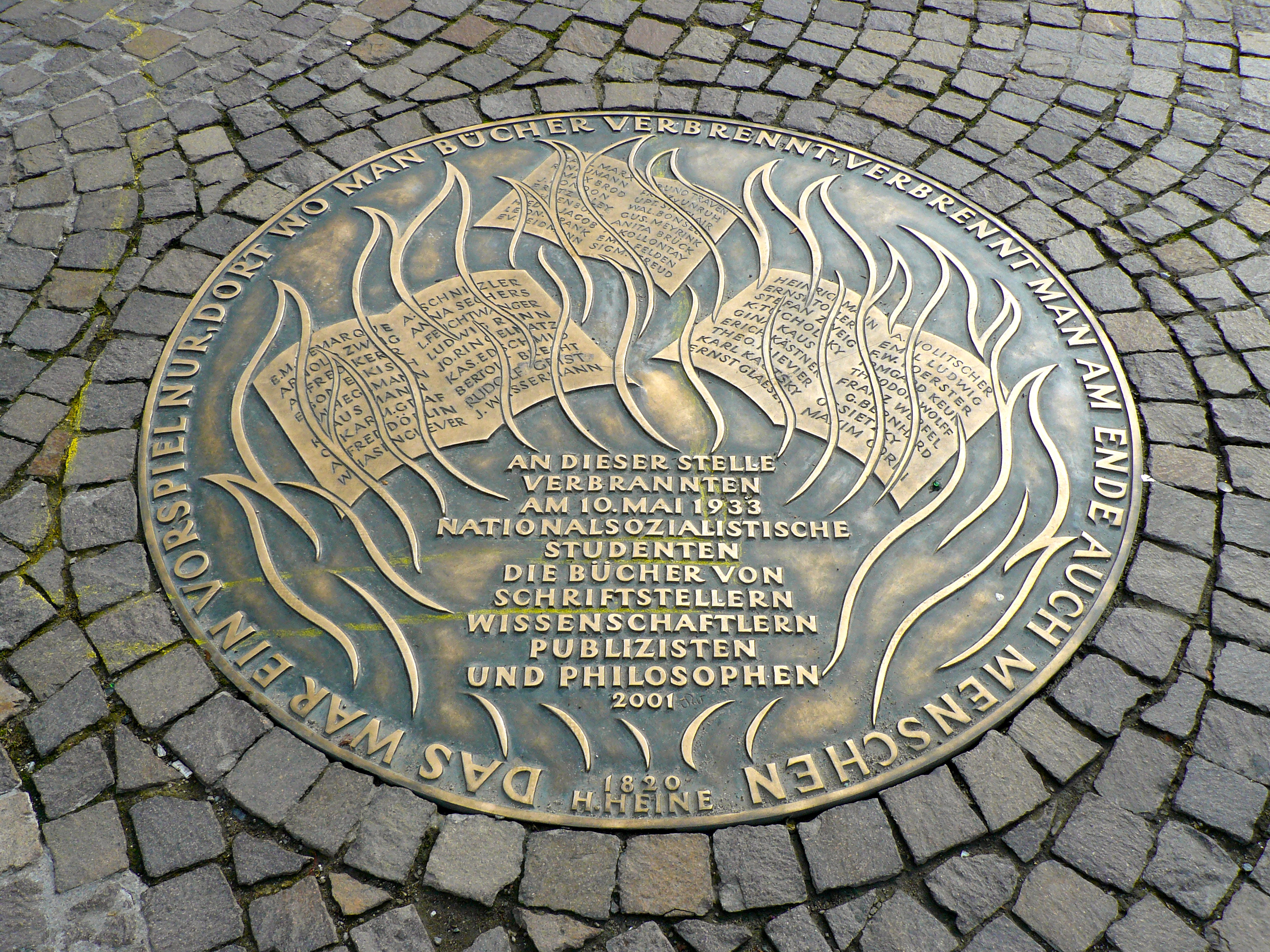
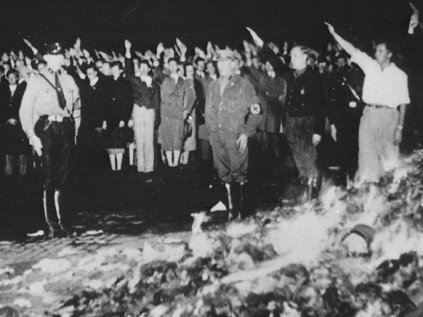
In his 1821 play Almansor the German writer Heinrich Heine wrote (referring to the burning of the Muslim holy book, the Koran, during the Spanish Inquisition): “Dort, wo man Bucher verbrennt, verbrennt man am Ende auch Menschen” –“Where they burn books, they will end in burning human beings.” A century later, on May 10th, 1933, Heine’s books were among the thousands of volumes publicly hauled out and burned in the streets by the Nazis in Berlin’s Opernplatz (Bebelplatz). A violent outburst that did, in fact, foreshadow the blazing ovens of the Holocaust.Commemorative_Plaque_book_burning_Frankfurt_Hesse_Germany

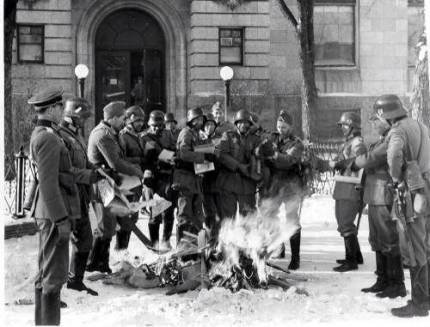
Wikipedia defines ‘book burning’ as the “practice of ceremoniously destroying by fire one or more copies of a book or other written material.” The practice, usually carried out in public (like public hangings in Medieval times) is generally motivated by moral, religious or political objections to the material. Some notable and particularly destructive book burnings have included:

  • the destruction of the Library of Alexandria;
  • burning books and burying scholars (they mean ‘live burying’, folks!) under China’s Qin Dynasty (3rd Century);
  • Cathar texts in the Lanquedoc region of France in the 13th Century;
  • the Talmud in Paris by the French crown in 1242;
  • Arabic and Hebrew books at Andalucia, Spain, in 1499;
  • Servetus’s “heretical” writings along with the writer in Geneva in 1553;
  • Maya sacred books in Yucatan (1562);
  • Tyndale’s New Testament by the English authorities in 1525 and 1526;
  • Luthar’s Bible in Germany (1624) as ordered by the Pope;
  • Robespierre’s destruction of religious libraries in 1793;
  • anti-communist books by the Bolsheviks in 1917;
  • Jewish, anti-Nazi and “degenerate” books by the Nazis in the 1930s and 1940s;
  • Communist and “fellow traveller” books by Senator McCarthy in 1953;
  • The Satanic Verses by Muslims in the UK in 1988; and,
  • Harry Potter books in various American cities, 2001-2005.
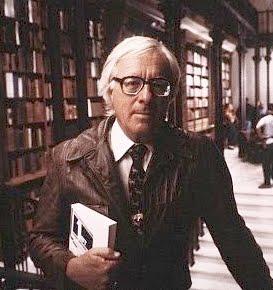
Ray Bradbury copy

Ray Bradbury

In the 1967 introduction of his novel, Fahrenheit 451 (based on his novella, The Fireman), Ray Bradbury implied that the Nazi book burnings inspired his story. I found his statement both eloquent and powerful: “It follows then that when Hitler burned a book I felt it as keenly, please forgive me, as his killing a human, for in the long sum of history they are one in the same flesh.” For those of you who haven’t yet read his novel (one of my favourite books, ever), this cautionary tale explores a fictional future society that has institutionalized book burning in an effort by authorities to maintain order and ‘happiness’. In Bradbury’s fictional world, firemen don’t put out fires; they start them. The story begins with Montag, an ordinary fireman:

It was a pleasure to burn. It was a special pleasure to see things eaten, to see things blackened and changed. With the brass nozzle in his fists, with this great python spitting its venomous kerosene upon the world, the blood pounded in his head, and his hands were the hands of some amazing conductor playing all the symphonies of blazing and burning to bring down the tatters and charcoal ruins of historyMontag grinned the fierce grin of all men singed and driven back by the flame. He knew that when he returned to the firehouse, he might wink at himself, a minstrel man, burnt-corked, in the mirror.”

bookburning-Opernplatz

book burning in Opernplatz

Bradbury wove a multi-layered political and social tale that followed one man’s journey to find his soul. Fahrenheit 451 explores the theme of intellectual freedom using censorship as his plot device. Montag is “everyman” who must make a choice for personal freedom at the expense of the “good censored life”. It is the choice all artists must make. In choosing freedom, we make an obligation to respect and tolerate those with whom we disagree; otherwise we are just tyrants and not really free.

fahrenheit-451-book-coverIn 1795 Thomas Paine wrote, “He that would make his own liberty secure, must guard even his enemy from opposition: for if he violates this duty he establishes a precedent that will reach to himself.”

The American Library Association defines intellectual freedom as the right of every individual to both seek and receive information from all points of view without restriction. It also encompasses the freedom to hold, and disseminate ideas. Intellectual freedom is the basis for our democratic system. We expect our people to be self-governors. But to do so responsibly, our citizenry must be well-informed. Libraries — and the free internet — provide the ideas and information to allow people to inform themselves.

John F. Kennedy once said that “a nation that is afraid to let its people judge the truth and falsehood in an open market is a nation that is afraid of its people.”

nazi book burning2Censorship suppresses ideas and information that certain people — individuals, groups or government officials — find objectionable or dangerous. Censors pressure public institutions, like libraries, to suppress and remove from public access information they judge inappropriate or dangerous, so that no one else has the chance to read or view the material and make up their own minds about it. “Censorship … creates, in the end, the kind of society that is incapable of exercising real discretion,” said Henry Steel Commager.

When does simple disapproval turn into active disallowing; when does banning of books turn into burning of books?

I believe that censorship occurs when one submits to fear and insecurity: the bully being bullied and ruled by his own fear. Okay, we all fear; that’s only natural. We’re animals and fear is a survival instinct we all need and use. But, we don’t live in caves and hunt sloth anymore; that fear can be tempered by a civilized educated culture. Without the benefit of a nurturing faith and belief in the goodness of humankind, fear will lead to prejudice, racism and a general isolationist paranoia.

Winston Churchill said: “You see these dictators on their pedestals, surrounded by the bayonets of their soldiers and the truncheons of their police. Yet in their hearts there is unspoken–unspeakable–fear. They are afraid of words and thoughts! Words spoken abroad, thoughts stirring at home, all the more powerful because they are forbidden. These terrify them. A little mouse–a little tiny mouse! -of thought appears in the room, and even the mightiest potentates are thrown into panic.”

nazi book burning3

Book burning in Opernplatz

The danger comes when an organized group subscribes to a common fear. It is often driven by a charismatic leader, who has somehow captured that fear, harnessed its raging force then propelled it like a projectile. One’s anonymity and shared (and supposedly diluted) responsibility within the “mob” may compel the individual to commit irrational acts of atrocity he/she would never otherwise contemplate on his/her own. How many of us have been caught up in the mass enthusiasm of a sports match? We’ve all felt it; the power of the mob, its energy crackling in the air around our pounding hearts and cries. To yield to a mob-mentality is to subscribe to a condoned insanity, within which the ‘mob’ takes on its own irrational personality that is more than the sum of its parts…to become a kind of autopoietic entity that swiftly and ruthlessly dispenses its own perverse form of justice.

Perhaps for this reason more than any other, I see the artist’s path as a singular one, part of, yet apart from, the crowd. Neither leader, nor follower; rather, a wizard and a “trickster”, a shining beacon, both reviled and honored simultaneously. We are our books.

It was Victor Frankl, survivor of Auschwitz, who said, “what is to give light must endure burning.”

In her acceptance speech for a lifetime award by the NBA, author Ursula K. LeGuin said:

le-guin copy

Ursula K. LeGuin

“I think hard times are coming, when we will be wanting the voices of writers who can see alternatives to how we live now, and can see through our fear-stricken society and its obsessive technologies, to other ways of being. And even imagine some real grounds for hope. We will need writers who can remember freedom: poets, visionaries–the realists of a larger reality. Right now, I think we need writers who know the difference between production of a market commodity and the practice of an art…The profit motive is often in conflict with the aims of art…We live in capitalism. Its power seems inescapable; so did the divine right of kings… Power can be resisted and changed by human beings; resistance and change often begin in art, and very often in our art–the art of words. I’ve had a long career and a good one, in good company, and here, at the end of it, I really don’t want to watch American literature get sold down the river… The name of our beautiful reward is not profit. Its name is freedom.”

nina-2014aaNina Munteanu is an ecologist and internationally published author of award-nominated speculative novels, short stories and non-fiction. She is co-editor of Europa SF and currently teaches writing courses at George Brown College and the University of Toronto. Visit www.ninamunteanu.ca for the latest on her books.

Feeding the Muse: Going on a “Writer’s Date”

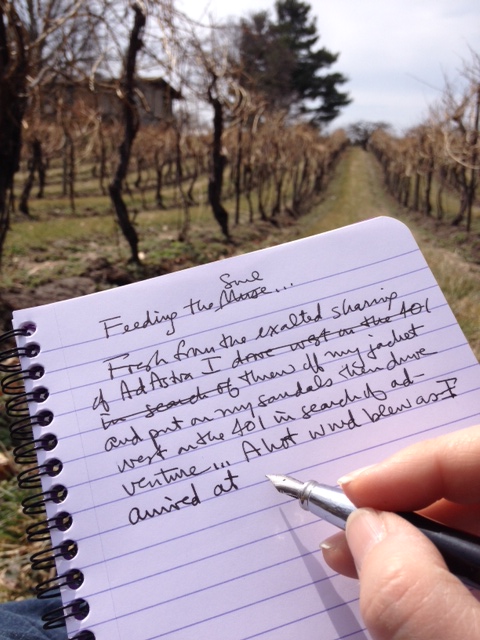
SONY DSCLate Sunday afternoon, minutes after my last panel and still exalted from stimulating sharing at Ad Astra 2015, I threw off my jacket and put on my sandals then drove west on the 401 in search of adventure. A playful wind blew as I reached my destination: Niagara on the Lake.

This was my first writer’s date this year. And, in truth, I’d almost forgotten to attend the SF con because I was so excited about my date. No, it wasn’t that kind of date; more like a mini-writer’s retreat. Julia Cameron coined the term “artist’s date” to define any kind of muse-feeding activity. The key is to do it ALONE. Basically an artist/writer date is a block of time you set aside to nurture your creative muse. In its primary form, says Cameron, “the artist date is an excursion, a play date that you preplan and defend against all interlopers…That means no lovers, friends, spouses, children—no taggers-on of any stripe.”

It’s just you and your inner-artist: your inner creative child.

My Writer’s Date started with Niagara on the Lake and La Toscana di Carlotta, possibly NOTL’s primo Bed and Breakfast (go check the rave reviews on Trip Advisor). Located close to King Street in the historic village, the B&B is a lovely heritage house with beautifully designed rooms. Carlotta passionately prepares an authentic Italian breakfast that includes freshly squeezed orange juice, yogurt and fresh fruit, bread, crostini, eggs created like a work of art and even dessert! But that’s not even the best part; both Carlotta and partner Kash are such beautiful people and wonderful hosts. You start out thinking they’re so interesting and end up embracing them as friends.

I stayed 2 days and my activities included a evening walks through the charming historic town (where Il Gelato di Carlotta is a must—considered a gem by actress Moya O’Connel), several ice-wine tastings, walks along the Niagara River and even a blitz look at Niagara Falls and Tesla’s statue.notebook01

It was a dizzying sensory intake, tempered with wonderful reflection to Nature’s awakening. Spring in southern Ontario lies just on the cusp of bursting into its full glory. I could smell its intent on the warm breeze and in the joyful excitement of birds and butterflies in the still-Spartan forest. At the edge of the wooded bluff I found a moss-covered log to sit on and listened to the water lapping below. I pulled out my new fountain pen and notepad and started to write. I’d left my computer behind and revelled in the pen flowing across the paper, forming words like a magician.

I had set no solid itinerary (except that I had to be back in Toronto to teach the next day). And, because of it, I experienced everything with the open wonder that comes with no expectation. I relaxed and explored. I poked around and smelled the dirt. I napped. I dawdled. I went in circles and changed my mind. I chased after butterflies and listened to the wind. I got a hazelnut gelato and licked it slowly. I wandered off the forest path and got lost. I discovered an obscure winery and tasted Cabernet Franc ice wine. I wept to Bocelli and Brightman’s “Time to Say Goodbye” … Mama Mia! I took my socks and shoes off and took pictures of my feet (No, I didn’t then put them on Facebook). I sat on a forest path bench and read a book. I drove down roads I’d never been on and let them take me somewhere… I found myself somehow back at Il Gelato di Carlotta and decided that fate had brought me there to try another ice cream flavour.

notebook02Think of doing a writer’s date from time to time. If not consciously to re-awaken your Muse, then to let it know you care. Every muse needs a bit of tender loving care. Spend time in solitude. A long country walk. A stroll along the beach. An exploration of your own area at night or at the break of dawn.

You don’t even need to leave the house. In a panel I sat on with Kelly Armstrong at Ad Astra, she shared what a colleague of hers did. From time to time the colleague disappeared into the bathroom of her house with a snorkel. The snorkel was the critical element. With it, she could completely immerse herself in a dark calm and block out the whole outside world, leaving her with her own infinite universe.

NoteTaking-NiagaraThe writer’s date is a gift you give yourself. It’s a gift of receiving, of opening yourself to discovery, wonder, and inspiration. It is ultimately a self-nurturing activity in which you let your child-self out to play. “The imagination-at-play is at the heart of all good work,” Cameron tells us. Cameron also warns that you may find yourself avoiding artist dates. “Recognize this resistance as a fear of intimacy—self-intimacy.”

It may be one of the hardest things to do. You (never mind others) will insist that it’s a selfish thing and you are shirking some duty you must be leaving behind with it. And you’ll find some reason to back out or include someone. Learn to guard against these invasions!

Keep it sacred. Let your imagination play and discover—or rediscover—what it loves.

As Carl Jung astutely observed, “The creation of something new is not accomplished by the intellect but by the play instinct acting from inner necessity. The creative mind plays with the objects it loves.”

Horseshoe falls-mist

Horseshoe Falls, Niagara Falls, ON (photo by Nina Munteanu)


nina-2014aaNina Munteanu is an ecologist and internationally published author of award-nominated speculative novels, short stories and non-fiction. She is co-editor of Europa SF and currently teaches writing courses at George Brown College and the University of Toronto. Visit www.ninamunteanu.ca for the latest on her books.
Why You Want to Go To A Writer’s Convention

IMG_0304A while ago I attended (and participated as panelist and guest author) at the World Fantasy Convention in Toronto. And I was all jazzed about it! Why?… Well, let me tell you why…

If you haven’t yet attended a writer’s conference or convention, it’s high time you did. Because, not only are you missing out on an education, you are missing out on a sub-culture that may change your life as a writer, help feed the hungry and align the universe. Seriously.

The last World Fantasy Convention I attended was several years ago in 2008. It was held in Calgary, Alberta, when I still lived in Vancouver, British Columbia. The ten-hour drive through some of the most glorious Canadian wilderness and mountains was bracing and we were lucky that the weather played fair. It was an auspicious start to a wonderful journey of self-discovery.

Hosted by toastmaster Tad Williams, this world-class convention featured guests of honor, David Morrell, Barbara Hambly, Tom Doherty and Todd Lockwood. The World Fantasy Convention promised great things and delivered them. And I’m not just talking about that white chocolate cranberry-date-nut dip that had me loitering at the hospitality suite. Or all those midnight parties that served savory wine with salted almonds, sharp cheese and colorful conversation with the likes of David Hartwell, Tor editor and impeccable dresser (gotta love those ties!). I’m not even talking about the hot tub that sprung a leak on the 18th floor at 1 am or the entertaining panels and readings, which rocked for both writer and reader.

What made the con great for me was seeing my writing community (both writing colleagues and readers who followed my writing) and meeting new people, all lovers of books and “story”.

I was rudely eyeballing someone’s nametag on his chest, when I collided with the Prince George crowd that included authors, Lynda Williams (herself responsible for some pretty nasty intergalactic wars), Nathalie Mallet (who cages princes) and publisher Virginia O’Dine of Bundoran Press (rumored to have been somehow responsible for the hot tub fiasco). I also chummed with Jennifer Rahn, author of The Longevity Thesis, who was charmed by my sly cat (she’s a softy at heart). My cat-colleague Toulouse just kept charming his way through the crowd right to the book fair. We wandered to the back where Anita Hades of Edge Books gave Toulouse her usual greeting (a feline move that was a cross between Sophie Marceau and Brigitte Helm; both she and Toulouse have French blood coursing through their veins, after all—c’est vrai!).

I’d come a long way from the first writer’s conference I went to as a budding writer of a few short stories and non-fiction articles…

Here’s what author Susan Denney says about her first writer’s conference: “Going to my first writers’ conference was an act of faith. I was just starting to make some freelance sales when the members of my writers’ group encouraged me to join them at a conference a few hundred miles away. The expense didn’t seem justified to me. The cost was far more than I had earned through writing that year. But they convinced me at last and it proved to be a great investment. The benefits of a writers’ conference are there for anyone who has a desire to be a better writer.”

Here are some reasons why you can’t afford NOT to go to a conference or convention:

Contacts: you will make contacts with people working in the industry, an extremely valuable asset; this industry is a social one, based on trust, respect and joyfulness. While there’s no guarantee that you will meet anyone famous or influential, you will definitely meet people who know more about writing than you do. Just hanging out with professional writers, editors and agents is educational. If nothing else, you will gain some confidence and ease with industry people, who are real people too. Some may become friends; some may become colleagues; some will become both.

Appointments: through agent/editor/author appointments, you will have a chance to have a quality private conversation with a professional on all aspects of writing and publishing. This is your chance to pitch your novel or ask that one burning question. You know you’ll get a candid and professional answer. That in itself is invaluable and may be enough reason to attend the con. Appointments are also your best chance of getting your manuscript read. This is because it bypasses the slush-pile and months of waiting for a response. More and more editors and agents look to conferences to meet potential authors. For them, meeting an author in person is a bonus to their gauging potential success in a relationship with them.

Education on Craft & Marketing: you will learn something about craft and marketing, no matter what stage you are in your writing career. Depending on the conference or convention, aside from good information from panels, you may also get personal mentoring, 1-page critiques, or attend small themed workshops. Feedback from an experienced writer can save you months of frustration and grief. Just hearing about what is currently going on in the industry is also valuable and conferences are a good way to get the skinny on what the current issues in the writing and publishing industry are. Getting it from those who are working inside avoids the idle and potentially harmful gossip.

Community: you will be exposed to a community of writers, hundreds of creative people in various stages of their careers. By interacting with both those you can help and those who can help you, you will gain a measure of both humility and confidence and satisfaction. We learn so much by helping others. Simply being with other writers can help hone your people-skills, the same ones you will need when approaching agents, editors, publishers and research sources during your career as a professional. Remember, if you aren’t having fun, you are missing one of the most important aspects of attending a writer’s conference, and you will lose your own effectiveness.

Energy: there is nothing more energizing than a common sharing among those of like-minded thought and vision. Writing is primarily an individual pursuit, often thought to belong to the introvert; but, to succeed in the writing/publishing industry a writer must display staying power, persistence, confidence and enduring energy. There is nothing quite as inspirational as hearing an accomplished writer provide their story of victory against odds. I will never forget the moving words of Ray Bradbury at a conference in Palm Springs years ago. I have repeated those words many times since. If you come to a conference with the right mind-set, I guarantee that you will leave with more energy than you came and with a burning need to write.

Exposure: depending on the kind of conference or convention you attend, you will have the opportunity to expose yourself to something different (e.g., different fiction genres and associated communities; fiction vs. non-fiction; different media; etc.). I attended a romance writers conference a few years back (I write mostly science fiction and fantasy—but often with romance elements in them) and found it bracingly educational.

New Markets & Ideas: conferences attract writers of all kinds. Conferences provide fertile ground for cross-pollination of ideas, markets and marketing ploys. Writers, like you, are generally a nice crowd; most are willing and eager to share their successes and failures. And contacts. Sharing is one of the great things that happens at conferences. There may be a common pin board set up for people to share. Most conferences are Twitter and Facebook enabled for quick and easy viral sharing. If you don’t come away from a conference with at least one new idea, contact or market, you haven’t done your job: talk to people.

Here are a few do’s and don’ts for when you go conferencing:

  1. Wear comfortable but not sloppy clothing and shoes (it’s likely that you will be doing a fair bit of standing and walking); you want to make a good impression. Be yourself and dress accordingly.
  2. Bring promotional material with you (e.g., business cards, flyers on your book, stories, etc.). Have something to share and exchange with other writers and professionals. Most conferences also have tables devoted to shareware. This is your chance to introduce you and your writing to others.
  3. Take something to write with (e.g., notebook and pen or iPad, etc.).
  4. Talk to people. Chances are that everyone there is interesting.
  5. Respect the time, particularly other people’s time, and keep your appointments and meetings.
  6. Don’t bring your heavy manuscript with you to the conference. Agents and editors don’t have the time or inclination or space in their suitcase for it. Use the conference to make an impression and get an invitation for something later in writing.
  7. Keep all of your interactions verbal and face-to-face. Don’t rely on memorized speeches or a folded up written pitch in your pocket. Keep it casually professional. Make eye contact and speak from the heart. Show your passion.
  8. Have fun. And don’t be afraid to show it; there’s nothing more infectious and attractive than someone having fun.


Some upcoming writing-artistic conferences/ conventions / festivals in the Toronto area include:IMG_0306


nina-2014aaNina Munteanu is an ecologist and internationally published author of award-nominated speculative novels, short stories and non-fiction. She is co-editor of Europa SF and currently teaches writing courses at George Brown College and the University of Toronto. Visit www.ninamunteanu.ca for the latest on her books.