Finding Focus at Christmas-Reprise

Beaches-snow03

The Beach in winter (photo by Nina Munteanu)

How many of you are still running around

preparing for the Christmas celebration or secular family festivity? Buying that last minute gift you’d forgotten or were chasing down since a bazillion days ago? Or making last minute changes to your travel plans, house-cleaning for guests, mailing of cards or parcels or meal preparations?

Well, you’re reading this blog post … That means you’re sitting down and taking a minute to relax and regroup. That’s good. Remember to breathe… while I tell you a story…

I’d just finished a three-day drive through snow and rain storms from

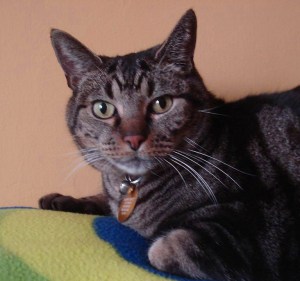
Sammy

Sammy, my cat

Mahone Bay, Nova Scotia, to Toronto, Ontario, where I’m staying for two days before catching a flight to Vancouver to spend Christmas with my son and good friends on the west coast. Talk about fast living.

I move around a lot these days. It helps me to appreciate some of the most simple things in life and reminds me of what I love most about Christmas: how it focuses my heart and reconnects me. I don’t mean just with relatives and friends either, although the season certainly does that. I’m talking about my soul and the universe itself.

Before I became an itinerant, Christmas bustled with my responsibilities as primary caregiver, social coordinator and hostess of major parties.

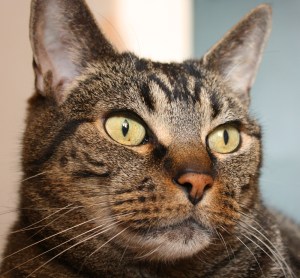
sammy-2010-01_edited-1 copyAfter I’d said goodbye to our visiting friends and done the dishes and tidied the house, and my husband and son had gone to bed, I sat in the dark living room lit only with the Christmas Tree lights and the flickering candle. Listening to soft Christmas music, I was primed to write. My male cat, smelling fresh from outside, found his rightful place on my lap and settled there. He then trapped my hand with his paws, pinning me down with love. And there, as I breathed in the scent of wax and fir and cat I found myself again.

Most of us think of Christmas as a busy time, of getting together (often dutifully) with family and friends, exchanging presents and feasting. Christmas is certainly this, but that is only a shallow view of a far deeper event; and I don’t mean only Christians.sammy-2010-03_edited-1 copy

Whether celebrating the holy light of Hannukah or the birth of Jesus, or the winter solstice, this season provides us with the opportunity to meditate on far more than the surficial nature of the symbols we have come to associate with the season: the Christmas tree, presents, turkey dinner, Santa Claus or Saint Nicholas—most of which originate from pagan tradition, by the way.

sammy-close02 copySays Lama Christie McNally (author of The Tibetan Book of Meditation), “once you dive below the surface, you will discover a beautiful clear place—like a diamond hidden beneath the rubble. It is your own mind, uncovered … Tibetans say we have only just begun the process of awakening—that we still have quite a way to go in our evolutionary process. And it has nothing to do with building spaceships or computers. The next step in our evolution takes place within.”

Christmas is, more than anything, a time of embracing paradox. It is an opportunity to still oneself amid the bustle; to find joy in duty; to give of one’s precious time when others have none, to embrace selflessness when surrounded by promoted selfishness, and to be genuine in a commercial and dishonest world. If one were to look beyond the rhetoric and imposed tradition, the Christmas season represents a time of focus, a time to snow-christmas2008-sammyreflect on one’s genuine nature and altruistic destiny. A time to reconnect with the harmony and balance in our lives.

A time to sit with our cat, pinned with love, and write our next novel.


nina-2014aaNina Munteanu is a Canadian ecologist and internationally published author of award-nominated speculative novels, short stories and non-fiction. She is co-editor of Europa SF and currently teaches writing courses at George Brown College and the University of Toronto. Visit www.ninamunteanu.ca for the latest on her books.

Revising: Improve Your Story Using Paragraphs

Enhance Reader Ease by Addressing Paragraphs in Your Revision.

patterns-Spalting log and blu-green stain fungus LR

Spalted maple log (photo by Nina Munteanu)

Ever so often I get a story from a student that reads like one long run-on sentence… A James Joyce special of stream-of-conscious… In fact, what the writer had done is write many sentences without breaking up the narrative into paragraphs. You might be laughing at this point. “I don’t do that,” you might be saying to yourself. “I haven’t done that since high school!” But go take a look at that first draft you’re working on; there it will be: a page-long paragraph. Oops.

We can’t help ourselves. When immersed in the creative process, we often don’t think about structure. That’s OK; that kind of thinking is more appropriate during the second draft revision process, when you are more objectively assessing the “storytelling”. That’s when you want to pay attention to storytelling devices like paragraph breaks.

Paragraphs are defined by a main point or expression or an idea, not by any specific length. Strong paragraphs contain a sentence or several sentences that are unified around one central, controlling idea. A paragraph may be a single sentence or occupy half a page of sentences.

What a Paragraph Does

Paragraphs do several jobs in stories. They: 1) provide a break from long stretches of text both in content and in space on the page, and 2) they help clue the reader in to key changes in your story. The second point is often subtle and can be assigned almost arbitrarily if the need of the first point must be met. This is because the rules are not hard and fast and, ultimately in fiction, an author can “break” them according to their judgment of style and flavor.

Before you start “breaking” rules, you need to understand what paragraphs are meant to do. They:

  • Introduce something new
  • Define a shift in something already there
  • Mark a movement in a sequence

Each of the above is definable and interpretable in many ways from very subtle alterations to very obvious changes. Because of this, it is important to pay attention to the visual role of paragraphs; that is, how they create a more attractive and easeful text for readers. There’s nothing more “slowing” than seeing a page of narrative without any breaks.

Fiction writers use paragraphs much like punctuation to create a visual flow of narrative that varies in cadence, tone and flavor for readers. This is accomplished in several ways.

Vary Paragraph Lengths

Varying paragraph lengths in text provides diversity in the narrative that adds interest for the reader. Long paragraphs unify a more ponderous and serious mood in a reader. Interspersing these with short paragraphs will break up the reader’s tendency for complacent reading and livens the narrative. The short paragraphs, by default, provide areas of emphasis within a sea of longer text. The fiction writer may use these to make a subtle point.

Using Dialogue

Dialogue effectively breaks up paragraphs and provides a lot of open white space that is attractive to readers and increases pace of narrative. However, even dialogue requires variation. Variation can take on the form of 1) dialogue interspersed with descriptive narrative vs. the use of straight back and forth dialogue, and 2) one-line dialogue vs. dialogue containing several sentences (the one line dialogue serves to punctuate).

Paragraph Checklist

In their 2008 book, The Little Brown Handbook by Pearson Longman (Toronto), H. Ramsey Fowler, Jane E. Aaron, Murray McArthur, Deane E.D. Downey, and Barbara H. Pell provide a general checklist for revising paragraphs that is adapted here for fiction writing. This consists of asking the following questions:

  • Is the paragraph unified? Is it tied to one general idea or narrative direction?
  • Is the paragraph coherent? Are the sentences linked and do they follow a clear and consistent sequence?
  • Is the paragraph developed? Is there a logical beginning and end that “frames” a whole idea or thought?

Hope this helps. Don’t forget the one line paragraph.

Very effective.


nina-2014aaNina Munteanu is a Canadian ecologist and internationally published author of award-nominated speculative novels, short stories and non-fiction. She is co-editor of Europa SF and currently teaches writing courses at George Brown College and the University of Toronto. Visit www.ninamunteanu.ca for the latest on her books.


How to End Your Story

Sunset 3

Sunset in Niagara-on-the-Lake (photo by Nina Munteanu)

Have you ever seen the movie The Party with Peter Sellers? The first scene is priceless. Sellers plays an actor who is shot in a war scene; he subverts the script by refusing to die. His endless death struggles get so annoying that even the men on his side turn and shoot him.

The last thing you want to do is create an ending or dénouement that struggles in its conclusions. Ultimately, a story’s ending should conclude the story’s plot and theme satisfactorily to the reader.

According to Ansen Dibell, author of Elements of Fiction Writing: Plot, successful endings come in two basic shapes: 1) circular and 2) linear. In a writing workshop I recently participated in, Patrick Rothfuss, author of The Name of the Wind, demonstrated two kinds of endings using his hands: for the first kind he clenched his fists in front of him; for the second kind, he opened his hands airily toward his audience.

The kind of ending you choose for your story will depend on the kind of story you are telling: one that rises to a climax or one that returns home.

Circular Endings

Beginning and ending connect in a circular story. In such a story, the end and the beginning are much more alike than they are to the middle. This is because the end reflects the promise of the beginning. Framed stories use the same technique, except the beginning and end “frame” are more like bookends, supporting the story from the outside and made of a visibly different structure (e.g., often portrayed in prologue and epilogue fashion and often in different POV, tense, style, etc.).

Circular endings, and their circular stories, are often the shape that quest-adventure stories take on. The main character sets out on a quest to find or learn or accomplish something, passes through trials, and finally succeeds in his mission and returns home with his prize to share (often insight or wisdom). Ultimately, the protagonist grows/changes/achieves then brings that wealth back home to alter his pre-existing everyday life. Full circle. Beginning and end mirror and contrast one another.

Circular endings must do the job of showing the hero’s “homecoming”, how she is changed through the turning point in the middle of the story, and what she has brought to the ordinary world to change it.

Linear Endings

Linear stories and their endings run more like a marathon up a hill, with slides, diversions and hard climbs, until they reach the summit and climax (the highest point of conflict—and resolution). Once the result of the conflict is achieved, the story is at an end. Most straight adventure stories are of this type.

Reflective vs. Narrative Ending

Roy Peter Clark, author of Writing Tools: 50 Essential Strategies for Every Writer, reflects that “great endings bring back the whole story.” He cites the “reflective ending” of The Great Gatsby, in which the narrator reflects back, pulling together the important narrative threads like a master weaver, to make meaningful conclusions.

“A powerful alternative,” adds Clark, “is the ‘narrative ending’, a final scene that crowns the action.” Both types of ending work when masterfully handled. The former is essentially “telling” and the latter is essentially “showing”. You choose. Both work.


nina-2014aaNina Munteanu is an ecologist and internationally published author of award-nominated speculative novels, short stories and non-fiction. She is co-editor of Europa SF and currently teaches writing courses at George Brown College and the University of Toronto. Visit www.ninamunteanu.ca for the latest on her books.

Discovering the Ecotones of “When Words Collide”

If you have an apple and I have an apple and we exchange apples then you and I will still each have one apple. But if you have an idea and I have an idea and we exchange these ideas, then each of us will have two ideas.” —George Bernard Shaw


WWC-venue

The venue

In August 2015, as part of my sojourn in my homeland of British Columbia, I participated in When Words Collide, one of Canada’s premiere writing and reading festivals in Calgary, Alberta. This is one writing conference I make a point of attending every year.

Held at the Delta Calgary South Hotel, and run by the super team of Randy McCharles, Susan Forest, Sarah Kades, and Mahrie G. Reid—among other awesome volunteers—this multi-genre writing festival initially modeled itself after the International Surrey Writer’s Conference—flavoured and spiced with the joie de vivre energy of a science fiction writer’s convention. The integration of multi-genres, professional interactions (e.g., editors, publishers, writers and readers) and the festivity of costuming, song and dance, is a truly winning combination.
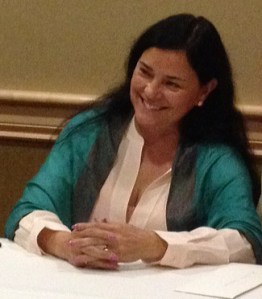
diana gabaldon01

Diana Gabaldon

Guest presenters included best-selling authors Diana Gabaldon, Brandon Mull, Faith Hunter, Daniel Abraham, C.J. Carmichael and agent Sally Harding. The festival included a diversity of panels and workshops, author readings, book launches and parties (including an absinthe-tasting party), an autograph session and a merchant’s corner.

I gave three workshops: one on writing fiction called “Five Things to Consider”; one on narrative voice and POV called “Mastering ‘Voice’ and Narration”; and one on setting called “Mastering Setting.”

Highlights were many: trading stories with my colleagues and writing friends over a drink or signing or loitering in the hallway is always a highlight. Meeting interesting people in a crowd of interesting people is another. Briefly visiting with Diana Gabaldon—an incredibly gracious and entertaining artist—is certainly another.
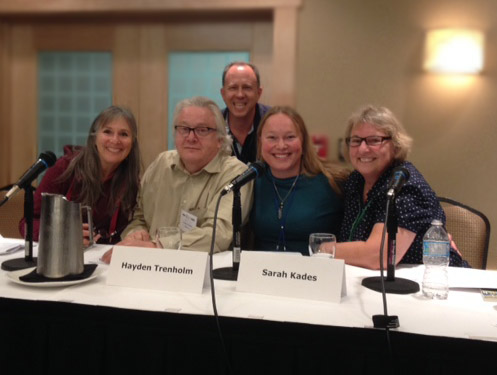
eco-fiction panel-WWC

Eco Panelists

An important highlight for me was moderating a panel on Eco-Fiction. Joining me on the panel were publisher/writer Hayden Trenholm, and writers Michael J. Martineck, Sarah Kades, and Susan Forest. The panel was well attended; panelists and audience discussed and argued what eco-fiction was, its role in literature and storytelling generally, and even some of the risks of identifying a work as eco-fiction.

Someone in the audience brought up the notion that “awareness-guided perception” may suggest an increase of ecological awareness in literature when it is more that readers are just noticing what was always there. Authors agreed and pointed out that environmental fiction has been written for years and it is only now—partly with the genesis of the term eco-fiction—that the “character” and significance of environment is being acknowledged beyond its metaphor; for its actual value. It may also be that the metaphoric symbols of environment in certain classics are being “retooled” through our current awareness much in the same way that Aldous Huxley’s Brave New World or George Orwell’s Nineteen Eighty Four are being re-interpreted—and newly appreciated— in today’s world of pervasive surveillance and bio-engineering. I would submit that if we are noticing it more, we are also writing it more. Artists are cultural leaders and reporters, after all. I shared my own experience in the science fiction classes I teach at UofT and George Brown College, in which I have noted a trend of increasing “eco-fiction” in the works in progress that students are bringing in to workshop in class. Students were not aware that they were writing eco-fiction, but they were indeed writing it.
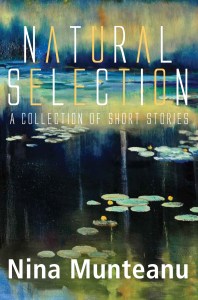
NaturalSelection-frontHRI started branding my writing as eco-fiction a few years ago. Prior to that—even though my stories were strongly driven by an ecological premise and strong environmental setting—I described them as science fiction and many as technological thrillers. Environment’s role remained subtle and—at times—insidious. Climate change. Water shortage. Environmental disease. A city’s collapse. War. I’ve used these as backdrops to explore relationships, values (such as honour and loyalty), philosophies, moralities, ethics, and agencies of action. The stuff of storytelling.

Environment, and ecological characteristics were less “theme” than “character,” with which the protagonist and major characters related in important ways.Snowpiercer-french
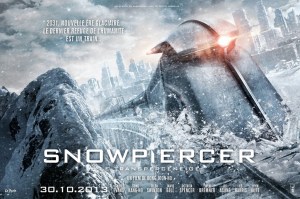
Just as Bong Joon-Ho’s 2014 science fiction movie Snowpiercer wasn’t so much about climate change as it was about exploring class struggle, the capitalist decadence of entitlement, disrespect and prejudice through the premise of climate catastrophe. Though, one could argue that these form a closed loop of cause and effect (and responsibility).

The self-contained closed ecosystem of the Snowpiercer train is maintained by an ordered social system, imposed by a stony militia. Those at the front of the train enjoy privileges and luxurious living conditions, though most drown in a debauched drug stupor; those at the back live on next to nothing and must resort to savage means to survive. Revolution brews from the back, lead by Curtis Everett (Chris Evans), a man whose two intact arms suggest he hasn’t done his part to serve the community yet.

Minister Mason (Tilda Swinton), an imperious yet simpering figure who serves the ruling class without quite being part of it, reminds the lower class that: snowpiercer-mason
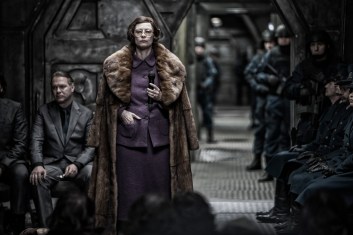
We must all of us on this train of life remain in our allotted station. We must each of us occupy our preordained particular position. Would you wear a shoe on your head? Of course you wouldn’t wear a shoe on your head. A shoe doesn’t belong on your head. A shoe belongs on your foot. A hat belongs on your head. I am a hat. You are a shoe. I belong on the head. You belong on the foot. Yes? So it is. 

In the beginning, order was prescribed by your ticket: First Class, Economy, and freeloaders like you…Now, as in the beginning, I belong to the front. You belong to the tail. When the foot seeks the place of the head, the sacred line is crossed. Know your place. Keep your place. Be a shoe.”

Ecotones are places where “lines are crossed,” where barriers are breached, where “words collide” and new opportunities arise. Sometimes from calamity. Sometimes from tragedy. Sometimes from serendipity.

When environment shapes a story as archetype—hero, victim, trickster, shadow or shape shifter—we get strong eco-fiction. Good eco-fiction, like any good story, explores the choices we make and the consequences of those choices. Good eco-fiction ventures into the ecotone of overlap, collision, exchange and ultimate change.

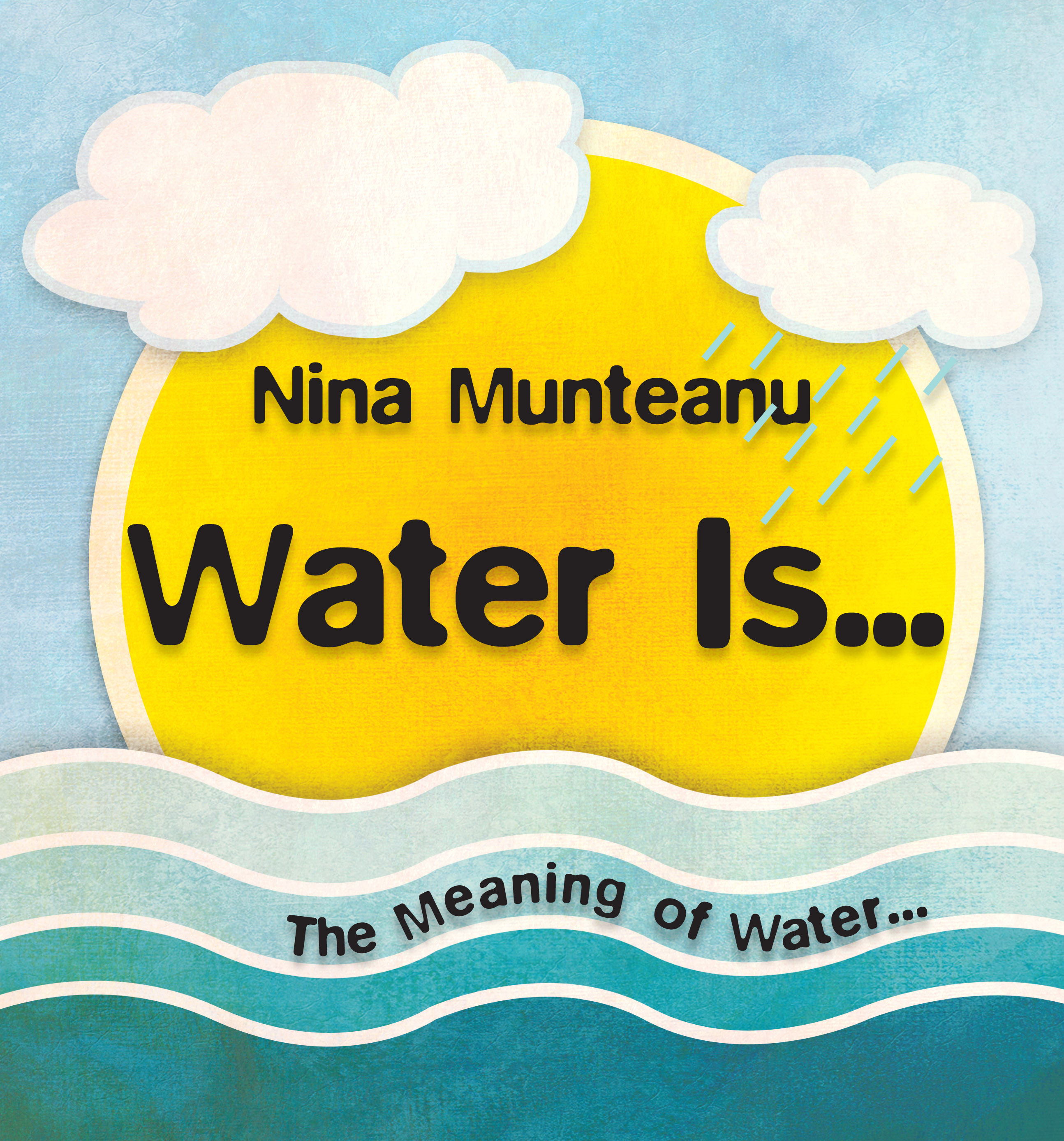
Water Is-cover01In my latest book Water Is… I define an ecotone as the transition zone between two overlapping systems. It is essentially where two communities exchange information and integrate. Ecotones typically support varied and rich communities, representing a boiling pot of two colliding worlds. An estuary—where fresh water meets salt water. The edge of a forest with a meadow. The shoreline of a lake or pond.

For me, this is a fitting metaphor for life, given that the big choices we must face usually involve a collision of ideas, beliefs, lifestyles or worldviews: these often prove to enrich our lives the most for having gone through them. Evolution (any significant change) doesn’t happen within a stable system; adaptation and growth occurs only when stable systems come together, disturb the equilibrium, and create opportunity. Good social examples include a close friendship or a marriage in which the process of “I” and “you” becomes a dynamic “we” (the ecotone) through exchange and reciprocation. Another version of Bernard Shaw’s quote, above, by the Missouri Pacific Agriculture Development Bulletin reads: “You have an idea. I have an idea. We swap. Now, you have two ideas and so do I. Both are richer. What you gave you have. What you got I did not lose. This is cooperation.” This is ecotone.

botanical beach tidal pools copy

Tidal pools in Botanical Beach, BC (photo by Nina Munteanu)

I think we are seeing more eco-fiction out there because ecosystems, ecology and environment are becoming more integral to story: as characters in their own right. I think we are seeing more eco-fiction out there because we are ready to see it. Just as quantum physics emerged when it did and not sooner, an idea—a thought—crystalizes when we are ready for it.

Don’t stay a shoe … go find an ecotone. Then write about it.

Hope to see you at When Words Collide next year.


For my complete critique of Snowpiercer in The Alien Next Door, go here.


nina-2014aaNina Munteanu is an ecologist and internationally published author of award-nominated speculative novels, short stories and non-fiction. She is co-editor of Europa SF and currently teaches writing courses at George Brown College and the University of Toronto. Visit www.ninamunteanu.ca for the latest on her books.
The Careful Writer: Commonly Misused Terms

Log patterns 6

Spalting wood  (photo by Nina Munteanu)

When I first started writing stories — a while ago — I knew that I was a poor speller, had generally bad syntax and often misused grammar. Someone, who believed in my capacity to tell a good story, despite my shortcomings in delivery, handed me a slim copy of Strunk and White’s classic guide The Elements of Style. This elegant 105 page book includes elementary rules of usage; elementary principles of composition; a few matters of form; words and expressions commonly misused; and an approach to style.

It is “…still a little book, small enough and important enough to carry in your pocket, as I carry mine,” said Charles Osgood. And it has helped me out of a few messes. Let’s look at some examples of commonly misused words and expressions. These words and expressions, Strunk and White tell us, “are not so much bad English as bad style, the commonplaces of careless writing.” Being mindful of our language and our style can often make the difference in a publisher’s or editor’s perception of our professionalism.

Here are some of my favorites, in some cases more because of Strunk and White’s pithy comments than from the actual utility of the advice. Have you used any of these?

Allude: not to confuse with elude. You allude to a book; you elude a pursuer.

Allusion: easily confused with illusion. The first means “an indirect reference”; the second means “an unreal image” or “false impression”.

As to whether: whether is sufficient.

Being: not appropriate after regard…as. For instance, go from “she is regarded as being the best writer” to “she is regarded as the best writer.”

But: unnecessary after doubt and help. For instance, go from “I have no doubt but that…” or “She could not help but…” to “I have no doubt that…” and “She could not help…”

Compare: to compare to points out the similarity between objects regarded as different (as in most metaphor); to compare with points out the differences between objects that are similar. For instance, life may be compared to a pilgrimage; Paris may be compared with London (another large city) but compared to a movable feast. Nina: some modern linguists consider these interchangeable and do not distinguish the metaphoric elements of comparison. I concur with Strunk and White.

Comprise: literally means embrace. A zoo comprises mammals, reptiles and birds — because it embraces or includes them. The animals do not comprise a zoo — they constitute one.

Disinterested: means “impartial”. Do not confuse with “uninterested” which means “not interested in”. You bring in a disinterested (impartial) person to judge a dispute; another may be uninterested (couldn’t care less) about the dispute.

Effect: noun means “result”, and as a verb means “to accomplish”; not to be confused with “affect” which means “to influence”.

Farther/further: farther refers to distance and further refers to time.

Finalize: called a pompous and ambiguous verb by Strunk and White, I must confess using it many times in my other life as a consultant in business. Every segment of our society adopts its own vernacular of offbeat, “jargon” words and expressions that are regarded to help the flow of business. Another example that comes to mind is the use of dialogue as a verb. When using vernacular of any kind, be mindful that it is appropriate to your character, situation and story.

Imply/infer: not interchangeable. To imply is to suggest or indicate but not overtly express; to infer is to deduce from available evidence.

Interesting: Strunk and White suggest that this is, in fact, an uninteresting word, given that it tends to label and “tells” rather than letting the writer “show”. For instance, instead of using “an interesting tale of …” avoid the preamble and simply make it interesting! Let the reader judge. Telling them won’t make it so. This applies also to any letters you write to publishers and editors; avoid telling them your story is funny or interesting. Show it in your description.

Less: don’t use instead of fewer. Less refers to quantity; fewer to number. For instance “his troubles are less than mine” means they are of less magnitude; while “his troubles are fewer than mine” means he has a small number of troubles.

Nice: means everything and nothing. Use it sparingly and judiciously with intention; in other words, to be purposefully vague as in conversation. Strunk and White define it as a “shaggy, all purpose word”.

One of the most: Strunk and White define this phrase as a “feeble formula” that is threadbare, invites cliché and adds little except words to narration.

Personalize: Strunk and White dismiss it as a “pretentious word, often carrying bad advice. Do not personalize your prose,” they say, “simply make it good and keep it clean.” I agree. It falls under jargon.

Prestigious: “it’s in the dictionary, but that doesn’t mean you have to use it,” say our prestigious experts. Sorry … couldn’t help myself.

That/which: that is the defining (restrictive) pronoun; which is non-defining. For instance, 1) the lawnmower that is broken is in the garage (tells us which one); 2) the lawnmower, which is broken, is in the garage (gives us an additional fact about the lawnmower).

While: many writers use it indiscriminately for and, but and although. It can be efficiently replaced by a semi-colon (e.g., change “the girl stood by the door, while the man stood next to the couch.” to “the girl stood by the door; the man stood next to the couch.”). While is best used to mean “during the time that”.

For more writing tips on writing fiction (and non-fiction or memoir) check out “The Alien Guidebook Series” on writing.

References:

Strunk, William and E.B. White. 2000. “The Elements of Style” (Fourth edition). Longman. New York. 105 pp.

nina-2014aaNina Munteanu is an ecologist and internationally published author of award-nominated speculative novels, short stories and non-fiction. She is co-editor of Europa SF and currently teaches writing courses at George Brown College and the University of Toronto. Visit www.ninamunteanu.ca for the latest on her books.

The Meaning of Writing and Water with Nina Munteanu

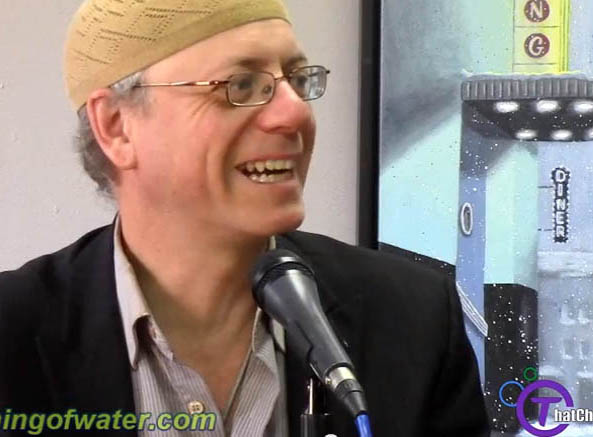
I was recently invited to “Liquid Lunch” a program on That Channel in Toronto, Ontario, to discuss the writing process and my new book on water, “Water Is…” with Hugh Reilly and Hildegard Gmeiner:

hugh-LL

Hugh Reilly

hildegard-LL

Hildegard Gmeiner

nina-LL-interview

Nina Munteanu

“Water Is…” is due for release early 2016. Below is the final cover by Aurora finalist Costi Gurgu (more on the book and the cover later):

Water Is-cover01

The Moving Target of Indie Publishing: What Every Editor (and Writer) Needs to Know

paris-03

The Seine, Paris (photo by Nina Munteanu)

I’m a writer and an editor. I’ve written and published novels, short stories and non-fiction books with traditional publishing houses and indie publishers, and I’ve self-published. As editor, I serve as in-house copy-editor for a publishing house in the United States and have acted as acquisition editor for several anthologies put out by a local indie publisher. I also coach novice writers to publication and edit in that capacity. So, you could say, I know the industry from many angles and perspectives. That’s been good for me, because this industry is a moving target and it’s good to triangulate on a moving object. The entire publishing industry is evolving and it’s a slippery evolution.

Even the words we use are slippery. Indie. Hybrid. Publisher.

Many people, like award-winning author Kristine Kathryn Rusch, when they use the terms indie-writer and indie-publishing include what some call self-publishing in their definitions of indie, “because so many [professional] writers who are not with traditional publishers have started their own presses. It’s not accurate to lump all writers who are not following the traditional route into the self-publishing basket any longer.” According to Rusch, an indie publisher, then, is anyone who is not a traditional publisher. For the sake of this article, I’ve adopted Rusch’s definition to provide the full range of expectations for editors working with writers in the indie field. I define a traditional publisher as an established and often larger publishing house or press that: 1) follows traditional submission criteria; 2) does not charge writers; 3) pays out royalties; and 4) employs in-house editors.

Indie writing and publishing can then be described in several ways depending on where the writer submits, by what mechanism and what model they use. All of these will affect a writer’s needs and perceptions for an editor and, in turn, an editor’s expectations as well.

I overview five major models of indie writing and publishing in Table 1, below.

Table 1: Types of Indie Writing / Publishing Models:
1. Small Independent Press

(not writer’s)

Author submits to a small press that does not require author to pay for publishing costs; house may pay small royalties; acceptance criteria limit submissions; there may or may not be formal distribution
2. Small Independent Press

(not writer’s)

Author submits to a small press that may require author to pay for part of publishing costs; house typically does not pay royalties but may provide complementary copies and/or author’s rate for copies; acceptance criteria may still apply to submissions; distributor tends to be Ingram/Amazon model
3. Small Independent Press

(writer as sole proprietor or part of a consortium; also called self-publishing by some)

Author can pretty well write and publish as she pleases; costs of publication are born solely by the writer(s) and royalties come straight from profit; no acceptance criteria apply; distribution typically Ingram/Amazon model
4. Service “Publisher”

(e.g., iUniverse, Friessen, etc.); this is self-publishing, even though the “publisher” name appears on the work

Author can pretty well write and publish as she pleases; all publication costs born by writer; service will include various services, including: copy-editing, layout, cover design, printing, some distribution, some promotion—all at cost (based on service package); distribution typically Ingram/Amazon model
5. Self-Publishing

(e.g., the publication is in the author’s name)

Author can pretty well write and publish as she pleases; author uses a la carte style of self-publishing in which she hires various experts—or herself does—the production of the work (e.g. editing, layout, cover, printing, distribution, and promotion).

Depending on which model an author uses for their work, their perceived need and actual need for an editor prior to submission and publication will be affected. I make the distinction between “perceived” and “actual” because, unfortunately, in many cases these diverge: an author may not think they need a certain kind of editing for their work when they do. The opposite is more rare: the author thinking she needs an editor when she doesn’t. I will talk more about this in a later article.

The availability of these models and their hybrid cousins has provided writers with a cornucopia of often confusing choices. In many cases, I am finding—particularly with my clients—that writers don’t even know which choice is best for them. Part of the reason for this is that writers carry forward ideas from the old model and create a misconception of expectation. Unfortunately, this often translates into misconceived ideas about and expectations of editors. That’s another article too.

For editors, it’s important to recognize these different models and what they, in turn, provide and expect from authors. A savvy editor translates into a savvy author. Your advice, if driven from a place of publishing industry knowledge, will be invaluable to authors seeking your services. And they will come to rely on this as much as, if not more than, your actual editing.

paris-15

Eiffel Tower, Paris (photo by Nina Munteanu)

By its very nature, indie publishing has given the freelance editor an opportunity to take on a new role—a service that agents used to and still do provide many traditionally-published authors: that of industry consultant. In the traditional model, an author would seek an agent who would then not only sell their work to a publisher but also provide advice on what to expect in the market as well as help with career-longevity choices (which include “branding”); questions many novice authors haven’t even considered, never mind answered sufficiently. Most indie authors will not engage an agent; but most will (should) hire an editor. So, instead of an agent, the freelance editor becomes the first stop in the publishing industry for an indie author. This has become one of my primary roles as editor and writing coach. And this is again because most writers, when they start out, do not know what direction they want to go—mainly because they aren’t familiar enough with what is available to them and the ramifications to their careers.

Here’s an example: one client, working on her first novel, wanted my advice on whether she should try with a traditional publisher or just forgo and self-publish. An editor, if possessing savvy knowledge of the industry and now knowing something of the author’s work and ambitions, can bring informed and constructive advice to the author.

The ramifications on how I handle and edit a story directly follows which route the author has decided to follow. This is every bit as relevant to an author publishing with a traditional publishing house, an indie press, or self-publishing. Style—whether it is that of a publishing house or the author’s brand—relies on consistent application of voice and tone. Just as publishing houses embrace different and unique styles, so do authors. In fact, if they are self-publishing, this is even more important.

The editor plays a crucial role in helping an author establish their “voice” and “style”, and ultimately their “brand.” And, perhaps, this becomes one of the principle differences between traditional and indie publishing. While voice and style is pre-determined to some extent by traditional publishing houses (hence they employ their own editors to impose a style in some cases), it is left to the author—and her freelance editor—to determine this in the indie scene. The structure of traditional publishing is both more orderly and more confining. Indie publishing—particularly self-publishing—is an infinite melting pot of creativity. Some view it as one big mess. In fact, it is a chaos of astonishing opportunity. It is a chance for intimate collaboration that demands mutual respect. Freelance editors are poised as both gatekeepers and enabling wizards of the indie world.

Table 2, below, describes a freelance editor’s focus in the five indie models I described in Table 1.

Table 2: Editing for Different Indie Models:
1. Small Independent Press

(with submission criteria similar to a traditional model)

Authors often think they don’t need a freelance editor if they are submitting to a press with in-house editor; this is incorrect. Those who have had their work edited prior to submission to a press—even a small press—will have a much higher chance of being accepted. The freelance editor’s job, then, will include attending to the style of the publishing house.
2. Small Independent Press

(without submission criteria)

While authors may not recognize the need for an editor in submitting to an indie publisher without submission criteria, the need for editing remains—particularly because many of these presses do not employ or have sufficiently qualified editors. Excellence in presentation and nurturing a strong author voice are the freelance editor’s responsibility.
3. Small Independent Press

(writer’s own press)

Given that the author has pretty well carte blanche on what to write and publish, a freelance editor’s role in recognizing, harmonizing with and helping to establish a genuine and strong author’s “voice” becomes most important.
4. Service “Publisher” Authors have misconceptions about service “publishers” and particularly their editors. I have had several clients come to me after recognizing that their works were not well represented by the provider’s in-house editor. Service “publisher” in-house editors do not represent a particular style, voice or brand (given that most are underpaid students and there is no style identity); the freelance editor role is as with #3.
5. Self-Publishing The same criteria exist here as for model #3.
paris-30

Paris street (photo by Nina Munteanu)

The take home is that freelance editors can flourish in the indie writing and publishing field by: 1) establishing their expertise in the industry and what it requires (taking on the role of consultant, which agents normally provide in the traditional model); 2) recognizing a need for strong authorial voices and helping to foster them; 3) promoting point #2 with consistency in style, tone, etc.

Hope this helps. Let me know.

nina-2014aaNina Munteanu is an ecologist and internationally published author of award-nominated speculative novels, short stories and non-fiction. She is co-editor of Europa SF and currently teaches writing courses at George Brown College and the University of Toronto. Visit www.ninamunteanu.ca for the latest on her books.

Nina Teaching SF Writing Course at George Brown College FALL 2015

 nina-workshop 2

I’m back at George Brown College in Toronto, teaching my 12-week long writing course on how to write science fiction. “Creating Science Fiction” is now part of George Brown’s Creative Writing Certificate.

The 12-week course starts SEPTEMBER 22 (TUESDAY)  and runs until DECEMBER 8th. See the description below:

The course “Creating Science Fiction” runs TUESDAY nights from 6:15 to 9:15 starting September 22nd through to December 8th and costs $285.
.
Meant for both beginning writers and those already published, the 12-week course is run like a workshop with student input and feedback on student’s WIPs.
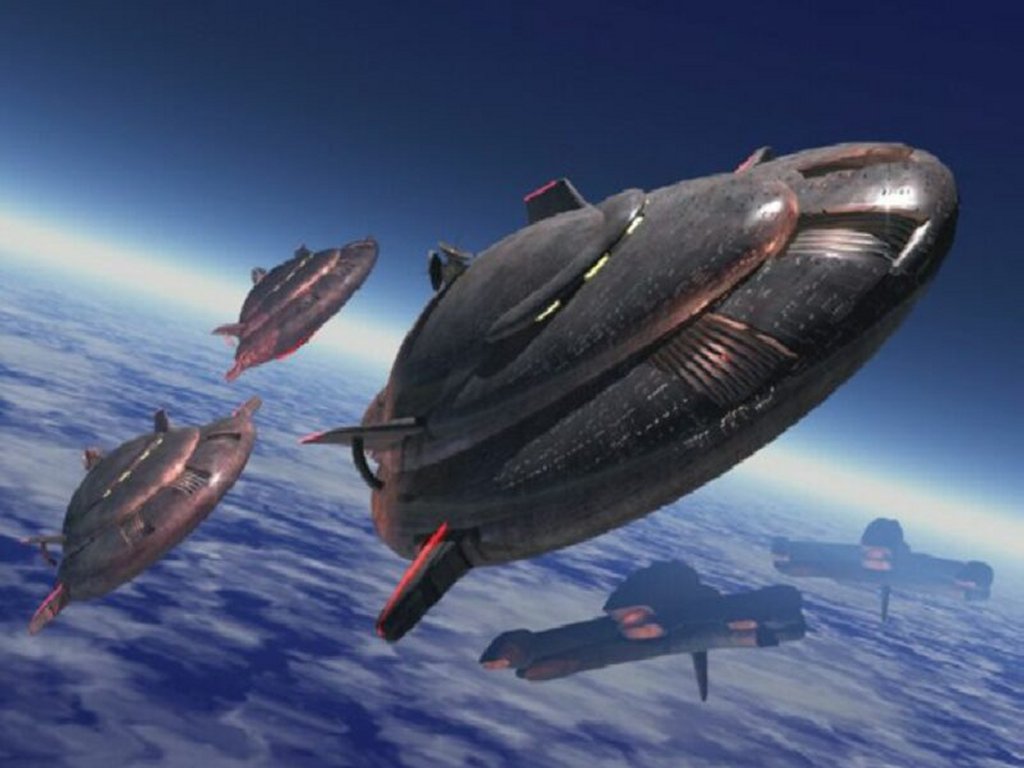
.spaceship02
Munteanu explores with students the essential tools used in the SF genre (including world building, research and plot approaches). “Students will work toward a publishable original piece by learning to generate and follow through with premise, idea and theme,” says Munteanu.
.
You can register for the course here: 
George Brown College is located on 200 King Street, Toronto, Canada.
nina-2014aaNina Munteanu is an ecologist and internationally published author of award-nominated speculative novels, short stories and non-fiction. She is co-editor of Europa SF and currently teaches writing courses at George Brown College and the University of Toronto. Visit www.ninamunteanu.ca for the latest on her books.

How Art Reveals Truth in Science

swiss-cabin02

Mountain cabin, Switzerland (photo by Nina Munteanu)

It is quite possible … that we will always learn more about human life and personality from novels than from scientific psychology —Naom Chomsky

In the 1920s, physicist Niels Bohr struggled to re-imagine the structure of matter. He rejected the current hegemony of a fractal “solar system” model and sought a new metaphor. “When it comes to atoms,” said Bohr, “language can only be used as poetry.”

Bohr compared the invisible world of atoms and electrons to cubist art because, according to Jonah Lehrer in an article in SeedMagazine.com, it “revealed the fissures in everything, turning the solidity of matter into a surreal blur.” In 1923 deBroglie had determined that electrons could exist as particles or waves. Bohr maintained that the form they took depended on how you looked at them: by simply observing, you determined their nature.

Many of us believe that while art can be profound, it does not solve practical challenges of reality; only scientific knowledge, which progresses on a linear ascent toward greater understanding, resolve the serious challenges of our world and will one day solve everything.

This is, of course a matter of belief. Novelist Vladimir Nabokov once wrote, “the greater one’s science, the deeper the sense of mystery.” The traditional elements of science have used a reductionist approach to understand the whole, looking at the parts and reconstructing the causal pathways. Take the synapse, for instance. Neuroscientists now know that 100 billion electrical cells occupy a human brain, that every cubic millimeter of the cerebral cortex contains a billion synapses involved in the neurotransmission of electrical impulses in perception and thought. Yet, as Novelist Richard Powers challenged, ‘If we knew the world only through synapses, how could we know the synapse?”

“The paradox of neuroscience,” said Lehrer, “is that its astonishing progress has exposed the limitations of its paradigm … Neuroscience has yet to capture [the] first-person perspective. Artists … distill the details of real life into prose and plot … They capture a layer of reality that reductionism cannot … and provide science with a glimpse into its blind spots … Sometimes the whole is better understood in terms of the whole … No scientific model of the mind will be complete unless it includes what can’t be reduced.”

Logical minds will reject art as too incoherent and imprecise to contribute to the knowledge base provided by scientific process. They will maintain that Beauty isn’t Truth, that the novel is just a work of fiction, and abstract art the arcane expression of a micro-culture.

But what of paradox? Critic Randall Jarrell contended that, “it is the contradictions of works of art which make them able to represent us — as logical and methodical generalizations cannot — our world and our selves, which are also full of contradictions.” The cultural hypotheses of artists can inspire the questions that stimulate important new scientific answers, adds Lehrer.

The irony of modern physics is that it seeks reality in its most fundamental form, and yet we are incapable of comprehending these fundamentals beyond the math we use to represent them. The only way to know the universe is through analogy.

DougFir-LighthousePark

Douglas fir, Vancouver (photo by Nina Munteanu)

Richard Feynman said, “Our imagination is stretched to the utmost, not, as in fiction, to imagine things which are not really there, but just to comprehend those things which are there.”

While artists rely on imagination, much of modern physics exceeds the imagination: dark matter, quarks and neutrinos, black holes, multiple dimensions and folded space. To venture beyond the regular confines of our “ordinary world” where matter is certain, time flows forward and there are only three dimensions, we must resort to metaphor. “Metaphor in science serves not just as a pedagogical device,” wrote physicist and novelist Alan Lightman, “but also as an aid to scientific discovery.” Einstein came up with relativity while thinking about moving trains; Arthur Eddington compared the expansion of the universe to an inflated balloon; James Clerk Maxwell visualized magnetic fields as little whirlpools in space. String theory is often imagined as garden hoses.

The greatest physicists of the 20th century thought metaphorically. String theorist Brian Greene wrote that the arts have the ability to “give a vigorous shake to our sense of what’s real.” Picasso never understood the equations, says Lehrer: “he picked up the non-Euclidian geometry via the zeitgeist.” A century later some scientists still use his fragmented images to symbolize their ideas. “Novelists can stimulate the latest theories of consciousness through their fiction … Painters can explore new theories about the visual cortex … Dancers can help untangle the mysterious connection between the body and emotion.”

Both science and art benefit from exchange. By inviting art to participate in its conversation, science provides art with the opportunity to add science to its repertoire. And through its interpretation of scientific ideas and theories, art offers science a new lens through which to see itself.

Karl Popper exhorts us to “give up the idea of ultimate sources of knowledge, and admit that all knowledge is human; that it is mixed with our errors, our prejudices, our dreams, and our hopes.”

college-window-UoT

Window in University College, UofT (photo by Nina Munteanu)

Both science and art benefit from exchange. By inviting art to participate in its conversation, science provides art with the opportunity to add science to its repertoire. And through its interpretation of scientific ideas and theories, art offers science a new lens through which to see itself.

Karl Popper exhorts us to “give up the idea of ultimate sources of knowledge, and admit that all knowledge is human; that it is mixed with our errors, our prejudices, our dreams, and our hopes.”

nina-2014aaNina Munteanu is an ecologist and internationally published author of award-nominated speculative novels, short stories and non-fiction. She is co-editor of Europa SF and currently teaches writing courses at George Brown College and the University of Toronto. Visit www.ninamunteanu.ca for the latest on her books.

Limestone Genre Expo—July 2015

I recently attended the inaugural festival of the Limestone Genre Expo (July 25, 2015) for writers in Kingston, Ontario. The festival gets its name from the city’s moniker, based on the many heritage buildings constructed there using local limestone.

It would have been a very long trip from my digs in Nova Scotia; but I’m currently in Toronto, teaching writing at UofT and George Brown College. I still had to get up earlier than I normally do to get to the 1-day festival that started at ten in the morning.venue

It was worth it.

Organizers Liz Strange, Barry King, Delina MacDonald and Marlene Smith nailed everything right. Being the first of hopefully many more, this writers’ festival wisely started small. But, like the good Doctor’s tardis, the venue belied its size by being dense with quality and diversity.

Alison Sinclair

Alison Sinclair

The Ongwandada Resource Centre, where the festival was held, had lots of parking with a friendly well-lit ambience inside under an atrium with tables and chairs for gathering and several rooms for panels and workshops.

The festival covered several of the major genres such as fantasy, science fiction, horror, romance and mystery, with representation by well-known authors in each. Organizers offered a triple track program from 10 am to 5 pm that included panels, informative workshops, readings, novel pitch sessions with CZP

Sandra Kasturi of CZP

Sandra Kasturi of CZP

and Bundoran Press and first page critiques with Caro Soles. Festival organizers populated their program with well-established writers from their own communities. Readers of genre fiction and writers looking to learn and network were given the opportunity to meet some of the top genre writers in the region. The venue included a book fair, box lunches and a snack stand. The only thing missing was a primo coffee bar.

Marie Bilodeau

Marie Bilodeau

The small venue provided an intimate setting for great networking. I had a chance to meet many of my old friends and to make new ones. Marie Bilodeau, an Ottawa fantasy writer, gave an exquisite reading of her new series “Nigh”. Alison Sinclair, recently moved to Ottawa, beamed as she showed me the new release of her Eyre series, “Contagion” by Bundoran Press. Aurora-winning short story author Douglas Smith gave

Doug Smith

Doug Smith

an informative workshop on how to market and sell your short stories. His excellent guidebook “Playing the Short Game” sold for a special festival price. I caught Derek Newman-Stille sitting in the lounge over a box lunch and discussed his radio show in Peterborough and traded stories with Hayden Trenholm, publisher of Bundoran Press and aurora-winning author of the Steeles Chronicles. Other writers who I had a chance to visit

Alyssa Cooper

Alyssa Cooper

with and meet included Caro Soles, Sandra Kasturi (of Chizine), Alyssa Cooper, Eve Langlais, Matt Moore, Nancy Kilpatrick, Matthew Johnson, and Violette Malan.

The organizers—themselves published genre writers (Strange writes fantasy, horror and mystery and just released her first science fiction novel, “Erased”; King writes science fiction)—started the festival in response to an observed need to showcase genre writers in the Kingston area, otherwise rich in non-genre writing festivals. “Kingston is in an interesting position because we do have so many writers and we do have the WritersFest and so on,” explained King to Peter Hendra of the Kingston Whig-Standard. King felt there was room to showcase this literature in Kingston and the surrounding area.

Derek Newman-Stille

Derek Newman-Stille

“I find that genre fiction can sometimes be seen on a lower status as ‘literary fiction’, and that stings,” Strange confided to me. “I thought [the LGE] would succeed because there are not that many festivals of this sort, and after we put feelers out to see who might be interested in attending the positive responses were overwhelming.”

Caro Soles

Caro Soles

Strange added that “nerd culture” these days is more mainstream than in the past, thanks to George R.R. Martin’s Game of Thrones and Stephanie Meyer’s Twilight series. Strange concluded that this is a good thing for writers of romance, sci-fi, horror, mystery and fantasy and observed that genres are blending a lot more (e.g., historical fantasy, paranormal romance, etc.). I personally write mostly blended genres: science fiction thrillers; SF eco-fiction; historical fantasy and romantic SF.

Violette Malan

Violette Malan

I asked Strange for her opinion on whether the festival was a success and what the organizers plan to do for next year. She gave a resounding yes; they had double the numbers they’d hoped for and didn’t lose money (a common challenge with writing festivals). With most events tending to be in spring or fall, they chose summer, which worked well and showed off Kingston.

Liz Strange, Marlene Smith, Barry King, Delina MacDonald

Liz Strange, Marlene Smith, Barry King, Delina MacDonald

Based on the feedback and success of the con, it looks like the festival next year will run two days.

Now that’s great news!

.

.

.

nina-2014aaNina Munteanu is an ecologist and internationally published author of award-nominated speculative novels, short stories and non-fiction. She is co-editor of Europa SF and currently teaches writing courses at George Brown College and the University of Toronto. Visit www.ninamunteanu.ca for the latest on her books.