.
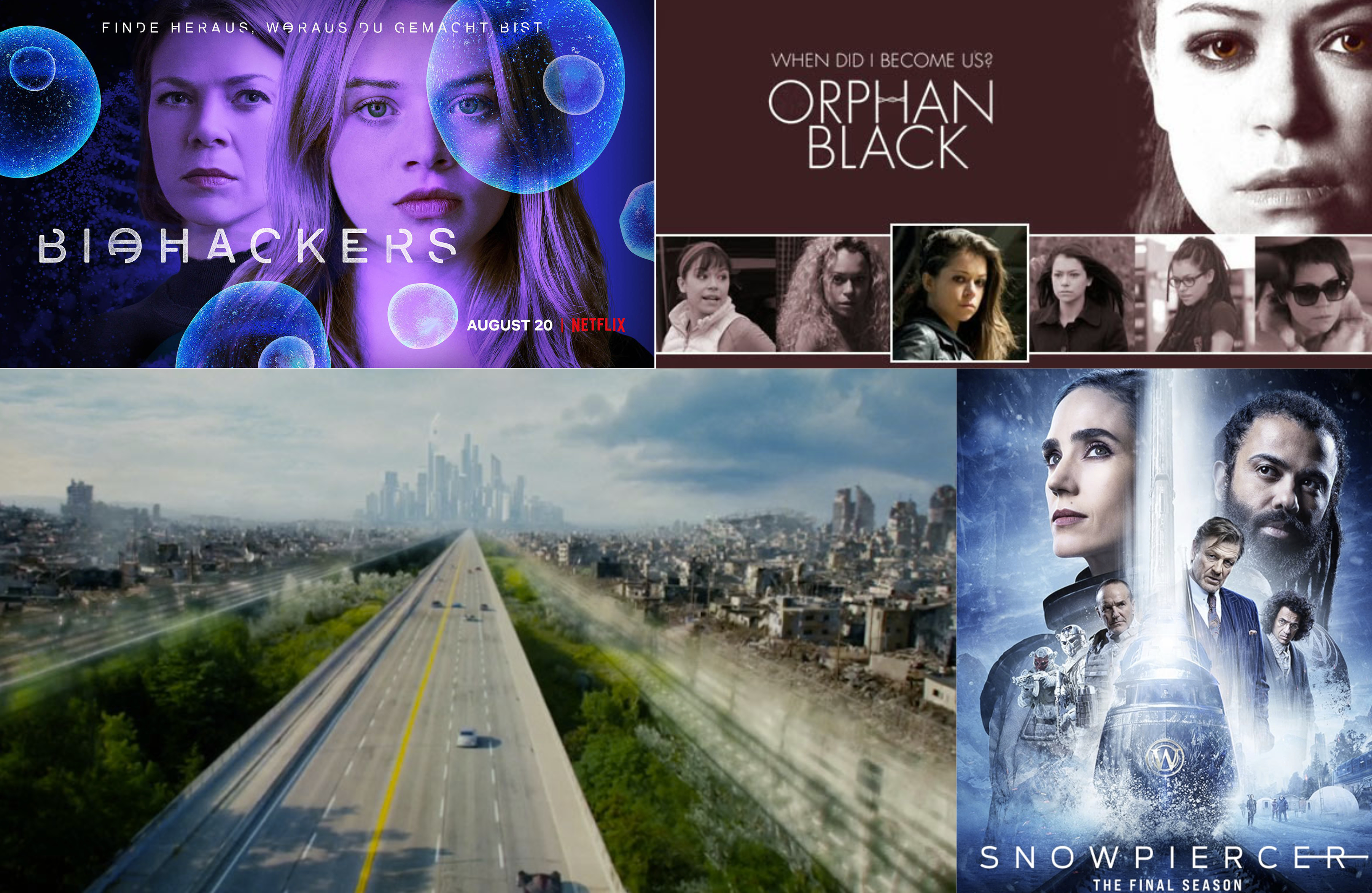
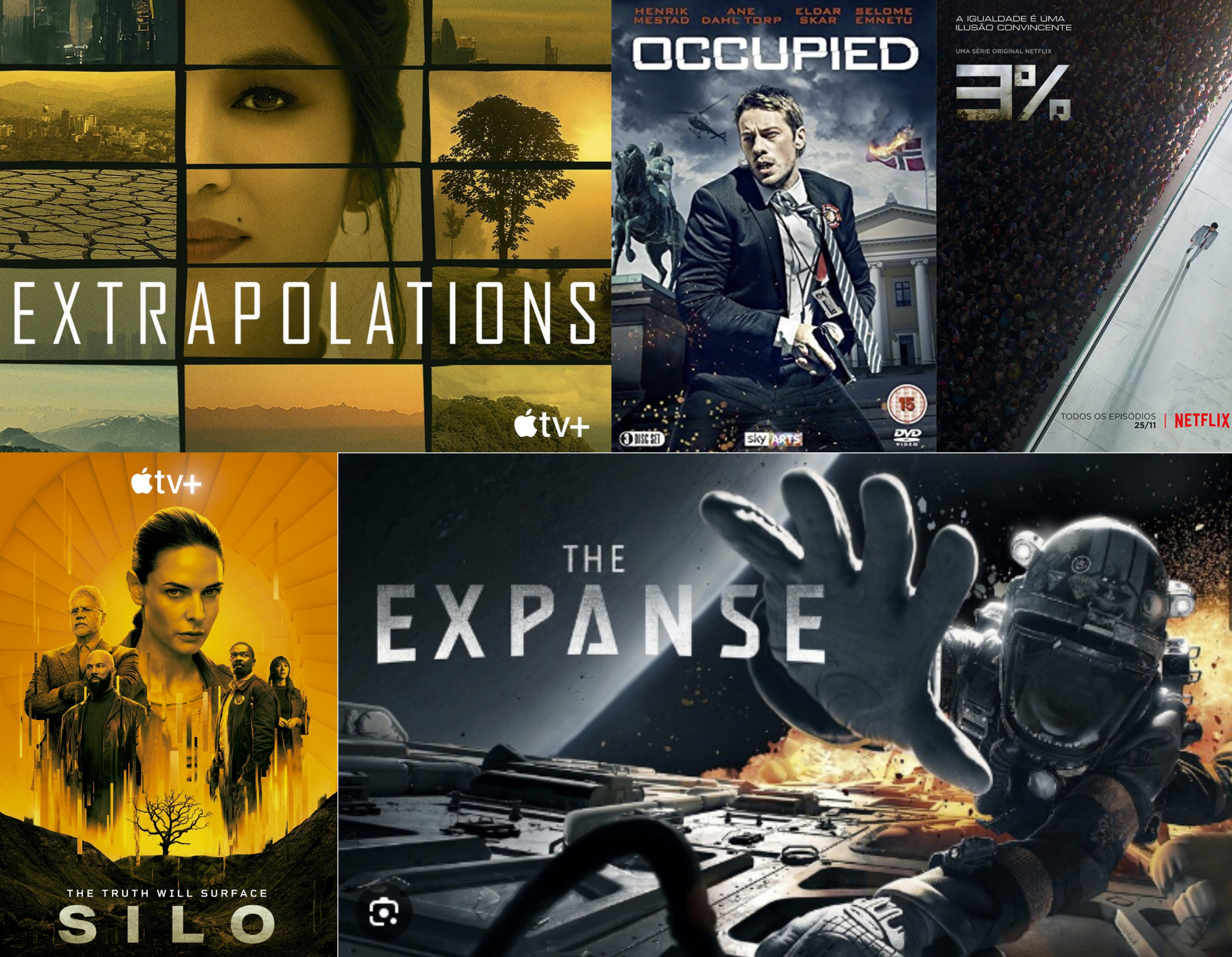
I’ve selected ten TV series that have intrigued me, moved me, and stayed with me for various reasons that touch on: abuse of justice, including eco-justice and environmental abuse; technology use and abuse; and the effects and horrors of climate change.
Some are well known; others not so well known. All approach storytelling with a serious dedication to depth of character, important themes, realistic world building, and excellent portrayal by actors. The world-building is extremely well done—in some cases rivalling Ridley Scott’s best—with convincing portrayals of worlds that are at times uncanny in their realism. Worlds that reflect story from an expansive landscape to the mundane minutiae of daily life: like the cracked phone device of Detective Miller in The Expanse or the dirty fingernails of engineer Juliette Nichols in the Down Deep of Silo. Stories vary in their treatment of important themes from whimsical and often humorous ironies to dark and moody treatises on existential questions. In my opinion, these TV series rival the best movies out there, often reflecting large budgets (but not always) and a huge commitment by producers. The ten TV series I’ve selected here come from around the world: Brazil, Germany, France, Norway, Canada and the United States.
In Part 1, I look at five TV series that touch on ethical issues we are facing today; issues that reach far into existential questions of what it means to be human. These TV series explore synthetic biology, cloning and gene editing, and justice in space colonization and exploitation.
.
.
MISSIONS: A Corporate Race to Colonize Mars Unravels Existential Questions
.
Created by Henri Debeurme, Julien LaCombe and Ami Cohen, this French TV series on the exploration of Mars explores human evolution, ancient history, trans-humanism, artificial intelligence, and environmental issues in a thrilling package of intrigue, adventure and discovery. From the vivid realism of the Mars topography to the intricate, realistic and well-played characters and evocative music by Étienne Forget, Missions builds a multi-layered mystery with depth that thrills with adventure and complex questions and makes you think long after the show is finished.
.

.
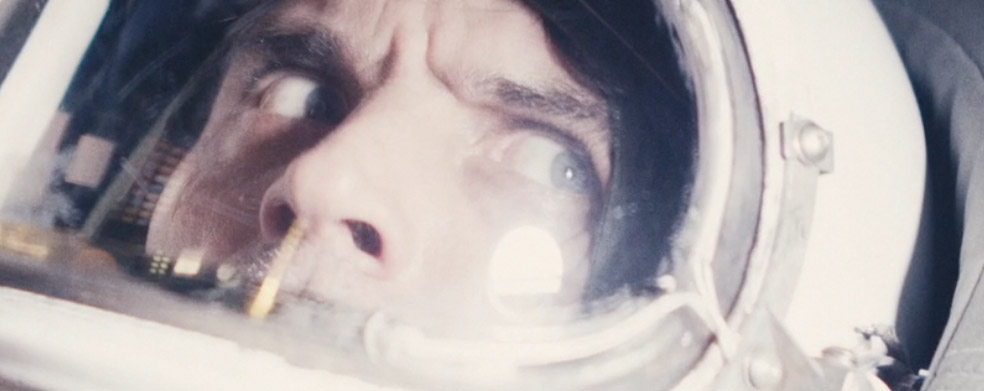
The first episode of Season One starts with a real tragedy: the first human to die in space flight; the 1967 fatal crash landing of the Russian Soyus 1 piloted by Cosmonaut Vladimir Komorov. In the opening scene of Missions, we never see the actual crash landing; instead, as Komarov hurtles to the ground, he suddenly sees a strange white light and then we cut to the present day. Now in an alternate present day, the international crew of the space ship Ulysses is readying for its journey to Mars. Days before the Ulysses mission takes off from Earth, psychologist Jeanne Renoir is asked to replace the previous psychologist who died suddenly in a freak accident. Soon after they land on Mars, the crew finds none other than Cosmonaut Komorov lying unconscious on the Martian surface, looking as he did in 1967.
.

.
So begins this surrealistic mystery that transcends history, identity and our concepts of reality with tantalizing notions of Atlantis, the mythical metal Orichalcum, programmable DNA-metal, and much more. The first season of Missions focuses on cynical Jeanne Renoir as she unravels the mystery of Mars; a mystery that ties her inextricably to Komarov. When she first interviews the Martian Komarov, he surprises her by using her late father’s call to adventure: “Mars delivers!” We then find that Komarov is her father’s hero for his selfless action to save his friend, and her father considered him “the bravest man of this time.” Jeanne is intrigued. Who—what—is this man they’ve rescued? Surely not the dead cosmonaut resurrected from 1967?
Throughout the series, choices and actions by each crew member weave narrative threads that lead to its overarching theme of self-discovery and the greater question of humanity’s existence.
From the beginning, we glimpse a surreal connection between Jeanne and Komarov and ultimately between Earth and Mars: from her childhood admiration for the Russian’s heroism on Earth to the “visions” they currently share that link key elements of her past to Mars and Komarov’s strange energy-giving powers, to Jeanne’s own final act of heroism on Mars. “You’re the reason I’m here,” he confesses to her in one of their encounters. “You have an important decision to make; one you’ve made in the past…”
.

As the storyline develops, linking Earth and Mars in startling ways, and as various agendas—personal missions—are revealed, we finally clue in on the main question that Missions is asking: are we worth saving?
In a flashback scene of her interaction with Komarov, Jeanne recalls Komarov telling her that, “people dream of other places, while they can’t even look after their own planet… You must remember your past in order to think about your future. Do you think Earth has a future?” When she responds that she doesn’t know, he challenges with “Yes, you do…You know the answer and it terrifies you.”
.
Ten Significant Science Fiction TV Series:
Biohackers (Germany)
Orphan Black (Canada)
Occupied (Norway)
Missions (France)
Expanse (USA)
Incorporated (USA)
3% (Brazil)
Snowpiercer (USA)
Silo (USA)
Extrapolations (USA)
.

Nina Munteanu is a Canadian ecologist / limnologist and novelist. She is co-editor of Europa SF and currently teaches writing courses at George Brown College and the University of Toronto. Visit www.ninamunteanu.ca for the latest on her books. Nina’s bilingual “La natura dell’acqua / The Way of Water” was published by Mincione Edizioni in Rome. Her non-fiction book “Water Is…” by Pixl Press (Vancouver) was selected by Margaret Atwood in the New York Times ‘Year in Reading’ and was chosen as the 2017 Summer Read by Water Canada. Her novel “A Diary in the Age of Water” was released by Inanna Publications (Toronto) in June 2020.
.
 Nina Munteanu Writing Coach