.
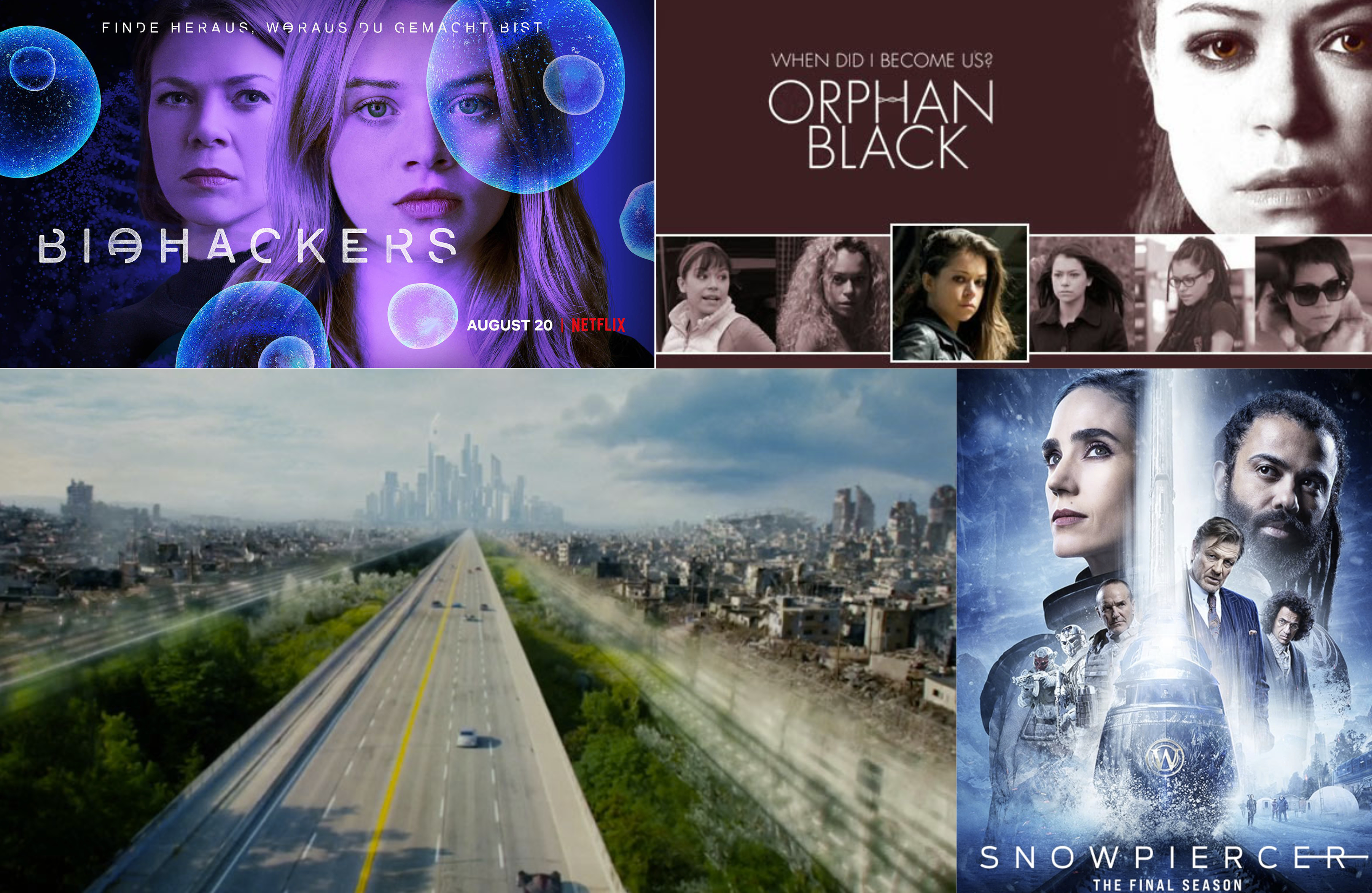
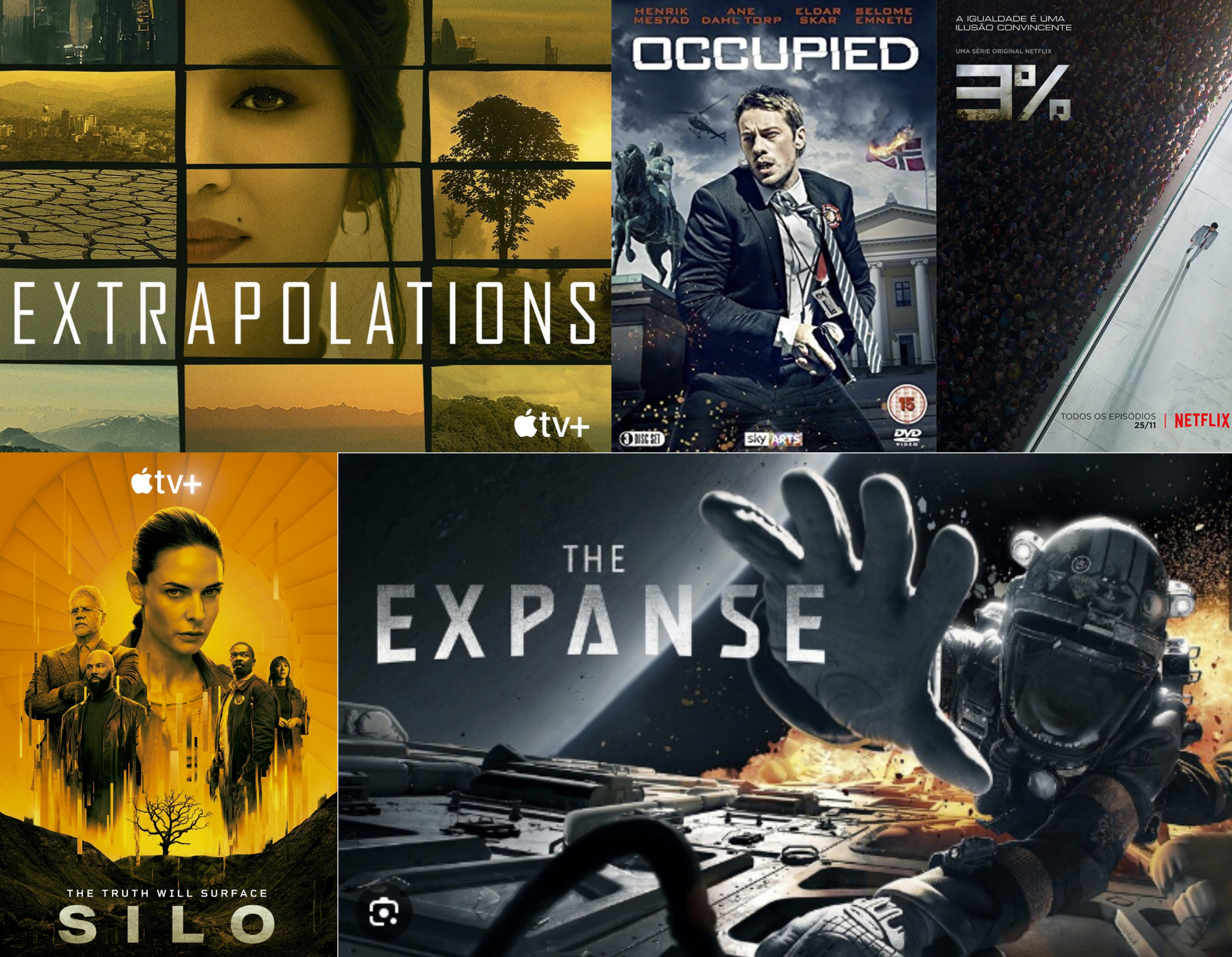
I’ve selected ten TV series that have intrigued me, moved me, and stayed with me for various reasons that touch on: abuse of justice, including eco-justice and environmental abuse; technology use and abuse; and the effects and horrors of climate change.
Some are well known; others not so well known. All approach storytelling with a serious dedication to depth of character, important themes, realistic world building, and excellent portrayal by actors. The world-building is extremely well done—in some cases rivalling Ridley Scott’s best—with convincing portrayals of worlds that are at times uncanny in their realism. Worlds that reflect story from an expansive landscape to the mundane minutiae of daily life: like the cracked phone device of Detective Miller in The Expanse or the dirty fingernails of engineer Juliette Nichols in the Down Deep of Silo. Stories vary in their treatment of important themes from whimsical and often humorous ironies to dark and moody treatises on existential questions. In my opinion, these TV series rival the best movies out there, often reflecting large budgets (but not always) and a huge commitment by producers. The ten TV series I’ve selected here come from around the world: Brazil, Germany, France, Norway, Canada and the United States.
In Part 1, I look at five TV series that touch on ethical issues we are facing today; issues that reach far into existential questions of what it means to be human. These TV series explore synthetic biology, cloning and gene editing, and justice in space colonization and exploitation.
.

.
ORPHAN BLACK: Mingling Its Own Nature With It…
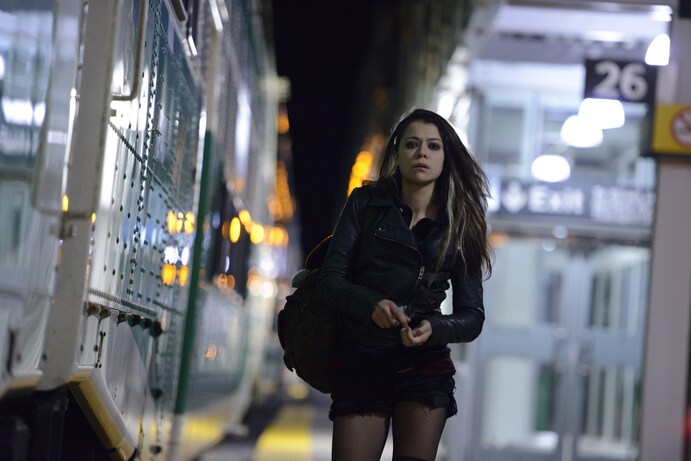
Shot in and around Toronto, Ontario, the series focuses on Sarah Manning, a fringe-dweller with questionable friends, who assumes the identity of her clone, cop Elizabeth (Beth) Childs, after witnessing her suicide and stealing her stuff. In Season 1 alone, seven clones are revealed. Those still alive include suburban housewife Alison Hendrix, university evolutionary biologist Cosima Niehaus, corporate mogul Rachel Duncan, and crazed sociopath Helena.
Toronto is filmed brilliantly in a vague every-city pastiche that combines the look of London’s eastside, NYC and northern Europe all in one. Like its characters, the show is both sparsely existentialist and baroque funk. Besides Sarah’s own diverse clones there is foster brother Felix and his various friends or cronies who add significant colour to this film-noir set. Unsavory antagonists not only add intrigue but provide significant texture from sophisticated and subtle to the banal and truly terrifying. And like biology itself—perhaps the true main character here—all the characters are shape-shifters, looking for balance in a shifting world where “normal” keeps chasing itself.
.
.
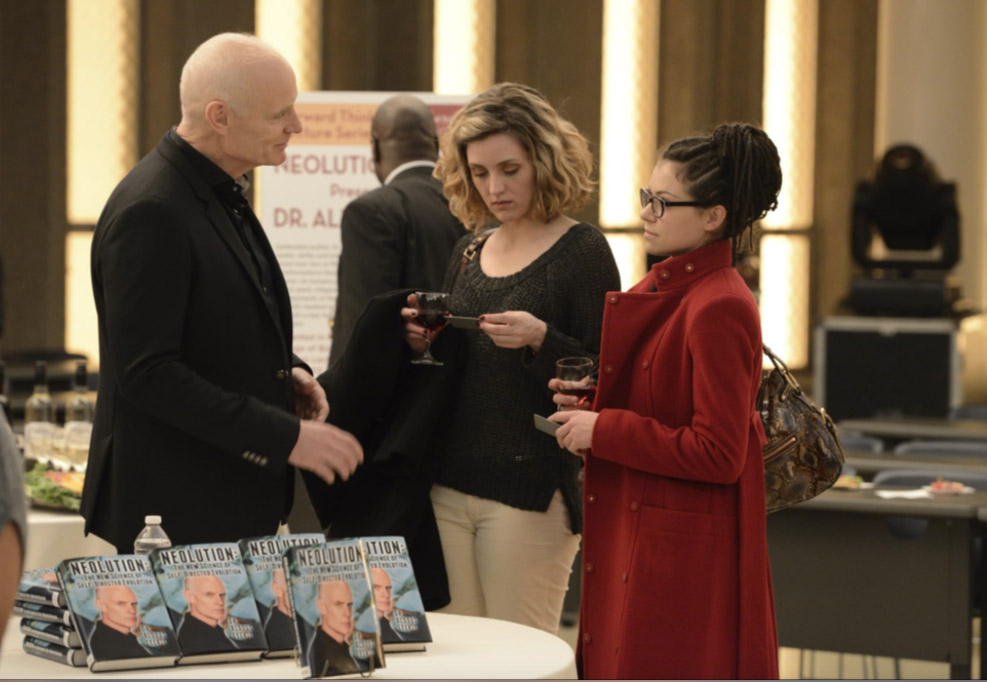
Orphan Black is a slick, sophisticated and edgy exploration of human evolution that raises issues about the moral and ethical implications of bio-engineering and genetic tampering—specifically human cloning (currently against the law), personal identity, and intellectual property. Manson and Fawcett enlist symbols and clever metaphor to enrich the story with layers of depth—no item is free of meaning: from the seemingly innocuous naming of a transit station (Huxley Station) in the show’s premiere, or Delphine’s passing reference to “a brave new world” to a terse discussion between a religious extremist and a restaurant proprietor over the merits of factory-farmed eggs: “They’re not normal,” the extremist complains. “They’ve been interfered with.” There is nothing normal about Orphan Black.
.
.
Episode titles in Season One quoted parts of Charles Darwin’s evolutionary text On The Origin of Species. Titles like “Natural Selection” (series premiere) and “Parts Developed in an Unusual Manner” elucidate concepts of evolution and survival of the fittest. Season 2 adopts the works of Sir Francis Bacon, reflecting the ethical and moral implications of scientific pursuit in a world of contrasting philosophies and values.
In Orphan Black, The Dyad Institute, a biotech corporation with arcane connections to invisible powers and eugenics, patented the clones as theirs to do with as they please—which might be anything. The ownership of the clones’ genomes by The Dyad Institute would be lawful if all the clones’ DNA was entirely synthetically made. The company would also have exclusive rights to study the clones’ genome, effectively placing the clone Cosima under copyright infringement if she decided to study and apply her research (on herself) outside of the Dyad Institute. If the clones were synthetic, like the DNA created by scientist Dr. Craig Venter, then the Dyad Institute would be in a unique situation with regards to ethics and newly emerging considerations of human rights yet to be determined. For instance, how much of the clones really belong to the company that made them? What even constitutes a person?

.

Nina Munteanu is a Canadian ecologist / limnologist and novelist. She is co-editor of Europa SF and currently teaches writing courses at George Brown College and the University of Toronto. Visit www.ninamunteanu.ca for the latest on her books. Nina’s bilingual “La natura dell’acqua / The Way of Water” was published by Mincione Edizioni in Rome. Her non-fiction book “Water Is…” by Pixl Press (Vancouver) was selected by Margaret Atwood in the New York Times ‘Year in Reading’ and was chosen as the 2017 Summer Read by Water Canada. Her novel “A Diary in the Age of Water” was released by Inanna Publications (Toronto) in June 2020.
.
 Nina Munteanu Writing Coach