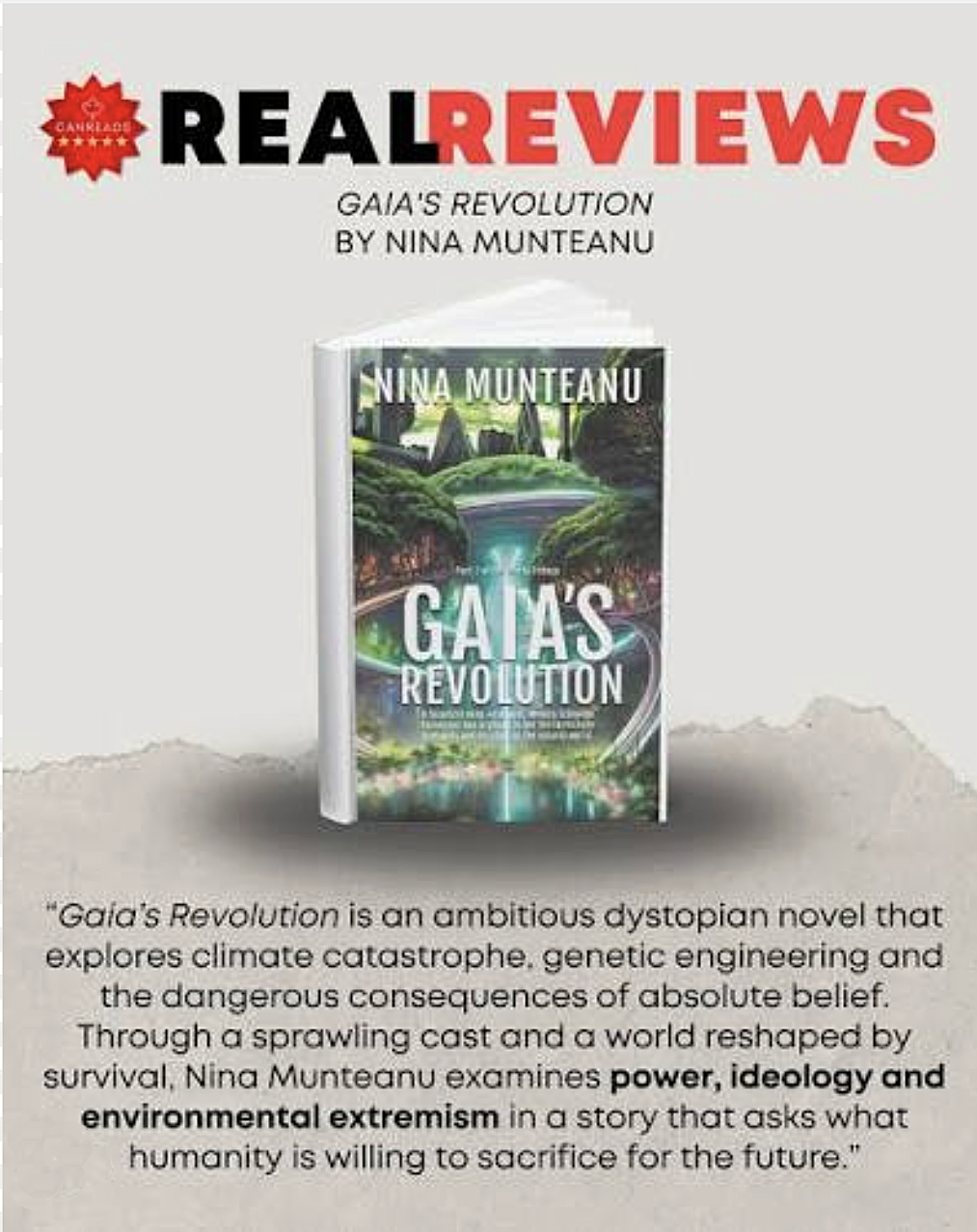
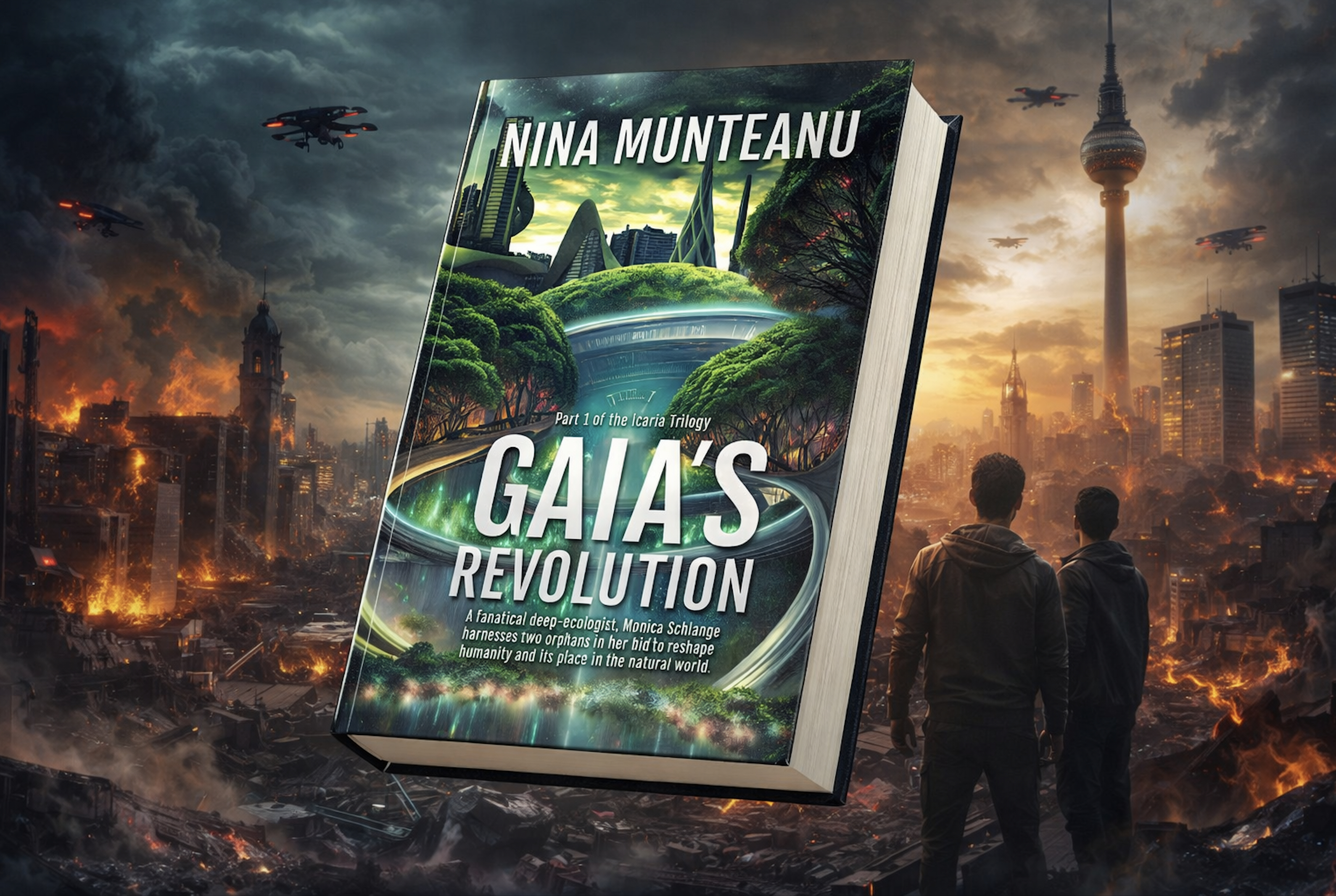
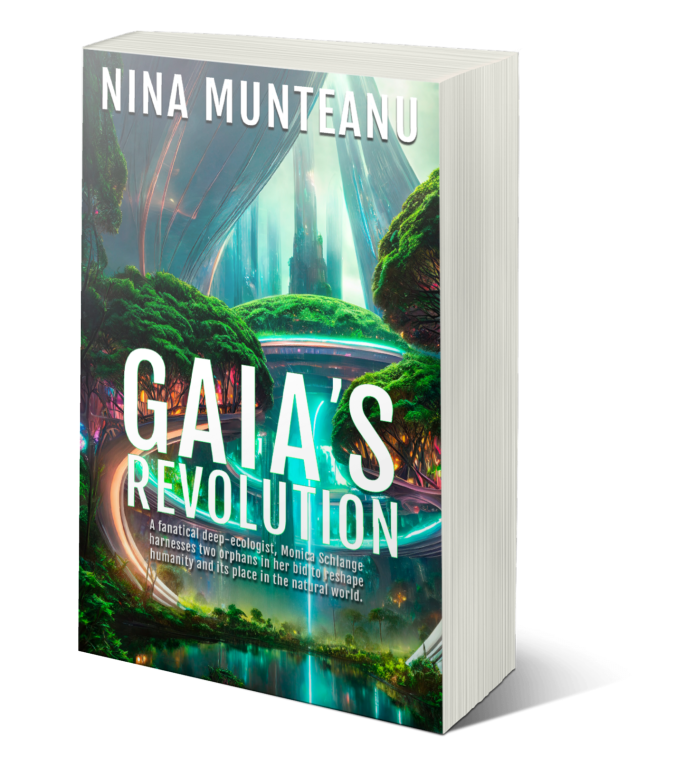
Reviews of my climate thriller Gaia’s Revolution continue to trickle in. The latest is by Canadian speculative author Noah Chinn:
“When choosing what to read, it’s important to sometimes go out of your comfort zone. This is one of those times…This is not a story I would read for fun. But it is an important story that should be read.”
Noah Chinn, author of Lost Cargo
.
CANREADS Review of “Gaia’s Revolution”
.
Nina Munteanu is a Canadian ecologist / limnologist and novelist. She is co-editor of Europa SF and currently teaches writing courses at George Brown College and the University of Toronto. For the lates on her books, visit www.ninamunteanu.ca. Nina’s bilingual “La natura dell’acqua / The Way of Water” was published by Mincione Edizioni in Rome. Her non-fiction book “Water Is…” by Pixl Press (Vancouver) was selected by Margaret Atwood in the New York Times ‘Year in Reading’ and was chosen as the 2017 Summer Read by Water Canada. Her novel “A Diary in the Age of Water” was released by Inanna Publications (Toronto) in June 2020.Her latest eco-fiction novel Gaia’sRevolution was released by Dragon Moon Press in March 2026.
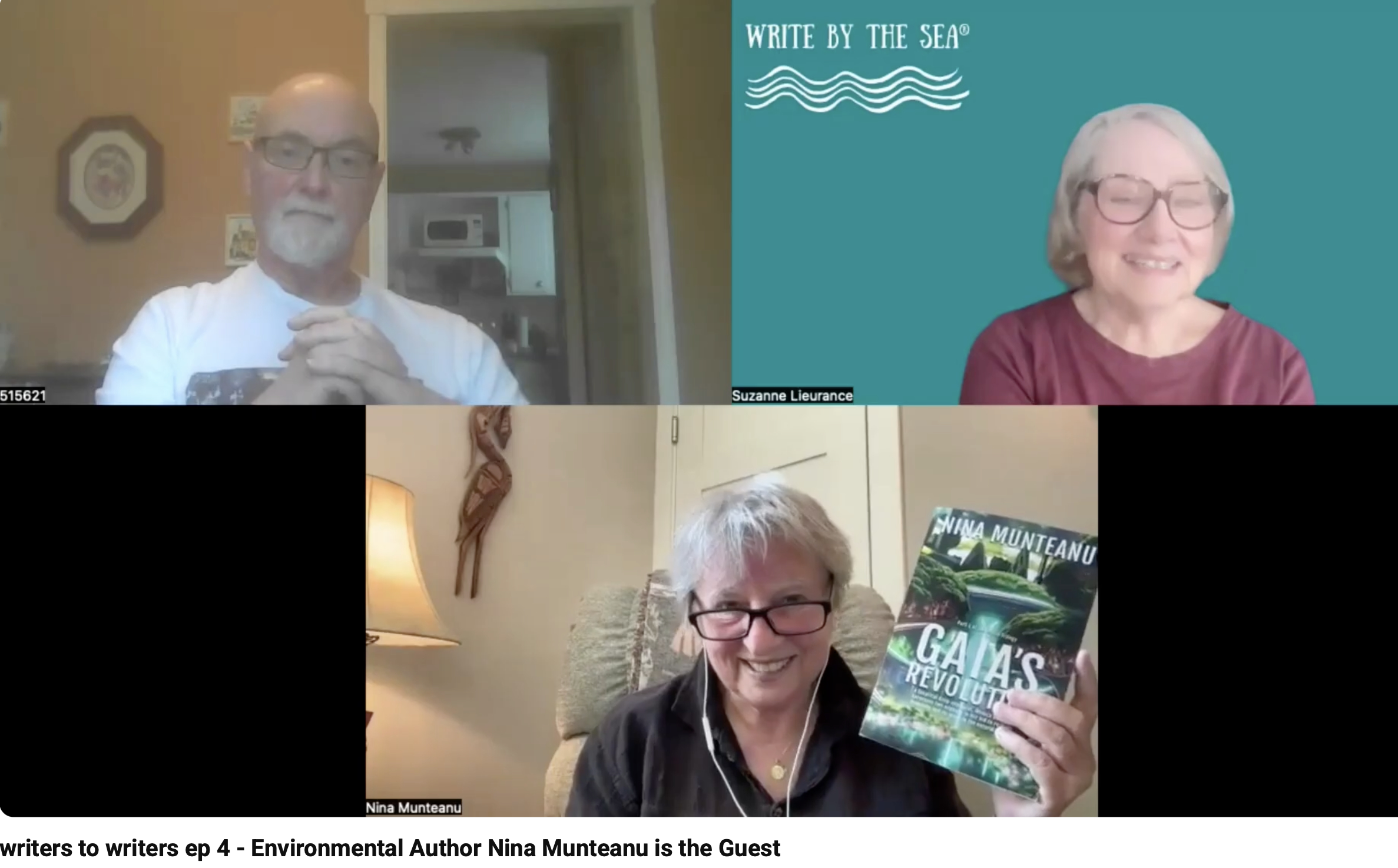
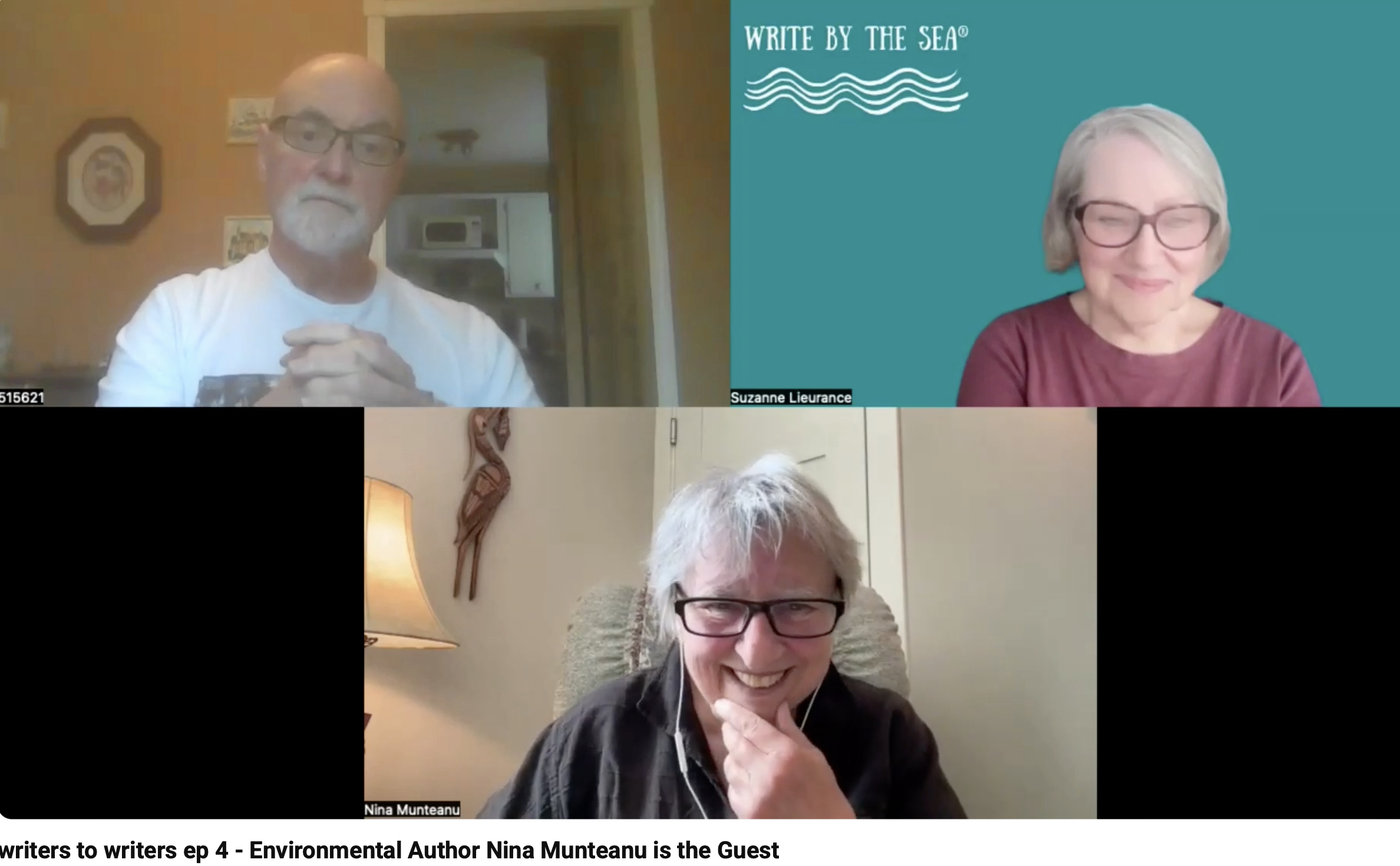
Nina Munteanu with Simon Rose and Suzanne Lieurance on Writers To Writers Podcast
.
I was recently interviewed by Simon Rose and Suzanne Lieurance on Episode 4 of Writers To Writers June 2026.
We covered why I write about ‘green issues’ in my fiction, how I came to write eco-fiction and my aversion to littering—an aversion which Suzanne shared she also felt—which I ascribed to a disrespect for others and ‘the silent other’, represented by the natural world. We discussed my influences as a kid growing up and then later as an adult.
I shared how I have incorporated ‘green issues’ in both my fiction and non-fiction writing and short and long fiction. We shared how we started as young kids creating stories for our families and neighbourhood friends, developing our skills as storytellers.
We also discussed the strange world of writing and publishing and how a prequel to a prequel can come about. This then morphed into a discussion of morally gray characters and their evolution and why I find the character Loki far more interesting than Thor. If you want clarification on these, go have a listen!
.
.
Nina Munteanu is a Canadian ecologist / limnologist and novelist. She is co-editor of Europa SF and currently teaches writing courses at George Brown College and the University of Toronto. For the lates on her books, visit www.ninamunteanu.ca. Nina’s bilingual “La natura dell’acqua / The Way of Water” was published by Mincione Edizioni in Rome. Her non-fiction book “Water Is…” by Pixl Press (Vancouver) was selected by Margaret Atwood in the New York Times ‘Year in Reading’ and was chosen as the 2017 Summer Read by Water Canada. Her novel “A Diary in the Age of Water” was released by Inanna Publications (Toronto) in June 2020.You can read her just released eco-fiction thriller Gaia’s Revolution by Dragon Moon Press.
.
Nina Munteanu interviewed by Simon Rose and Suzanne Lieurance on Writers To Writers Podcast
In my latest eco-fiction novel (Re)Genesis (upcoming), four teenagers in ‘small town’ Ontario discover and unravel a conspiracy by a chemical factory that uses shapeshifting substances for weapon use, causing a shift in the genetics of humanity itself. The discovery eventually leads them to communist Poland where it all started with the cyanobacteria Nostoc commune.
(Re)Genesis follows the premise of dark karma as Nature learns to reflect back what we send out. Making use of real examples of learning, pattern recognition, anticipation and adaptation in non-human life, the novel explores the concept of biosemiosis* in this eco-thriller.
.
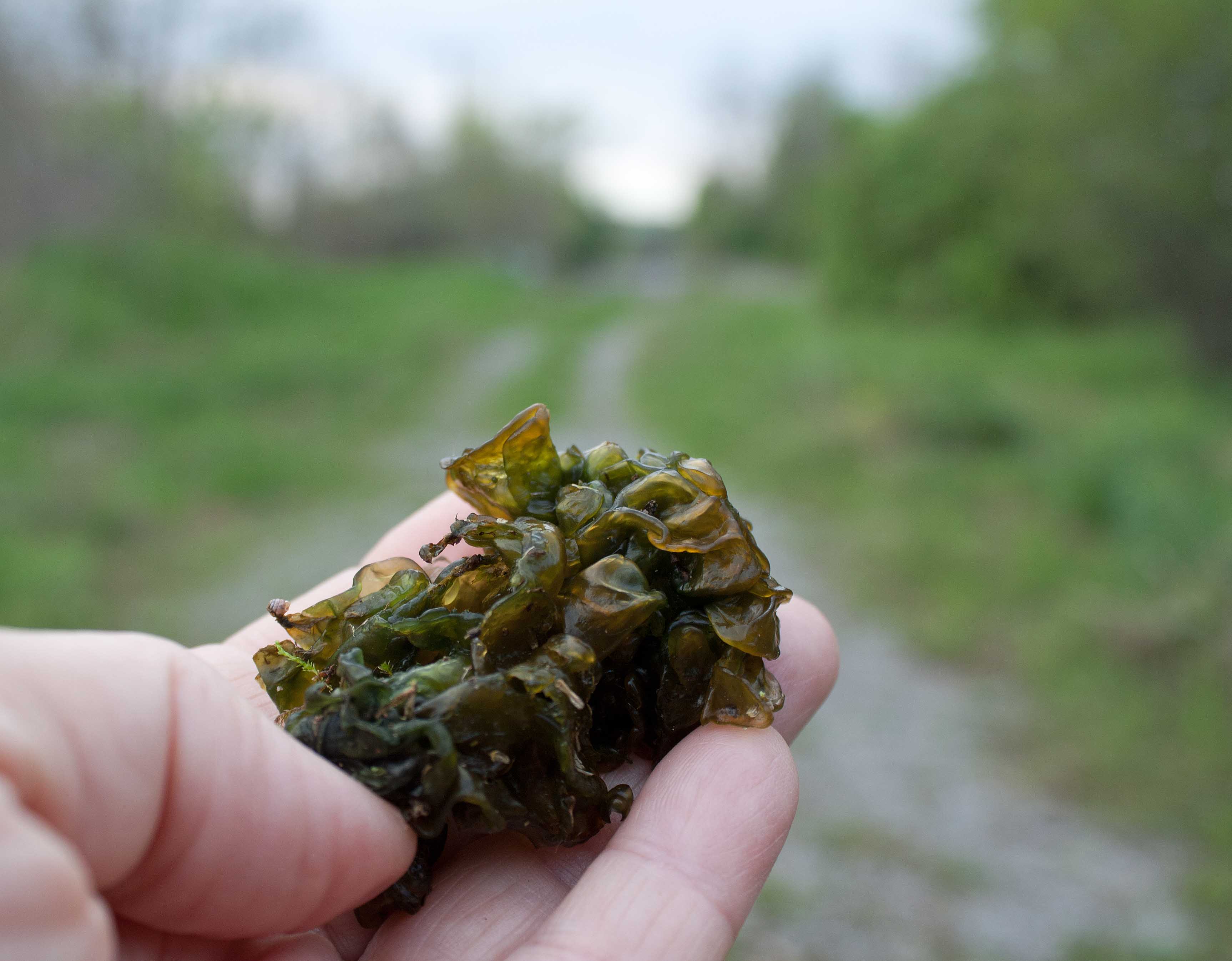
Nostoc commune found colonizing a gravel path, ON (photo by Nina Munteanu)
.
Ahmed Bennu, a mind-challenged boy, who is arcanely transformed by a tragic incident into a genius publishing papers at Harvard, pursues the concept of biosemiosis in Nostoc commune, a ubiquitous cyanobacteria (blue-green algae)—and an organism his own body has begun to mimic—that has colonized the world. In a scientific paper published by Nature, he describes the ever-increasing fluidity in Nature and argues that Nostoc can anticipate and exert goal-oriented behaviour to change itself and its environment. He joins Harriet—who lost her best friend in that arcane incident—and their investigation leads them to a nefarious past, to the 1950s, deep in the Kurpioska Forest of Poland, where chemical company Zima Elastomers used Nostoc to concoct a freakish substance for the communist military. Not only did the substance infect the workers there; it escaped with dire consequences for the world’s future.
Of course, it’s just science fiction. But is that all it is?…
.
Biosemiosis & Umwelt
In the 1930s, Jakob von Uexküll coined the term Umwelt* (species-specific reality or subjective environment) to define a life process that involved semiotic* interactions. He argued that an organism’s behaviour results from activity that attributes meaning to the world around it, rather than merely mechanically reacting to stimuli. Building on this notion, Friedrich S. Rothschild coined the term “biosemiosis” in 1962 to postulate that life has its subjective interpretation of the world around it—its Umwelt—a segment of the world that has significance and meaning based on that life’s biology and needs. Developing the concept of biosemiosis further, Thomas Sebeok later contended that all organisms are enveloped in a cloud of messages about themselves and their situation, which they constantly transmit, receive, and interpret. Life itself is a process of signification and meaning-making, from bacteria and plants to mammals and birds. Biosemiosis involves pattern recognition, anticipation, flexibility, goal-directed movement, memory, and learning.
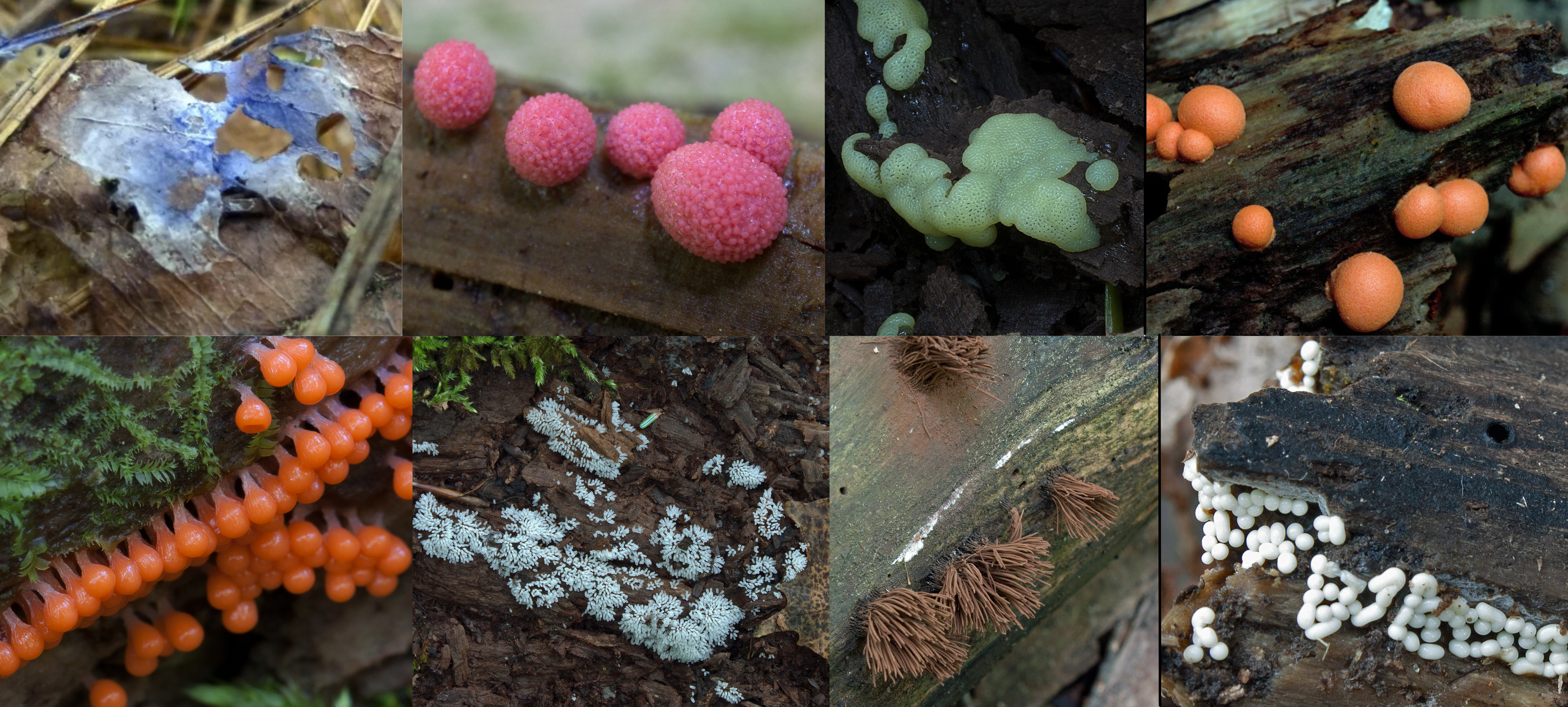
All organisms participate in complex interactions that involve sophisticated signaling and exchange. In Planta Sapiens, Paco Calvo argues that, “this happens at the level of single-celled organisms, which can collect information and make decisions.” The slime mold Physarum polycephalum,for example, is an amoeba-like cell that can navigate its environment through learning, memory, and decisions. In the 1980s, evolutionary biologist Lynn Margulis argued for intelligence of bacteria based on similar observations.
.
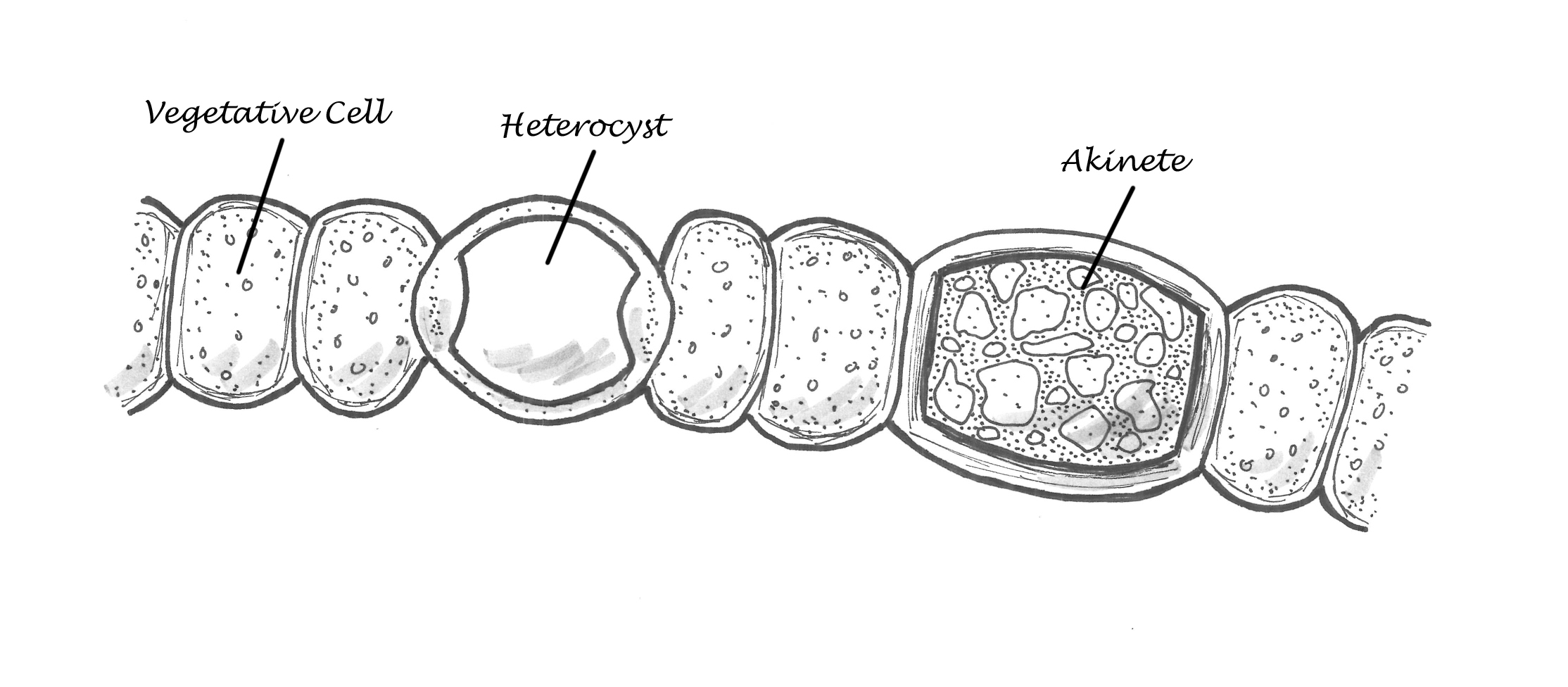
Nostoc filament showing various adaptive cells (illustration by Nina Munteanu)
.
My novel (Re)Genesis features the cyanobacteria Nostoc commune, known to be highly adaptable to changing environments and known to participate in complex interactions by entering into symbiotic relationships (e.g. plants, fungi and lichen) that involve complex communication and exchange of resources; biosemiosis in action. In my novel, Nostoc commune is used by Polish biochemical company Zima Performance Elastomers as the driving core of a synthetic protein substance with chameleon properties called Syprene and meant for covert stealth operations by the military. Not unlike Margaret Atwood’s calamitous dystopia Oryx & Crake, things go wrong at Zima: terrible unintended consequences occur as non-human biological intelligence asserts its self-determination and humans find their sovereignty eroded into a more fluid existence.
In a scene close to the middle of the book, two sisters wish each other goodbye at the train station in the village of Mala Dolina, built for Zima Elastomers; a veil of dark portent overshadows them both:
Ewa and Zofia stand in awkward silence at the little train station in town, waiting for the train. A thick snowfall covers the tracks and the ground. The snow comes down like thick confetti, covering everything with a soft blanket of white.
It’s time for her to return to Warsaw to teach the winter semester at the university. She hates to leave Zofia with the twins so young, especially with Piotr not totally recovered. But, given how their work shifts now overlap less, surely Piotr can look after the twins when he’s home. It is not perfect, but it must work, she decides. Things must go on.
Ewa glances covertly at Zofia, standing next to her on the platform, and worries nonetheless. Piotr is definitely not fully recovered from his accident last fall. She finds him often morose and strange, staring off into the distance for a protracted time or saying odd things that have nothing to do with anything. Pieces of nonsense. He seems to have lost his joy for life and it is impacting her sister. He now walks with a stoop. Shortly after Christmas, Zofia had anxiously confided to her something distressing: Piotr had told Zofia that there was something in the brine pit. Something moving and alive. This is, of course, impossible. Nothing can live in that cesspool of poisonous waste. Zofia reminded her that Agata had made that same claim shortly before she was found dead and floating face down in the brine pit. Ewa recognized real terror in Zofia’s eyes. Neither said aloud the terrible thought that went through their minds: was Piotr going mad?
Ewa hears the train approach and soon it comes around the corner, emerging out of the thick pine forest, pushing through the snow on the tracks. Both women glance at one another with fake smiles.
What follows validates their fearful foreboding.
Process philosopher Alec Borislow writes, “There are invisible meanings, signs, and messages constantly being transmitted that shape the reality of all life forms. Biosemiotics aims to make the unseen seen.”
.
Heterogenous Being*
In his 2025 PhD thesis, Steven L. Ogden explored the dichotomous narrative that separated human with non-human. Evoking the term “heterogenous being,” Odgen acknowledged the influences and potentialities of nonhuman subjects in narrative, both in fiction and nonfiction.
Ogden writes that “like René Descartes, many today still consider the mind or “rational soul” of humanity to be entirely exceptional to and independent of animality, and believe no part of Man (as master and possessor of nature) could derive from the “potentiality of [nonhuman] matter.” Ogden quotes Donna Haraway (author of When Species Meet) who said that “to exist as an individual is always to become with many.” She is talking about the thousands of species living symbiotically inside us and around us that keep us alive. This is what philosopher Levi Bryant refers to as a democracy of objects in which “humans are no longer monarchs of being, but are instead among beings … and implicated in other beings.” We are entangled in beings. We are implicated in other beings.
In his exploration of Richard Powers’s novel The Overstory, Ogden points out that one of Powers’s main characters, botanist Patricia Westerford, understands that her peers believe plants live an inanimate existence, whose rooted immobility points to a kind of “unfreedom” that represents an “archetype of inert matter.” According to poet David Hinton, this devaluation of plant life relates to the human-nonhuman duality, “a Western dichotomy that relegates the vegetal world to a space of ‘linguistic silence.’” And yet plants are biosemiotics, exhibiting cognitive behaviour through adaptation, anticipation, flexibility, and goal-direction. Plants demonstrate phenotypic plasticity through their complex engagement with their environment, shaping what emerges.
.
Various slime molds, ON (photos by Nina Munteanu)
.
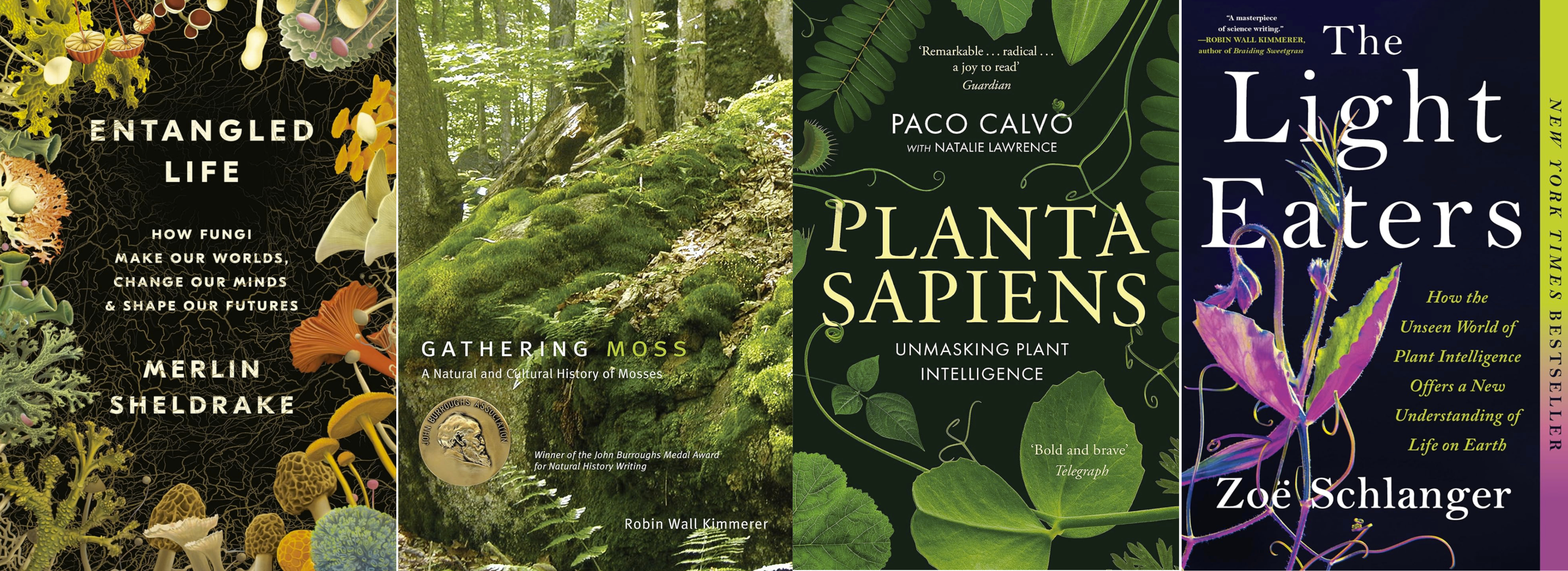
There is a growingzeitgeist of not just planetary awareness but of sensibility, a sense that we are interlinked with all other life and nonlife, that we are all more than the sum of our parts. And that intelligence—no matter how it is interpreted and measured—is far more prevalent than we thought, and found everywhere: from bacteria to insects to plants to animals, fungi and slime molds. Indeed, works devoted to incredible and intelligent nature of the non-human world have increased dramatically. Notable examples include Merlin Sheldrake’s Entangled Life: How Fungi Make Our Worlds; Robin Wall Kimmerer’s Gathering Moss, Suzanne Simard’s TheBreathing Trees, Paco Calvo’s Planta Sapiens and Zoe Schlanger’s TheLight Eaters.
.
Several books on nature’s intelligence
.
Is it possible that we have finally escaped the oppressive shackles of 17th Century Cartesian dogma contesting that dogs have no feelings?
God, I surely hope so.
.
Glossary:
Umwelt: a segment of the world that has significance and meaning based on an organism’s biology and needs: sounds it hears, scents it smells, foods it tastes.
Semiosis: the process of interpreting something as signifying something else using the process of signs, symbols or sound to produce meaning.
Biosemiosis: a biological term for ways organisms communicate, interpret meaning, and interact with their environments through signs and codes.
Heterogenous Being: a way of being that recognizes and incorporates humanity’s pluralized configurations with the nonhuman world by uniting the studies of science and humanities into an interdisciplinary hybrid creative-scientific aesthetic.
.
References:
Barbieri, Marcelo. 2008 (ed). “Introduction to Biosemiotics: The New Biological Synthesis” Springer, Netherlands. 525pp.
Borislow, Alec. 2023. “Send Me a Sign: Biosemiosis, Umwelt, And Signifiers.” Medium, November 30, 2023.
Calvo, Paco, M. Gagliano, G. Souza, and A. Trewavas. 2020. “Plants are intelligent, here’s how.” Annals of Botany 125: 11-28.
Haraway, Donna Jeanne. 2008. “When Species Meet.” University of Minnesota Press.
Hata, Shingo et al. 2022. “Dried Nostoc commune exhibits nitrogen-fixing activity using glucose under dark conditions after rehydration.” Plant Signal Behav. 17(1): 2059251.
Kecsey, et. al. 2018. “Adaptations of cyanobacterium Nostoc commune to environmental stress: Comparison of morphological and physiological markers between European and Antaarctic populations after rehydration.” Czech Polar Reports 8(1): 84-93.
Kimmerer, Robin Wall. 2003. “Gathering Moss: A Natural and Cultural History of Mosses.” Oregon State University Press. 176pp.
Marder, Micheal. 2013. “Plant-Thinking: A Philosophy of Vegetal Life.” Columbia University Press.
Ogden, Steven L. 2025. “Heterogenous Being: The Inhumanities and the Creative-Scientific Aesthetic.” A Dissertation submitted to the University at Albany, State University of New York in partial fulfillment of the requirements for the Degree of Doctor of Philosophy. 207pp.
Reber, A.S. 2019. “The First Minds: Caterpillars, ‘Karyotes and Consciousness.” Oxford University Press, New York. 296pp.
Schlanger, Zoe. 2025. “The Light Eaters.” Harper Perennial. 304pp.
Simard, Suzanne. 2026. “When the Forest Breathes.” Allen Lane. 336pp.
Trewavas, Anthony. 2003. “Aspects of Plant Intelligence.” Annals of Botany 92(1): 1-20.
Uexküll, Jakob von. 1921. “Umwelt und Innenwelt der Tiere” 2nd ed. Julius Springer, Berlin.
Uexküll, Jakob von. 1931. “Die Rolle des Subjekts in der Biologie.” Die Naturwissenschaften 19: 385-391.
.
Nina Munteanu is a Canadian ecologist / limnologist and novelist. She is co-editor of Europa SF and currently teaches writing courses at George Brown College and the University of Toronto. For the lates on her books, visit www.ninamunteanu.ca. Nina’s bilingual “La natura dell’acqua / The Way of Water” was published by Mincione Edizioni in Rome. Her non-fiction book “Water Is…” by Pixl Press (Vancouver) was selected by Margaret Atwood in the New York Times ‘Year in Reading’ and was chosen as the 2017 Summer Read by Water Canada. Her novel “A Diary in the Age of Water” was released by Inanna Publications (Toronto) in June 2020.You can read her just released eco-fiction thriller Gaia’s Revolution by Dragon Moon Press.
Henry of Maple News Wire recently gave me a wonderful welcome back to British Columbia with the following news release and book review:
.
Local Author Returns with a Bang
“Nina Munteanu is back in Ladner, and she’s bringing a story that’s impossible to ignore. Her latest novel, Gaia’s Revolution, officially launched on March 10, 2026, is already making waves as an Amazon bestseller. Fans and friends in Delta and Vancouver are celebrating her triumphant return.”
Gaia’s Revolution, says Henry, is a “fast-paced Canadian dystopian thriller tackling climate change, tech chaos, and society on the brink.”
.
.
A Canadian Eco-Dystopia Like No Other
“Gaia’s Revolution plunges readers into a near-future Canada teetering on the edge of collapse. With climate change, societal missteps, and failing technology wreaking havoc, Munteanu paints a vivid picture of what might come.
“The story begins in Berlin in 2022 before moving to Canada, where ambitious twin brothers, Eric and Damien, spark a revolution that could either save the planet or end humanity.
“Monica Schlange, a fanatical deep ecologist, manipulates the twins like chess pieces in her bid to ‘rule the world.’ She ensnares three orphans in a web of intrigue, challenging the very rules of human existence. Yet, it’s the orphans who ultimately shape the fate of humanity.”
.
Fast-Paced Thriller With Real-World Relevance
Munteanu doesn’t hold back. Her novel tackles issues Canadians are already facing—or may soon confront…With every twist, the book explores the delicate balance between humanity and the natural world.”
.
From Classroom to Canadian Landscapes
“Before devoting herself to writing, Munteanu taught limnology at the University of Victoria. Her travels across Canada, including stops in Lunenburg, small-town Ontario, Vancouver, and Fort McPherson, have deeply influenced her storytelling. Each setting in her novels carries the richness of real Canadian locales.
“Now settled in a quiet Ladner neighbourhood, Munteanu is already hard at work on her next project, promising more stories that combine thrilling plots with urgent environmental themes.”
.
This is true. My climate eco-novel Thalweg will release in 2027 with Inanna Publications. I am still working with the editor of the publishing house and anticipate with growing excitement seeing the cover design soon.
.
.
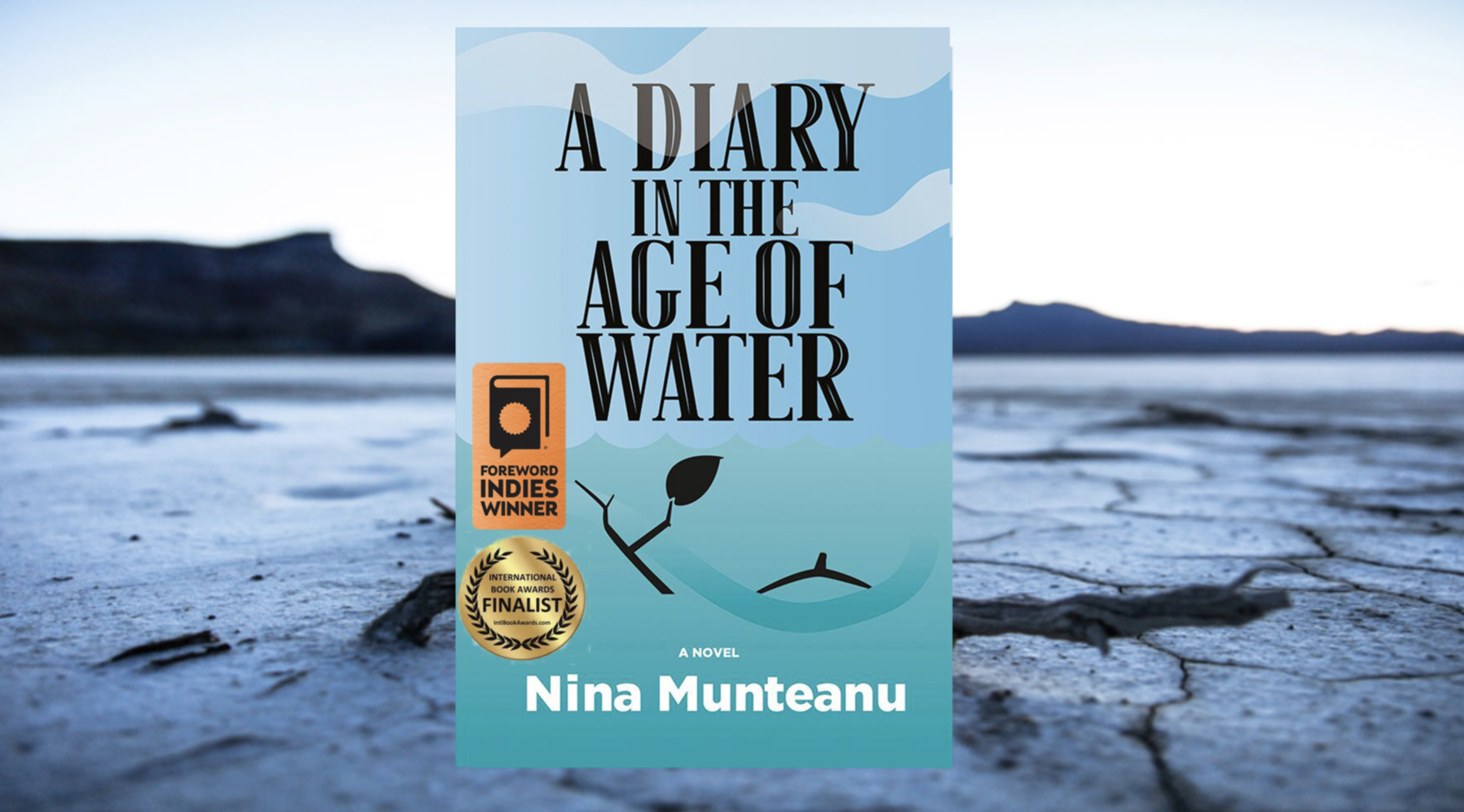
Thalweg is a companion novel to A Diary in the Age of Water (my award-winning story based on the diary of a limnologist during Canada’s growing climate crisis that explores four generations of women, each with a unique relationship with water). Thalweg follows the braided paths of four homeless strangers—each uniquely connected to water—and each destined to play a significant role in water’s future in Canada. I look forward to seeing it soon on bookstore shelves next to Diary.
.
Nina Munteanu is a Canadian ecologist / limnologist and novelist. She is co-editor of Europa SF and currently teaches writing courses at George Brown College and the University of Toronto. For the lates on her books, visit www.ninamunteanu.ca. Nina’s bilingual “La natura dell’acqua / The Way of Water” was published by Mincione Edizioni in Rome. Her non-fiction book “Water Is…” by Pixl Press (Vancouver) was selected by Margaret Atwood in the New York Times ‘Year in Reading’ and was chosen as the 2017 Summer Read by Water Canada. Her novel “A Diary in the Age of Water” was released by Inanna Publications (Toronto) in June 2020.You can read her just released eco-fiction thriller Gaia’s Revolution by Dragon Moon Press.
Place ultimately portrays what lies at the heart of a story. Place as character provides an archetype that story characters connect with and navigate in ways that depend on the story’s theme, particularly in allegories that rely strongly on metaphor. Theme is essentially the “so what part” of a story; what is at stake for the character on their journey. Theme is the backbone—the heart—of the story, driving characters to journey through time and place toward some kind of fulfillment. There is no story without theme. And there is no theme without place.
When place is the environment—a forest, meadow, swamp or heathland—the author has an opportunity to go beyond simple backdrop, even beyond deeper metaphor, to intimately portray the voice of ‘the Other.’ Eco-literature brings awareness to environment as ‘Other’; eco-literature intimately explores humanity’s role in defining ‘the Other’ by portraying environment on a journey as character with agency and sometimes with voice—often through character coupling. Nineteenth Century author Thomas Hardy recognized the tenuous position of wilderness during Victorian Britain with increasing industrialization and urbanization. Taming Nature to achieve ordered beauty had become an obsession; Hardy recognized this and mourned the loss of pre-industrial agrarian landscapes to human greed and modernization.
.
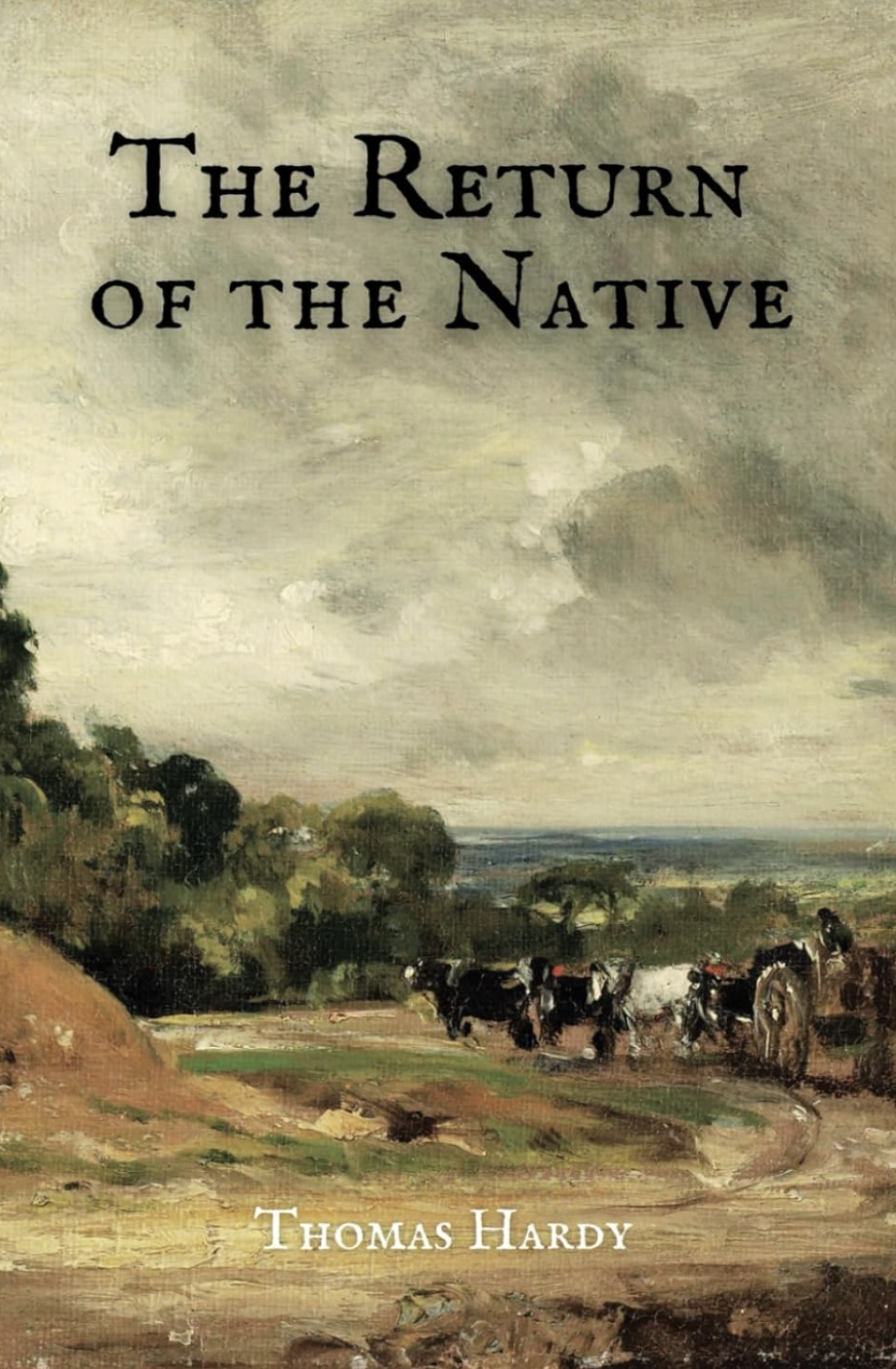
Thomas Hardy’s Heath: Return of the Native
For Victorian author Thomas Hardy, trees, meadows, winding brooks and country roads were far more than back-drop for his world and his stories. Elements of the natural world were characters that impacted other characters in a world dominated by nature.
Perhaps best known for his melancholic stories of fatalistic, ironic tyrannies, Thomas Hardy wrote with a tender and poetic sensibility about Nature, and particularly the heath where he grew up. All of Hardy’s writings embody a strong sense of place. Nature—like his omniscient narrative form—lies beyond the scope of humanity: vast, amoral, and unfathomed; and yet, inextricably linked to the feckless actions of its humans. Egdon Heath in Return of the Native remains one of Hardy’s most enduring characters and best examples of the power of place in story.
.
Author D.H. Lawrence evocatively personified Hardy’s bleak heathland: “Egdon, whose dark soil was strong and crude and organic as the body of a beast.”
Egdon Heath is a metaphoric black hole from which no light escapes. None of Hardy’s characters escape the embrace of this behemoth. Dark, swarthy and associated with the night: “The face of the heath by its mere complexion added half an hour to evening; it could in like manner retard the dawn, sadden noon, anticipate the frowning storms scarcely generated, and intensify the opacity of a moonless midnight to a cause of shaking dread.” Each character is touched by the heath’s brooding grip and each feels its power differently: hapless Wildeve; idealist Clym; desperate Eustacia and suffering Thomasin.
.
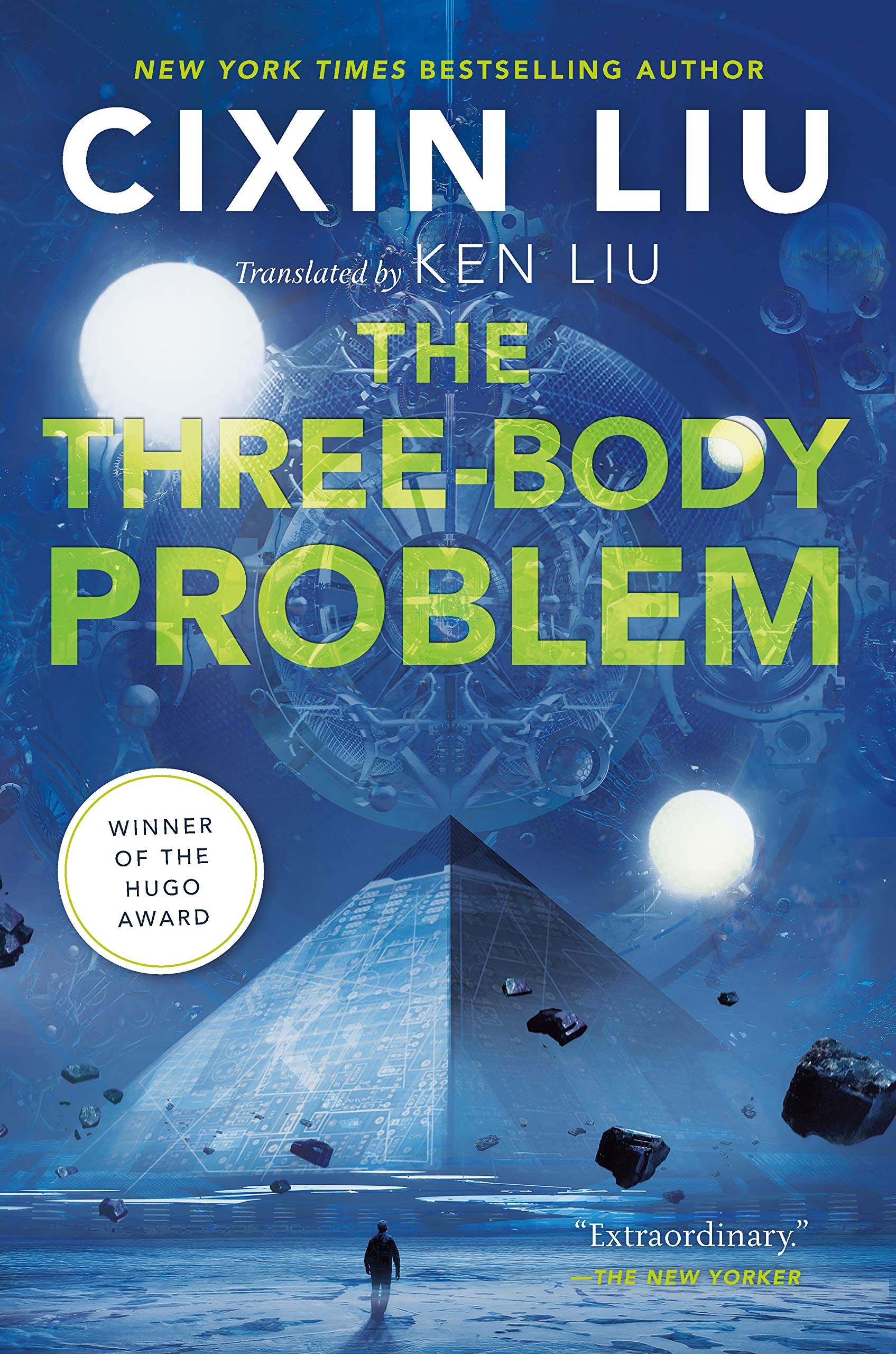
Cixin Liu’s Forests: The Three Body Problem
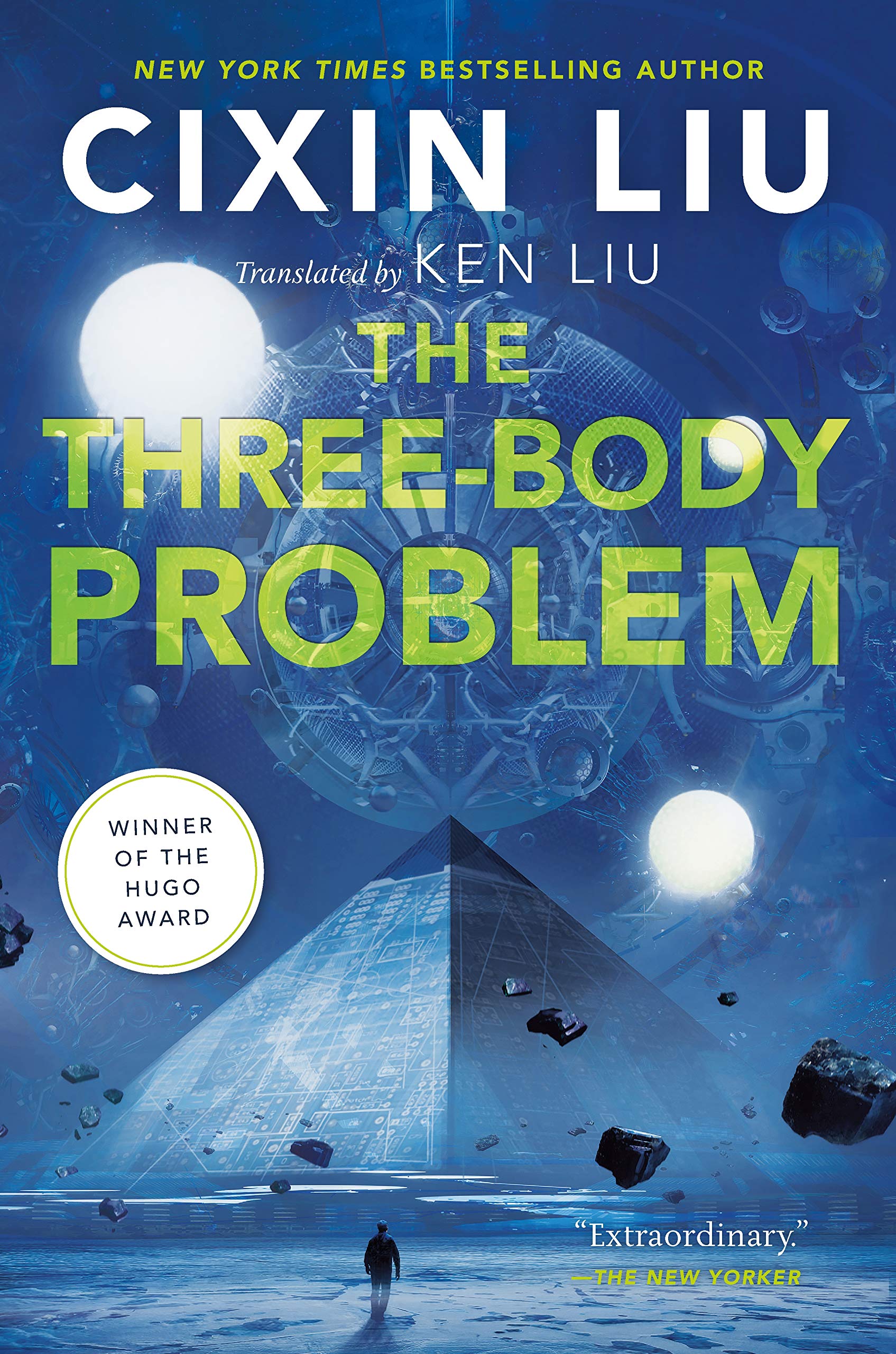
Cixin Liu’s The Three Body Problem—set against the backdrop of China’s Cultural Revolution—follows Wenji Ye, disillusioned by the massive environmental deforestation in the labour camps she is sent to work:
Her company wielded hundreds of chain saws like a swarm of steel locusts, and after they passed, only stumps were left. The fallen Dahurian larch, now bereft of branches, was ready to be taken away by tractor. Ye gently caressedthe freshly exposed cross section of the felled trunk. She did this often, as though such surfaces were giant wounds, as though she could feel the tree’s pain … The trunk was dragged away. Rocks and stumps in the ground broke the bark in more places, wounding the giant body further. In the spot where it once stood, the weight of the fallen tree being dragged left a deep channel in the layers of decomposing leaves that had accumulated over the years. Water quickly filled the ditch. The rotting leaves made the water appear crimson, like blood.
.
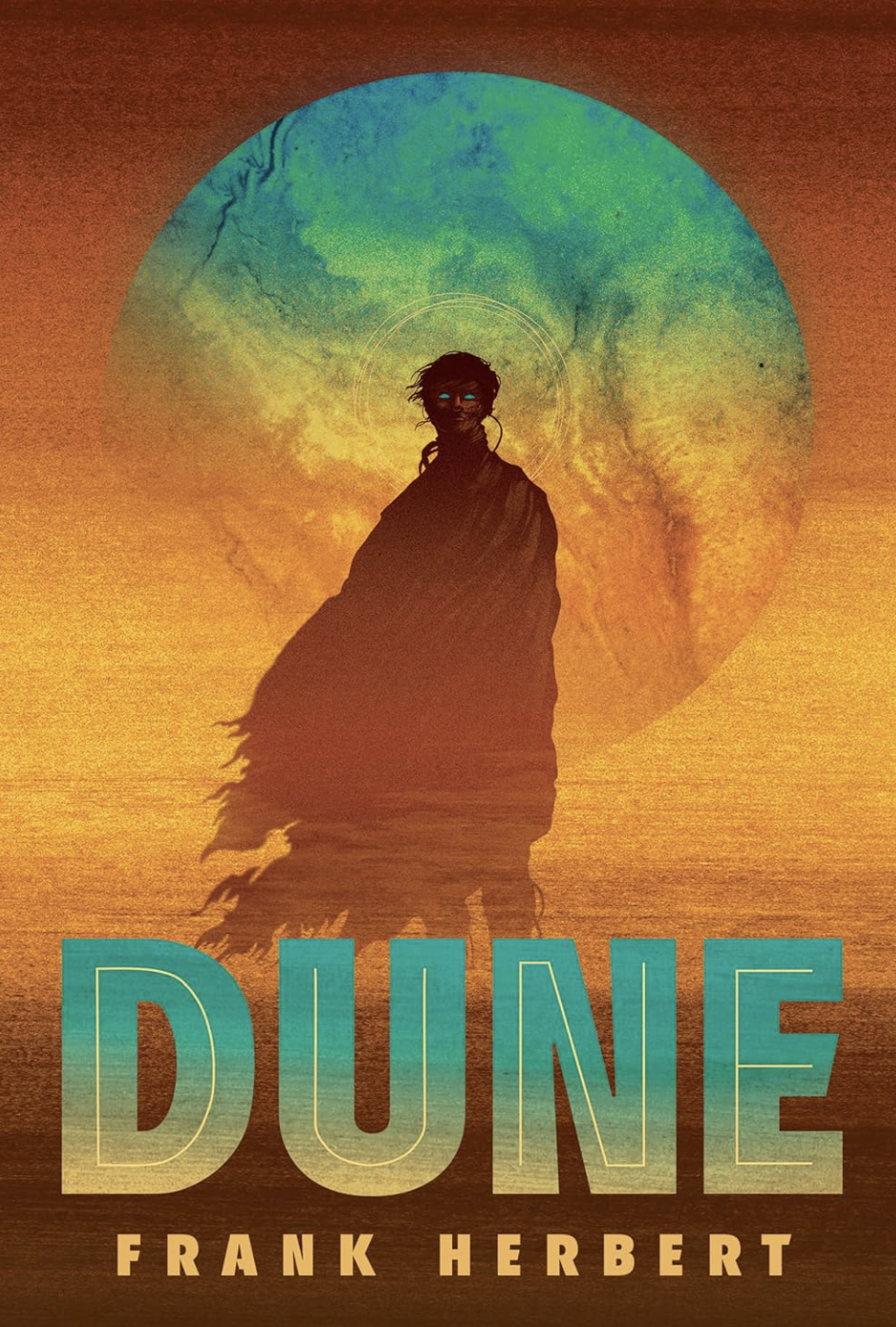
Frank Herbert’s Desert: Dune
Frank Herbert’s Dune chronicles the journey of young Paul Atreides, Duke Leto’s son, who according to the indigenous Fremen prophesy will eventually bring them freedom from their enslavement by the colonialists—The Harkonens—and allow them to live unfettered on the planet Arrakis, known as Dune.
But, as the title of the book clearly reveals, this story is about place—a harsh desert planet whose 800 kph sandblasting winds could flay your flesh—and the power struggle between those who covet its arcane treasures and those who wish only to live free from slavery. Place—and its powerful symbols of desert, water and spice—lies at the heart of this epic story about taking, giving and sharing. When he thinks of Dune, the newly placed Duke Atreides uses water metaphors: “He sighed, glanced back at the dry landscape where the flowers were gone now—trampled by the dew gatherers, wilted under the early sun.”
.
“The desert stretched out like a static ocean. [It] lay there full of moon-silvered waves—shadows of angles that lapsed into curves and, in the distance, lifted to the misted gray blur of another escarpment.”
The immense sandworms of Frank Herbert’s Dune are strong archetypes of Nature—large and graceful creatures whose movements in the vast desert sands resemble the elegant whales of our oceans:
It came from their right with an uncaring majesty that could not be ignored. A twisting burrow-mound of sand cut through the dunes within their field of vision. The mound lifted in front, dusting away like a bow wave in water.
.
Annie Proulx’s Forest: Barkskins
The opening combines subtle to obvious images of an “unwelcoming” wilderness—as dark behemoth—and foreshadows the forest’s eventual destruction by settlers intent on conquering Nature. Proulx’s 300-year saga starts with the arrival of the Europeans in Canada’s pristine forest
Within the first ten pages we gain a rich and potent collage of first impressions by the settlers of “the moody darkness” of the New France forest, previously only seen by the “sauvages.” The barkskins “tramped up the muddy path toward a line of black mist … In a few hours the sodden leaf mold gave way to pine duff. Fallen needles muted their passage, the interlaced branches absorbed their panting breaths … evergreens larger than cathedrals, cloud-piercing spruce and hemlock. The monstrous deciduous trees stood distant from each other, but overhead their leaf-choked branches merged into a false sky, dark and savage …They walked on through the dim woods, climbing over mossy humps, passing under branches drooping like funeral swags,” hearing pines hissing in the wind,” and crossing “snarling water,” and “swarms of mosquitoes in such millions that their shrill keening was the sound of the woods.”
.
These bleak impressions of a harsh environment crawling with pests such as bébites and moustiques underlie the combative mindset of the settlers to conquer and seize what they can of a presumed infinite resource. By page seventeen, we know that mindset well. René asks why they must cut so much forest when it would be easier to use the many adequate clearings to build their houses and settlements. Trépagny fulminates: “Easier? Yes, easier, but we are here to clear the forest, to subdue this evil wilderness.”
For them, the vast Canadian boreal forest was never-ending and for the taking: “It is the forest of the world. It is infinite. It twists around as a snake swallows its own tail and has no end and no beginning,” Trépagny claims.
.
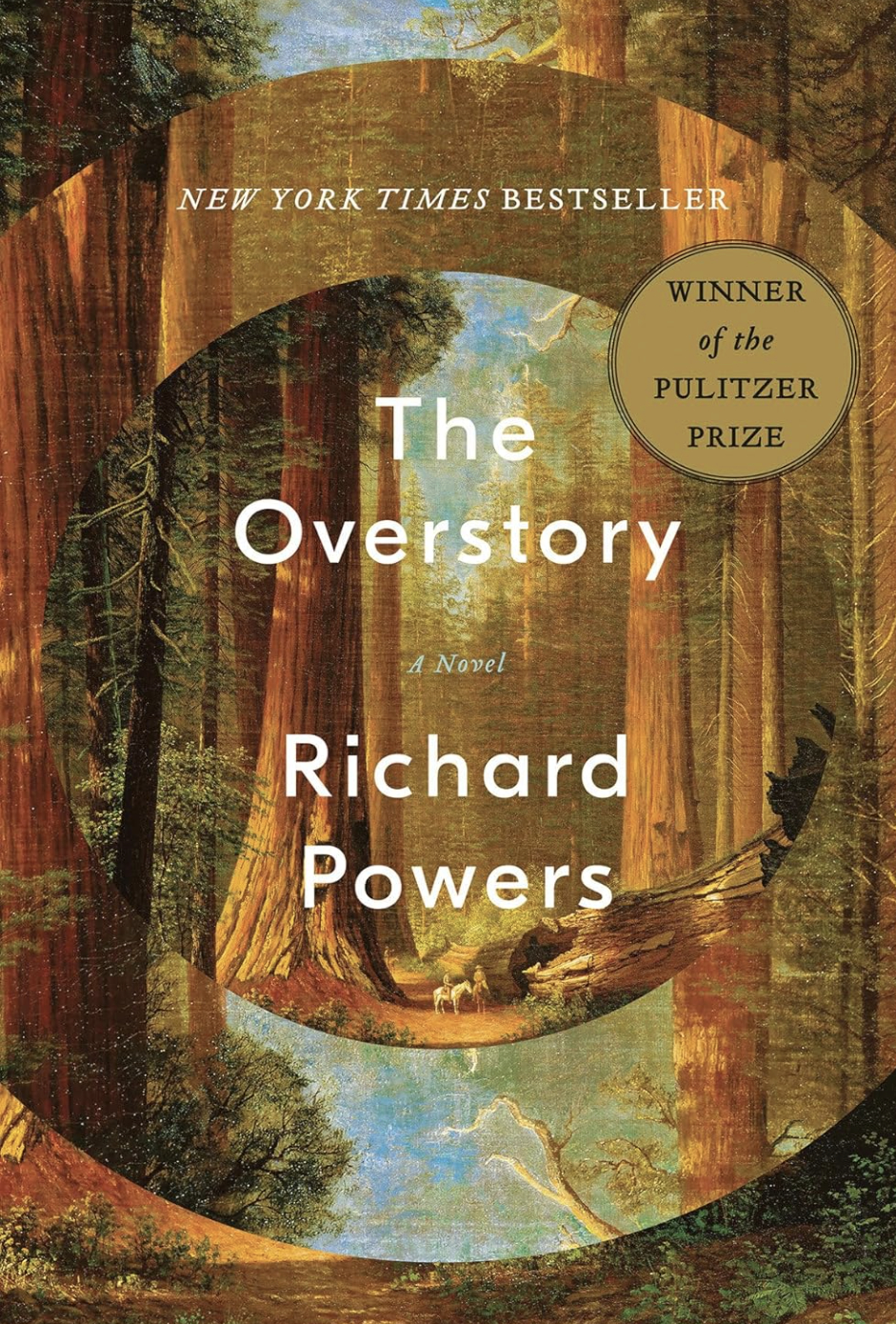
Richard Power’s Forest: The Overstory
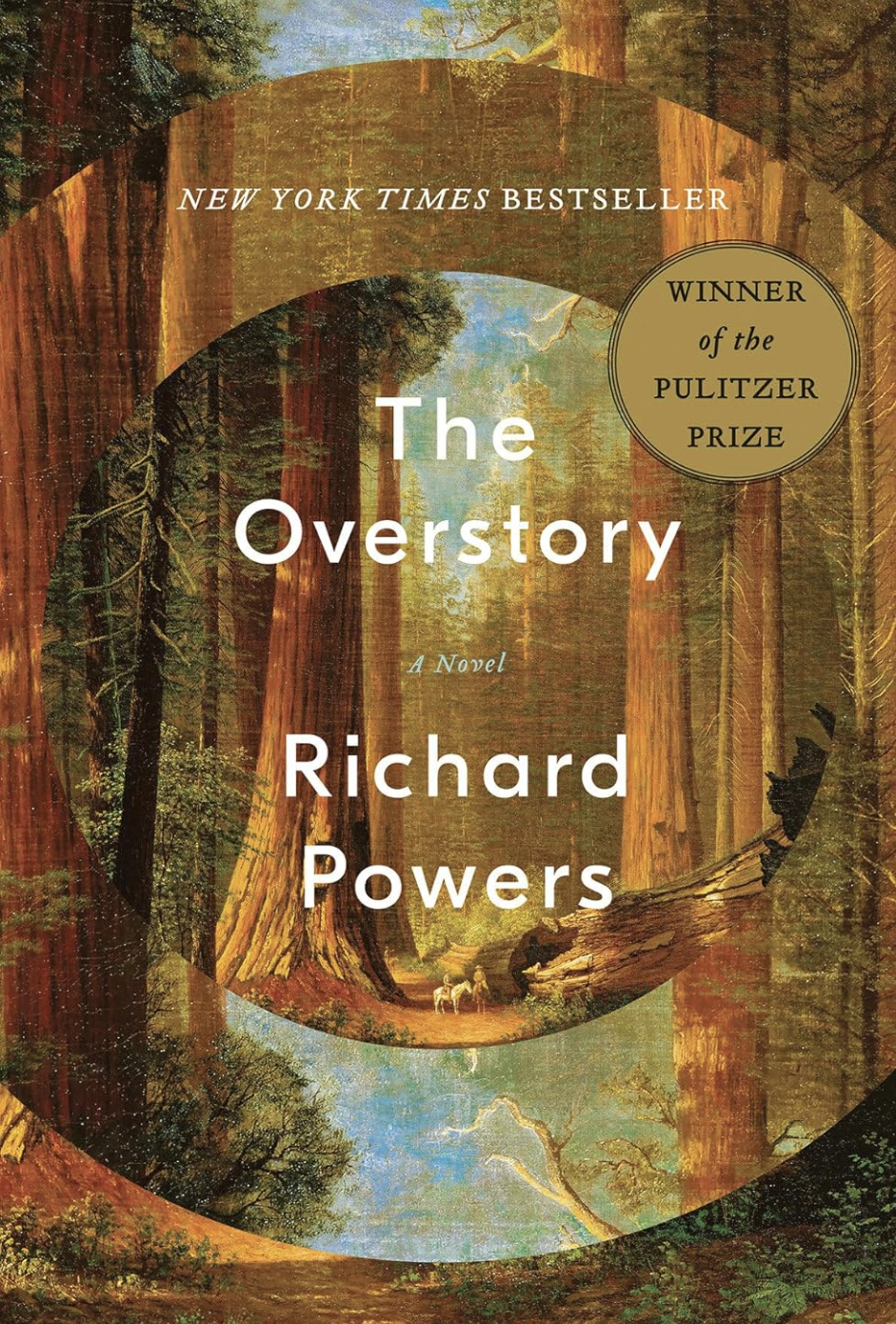
Richard Powers’s The Overstory follows the life-stories of nine characters and their journey with trees. At its heart is the pivotal life of botanist Patricia Westerford, whose work resembles that of UBC’s Suzanne Simard. Westerford is a shy introvert who discovers that trees communicate, learn, trade goods and services—and have intelligence. When she shares her discovery, she is ridiculed by her peers and eventually loses her position at the university.
Like the marcescent beech, Patricia finds herself asynchronous with the rest of the forestry department at Purdue, in fact with the entire forestry discipline in the country. She disagrees with their edict of needing to “clean the forest of snags and wind throw to improve forest health.” She disagrees with their use of terms like thrifty young forests and decadent old forests, mean annual increment and economic maturity—not ecological but economic terms based on exploitation and human utility.
.
Patricia’s early conviction that these silent trees are social creatures, sets her on a singular path that will push the boundaries of doctrine and a hegemony of human utility. She assiduously sets out to prove her premise of social trees and in so doing, becomes the forest. “She works all day in the woods, her back crawling with chiggers, her scalp with ticks, her mouth filled with leaf duff, her eyes with pollen, cobwebs like scarves around her face, bracelets of poison ivy, her knees gouged by cinders, her nose lined with spores, the backs of her thighs bitten Braille by wasps, and her heart as happy as the day is generous.” Like Ovid, she is becoming.
Patricia writes in her book The Secret Forest:
There are no individuals in a forest, no separable events. The bird and the branch it sits on are a joint thing. A third or more of the food a big tree makes may go to feed other organisms. Even different kinds of trees form partnerships. Cut down a birch, and a nearby Douglas fir may suffer … Fungi mine stone to supply their trees with minerals. They hunt springtails, which they feed to their hosts. Trees, for their part, store extra sugar in their fungi’s synapses, to dole out to the sick and shaded and wounded. A forest takes care of itself, even as it builds the local climate it needs to survive.
.
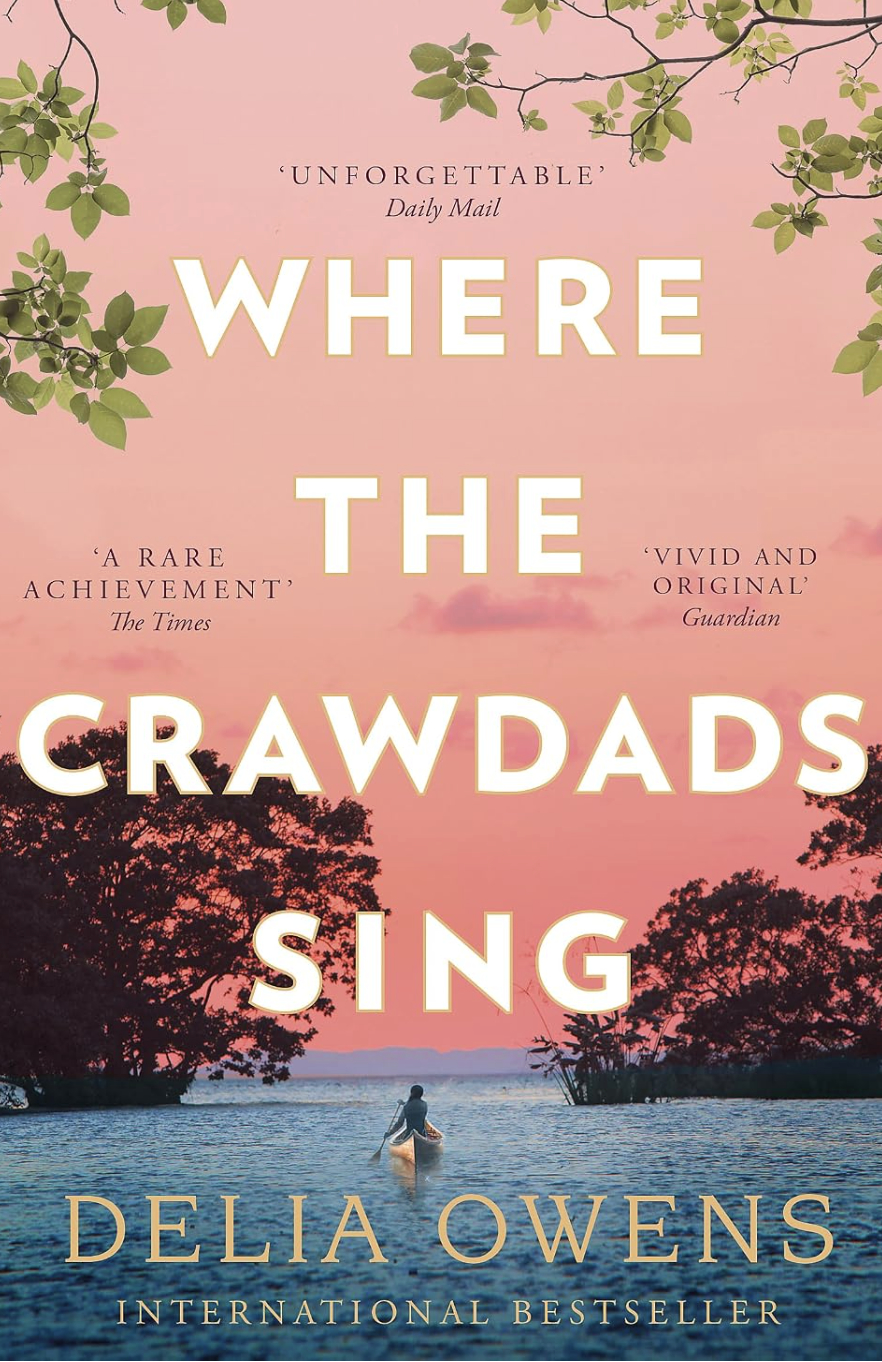
Delia Owens’s Swampland: Where the Crawdads Sing
The swampland is beautifully and evocatively portrayed as a living character; its ‘journey’ is closely linked to the Kya, the main protagonist, as development encroaches both swamp and girl through commercial logging, and wetland drainage to build resort hotels. Kya lives with an unbiased understanding of a quiet biological life, surviving through natural instinct in a circle of life and death: a swamp knows all about death, and does not define it as a tragedy or a sin, thinks Kya who sees the swampland as her mother, teacher and sanctuary, embracing her with a protective mantle of natural beauty and wonder. Whenever she stumbled, it was the land who caught her. When the town marginalizes Kya, calling her “The Marsh Girl”, the swamp shields her from the prejudice and cruelty of the human world, providing an intimate protective barrier. In turn, Kya uses her book advance to buy several hundred acres of marsh as a protected wildlife refuge.
.
In her article on Great Ecology, Liz Clift writes, “During the period in which Where the Crawdads Sing is set, wetlands were typically seen as a nuisance—and that comes through in the story-telling, when developers want to drain the marsh for a development. Wetlands were also seen as mosquito-infested, buggy, smelly, or even an eyesore. A significant number of wetlands around the world, including in the US, have been lost due to land development and agriculture, which is unfortunate because wetlands are rich with biodiversity and play a key role in maintaining both freshwater and saltwater fisheries, support water quality, and protect against flooding.” This is not a phenomenon or attitude of the past; it unfortunately remains prevalent, particularly in North America.
What Delia Owens achieves in Where the Crawdads Sing is two-fold: 1) the reader knows more about the value of the marsh but also gains a sense of its beauty as seen through the eyes of Kya; and, 2) through the strong connection with the main character and use of evocative metaphor, Owens transforms the marsh into a real character.
.
Why Make Place a Character…
Why is this important? Think of a place you know. I’ll use the house I grew up in. To any passerby, the house is just another two-storey cornflower-blue house with veranda on a quiet residential street, lined by trees. But for me, the house carries memories of my childhood, of running up and down the creaky foot-worn stairs, or sharing ghost stories with friends on the back porch as the waning twilight revealed the winking fireflies outside. Playing dolls with my sister in the stuffy attic. The sweet pungent aroma of my father’s pipe smoke in the livingroom and my mother’s thrush-like voice resonating from the kitchen as she baked German sugar cookies. I loved that house, with all its idiosyncratic groans and whistles in the wind and the echoes of cheerful laughter over the years. That house was a character.
Once this happens, once place becomes a character, we find ourselves caring for it.
In story, it is the characters we care about; it is the characters that we cheer for and follow on their journey of loss, redemption or victory.
This is why writers of eco-fiction depict environment as a character. We must first relate and connect before we care; we must first care before we act. Eco-fiction authors also use the device of character-coupling to help readers care. The examples above provide this method through their ‘othered’ characters, who, in turn, relate to the ‘othered’ environment. In another article, I provide more examples of character-coupling in the literature that enable readers to connect to otherwise arcane aspects of their environment through their connection to a character they can relate to.
Beaver Pond just before a rainstorm, BC (photo by Nina Munteanu)
.
Nina Munteanu is a Canadian ecologist / limnologist and novelist. She is co-editor of Europa SF and currently teaches writing courses at George Brown College and the University of Toronto. For the lates on her books, visit www.ninamunteanu.ca. Nina’s bilingual “La natura dell’acqua / The Way of Water” was published by Mincione Edizioni in Rome. Her non-fiction book “Water Is…” by Pixl Press (Vancouver) was selected by Margaret Atwood in the New York Times ‘Year in Reading’ and was chosen as the 2017 Summer Read by Water Canada. Her novel “A Diary in the Age of Water” was released by Inanna Publications (Toronto) in June 2020.You can read her just released eco-fiction thriller Gaia’s Revolution by Dragon Moon Press.
Today is Bastille Day, France’s national day that commemorates the 1789 storming of the Bastille prison by an angry revolutionary mob. The event was a major flashpoint that ignited the French Revolution that eventually ended the oppressive Bourbon monarchy.
.
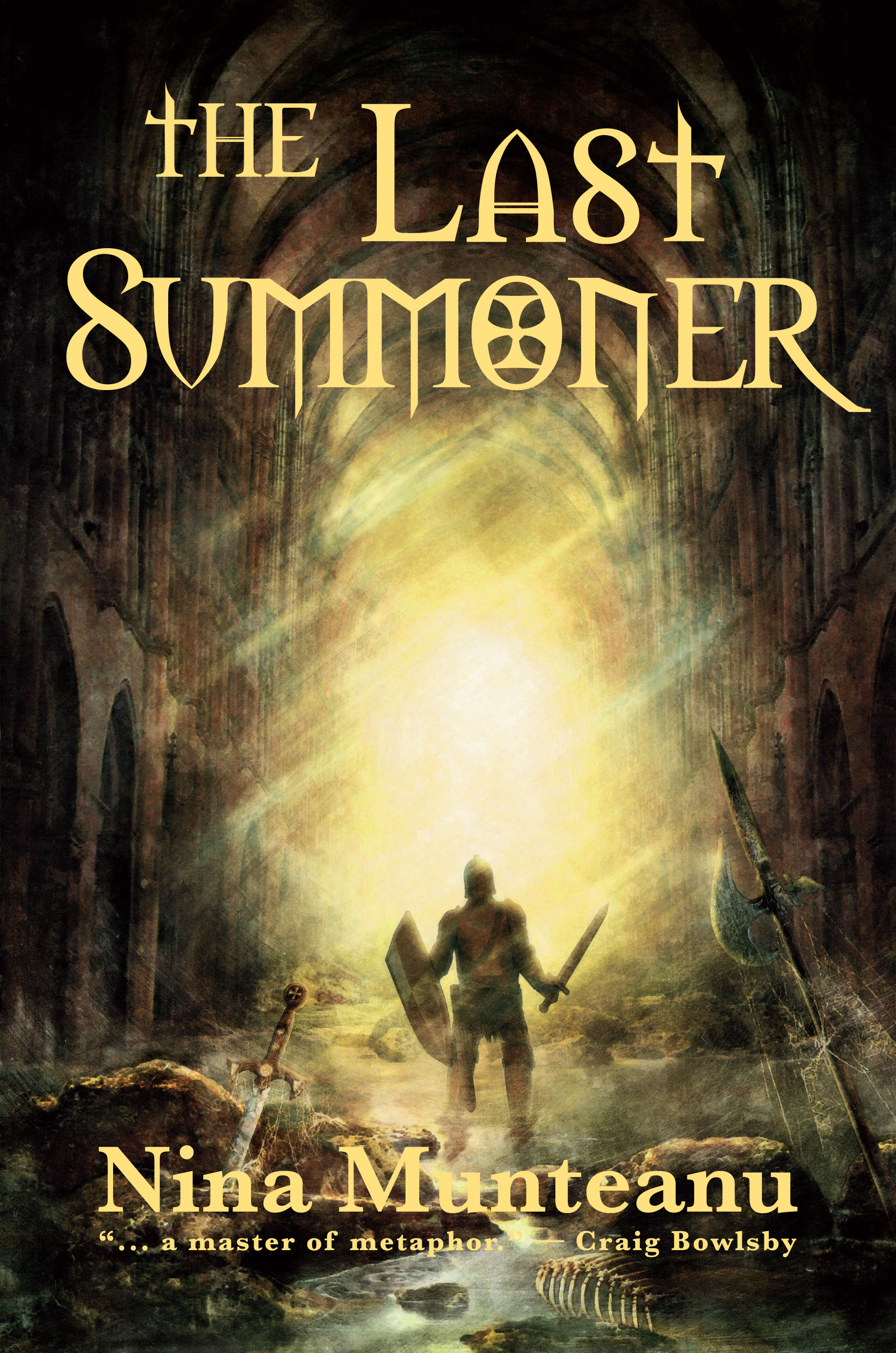
This day is also significant in my historical fantasy The Last Summoner. July 14, 1410, is the birthday of main character Vivianne Schoen, the Baroness von Grunwald, who has just turned fourteen and is promised in marriage to a cruel foreigner. It is the eve of the Battle of Grunwald. Fought on July 15, 1410, this conflict was one of the largest and most decisive battles in medieval European history, where the Kingdom of Poland and the Grand Duchy of Lithuania gathered a ragtag allied army of peasant warriors to defeat the powerful knights of the Teutonic Order in what is now northeastern Poland. Their surprising victory crippled the Teutonic Knights’ dominance in the Baltic region and shifted the balance of power in Central and Eastern Europe.
.
In an early scene, Vivianne contemplates her fate:
“It’s my birthday today, Fritz,” she announced to her cat. July 14, 1410. She was fourteen years old. Her father and now deceased mother had pledged her since her birth to a stranger from a foreign land on her fourteenth birthday. Today—if the rumor was true, that is. Though she’d overheard the entire von Grunwald Ordensburgen gossip of it for years, her father had never mentioned it to her. Surely, he would have told her of such an important thing in her life if he’d meant it in earnest. Vivianne sighed and stroked Fritz. Then again, perhaps not, she reflected, summoning the stern image of her taciturn father. He never told her anything. If her mother was alive it might have been different….
The young baroness soon makes the startling discovery that she can alter history – but not before she is branded a witch and must flee through a time-space tear, landing in Paris on July 14, 2010, Bastille Day. Now in an alternate France ruled by Teutonic Black Knights, she must decide how to remake history.
Below is an excerpt from The Last Summoner, a scene in that alternate Nazi-ruled Paris on that fateful day:
Paris, France, 2010
FRANÇOIS thrust his way through the thick crowd in Place de la Bastille. He craned to see the parade of greycoats and several blackcoats goose-stepping down the Boulevard de la Bastille and Rue Saint Antoine to converge at la Place. They were followed by heavy artillery that had begun its trek all the way from the Arc de Triumph and Avenue des Champs-Élysées. It was a great show of military power for the Nazis. Today was July the fourteenth, 2010: Bastille Day. In earlier times, the Porte St. Antoine was defended by a drawbridge and the Bastille. All that remained was a gilded statue of liberté in the center of the square to commemorate the culmination of France’s long struggle to establish democracy with its final ‘liberation’ by the Nazis in the mid 1800s.
A clammy wind stirred up tiny dust tornadoes in the square and people flung up their hands to protect their faces from the flying grit. François watched them, like the pocket thief he was. There would be a few easily taken today.
He caught the eye of Philip, one of his neighbours on Rue des Rosiers and the best pick-pocket François knew. The lanky boy nodded to him with a look of surprised delight; he hadn’t expected François to come. There were several dozen kids like he and Philip, scattered throughout la Place, poised to wreak havoc on the crowd at just the right moment. They were only a diversion for the real crime. François glanced briefly at the Banque de France on the corner of Rue St. Antoine, then checked his watch. It was ten minutes to the hour. At 1800 the artillery would give its booming show; and at precisely that moment, masked under the cacophony of the blasting artillery, his anarchist friends inside the bank would blow the safe. They would make their getaway once chaos set in as people realized that they’d been robbed. T’is a godlike thing to lend; to owe is a heroic virtue, he thought with a smirk.
François’s role in all this was very profitable though actually quite dangerous; he and Philip and the other pick pockets were placing themselves in the direct line of attention—and fire of the flics. Their safety lay in their scattered numbers, in their nimble feet, and their ability to negotiate the crowd and blend in when they wanted to. They were all kids, like him; mostly ten to sixteen year olds. They’d all lost their parents and other adult relatives to the Nazis.
Many of the middle class workers had lost their jobs and the will to live when the Nazis introduced efficient city bots and turfed people out of their rich homes. Left behind by dead, imprisoned, or conscripted mothers and fathers or simply abandoned by overworked uncaring parents, most children lived on their own in the streets of Paris with whole district slums devoted to the ‘street brats’. François’s parents had been killed in the Latin Quarter uprising of 2007. There were at least half a million “homeless” children, fending for themselves in the city, according to his uncle; all finding shelter in derelict huts and bivouacs. They were the discarded refuse of a series of purges by the fascist government.
Purges were not new to the empire. They’d begun hundreds of years ago with the Jews, who were pretty well extinct now, François considered. During the early development of the empire, Jews were massacred by the Teutonic Knights, who later became the strong arm of the new Reich as the feared Black Knights. But the purges weren’t enough. Like an old building, the empire was crumbling from within through its own debauchery, and from the outside pressure of war and rebellion. The empire was at war with the Chinese and rebelling Muslims to the east and dealing with the unruly British and upstart North Americans to the north and west. The two English-speaking countries had allied in rebellion against the Reich and were causing Fuhrer Hitler III no end of grief. It was eroding his empire, sucking it of funds, men, arms and resources. And bleeding it of morale as well as the pitifully little humor the Germans might have had in the first place. François saw its effect in the uncalled for cruelty meted out by the Black Knights and greycoats to his fellow Parisians.
Grand Marshal von Eisenreich seemed to call a purge almost weekly. First it was the restless students of the Sorbonne, then it was complaining workers in Nanterre. Then the school teachers of Lyon. Or transit workers in the Mont Parnasse area. No group or person was immune to their indiscriminate wrath. One day you were scorned for dressing in black; the next day for dressing in white. Something drastic would have to happen for it to right itself, his uncle kept saying. Luckily for some, von Eisenreich talked in his sleep and his light-sleeping wife, Lizette, listened. She, in turn, gossiped to François during their pillow talk and François then warned those intended victims through his uncle of the coming purge.
But all that was largely Antoine’s concern and those in the Résistance, like Philip and André and most of the other children assembled here and poised to do mischief. They had a right to be skeptical of François’s presence here. He did what he could, but only if it suited him. His motives weren’t with the liberation of France. His motive was with the liberation of François.
Each for himself, he figured. I come first. That was the rule by which the government operated, he reasoned. Why should I be any different? Now take Sylvie, for instance, he thought, mind recollecting the thirteen-year old girl from the 12ème Arrondissement he’d left only moments ago; she gladly spread her legs for him anytime, anywhere for a cigarette or an apple.
He was a regular Valentino, François figured, and felt something stirring below. He grabbed his crotch and scratched his unruly penis with a leering smile. “Down, boy,” he whispered with a grin. Lizette cooed over François like he was a doll and called him her sweet putain. Baisses moi, mon putain…Tu as un beau cul….He was her little darling peasant to dress…and undress. He didn’t care; he could eat, and live half-comfortably on Rue des Rosiers because of her and other patrons like her. He had a running Pal with naughty vids of all his clients that he rented out to his street friends. And the girls on the street, like Sylvie, thought he was hot.
He jammed his hand in his jeans pocket and smirked at the silver Pal in his palm before re-pocketing it and pulling out a small innocuous-looking black package of rapture. They also called it the black rabbit because of the package and where it took you: through a fantastic black “rabbit” hole.
When his Oncle Antoine finally found him, he tried to get François away from all that. But Antoine was no better off, having been recently chased out of his own house by Black Knights who accused him of helping the anarchists. Antoine wasn’t helping them…he was one, François thought with scathing humor. Antoine was always trying to recruit François to join the Résistance by berating him: “Why do you keep whoring? You’re worth more than that. You’re selling yourself, François. And for what? Half the time you don’t even get money; just that stinking rapture…”
François rubbed the small black package of rapture between his fingers and felt his nose flare with desire. Stinking rapture, indeed. You wouldn’t think it was stinking if you tried it, l’Oncle! He ripped the package open and threw his head back to pour the slightly acrid white powder in his mouth, then flung the wrapper onto the street. Within an instant, the street burst into sharper contrast and he knew his eyes dilated. A grin split his face open and he laughed, feeling invincible. Everything was all right now. Even those stinking Nazis with their swastikas, high-stepping black boots and batons…and whoring wives….
“You’re the Nazi’s putain. They’ve turned you into an addict and they’ve got you on a leash, François,” his uncle had gone on. “Honestly, you should stop all that whoring.”
“Why? And for what?” François had retorted, thinking he made a pretty good living by it; better than his destitute uncle. “Besides, I like it!” he’d ended maliciously. Antoine had lost all that he owned and now had less cash than François. “If I stop, what do I gain?”
“Something you’ve lost, François. Your dignity.”
“My parents lost it for me when they joined la Societé Secrêt and got themselves killed for some lost cause,” François said bitterly. To which his uncle had nothing to say. François knew it was cruel to say that; Antoine loved his brother, Marcel, and his wife, Angeline. Heck, Antoine had even dated François’s mother before François’s dad stole her heart. It had been Angeline, in fact, who’d brought the two brothers into the Résistance in the first place. She was the original anarchist. She’d apparently been one of the founding members of the SSLF. Until joining the SSLF, Antoine had just been an unruly student, one of millions in France. Antoine never married and, judging from the pictures he’d seen, François thought that he’d shriveled up like a prune when Marcel married the only girl that Antoine had courted.
Gunshots exploded inside the bank. François caught Collete’s stricken expression and Alain’s confusion in the crowd. That wasn’t supposed to happen. They were early—it wasn’t time yet! Then the doors of Banque de France burst open and two of their colleagues spilled out, followed by flic who opened fire on them. They fell and the crowd scattered like flies. More flics emerged, aiming their weapons into the crowd.
François bolted.
.
Nina Munteanu is a Canadian ecologist / limnologist and novelist. She is co-editor of Europa SF and currently teaches writing courses at George Brown College and the University of Toronto. For the lates on her books, visit www.ninamunteanu.ca. Nina’s bilingual “La natura dell’acqua / The Way of Water” was published by Mincione Edizioni in Rome. Her non-fiction book “Water Is…” by Pixl Press (Vancouver) was selected by Margaret Atwood in the New York Times ‘Year in Reading’ and was chosen as the 2017 Summer Read by Water Canada. Her novel “A Diary in the Age of Water” was released by Inanna Publications (Toronto) in June 2020.You can read her just released eco-fiction thriller Gaia’s Revolution by Dragon Moon Press.
There’s a New Wave out there in science fiction. It’s growing. It’s green. And, yes, I’m on it.
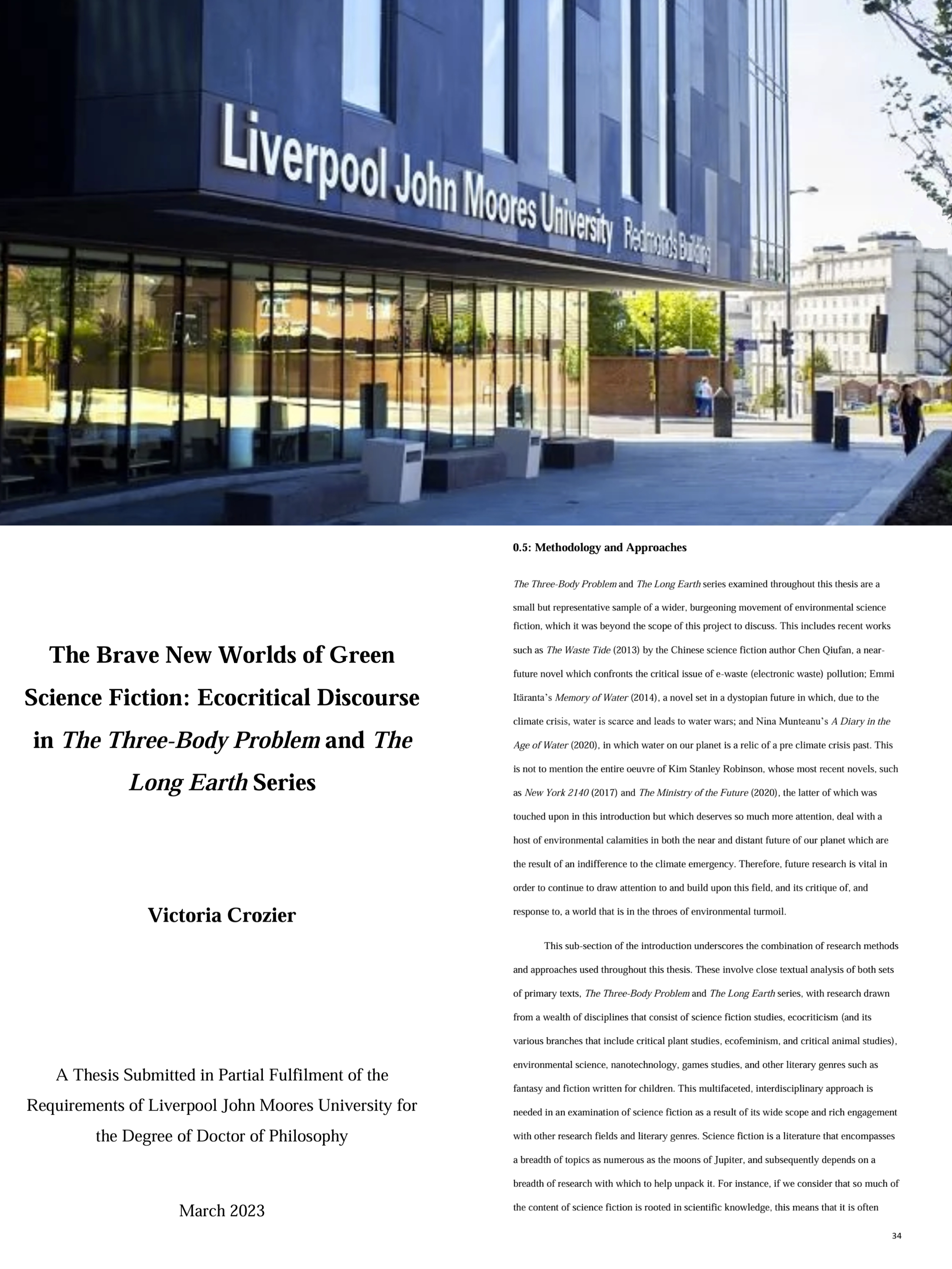
In her 2023 PhD thesis out of Liverpool John Moores University, Victoria Crozier explores the metamorphosis of science fiction from stories primarily focused on human adventure and heroism to ‘New Wave’ stories of green science fiction. Far from celebrating the achievements of a super-capable humanity, these ‘New Wave’ eco-conscious narratives, which began with the environmental movement of the 1960s, reveal humankind as an environmentally destructive force.
.
Pre-1960s: Anthropocentric Androcracy
Pre-1960s science fiction largely featured scientific and technological developments and associated impacts on humans; stories that evoked a sense of wonder and involved heroic adventures of humans in unfamiliar worlds. Stories focused on the need to overcome harsh environments and conquer treacherous alien elements as humans prevailed through various androcratic strengths. I read many of them, mostly written by men. Despite generating excitement and inspiration, these narratives advanced a patriarchal and imperialistic conceit that drew from anthropocentric androcracy.
.
.
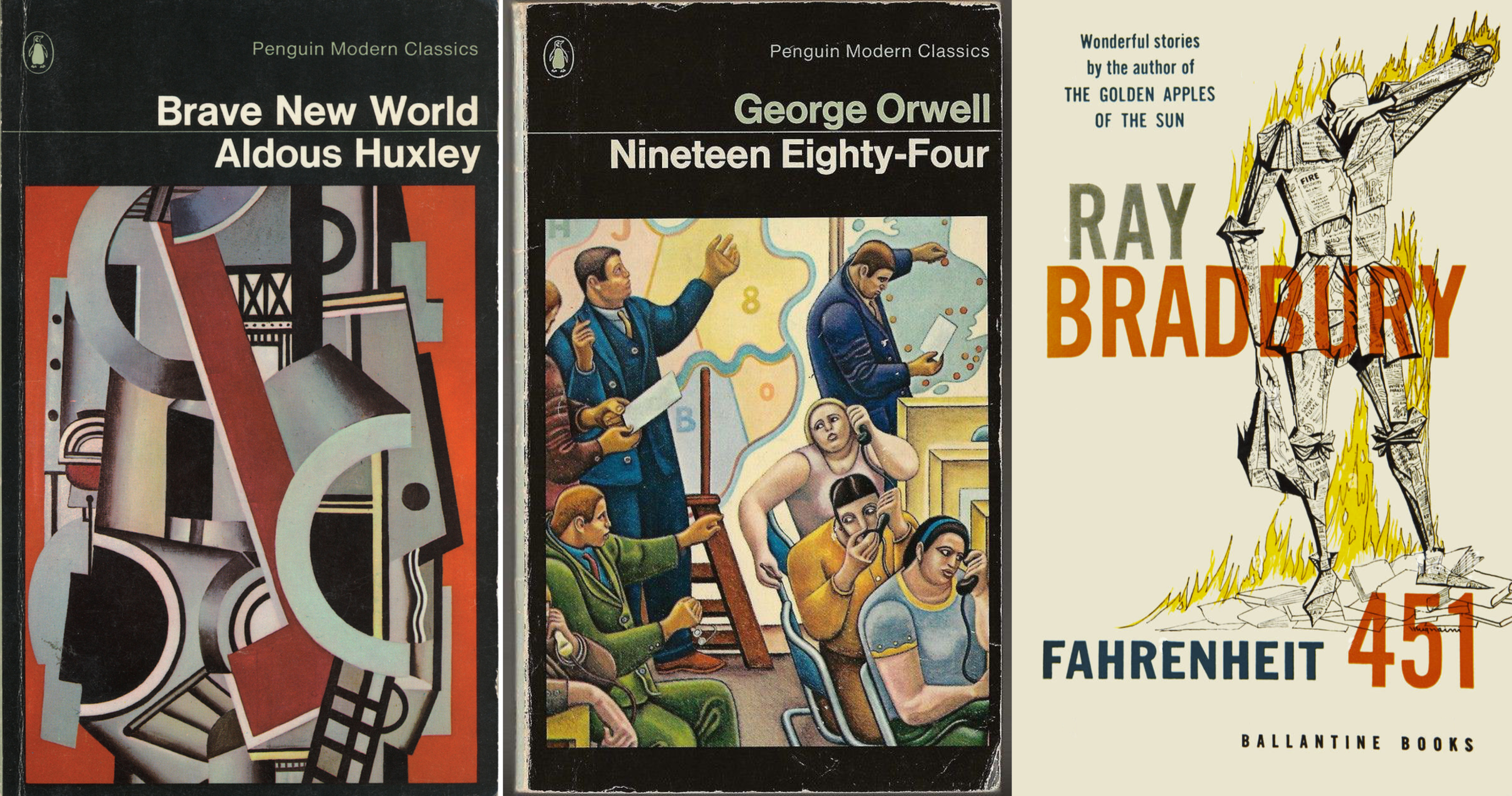
The 1930s and 1940s spawned narratives focused on social justice—responses to both world wars. Aldous Huxley’s Brave New World (1932) and George Orwell’s Nineteen Eighty-Four (1949) and Animal Farm (1945) represented the height of this exploration with a focus on totalitarian rule, surveillance technology, and genetic modification. Ray Bradbury’s Fahrenheit 451 (1953) explored censorship as an important aspect of mind-control by an oppressive rule.
Drawing on a Cartesian directive, science fiction remained largely anthropocentric, typically ‘othering’ Nature and objectifying it. Writers treated the non-human world with fear or disdain; Nature was a device that challenged brave human explorers to exert their superiority through subjugation or annihilation. The environment was seldom portrayed as a character with agency and sensibility. Never something to be admired. Something to love.
.
The 1960s: Rachel Carson’s Revolution
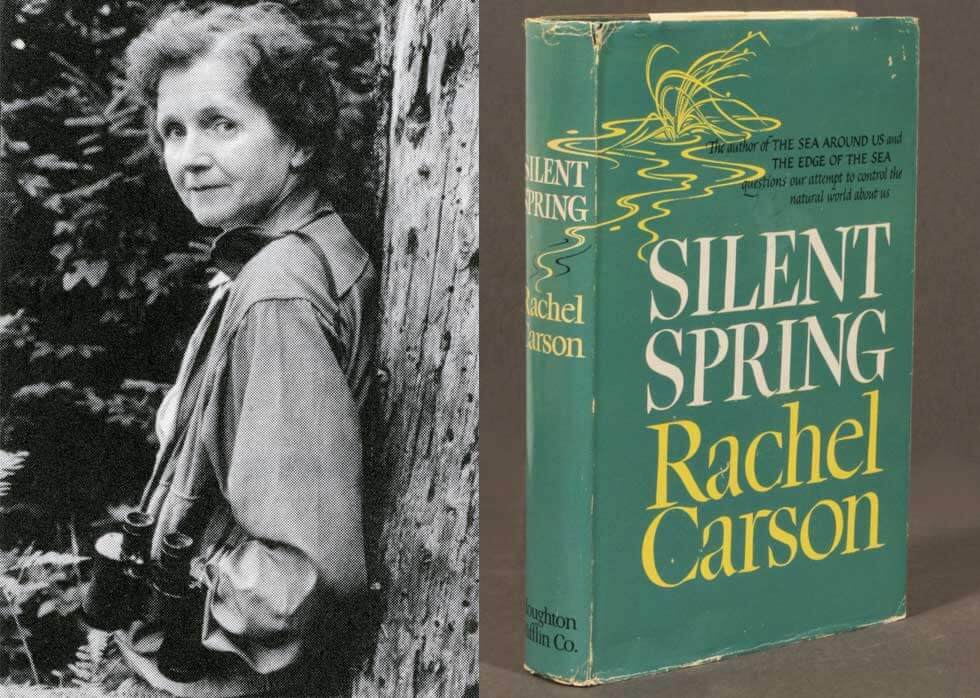
Rachel Carson and her seminal book Silent Spring
.
In 1962, Rachel Carson published her book Silent Spring, regarded by some as the single most important contributor to the environmental movement of the 1960s. Her book warned of our declining bird and bee populations and impacts to human health from unregulated pesticide/herbicide use (such as carcinogens and hormone disruptors).
I was just a kid when Carson’s book came out. But it was already apparent to me that environmental imbalance and destruction were global concerns and we were on the brink of an environmental crisis. Unchecked deforestation was destroying forests around the world, including the boreal and old-growth forests of my own country Canada. Brazil had already begun cutting down trees and burning forest at an alarming rate. Unregulated use of pesticides, herbicides and growth hormones created toxic contamination of our natural world and our food and water supply—despite Carson’s dire warning with Silent Spring. Our waterways were being contaminated by mining wastes and industrial effluents. Killer smog. Noxious algal blooms. Oil spills. Dead zones. The list kept growing.
By the time I was in college, I’d concluded that a hegemony that follows the economic system of late capitalism inevitably commodifies and ‘others’ with ruthless purpose. Once something (or someone) is commodified, they are given a finite value and purpose outside their own existence. They become an object, a symbol to use and trade. They become a resource to manipulate, exchange, and dispose of with impunity. And through this surrender to utility, they become ‘othered.’ The consumer. The trees of the forest. Water. Homo sacer*. Each has a role to play in the late capitalist narrative of digital abundance and physical scarcity.
.
Liu Cixin begins his 2006 science fiction novel The Three Body Problem in the 1960s, during China’s Cultural Revolution. The novel follows astrophysicist Ye Wenji, disillusioned by the massive environmental deforestation in the labour camps she is initially sent to work after witnessing the execution of her scientist father in a brutal cleansing at the height of the revolution. Already cynical about humanity’s failed culture and science—Wenjie acquires a contraband copy of Rachel Carson’s Silent Spring. The book and revelation she experiences from it sets in motion a frightening notion linking the mindset behind the Cultural Revolution and destruction of the environment.
.
Post-1960s: Ecocentric Gylany
On the heels of the environmental movement of the 1960s, the New Wave of eco-science fiction, or what Crozier calls ‘green science fiction’, took hold with science fiction authors and literary fiction authors. Ursula K. LeGuin helped pioneer feminist science fiction as well as eco-fiction and climate fiction. Left Hand of Darkness (1969) introduced ambisexuality, no fixed sex, and The Word for World is Forest (1972) critiqued extractivism by human colonists. The Mars Trilogy by Kim Stanley Robinson (1992-1996) debated the rights of humans to alter a pristine planet, overlooking the intrinsic rights of an alien environment. N.K. Jemison’s The Fifth Season (2015) portrayed the physical Earth as active and angry about its abuse by humanity.
Subtle changes in the portrayal of non-humans and Nature have emerged.
In his 2025 PhD thesis, Steven L. Ogden (University of Albany, State University of New York) explored the concept of “Heterogenous Being”1 linking the sciences with humanities to address the precarious realities of Earth’s ecological and environmental conditions. Entitled, “Heterogenous Being: The Inhumanities and the Creative-Scientific Aesthetic.” Ogden’s thesis acknowledges the influences and agented potentialities of nonhuman subjects in narrative, both in fiction and nonfiction. Including my own portrayal of water as character in my eco-fiction novel A Diary in the Age of Water, Ogden writes,“… these inhuman2 examinations not only provide the nonhuman with a comparable or more profound existence alongside our own; they also illustrate the immense and consequential scope of our collective realities.”
Othering in Science Fiction & Other Genres of Literature
The rhetoric of ‘Otherness’ in most fiction is typically portrayed through the singular point of view (POV) and discourse of a protagonist on a journey.3 In most forms of literature the POV ‘voice’ represents the Self, the inclusive ‘us’ (worldview) in its encounter with the Other, which in turn is the ‘not us.’ In his book Orientalism: Western Conceptions of the Orient Edward W. Said contended that for there to even be an ‘us’, there has to be a ‘not-us’. The resulting power dynamic of “them and us,” of Other and Self, is created and controlled by perceptions of the singular POV voice.
In most genres of literature—and certainly in science fiction—the Other is often relegated to this dichotomous portrayal. In post-apocalyptic and metaphoric journey stories the Other may be the harsh environment or a calamity through which the protagonist must find their own strength to survive; in military stories it is clearly the enemy, seldom portrayed with compassion or understanding but there to test our hero; in coming-of-age stories it may be the oppressive rule or established world the hero must overcome; in some science fiction it is the hostile or unknowable aliens who must be defeated.
Ogden clarifies the irony of this way of thinking: “like René Descartes, many today still consider the mind or “rational soul” of humanity to be entirely exceptional to and independent of animality, and believe no part of Man (as master and possessor of nature) could derive from the “potentiality of [nonhuman] matter.”
Crozier argues that, “Eco-science fiction is an essential cultural instrument with which to understand and respond to our planet in an epoch of environmental crises.”
Eco-science fiction is poised to make meaningful character-couplings between mostly human protagonist and environmental characters or representatives. This is because the protagonist provides relatable qualities for easy reader empathy, while the Othered character is often less relatable—often an arcane aspect of the environment, such as water (Memory of Water or A Diary in the Age of Water) or a forest (The Overstory).
The protagonist’s link to the Other—often as avatar—provides a readable map for the reader to follow and make their own connection.4 In Character Coupling Part 2, I provide examples from several works of eco-science fiction and general eco-fiction, such as The Overstory, Barkskins, The Breathing Hole, The Windup Girl, The Bear, Memory of Water, Dune and my own A Diary in the Age of Water.
Through these linkages, environmental abuse of jingoistic hubris can be felt on a profound and personal level. Eco-science fiction can raise issues of human intersectionality, misogyny, marginalization, oppression of class, privilege, sexuality and race, and misuse of power. Violent acts perpetrated on environment—when environment is personified as ‘character’ and/or coupled directly to a character—elicit powerful emotion and clearly demonstrate how social/human injustice reflects environmental injustice.
.
The ‘New Wave’: A Changing Narrative
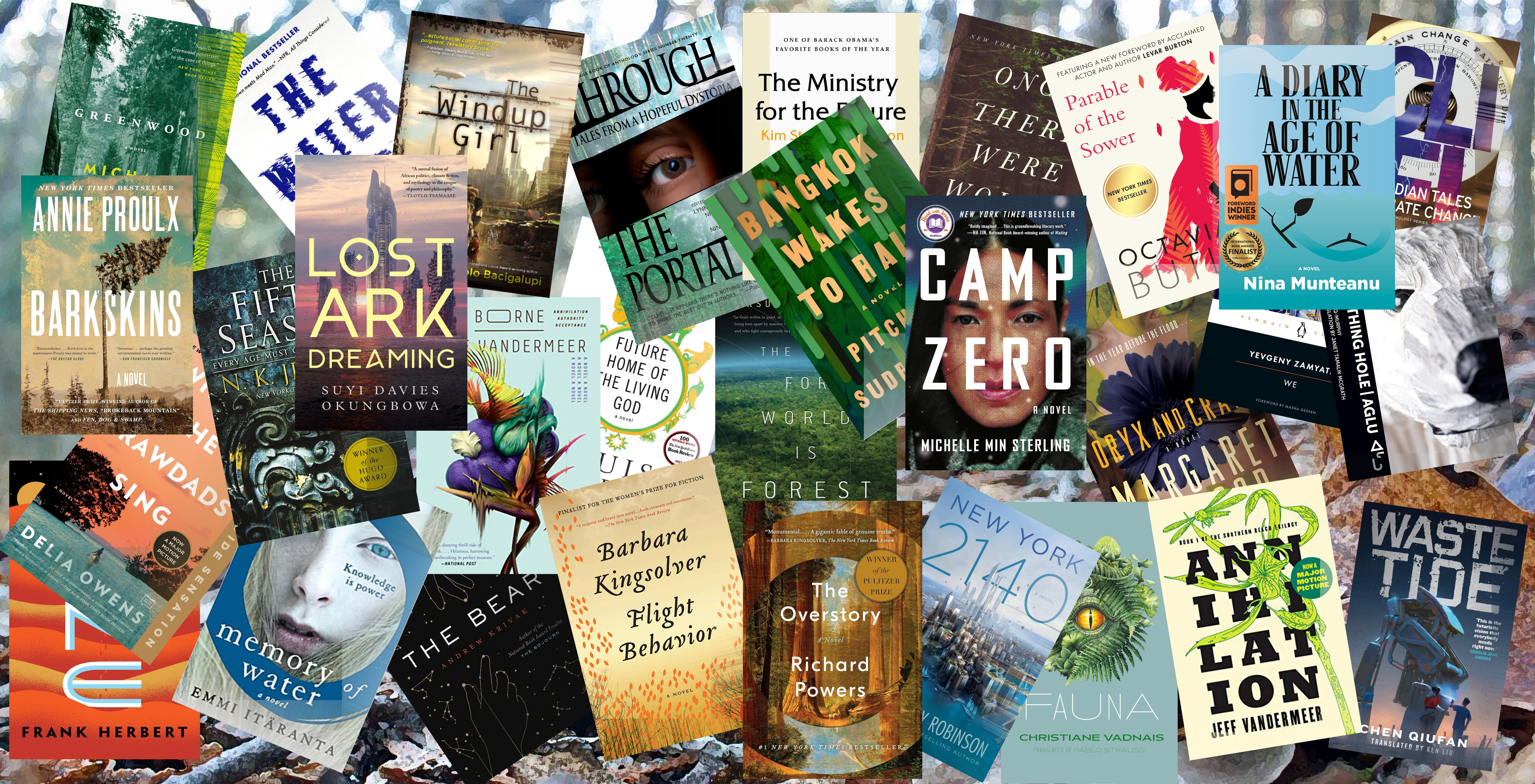
Various green-science fiction and general eco-fiction novels worth reading
.
New Wave green science fiction took shape in the 1960s with J.G. Ballard and Ursula K. LeGuin who spearheaded a transformation toward ecocentric views. New Wave science fiction has burgeoned in the last several decades with highly pertinent narratives to the environmental and climate concerns of our current world. These narratives clearly challenge our political, religious and social worldviews, and patriarchies.
.
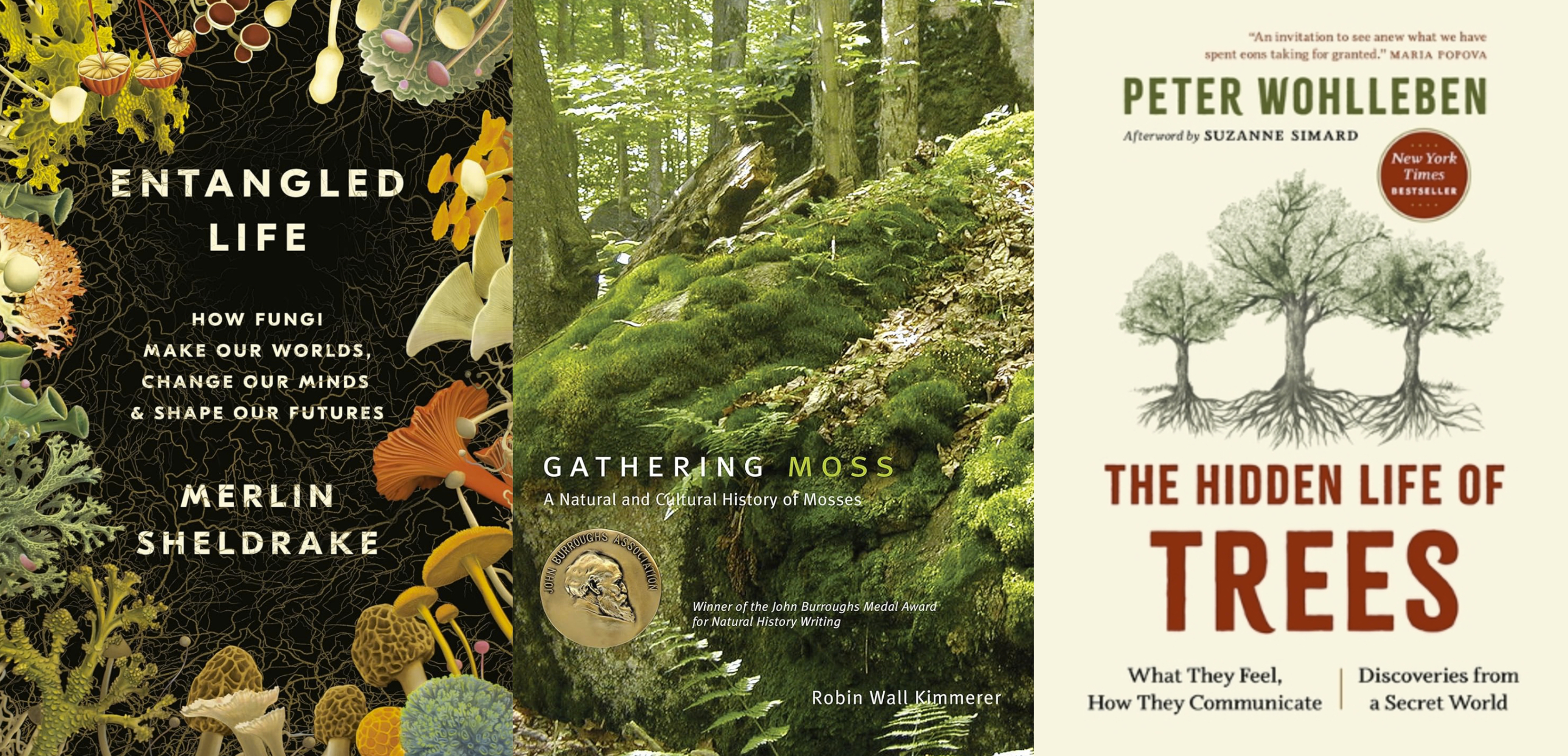
Three non-fiction books that celebrate nonhuman life
.
Acknowledging the early influences of animal studies rooted in biocentricity, Ogden notes that non-fiction representation of nonhuman life has also increased exponentially in the last ten years. Ogden includes the following notable examples: Merlin Sheldrake’s Entangled Life: How Fungi Make Our Worlds; Robin Wall Kimmerer’s Gathering Moss, and Peter Wohlleben’s The Hidden Life of Trees.
.
Ogden argues that “Westerford (a scientist in Richard Powers’s The Overstory) understands that climate and biodiversity are ‘failing precisely because no [story] can make the contest for the world seem as compelling as the struggles between a few lost people.’” Westerford realizes that her peers believe that plants live an inanimate existence, whose rooted immobility points to a kind of “unfreedom” that represents an “archetype of inert matter.” According to poet David Hinton, this devaluation of plant life relates to the human-nonhuman duality, “a Western dichotomy that relegates the vegetal world to a space of ‘linguistic silence.’”
Crozier, Victoria. 2023. “The Brave New Worlds of Green Science Fiction: Ecocritical Discourse in The Three-Body Problem and The Long Earth Series.” Doctoral Thesis, Liverpool John Moores University, UK. April, 2023. 265pp.
Descartes, Rene, et. al. 1998. “Discourse on the Method; and Meditations on First Philosophy.” Hacket Pub.
Ogden, Steven L. 2025. “Heterogenous Being: The inhumanities and the Creative-Scientific Aesthetic.” Doctoral Thesis, University at Albany, State University of New York. Spring, 2025. 220 pp.
Powers, Richard. 2018. “The Overstory.” W.W. Norton & Company, New York. 502pp.
Said, Edward W. 1978. “Orientalism: Western Conceptions of the Orient.” Vintage, London. 432pp.
.
Footnotes:
Ogden describes “Heterogenous Being” as a way of being that recognizes and incorporates humanity’s pluralized configurations with the nonhuman world by uniting the studies of science and humanities into an interdisciplinary hybrid creative-scientific aesthetic.
Ogden explains the use of “inhuman” here by referring to Jeffrey Jerome Cohen’s notes in Stone: An Ecology of the Inhuman, which uses inhuman to “emphasize both difference (‘in-‘ as negative prefix) and intimacy (‘in-‘ as indicator of estranged interiority).” This is akin to the practice of “othering”.
The Other has often been metaphorically portrayed in SF by aliens that lack a distinct voice or viewpoint; some portrayal has reflected a fearful imperialistic colonialism by representing Other as adversary such as an invading monster with no regard for humans (e.g. Robert Heinlein’s The Number of the Beast; H.G. Wells’s War of the Worlds). Kerslake argues that the traits of the Other “fall characteristically—and conveniently—into those spaces we choose not to recognize in ourselves, the ‘half-imagined, half-known: monsters, devils, heroes, terrors, pleasures, desires’ of Said’s ‘Orient’”. The Martians of Ray Bradbury’s Martian Chronicles—who also have no voice—reflect our indigenous peoples under the yoke of settler colonialism and an exploitive resource-extraction mindset. The monster of Mary Shelley’s Frankenstein —also with no voice—exemplifies the disabled/deformed unsavory departure from our ‘perfect’ self-image; to be chased, destroyed and nullified.
In some stories the protagonist is Othered in some way, providing a more direct link to the experience of being the Other or being Othered. For instance, in Mishell Baker’s Borderline, disabled protagonist Millie provides the connection to the greater theme of Othering “lesser beings.” In Costi Gurgu’s Recipearium, the protagonists are not human; they are alien creatures that dwell inside the dead carcass of a monster, representing Other as main character.
.
Glossary:
Androcracy: a form of governing system in which rulers are male.
Gylany: a social system based on equality of men and women.
Homo sacer: a figure from Roman law denoting a person excluded from society who is outside human law (can be killed) and divine law (cannot be sacrificed). The term represents “bare life”: stripped of political rights, legal protection, and social value. Philosopher Giorgo Agamben popularized the term to describe individuals excluded from the political community, such as refugees, stateless persons, or camp detainees. The term illustrates the power of a sovereign in deciding which lives are worthy of protection and which are not.
.
Nina Munteanu is a Canadian ecologist / limnologist and novelist. She is co-editor of Europa SF and currently teaches writing courses at George Brown College and the University of Toronto. For the lates on her books, visit www.ninamunteanu.ca. Nina’s bilingual “La natura dell’acqua / The Way of Water” was published by Mincione Edizioni in Rome. Her non-fiction book “Water Is…” by Pixl Press (Vancouver) was selected by Margaret Atwood in the New York Times ‘Year in Reading’ and was chosen as the 2017 Summer Read by Water Canada. Her novel “A Diary in the Age of Water” was released by Inanna Publications (Toronto) in June 2020.You can read her just released eco-fiction thriller Gaia’s Revolution by Dragon Moon Press.
Every year Literary Titan celebrates the “brilliance of outstanding authors who have captivated us with their skillful prose, engaging narratives, and compelling real and imagined characters. We recognize books that stand out for their innovative storytelling and insightful exploration of truth and fiction. Join us in honoring the dedication and skill of these remarkable authors as we celebrate the diverse and rich worlds they’ve brought to life, whether through the realm of imagination or the lens of reality.”
.
My climate thriller Gaia’s Revolution was honoured with Literary Titan’s Silver Book Award for 2026.
Nina Munteanu is a Canadian ecologist / limnologist and novelist. She is co-editor of Europa SF and currently teaches writing courses at George Brown College and the University of Toronto. For the lates on her books, visit www.ninamunteanu.ca. Nina’s bilingual “La natura dell’acqua / The Way of Water” was published by Mincione Edizioni in Rome. Her non-fiction book “Water Is…” by Pixl Press (Vancouver) was selected by Margaret Atwood in the New York Times ‘Year in Reading’ and was chosen as the 2017 Summer Read by Water Canada. Her novel “A Diary in the Age of Water” was released by Inanna Publications (Toronto) in June 2020.You can read her just released eco-fiction thriller Gaia’s Revolution by Dragon Moon Press.
I recently encountered Victoria Crozier’s intriguing PhD thesis and ecocritical discourse out of Liverpool John Moores University entitled “The Brave New Worlds of Green Science Fiction” and found my eco-fiction novel “A Diary in the Age of Water” mentioned alongside other notable eco-fiction works I so enjoyed reading such as Liu Cixin’s The Three-Body Problem, Chen Quifan’s The Waste Tide, Kim Stanley Robinson’s New York 2140 and Emmi Itäranta’s Memory of Water. Crozier calls these “green science fiction,” an appropriate term that I may start using.
.
Nina Munteanu is a Canadian ecologist / limnologist and novelist. She is co-editor of Europa SF and currently teaches writing courses at George Brown College and the University of Toronto. For the lates on her books, visit www.ninamunteanu.ca. Nina’s bilingual “La natura dell’acqua / The Way of Water” was published by Mincione Edizioni in Rome. Her non-fiction book “Water Is…” by Pixl Press (Vancouver) was selected by Margaret Atwood in the New York Times ‘Year in Reading’ and was chosen as the 2017 Summer Read by Water Canada. Her novel “A Diary in the Age of Water” was released by Inanna Publications (Toronto) in June 2020.You can read her just released eco-fiction thriller Gaia’s Revolution by Dragon Moon Press.
In March this year, Calgary writer Simon Rose interviewed me on his blog about the recent release of the first book of The Icaria Trilogy, Gaia’s Revolution.
Below is the interview:
.
My guest today is Nina Munteanu, Canadian author, essayist, and blogger. Nina has published over a dozen fiction and non-fiction books, mostly on the environment. She does a column on Reality Skimming Press and blogs about the environment on her site The Meaning of Water. Today, we’ll be discussing her just-released ecological thriller, Gaia’s Revolution, Book 1 of The Icaria Trilogy, put out by Dragon Moon Press in Calgary.
Simon: So, what’s the Trilogy about?
Nina: It’s a bit of a saga that starts in Berlin in 2022 (Book 1, Gaia’s Revolution) and moves to the Toronto area in Canada, through several generations over seven decades (Books 2 and 3). The trilogy explores a collapsing capitalist society in Canada through ravages of climate change and a failing technology. Book 1 starts with ambitious twin brothers Eric, a gifted engineer, and Damien Vogel, a brilliant scientist, who escape the growing racial violence of Berlin, to ‘peaceful’ Canada in a rivalry to control the evolution of the human race. The warring brothers set off a violent revolution that destroys the Canadian technocratic government and whose weapons ultimately risk the survival of humanity. Fanatical deep ecologist Monica Schlange snares both brothers in her gambit to reshape humanity and its place in the natural world. Three orphaned children, caught in the web of intrigue and violence, will ultimately determine the direction of humanity by introducing the first veemelds (people who can communicate with machines), a new environmental disease, and a new set of rules neither brother envisioned.
By 2095 (Book 2, Angel of Chaos and Book 3, Darwin’s Paradox), humanity—now under Gaian rule—has fled inside environmental dome cities called Icarias, chased inside by an unruly environment. Icarians struggle with Darwin’s Disease—a mysterious neurological environmental pandemic. Icaria 5 (formerly Toronto, Canada) is one of many enclosed cities within the slowly recovering toxic wasteland of North America, and where the protagonist Julie Crane (daughter of one of the orphans in Gaia’s Revolution and a veemeld) lives and works. Julie must deal with the ghosts of the characters in Book 1: including her dead and discredited father, now implicated in spreading subversive science and charged with several political assassinations.
Simon: A technocratic government in Canada? How did you envision that?
Nina: My premise involves several key climate disasters coupled with a highly unpopular decision by the Liberal government to welcome millions of climate refugees, providing housing and amenities that disaster-affected Canadians did not get. This scenario and accompanying sentiment is not new. In 2015, Angela Merkel welcomed over a million refugees from Iraq and Syria into Germany; public support quickly waned and the far right exploited rejection of the policy. Continuing with my premise, increased unrest grew in Canada as protests mobilized the far-right and gave voice to Christian fundamentalists, white supremacists, anti-Semitic conspiracy theorists and Islamophobic nationalists. The growing rift between the polarized major parties opened a gap filled by a new party, neither far right nor far left and based on the logic and merit of science & technology: the Technocratic Party of Canada. The party skyrocketed in popularity with an intelligent population who were fed up with political sophistry and empty rhetoric and excuses. The Technocrats had a plan that made sense and they demonstrated the expertise to carry it out: ways to successfully adapt to climate change, using technology and scientific research. The party subscribed to a scientific management approach, a Taylorism approach based on four principles: select methods based on science; assign jobs based on aptitude; monitor performance; and divide workload based on a systems approach. But, as you read above, they, too, are overthrown for something else: the Gaian dynasty of deep ecologists.
Simon: You’ve brought in many characters in this saga. Who is your favourite?
Nina: You’ll laugh: the main antagonist of Gaia’s Revolution, Monica Schlange (and what she becomes). I really enjoyed writing about the twin brothers—contrasting them despite their twin origins. I also enjoyed writing the three orphan characters: about their terrible journey to safety when the violent revolution moved from the cities to the countryside. I also enjoyed writing Julie’s character (in Books 2 and 3), her journey as a veemeld (gifted and cursed) and being the daughter of a traitor, who must find her way in a treacherous world of lies and intrigue. But my favourite is Monica Schlange: the fanatical deep ecologist, revolutionary, shape-shifter, bad-ass warrior, villain with a conscience. She is a paradox: she cares immensely about the planet, the welfare of the planet’s ecosystems and displays compassion for the orphans; but she has no qualms about killing a man in cold blood—which she does, on several occasions.
There is a scene where twin brother Eric unleashes a techno-clone to murder a colleague of Monica’s; techno-clones are hybrid cyborgs, DNA-altered men merged with synthetics and weapons fused into them, all connected by a hive mind. Monica takes on this murder-machine and cleverly dispatches him—when no one else has been able to. This quickly earns her a reputation as a Badass warrior and soon images of her face—scar across her temple—is plastered everywhere by the revolutionaries.
Throughout the first book, I provide a few moments of perspective into Monica’s past. An only child, she grew up on one of the last independent dairy farms in Ontario—before the Technocrats seized it and converted it into a Corporation Farm using scientific agriculture. It killed her father, who she dearly loved. Her mother took to whoring with the first trucker who came along, abandoning her. A ruthless eco-terrorist and subversive, Monica is bent on destroying the capitalist-technocratic machinery to save the planet at the expense of human domination. An unscrupulous eco-terrorist, she uses sabotage and internet tampering to disrupt and hurt climate offenders. She is the quintessential anti-hero. I guess you could say that I realized some terrible fantasies through this character.
Simon:What are you currently working on?
Nina: Not much. I’m taking a wee break from novel-writing and focusing on marketing. I’m currently shopping an eco-fiction novel around that takes place in southern Ontario and the Kurpiowska Forest in Poland during the communist era (specifically the 50s to 70s). I did a lot of research for that book and it was so fascinating!
I am actively coaching writers to publication (see www.NinaMunteanu.me) and writing nature and environmental articles for various magazines and my own blogs (www.TheMeaningOfWater.com). I’m also curating a column on Lynda Williams’s Reality Skimming Press blog on sustainability. Called “Sustainability Over Ambition”, the column consists of a series of articles and interviews I’m conducting with mostly Canadian authors on that complex subject. If you’re a Canadian author, feel free to reach out to me if you’re interested in being interviewed.
Simon: Tell me a little more about your coaching services?
Nina: My coaching includes advice on all story aspects (like storyboarding, world building, character, plot, etc.). I also edit, but my service usually encompasses far more, such as narrative flow, sentence structure, meaning, clarity, and concision. I look at just about every kind of fiction, except horror. I help writers with their nonfiction such as memoirs, biographies, how-to books, and technical books. I also do technical and scientific editing of papers and reports.
Simon: Where can people buy Gaia’s Revolution and the entire trilogy?
Nina: The entire Icaria Trilogy can be purchased on Amazon and other online and brick and mortar bookstores, such as Chapters. Books 2 and 3 are also available in many libraries throughout Canada, given that they’ve been out for a while.
Simon:Thanks, Nina, for being my guest here today and the very best of luck with The Icaria Trilogy.
.
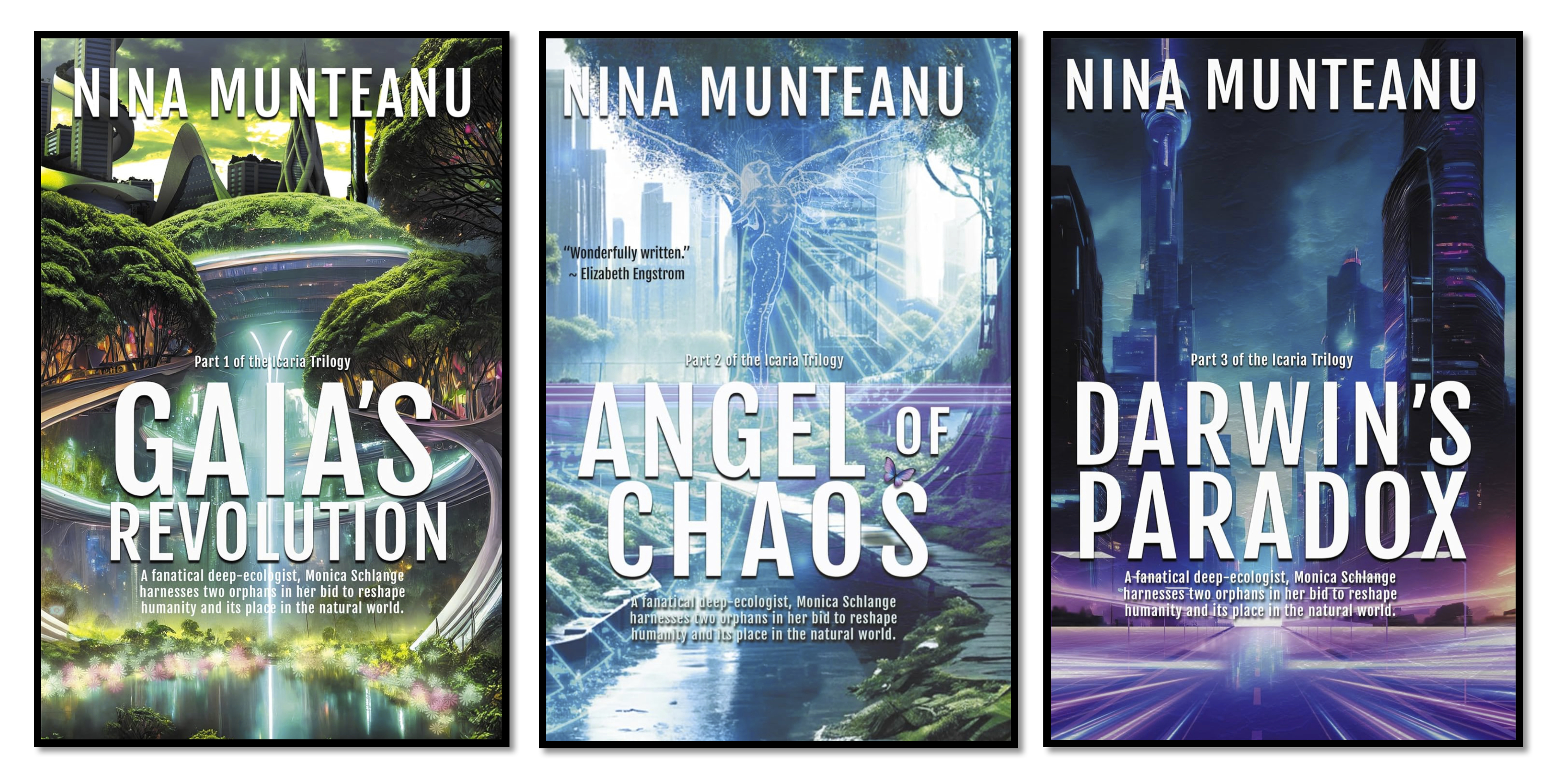
The Icaria Trilogy by Dragon Moon Press
.
Nina Munteanu is a Canadian ecologist / limnologist and novelist. She is co-editor of Europa SF and currently teaches writing courses at George Brown College and the University of Toronto. Visit www.ninamunteanu.ca for the latest on her books. Nina’s bilingual “La natura dell’acqua / The Way of Water” was published by Mincione Edizioni in Rome. Her non-fiction book “Water Is…” by Pixl Press (Vancouver) was selected by Margaret Atwood in the New York Times ‘Year in Reading’ and was chosen as the 2017 Summer Read by Water Canada. Her novel “A Diary in the Age of Water” was released by Inanna Publications (Toronto) in June 2020.Her latest novel “Gaia’s Revolution” was released in 2026 by Dragon Moon Press.



 Nina Munteanu Writing Coach