The Journal Writer: Why Keep a Journal?

Old maple tree under snow dusting in a mixed cedar-pine forest in early winter, ON (photo and rendition by Nina Munteanu)

There are as many reasons for writing a journal as there are people in the world: to express, to heal and clarify, to create, learn and influence, to record, to celebrate, to share with friends or the world even…and everything in-between. The journal is a way to connect—to yourself and to others—with gentleness, compassion and deeper understanding. It’s a “safe home” where your deepest thoughts can reside without fear of judgment, blame or need for justification. A place where you can be just you.

Late afternoon sun glimmers through cedar-pine forest in winter, ON (photo and rendition by Nina Munteanu)

What is a Journal?

Most people think of a journal as a bound notebook with text, sketches and pasted-in mementos. But it can also be a binder full of memorabilia and notes, a collection of digital information on a computer, CD or flash drive, or an audio tape. According to Ron Klug (2002), a journal is essentially a “day book” where you record daily happenings. But it is much more than that. The journal is a tool for self-discovery, an aid to concentration and finding clarity, a “mirror for the soul”, a training ground for a writer and a good friend and confidant. It is at its heart a place of learning and being.

Mary Louise Holly (1989) describes a journal as “a reconstruction of experience and, like the diary, has both objective and subjective dimensions, but unlike diaries, the writer is (or becomes) aware of the difference. The journal…is a book that someone returns to. It serves purposes beyond recording events and pouring out thoughts and feelings. Like the diary, the journal is a place to ‘let it all out’. But the journal is also a place for making sense of what is out.” The journal helps you assess the next step and help you find direction. I talk more about this in Chapter 5 of my guide The Journal Writer: Finding Your Voice.

Swamp forest reflected in icing pond, ON (photo and rendition by Nina Munteanu)

Some reject journaling as too self-absorbing; the truth is that most of us during some part of our lives are too little connected to ourselves. We keep so busy, filling our lives with activities, filling our senses with stimuli, running at full tilt. We may be constantly communicating with others through cell phones, computers, notebooks, at school and at work. But we aren’t communicating with ourselves. For that to happen we need to quiet our minds and our environment to have a meaningful self-dialogue. This is the gift that journaling brings to us.  It helps us find the depth of ourselves and lead richer more truthful lives. The key is to use it to learn.

A journal need not be the dark brooding place many people envision when they think of diaries and journals. A journal can be a happy place, a place to celebrate one’s explorations and achievements and self-education. Here’s what journal writer Jennifer Moon (1999) says about her journal:

A journal is a friend that is always there and is always a comfort. In bad moments I write, and usually end up feeling better. It reflects back at me things that I can learn about my world and myself. It represents a private space in my life, a beautiful solitude, the moments before I go to sleep just to stop and note what there is about the day or about my life at the time. I think that it has enabled me to feel deeper and more established as a person, more in control and more trusting of life. On a less introverted note, I think that it contributes to my ability to write in general, and it underlies an interest in poetry and creative writing which awaits a quieter time in my life for fulfillment. 

–Jennifer Moon

Remember, it is just as important to record your happy, wonderful, scintillating and inspirational experiences as those dark moments.

Moss-covered base of a cedar tree under a light dust of snow in early winter, ON (photo and rendition by Nina Munteanu)

Why Keep a Journal?

Writer Louise DeSalvo shared an interesting story about what expressive writing means to her. Here’s what she said:

“Many people I know who want to write but don’t (my husband, Ernie, for example) or who want to write more than they have but say they can’t find the time (my friend Marla) have told me that taking the time to write seems so, well, self-indulgent, self-involved, frivolous even. And that finding the time to write—even a diary, much less fiction or memoir or poetry—in their busy schedules is impossible. I’ll write when I have the time, they say.”

–Louise DeSalvo

DeSalvo adds, “what if writing weren’t such a luxury? What if writing were a simple, significant, yet necessary way to achieve spiritual, emotional, and psychic wholeness? To synthesize thought and feeling, to understand how feeling relates to events in our lives and vice versa? What if writing were as important as a basic human function and as significant to maintaining and promoting our psychic and physical wellness as, say, exercise, healthful food, pure water, clean air, rest and repose, and some soul-satisfying practice?”

Journal writing encourages engagement and reflection. It helps you deepen your self-understanding and make added sense of your life and what you believe. It can provide you with added perspective on you and the world, by giving you a greater awareness of what is happening to and around you in your daily world. Writing a journal can help you write better and help improve your skills in observing, recording and interpretation. It can also help you set goals and manage your time and priorities.

Give yourself the permission to write. Give yourself the gift of expression.

Beech tree with marcescent leaves in early winter, ON (photo and rendition by Nina Munteanu)

This article is an excerpt from The Journal Writer: Finding Your Voice (Pixl Press, 2013) by Nina Munteanu.
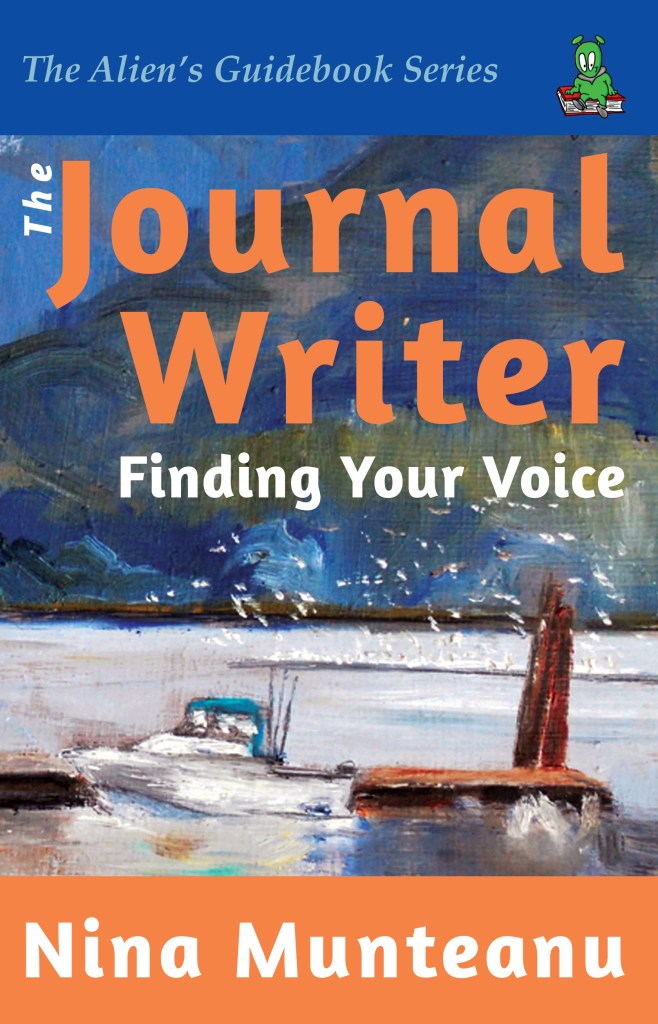
The Journal Writer is the second writing guide in the Alien Guidebook Series. This comprehensive guidebook will help you choose the best medium, style and platform for your expressive writing. The guide provides instruction on issues of safety, using the computer and electronic devices, social media and the internet.

Engaging, accessible, and easily applicable…Brava, Nina, brava.”—David Merchant, Instructor, Louisianna Tech University

Straight up, fact-filled, enriching, joyful and thorough…Nina is honest, she is human and she wants you to succeed.”—Cathi Urbonas, Halifax writer

References:

Baikie, Karen & Kay Wilhelm. 2005. “Emotional and physical health benefits of expressive writing.” Advances in Psychiatric Treatment. 11: 338-346.

DeSalvo, Louise. 1999. “Writing as a Way of Healing: How Telling Our Stories Transforms Our Lives.” Beacon Press, Boston. 226pp.

Holly, Mary Louise. 1989. “Writing to Grow. Keeping a personal-professional journal”. Heinemann. Portsmouth, New Hampshire.

Klug, Ron. 2002. “How to Keep a Spiritual Journal: a guide to journal keeping for inner growth and personal discovery.”Augsburg, Minneapolis, 4th ed.

Moon, Jennifer. 1999. “Learning Journals: A handbook for academics, students and professional development.” Kogan Page. London.

Munteanu, Nina. 2013. “The Journal Writer: Finding Your Voice.” Pixl Press, Vancouver. 170pp.
Nina Munteanu is a Canadian ecologist / limnologist and novelist. She is co-editor of Europa SF and currently teaches writing courses at George Brown College and the University of Toronto. Visit www.ninamunteanu.ca for the latest on her books. Nina’s bilingual “La natura dell’acqua / The Way of Water” was published by Mincione Edizioni in Rome. Her non-fiction book “Water Is…” by Pixl Press(Vancouver) was selected by Margaret Atwood in the New York Times ‘Year in Reading’ and was chosen as the 2017 Summer Read by Water Canada. Her novel “A Diary in the Age of Water” was released by Inanna Publications (Toronto) in June 2020.

On Writing: The Gestalt Nature of Passion & Success

Marsh and swamp forest in a blushing sunset, ON (photo and rendition by Nina Munteanu)

What is to give light must endure burning —Victor Frankl

Says Keyes: “Any writing lays the writer open to judgment about the quality of his work and thought,” writes Ralph Keyes, author of The Courage to Write. “The closer [the writer] gets to painful personal truths, the more fear mounts—not just about what he might reveal, but about what he might discover should he venture too deeply inside. But to write well, that’s exactly where we must venture.”

So, why do it, then? Why bother? Is it worth it to make yourself totally vulnerable to the possible censure and ridicule of your peers, friends, and relatives? To serve up your heart on a platter to just have them drag it around as Stevie Nicks would say?…

Welcome to the threshold of your career as a writer. This is where many aspiring writers stop: in abject fear, not just of failure but of success. The only difference between those that don’t and those that do, is that the former come to terms with their fears, in fact learn to use them as a barometer to what is important.

“Everyone is afraid to write,” says Keyes. “They should be. Writing is dangerous…To love writing, fear writing and pray for the courage to write is no contradiction. It’s the essence of what we do.”

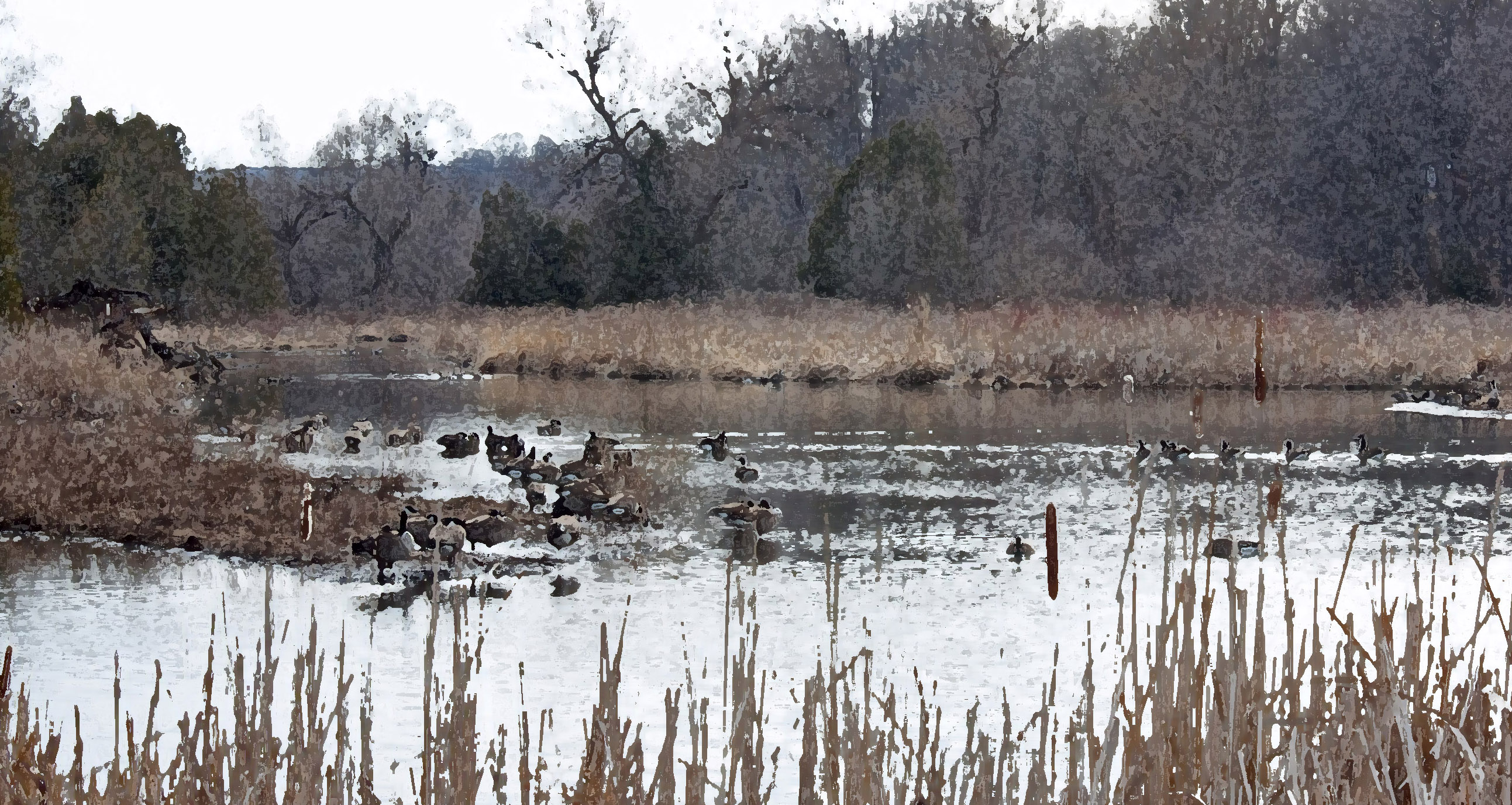
Marsh in the Kawarthas, ON (photo and rendition by Nina Munteanu)

Unravelling the Secret…

How do you get past the fear of being exposed, past the anticipated disappointment of peers, past the terror of success?

The answer is passion. If you are writing about something you are passionate about, you will find the courage to see it through. “The more I read, and write,” says Keyes:

The more convinced I am that the best writing flows less from acquired skill than conviction expressed with courage. By this I don’t mean moral convictions, but the sense that what one has to say is something others need to know.

This is ultimately what drives a writer to not just write but to publish: the need to share one’s story, over and over again. To prevail, persist, and ultimately succeed, a writer must have conviction and believe in his or her writing. You must believe that you have something to say that others want to read. Ask yourself why you are a writer. Your answer might surprise you.

Every writer is an artist. And every artist is a cultural reporter. One who sometimes holds the world accountable. “Real art,” says Susan Sontag, “makes us nervous.”

The first step, then, is to acknowledge your passion and own it. Flaunt it, even. Find your conviction, define what matters and explore it to the fullest. You will find that such an acknowledgement will give you the strength and fortitude to persist and persevere, particularly in the face of those fears. Use the fears to guide you into that journey of personal truths. Frederick Busch described it this way: “You go to dark places so that you can get there, steal the trophy and get out.”

John Steinbeck, author of Grapes of Wrath, said:

If there is a magic in story writing, and I am convinced that there is, no one has ever been able to reduce it to a recipe that can be passed from one person to another. The formula seems to lie solely in the aching urge of the writer to convey something he feels important to the reader.  

Marsh of cattails, ON (photo and rendition by Nina Munteanu)

Finding Success Through Meaning

Victor Frankl survived Auschwitz to become an important neurologist and psychiatrist of our time and to write Man’s Search for Meaning.

Blogger Gavin Ortlund wrote: “What gripped me most about [Frankl’s] book, and has stayed with me to this day, is not the horror and barbarity of his experiences in concentration camps—when you pick up a book about the holocaust, you expect that. What really struck me was Frankl’s repeated insistence that even there, in the most inhumane and horrific conditions imaginable, the greatest struggle is not mere survival. The greatest struggle is finding meaning. As I was reading, I was struck with this thought: going to a concentration camp is not the worst thing that can happen to a person. The worst that can happen to a person is not having a transcendent reason to live. Life is about more than finding comfort and avoiding suffering: it’s about finding what is ultimate, whatever the cost.”

Victor Frankl wisely said:

The more you aim at success and make it a target, the more you are going to miss it. Success, like happiness, cannot be pursued; it must ensue, and it only does so as the unintended side effect of one’s personal dedication to a cause greater than oneself or as the by-product of one’s surrender to a person other than oneself. Happiness must happen, and the same holds for success: you have to let it happen by not caring about it. I want you to listen to what your conscience commands you to do and go on to carry it out to the best of your knowledge. Then you will live to see that in the long-run—in the long-run, I say!—success will follow you precisely because you had forgotten to think about it.

Frankl is talking about passion. “If you long to excel as a writer,” says Margot Finke, author of How to Keep Your Passion and Survive as a Writer, “treasure the passion that is unique within yourself. Take the irreplaceable elements of your life and craft them into your own personal contribution to the world.” It’s what has you up to 2 am, pounding the keys. It follows you down the street and to work with thoughts of another world. It puts a notebook and pen in your hand as you drive to the store, ready to record thoughts about a character, scene or place. “For the passionate, writing is not a choice; it’s a force that cannot be denied.”

Finke says it astutely: You need to be passionate about everything to do with your book—the writing and rewriting, your critique group, your research, your search for the best agent/editor, plus your query letter. Not to mention the passion that goes into promoting your book. Nothing less will assure your survival—and success—as a writer.

“Follow your inner moonlight, don’t hide the madness”

Allen Ginsberg

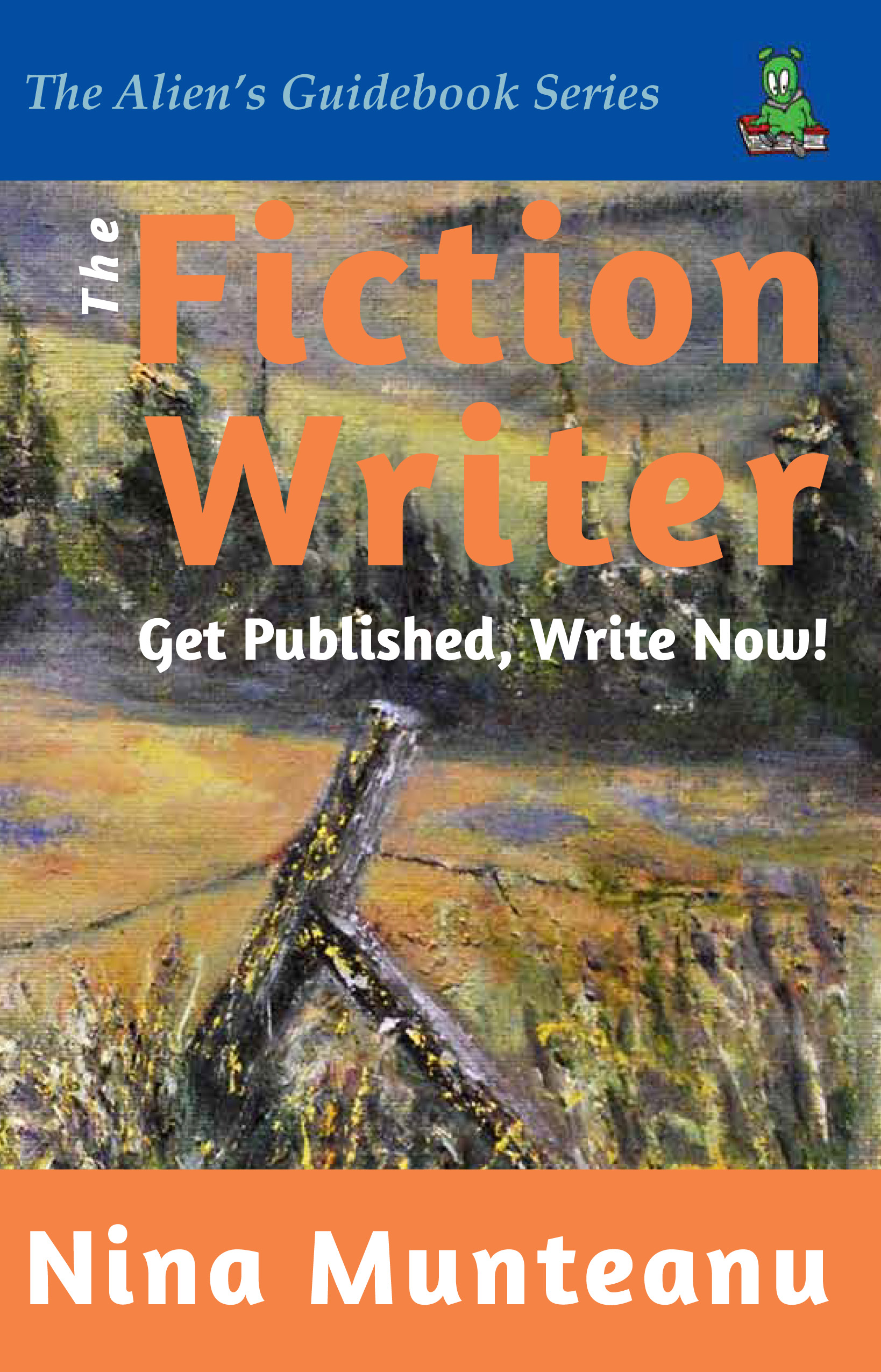
This article is an excerpt from The Fiction Writer: Get Published, Write Now! by Nina Munteanu

References:

Finke, Margot. 2008. “How to Keep Your Passion and Survive as a Writer.” In: The Purple Crayonhttp://www.underdown.org/mf_ writing_passion

Frankl, Victor. (1946) 1997. Man’s Search for Meaning. Pocket Books. 224 pp.

Keyes, Ralph. 1999. The Writer’s Guide to Creativity. Writer’s Digest, 1999.

Munteanu, Nina. 2009. The Fiction Writer: Get Published, Write Now. Starfire World Syndicate. 294pp

Ortlund, Gavin. 2008. “Frankl, the holocaust and meaning.” In: Let Us Hold Fast. http://gro1983.blogspot.com/2008/02/frankl-holocaust-and-meaning.html

Slonim Aronie, Nancy. 1998. Writing from the Heart: Tapping the Power of Your Inner Voice. Hyperion. 256pp.

Marsh near Millbrook, ON (photo and rendition by Nina Munteanu)

Nina Munteanu is a Canadian ecologist / limnologist and novelist. She is co-editor of Europa SF and currently teaches writing courses at George Brown College and the University of Toronto. Visit www.ninamunteanu.ca for the latest on her books. Nina’s bilingual “La natura dell’acqua / The Way of Water” was published by Mincione Edizioni in Rome. Her non-fiction book “Water Is…” by Pixl Press(Vancouver) was selected by Margaret Atwood in the New York Times‘Year in Reading’ and was chosen as the 2017 Summer Read by Water Canada. Her novel “A Diary in the Age of Water” was released by Inanna Publications (Toronto) in June 2020.

Nina Munteanu Interviewed in Canadian Romanian Newspaper “Observatorul”

Claudiu Murgan (author of “Water Entanglement”) recently interviewed me in the Canadian Romanian newspaper Observatorul.

gaudeamus-book-fair-crowd copy

Gaudeamus Book Fair in Bucharest, Romania

nina-paralela45-gaudeamus-web copy

Nina Munteanu at Gaudeamus

In the interview, I talked about my involvement with the Toronto Romanian community through the Immigrant Writers Association and my visit several years ago to Bucharest Romania to launch my two writing guidebooks with Editura Paralela 45 at the Gaudeamus Book Fair at the Rome Expo Exhibition Centre:

“In 2011 I attended the launch of my writing guide Manual de Scriere Creativa. Scriitorul de fictiune (The Fiction Writer) in Bucharest, hosted by Editura Paralela 45 at the Gaudeamus Book Fair. Dr. Florin Munteanu, respected scientist in Complexity Theory, kindly picked me up at the airport and took me to the Phoenicia Grand Hotel where we relaxed in the lounge and discussed fractal geometry and the Fibonacci Golden Ratio over café cremes. It was a very civilized introduction to this eclectic “city of joy” and I felt strangely at home.

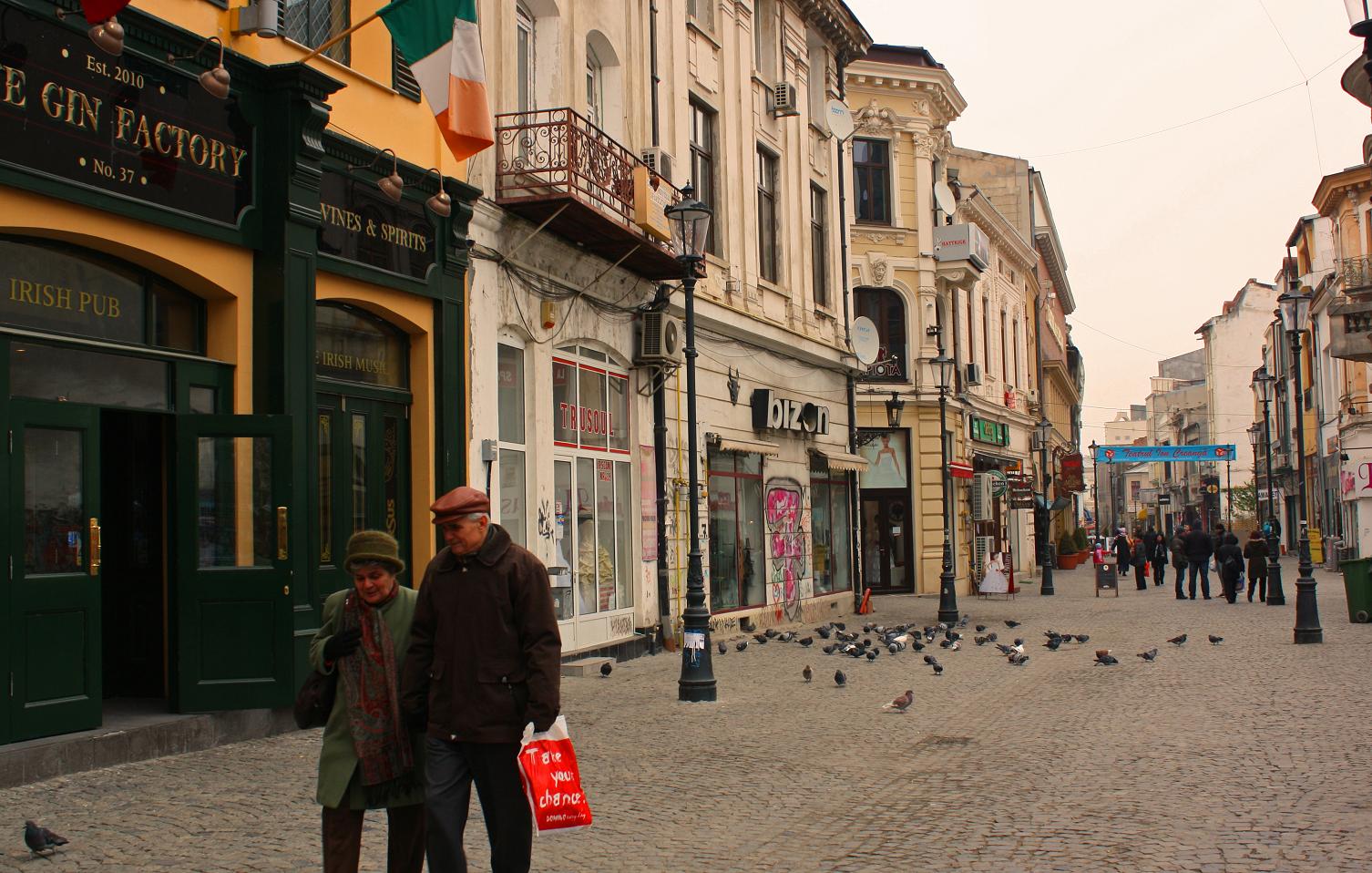
It was a wonderful experience, which included drinking copious amounts of Tuica with my publisher and touring the Lipscani District with George Kudor, a student of Florin’s. Florin calls Romania “the corpus callosum of the world” where east and west converge, mingle and learn. It’s no wonder that Romania is one of the leading countries in the world on complexity theory, a science that embraces the “collision” of different “worlds” to create more than the sum of its parts.”

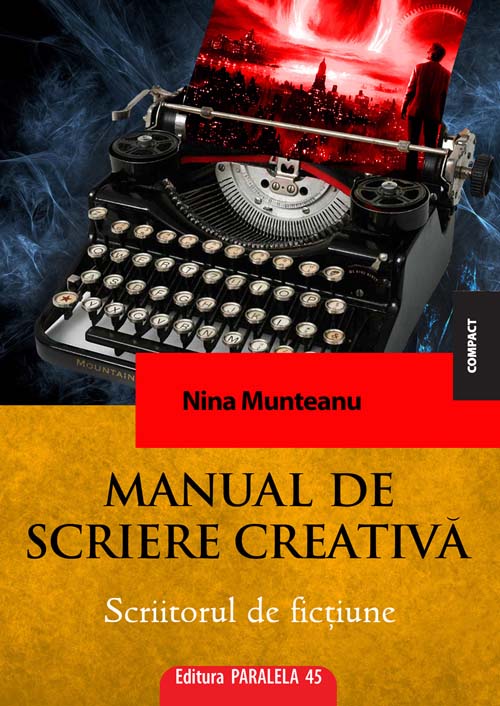
scriitorul_de_fictiune_Munteanu_coperta1 copyFictionWriter-front cover-2nd ed-webThe Fiction Writer (Scriitorul de fictiune) was very well received by the Romanian writing community. Romanian poet and English instructor Lucia Gorea calls The Fiction Writer “the most practical book on publishing that I’ve ever read, and I’ve read them all!”


In the Observatorul interview, Claudiu asked me if I was pursuing other projects in Romania. I am currently corresponding with a Romanian distributor to get some of my other books translated and published in Romania. I also co-edit Europa SF, a European ezine on speculative fiction from around the world, with a focus on European science fiction, fantasy and horror.

The Way of Water-COVER copyI hope to collaborate more with colleague and friend Cristian Tamas, who introduced me to editor/publisher Francesco Verso (of Future Fiction) and Mincione Edizioni, who published my short story “The Way of Water.” I later developed “The Way of Water” in novel form and I anticipate its release next year.
I hope to do more with Dr. Florin Munteanu and Claudiu Murgan on projects to do with water—particularly on entanglement, intention, subtle energies and memory. I would be delighted if a Romanian publisher chose to translate my book “Water Is…The Meaning of Water” and publish it for Romanians.

OLYMPUS DIGITAL CAMERA

Gaudeamus Book Fair in Rome Expo Exhibition Centre, Bucharest

bucharest-old-downtown01-web copy

Lipscani District in Bucharest

nina-gaudeamus-close-web copy

Nina enjoying the book fair

nina-2014aaaNina Munteanu is an ecologist and internationally published author of award-nominated speculative novels, short stories and non-fiction. She is co-editor of Europa SF and currently teaches writing courses at George Brown College and the University of Toronto. Visit www.ninamunteanu.ca for the latest on her books. Nina’s recent book is the bilingual “La natura dell’acqua / The Way of Water” (Mincione Edizioni, Rome). Her latest “Water Is…” is currently an Amazon Bestseller and NY Times ‘year in reading’ choice of Margaret Atwood.