I Became a Climate Activist in the 1960s

Two cedar trees entangle their roots in a cedar forest in Warsaw Caves Park, ON (photo and rendition by Nina Munteanu)

In 1969, I completed my first novel at the tender age of fifteen. Caged in World was a hundred-page speculative story about a world that had moved “inside” to escape the ravages of a harsh post climate-change environment. 

1969 was the year that humans first stepped on the moon and the first Concorde test flight was conducted in France. But I was concerned by the environment and what was happening on our planet. It was seven years since Rachel Carson had published Silent Spring, which warned of our declining bird and bee populations and impacts to human health from unregulated pesticide/herbicide use (such as carcinogens and hormone disruptors). It was just a year after Paul Erlich’s Population Bomb warned that attempts to stretch the Earth’s resources to support the ever-growing population would result in mass starvation, epidemics, and, ultimately, the breakdown of social order. 

In the 1960s it was already apparent to me that environmental imbalance and destruction were global concerns and we were on the brink of an environmental crisis.  Unchecked deforestation was destroying forests around the world, including the boreal and old-growth forests of my own country Canada. Brazil had already begun cutting down trees and burning forest at an alarming rate. Unregulated use of pesticides, herbicides and growth hormones created toxic contamination of our natural world and our food and water supply—despite Carson’s dire warning with Silent Spring. Our waterways were being contaminated by mining wastes and industrial effluents. Killer smog. Noxious algal blooms. Oil spills. Dead zones. The list was growing.

Rachel Carson and her iconic book, Silent Spring

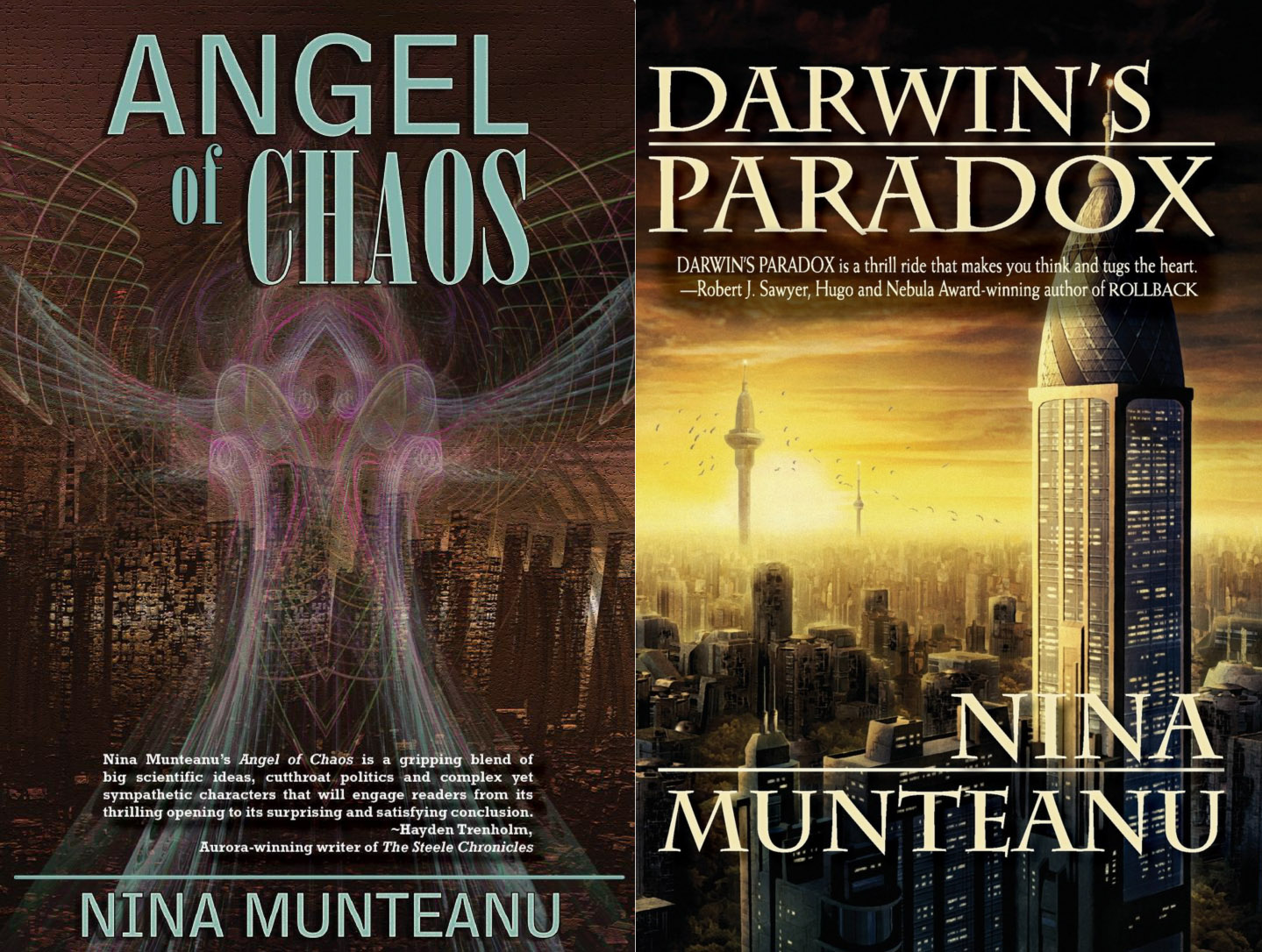
I joined S.T.O.P. (Society To Overcome Pollution) and marched in protests to call for responsible behaviour by governments and large corporations. I tried to raise awareness at my school about our deteriorating environment and likely consequences to human survival; my own teachers tried to silence me! I wrote my first dystopia, Caged in World.  The eco-novel was about a subway train driver and a data analyst caught in the trap of a huge lie. The story later morphed into Escape from Utopia. Several drafts—and years later—the novel became the eco-medical thriller Angel of Chaos, set in 2095 as humanity struggles with Darwin’s Disease—a mysterious neurological environmental pandemic. Icaria 5 is one of many enclosed cities within the slowly recovering toxic wasteland of North America, and where the protagonist Julie Crane works and lives. The city is run by technocrats, deep ecologists who call themselves Gaians, and consider themselves guardians of the planet. The Gaians’ secret is that they are keeping humanity “inside” not to protect humanity from a toxic wasteland but to protect the environment from a toxic humanity.

I spent several years shopping Angel of Chaos to agents and publishing houses. Although I received many bites, all finally let go. In the meantime, I did several things: 1) I started writing short stories, some of which were cannibalized from the book, and several of these were published; 2) I wrote Angel’s prequel, The Great Revolution (never published, The Great Revolution sits in a drawer hibernating) and Angel’s sequel Darwin’s Paradox, (which did get published eventually).


Angel of Chaos and Darwin’s Paradox Duology by Nina Munteanu

I thought of going into environmental law at university then decided that I didn’t have the temperament for it and instead pursued ecology and limnology. I taught limnology at the University of Victoria then found work as an environmental consultant. In 2007, Dragon Moon Press in Calgary made an offer to publish Darwin’s Paradox; the sequel became my debut novel. Dragon Moon Press later picked up Angel of Chaos and published it in 2010 as a prequel. I haven’t stopped publishing since (with a book pretty much every year).

A selection of eco-Fiction stories / novels Nina Munteanu wrote or edited

My whole career-life has been dedicated to helping the environment, doing field studies as a limnologist and ecologist, publishing papers and reports, giving talks about water and the environment. I feel strongly that stories can go much farther in bringing not only awareness but direction for people to act on behalf of the environment and the planet. The narrative we give one another is the key. 

What story do we tell of ourselves and each other?

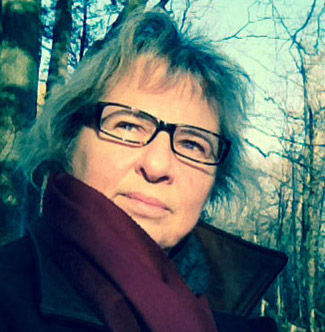
Nina Munteanu is a Canadian ecologist / limnologist and novelist. She is co-editor of Europa SF and currently teaches writing courses at George Brown College and the University of Toronto. Visit www.ninamunteanu.ca for the latest on her books. Nina’s bilingual “La natura dell’acqua / The Way of Water” was published by Mincione Edizioni in Rome. Her non-fiction book “Water Is…” by Pixl Press(Vancouver) was selected by Margaret Atwood in the New York Times‘Year in Reading’ and was chosen as the 2017 Summer Read by Water Canada. Her novel “A Diary in the Age of Water” was released by Inanna Publications (Toronto) in June 2020.

Nina Munteanu Talks about Writing—Passion, Process, and Publication—with Mandy Eve-Barnett

Fantasy / SF writer and interviewer Mandy Eve-Barnett recently interviewed me about my recent eco-novel “A Diary in the Age of Water” and on my writing process and evolution. When did it all begin and what choices did I make along the way? she wanted to know. Here are some of her questions and my answers (embellished here) for your reading pleasure. For the full interview go here:

Mandy: When did you first start writing?

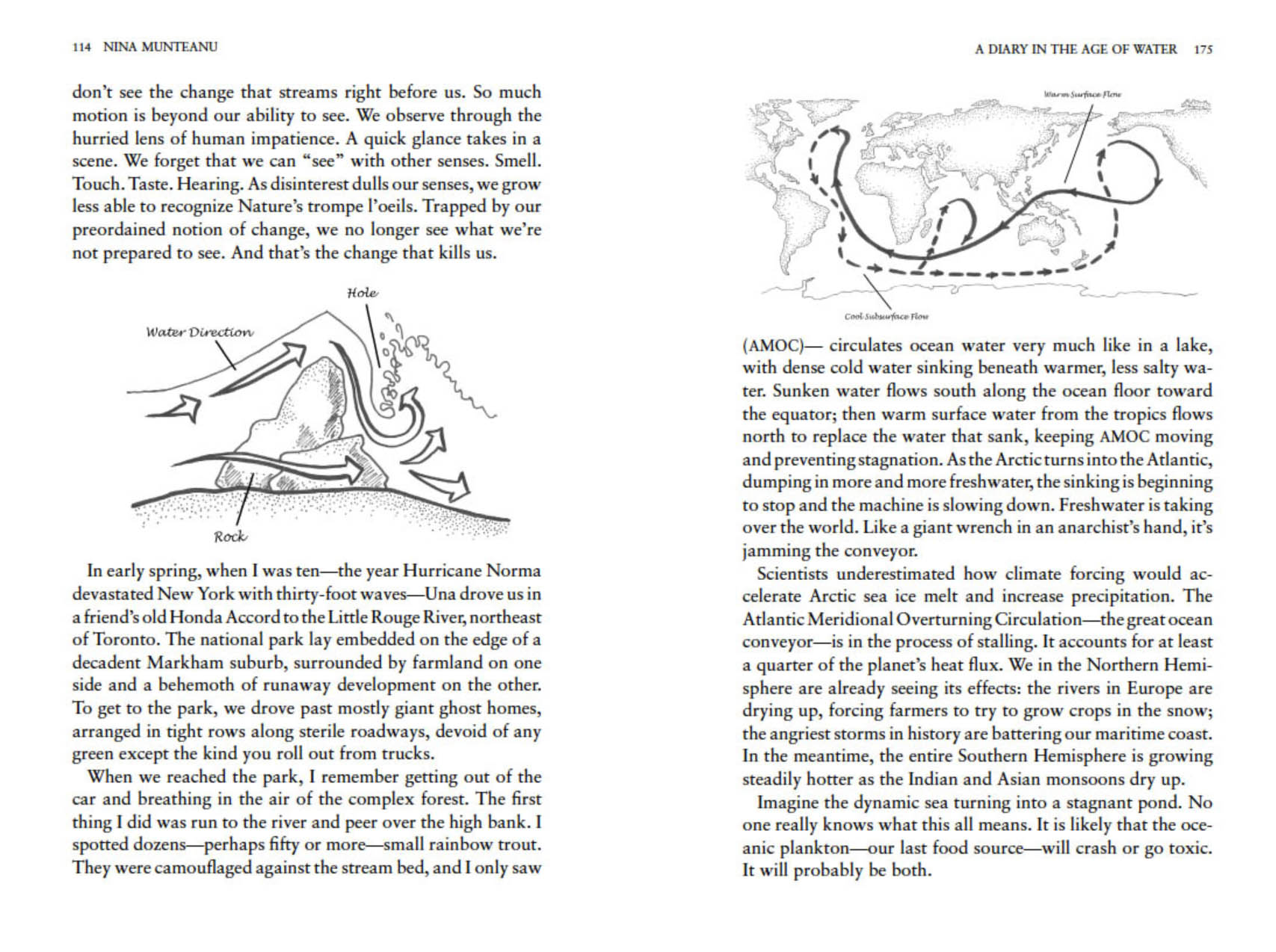
Nina: Not until I was a teenager when I wrote my first complete novel (“Caged-In World”—which later served as a very rough draft for my first and second published novels, Angel of Chaos and “Darwin’s Paradox”). My first published work was a non-fiction article “Environmental Citizenship”, which appeared in Shared Vision Magazinein 1995. I was already a young mother then with a family in Ladner, BC, and working for an environmental consulting firm in Richmond. My first fiction work was a short story entitled Arc of Time, published in a small circulation magazine Armchair Aesthete. That story was later reprinted several times throughout the world, including my short story collection Natural Selection.” Before writing stories, though, I told stories—I shared wild stories of galactic adventure with my older sister; we used to share them late into the night when we were supposed to be sleeping and our parents were snoring in their beds. I also told stories in the form of cartoons. Since I was a small child, I wanted to be a cartoonist and write graphic novels when I grew up. I created and drew several strips with crazy characters on wild adventures, blending my love for drawing with my love for storytelling. I haven’t stopped that form of storytelling and still have a yearning for that form. This is one reason why I’m so delighted with my latest book “A Diary in the Age of Water,” which features some of my limnological sketches, which stand in for the diarist’s sketches:

Pages from “A Diary in the Age of Water” by Nina Munteanu

Mandy: What made you decide on science fiction as a genre?

Nina: That goes back to my love for comics. I wasn’t much of a reader as a kid. While my older brother and sister devoured The Hardy Boys and Nancy Drew series, I secreted myself in the back corner of Williams General store and read Supergirl, Superman and Superboy, Batman, Magnus Robot Fighter and Green Lantern, among others. I was obviously enamored with the fantastic. When I earnestly started to read more than comics, I came across the SF classics: Huxley, Orwell, Heinlein, Clarke, Silverberg and Asimov to name a few. Bradbury sent me over the moon and his “Martian Chronicles” made me cry. I wanted to write like him and move readers like he’d done with me with something that mattered. 

The reason I continue to write in this genre is because of its ability to encompass the creative imagination and application of metaphor to story. Given science fiction’s wide range of possibilities in creating a believable reality of the fantastic, science fiction provides a compelling platform for metaphoric storytelling on a grand scale—the story large. Possibilities for powerful archetypes abound. Where else can you make water an actual character?

My environmental themes and eco-fiction lie in the sub-genre of ‘mundane science fiction.’ This is just another form of speculative fiction. Mundane science fiction focuses on existing technology (no ray guns, warp drives, or time travel). Its premise lies in existing circumstances and events to create a near-future realism. My recent dystopian eco-novel “A Diary in the Age of Water” by Inanna Publicationsfits this description perfectly. Examples by other writers include Margaret Atwood’s “MaddAddam” series, Paolo Bacigalupi’s “The Windup Girl” and Kim Stanley Robinson’s “The Ministry for the Future.”  

Mandy: Was the ecological aspect of your stories a gradual realization or your primary objective?

Nina: My primary objective was always to tell a compelling and meaningful story and hopefully to move readers in some way—like Ray Bradbury and other writers had with me. The ecological aspects slid in unannounced like a shadow character. It made sense: the environment and how we treat it (and ourselves by extension) has always been something important to me since I was a child. Both my parents were connected to Nature. My father took us on camping trips and picnics in the country; my mother was an amateur ecologist and botanist. From quite young I’ve been an environmental activist; chasing after people who littered, promoting recycling, participating in environmental protests. So, while I was writing science fiction, it was also eco-fiction. When the brand became more known, I realized that this was the kind of fiction I was writing most of the time. So, in some ways, I’ve come full circle with my quest as a youth: to tell impactful stories about the environment—whether this is here on Earth or on some planet in the outer systems—which make people think and feel and question. 

Mandy: Can you tell us a little about your newest book “A Diary in the Age of Water”, how you came up with the concept, and your writing process for it?

Nina: The book follows the climate-induced journey of humanity through four generations of women, each with a unique relationship with water during a time of calamitous change. The book starts and ends in the far future in the dying boreal forest with a blue water being, Kyo, who finds the diary of a limnologist, Lynna, from our near-future Toronto. The diary spans a forty-year period and contains a series of entries; each entry begins with an epigraph—quote from the textbook “Limnology” by Robert Wetzel. During the diarist’s lifetime, all things to do with water are overseen and controlled by the international giant water utility CanadaCorp—with powers to arrest and detain anyone. This is a world in which China owns America and America, in turn, owns Canada. The limnologist witnesses and suffers through severe water taxes and imposed restrictions, dark intrigue through neighbourhood betrayals, corporate spying and espionage, and repression of her scientific freedoms. Some people die. Others disappear.

Inspiration for the novel started with a short story I was invited to write by my publisher in Rome in 2015 about water and politics in Canada.  I had long been thinking of potential ironies in Canada’s water-rich heritage. The premise I wanted to explore was the irony of people in a water-rich nation experiencing water scarcity: living under a government-imposed daily water quota of 5 litres as water bottling and utility companies took it all. I named the story “The Way of Water” (“La natura dell’acqua), about a young woman (Hilda) in near-future Toronto who has run out of water credits for the public wTap; by this time houses no longer have potable water and their water taps have been cemented shut; the only way to get water is through the public wTaps—at great cost. She’s standing two metres from water—in a line of people waiting to use the tap—and dying of thirst. “The Way of Watercaptures a vision that explores the nuances of corporate and government corruption and deceit together with global resource warfare. In this near-future, Canada is mined of all its water by thirsty Chinese and US multinationals—leaving nothing for the Canadians. Rain has not fallen on Canadian soil in years due to advances in geoengineering and weather manipulation that prevent rain clouds from going anywhere north of the Canada-US border. If you’re wondering if this is possible, it’s already happening in China and surrounding countries.

I chose to use a diary in the near-future part of the story to achieve a sense of gritty realism of ‘the mundane.’ The diary-aspect of the book characterizes it as ‘mundane science fiction’ by presenting an ‘ordinary’ setting for characters to play out. The tension arises more from insidious cumulative events and circumstances that slowly grow into something incendiary.

Many of the events and circumstances that the diarist reports on are real events and based on real people. That they serve as premise for the fiction effectively blurs the fiction with non-fiction. Readers have told me that they often couldn’t distinguish the two in the book and this achieved a real urgency for the reader, who both hated and loved the book for it and couldn’t stop turning the pages as a result. 

Hardwood forest backlit by sparkling Otonabee River in spring, ON (photo and rendition by Nina Munteanu)

Nina Munteanu is a Canadian ecologist / limnologist and novelist. She is co-editor of Europa SF and currently teaches writing courses at George Brown College and the University of Toronto. Visit www.ninamunteanu.ca for the latest on her books. Nina’s bilingual “La natura dell’acqua / The Way of Water” was published by Mincione Edizioni in Rome. Her non-fiction book “Water Is…” by Pixl Press(Vancouver) was selected by Margaret Atwood in the New York Times‘Year in Reading’ and was chosen as the 2017 Summer Read by Water Canada. Her novel “A Diary in the Age of Water” was released by Inanna Publications (Toronto) in June 2020.

Paradox in the Details: The Role of Place in Story

Nina Munteanu at When Words Collide 2021

A few weeks ago, I (virtually) participated in When Words Collide, one of Canada’s prime writing festivals in Calgary, Alberta. I was a featured writer, sitting on several panels and conducting presentations and lectures.
One of the two presentations I did was on the role of place in story

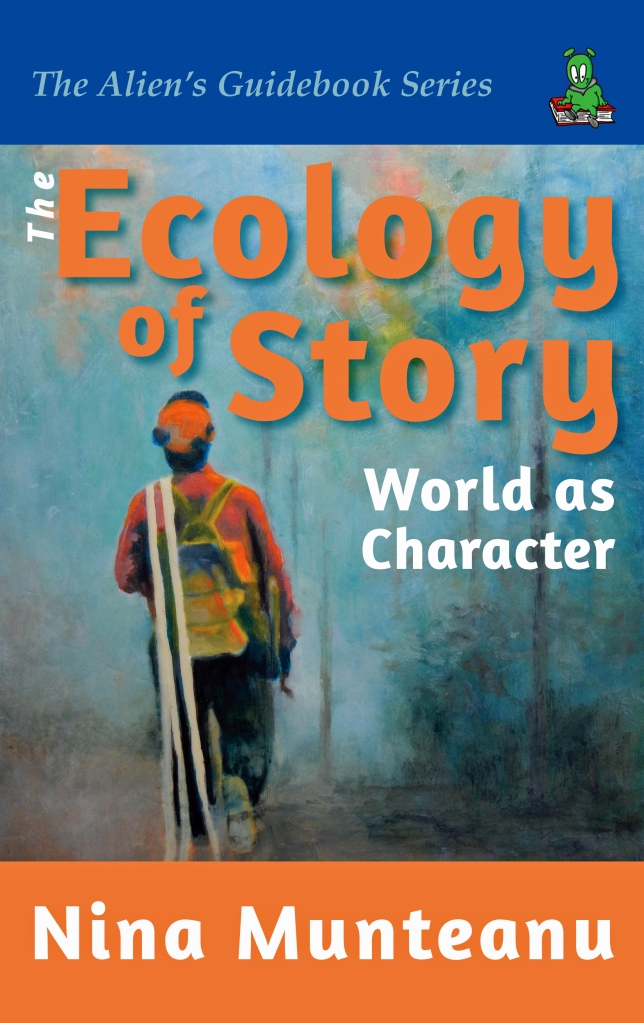
The role of place in story is a topic close to my heart and one I recently wrote an entire writing guidebook on: The Ecology of Story: World as Character. In my coaching sessions with writers and in my writing courses at George Brown College and the University of Toronto, I’ve observed in the novice writer a need for more effective integration of setting and place in story. All too often, the lack of meaningful integration translated into a lost opportunity to explore the POV character and the story’s theme. The lack of meaningful use of place in story can result in a lacklustre story, overly vague characterizations and a story that lacks metaphoric depth and relevance.

The presentation and following discussion drew from my guidebook Ecology of Story and I used many examples from a wide range of literature to overview topics covered in the book, such as:

  • Place as character & archetype
  • Place as metaphor (personification, symbols, allegory)
  • Place and first impressions (openings)
  • Place and emotion (over time and by POV)
  • Place through the senses
  • Place as environmental force (including climate change)

We also discussed how characters connect with their environment and I introduced the metaphoric connection between the Mi’kmaq and the white pine forests in Annie Proulx’s Barkskins, among others.

I concluded the presentation with a discussion on the “paradox in the details”: the more specific description is, the more universal its appeal. This is because the details can establish relevance and realism to the scene and the POV character experiencing them. Vagueness and lack of tangibility are avoided through specificity. The key, however, is to use details that resonate with the theme and tone of the book: as metaphor. Details as metaphor is what you want to achieve. 

Because, as Ray Bradbury once told me, “everything in story is metaphor.” 

The Ecology of Story: World as Character is presented in two parts.

Part 1 provides a comprehensive summary of the science of ecology, the study of relationships, and links to useful metaphor.

Part 2 discusses world and place in story. Here I discuss how the great writers have successfully integrated place with theme, character and plot to create a multi-layered story with depth and meaning. Part 2 also contains several writing exercises and detailed case studies.

Nina Munteanu is a Canadian ecologist / limnologist and novelist. She is co-editor of Europa SF and currently teaches writing courses at George Brown College and the University of Toronto. Visit www.ninamunteanu.ca for the latest on her books. Nina’s bilingual “La natura dell’acqua / The Way of Water” was published by Mincione Edizioni in Rome. Her non-fiction book “Water Is…” by Pixl Press(Vancouver) was selected by Margaret Atwood in the New York Times ‘Year in Reading’ and was chosen as the 2017 Summer Read by Water Canada. Her novel “A Diary in the Age of Water” was released by Inanna Publications (Toronto) in June 2020.
To Boldly Go Where No Human Has Gone Before…

A while ago I was approached by Robert Gooding-Townsend, Science in Society editor for Science Borealis for my opinion on a persistent idea that post-Star Trek sci-fi is more pessimistic and less technologically imaginative. 

Whether this perception is true I can’t definitively say but there is a reason behind it, which I believe reflects a subtle shift in our cultural paradigm and worldview in the past decades since Star Trek. A shift involving a growing awareness of ecology and the emergence of the “feminine archetype” in storytelling.

I think two things are happening in concert: science fiction is maturing as a genre: 1) in its actual breadth; but also 2) in our perception of it.

I think this is partly: 1) a reflection of a more diverse, sophisticated and mature audience (what The Economist terms “mass intelligent”); and 2) the result of a wider acceptance of SF as literature by “non-genre” writers embracing what literary critic Ted Gioia calls “conceptual fiction” (e.g., Walker Percy’s Love in the Ruins; Thomas Pinchon’s Gravity’s Rainbow; Vladimir Nabokov’s Ada; John Barth’s Giles Goat-Boy; Margaret Atwood’s The Handmaid’s Tale, Emmi Itaranta’s The Memory of Water; David Mitchell’s Cloud Atlas, etc.).

Our shifting worldview, along with science fiction’s gradual blending with strong literary elements is reflected in a perception of higher pessimism with less focus on technological “wonders”. When asked to describe SF today, colleague Lynda Williams, author of the Okal Rel series, argued that, “SF is mainstream now … It has grown up, emotionally, from being about wish-fulfilling technologies … to embracing the social implications of change.”

Today, SF is recognized more as “real” literature rather than being dismissed as “escapism.” Williams shares that SF’s roots are as old as myth. “Like myths and bible stories, SF is an instructive literature, pointing out how things can go wrong (or right) and why. The growing up SF has done since the 1950s lies in an increasing recognition that [humanity is its] own worst enemy and a better understanding of human nature is crucial to the problems we face, not just the hard sciences.”

For the past few years I’ve been following a trend in the science fiction writing courses I teach at university: more and more students (male and female) are bringing in WIPs on ecological and global environmental issues. Many of the stories involve a premise of environmental calamity, but not in the same vain as previous environmental disasters that depict “man” against Nature. These works give the Earth, Nature or Water an actual voice (as a character). And a protagonist who learns to interact with it cooperatively. For me this represents a palpable and gestalt cultural awakening in the realm of the “feminine archetype”. One that is focused more on the sociological and ecological consequences of humanity’s evolution.

I believe that ecology—the science of relationships and consequence—best parallels the literature of science fiction, which studies the world and the consequences of our actions (advances in and impacts of science and technology) through metaphor. The literature of science fiction explores large issues faced by humankind and is foremost a literature of allegory and metaphor; one deeply embedded in culture.

Stories of doom and gloom have populated the science fiction genre since its inception. What appears to be changing is the increased sophistication of this assessment and humanity’s place—and technology’s place—in it. Editor and Publisher of On Spec MagazineDiane Walton shares that she is seeing a lot of Post-Apocalyptic submissions, “mainly because it’s interesting to put your characters in a setting where the rules don’t apply any more. They have to try to rebuild the life and security and order they used to have, or else revert to savagery, or else adapt to a whole new set of circumstances.”

Environmental fiction has been written for years. But I believe that now—partly with new awareness of climate change and with the genesis of the term eco-fiction—the “character” and significance of environment is being acknowledged beyond its metaphor, for its actual value. It may also be that the metaphoric symbols of environment in certain classics are being “retooled” through our current awareness, much in the same way that Aldous Huxley’s Brave New World or George Orwell’s Nineteen Eighty Four are being re-interpreted—and newly appreciated—in today’s world of pervasive surveillance and bio-engineering.

The stories I’m seeing more and more—whether by established writers or by my own students—reflect an emerging worldview of participation, responsibility and accountability. It is the worldview of Jung and synchronicity; of David Bohm and “implicate order”; of Rudolf Steiner and “cosmic intelligence”, of biochemist Mae-Wan Ho and “quantum entanglement”, of Frans de Waal and “empathy”, and of Matt Ridley and “altruism”.

Whether told through cautionary tale / political dystopia (e.g., Margaret Atwood’s MaddAddam trilogy; Bong Jung-Ho’s Snowpiercer), mundane science fiction (e.g. Paolo Bacigalupi’s The Windup Girl, my own A Diary in the Age of Water), or a retooled version of “alien invasion” (e.g., Cixin Liu’s 2015 Hugo Award-winningThe Three Body Problem), these stories all reflect a shift in focus from a technological-centred & human-centred story to a more eco- or world-centred story that explores wider and deeper existential questions. 

So, yes, science fiction today may appear less technologically imaginative; but it is certainly more sociologically astute, courageous, sophisticated, and relevant. As for the question of pessimism, I’d suggest that rather than being more pessimistic, current SF literature is more realistic and meaningful.

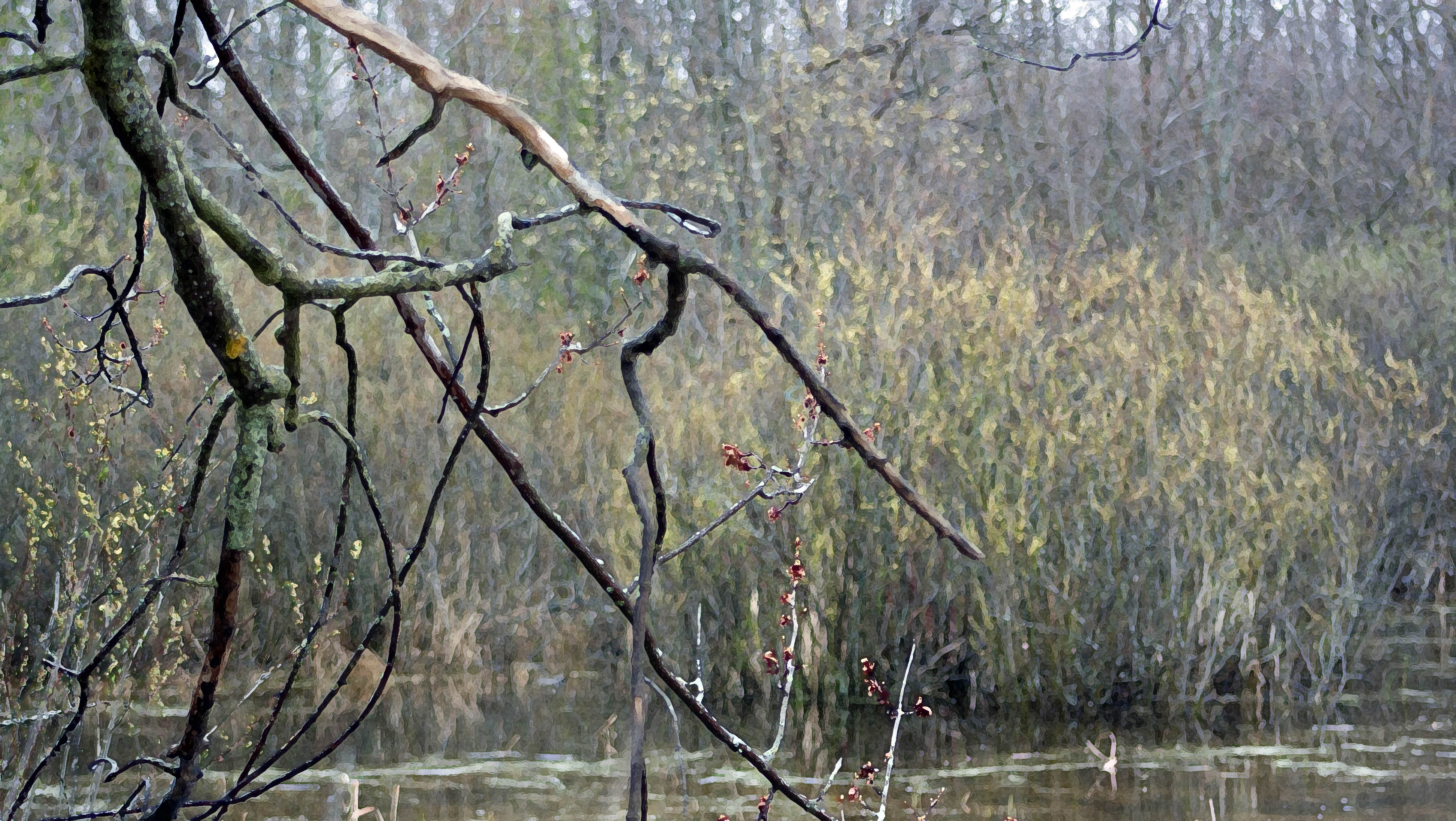
Swamp forest in Kawartha region, ON (photo and rendition by Nina Munteanu)

Nina Munteanu is a Canadian ecologist / limnologist and novelist. She is co-editor of Europa SF and currently teaches writing courses at George Brown College and the University of Toronto. Visit www.ninamunteanu.ca for the latest on her books. Nina’s bilingual “La natura dell’acqua / The Way of Water” was published by Mincione Edizioni in Rome. Her non-fiction book “Water Is…” by Pixl Press(Vancouver) was selected by Margaret Atwood in the New York Times ‘Year in Reading’ and was chosen as the 2017 Summer Read by Water Canada. Her novel “A Diary in the Age of Water” was released by Inanna Publications (Toronto) in June 2020.

Nina Munteanu Talks Water, Writing, and Weather on ‘All About Canadian Books’

I recently had the pleasure of chatting with Crystal Fletcher on “All About Canadian Books” about my recent clifi dystopian novel “A Diary in the Age of Water.” We covered a number of topics from water’s over 70 anomalous properties–virtually all of them life-giving–to how water seems to inform all aspects of my life, particularly my writing life. Crystal was particularly fascinated with the four generations of women in the book and we talked at length about how these characters were developed and the roles they played in the greater saga.

After bringing up the Toronto Star’s question of me (“What keeps you up at night about climate change”) in which I admitted that I lose sleep over the thought of how my son and his children will fair in this changing world, Crystal admitted that “Your book, Nina, is an eye opener…it freaked me out when I was reading it…and now I’m losing sleep!”

Hardwood forest back lit by glittering Otonabee River, ON (photo and rendition by Nina Munteanu)

Nina Munteanu Talks Water and Writing on Kentucky’s WMST-am Radio

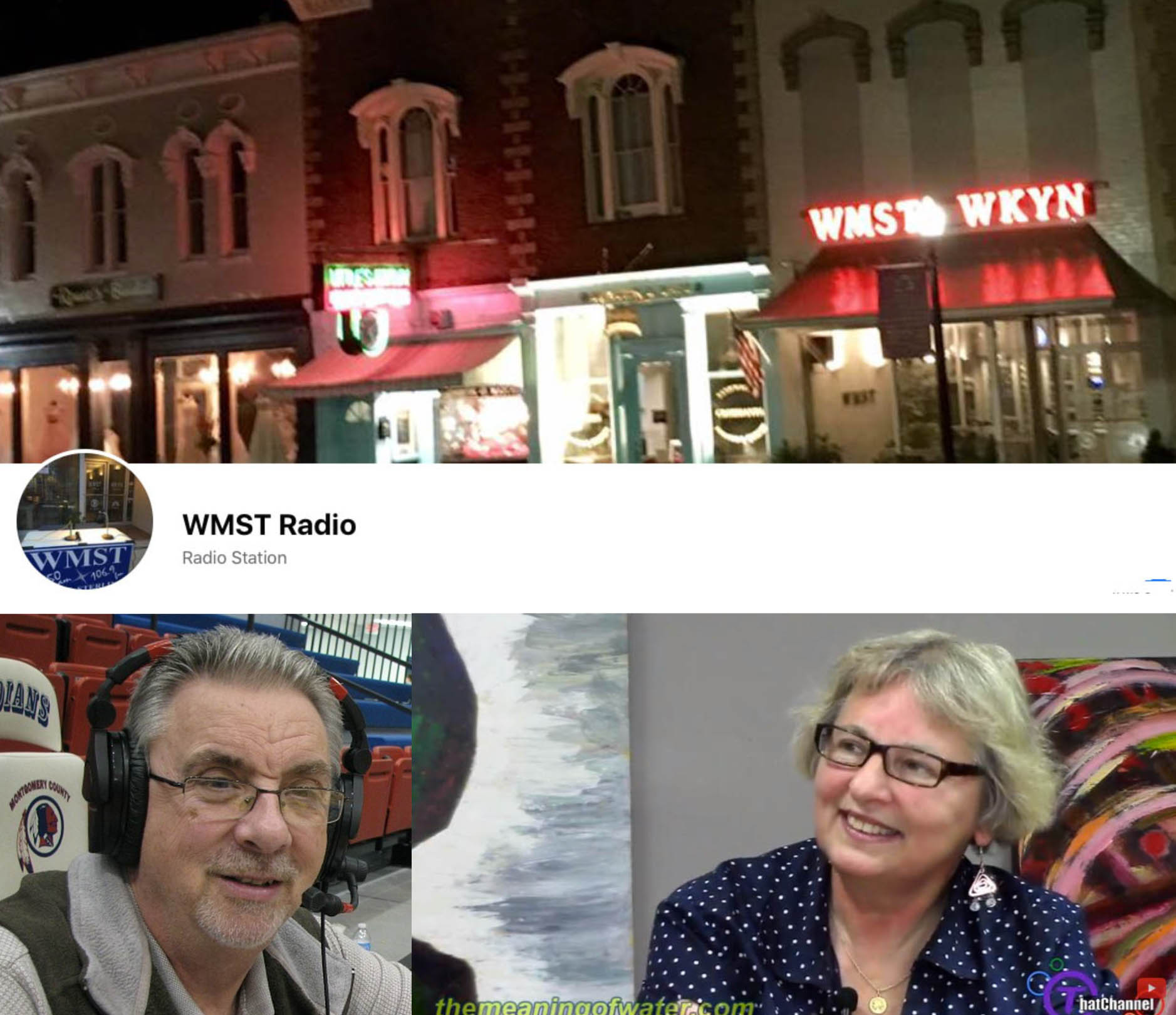
Dan Manley interviews Nina Munteanu on Mid Morning on Main WMST-AM Radio

I was recently interviewed (on June 21) by Dan Manley on Kentucky’s Mid-Morning on Main show on WMST-AM Radio. I’ve visited Kentucky several times before, including the famous Bardstown Road in Louisville, but this time it was a virtual visit.

Dan and I talked about how I became a limnologist and ecologist, about my growing up in a small town and playing in the local forest with my older brother and sister and how we made ‘potions’ out of moss, soil, evening nightshade and water.

We talked about my recent eco-novel “A Diary in the Age of Water” and why I wrote it and its effect on people. We covered the difference between stereotypes and archetypes and how science informs me and my writing. We also explored how life changes us and our writing and how writing, in turn, changes us.

We covered a vast range of water-related topics from the movie “Water World” to the TV show “Bonanza.” We talked about water scarcity and water politics and what Canada was doing and what’s happening in America.

I really enjoyed this interview because Dan asked me some surprising and challenging questions that led us into interesting territory. My interview with him starts about 43 minutes into the show. Go have a listen!

Otonabee River sparkles behind a hardwood forest in spring, ON (photo and dry brush rendition by Nina Munteanu)

Nina Munteanu is a Canadian ecologist / limnologist and novelist. She is co-editor of Europa SF and currently teaches writing courses at George Brown College and the University of Toronto. Visit www.ninamunteanu.ca for the latest on her books. Nina’s bilingual “La natura dell’acqua / The Way of Water” was published by Mincione Edizioni in Rome. Her non-fiction book “Water Is…” by Pixl Press(Vancouver) was selected by Margaret Atwood in the New York Times‘Year in Reading’ and was chosen as the 2017 Summer Read by Water Canada. Her novel “A Diary in the Age of Water” was released by Inanna Publications (Toronto) in June 2020.

How To Write Great Dialogue

Cedar trees in ice shallows of Jackson Creek, ON (photograph and dry brush rendition by Nina Munteanu)

Dialogue spices narrative and increases pace because it is read more quickly. Dialogue is pleasing to the reader’s eye and gets readers involved. Dialogue is action.

Five tools for achieving relevant and exciting dialogue include: showing not telling; simplification; voice; interactive devices, and use of narrative.

Defining Dialogue and its Purpose in Story

Good dialogue neither mimics actual speech (e.g., it’s not usually mundane, repetitive or broken with words like “uh”) nor does it educate the reader through long discourse (unless the character is that kind of person). Good dialogue in a story should be somewhere in the middle. While it should read as fluid conversation, dialogue remains a device to propel the plot or enlighten the reader to the character of the speaker). No conversation follows a perfect linear progression. People interrupt one another, talk over one another, often don’t answer questions posed to them or avoid them by not answering them directly. These can all be used by the writer to establish character, tension, and relationship.

The writer uses dialogue to move the story along, increase tension and speed up pace. Dialogue helps define setting, characters and objects. It allows characters to confront each other and crystallizes relationships and situations. Dialogue can effectively deliver a punch or blow in a conflict. It can cue into a transition to a new scene

Show, Don’t Tell

Beginning writers commonly use dialogue to explain something that both participants should already know but the reader doesn’t. It is both awkward and unrealistic and immediately exposes the writer as a novice. Writers should avoid the use of “As you know…” It’s better to keep the reader in the dark for a while than to use dialogue to explain something. On the same note, characters should talk to one another, not indirectly to the reader through polemic or long dissertation and exposition.

Use Relevant Tag Lines and Reduce Them

When using tag lines for dialogue, take care to avoid the use of redundant tag lines. For instance: “I’m sorry,” he apologized; “Do you have a dog?” she asked. The primary purpose of a tag is to establish whois speaking, not necessarily how; the howis usually achieved through the actual speech. Novice writers tend to avoid “said” and replace with creative but distracting verbs (e.g., snarled, hissed, purred) or add excessive speech modifiers (e.g., he said pleadingly or he said dramatically). Instead, look for ways to express the way they said it in actual dialogue. Let the dialogue speak for itself. In the example—“He can’t be there!” she said in disbeliefdisbeliefis unnecessary because the dialogue already shows it. In truth, most professional writers use said and let the dialogue do the talking.

Develop Character “Voice” & Speech Signatures

Each of us develops our own idiosyncratic way of speaking, based on our ethnic background, the community or region we grew up in, our education and the circles we frequent. Writers can create a character’s distinctive “voice” by introducing a unique vernacular to each character. This can take on the form of a certain repeated phrase, a body movement (itself a “language”), a stutter or speech intonation or accent. For instance, I know a person who adds “don’t you think?” to almost everything he says. This says something about how that person thinks. Another person I know uses “do you see?” at the end of his phrase. Again, rather revealing. The writer can add additional depth to these specific traits by linking them to metaphor.

Use Oblique Conversation & Overlapping Speech

People often don’t respond directly to questions posed them. This may be due to them avoiding the question or excitement or rudeness. The writer can make use of these as devices to enlighten the reader on theme, plot and character, while making the conversation more interesting and realistic. People cut each other off or talk over one another all the time. You can incorporate this into your dialogue to achieve a note of hastiness, abruptness, nervousness or panic.

Intersperse Dialogue with Descriptive Narrative

Many beginning writers forget to “ground” the reader with sufficient cues as to where the characters are and what they’re doing while they are talking. This phenomenon is so common, it even has a name. It’s called “talking heads.” As writers we must achieve a balance between a lack of setting, which disorients the reader, and info-dump, which halts conversation and slows pace considerably. Narrative can also be used to contradict what’s actually said through body language or by simply telling the reader. My previous article “title” discusses ways you can use body language to reveal subtle undercurrent of communications between characters, the comic or tragic elements behind dialogue, and a character’s true feelings.  Here are some examples:

“How did it go?”

“Great,” he lied.

“Yes, I feel so much better now,” she said, eyes wandering from his.

Well, you get the picture. And I just revealed myself as a visual thinker…

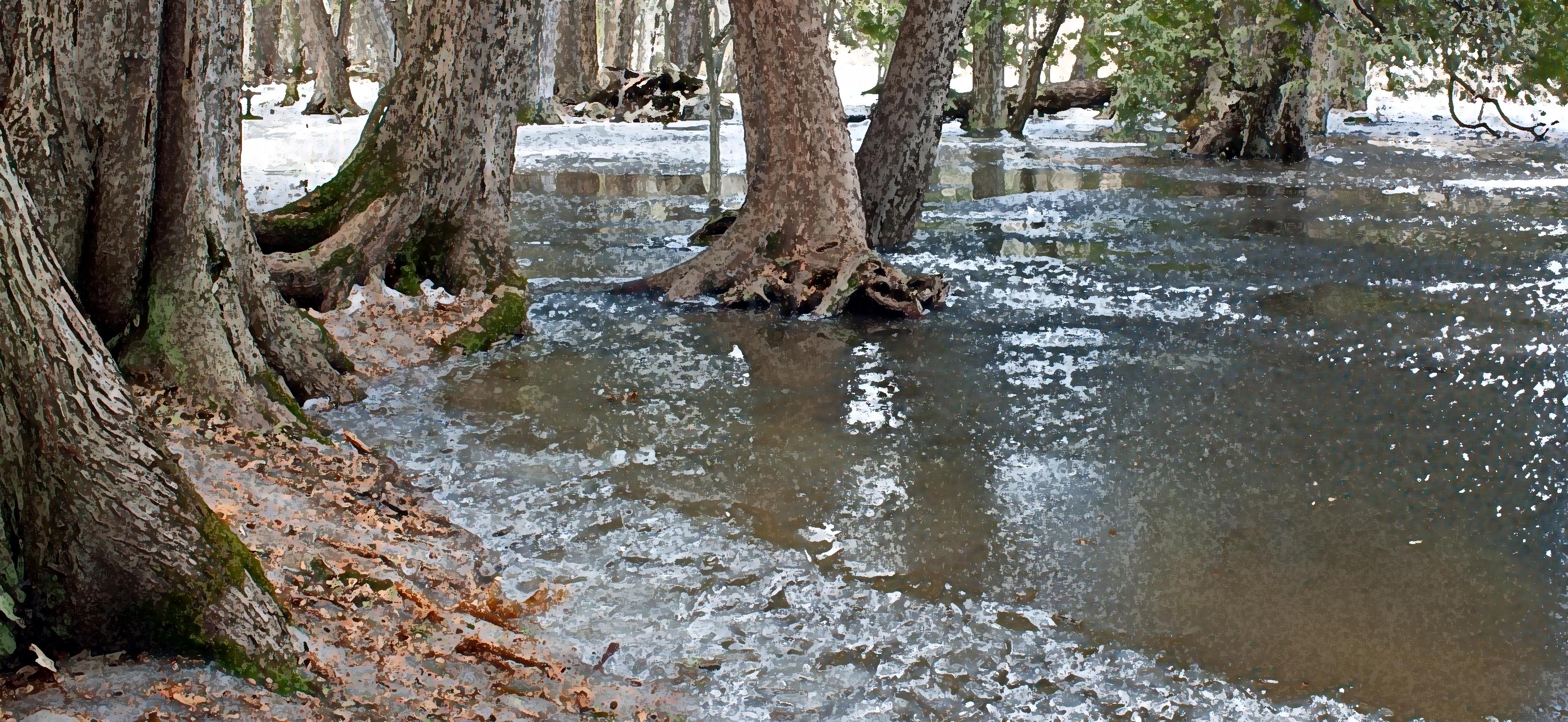
Cedar trees inundated by ice sheet in shallows of Jackson Creek, ON (photo and dry brush rendition by Nina Munteanu)

Nina Munteanu is a Canadian ecologist / limnologist and novelist. She is co-editor of Europa SF and currently teaches writing courses at George Brown College and the University of Toronto. Visit www.ninamunteanu.ca for the latest on her books. Nina’s bilingual “La natura dell’acqua / The Way of Water” was published by Mincione Edizioni in Rome. Her non-fiction book “Water Is…” by Pixl Press(Vancouver) was selected by Margaret Atwood in the New York Times‘Year in Reading’ and was chosen as the 2017 Summer Read by Water Canada. Her novel “A Diary in the Age of Water” was released by Inanna Publications (Toronto) in June 2020.
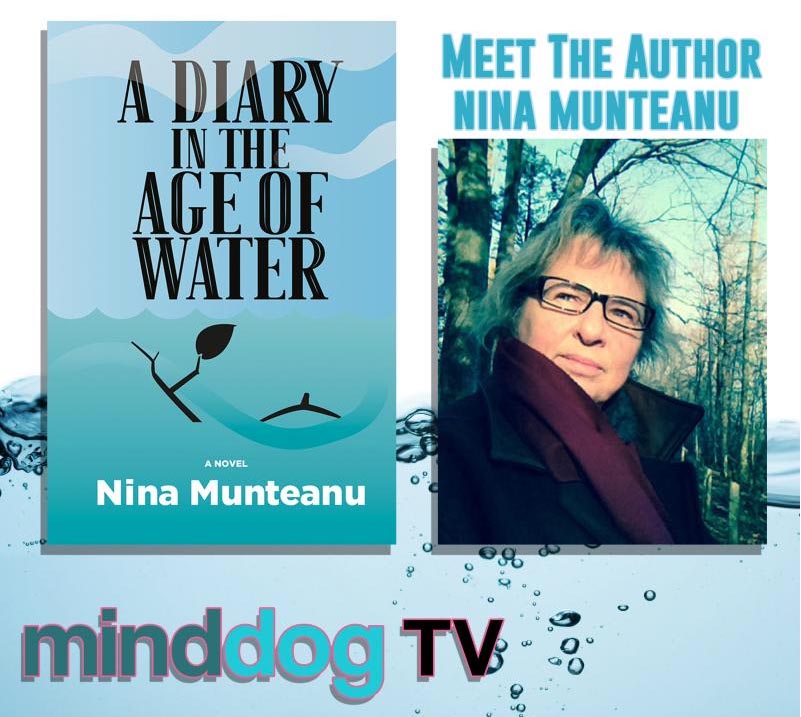
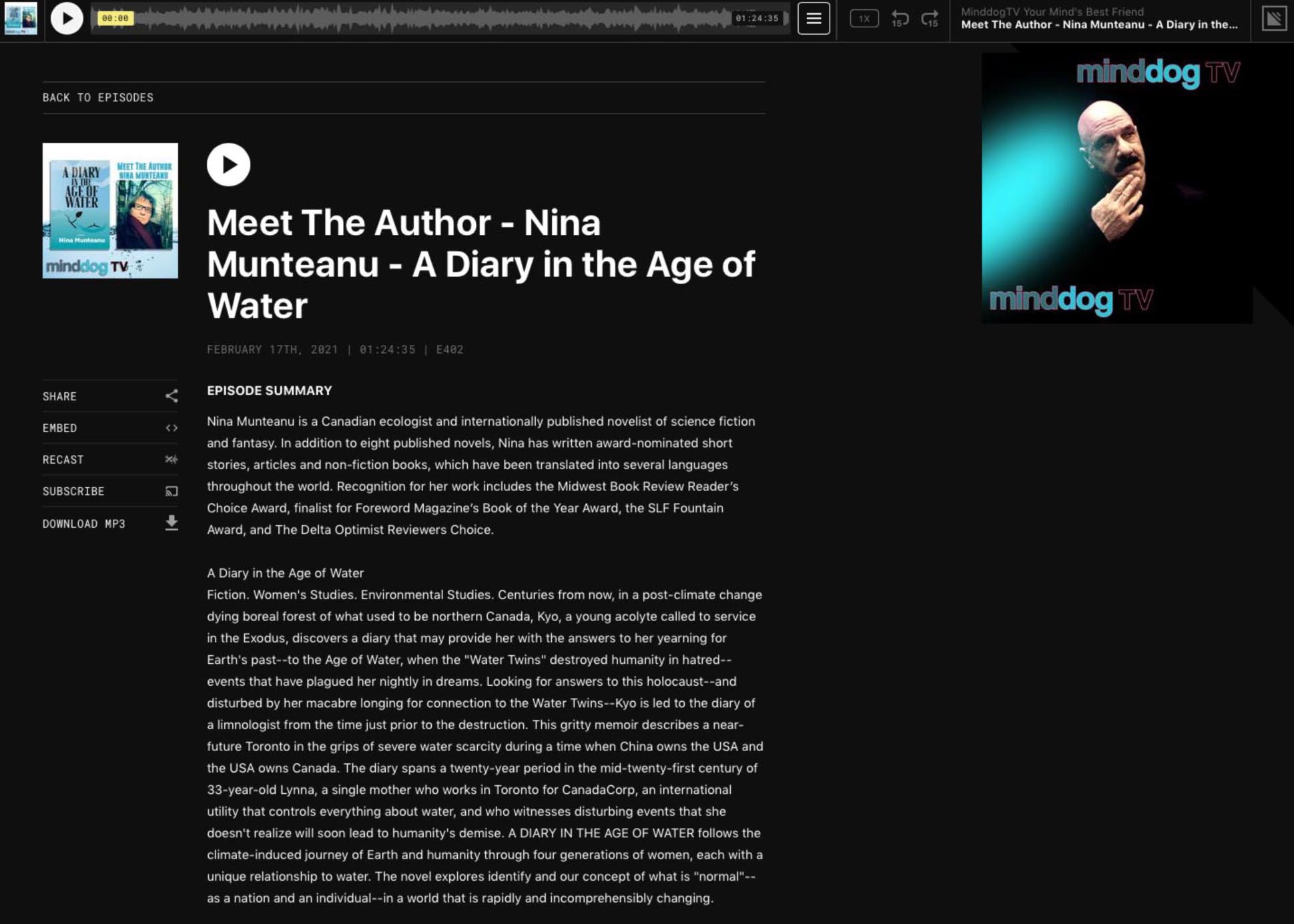
Nina Munteanu Talks Water and Writing on Minddog TV, New York

I was recently interviewed by Matt Nappo on Minddog TV in New York, where we talked about the science and magic of water, climate change and how to not become cynical, the process of writing, what scares us and what takes us through it into great storytelling.

Here’s the interview:

Matt Nappo interviews limnologist and clifi author Nina Munteanu on minddog TV
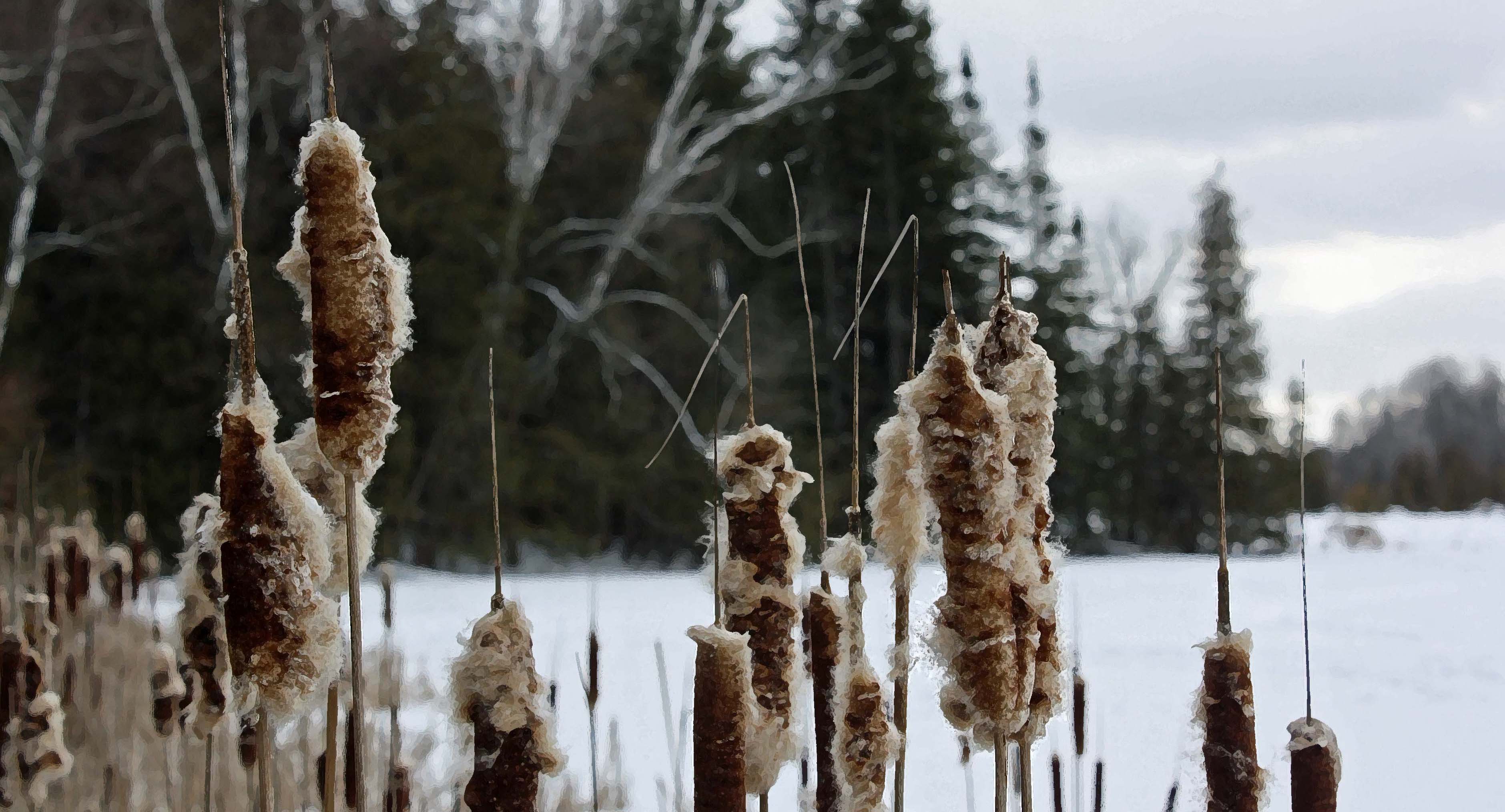
Cattails oversee the snowy plain of the iced-over Trent Canal, ON (photo and dry brush rendition by Nina Munteanu)

Nina Munteanu is a Canadian ecologist / limnologist and novelist. She is co-editor of Europa SF and currently teaches writing courses at George Brown College and the University of Toronto. Visit www.ninamunteanu.ca for the latest on her books. Nina’s bilingual “La natura dell’acqua / The Way of Water” was published by Mincione Edizioni in Rome. Her non-fiction book “Water Is…” by Pixl Press(Vancouver) was selected by Margaret Atwood in the New York Times‘Year in Reading’ and was chosen as the 2017 Summer Read by Water Canada. Her novel “A Diary in the Age of Water” was released by Inanna Publications (Toronto) in June 2020.

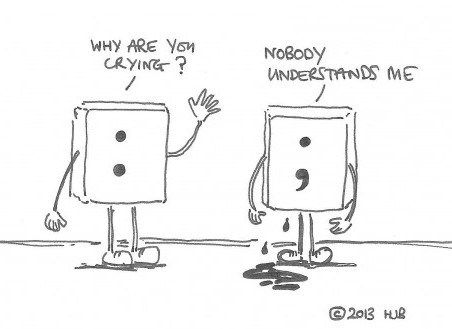
The Semi-Colon is Dead; Long Live the Semicolon

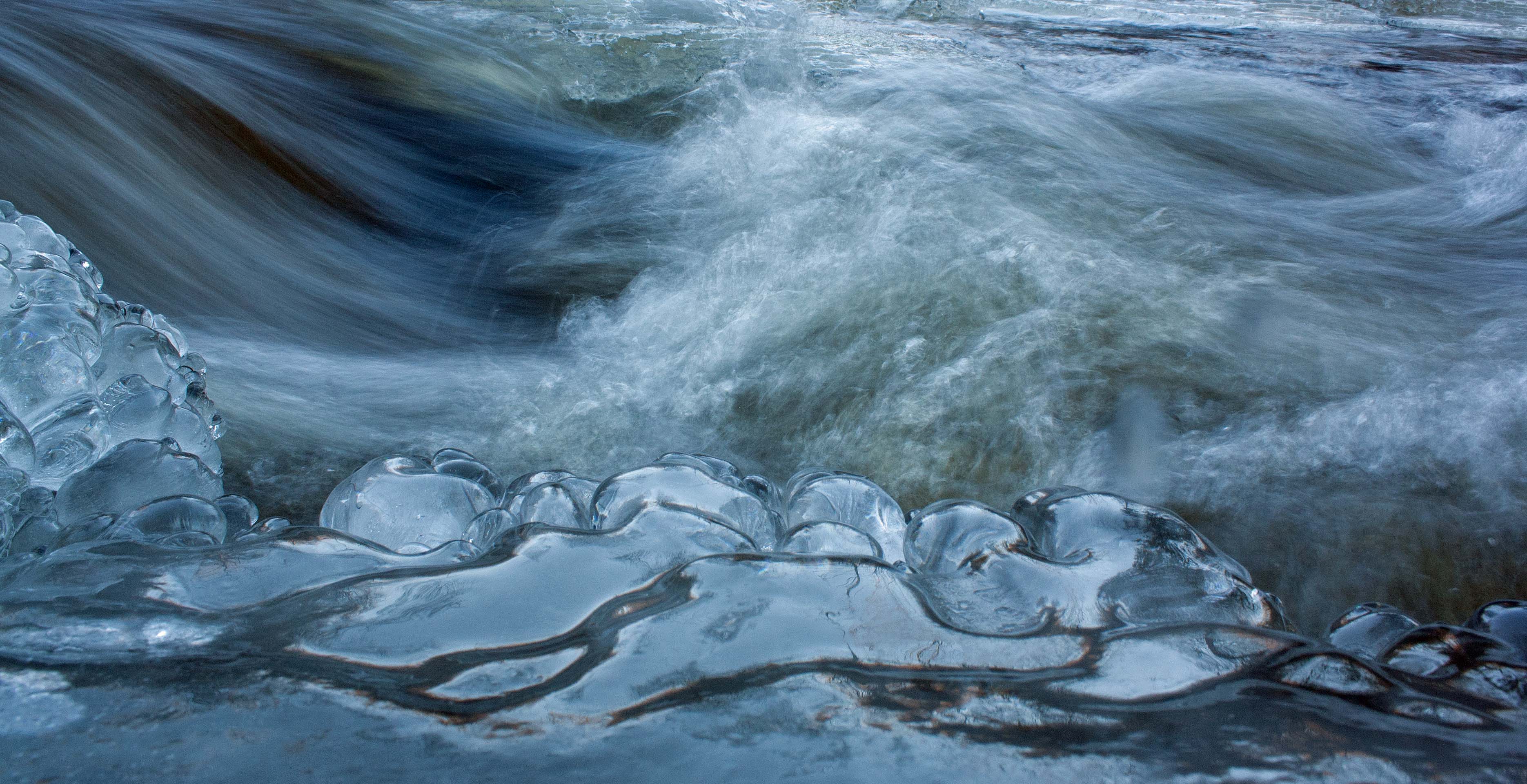
Ice forms on the shores of Jackson Creek in early winter, ON (photo by Nina Munteanu)

I’ve been a coaching writers for over two decades. I help fiction and non-fiction writers get published. I teach courses on novel writing and tutor technical and scientific writers at the University of Toronto writing centres. I’ve helped with plot, theme, characterization, and setting. I’ve worked with writers on establishing directed narratives and clarifying content. When it comes to grammar and punctuation, there is one punctuation that students of writing all too often misuse, abuse, or outright ignore: the semi-colon. They really don’t get it…And I’m trying to change that.

Recently, Dena Bain Taylor (my former supervisor in the University of Toronto Health Sciences Writing Centre), wrote a rousing post about this dear but often neglected and misused punctuation. It resonated with my experience and I just had to share it here:

The Sad Death of the Semi-Colon

As you drown your lockdown sorrows in that last bottle of wine, spare a thought for the semi-colon. Its demise, slow and terrible, long predates the pandemic.

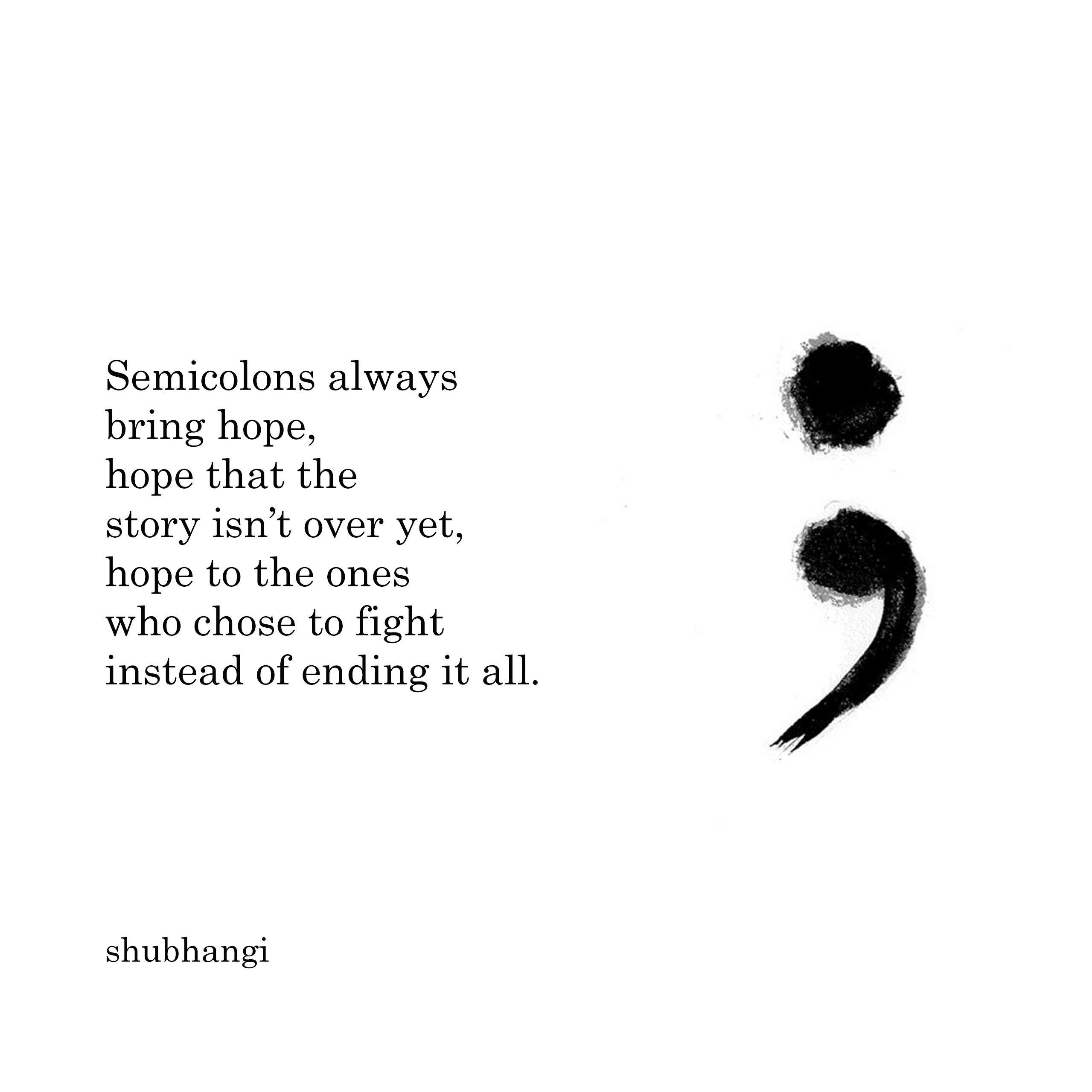
The semi-colon is a particularly elegant piece of punctuation and doesn’t deserve its fate. I can think of a number of emojis I’d happily consign to the dustbin if it meant saving the semi-colon.The elegance of the semi-colon lies in its ability to both join and separate. It is, after all, a combination of a period and a comma.

In its glory days, the semi-colon filled two main functions.

One was to join two independent clauses; in other words, you have two elements that could stand as separate sentences but their ideas come together to make a single point. These days, people often replace the semi-colon with a period, splitting the thought into two sentences. I can live with that. What I can’t live with is replacing the semi-colon with a comma. 

Its other function is to separate elements in a list that themselves contain internal commas. See how much easier this is to read because of the semi-colons:

The breakfast menu included toast, eggs and bacon; refried rice, beans and tortillas; and coffee or juice.


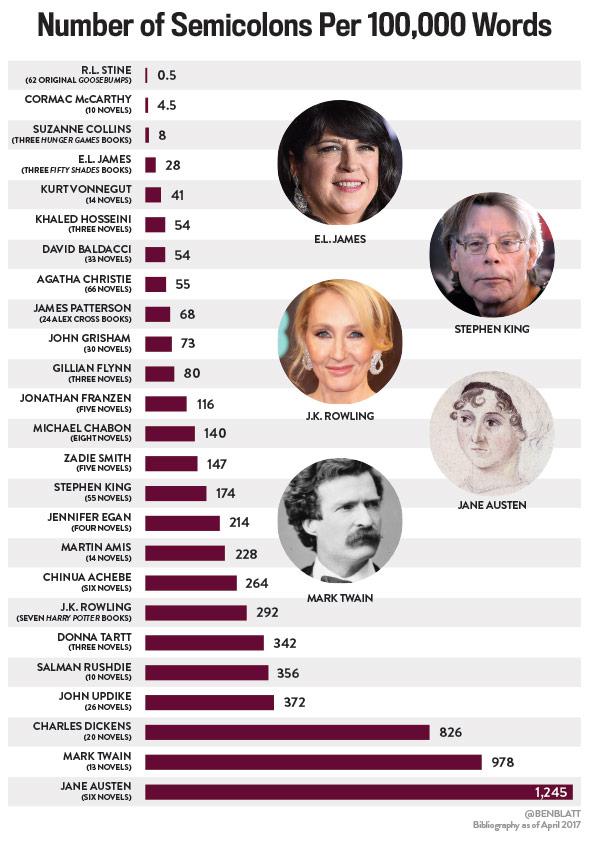
Some might say that “a semi-colon was used when a sentence could have been ended; but it wasn’t.” This isn’t necessarily a bad thing. Some of you may recall Kurt Vonnegut’s scathing edict in his 2005 book A Man Without a Country to all would-be creative writers: “First Rule: Do not use semicolons. They are transvestite hermaphrodites representing absolutely nothing. All they do is show you’ve been to college.” This was followed by novelist John Irving’s pithy observation: “No one knows what they are anymore. If you’re not in the habit of reading nineteenth-century novels, you think that the author has killed a fruit fly directly above a comma—semicolons have become nothing but a distraction.” And yet, author Gordon Gravley tells us that “John Irving (once a student of Vonnegut) is quite liberal with semicolons; they cover the pages of his novels like acne on the face of a fast-food restaurant employee. He loves them.” Irving was, after all, the anti-Hemingway; he often used long sentences with subordinate clauses punctuated by semi-colons. Author John Pistelli gives Irving credit for his own love of the semicolon: “Insofar as I aspired to write fiction that felt as densely fated as [Irving’s], both complex and unified, it seemed useful to adopt the mark of punctuation that stood for complexity and unity.” Who’d have thought this innocuous hybrid of comma and colon would stir such vehement condemnation, confusion, and self-denial?

Of the semi-colon, Abraham Lincoln once wrote: I must say I have a great respect for the semicolon; it’s a very useful little chap. While Cormac McCarthy noted simply: No semicolons. Even George Orwell proclaimed: I had decided about this time that the semicolon is an unnecessary stop and that I would write my next book without one.

I submit that it is the semi-colon’s very quality of eluding an exact definition that gives it so much versatility. That is its power over both period and comma; like Schrödinger’s cat, it is neither, yet both. The true power of the semi-colon—aside from its quantum properties—lies in how it brings two otherwise independent thoughts together (that may share something of significance even if elusive) to elegantly compare or contrast. And to create wonderful irony. Wonderful and subtle irony! 

“Semi-colons signal, rather than shout, a relationship … A semi-colon is a compliment from the writer to the reader. It says: ‘I don’t have to draw you a picture; a hint will do.’”

George Will, Washington Post columnist

In the thread that followed Dena Bain Taylor’s article, one writer shared that his fiction editor had admonished him for using the semi-colon, proclaming that: “It’s generally not the practice in fiction.” Nabokov, Chekhov, and Woolf certainly ignored that prognosis. I have noted its use in many other excellent works of fiction; I use it in my own fiction. 

Responding to Bain Taylor’s Linked In post, John Collins, strategic and creative marketer, wrote: “A comma gives you pause; a semi-colon leaves you room to breathe. The world is full of LOLs and BRBs, but there is still room for the intentioned difference that timely breathing engenders. And because its use is becoming rarer, it becomes even more meaningful and impactful if wielded properly.”

Returning to John Irving, here is what he wrote in an essay on Dickens:

It was relatively late in his life that he began to give public readings, yet his language was consistently written to be read aloud—the use of repetition, of refrains; the rich, descriptive lists that accompany a newly introduced character or place; the abundance of punctuation. Dickens overpunctuates; he makes long and potentially difficult sentences slower but easier to read—as if his punctuation is a form of stage direction, when reading aloud; or as if he is aware that many of his readers were reading his novels in serial form and needed nearly constant reminding. He is a master of that device for making short sentences seem long, and long sentences readable—the semicolon!

–John Irving, The King of the Novel

Author John Pistelli attempts an explanation for the evolution of the growing controversy of the semi-colon, which was certainly used more in classic literature: “Dickens used commas and semicolons to give direction to breath, a script for performance. Over the course of the last century, however, we have split text from speech, literature from orature. Poetry and fiction may trace their roots to song and stage, but modern technology and reading habits have removed the voice from literature. We read silently, whether in public or private.” Despite this, Pistelli draws on the work of Christian Thorne, to extol how the semi-colon’s “push-pull suggests the tense relationship of the clauses it both marries and divorces”:

It is through punctuation marks that even ordinary writing overcomes its own ingrained positivism, its tendency to reduce the world to rubble, static things and discrete events. Commas introduce relation to the simplest sentences, as periods do disjunction. Dashes and semicolons establish relation and disjunction at once; they sunder even as they join, which makes them the typographical face of dialectical thought.

Christian Thorne

I have often used not so much typography but topography to metaphorically describe the three dimensional face of narrative: how verbs, nouns and prepositions conspire with idea to create relief; how sentences–passive / active, short or long–flow into larger relief. If words and sentences are the bones of our thoughts, then punctuation is the connective tissue of their meaning in a three-dimensional world.

With that last remark, I urge you to rethink this under-used tool. Include it in your Writer’s Toolkit and join the great writers and thinkers—from unknown to famous—who have masterfully embraced the semi-colon:

“Celebrate failure; it means you took a risk.”—Anonymous 

“I think; therefore I am.”—Rene Descartes

“Happy families are all alike; every unhappy family is unhappy in its own way.”—Leo Tolstoy, Anna Karenina

“The decline of literature indictes the decline of a nation. Knowing is not enough; we must apply. Willing is not enough; we must do.”—Johann Wolfgang von Goethe

“Love does not dominate; it cultivates.”—Johann Wolfgang von Goethe  


Nina Munteanu is a Canadian ecologist / limnologist and novelist. She is co-editor of Europa SF and currently teaches writing courses at George Brown College and the University of Toronto. Visit www.ninamunteanu.ca for the latest on her books. Nina’s bilingual “La natura dell’acqua / The Way of Water” was published by Mincione Edizioni in Rome. Her non-fiction book “Water Is…” by Pixl Press(Vancouver) was selected by Margaret Atwood in the New York Times‘Year in Reading’ and was chosen as the 2017 Summer Read by Water Canada. Her novel “A Diary in the Age of Water” was released by Inanna Publications (Toronto) in June 2020.

Nina Munteanu Reads on “Sample Chapter Podcast”

I recently appeared on Episode #142 of award-winning “Sample Chapter Podcast” where I had a wonderful interview with Jason Meuschke and read a sample chapter from my recent eco-novel “A Diary in the Age of Water.” 

Jason and I talked about the writing process; what makes good and compelling fiction; creating realistic and interesting characters with flaws–like my flawed detective Rhea Hawke in The Splintered Universe Trilogy‘ writing eco-fiction in which environment can be a character; the “what ifs” in historical fiction and where we get our ideas (The Last Summoner came to me in a dream and later through a single image).

This is what Jason said about Episode 142 of The Sample Chapter Podcast with Nina Munteanu:

Episode 142 is here with a truly delightful author from Canada, Nina Munteanu. In the episode, Nina and Jason discuss character flaws, having the environment be a character in our prose, the “what ifs” in historical fiction, the writer’s “wavelengths”, and much more all before enjoying a magical chapter reading. Enjoy!

Here’s the podcast:

First snow in Thompson Creek marsh, ON (photo by Nina Munteanu)

Nina Munteanu is a Canadian ecologist / limnologist and novelist. She is co-editor of Europa SF and currently teaches writing courses at George Brown College and the University of Toronto. Visit www.ninamunteanu.ca for the latest on her books. Nina’s bilingual “La natura dell’acqua / The Way of Water” was published by Mincione Edizioni in Rome. Her non-fiction book “Water Is…” by Pixl Press(Vancouver) was selected by Margaret Atwood in the New York Times ‘Year in Reading’ and was chosen as the 2017 Summer Read by Water Canada. Her novel “A Diary in the Age of Water” was released by Inanna Publications (Toronto) in June 2020.