Who’s Your Audience and Why Should You Care?


Beaches-snow06

Winter in The Beach (photo by Nina Munteanu)

The artistic process, whether painting or prose, is admittedly the child of self-expression. The long-standing image of the cloistered artist in her studio — hunched over her writing desk or standing before her canvas to create from the depths of her soul — is surely a truism. Artists create from the heart; we dive deep inside our often tortured souls and closeted past to draw out the universal metaphors that speak to humanity and share—

Ay, there’s the rub. For to share is to have a dialogue and to have a meaningful dialogue is to demonstrate consideration of the other. Somewhere in that journey that began with self, others entered. It is, in fact, something of a paradox and a conundrum for many artists. One that has challenged the artistic community for centuries. It is also why many artists have relied on agents, benefactors, and advocates to effectively communicate, target — and even interpret — their often abstruse “message” to their appropriate audiences.

Purists will tell you that a true artist need not consider her audience; because her self-expression naturally finds relevance with the culture and zeitgeist from which she writes through universally understood metaphor: her story is their story.

But is that enough?

I suppose it finally comes back to whether you are interested in sharing. I don’t know any published authors who don’t wish their books to sell. Every storyteller needs an audience to connect with and engage. That is ultimately what good storytelling does: engage, connect, rouse emotions and evoke empathic feelings. Make an impact.

Beaches-snow03

Photo N. Munteanu

Does identifying and targeting a specific audience result in more satisfied readers and ultimately better sales? Of course it does. The more you—and whoever is helping you market your work—know about your audience, the more likely you are going to attract them to your book, convince them to buy it and ultimately connect with them. That’s the irony of art: it is a treasure that is created out of the depths of solitude but ultimately brought into the light and shared with the world. For your art to have impact, you must know and understand your world.

Knowing your audience will affect every aspect of your book project. It will help determine:

  • What your story is about and how you write it (from language, voice or personality, narrative style, tone or mood/attitude, characters, setting and theme)
  • What genre it lies under
  • the look and tone of the cover and blurb
  • all aspects of promotion

For instance, who are your intended readers? To what age group to they belong? What culture and sub-culture? What gender(s)? What education and intellectual capacity? Economic status? What regions? What political leanings? Prejudices and beliefs? What knowledge-base?

To know your audience is to know your story better.


nina-2014aaNina Munteanu is an ecologist and internationally published author of award-nominated speculative novels, short stories and non-fiction. She is co-editor of Europa SF and currently teaches writing courses at George Brown College and the University of Toronto. Visit www.ninamunteanu.ca for the latest on her books.


Rejection, Part 1: How to Accept Rejection

hirtle beachNS

Pebbles on Hirtle Beach, NS (photo by Nina Munteanu)

We’ve all suffered rejection and disappointment. Perhaps that job you coveted or someone you loved who might have even led you on before dropping you. It hurts. But you move on. And it does get better. Eventually. It does, trust me. It helps by starting with knowing that we don’t always get what we want, but we always get what we need…

Being a published writer involves accepting rejection. It’s part of the job description. Think of rejection as an integral part of your road to success. If you have never been rejected then you haven’t really tried, have you? There are several ways that you can gain a good perspective on your rejection letters and even make them work to your advantage.

Adopt a Healthy Perspective

One way is to adopt a realistic, objective and healthy viewpoint on your story’s rejection:

  • View selling manuscripts as a “cold call” business: When you view it this way, you will treat it that way. Until you establish a relationship with your market, selling becomes a numbers game. The more you send, the more likely you are to get a hit. It’s all in the statistics.
  • View rejections as an opportunity. Rejections can provide you with the opportunity to learn and re-evaluate, usually of appropriate market and publisher subjectivity rather than writing quality.
  • View rejections as the beginning of a relationship. Not all rejections are final; in fact most aren’t. Most rejections by a publisher or magazine editor stem from story redundancy, lack of space or editorial requirements. Many rejection letters will reflect this (e.g., “Thanks, but this isn’t a match for us…do try us again.” They mean it. It just means that the story wasn’t right—they may have run something too similar to it already or it didn’t fit with the other pieces or theme or whatever.)
  • View rejections as part of your success journey. Rejection is a given in the writing business and a necessary aspect of your journey as a soon-to-be and published writer (you don’t stop getting rejections once you’re published!). Often a story may be considered “before its time”; too different, a risk and is therefore harder to place. This is often why a book that was rejected so many times becomes a great hit once it is published. The very quality that made it hard for a publisher to accept made it a success with the readership: its refreshing yet topical originality.
  • View rejections as your first step to success. Take heart in the fact that you reached this stage in your writing career. Getting that first rejection in the mail is a great affirmation that you have taken that first significant step to becoming a serious writer. It means that you’ve completed a work and had the courage to enter it into the world.

Acceptance begins with rejection.

Make Rejection Work for You

You can maintain a more objective view on your rejections by keeping an objective view on your submissions. This can be accomplished by submitting a lot and submitting often. Treat your submissions—and rejections—like a business. The best way to do this is to submit lots of stories and to keep submitting them. The critical part of this process is to always have a contingency ready for each story submitted: once a story is returned, you have a place to send it already. Most professional writers will recommend that you do not revise the story before resending it out. This is because many rejections occur not on account of poor writing, but because of poor or unlucky marketing.

Remember that You’re in Great Company

Virtually every writer of merit who has published has had their work rejected several times. Beatrix Potter’s The Tale of Peter Rabbit was turned down so many times that she initially self-published. Irving Stone’s Lust for Life was rejected sixteen times before a publisher finally picked it up and sold about twenty-five million copies. Not bad for a story that was passed off as “a long, dull novel about an artist.” Jonathan Livingston Seagull was turned down twenty-three times and Dune twenty-one times. There are a bazillion examples; I’ve just picked a few. Go check J.K. Rowling’s track record for rejections before getting her Harry Potter published…

FictionWriter-front cover-2nd ed-webI’ll be talking more about how to read a rejection letter, how to recognize their sub-text messages, and how to make the most out of them in Part 2, the evolution of rejection letters.


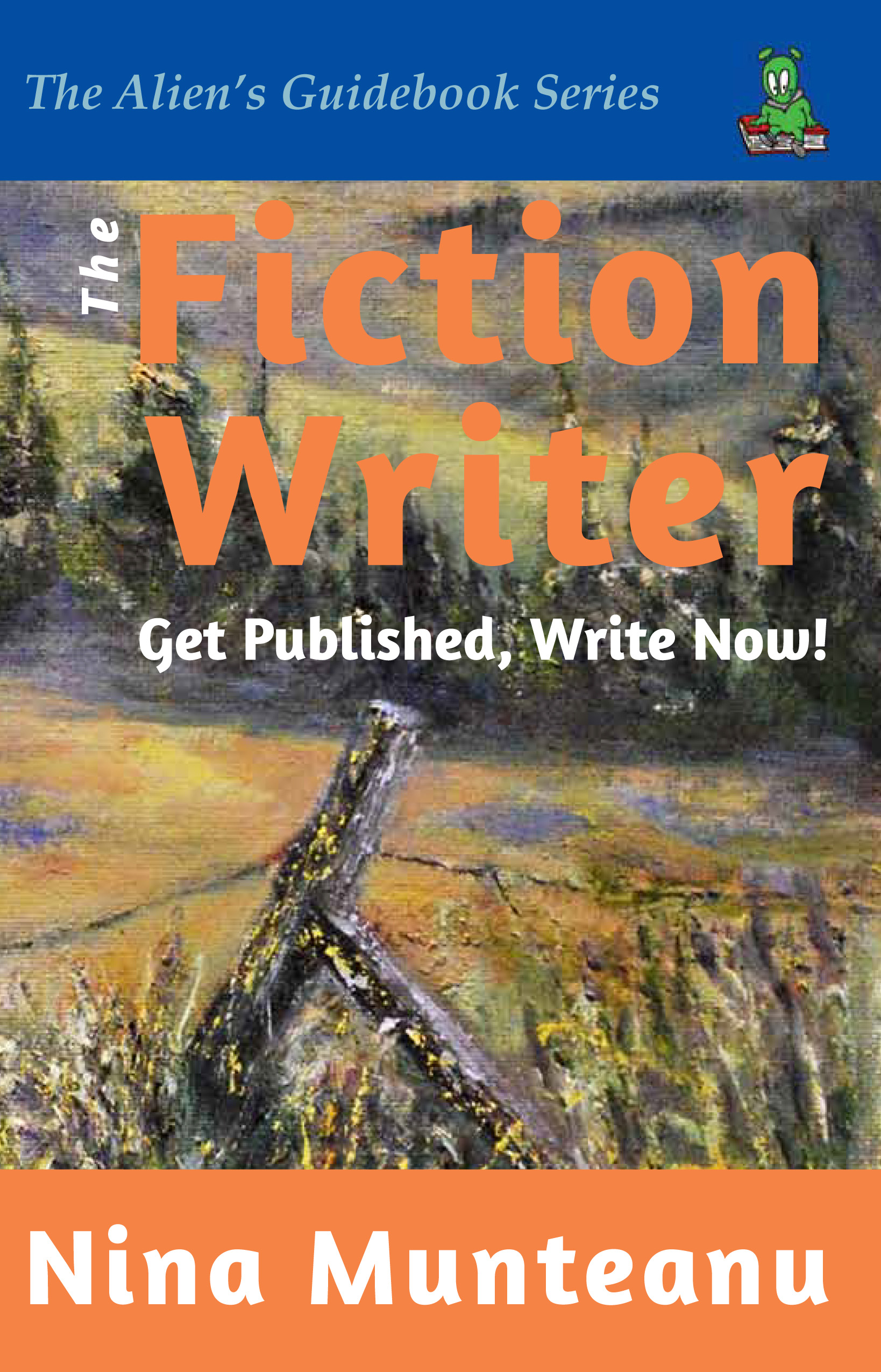
This article is an excerpt from my fiction writing guidebook The Fiction Writer: Get Published, Write Now! (Starfire, 2009).


nina-2014aaNina Munteanu is an ecologist and internationally published author of award-nominated speculative novels, short stories and non-fiction. She is co-editor of Europa SF and currently teaches writing courses at George Brown College and the University of Toronto. Visit www.ninamunteanu.ca for the latest on her books.

Lessons from a Linguist, Part 1: Steven Pinker on Reverse Engineering

college-window-UoT

Window of University College, UofT (photo by Nina Munteanu)

When I’m not teaching students how to write science fiction, or giving workshops on writing craft or marketing, I am teaching design engineers how to write clearly and convincingly. As Communications Instructor at the University of Toronto in the Faculty of Applied Science and Engineering, I help young engineers navigate the dark and churning waters of fluent and meaningful English.

So, when fellow Montrealer, Steven Pinker starts Chapter 1 of his book The Sense of Style, talking about “reverse engineering”—one of the key features in the design engineering toolkit—I perk up.

Good writing, says Pinker, begins with “reverse-engineering good prose as the key to developing a writerly ear.”

I’d recently picked up Steven Pinker’s new book The Sense of Style: the thinking person’s guide to writing in the 21st century after I watched several of his videos on language, and communicating science and technology.

Pinker starts Chapter 1 of the book with this quote from Oscar Wilde: “Education is an admirable thing, but it is well to remember from time to time that nothing that is worth knowing can be taught.” When Pinker asked several accomplished writers about which style manuals they had consulted early in their careers, the most common answer he got was “none”. Writing, they said, just came naturally to them.

“I’d be the last to doubt that good writers are blessed with an innate dose of fluency with syntax and memory for words,” says Pinker. “But no one is born with skills in English composition per se. Those skills may not have come from stylebooks, but they must have come from somewhere. That somewhere is the writing of other writers.”

Which is why successful authors like Neil Gaimen tell aspiring writers to “read a lot.” Read the best authors. The classics. Authors in your genre; authors of other genres. Authors of other cultures and time periods. Read. Read. Read. My previous article on reading fiction is particularly germane here.

The first thing you need to do is develop a writer’s ear. “Writers acquire their technique by spotting, savoring, and reverse-engineering examples of good prose,” says Pinker. He goes on to demonstrate this in his book Sense of Style by deconstructing several examples of good prose and providing great lessons on what great prose looks like and why.

So, why do we need style guides at all, then? Particularly given that, in Pinker’s own admission, “much advice on style is stern and censorious,” and a writer needn’t approach learning the craft like a treacherous obstacle course to be suffered and endured. Mastering the craft of writing is a lifelong pursuit and ultimately best approached with the passion that hopefully drives the writer to express. “Though the quest for improvement may be informed by lessons and honed by practice,” says Pinker, “it must first be kindled by a delight in the best work of the masters and a desire to approach their excellence.”

Pinker adds, rather pithily, that, “The classic manuals written by starchy Englishmen and rock-ribbed Yankees, try to take all the fun out of writing, grimly adjuring the writer to avoid offbeat words, figures of speech, and playful alliteration. A famous piece of advice from this school crosses the line from the grim to the infanticidal: ‘Whenever you feel an impulse to perpetrate a piece of exceptionally fine writing, obey it—wholeheartedly—and delete it before sending your manuscript to press. Murder your darlings.’”

Many style manuals, Pinker admits, “treat traditional rules of usage the way fundamentalists treat the Ten Commandments: as unerring laws chiseled in sapphire for mortals to obey or risk eternal damnation.” Language, he says, evolves and is meant to evolve over time. He adds that, “the graybeard sensibilities of the style mavens come not just from an under-appreciation of the fact of language change but from a lack of reflection on their own psychology. As people age, they confuse changes in themselves with changes in the world, and changes in the world with moral decline—the illusion of the good old days. And so every generation believes that the kids today are degrading the language and taking civilization down with it.”

So, why use a style guide if you’re reading a lot and taking in the best from the best? While Pinker no doubt sprinkles many reasons throughout his style manual (I haven’t finished reading it), here are two of mine:

  1. Once you are on that path toward writing the very best you can, a style guide can help you improve your writing faster by helping you understand why you like a particular “style” used by a favorite master writer and how it is applied. Simply liking isn’t enough; it’s the first step. Mastering it and using it in your own voice only comes with understanding it. I, for one, learn and retain better when I understand why something works for me. My ability to apply that “style” correctly increases markedly when I understand the rules associated with it (whether that particular “style” was in fact following or breaking a particular rule).
  2. The style guide also helps the novice writer ultimately find their own voice, and move out from the shadow of their beloved master and their techniques. It does this by providing a toolkit that applies can then apply objectively to any voice, making it easier for a writer to discover her own unique voice.


Of course, there are—as Pinker already pointed out—style guides and STYLE GUIDES. I’ve included a list below of a few I like to use and why.


The Chicago Manual of Style. 2010. 16th Ed. University of Chicago Press.1026pp: a comprehensive, easily navigated style guide that is relevant, current and clearly presented, with examples and discussions on a wide range of writing from essays, to fiction. A go-to “bible” for writers and editors.

Strunk, William Jr. and E.B. White. 1918. Elements of Style. Harcourt. 52pp:Even though it’s really OLD, and contains some outmoded notions and prescriptions, this manual is entertaining, smart and still very relevant in many cases. Compared with the Chicago Manual of Style, it’s pint-sized and therefore highly mobile.

Pinker, Steven. 2014. The Sense of Style. Viking. 359pp: called “the thinking person’s guide to writing in the 21st Century, it is full of excellent advice, written with a engaging flare and with relevant examples, that speak to process. Read it more for narrative rather than reference.

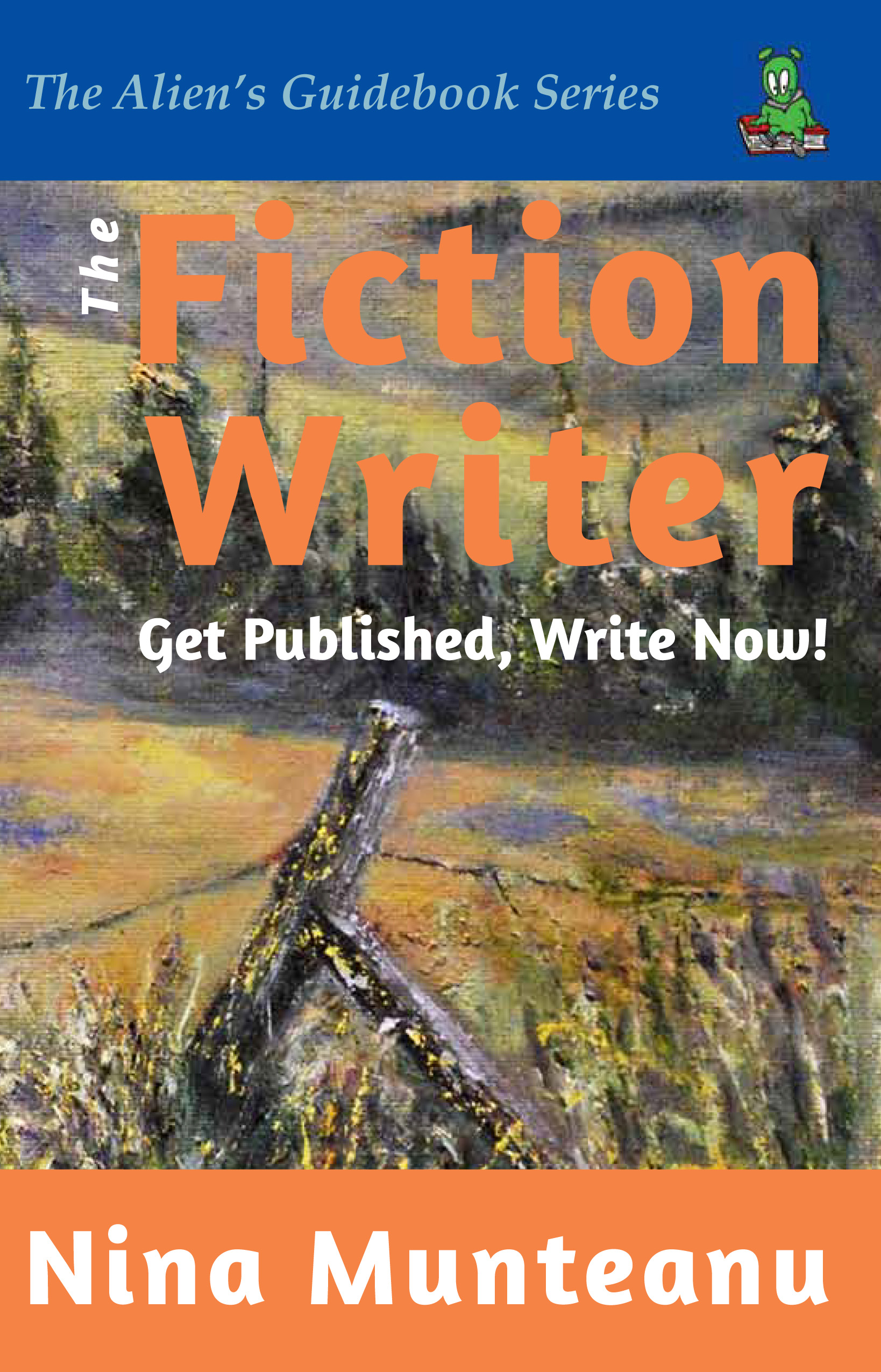
Munteanu, Nina. 2009. The Fiction Writer: Get Published, Write Now! Starfire. 264pp: FictionWriter-front cover-2nd ed-webnot just because it’s MY book, but because it’s FUN and contains the advice of over thirty experts in the craft of writing, including style and grammar. It’s easy to read and easy to learn with relevant examples and exercises. This book is more of a writing-storytelling guide than strictly a style guide.


nina-2014aaNina Munteanu is an ecologist and internationally published author of award-nominated speculative novels, short stories and non-fiction. She is co-editor of Europa SF and currently teaches writing courses at George Brown College and the University of Toronto. Visit www.ninamunteanu.ca for the latest on her books.


The Art and Magic of Storytelling: Part 1, Sparking the Premise

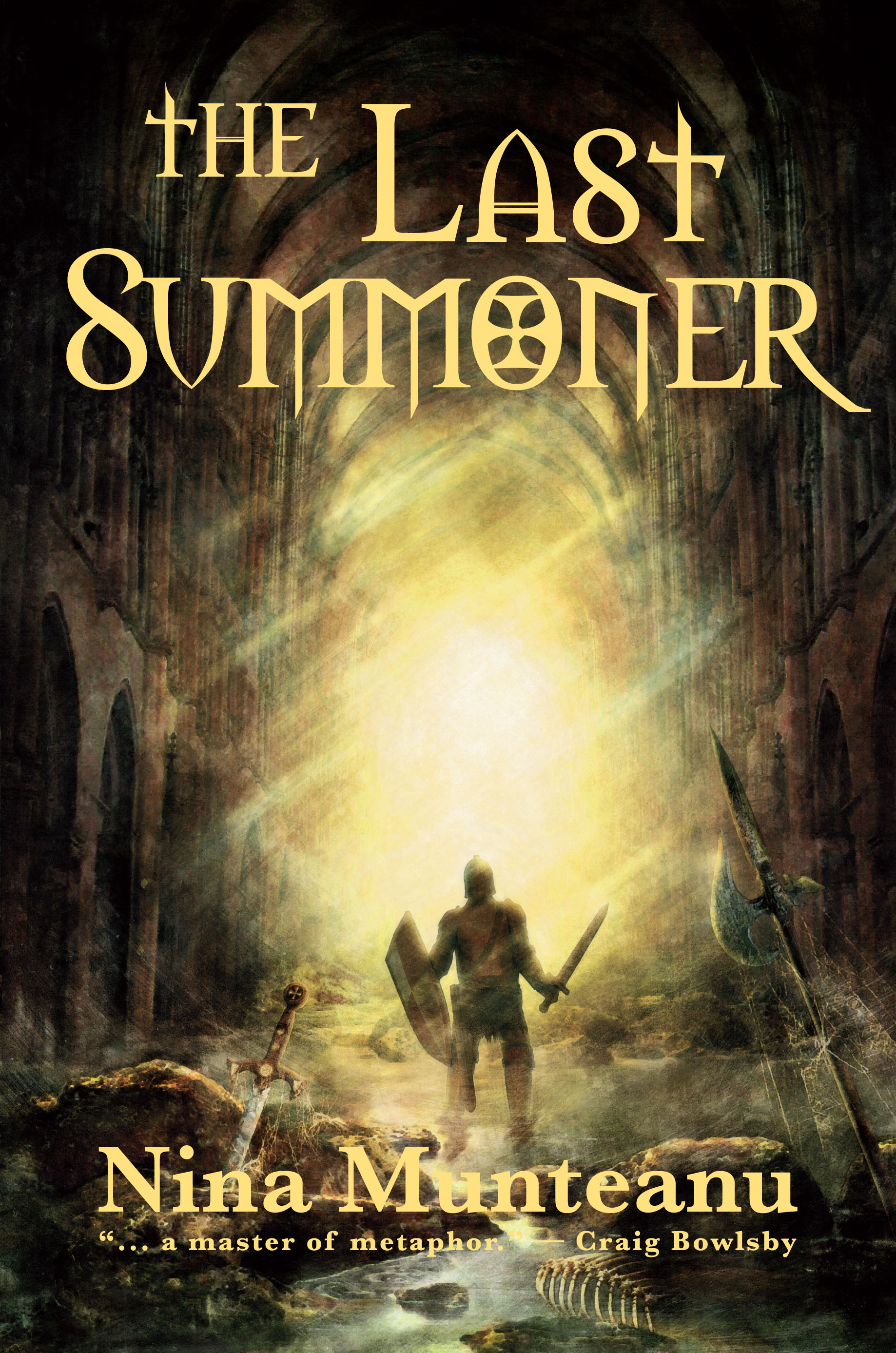
Cover1_LastSummoner-frontcover copyFrom where do we get our stories?

This is a question I am asked time and again. My readers, friends and colleagues alike marvel at my imagination, and ask me how I create these fantastical worlds and situations. Cornered in a moment of inarticulate bliss (this often happens to me), I shrug and blather off some ridiculously obscure tale of luciferous logolepsy.

The simple of it is that it always comes as a spark. Followed by inspiration. And from there, a story emerges. Premise to dramatization. So, let me tell you a story about how my 2012 historical fantasy The Last Summoner —about a medieval time traveler who must save the past from the future—came to be.

It all began with the Battle of Grunwald and the Fate of the Teutonic Knights—that is, when I stumbled upon it during an Internet ramble. But, in fact, it started before that—the spark, that is.

My part in this piece of history really began sometime in 2008 with the vision of an incredible image by Croatian artist Tomislav Tikulin (who had done the cover art for a previous novel Darwin’s Paradox). On Tikulin’s website I glimpsed the image of a magnificent knight, standing in a war-littered mire and gazing up, questioning, at the vaulted ceiling of a drowned cathedral. A great light shone upon the knight in streams of white gold. It sent my imagination soaring with thoughts of chivalry, adventure and intrigue.

Who was this knight standing in the mire?…

teutons3-close1

With that image imprinted inside me, the next nexus moment came when I stumbled across a significant but little-known battle in the medieval Baltic, the Battle of Grunwald. It would turn out to be the defining battle for what are now the countries of Poland and Lithuania. On June 14th 1410, they were still part of Prussia and tyrannized by the Teutonic Order, who were Christianizing the pagan Baltic on behalf of the Pope. In truth, the Order had been for centuries gathering wealth and land for colonizing Germans in their drang nach osten; they built sturdy castles (many of which still stand today) and a force of monk warriors, feared for their cunning strategy and treacherous combat abilities.

The Battle of Grunwald was, in fact, an upset in history. The Teutonic Order was powerful, intimidating and extremely capable. They should have won; but the peasant armies of Prussia slaughtered the Order, killing most of its knights. Historians debate that the hochmeister’s arrogance—indeed, the arrogance of the entire Order—precipitated their downfall. They underestimated their adversaries and got sloppy. After the Polish and Lithuanian armies outsmarted the Order and slayed their hochmeister, along with many of their knights, the Order’s own peasant slaves finished the job using clubs, pitchforks and stones.

Intrigued by this little known order of religious crusaders and their bizarre fate in an upset battle with a peasant army, I pursued the premise of an alternative consequence: what if the Teutonic Knights had NOT underestimated their enemy and won the Battle of Grunwald? Would they have continued their catastrophic sweep of North-east Europe into Russia and beyond? Would they have continued their catastrophic sweep of north- east Europe into Russia and beyond? Would they have claimed the whole for Germany’s expansionist lebensraum movement, fueled by its sonderweg, a dialectic that would ultimately lead to the killing fields of the Holocaust? What if the success of the Teutonic Order helped consolidate a united fascist elite, ambitious to conquer the world? And what if, as a result, Nazism sprang up 100 years earlier?

The Last Summoner, arose from this premise. Enter our heroine, young 14-year old Vivianne Schoen, Baroness von Grunwald, a self-centered romantic who dreams that her ritter (her knight) will rescue her from an arranged marriage to some foreign  warrior. As a result of an impetuous choice, she makes the startling discovery that she can alter history—but not before she’s branded a witch and must flee through a time-space tear into an alternate present-day France ruled by fascists. There, she learns that every choice has its price.

Warrior Woman Silhouette

Spanning from medieval Poland to present day Paris, France, The Last Summoner explores the sweeping consequences of our “subtle” choices. From the smallest grab to the most sweeping gesture, we are accountable for the world we’ve made. During her 600-year journey to save the world and undo the history she authored, Vivianne learns wisdom and humility. Through the paradox of history, she learns that what might have seemed the right choice for an immediate future, turns out to be disastrous for a distant future. To win is also to lose; to save oneself one must surrender oneself; and to save the world one need only save a single soul.

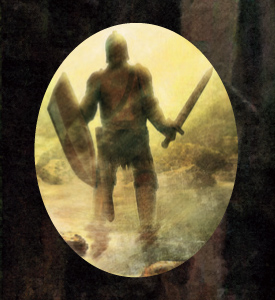
knight-cameoThe knight standing in the mire is Vivianne.

The Last Summoner, published by Starfire World Syndicate, was released in 2012 and remained a Canadian bestseller on Amazon for several months. It represents my first historical fantasy in an otherwise repertoire of hard science fiction. The Polish and Lithuanians celebrate June 14th with pride, erecting mock-ups of the battle annually. Some day I hope to participate.

The cover art for The Last Summoner is that very image that inspired my story. The Universe gifted me with the chance to acquire the image from Mr. Tikulin and a publisher willing to purchase it. I’d entered my own dream.

p.s. definition for luciferous logolepsy: “an illuminating obsession with words”

p.p.s. A novelette version, Summoning the Future’s Past, was released April 2021 in Italian by Delos Digital entitled l’Ultima Evocatrice.

This article first appeared on Warpworld on Nov. 30, 2013.

nina-2014aaNina Munteanu is an ecologist and internationally published author of award-nominated speculative novels, short stories and non-fiction. She is co-editor of Europa SF and currently teaches writing courses at George Brown College and the University of Toronto. Visit www.ninamunteanu.ca for the latest on her books.

.

Simplify Your Writing

Log patterns 6

Spalted log (photo by Nina Munteanu)

One of the best ways to have less clutter in your writing is to simplify it. This doesn’t necessarily mean that you have to be a Spartan and write sparingly like Hemingway. You can use rich language like Jacqueline Carey but apply that language with purpose. While Jacqueline Carey’s Kushiel’s Dart contains rich narrative description, the language is appropriate for the time period and always portrays motion. But you wouldn’t use that “voice” and narrative style in a contemporary thriller, say.

Fluid writing lies at the basis of uncluttered prose. The seven suggestions below will help.

  1. Reduce Extraneous Words 

When constructing a scene, it is wise to pay attention to cadence, rhythm, number of phrases or clauses and general length of sentences. Sentences in early works tend to be full of extra words (e.g., using “ing” verbs, add-ons like “he started to think” instead of simply “he thought”) that slow down narrative. Try reading your sentences out loud; this practice often helps you to find the “clutter”.

2. Use Active & Powerful Verbs

Active verbs are the key to vivid writing; and, ironically, to uncluttered prose. The very choice of active verbs helps you minimize the use of clutter-words. Consider, these two example paragraphs, which describe the same scene.

Example A: Joe walked slowly into the room. His lip curled in disgust as he looked around the room. There were empty beer bottles all over the filthy floor that was covered with stains and garbage and there was a naked couple in the bed. They were almost buried under the rumpled covers. They now struggled to get up and Joe saw the big man staring up at him angrily.

Example B: Joe sidled into the room, lip curling at the stench of empty beer bottles and garbage strewn on the stained floor. A naked couple struggled out from the rumple of clothes and blankets. The man reared up and glared at Joe.

Example A contained 68 words while Example B contained only 41 words. It is obvious which paragraph is more vivid.

3. Cut Down the Words in Your Paragraphs

Cut down your words by at least 20%. Be merciless; you won’t miss them, and you will add others later in your second round of edits. Find the most efficient way to say what you mean.

4. Reduce Redundancy

The introductory sentence of a narrative paragraph is often paraphrased unnecessarily in the very next sentence, as though the writer didn’t trust the reader to get it the first time. Say it once and say it right the first time.

5. Embrace Anglo Saxon over Latin Words

For every three syllable word of Latin origin there is a simple Anglo Saxon word. Consider these examples:

Latinate                                   Anglo Saxon

assassinate                            kill

emotion                                  feeling

diminutive                              small

consternation                        fear

juvenile                                   young

originate                                 begin

masticate                                chew

prevaricate                             lie

abbreviate                              shorten

perspire                                  sweat

assuage                                  soothe

emancipate                           free

diffident                                 shy

Latinate words slow down narrative and often arise from supercilious luciferous logolepsy; if overused, such effulgent emanations may render your promulgations cumbersome and will likely exacerbate acataleptic obfuscation and promote embulalia.

The simpler Anglo Saxon term is often more visceral in both meaning and sound. Consider the first example: “kill” evokes a much more powerful and immediate response than “assassinate”. And how about those “f” words for sexual intercourse? Fornication has a whole other nuance than its Anglo Saxon four-letter cousin. I’m not advising that you avoid Latinisms altogether. Latinate words, when used judiciously—and sparingly—provide cadence, lyricism and points of interest in narrative. If you use them sparingly and purposefully, they provide color and texture to your narrative landscape. The key—as always—is achieving a balance.

I once suffered from luciferous logolepsy… and profusely overused Latinate syllogisms, particularly in my line of work as a scientist. When I saw the light, not only did my fiction benefit; but my consulting reports and technical papers were more joyfully read by my clients.

6. Balancing Show and Tell

Let the characters and scenes speak for themselves through action and dialogue, rather than using narration to explain what happens. Embracing this way of writing may be the single most effective way to reduce clutter and enhance the vividness of your writing at the same time. While “showing” may in fact add more words than simple “telling”, the way it is read (mostly in the form of action) makes up for the added words. Telling also has its place in narrative; for instance, when you wish to let the reader know about an event or action that you do not want to describe in vivid detail. Simple and succinct telling works effectively as transitional narrative, serving as a bridge for critical showing scenes.

7. Don’t Overload Your Metaphors

Some novice writers fall into the trap of using metaphor overload (some call it “purple prose”). Overuse of metaphor diverts the reader from the story with “clever” turn-of-phrase and distract them from the most important words in the writer’s toolkit—verbs. Here’s an example from one of my favourite shows, Farscape:

Example 1: John strode into the aft deck and caught Aeryn and Crais embracing. He stopped, heart slamming like the staccato percussion of a demon frag cannon on his wounded soul.

If you eliminate the simile here’s what you get:

Example 2: John strode into the aft deck and caught Aeryn and Crais embracing. He stopped, heart slamming.

Removal of the simile activates the verb and focuses the reader’s attention on John’s visceral reaction. Which version is more powerful? If the verb is powerful enough, you don’t need to pad it with metaphor. The verb “slamming” already provides what the metaphor suggests, making it redundant. If the writer has set everything up properly then the reader will provide the context. In the Farscape example, if the writer hasn’t already established a precedent for John’s reaction, she is missing more than appropriate metaphor.

For more writing tips on writing fiction (and non-fiction or memoir) check out “The Alien Guidebook Series” on writing.

Nina Munteanu is an ecologist and internationally published author of award-nominated speculative novels, short stories and non-fiction. She is co-editor of Europa SF and currently teaches writing courses at George Brown College and the University of Toronto. Visit www.ninamunteanu.ca for the latest on her books.

How to Hook Your Reader and Deliver

Beaches-snow03

Winter in The Beach (photo by Nina Munteanu)

A great story opening arouses, delays and rewards. Constructing a compelling beginning—often called a hook—is a common challenge for even established writers, and one of the most important parts of a story.

The opening should sweep the reader into the story like a tidal wave. It doesn’t need to be wild action. It just needs to compel the reader to want to know more. This is accomplished by engaging the reader with “intrigue”. In his article “Three Ways to Keep Your Readers Hooked” in the April 2001 issue of Writer’s Digest, Joe Cardillo suggested that the three elements of hooking a reader resemble the steps he uses to train his Samoyed puppy: 1) arouse interest; 2) delay, then 3) reward.

The writer arouses interest in the reader by providing enough detail to get the reader to ask questions. Now they want something. You tease them with the delay; that keeps them reading and turning the pages. It also gives them the chance to try to come up with the answers themselves. The reward comes in stages. Don’t answer all their questions at once. That’s what the book—the story—is for. The reward, parceled out in stages, lets the reader know that you can deliver and will ultimately provide them with a fulfilling story at the end. The beginning of your book sets up a covenant between you and the reader, a covenant for a journey you will take together toward resolution.

There is no beginning without an end. In her book The Sell Your Novel Tool Kit (Revised Edition, Perigee Trade, 2002) Elizabeth Lyon suggested that the beginning of a novel should “reflect the entire book. There should be a tie-in [between] the beginning and the end”. This is sometimes called “framing” a story, where the principal thematic problem is given in the beginning and then resolved in the end. In his book, A Story is a Promise (Blue Heron Publishing, 2000) Bill Johnson describes it as a promise to the reader.

Beaches-snow02

Toronto streetcar (photo by Nina Munteanu)

“Dramatic story-issues revolve around issues of human need,” says Johnson. “The need to be loved. To have control of one’s fate. To feel a sense of purpose. To be able to overcome obstacles. To be able to grow and heal from life’s wounds. To understand and make sense of the events of life.” He warns that “if you can’t name the issue at the heart of your story [the theme], it risks being unclear to your audience.” And this needs to be identified, at least intuitively for the reader, at the beginning of the story. You do this through intrigue in the beginning and pointing out through scene what is at stake or at issue in your story.

Additional things to consider in openings include:

  • Avoid starting your story at “the beginning”: instead, start mid-way, when something is already happening—preferably to someone important in your story and at the pivotal point when you provide the “story promise” pertinent to the theme.
  • Quell the urge to put in a lot of information about setting, character and situation: get things in motion first, then reveal here and there. Let the details unfold with the story like a flowing piece of artwork.
  • Trust your reader: novice writers have not yet gained the confidence to trust that they won’t lose the reader in the beginning if they don’t tell them everything right away. The key is to choose just enough to whet their appetite for more. And, yes, it is critical what you choose. What you choose should relate to your story’s theme and its story promise: the problem.

A great opening is a seductive tease, deliciously delivered; it promises an exotic ride that only you can fulfill.

This article is an excerpt from The Fiction Writer: Get Published, Write Now!

Recommended Reading:Beaches-snow01

  • Cardillo, Joe. 2001. “Three Ways to Keep Your Readers Hooked”. Writer’s Digest, April, 2001, volume 81, no. 4.
  • Johnson, Bill. 2000. A Story Is a Promise. Blue Heron Publishing. Portland, Oregon. 187pp.
  • Lyon, Elizabeth. 2002. The Sell Your Novel Took Kit. Revised Edition. Perigee Trade. 320pp.
  • Munteanu, Nina. 2009. The Fiction Writer: Get Published, Write Now! Starfire World Syndicate, Louisville, KY. 264pp.


Nina Munteanu is an ecologist and internationally published author of award-nominated speculative novels, short stories and non-fiction. She is co-editor of Europa SF and currently teaches writing courses at George Brown College and the University of Toronto. Visit www.ninamunteanu.ca for the latest on her books.

Ten Questions You Need to Ask Your Characters Before They Can Stay In Your Story

zermatt-matterhorn02

The Matterhorn, Zermatt, Switzerland (photo by Nina Munteanu)

Your story lives and breathes through your characters. Through them your premise, idea and your plot come alive. Characters give your story meaning; they draw in the reader who lives the journey through them. Without them you wouldn’t have a story—you’d have a treatise.

Here are some questions you need to ask each of your characters:

  1. Will the story fall apart or be significantly diminished if you disappear? If not, you don’t need to be there; you aren’t fulfilling a role in the book. Hugo award winning author Robert J. Sawyer reminds us that “story-people are made-to-order to do a specific job”: they tell a story. In real life, people may act through no apparent motivation, be confusing, incoherent and make pointless statements or actions. Story characters show more clear motivations, coherence, and consistency. They don’t clutter your story with muddle and confusion like real people do. They fit into your story like a major puzzle piece.
  2. What is your role? (e.g., protagonist, antagonist, mentor, catalyst, etc.). Each character fulfills a dramatic function in your story. You can’t just be there because you’re cute. Well, ok, maybe. But even being cute can and should provide a dramatic function in the story by exploring how that quality is viewed and treated by others. As with setting, which serves a similar purpose as character in story, every aspect of both minor and major characters interact with and illuminate story theme, premise and plot.
  3. What archetype do you fulfill? In the “hero’s journey” plot approach, each character fulfills one to several archetypes, which help define how they service the plot and theme of the story. The mentor archetype, for instance, generally believes in and enables the hero on his journey. The threshold guardian, on the other hand does not have faith in the hero and obstructs him on his journey. The hero archetype, usually on a quest (for truth, forgiveness, home, victory, faith, etc.), must negotiate her world of archetypes to reach her destination.
  4. How do you contribute to the major or minor theme of the book? This is particularly relevant for all major characters and their associated sub-plots. Sawyer stresses that “your main character should illuminate the fundamental conflict suggested by your premise.” All other characters, in turn, either help reflect the main character’s journey or the overall story premise and theme. If your book is about forgiveness, each character helps illuminate your exploration of this theme.
  5. Are you unique? If the reader can’t distinguish you from other characters, chances are you need to be eliminated because of point number 1 anyway. In order to contribute to story, characters must provide a sufficiently distinguishable feature, complete with sub-plot, on the story landscape. The more varied and rich the landscape is, the more interesting it will be. Fictional characters achieve distinction through individual traits that readers recognize and empathize with. Authors use vernacular and body language to achieve colorful fictional characters.
  6. Are you interesting? If you aren’t interesting to the reader, you won’t do your job. Readers need to notice you, distinguish you and find something about you that will keep their interest—even if it’s something annoying. Just remember to be consistent—unless inconsistency is part of your character.
  7. What is your story arc? Do you develop, change, and learn something by the end? If not, you will be two-dimensional and less interesting. This is just as true for minor characters as for main characters. The more characters the author imbues with the depth to develop, the more multi-layered the story will become. This is because each character and her associated arc provides her own perspective to the theme. This is what is truly meant by “richness” — not the richness of infinite detail, like a baroque painting, but of infinite meaning like an impressionist work. Choose your minor characters as you choose your major characters.
  8. What major obstacle(s) must you overcome? You need these to struggle and “grow” and change; otherwise there is no tension in the story, no development and movement and no story arc. Your character will be like a still-life with no movement, no direction and no interest. The more your character changes over a story, the more she will be noticed and remembered.
  9. What’s at stake for you (theme), and for the world (plot), and how do these tie together? If a writer is unable to tie these together in story, the story will fail to evoke emotional involvement and empathy. It will lack cohesiveness and will not give the reader a fulfilling conclusion with ultimate satisfaction through the character’s journey related to theme (the hero’s journey, essentially).
  10. Do you change from beginning to end? If you don’t develop throughout the story, then you aren’t growing as a result of the thematic elements and plot issues presented in the story. In other words, you haven’t learned your lesson. While it’s ok for some characters not to develop (e.g., to be one note or flat or plain old stubbornly the same) this is disastrous for any of your main characters. Just ensure that the changes you make your character go through are warranted and relevant to the theme.

JournalWritert FrontCover copy 2Characters help the writer achieve empathy and commitment from the reader. Characters are really why readers keep reading. If the reader doesn’t invest in the characters, she won’t really care what happens next. It is important to be mindful of the emotional and narrative weight of a character and achieve balance between characters. For instance, the foil of the protagonist should carry equal weight; otherwise the reader won’t believe the match-up. Equally, a large cast—often used in epic fantasies or historical pieces—can be used successfully, but only if each character is given a clearly distinguishable personality and role.

References:


Nina Munteanu is an ecologist and internationally published author of award-nominated speculative novels, short stories and non-fiction. She is co-editor of Europa SF and currently teaches writing courses at George Brown College and the University of Toronto. Visit www.ninamunteanu.ca for the latest on her books.


Using the Subtext of Body Language in Storytelling

Maple-sugar spring-LR

Sugar maple leans over the Little Rouge River, Ontario (photo by Nina Munteanu)

Kinesics is the study of “body language”, which explores how movements and gestures project a person’s hidden thoughts. Blushing is an obvious reaction. But more subtle ones can be used. When body language contradicts verbal expression, tension, conflict and interesting scenarios increase. This is a great opportunity for writers.

According to Janet Lee Carey, author of Dragon’s Keep, body language:

  • Shows the subtle undercurrent of communications between characters (of which either may not be consciously aware).
  • Shows the comic or tragic elements behind the dialogue.
  • Reveals the character’s true feelings (regardless of what he or she is saying).

In order to accomplish this, the writer must learn to accurately interpret the subtle signals of body language and translate them into the written form. One way is to look at yourself. Ask yourself: what do you do when you’re nervous? Excited? Thrilled? Sad? Angry? How do you do housework when you’re angry? When you’re happy? It helps to look at the same action under different moods to distill out the finer nuances of gesture and movement.

Pay attention to your own body, suggests Carey. “How do you sit? How do you move? How do you breathe?” Pay attention to your moods and what your body does then. For instance, what do you do with your hands when you’re nervous? How do you speak when you’re impatient? How do you cook when you’re happy? How about when you’re mad?

Carey lists the areas of the body where emotions can be detected by other characters. These include: skin, breathing (swallowing), eyes, eyebrows, ears, lips, jaw, neck, shoulders, arms, hands, back, sexual organs, legs and feet. On the other hand, physical areas where a character may feel an emotion but not show it is: pain in the body, skin, tongue, throat, heart, stomach, sexual organs, and pulse.

You can use body language imaginatively in several ways. Here are a few:

  • Amplification and contradiction: use body movements and facial expressions to either enhance or contradict the verbal expression
  • Reactions to invasion of personal space: show signs of restlessness, such as hunching of the shoulders, tucking in of the chin, backing up
  • Masking: this is when a character defends personal spac by showing indifference or confidence while masking their true feelings (e.g., remember when Like faced the Emperor in that last battle aboard the Deathstar? Despite his quiet show of confidence, he swallowed [his fear]).

Body language can either amplify or contradict what is said between two characters. The latter, of course, is usually more interesting, because it sets up tension and underlying conflict.

The following is an example of amplification:

“So, what happened?” Jenny asked, leaning forward and gazing directly at Mark.

Jenny’s body language matches her dialogue, amplifying her genuine concern. Here’s an example of contradiction:

“Hey, great to see you,” Dave said, crossing his arms and edging back to slouch against the wall.

Tom wandered to the fridge and opened it to look inside. “Can I have a beer?”

Dave fixed a hard smile at Tom. “Sure.”

FictionWriter-front cover-2nd ed-webIt’s obvious that Dave isn’t happy to see Tom, and his body language contradicts what he said. This makes for compelling reading. Subtext (beneath the surface of dialogue) adds interest and intrigue, particularly when it contradicts or complicates the verbal message.


References

Munteanu, Nina. 2009. The Fiction Writer: Get Published, Write Now! Starfire World Syndicate. Louisville, KY. 266pp.


Nina Munteanu is an ecologist and internationally published author of award-nominated speculative novels, short stories and non-fiction. She is co-editor of Europa SF and currently teaches writing courses at George Brown College and the University of Toronto. Visit www.ninamunteanu.ca for the latest on her books.

Importance of Setting in a Novel

I travel, always arriving in the same place—Dejan Stojanovic, The Shape

swiss-cabin02

Mountain cabin in Switzerland (photo by Nina Munteanu)

Setting grounds your writing in the reality of place and depicts the theme of your story through powerful metaphor. Without setting, characters are simply there, in a vacuum, with no reason to act and most importantly, no reason to care. Without a place there is no story. Setting serves multipurpose roles in story. It helps with plot, determines and describes character and gives metaphoric links to theme. Setting, like the force in Star Wars, provides a landscape that binds everything into context and meaning.

Place Your Story

According to acclaimed novelist Richard Russo, if you’re not writing stories that occur in a specific place, you’re missing the opportunity to add depth and character to your writing. We are creatures of our environment, adds Robert Louis Stevenson. Our outlook on life is colored by the setting in which we find ourselves. Editors have told me that they have little faith in the vision of writers who don’t clearly depict the world their characters inhabit. Imagine Thomas Hardy’s characters without Egdon Heath or Scarlet O’Hara without her beloved Tara or Dorothy without the Land of Oz.

Setting includes time, place and circumstance. These three form a kind of critical mass that creates the particular setting best suited to your story. If you change any of these it will affect the quality of the others.

Setting as Character

EcologyOfStorySettings can not only have character; they can be a character in their own right. A novelist, when portraying several characters, may often find herself painting a portrait of “place”. This is setting being “character”. The setting functions as a catalyst, and molds the more traditional characters that animate a story. The central character is often really the place, which is often linked to the protagonist. In Lord of the Rings, for instance, Frodo is very much an extension of his beloved Shire.

D.H. Lawrence suggested that Egdon Heath was the most important character in Thomas Hardy’s book Return of the Native:

Egdon, whose dark soil was strong and crude and organic as the body of a beast.–D.H. Lawrence on Return of the Native


Setting, then, comes to mean so much more. Setting personified. Setting ultimately portrays what lies at the heart of the story.

Setting as Metaphor

When you choose your setting, remember that its primary metaphoric role is to help depict theme. This is because place is destiny.

In Bong Joon-Ho’s motion picture Snowpiercer, about a train careering the world with the remains of humanity, place and destiny are welded together in tight metaphor. The train “is the world”. This dark surrealistic allegory examines all iterations of place in a class struggle between the front and tail ends of the train. In an early scene, one of the the ruling class evokes her own metaphors to remind the lower class of their place:

“Order is the barrier that holds back the flood of death. We must all of us on this train of life remain in our allotted station…Would you wear a shoe on your head? Of course you wouldn’t wear a shoe on your head. A shoe doesn’t belong on your head. A shoe belongs on your foot. A hat snowpiercer-mason-shoebelongs on your head. I am a hat. You are a shoe. I belong on the head. You belong on the foot. Yes? So it is.

In the beginning, order was proscribed by your ticket: First Class, Economy, and freeloaders like you. Eternal order is prescribed by the sacred engine: all things flow from the sacred engine, all things in their place, all passengers in their section, all water flowing, all heat rising, pays homage to the sacred engine, in its own particular preordained position. So it is.

Now, as in the beginning, I belong to the front. You belong to the tail.

When the foot seeks the place of the head, the sacred line is crossed. Know your place. Keep your place. Be a shoe.”–Minister Mason in Snowpiercer


Russo tells us that place is crucial to human destiny and the formation of human personality. “The more specific and individual things become, the more universal they feel,” says Russo. This is not an oxymoron, but an example of the principle of a truism, which comes to us in the form of paradox (like all good truisms).

Detail provides the color and texture of your story and helps it resonate with a sense of place. This does not necessarily translate into lots of exposition; but it does require creative choice of words. So, instead of “John took a drag from his cigarette as he drove his sports car along a winding road in the country” (twenty words) try something like “Vinnie sucked on a Camel as his red Corvette careered the hair-pinned curves of Hell’s Gate” (seventeen words).

Setting & Emotion

The setting may amplify a character’s emotions or contradict them, depending on the circumstance of the character, her mood, disposition, tendencies, and observational skills. And the kind of story you’re telling. Either way, setting provides an “emotional landscape” upon which a character’s own temperament may play counterpoint or may resonate in a wonderful symphony. The writer should think of the less obvious, of contrast, and how you can increase tension and emphasize the character’s situation.

Setting as Weather

Weather conveys the mood and tone of both story and character. Weather is not just part of the scenery. To a writer, weather is a device used in plot and theme. A good example is Michael Ondaatje’s The English Patient and how he used the desert setting and the hot winds to evoke mood, character, tension, theme and ultimately story:

“The desert could not be claimed or owned—it was a piece of cloth carried by winds, never held down by stones, and given a hundred shifting names long before Canterbury existed, long before battles and treaties quilted Europe and the East”–Michael Ondaatje, The English Patient

In summary, here are some suggestions that will help you create vivid, memorable and meaningful settings:

  • Don’t “tack” setting in; make it an integral part of the story; give it purpose
  • Describe selectively and with purpose—through integration in “scene” rather than exposition
  • Be specific (e.g., soft pink rose, not flower; beat up Chevy, not car; old clapboard cottage, not house)
  • FictionWriter-front cover-2nd ed-webUse similes, metaphors, and personification to breathe life into setting
  • Use the senses like sight, sound, smell, taste, feel
  • Don’t tell, show (e.g., don’t say the time is the 1920s; show the cars and dresses. Don’t tell the reader it’s raining; show them by describing the dripping trees, etc.)
  • Compare and contrast settings and relate them to the point of view characters
  • Don’t describe setting all at once in the beginning; work it in slowly throughout the story; let it unfold as the story does


This article is an excerpt from Chapter H of The Fiction Writer: Get Pubished, Write Now! and will be the main theme of my upcoming writing guidebook Ecology of Story: World as Character.


Nina Munteanu is an ecologist and internationally published author of award-nominated speculative novels, short stories and non-fiction. She is co-editor of Europa SF and currently teaches writing courses at George Brown College and the University of Toronto. Visit www.ninamunteanu.ca for the latest on her books.

Are You a Closet Synesthete?

StoneStairs-oakforest Rouge

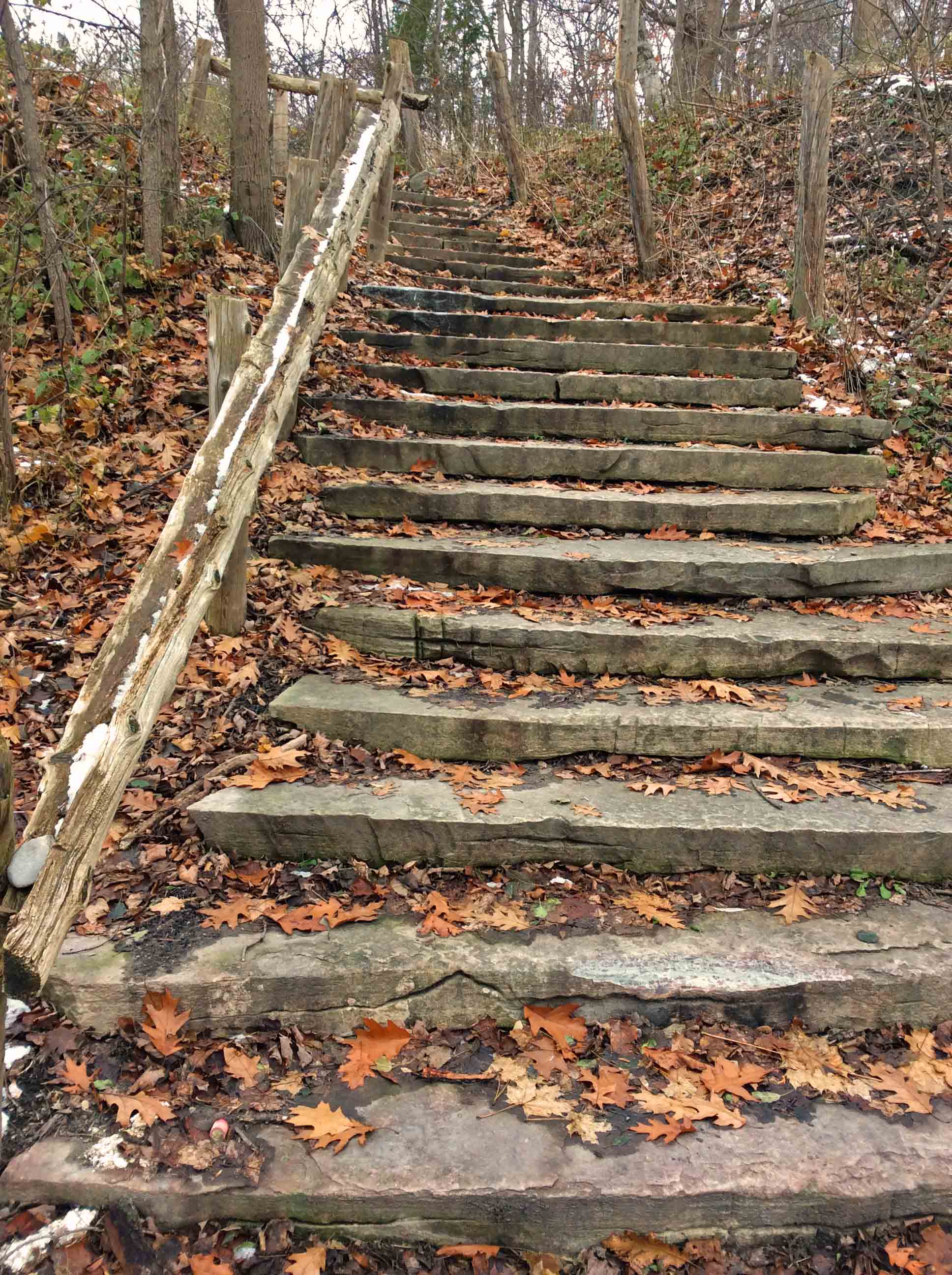
Stairway leading to Rouge River Park, ON (photo by Nina Munteanu)

“A person with synesthesia might hear and taste her husband’s voice as buttery golden brown, feel the flavor of food on her fingertips, sense the letter J as shimmering magenta or the number 5 as emerald green,” says the introduction to David Eagleman and Richard Cytowic’s 2009 book Wednesday Is Indigo Blue. The book explores the neuroscience and genetics behind the multi-sensory experience called synesthesia.

In a strange and compelling May 2008 article in Wired Magazine entitled “Poetry Comes from Our Tree-Climbing Ancestors”, Brandon Kelm asks where synesthesia comes from:

“Perhaps [synesthetes] are under the influence of hallucinogenic drugs…Or maybe they’re simply good with metaphors,” he suggests irreverently. Kelm is actually pretty close to the truth, according to neuroscientist V.S. Ramachandran, who stressed that “what appears as metaphor is a literal sensory experience for synesthetes.” This may explain why synesthesia is eight times more common among poets, artists, novelists and women than the general population. According to Eagleman and Cytowic, one in twenty people experiences synesthesia in a palpable form.

According to Ramachandran, synesthesia developed to help our ancestors climb trees. “Doing so requires a vision-informed mental map of the branches before us,” says Kelm, “as well as a touch-informed mental map of our limbs’ positions. Somehow these have to correlate. Which is quite a trick, when you think about it. Once early primates pulled off that feat of abstraction, it wasn’t long
– evolutionarily speaking — before we were drawing on cave walls and whispering sweet nothings and holding Shakespeare revivals,” Kelm adds pithily.

Synesthesia comes from syn, for together, and aisthêsis, for sensation or perception in Greek. People with synesthesia experience a blending of the senses (e.g., sight and hearing) or of characteristics in a sense modality (e.g., associating colors with written letters). According to Eagleman and Cytowic synesthesia occurs when “a triggering stimulus evokes the automatic, involuntary, affect-laden, and conscious perception of a physical or conceptual property that differs from that of the trigger.” Synesthesia can involve not only the union of two or more different sense modalities, but also different dimensions of perception, such as spatial extension, personality or gender.

Synesthetic Metaphor in Literature

According to Lakoff and Johnson, “[t]he essence of metaphor is understanding and experiencing one kind of thing in terms of another”. However, “… metaphor is not just a matter of language, that is, of mere words. … [O]n the contrary, human thought processes are largely metaphorical” (emphasis in original).

We use synesthetic metaphors all the time, without thinking about it. Examples of cross-sensory (synesthetic) metaphors include: “loud shirt,” “bitter wind” or “prickly laugh”, “dark sounds”, and “sweet smells”. Many of these cross-sensory terms have been so often used to become cliché.

I first made intentional use of synesthesic metaphors in my space thriller trilogy The Splintered Universe. The main protagonist was the human galactic detective Rhea Hawke, who’d been tecked as a young girl with the ability to smell emotions. The premise opened up for me an entire suite of delicious possibilities to describe feelings and emotions through metaphoric imagery and cross-senses (another reason I so love the genre of science fiction).

In the following scene Rhea goes against her first rule of engagement and lets a man into her life:

“Rhea, stay with me, here,” Serge whispered into my hair with sudden excitement. “Move in. Stay.”

I smelled his enticing fragrance of strawberries and musk and knew what I wanted to say.

“I’ll think about it.”

In the next scene, Rhea challenges new boyfriend, Serge, whose past she knows nothing about and he responds:

His face flushed and he smiled carelessly. “I must have dreamt it,” he said, emitting a burst of confusing aromas, a complex mixture of sweet meadow flowers, fishy smell of a lake, and the musk of bog and cottonwoods.

In the scene below, having determined that Serge is not an innocent bystander but a calculating spy, Rhea chases him to haul him into the precinct:

Then I spotted Serge. He’d run to the far end of the room.

Upon hearing me enter, he’d turned and met my gaze head on.

“Rhea!” he shouted, obviously feigning delighted surprise.

I knew he’d recognized me earlier during my pursuit. I’d smelled his spike of excitement. Now I felt him emit yet another smell, a rather pleasant mixture of fermenting fruit and young wine, and felt a thrill surge through me in response. I didn’t show it and pointed my MEC steadily at his chest with my lips pursed in venomous resolution.

A hunting dog will eventually lose its life on the mountain—old Chinese proverb.”


The Unity of the Senses

Synesthesia is far more common in children than adults. It is also thought to occur universally in infants during their first few weeks of life, reflecting a brain that is still in the process of differentiating their combined sensory experiences.

Mathematician and philosopher Gottfried Leibniz once wrote that our sense perceptions are occult qualities, whose familiarity does little to clarify their essential nature.

Writer Oyang Teng tells us that “long before brain imaging technology showed that even basic perceptual acts involve many different areas of the brain, common observation (and common sense) showed that there is no strict autonomy of any of the senses; rather, they each exist as interconnected aspects in a continuum of perception.”

In his 1927 paper, “The Unity of the Senses” Erich von Hornbostel adds that, “looking more closely, the apparent exception becomes the rule, and one must search in order to find the private property of any one sense.”

Cedars hug fence-EloraGorge

Cedars hugging stone wall in Elora Gorge Park (photo by Nina Munteanu)

Cytowic and Eagleman argue that perception is already multisensory, though for most of us its multiple dimensions exist beyond the reach of consciousness. Reality, they point out, is more subjective than most people realize. Synesthesia is a window on the mind and brain; highlighting the amazing differences in the way people see the world. “The difference between synesthetic and nonsynesthetic brains is not whether cross talk exists” Cytowic and Eagleman note “but rather its degree.”

How about that tingly feeling you get when you hear music you like, or the fact that you salivate when you see salty food? Synesthesia.

If you’re interested in whether you have more synesthesic tendencies than the average person, go to Kelm’s May 2008 article on Wired Magazine and take the test. Then let me know…

P.S. The Wired Magazine article is not available on the Internet (I read it the old fashioned way: in print). But here is a site, The Frog Croaked Blue, that will give you similar questions to answer to determine whether you’re a synesthete. When I took the test recently, I was diagnosed as not being a synesthete but with good visual imagery and a rare trait that goes hand in hand with synesthesia.


Nina Munteanu is an ecologist and internationally published author of award-nominated speculative novels, short stories and non-fiction. She is co-editor of Europa SF and currently teaches writing courses at George Brown College and the University of Toronto. Visit www.ninamunteanu.ca for the latest on her books.