Discovering the Ecotones of “When Words Collide”

If you have an apple and I have an apple and we exchange apples then you and I will still each have one apple. But if you have an idea and I have an idea and we exchange these ideas, then each of us will have two ideas.” —George Bernard Shaw


WWC-venue

The venue

In August 2015, as part of my sojourn in my homeland of British Columbia, I participated in When Words Collide, one of Canada’s premiere writing and reading festivals in Calgary, Alberta. This is one writing conference I make a point of attending every year.

Held at the Delta Calgary South Hotel, and run by the super team of Randy McCharles, Susan Forest, Sarah Kades, and Mahrie G. Reid—among other awesome volunteers—this multi-genre writing festival initially modeled itself after the International Surrey Writer’s Conference—flavoured and spiced with the joie de vivre energy of a science fiction writer’s convention. The integration of multi-genres, professional interactions (e.g., editors, publishers, writers and readers) and the festivity of costuming, song and dance, is a truly winning combination.
diana gabaldon01

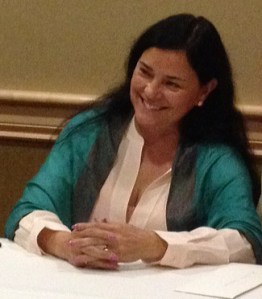
Diana Gabaldon

Guest presenters included best-selling authors Diana Gabaldon, Brandon Mull, Faith Hunter, Daniel Abraham, C.J. Carmichael and agent Sally Harding. The festival included a diversity of panels and workshops, author readings, book launches and parties (including an absinthe-tasting party), an autograph session and a merchant’s corner.

I gave three workshops: one on writing fiction called “Five Things to Consider”; one on narrative voice and POV called “Mastering ‘Voice’ and Narration”; and one on setting called “Mastering Setting.”

Highlights were many: trading stories with my colleagues and writing friends over a drink or signing or loitering in the hallway is always a highlight. Meeting interesting people in a crowd of interesting people is another. Briefly visiting with Diana Gabaldon—an incredibly gracious and entertaining artist—is certainly another.
eco-fiction panel-WWC

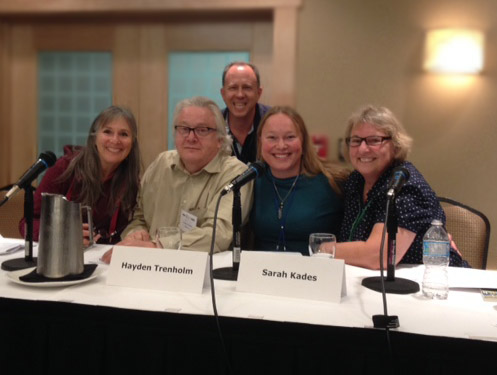
Eco Panelists

An important highlight for me was moderating a panel on Eco-Fiction. Joining me on the panel were publisher/writer Hayden Trenholm, and writers Michael J. Martineck, Sarah Kades, and Susan Forest. The panel was well attended; panelists and audience discussed and argued what eco-fiction was, its role in literature and storytelling generally, and even some of the risks of identifying a work as eco-fiction.

Someone in the audience brought up the notion that “awareness-guided perception” may suggest an increase of ecological awareness in literature when it is more that readers are just noticing what was always there. Authors agreed and pointed out that environmental fiction has been written for years and it is only now—partly with the genesis of the term eco-fiction—that the “character” and significance of environment is being acknowledged beyond its metaphor; for its actual value. It may also be that the metaphoric symbols of environment in certain classics are being “retooled” through our current awareness much in the same way that Aldous Huxley’s Brave New World or George Orwell’s Nineteen Eighty Four are being re-interpreted—and newly appreciated— in today’s world of pervasive surveillance and bio-engineering. I would submit that if we are noticing it more, we are also writing it more. Artists are cultural leaders and reporters, after all. I shared my own experience in the science fiction classes I teach at UofT and George Brown College, in which I have noted a trend of increasing “eco-fiction” in the works in progress that students are bringing in to workshop in class. Students were not aware that they were writing eco-fiction, but they were indeed writing it.

NaturalSelection-frontHRI started branding my writing as eco-fiction a few years ago. Prior to that—even though my stories were strongly driven by an ecological premise and strong environmental setting—I described them as science fiction and many as technological thrillers. Environment’s role remained subtle and—at times—insidious. Climate change. Water shortage. Environmental disease. A city’s collapse. War. I’ve used these as backdrops to explore relationships, values (such as honour and loyalty), philosophies, moralities, ethics, and agencies of action. The stuff of storytelling.

Environment, and ecological characteristics were less “theme” than “character,” with which the protagonist and major characters related in important ways.Snowpiercer-french
Just as Bong Joon-Ho’s 2014 science fiction movie Snowpiercer wasn’t so much about climate change as it was about exploring class struggle, the capitalist decadence of entitlement, disrespect and prejudice through the premise of climate catastrophe. Though, one could argue that these form a closed loop of cause and effect (and responsibility).

The self-contained closed ecosystem of the Snowpiercer train is maintained by an ordered social system, imposed by a stony militia. Those at the front of the train enjoy privileges and luxurious living conditions, though most drown in a debauched drug stupor; those at the back live on next to nothing and must resort to savage means to survive. Revolution brews from the back, lead by Curtis Everett (Chris Evans), a man whose two intact arms suggest he hasn’t done his part to serve the community yet.

Minister Mason (Tilda Swinton), an imperious yet simpering figure who serves the ruling class without quite being part of it, reminds the lower class that: snowpiercer-mason
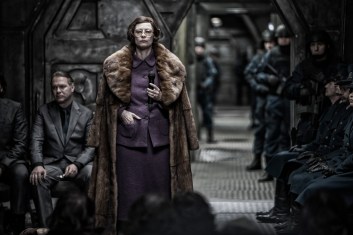
We must all of us on this train of life remain in our allotted station. We must each of us occupy our preordained particular position. Would you wear a shoe on your head? Of course you wouldn’t wear a shoe on your head. A shoe doesn’t belong on your head. A shoe belongs on your foot. A hat belongs on your head. I am a hat. You are a shoe. I belong on the head. You belong on the foot. Yes? So it is. 

In the beginning, order was prescribed by your ticket: First Class, Economy, and freeloaders like you…Now, as in the beginning, I belong to the front. You belong to the tail. When the foot seeks the place of the head, the sacred line is crossed. Know your place. Keep your place. Be a shoe.”

Ecotones are places where “lines are crossed,” where barriers are breached, where “words collide” and new opportunities arise. Sometimes from calamity. Sometimes from tragedy. Sometimes from serendipity.

When environment shapes a story as archetype—hero, victim, trickster, shadow or shape shifter—we get strong eco-fiction. Good eco-fiction, like any good story, explores the choices we make and the consequences of those choices. Good eco-fiction ventures into the ecotone of overlap, collision, exchange and ultimate change.

Water Is-cover01In my latest book Water Is… I define an ecotone as the transition zone between two overlapping systems. It is essentially where two communities exchange information and integrate. Ecotones typically support varied and rich communities, representing a boiling pot of two colliding worlds. An estuary—where fresh water meets salt water. The edge of a forest with a meadow. The shoreline of a lake or pond.

For me, this is a fitting metaphor for life, given that the big choices we must face usually involve a collision of ideas, beliefs, lifestyles or worldviews: these often prove to enrich our lives the most for having gone through them. Evolution (any significant change) doesn’t happen within a stable system; adaptation and growth occurs only when stable systems come together, disturb the equilibrium, and create opportunity. Good social examples include a close friendship or a marriage in which the process of “I” and “you” becomes a dynamic “we” (the ecotone) through exchange and reciprocation. Another version of Bernard Shaw’s quote, above, by the Missouri Pacific Agriculture Development Bulletin reads: “You have an idea. I have an idea. We swap. Now, you have two ideas and so do I. Both are richer. What you gave you have. What you got I did not lose. This is cooperation.” This is ecotone.

botanical beach tidal pools copy

Tidal pools in Botanical Beach, BC (photo by Nina Munteanu)

I think we are seeing more eco-fiction out there because ecosystems, ecology and environment are becoming more integral to story: as characters in their own right. I think we are seeing more eco-fiction out there because we are ready to see it. Just as quantum physics emerged when it did and not sooner, an idea—a thought—crystalizes when we are ready for it.

Don’t stay a shoe … go find an ecotone. Then write about it.

Hope to see you at When Words Collide next year.


For my complete critique of Snowpiercer in The Alien Next Door, go here.


nina-2014aaNina Munteanu is an ecologist and internationally published author of award-nominated speculative novels, short stories and non-fiction. She is co-editor of Europa SF and currently teaches writing courses at George Brown College and the University of Toronto. Visit www.ninamunteanu.ca for the latest on her books.

The Careful Writer: Commonly Misused Terms

Log patterns 6

Spalting wood  (photo by Nina Munteanu)

When I first started writing stories — a while ago — I knew that I was a poor speller, had generally bad syntax and often misused grammar. Someone, who believed in my capacity to tell a good story, despite my shortcomings in delivery, handed me a slim copy of Strunk and White’s classic guide The Elements of Style. This elegant 105 page book includes elementary rules of usage; elementary principles of composition; a few matters of form; words and expressions commonly misused; and an approach to style.

It is “…still a little book, small enough and important enough to carry in your pocket, as I carry mine,” said Charles Osgood. And it has helped me out of a few messes. Let’s look at some examples of commonly misused words and expressions. These words and expressions, Strunk and White tell us, “are not so much bad English as bad style, the commonplaces of careless writing.” Being mindful of our language and our style can often make the difference in a publisher’s or editor’s perception of our professionalism.

Here are some of my favorites, in some cases more because of Strunk and White’s pithy comments than from the actual utility of the advice. Have you used any of these?

Allude: not to confuse with elude. You allude to a book; you elude a pursuer.

Allusion: easily confused with illusion. The first means “an indirect reference”; the second means “an unreal image” or “false impression”.

As to whether: whether is sufficient.

Being: not appropriate after regard…as. For instance, go from “she is regarded as being the best writer” to “she is regarded as the best writer.”

But: unnecessary after doubt and help. For instance, go from “I have no doubt but that…” or “She could not help but…” to “I have no doubt that…” and “She could not help…”

Compare: to compare to points out the similarity between objects regarded as different (as in most metaphor); to compare with points out the differences between objects that are similar. For instance, life may be compared to a pilgrimage; Paris may be compared with London (another large city) but compared to a movable feast. Nina: some modern linguists consider these interchangeable and do not distinguish the metaphoric elements of comparison. I concur with Strunk and White.

Comprise: literally means embrace. A zoo comprises mammals, reptiles and birds — because it embraces or includes them. The animals do not comprise a zoo — they constitute one.

Disinterested: means “impartial”. Do not confuse with “uninterested” which means “not interested in”. You bring in a disinterested (impartial) person to judge a dispute; another may be uninterested (couldn’t care less) about the dispute.

Effect: noun means “result”, and as a verb means “to accomplish”; not to be confused with “affect” which means “to influence”.

Farther/further: farther refers to distance and further refers to time.

Finalize: called a pompous and ambiguous verb by Strunk and White, I must confess using it many times in my other life as a consultant in business. Every segment of our society adopts its own vernacular of offbeat, “jargon” words and expressions that are regarded to help the flow of business. Another example that comes to mind is the use of dialogue as a verb. When using vernacular of any kind, be mindful that it is appropriate to your character, situation and story.

Imply/infer: not interchangeable. To imply is to suggest or indicate but not overtly express; to infer is to deduce from available evidence.

Interesting: Strunk and White suggest that this is, in fact, an uninteresting word, given that it tends to label and “tells” rather than letting the writer “show”. For instance, instead of using “an interesting tale of …” avoid the preamble and simply make it interesting! Let the reader judge. Telling them won’t make it so. This applies also to any letters you write to publishers and editors; avoid telling them your story is funny or interesting. Show it in your description.

Less: don’t use instead of fewer. Less refers to quantity; fewer to number. For instance “his troubles are less than mine” means they are of less magnitude; while “his troubles are fewer than mine” means he has a small number of troubles.

Nice: means everything and nothing. Use it sparingly and judiciously with intention; in other words, to be purposefully vague as in conversation. Strunk and White define it as a “shaggy, all purpose word”.

One of the most: Strunk and White define this phrase as a “feeble formula” that is threadbare, invites cliché and adds little except words to narration.

Personalize: Strunk and White dismiss it as a “pretentious word, often carrying bad advice. Do not personalize your prose,” they say, “simply make it good and keep it clean.” I agree. It falls under jargon.

Prestigious: “it’s in the dictionary, but that doesn’t mean you have to use it,” say our prestigious experts. Sorry … couldn’t help myself.

That/which: that is the defining (restrictive) pronoun; which is non-defining. For instance, 1) the lawnmower that is broken is in the garage (tells us which one); 2) the lawnmower, which is broken, is in the garage (gives us an additional fact about the lawnmower).

While: many writers use it indiscriminately for and, but and although. It can be efficiently replaced by a semi-colon (e.g., change “the girl stood by the door, while the man stood next to the couch.” to “the girl stood by the door; the man stood next to the couch.”). While is best used to mean “during the time that”.

For more writing tips on writing fiction (and non-fiction or memoir) check out “The Alien Guidebook Series” on writing.

References:

Strunk, William and E.B. White. 2000. “The Elements of Style” (Fourth edition). Longman. New York. 105 pp.

nina-2014aaNina Munteanu is an ecologist and internationally published author of award-nominated speculative novels, short stories and non-fiction. She is co-editor of Europa SF and currently teaches writing courses at George Brown College and the University of Toronto. Visit www.ninamunteanu.ca for the latest on her books.

The Hidden Costs of Self-Publishing, Part 1: The Solution to “Author Solutions”

author-solutions-friendsWhat do Simon & Schuster, Hay House, Barnes and Noble and Reader’s Digest have in common? Each of these reputable and famous names in publishing has forged a partnership with Author Solutions. What is significant about that? Well…In a detailed article written in April of 2015, author David Gaughran tells us why this is distressing news to authors and I discuss this further below.

Many beginning authors wishing to “self-publish” are looking for a service that will easily and painlessly “publish” their cherished creative as well as help them get it out into the reading world. Naive about what it takes to “get out into the reading world”, many authors are signing up with service-publishers who will “publish” anything so long as the author is willing to pay. You know who they are; I mention some of them below. Although the Internet is populated with excellent book-publishing services by freelance editors, cover artists, layout specialists and various accompanying software and apps, many authors are unwilling to go the a la carte route of experts. Instead, they look for an easy and convenient solution: a one-stop shop to sell their book. The “expertise” and “services” are usually anonymous and nameless, hidden behind the company name. I’ve seen some horrid examples of extremely poor editing in books that had presumably been professionally edited by a service-publisher for which a writer had paid good money. The writer was himself/herself clueless of the poor quality (for some of them, English is not their first language), and couldn’t tell me who had edited their work. When I did some digging into two of these service-publishers, I finally found, in the fine print, that the service-publisher used students. Another client of mine complained bitterly about how he had not received the services promised in the package that he’d paid dearly for. This sort of thing is rampant in the “self-publishing” industry right now.

As with all short cuts, there are hidden costs. Let’s take Author Solutions as a good example.

.

The “Anti-Solution”

Author Solutions provides a “publishing” service to any writer willing to pay.  Typical of virtually all the vanity publishers, Author Solutions and its many affiliates (likely the company you are using) offers several packages for the author, from basic printing services to the deluxe package with promised media coverage and excellent PR. Unfortunately, what they promise and what they deliver can be two different things. Far from providing solutions to an author, Author Solutions operates “more like a telemarketing company whose customer base is the authors themselves,” write plaintiffs Wheeler and Heightsman as part of their 2015 class action law suit against the firm. Some of Author Solutions’ long-standing issues faced by customers include:

  • improperly reporting royalty information
  • non-payment of royalties
  • breach of contract
  • predatory and harassing sales calls
  • excessive markups on review and advertising services
  • failure to deliver marketing services as promised
  • telling customers their add-ons will only cost hundreds of dollars and then charging their credit cards thousands of dollars
  • ignoring customer complaints
  • shaming and banning customers who go public with their stories.

“Despite Author Solutions’ mounting legal troubles and an unending stream of complaints against the company from both its own customers and a whole host of writers’ organizers and campaigners, companies are still queuing up to partner with Author solutions,” writes Gaughran. Is it because its corporate parent is Penguin Random House? Some “Partner Imprints” (in brackets) run by Author Solutions as a self-publishing service for the partner publishing house include:

  • Simon & Schuster (Archway Publishing)
  • Lulu
  • Harlequin (DelleArte Press) – partnership terminated 2015
  • Hay House (Balboa US, Balboa Australia)
  • Barnes & Noble (Nook Press Author Services)
  • Crossbooks (LifeWay) – partnership terminated 2014
  • Penguin (Partridge India, Partridge Singapore, Partridge Africa)
  • HarperCollins/Thomas Nelson/Zondervan (Westbow Press)
  • Random House (MeGustaEscribir)
  • Writer’s Digest (Abbott Press) – partnership terminated 2014

Many authors aren’t aware that these “Partner Imprints” are all run by the same company; or that Author Solutions’ own in-house imprints include iUniverse, Trafford, Palibrio, AuthorHouse, BookTango, and Xlibris. According to Gaughran, this came about as a “solution” for traditional publishing houses to monetize their slush pile. That’s the pile of unsolicited works most beginning writers send to publishing houses that end up in a huge heap in some room that in the past was relegated to new underling editors to cut their teeth on. Now the manuscripts simply go to a company only interested in making money from writers willing to pay for their largely unedited works. Books that would never have been accepted by these traditional publishing houses are now finding a “home”. But what kind of “home” is it and what does the writer really achieve for her many dollars spent? According to Gaughran’s sources at Penguin, the primary directive of Author Solutions is to sell (to the author) the most expensive publishing package they can and encourage authors to buy their own books. When depositions were made public, they revealed that two thirds of Author Solutions revenue comes from selling publishing and marketing packages and one third from selling books—with a vast majority of those book sales coming from authors buying their own books. What about the cool opportunities for book signings at literary events, book displays, advertising space, TV and reviews that they promised? Gaughran provides a staggering list that includes Publishers Weekly, New York Times, Kirkus and the New York Review of Books, and my personal favorite Word on the Street Festival Toronto. “These partnerships don’t provide any real value to Author Solutions customers,” says Gaughran. In an earlier class action lawsuit against Author Solutions by law firm Giskan Solotaroff Anderson & Stewart representing three authors, Publishers Weekly wrote:

The suit, which seeks class action status, alleges that Author Solutions misrepresents itself, luring authors in with claims that its books can compete with “traditional publishers,” offering “greater speed, higher royalties, and more control for its authors.” The company then profits from “fraudulent” practices, the complaint alleges, including “delaying publication, publishing manuscripts with errors to generate fees, and selling worthless services, or services that fail to accomplish what they promise.” The suit also alleges that Author Solutions fails to pay its authors the royalties they are due.

According to the law firm representing the authors:

Author Solutions preys upon the dreams of authors by selling them expensive services that sound exciting but do not actually sell any books. Their defense: They aren’t being deceptive because they aren’t trying to sell books. Of course, for nearly 200,000 authors who have paid thousands (if not tens of thousands) of dollars to buy expensive services that promised to promote their books, Author Solutions’s indifference to book sales comes as more than a bit of a surprise.”

.

The Solution—But You May Not Like It…

So, what’s the solution? For those of you starting out, it’s important to know that firstly there are a lot of genuinely good publishing houses out there potentially interested in your book and willing to work with you in partnership toward a successful book that will sell. And they don’t want your money; they want quality. The book publishing industry is booming in many different ways. And while the predatory arm of the mercenary would like to seduce you with glamour and unrealistic dreams—so long as you pay—a whole cadre of small presses are growing who are producing high quality works by emerging writers. These local Indie publishing houses are worth seeking out and submitting to. But they don’t want to see your book until it is ready. Reader ready. This puts the responsibility back on you, the writer, to produce the very best you can. I tell my writing students at the University of Toronto and George Brown College that if you want to publish, you need to:

  1. write the very best story you can
  2. get it edited, preferably by a professional editor or a writing coach of good repute
  3. research the book publishing market and submit to a traditional publisher (not a service-publisher who wants your money)
  4. rewrite (if you feel the need to) and resubmit to another publisher
  5. resubmit to another publisher

If you decide to self-publish, find a reputable printing house and learn what it takes to create a book. Find someone who does layout and covers professionally. There are good ones out there; I know—I use them myself. Learn some marketing skills or find a marketing specialist or PR specialist who has a sound track record and you can trust. The book industry was and still is based on sound relationships. Writers with editors; publishers with marketers and distributors; writers with readers; and so on.

In the end, it’s up to you. Take charge of your career and bring the “self” back into self-publishing.

In Part 2, I discuss the significance of first impressions and “branding” in self-publishing. Of course with examples.

.

nina-2014aa

Nina Munteanu is an ecologist and internationally published author of award-nominated speculative novels, short stories and non-fiction. She is co-editor of Europa SF and currently teaches writing courses at George Brown College and the University of Toronto. Visit www.ninamunteanu.ca for the latest on her books.  

To Expose or Not to Expose…That is the Question

CreditRiverWalk-oct2018

Walking the path along the Credit River, Ontario (photo by Nina Munteanu)

In fiction, exposition breaks away from the ongoing action of a scene to give information. It can be a paragraph or go on for several pages. Exposition often provides contextual information critical for the reader to buy-in to character-motivation or the ideas promoted in the story. It gives a story its perspective and larger meaning by linking the reader with the thematic elements. If scene is action and plot, exposition feeds reflection and theme. Exposition can appear in the form of background, setting, back story, or overview. It is most often expressed through a POV character’s reflection and observation.

There are points in almost every story where exposition is necessary. Most stories would suffer without information that adds past, context and overview.

WardIsland wall in forest

Ward Island, Ontario (photo by Nina Munteanu)

Exposition in writing lets you:

  • Describe a person in detail
  • Describe a place for more than a phrase or two (important especially if a place serves as a “character”)
  • Skip over periods of time when nothing important or compelling is happening, without a jarring break in the narrative
  • Draw back from a close-focus action scene to give the reader a meaningful overview (and to say how things got that way)
  • Give some background and history of characters, location, event, etc.

You need to balance the show and tell part of your narrative and to maintain a rhythm in your pace and tone. This means doing several things, including:

  • Restrain yourself and keep your notes to yourself: I’ve seen excellent writers add too much exposition on a subject that obviously excited them but didn’t necessarily excite me. This often occurs when a writer feels impelled to share their invention or discovery at the expense of story-telling. Doing your “homework” in writing (e.g., research) also includes keeping it to yourself, no matter how much you want to share it. Doing your homework is the “iceberg” and the story is the “tip”. Many genre books (e.g., science fiction, thrillers, mysteries, etc.) must be supported by solid research. The writer takes what she needs for the story and keeps the rest.
  • Arouse then explain: introduce your character by letting her act and show herself and engage the reader’s curiosity and sympathy, then explain how and why she got there.
  • Build exposition into the scene: get creative and include expository information as props in a scene. This is a great way to add information seamlessly.
  • Put exposition in between scenes: instead of interrupting a scene in action, exposition can be used to give the reader a breather from a high paced scene to reflect along with the protagonist on what just happened. This is a more appropriate place to read exposition, when the reader has calmed down.
  • Let a character explain: have your characters provide the information by one questioning and the other replying. There is a danger in this kind of exposition, in that the dialogue can become encumbered by long stretches of explanation. Take care to make this realistic and enjoyable to the reader. If done well, this type of exposition can also reveal things about the characters.
  • Use interior monologue: use a character’s inner reflections to reveal information, which also reveals something of the character herself. Be careful not to turn this into polemic, however.

Now, go and have fun exposing!

For more writing tips on writing fiction (and non-fiction or memoir) check out “The Alien Guidebook Series” on writing.

nina-2014aaNina Munteanu is an ecologist and internationally published author of award-nominated speculative novels, short stories and non-fiction. She is co-editor of Europa SF and currently teaches writing courses at George Brown College and the University of Toronto. Visit www.ninamunteanu.ca for the latest on her books.

Swimming Against the Tide and Rising Up & Rising Above

cheryl-xavier

Cheryl Antao Xavier

“Her passion for giving voice to non-mainstream writers has inspired her to swim against the tide in these harsh economic times,” says Desi News (Issue 31; December 2014) of Cheryl Antao-Xavier, publisher of In Our Words, Inc. (IOWI) in Mississauga, Ontario.

I met Cheryl a few years ago at a writer’s event when she introduced herself during a break as I was helping myself to my third samosa. We’ve since collaborated on several projects. The most recent is a literary anthology on what it means to live in Canada and be a Canadian. The call for submissions has just recently been made, so if you’re interested in submitting, check out Cheryl’s website here: http://inourwords.ca/the-literary-connection-volume-ii.html

Born of Goan parents, Cheryl grew up in Bahrain and then Karachi, where books were a rare treat. Cheryl shares the story of her aunt who taught knitting to women in a banking family from whom she borrowed books—Enid Blyton, Grimm’s Fairy Tales, Nancy Drew and comics—for her book-thirsty nieces, who “would devour the books in no time!” says Antao-Xavier.

Quality books were a luxury, even at the university she attended. Cheryl recalls how the Karachi University library had a “chained book” on display. John Stuart Mill’s book was required reading for students of economics but there was only one copy in the KU library. It sat on a wooden stand with a chain running through its spine under a librarian’s guard and you had to book time with the book and wait long hours for a few minutes to make hasty notes.

Cheryl Antao Xavier

Cheryl Antao Xavier

When Cheryl immigrated to Canada in 1988, she found “book heaven” in the second-hand bookstores and libraries. Reading and owning books became an obsession that has endured to this day.

Cheryl worked for several publishing houses before creating her own publishing house In Our Words Inc. (IOWI). IOWI publishes a good variety of works, including literary fiction, creative non-fiction, poetry and children’s stories from both emerging and established writers.

About the work IOWI publishes, Cheryl told Desi News, “I delight in new and fresh voices; language with imagery; twists on the conventional; historical backgrounds with the angst of displaced or marginalized people. For writers with emotional ties to a heritage radically different from the Canadian experience, writing is a cathartic process. There are writers who have lived through cataclysmic events, whose stories are fascinating chips in the mosaic of Canadian literature.”

I recently whisked Cheryl off in Benny, my sentient ship, and settled her to a million dollar view in the aft deck as we circled the planet. I asked her about how she is managing with the industry doing virtual summersaults (as opposed to somersaults–well, it IS summer, eh?) these days. Here’s what went back and forth:

Nina: I was so intrigued by your story, I just have to start by asking you this: what’s your favourite book of all time and why?

Cheryl: Jane Austen’s Pride and Prejudice. Read it umpteen times, saw both movie versions, have the Colin Firth series in my video collection. I looooove period fiction drama. Dickens, the Brontes, Hardy, to the more recent Forsythe Saga, Downton Abbey, etc. etc. My Dad had the full collection of Perry Mason and Zane Grey books. So of course I read them all. I love murder-mysteries from Agatha Christie to the present day forensic science stuff.

Nina: You have excellent taste! … What is your assessment of what is happening with print books vs ebooks vs audio books and such? Do you see one format winning over the other and how will that affect your own publishing model?

Cheryl: Print books should be around for as long as our generation who love holding a paper book survive. But ebooks are increasingly popular and have undeniable environmental merits. Publishing companies like mine have to do what you aptly call ‘virtual somersaults’ to stay current and cut costs to stay viable. Rather than publishing formats, what worries me more is poor quality books being published and the potential for declining readership in general. The tragedy of do-it-yourself print-on-demand software, freely available, is that anybody with passable tech skills can become a ‘published author.’ Books with flashy covers but no creative merit vie for reader attention and diminishing discretionary incomes. Also, media entertainment continues to steal leisure time.

Nina: Can you share some candid thoughts on the advantages and disadvantages for writers starting out in choosing the traditional publishing model vs alternative models such as indie or self-publishing.

Cheryl: The lines between traditional and indie/self-pub have blurred even more with the proliferation of print-on-demand options. Production costs have consequently plummeted. So the financial investment in an author/book has less of a risk. I would say, do your research. Make your manuscript super-strong, that means get it professionally edited, and then try the traditional route. Read publishers’ responses to your queries very carefully. It’s an opportunity to learn. If there are no takers, then research indie publishers and call, discuss contracts and options and make an informed decision. Make doubly sure that the traditional pre-production steps of editing, proofreading and professional design are not bypassed. Sometimes good content is smothered by verbosity and needs a good professional edit. Basic POD ‘template’ designs SCREAM amateur-DIY when they are set with no real imagination in big blocks of text, riddled with typos.

Nina: Do you see any specific roles for indie and/or self-publishing in helping to define artistic expression in Canada?

Cheryl: Definitely. The traditional big publishing houses can accept just so many manuscripts. So obviously they’ll go for the ones that are a sure bet. That’s where the diamonds in the rough can be missed out. Indie publishers who have the resources to work with authors to polish the content to its best possible advantage are ideally placed to bring new or even established voices to the mainstream.

Nina: What in your opinion is the major impact (both negative and positive) of the growing self-publishing model adopted by many writers over both traditional and indie publishing?

Cheryl: Occasionally I read and recommend self-published books for membership in a major professional writer’s organization. I also attend book launches and local literary events looking at books, particularly by self-published authors. The good thing is that these authors went that extra step to raise their voices in the literate world. They feel the satisfaction of being ‘published authors.’ The down side is that once something is in print, and particularly if it has not been professionally edited and designed, that book can end up being an embarrassment and a waste of time and money. Typos jump out at the reader and lower the credibility of the work and its creator. Ultimately, it comes down to what the writer wants to achieve by publishing. 

Nina: What major change do you foresee in the book industry and the readership that will affect us? How and why will that affect IOWI?

Cheryl: Everybody loves a good story, and finds it worth their while to read well-articulated text. So the successful writers will be the ones who manage to engage their readers no matter what the genre. The challenge is also for a good book to stand out from the proliferation of new titles vying for attention in virtual and brick-and-mortar stores. I see social media, forums like Goodreads, and book tours/festivals being key arbiters in what bookworms find and opt to read. IOWI will continue to offer an indie publishing option that stresses putting out a good book. Something that both author and publisher can be proud of.

Nina: Tell us about your current projects and why they excite you. 

Cheryl: IOWI is working on two anthologies currently, with a couple more in the planning stage. A Mississauga youth group is publishing their third anthology through IOWI. It is so exciting to see the writing and photography talent this group has attracted. We are so proud to be their publisher. IOWI has its own anthology The Literary Connection Volume II, with a theme of ‘My Canada’ due to be published by November this year. The call for submissions is already out and closes end-July. I am also working on pulling together a collection of plays by Canadian playwrights. It’s going to be awesome. My aim is to have writers meet with a professional writing coach, yourself Nina, to workshop their submissions into amazing work. I want these anthologies to be a credible contribution to CanLit.

Then another pet project is The Red Bench Project, which seeks to promote reading and literacy at the family and community levels. We must encourage the habit of reading for enjoyment. Bringing authors and public together is part of this project.

Nina: What three pieces of advice do you have for a new writer wishing to get published?

Cheryl: Write every day. Then spend some time editing and rewriting past work. Learn to write well through courses, mentorship or self-study.

Read voraciously and discerningly. Keep clippings or books of your favourite writers handy. Before writing, read a selection from these writers. It influences your own voice and jumpstarts your creativity.

Botanical Beach tidal pools

Botanical Beach, BC (photo by Nina Munteanu)

Be guided by your need to publish your super-amazing manuscript. Not by your need to see your name on a book. If the content is not up to par, that novelty morphs into the proverbial albatross that haunts a fledgling writing career. If you are a serious writer: DON’T PUBLISH TILL YOU ARE READY!


Nina: Great advice, Cheryl! Thanks so much for joining me here and I do promise to get you back on the ground… Don’t the Great Lakes look beautiful from 36,000 km?

Cheryl: Thank YOU for the ride, Nina. Be well.

.

.

nina-2014aaNina Munteanu is an ecologist and internationally published author of award-nominated speculative novels, short stories and non-fiction. She is co-editor of Europa SF and currently teaches writing courses at George Brown College and the University of Toronto. Visit www.ninamunteanu.ca for the latest on her books.

The Ecology of Print Books: Niche Partitioning by Young Readers

Anne-walking-Cedars

Friend Anne walks boardwalk in giant cedar forest, BC (photo by Nina Munteanu)

A while ago, I wrote about the S-curve in publishing, an ecological phenomenon applied to the book industry. Today I’d like to talk about another ecological phenomenon: niche partitioning.

Earlier this year, SF author and fellow Canadian Cory Doctorow cited several reports on his blog BoingBoing suggesting that “young readers generally prefer to read books from paper, not screens.” More than that, he adds, “they find ebooks and printed books complementary.”

I’m an ecologist and this makes sense to me. It comes down to niche-partitioning. Every organism occupies a niche, which can be defined as that organism’s “job” in its ecosystem; so niche-partitioning is a way for organisms to co-exist cooperatively—rather than competitively and exclusively—by apportioning or segregating various jobs or roles in an ecosystem. It’s a bit like syndicalism vs. capitalism, in which functional, rather than territorial precepts are used.

“The future composts the past,” says Doctorow. “The advent of films made it possible for performances that couldn’t work onstage to be born and it moved all the plays that were uncomfortable fits onstage to the screen. What it left behind were plays that were more like plays—and a theater industry that’s still going strong, even if it’s dwarfed by the screen.” He’s talking about niche-partitioning here.

I generally find that ebooks are convenient for my mobile lifestyle. I’ve recently adopted an itinerant, gypsy life from my former “nesting” days. My family has grown up and left the nest and I’ve gone “walkabout”. My giant library of print books had to find good homes, rather than travel with me to all parts of the world. I keep a collection of virtual books on my device for reference (like a dictionary). I also find ebooks a good option for a one-off read—something I can get cheap and read without needing to “befriend” and keep.

I treasure my few printed books, both reference and story. My reference print books are underlined and marked and worn from being used over and over again. Printed books are best for protracted reading and comprehension. You want a print book when you wish to delve deep into “story” and relax.

As with the theatre becoming more theatre-like, Doctorow adds that, “books are becoming more book-like. Books that work best as e-books—for example, big reference books; but also short works that are too slight to rest comfortably on their own between covers—are moving to e-book-land. Things that are produced as printed books have passed a test in which someone has asked, Is there an important reason for this to exist in print, instead of exclusively onscreen?

I talked about this in my previous article The Future of Books on this blog: “print books will become the epitome of publishing value and worth. Already coveted by collectors whose libraries will represent the best of the best in the literary world, print books will come to represent the highest status in literature. Only the best stories will endure as print books; perhaps only the ‘best book’ will even be published in print form. Its existence in print form will define its literary value.” Niche-partitioning, like I said…

In an article called Why Digital Natives Prefer Reading in Print. Yes, You Read That Right, Washington Post reporter Michael S. Rosenwald reported that, “Textbook makers, bookstore owners and college student surveys all say millennials still strongly prefer print for pleasure and learning, a bias that surprises reading experts given the same group’s proclivity to consume most other content digitally.”

students-print-online2014Rosenwald adds, “The preference for print over digital can be found at independent bookstores such as the Curious Iguana in downtown Frederick, Md., where owner Marlene England said millennials regularly tell her they prefer print because it’s “easier to follow stories.” Pew studies show the highest print readership rates are among those ages 18 to 29, and the same age group is still using public libraries in large numbers.” Rosenwald adds, “And it can be seen most prominently on college campuses, where students still lug backpacks stuffed with books, even as they increasingly take notes (or check Facebook) on laptops during class. At American, Cooper Nordquist, a junior studying political science, is even willing to schlep around Alexis de Tocqueville’s 900-plus-page “Democracy in America.”

I’ve noticed the same phenomenon at the University of Toronto campus where I teach. Rosenwald writes about Frank Schembary, a young student who loves books—printed books. He loves how they smell. He loves scribbling in the margins, underlining interesting sentences, folding a page corner to mark his place. “I like the feeling of it,” says Schembary, reading under natural light in a campus atrium, his smartphone next to him. “I like holding it. It’s not going off. It’s not making sounds.”

Cedar trunk base-LR

Cedar tree, Little Rouge woodland (photo by Nina Munteanu)

Naomi S. Baron, an American University linguist who studies digital communication, wrote a book Words Onscreen that reported her studies of students’ reading patterns. She found, along with other studies, that readers tend to skim on screens. Her favourite response to her question of what students disliked the most about reading in print was: “It takes me longer because I read more carefully.”

Students prefer digital for science and math subjects, where they also have access to online portals and resources linked to their subject matter and assignments.

Niche partitioning makes the world go round. Now, if we can only use its logic in economic systems.

nina-2014aaNina Munteanu is an ecologist and internationally published author of award-nominated speculative novels, short stories and non-fiction. She is co-editor of Europa SF and currently teaches writing courses at George Brown College and the University of Toronto. Visit www.ninamunteanu.ca for the latest on her books.

Why You Want to Go To A Writer’s Convention

IMG_0304A while ago I attended (and participated as panelist and guest author) at the World Fantasy Convention in Toronto. And I was all jazzed about it! Why?… Well, let me tell you why…

If you haven’t yet attended a writer’s conference or convention, it’s high time you did. Because, not only are you missing out on an education, you are missing out on a sub-culture that may change your life as a writer, help feed the hungry and align the universe. Seriously.

The last World Fantasy Convention I attended was several years ago in 2008. It was held in Calgary, Alberta, when I still lived in Vancouver, British Columbia. The ten-hour drive through some of the most glorious Canadian wilderness and mountains was bracing and we were lucky that the weather played fair. It was an auspicious start to a wonderful journey of self-discovery.

Hosted by toastmaster Tad Williams, this world-class convention featured guests of honor, David Morrell, Barbara Hambly, Tom Doherty and Todd Lockwood. The World Fantasy Convention promised great things and delivered them. And I’m not just talking about that white chocolate cranberry-date-nut dip that had me loitering at the hospitality suite. Or all those midnight parties that served savory wine with salted almonds, sharp cheese and colorful conversation with the likes of David Hartwell, Tor editor and impeccable dresser (gotta love those ties!). I’m not even talking about the hot tub that sprung a leak on the 18th floor at 1 am or the entertaining panels and readings, which rocked for both writer and reader.

What made the con great for me was seeing my writing community (both writing colleagues and readers who followed my writing) and meeting new people, all lovers of books and “story”.

I was rudely eyeballing someone’s nametag on his chest, when I collided with the Prince George crowd that included authors, Lynda Williams (herself responsible for some pretty nasty intergalactic wars), Nathalie Mallet (who cages princes) and publisher Virginia O’Dine of Bundoran Press (rumored to have been somehow responsible for the hot tub fiasco). I also chummed with Jennifer Rahn, author of The Longevity Thesis, who was charmed by my sly cat (she’s a softy at heart). My cat-colleague Toulouse just kept charming his way through the crowd right to the book fair. We wandered to the back where Anita Hades of Edge Books gave Toulouse her usual greeting (a feline move that was a cross between Sophie Marceau and Brigitte Helm; both she and Toulouse have French blood coursing through their veins, after all—c’est vrai!).

I’d come a long way from the first writer’s conference I went to as a budding writer of a few short stories and non-fiction articles…

Here’s what author Susan Denney says about her first writer’s conference: “Going to my first writers’ conference was an act of faith. I was just starting to make some freelance sales when the members of my writers’ group encouraged me to join them at a conference a few hundred miles away. The expense didn’t seem justified to me. The cost was far more than I had earned through writing that year. But they convinced me at last and it proved to be a great investment. The benefits of a writers’ conference are there for anyone who has a desire to be a better writer.”

Here are some reasons why you can’t afford NOT to go to a conference or convention:

Contacts: you will make contacts with people working in the industry, an extremely valuable asset; this industry is a social one, based on trust, respect and joyfulness. While there’s no guarantee that you will meet anyone famous or influential, you will definitely meet people who know more about writing than you do. Just hanging out with professional writers, editors and agents is educational. If nothing else, you will gain some confidence and ease with industry people, who are real people too. Some may become friends; some may become colleagues; some will become both.

Appointments: through agent/editor/author appointments, you will have a chance to have a quality private conversation with a professional on all aspects of writing and publishing. This is your chance to pitch your novel or ask that one burning question. You know you’ll get a candid and professional answer. That in itself is invaluable and may be enough reason to attend the con. Appointments are also your best chance of getting your manuscript read. This is because it bypasses the slush-pile and months of waiting for a response. More and more editors and agents look to conferences to meet potential authors. For them, meeting an author in person is a bonus to their gauging potential success in a relationship with them.

Education on Craft & Marketing: you will learn something about craft and marketing, no matter what stage you are in your writing career. Depending on the conference or convention, aside from good information from panels, you may also get personal mentoring, 1-page critiques, or attend small themed workshops. Feedback from an experienced writer can save you months of frustration and grief. Just hearing about what is currently going on in the industry is also valuable and conferences are a good way to get the skinny on what the current issues in the writing and publishing industry are. Getting it from those who are working inside avoids the idle and potentially harmful gossip.

Community: you will be exposed to a community of writers, hundreds of creative people in various stages of their careers. By interacting with both those you can help and those who can help you, you will gain a measure of both humility and confidence and satisfaction. We learn so much by helping others. Simply being with other writers can help hone your people-skills, the same ones you will need when approaching agents, editors, publishers and research sources during your career as a professional. Remember, if you aren’t having fun, you are missing one of the most important aspects of attending a writer’s conference, and you will lose your own effectiveness.

Energy: there is nothing more energizing than a common sharing among those of like-minded thought and vision. Writing is primarily an individual pursuit, often thought to belong to the introvert; but, to succeed in the writing/publishing industry a writer must display staying power, persistence, confidence and enduring energy. There is nothing quite as inspirational as hearing an accomplished writer provide their story of victory against odds. I will never forget the moving words of Ray Bradbury at a conference in Palm Springs years ago. I have repeated those words many times since. If you come to a conference with the right mind-set, I guarantee that you will leave with more energy than you came and with a burning need to write.

Exposure: depending on the kind of conference or convention you attend, you will have the opportunity to expose yourself to something different (e.g., different fiction genres and associated communities; fiction vs. non-fiction; different media; etc.). I attended a romance writers conference a few years back (I write mostly science fiction and fantasy—but often with romance elements in them) and found it bracingly educational.

New Markets & Ideas: conferences attract writers of all kinds. Conferences provide fertile ground for cross-pollination of ideas, markets and marketing ploys. Writers, like you, are generally a nice crowd; most are willing and eager to share their successes and failures. And contacts. Sharing is one of the great things that happens at conferences. There may be a common pin board set up for people to share. Most conferences are Twitter and Facebook enabled for quick and easy viral sharing. If you don’t come away from a conference with at least one new idea, contact or market, you haven’t done your job: talk to people.

Here are a few do’s and don’ts for when you go conferencing:

  1. Wear comfortable but not sloppy clothing and shoes (it’s likely that you will be doing a fair bit of standing and walking); you want to make a good impression. Be yourself and dress accordingly.
  2. Bring promotional material with you (e.g., business cards, flyers on your book, stories, etc.). Have something to share and exchange with other writers and professionals. Most conferences also have tables devoted to shareware. This is your chance to introduce you and your writing to others.
  3. Take something to write with (e.g., notebook and pen or iPad, etc.).
  4. Talk to people. Chances are that everyone there is interesting.
  5. Respect the time, particularly other people’s time, and keep your appointments and meetings.
  6. Don’t bring your heavy manuscript with you to the conference. Agents and editors don’t have the time or inclination or space in their suitcase for it. Use the conference to make an impression and get an invitation for something later in writing.
  7. Keep all of your interactions verbal and face-to-face. Don’t rely on memorized speeches or a folded up written pitch in your pocket. Keep it casually professional. Make eye contact and speak from the heart. Show your passion.
  8. Have fun. And don’t be afraid to show it; there’s nothing more infectious and attractive than someone having fun.


Some upcoming writing-artistic conferences/ conventions / festivals in the Toronto area include:IMG_0306


nina-2014aaNina Munteanu is an ecologist and internationally published author of award-nominated speculative novels, short stories and non-fiction. She is co-editor of Europa SF and currently teaches writing courses at George Brown College and the University of Toronto. Visit www.ninamunteanu.ca for the latest on her books.


Know What You’re Writing: Short Story or Long Story?

freighter-rowers-sailboat-web

Freighter off Toronto Harbour, Lake Ontario (photo by Nina Munteanu)

How to Decide on the Length of Your Story 

Figuring out what you are writing isn’t always as easy as you think. Many writers, when they begin, may think they are writing a short story when they are actually writing a novel; or vice versa. When I first started, in fact this is what occurred.

Some time ago, when I was a budding novelist working on my second unpublished novel, I decided to write short stories. I’d been told time and again that it was easier to publish short stories (the market is far more diverse) and they provided excellent qualifications for when it came time to market my novel. It wasn’t as easy as I thought. I kept getting rejections with comments that my short story ought to be a novel! It took some time to master the art of short story telling. But when I did, I realized that I’d learned a lot about storytelling that I could apply to my novel. And by the time I was ready to publish my novel, I had several short story publications behind me to prove the salability of my work.

So, what are you really writing? Or, more to the point, what should you be writing?

A short story only has 7,500 words or less to get your tale across while a novel has over ten times that many words to do the same. It follows then that the short story format is a simpler one. This does not necessarily mean easier.

Short Vs. Long—What’s Your Focus?

Novels provide a sense of change, growth and solutions to problems and conflicts. Short stories must be more succinct, contain fewer characters and subplots, have less complicated story arcs and a single theme. You could say that a short story is a poem to a novel’s prose. “The short story doesn’t have the luxury of depicting change; the closest it can come is awareness,” writes Shelley Lowenkopf in her 2007 article “Telling Tales” in The Portable Writer’s Conference: Your Guide to Getting Published by Quill Driver Books. She goes on to describe the short story as a close-up to a novel’s landscape. The short story is, therefore, often more intense and powerful. A short story, more than a novel, has the power to transport, disturb and enlighten.

Renowned short story authors like Edgar Allen Poe, Nathanial Hawthorne, and Somerset Maugham emphasize the importance of striving for one effect when writing a short story: the single effect you wish to leave with the reader at the end. This is accomplished by selecting events or situations that build quickly into a combustible response.

Jack Bickham, in his book, Elements of Fiction Writing: Scene and Structure by Writer’s Digest Books (1993) writes that, “story length, author intention, traditional expectations of the audience, and all sorts of things may affect the form a story may take.” Choosing the appropriate length to tell your story relies on the complexity of your premise and theme.

Pick Your Length Checklist

The following short checklist will help you determine whether you should be writing a short story or something longer like a novel:

  • does your story have several main characters and minor characters?
  • is your story full of subplots?
  • does your story contain multilayered themes and story arcs?
  • do your characters learn and change notably?
  • is there significant change in your story?
  • does your story contain several settings and sub-stories?
  • does your story explore several ideas as opposed to one main idea?
  • does your story investigate several issues rather than making a single point?

If you answered “yes” to most of the above, then you should be writing a novel.

Defining Story Length

The Science Fiction & Fantasy Writers of America defined story length forms in the table below. Definitions vary among other sources but remain close to these.

Table 1: Terminology of Story Lengths
Name Description
Drabble (Flash Fiction) Exactly 100 words
Flash Fiction Less than 500 words
Short short Fiction 500-1,000 words
Short Story Less than 7,500 words
Novelette 7,500 to 17,500 words
Novella 17,500 to 40,000 words
Novel More than 40,000 words


Creative Options & Market Tips

During my early “salad” writing years as a short story writer, I discovered a system that helped me send out material and publish with more ease and efficiency. It helped that I was rather prolific with short story telling and that I was simultaneously working on a few novels. Here are some creative things you can do with both your short stories and novels (in the works or already published) to increase your productivity and publishing opportunities:

  • Use Novel Excerpts: Here’s something I did to save time, hone my craft, and receive early recognition: I took “aha” excerpts from my ongoing novel and adapted them into stand alone short stories—altering at least 20% of the content and other elements like setting, names, etc. In each case, I ensured a powerful story by focusing on the single thematic element. I sold at least five short stories to good magazines this way. The short stories went on to receive recognition, awards and a place in some “Best of” anthologies, long before my novels received similar recognition. In each case, the short story became an equally—if not more—powerful version of its sister work in my novel, much like a poem is to a piece of prose. Try it; you might really like it.
  • Adapt A Short Story into a Novel or Novella: you may find that a powerful thought expressed in your short story engenders interest in a larger plot with more depth, such as a novel. Nancy Kress and Ray Bradbury are two short story/Novella writers who adapted some of their works into longer forms to create something both new and compelling.
  • FictionWriter-front cover-2nd ed-webRun Your Novel and Short Story Submissions Like a Bus Depot: When I was writing a lot of short stories, I kept a list of what and where I submitted, along with the most important item: where to submit NEXT. At any given time, I made sure that I had at least x-number of submissions out there and each story had a designated place to go if it returned. As soon as a story came back from magazine A, I simply re-packaged it and sent it to magazine B. The critical part of the list was to have a contingency for each story: the next place where I would send the story once it returned. I was planning on the story being rejected with the hope that it would be accepted; that way, a rejection became part of a story’s journey rather than a final comment. I ran my submissions like a bus terminal. A story was in and out so fast it never had a chance to cool off. And, since I had five other pieces out there, I could do this with little emotion. I was running a fast-paced “story depot”, after all. All my stories had to be out there as soon as possible; if they were sitting in the terminal, they were doing nothing for me.
  • Reprint Your Published Short Stories: You can only do this if you ensure that you initially only sell First Rights with your story’s first publication. My short story “Virtually Yours” has been reprinted five times and is continuing its journey still. It has appeared in “Best of” anthologies, several collections (e.g., Natural Selection); it has been translated into several languages and published all over the planet. Don’t let your story languish on its first success. See where else it can go. Foreign markets are a largely untapped area.
  • Do Foreign Translations and Reprints: Thankfully, Douglas Smith, a colleague of mine and celebrated short story writer has compiled a list for short story foreign markets. He also recently put out a book on marketing your short story, called “Playing the Short Game”.


References:

Smith, Douglas. 2014. “Playing the Short Game: How to Market and Sell Short Fiction”. Lucky Bat Books. 230pp

Munteanu, Nina. 2009. The Fiction Writer: Get Published, Write Now! Starfire World Syndicate. 266pp.

NaturalSelection-frontHRMunteanu, Nina. 2013. “Virtually Yours” in Natural Selection: a Collection of Short Stories. Pixl Press. 120pp.


This article is an excerpt from Chapter R of The Fiction Writer: Get Published, Write Now! (Starfire, 2009).


nina-2014aaNina Munteanu is an ecologist and internationally published author of award-nominated speculative novels, short stories and non-fiction. She is co-editor of Europa SF and currently teaches writing courses at George Brown College and the University of Toronto. Visit www.ninamunteanu.ca for the latest on her books.

From Pocketbook to Tablet … What’s Next?

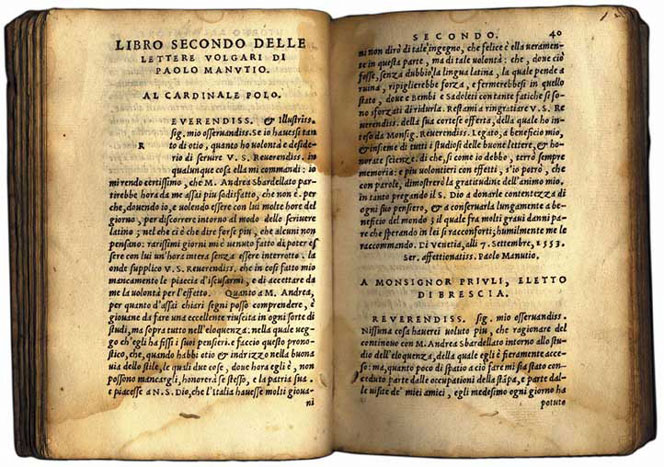
aldus manutius bookThe recent exhibition at the Grolier Club in Manhattan, “Aldus Manutius: A Legacy More Lasting Than Bronze” reminded me that the pocket-sized book was invented some five hundred years ago.

The pocket book revolutionized not only how we read but who and what we read.

In a recent talk I gave to the Editors Association of Canada about the changing face of publishing, I defined two milestones in the publishing industry.

First Milestone…

The first milestone came in two stages, beginning with the invention of the printing press by Johannes Guttenburg in 1452. Up to then,

…Books were a work of art… And part of an elite. Delicate, large and beautiful, they were created in the language of the church—Latin—and in turn copied entirely by hand by the monks. With the dimensions of a current newspaper, but much thicker, these large illuminated manuscripts sometimes weighed more than 50 pounds.

Readers were mostly scholars and the religious elite. In fact, reading was an elite occupation. The majority of people at the time couldn’t read and had no interest in books. Besides, books were not written in the commonly spoken language of the countryside such as English, French, German or Spanish.

In fact, the presses formed the very basis of the artistic Renaissance, the religious reformations and the scientific revolution, wrote Elizabeth Eisenstein in The Printing Press as an Agent of Change. “The printing press allowed the spread of information that couldn’t be controlled by the clergy, kings, politicians, or the religious elite,” adds New York Times technology reporter Nick Bilton in I Live in the Future and Here’s How It Works. Storytelling was no longer confined to an elite clergy; books could be created by anyone and shared in the spoken languages of the people.

The printing press had opened a gate of opportunity for secular expression to a greater audience. Whenever an opportunity is created, a corresponding need is identified. The need to connect a literate lay public with scholars and storytellers was resolved fifty years later by Aldus Manutius.

Until then, books, albeit printed in the language of the people, remained large, heavy and cumbersome. In 1502, Aldus Manutius invented the portable pocketsize book—the small format libelli portatiles (portable little books)—effectively creating “the mobile phone of his day,” according to Bilton.

Bound in vellum, these long, narrow libelli portatiles, easily transported in a pocket or a satchel, “could be held in the hand and learned by heart by everyone,” wrote Manutius. aldine press book

Manutius founded The Aldine Press in 1495 in Venice. His printing company proudly bore the logo of dolphin entwining an anchor—taken from the term festina lente (hasten slowly), a motto Manutius took from a Roman coin—and Aldine books quickly gained a reputation for their clean design, excellence in typography and inexpensive and accessible price. The Aldine press emphasized Greek and Latin lexicons and grammar manuals, with the first printed edition of Aristotle in 1495. Manutius was also the first to print Thucydides, Herodotus, Sophocles and other Greek philosophers. “He was possibly the first printer to compare manuscripts to arrive at the most reliable text,” adds Jennifer Schuessler of the New York Times (February 27, 2015).

Manutius was the first to use italic type, mimicking the handwriting of that time, and the first to use the semicolon in its modern sense. In 1501, Manutius released Virgil’s Opera as the first of his octavo editions of the classics and the first book to use italic print. It was produced in higher-than-normal print runs (1,000 rather than the usual 200 to 500 copies).

The octavo format book is created from one or more full sheets of paper on which 16 pages of text are printed; the sheet is folded three times to produce eight leaves. Each leaf of an octavo book represents one-eighth the size of the original sheet. The actual size of the book depends on the original size of the full sheet of paper on which it is printed. These varied according to place and time. A sixteenth century octavo printed in France or Italy was about the size of a modern paperback; an eighteenth-century octavo printed in England was larger, about the size of a modern hardcover novel.

Second Milestone…

The second milestone I talked about is, of course, the worldwide use of the Internet. Like the Guttenberg printing press, the Internet and associated World Wide Web has created a gate of opportunity that has identified a need. That need is currently being satisfied by ebook publishing, mobile phone communication and the Indie/self-publishing model.

In my September 6, 2014 article “How We Will Tell Stories in the Future” I describe the effect of the Internet and use of digital devices as agents of change and empowerment in storytelling and publishing.

The first email was delivered in 1971 and in 1989 Cern gave us the WorldWide Web. The Internet wasn’t commercialized until 1995. The first web log (blog) was published in the late 1990s and Facebook was launched in 2004. A few years later smart communication devices were created and mass marketed with multi-touch interface (e.g., the iPhone). By 2013, over 2 billion people were using the Internet and social media via computer, smartphones, tablets, game consoles, e-readers and music players. Over 156 million blogs were identified and over 1 billion files were uploaded daily to Dropbox.

While many people still read books and go to the cinema, watch pre-programmed TV or rent DVDs, many more enjoy their stories through other devices: computers, downloads, mobile phones and e-readers that provide material through other media and venues such as Indie and self-publishing, amateur YouTube videos, interactive games and social networks. We stand poised on the edge of a wonderful cliff that celebrates the expression — and consumer choice — of the individual. The music industry shows this the best, where people dismissed the prepackaged albums and CDs and opted to create their own unique playlists through individual song downloads. The publishing industry is currently struggling with its own painful yet thrilling metamorphosis as is the visual arts industry. In fact, they are all blurring into one large integrated amalgam of artistic expression.

The information you get today is coming “more and more through your friends and through your social network. It’s being distributed through channels of trust and the trust isn’t necessarily the BBCor The New York Times. It’s people,” says B.J. Fogg founder of the Persuasive Technology Lab at Stanford University.

WardIsland wall in forest

Ward Island, Ontario (photo by Nina Munteanu)

During the days of packaged content, leading storytellers were published authors, journalists and writers of newspapers and magazines. “Now distribution channels matter less and anyone with an appropriate device can be a storyteller,” says Bilton, who shares that on the Internet we tend to follow individuals we trust (e.g., Clive Thompson or David Carr) as much if not more than established organizations (like Wired Magazine or The New York Times). Accessible technology, platforms, free applications and software has totally enabled the individual.  No longer confined to the written word via paper books or visual expression through movies or TV shows, storytelling has embraced many forms. Amateur and professional have equally blurred.

From paperbacks to digital phones and tablets, we are embracing the shifting zeitgeist of an entire world. The future belongs to the storyteller, from pocketbook to tablet. What’s next?


nina-2014aaNina Munteanu is an ecologist and internationally published author of award-nominated speculative novels, short stories and non-fiction. She is co-editor of Europa SF and currently teaches writing courses at George Brown College and the University of Toronto. Visit www.ninamunteanu.ca for the latest on her books.

Who’s Your Audience and Why Should You Care?


Beaches-snow06

Winter in The Beach (photo by Nina Munteanu)

The artistic process, whether painting or prose, is admittedly the child of self-expression. The long-standing image of the cloistered artist in her studio — hunched over her writing desk or standing before her canvas to create from the depths of her soul — is surely a truism. Artists create from the heart; we dive deep inside our often tortured souls and closeted past to draw out the universal metaphors that speak to humanity and share—

Ay, there’s the rub. For to share is to have a dialogue and to have a meaningful dialogue is to demonstrate consideration of the other. Somewhere in that journey that began with self, others entered. It is, in fact, something of a paradox and a conundrum for many artists. One that has challenged the artistic community for centuries. It is also why many artists have relied on agents, benefactors, and advocates to effectively communicate, target — and even interpret — their often abstruse “message” to their appropriate audiences.

Purists will tell you that a true artist need not consider her audience; because her self-expression naturally finds relevance with the culture and zeitgeist from which she writes through universally understood metaphor: her story is their story.

But is that enough?

I suppose it finally comes back to whether you are interested in sharing. I don’t know any published authors who don’t wish their books to sell. Every storyteller needs an audience to connect with and engage. That is ultimately what good storytelling does: engage, connect, rouse emotions and evoke empathic feelings. Make an impact.

Beaches-snow03

Photo N. Munteanu

Does identifying and targeting a specific audience result in more satisfied readers and ultimately better sales? Of course it does. The more you—and whoever is helping you market your work—know about your audience, the more likely you are going to attract them to your book, convince them to buy it and ultimately connect with them. That’s the irony of art: it is a treasure that is created out of the depths of solitude but ultimately brought into the light and shared with the world. For your art to have impact, you must know and understand your world.

Knowing your audience will affect every aspect of your book project. It will help determine:

  • What your story is about and how you write it (from language, voice or personality, narrative style, tone or mood/attitude, characters, setting and theme)
  • What genre it lies under
  • the look and tone of the cover and blurb
  • all aspects of promotion

For instance, who are your intended readers? To what age group to they belong? What culture and sub-culture? What gender(s)? What education and intellectual capacity? Economic status? What regions? What political leanings? Prejudices and beliefs? What knowledge-base?

To know your audience is to know your story better.


nina-2014aaNina Munteanu is an ecologist and internationally published author of award-nominated speculative novels, short stories and non-fiction. She is co-editor of Europa SF and currently teaches writing courses at George Brown College and the University of Toronto. Visit www.ninamunteanu.ca for the latest on her books.