What Did You Do Before You Were Famous…?

Vanc Library-Atrium2

Vancouver Central Library (photo by Nina Munteanu)

So, you’re a famous author now…

You’ve published several books and they sold more than a dozen copies each. In fact, a few have been translated and are in second printings. You’ve received some recognition and awards and a bazillion nominations. You’ve landed some speaking engagements with writing and reader groups and a movie producer is soliciting a treatment from you. You have a following…Fans who “stalk” you at the writer conventions you participate in. Fans who want to co-write the sequel to your current bestseller with you, because they understand your universe—and your characters—so well. You discover that some fans have gone ahead and written fan-fic about your main character and universe on the Internet—a sign of adoration. Really.

But you weren’t always famous…

Neither was John Steinbeck, Ursula Le Guin, J.D. Salinger, Harper Lee or J.K. Rowling…

When did the transition occur for them? It’s not that easy to peg and it isn’t that obvious. This is partly because, it depends on each writer’s own criteria for success and fame. Particularly given that many writers aren’t, in fact, seeking fame, per se.

However, what every career writer wants, which often comes alongside fame is this: autonomy and the ability to write for a living without having to sneak it in at midnight after you’re finished your “real” job.

No one is “born” a writer; most of us start out doing something else to make a living. In the meantime, we work hard on what we love and what feeds our souls and our passion for storytelling. We assiduously write on stolen time and submit queries and letters. We do research and marketing. We write drafts, do revisions, attend classes and read books. All hoping to eventually write full time.

Let’s look at the humble roots of some famed writers and what key moment signified their move into the light of career novelist:

JK RowlingJ.K. Rowling was an unemployed single mother on public assistance when she wrote the first book. The book was rejected by over a dozen publishers before a small British publisher, Bloomsbury, said yes.

JohnSteinbeckJohn Steinbeck worked through many odd jobs before earning enough to work as a full time writer. His day jobs included: apprentice painter, fruit picker, estate caretaker and Madison Square Garden construction worker. He also ran a fish hatchery in Lake Tahoe and did guided tours there.

MargaretAtwoodMargaret Atwood worked in a coffee shop. She says her first job experience was NOT ideal: She had to deal with a difficult cash register, a rude ex-boyfriend who would come by just to stare at her and barely tip, and fellow employees who were definitely not friendship material.

WilliamFaulknerBefore his writing career blossomed, William Faulkner worked for the postal service, as postmaster at the University of Mississippi. In his resignation note, he summarized the struggle of art and commerce faced by most authors: “As long as I live under the capitalist system I expect to have my life influenced by the demands of moneyed people. But I will be damned if I propose to be at the beck and call of every itinerant scoundrel who has two cents to invest in a postage stamp. This, sir, is my resignation.”

JD SallingerIn a 1953 interview, J.D. Salinger shared that he had served as entertainment director on the HMS Kungsholm, a Swedish luxury liner. He drew on the experience for his short story “Teddy”, which takes place on a liner.

Ursula_Le_GuinUrsula Le Guin struggled initially to be published in the mainstream fiction world, but her first three novels, Rocannon’s World, Planet of Exile and City of Illusions, put her on the sci-fi map.

JamesJoyceAn accomplished tenor, James Joyce made money singing for his supper before his work was published.
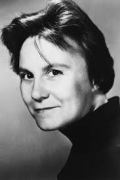
HarperLeeHarper Lee worked as a reservation clerk for Eastern Air Lines for several years, writing stories in her spare time. A windfall came when a friend offered her a Chirsmas gift of one year’s wages and one year off to write whatever she pleased; she wrote the first draft of “To Kill a Mockingbird”.

stephen kingStephen King was a janitor for a high school as he struggled to get his fiction published. His time wheeling the cart through the halls inspired him to write the opening girl’s locker room scene in “Carrie”, his breakout novel.

KurtVonnegutKurt Vonnegut managed Americas first Saab dealership in Cape Cod during the late 1950s, a job he joked about in a 2004 essay, “I now believe my failure as a dealer … explains what would otherwise remain a deep mystery: why the Swedes have never given me a Nobel prize for literature.”

Virginia_WoolfWhen Virginia Woolf’s brilliant novels failed to find a publisher, she and her husband Leonard bought a printing press and set up their own publishing compay Hogarth Press in their living room. They published Woolf’s masterful novels, such as Orlando and To The Lighthouse, as well as T.S. Eliot’s The Waste Land, among other classics of the era.

TS EliotT.S. Eliot worked as a clerk for Lloyds Bank of London. During that time, he composed “The Waste Land”.
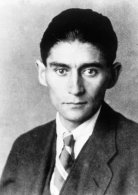
Franz KafkaFranz Kafka served as the Chief Legal Secretary of the Workmen’s Accident Insurance Institute. Obviously.

Douglas Adams was a bodyguard. Even published authors often have to work other jobs to make ends meet, Douglas Adamsand The Hitchhiker’s Guide to the Galaxy author Douglas Adams was no exception: At one point, he served as a bodyguard for a wealthy Arabian family while he wrote for radio shows and Monty Python. Good writers are good multitaskers!

James_michenerJames A. Michener was a teacher before writing only at age 40. He Michener is notable more for his output than his age. The Tales of the South Pacific author (whose Pulitzer Prize-winning book would later be adapted into a Broadway musical) wrote a staggering 40 books after the age of 40—nearly a George_Orwellbook a year—after spending much of his life as a teacher.
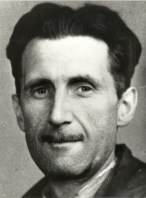
Before he wrote 1984, George Orwell served as an officer of the Indian Imperial Police in Burma, where he was known for his “sense of utter fairness.”


nina-2014-BWNina Munteanu is an ecologist, limnologist and internationally published author of award-nominated speculative novels, short stories and non-fiction. She is co-editor of Europa SF and currently teaches writing courses at George Brown College and the University of Toronto. Visit www.ninamunteanu.ca for the latest on her books.


The Writer-Editor Relationship, Part 2: Five Things Writers Wish Editors Knew—and Followed

patterns-Cedar log moss2-LR

Cedar log (photo by Nina Munteanu)

In my previous article, “The Writer-Editor Relationship, Part 1: Editors Preparing Writers,” I focused on clarifying expectations between editors and writers from the editor’s point of view. Part 2, this article, focuses on this same relationship from the writer’s point of view.

Clarity of expectation, honesty, and mutual respect are key features in a productive and successful writer-editor relationship. Writers expect editors to inform them if their expectations are out of line, and writers rely on editors’ honesty and transparency to let them know if they are comfortable with the task being asked of them. This, of course, is predicated on the editor’s full understanding of what that task is; again, it is the responsibility of the editor to determine the scope of work from the author—just as a doctor will ask key questions to diagnose a patient. If an editor has reservations, caveats, or limitations with the project, these should be shared upfront. Honesty is always best, and it should start right from the beginning so that mutual respect is cemented.

Below is a list of five things that writers wish editors knew—and followed.

  1. Edit to preserve the writer’s voice through open and respectful dialogue

Losing your voice to the “hackings of an editor” is perhaps a beginner writer’s greatest fear. This makes sense, given that a novice writer’s voice is still in its infancy; it is tentative, evolving, and striving for an identity. While a professional editor is not likely to “hack,” the fear may remain well-founded.

A novice’s voice is often tangled and enmeshed in a chaos of poor narrative style, grammatical errors, and a general misunderstanding of the English language. Editors trying to improve a novice writer’s narrative flow without interfering with voice are faced with a challenge. Teasing out the nuances of creative intent amid the turbulent flow of awkward and obscure expression requires finesse—and consideration. Good editors recognize that every writer has a voice, no matter how weak or ill-formed, and that voice is the culmination of a writer’s culture, beliefs, and experiences. Editing to preserve a writer’s voice—particularly when it is weak and not fully formed—needs a “soft touch” that invites more back-and-forth than usual, uses more coaching-style language, and relies on good feedback.

An editor colleague of mine consistently accompanies her edits with the question, “Does this change preserve your meaning?” This prompt both focuses on “voice” and reminds the writer that the editor is considering it, which fosters a nurturing environment of mutual respect. Editors who are not familiar with working with writers in the early stage of their careers may wish to defer to one who is more experienced.

Editors also need to consider how the author’s narrative voice harmonizes with the standard in the author’s targeted genre and niche market. Pursuing respectful and open dialogue about how the author’s voice fits or doesn’t fit that standard is another responsibility of a good editor and one an author will come to rely on—particularly early on in their career.

  1. Understand—and embrace—the market and genre of your writer

Writers are often told to write what they know. This edict applies equally to editors: edit what you “know” and understand. Each form of writing—from literary and genre fiction to journalism, the memoir, and technical writing—encompasses an overall style, culture and vision, associated language, and even “jargon” that is important to understand to succeed with readers. Even writers who subvert the trope need to first understand what they are subverting, and so does the editor.

I write and edit science fiction and fantasy. I do it very well, because I have a passion for it and I intimately understand its world and language, including where the boundaries lie and where the risks—and sublime nuances of originality—also lie. I worked as a scientist for over 20 years and have published papers in peer-reviewed journals, so I am comfortable editing technical and scientific papers. I live that world. On the other hand, I do not read, nor do I understand or care for, the horror fiction genre. Not only would I do a lousy job editing a work of horror, but I wouldn’t provide the discerning editorial advice to best place that work in the horror market. It is in the area of market niche that one editor will shine over another based on their familiarity with, and current activity in, that industry sector. This is ultimately what writers are paying for: the multi-layered understanding of the editor that comes with a full embrace of that world.

Editors should ensure a good fit and the best chance for success by not taking on work in a genre with which they are neither familiar nor comfortable. Think of the author. Which leads me to the next point:

  1. Be honest and practice moral integrity: Don’t take on a writer’s work unless you like and believe in it

 When I was starting out as a writer with my first novel, I shopped it around to many agents, hoping for representation. While the book was eventually published with great success, many agents had rejected it. Literary agents take on clients and shop their books to publishing houses. They usually charge a percentage of the take and are not paid (if they are good agents) until the book is sold to a publishing house. Payment, therefore, is predicated on success. In many cases, an agent would respond with good things to say about my first manuscript but would not take it on, citing this common phrase: “It just didn’t excite me enough.” I was initially puzzled by this response. If they liked it, why didn’t they take it on? But “I like” isn’t the same as “I’m excited.” I soon realized the importance that excitement played in the agent’s business. They were my advocate, after all. If they weren’t eager about the book, how could they sell it to someone else? And if they couldn’t sell it to someone else, how could they get paid?

While the editor is usually paid up front and/or upon deliverable, they fulfill a similar role: that of advocate. If an editor takes on a writer’s work without enjoying it or believing in it, they are much less likely to do a good job. And both lose when that happens.

When we just do a job for the money and not for the passion of doing something well, we run the risk of losing on all fronts. We run the risk of being dishonest in our assessments and then doing a shabby job. And then losing our reputation. Be an advocate and be honest; sometimes, that means saying “no” to a project and explaining why. The writer will benefit and will thank you for it—if not right away, then eventually.

  1. Edit professionally and appropriately to promised deliverable

In my capacity as writing coach, I have met with several writers who have complained that their work had been insufficiently or inappropriately edited. This can occur for several reasons: (a) lack of time; (b) incompetence; or (c) inappropriate match-up.

  • Lack of time 

As a writer, I once experienced an insufficient copy edit by a freelance professional editor. In fact, this particular editor was a good editor and had impeccably edited a previous work of mine. When I submitted my “edited” work to a beta reader, he pointed out many places that my copy editor had missed. A few is OK, but she’d missed many. From subsequent correspondence, I deduced that my editor had been overrun with other projects and had skimmed mine a little too fast. Unfortunately, this was unacceptable, given that I’d agreed to pay her a professional rate for a specific deliverable: a copy-edited, proofed, and publication-ready manuscript.

The ultimate message here for editors is, don’t take on a writer’s work and make promises of delivering until you know what you’re getting into and know that you can do it in the time you suggested. Honesty is best here. If you are too busy to meet the specified deadline, say so and refer the writer to another respected editor if they can’t wait. And don’t worry about “losing” the client—you haven’t. But that editor I mentioned in the previous paragraph did.

  • Incompetence 

Unfortunately, most editors who are incompetent are unaware of it. One of my professional writer-editor colleagues at SF Canada invoked the Dunning-Kruger Effect (“at a certain point, people who really don’t know something don’t know that they don’t know it”) to share her story of what passes for editorial input in “an age of homonym errors.” She suggested that some self-appointed editors are convinced they have significant skills but allow a large error rate.

This is where organizations like Editors Canada become invaluable. Editors Canada certifies editors for skills in various editing fields and forms (that is, structural-, stylistic-, and copy editing and proofreading). If you are a professional editor with certification, ensure that you make this known to the writer; many writers not only don’t understand the various editing forms (for example, copy editing vs. structural editing), they also don’t necessarily recognize competence until after the job is done—when it’s too late.

  • Inappropriate match-up 

This is similar to point 2, which talks about matching writer and editor through genre and market. A good fit also includes temperament, schedules, communication style, and other considerations that will affect the editor-writer relationship and the natural progress of the project. As editor, I have encountered a few clients whose communications with me created tension and misunderstanding. We mutually agreed to terminate our arrangement early on, which saved much tension and grief. The transparency of the relationship allowed us to recognize the mismatch early on and attend to it before it became problematic and wasted both our time and efforts.

  1. Keep the relationship—and language—professional and respectful 

Without necessarily expressing this, the majority of writers—particularly beginning writers and, by default, indie/self-published writers—seek a professional editor who will treat them with respect. What this translates into is the use of professional language, tone, and behaviour. Writers aren’t looking for an editor to be their “friend.” Writers are also not looking for a professional editor to validate their work or them as people. Writers seek professional editors to give them honest and helpful advice that will help them create the very best work they can for eventual publication.

Simple. Not so simple.

As an editor who is also a writer (who gets edited a lot), I provide rationale as much as I can for the suggestions I make to writers. This helps establish and maintain a respectful and collaborative relationship between author and editor through the use of professional language, tone, and behaviour. Think of it as a doctor-patient relationship; I’ve dropped doctors like hot potatoes who are not willing to sit with me as an equal and discuss their prognoses. I want to know why, and ultimately, it’s my decision. The editor is an expert, but so is the writer.

The writer-editor relationship is foremost a professional one. As an editor, I feel it is my duty to promote integrity and respect with the writer, and this hopefully within a safe and nurturing environment for the achievement of mutual excellence.

This article was copy edited by Nicole North.


Nina MunteanuNina Munteanu is an ecologist and internationally published author of award-nominated speculative novels, short stories and non-fiction. She is co-editor of Europa SF and currently teaches writing courses at George Brown College and the University of Toronto. Visit www.ninamunteanu.ca for the latest on her books.

Finding Focus at Christmas-Reprise

Beaches-snow03

The Beach in winter (photo by Nina Munteanu)

How many of you are still running around

preparing for the Christmas celebration or secular family festivity? Buying that last minute gift you’d forgotten or were chasing down since a bazillion days ago? Or making last minute changes to your travel plans, house-cleaning for guests, mailing of cards or parcels or meal preparations?

Well, you’re reading this blog post … That means you’re sitting down and taking a minute to relax and regroup. That’s good. Remember to breathe… while I tell you a story…

I’d just finished a three-day drive through snow and rain storms from

Sammy

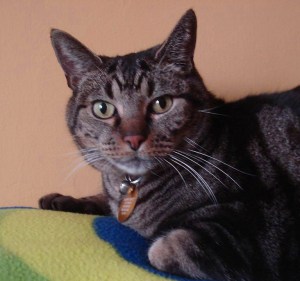
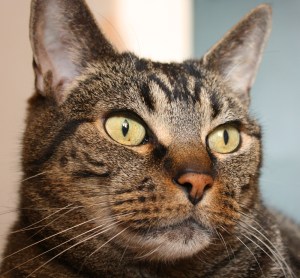
Sammy, my cat

Mahone Bay, Nova Scotia, to Toronto, Ontario, where I’m staying for two days before catching a flight to Vancouver to spend Christmas with my son and good friends on the west coast. Talk about fast living.

I move around a lot these days. It helps me to appreciate some of the most simple things in life and reminds me of what I love most about Christmas: how it focuses my heart and reconnects me. I don’t mean just with relatives and friends either, although the season certainly does that. I’m talking about my soul and the universe itself.

Before I became an itinerant, Christmas bustled with my responsibilities as primary caregiver, social coordinator and hostess of major parties.

sammy-2010-01_edited-1 copyAfter I’d said goodbye to our visiting friends and done the dishes and tidied the house, and my husband and son had gone to bed, I sat in the dark living room lit only with the Christmas Tree lights and the flickering candle. Listening to soft Christmas music, I was primed to write. My male cat, smelling fresh from outside, found his rightful place on my lap and settled there. He then trapped my hand with his paws, pinning me down with love. And there, as I breathed in the scent of wax and fir and cat I found myself again.

Most of us think of Christmas as a busy time, of getting together (often dutifully) with family and friends, exchanging presents and feasting. Christmas is certainly this, but that is only a shallow view of a far deeper event; and I don’t mean only Christians.sammy-2010-03_edited-1 copy

Whether celebrating the holy light of Hannukah or the birth of Jesus, or the winter solstice, this season provides us with the opportunity to meditate on far more than the surficial nature of the symbols we have come to associate with the season: the Christmas tree, presents, turkey dinner, Santa Claus or Saint Nicholas—most of which originate from pagan tradition, by the way.

sammy-close02 copySays Lama Christie McNally (author of The Tibetan Book of Meditation), “once you dive below the surface, you will discover a beautiful clear place—like a diamond hidden beneath the rubble. It is your own mind, uncovered … Tibetans say we have only just begun the process of awakening—that we still have quite a way to go in our evolutionary process. And it has nothing to do with building spaceships or computers. The next step in our evolution takes place within.”

Christmas is, more than anything, a time of embracing paradox. It is an opportunity to still oneself amid the bustle; to find joy in duty; to give of one’s precious time when others have none, to embrace selflessness when surrounded by promoted selfishness, and to be genuine in a commercial and dishonest world. If one were to look beyond the rhetoric and imposed tradition, the Christmas season represents a time of focus, a time to snow-christmas2008-sammyreflect on one’s genuine nature and altruistic destiny. A time to reconnect with the harmony and balance in our lives.

A time to sit with our cat, pinned with love, and write our next novel.


nina-2014aaNina Munteanu is a Canadian ecologist and internationally published author of award-nominated speculative novels, short stories and non-fiction. She is co-editor of Europa SF and currently teaches writing courses at George Brown College and the University of Toronto. Visit www.ninamunteanu.ca for the latest on her books.
The Careful Writer: Commonly Misused Terms

Log patterns 6

Spalting wood  (photo by Nina Munteanu)

When I first started writing stories — a while ago — I knew that I was a poor speller, had generally bad syntax and often misused grammar. Someone, who believed in my capacity to tell a good story, despite my shortcomings in delivery, handed me a slim copy of Strunk and White’s classic guide The Elements of Style. This elegant 105 page book includes elementary rules of usage; elementary principles of composition; a few matters of form; words and expressions commonly misused; and an approach to style.

It is “…still a little book, small enough and important enough to carry in your pocket, as I carry mine,” said Charles Osgood. And it has helped me out of a few messes. Let’s look at some examples of commonly misused words and expressions. These words and expressions, Strunk and White tell us, “are not so much bad English as bad style, the commonplaces of careless writing.” Being mindful of our language and our style can often make the difference in a publisher’s or editor’s perception of our professionalism.

Here are some of my favorites, in some cases more because of Strunk and White’s pithy comments than from the actual utility of the advice. Have you used any of these?

Allude: not to confuse with elude. You allude to a book; you elude a pursuer.

Allusion: easily confused with illusion. The first means “an indirect reference”; the second means “an unreal image” or “false impression”.

As to whether: whether is sufficient.

Being: not appropriate after regard…as. For instance, go from “she is regarded as being the best writer” to “she is regarded as the best writer.”

But: unnecessary after doubt and help. For instance, go from “I have no doubt but that…” or “She could not help but…” to “I have no doubt that…” and “She could not help…”

Compare: to compare to points out the similarity between objects regarded as different (as in most metaphor); to compare with points out the differences between objects that are similar. For instance, life may be compared to a pilgrimage; Paris may be compared with London (another large city) but compared to a movable feast. Nina: some modern linguists consider these interchangeable and do not distinguish the metaphoric elements of comparison. I concur with Strunk and White.

Comprise: literally means embrace. A zoo comprises mammals, reptiles and birds — because it embraces or includes them. The animals do not comprise a zoo — they constitute one.

Disinterested: means “impartial”. Do not confuse with “uninterested” which means “not interested in”. You bring in a disinterested (impartial) person to judge a dispute; another may be uninterested (couldn’t care less) about the dispute.

Effect: noun means “result”, and as a verb means “to accomplish”; not to be confused with “affect” which means “to influence”.

Farther/further: farther refers to distance and further refers to time.

Finalize: called a pompous and ambiguous verb by Strunk and White, I must confess using it many times in my other life as a consultant in business. Every segment of our society adopts its own vernacular of offbeat, “jargon” words and expressions that are regarded to help the flow of business. Another example that comes to mind is the use of dialogue as a verb. When using vernacular of any kind, be mindful that it is appropriate to your character, situation and story.

Imply/infer: not interchangeable. To imply is to suggest or indicate but not overtly express; to infer is to deduce from available evidence.

Interesting: Strunk and White suggest that this is, in fact, an uninteresting word, given that it tends to label and “tells” rather than letting the writer “show”. For instance, instead of using “an interesting tale of …” avoid the preamble and simply make it interesting! Let the reader judge. Telling them won’t make it so. This applies also to any letters you write to publishers and editors; avoid telling them your story is funny or interesting. Show it in your description.

Less: don’t use instead of fewer. Less refers to quantity; fewer to number. For instance “his troubles are less than mine” means they are of less magnitude; while “his troubles are fewer than mine” means he has a small number of troubles.

Nice: means everything and nothing. Use it sparingly and judiciously with intention; in other words, to be purposefully vague as in conversation. Strunk and White define it as a “shaggy, all purpose word”.

One of the most: Strunk and White define this phrase as a “feeble formula” that is threadbare, invites cliché and adds little except words to narration.

Personalize: Strunk and White dismiss it as a “pretentious word, often carrying bad advice. Do not personalize your prose,” they say, “simply make it good and keep it clean.” I agree. It falls under jargon.

Prestigious: “it’s in the dictionary, but that doesn’t mean you have to use it,” say our prestigious experts. Sorry … couldn’t help myself.

That/which: that is the defining (restrictive) pronoun; which is non-defining. For instance, 1) the lawnmower that is broken is in the garage (tells us which one); 2) the lawnmower, which is broken, is in the garage (gives us an additional fact about the lawnmower).

While: many writers use it indiscriminately for and, but and although. It can be efficiently replaced by a semi-colon (e.g., change “the girl stood by the door, while the man stood next to the couch.” to “the girl stood by the door; the man stood next to the couch.”). While is best used to mean “during the time that”.

For more writing tips on writing fiction (and non-fiction or memoir) check out “The Alien Guidebook Series” on writing.

References:

Strunk, William and E.B. White. 2000. “The Elements of Style” (Fourth edition). Longman. New York. 105 pp.

nina-2014aaNina Munteanu is an ecologist and internationally published author of award-nominated speculative novels, short stories and non-fiction. She is co-editor of Europa SF and currently teaches writing courses at George Brown College and the University of Toronto. Visit www.ninamunteanu.ca for the latest on her books.

Limestone Genre Expo—July 2015

I recently attended the inaugural festival of the Limestone Genre Expo (July 25, 2015) for writers in Kingston, Ontario. The festival gets its name from the city’s moniker, based on the many heritage buildings constructed there using local limestone.

It would have been a very long trip from my digs in Nova Scotia; but I’m currently in Toronto, teaching writing at UofT and George Brown College. I still had to get up earlier than I normally do to get to the 1-day festival that started at ten in the morning.venue

It was worth it.

Organizers Liz Strange, Barry King, Delina MacDonald and Marlene Smith nailed everything right. Being the first of hopefully many more, this writers’ festival wisely started small. But, like the good Doctor’s tardis, the venue belied its size by being dense with quality and diversity.

Alison Sinclair

Alison Sinclair

The Ongwandada Resource Centre, where the festival was held, had lots of parking with a friendly well-lit ambience inside under an atrium with tables and chairs for gathering and several rooms for panels and workshops.

The festival covered several of the major genres such as fantasy, science fiction, horror, romance and mystery, with representation by well-known authors in each. Organizers offered a triple track program from 10 am to 5 pm that included panels, informative workshops, readings, novel pitch sessions with CZP

Sandra Kasturi of CZP

Sandra Kasturi of CZP

and Bundoran Press and first page critiques with Caro Soles. Festival organizers populated their program with well-established writers from their own communities. Readers of genre fiction and writers looking to learn and network were given the opportunity to meet some of the top genre writers in the region. The venue included a book fair, box lunches and a snack stand. The only thing missing was a primo coffee bar.

Marie Bilodeau

Marie Bilodeau

The small venue provided an intimate setting for great networking. I had a chance to meet many of my old friends and to make new ones. Marie Bilodeau, an Ottawa fantasy writer, gave an exquisite reading of her new series “Nigh”. Alison Sinclair, recently moved to Ottawa, beamed as she showed me the new release of her Eyre series, “Contagion” by Bundoran Press. Aurora-winning short story author Douglas Smith gave

Doug Smith

Doug Smith

an informative workshop on how to market and sell your short stories. His excellent guidebook “Playing the Short Game” sold for a special festival price. I caught Derek Newman-Stille sitting in the lounge over a box lunch and discussed his radio show in Peterborough and traded stories with Hayden Trenholm, publisher of Bundoran Press and aurora-winning author of the Steeles Chronicles. Other writers who I had a chance to visit

Alyssa Cooper

Alyssa Cooper

with and meet included Caro Soles, Sandra Kasturi (of Chizine), Alyssa Cooper, Eve Langlais, Matt Moore, Nancy Kilpatrick, Matthew Johnson, and Violette Malan.

The organizers—themselves published genre writers (Strange writes fantasy, horror and mystery and just released her first science fiction novel, “Erased”; King writes science fiction)—started the festival in response to an observed need to showcase genre writers in the Kingston area, otherwise rich in non-genre writing festivals. “Kingston is in an interesting position because we do have so many writers and we do have the WritersFest and so on,” explained King to Peter Hendra of the Kingston Whig-Standard. King felt there was room to showcase this literature in Kingston and the surrounding area.

Derek Newman-Stille

Derek Newman-Stille

“I find that genre fiction can sometimes be seen on a lower status as ‘literary fiction’, and that stings,” Strange confided to me. “I thought [the LGE] would succeed because there are not that many festivals of this sort, and after we put feelers out to see who might be interested in attending the positive responses were overwhelming.”

Caro Soles

Caro Soles

Strange added that “nerd culture” these days is more mainstream than in the past, thanks to George R.R. Martin’s Game of Thrones and Stephanie Meyer’s Twilight series. Strange concluded that this is a good thing for writers of romance, sci-fi, horror, mystery and fantasy and observed that genres are blending a lot more (e.g., historical fantasy, paranormal romance, etc.). I personally write mostly blended genres: science fiction thrillers; SF eco-fiction; historical fantasy and romantic SF.

Violette Malan

Violette Malan

I asked Strange for her opinion on whether the festival was a success and what the organizers plan to do for next year. She gave a resounding yes; they had double the numbers they’d hoped for and didn’t lose money (a common challenge with writing festivals). With most events tending to be in spring or fall, they chose summer, which worked well and showed off Kingston.

Liz Strange, Marlene Smith, Barry King, Delina MacDonald

Liz Strange, Marlene Smith, Barry King, Delina MacDonald

Based on the feedback and success of the con, it looks like the festival next year will run two days.

Now that’s great news!

.

.

.

nina-2014aaNina Munteanu is an ecologist and internationally published author of award-nominated speculative novels, short stories and non-fiction. She is co-editor of Europa SF and currently teaches writing courses at George Brown College and the University of Toronto. Visit www.ninamunteanu.ca for the latest on her books.

Women Heroes, Part 2: How Brienne of Tarth Saved “Game of Thrones”

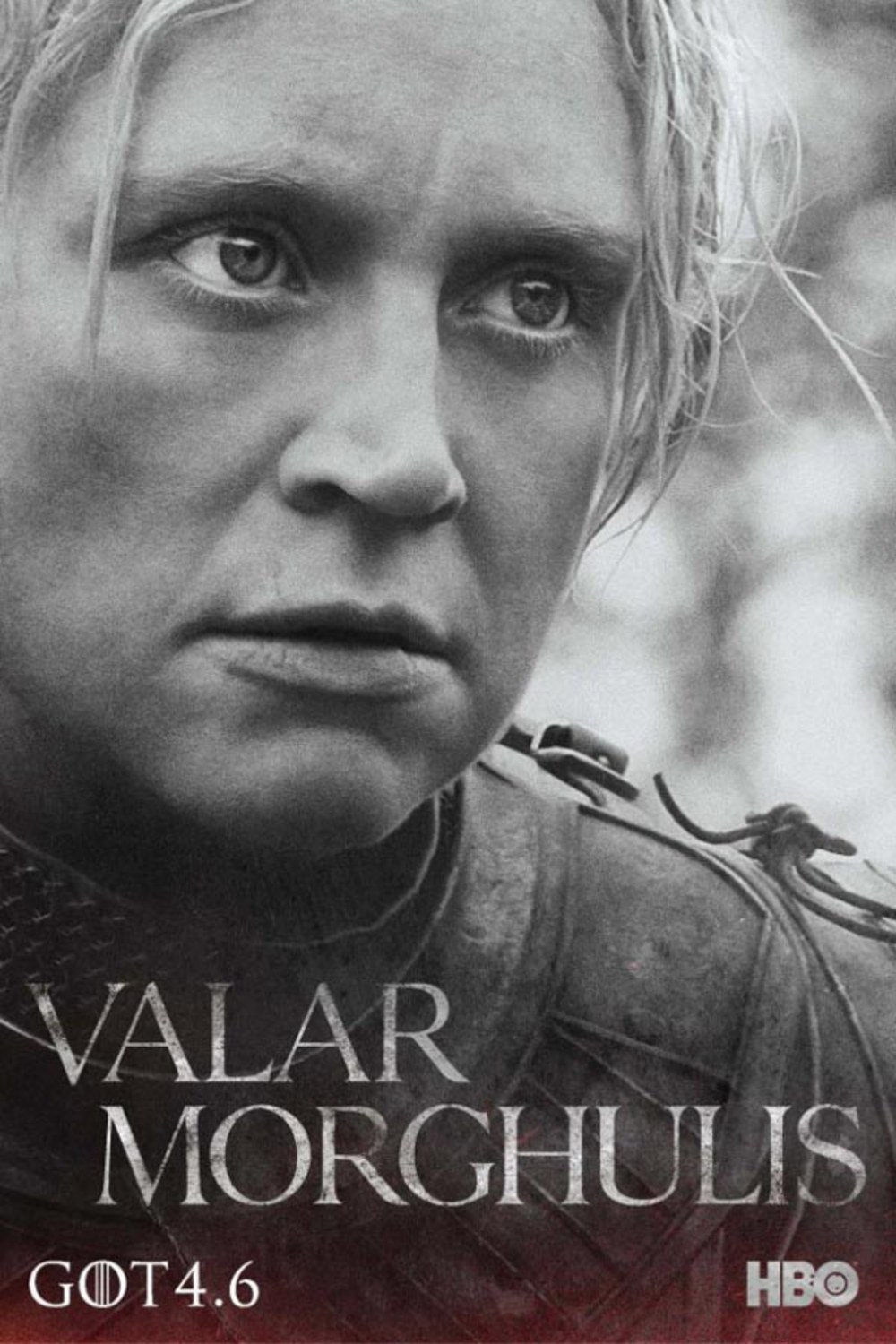
brienne of tarth-valar morghulisI’ve been following the insanely popular—yet excruciatingly brutal—Game of Thrones for several seasons now. I must confess, partly because I don’t own or watch TV, that I am a little behind. I’m currently watching Season Four, while still metaphorically shaking in the violent wake of the shocking and brutal Red Wedding episode of Season Three. As the Internet buzz revealed, this was an extremely difficult show to watch for everyone. What was the purpose of its graphical brutality? Who needs to see that level of violence? I am reminded of an introductory scene in the show in which character John Snow counsels his little brother Bran to not avert his eyes when his father executes a deserter, by chopping off his head—an act that foreshadows his own decapitation later in the series. It is as though the producers of the show are counselling us in the same way as they subject us to grisly scene after grisly scene. Many cheap and gratuitous, as far as I am concerned.

The Red Wedding scene, in which several beloved characters are brutally slaughtered set into play a new set of rules for audience engagement: that of total distrust. Distrust in the storytellers (primarily in the producers of the show, whose scripts, I’m told, have deviated from the novels in some important ways). Distrust that creates an uneasy tension. Distrust that precipitates a panicked wish for clairvoyance. This is because we have no concept of fairness in the story; yet we’ve so invested in the characters. That is the storyteller’s worst act of cruelty: to hold us hostage to the characters. The rules of fair play in story have been broken. We’re stuck in a kind of free fall, desperately hoping that our beloved characters will make it through the night intact, if not unscathed. And when they don’t, its like watching our children die, as we stand powerless by.

Good fiction—as opposed to reality—tells a purposeful story. A story with fictional characters, who play a purposeful role. All good stories make a promise in the beginning; a promise they keep in the end. They create a covenant with their audience to participate in a fulfilling journey. This doesn’t have to mean a happy ending, but it does include meaning and fulfillment—even if only for its audience. And that must involve victory of sorts—and hope—whether it is through redemption, acceptance, enlightenment, or some change that gives us “more”—not less; something that allows us to prevail alongside.

If I feel that I am simply witnessing a cesspool of meaningless chaos and brutality, dominated by ruthless and insane people, in which heroes are equally powerless victims as they are true agents of change—with no rhyme or reason to tell the difference—then I must ask myself the question: why am I watching this? What does this story mean to me? I start to feel like a misanthropic voyeur, as perverse as Joffrey or Littlefinger as I watch people get tortured, flayed alive, dismembered, and worse… with no recourse. This is NOT entertainment and it certainly isn’t of any value to me. For such an offence to the senses to have value, there must be an element of—or at least a grain of hope of—prevailing and movement.

By Season Three end, both the series and I are feeling a little tired. And for good reason; most of the characters—the women particularly—are trapped in an incessant pattern of simple endurance. That seems to be all they are able to do: endure. Certainly they manage to act and create within their limited sphere of influence; but mostly to colour their position, not change it. So, we endure alongside; and we can endure only so much.

Then enter Brienne of Tarth. Also known as Maid of Truth.

And with her, a breath of much needed fresh air.brienne of tarth-close

When Brienne was first introduced in “What is Dead May Never Die” in Season Two, she brought with her the anachronistic romanticism of a true knight. We first see her besting favored champion Ser Loras Tyrell (Knight of Flowers) in a tournament. When she presents herself to King Renly Baratheon and removes her helm, the crowd hushes in surprise. To his offer of prize, Brienne requests a place in his Kingsguard, which he gladly grants, despite her gender and lack of formal stature as a knight.

Brienne is the iconic knight of the chivalric sagas: noble, virtuous, compassionate and brave. Singularly honest and loyal. So much so that her contemporaries deride her as simple, naïve and stupid. As though embracing such virtues is outmoded, foolish and weak. That she is a woman—albeit tall, ungainly and considered unfeminine—makes her virtues all the more powerful and refreshing.

BrienneoftarthWhen King Renly is assassinated, Brienne swears fealty to Catelyn Stark and becomes her sworn sword. Catelyn charges Brienne to return her captive Jaime Lannister to King’s Landing to exchange him for her two daughters held hostage there. Their journey provides some of the best scenes of the TV series and some of the most fulfilling interactions. Throughout Jaime’s insufferable taunts about her appearance and likely dismal history with the opposite sex, Brienne remains stoically silent. Except when she speaks:

“All my life men like you’ve sneered at me, and all my life I’ve been knocking men like you into the dust.”—Brienne to Jaime Lannister, Game of Thrones

Essayist Brent Hartinger suggests that Brienne’s character is a well-written departure from fantasy novels where the main characters are commonly “the slender… average-heighted, the conventionally abled and traditionally gendered.”

Essayist Caroline Spector describes Brienne as a “study in heartbreaking contradictions. She embraces the romantic ideals of her culture, both emotionally and through her actions, but is continually betrayed by the real world simply because she cannot turn herself into the woman the Westerosi legends tell her she should be.”

By upholding her ideals of integrity, Brienne refuses to conform to the established cultural expectations. Her very nature—from physique to comportment to idealism—defies the notion in Westeros that women are to be taken or coerced, and meant to endure their lot; not be agents of their own change. Spector describes Brienne as a woman who has “taken for herself most of the attributes of male power.” She embodies “how women who dare to take male power for their own are judged and treated not only in Westeros but in all conventionally patriarchal societies.”brienne-jaime-GoT

The journey of Brienne and Jaime is a fine tale of initial antagonism, discovery, surprising tenderness and ultimate friendship, based on honour and mutual respect. Throughout, Brienne defends and encourages a flagging Jaime and he, in turn, saves her on several occasions, culminating in his return to rescue her from a brutal death in the bearpit.

What makes “The Bear and the Maiden Fair”—or any other scene in which Brienne and Jaime appear—so pleasing? We witness in the interactions between them an evolution in character, great opportunities for learning and redemption, and finally the development of an iconic friendship based on respect and equality—something normally reserved for individuals of the same sex—that neither had previously enjoyed. Like two souls missing something, each is a gift to the other. And though delivered differently, it is the same for both: honour, self-respect and faith in humanity. And neither is the same for their interaction.

brienne-jaime-swords“The bathhouse had been thick with the steam rising off the water, and Jaime had come walking through that mist naked as his name day, looking half a corpse and half a god.”—George R.R. Martin, A Feast for Crows

Brienne is the catalyst hero. She gives us hope. She gives us hope to save the world. She does this through her influence on others. By shear strength of her genuine goodness, Brienne transforms, challenges, and supports. She is über-strong, yet vulnerable; which Jaime recognizes and appreciates as something truly beautiful. The reason he returns to save her in the bear pit.

“I am grateful, but… you were well away. Why come back?”

A dozen quips came to mind, each crueler than the one before, but Jaime only shrugged. “I dreamed of you,” he said.—George R.R. Martin, A Storm of Swords

Jaime slides back to his scoundrel-self once returned safely to King’s Landing and out of Brienne’s sphere of influence—and beneath the shadow of his overbearing father. He is a chameleon, a shape shifter, who struggles to lift himself out from the shadow of his soulless father. Despite some continued reprehensible behavior (particularly to do with his sister, with whom he had formed a perverse relationship), Brienne’s light of honour appears to burn inside him in some form. His actions—tasking her to find and secure Sansa’s safety and giving her his own sword—maintains their honour-bond. When he gives her his longsword, forged of Valyrian steel, he asks her to name it; showing the cooperative respect between the two. She chooses the name Oathkeeper, fulfilling again her role in their story.

In fact, Brienne’s story follows a more traditionally male narrative. Her quest is to save the beautiful maiden (Sansa), but not to marry her or benefit from the quest; it is simply to secure her safety. Feminist writer Rihannon tells us that this is a storyline that “the mother, the young girl and the shieldmaiden are all given equal weight and worth…She uses her strength and her skill to respect and help other women in ways that most men in Westeros would never even think to attempt, because she understands, more than any other knight, that women are truly worth something as individuals.”

Are other women of Westeros poised to rise as true agents of change and takebrienne-of-tarth command not only of their lives but to save the world? Daenerys Targaryen, the dragon mother, liberates slaves; courage and a sense of justice animates the independent Arya. And we’ll see what becomes of Brienne…and Jaime.

I will continue to watch this series with uneasy anticipation.


nina-2014aaNina Munteanu is an ecologist and internationally published author of award-nominated speculative novels, short stories and non-fiction. She is co-editor of Europa SF and currently teaches writing courses at George Brown College and the University of Toronto. Visit www.ninamunteanu.ca for the latest on her books.

Who’s Your Audience and Why Should You Care?


Beaches-snow06

Winter in The Beach (photo by Nina Munteanu)

The artistic process, whether painting or prose, is admittedly the child of self-expression. The long-standing image of the cloistered artist in her studio — hunched over her writing desk or standing before her canvas to create from the depths of her soul — is surely a truism. Artists create from the heart; we dive deep inside our often tortured souls and closeted past to draw out the universal metaphors that speak to humanity and share—

Ay, there’s the rub. For to share is to have a dialogue and to have a meaningful dialogue is to demonstrate consideration of the other. Somewhere in that journey that began with self, others entered. It is, in fact, something of a paradox and a conundrum for many artists. One that has challenged the artistic community for centuries. It is also why many artists have relied on agents, benefactors, and advocates to effectively communicate, target — and even interpret — their often abstruse “message” to their appropriate audiences.

Purists will tell you that a true artist need not consider her audience; because her self-expression naturally finds relevance with the culture and zeitgeist from which she writes through universally understood metaphor: her story is their story.

But is that enough?

I suppose it finally comes back to whether you are interested in sharing. I don’t know any published authors who don’t wish their books to sell. Every storyteller needs an audience to connect with and engage. That is ultimately what good storytelling does: engage, connect, rouse emotions and evoke empathic feelings. Make an impact.

Beaches-snow03

Photo N. Munteanu

Does identifying and targeting a specific audience result in more satisfied readers and ultimately better sales? Of course it does. The more you—and whoever is helping you market your work—know about your audience, the more likely you are going to attract them to your book, convince them to buy it and ultimately connect with them. That’s the irony of art: it is a treasure that is created out of the depths of solitude but ultimately brought into the light and shared with the world. For your art to have impact, you must know and understand your world.

Knowing your audience will affect every aspect of your book project. It will help determine:

  • What your story is about and how you write it (from language, voice or personality, narrative style, tone or mood/attitude, characters, setting and theme)
  • What genre it lies under
  • the look and tone of the cover and blurb
  • all aspects of promotion

For instance, who are your intended readers? To what age group to they belong? What culture and sub-culture? What gender(s)? What education and intellectual capacity? Economic status? What regions? What political leanings? Prejudices and beliefs? What knowledge-base?

To know your audience is to know your story better.


nina-2014aaNina Munteanu is an ecologist and internationally published author of award-nominated speculative novels, short stories and non-fiction. She is co-editor of Europa SF and currently teaches writing courses at George Brown College and the University of Toronto. Visit www.ninamunteanu.ca for the latest on her books.


Why Writers Can’t Spell

scribeWhen I participated in those humiliating spelling bees in primary school, I was usually among the last chosen because I was a lousy speller. I grew up in an immigrant family where Romanian was the official language; I heard my parents speaking German in the house and lived in a French-Canadian neighbourhood. English was actually the fourth language I learned and only once I started going to school. It seemed that my facility with language came at some expense. My spelling sucked. It didn’t help that I was probably borderline ADD, dyslexic and allergic to reading.

Are you a lousy speller too? Well, take heart. You’re in excellent company. Samuel R. Delany is dyslexic. Thomas Jefferson, F. Scott Fitzgerald, Herman Melville, Woodrow Wilson and John Irving were all rotten spellers.

Grenadian SF/F writer, Tobias Buckell, author of Sly Mongoose, admitted that “homophones practically kill me, even the ones I know are wrong, b, d, g, and p are often swapped, as is, of course, 6 and 9.” He confesses that rewriting “is a painful, deliberate struggle” as he must pore over his work word by word.

So, why is it that some of us can just look at the word “preposterous” and spell it, while others can see it a thousand times and never get it right? Neuroscience has shown us that it’s in the brain. Recent studies using functional MRI analysis have not only begun to map the areas of the brain we use in reading and writing, they’ve shown how a neurological glitch in about 20 percent of people may make them chronically poor spellers. That’s me!

My particular weakness is the homonym. These are words that sound the same but are spelled differently (e.g., right and write). I’ve seen writers mix homonyms a lot in my workshops and manuscript critiques. Common ones include:


There, their, they’re Bare, bear
To, too, two Grate, great
Who’s, whose Here, hear
Reel, real Meet, meat
Deer, dear Heel, heal
Brake, break Council, counsel
Mantle, mantel Principle, principal
Which, witch Where, wear

Keep a dictionary by your side and consult it often. For those of you, like me, who spend most of your writing time in front of the computer with internet access, you may wish to bookmark the online Merriam-Webster dictionary, www.m-w.com.

If you are, like Tobias Buckell, particularly susceptible to self-correcting when you revise your work, then have someone you trust proofread for you.

And hope that they, unlike Tobias or me, are NOT susceptible to self-correcting!

References:

Munteanu, Nina. 2009. The Fiction Writer: Get Published, Write Now! Starfire World Syndicate. Louisville, KY. 266pp


Nina Munteanu is an ecologist and internationally published author of award-nominated speculative novels, short stories and non-fiction. She is co-editor of Europa SF and currently teaches writing courses at George Brown College and the University of Toronto. Visit www.ninamunteanu.ca for the latest on her books.


Writing in Your Own Hand

writing-notebook05

writing in a cafe (photo by Nina Munteanu)

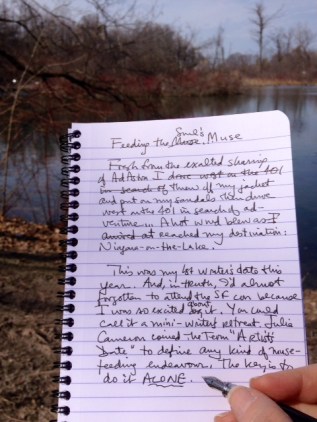
How many of you still handwrite? I don’t just mean a letter to a friend or relative (although handwritten letters are growing increasingly rare) or a reminder to do something or shopping list. I’m referring to writing prose, creative non-fiction, poetry or any kind of expression with a pen or pencil.

University student Cynthia Selfe shared, “I like the motion, pushing that lead across the page…filling up pages … I like flipping papers and the action of writing. It makes me feel close to what I’m saying.”

Handwriting is an art that many of us are losing.

A June 2014 New York Times article by Maria Konnikova shares neuro-scientific evidence that links handwriting with a broader educational development. “Children not only learn to read more quickly when they first learn to write by hand, but they also remain better able to generate ideas and retain information. In other words, it’s not just what we write that matters—but how.” Experiments done with young children showed that when they drew a letter freehand, they showed increased activity in three areas of the brain activated in adults when they read and write: the left fusiform gyrus, the inferior frontal gyrus and the posterior parietal cortex. Children who typed or traced the letter showed no such effect. Researchers at Indiana University attributed the differences to the messiness inherent in free-form handwriting: “not only must we first plan and execute the action in a way that is not required when we have a traceable outline, but we are also likely to produce a result that is highly variable,” reported Konnikova. That variability may itself be a learning tool. “When a kid produces a messy letter,” said Dr. Karin James, psychologist at Indiana University, “that might help him learn it.”

We learn best heuristically, through experience. It’s known that the more senses you engage in an experience, the more efficiently you will learn and more likely you will retain what you learned.

Handwriting slows us down. It is a sensual and intimate way for us to express ourselves. I love my handwriting, especially when I am using my favorite pen (my handwriting changes depending on the pen), a fine felt marker — usually black. When you use a pen or pencil to express yourself you have more ways to express your creativity. Think of the subtleties of handwriting alone: changing the quality and intensity of strokes; designing your script, using colors, symbols, arrows or lines, using spaces creatively, combining with drawing and sketches. In combination with the paper (which could be lined, textured, colored graphed, etc.), your handwritten expression varies as your many thoughts and moods.

writing-notebook01

Writing in Niagara on the Lake (photo by Nina Munteanu)

The very act of handwriting focuses you. Writing your words by hand connects you more tangibly to what you’re writing through the physical connection of pen to paper. Researchers have proven that just picking up a pencil and paper to write out your ideas improves your ability to think, process information and solve problems. The actual act of writing out the letters takes a little more work in your brain than just typing them on a keyboard, and that extra effort keeps your mind sharp. Researchers have also shown that writing something out by hand improves your ability to remember it. Handwriting improves memory, increases focus, and the ability to see relationships.

Handwriting fuses physical and intellectual processes. American novelist Nelson Algren wrote, “I always think of writing as a physical thing.” Hemmingway felt that his fingers did much of his thinking for him.

According to Dr. Daniel Chandler, semiotician at Aberystwith University, when you write by hand you are more likely to discover what you want to say. When you write on a computer, you write “cleanly” by editing as you go along and deleting words (along with your first thoughts). In handwriting, everything remains, including the words you crossed out. “Handwriting, both product and process,” says Chandler, “is important … in relation to [your] sense of self.” He describes how the resistance of materials in handwriting increases the sense of self in the act of creating something. There is a stamp of ownership in the handwritten words that enhances a sense of “personal experience.”

writing-notebook02

Niagara on the Lake (photo by Nina Munteanu)

I know this is true in my own writing experience. This is why, although I do much of my drafting of novel, article and short story on the computer, I find that some of my greatest creative moments come to me through the notebook, which I always keep with me. Writing in my own hand is private and resonates with informality and spontaneity (in contrast to the fixed, formal look and public nature of print). Handwriting in a notebook is, therefore, a very supportive medium of discovery and the initial expression of ideas.

“I am certainly no calligrapher,” admits novelist and poet Wendell Berry, “but my handwritten pages have a homemade, handmade look to them that both pleases me in itself and suggests the possibility of ready correction.” Writer John O’Neill calls handwriting “bodily art.” He suggests that, “the writer’s fingers and the page are a working ensemble, and alternation of intelligible space and spatialized intelligence.”

Berry goes on to share that: “Language is the most intimately physical of all the artistic means. We have it palpably in our mouths; it is our langue, our tongue. Writing it, we shape it with our hands. Reading aloud what we have written — as we do, if we are writing carefully — our language passes in at the eyes, out at the mouth, in at the ears the words are immersed and steeped in the senses of the body before they make sense in the mind. They cannot make sense in the mind until they have made sense in the body. Does shaping one’s words with one’s own hand impart character and quality to them, as does speaking them with one’s own tongue to the satisfaction of one’s own ear?… I believe that it does.”

Cursive Writing: Losing More Than an Art Form

writing-notebook03

Writing in Niagara on the Lake (photo by Nina Munteanu)

John Boone’s November 15th 2013 article on Eonline reads: “Cursive handwriting will no longer be taught in schools because it’s a big, old waste of time”. Besides the controversy at the time—it’s old news now—I was curious to read how seven states, namely California, Idaho, Indiana, Kansas, Massachusetts, North Carolina and Utah, fought to keep cursive in the curriculum, arguing that it helped distinguish the literate from the illiterate. “Joke’s on them because all kids are illiterate these days,” Boone scoffs. He cites computers as the reason. Of course. Let’s not forget texting on Smart phones and other communication devices that encourage the use of a bastardized form of English. Schools promote keyboarding as a productive alternative based on its direct application to career success. But what about the subtle, integrative, sociological, psychological and creative benefits of handwriting?

There is a spill-over benefit for thinking skills used in reading and writing. Research has shown that learning cursive writing is directly related to literacy, the ability to read well and to comprehension generally. Scientists discovered that learning cursive is an important tool for cognitive development. The brain develops functional specialization through cursive writing that integrates sensation, movement control, and thinking. Brain imaging studies reveal that multiple areas of brain become co-activated during the learning of cursive writing of pseudo-letters, as opposed to typing or just visual practice. To write legible cursive, fine motor control is needed over the fingers. You have to pay attention and think about what and how you are doing it. You have to practice. Brain imaging studies show that cursive activates areas of the brain that don’t participate in keyboarding. Psychologists at Princeton and the University of California reported that students learned better when they took notes by hand than when they typed on a keyboard. Handwriting, they reported, allowed the student to process a lecture’s contents and reframe it, to reflect and manipulate that can lead to better understanding and memory encoding.

writing-notebook04

Writing at Niagara Falls (photo by Nina Munteanu)

In an April 2013 New York Times article, Kate Gladstone contended that handwriting matters, but not cursive. She further shared that adults increasingly abandon cursive. A recent survey of handwriting teachers revealed that over half used a hybrid of cursive and print: some elements resembling print-writing, others resembling cursive. I myself have adopted this hybrid form of handwriting since grade five (despite the authoritative perambulations of my teacher). But, if I hadn’t learned cursive to begin with, I wouldn’t be in the position to hybridize it with print. Cursive remains a life-skill, whose subtle merits we have yet, and may never, fully discern. Instead of using Gladstone’s inappropriate metaphors of abacus or slide rule, learning cursive is better compared with learning notes for music or learning how to add, subtract and divide to do higher math.

We are poised to slide down an insidious and dangerous path. To willingly give up a basic ability and skill that will inevitably close doors in knowledge, particularly historical knowledge, is akin to handing over a piece of your freedom and heritage. It is actually more insidious than that: When your son Johnny can’t sign his own name on a document, he loses more than his ability to identify himself as a unique individual and citizen with inalienable rights; he has lost his very identity. Printing your name is akin to marking X. And that’s the situation some kids are finding themselves in today.

In another New York Times article, Morgan Polikoff recommends that educators and policymakers resist the urge to add more skills (referring to cursive, as if it hadn’t been there to begin with). “Doing so would simply result in a crowded, less-focused curriculum, undermining the strength of the standards,” Polikoff ended. I find this ironic; because the reality is that cursive writing as a taught skill goes hand in hand with active handwriting. If time is not devoted to cursive, it’s not devoted to handwriting. And THAT will have grave consequences. The truth is that going to exclusive print-writing will eventually lead to no handwriting at all. Students will opt to use keyboarding exclusively and handwriting will go the way of the slide rule and the abacus. How will the exclusive use of the keyboard affect the act of writing and expression, generally? It will be certainly at the expense of artistic expression and creativity itself.

“Many people now cannot form legible letterforms at all except by tapping on a keyboard. For those people, writing and the alphabet have, quite literally, ceased to be human. How do you expect to be able to cook good food or make good love when you write with prefabricated letters? How do you expect to have good music if you live on a typographic diet of bad Helvetica and even worse Times New Roman—never mind the parodies of letters that flash across your cellphone screens and the parodies of numbers marching over the screens of your pocket calculators and cash-dispensing machines? How can things so ill-formed have a meaning?”—Wendel Berry, The Typographic Mind (in Everywhere Being Is Dancing)

SONY DSC

Birch trees in Ontario (photo by Merridy Cox)

In medieval times only a small elite could read and write; they created the stories and recorded them in glorious illuminated manuscripts for future storytellers. They created history. The masses made do with handing down stories through oral storytelling, which, because it was not tangibly recorded, morphed and was eventually lost like water down a flowing river. The power lay in the script. What was handed down.

If we are not careful, the ability to read and write will become the sole pursuit of an elite, those few who will hold the key to interpreting the past. And ultimately controlling the future.


References:

Munteanu, Nina. 2013. The Journal Writer: Finding Your Voice. Pixl Press, Vancouver, British Columbia. 172pp.


Nina Munteanu is an ecologist and internationally published author of award-nominated speculative novels, short stories and non-fiction. She is co-editor of Europa SF and currently teaches writing courses at George Brown College and the University of Toronto. Visit www.ninamunteanu.ca for the latest on her books.

Why We Need to Write

Words are a form of action, capable of influencing change—Ingrid Bengis

moss-covered everything

Moss-covered creek in Revelstoke Park, BC (photo by Nina Munteanu)

We’re all writers here… But how many of us, when asked about what we do, respond with “I write” or “I’m writing a book” or “I write stories”? I know. It’s complicated. It’s so much easier to leave that part out of our busy and serious lives. Besides, what do you say when the inevitable question of “so, what have you published?” comes up? All too often in North America, if you are not yet published you aren’t considered a writer. Until you’re published, you and your writing aren’t taken seriously. Even after I was published, my husband called my writing a hobby. He’s my ex-husband now.

Anne-walking-Cedars

Friend Anne walks among the giants, Revelstoke Park, BC (photo by Nina Munteanu)

What my ex-husband failed to recognize, but you and I know in our hearts, is that we live to write and write to live. Writing is the breath and light of our soul and the well-spring of our very essence. Isaac Asimov said, “I write for the same reason I breathe—because if I didn’t, I would die.” That was every bit as true when he was unpublished as after he’d published a bazillion books. This is more than metaphoric truth; it is scientifically proven.

Expressive writing — whether in the form of journaling, blogging, writing letters, memoir or fiction — improves health. Over the past twenty years, a growing body of literature has shown beneficial effects of writing about traumatic, emotional and stressful events on physical and emotional health. In control experiments with college students, Pennebaker and Beall (1986) demonstrated that college students who wrote about their deepest thoughts and feelings for only 15 minutes over four consecutive days, experienced significant health benefits four months later. Long term benefits of expressive writing include improved lung and liver function, reduced blood pressure, reduced depression, improved functioning memory, sporting performance and greater psychological well-being. The kind of writing that heals, however, must link the trauma or deep event with the emotions and feelings they generated. Simply writing as catharsis won’t do.

Whether you publish or not, your writing is important and worthwhile. Take ownership of it, nurture it, and hold it sacred. Command respect from others and respect all writers in turn; don’t let ignorance intimidate you to silence. My colleague, Louise DeSalvo wrote in her book, Writing as a Way of Healing:

GiantCedars boardwalk2

Boardwalk among giant cedars, Revelstoke Park (photo by Nina Munteanu)

“Many people I know who want to write but don’t or who want to write more but say they can’t find the time, have told me that taking the time to write seems, well, self-indulgent, self-involved, frivolous even. And that finding the time to write—even a diary, much less fiction or memoir or poetry—in their busy schedules is impossible. ‘I’ll write when I have the time,’ they say … What, though, if writing weren’t such a luxury? What if writing were a simple, significant, yet necessary way to achieve spiritual, emotional, and psychic wholeness? To synthesize thought and feeling, to understand how feeling relates to events in our lives and vice versa? What if writing were as important and as basic a human function and as significant to maintaining and promoting our psychic and physical wellness as, say, exercise, healthful good, pure water, clean air, rest and repose, and some soul-satisfying practice?”

tall cedar-moss

Mossy cedar, Revelstoke Park (photo by Nina Munteanu)

Of course, in our hearts we know this is true. DeSalvo adds of her long journey toward accepting writing in her life: “I didn’t know that if you want to write, you must follow your desire to write … I didn’t know that you could write simply to take care of yourself, even if you have no desire to publish your work. I didn’t know that if you want to become a writer, eventually you’ll learn through writing … all you need to know about your craft … I didn’t know that if you want to write and don’t, because you don’t feel worthy enough or able enough, not writing will eventually begin to erase who you are.”

Writing, like any form of creativity, requires faith; in ourselves and in others. And that’s scary. It’s scary because it requires that we relinquish control. All the more reason to write. Resistance is a form of self-destruction, says Julia Cameron, author of The Artist’s Way (1992). We resist to maintain some idea of control but instead we increase depression, anxiety, and confusion. Booth et al (1997) found that written disclosure significantly reduces physiological stress on the body caused by inhibition. We were born to create. Why do we demure and resist? Because, says Cameron, “we have bought the message of our culture … [that] we are meant to be dutiful and then die. The truth is that we are meant to be bountiful and live.”

Nina-giant cedar03

Nina Munteanu in bliss with giant cedar tree, Revelstoke Park, BC (photo by Anne Voute)

Joseph Campbell wrote: “Follow your bliss and doors will open where there were no doors before.” Cameron adds, “It is the inner commitment to be true to ourselves and follow our dreams that triggers the support of the universe. While we are ambivalent, the universe will seem to us also to be ambivalent and erratic.”

Seize the muse and proclaim it proudly. I AM A WRITER.


Nina Munteanu is an ecologist and internationally published author of award-nominated speculative novels, short stories and non-fiction. She is co-editor of Europa SF and currently teaches writing courses at George Brown College and the University of Toronto. Visit www.ninamunteanu.ca for the latest on her books.