Gnarly branches of black locust trees overhang a trail in Trent Forest, ON (photo by Nina Munteanu)
It was a late October morning and I had chosen a less walked trail in the Trent Forest. It was a cloudy day that promised rain from the northeast with dark clouds; but the sun still shone in the southeastern sky through a thin screen, giving everything a bright and soft ethereal quality.
Deeply furrowed trunk of black locust on trail through black locust grove, Trent Forest, ON (photo by Nina Munteanu)
The main walk went first along a lowland of marshy swamp forest, mostly cedars and poplars. The less travelled trail veered up a steep incline and eventually tapered to another drier mini-ecosystem. I felt like I’d entered an enchanted grove with tall and crooked black locust trees, some very thick (a metre or so in diameter) and no doubt quite old. Vines of creepers tangled down from gnarly branches, forming intriguing webs of colour and texture. I adore the bark of the Black Locust tree; It is deeply furrowed and resembles entwined rope. When I touched the craggy light bark of a large tree, I felt its corky lightness. The bark was covered in small moss patches and tiny foliose and crustose lichen in shades of pale green and deep yellow. An entire ecosystem.
Old black locust tree showing rope-like bark covered in lichen, Trent Forest, ON (photo by Nina Munteanu)
Not another soul came by during the time I was there in the black forest grove. In fact, I didn’t encounter anyone on my entire walk in the forest. It was so quiet in the black locust grove. Except for some bird calling—possibly a woodpecker—and the soft trill of several little songbirds, chickadees and warblers, my constant companions.
Trail through black locust grove, Trent Forest, ON (photo by Nina Munteanu)
I felt a quiet calm descent on me like a soft blanket and I didn’t want to leave. But I was keenly aware of the coming storm as the dark clouds billowed closer in gusts of fresh wind and a few raindrops started to spatter down on me. Yet I lingered.
Gnarly branches of black Locust tree arc over the trail, Trent Forest, ON (photo by Nina Munteanu)
I got home just as the dark clouds opened to a hard rainfall. The rain turned to hail. it came down in thick sheets, bouncing hard on the pavement. By then, I was glad to be indoors with my cup of hot tea.
Upland trail through black locust grove, Trent Forest, ON (photo and rendition by Nina Munteanu)
.
Nina Munteanu is a Canadian ecologist / limnologist and novelist. She is co-editor of Europa SF and currently teaches writing courses at George Brown College and the University of Toronto. Visit www.ninamunteanu.ca for the latest on her books. Nina’s bilingual “La natura dell’acqua / The Way of Water” was published by Mincione Edizioni in Rome. Her non-fiction book “Water Is…” by Pixl Press (Vancouver) was selected by Margaret Atwood in the New York Times ‘Year in Reading’ and was chosen as the 2017 Summer Read by Water Canada. Her novel “A Diary in the Age of Water” was released by Inanna Publications (Toronto) in June 2020.
It started with a simple tweet of mine on X regarding doing research for one’s writing projects. I’d met Isabella Mori a few years ago, when we both contributed to an ekphrastic anthology of flash fiction, inspired by Group of Seven art. We met again when she submitted a story to an anthology I was editing for Exile Editions. After my tweet on research, Isabella and I traded brief stories about rewrites based on research findings and ‘mistakes’ and the arcane revelations in the creative process that may result. I was intrigued by her recounting and asked her to share it with you; so here it is:
“Synchronicities And The Sea”by Isabella Mori
(Trigger warning: Substance use and suicide)
This is about the magic that comes to pass when we let the Muse guide our work and consent to synchronicity. Here is what happened:
When I go away on vacation, I try to visit the local library, and always make sure to check out the community announcements. On one of those forays, I came across a notice of a project that teamed up visual artists with writers for a short story or poem. I love these types of collaborations and immediately jumped on it. Max was the artist I paired up with, and we hit it off right away. After a few conversations, we settled on the painting below, for which I was going to write a story. As you can see, it had a moody, dark feeling. I drafted this text as a response:
The memory of a map showed her the way as she wandered, blinded by the night, along the shore. Numb with cold, her bare feet dug into the wet sand. She could not see that she left no tracks. There was something in her searching; she felt it in the deep pit of her stomach but there was no image in her mind’s eye of what it was, no tinkling that alerted her, no smell, no taste. A sense of despair drained the blood from her heart and tugged at her from the right, where the forest rushed. Foot-dragging ennui invited her onto a soft-moss carpet to the left, and thoughts of numbers, cars and cash register receipts tried to wrangle her back to where she came from. She was near giving up. But at that precise moment there tracked the light only she of the searching could see—a light bigger more forceful than giants could ever imagine; all-embracing, all-revealing, all-nurturing just like the frothy ocean beneath it, just like the sand with its fierce sparkle, each grain a diamond just like the heart-bud that could not help but open under its rays, under those rays that only she of the searching could see.
However, for reasons we have both forgotten, Max decided to lighten the colours, and the dark mood of the first draft didn’t fit anymore. This is the version we ended up with:
Walk With The Angels
The ocean has known her share of angels over the eons. They come and go but the tide is older. When an angel appears in a cloud of glistening light, beats its wings and brings out the trumpets, little humans fall to their knees and beg for mercy and miracles.
But the water stays still.
Great mother ocean has seen it all.
She waits until the angel grows tired, then she takes the worn-out wings and heavenly body into her arms and carries them into her depths. Brings the apparition to visit kelp, salmon, starfish, barnacles, otters and crabs. Anemones. Killer whales. A visit one by one, under the summer sun, beneath the light of the Hunter’s moon, when the snow falls, with the Easter rains. The angel leaves a bit of themselves here, a bit there, a gift everywhere, until only the tiniest of diamonds are left.
And that’s the sand.
Walk with the angels.
There were a few tweaks before we arrived at this text, the major one being that in a previous version, I referred to ‘angel dust’ for the sand until the editor pointed out that that term refers to a street drug, PCP. In my enthusiasm I had forgotten that.
The change away from ‘angel dust’ was very important. When Max read the new version, they called me, their tone of voice both moved and perturbed.
“When I read this,” they said, “it feels like you channeled what happened with my cousin last year, not far from the place that inspired my painting. She had had problems with drugs all her life, and one day she just walked into the ocean. Her body was found a day later.”
Under those circumstances, we definitely did not want to refer to drugs.
That story stayed with me for months until one day when I was listening to one of my playlists of Latin music. I lived in Paraguay and Chile 1977-1980, and often enjoy the nostalgia of the music I listened to back then. The first song that came on was one of my all-time favourites, Alfonsina Y El Mar – Alfonsina And The Sea. Now I have to confess, I am terrible with lyrics, no matter what language, whether it be my native German, English, or the Spanish I was fluent in for quite a few years. For some reason, I really listened to the song last summer, and then looked up the lyrics. That’s when it hit me – was it possible that the lyrics of that song had subconsciously influenced me to write the second text? Or was it one of those Jungian collective conscious moments?
Alfonsina And The Sea
(Music: Ariel Ramirez. Lyrics: Felix Luna)
In the soft sand Licked by the sea Her small footprints Don’t return. Just one path Full of pain and silence Led to the water, Deep water, And one single path of unspoken pain Led to the foam.
God knows what sorrows accompanied you, What old suffering shut down your voice That made you lie down and nestle into the songs Of the sea snails, The song that sings in the deep dark of the sea, The sea snail.
There you go, Alfonsina, with your loneliness, What new poems did you go find? An old, old voice of wind and salt Sways your soul and carries it And you go there dreaming, Sleeping, Alfonsina, clothed in the sea
Five little sirens will carry you Through passages of algae and corals And glowing sea horses will dance Around you And all the creatures of the sea will soon Play at your side.
Turn down the light a little more, Nurse, let me sleep in peace. And when he calls tell him I’m not in, Tell him Alfonsina won’t come back. And when he calls don’t ever tell him I’m in, Tell him I’m gone.
There you go, Alfonsina, with your loneliness, What new poems did you go find? An old, old voice of wind and salt Sways your soul and carries it And you go there dreaming, Sleeping, Alfonsina, clothed in the sea.
(Used with permission, my translation.)
Alfonsina ended up in the ocean just like Max’s cousin did.
With some research, I found out that the story was about the Argentinian poet Alfonsina Storni who, after a difficult life that included poverty, questions she had about gender identity, and breast cancer, one night wrote a last poem to her son and then let herself fall into the ocean amid torrential rain. (An apocryphal version has her just walk into the ocean, and that’s the one the lyricist chose.) Some of that last poem was incorporated into Alfonsina Y El Mar – the nurse who is asked to lower the light, and told to tell ‘him’ that she won’t come back. Nobody seems to know who ‘he’ is.
The other research that had to happen was to find who the inheritors of Felix Luna’s estate were to obtain permission should I tell the story that you have before you. It turned out to be his daughters. Then I had to sleuth out their contact.
Felix Luna, the lyricist, imagined Alfonsina’s death not only as the terrible tragedy that it was but also as a mystical transformation into a sea creature that nestles into the songs of the sea snails. She finds new poems and sleeps clothed in the sea. She is embraced by sirens and wanders through algae and corals. She dances with sea horses and plays with all the other sea creatures.
I definitely cannot compare myself with a great poet like Felix Luna but notice with humility the similarities of my transformed angel who sinks into the embrace of mother ocean and also visits the more-than-humans of the sea.
I went pregnant with the idea of writing about the experience of Max’s and my collaboration for half a year when in February, I chanced upon a tweet by Nina about research for writing. I met Nina through submitting a story to an anthology she was editing. I told her about needing to tweak the angel story so that it does not talk about angel dust and ended up telling her the outline of what happened. She invited me to write a guest post about this, and here we are.
So many synchronicities. I could have not gone to that library. A different artist could have been paired up with me. Max could have wanted to stay with the original painting. Or they could have chosen a painting that would not have reminded them of their cousin. They could have opted not to share that sad story with me, or they could have been paired up with someone who doesn’t understand suicide as intimately as I do (I look back on a 30+ year career in social services.) I could have heard Alfonsina Y El Mar and still not really listened to the lyrics. There was no guarantee I could have managed to find out from whom to get permission to quote the song. I could not have submitted a story to one of Nina’s anthologies, and could not have followed her on Twitter. Coming across the particular tweet that prompted the publication of this story was like chancing upon a needle in a haystack. All this, and probably more, had to come together for this magical synchronicity to happen.
Thank you, Muse.
(Note: Since this is a sensitive topic, the artist’s name and some of the circumstances of my collaboration with them have been changed. However, the artist has consented to using their images.)
Boat wharf at sunset in Ladner Marsh, BC (photo and rendition by Nina Munteanu)
Rocky trail through ancient eastern hemlock forest, Catchacoma Park, ON (photo and rendition by Nina Munteanu)
I look forward to my daily walks. I find that walking helps me centre myself. Depending on the time I have, some walks last half an hour to an hour. Others walks will stretch from three hours to a day long. These aren’t city-walks.
Stream swells in a spring rain in Trent Nature Sanctuary, ON (photo and rendition by Nina Munteanu)
My favourite place to walk is in the forest, by a river.
Perhaps it is the solitude… or the negative ions, the fresh pungent scents of damp loam, moss and trees. The humbling magnificence of these stately trees. The fishy bog smell of algae. Or the unknown treasures hiding in plain sight for me to discover… Whatever the combination, I find it most pleasing. And freeing.
It is also here, wandering in the forest, that my creativity flourishes as I find expression through the joy of discovery.
Old-growth forest surrounding Pierce Lake, BC (photo by Kevin Klassen)
The first step is to lose myself…
That’s the fun part: not knowing what’s beyond that hillside or down that ravine on the shores of the creek I barely see or around that bend in the root-gnarled trail among the swamp cedars. Like a moth to light, I’m drawn to the unknown. Ever the explorer.
Old-growth cedar forest in Jackson Creek forest, ON (photo and rendition by Nina Munteanu)
Gnarly cedar roots cross a path through morning fog in a swamp cedar forest, ON (photo by Nina Munteanu)
It is often here, as I walk along uneven trails or maneuver through undergrowth, up hills or down stream banks to explore and record with my camera, that I do my best thinking… Well, best in that it does not feel like thinking; more like simply ‘being.’ As my body responds to Nature’s sensual treasures, my ingenuous mind ‘walks away’ from restrictions of consciousness and roams in a kind of euphoric state of simple joy. Freed from thinking to feel and sense.
No need for a destination. The journey is my destination…
Gnarly roots of an old yellow birch snake across the old-growth cedar forest, ON (photo by Nina Munteanu)
Moss-covered boulder erratic (Nina’s Boulder) in old-growth cedar forest of Jackson Creek park, ON (photo by Nina Munteanu)
Walking in a forest unclutters my mind. The forest is simple in its natural complexity. Its beauty combs out the tangles of human encumbrance and grounds me in the simplicity of natural life.
Cookout in old-growth rainforest at Mamquam River near Squamish, BC (photo by Kevin Klassen)
I go prepared. Depending on the kind of walk, I’ll bring my clementine to snack on or a hearty lunch and fruit snacks that I carry in my backpack, along with a notebook and first aid kit. And, of course, I bring my camera. When I stop for lunch or snack, I choose my location thoughtfully, sometimes a place to sit, but mostly with a view of something worth studying. Lunch or snack stops are particularly alluring with unexpected experience.
Moss-covered rocks scatter along the banks of Jackson Creek, ON (photo by Nina Munteanu)
It is then, when I’ve stopped walking and have become quiet, when nature closes around me like a soft blanket and often gifts me with a precious sight or sound. A nearby red squirrel eating a nut. A bird flitting from berry to berry in a viburnum shrub. Oft times, I will be rewarded with the sight of a mushroom right at my feet or next to where I sit. That is often followed by the sight of many more.
As though the one had to be first seen to reveal the many.
Various mushrooms in Ontario forests (photos by Nina Munteanu)
Now lost, I open myself to possibility…
Like the propagules of Virginia creeper, my senses reach out to find the unexpected. I’m looking to be surprised. To discover something new that will draw me outside myself.
Various flowers and trees in southern Ontario (photos by Nina Munteanu)
The river trickles in the background as I step through dappled light and inhale the organic scents of the forest. The forest and the river help me re-align and focus—without trying. That’s the magic of it. It’s in the not trying.
Marcescent beech leaves drape over old road through swamp forest, ON (photo and rendition by Nina Munteanu)
I take my camera (and tripod) with me on most walks for those moments that I can never anticipate: like the time a deer stepped gracefully out from behind a tree not three metres from me in a moss-covered red pine forest. I was in the process of setting up my camera on its tripod to capture the trail through the pines when the deer moved gracefully into my sight. Startled, we both froze and stared at one another for a moment made eternity. The deer then sprang away and loped through the trees, disappearing within seconds. I stood, hands fixed on my camera shutter button, and smiled. I had not taken a picture. But I now basked in that frozen moment of fascination between two curious animals, a deer and a human.
I didn’t need a picture; I already had my prize, the enduring memory of that moment.
Pine trees loom tall at the location where I met the deer in Petroglyph National Park, ON (photo and rendition by Nina Munteanu)
In the April 2014 issue of the Journal of Experimental Pshychology: Learning, Memory and Cognition, Stanford researchers Marily Oppezzo and Daniel L. Schwartz demonstrated that walking boosts creative inspiration. Using the Guildford’s Alternative Uses Test they showed that the act of walking significantly increased creativity for 81% of the participants. Oppezzo and Schwartz were able to demonstrate that the creative ideas generated while walking were not irrelevant or far-fetched, but innovative and practical.
Moss-covered ancient hemlock in the Catchacoma old-growth forest, ON (photo by Nina Munteanu)
It begins with changes to our chemistry. In the September 3 2014 issue of TheNew Yorker, journalist Ferris Jabr describes why walking opens the mind to creativity:
“When we go for a walk, the heart pumps faster, circulating more blood and oxygen not just to the muscles but to all the organs—including the brain. Many experiments have shown that after or during exercise, even very mild exertion, people perform better on tests of memory and attention. Walking on a regular basis also promotes new connections between brain cells, staves off the usual withering of brain tissue that comes with age, increases the volume of the hippocampus [a brain region crucial to relational memory and contextual learning], and elevates levels of molecules that both stimulate the growth of new neurons and transmit messages between them.”
Beech tree with marcescent leaves in a mixed forest, ON (photo by Nina Munteanu)
So, I walk and I create in my mind and my heart as I prepare to write my next novel…
Payne Line road in the mists of an early morning rain, ON (photo and rendition by Nina Munteanu)
Nina Munteanu is a Canadian ecologist / limnologist and novelist. She is co-editor of Europa SF and currently teaches writing courses at George Brown College and the University of Toronto. Visit www.ninamunteanu.ca for the latest on her books. Nina’s bilingual “La natura dell’acqua / The Way of Water” was published by Mincione Edizioni in Rome. Her non-fiction book “Water Is…” by Pixl Press (Vancouver) was selected by Margaret Atwood in the New York Times ‘Year in Reading’ and was chosen as the 2017 Summer Read by Water Canada. Her novel “A Diary in the Age of Water” was released by Inanna Publications (Toronto) in June 2020.
The knight in Vivianne’s dream (illustration by Tomislav Tikulin)
If you want to find the secrets of the universe, think in terms of energy, frequency and vibration
Nikola Tesla
In my historical fantasy The Last Summoner, Vivianne Schön, the Baroness Von Grunwald, travels through time from the 1400s to 1905 to meet Nikola Tesla and make a deal with the eccentric scientist in a bid to make the world a better place:
The Story (excerpt of The Last Summoner)
New York, 1905
VIVIANNE straightened when she glimpsed the elegantly dressed Serbian as he entered Bryant Park. From her bench in the shade of a sycamore tree, she watched him saunter to his favourite bench then sit down and cross his legs. He emitted a somber sigh, pulled out a small notebook from his jacket pocket and began to write. Vivianne studied his long face, straight nose and well groomed mustache. It was an intense face, though worn with reserve. He quelled the fire that burned inside him beneath a shell of enigmatic reflection. He brushed a hand over his thick hair, then set his mouth in a thin line of determined concentration as he hastily sketched something inside the notebook. He didn’t look terribly heartbroken for a man who had just lost his dream, she reflected. But she did recognize disappointment on his furrowed brow. He was used to that, she decided, reviewing his personal history, which had been plagued by rivalry and betrayal for nearly all his life. A visionary of his genius quality was easy fodder for bullying, whether it was schoolmates or the scientific community.
After adjusting her brimmed hat and flowing blue lace gown, Vivianne rose and approached the forty-eight year old Serbian visionary, musing how he would later be called the “Father of the 20th Century”.
She was barely a metre away from him before he looked up, ready to express annoyance at being interrupted. She took pleasure in seeing his expression change from a glower to a startled look of curiosity. She knew she was beautiful, but it was rather delightful to see that she could divert this intense scientist.
“Hello, Mister Tesla,” Vivianne greeted him with a curtsy. “I am the Comptesse d’Anjou at your service. May I join you and sit down?”
He frowned at first then nodded politely with not quite a smile. He was not known for his smiles, she recalled. Tesla rose to his feet and bowed to her but did not offer his hand. She did not press him, knowing of his particular compulsion for avoiding human contact. “Of course you may,” he said with a mild accent and nodded to her in invitation. They both sat down in unison and he added, “To what do I owe this pleasure, Comptesse? Do I know you?”
“No, Mister Tesla.” She smiled with irony. “We have never met—not in person, anyway. But I believe you may be interested in what I have to say.” She paused to take in his curiosity and continued, “Pardon me for what I am about to reveal of your affairs, but I represent the interests of La Banque Internationale du Monde in Geneva, Switzerland—perhaps you know of us—and the law offices of Frankl & Frankl. We are one of the five largest investment banks in the world, dating back to the late 1400s with offices in Amsterdam and Hamburg. We are a private bank who screen for altruistic and environmentally conscious investors. In short, we help finance only those projects that will help make the world a better world.” She paused.
Tesla studied her inquisitively but said nothing.
She smiled internally at his puzzled expression then continued, “We are very interested in your Wardenclyffe Tower in Shoreham, Long Island, and associated global wireless power transmission.”
Tesla slid his notebook back into his jacket pocket and now gave her his full attention. She knew that he’d been trying for years to gain backing for his enigmatic projects with little to no success.
She continued, “You theorized that electrical energy can be transmitted through the earth and the atmosphere…without power lines.”
“Yes, I can light lamps at moderate distances and can detect the transmitted energy at much greater distances. The Wardenclyffe Tower uses a rapidly alternating electrostatic field and was a proof-of-concept for global wireless power trans-mission.”
“Yes, I know.”
He frowned. “But my funding—“
“Yes, I know. Your backers don’t like the idea of unmetered power consumption.”
His face hardened with dark thoughts. “Free electricity isn’t profitable.”
“Least of all to greedy bankers with no vision or faith like J.P. Morgan or John Jacob Astor,” she added. “I know you’ve been in financial trouble with high construction costs since Morgan pulled out last year and encouraged other investors to do the same.”
Her last remark made him stiffen. She was hitting a painful nerve.
“I know about your expired patents and the resulting lack of royalty payments,” she continued. “Within another five to ten years your projects will all be defunk and you will be totally broke. And no one will listen to the ideas that come to you fully formed through visions and dreams.”
He straightened and looked her directly in the eyes. “What do you want of me, Comptesse? Who are you?”
“An ally,” she answered. “I am well aware of your humanitarian pursuits and altruistic nature. I know that you wish simply to make the world a better world. That is my wish also. Energy is and will continue to be one of the most important forces on this earth. Like water, it should be free and available to each and everyone of us. I think you can provide us with that gift and would be happy to as well. Mister Tesla, I want to offer you financial backing at zero percent interest.”
He let loose a humourless laugh. He had finally learned to be cynical about bankers, she thought.
“Make no mistake, Mister Tesla; I expect to become one of the wealthiest people on this planet because of you. But I will gain that wealth only as you gain yours, through a partnership, and not at the expense of others; rather, for the benefit of others. Your wireless technology will help in areas you have yet to imagine: instant global communications and the personal computer; clean energy for homes and industry; laser medicine; robotics; interstellar travel; instant matter transference; even time travel and so much more.”
He was staring at her now. “Who are you, really?”
An angel, she thought to herself. “I’m part of the future, Mister Tesla. A future of your making.” Then without thinking, she held out her hand. “You can call me Vivianne.”
To her delighted surprise, he smiled for the first time. He took her hand then lightly kissed it, as was the custom of most eastern Europeans. “And you can call me Nikola.”
The Man
Nikola Tesla and his experiments with electricity
Nikola Tesla intuited that energy waves in the earth and the atmosphere could be used to transmit power to any point on the globe. He understood that the surface of the Earth, the ionosphere and the atmosphere together form one gigantic electrical circuit—an electrified Gaia, so to speak—and this formed the basis for his work on wireless energy transmission. Tesla was able to transmit power and energy wirelessly over long distances (via transverse waves and longitudinal waves). He transmitted extremely low frequencies (ELF) through the ground and between the Earth’s surface and the Kennelly-Heaviside layer of the ionosphere. Tesla patented wireless transceivers that developed standing waves and it was he who discovered that the resonant frequency of the Earth was about 8 Hz and in the range of the Schumann Resonance or Cavity.
Tesla in his Colorado Springs lab
Modern technology appears to be threatening humanity’s connection with earth’s fundamental frequency and the natural vibrations of Schumann Resonance. Threats include artificial man-made EMF radiation, wireless technology, and high frequency heating microwaves pulsed at 2.45 GHz. Whether we co-evolved with Earth’s natural electromagnetic environment or were created with Divine Intelligence to live in harmony with it, many experts believe that artificial man-made EMF radiation masks the natural beneficial frequency of the Earth and may create an environment that is literally `out of tune’ with Nature itself.
The Book
The Last Summonerby Nina Munteanu is a fresh twist on chaos theory and observer-induced collapse of quantum entanglement. It’s June 14th, 1410, on the eve of the Battle of Grunwald when history records that a ragtag peasant army will slaughter the arrogant monk knights of the imperialistic Teutonic Order … or will they? Because of an impetuous choice, 14-year old Vivianne Schoen, Baroness von Grunwald, makes the startling discovery that she can alter history—but not before she’s branded a witch and must flee through a time-space tear. Now in an alternate present-day France ruled by fascist Black Knights of the ancient Teutonic Order, she must decide how to remake history.
Detail of ‘The Battle of Grunwald’ (painting by Jan Matejko)
“For those in love with science fiction at its best, The Last Summoner is a complex story of ignored responsibilities and their dire consequences, of love and betrayal that span centuries and multiple worlds. Time travel, multiverse travel, immortality, alternate history in which the Nazis have won, not in the twentieth century but way earlier, in the Teutonic age. Angels and mutants, utopias and dystopias, even a Tesla occurrence— everything a science fiction reader could ever desire in a book. A masterfully told story with great characters. Nina Munteanu moves flawlessly from a medieval story to a modern one and everything in between.”
Depiction of fierce Teutonic Knights crusading in the Baltic north during the 13th Century (illustration by Mariusz Kozik)
Nina Munteanu is a Canadian ecologist / limnologist and novelist. She is co-editor of Europa SF and currently teaches writing courses at George Brown College and the University of Toronto. Visit www.ninamunteanu.ca for the latest on her books. Nina’s bilingual “La natura dell’acqua / The Way of Water” was published by Mincione Edizioni in Rome. Her non-fiction book “Water Is…” by Pixl Press (Vancouver) was selected by Margaret Atwood in the New York Times ‘Year in Reading’ and was chosen as the 2017 Summer Read by Water Canada. Her novel “A Diary in the Age of Water” was released by Inanna Publications (Toronto) in June 2020.
Maude Barlow, author of Boiling Point, Chairman of the Council of Canadians
Like a car, every novel has its point of ignition: a spark that sets it in motion. This occurs when a premise or idea comes together with an incendiary moment of clarity or a thematic question. Mine—though I didn’t know it at the time—happened in a church on the Summer of 2016.
I was in a United Church on Bloor Street, in Toronto’s Annex, watching a talk given by Maude Barlow on water justice. The radical talk was based on her recent book Boiling Point, a comprehensive exploration of Canada’s water crisis—a crisis that most Canadians weren’t—and still aren’t—aware. Canada is steward to a fifth of the world’s fresh water, after all. It is a water-rich country. Of the dozen largest inland lakes in the world, Canada holds eight of them. So, why water crisis? Barlow explains. And you should read Boiling Point, particularly if you’re Canadian. It will open your eyes to the politics of water and how multinational corporations—like Nestlé—are already grabbing and funneling water away from Canadians and into the global profit machine.
I sat close to the front of the Church sanctuary to best see her. But I soon noticed that many people had elected to sit in the gallery above. I found myself focusing on a young mother and her little girl. The girl had some paper and crayons and was busy with that as the enthusiastic mother listened to Maude deliver dire facts about corporate water high-jacking and government complicity.
I saw a story there.
What mother would take her pre-school child to a socio-political talk on water? I would later reflect that memory of the mother and her little girl through my characters Una and her little daughter Lynna, the diarist in my novel A Diary in the Age of Water (eventually published in 2020 with Inanna Publications).
Fresh water flows down the barrel of a hand-operated water pump.
My novel really began with a short story I was invited to write in 2015 by editors of Future Fiction and Mincione Edizioni about water and politics in Canada; the premise of this story would later find it’s way into the larger novel. I had long been thinking of potential ironies in Canada’s water-rich heritage. The premise I wanted to explore was the irony of people in a water-rich nation experiencing water scarcity: living under a government-imposed daily water quota of 5 litres as water bottling and utility companies took it all. I named the story “The Way of Water.” It was about a young woman (Hilda) in near-future Toronto who has run out of water credits for the public wTap; by this time houses no longer have potable water and their water taps have been cemented shut; the only way to get water is through the public wTaps—at great cost. She is in a line of people; she’s two metres from water—and dying of thirst.
“The Way of Water” captures a vision that explores the nuances of corporate and government corruption and deceit together with global resource warfare. In this near-future, Canada is mined of all its water by thirsty Chinese and US multinationals—leaving nothing for the Canadians. Rain has not fallen on Canadian soil in years due to advances in geoengineering and weather manipulation that prevent rain clouds from going anywhere north of the Canada-US border. If you’re wondering if this is possible, it’s already happening in China and surrounding countries.
The story first appeared in 2015 in Future Fiction, edited by Francesco Verso, and in 2016 as a bilingual (English and Italian) book and essay published by Mincione Edizioni in Rome. The story has so far been reprinted seven times in magazines and anthologies, including “Cli-Fi: Canadian Tales of Climate Change Anthology” (Exile Editions, Bruce Meyer, ed), in 2017, “Future Fiction: New Dimensions in International Science Fiction” (Francesco Verso & Bill Campbell, eds; Future Fiction / Rosarium Publishing, Rome and Greenbelt, MD) in 2018; and in Little Blue Marble Magazine (Katrina Archer, ed) in January, 2019 and in their ‘Best of’ anthology. It was then published in 2022 in Metastellar Magazine and later in their ‘Best of’ anthology. “The Way of Water” received generous praise from review sites and the press worldwide.
After the success of this short story, I realized that I needed to tell the larger story—how did the world—Canada—get to where Hilda was? Her mysterious mother, the limnologist Lynna who was taken away by the RCMP in 2063, clamored for more attention. I remembered that four-year old girl and her mother in the gallery at Maude Barlow’s talk on water politics. And I thought of my characters: young Lynna and her mother Una. How does a daughter of an activist mother behave and think? How best to express her voice? I had earlier written a short story that was a mix of correspondence (emails) and third person narrative (“The Arc of Time” in Natural Selection, later reprinted in Metastellar Magazine), which I felt captured the voices of the characters well. I realized that a diary by Lynna would be an ideal way for her to express her unique worldview and cynicism—yet allow her vulnerable humanity to reveal itself through this unique relationship with her diary. The remaining characters and their narratives emerged easily from there: Una, her activist mother; Daniel, her conspiracy theorist colleague (and her conscience); Orvil, the water baron (and lover she betrayed); and Hilda, her “wayward” supposedly mind-challenged daughter—who appears in the short story that takes place later.
I had a lot of material; I had already been researching water issues and climate change in my activism as a science writer and reporter. In 2016, Pixl Press had published “Water Is… The Meaning of Water”,essentially a biography of water, written from the perspective of mother, environmentalist and scientist. I had practiced as a limnologist for over twenty-five years and could mine my various personal experiences in the field, lab and office with genuine realism. I chose Wetzel’s Limnology (the classic text book I used in my introductory limnology course) for quotes to each of Lynna’s entries; this added an opportunity to provide additional metaphor and irony through Lynna’s scientific voice. I placed the child Lynna (who was born in 2012) into actual events in Toronto, where I currently live. This pushed the story further into the area of documentary and blurred the lines between fiction and non-fiction to achieve a gritty and textured reality. Lynna also taught limnology at the University of Toronto, where I currently teach.
Just as Water Is… served as a watershed for all my relevant experiences as mother, environmentalist and scientist, A Diary in the Age of Water would galvanize many of my personal experiences, doubts, challenges and victories into compelling story. Although parts of the story wrote themselves, the entire book was not easy to write. There were times when I had to walk away from the book to gain some perspective—and optimism—before continuing. When I found myself drowning in Lynna’s voice, I invoked Hilda to guide me to shore. I found a balance that worked and compelled. Ultimately this opened to some of the best internal conflict and tension I have experienced in my writing.
Like water itself, A Diary in the Age of Water expresses through many vessels and in many perspectives, spanning hundreds of years—and four generations of women—with a context wider than human life. Through its characters, A Diary in the Age of Waterexplores the big question of humanity’s deadlock with planetary wellness and whether one is worth saving at the expense of the other. One of the characters asks Lynna the hard question: “If you had the chance to save the planet [stop the mass extinctions, deforestation and pollution ravaging the planet], but it was at the expense of humanity, would you do it?”
Water is, in fact, a character in the book—sometimes subtle and revealed in subtext, other times horrific and roaring with a clamorous voice. Water plays both metaphoric and literal roles in this allegorical tale of humanity’s final journey from home. The story explores identity and our concept of what is “normal”—as a nation and an individual—in a world that is rapidly and incomprehensibly changing—and in which each of us plays a vital role simply by doing or not doing.
A Diary in the Age of Water promises to leave you adjusting your frame of reference to see the world, yourself—and water—in a different way.
Illustration on Liisbeth article (photo collage by PK Mutch and Dreamstime
This is what PK Mutch of Liisbeth and Ariel Kroon (PhD graduate of English Literature at the University of Alberta and co-editor at Solarpunk Magazine) say about A Diary in the Age of Water, published by Inanna Publications in 2020:
The novel has received wonderful praise and prizes, including the Literary Titan Award, the Foreword Indies Award and finalist in the International Book Awards. I wonder if Maude Barlow has read it?… Maybe I (or someone) should get her a copy, huh?…
Maude Barlow with ‘Save our River’ sign
Maude Barlow is a Canadian activist and author of Blue Gold, Boiling Point and several other books on water justice. She chairs the board of Washington-based Food and Water Watch and Ottawa-based Blue Planet Project. Maude co-founded the Council of Canadians and chaired its board for over three decades.
Nina Munteanu is a Canadian ecologist / limnologist and novelist. She is co-editor of Europa SF and currently teaches writing courses at George Brown College and the University of Toronto. Visit www.ninamunteanu.ca for the latest on her books. Nina’s bilingual “La natura dell’acqua / The Way of Water” was published by Mincione Edizioni in Rome. Her non-fiction book “Water Is…” by Pixl Press (Vancouver) was selected by Margaret Atwood in the New York Times ‘Year in Reading’ and was chosen as the 2017 Summer Read by Water Canada. Her novel “A Diary in the Age of Water” was released by Inanna Publications (Toronto) in June 2020.
Cafe patio facing Otonabee River (photo by Nina Munteanu)
.
I’m a bit of a wanderer, an itinerant. A hobo, even. I house sat and pet sat for a decade. I travel light; I carry what I own in my Jetta. One of the things I look for when I first settle somewhere is a choice café and a place where I can walk—preferably in a forest by a river. The small unpretentious town of Peterborough, north of Toronto and entry way to the Kawarthas, has both. The Otonabee River flows through Peterborough, much of it protected by riparian woodland and marsh (it is Peterborough’s source of drinking water, after all). The place where I currently live allows me to walk daily—rain or shine or snow—through riparian forest along the Otonabee River.
And then there’s the café part…
.
Silver Bean Cafe and boat wharf on the Otonabee River in Millennium Park, ON (photo by Nina Munteanu)
Cafe entrance to King Street and ice cream booth (photo by Nina Munteanu)
.
The Silver Bean Café fills that requirement wonderfully. It’s a café situated at a dead end of King Street within a linear riparian park (Millennium Park) on the banks of the river with a large side-park patio under a canopy of willows, black locust, and Manitoba maples. They know what they are too: they call themselves “your waterfront cottage in the city.” When I sit on the patio, enjoying my lunch under the dappled shade of a flowering black locust tree with a view of the river, I hear only birds and the desultory chatter of fellow patrons. And yet, the city is right there, next to this riparian park.
.
Stairs up to Silver Bean Cafe patio from boat wharf, beneath canopy of flowering black locust trees (photo by Nina Munteanu)
Riverside patio overlooking Otonabee River, ON (photo by Nina Munteanu)
River boarder paddles by on Otonabee River, ON (photo by Nina Munteanu)
.
As I sit, eating my lunch and breathing in the ambrosia fragrance of black locust blooms, a young man paddles his canoe past the café. Soon after, a family of geese, adults flanking seven goslings, paddle leisurely by. Gulls cry out and gather on one of the small islands as a freight train lumbers over the old rail/footbridge downstream. A robin hops close to my table, looking for crumbs and I clumsily drop a seed from my multi-grain sandwich… Oops! Darn, I wanted that…
.
Family of geese paddle by cafe on the Otonabee River (photo by Nina Munteanu)
.
2023 is the Silver Bean’s 20th season, their website tells me. They opened in 2003 as a community café, serving light lunches with speciality sandwiches and salads, breakfasts, freshly baked scones, desserts and, of course, locally roasted coffee and espresso drinks. Oh! And their nook by the street-side serves at least thirty different flavours of my favourite Kawartha ice cream!
.
View of Silver Bean Cafe patio and boat rental wharf from park walk, ON (photo by Nina Munteanu)
.
One day, I was sitting on a stone step by the river on the park walkway, eating my peanut butter chocolate ice cream cone and watching a mother mallard and her chicks in the water. A well-dressed lady sat nearby with a take out coffee. Slipping off her shoes in the sun, she shared that she worked in the government building nearby and came here daily for her fix of sanity. I nodded sympathetically then smiled to myself. I felt the guilty pleasure of not being on ‘the clock.’ She left soon after. I stretched my legs in the sun, found my muse, and daydreamed about the next book I was going to write…
.
Black locust with fragrant flowers in spring, overlooking the Otonabee River, ON (photo by Nina Munteanu)
.
Nina Munteanu is an ecologist and internationally published author of award-nominated speculative novels, short stories and non-fiction. She is co-editor of Europa SF and currently teaches writing courses at George Brown College and the University of Toronto. Visit www.ninamunteanu.ca for the latest on her books. Nina’s recent book is the bilingual “La natura dell’acqua / The Way of Water” (Mincione Edizioni, Rome). Her latest “Water Is…” is currently an Amazon Bestseller and NY Times ‘year in reading’ choice of Margaret Atwood.
Creativity is harnessing universality and making it flow through your eyes
Peter Koestenbaum
Lilac meadow, ON (photo and rendition by Nina Munteanu)
“Creativity is God’s gift to us,” says Julia Cameron, author of The Artist’s Way. “Using our creativity is our gift back to God.”
Brenda Ueland answers the question of why we should all use our creative power: “Because there is nothing that makes people so generous, joyful, lively, bold and compassionate, so indifferent to fighting and the accumulation of objects and money.”
Stoke the Artist Inside You
“Many of us wish we were more creative,” Cameron shares. “Many of us sense we are more creative, but unable to effectively tap that creativity. Our dreams elude us. Our lives feel somehow flat. Often, we have great ideas, wonderful dreams, but are unable to actualize them for ourselves. Sometimes we have specific creative longings we would love to be able to fulfill … we hunger for what might be called creative living.”
Many of us are, in fact, creatively blocked (this is not unlike writer’s block, which I discuss above). How would you know if you were? Jealousy is an excellent clue, says Cameron. Are there creative people you resent? Do you tell yourself, ‘I could do that, if only…’ An old friend of mine used to constantly share that he would “start living and settle down” once he had enough money. It never happened; and he never did — twenty years later. That was sad; because he was waiting for life to begin, when it was already happening — and he was missing it.
Creative recovery (or discovery) is something you can learn. It is something you can enhance and direct. “As you learn to recognize, nurture, and protect your inner artist,” says Cameron, ‘you will be able to move beyond pain and creative constriction. You will learn ways to recognize and resolve fear, remove emotional scar tissue, and strengthen your confidence.”
— Stoke Your Brain
Stoking the creative artist inside you may be as simple as giving your mind the chance to wander — and taking the time to pay attention. Cameron talks about how “rhythm” and regular, repetitive actions play a role in priming the artistic well. She lightheartedly describes how the “s” activities work so well for this: showering, swimming, scrubbing, shaving, steering a car. I can testify to the latter — how many great plot ideas have I cooked up while driving to work! Filmmaker Steven Spielberg claimed that his best ideas came to him while he was driving the freeway. Negotiating through the flow of traffic triggered the artist-brain with images, translated into ideas. “Why do I get my best ideas in the shower?” Einstein was known to have remarked. Scientists tell us that this is because showering is an artist-brain activity.
The magic part in this is to pay attention. Pay attention to your life experiences; don’t ignore them. Sit up in the bus and watch people, play with the images, sounds and smells. Get sensual and let your eyes, ears, nose and limbs delight in the world. It’s amazing how interesting the world becomes once you start paying attention.
— “Morning Pages”
One tool for creative recovery and discovery is Julia Cameron’s “Morning Pages”, described in her book The Artist’s Way. Essentially an exercise in stream-of-conscious writing — she prescribes three pages of longhand every morning just after you rise — the “Morning Pages” or their equivalent can lead to “a connection with a source of wisdom within”.
Lilacs blooming on a country road, ON (photo and rendition by Nina Munteanu)
Relax and Have Fun
What we play is life
Louis Armstrong
—Get Comfortable with Something Familiar
I found in my daily writing that I had developed a comfortable routine that helped me to relax before I began. The time wasn’t necessarily the same when I sat down to write, but the routine of getting ready was: after supper and a good visit with my husband and son, I settled at my large oak roll top desk with a cup of hot tea, a lit candle and the cat at my feet; those were my mantra for writing. It was like a “sacred ceremony” to prepare and honor my muse.
—Tools to Relax
There’s no point in even thinking you are going to write if you are too upset, agitated or in a rage. It’s better to do something physical; go for a run, take a long walk, or visit the gym and play a sport or work out. Visit with a good friend. Browse the internet for information, watch a show or play a computer game.
Try stretching, yoga or meditation to help you relax. Playing a piece of music you enjoy can help you relax and invoke the muse at the same time (more on that below!).
—Find Your Sense of Humor & Practice Gratitude
We can only be said to be alive in those moments when our hearts are conscious of our treasures
Thornton Wilder
Celebrate the humor in things. Learn to laugh at yourself and with others. Write about what you are grateful for.
—Cultivate Gratitude
At the root of good humor lies gratitude and a secure self-identity.
“A thankful person is thankful under all circumstances,” says Bahaullah, founder of the Bahai faith. It was Lao Tse who said that if you rejoice in the way things are, the whole world will belong to you. Professor and poet Johannes A. Gaertner eloquently said: “To speak gratitude is courteous and pleasant, to enact gratitude is generous and noble, but to live gratitude is to touch Heaven.”
In her book The Magic, Rhonda Byrne shares how cultivating gratitude in all aspects of your life can empower you and provide you with a healthy joyful life. “Gratitude is magnetic,” says Byrne. “The more gratitude you have the more abundance you magnetize.” You can tell how much you have actually used gratitude in your life, says Byrne: “just take a look at all of the major areas in your life: money, health, happiness, career, home, and relationships. The areas of your life that are abundant and wonderful are where you have used gratitude and are experiencing the magic as a result. Any areas that are not abundant and wonderful are due to a lack of gratitude.” Whenever something or someone is taken for granted, it is not surprising that they often end up taking flight. The bottom line of ungratefulness, says Byrne is that “when we’re not grateful, we’re taking; we’re taking things in our life for granted. When we take things for granted we are unintentionally taking from ourselves.” To receive you have to give. And giving thanks is one of the most powerful ways of giving.
Let us rise up and e thankful, for if we didn’t learn a lot today, at least we learned a little, and if we didn’t learn a little, at least we didn’t get sick, and if we got sick, at least we didn’t die, so let us all be thankful — Gautama Buddha
— Count Your Blessings
“Intentions, compressed into words enfold magical power,” medical doctor and writer Deepak Chopra tells us. There is an ancient mantra that goes something like this: where you place your attention, there you are. It speaks to the ultimate power of intent. When intention and feeling gratitude come together, you get magic, real magic.
Byrne prescribes a daily exercise that will help you begin your day with a healthy and happy attitude. It starts with literally counting your blessings. Here’s how it works:
First thing in the morning, make a list of TEN blessings in your life that you are grateful for. It could be anything from the birds singing in your back yard, the water you are drinking to keep you alive or your eyes to see the trees or ears to hear the birds to your parents who provided for you.
Write why you are grateful for each blessing. Give at least one reason.
Go back and read your list, either in your mind or out loud. When you get to the end of each one, say the words thank you, thank you, thank you, and feel the gratitude for that blessing as much as you possibly can.
Repeat the first three steps of this magical practice every morning for the next 27 days.
Better to lose count while naming your blessings than to lose your blessing to counting your troubles
Maltbie D. Babcock
—Cultivate Humor & Happiness
Cultivating your sense of humor doesn’t mean that you need to start learning how to tell jokes. Far from it. It means cultivating an attitude in life where you recognize the irony and humor in your surroundings. Try to see the humor in situations, particularly those that make you angry. It’s always there; it just takes a bit of effort to see it. And by looking for it, you are helping your own mind gain a better and more healthy perspective on the whole situation.
You’ll find that you have your own particular sense of humor, based on your own history, background and philosophies. Because of this, some things will be funny to you and not others. Discover your humor and cultivate it. Practice smiling and laughing daily. Part of cultivating your humor is knowing what is funny to you. Ways to do this include:
watching humorous shows, movies and TV shows
reading humorous books and stories that see the lighter side of things
hanging out with fun and funny people (their humor rubs off!)
HelpGuide.org provides some ways that you can bring more humor and laughter into your life:
Smile: Smiling is the beginning of laughter. Like laughter, it’s contagious. Pioneers in “laugh therapy,” find it’s possible to laugh without even experiencing a funny event. The same holds for smiling. When you look at someone or see something even mildly pleasing, practice smiling.
Count your blessings: Literally make a list. The simple act of considering the good things in your life will distance you from negative thoughts that are a barrier to humor and laughter. When you’re in a state of sadness, you have further to travel to get to humor and laughter.
When you hear laughter, move toward it: Sometimes humor and laughter are private, a shared joke among a small group, but usually not. More often, people are very happy to share something funny because it gives them an opportunity to laugh again and feed off the humor you find in it. When you hear laughter, seek it out and ask, “What’s funny?”
Spend time with fun, playful people: These are people who laugh easily — both at themselves and at life’s absurdities — and who routinely find the humor in everyday events. Their playful point of view and laughter are contagious.
Bring humor into conversations: Ask people, “What’s the funniest thing that happened to you today? This week? In your life?”
— Ways to Take Yourself Less Seriously
HelpGuide.org gives some excellent ways to help you see the lighter side of life. These include:
Laugh at yourself: Share your embarrassing moments. The best way to take yourself less seriously is to talk about times when you took yourself too seriously.
Attempt to laugh at situations rather than bemoan them: Look for the humor in a bad situation, and uncover the irony and absurdity of life. This will help improve your mood and the mood of those around you.
Surround yourself with reminders to lighten up: Keep a toy on your desk or in your car. Put up a funny poster in your office. Choose a computer screensaver that makes you laugh. Frame photos of you and your family or friends having fun.
Keep things in perspective: Many things in life are beyond your control — particularly the behavior of other people. While you might think taking the weight of the world on your shoulders is admirable, in the long run it’s unrealistic, unproductive, unhealthy, and even egotistical.
Deal with your stress: Stress is a major impediment to humor and laughter.
Pay attention to children and emulate them: They are the experts on playing, taking life lightly, and laughing and finding joy in all things.
Lilac archway in meadow, ON (photo and rendition by Nina Munteanu)
Find Sources of Inspiration
Develop interest in life as you see it; in people, things, literature, music–the world is so rich, simply throbbing with rich treasures, beautiful souls and interesting people. Forget yourself.
Henry Miller
Look outward as well as inward and explore different perspectives. Learn something new, find a photo or quote that touches you and write about it. How and why does it affect you? A colleague of mine once said that “there is nothing uninteresting in the world; only disinterested people.” Rediscover what interests you. Create interest. Connect with the world. Find beauty.
Who inspires you? Why do they inspire you? What do they inspire in you?
Make a list of people (real or fictional, alive or dead) who inspire you and add the reasons why they do. You can take it a step further:
Research and write a tribute to them
Create a fantasy in which you meet them and interact with them
Write a fictional conversation with them or write a letter to them
Find a quote that epitomizes the essence of that person
Here’s mine for a very special mentor and advocate in my life. It’s by Albert Schweitzer:
At times our own light goes out and is rekindled by a spark from another person. Each of us has cause to think with deep gratitude of those who have lighted the flame within us.
Albert Schweitzer
Julia Cameron, author of The Artist’s Way, shares that “art may seem to spring from pain, but perhaps that is because pain serves to focus our attention onto details (for instance, the excruciatingly beautiful curve of a lost lover’s neck). Art may seem to involve broad strokes, grand schemes, great plans. But it is the attention to detail that stays with us; the singular image is what haunts us and becomes art. Even in the midst of pain, this singular image brings delight. The artist who tells you different is lying.”
Those who don’t believe in magic will never find it
Roald Dahl
Artists need to fill their reservoirs. Think magic. Think fun and mystery; not duty. Duty is dull and motionless. A mystery lures you; it keeps you moving and wondering. Do what intrigues you. Explore what interests you. “Think mystery, not mastery,” says Cameron.
You can use one of the questions below to prompt the creation of an uplifting dialogue.
If you were an animal, what would you be and why?
Name someone dead who you admire; what would you say to them if you could meet them?
Name five qualities of your best friend.
Woman reading book in lilac meadow, ON (photo and rendition by Nina Munteanu)
The Journal Writer is the second writing guide in the Alien Guidebook Series. This comprehensive guidebook will help you choose the best medium, style and platform for your expressive writing. The guide provides instruction on issues of safety, using the computer and electronic devices, social media and the internet.
“Engaging, accessible, and easily applicable…Brava, Nina, brava.”—David Merchant, Instructor, Louisianna Tech University
“Straight up, fact-filled, enriching, joyful and thorough…Nina is honest, she is human and she wants you to succeed.”—Cathi Urbonas, Halifax writer
1.7 References
Cameron, Julia. 1992 The Artist’s Way. Penguin Putnam Inc., New York, NY. 222pp.
Champagne, Rosaria. 1996. “The Politics of Survivorship.” New York University Press. New York, NY.
DeSalvo, Louise. 1999. “Writing as a Way of Healing: How Telling Our Stories Transforms Our Lives.” Beacon Press. Boston, MS. 226pp.
Munteanu, Nina. 2009. The Fiction Writer: Get Published, Write Now! Starfire World Syndicate. Louisville, KY. 264pp.
Munteanu, Nina. 2010. “The Writer’s Toolkit”. DVD set. Starfire World Syndicate, Louisville, KY.
O’Brien, Tim. 1990. “The Things They Carried”. Houghton Mifflin. New York, NY.
Pearson, Carol S. 1998. The Hero Within: Six Archetypes We Live By. Harper. San Francisco. 338pp.
Pennebaker, James W., and Sandra Klihr Beall. 1986. “Confronting a Traumatic Event: Toward an Understanding of Inhibition and Disease.” Journal of Abnormal Psychology 95, no. 3: 274-81.
Ueland, Brenda. 2007. “If You Want to Write: a Book about Art, Independence and Spirit”. Graywolf Press.
Nina Munteanu is a Canadian ecologist / limnologist and novelist. She is co-editor of Europa SF and currently teaches writing courses at George Brown College and the University of Toronto. Visit www.ninamunteanu.ca for the latest on her books. Nina’s bilingual “La natura dell’acqua / The Way of Water” was published by Mincione Edizioni in Rome. Her non-fiction book “Water Is…” by Pixl Press(Vancouver) was selected by Margaret Atwood in the New York Times ‘Year in Reading’ and was chosen as the 2017 Summer Read by Water Canada. Her novel “A Diary in the Age of Water” was released by Inanna Publications (Toronto) in June 2020.
Country road through Kawartha region, ON (photo and rendition by Nina Munteanu)
Every blade of grass has its Angel that bends over it and whispers, ‘Grow, grow’
The Talmud
There will come a time when you just don’t feel like writing in your journal, when you are blue or frustrated or angry, even. It may be that you’re just bored with your journal, with your work and school and life in general. It may be simply that you have nothing to say, your muses have fled to Tahiti or someplace far away and you are left with a blank page or more importantly—and alarmingly—a blank mind.
Chasing the Journeying Muse
Here’s my solution: don’t sweat it. Embrace the emptiness and something wonderful will fill it. I said something; not necessarily what you expect. I believe that when your muse “leaves” you, it is on a journey. More to the point you are on a journey. You’re living. More often than not, our directed muse leaves us because something has gotten in the way. What you probably need to do is pay attention to that something. It’s telling you something. Ironically, by doing this, you open yourself to something wonderful. Okay, enough of somethings!…
Writing is a lot like fishing. In order to write you need something to write about. So, when the world gets in your way, you should pay attention. This is what you’re here for. A writer is an artist who reports on her society. A good artist, at least an accessible one, needs to be both participant as well as observer. So, take a break and live. Chances are, you will have much more to write about after you do.
Dealing with Writer’s Block
I’m not a very patient person. I make no time for writer’s block or lingering in useless limbo over some plot issue or misbehaving minor character. I write pretty much to a tight schedule: this short story to that market by this date; edits to this book to the editor by that date; blog posts created by such and such a time; an article to another market by another date. It goes on and on. When I go to my computer to write, I write.
Then there’s Sammy. My cat.
Who likes to jump on my lap, make himself all comfortable and then lie over my arm — trapping it along with five of my typing digits. Now what??? Some of you would advise me to simply pull out my pinned arm and/or shove him off. But how can I disturb such a blissful creature? He is so content furled on me, so satisfied that he has captured that wandering appendage of business that is all his now. Content in the bliss of now.
Pinned in the moment, my mind first struggles with the need to pound out the next line. My mind then rephrases and teases out nuances of that line. Finally, it wanders out with my gaze and I find myself daydreaming in a kind of trance. It is here that magic happens. In the being; not in the doing.
This is the irony of writing and the muse. To write we need to live; we need to have something to write about and we need to be in that state of mind that allows us to set it to print. I am at my best as a writer when I am focused on the essence of the story, its heart and soul beating through me with a life of its own.
My cat Sammy isn’t the only vehicle to my magical muses.
Waking Up The Muse
Here are a few things that help me entice those capricious muses into action:
Music: music moves me in inexplicable ways. I use music to inspire my “muse”. Every book I write has its thematic music, which I play while I write and when I drive to and from work (where I do my best plot/theme thinking). I even go so far as to have a musical theme for each character. You can do the same for your journals.
Walks: going for a walk, particularly in a natural environment, uncluttered with human-made distractions, also opens the mind and soul. It grounds you back to the simplicity of life, a good place to start.
Cycling: one of my favorite ways to clear my mind is to cycle (I think any form of exercise would suffice); just getting your heart rate up and pumping those endorphins through you soothes the soul and unleashes the brain to freely run the field.
Attend literary functions: go to the library and listen to a writer read from her work. You never know how it might inspire you. Browse the bookshelves of the library or bookstore. Attend a writer’s convention or conference.
Visit an art gallery, go to a movie: art of any kind can inspire creativity. Fine art is open to interpretation and can provoke your mind in ways you hadn’t thought before. If you go with an appreciative friend and discuss what you’ve seen you add another element to the experience.
Go on a trip with a friend: tour the city or, better yet, take a road trip with a good friend or alone (if you are comfortable with it). I find that travelling is a great way to help me focus outward, forget myself, and open my mind and soul to adventure and learning something new. Road trips are metaphoric journeys of the soul.
Form a writer’s or journal-keeping group: sharing ideas with people of like mind (or not, but of respectful mind) can both inspire you and provide the seeds of ideas.
The Journal Writer is the second writing guide in the Alien Guidebook Series. This comprehensive guidebook will help you choose the best medium, style and platform for your expressive writing. The guide provides instruction on issues of safety, using the computer and electronic devices, social media and the internet.
“Engaging, accessible, and easily applicable…Brava, Nina, brava.”—David Merchant, Instructor, Louisianna Tech University
“Straight up, fact-filled, enriching, joyful and thorough…Nina is honest, she is human and she wants you to succeed.”—Cathi Urbonas, Halifax writer
Nina Munteanu enjoys a snowstorm in Ontario
NINA MUNTEANU is a Canadian ecologist / limnologist and novelist. She is co-editor of Europa SF and currently teaches writing courses at George Brown College and the University of Toronto. Visit www.ninamunteanu.ca for the latest on her books. Nina’s bilingual “La natura dell’acqua / The Way of Water” was published by Mincione Edizioni in Rome. Her non-fiction book “Water Is…” by Pixl Press(Vancouver) was selected by Margaret Atwood in the New York Times ‘Year in Reading’ and was chosen as the 2017 Summer Read by Water Canada. Her novel “A Diary in the Age of Water” was released by Inanna Publications (Toronto) in June 2020.
Marsh in the Kawarthas of Ontario in the fall (photo and dry brush rendition by Nina Munteanu)
“Those who contemplate the beauty of the earth find reserves of strength that will endure as long as life lasts.”—Rachel Carson
In a recent seminar called “Cultivating a Sense of Place” (Programs in Earth Literacies) Douglas Christie introduced me to the works of Philip Levine. In particular, he discussed a work entitled “Dust” which appeared In Levine’s 2004 collection Breath:
Dust
My wife tells me that when she was six she came home from school to an empty house, put down her lunch box, sat on a hassock by her father’s chair, and simply waited. Someone known would return home soon, she was sure. The house was still, silent, holding its breath, the late afternoon sunlight streamed in the unshaded windows and turned the dust into in golden planets floating before her. Sixty-four years later she declares, “It was beautiful,” and goes on to describe the sense of awe and peace before this vision of the universe that descended from nowhere or perhaps rose from within. North-central Iowa, 1933, her grandmother’s house. Nothing else remains of the day. She gazes into space seeing again those whirling worlds more perfectly than the room she’s in, her smile open, her glazed eyes radiant.
–Philip Levine
Philip Levine
Such utter stillness in the moment described! As though it still existed. Which it did, which it does. Intact and unaffected by time’s erosion.
What we see as beautiful, touches us in our heart-minds and we cherish it.
Because that moment was beautiful, Levine’s wife cherished it; because she cherished it, it was beautiful. This was so only because her child-self gave herself over to the moment and allowed herself to experience the awe and wonder of that moment. It helped that she was a child, alone in an empty house that was usually filled.
Old shed of farmstead with goldenrods in foreground, fall in Ontario (photo and rendition by Nina Munteanu)
When we grow up, why is it that we lose the tendency, even the ability, to simply be in the moment, in the silence of ourselves, to discover beauty? I suppose we make excuses; it isn’t efficient or productive to “do nothing.” Compelled to feed into the ever-burgeoning capitalist machine, we must keep “doing.” Do we learn to ignore those moments to be efficient machines ourselves? Surely, in refusing to live these moments, we are also silencing the many voices of beauty that could touch our hearts.
To appreciate beauty is to open your heart to wonder and silently witness. Beauty is found through beholding. Beauty is slow. To notice beauty, we must slow our mind and sense with our soul. We may “see” beauty all around us, but we do not “feel” it until we open to it, let it touch us and let it stroke our inner soul.
Pine cedar forest in Jackson Creek Park, ON (photo and rendition by Nina Munteanu)
Researchers have confirmed what the poets have long known: that we need to experience beauty in our lives. According to biologist Richard Prum, all creatures possess an aesthetic instinct—an instinct and a need for beauty. “The taste for the beautiful is as distinctive [and meaningful] as the need to survive,” writes Brenner. “One of the attributes of the beauty instinct is an inbuilt sense of respect for others.”
Encouraging yourself to recognize and appreciate beauty in Nature may be one of the most important aspects of your well-being.
Reflections on the Otonabee River, ON (photo and dry brush rendition by Nina Munteanu)
But what is beauty and how does one experience it? I devote an entire chapter to this topic in my book “Water Is…”.
There is beauty, writes 18th century aesthetic realist Francis Hutcheson, “in the knowledge of some great principles, or universal forces, from which innumerable effects do flow, such as gravitation, in Sir Isaac Newton’s scheme.” Neither beauty of form nor beauty of idea sufficiently applies to its definition, because beauty is, as we all know, “in the eyes of the beholder.”
Beauty—like love—is not so much a quality as a relationship
Lane to farm off country road in Ontario (photo and dry brush rendition by Nina Munteanu)
In 1942, philosopher of aesthetics Jared Moore described complete beauty as three varieties of harmony combined: (1) objective harmony (i.e., harmony among the elements that make up the “beautiful object” through form, idea and its expression); (2) objective–subjective (i.e., harmony between the beautiful object and the contemplative mind through spiritual and psychophysical [empathetic] means); and (3) psychological (i.e., its meaning). Moore writes that complete aesthetic harmony—expressed by psychological or purely subjective harmony—is achieved only when the first two harmonies are attained. He describes this complete sense of harmony as “a sense of pleasure” which not merely adds itself to the sense of beauty, but “enters into and becomes a part of it.” This “inner harmony” brings the personality into a state of “unity and self-completeness.” A unity of the subjective, not only with the object, but with itself.
We recognize beauty, and, in feeling it, are beautiful.
Stand of poplar trees in the fall, ON (photo and dry brush rendition by Nina Munteanu)
British artist and educator John Lane, author of Timeless Beauty, describes beauty this way:
“Although the complexities of both nature and beauty have a subtle mathematical basis, reason by itself cannot tell us why beauty exists nor what is beautiful … There is often something spontaneous, even ‘illogical’ about these emotions; like love, they can never be predetermined, let alone dictated. But neither can the otherwise and splendid things which are most significant in human life, to which the greatest of the human race have contributed most, and in which our real refreshment consists—the love of truth, the sources of inspiration and the production of great works of art.”
“These, like beauty,” says Lane, “ultimately pertain to the unconscious, the heart and the soul. They pertain to the heart because it is love which discerns the mystery inherent in those things we see as beautiful; love which abandons arrogance and stands in awe before the mystery of life. It is love that sees beauty which, in turn, is always loved.”
Jackson Creek in the fall, ON (photo and dry brush rendition by Nina Munteanu)
The Beauty of Place
I grew up in the Eastern Townships, a gently rolling agricultural region in Quebec, Canada. I followed my older brother and sister to the nearby maple-beech forest and local stream. The forest was our playground and gateway to our imaginative play. We stirred soil, flower petals and other interesting things with water to fuel “magic potions” that we inflicted on some poor insect. Yes, I was a bit destructive as a child—and I took a lot for granted.
Country road in Kawarthas in fall, ON (photo and dry brush rendition by Nina Munteanu)
Much later in life, when I gave birth to my son, Kevin, in Vancouver, BC, I felt a miracle pass through me. Kevin became my doorway back to wonder. His curiosity was boundless and lured me into a special world of transformation. Kevin and I often explored the little woodland near our house. We made “magic potions” out of nightshade flowers, fir needles, loam and moss; we fueled our concoctions with the elixir of water from a stagnant pool. This time the little insects weren’t molested.
Red oak acorns line up against a tree root, Jackson Creek, ON (photo and rendition by Nina Munteanu)
Being with my young son slowed my world and returned to me a great sense of wonder. A walk to the little store with young Kevin was an expedition. He’d amble, explore, poke, then suddenly squat and study something on the pavement that I’d missed.
He brought me back to the ground, to the extra-ordinary mundane—to the quiet details and the fragrant light. Acting like a macro lens, he pointed me to the little things, Nature’s nuanced designs that I’d forgotten in the larger paradigms of my hurried life.
Poplar leaf amid the litter of a cedar forest floor (photo and rendition by Nina Munteanu)
He brought me back to the immediate, to Nature’s elegant silence and beauty. He showed me the fractal wonders of tree branches, exploding seeds, glorious reflections in puddles, strange mud waves and odd moss-covered rocks. We crouched in halted silence to watch a bee feast from a flower’s nectar then launch itself—a dirigible laden with pollen—into the sky. We followed the brilliant Fibonacci spiral of a sunflower or the circular gossamer web of a spider, both mimicking the greater spiral of our own Milky Way Galaxy. We stuck our tongues out to taste the snow as it cascaded down in heaps or caught hexagonal snowflakes on our sleeves and sadly watched them melt. We stomped in road puddles or threw rocks and watched the circles of waves feed outward, changing the colour and texture of everything. We collected flotsam in nebulous forest pools and made magical potions. We wrote stories in the ocean sand, then leapt from dry rock to dry rock until the sea trapped us in its rushing embrace.
Group of young boys explore the river bank, ON (photo and rendition by Nina Munteanu)
My adult son still carries that sense of wonder for the natural world. He lives in British Columbia where he skis the mountains and frequently hikes the mountain foothills and old-growth forests of that beautiful province.
He’s soul-bathing.
My son Kevin skiing in British Columbia (photo by Lindsay; rendition by Nina Munteanu)
In her 2003 foreword to John Lane’s book Timeless Beauty, Kathleen Raine writes, “Of Plato’s three verities, the Good, the True and the Beautiful, none can be understood in terms of the materialist values of modern Western civilization, and beauty least of all.” She adds, “Keats saw [beauty] as the highest value—because its reality can be known only to the soul … If beauty is the highest of Plato’s verities this is because it is in accordance with our nature: Plato did not invent that need. And did not Dostoevsky in The Idiot affirm his believe that the world can be saved only by beauty? We disregard and undervalue the beautiful at our peril.”
“That the universe is alive, a living entity, there can, it seems, be less and less doubt, and that it is beautiful there can be none at all.”
—John Lane, Timeless Beauty
Mossy rocks in Jackson Creek, ON (photo and rendition by Nina Munteanu)
Aristotle. 350 BCE (1984). “The Poetics” and “Metaphysics.” In: “The Complete Works: The Revised Oxford Translation, Vol. 1. Bollingen/ Princeton University Press, N.J. 2512 pp.
Birkhoff, George David. 1933. “Aesthetic Measure.” Harvard University Press. 225 pp.
Hutcheson, Francis. 1725 (2004). “An Inquiry into the Original of Our Ideas of Beauty and Virtue.” In: Wolfgang Leidhold (ed) Indianapois: Liberty Fund.
Lane, John. 2003 “Timeless Beauty: In the Arts and Everyday Life.” UIT Cambridge Ltd, , UK. 192 pp.
Livio, Mario. 2005. “The Equation that Couldn’t Be Solved.” Simon & Schuster. 368 pp.
Moore, Jared S. 1942. “Beauty as Harmony.” The Journal of Aesthetics and Art Criticism 2(7): 40–50.
Newton, Eric. 1950. “The Meaning of Beauty.” Whittlesey House. 207 pp.
Puffer, Ethel. 1905. “Psychology of Beauty.” Houghton, Mifflin & Co., NY. 156 pp.
Marsh with cattails and flock of geese, near Millbrook, ON (photo and rendition by Nina Munteanu)
Nina Munteanu is a Canadian ecologist / limnologist and novelist. She is co-editor of Europa SF and currently teaches writing courses at George Brown College and the University of Toronto. Visit www.ninamunteanu.ca for the latest on her books. Nina’s bilingual “La natura dell’acqua / The Way of Water” was published by Mincione Edizioni in Rome. Her non-fiction book “Water Is…” by Pixl Press(Vancouver) was selected by Margaret Atwood in the New York Times ‘Year in Reading’ and was chosen as the 2017 Summer Read by Water Canada. Her novel “A Diary in the Age of Water” was released by Inanna Publications (Toronto) in June 2020.
Nina Munteanu appears on “Teaching, Learning, Leading, K-12” Podcast with Dr. Steven Miletto
I was recently interviewed by Dr. Steven Miletto in Georgia on his podcast “Teaching Learning Leading K12”—Episode 401. We talked about my two recent books on water,Water Is…and A Diary in the Age of Water. The 1-hour interview covered a range of topics from why water makes us feel so good, to the study of limnology, and writing both non-fiction and fiction about water. In the latter, I talked about water as a character in story. We also talked about how characters form in a story and how to keep going when the muse or the joy buries itself.
Jackson Creek, ON (photo and dry-brush rendition by Nina Munteanu)
Nina Munteanu is a Canadian ecologist / limnologist and novelist. She is co-editor of Europa SF and currently teaches writing courses at George Brown College and the University of Toronto. Visit www.ninamunteanu.ca for the latest on her books. Nina’s bilingual “La natura dell’acqua / The Way of Water” was published by Mincione Edizioni in Rome. Her non-fiction book “Water Is…” by Pixl Press(Vancouver) was selected by Margaret Atwood in the New York Times ‘Year in Reading’ and was chosen as the 2017 Summer Read by Water Canada. Her novel “A Diary in the Age of Water” was released by Inanna Publications (Toronto) in June 2020.

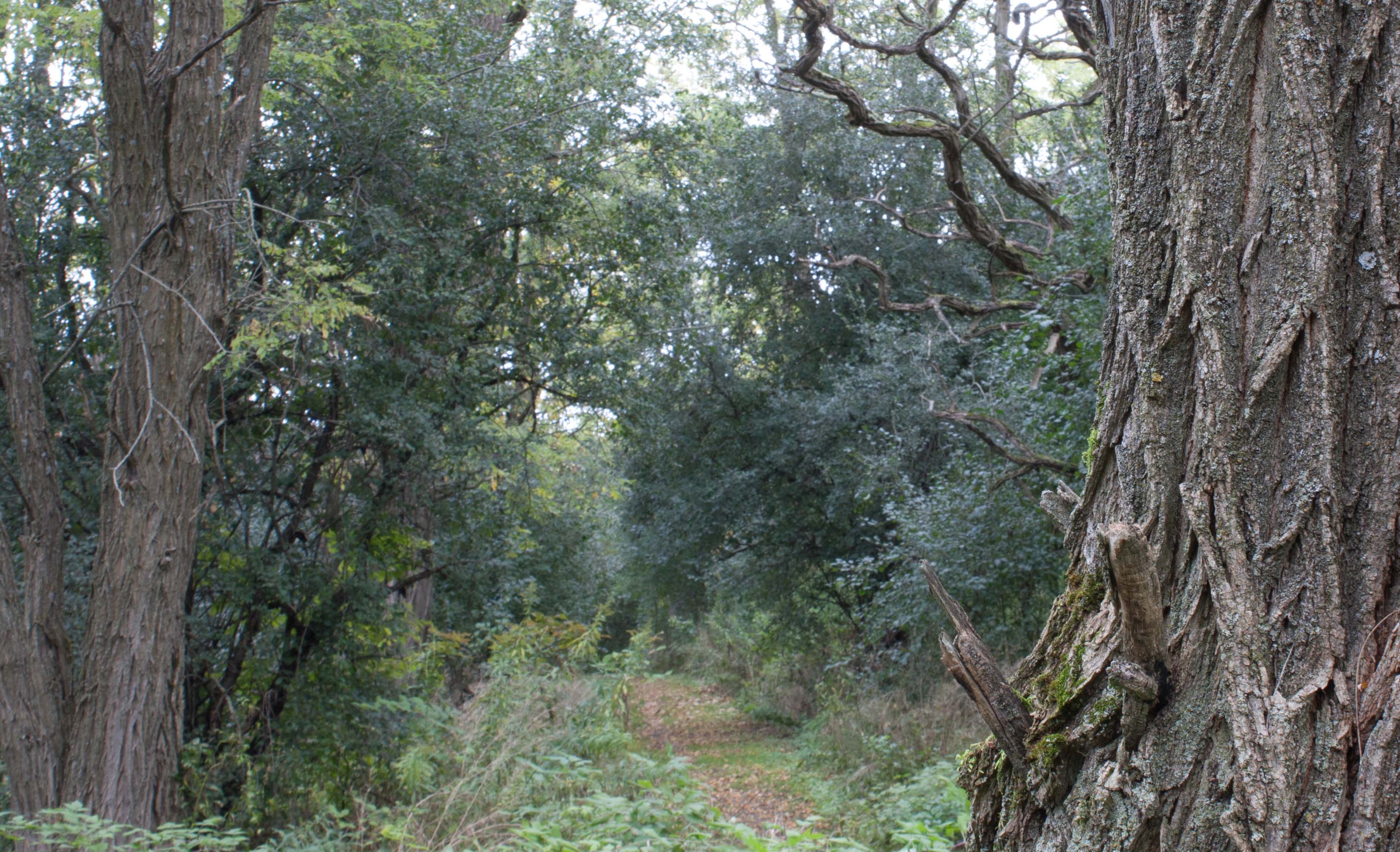


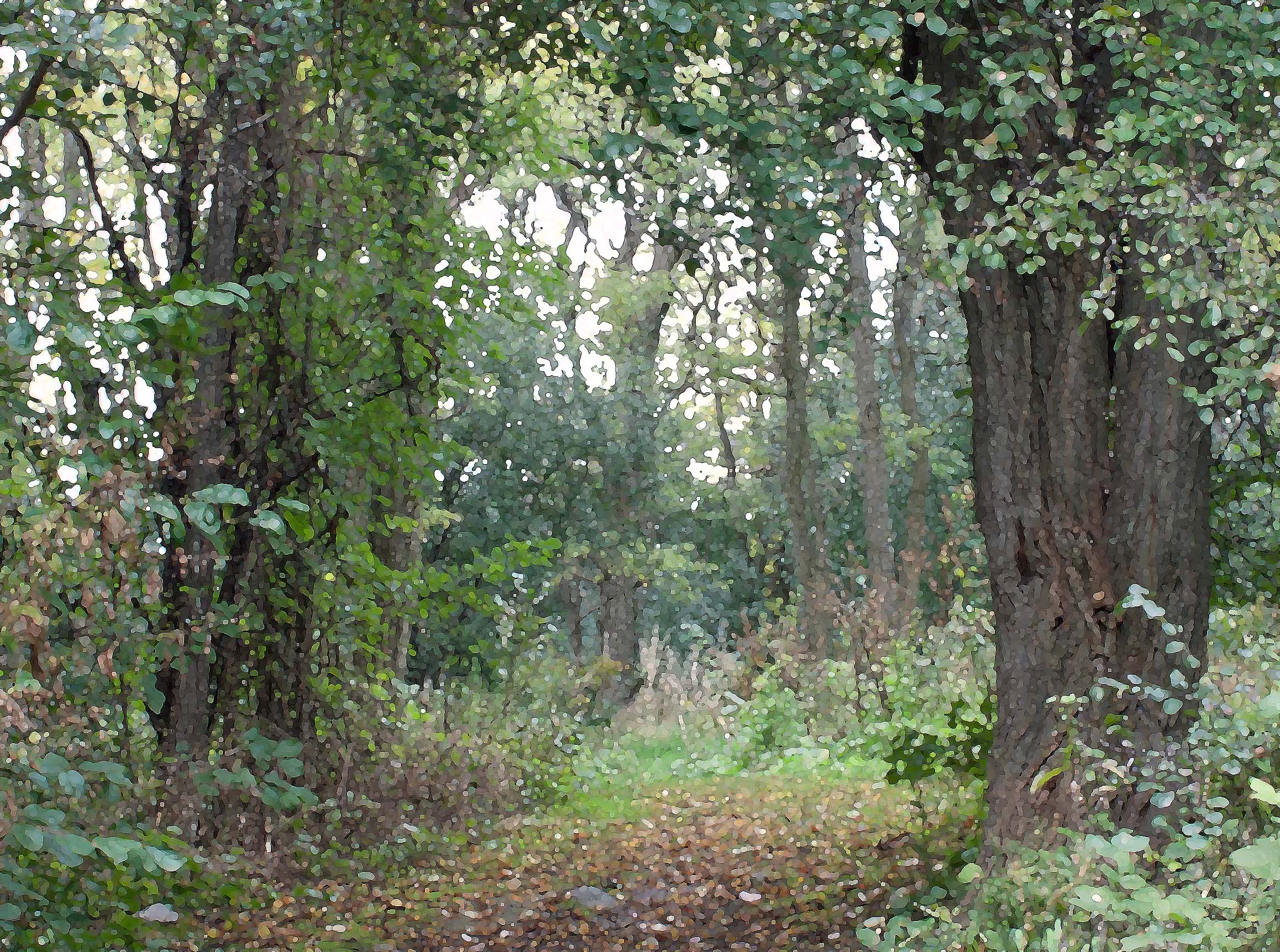


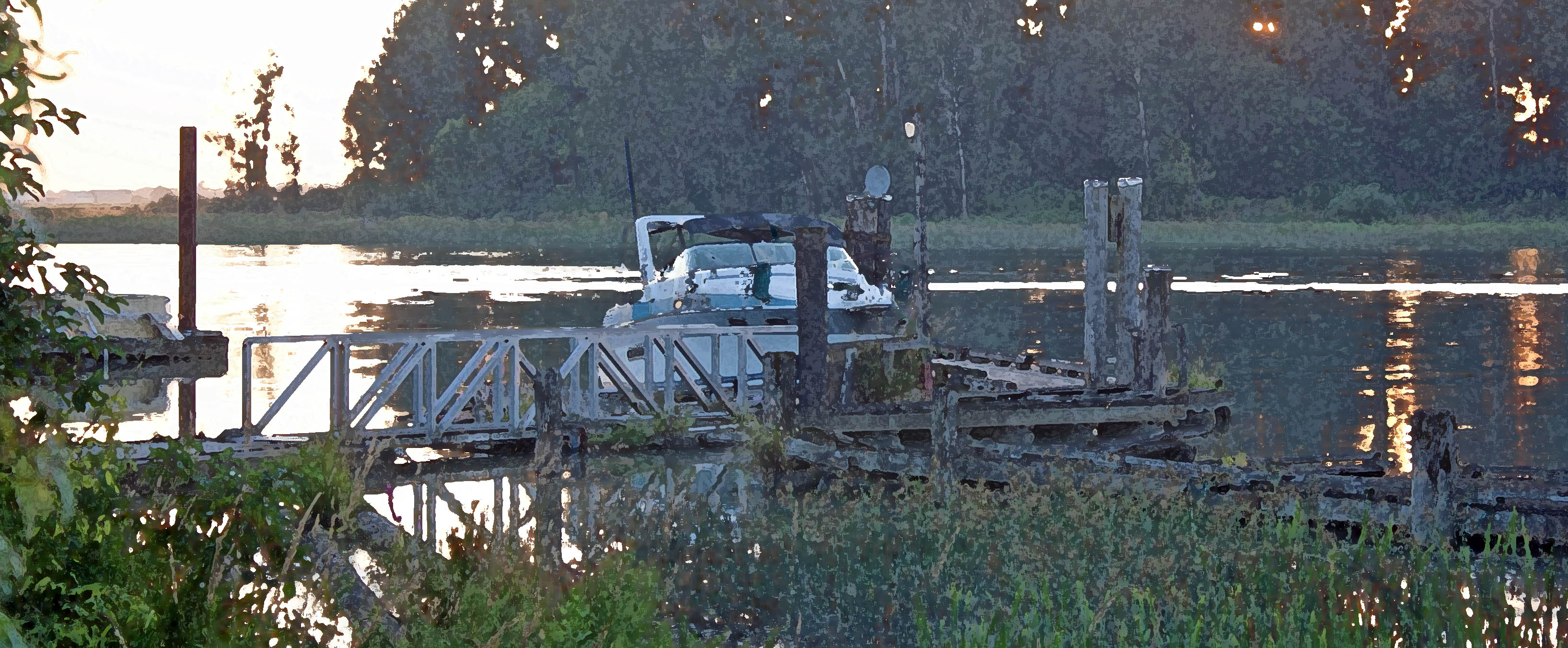
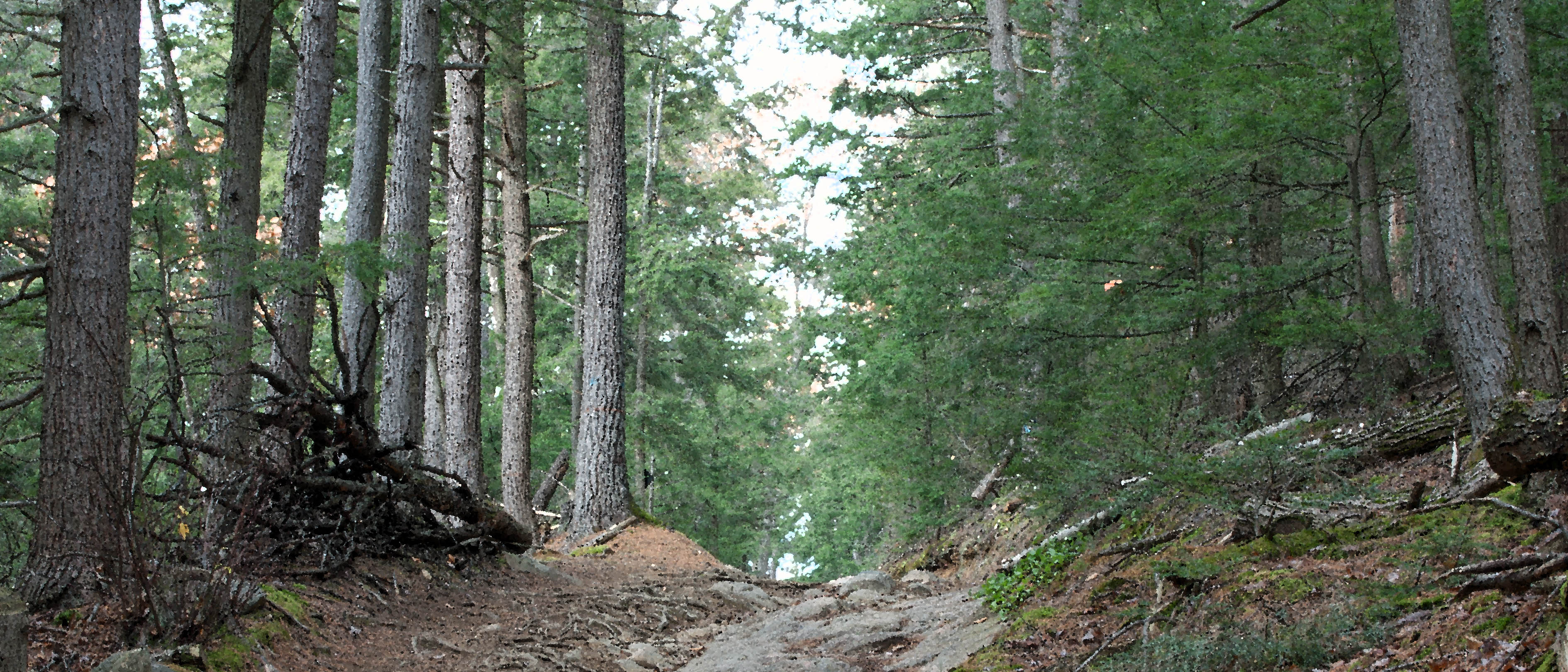


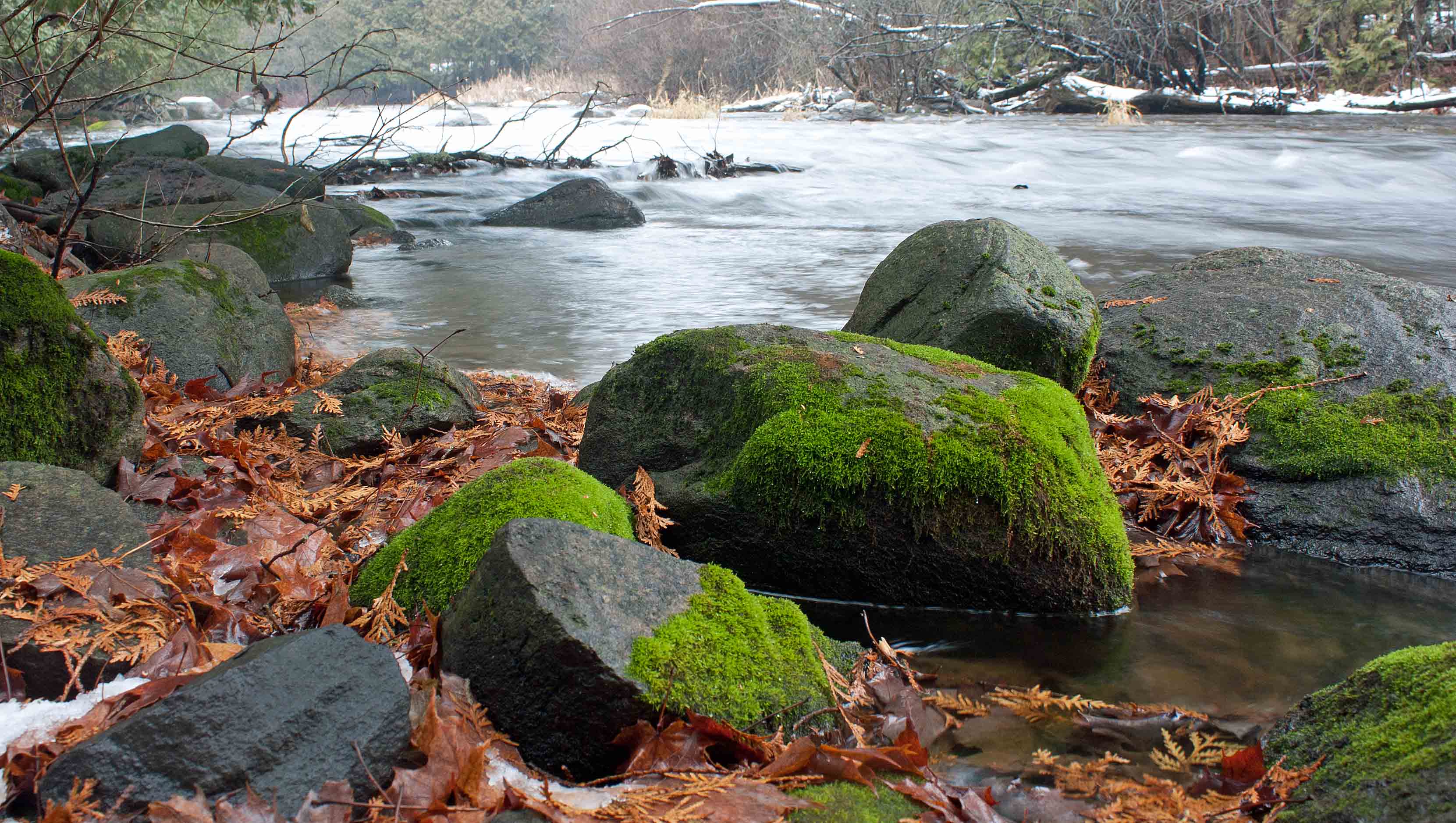


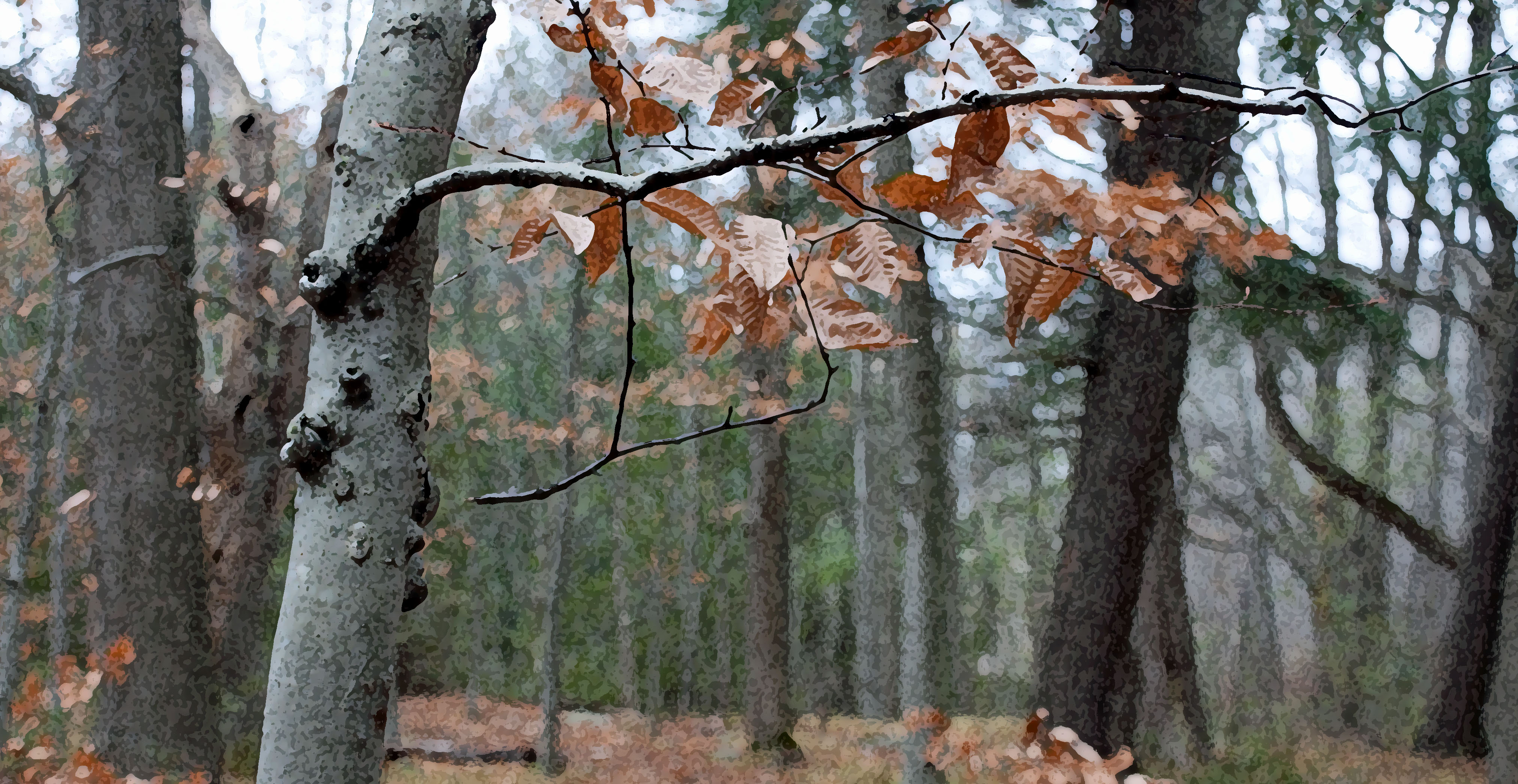
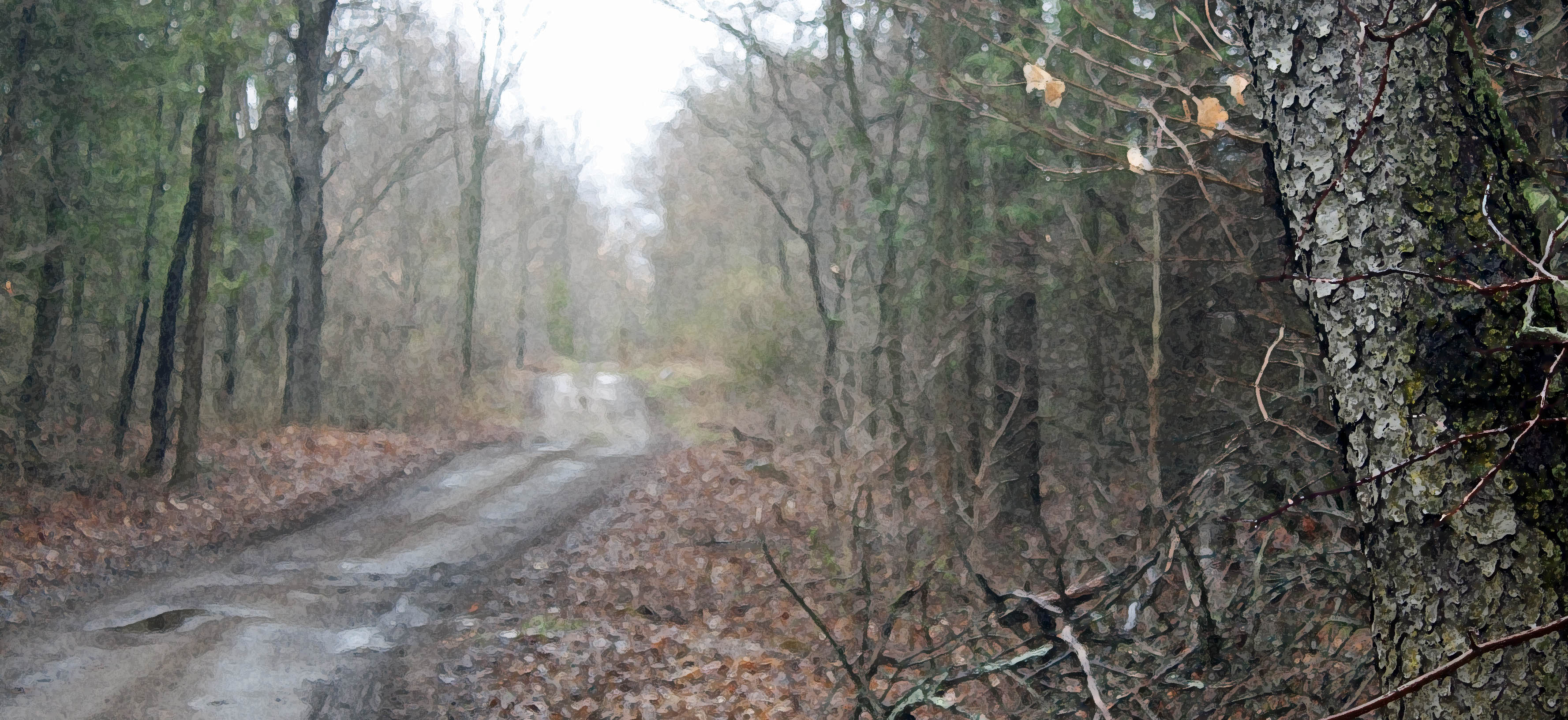


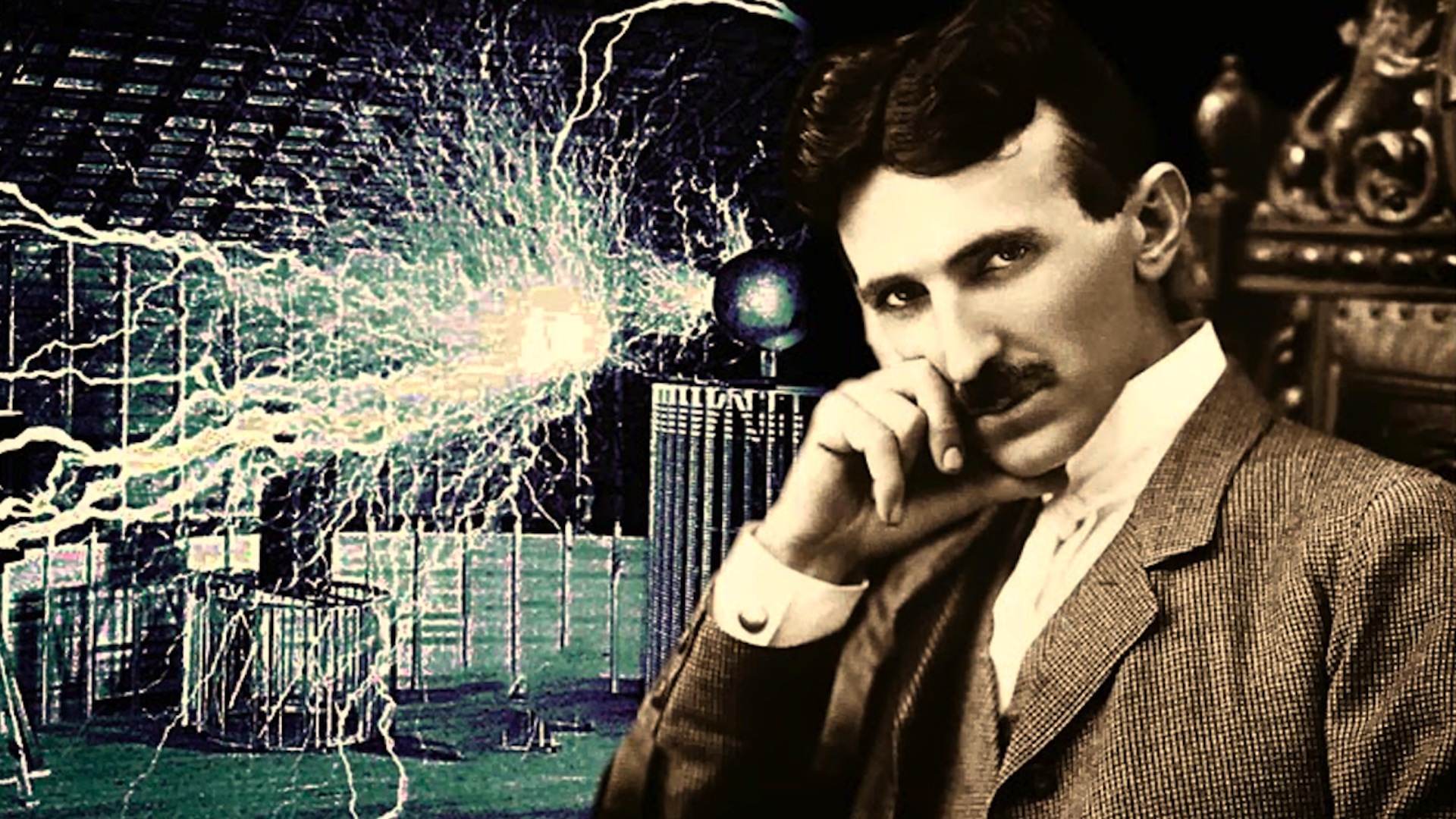








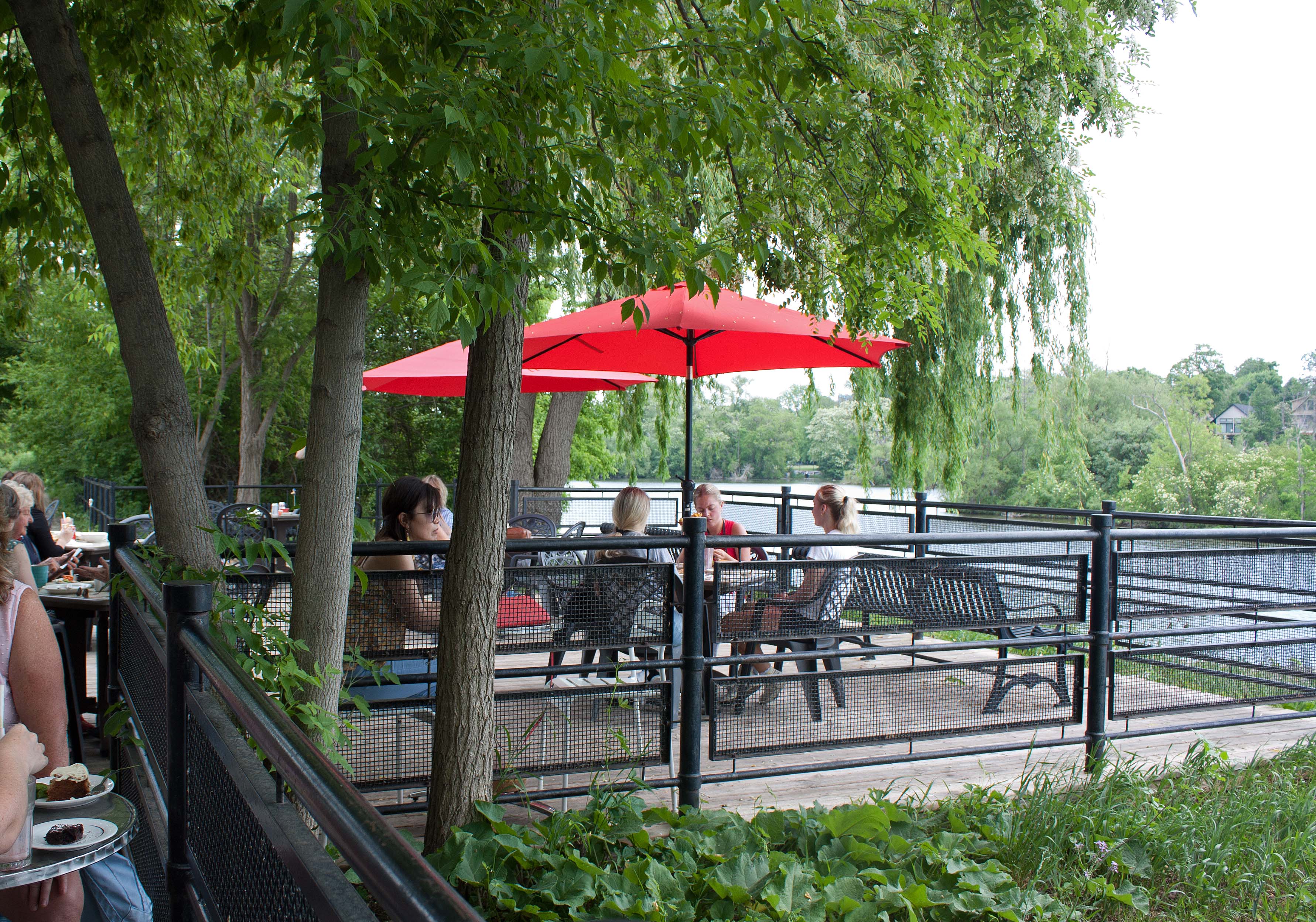
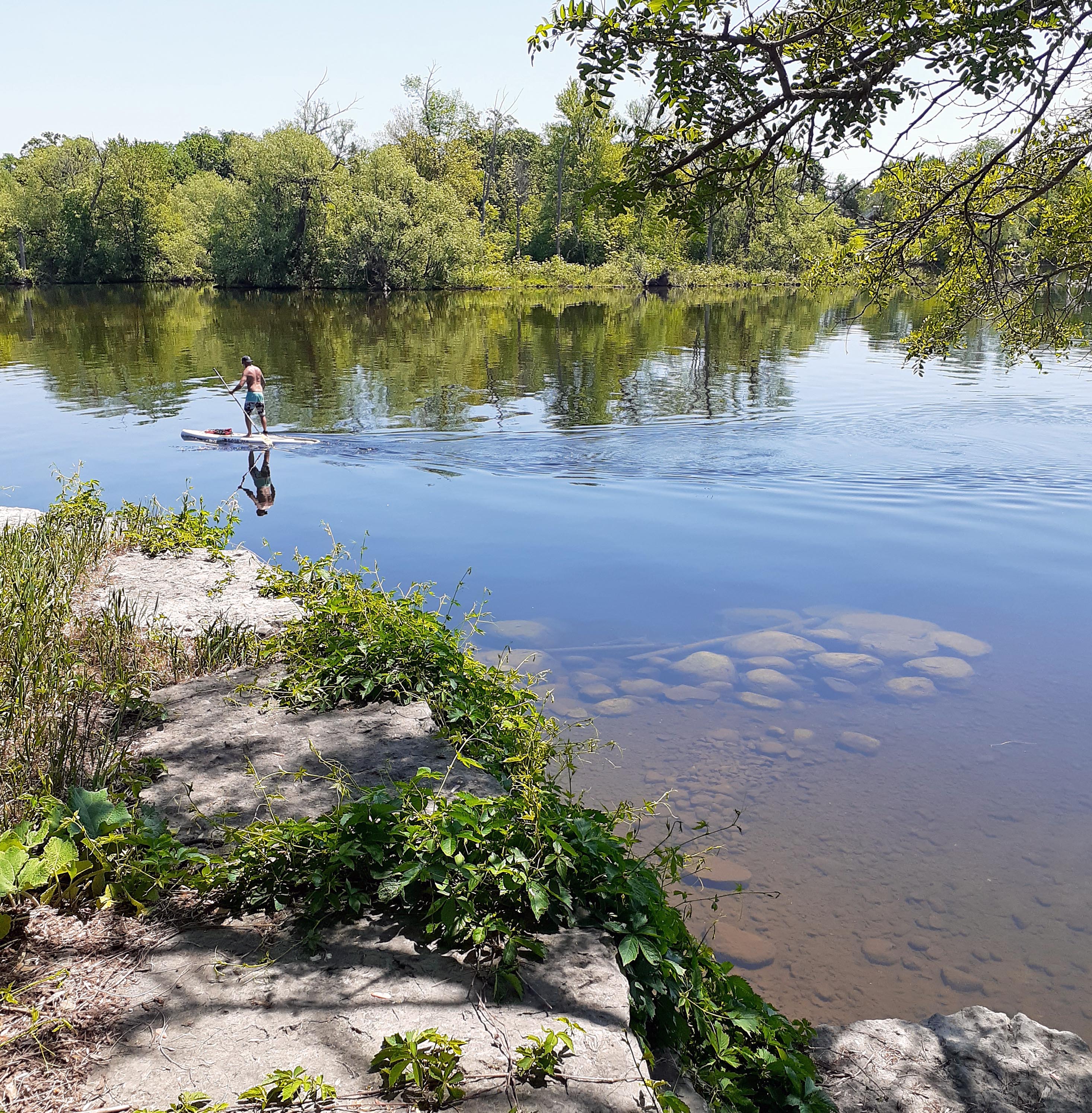


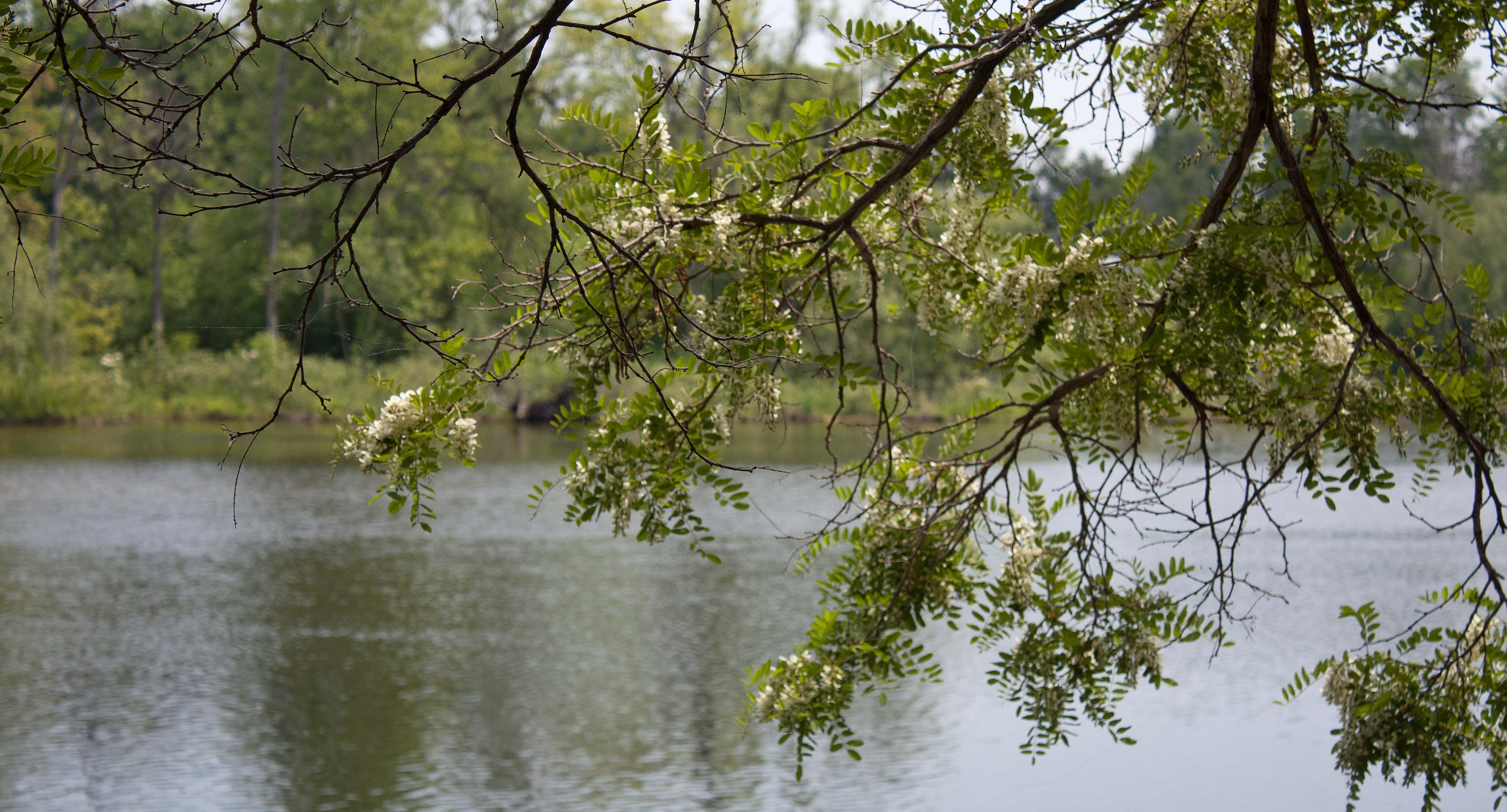
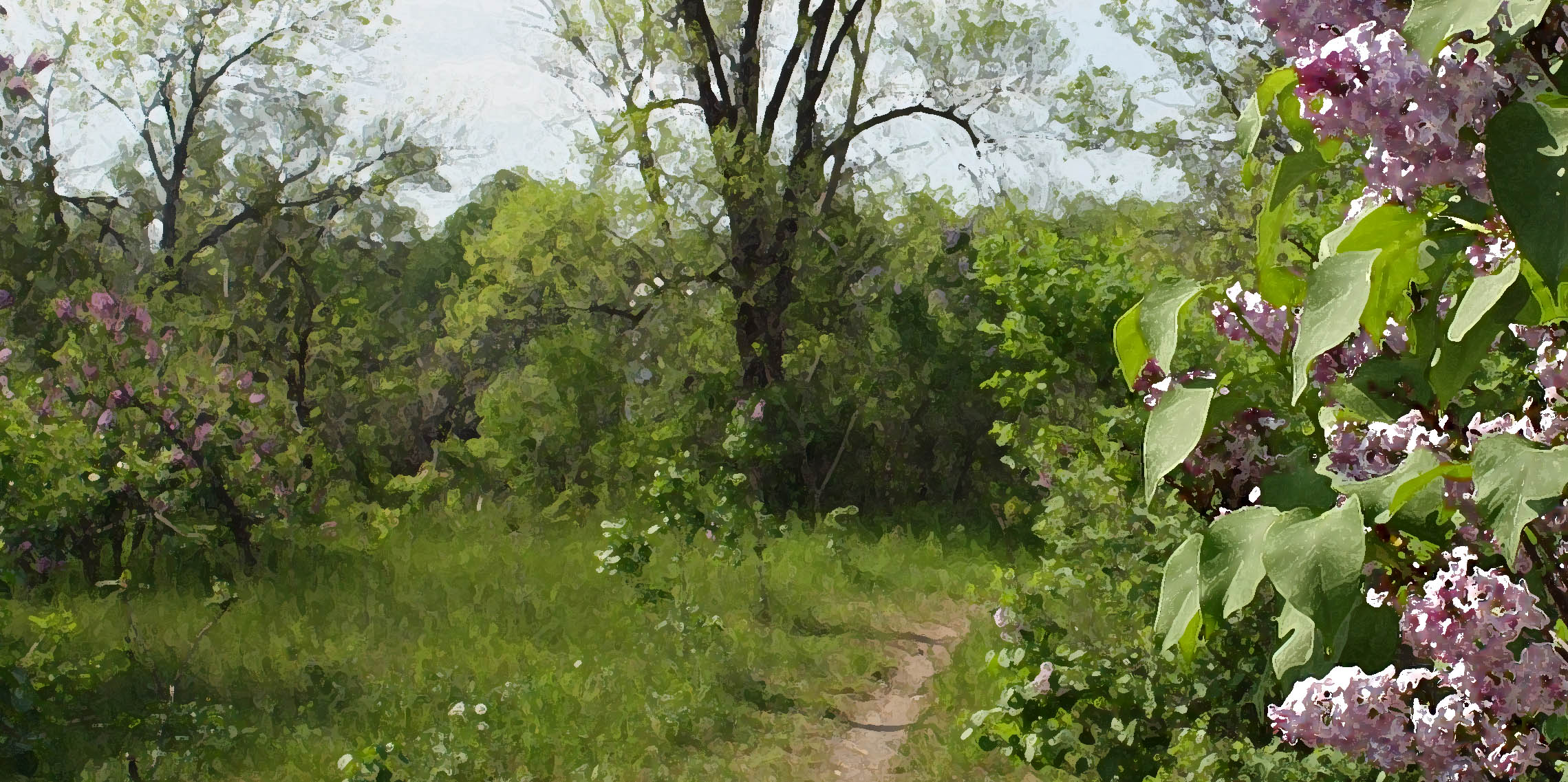
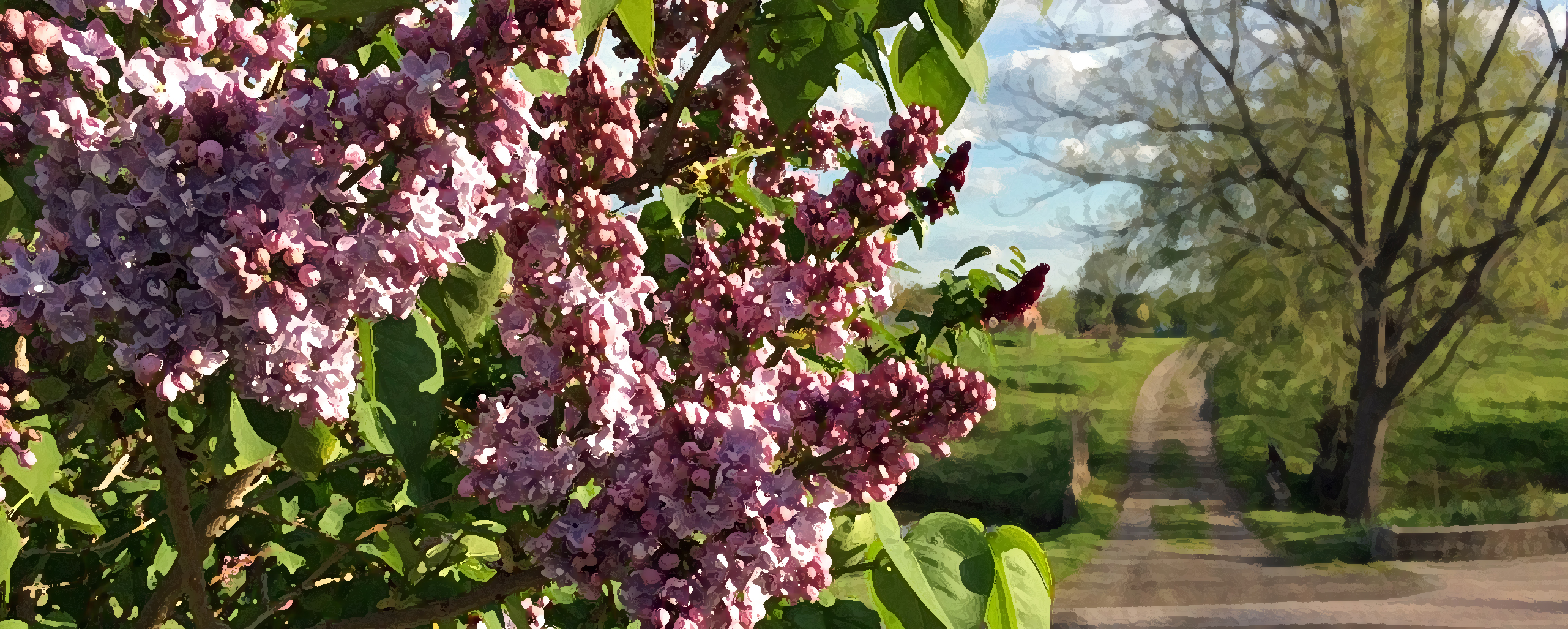

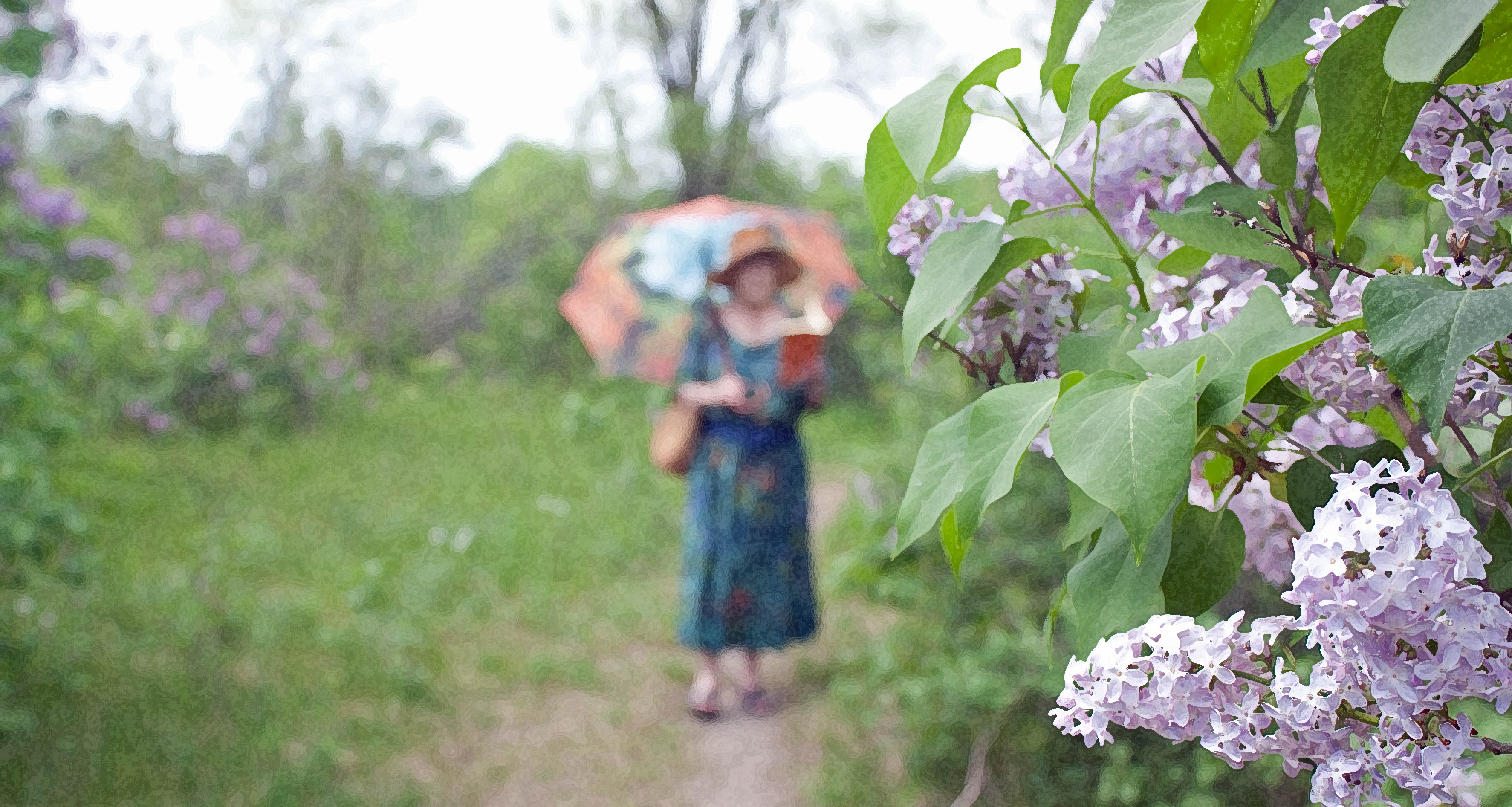
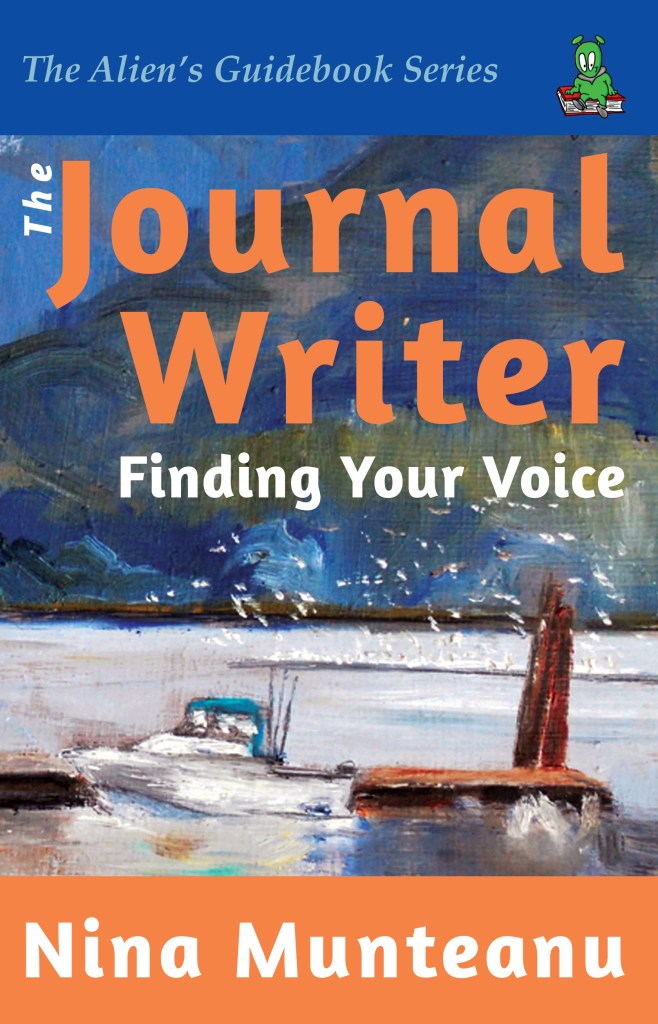


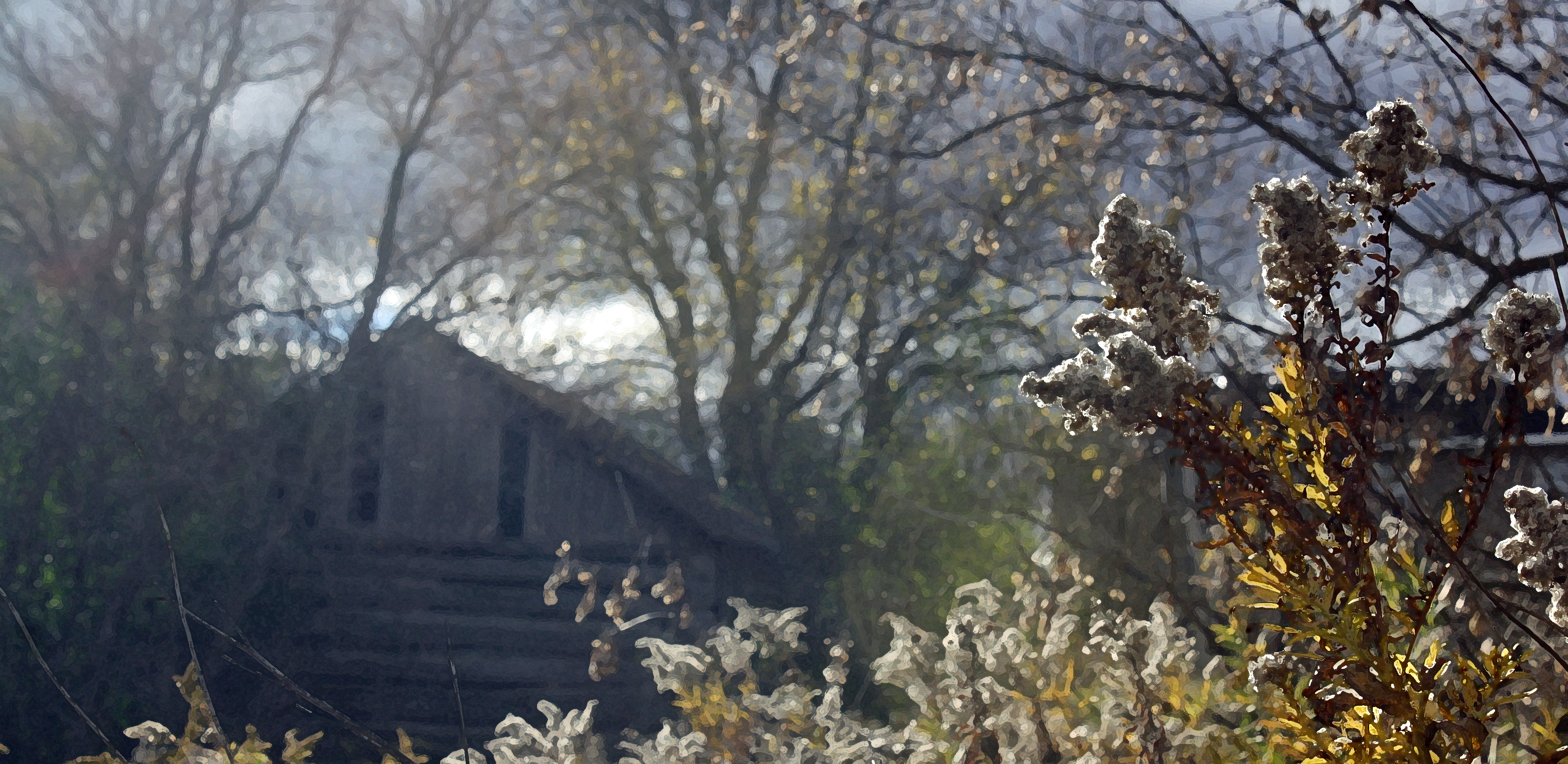


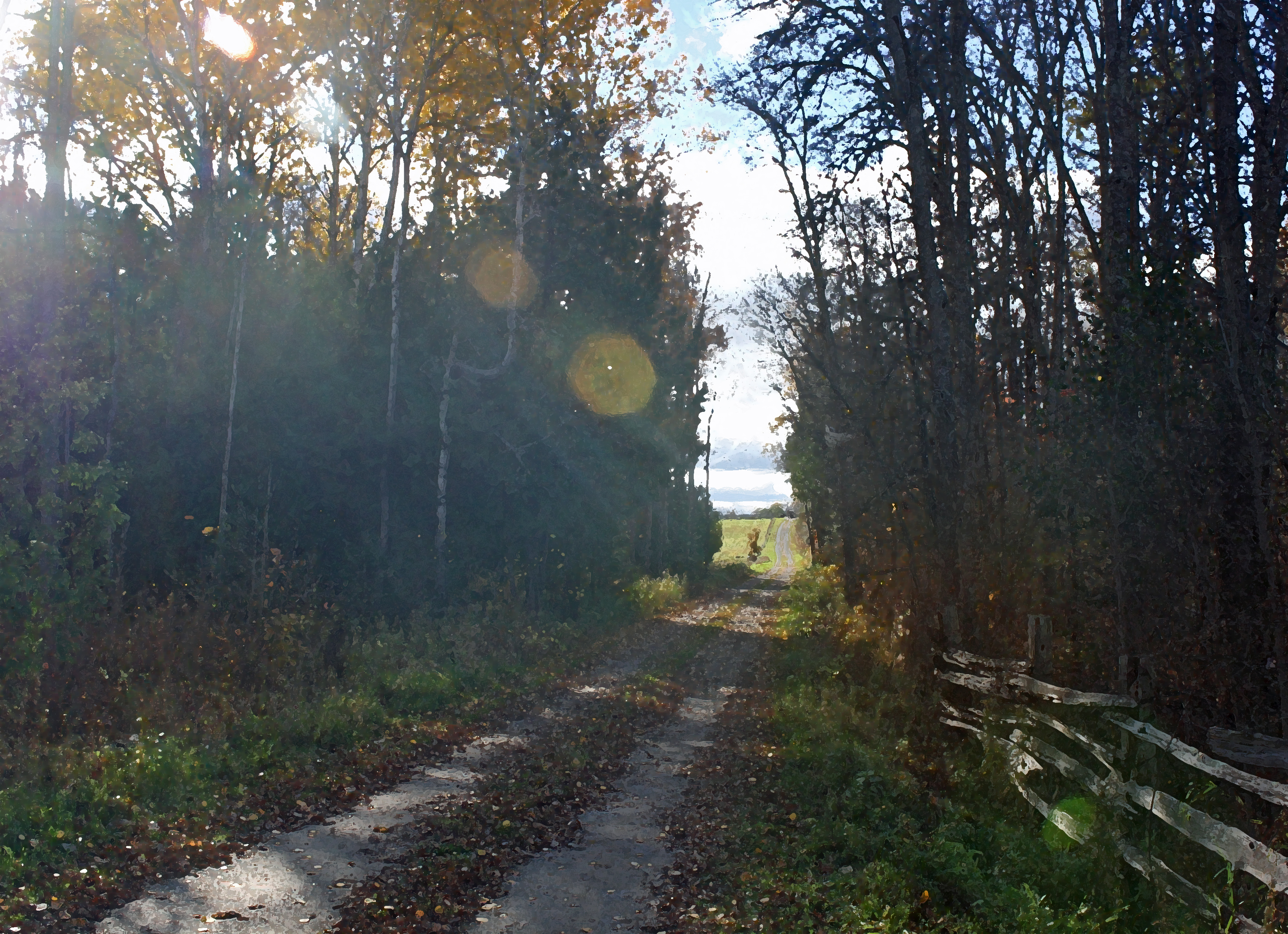


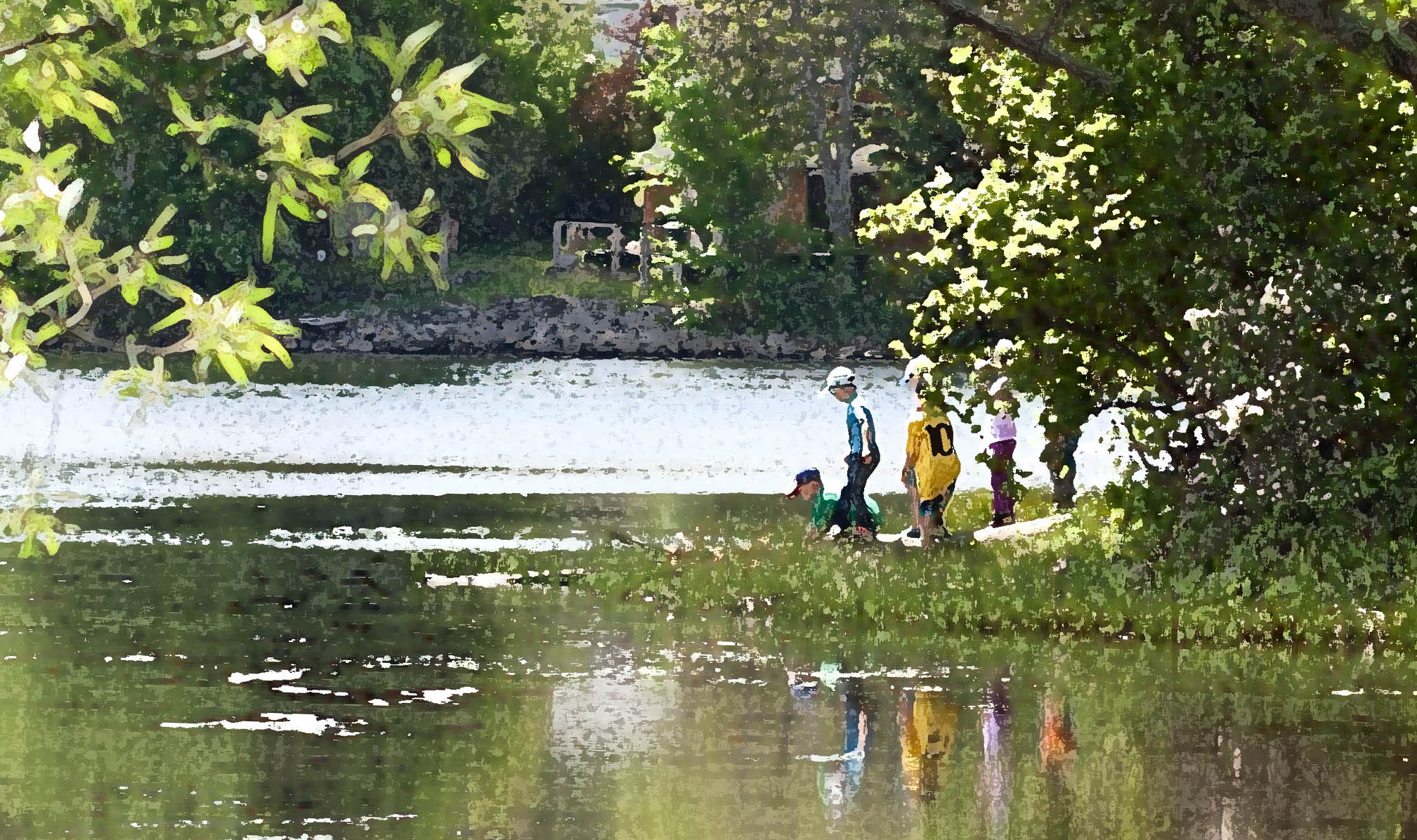


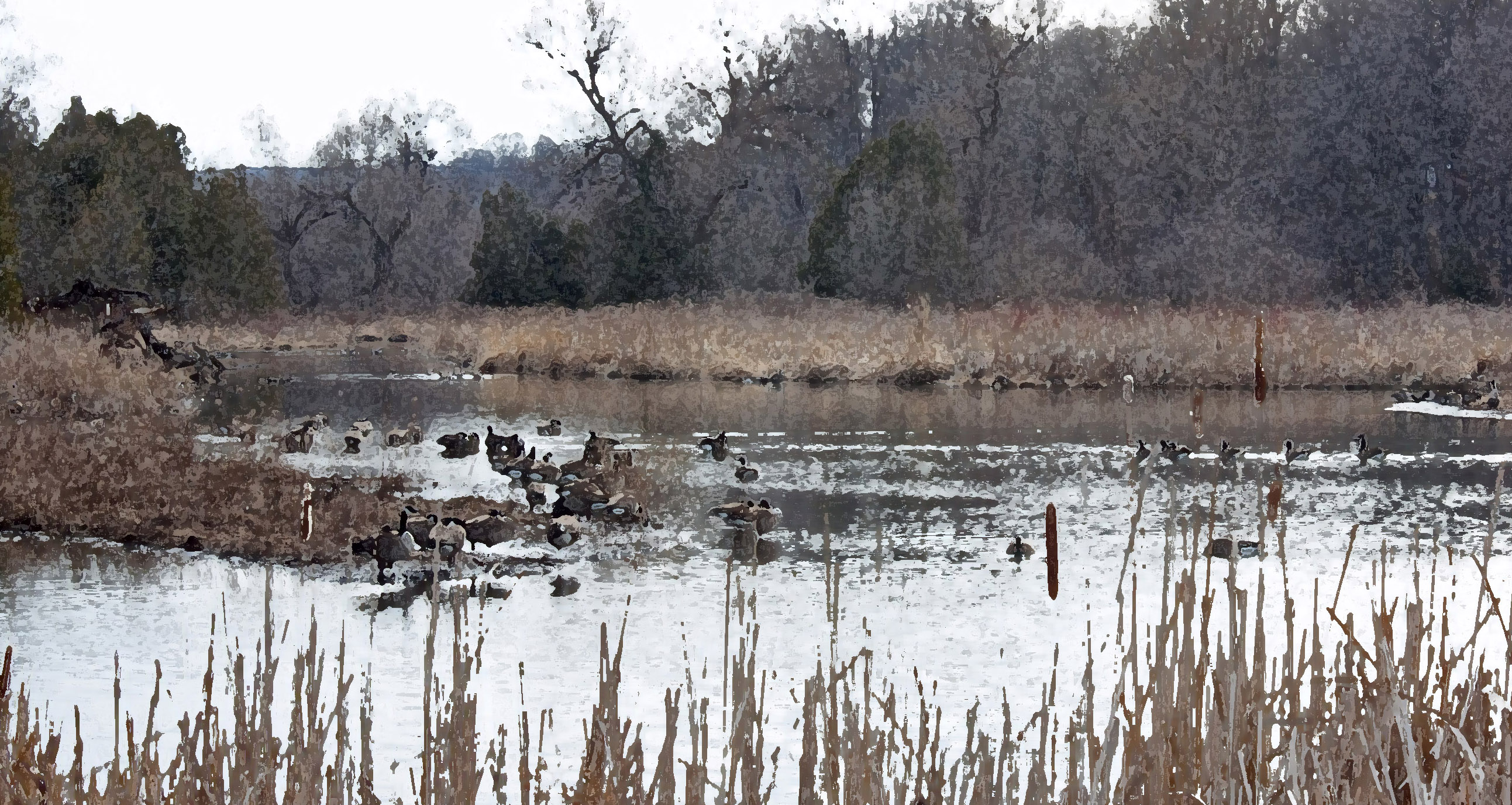

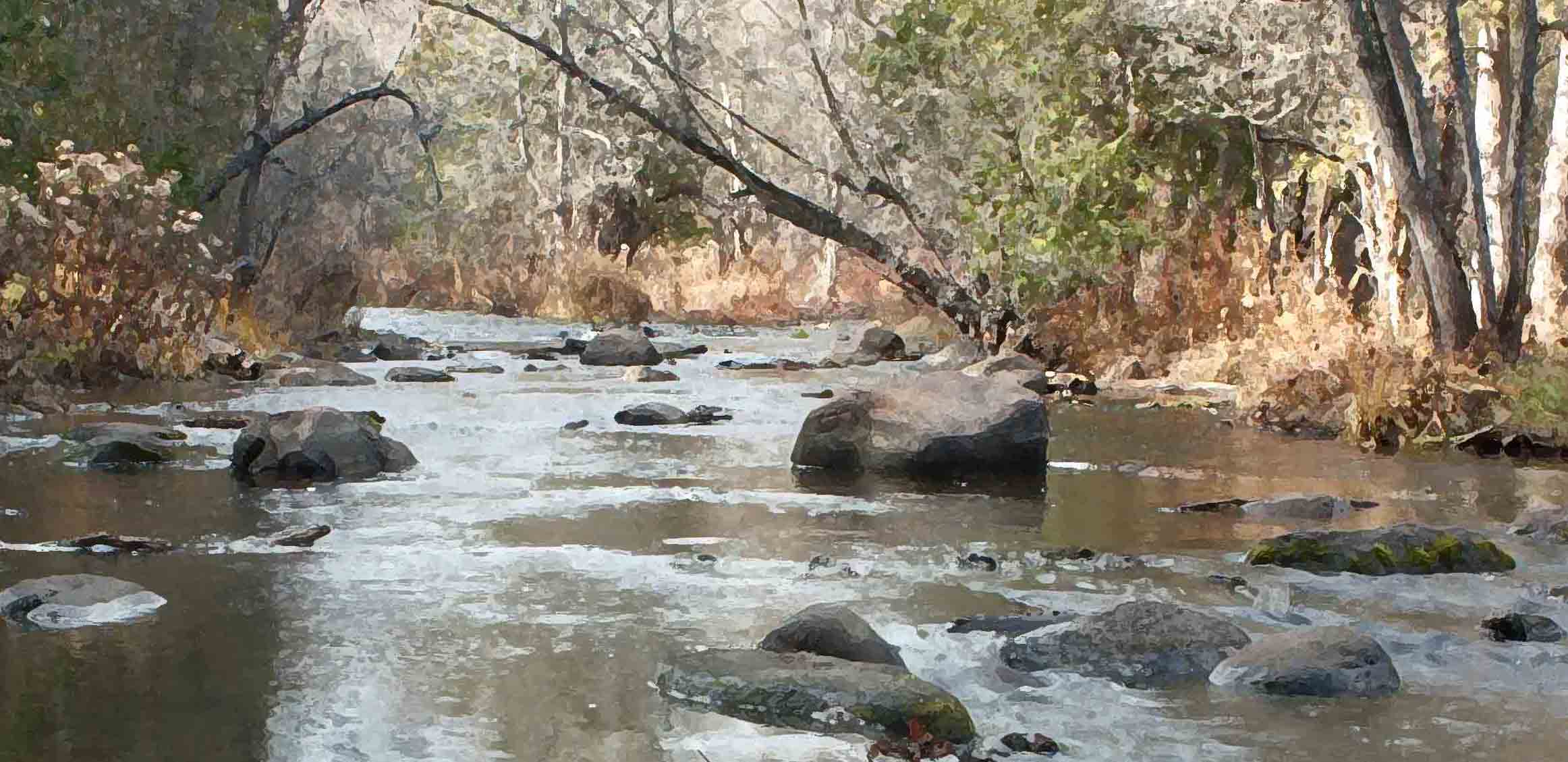
 Nina Munteanu Writing Coach