Ten Significant Science Fiction TV Series—Part 2: Shows that Touch on Climate Change, Resource Allocation and Environmental Justice: #8—SNOWPIERCER

I’ve selected ten TV series that have intrigued me, moved me, and stayed with me for various reasons that touch on: abuse of justice, including eco-justice and environmental abuse; technology use and abuse; and the effects and horrors of climate change.

Some are well known; others not so well known. All approach storytelling with a serious dedication to depth of character, important themes, realistic world building, and excellent portrayal by actors. The world-building is extremely well done—in some cases rivalling Ridley Scott’s best—with convincing portrayals of worlds that are at times uncanny in their realism. Worlds that reflect story from an expansive landscape to the mundane minutiae of daily life: like the cracked phone device of Detective Miller in The Expanse or the dirty fingernails of engineer Juliette Nichols in the Down Deep of Silo. Stories vary in their treatment of important themes from whimsical and often humorous ironies to dark and moody treatises on existential questions. In my opinion, these TV series rival the best movies out there, often reflecting large budgets (but not always) and a huge commitment by producers. The ten TV series I’ve selected in this series come from around the world: Brazil, Germany, France, Norway, Canada and the United States.

In Part 2, I focus on five TV series that explore issues to do with resource allocation, adaptations to climate change and corporate / government biopolitics.  


SNOWPIERCER: Capitalism is a Perpetual Motion Train in a Frozen World

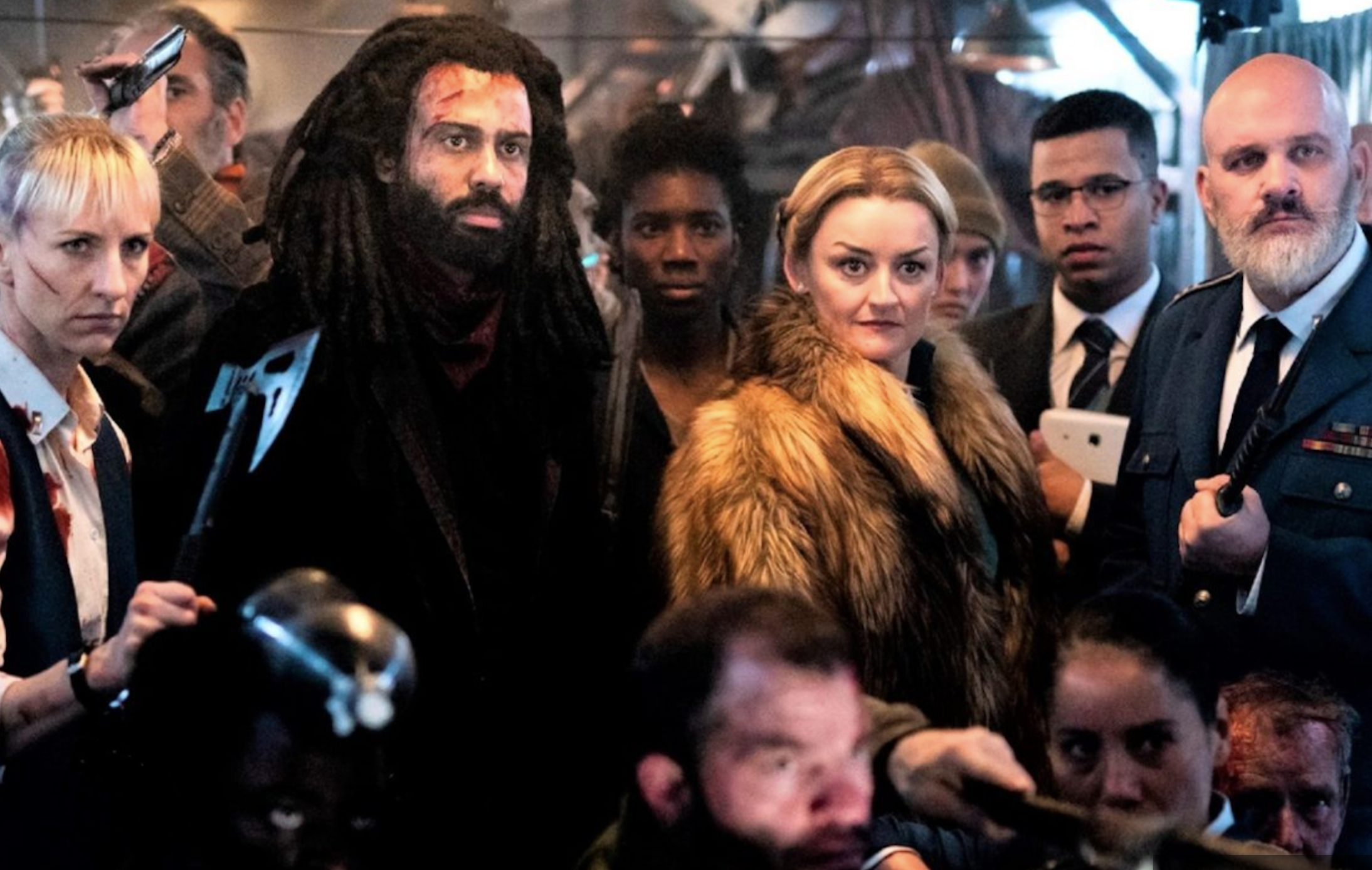
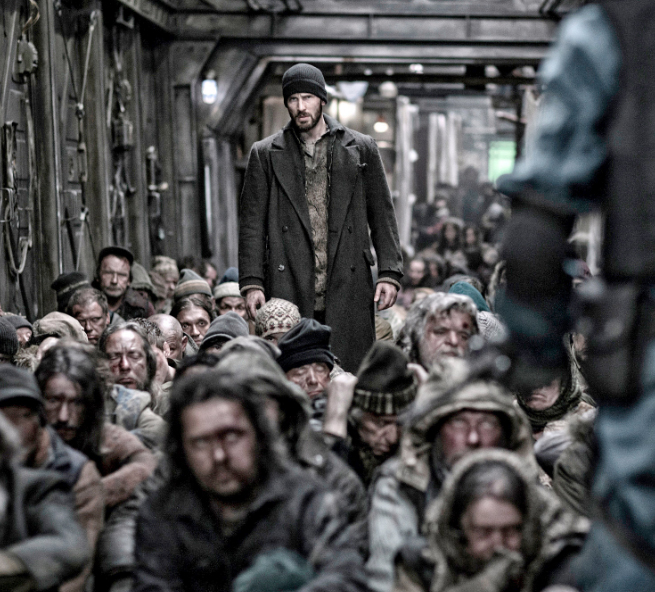
Snowpiercer is an American post-apocalyptic dystopian thriller that reboots the 2013 film Snowpiercer by Bong Jooh-ho. Snowpiercer is a perpetually moving train that circles the globe carrying the remnants of humanity seven years after the world has become a frozen wasteland, thanks to a botched climate fix. The train is divided up by class – first class, where all the wealthy people live; second and third class where the workers reside, and the tail – the end of the train, where the poor starve, live in total darkness, and are exploited for sex and labor. 

Passengers in the tail of the train

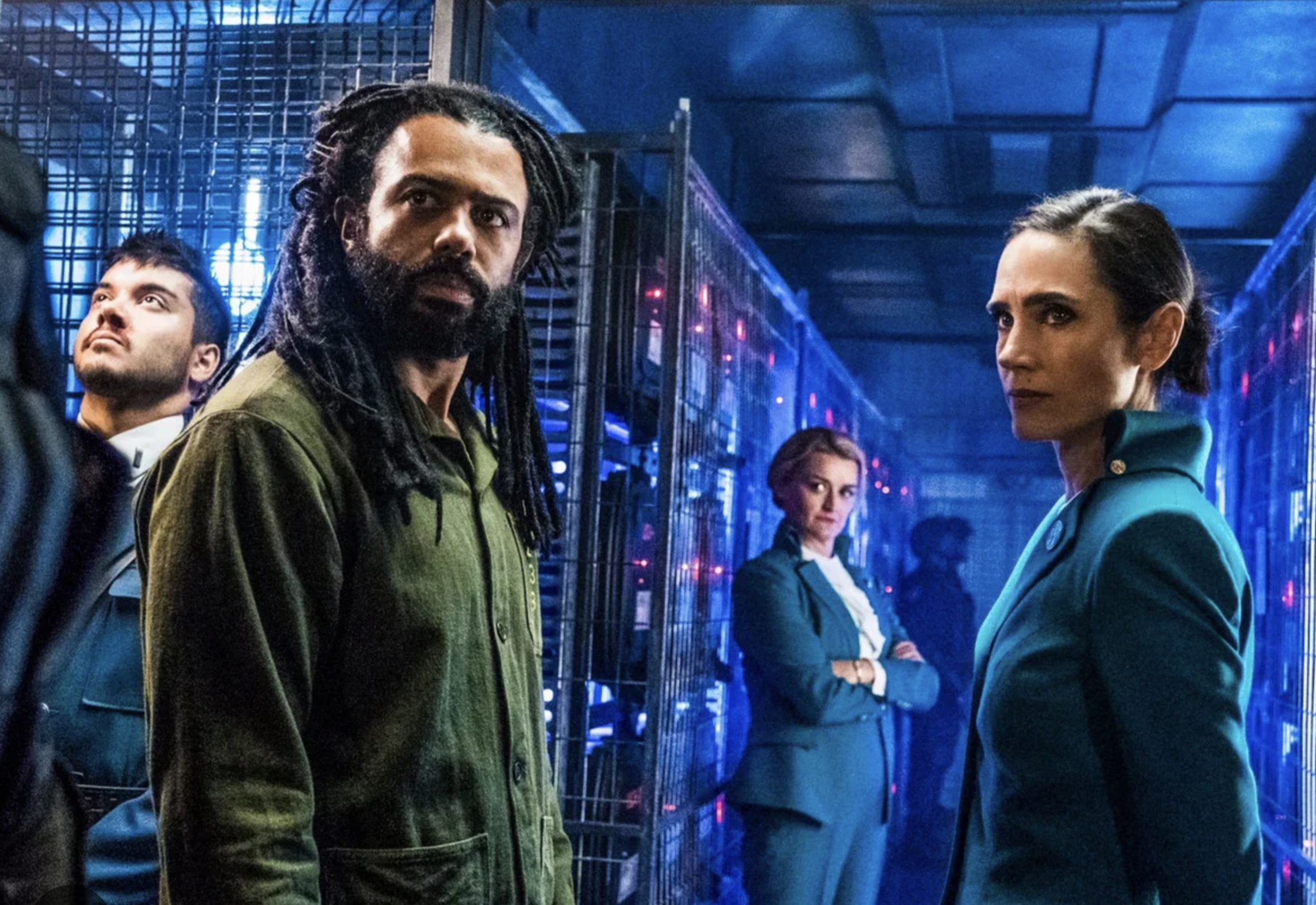
The train, of course, serves as a metaphor for class struggle, elitism and social injustices. The train’s self-contained closed ecosystem is maintained by an ordered social system, imposed by a stony militia. Those at the front enjoy privileges and luxurious living conditions, though most drown in a debauched drug stupor; those at the back live on next to nothing and must resort to savage means to survive. The TV show, as with the film, isn’t so much about climate change—as a study on how society functions—or rather copes—within a decadent capitalist system, based on an edict of productivity: serve the machine of “life” and keep the order at all cost. Chief of Hospitality Melanie Cavill (secretly chief engineer of the train) as much as tells this to homicide detective Andre Layton (from the back of the train) when she enlists him to solve the first murder in the elite section of the train.

Melanie Cavill, head of Hospitality, enlists Andre Layton as detective to investigate a murder on the train

The TV show diverges from the film in several important ways.

My original review of the movie touched on style and political agenda:

Bong Joon-Ho’s 2013 motion picture Snowpiercer is a stylish post-climate change apocalypse allegory. A dark pastiche of surrealistic insanity, welded together with moments of poetic pondering and steam-punk slick in a frenzied frisson you can almost smell. Joon-Ho casts each scene in metallic grays and blues that make the living already look half-dead. The entire film plays like a twisted steampunkish baroque symphony. Violence personified in a garish ballet.

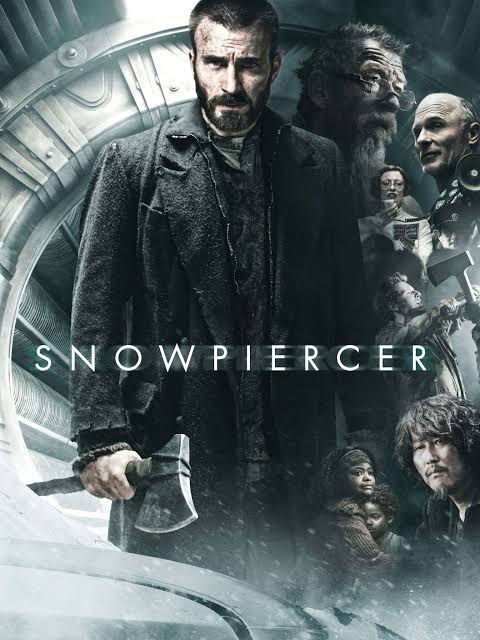
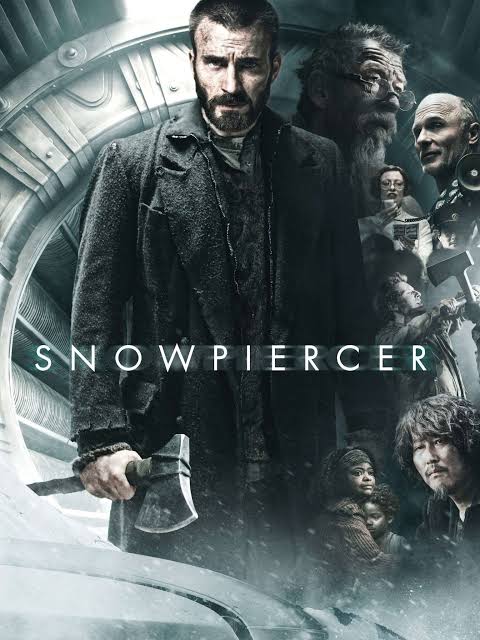
Poster for the movie version of Snowpiercer

I drew on Aaron Bady’s commentary on the film in The New Inquiry which discussed reform capitalism* to conclude that the movie “Snowpiercer is about hard choices and transcendence. Save humanity but at the consequence of our souls? Or transcend the machine that has robbed us of our souls at the expense of our mortality? The film continually questions our definition of what life is and what makes life worth living … Ultimately, Bong Jung-Ho’s message with the ending of this baroque political allegory is the vindication of a choice against reform capitalism for something new, that there is indeed “Life after Capitalism”, not easy but worth living…”

The Snowpiercer TV series takes a different approach to the end of the world and capitalism metaphor, weaving in more intrigue in its plot (a murder) with elements of detecting by the only homicide detective left on the train and in the world—a self-styled revolutionary from the back of the train. Much of the entertaining tensions arise from the interactions of Detective Andre Layton (Daveed Diggs) and Hospitality head Melanie Cavill (Jennifer Connelly) and second in command Ruth Wardell (Alison Wright); there are also strong performances by the train’s Breakman, Bess Till (Mickey Sumner) and later Mr. Wilford (Sean Bean) who was supposedly running the train but had been secretly thrown off the train by head engineer Cavill.

Snowpiercer crew prepare to encounter another train in the freeze

The focus of the TV show has been more on the potential survival of a handful of what’s left of humanity with competing agendas on how this is best achieved, whether the freeze is indeed unfreezing and some part of the world has become hospitable or at least livable. Trading the film’s baroque metaphors to capitalism for a more literal approach to climate change and living in a post climate change world, the TV series focuses more on real questions facing this ragtag of humanity. How to keep it together when rifts naturally form based on unequal resource allocation and space in the limited ecosystem of the train. Given that the show plays out in several seasons, there is room to expand and further explore socialism, democracy, fascist rule and environmental activism. Class divisions are explored through a large cast of morally ambiguous characters, each with a plot arc, and more opportunities to explore not just first class but second and third class, showcasing more nuanced and varied elements to the class struggle and ambitions of people.  

*Reform Capitalism: “Reform and revolution are shibboleths that distinguish liberals from radicals,” explains Aaron Bady of The New Inquiry. “While liberals want to reform capitalism, without fundamentally transforming it, radicals want to tear it up from the roots (the root word of “radical” is root!) and replace capitalism with something that isn’t capitalism…If you’re the kind of leftist who thinks that the means of production just need to be in better hands—Obama, for example, instead of George W. Bush, or Elizabeth Warren instead of Obama, or Bernie Sanders instead of Elizabeth Warren, and so on—then this movie buries a poison pill inside its protein bar: soylent green is people.”  

Ten Significant Science Fiction TV Series:

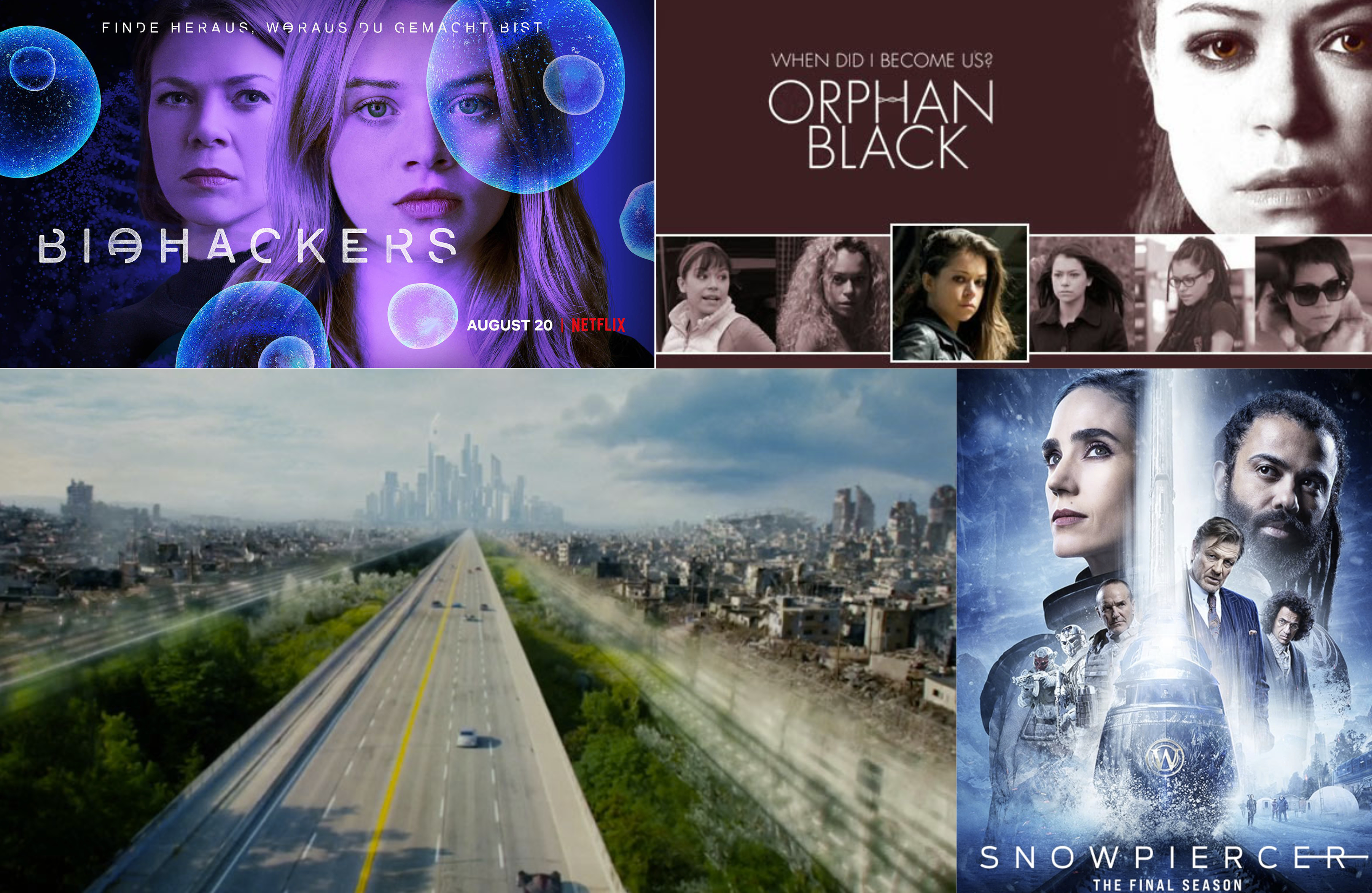
Biohackers (Germany)
Orphan Black (Canada)
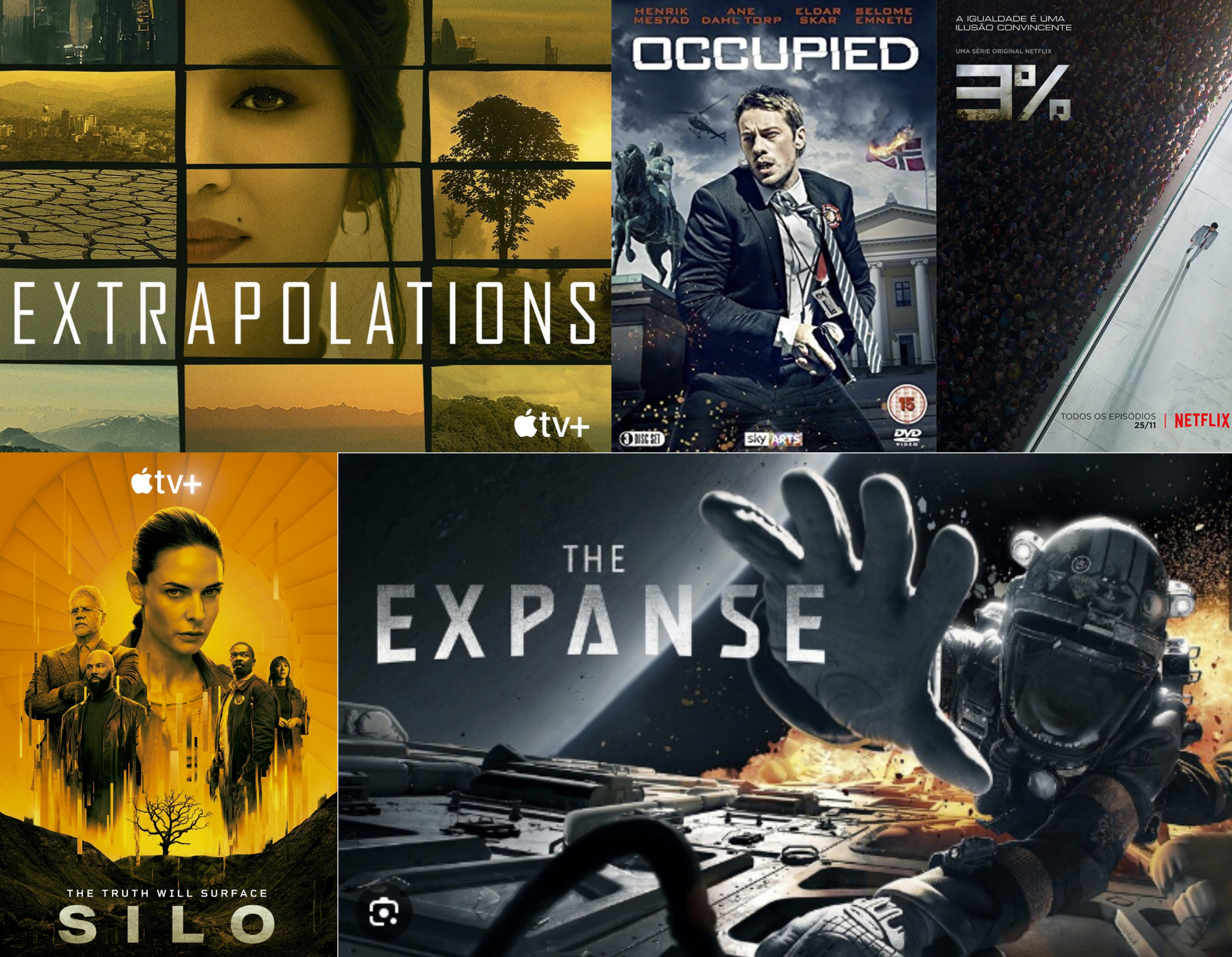
Occupied (Norway)
Missions (France)
Expanse (USA)
Incorporated (USA)
3% (Brazil)
Snowpiercer (USA)
Silo (USA)
Extrapolations (USA)

Nina Munteanu is a Canadian ecologist / limnologist and novelist. She is co-editor of Europa SF and currently teaches writing courses at George Brown College and the University of Toronto. Visit www.ninamunteanu.ca for the latest on her books. Nina’s bilingual “La natura dell’acqua / The Way of Water” was published by Mincione Edizioni in Rome. Her non-fiction book “Water Is…” by Pixl Press (Vancouver) was selected by Margaret Atwood in the New York Times ‘Year in Reading’ and was chosen as the 2017 Summer Read by Water Canada. Her novel “A Diary in the Age of Water” was released by Inanna Publications (Toronto) in June 2020.

Movie Review: Snowpiercer and the Machine of Life


What’s left of humanity—after we broke the world—is crammed in a speeding train that circles a frozen Earth … forever.

Bong Joon-Ho’s 2013 motion picture Snowpiercer is a stylish post-climate change apocalypse allegory. A dark pastiche of surrealistic insanity, welded together with moments of poetic pondering and steam-punk slick in a frenzied frisson you can almost smell.  Joon-Ho casts each scene in metallic grays and blues that make the living already look half-dead. The entire film plays like a twisted steampunkish baroque symphony. Violence personified in a garish ballet.  

One of the many excessive fight scenes

The train’s self-contained closed ecosystem is maintained by an ordered social system, imposed by a stony militia. Those at the front enjoy privileges and luxurious living conditions, though most drown in a debauched drug stupor; those at the back live on next to nothing and must resort to savage means to survive. This film isn’t about climate change—that’s just a plot point to serve the premise of a study on how society functions—or rather copes—within a decadent capitalist system, based on an edict of productivity: serve the machine of “life”. Satisfy the sacred machine at all costs; complete with subterfuge, oppression and references to cannibalism. Beneath the film’s blatant statement on the emptiness of the pursuit of capital at any cost lies a deeper more subtle exploration on the nature of humanity. Die to live or live to die?

In a recent interview with io9, Joon-Ho said, “the science fiction genre lends itself perfectly to questions about class struggle, and different types of revolution.”

Curtis singled out by militia

Revolution brews from the back, led by Curtis Everett (Chris Evans), who confesses to a forced recruit, along the way, “A thousand people in an iron box. No food, no water. After a month we ate the weak. You know what I hate about myself? I know what people tastes like….I know that babies taste best.”

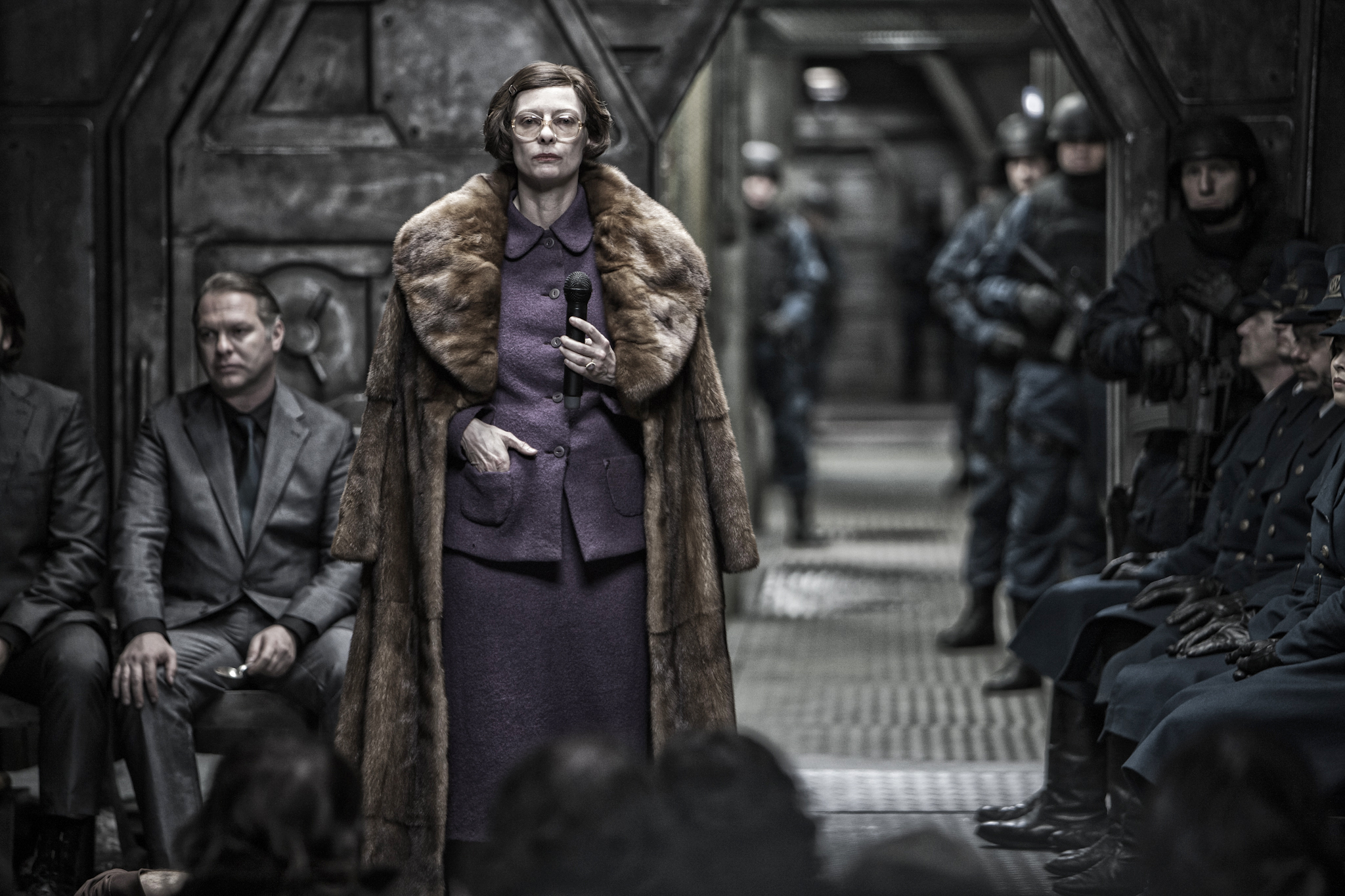
Minister Mason (Tilda Swinton), an imperious yet simpering figure who serves the ruling class without quite being part of it, reminds the lower class that, “Eternal order flows from the sacred engine. We must occupy our preordained position. I belong to the front, you belong to the tail. Know your place!”

Minister Mason dispenses the law to the tail

It’s all about the engine for both front and tail. It saved humanity, after all. It is their future. Curtis tells his colleagues that they will move forward: “We take the engine and we control the world. It’s time we take the engine.”

Revolution brews in the tail

“Reform and revolution are shibboleths that distinguish liberals from radicals,” explains Aaron Bady of The New Inquiry. “While liberals want to reform capitalism, without fundamentally transforming it, radicals want to tear it up from the roots (the root word of “radical” is root!) and replace capitalism with something that isn’t capitalism…If you’re the kind of leftist who thinks that the means of production just need to be in better hands—Obama, for example, instead of George W. Bush, or Elizabeth Warren instead of Obama, or Bernie Sanders instead of Elizabeth Warren, and so on—then this movie buries a poison pill inside its protein bar: soylent green is people.”

The tail faces the goons of the front

The train “eats” the children of the poor; using them to replace the sacred engine parts that have worn out in a kind of retro-transhumanist collaboration of human and machine and creating a perverse immortal cyborg entity. Only, the individual children die in the process and need to be constantly replaced to maintain the eternal whole. They have literally become cogs in a giant wheel of eternity.

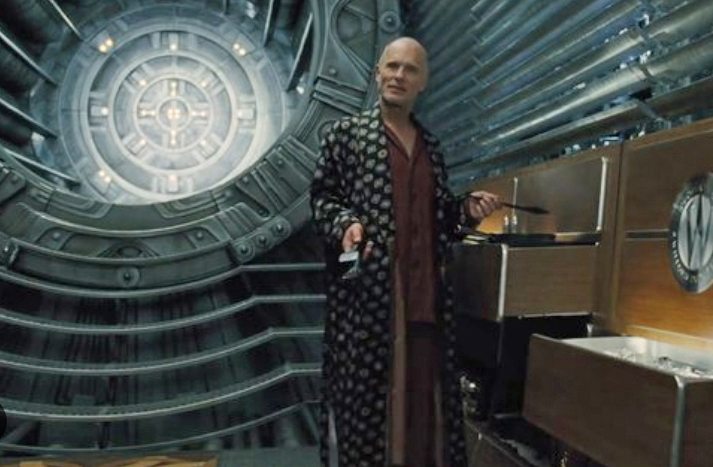
Curtis’s revolution is doomed from the start; once he reaches the front, it is revealed to him that the entire conflict and resulting deaths were orchestrated all along to help maintain population balance. Wilford (Ed Harris), the genius who created the train with a perpetual motion engine, tells Curtis once they meet that, “this is the world…The engine lasts forever. The population must always be kept in balance.” Which begs the obvious question: why not just get rid of all of the lower class “scum” (as Mason calls them)? That would make room for the privileged. What purpose do these lower class serve? The answer is both obvious and simple: aside from providing their children as parts to the sacred engine, they are there to be hated, feared and despised by the elite. When the soul is empty and needs “filling” but can’t be filled, then it finds a substitute.

Wilford lectures Curtis on the train’s functional ecosystem

Aaron Bady of The New Inquirer shares that, “Instead of giving Texans a health care system, for example, late capitalism gives them the illegal immigrant, to hate, to fear, and to dis-identify with. Prisons do more and more of the system-maintaining work that was once done by schools and hospitals: instead of giving us something to want, they give us something to fear, hate, and kill. And so, we eat ourselves.” We die to live.

Wilford grooms Curtis as the new engineer and reveals to him the true nature of the engine. “You’ve seen what people do without leadership,” says Wilford to Curtis. “They devour one another.” This is dark irony considering what the train is doing. And it is when Curtis discovers this awful truth that his reformist revolution comes to a dead halt and he makes a decision that takes him into the realm beyond the train.

Snowpiercer is about hard choices and transcendence. … Save humanity, but at the consequence of our souls? Or transcend a machine that has robbed us of our souls at the expense of our mortality? The film continually questions our definition of what life is and what makes life worth living.

Snowpiercer crosses one of many treacherous bridges

The film, whose script by Joon-Ho and Kelly Masterson is based loosely on the French graphic novel Le Transperceneige by Jacques Lob, graphically portrays the fecklessness of a reformist/revolutionary movement to transcend the decadent capitalist machine (the train). It begins with the adoption of a failing system from a previously failed system. Perhaps it is a truism that most reformist movements fail to challenge the true hegemony of the system they intend to overtake, given their origin. What we get is little genuine change; just a shuffle in protocol.

Peter Frase of Jacobin Magazine shares that, “it’s all the more effective because the heart of that critique comes as a late surprise, from a character we might not expect.”

Namgoong languishes in a drugged state on the train after he is liberated from a drawer

Namgoong Minsoo (Song Kang-Ho) is a spaced-out drug addict that Curtis ‘liberates’ from a drawer to help them open the gates to the forward sections. Like everyone on the train, Nam is a little crazy. But he differs in one important way: he believes there is hope outside the train. Unlike his reformist brothers, he looked outside the construct and studied the realm beyond the train. Perhaps it is drug-induced fantasy. Perhaps he’s simply had enough of a lifetime of “non-life” onboard the train and would rather die outside to truly live, even if for a brief moment. When the chance for this moment materializes, we, like Nam and his daughter Yona (Ko Ah-sung), are more than ready to jump the train. In fact, we’re desperate to get off this shadow game of bread and circuses. Even if it means freezing to death in moments.

Only Yona and one of the rescued children from the engine, survive the ensuing train crash, thanks to Curtis’s truly revolutionary decision.

“Is it more revolutionary to want to take control of the society that’s oppressed you, or to try and escape from that system altogether?” asks Joon-Ho.

Yona and Curtis on the train

I felt a cathartic surge of relief when the train came to a violent crashing stop; even though it effectively meant the end of humanity. My visceral response was incredible relief. The scene following the train crash was —despite the inhospitable and cold environment—surrealistically fresh, invigorating and serene.  Along with Yona and one of the children Curtis rescued, we’ve escaped the rushing perversity: the obsession to survive at any cost. We’ve chosen to live to die. That Curtis (had to) die with the train to ensure the safe escape of Yona and the child, made sense to me. Curtis remained trapped in the old paradigm; but he possessed enough vision to understand the need for change beyond his sight. His was a sacrifice for true change.

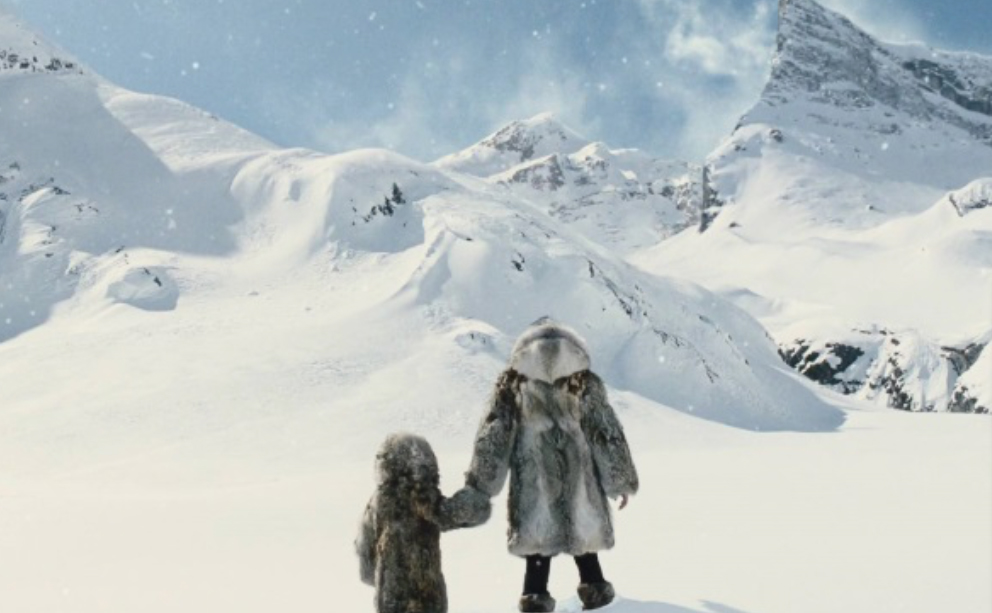
As Yona and the child crunch through the snow in the quiet depth of coldness, they glimpse a polar bear. There is life! Perhaps not humanity. But life on Earth.

And in that connection, we live. Even if just for a moment.

Yona and the child face a bleak but hopeful future after escaping the Snowpiercer

Postscript on the ending of the movie: In an interview with Vulture, Bong Jung-Ho shared his thoughts on Snowpiercer’s ending: “For me, it’s a very hopeful ending … The engine is itself on its way to extinction along with cigarettes, and other goods. Extinction is a repeated word throughout the film. But outside the train, life is actually returning. It’s nature that’s eternal, and not the train or the engine, as you see with the polar bear at the end.”

Ultimately, Bong Jung-Ho’s message with the ending of this baroque political allegory is the vindication of a choice against reform capitalism for something new, that there is indeed “Life after Capitalism”, not easy but worth living…

Nina Munteanu is a Canadian ecologist / limnologist and novelist. She is co-editor of Europa SF and currently teaches writing courses at George Brown College and the University of Toronto. Visit www.ninamunteanu.ca for the latest on her books. Nina’s bilingual “La natura dell’acqua / The Way of Water” was published by Mincione Edizioni in Rome. Her non-fiction book “Water Is…” by Pixl Press (Vancouver) was selected by Margaret Atwood in the New York Times ‘Year in Reading’ and was chosen as the 2017 Summer Read by Water Canada. Her novel “A Diary in the Age of Water” was released by Inanna Publications (Toronto) in June 2020.

Crossing into the Ecotone to Write Meaningful Eco-Fiction

If you have an apple and I have an apple and we exchange apples then you and I will still each have one apple. But if you have an idea and I have an idea and we exchange these ideas, then each of us will have two ideas.”—George Bernard Shaw


naturalselectionAt Calgary’s When Words Collide this past August, I moderated a panel on Eco-Fiction with publisher/writer Hayden Trenholm, and writers Michael J. Martineck, Sarah Kades, and Susan Forest. The panel was well attended; panelists and audience discussed and argued what eco-fiction was, its role in literature and storytelling generally, and even some of the risks of identifying a work as eco-fiction.
Someone in the audience brought up the notion that “awareness-guided perception” may suggest an increase of ecological awareness in literature when it is more that readers are just noticing what was always there. Authors agreed and pointed out that environmental fiction has been written for years and it is only now—partly with the genesis of the term eco-fiction—that the “character” and significance of environment is being acknowledged beyond its metaphor; for its actual value. It may also be that the metaphoric symbols of environment in certain classics are being “retooled” through our current awareness much in the same way that Aldous Huxley’s Brave New World or George Orwell’s Nineteen Eighty Four are being re-interpreted—and newly appreciated— in today’s world of pervasive surveillance and bio-engineering.

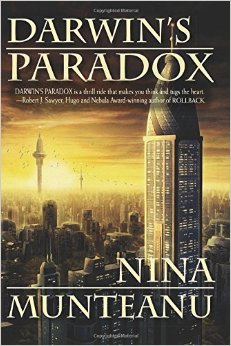
darwins-paradoxI submit that if we are noticing it more, we are also writing it more. Artists are cultural leaders and reporters, after all. My own experience in the science fiction classes I teach at UofT and George Brown College, is that I have noted a trend of increasing “eco-fiction” in the works in progress that students are bringing in to workshop in class. Students were not aware that they were writing eco-fiction, but they were indeed writing it.
I started branding my writing as eco-fiction a few years ago. Prior to that—even though my stories were strongly driven by an ecological premise and strong environmental setting—I described them as science fiction and many as technological thrillers. Environment’s role remained subtle and—at times—insidious. Climate change. Water shortage. Environmental disease. A city’s collapse. War. I’ve used these as backdrops to explore relationships, values (such as honour and loyalty), philosophies, moralities, ethics, and agencies of action. The stuff of storytelling.

Environment, and ecological characteristics were less “theme” than “character,” with which the protagonist and major characters related in important ways.

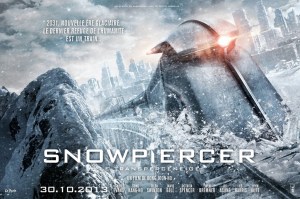
Snowpiercer-frenchJust as Bong Joon-Ho’s 2014 science fiction movie Snowpiercer wasn’t so much about climate change as it was about exploring class struggle, the capitalist decadence of entitlement, disrespect and prejudice through the premise of climate catastrophe. Though, one could argue that these form a closed loop of cause and effect (and responsibility).
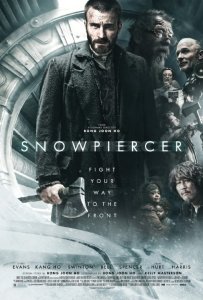
snowpiercer-posterThe self-contained closed ecosystem of the Snowpiercer train is maintained by an ordered social system, imposed by a stony militia. Those at the front of the train enjoy privileges and luxurious living conditions, though most drown in a debauched drug stupor; those at the back live on next to nothing and must resort to savage means to survive. Revolution brews from the back, lead by Curtis Everett (Chris Evans), a man whose two intact arms suggest he hasn’t done his part to serve the community yet.
Minister Mason (Tilda Swinton), an imperious yet simpering figure who serves the ruling class without quite being part of it, reminds the lower class that:

We must all of us on this train of life remain in our allotted station. We must each of us occupy our preordained particular position. Would you wear a shoe on your head? Of course you wouldn’t wear a shoe on your head. A shoe doesn’t belong on your head. A shoe belongs on your foot. A hat belongs on your head. I am a hat. You are a shoe. I belong on the head. You belong on the foot. Yes? So it is.  snowpiercer-mason

In the beginning, order was prescribed by your ticket: First Class, Economy, and freeloaders like you…Now, as in the beginning, I belong to the front. You belong to the tail. When the foot seeks the place of the head, the sacred line is crossed. Know your place. Keep your place. Be a shoe.”

Ecotones are places where “lines are crossed,” where barriers are breached, where “words collide” and new opportunities arise. Sometimes from calamity. Sometimes from tragedy. Sometimes from serendipity.

When environment shapes a story as archetype—hero, victim, trickster, shadow or shape shifter—we get strong eco-fiction. Good eco-fiction, like any good story, explores the choices we make and the consequences of those choices. Good eco-fiction ventures into the ecotone of overlap, collision, exchange and ultimate change.

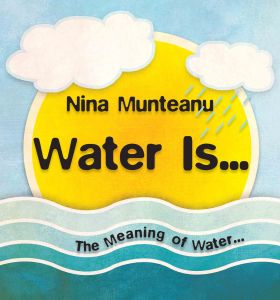
water-is-webIn my latest book Water Is… I define an ecotone as the transition zone between two overlapping systems. It is essentially where two communities exchange information and integrate. Ecotones typically support varied and rich communities, representing a boiling pot of two colliding worlds. An estuary—where fresh water meets salt water. The edge of a forest with a meadow. The shoreline of a lake or pond.

For me, this is a fitting metaphor for life, given that the big choices we must face usually involve a collision of ideas, beliefs, lifestyles or worldviews: these often prove to enrich our lives the most for having gone through them. Evolution (any significant change) doesn’t happen within a stable system; adaptation and growth occur only when stable systems come together, disturb the equilibrium, and create opportunity. Good social examples include a close friendship or a marriage in which the process of “I” and “you” becomes a dynamic “we” (the ecotone) through exchange and reciprocation. Another version of Bernard Shaw’s quote, above, by the Missouri Pacific Agriculture Development Bulletin reads: “You have an idea. I have an idea. We swap. Now, you have two ideas and so do I. Both are richer. What you gave you have. What you got I did not lose. This is cooperation.” This is ecotone.

Jungfrau-peak

Jungfrau, Switzerland (photo by Nina Munteanu)

I think we are seeing more eco-fiction out there because ecosystems, ecology and environment are becoming more integral to story: as characters in their own right. I think we are seeing more eco-fiction out there because we are ready to see it. Just as quantum physics emerged when it did and not sooner, an idea—a thought—crystalizes when we are ready for it.

Don’t stay a shoe … go find an ecotone. Then write about it.


nina-2014aaNina Munteanu is an ecologist and internationally published author of award-nominated speculative novels, short stories and non-fiction. She is co-editor of Europa SF and currently teaches writing courses at George Brown College and the University of Toronto. Visit www.ninamunteanu.ca for the latest on her books.

Importance of Setting in a Novel

I travel, always arriving in the same place—Dejan Stojanovic, The Shape

swiss-cabin02

Mountain cabin in Switzerland (photo by Nina Munteanu)

Setting grounds your writing in the reality of place and depicts the theme of your story through powerful metaphor. Without setting, characters are simply there, in a vacuum, with no reason to act and most importantly, no reason to care. Without a place there is no story. Setting serves multipurpose roles in story. It helps with plot, determines and describes character and gives metaphoric links to theme. Setting, like the force in Star Wars, provides a landscape that binds everything into context and meaning.

Place Your Story

According to acclaimed novelist Richard Russo, if you’re not writing stories that occur in a specific place, you’re missing the opportunity to add depth and character to your writing. We are creatures of our environment, adds Robert Louis Stevenson. Our outlook on life is colored by the setting in which we find ourselves. Editors have told me that they have little faith in the vision of writers who don’t clearly depict the world their characters inhabit. Imagine Thomas Hardy’s characters without Egdon Heath or Scarlet O’Hara without her beloved Tara or Dorothy without the Land of Oz.

Setting includes time, place and circumstance. These three form a kind of critical mass that creates the particular setting best suited to your story. If you change any of these it will affect the quality of the others.

Setting as Character

EcologyOfStorySettings can not only have character; they can be a character in their own right. A novelist, when portraying several characters, may often find herself painting a portrait of “place”. This is setting being “character”. The setting functions as a catalyst, and molds the more traditional characters that animate a story. The central character is often really the place, which is often linked to the protagonist. In Lord of the Rings, for instance, Frodo is very much an extension of his beloved Shire.

D.H. Lawrence suggested that Egdon Heath was the most important character in Thomas Hardy’s book Return of the Native:

Egdon, whose dark soil was strong and crude and organic as the body of a beast.–D.H. Lawrence on Return of the Native


Setting, then, comes to mean so much more. Setting personified. Setting ultimately portrays what lies at the heart of the story.

Setting as Metaphor

When you choose your setting, remember that its primary metaphoric role is to help depict theme. This is because place is destiny.

In Bong Joon-Ho’s motion picture Snowpiercer, about a train careering the world with the remains of humanity, place and destiny are welded together in tight metaphor. The train “is the world”. This dark surrealistic allegory examines all iterations of place in a class struggle between the front and tail ends of the train. In an early scene, one of the the ruling class evokes her own metaphors to remind the lower class of their place:

“Order is the barrier that holds back the flood of death. We must all of us on this train of life remain in our allotted station…Would you wear a shoe on your head? Of course you wouldn’t wear a shoe on your head. A shoe doesn’t belong on your head. A shoe belongs on your foot. A hat snowpiercer-mason-shoebelongs on your head. I am a hat. You are a shoe. I belong on the head. You belong on the foot. Yes? So it is.

In the beginning, order was proscribed by your ticket: First Class, Economy, and freeloaders like you. Eternal order is prescribed by the sacred engine: all things flow from the sacred engine, all things in their place, all passengers in their section, all water flowing, all heat rising, pays homage to the sacred engine, in its own particular preordained position. So it is.

Now, as in the beginning, I belong to the front. You belong to the tail.

When the foot seeks the place of the head, the sacred line is crossed. Know your place. Keep your place. Be a shoe.”–Minister Mason in Snowpiercer


Russo tells us that place is crucial to human destiny and the formation of human personality. “The more specific and individual things become, the more universal they feel,” says Russo. This is not an oxymoron, but an example of the principle of a truism, which comes to us in the form of paradox (like all good truisms).

Detail provides the color and texture of your story and helps it resonate with a sense of place. This does not necessarily translate into lots of exposition; but it does require creative choice of words. So, instead of “John took a drag from his cigarette as he drove his sports car along a winding road in the country” (twenty words) try something like “Vinnie sucked on a Camel as his red Corvette careered the hair-pinned curves of Hell’s Gate” (seventeen words).

Setting & Emotion

The setting may amplify a character’s emotions or contradict them, depending on the circumstance of the character, her mood, disposition, tendencies, and observational skills. And the kind of story you’re telling. Either way, setting provides an “emotional landscape” upon which a character’s own temperament may play counterpoint or may resonate in a wonderful symphony. The writer should think of the less obvious, of contrast, and how you can increase tension and emphasize the character’s situation.

Setting as Weather

Weather conveys the mood and tone of both story and character. Weather is not just part of the scenery. To a writer, weather is a device used in plot and theme. A good example is Michael Ondaatje’s The English Patient and how he used the desert setting and the hot winds to evoke mood, character, tension, theme and ultimately story:

“The desert could not be claimed or owned—it was a piece of cloth carried by winds, never held down by stones, and given a hundred shifting names long before Canterbury existed, long before battles and treaties quilted Europe and the East”–Michael Ondaatje, The English Patient

In summary, here are some suggestions that will help you create vivid, memorable and meaningful settings:

  • Don’t “tack” setting in; make it an integral part of the story; give it purpose
  • Describe selectively and with purpose—through integration in “scene” rather than exposition
  • Be specific (e.g., soft pink rose, not flower; beat up Chevy, not car; old clapboard cottage, not house)
  • FictionWriter-front cover-2nd ed-webUse similes, metaphors, and personification to breathe life into setting
  • Use the senses like sight, sound, smell, taste, feel
  • Don’t tell, show (e.g., don’t say the time is the 1920s; show the cars and dresses. Don’t tell the reader it’s raining; show them by describing the dripping trees, etc.)
  • Compare and contrast settings and relate them to the point of view characters
  • Don’t describe setting all at once in the beginning; work it in slowly throughout the story; let it unfold as the story does


This article is an excerpt from Chapter H of The Fiction Writer: Get Pubished, Write Now! and will be the main theme of my upcoming writing guidebook Ecology of Story: World as Character.


Nina Munteanu is an ecologist and internationally published author of award-nominated speculative novels, short stories and non-fiction. She is co-editor of Europa SF and currently teaches writing courses at George Brown College and the University of Toronto. Visit www.ninamunteanu.ca for the latest on her books.