Write What You Know–Write “From the Inside Out”

Canadian ForestWhen I first heard the writer’s edict “write what you know” I rejoined: but I write science fiction—I write about the unknown. What I still had to learn was that by describing “the other” SF really describes “us”. We explore ourselves through our relationship with the unknown. We do this by ensuring that all our plotlines reflect theme.

Write About What You Know

How many times have you been told to write about what you know? And how many times have you trusted that advice? Well, how interesting is that?!? We think our lives are dull, boring, and mundane. We write – and read – to get away from it, don’t we?

nina-LL-interviewe-closer

Nina Munteanu

Well, yes…and no…

In the final analysis, even good “escapist” writing, like some science fiction, despite its alien settings and creatures of imagination, is grounded in the realities of our every-day lives, which form the basis of human nature. Love, ambition, trust, hate, envy, honor, courage. All these are universal human traits which the writer taps into and ultimately writes about.

“In the 19th century, John Keats wrote to a nightingale, an urn, a season. Simple, everyday things that he knew,” say Kim Addonizio and Dorianne Laux in The Writer’s Guide to Creativity. “Walt Whitman described the stars, a live oak, a field. They began with what they knew, what was at hand, what shimmered around them in the ordinary world.”

Writing about what you know isn’t about literal truths; it’s about what you know inside your heart. Write from the inside out. Write about what excites you; what frightens you; what angers you, makes you sad, happy. As SF author Marg Gilks says, “You know more than you think.”

Twisted Truths & Inner Knowledge

Writers can use our own knowledge and experiences in everyday life and translate them into something far from ordinary. You start with universal experiences.

Get Emotional

What excites you; what frightens you; what angers you, makes you sad, happy. These are emotions we all feel. When we give our characters experiences similar to our own, we breathe life into both character and experience and provide the reader an anchor for her heart.

Get Sensational

You know how it feels to have your knees shake with fatigue after a long climb or the hair-raising trepidation of walking into a dark place. Use these sensations to make your writing more sensual with added dimensions of reality.

Get People Around You

My neighbor has a funny way of focusing his gaze slightly off me when he talks, like he can’t look me directly in the eyes. When he approaches my house to deliver the paper, Dennis strides with a lilting gait as he listens to hip-hop on his ipod.

Drawing from what you observe and know of the people around you is one of a writer’s most treasured resources for character description. I always carry a notebook with me no matter where I go, even if it’s only to the grocery store.

The Magic of Storytelling

A writer is like a magician. You play upon what readers all “know” then surprise them with the unexpected.

Unleashing your imagination and letting it soar while grounding yourself in the realities of universal truths is the stuff of which stories are made. This is what most of us mean when we say “write what you know.”

“Unless you are writing about a personal tragedy,” says Tina Morgan of Fiction Factor, “you will have to use your imagination. Use the creativity that drives you to write in the first place. Take those feelings you have every day and amplify them. Make them more intense, more vivid. Before you know it, you will be ‘writing what you know’.”

“Next time you hear ‘write what you know,’ ” says Gilks, “you’ll realize that you know an awful lot about what matters most in a story’s success. It’s waiting only to be shaped by your imagination.”

Write Real

Literary Agent, Rachelle Gardner, provided a great definition of “write what you know” on her blog. Here’s an excerpt:

Most people think “write what you know” means you have to put characters in situations you’re personally familiar with. If you’re a mom with five kids, you should write a mom story. If you’ve fought cancer and won, you should write about that. But in my opinion, that’s not what it means.

Write what you know means write with authenticity about thoughts, feelings, experiences of life. Be honest. Write from a deep place. Don’t write from the surface. Whether you’re writing about parenthood or cancer or anything else… be real.
Rachell Gardner

Don’t reflect what you know from other people or the media… write what you know from your own inner life.

An excerpt of this article appeared in CBC’s Canada Writes.

Nina-CanadaWrites2012

Nina Talks Writing on Dragon Page

michael-stackpoleSome years ago, I was interviewed by Michael Stackpole (New York Times bestselling author of over 40 novels, including “I, Jedi” and “Rogue Squadron”) and Michael Mennenga (CEO of “Slice of Sci-Fi”) on Dragon Page Cover to Cover.

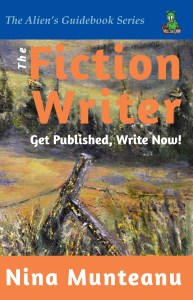
michael mennengaWe talked about my book “The Fiction Writer: Get Published, Write Now!” and what new writers fret over. A lot of the discussion focused on how to handle rejection and I shared my “bus terminal” model (also in my book), which worked very well. For details on our discussion about the industry and craft of writing, listen below:


DragonPage-FictionWriter

The Bus Terminal Model:

FictionWriter-front cover-2nd ed-webHere is an excerpt from The Fiction Writer, Chapter R:

One way to see your way through rejection is to find ways to distance yourself from your story once you’ve sent it off and to see the whole process of submission-rejection-acceptance as a business. The very best way to do this is to submit lots of stories and to keep submitting them. With novels, this is a little harder to do but you can certainly be working on the next one once you’ve submitted the first.

When I was writing short stories, I kept a list of what and where I submitted, along with the most important item: where to submit NEXT. At any given time, I made sure that I had at least x-number of submissions out there and each story had a designated place to go if it returned. As soon as a story came back from magazine A, I simply re-packaged it and sent it to magazine B. The critical part of the list was to have a contingency for each story: the next place where I would send the story once it returned. I was planning on the story being rejected with the hope that it would be accepted; that way, a rejection became part of a story’s journey rather than a final comment.

I ran my submissions like a bus terminal. A story was in and out so fast it never had a chance to cool off. And, since I had five other pieces out there, I could do this with little emotion. I was running a fast-paced “story depot”, after all. All my stories had to be out there as soon as possible; if they were sitting in the terminal, they were doing nothing for me.


nina-2014aaNina Munteanu is an ecologist and internationally published author of award-nominated speculative novels, short stories and non-fiction. She is co-editor of Europa SF and currently teaches writing courses at George Brown College and the University of Toronto. Visit www.ninamunteanu.ca for the latest on her books.

Publishers Weekly Praises Cli-Fi: Canadian Tales of Climate Change & “The Way of Water”

Publishers Weekly writes:

cli-fi-exile anthology2017“In his introduction to this all-original set of (at times barely) futuristic tales, Meyer warns readers, “[The] imaginings of today could well become the cold, hard facts of tomorrow.” Meyer (Testing the Elements) has gathered an eclectic variety of eco-fictions from some of Canada’s top genre writers, each of which, he writes, reminds readers that “the world is speaking to us and that it is our duty, if not a covenant, to listen to what it has to say.” In these pages, scientists work desperately against human ignorance, pockets of civilization fight to balance morality and survival, and corporations cruelly control access to basic needs such as water. The most affecting tale, Wendy Bone’s “Abdul,” is also the least futuristic, an emotional story that touchingly contrasts Western guilt against the life of a captive orangutan. The anthology may be inescapably dark, but it is a necessary read, a clarion call to take action rather than, as a character in Seán Virgo’s “My Atlantis” describes it, “waiting unknowingly for the plague, the hive collapse, the entropic thunderbolt.” Luckily, it’s also vastly entertaining. It appears there’s nothing like catastrophe to bring the best out in authors in describing the worst of humankind.”

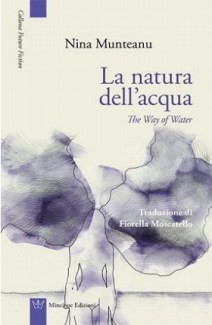
My story The Way of Water is one of 17 stories in Exile’s anthology, published in May 2017. It was originally published in English and Italian [La natura dell’acqua] by Mincione Edizioni [print] and Future Fiction [ebook] in Rome in early 2016. The Way of Water is a near-future vision that explores the nuances of corporate and government corruption and deceit together with resource warfare. An ecologist and technologist, Nina Munteanu uses both fiction and non-fiction to examine our humanity in the face of climate change and our changing relationship with technology and Nature … through water.

la natura dell'acquaShe imagines its coolness gliding down her throat. Wet with a lingering aftertaste of fish and mud. She imagines its deep voice resonating through her in primal notes; echoes from when the dinosaurs quenched their throats in the Triassic swamps.

Water is a shape shifter.

It changes yet stays the same, shifting its face with the climate. It wanders the earth like a gypsy, stealing from where it is needed and giving whimsically where it isn’t wanted.

Dizzy and shivering in the blistering heat, Hilda shuffles forward with the snaking line of people in the dusty square in front of University College where her mother used to teach. The sun beats down, crawling on her skin like an insect. She’s been standing for an hour in the queue for the public water tap.

The Way of Water takes place in Toronto, Ontario in Canada, mostly on or near the campus of the University of Toronto.

In The Way of Water, Nina Munteanu pens her love letter to water, exulting it as a liquid that has semi-magical properties. Munteanu recognizes the chimerical quality of water, its unique ability to shift and change, to purify and taint, and the incredible way that it makes up most of our body mass and therefore shapes us as well.

nina-TV-nov2015A limnologist (lake ecosystem biologist) by trade, Munteanu recognizes the incredible way that water shapes life and brings attention to the fact that water connects us to each other just as water connects with other water, forming bonds. She evokes in the reader a sense of reverence for water and an awareness that the same water that flows through our bodies have flowed through the bodies of our ancestors, cycling through life since the first life forms coalesced.

In recognizing the preciousness of water, she also recognizes its precarity and the danger that capitalist systems pose when they lay claim to water and seek to own it. “The Way of Water” evokes a sense of awareness about issues of access to water and about the dangers of imbalances in that access.”—Derek Newman-Stille, Speculating Canada


book-patio2 copy“Water covers every aspect of this science fiction story that pits the vulnerable citizen against the evil multinational corporation in a dystopian Canada sometime in our future. Water is presented in its multiplicity of facets: in the science behind its composition, in its history, in it’s symbolic nature and different physical states; water is a giver and taker of life, and is the form in which the friendship of protagonists Hilda and Hanna functions. Water is also magic and the ultimate righter of wrongs committed to it and to a humanity it gives life to. Within this framework, Munteanu spins a thought-provoking tale that projects where our headlong pursuit of profit may one day lead us to, and how nature will ultimately, with a little human coaxing, be the only one to correct the balance.”—Shane Joseph, Canadian author of Fringe Dwellers

“Nina Munteanu with The Way of Water suggests that this element is also a form of laNaturaDell'Acqua-coverlove; a story to read, not only to deal with the possible but, above all, to understand that the time still available for “love” might be less than what you believe.”—Simone Casavecchia, SoloLibri.net (read the original Italian review here)

The Way of Water is a story of the kind you hope is science fiction but you fear is not.”—Massimo Luciani, NetMassimo (read the original Italian review here)


nina-2014aaNina Munteanu is an ecologist and internationally published author of award-nominated speculative novels, short stories and non-fiction. She is co-editor of Europa SF and currently teaches writing courses at George Brown College and the University of Toronto. Visit www.ninamunteanu.ca for the latest on her books.


Call for Submissions: Water Anthology

Reality Skimming Press is looking for submissions to their first anthology in their hard science optimistic series. This first anthology is a Water Anthology, obviously based on the theme of water. The project coordinator is Ellen Michelle. The water anthology will be edited by scientist and author Nina Munteanu.

Story requirements:

Stories must use real or realistic science based on the theme of water in the near future (50-100 years from 2017). Your story must be considered optimistic—this does not mean that bad things can’t happen in your story, but there has to be an optimistic twist and an optimistic ending (a happy ending or hope for a happy ending). For example, your main character can die at the end as long as their death brings hope for others. Any stories that are not deemed optimistic will not be considered.

How to submit:

Stories can be submitted to realityskimmingpress@outlook.com with Water Submission in the subject. Any emails without this subject heading will be ignored by the system.

Submission requirements:

  • Stories must not exceed 5,000 words
  • Stories must be accompanied by a short cover letter in the body of the submissions email explaining your past publications or other accreditation including any science education or background you may have. *Note that we do often publish first time authors, so having no previous publications is not detrimental to your submission.
  • Submit your story as an attachment to the email in Word document format only (.doc or .docx).
  • Authors must be Canadian, permanent residents of Canada, or otherwise have a Canadian connection. If you are not Canadian by birth please explain your Canadian connection in the cover letter.
  • Authors may submit only one story to the anthology.
  • Previously published stories are accepted as long as you have the rights to republish it.
  • If you have submitted your story for consideration elsewhere, or plan to do so, please state that in your cover letter.
  • Authors will be paid $30 for their stories if accepted into the anthology.
  • Submission deadline is midnight July 22nd (extended for some groups).

See Submission guidelines here.


Nina MunteanuNina Munteanu is an ecologist and internationally published author of award-nominated speculative novels, short stories and non-fiction. She is co-editor of Europa SF and currently teaches writing courses at George Brown College and the University of Toronto. Visit www.ninamunteanu.ca for the latest on her books.


The Fifteenth International Writers’ and Artists’ Festival / Le XVe Festival International des écrivains et artistes–Quebec

best best group shotOn Friday, June 9th, I drove with friend, songwriter and poet Honey Novick, to the 15th International Writers’ and Artists’ Festival in Val-David, Quebec (June 10th and 11th, 2017). Celebrated artists, poets, writers and singers with an international heritage that included France, Chile, Argentina, Romania, Canada and the USA would congregate at the festival, set in a large house nestled deep in the Maple Laurentian forest.

The mixed Laurentian forest is called the “eastern forest-boreal transition” and includes a varied tapestry of broadleaf (aspen, oak, paper birch, mountain ash and maple) and conifer (pine, spruce and fir) trees.

Nina-fest-close-web

Nina Munteanu

When we reached our destination—a large three-story house surrounded by forest—I took in the aroma of fresh pine and “sweet fern” and spotted Bunchberry (soon to be designated Canada’s national flower), forget-me-nots and lupine carpeting the ground near the house. A young deer, foraging on a shrub’s new leaves beside the house, glanced at us without fear then slipped back into the forest.

I thought the setting ideal for an international festival celebrating the expression of the arts. I was scheduled to talk about my latest book Water Is…”, a personal and scientific journey with water, and to give a lecture on eco-fiction.

Outside-view-web

View outside my bedroom

Flavia Cosma, the originator and organizer of the festival for over a decade, greeted us at the door and in true Romanian-fashion immediately sat us down to eat and drink. After a seven-hour drive (we somehow ended up in Charlamagne, Celine Dion’s birthplace), I was hungry and enjoyed some of Flavia’s signature dishes, varză a la Cluj (cabbage a la Cluj) and salată boeuf (beef salad), made with carrots, parsley roots, eggs, potatoes, beef, pickles and peas mixed with mayonnaise. The view outside my bedroom on the third floor peered through tall firs to a mountain valley and the small village of Val-David. I looked forward to meeting poets, writers, musicians and artists the next day…


Day 1: Saturday
HoneyNovickBC-web

Honey Novick

Honey Novick (Toronto, Ontario), poet laureate of the Summer of Love Project 2007 Luminato Festival and winner of the Bobbi Nahwegahbow Memorial Award, opened the festival with an inspirational song.

Composers and singers Brian Campbell (Montréal, Quebec) and Ivan-Denis Dupuis (Sainte Adele, QC) provided additional and stirring song performance.
Louis Hebert

Louis-Philippe Hebert

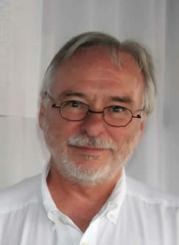
Quebec author Louis-Philippe Hébert (Saint Sauveur, QC), winner of the Grand Prix Québecor du Festival de Poésie de Trois-Rivières and the Prix du Festival de Poésie de Montréal, read from his novel Un homme discret (Lévesque, 2017). Poet Julie de Belle read several poems, including When the sea subsides, finalist in the Malahat Review. Brian Campbell, finalist in the 2006 CBC Literary Award for Poetry, read from his book Shimmer Report (Ekstasis Editions, 2015).

FlaviaCosma-EarlyYears

Flavia Cosma

Poet and award-winning TV documentarist Flavia Cosma, who received the gold medal as an honorary member by the Casa del Poeta Peruano, Lima, Peru in 2010, nominated for the Pushcart Prize, and whose work has been used in University of Toronto literature courses, read from her collection of poems, The Latin Quarter (MadHat Press, 2015) and Plumas de Angeles (Editorial Dunken, 2008).

Felicia Mihali

Felicia Mihali

Romanian writer Felicia Mihali read from her novel La bien-aimée de Kandahar, nominated for Canada Reads 2013. Romanian author Melania Rusi Caragioiu, member of the Canadian Association of Romanian Writers, read from her book of poems Basm în versuri și poeme pentru copii in Romanian.

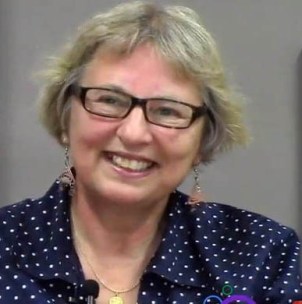
Nicole Davidson, the mayor of Val-David, read some of her poetry. Jeanine Pioger, French author of Permanence de l’instant, read a selection of her poetry. Jocelyne Dubois showed her artwork and Romanian artists Carmen Doreal and Eva Halus discussed their artwork and poetry.
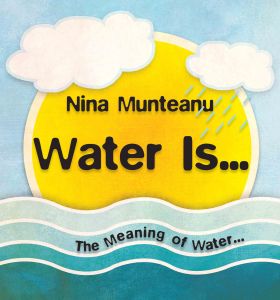
water-is-cover-web“Water Is…”: I shared the inspiration and making of my latest book, “Water Is…”, a scientific study and personal journey as limnologist, mother, teacher and environmentalist, which was recently picked by Margaret Atwood in the NY Times as 2016 ‘Year in Reading’ and recommended by Water Canada as ‘Summer Reading’. I discussed how I first conceived the book as a textbook early in my career as a freshwater biologist and how it morphed from one idea into something completely different and why it is my most cherished work to date.

Day 2: Sunday

French poet David Brême gave a workshop on poetry and the cultural hybridization of franco-québécoise (atelier sur la poésie et l’hybridation culturelle franco québécoise), which he had given earlier in Toronto.

couzier_nane

Nane Couzier

Montreal poet from France and Senegal, Nane Couzier, read from her collection Commencements, honorable mention in le Prix de poésie 2016 des Écrivains francophones d’Amerique.
JocelyneDubois

Jocelyne Dubois

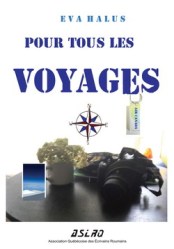
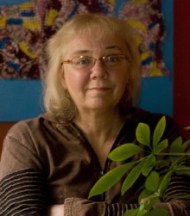
Novelist and short story writer Jocelyne Dubois read from her novel World of Glass, finalist for the 2013 QWF Paragraphe Hugh MaLennan Prize for fiction. Laurentian poet John Monette, author of the collection Occupons Montréal (Editions Louise Courteau, 2012) read several poems and Eva Halus, Romanian poet, read from her book Pour tous les Voyages. Chilean poet Tito Alvarado also read his poetry.

NasulTV-claudiuScrieciu

Claudiu Scrieciu of Nasul.TV Canada

Claudiu Scrieciu and Felicia Popa of Nasul.TV CanadaTeleviziunea Libera—the Canadian chapter of Romanian TV in St. Laurent, Quebec, televised aspects of the festival and the closing ceremony. Felicia, who interviewed me for their show, talked with me about “Water Is…”.

naturalselectionEco-Fiction: I discussed how eco-fiction evolved as a genre and its importance, both metaphorically and literally, in the literature of the Anthropocene (with a nod to Margaret Atwood’s 2016 challenge to a college audience in Barrie, Ontario, to write the stories that focus on our current global environmental crisis). I provided examples of ecological metaphor such as Barbara Kingsolver’s Flight Behavior, Michael Ondaadje’s The English Patient, Frank Hebert’s Dune, and Thomas Hardy’s The Return of the Native. Astute questions, initiated by Flavia, led to an animated discussion on our ultimate participation in Nature, co-evolution, cooperation vs competition, soft-inheritance, DNA repair and the role and place of water in virtually all things.

The festival concluded at the Centre d’Exposition (art centre) of Val David with “Les Mots du Monde”, where poets, songwriters and writers performed readings and song to the community. The cultural setting and perfect acoustics provided a true inspiration for Honey Novick’s stirring opening songs—angelic in nature and in voice. I asked colleague Jeanine Pioger to read my essay “Why I Write,” which I had translated into French with help from colleague Betty Ing. The French version appears below.
toast02

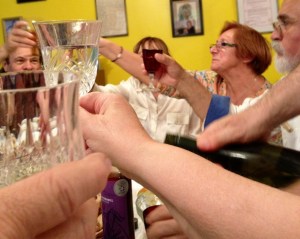
Toasting the international festival

After the closing ceremony, Flavia invited participants to a grand dinner party at the festival house featuring authentic Romanian dishes, good wine and stimulating conversation.

The festival was a great success on many levels. Honey Novick astutely thanked Flavia in a Facebook post, “thanks for the wonderful memories, great inspiration, generous hearts and a tremendous weekend.”  I felt a great resonance and synchronicity throughout the weekend. It was as though we all embarked on a dimensional ride together, orchestrated by Flavia, that challenged, fulfilled and enlightened…I spoke English, French and puțin limba română. Foarte puțin… …And the food… OOHLALA!

Mulțumesc, Flavia! A fost minunat!
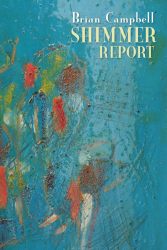
BrianCambell-ShimmerReportEva Halus-Pour tous les VoyagesLatinQuarter-flavia cosmaun homme discret


La raison pour laquelle j’écris

L’écriture est le souffle et la lumière de mon âme et la source de mon essence. Quand j’écris, je vis le moment présent. Je suis dans le moment de la création, connecté au Soi Divin, embrassant la nature et l’ensemble de l’univers fractal.

Je fais quelque chose d’important.

Je me connecte avec vous.

Isaac Asimov a dit : « j’écris pour la même raison que je respire — parce que si je ne le faisais pas, je mourrirais ». C’était aussi vrai quand il était auteur inconnu qu’après qu’il est devenu grand écrivain. Il parlait métaphoriquement, spirituellement et littéralement. Je sais que si je n’écrivais pas, je me priverais mon âme de sa respiration de vie. Il représente plus que la vérité métaphorique ; il est scientifiquement prouvé. L’écriture expressive — que ce soit sous la forme de l’écriture d’un journal, de blogging, de l’écriture de lettres, de mémoires ou de fiction — améliore la santé.

Que vous publiiez ou non, votre écriture est importante et utile. Prenez possession de celle-ci, nourrissez-la et considérez-la comme sacrée. Inspirez le respect des autres et respectez tous les écrivains à leur tour ; ne laissez pas l’ignorance vous intimider et vous faire taire.

L’écriture, comme toute forme de créativité, exige un acte de foi ; tant en nous-mêmes qu’en les autres. Et c’est effrayant. C’est effrayant, parce qu’il faut que nous renoncions au contrôle. Il est d’autant plus préférable d’écrire. La résistance est une forme d’autodestruction, dit Julia Cameron, auteur de The Artist’s Way.

Nous résistons afin de maintenir une vague idée de contrôle, mais au contraire, nous augmentons nos chances de développer la dépression, l’anxiété et la confusion. Booth et al. (1997) ont conclu que la divulgation écrite réduit sensiblement le stress physiologique du corps causé par une inhibition. Nous sommes nés pour créer. Pourquoi hésitons-nous et résistons-nous? Parce que, dit Cameron, « nous avons accepté le message de notre culture… [que] nous sommes censés faire notre devoir et puis mourir. La vérité est que nous sommes censés être prospères et vivre ».

Joseph Campbell a écrit : « suivez votre bonheur et les portes s’ouvriront là où il n’y avait pas de portes avant. » Cameron ajoute : « c’est l’engagement interne pour être fidèle à nous-mêmes et de suivre nos rêves qui déclenche le soutien de l’univers. Alors que nous sommes ambivalents, l’univers nous semblera également être ambivalent et erratique. » Quand j’écris, je vis le moment présent, en harmonie avec le moment divin de la création.

En pleine joie.
nina-2014aaNina Munteanu is an ecologist and internationally published author of award-nominated speculative novels, short stories and non-fiction. She is co-editor of Europa SF and currently teaches writing courses at George Brown College and the University of Toronto. Visit www.ninamunteanu.ca for the latest on her books.

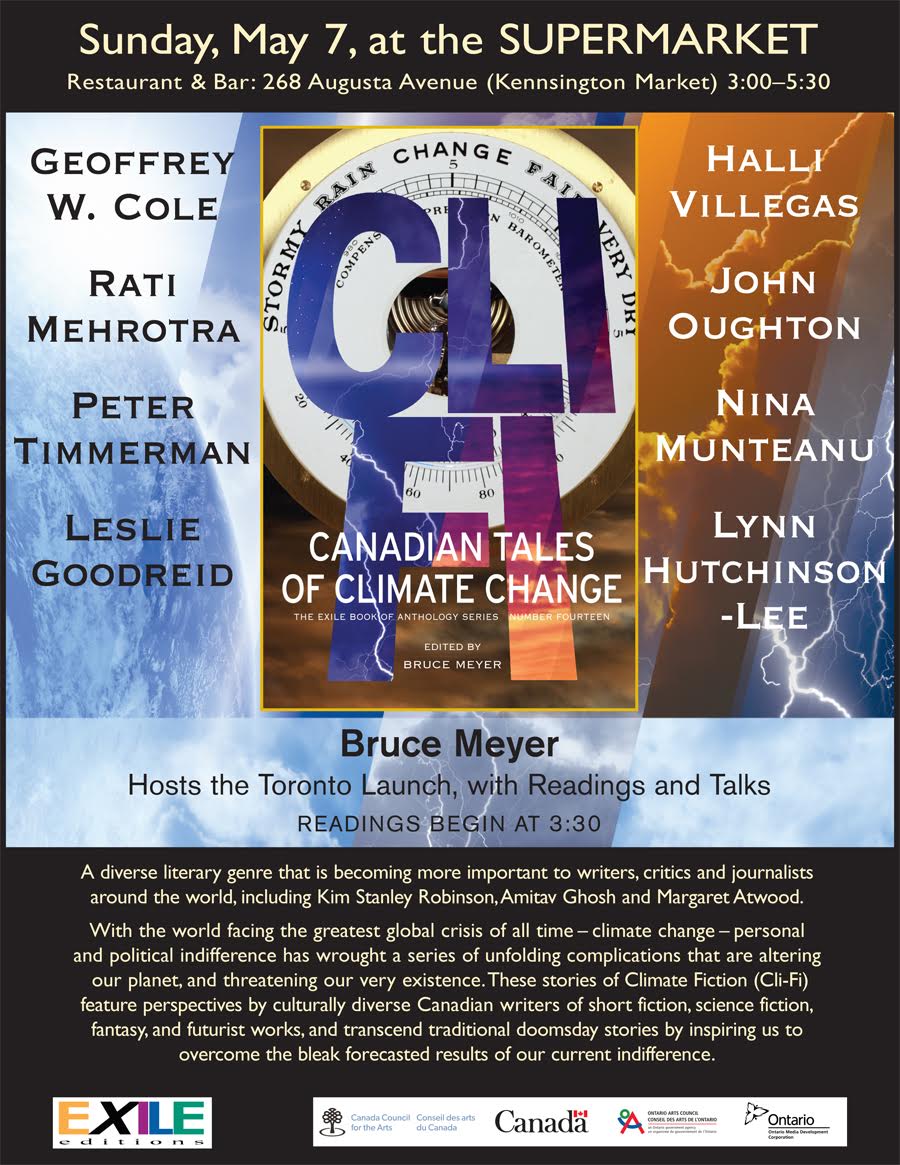
Canadian Tales of Climate Change–Launch in Toronto, May 7th 2017

Launching CLI-FI: Canadian Tales of Climate Change (anthology)

CliFiAnthologyLaunch-Exile
Sunday, May 7, at the SUPERMARKET Restaurant & Bar
268 Augusta Avenue (Kennsington Market) 3:00–5:30

Toronto, ON

Readings start at 3:30

Featuring:

Geoffrey W. Cole, Rati Mehrotra

Peter Timmerman, Leslie Goodreid, Halli Villegas

John Oughton, Nina Munteanu, Lynn Hutchinson-Lee

“With the world facing the greatest global crisis of all time – climate change – personal and political indifference has wrought a series of unfolding complications that are altering our planet, and threatening our very existence. These stories of Climate Fiction (Cli-Fi) feature perspectives by culturally diverse Canadian writers of short fiction, science fiction, fantasy, and futurist works, and transcend traditional doomsday stories by inspiring us to overcome the bleak forecasted results of our current indifference.”
amazing-picture-of-earth-as-seen-from-space

Creating the Right Time and Place to Write

Look and you will find it—what is unsought will go undetected —Sophocles

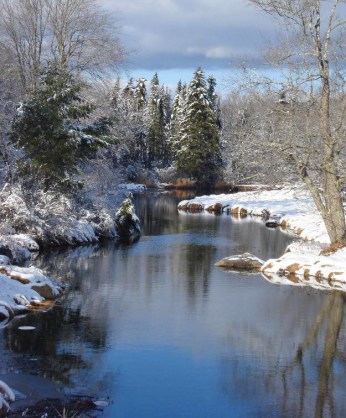
Snowy Path scarborough

Snowy path, Scarborough (photo by Nina Munteanu)

During a time when I had a demanding job as an scientist, wife and mother and community volunteer, I wrote and successfully marketed five books, over a dozen short stories and many articles and reviews. Some people, including my publishers, thought I never slept (true) or cloned myself (possibly). They couldn’t believe my productivity when I was so busy with life.

But I did what I did, because I’d worked out a system. One that I could live by. One that fit my lifestyle. One created out of respect for my art as part of my “busy” life of commitments.

The truth of it is that we all lead busy lives. If you are going to finish that novel you’ve been working on over the years or book of poems sitting in the bottom dresser drawer, you need to make a commitment. Aside from giving your art the respect it deserves, it comes down to creating a time and place to write.

It starts with being realistic about your daily schedules and routines and inclinations and picking a time and place accordingly. Try to be consistent. It’s actually best to create a routine related to both time and place; the key is to be realistic about it. Don’t fight your inclinations or habits; instead, build your writing into your lifestyle. This will ensure success.

Choose a Sacred Time

Finding the time to write is critical to succeeding. If you don’t dedicate time to write you won’t. Believe me, you won’t. Make it sacred.

Writer Louise DeSalvo shared a common story about her experience: “Many people I know who want to write but don’t (my husband, Ernie, for example) or who want to write more than they have but say they can’t find the time (my friend Marla) have told me that taking the time to write seems so, well, self-indulgent, self-involved, frivolous even. And that finding the time to write—even a diary, much less fiction or memoir or poetry—in their busy schedules is impossible. I’ll write when I have the time, they say.”

It doesn’t work that way. You don’t find time; you must create it.

Writing of any kind is a commitment you make to yourself. So, choose a time that’s right for you. If you’re a morning person, don’t pick the end of the day when you don’t function as well. Instead, pick the early morning to write, a time before everyone else gets up and the day’s distractions pile up.

It’s actually best to create a routine related to time of the day (e.g., fixed time such as every morning or right after supper) or based on some other constant in your life, say the school calendar or your daily activities. The key is to be realistic about the time(s) you’ve chosen. In other words, your goals should be realistic and realizable.

The second part of the commitment is sharing it with your family and friends so that they will respect your sacred writing time. By sharing how important it is to you, you also give them the gift of sharing the experience with you and they are more likely to respect your time alone to write. This is also why choosing a routine makes more sense; it is something your family and friends will better remember and abide by. Making it easy for others is part of making it easy for you.

Find Your Own Rhythm

There’s no rule for when and how often you write. Because frequency and schedule of writing depends on the kind of writing you do (e.g., novel, short stories, articles, research) and on your own rhythms, you must decide what works best.

Most writers recommend that you commit to a regular writing schedule that is realistic to your overall routine and biorhythms. Some recommend you write in the morning, after a refreshing sleep; others suggest you write at night, at the end of the day when your memories are more fresh with the day’s activities and stimulations. Yet others suggest you take time out during the day to jot down relevant experiences as close to the time as the muse hits you, then spend some time at the end of the day compiling it into your work.

In the end, it’s up to you to choose what works for you and your own rhythms. When is the best time for you to write? And for how long or how many pages? Once you decide, stick to that schedule.

Choose a Sacred Place

Writing is a reflective activity that requires the right environment. The best environment is a quiet one with no interruptions and where you are alone. A reflective environment will let you find a connection with your muse. You need a place where you can relax and not worry about someone barging in or other things distracting you from your reflections. You should also feel physically comfortable and the place should meet your time requirements.

Because the suitability of a place can change with the time of day, learn the rhythms that affect the place you wish to write in. For example, the kitchen may be the centre of activity during the day but an oasis of quietude during the evening. Similarly, learn what kind of environment stimulates and nurtures your writing. Does music help or do you need complete quiet? Do you respond to nature’s soft breezes and sounds or do you prefer to surround yourself with the anonymous murmur of a crowded café for company?

Places that work for me include the local coffee shop, a park near my house, a library or other quiet place where I can enjoy uninterrupted anonymity. Where you write may reflect what you’re writing and vice versa. To some extent, you are environment and environment is you. You might try a few places first and see what happens to your muse. What you write while sitting under an apple tree in the breeze hearing the birds singing may differ from what you write while sitting in your living room by the crackling fireplace with music playing or sitting at your desk in your bedroom in total silence or in a crowded café surrounded by cheerful bustle.

Again, as with your choice of time, tell your family and friends about your sacred place. Provide rules, if you have to. Let’s say it’s a desk in the study. You may, for instance, let others know that your “mess” is part of a work in progress, perhaps even explain a little about it so they understand the nature of what you’re doing and why it should not be touched or moved or used, even while you are away from it. This will ensure that they respect your things and what you’re doing.

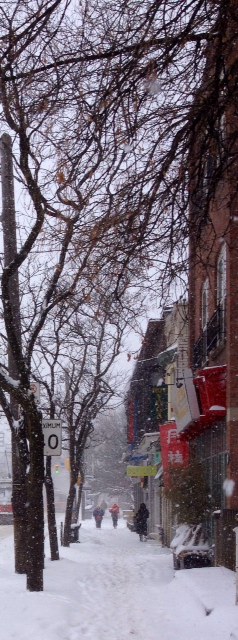
Credit Riv path in snow

Path along Credit River (photo by Nina Munteanu)

In the end it comes to finding the right integration and balance of time and place. Letting others know of your choices is equally important; this will ensure that they can help you, not hinder you in your writing. While writing is to a large extent an activity done in solitude, the journey is far from secluded. Ensure that you have a good support network.

This article is an excerpt from my fiction writing guidebooks The Fiction Writer: Get Published, Write Now! (Starfire, 2009) and The Journal Writer: Finding Your Voice (Pixl Press, 2013), part of the Alien Guidebook Series.


Nina Munteanu is an ecologist and internationally published author of award-nominated speculative novels, short stories and non-fiction. She is co-editor of Europa SF and currently teaches writing courses at George Brown College and the University of Toronto. Visit www.ninamunteanu.ca for the latest on her books.


Make Your Opening Count

Beech-leaves-trunk LR

Beach leaves (photo by Nina Munteanu)

When I began marketing my short stories and novels, I was often puzzled by the request to just see the first page of my work. “I only need to see the first page to know whether your book is good or ready to publish,” they would say. I was aghast. How presumptuous! Surely, that wasn’t enough! Surely they were just putting me off and not really interested in the first place! That couldn’t be enough…

I was wrong. It often is.

Years later—and currently a seasoned writer of over a dozen published books, short stories, and a writing teacher & coach—I can tell you that it is generally true. The opening page is usually enough for me to know whether the author is professional, knows their ending, writes a compelling and directed story, and whether the story is ready to be published. Does that sound pompous of me?

If you think so, then read no further. If you’re not sure, read on and I hope to convince you that your opening is more than likely the most important part of your novel or short story. That doesn’t mean that you should inordinately concentrate on polishing it over and over and over at the expense of the rest of your work. That won’t work either; this is because a good opening relies on a good story. Think of it as the introduction to the core issue of your story. Think of it as a long title. If you don’t know where your story is going or what it is about, then your opening will undeniably reflect this.

A good opening resonates with the theme of your story; a great opening creatively illuminates that theme with intrigue.

My post entitled “How to Hook Your Reader and Deliver” discusses the three-step model of hooking the reader in an opening and how to maintain their interest throughout the length of your story. You can read it there, so I won’t go into it here (e.g., the steps are 1) arouse; 2) delay; and 3) reward). What I wanted to talk about here is more about what goes into a first page of any piece of writing to make it a great opening.

“A novel is like a car,” says Sol Stein (Sol Stein on Writing). “It won’t go anywhere until you start the engine.” Take a look at the opening of your WIP and see if its engine is running.

Openings should:

  • Begin with something happening to a major character
  • Arouse the Reader’s interest (with intrigue)
    • Introduce conflict
    • Threaten a likeable character
    • Reveal an unusual character or situation
  • Begin with a “scene” (action; “showing”) not a “sequel” (reflection; “telling”)

“Start your book with a scene where something is happening, and action takes place; show the drama not the reaction to it,” says Elizabeth Lyon (The Sell Your Novel Toolkit). Start in the middle, not the beginning of your story. Dwight Swain (Techniques of the Selling Writer) tells us that scenes and their corresponding sequels form an integral part of a story’s larger plot movement. And to apply sound story-building, this dynamic relationship must be first understood. You “show” in a scene, which plays out the goal, conflict and inevitable disaster of the protagonist; sequels, in turn, often “tell” of the protagonist’s reaction, dilemma, and decision (which propels the character on to the next scene). Yet, time and again, I read openings that are actually sequels (leading to action; but not action themselves). They may languish and even entertain with clever intellectual description, but they do not scintillate with intrigue or direction. It is a little like reading the review of a movie before watching it for yourself (one of the reasons why I never consult a review before I watch a movie—because I want to live it with the characters first hand, or at least give myself the chance to).

Another way of thinking of the scene / sequel dynamic is to see them as cause and effect or action and reaction. An opening in action is more likely to grip the reader in its visceral intrigue and promise of the story’s direction than an intellectualization of an event that happened off stage.

The table below provides a few suggestions on what to include and what not to in an opening page.

Good Openings Don’t… Instead They…
Contain lots of back story Integrate back story in with scene as needed in the appropriate place
Contain lots of exposition, setting, character description, etc. Reveal place and character detail with action as needed
Start with reflection, explanations – particularly about something “off-stage” in time or space Start with action / conflict / turmoil / discovery – start mid-stride with intrigue, then reveal after…
Start with a dream or waking up or other ordinary / mundane scenario heading towards the action or conflict Start with something HAPPENING … Start with a SCENE in “the NOW” as it is happening
TELL SHOW


Beech-leaves-trunk LRThere are many ways to manage the fine balance of exposition, telling and showing and
other challenges in grabbing and keeping the reader’s interest; all very pertinent to your opening page. But that’s another article.


Nina Munteanu is an ecologist and internationally published author of award-nominated speculative novels, short stories and non-fiction. She is co-editor of Europa SF and currently teaches writing courses at George Brown College and the University of Toronto. Visit www.ninamunteanu.ca for the latest on her books.

The Way of Water (La natura dell’acqua)

la natura dell'acquaShe imagines its coolness gliding down her throat. Wet with a lingering aftertaste of fish and mud. She imagines its deep voice resonating through her in primal notes; echoes from when the dinosaurs quenched their throats in the Triassic swamps.

Water is a shape shifter.

It changes yet stays the same, shifting its face with the climate. It wanders the earth like a gypsy, stealing from where it is needed and giving whimsically where it isn’t wanted.

Dizzy and shivering in the blistering heat, Hilda shuffles forward with the snaking line of people in the dusty square in front of University College where her mother used to teach. The sun beats down, crawling on her skin like an insect. She’s been standing for an hour in the queue for the public water tap.


“La immagina scenderle fresca giù per la gola, con un persistente retrogusto umido di pesce e fango. La immagina risuonarle dentro con voce cupa, una voce primordiale; gli echi del tempo in cui i dinosauri placavano la sete nelle paludi del Triassico.

L’acqua è un mutaforma.

Cambia pur restando la stessa, muta il proprio volto insieme al clima. Vaga per il pianeta come una nomade, rubando da dove è necessaria e dandosi per capriccio dove non serve.

Frastornata e tremante nel caldo afoso, Hilda si trascina a fatica dietro al serpente di persone sul piazzale polveroso di fronte al college universitario in cui insegnava sua madre. Il sole picchia e le striscia sulla pelle come un insetto. È in fila da un’ora davanti al distributore pubblico di acqua.


“The Way of Water” is a near-future vision that explores the nuances of corporate and government corruption and deceit together with resource warfare. An ecologist and technologist, Nina Munteanu uses both fiction and non-fiction to examine our humanity in the face of climate change and our changing relationship with technology and Nature.

The bilingual print book by Mincione Edizioni showcases this short story in Italian and English along with a recounting of what inspired it: “The Story of Water” (“La storia dell’acqua”).

See reviews for “The Way of Water” (“La natura dell’acqua”) below:

Simone Casevecchia of SoloLibri.net

Net Massimo (English)

Net Massimo (Italian)

laNaturaDell'Acqua-coverAfter the release of the print book, Future Fiction released “The Way of Water” (“La natura dell’acqua”) in ebook format. The ebook contains the “Way of Water” story and another story, “Virtually Yours” (“Virtualmente tua”) alongside “The Story of Water” (non-fiction), which can be purchased in either Italian or Engish versions.

“Virtually Yours” was first published in Issue #4 of Neo-Opsis Science Fiction Magazine (Canada); it was reprinted in several languages in other countries including USA, Poland, Romania, Greece, and now Italy. It also appears as one of nine stories on human evolution in Natural Selection, a Canadian collection of short stories (Pixl Press) that examine the evolution of humanity with Nature and technology.

Nina’s short stories have received praise for their world building, depth of character, compelling plot and use of evocative metaphor:NaturalSelection-front-FB

“.a stunning example of good storytelling with an excellent setting and cast of characters.”–Tangent Online

“…Written with flare and a conscience…Munteanu shines a light on human evolution and how the choices we do or don’t make today, may impact our planet and future generations. The science is fascinating and so are these nine short stories.”—J.P. McLean, author of The Gift Legacy

“…Fascinating dramas set in a world too close to our own…the science was so interesting, combining visionary metaphysical speculation with AI corporate tech in scenarios that often seemed chillingly possible.”—Amazon review

“…Jealousy, lust, loneliness, grief and love are all drivers of these taut and fascinating narratives.”—Amazon review

“…a fantastic collection of stories by a deeply-involved writer, based in Canada.”—Amazon review

“…a well written, thought provoking collection of stories that will leave you hoping the future that Nina Munteanu projects never happens…Nina Munteanu is a gifted writer. Each story surprises and delights.”—Allan Stanleigh, author of USNA

“Actually brought to mind Niven’s Tales of Known Space…Nina’s stories tease you.”—D. Merchant, Louisianna Tech University College


The Way of Water can be purchased as:

WayofWater copy 2Ebook (Italian OR English) with additional short story “Virtually Yours” through Future Fiction (Mincione Edizioni) for €1,99  at:

Print book (Italian AND English) through Mincione Edizioni for €7,00 at:

Eramosa River 3

Eramosa River, Ontario (photo by Nina Munteanu)


Translated into Italian by Fiorella Moscatello. Print book cover by Laura Cionci. Ebook cover by Brad Sharp.

On the Successful Anatomy of a Short Story

2015-novel-short-story-market-WDSome time ago, I was invited by writer and editor Jennifer D. Foster to participate in an interview on how to create a successful short story. Jennifer knew my work as a short story writer and had heard me speak at the Editors Association of Canada. She also knew that I teach the short story form as part of my science fiction course at George Brown College.

Writer’s Digest had asked Jennifer to write two “writing tips” chapters in its highly popular “Novel and Short Story Writer’s Market” (34th Annual Edition, 2015). Years ago I got my start as an author using this helpful market guidebook. Not only did the guide provide hundreds of listings with submission guidelines and current contact information; the guide’s writing tips section was also very helpful. So, I was both pleased and thrilled to be inside the 2015 edition!

As with previous editions, the 2015 edition contained—in addition to current market listings—articles on “Craft and Technique”, “Getting Published”, and “Marketing and Promotion”.

Below, I provide some excerpts of the 8-page chapter in the Craft & Technique Section, entitled “Anatomy of a Successful Short Story.” You can read the whole thing if you get your own copy of the guide, which is very decently priced. While it’s a year old, the advice remains as germane now as it was then. And many of the markets remain relevant too. You can also find the guide in most libraries, which tend to carry the entire Writer’s Digest series of market guides for writers.

Defining the Short Story

“Short stories are perhaps one of the best places for novice writers to start their careers,” wrote Foster in the opening to her article. “They’re not too long and complicated, and they offer the writer a chance to intimately explore a plot, a character, and a theme. Short stories also offer writers the opportunity to hone their craft and actually finish a piece of fiction—a great confidence booster!” Foster was quick to add that you shouldn’t be fooled by their short length compared with a novel—or their assumed simplicity: “Short stories are not necessarily any easier to write than novels or novellas.” I talk more about the significance of short story length  in a previous article on this blog: “Know What You’re Writing: Short Story or Long Story?”

Madison Davis at the University of Oklahoma suggested that short stories are “more concentrated … and notable for what they leave out.”

I mentioned that the short story is “a metaphoric event, a moment in time. It’s a single place—a crossroad—compared with the landscape of a novel. Short stories are more about awareness … and have the potential to be far more memorable and disturbing, with the power to enlighten.” Best-selling Canadian author Andrew Pyper suggested that, “a novel is the result of lengthy mulling, while a short story is the rising of an event out of the subconscious.”

Starting the short story in the middle of things “is crucial,” said Davis. “The reader must be thrown into the water immediately. There simply isn’t time or space to wind up.” Steve Woodward, associate editor of Graywolf Press in Minneapolis, Minnesota argued that good first lines are vital: “they can tell you everything you need to know in an instant. Find that right first line, even if it means cutting several pages to get to it, and build outward from there.”

Theme

The message—or theme—of the short story is its raison d’être. In How to Write Short Stories, 4th Edition, Sharon Sorenson wrote that, “if you have no message, you have no story.”

I concurred: “Every good story explores a theme. In a short story, it is a single theme told as a ‘statement’ rather than a novel’s ‘argument.’ It’s a ‘close-up’ rather than a novel’s landscape. All story elements reflect the theme.” Susan Hesemeier, instructor at MacEwan University in Edmonton, Alberta, added that the theme must be “limited to one subject or overall message rather than [the] multiple, interconnected themes [found] in a novel.” Margot Livesey, fiction editor of Emerson College’s Ploughshares magazine in Boston, Massachusetts summed it up eloquently: “theme is probably the hardest element to define, but we recognize its absence when we call something an anecdote.”

Conflict

According to author Louise Boggess, conflict “is the heartbeat of a story.” Conflict expresses internally or externally. Hesemeier wrote that in a short story, “there are fewer conflicts that lead to one climax; in a novel, a series of smaller conflicts and climaxes lead to or connect with a larger overall conflict and climax.”

Plot

Publisher Kevin Watson suggested that a great short story, much like a novel, “is presented to the reader in layers, delivered using setting, character, conflict, and dialogue.” At the center of those layers, said Watson, lay the plot, the theme, and the heart of everything that was presented.

Award-winning author Kevin Barry cited William Trevor: “a short story doesn’t need a plot, it just needs a point.” Toronto-based editor and author Andrew J. Borkaowski agreed: “it’s usually a matter of a single word, gesture, or incident and a handful of actions leading up to it.”

Character

Sorenson wrote that, “Believable, motivated characters make or break a story. If readers cannot understand or accept them, nothing else you do matters.” This is because the actions of your characters convey theme.

Novelist and writing instructor at Western University, Terence M. Green concurred. “Character is most important. Make the long chord of understanding and involvement with a character the goal. This is the emotional resonance, the epiphany that is the goal of the best long-lasting fiction.”

Setting

snow-scene-road-to-Wolfville-stream3

river in Nova Scotia (photo by Nina Munteanu)

Characters and action should interact with the setting,” said Borkowski. She suggested that, “Setting is important as a conveyor of mood or atmosphere, and … has to be rendered succinctly, poetically almost.” Hesemeier added that, “Setting is usually limited to essentials that are necessary to describe the particular moment or that have symbolic significance for the reader’s understanding of the story.”

I further clarified: “A short story’s plot, setting, and character are often portrayed through strong metaphor, the short story writer’s major tool. Metaphor conveys so much more than the surface narrative might suggest; this is because metaphor by its very nature resonates with deeper truths, interpreted individually by members of a culture.”

Point of View

Foster wrote that for Borkowski, it was all about picking a side and sticking with it: “Once you start wanting to explore the inner lives of multiple characters, you’re on your way to something bigger than a short story.” Be mindful how many characters you provide agency and viewpoints to!

Woodward believed that once voice was established, everything else followed. Woodward preferred a solo voice in short story. “Stories are wonderful when concise and focused, often confined to a single narrative voice and to a single moment in time.”

Beaches-snow03

Winter in The Beach (photo by Nina Munteanu)

Andrew J. Borkowski suggested that an exceptional short story arose from the intensity of emotion that resonated with the reader: “A great short story leaves you feeling you’ve experienced ten times more than what’s actually described on the page.” I shared a similar view: “The best short story is an elegant thing. It draws you into a singular experience that resonates at a visceral level, like an arrow through the heart; no time to think—just feel. A bad short story misses the heart … and this is why writers who master the short story form are some of the very best authors in the world.”

Excerpted from “Anatomy of a Successful Short Story” by Jennifer D. Foster. In: “Novel and Short Story Writer’s Market” Writer’s Digest Books; 34th Edition (Rachel Randall, editor), 2015. 569 pp.

Available at: Amazon.comAmazon.ca, and Writer’s Digest Shop.

Douglas Smith’s “Playing the Short Game” is also valuable with great advice for those wishing to market their short stories.

Natural Selection, my short story collection published by Pixl Press in 2013 is available at several bookstores.NaturalSelection-frontHR

Written with flare and a conscience…Munteanu shines a light on human evolution and how the choices we do or don’t make today, may impact our planet and future generations.”—J.P. McLean, author of The Gift Legacy

“Nina Munteanu is a gifted writer. Each story surprises and delights.”—Allan Stanleigh, co-author of USNA and The Caretakers


nina-2014aaNina Munteanu is an ecologist and internationally published author of award-nominated speculative novels, short stories and non-fiction. She is co-editor of Europa SF and currently teaches writing courses at George Brown College and the University of Toronto. Visit www.ninamunteanu.ca for the latest on her books.