It is quite possible … that we will always learn more about human life and personality from novels than from scientific psychology —Naom Chomsky

Niels Bohr
In the 1920s, physicist Niels Bohr struggled to re-imagine the structure of matter. He rejected the current hegemony of a fractal “solar system” model and sought a new metaphor.
“When it comes to atoms,” said Bohr, “language can only be used as poetry.”
Bohr compared the invisible world of atoms and electrons to cubist art because, according to Jonah Lehrer in an article in SeedMagazine.com, it “revealed the fissures in everything, turning the solidity of matter into a surreal blur.” In 1923 deBroglie had determined that electrons could exist as particles or waves. Bohr maintained that the form they took depended on how you looked at them: by simply observing, you determined their nature.
Many of us believe that while art can be profound, it does not solve practical challenges of reality; only scientific knowledge, which progresses on a linear ascent toward greater understanding, resolves the serious challenges of our world and will one day solve everything.
This is, of course a matter of belief. Novelist Vladimir Nabokov once wrote, “the greater one’s science, the deeper the sense of mystery.” The traditional elements of science have used a reductionist approach to understand the whole, looking at the parts and reconstructing the causal pathways. Take the synapse, for instance. Neuroscientists now know that 100 billion electrical cells occupy a human brain, that every cubic millimeter of the cerebral cortex contains a billion synapses involved in the neurotransmission of electrical impulses in perception and thought. Yet, as Novelist Richard Powers challenged, ‘If we knew the world only through synapses, how could we know the synapse?”
“The paradox of neuroscience,” said Lehrer, “is that its astonishing progress has exposed the limitations of its paradigm … Neuroscience has yet to capture [the] first-person perspective. Artists … distill the details of real life into prose and plot … They capture a layer of reality that reductionism cannot … and provide science with a glimpse into its blind spots … Sometimes the whole is better understood in terms of the whole … No scientific model of the mind will be complete unless it includes what can’t be reduced.”
Logical minds will reject art as too incoherent and imprecise to contribute to the knowledge base provided by scientific process. They will maintain that Beauty isn’t Truth, that the novel is just a work of fiction, and abstract art the arcane expression of a micro-culture.
But what of paradox? Critic Randall Jarrell contended that, “it is the contradictions of works of art which make them able to represent us — as logical and methodical generalizations cannot — our world and our selves, which are also full of contradictions.” The cultural hypotheses of artists can inspire the questions that stimulate important new scientific answers, adds Lehrer.
The irony of modern physics is that it seeks reality in its most fundamental form, and yet we are incapable of comprehending these fundamentals beyond the math we use to represent them. The only way to know the universe is through analogy.

Richard Feynman
Richard Feynman said, “Our imagination is stretched to the utmost, not, as in fiction, to imagine things which are not really there, but just to comprehend those things which are there.” While artists rely on imagination, much of modern physics exceeds the imagination: dark matter, quarks and neutrinos, black holes, multiple dimensions and folded space. To venture beyond the regular confines of our “ordinary world” where matter is certain, time flows forward and there are only three dimensions, we must resort to metaphor. “Metaphor in science serves not just as a pedagogical device,” wrote physicist and novelist Alan Lightman, “but also as an aid to scientific discovery.” Einstein came up with relativity while thinking about moving trains; Arthur Eddington compared the expansion of the universe to an inflated balloon; James Clerk Maxwell visualized magnetic fields as little whirlpools in space. String theory is often imagined as garden hoses.

Pablo Picasso’s Bull Fight, 1934
The greatest physicists of the 20th century thought metaphorically. String theorist Brian Greene wrote that the arts have the ability to “give a vigorous shake to our sense of what’s real.” Picasso never understood the equations, says Lehrer: “he picked up the non-Euclidian geometry via the zeitgeist.” A century later some scientists still use his fragmented images to symbolize their ideas. “Novelists can stimulate the latest theories of consciousness through their fiction … Painters can explore new theories about the visual cortex … Dancers can help untangle the mysterious connection between the body and emotion.”
Both science and art benefit from exchange. By inviting art to participate in its conversation, science provides art with the opportunity to add science to its repertoire. And through its interpretation of scientific ideas and theories, art offers science a new lens through which to see itself.
Karl Popper exhorts us to “give up the idea of ultimate sources of knowledge, and admit that all knowledge is human; that it is mixed with our errors, our prejudices, our dreams, and our hopes.”
And that is the stuff of fiction after all…
 Nina Munteanu is an ecologist, limnologist and internationally published author of award-nominated speculative novels, short stories and non-fiction. She is co-editor of Europa SF and currently teaches writing courses at George Brown College and the University of Toronto. Visit www.ninamunteanu.ca for the latest on her books.
 After she and fellow colonists crash land on the hostile jungle planet of Mega, rebel-scientist Izumi, widower and hermit, boldly sets out against orders on a hunch that may ultimately save her fellow survivors—but may also risk all. As the other colonists take stock, Izumi—obsessed with discovery and the need to save lives—plunges into the dangerous forest, which harbors answers, not only to their freshwater problem, but ultimately to the nature of the universe itself. Mega was a goldilocks planet—it had saltwater and supported life—but the planet also possessed magnetic-electro-gravitational anomalies and a gravitational field that didn’t match its size and mass. The synchronous dance of its global electromagnetic field suggested self-organization to Izumi, who slowly pieced together Mega’s secrets: from its “honeycomb” pools to the six-legged uber-predators and jungle infrasounds—somehow all connected to the water. Still haunted by the meaningless death of her family back on Mars, Izumi’s intrepid search for life becomes a metaphoric and existential journey of the heart that explores how we connect and communicate—with one another and the universe—a journey intimately connected with water.
 Fingal’s Cave
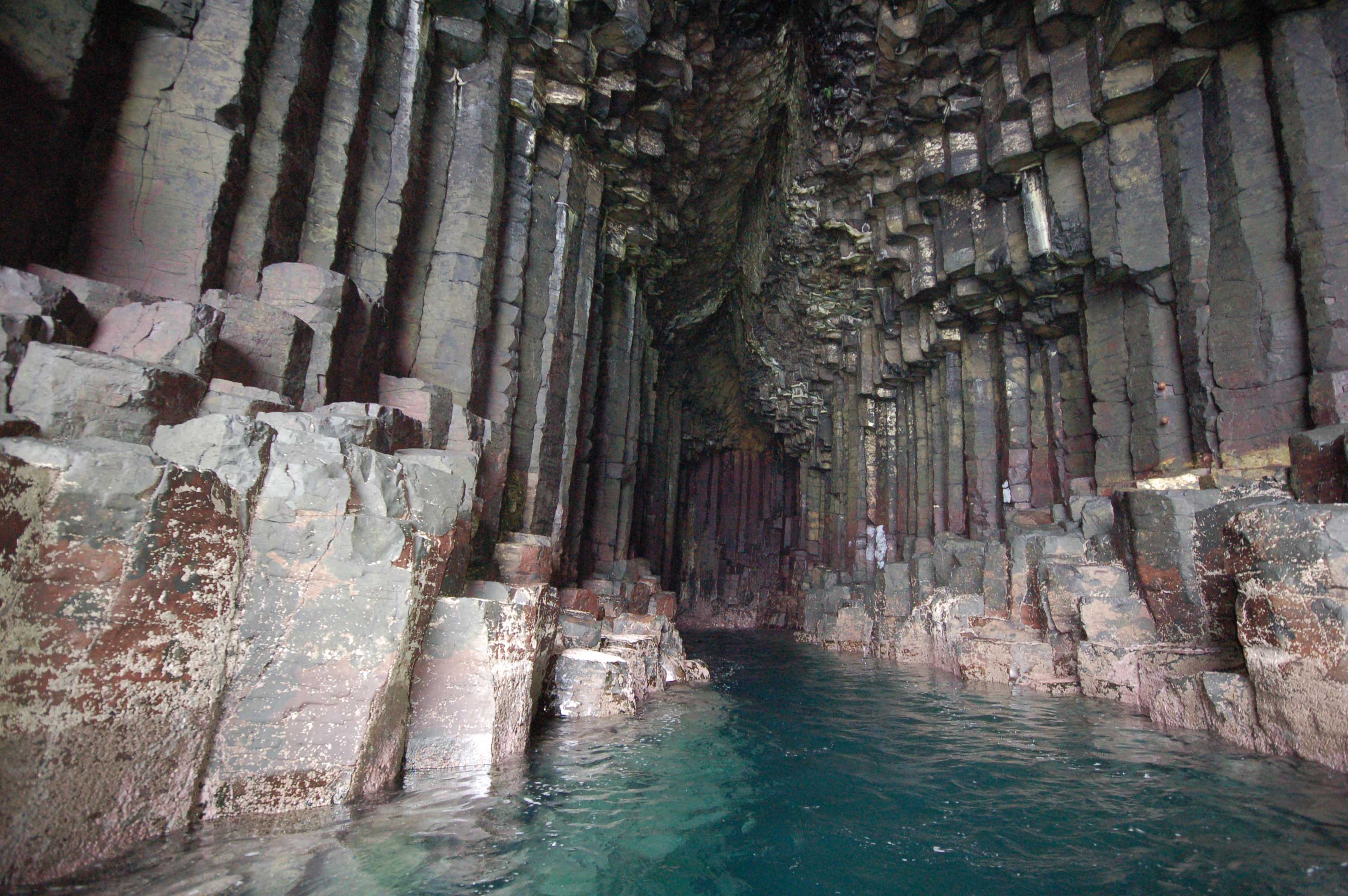 Fingal’s Cave is a sea cave on the uninhabited island of Staffa in the Inner Hebrides of Scotland. The cave is formed entirely from hexagonally jointed basalt columns in a Paleocene lava flow (similar to the Giant’s Causeway in Northern Ireland). Its entrance is a large archway filled by the sea. The eerie sounds made by the echoes of waves in the cave, give it the atmosphere of a natural cathedral. Known for its natural acoustics, the cave is named after the hero of an epic poem by 18th century Scots poet-historian James Macpherson. Fingal means “white stranger”.


 Nina Munteanu is an ecologist and internationally published author of novels, short stories and essays. She coaches writers and teaches writing at George Brown College and the University of Toronto. For more about Nina’s coaching & workshops visit

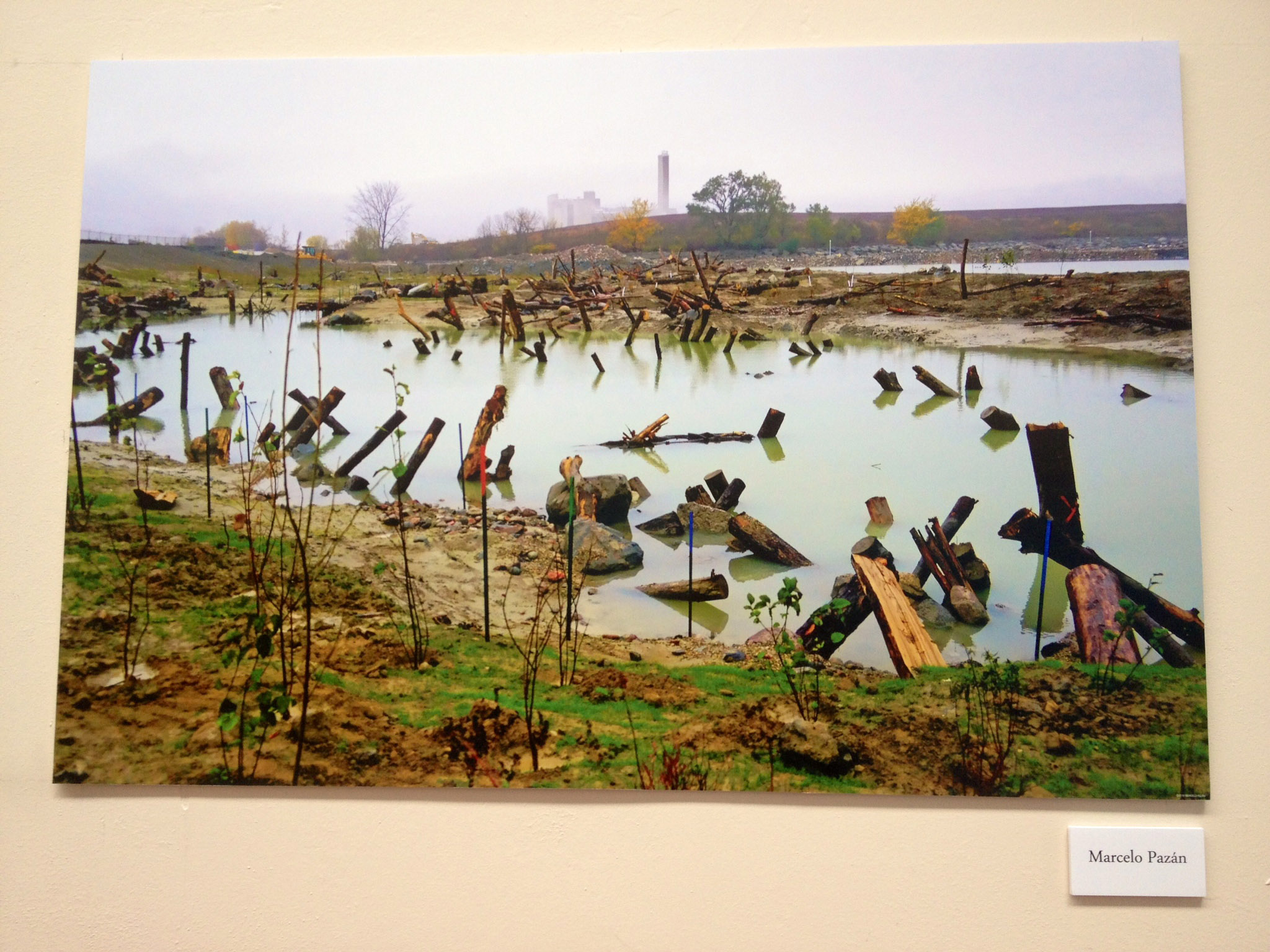
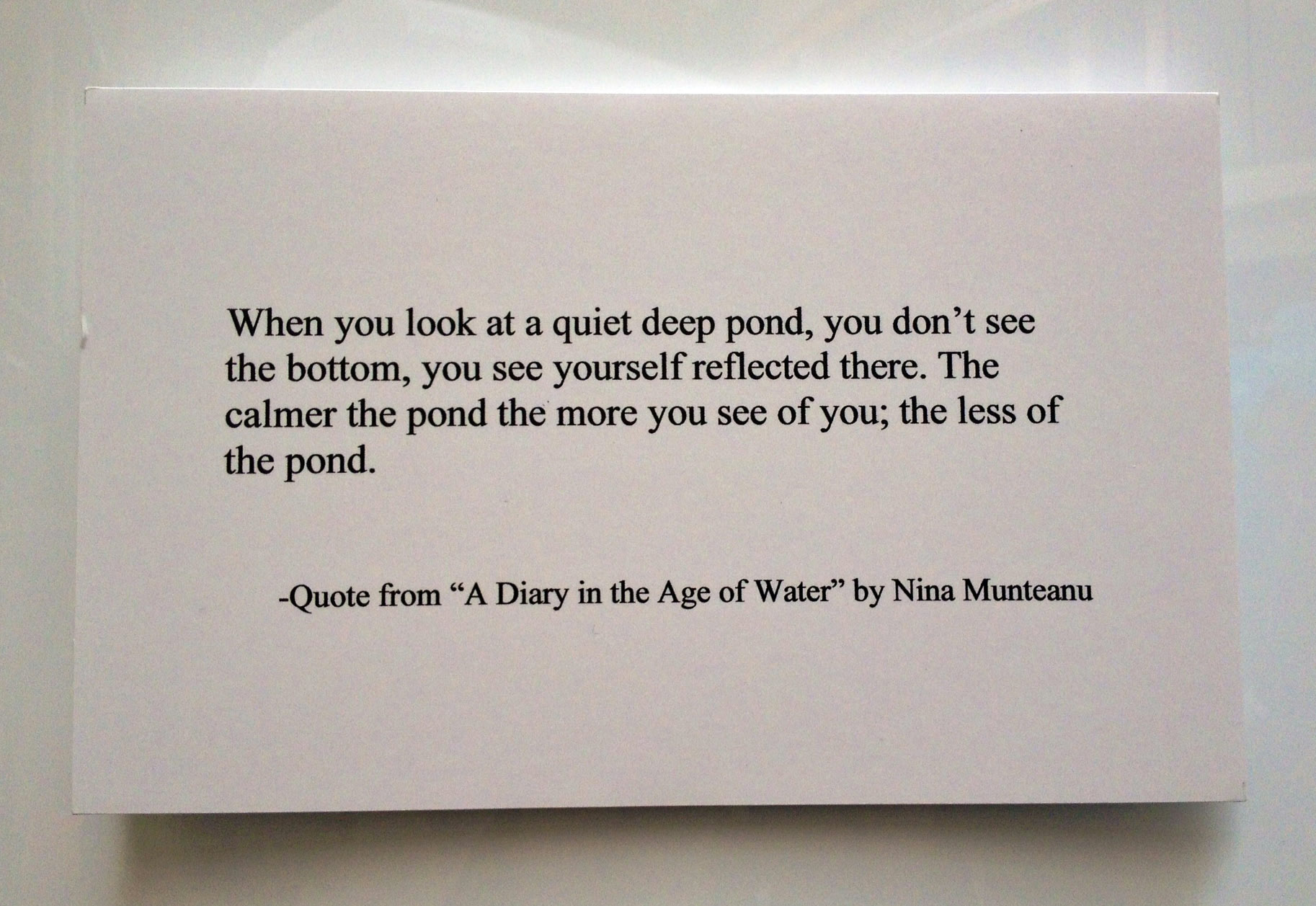 Reiterating Jim Tovey’s earlier comment on the water treatment plant as its own sculpture-art, Munteanu celebrated the location and the nature of the exhibit: “When technology, art and ecology are celebrated together, you get magic.”

 Nina Munteanu is an ecologist, limnologist and internationally published author of award-nominated speculative novels, short stories and non-fiction. She is co-editor of Europa SF and currently teaches writing courses at George Brown College and the University of Toronto. Visit
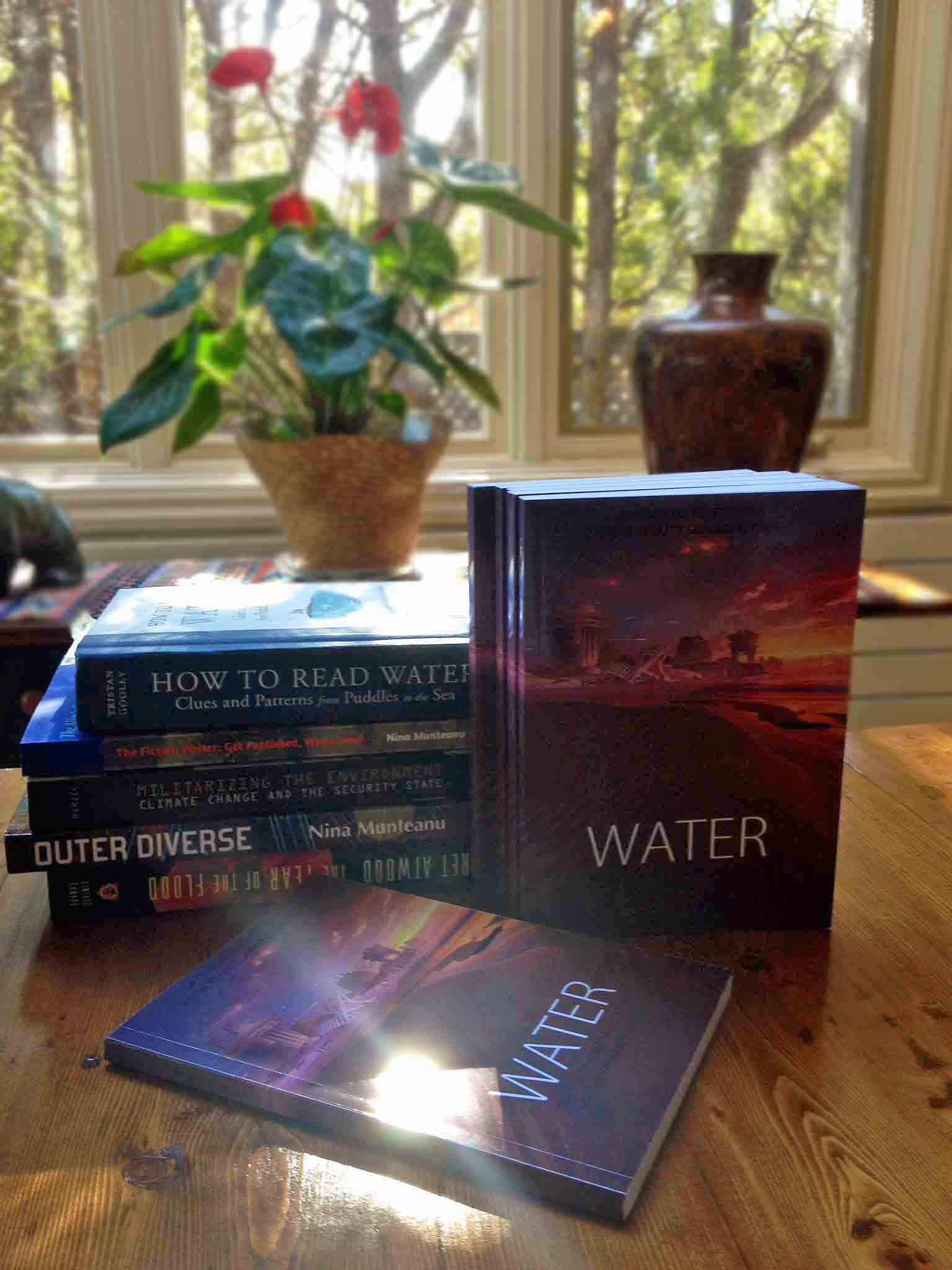
 In December 2017, “Water”, the first of Reality Skimming Press’s Optimistic Sci-Fi Series was released in Vancouver, BC. I was invited to be one of the editors for the anthology, given my passion for and experience with water.

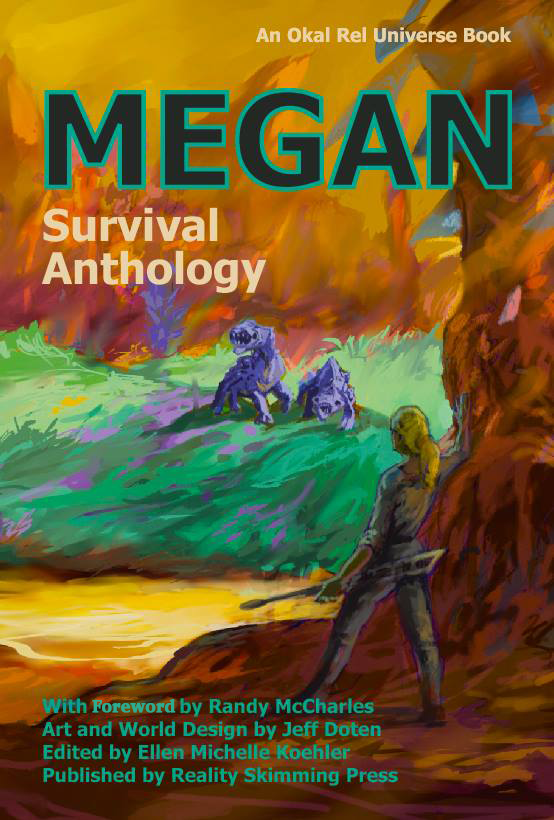
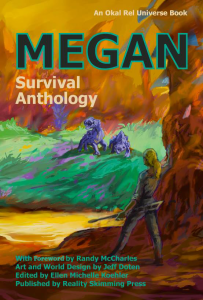 In the years that followed, Reality Skimming Press published several works, including the “Megan Survival” Anthology for which I wrote a short story, “
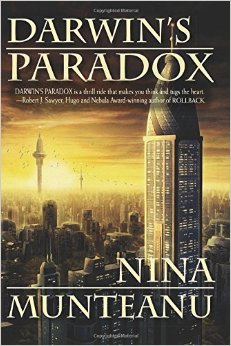 Hi-Sci-Fi Radio (a podcast radio show out of CJSF 90.1FM in Burnaby, British Columbia) interviewed Nina Munteanu about the paradoxes of her eco-thriller
  “In his introduction to this all-original set of (at times barely) futuristic tales, Meyer warns readers, “[The] imaginings of today could well become the cold, hard facts of tomorrow.” Meyer (Testing the Elements) has gathered an eclectic variety of eco-fictions from some of Canada’s top genre writers, each of which, he writes, reminds readers that “the world is speaking to us and that it is our duty, if not a covenant, to listen to what it has to say.” In these pages, scientists work desperately against human ignorance, pockets of civilization fight to balance morality and survival, and corporations cruelly control access to basic needs such as water. The most affecting tale, Wendy Bone’s “Abdul,” is also the least futuristic, an emotional story that touchingly contrasts Western guilt against the life of a captive orangutan. The anthology may be inescapably dark, but it is a necessary read, a clarion call to take action rather than, as a character in Seán Virgo’s “My Atlantis” describes it, “waiting unknowingly for the plague, the hive collapse, the entropic thunderbolt.” Luckily, it’s also vastly entertaining. It appears there’s nothing like catastrophe to bring the best out in authors in describing the worst of humankind.”
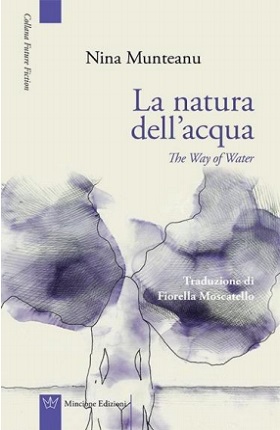 She imagines its coolness gliding down her throat. Wet with a lingering aftertaste of fish and mud. She imagines its deep voice resonating through her in primal notes; echoes from when the dinosaurs quenched their throats in the Triassic swamps.
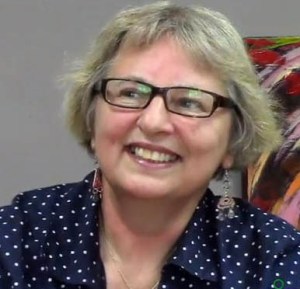 A limnologist (lake ecosystem biologist) by trade, Munteanu recognizes the incredible way that water shapes life and brings attention to the fact that water connects us to each other just as water connects with other water, forming bonds. She evokes in the reader a sense of reverence for water and an awareness that the same water that flows through our bodies have flowed through the bodies of our ancestors, cycling through life since the first life forms coalesced.
 “Water covers every aspect of this science fiction story that pits the vulnerable citizen against the evil multinational corporation in a dystopian Canada sometime in our future. Water is presented in its multiplicity of facets: in the science behind its composition, in its history, in it’s symbolic nature and different physical states; water is a giver and taker of life, and is the form in which the friendship of protagonists Hilda and Hanna functions. Water is also magic and the ultimate righter of wrongs committed to it and to a humanity it gives life to. Within this framework, Munteanu spins a thought-provoking tale that projects where our headlong pursuit of profit may one day lead us to, and how nature will ultimately, with a little human coaxing, be the only one to correct the balance.”—Shane Joseph, Canadian author of Fringe Dwellers
 love; a story to read, not only to deal with the possible but, above all, to understand that the time still available for “love” might be less than what you believe.”—Simone Casavecchia,
  Nina Munteanu is an ecologist and internationally published author of award-nominated speculative novels, short stories and non-fiction. She is co-editor of Europa SF and currently teaches writing courses at George Brown College and the University of Toronto. Visit
 “Water, Abundance, Scarcity, and Security in the Age of Humanity” (NYU Press) by Jeremy Schmidt is an intellectual history of America’s water management philosophy. Debates over how human impacts on the planet, writes
 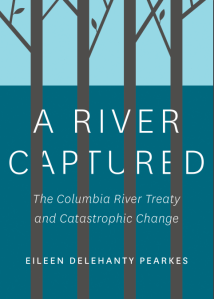 “A River Captured: The Columbia River Treaty and Catastrophic Change” (RMB Books) By Eileen Delehanty Pearkes reviews key historical events that preceded the Treaty, including the Depression-era construction of Grand Coulee Dam in central Washington, a project that resulted in the extirpation of prolific runs of chinook, coho and sockeye into B.C. Prompted by concerns over the 1948 flood, American and Canadian political leaders began to focus their policy energy on governing the flow of the snow-charged Columbia to suit agricultural and industrial interests.
  “Border Flows: A Century of the Canadian-American Water Relationship” (University of Calgary Press), Lynne Heasley and Daniel Macfarlane, editors, explore and discuss Canada-U.S. governance.
 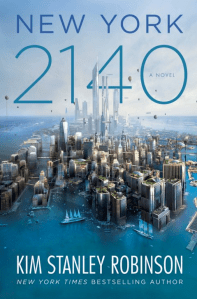 “New York 2140” (Orbit) by Kim Stanley Robinson is a novel set in New York City following major sea level rises due to climate change.
 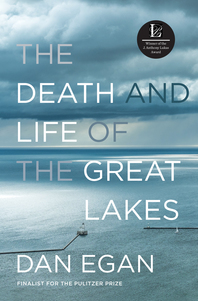 “The Death and Life of the Great Lakes” (WW Norton & Company Inc. Press) by Dan Egan is a frank discussion of the threat under which the five Great Lakes currently suffer. This book, writes
  “Downstream: reimagining water” (Wilfred Laurier University Press) by Dorothy Christian & Rita Wong “brings together artists, writers, scientists, scholars, environmentalists, and activists who understand that our shared human need for clean water is crucial to building peace and good relationships with one another and the planet. This book explores the key roles that culture, arts, and the humanities play in supporting healthy water-based ecology and provides local, global, and Indigenous perspectives on water that help to guide our societies in a time of global warming. The contributions range from practical to visionary, and each of the four sections closes with a poem to encourage personal freedom along with collective care,” writes
 Water Canada