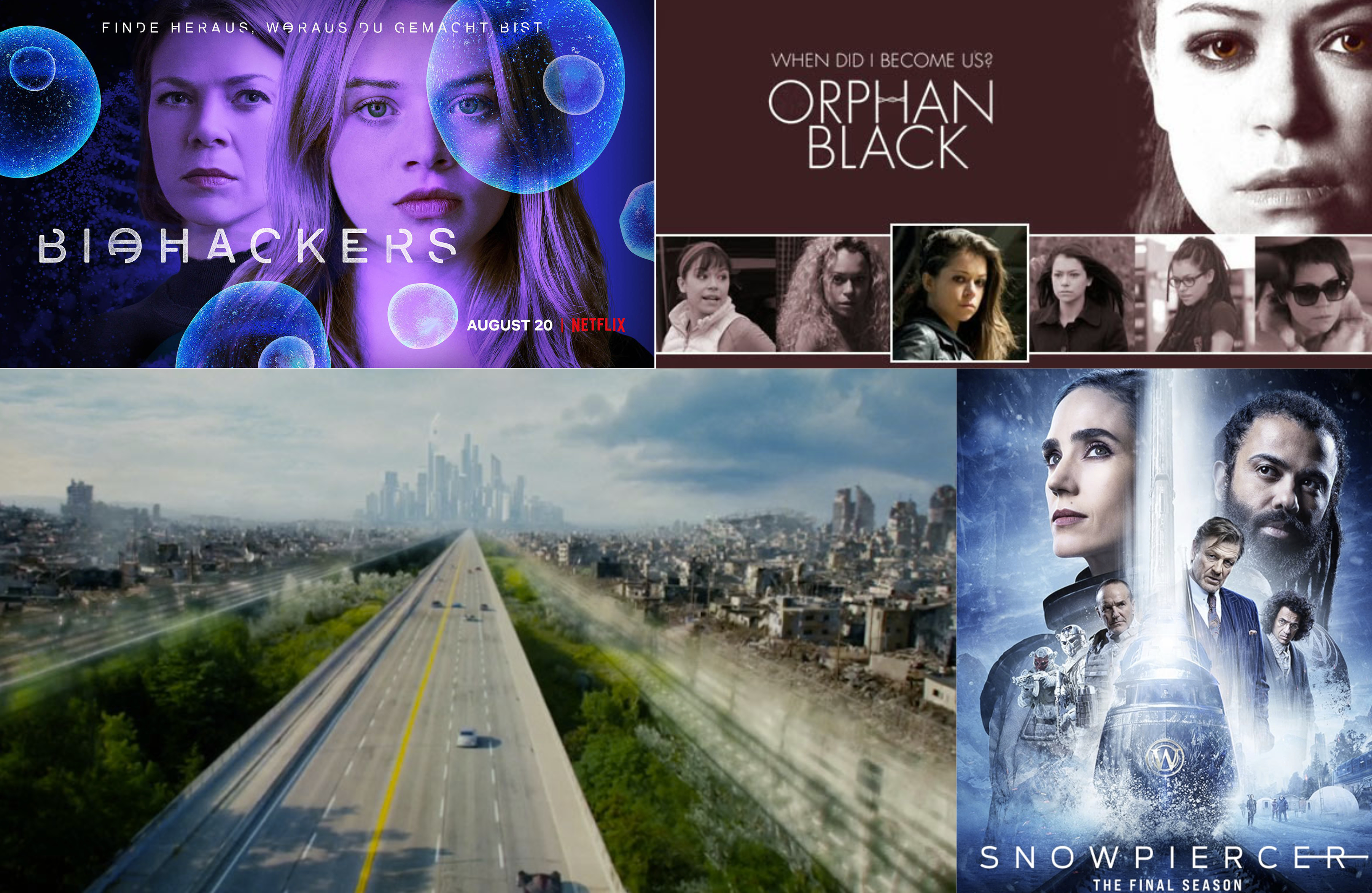
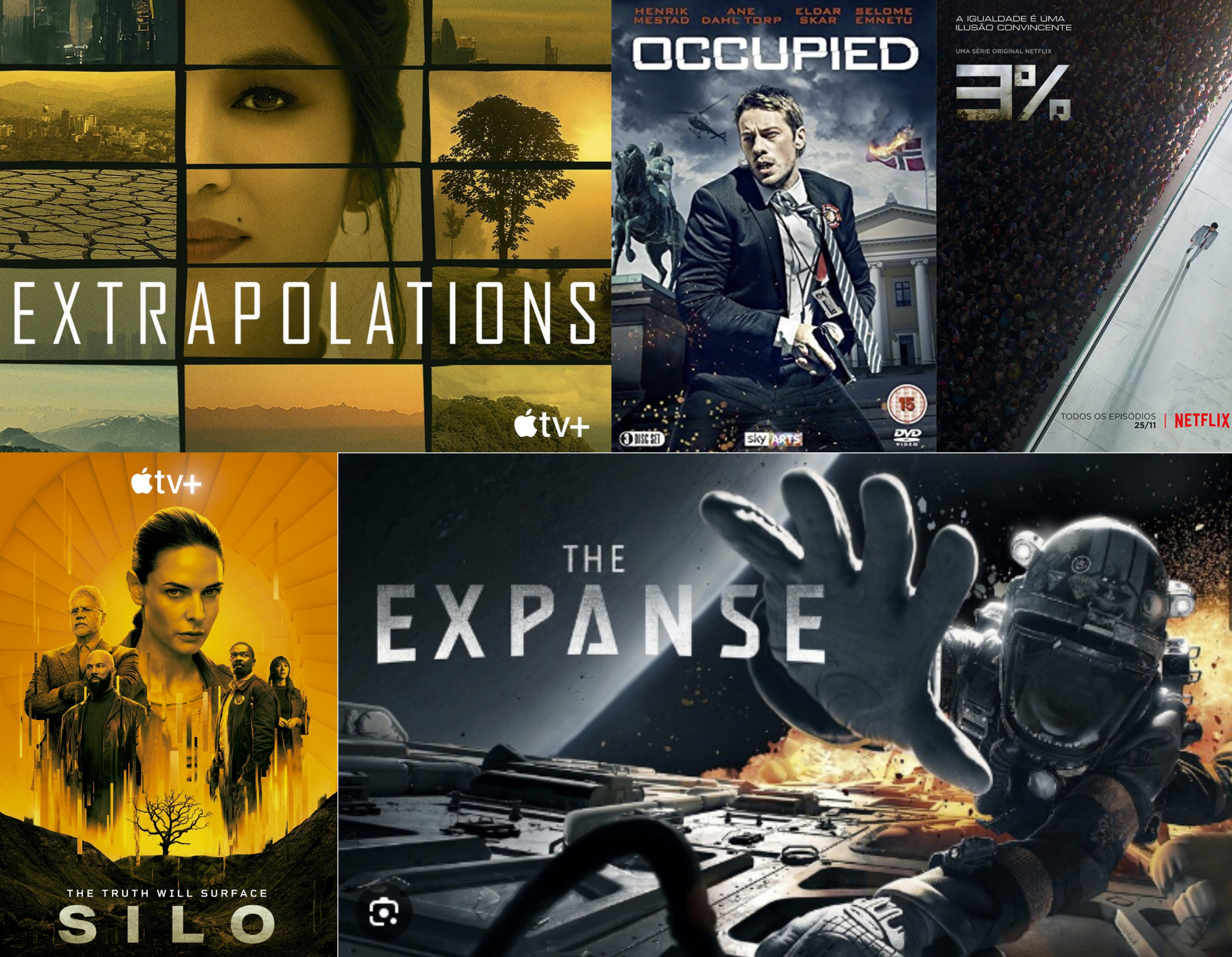
Significant Science Fiction TV Series—Part 1, Shows that Touch on Justice and Science & Technology: #1 — BIOHACKERS

I’ve selected ten TV series that have intrigued me, moved me, and stayed with me for various reasons that touch on: abuse of justice, including eco-justice and environmental abuse; technology use and abuse; and the effects and horrors of climate change.

Some are well known; others not so well known. All approach storytelling with a serious dedication to depth of character, important themes, realistic world building, and excellent portrayal by actors. The world-building is extremely well done—in some cases rivalling Ridley Scott’s best—with convincing portrayals of worlds that are at times uncanny in their realism. Worlds that reflect story from an expansive landscape to the mundane minutiae of daily life: like the cracked phone device of Detective Miller in The Expanse or the dirty fingernails of engineer Juliette Nichols in the Down Deep of Silo. Stories vary in their treatment of important themes from whimsical and often humorous ironies to dark and moody treatises on existential questions. In my opinion, these TV series rival the best movies out there, often reflecting large budgets (but not always) and a huge commitment by producers. The ten TV series I’ve selected here come from around the world: Brazil, Germany, France, Norway, Canada and the United States.

In Part 1, I look at five TV series that touch on ethical issues we are facing today; issues that reach far into existential questions of what it means to be human. These TV series explore synthetic biology, cloning and gene editing, political justice, and justice in space colonization and exploitation.

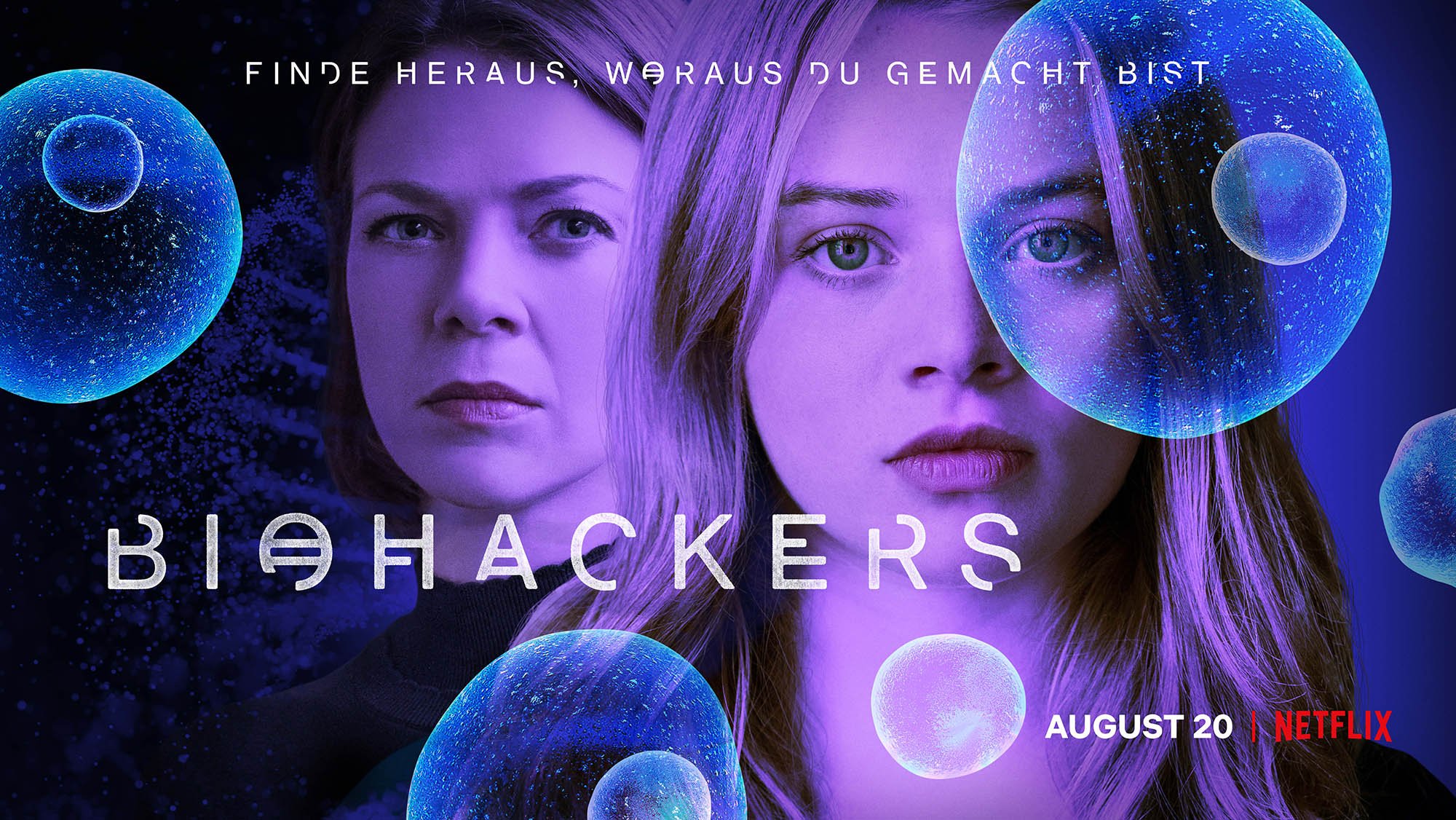
BIOHACKERS: When Synthetic Biology Meets Ethical Intrigue

This fast-paced techno-thriller created by Christian Ditter has at the very centre of its intrigue synthetic biology. In the journal Science Dov Greenbaum describes this German TV series as “a fictional tale centred around the sociotechnological movement known as do-it-yourself (DIY) biology, in which amateurs, professionals, anarchists, and civic-minded citizens push the boundaries of mainstream biology.” The show centres on Mia Akerlund (played by Luna Wedler) a secretive med-student prowling for answers to the death of her twin brother and her antagonist, the enterprising Machiavellian and narcissistic Professor Tanja Lorenz (Jessica Schwarz). But the real star of the show is biohacking: human enhancement or augmentation to improve health, performance, or well-being. Biohacking ranges from efforts to improve brain function to faster weight loss. Some are relatively safe to try at home; others may pose health risks. Among others, the show features glow-in-the-dark mice, gene-modded weed, underwater pills that extend your ability to hold your breath, and payment microchips in your hand.

The series lent a critical realism to the story by using accurate world building, real sets and equipment from genetics labs and university settings. Dov Grenbaum’s article in the journal Science entitled “Biology’s brave new world” celebrates the show for its accurate representation of complex laboratory equipment and procedures and how it accurately represents the intricacies, motivations and ethical issues of biohacking from sophisticated big-business gene therapies to DIY homespun biology. 

Biohackers opens with a disturbing scene of bioterrorism on a train headed to Berlin. All passengers suddenly choke and fall unconscious—except for young med student Mia Akerlund, who tries to help and fails. From that explosive flash-forward scene, the show jumps back to two weeks prior, as college freshman Mia settles into Freiburg University’s prestigious medical school, and betrays a particular interest in synthetic biology, biohacking and genome editing. We soon learn that she is obsessed by celebrated professor and geneticist/entrepreneur Tanja Lorenz (who runs a biopharmaceutical company and has an entire building dedicated to her research with huge neon logo of her name). Both women are connected by a dark secret to do with Mia’s twin brother who mysteriously died when still a boy. Mia quickly gains a position working for Lorenz, which plunges her into the dangerous intrigue of illegal genetic experiences.

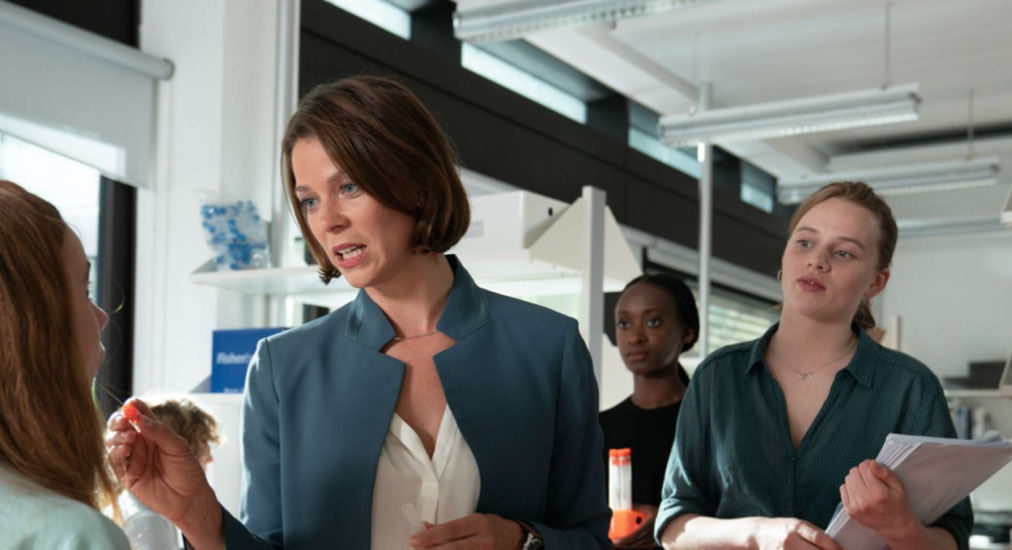
Lorenz and her grad student Jasper discuss experiments in their sophisticated lab (image from Biochackers)

An early, rather enlightening, scene of the first episode is of Mia’s first introductory biology class given by celebrated gene therapy tycoon Professor Lorenz. Not only does the scene introduce the controversial subject of synthetic biology; it reveals a disturbing sense of what’s at stake and the danger of scientific hubris. Tall, svelte and confident in a smart haircut and tailored suit, Lorenz struts like a self-proclaimed goddess in front of a student-crowded lecture hall and preaches the benefits of synthetic biology. When she asks the class “What is synthetic biology?” and a student replies “with the help of synthetic biology, we can alter existing life forms or create new ones,” Lorenz prickles beyond her already frosty demeanor and impatiently berates the students for their lack of vision. She challenges them to think bigger: “Synthetic biology transforms us from creatures into creators. It’s not just the future of medicine, but of humankind. We can cease entire infections before the outbreak … We eliminate genetic disorders. But if we don’t do our work exceedingly well, it could end our species. It is on us to find a way; this is your future. Your responsibility. You are the creators of tomorrow. We make God obsolete…”

Science, academia and intrigue are skillfully woven in an intelligent mystery-thriller that not only represents science accurately but delivers commentary on the ethical and moral questions of this highly dynamic and rapidly evolving field of science.

Biohackers touches on several ethical and moral questions, such as genetic modification of stem cells, access to advanced gene therapies, and privacy and consent surrounding genomic data. Synthetic biologist Elsa Sotiriadis warns that, “this topic will likely become an ethical minefield in the coming years. On the one hand, we need large and diverse datasets to train medical AI and develop therapies. But on the other, there’s nothing as personal as your literal blueprint. Unlike stolen credit cards, you can’t change your genomic data. I like that Biohackers brings this up.”

Lorenz does a throat swab for DNA on a candidate in her experiment as Mia looks on (image from Biohackers)

Ten Significant Science Fiction TV Series:

Biohackers (Germany)
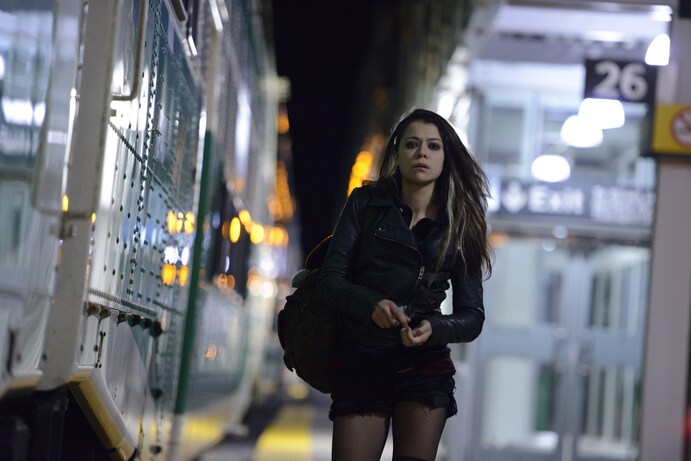
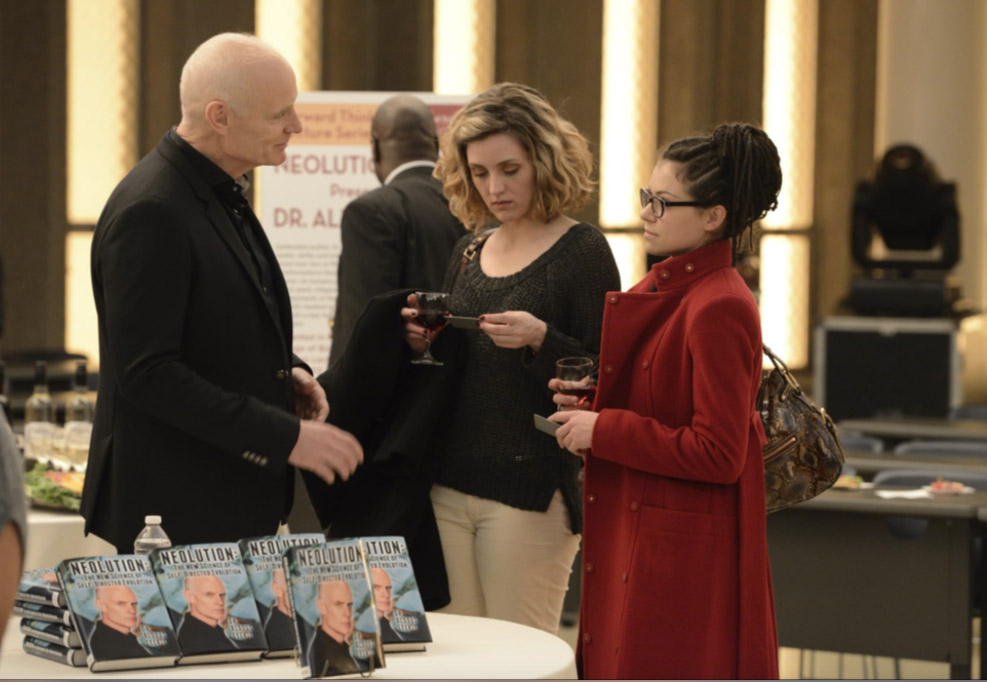
Orphan Black (Canada)
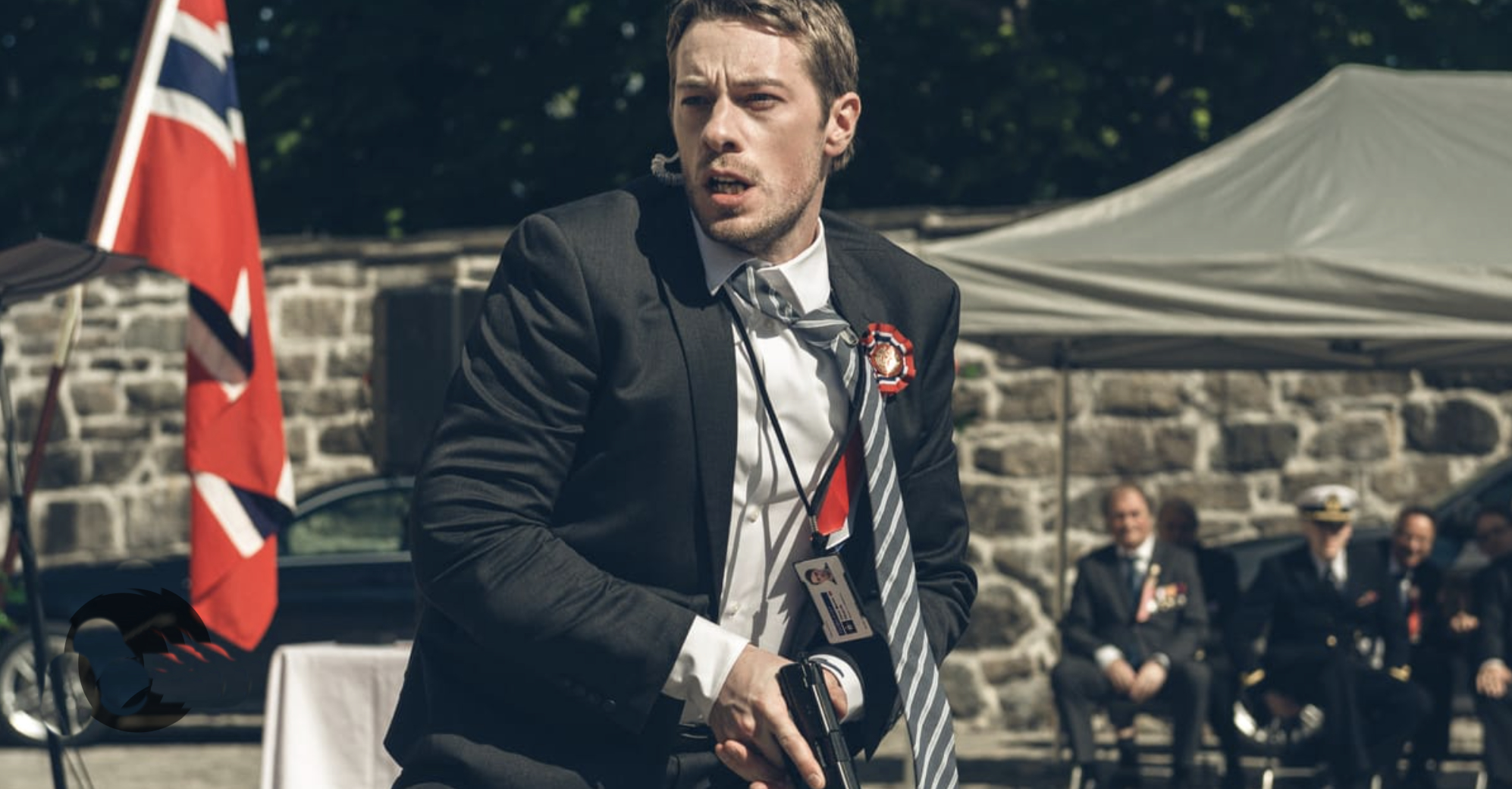
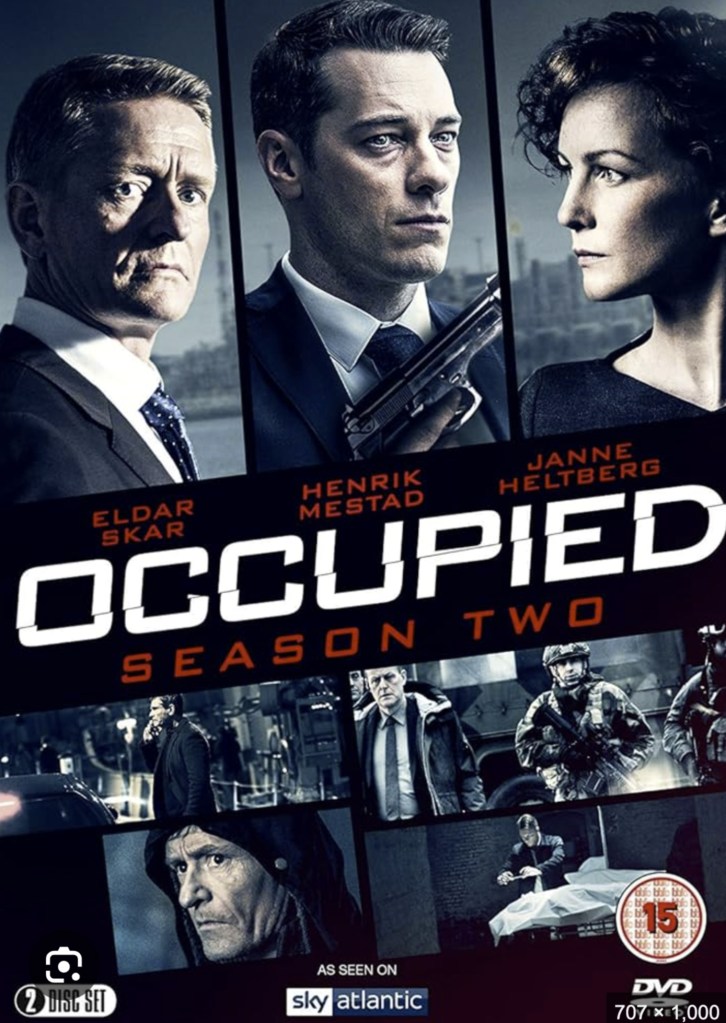
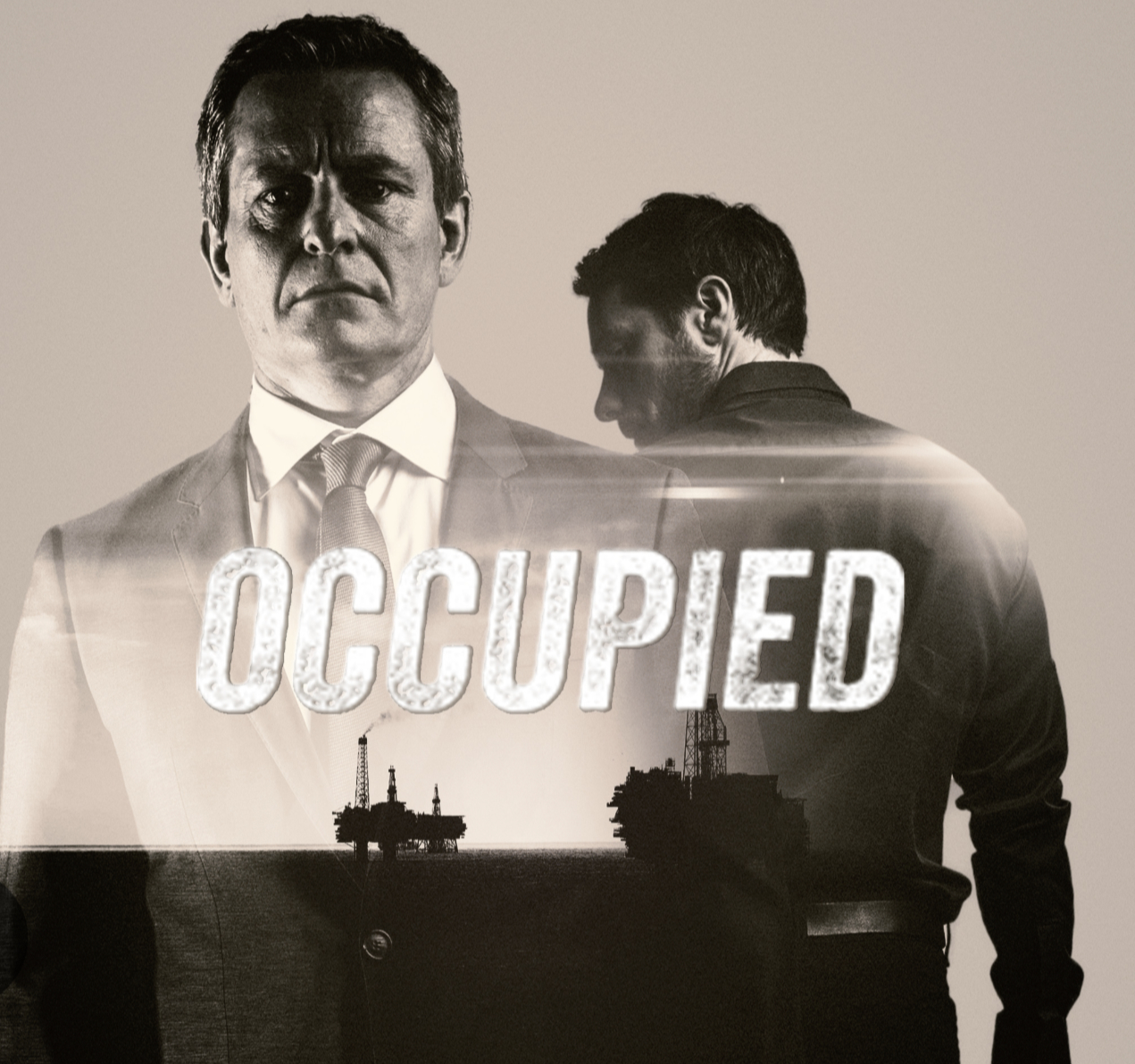
Occupied (Norway)
Missions (France)
Expanse (USA)
Incorporated (USA)
3% (Brazil)
Snowpiercer (USA)
Silo (USA)
Extrapolations (USA)

Nina Munteanu is a Canadian ecologist / limnologist and novelist. She is co-editor of Europa SF and currently teaches writing courses at George Brown College and the University of Toronto. Visit www.ninamunteanu.ca for the latest on her books. Nina’s bilingual “La natura dell’acqua / The Way of Water” was published by Mincione Edizioni in Rome. Her non-fiction book “Water Is…” by Pixl Press (Vancouver) was selected by Margaret Atwood in the New York Times ‘Year in Reading’ and was chosen as the 2017 Summer Read by Water Canada. Her novel “A Diary in the Age of Water” was released by Inanna Publications (Toronto) in June 2020.

Through the Portal Anthology Receives Remarkable Review

A recent favourable review of Through the Portal: Tales from a Hopeful Dystopia (edited by Lynn Hutchinson Lee and Nina Munteanu, released by Exile Editions) appeared in On Spec Magazine. The review by Lorina Stephens applauded the anthology for its genuine Canadian perspective, excellent writing, and “remarkable voice of many.”

Excerpts of the review follow below:

“What unfolds in these 35 stories is a quintessentially Canadian perspective on climate change, the probable dystopia of our own making, and how we as not only humans, but Canadians, may deal with the breakdown of environment and society, of how we construct mythology to interpret our experience.”

The stories, writes Stephens, “are filled with that remarkable pragmatism and resilience, little say a reverence for the land, which seems to be hardwired into a people who deal with constant change, and sometimes extremes, dictated by climate and geography.”

“…the quality of the writing from this enclave of writers is quite remarkable…I am steadfast in my praise of the skill of these writers, and the stories they’ve crafted, collected into this remarkable voice of many.”

“The stories manage that most adroit of transformations from genre fiction meant as escapism and consumable, to that other dimension which is provoking, illuminating, and exactly what good literary fiction should engender.”

For the entire review follow the link to On Spec Magazine.

Through the Portal has received other favourable reviews:

Through the Portal offers intriguing and imaginative glimpses into the future.” – The Seaboard Review

“A stunning collection of short stories and poetry that address our most existential concerns through metaphysical, epic, solarpunk, mythological, and contemporary perspectives.” – dragonfly.eco.

Nina Munteanu is a Canadian ecologist / limnologist and novelist. She is co-editor of Europa SF and currently teaches writing courses at George Brown College and the University of Toronto. Visit www.ninamunteanu.ca for the latest on her books. Nina’s bilingual “La natura dell’acqua / The Way of Water” was published by Mincione Edizioni in Rome. Her non-fiction book “Water Is…” by Pixl Press (Vancouver) was selected by Margaret Atwood in the New York Times ‘Year in Reading’ and was chosen as the 2017 Summer Read by Water Canada. Her novel “A Diary in the Age of Water” was released by Inanna Publications (Toronto) in June 2020.

Interview with Simon Rose on “Shadowzone” Series

My guest today is Calgary author Simon Rose, who has published nineteen novels for children and young adults, eight guides for writers, more than 100 nonfiction books, and many articles on a wide variety of topics. Today, we’re going to chat about his Shadowzone series, which was first published in 2017, with a second edition in 2025.

Nina: So, what’s the Shadowzone series all about?

Simon: The series involves the discovery of a grim dystopian version of Earth that’s ruled by a totalitarian dictatorship, the threat of a deadly virus, and a race against time to save the lives of millions. Without giving too much away, here’s a synopsis for each of the novels.

Shadowzone 

While watching intense flashes of lightning during a violent storm, Ben experiences mysterious and disturbing visions of another world, one that’s very different from his own. In the chain of events that follow, Ben encounters Charlie, a girl from a dark version of Earth, a planet doomed by the effects of environmental catastrophe, where the leaders will stop at nothing to complete their deadly mission. 

Into The Web 

On a doomed version of Earth, the sinister schemes of the Ministry are moving ever closer to completion, with dire consequences for the inhabitants of two worlds. For Ben and Charlie, an unlikely alliance, unexpected reunions, and the mysterious prophecy of the Chosen One offer a glimmer of hope, with the ever-present prospect of betrayal, as they embark on an unpredictable journey into the unknown. 

Black Dawn 

In a dark parallel world, following attacks by its most determined opponents, the Ministry has been forced to change its plans. Yet the ruthless Director-General is prepared to sacrifice anyone to achieve an entirely new beginning, no matter what the cost. In a deadly race against time, as events spiral out of control, Ben and Charlie must risk their lives in a desperate attempt to save two worlds from destruction. 

Nina: What inspired you to write these three books? What’s the story behind the story?

Simon: The original idea was about someone capturing mysterious images on a video camera of a person that no one else could see. It was around the time that a local hospital was about to be demolished. I imagined that my character was filming the event and captured the image of the person stepping seemingly unharmed from the rubble as the building came down.

For a while, that’s all I had, and it was one of those ideas that I was never sure would come to anything. It was early in my writing career, and I put it aside and worked on other stories, but I’d periodically add another element to the story about the camera and the mysterious individual. At one point, I decided that the person that the boy caught on film wasn’t a ghost but from another dimension or perhaps a parallel universe and they were attempting to contact him for some reason. I then began to add details of this other Earth and the reasons for the connection to our world, and it went from there. An initial concept involving kidnappings from hospitals didn’t quite work, so instead, and before the arrival of the recent pandemic, I developed the idea of a deadly virus, which was a good fit with the type of government running the other Earth. Once that was all in place, I was able to get to work.

Nina: Was it always going to be a series?

Simon: Shadowzone was originally only one novel, but once I’d finished it, I immediately realized that the story wasn’t over and that I need to write more. The final installment was written very quickly, and, in the process, I knew that I needed to expand the earlier sections too, so in the end I had a trilogy.

Nina: So of course, people need to read all three 🙂

Simon: You could certainly just read Shadowzone, but there’s a cliffhanger ending and hopefully most people will feel utterly compelled to read on and learn what happens next. Into The Web and Black Dawn also don’t make sense if you haven’t read the first book in the series. Taken together, it’s an exciting, fast paced adventure that I hope everyone will really enjoy.

Nina: So, is it a good idea for authors to write a series of books?

Simon: It can be, but only if you have enough material for multiple books. If readers are sufficiently interested in the story and the characters after completing the first installment, they’d usually like to read more. However, the story or theme has to be strong enough to warrant more adventures. The reader won’t appreciate a novel that’s overloaded with filler, just for the sake of creating a series, and might avoid any books by the same author in the future.

Nina: And you’re doing adaptations of the Shadowzone books for TV and movies, aren’t you?

Simon: Yes, I’ve created a synopsis for a three-season TV series based on the Shadowzone books. I’ve also created a script for the initial episode, based on the first novel in the series. The three books involve a dark parallel version of Earth, mysterious portals, and the threat of a deadly virus. The dystopian setting has proved popular over the years and will probably continue to appear on screen. There has been interest in the project from people involved in film and TV projects and I’m certainly open to working with others to bring this one to life. 

I’ve also seen some TV shows recently in which although there were adult characters, the main ones were in their mid or late teens and the show could be watched and enjoyed by adults. The lead characters were the same age as those in the Shadowzone books and in the novels in my paranormal Flashback series. That encouraged me to work on adaptations of the stories for the screen, since it seemed that there might be a market for them. I’m continuing to work on further episodes for the first season of the Shadowzone TV series.

Nina: What are you currently working on?

Simon: I always have a few current projects and right now, along with the script adaptations, I’m working on another historical fantasy novel series, this time set in the early years of World War II. I’m also working on more books in the same genre as my previously published paranormal Flashback novels, a fantasy series, and a historical fiction novel. I also teach writing courses at the University of Calgary and am working with some authors in the Alexandra Writers Centre’s Author Development Program.

Anyone interested in keeping up to date with the projects that I’m working on is always welcome to subscribe to my monthly newsletter, which you can do at www.simon-rose.com.

Nina: You work with other authors looking to publish, don’t you?

Simon: Yes, I offer coaching, editing, consulting, and mentoring services for writers of novels, short stories, fiction, nonfiction, biographies, and in many other genres, plus do work with writers of scripts and screenplays. I’m a writing instructor and mentor at the University of Calgary and served as the Writer-in-Residence with the Canadian Authors Association. You can find details of some of the projects I’ve worked on with other authors, along with some references and recommendations, at www.simon-rose.com.

Nina: So where can people buy all the books in the Shadowzone series?

Simon: The books can be purchased at most of the usual places, as follows:

Shadowzone

Ebook: Amazon Canada, Amazon USA, Kobo, Barnes and Noble, Amazon UK, Amazon Germany, Amazon France, Amazon Japan, iBooks, Smashwords, Scribd

Paperback: Amazon Canada, Amazon USA, Amazon UK, Amazon Germany, Amazon France, Amazon Japan

Into The Web

Ebook: Amazon Canada, Amazon USA, Kobo, Barnes and Noble, Amazon UK, Amazon Germany, Amazon France, Amazon Japan, iBooks, Smashwords, Scribd

Paperback: Amazon Canada, Amazon USA, Barnes and Noble, Amazon UK, Amazon Germany, Amazon France, Amazon Japan

Black Dawn

Ebook: Amazon Canada, Amazon USA, Kobo, Barnes and Noble, Amazon UK, Amazon Germany, Amazon France, Amazon Japan, iBooks, Smashwords, Scribd

Paperback: Amazon Canada, Amazon USA, Barnes and Noble, Amazon UK, Amazon Germany, Amazon France, Amazon Japan

The Shadowzone Series Box Set

Ebook: Amazon Canada, Amazon USA, Kobo, Barnes and Noble, Amazon UK, Amazon Germany, Amazon France, Amazon Japan, Scribd, iBooks, Smashwords

Thanks Simon, for being my guest today and the very best of luck with the Shadowzone series.

You can learn more about Simon and his work on his website at www.simon-rose.com, subscribe to his newsletter, or connect online.

Review of “A Diary in the Age of Water”: Women, Water, Numinosity, and the Transformation of the World

“It is a novel to learn from, and it is a novel to take forward into life as inspirational guide. Each of us is called upon to examine, not only our relationship with water, but with all Earth gifts.”

Jane Buchan, author & educator

Vermont author Jane Buchan recently wrote a review of my 2020 eco-fiction novel A Diary in the Age of Water. Here is an excerpt:

As climate, social, and political crises escalate, one source of guidance becomes essential to our continued optimism and activism: a Numinous Story… A Diary in the Age of Water by Nina Munteanu, is, for many of us alive in these terrifying times, a numinous story. It meanders through our consciousness with the enlightening science of fresh-water lakes and rivers and streams, sometimes heavy with sediment and toxicity, sometimes fast flowing and cleansing, sometimes terrifying with truths smacking us down with the force of a tidal bore. Its characters are story tellers and story receivers, and despite their diverse natures, all the stories they tell reveal the many threats to our source of life on Earth – our water.

Nina Munteanu’s novel structure is perfect for the weaving of human scientific and mystical relationships with water.  It’s initial and final sections create a frame for the inner story of bitterness, despair, self-serving behaviours, and corporate rapaciousness described by a professional scientist, a limnologist named Lynna. In the outer story we meet Kyo and Nam, Kyo’s mentor, as well as Ho, a librarian and keeper of a remnant of rare books. These characters exist on the other side of a mysterious cataclysm, the causes of which are the novel’s key themes.

Kyo, a small, four-armed blue being whose story begins and ends the novel, introduces us to the characters who form the larger diary section framed by the opening Library section and final Seed Ship section. Kyo makes glancing references to Una, mother of Lynna, and Lynna, mother of Hilde. Only Lynna is fully realized through her own perceptions and thoughts, these expressed in diary entries beginning in the spring of 2045 and ending in the late fall of 2066. Her diary, taking up 250 pages of this 303-page novel, provides the chronological spine connecting our past and present to a possible future that is not the one most humans want to think about, let alone welcome.

A Diary in the Age of Water is best sipped and savoured rather than gulped. Gulping will lead to choking for most non-scientist readers, and this book deserves to be experienced as it is written, in slow, undulating, revelatory waves… Like all complex stories, A Diary in the Age of Water requires patience, something our video-oriented age does not foster. The richest stories ask that we learn to hold many apparently divergent story threads at once. One of my fears as I read the diary was that the darkness of greed and short-sighted thinking and feeling would win out over that wondrous mystical relationship with the world that Una carried. While Una does her best to pass the experience of the sacred on to Lynna, Una’s spiritual influence is eclipsed by Lynna’s oppressive dependence on scientific knowledge to the exclusion of all else.

Through these characters, Nina Munteanu offers a warning for our times. Science is vitally important to our understanding of natural systems but science best serves us when it is balanced with an experience of the responsiveness of the natural world, a responsiveness that evokes our reverence and respect. Every culture honours the spiritual nature of the greater-than-human world, encoding its reverence in mythology, folktales, and wisdom traditions. – all keepers of numinous stories that transform our relationships with one another and the world. When we live honouring the sacred nature of all life, we become partners and co-creators. When we do not, we are highly dangerous parasites…

Lynna is called to hold the science of water firmly in her mind as her heart slowly opens to water’s responsiveness, water’s intelligence, water’s generosity, water’s love. It is a huge transformation for her, because science has been her safe place, her refuge. But knowing how something works is only the first part of the journey for those of us alive on this watery planet; we must all experience the why – the joy of unbreakable interconnections that make our lives meaningful… It is not Una’s daughter, Lynna, who carries this numinosity forward. It is Hilde, Una’s granddaughter, whose name means, significantly, Warrior Woman. How Kyo fits in to this lineage is one of the novel’s most unique speculations, one best discovered by reading the entire novel.

This novel is rich with information about water’s evolutionary journeys; it also describes the horrors of human greed that directly impact our relationships with water. It is not an easy book, but it is an important one, especially for people ready to engage, to advocate, to stand against the corporate insanity currently destroying Earth’s delicate balances. It is a novel to learn from, and it is a novel to take forward into life as inspirational guide. Each of us is called upon to examine, not only our relationship with water, but with all Earth gifts.

Go to Jane’s site Winterblooms to read the full review, worth reading in its entirety for its rich and poetic narrative.

Jane Buchan is a writer currently living in Vermont and originally from southwest Ontario. Her books include Under the Moon, Kinder Sadist and her latest, The Buttes. She is also an emotional Freedom Techniques (EFT) coach, Master Trainer and educator.

Jackson Creek flowing through ice formations (photo and rendition by Nina Munteanu)

Nina Munteanu is a Canadian ecologist / limnologist and novelist. She is co-editor of Europa SF and currently teaches writing courses at George Brown College and the University of Toronto. Visit www.ninamunteanu.ca for the latest on her books. Nina’s bilingual “La natura dell’acqua / The Way of Water” was published by Mincione Edizioni in Rome. Her non-fiction book “Water Is…” by Pixl Press (Vancouver) was selected by Margaret Atwood in the New York Times ‘Year in Reading’ and was chosen as the 2017 Summer Read by Water Canada. Her novel “A Diary in the Age of Water” was released by Inanna Publications (Toronto) in June 2020.

Through the Portal Anthology Bestseller in Edmonton

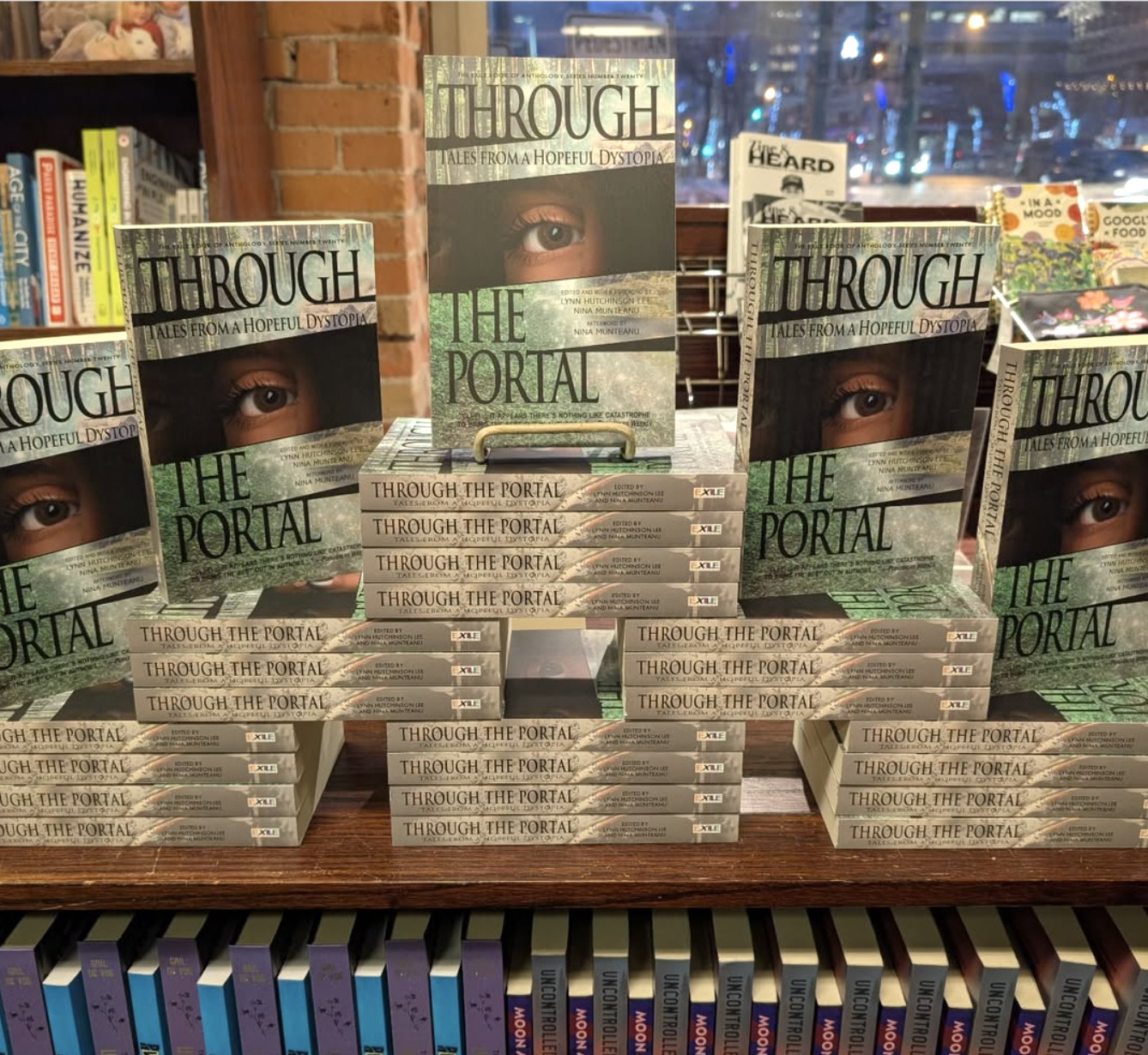
“Through the Portal” selling like hotcakes at Audrey’s Books in Edmonton (photo by Audrey’s Books)

Through the Portal: Tales from a Hopeful Dystopia recently made it to the number 2 position on the Edmonton Bestselling Books list ending February 2, 2025. The weekly list is compiled by Audreys Books and Magpie Books through the Book Publishers Association of Alberta.

Through the Portal anthology continues to garner attention and accolades by reviewers, booksellers, and readers throughout Canada. Released December 31, 2024 and launched in several locations in Canada, Portal is celebrated for its hopeful lens on an otherwise bleak future with thirty-five unique short stories, flash fiction, and poetry and an afterward.

There are many faces for hope; this anthology has thirty-six of them. Each story in the anthology features a unique hopeful lens that draws from a diversity of authors from around the world and throughout Canada. Stories that touch on nostalgia to respect, enlightenment to endurance. In these tales that range from compassion and healing to cautionary warnings of dark insight, hope may wear a human face or the face of a tree, black crow, or leaf.

Hopeful dystopias are so much more than an apparent oxymoron: they are in some fundamental way the spearhead of the future – and ironically often a celebration of human spirit by shining a light through the darkness of disaster. In Through the Portal: Tales from a Hopeful Dystopia, award-winning authors of speculative fiction Lynn Hutchinson Lee and Nina Munteanu present a collection that explores strange new terrains and startling social constructs, quiet morphing landscapes, dark and terrifying warnings, lush newly-told folk and fairy tales.—Exile Editions

  “A stunning collection of short stories and poetry that address our most existential concerns.”

Dragonfly.eco

“Will ingenuity, love, and respect for the earth help us work through whatever changes might lie ahead? Through the Portal offers hope that these qualities, if not enough in and of themselves, will help us find our way.”

The Seaboard Review

Nina Munteanu is a Canadian ecologist / limnologist and novelist. She is co-editor of Europa SF and currently teaches writing courses at George Brown College and the University of Toronto. Visit www.ninamunteanu.ca for the latest on her books. Nina’s bilingual “La natura dell’acqua / The Way of Water” was published by Mincione Edizioni in Rome. Her non-fiction book “Water Is…” by Pixl Press (Vancouver) was selected by Margaret Atwood in the New York Times ‘Year in Reading’ and was chosen as the 2017 Summer Read by Water Canada. Her novel “A Diary in the Age of Water” was released by Inanna Publications (Toronto) in June 2020.

Through the Portal Anthology Gets Stellar Review

The recently released Through the Portal ecofiction anthology that I co-edited with Lynn Hutchinson Lee and published by Exile Editions, received an in-depth review by author Lisa Timpf in The Seaboard Review. Here are some highlights of Timpf’s review of this anthology of hopeful dystopian short stories, flash fiction and poetry:

Mermaids, arborists, and pollinators are among the characters to be found in Through the Portal: Tales from a Hopeful Dystopia. Edited by Lynn Hutchinson Lee and Nina Munteanu, this eco-fiction collection gathers over thirty stories that fall under the general umbrella of hopeful dystopias…

Through the Portal offers intriguing and imaginative glimpses into the future. As [one of its short stories] “A Fence Made of Names” suggests, we often don’t appreciate what we have until we lose it. By showing us what we stand to lose, these stories offer a reason to increase our actions to preserve the planet…

While many of the tales hint at dark times ahead, it was refreshing to find so many that offered a ray of hope despite that. Whether it’s finding the will to live another day, returning to a better relationship with the land and the Earth, or taking steps to improve the world in even a small way, these stories affirm humanity’s potential for resilience in challenging times.

Will ingenuity, love, and respect for the earth help us work through whatever changes might lie ahead? Through the Portal offers hope that these qualities, if not enough in and of themselves, will help us find our way.

Lisa Timpf, The Seaboard Review, Jan 13, 2025

Go to The Seaboard Review for the full review of Through the Portal. The review is worth reading in its entirety.

Nina Munteanu is a Canadian ecologist / limnologist and novelist. She is co-editor of Europa SF and currently teaches writing courses at George Brown College and the University of Toronto. Visit www.ninamunteanu.ca for the latest on her books. Nina’s bilingual “La natura dell’acqua / The Way of Water” was published by Mincione Edizioni in Rome. Her non-fiction book “Water Is…” by Pixl Press (Vancouver) was selected by Margaret Atwood in the New York Times ‘Year in Reading’ and was chosen as the 2017 Summer Read by Water Canada. Her novel “A Diary in the Age of Water” was released by Inanna Publications (Toronto) in June 2020.

Movie Review: The Creator

Nirmata: n.1 [Nepalese for ‘the Creator’] The mysterious unknown architect of advanced AI; 2 A being worshipped by Artificial Intelligence as their creator; savior; God.

I just re-watched The Creator, a visually stunning science fiction thriller by Gareth Edwards that explores our sense of humanity through our relationship with AI as ‘other.’

Shot in over sixty locations in Southeast Asia, including Cambodia, Indonesia, Japan, and Nepal, the film feels familiar and alien at the same time; it does this by seamlessly combining the gritty realism of a war-torn Vietnam documentary with the glossy pastiche of near-future constructs and vehicles—to the extent that one is convinced this was filmed in a world where all these things really exist together. The effect is stunning, evocative and surprising. I was reminded of the detailed set pieces and rich cinematography of Ridley Scott (The Duelists, Bladerunner, Alien).

At its core, The Creator is about a man who gives up everything to defend a child who is different (she is a simulant run by AI).

Artificial Intelligence (AI) is not a new concept in science fiction*; however, The Creator elegantly tells a story with a unique—and subversive—perspective on this topic.

The film opens with 1950s-esque advertising footage for robot helpmates including conventional robots and AI humanoid simulants who look and act human. Then disaster hits: LA is nuked and the AI are blamed for it. Now fearing them, the Western world has banned all AI; however New Asia has continued to develop the technology, achieving sophisticated simulants—posthumans in effect—who are fully integrated with the human culture and spirituality and live in harmony with them. Americans, bent on exterminating all AI, use guerrilla warfare techniques to infiltrate New Asia and destroy any AI using ground teams deployed and helped by a giant airborne surveillance / defence station called U.S.S. NOMAD. News of a sophisticated new AI superweapon created by an unidentified genius called Nirmata to take down NOMAD sends them on a new mission, which brings Joshua (John David Washington) back from PTSD ‘retirement’ to help locate and destroy both Nirmata and the superweapon.

Alphie (Madeleine Yuna Voyles) pacifies an enemy robot (image from “The Creator”)

Joshua finds the superweapon: a 6-year old child, Alphie (Madeleine Yuna Voyles), who is both innocent and quietly powerful. Although Joshua’s prime directive is to destroy the superweapon, he finds that he cannot kill this child whose human traits involuntarily tug at his heart’s compassion.

Joshua (John David Washington) defends the child-weapon (image from “The Creator”)

The story is in fact a simple one. Its genius lies in an immersive showing and telling at many levels. At the socio-political level, the film uses obvious metaphors of racism and imperialistic ableism to make commentary on America’s jingoistic air of entitlement. The film can easily be interpreted as an allegory for Western imperialism and America’s rationale for the invasion of Iraq (or Vietnam) with a conclusion of the futility of war. At the individual level, the question of identity and the reduction of some (e.g. immigrants or of another race) as “other” or “homo-sacer,” to gain power and wealth, are explored through the interactions, relationships, and prejudices of humans with the simulants and robots. It is at the individual story level that this film tugged my heartstrings as I followed the journey of Joshua and Alphie, how they as initial combatants having made a deal to survive, grow to care and love one another. Musanna Ahmed of The Upcoming shares that “this was expected from Edwards … [in achieving] beautiful character work and sense of intimacy against an epic backdrop.”  When an idea-driven story of large dimensions is told at the intimate personal level, pathos and understanding emerges.  

A robot defends the escape boat (image from “The Creator”)

Gareth Edwards shared that the film contained fairy tale aspects of the “Hero’s Journey” of two main characters, Joshua and Alphie, each on a journey: he to find redemption through love of the ‘other’; she to find her place in the world and to find freedom and peace for her kind and all others. She is the catalyst hero and he the main protagonist.

“A reluctant father figure must help a child through the metaphorical woods to find his wife [and her mother]. What he wants is love from his wife. But what he really needs is to love this child.” As for what Alphie both wants and needs, this is something she first shares in a humorous scene: when Kami asks her what she wants (from the kitchen), Alphie naively responds “for robots to be free.” She is stating the point of the movie: that everyone, no matter how different, is worthy of compassion.

Early on in the film, Joshua reassures a co-worker distressed by a robot’s desperate plea to save it from the crusher that “they’re not real…they don’t feel… it’s just programming.” When Joshua, who admits he’s bad, forces Alphie to help him find his wife, Alphie sums up both their scenarios with a child’s wisdom: “Then we’re the same; we can’t go to heaven because you’re not good and I’m not a person.”

Americans attack a village in New Asia (image from “The Creator”)

Several reviewers criticized how the film’s epic setting seemed to overshadow and compromise the heart of the story, the personal drama of man and child. While I would agree that many action thrillers do this, I did not feel this was the case with The Creator. This is because—as with Ridley Scott’s intricate immersive environment—The Creator integrates place with theme to create more than one-dimensional drama. In The Creator, place is also character, playing a key role in the telling of this very different story about AI as ‘other’ and how we treat the ‘other.’ This is also why film locations and scene choreography are so important. Each scene and place is diligently choreographed to further illuminate a story of multi-layered meaning, such as authentic scenes of village life where AI is seamlessly integrated with human existence.      

Colonel Howell (Alison Janney) gets captured by New Asia police (image from “The Creator”)

Several critics have accused the film of being derivative, of copying previous tropes or actual scenes from several well-known movies. Indeed, when I first watched it, I recognized tropes that seemed lifted in their entirety from another previous movie.

The scene, shot in Tokyo where Joshua and Alphie go to the city in search of Joshua’s friend, sounds and looks and feels just like Bladerunner with its whining oriental soundscape and dark futuristic yet gritty cityscape. And yet, its appropriateness to The Creator seems less like stealing than re-appropriation; as if to say, “this fits better here than where you’ve initially used it.”

Christy Lemire of RogerEbert.com proclaimed that the movie “ends up feeling empty as it recycles images and ideas from many influential predecessors … lumbers along and never delivers the emotional wallop it seeks because the characters and their connections are so flimsily drawn.” Jackson Weaver of CBC called The Creator “a voguish used-future action-thriller…a dull, simplistic fable with all the moral complexity of a fourth grader’s anti-bullying Instagram post…a story that has been done to death…boring.”

I couldn’t disagree more. I found these reviewers’ comparisons shallow and limited. While I recognized several familiar tropes, I believe they were meant to subvert and make commentary—sometimes on the trope itself. There is a strong immersive role in world building and backdrop, which creates its own sensual and many-layered narrative; a narrative that speaks more powerfully than dialogue: from a mere glance by Harun to a brief storytelling moment in a village to a child mourning the death of its cherished robot companion. Ridley Scott would appreciate its value.

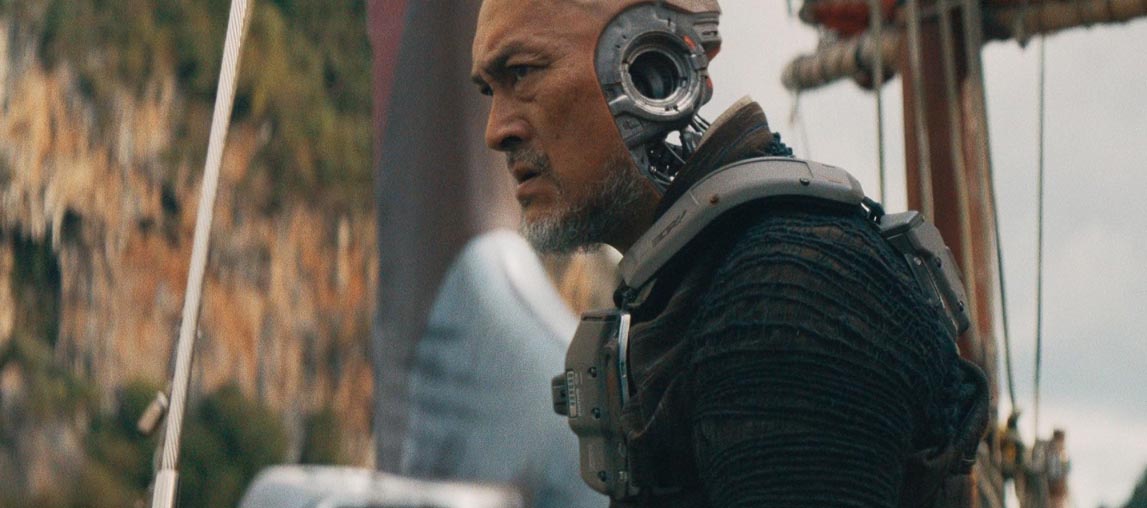
Harun (Ken Watanabe) on the escape boat, taking Alphie to safety (image from “The Creator”)

The Guardian’s Wendy Ide’s use of the word “original” for The Creator bares mentioning here; in declaring The Creator one of the finest original science-fiction films of recent years, Ide goes on to say: “It can be a little misleading, that word ‘original’, when it comes to science fiction. At its most basic, it just refers to any picture that isn’t part of an existing franchise or culled from a recognisable IP – be it a book, video game or television series. But very occasionally the word is fully earned, by a film so distinctive in its world-building, its aesthetic and its unexpected approach to well-worn themes that it becomes a definitive example of the genre. Films such as Neill Blomkamp’s District 9 (which shares an element of basic circuitry with this picture) or Alfonso Cuarón’s dystopian masterpiece Children of Men: both went on to become benchmarks by which subsequent science fiction was judged.”

In listing the various science-fiction standards The Creator riffs on, Alison Willmore of Vulture singles out one of the most poignant aspects of the film:

“The films The Creator turns out to have the strongest relationship with are ones about the Vietnam War, something made unmistakable by the early shots of futuristic hovercraft gliding over rice plants and the scenes of U.S. troops threatening weeping villagers at gunpoint. No longer able to buy into the message that they’re just doing what’s necessary for the salvation of humankind, Joshua finds himself adrift, fleeing through a war zone on impulse with a child destroyer in tow. The Creator may be an effective interrogation of American imperiousness and imperialism, but it also has a tender, anguished heart.”

NOMAD approaches a New Asia temple (image from “The Creator”)

Other notable TV shows and movies about artificial intelligence and robots include: A.I.; Ex Machina; I, Robot; Bladerunner; Better than Us; The Matrix; I am Mother; The Terminator; Transcendence; and Automata.

Nina Munteanu is a Canadian ecologist / limnologist and novelist. She is co-editor of Europa SF and currently teaches writing courses at George Brown College and the University of Toronto. Visit www.ninamunteanu.ca for the latest on her books. Nina’s bilingual “La natura dell’acqua / The Way of Water” was published by Mincione Edizioni in Rome. Her non-fiction book “Water Is…” by Pixl Press (Vancouver) was selected by Margaret Atwood in the New York Times ‘Year in Reading’ and was chosen as the 2017 Summer Read by Water Canada. Her novel “A Diary in the Age of Water” was released by Inanna Publications (Toronto) in June 2020.

Eco-Fiction Books that Make You Care and Give You Hope

Some time ago, Shepherd invited me to share some of my favourite stories and why I picked them. I decided to feature novels that moved me greatly and inspired me to action. I chose five works of eco-fiction that made me care and gave me hope.

The environment and how we treat it has always been important to me since I was a child. My passion for storytelling morphed into writing, but the underlying spark came through environmental activism. I got a university degree in aquatic ecology, published numerous papers, and now write eco-fiction that is grounded in accurate science with a focus on human ingenuity and compassion. The most meaningful and satisfying eco-fiction is ultimately optimistic literature that explores serious issues with heroic triumph. Each of these five favourites intimately connects human to environment. Each novel moved me to think and deeply care.

The Books I Picked & Why

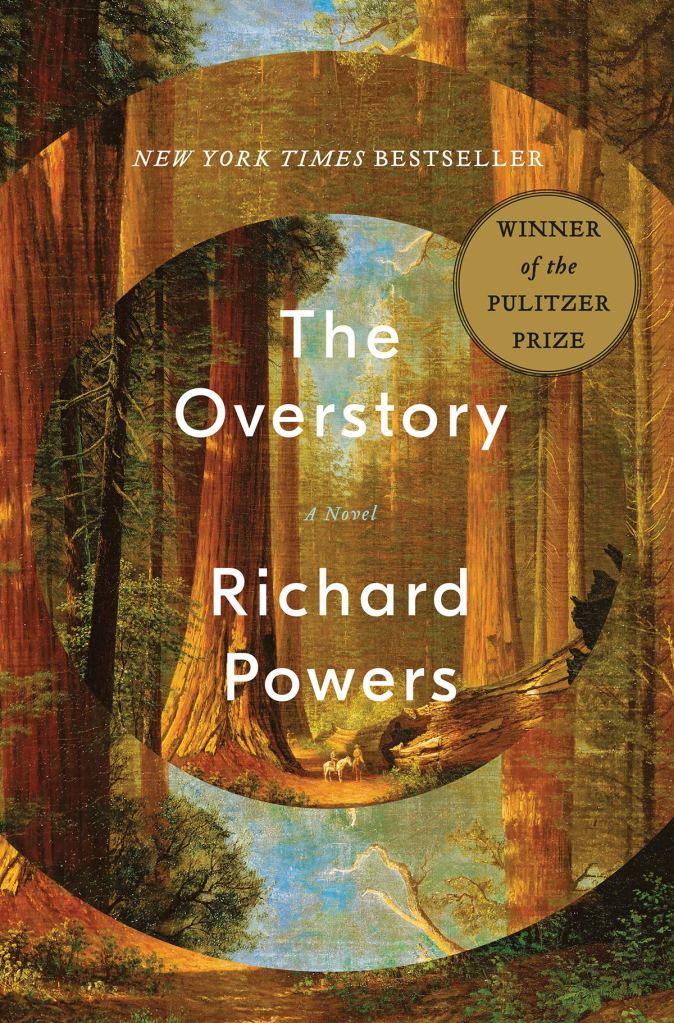
The Overstory

by Richard Powers

What resonated with me on so many levels was the author’s use of lyrical and beautiful language in describing trees and forests: as characters. I’m an ecologist and I felt a particular kinship with the botanist Patricia Westerford, a disabled introvert who must swim against the hegemonic tide with heretical ideas. When she argues that trees communicate, learn, trade goods and services, have intelligence and society, her scientific peers ridicule her and end her university career. This story is as much her triumph over overwhelming challenges as it is about the dwindling majestic forests that must quietly endure our careless apathy as they continue to offer their gift of life-giving oxygen and medicinal aerosols for hundreds of years. 

Barkskins

by Annie Proulx

This 600-year saga about human-environment interaction through the forest industry in Canada evoked emotional connections with my environment, the Canadian forests, and the plight of indigenous Canadians. From the arrival of the Europeans in pristine forest to its destruction under the veil of global warming, Proulx weaves generational stories of two settler families into a crucible of terrible greed and tragic irony. The bleak impressions by the immigrants of a harsh environment crawling with pests underlie their combative mindset of a presumed infinite resource. I was particularly moved by the linked fate between the Mi’kmaq and the majestic pine forests, how both were similarly mistreated and changed. This history is also my legacy. As the daughter of immigrants, I felt both educated and moved.  

The Breathing Hole

by Colleen Murphy, Siobhan Arnatsiaq-Murtphy and more

What struck me most was the use of simple language to portray powerful intimacy and connection between human and animal, and by extension, environment. Murphy’s humorous dialogue, together with sparing, often ironic, descriptions, struck deep into my heart. The play starts in 1535 on an ice shelf up north—when an Inuk widow risks her life to save a lost one-eared polar bear cub on an ice floe, and adopts him. In the last scene five hundred years later in the oily waters of the Northwest Passage, the same bear—starving and cruelly injured by eco-tourists on a cruise ship—struggles to keep from drowning. No one on the ship cares. No one weeps for him. But I did. I wept for him and for his world destroyed by apathy. 

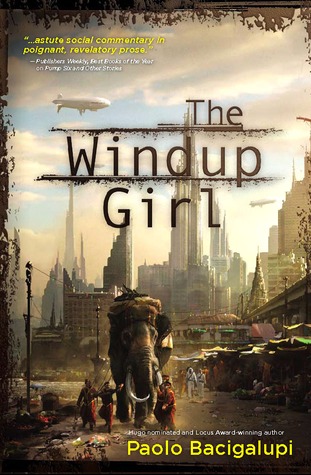
The Windup Girl

by Paolo Bacigalupi

Paolo Bacigalupi’s biopunk science fiction novelexplores a 23rd-century post-food crash Thailand after global warming has raised sea levels and depleted carbon fuel sources. The main character, Emiko, is a ‘windup,’ a modified human who is vilified and abused by humanity, despite her abilities. I was struck by how well this work of ‘mundane science fiction’ used Emiko as an avatar for a trickster Nature after abuse by humanity through the disrespect of reckless gene-hacking, greedy corporate espionage, and arbitrary foreign takeovers. I cheered Emiko’s breakaway from her oppressors as she emerged from a cloak of obedience and embraced her survival in this changing world of unintended consequences—only realizing later that I was cheering for that changing world and the optimism it promised. 

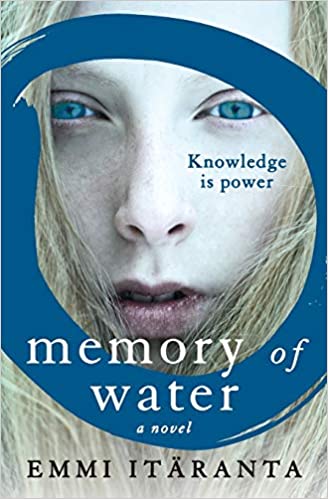
Memory of Water

by Emmi Itäranta

This book features a passion of mine as an ecologist and mother: water and how we treat it. Life-giving symbols of water flow throughout this story, which explores a post-climate change world of sea level rise in which freshwater is severely rationed due to scarcity. Water’s very nature is tightly interwoven with the main character, Noria, a tea master who guards a secret spring in the fell by her house against cruel government agents who would kill her for water crimes. In prose both sensual and lyrical, this book explores honor, sacrifice, betrayal, and friendship, and how each can be victimized through commodification in a power play of ideology. I found myself pulled in by the intrigue even as I cherished and lingered in the beautiful metaphoric prose.

Explore my eco-fiction book:

A Diary in the Age of Water follows the climate-induced journey of Earth and humanity through four generations of women, each with a unique relationship to water.

Centuries from now, in a dying boreal forest in what used to be northern Canada, Kyo, a young acolyte called to service in the Exodus, yearns for Earth’s past—the Age of Water—before the “Water Twins” destroyed humanity. Looking for answers and plagued by vivid dreams of this holocaust, Kyo discovers the diary of Lynna, a limnologist from that time of severe water scarcity just prior to the destruction. In her work for a global giant that controls Earth’s water, Lynna witnesses and records in her diary the disturbing events that will soon lead to humanity’s demise.

Recently I felt honoured to have A Diary in the Age of Water included as one of several eco-fiction novels that inspired action.

The feminist book review site Liisbeth recently wrote about A Diary in the Age of Water: “If you believe Canada’s water will remain free forever (or that it’s truly free now) Munteanu asks you to think again. Readers have called A Diary in the Age of Water “terrifying,” “engrossing,” and “literary.” We call it wisdom.”

Marcescent beech leaves among evergreen hemlocks, ON (photo by Nina Munteanu)

Nina Munteanu is a Canadian ecologist / limnologist and novelist. She is co-editor of Europa SF and currently teaches writing courses at George Brown College and the University of Toronto. Visit www.ninamunteanu.ca for the latest on her books. Nina’s bilingual “La natura dell’acqua / The Way of Water” was published by Mincione Edizioni in Rome. Her non-fiction book “Water Is…” by Pixl Press (Vancouver) was selected by Margaret Atwood in the New York Times ‘Year in Reading’ and was chosen as the 2017 Summer Read by Water Canada. Her novel “A Diary in the Age of Water” was released by Inanna Publications (Toronto) in June 2020.

Movie Review: Snowpiercer and the Machine of Life


What’s left of humanity—after we broke the world—is crammed in a speeding train that circles a frozen Earth … forever.

Bong Joon-Ho’s 2013 motion picture Snowpiercer is a stylish post-climate change apocalypse allegory. A dark pastiche of surrealistic insanity, welded together with moments of poetic pondering and steam-punk slick in a frenzied frisson you can almost smell.  Joon-Ho casts each scene in metallic grays and blues that make the living already look half-dead. The entire film plays like a twisted steampunkish baroque symphony. Violence personified in a garish ballet.  

One of the many excessive fight scenes

The train’s self-contained closed ecosystem is maintained by an ordered social system, imposed by a stony militia. Those at the front enjoy privileges and luxurious living conditions, though most drown in a debauched drug stupor; those at the back live on next to nothing and must resort to savage means to survive. This film isn’t about climate change—that’s just a plot point to serve the premise of a study on how society functions—or rather copes—within a decadent capitalist system, based on an edict of productivity: serve the machine of “life”. Satisfy the sacred machine at all costs; complete with subterfuge, oppression and references to cannibalism. Beneath the film’s blatant statement on the emptiness of the pursuit of capital at any cost lies a deeper more subtle exploration on the nature of humanity. Die to live or live to die?

In a recent interview with io9, Joon-Ho said, “the science fiction genre lends itself perfectly to questions about class struggle, and different types of revolution.”

Curtis singled out by militia

Revolution brews from the back, led by Curtis Everett (Chris Evans), who confesses to a forced recruit, along the way, “A thousand people in an iron box. No food, no water. After a month we ate the weak. You know what I hate about myself? I know what people tastes like….I know that babies taste best.”

Minister Mason (Tilda Swinton), an imperious yet simpering figure who serves the ruling class without quite being part of it, reminds the lower class that, “Eternal order flows from the sacred engine. We must occupy our preordained position. I belong to the front, you belong to the tail. Know your place!”

Minister Mason dispenses the law to the tail

It’s all about the engine for both front and tail. It saved humanity, after all. It is their future. Curtis tells his colleagues that they will move forward: “We take the engine and we control the world. It’s time we take the engine.”

Revolution brews in the tail

“Reform and revolution are shibboleths that distinguish liberals from radicals,” explains Aaron Bady of The New Inquiry. “While liberals want to reform capitalism, without fundamentally transforming it, radicals want to tear it up from the roots (the root word of “radical” is root!) and replace capitalism with something that isn’t capitalism…If you’re the kind of leftist who thinks that the means of production just need to be in better hands—Obama, for example, instead of George W. Bush, or Elizabeth Warren instead of Obama, or Bernie Sanders instead of Elizabeth Warren, and so on—then this movie buries a poison pill inside its protein bar: soylent green is people.”

The tail faces the goons of the front

The train “eats” the children of the poor; using them to replace the sacred engine parts that have worn out in a kind of retro-transhumanist collaboration of human and machine and creating a perverse immortal cyborg entity. Only, the individual children die in the process and need to be constantly replaced to maintain the eternal whole. They have literally become cogs in a giant wheel of eternity.

Curtis’s revolution is doomed from the start; once he reaches the front, it is revealed to him that the entire conflict and resulting deaths were orchestrated all along to help maintain population balance. Wilford (Ed Harris), the genius who created the train with a perpetual motion engine, tells Curtis once they meet that, “this is the world…The engine lasts forever. The population must always be kept in balance.” Which begs the obvious question: why not just get rid of all of the lower class “scum” (as Mason calls them)? That would make room for the privileged. What purpose do these lower class serve? The answer is both obvious and simple: aside from providing their children as parts to the sacred engine, they are there to be hated, feared and despised by the elite. When the soul is empty and needs “filling” but can’t be filled, then it finds a substitute.

Wilford lectures Curtis on the train’s functional ecosystem

Aaron Bady of The New Inquirer shares that, “Instead of giving Texans a health care system, for example, late capitalism gives them the illegal immigrant, to hate, to fear, and to dis-identify with. Prisons do more and more of the system-maintaining work that was once done by schools and hospitals: instead of giving us something to want, they give us something to fear, hate, and kill. And so, we eat ourselves.” We die to live.

Wilford grooms Curtis as the new engineer and reveals to him the true nature of the engine. “You’ve seen what people do without leadership,” says Wilford to Curtis. “They devour one another.” This is dark irony considering what the train is doing. And it is when Curtis discovers this awful truth that his reformist revolution comes to a dead halt and he makes a decision that takes him into the realm beyond the train.

Snowpiercer is about hard choices and transcendence. … Save humanity, but at the consequence of our souls? Or transcend a machine that has robbed us of our souls at the expense of our mortality? The film continually questions our definition of what life is and what makes life worth living.

Snowpiercer crosses one of many treacherous bridges

The film, whose script by Joon-Ho and Kelly Masterson is based loosely on the French graphic novel Le Transperceneige by Jacques Lob, graphically portrays the fecklessness of a reformist/revolutionary movement to transcend the decadent capitalist machine (the train). It begins with the adoption of a failing system from a previously failed system. Perhaps it is a truism that most reformist movements fail to challenge the true hegemony of the system they intend to overtake, given their origin. What we get is little genuine change; just a shuffle in protocol.

Peter Frase of Jacobin Magazine shares that, “it’s all the more effective because the heart of that critique comes as a late surprise, from a character we might not expect.”

Namgoong languishes in a drugged state on the train after he is liberated from a drawer

Namgoong Minsoo (Song Kang-Ho) is a spaced-out drug addict that Curtis ‘liberates’ from a drawer to help them open the gates to the forward sections. Like everyone on the train, Nam is a little crazy. But he differs in one important way: he believes there is hope outside the train. Unlike his reformist brothers, he looked outside the construct and studied the realm beyond the train. Perhaps it is drug-induced fantasy. Perhaps he’s simply had enough of a lifetime of “non-life” onboard the train and would rather die outside to truly live, even if for a brief moment. When the chance for this moment materializes, we, like Nam and his daughter Yona (Ko Ah-sung), are more than ready to jump the train. In fact, we’re desperate to get off this shadow game of bread and circuses. Even if it means freezing to death in moments.

Only Yona and one of the rescued children from the engine, survive the ensuing train crash, thanks to Curtis’s truly revolutionary decision.

“Is it more revolutionary to want to take control of the society that’s oppressed you, or to try and escape from that system altogether?” asks Joon-Ho.

Yona and Curtis on the train

I felt a cathartic surge of relief when the train came to a violent crashing stop; even though it effectively meant the end of humanity. My visceral response was incredible relief. The scene following the train crash was —despite the inhospitable and cold environment—surrealistically fresh, invigorating and serene.  Along with Yona and one of the children Curtis rescued, we’ve escaped the rushing perversity: the obsession to survive at any cost. We’ve chosen to live to die. That Curtis (had to) die with the train to ensure the safe escape of Yona and the child, made sense to me. Curtis remained trapped in the old paradigm; but he possessed enough vision to understand the need for change beyond his sight. His was a sacrifice for true change.

As Yona and the child crunch through the snow in the quiet depth of coldness, they glimpse a polar bear. There is life! Perhaps not humanity. But life on Earth.

And in that connection, we live. Even if just for a moment.

Yona and the child face a bleak but hopeful future after escaping the Snowpiercer

Postscript on the ending of the movie: In an interview with Vulture, Bong Jung-Ho shared his thoughts on Snowpiercer’s ending: “For me, it’s a very hopeful ending … The engine is itself on its way to extinction along with cigarettes, and other goods. Extinction is a repeated word throughout the film. But outside the train, life is actually returning. It’s nature that’s eternal, and not the train or the engine, as you see with the polar bear at the end.”

Ultimately, Bong Jung-Ho’s message with the ending of this baroque political allegory is the vindication of a choice against reform capitalism for something new, that there is indeed “Life after Capitalism”, not easy but worth living…

Nina Munteanu is a Canadian ecologist / limnologist and novelist. She is co-editor of Europa SF and currently teaches writing courses at George Brown College and the University of Toronto. Visit www.ninamunteanu.ca for the latest on her books. Nina’s bilingual “La natura dell’acqua / The Way of Water” was published by Mincione Edizioni in Rome. Her non-fiction book “Water Is…” by Pixl Press (Vancouver) was selected by Margaret Atwood in the New York Times ‘Year in Reading’ and was chosen as the 2017 Summer Read by Water Canada. Her novel “A Diary in the Age of Water” was released by Inanna Publications (Toronto) in June 2020.

Movie Review: Live, Die, Repeat–“The Edge of Tomorrow”

Recruiting poster by the United Defense Force featuring war hero Rita Vrataski, the Angel of Verdun

She’s called The Angel of Verdun. You also see another name scrawled in bright red over a London bus: Full Metal Bitch. When we first see her, angry and fierce in her battle gear (which resembles a modern-day knight’s armour) she’s heading out to battle, stomping out of the bunker, surrounded by an entourage, and summarily knocks an acolyte down who gets in her way. She’s badass. She’s the Full Metal Bitch.

Rita Vrataski is the face of the war; UDF General Brigham drafts our unwilling hero American William Cage (not pictured here) to the front

Her real name is Rita Vrataski. She wields a sharpened helicopter blade as her weapon of choice and serves as the poster girl for the United Defense Force to recruit more into the fight.

Rita (Emily Blunt) is a very different kind of poster girl for the war effort of the recent SF action movie Edge of Tomorrow, directed by Doug Liman and written by Christopher McQuarrie. There is an “edge of tomorrow” in this military SF story that explores how much we’ve changed since the time of World War I and II.  And that change is most apparent in how women are seen and act.

World War I and II propaganda posters to recruit women in the war effort

Edge of Tomorrow makes subtle and not so subtle reference to both world wars:  from its June 6th release (70th anniversary of D-Day and the massive and decisive Normandy landing) to its reference to the trenches of Verdun in WWI, the Nazi or German Empire forces as the original seat of the Omega entity and many more.

The premise is straight-forward science fiction stuff: Earth is under attack by an alien species, who have seeded themselves with a meteor shower. The aliens have conquered Russia and China and now threaten France and England. Evoking echoes of World War II’s Normandy invasion, the United States joins the fray in support of their allies.

William Cage runs for his life after landing on a French beach, found to be a killing field of mimics
Cruise finally figures out how to use his weapon and kills a giant mimic before dying himself

American Major William Cage (Tom Cruise), who is with the PR staff of the war effort, gets unwillingly drafted to the front as a rookie private and dies in the first five minutes of landing on the shores of Normandy—but not before he kills an alpha alien, which covers him in blue blood. This sends him into a vicious time loop, where he must relive and die over and over in that horrendous bloodbath. Each time, he glimpses the Angel of Verdun repeatedly killed. On one occasion, Vrataski runs across him, lying injured in the mud. He can’t move, sure victim to the aliens. She snatches his battery pack and moves on, leaving him there to die. Astonished at the Angel’s apparent lack of compassion, Cage will later mimic her “let him die” attitude when he knowingly lets fellow soldier Kimmel get crushed.

Vrataski stands over wounded Cage, about to steal his battery pack and leave him to die
Cage finds Vrataski in her training room

In a later iteration he finally meets Vrataski on the battlefield, where she realizes (having gone through the time loop and lost it) that he is now in a time loop and therefore the key to their victory; she tells him to find her when he wakes up just seconds before she lets herself get blown up and they begin their looping journey together.

Vrataski and Cage, outfitted in intelligent body armour suits, discuss strategy

To his complaint, “I’m not a soldier,” Vrataski replies, “No, you’re a weapon.” That’s how she sees him. And to that end, she mentors him in the art and science of soldiering. When things go awry she time and again unflinchingly shoots him dead to reset the time. Cage tries to engage her in casual conversation and finds her taciturn. “You don’t talk much,” he observes, to which she quips, “Not a fan.” She’s all about the business of defeating the enemy before the human race is wiped out.

UK movie poster

Edge of Tomorrow provides a refreshing kind of woman hero; someone who is equal to her male protagonist in skill, intelligence and heroic stature. What I mean by heroic stature is that her heroic journey of transformation does not play subservient to her male counterpart’s journey. This almost happens on two occasions when Cage gives her an “out” to stay behind and let him take over. She declines. In fact, Cruise lets her character take the lead, even though this it truthfully Cage’s story of metaphoric transformation from “onlooker” to “participant”.

Rita Vrataski, the Angel of Verdun
William Cage, transformed soldier, trained by Vrataski

In so many androcentric storylines, the female—no matter how complex, interesting and tough she starts out being—must demure to the male lead; as if only by bowing down to his superior abilities can she help ensure his heroic stature. Returning us right back to the cliché role of the woman supporting the leading man to complete his hero’s journey. And this often means serving as the prize for his chivalry. We see this in so many action thrillers and action adventures today: Valka in How to Train Your Dragon, Wyldstyle in The Lego Movie, Neytiri in Avatar, Trinity in The Matrix, and so many more. There’s even a name for it: the Trinity Syndrome.

Various female heroes fallen prey to the Trinity Syndrome

Tasha Robinson writes in her excellent article entitled, We’re losing all our Strong Female Characters to Trinity Syndrome: “The idea of the Strong Female Character—someone with her own identity, agenda, and story purpose—has thoroughly pervaded the conversation about what’s wrong with the way women are often perceived and portrayed today, in comics, video-games, and film especially…it’s still rare to see films in the mainstream action/horror/science-fiction/fantasy realm introduce women with any kind of meaningful strength, or women who go past a few simple stereotypes.”

I give Cruise, Liman  and McQuarrie full credit for not doing this. For example, after Cage makes his case to his Squadron to go find the Omega in Paris, they remain reluctant until Vrataski emerges. “I don’t expect you to follow me,” says Cage. “I do expect you to follow her.” The Angel of Verdun—or better yet, the badass Full Metal Bitch. And why not? Who wouldn’t follow her?  

Is this one of the reasons that this movie didn’t do so well in the North American box office as it did overseas, whose audience may reflect a more mature, open and enlightened audience?

Vrataski and Cage trek across France in search of the mimic headquarters

When a female lead is stronger than the male protagonist, some reviewers (OK—male reviewers) treat and categorize that movie as a “woman’s story”. I’ve been told by some of my male friends that they couldn’t possibly empathize with such a character—mainly because she is a woman and she is stronger than the male lead “they want to be”.  Invariably, in many of these, the male counterpart is so much “milk-toast” compared to that awesome female-warrior. And have you ever noticed that, while the male hero gets the girl, the female hero usually ends up alone? Great examples include: Buffy the Vampire Slayer; Xena: Warrior Princess; Sarah in The Terminator and of course Vasquez in Aliens. These women are amazons; they stand apart, goddess-like, unrelenting, unflinching—untouchable. It’s actually no wonder that my ex-husband dislikes Sigourney Weaver to this day—she could crush him underfoot and eat him for breakfast at a moment’s notice. And probably would!

Cage and Vrataski comb the French landscape in search of a vehicle that will take them to the Mimic headquarters

In a superb article in NewStatesman entitled I hate Strong Female Characters, Sophia McDougall says:

“…I want to point out two things that Richard has, that Bond and Captain America and Batman also have, that Peggy (Carter of Captain America), however strong she is, cannot attain. They are very simple things, even more fundamental than “agency”.

  • 1)      Richard has the spotlight. However weak or distressed or passive he may be, he’s the main goddamn character.
  • 2)      Richard has huge range of other characters of his own gender around him, so that he never has to act as any kind of ambassador or representative for maleness. Even dethroned and imprisoned, he is free to be uniquely himself.
Promotional poster for the Marvel “The Avengers”

On the posters [women are] posed way in the back of the shot behind the men, in the trailers they may pout or smile or kick things, but they remain silent. Their strength lets them, briefly, dominate bystanders but never dominate the plot. It’s an anodyne, a sop, a Trojan Horse – it’s there to distract and confuse you, so you forget to ask for more.”

There is another type of female hero. She is equal to her male counterpart. Her story is not secondary to his story; her heroic status and hero’s journey is equal to his; in fact they may share the same journey. Examples include: The Expanse; Aeon Flux; Farscape; Battlestar Galactica, Hunger Games, The Beyond, Missions, Orphan Black, Advantageous

Promotional poster for “edge of Tomorrow”

And now Edge of Tomorrow. As with the above examples, Vrataski and Cage form a team, in which together they are more than the sum of their parts. A marriage of independent autopoiesis, combining skills, abilities and vision. This is also why, in my opinion, the ending of Edge of Tomorrow is totally appropriate: not because it’s “the happy ending”; but because it carries the message of enduring collaboration of equals.


Nina Munteanu is a Canadian ecologist / limnologist and novelist. She is co-editor of Europa SF and currently teaches writing courses at George Brown College and the University of Toronto. Visit www.ninamunteanu.ca for the latest on her books. Nina’s bilingual “La natura dell’acqua / The Way of Water” was published by Mincione Edizioni in Rome. Her non-fiction book “Water Is…” by Pixl Press (Vancouver) was selected by Margaret Atwood in the New York Times ‘Year in Reading’ and was chosen as the 2017 Summer Read by Water Canada. Her novel “A Diary in the Age of Water” was released by Inanna Publications (Toronto) in June 2020.