There were stories in sweat. The sweat of a woman bent double in an onion field, working fourteen hours under the hot sun, was different from the sweat of a man as he approached a checkpoint in Mexico, praying to La Santa Muerte that the federales weren’t on the payroll of the enemies he was fleeing…Sweat was a body’s history, compressed into jewels, beaded on the brow, staining shirts with salt. It told you everything about how a person had ended up in the right place at the wrong time, and whether they would survive another day.
So begins Paolo Bacigalupi’s speculative thriller The Water Knife, set in the near-future in the drought-stricken American southwest. Where corrupt state-corporations have supplanted the foundering national government. Where water is the new gold—to barter, steal, and murder for. Corporations have formed militias and shut down borders to climate refugees, fomenting an ecology of poverty and tragedy. Massive resorts—arcadias—constructed across the parched landscape, flaunt their water-wealth in the face of exploited workers and gross ecological disparity. Water is controlled by corrupt gangsters and “water knives” who cleverly navigate the mercurial nature of water rights in a world where “haves” hydrate and “have nots” die of thirst.

Paolo Bacigalupi is just one of many authors of compelling dystopian eco-thrillers that engage readers in climate change—many with strong water themes: Margaret Atwood, Emmi Itäranta, Jeff VanderMeer, Richard Powers, Barbara Kingsolver, Upton Sinclair, Ursula Le Guin, JoeAnn Hart, Frank Herbert, John Yunker, Kim Stanley Robinson, James Bradley, Nathaniel Rich, David Mitchell, Junot Diaz, Claire Vaye Watkins, J.G. Ballard, Marcel Theroux, Thomas Wharton—just to name a few.
 My upcoming novel by Inanna Publications—A Diary in the Age of Water coming out in 2020—explores the socio-political consequences of corruption in Canada, now owned by China and America as an indentured resource ‘reservoir’; it is a story told through four generations of women and their unique relationship with water during a time of great unheralded change. On February 17, 2046, limnologist Lynna writes in her diary about her mother Una:
“Bald, alle das wasser verschwindet,” She said in her quiet voice of certainty. She always spoke in her mother tongue when it came to water. Soon, all the water will be gone. “Und so werden wir.” And so will we. “Es wird das Ende des Zeitalters des Wassers sein.” It will be the end of the Age of Water.
Una always seemed to follow the thalweg. She seemed to always know what water was doing. Even when it braided and curled in on itself. Even when human-made obstructions got in the way; like the increased water tax, followed by the severe water-use quota. Like water, Una found a way around it.
I wish I had that skill.
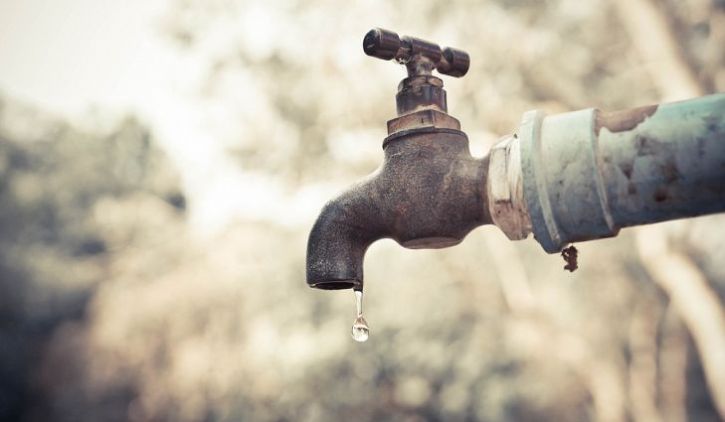
 Science fiction explores our water crisis through premises of extreme water shortage and devastating violence (floods, droughts and storms), water diversion, and hoarding. Premises explore weather manipulation, the consequences of extensive deforestation and the massive extinction of species. As with my own book A Diary in the Age of Water, Claudiu Murgan’s Water Entanglement explores water as a character, as though water has gone rogue, unruly. Perhaps even vengeful…
Today, we control water on a massive scale. Reservoirs around the world hold 10,000 cubic kilometres of water; five times the water of all the rivers on Earth. Most of these great reservoirs lie in the northern hemisphere, and the extra weight has slightly changed how the Earth spins on its axis, speeding its rotation and shortening the day by eight millionths of a second in the last forty years.

Millennia ago, we adapted and lived by the rhythms of the global water cycle. We have since harnessed the power of water; we captured it and diverted it and changed it in ways to suit our own rhythms. Our unprecedented power over the planet’s water has advanced our civilizations immeasurably. But water remains our Achilles’ heel; it has the potential to limit our ambition like no other resource on Earth.
If climate change is the planet’s response to humanity’s relentless exploitation, water is its archangel.
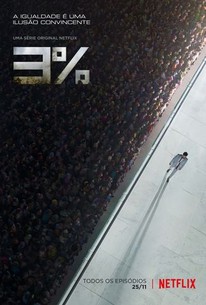 A tidal wave of TV shows and movies currently explore—or at least acknowledge—the devastation we are forcing on the planet. Every week Netflix puts out a new science fiction show that follows this premise of Earth’s devastation: 3%; The 100; The Titan; Orbiter 9; even Lost in Space.
Science fiction is suited to this role; it is the literature of consequence that explores large issues faced by humankind and can provide an important vehicle in raising environmental awareness. Literature in general has always served as a cultural reporter on themes important to humanity. The science fiction genre—and speculative fiction particularly—explores premises based on current scientific and technological paradigms. What if we kept doing this?…What if that went on unchecked?… What if we decided to end this?… These are conveyed through the various predictive visions from cautionary tales (e.g., Atwood’s Year of the Flood) to dystopias (e.g., Itäranta’s The Memory of Water). Science fiction has always been the pre-eminent literature of metaphor and history; it has lately matured in the Anthropocene to incorporate the edgy realism of literary fiction to give us potent environmental relevance. Sub-genres now include eco-fiction, climate fiction, and cli-fi.
 Ellen Szabo, author of Saving the World One Word at a Time: Writing Cli-Fi suggests that the ability to make environmental issues less political and more personal (through story) permits more engagement by readers and a higher likelihood of action toward justice: we are more likely to take action on the things we love and know. It’s all about connection.
“Science doesn’t tell us what we should do,” Barbara Kingsolver wrote in Flight Behavior “It only tells us what is.” Stories can never be a solution in themselves, but they have the capacity to inspire action, which is perhaps why cli-fi’s appeal among young adult readers holds such promise. As the scientists and leaders of tomorrow, they may be most capable of addressing climate and water issues where previous generations have failed, writes J.K. Ullrich of The Atlantic. As Margaret Atwood wrote in MaddAddam, “People need such stories, because however dark, a darkness with voices in it is better than a silent void.”
We tend to live very much in the here and now, Bacigalupi told an audience at the University of Seattle when describing humanity’s lack of planning for the future. But, he added, “with science fiction, I can give you a [here and now] experience far into the future,” and allow a reader to truly experience “what it’s like to be a climate refugee” or be someone with no legal access to water. An extrapolated science fiction future provides a visceral opportunity to see our future selves in a way that promotes serious consideration, says Bacigalupi. By putting us there, we have a better chance of making those extrapolations into consequence.
For centuries we have hubristically and disrespectfully used, discarded and destroyed just about everything on this beautiful planet. According to the World Wildlife Federation, 10,000 species go extinct every year. That’s mostly on us. They are the casualty of our selfish actions. We’ve become estranged from our environment, lacking connection and compassion. That has translated into a lack of consideration—even for each other. In response to mass shootings of children in schools, the U.S. government does nothing to curb gun-related violence through gun-control measures; instead they suggest arming teachers. We light up our cigarettes in front of people who don’t smoke and blow cancer-causing second-hand smoke in each other’s faces. We litter our streets and we refuse to pick up after others even if it helps the environment and provides beauty for self and others. The garbage we thoughtlessly discard pollutes our oceans with plastic and junk, hurting sea creatures and the ocean ecosystem in unimaginable ways. We consume and discard without consideration.

We do not live lightly on this planet.
We tread with incredibly heavy feet. We behave like bullies and our inclination to self-interest makes us far too prone to suspicion and distrust: when we meet the unknown—the “other” so often portrayed in science fiction—we tend to respond with fear and aggression over curiosity, hope and kindness. Something we need to work on if we are going to survive.
Science fiction—the highest form of metaphoric and visionary art—is telling us something. Are we paying attention?
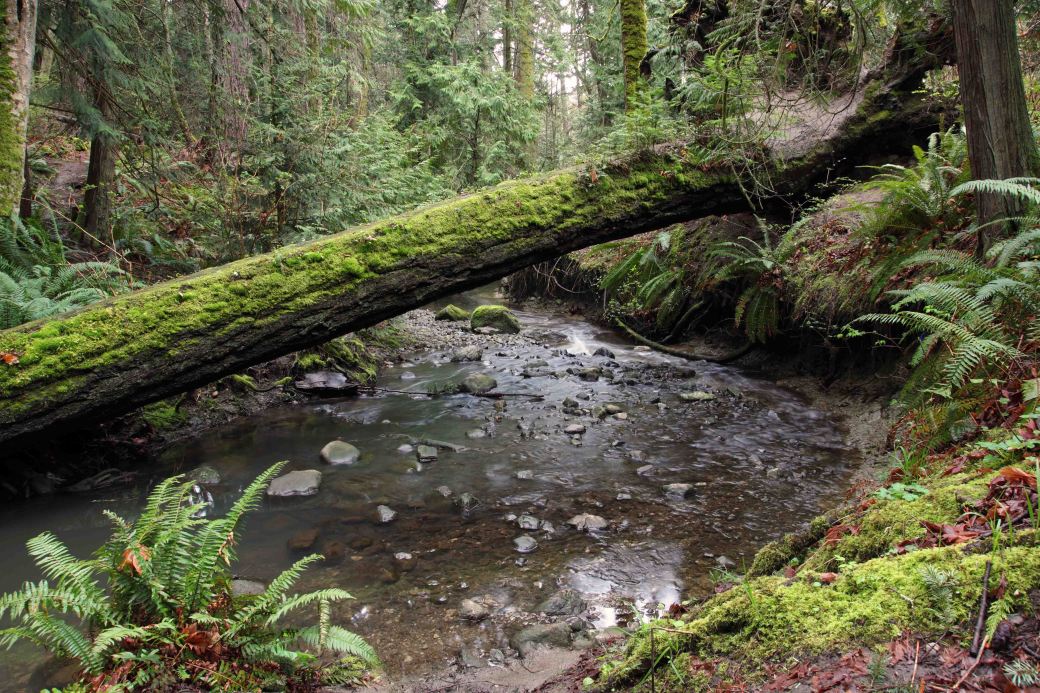
Rainforest on southern Vancouver Island, B.C. (Photo by Kevin Klassen)

Nina Munteanu is a Canadian ecologist / limnologist and novelist. She is co-editor of Europa SF and currently teaches writing courses at George Brown College and the University of Toronto. Visit www.ninamunteanu.ca for the latest on her books. Nina’s bilingual “La natura dell’acqua / The Way of Water” was published by Mincione Edizioni in Rome. Her non-fiction book “Water Is…” by Pixl Press (Vancouver) was selected by Margaret Atwood in the New York Times ‘Year in Reading’ and was chosen as the 2017 Summer Read by Water Canada. Her novel “A Diary in the Age of Water” will be released by Inanna Publications (Toronto) in 2020.
 Paolo Bacigalupi’s 2015 biopunk science fiction novel The Windup Girl occurs in 23rd century post-food crash Thailand after global warming has raised sea levels and carbon fuel sources are depleted. Thailand struggles under the tyrannical boot of ag-biotech multinational giants such as AgriGen, RedStar, and PurCal—predatory companies who have fomented corruption and political strife through their plague-inducing and sterilizing genetic manipulations. The story’s premise could very easily be described as “what would happen if Monsanto got its way?”
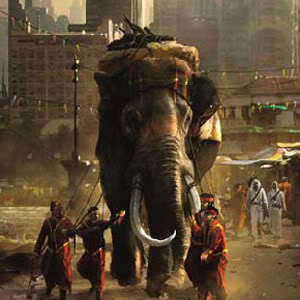 It’s difficult not to always be aware of those high walls and the pressure of the water beyond. Difficult not to think of the City of Divine Beings as anything other than a disaster waiting to happen. But the Thais are stubborn and have fought to keep their revered city of Krung Thep from drowning. With coal-burning pumps and leveed labor and a deep faith in the visionary leadership of their Chakri Dynasty they have so far kept at bay that thing which has swallowed New York and Rangoon, Mumbai and New Orleans.


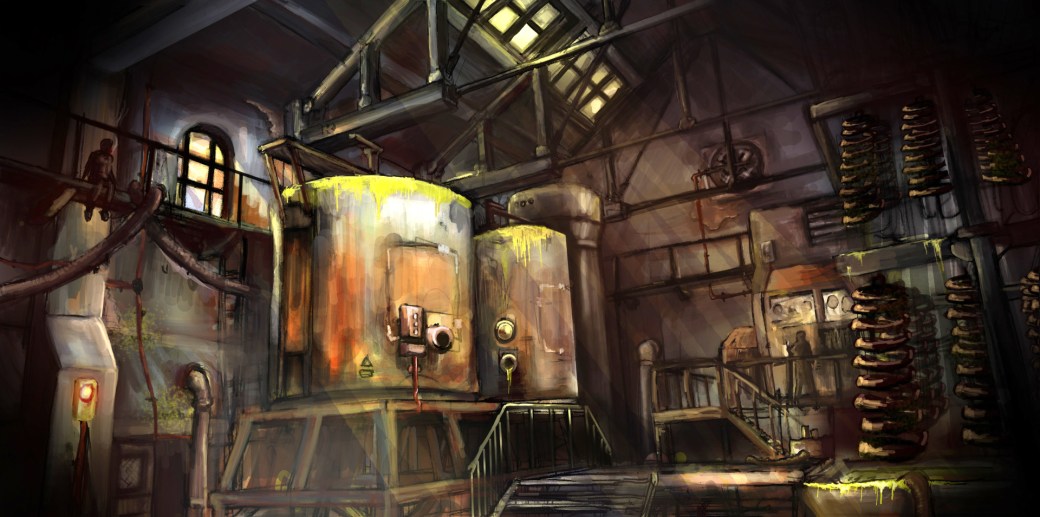


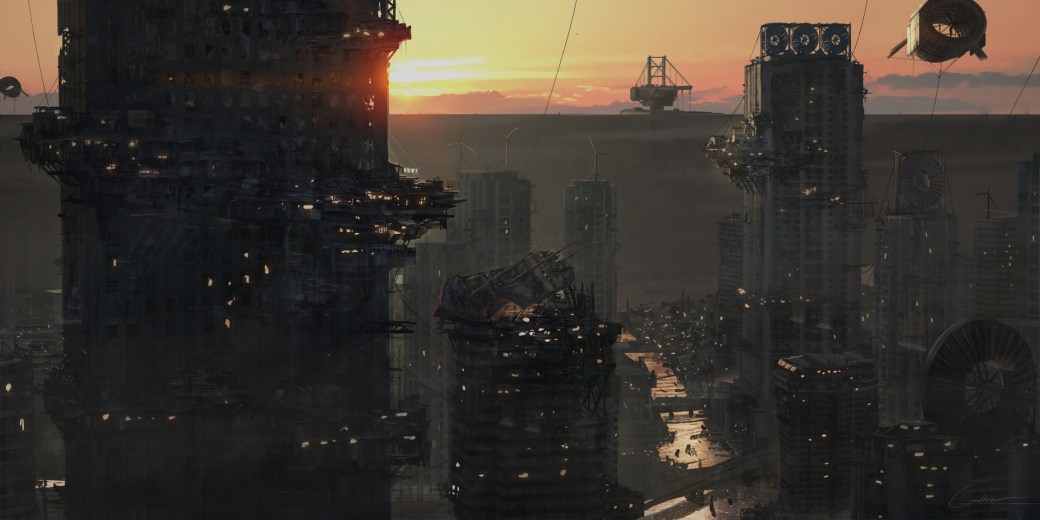
 In Summer of 2016, I attended a talk given by Maude Barlow on water justice. The radical talk was based on her recent book “Boiling Point”, a comprehensive exploration of Canada’s water crisis—a crisis that most Canadians weren’t—and still aren’t—aware. Canada is steward to a fifth of the world’s fresh water, after all. It is a water-rich country. Of the dozen largest inland lakes in the world, Canada holds eight of them. So, why water crisis? Well, Maude explains. And you should read “Boiling Point.” It will open your eyes to the politics of water and how multinational corporations—like Nestlé—are already grabbing and funneling water away from Canadians and into the global profit machine.
 I named the story “
 The story first appeared in 2015 in
  After the success of this short story, I realized that I needed to tell the larger story—how did the world—Canada—get to where Hilda was? Her mysterious mother, the limnologist Lynna who was taken away by the RCMP in 2063, clamored for more attention. I remembered that four-year old girl and her mother in the gallery at Maude Barlow’s talk on water politics. And I thought of my characters: young Lynna and her mother Una. How does a daughter of an activist mother behave and think? How best to express her voice?
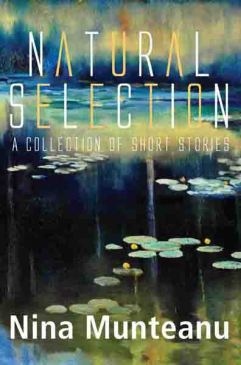 I had earlier written a short story that was a mix of correspondence (emails) and third person narrative (“The Arc of Time” in
  I had a lot of material; I had already been researching water issues and climate change in my activism as a science reporter. I had recently published
  Like water itself, A Diary in the Age of Water expresses through many vessels and in many perspectives, spanning hundreds of years—and four generations of women—with a context wider than human life. Through its characters, A Diary in the Age of Water explores the big question of humanity’s deadlock with planetary wellness and whether one is worth saving at the expense of the other. One of the characters asks Lynna the hard question: “If you had the chance to save the planet [stop the mass extinctions, deforestation and pollution ravaging the planet], but it was at the expense of humanity, would you do it?”
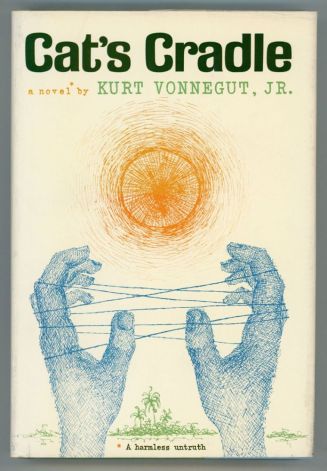 In 1963 science fiction writer Kurt Vonnegut used the fictionalized concept of ice-IX—a crystalline polymorph of ice that remains stable at room temperature—in his novel Cat’s Cradle. Ice-nine was a form of water so stable that it never melted and would crystallize all water it touched. It was the Ebola of water…


 The media spread a panic about polywater-contaminated oceans of “jelly” aka Vonnegut’s novel Cat’s Cradle.


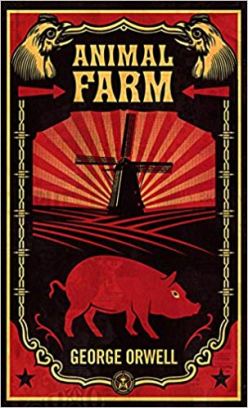 In Animal Farm, George Orwell uses animals to describe the revolution against a totalitarian regime (e.g. the overthrow of the last Russian Csar and the Communist Revolution of Russia). The animals embrace archetypes to symbolize the actions and thoughts of various sectors within that world. The pigs are the leaders of the revolution; Mr. Jones represents the ruling despot who is overthrown; the horse Boxer is the ever-loyal and unquestioning labor class.
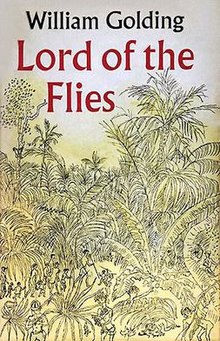 In Lord of the Flies, William Golding explores the conflict in humanity between the impulse toward civilization and the impulse toward savagery. The symbols of the island, the ocean, the conch shell, Piggy’s glasses, and the Lord of the Flies, or the Beast, represent central ideas that reinforce this main theme. Each character has recognizable symbolic significance: Ralph represents civilization and democracy; Piggy represents intellect and rationalism; Jack represents self-interested savagery and dictatorship; and Simon (the outsider in so many ways) represents altruistic purity.
 Excellent examples of satires with less obvious allegorical structure (but it’s there) can be found in the genre of science fiction—a highly metaphorical literature that makes prime use of place and setting with archetypal characters to satirize an aspect of society. Brave New World by Aldous Huxley is a satirical response to his observation of humans’ addiction to (sexual) pleasure and vulnerability to mind control and the dumbing of civilization in the 1930s. George Orwell’s Nineteen Eight-Four satirizes humanity’s vulnerability to fascism, based on his perception of humans’ sense of fear and helplessness under powerful governments and their oppressive surveillance. Margaret Atwood’s The Handmaid’s Tale satirizes a society in which a woman struggles in a fundamentalist Christian dictatorship patriarchy where women are forced into a system of sexual slavery for the ruling patriarchy.
 This article is an excerpt from “
 In an article I’d written some time ago on my blog
 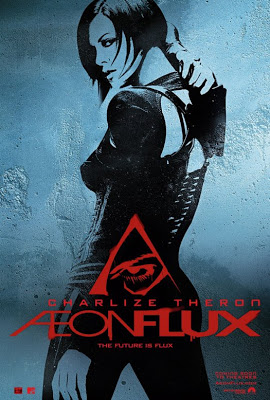 Today’s Christ-like hero suffers for the sins of the world and prepares himself (often struggling with this considerably) to deliver salvation, usually through fighting or violent confrontation and often with an incredible arsenal of weapons. I was swiftly brought to mind of the many action shoot-em up films whose tortured hero redeems him(her)self through some selfless, though violent action (e.g., Omega Man, V for Vendetta, Ultra Violet, Aeon Flux — all sci-fi movies, by the way, and ones I enjoyed immensely. And what about all those superhero movies, like Spiderman, X-Men, Green Lantern, etc. These films represent one version of Joseph Campbell’s “Hero’s Journey”, where the original hero leaves his ‘ordinary world’ wherein he/she has some major flaw to overcome (like apathy, greed, distrust, anger, fear of strawberries…etc.) to answer ‘the call’ to be the hero he/she was destined to become. This is a very familiar trope. Erik suggested that Western culture’s “concept of Redemption has invariably separated from the Grace that created it.” Jesus the Teacher had somehow fallen to the wayside to make room for Christ the Redeemer. According to Erik: “Jesus the Teacher said to ‘turn the other cheek’, but today’s Redeemers kick ass. Jesus the Teacher told us that what is done in love is blessed, but today’s Redeemers have more personal and interior motivations.” The two have simply become two different people, says Erik and “the latter is a superstar” compared to the former.” He ends his post with these compelling thoughts:
 If you still don’t get what Erik and I are talking about, go watch the poignant film Pay It Forward and then contrast its main character with the one in Ultra Violet or The Matrix.
 While I agree with Erik on the apparent separation of Christ figure in today’s popular fiction, perhaps there is another way to look at these tales that resolves this apparent dichotomy to some degree. My suggestion is to view them more as allegories with traits and values represented in several characters woven together in a complete and whole tapestry. To do so is to include the secondary character as being equally important. Let’s take Matrix, for instance. In fact, Neo isn’t the only Jesus-figure. His two female opposites (Trinity/Oracle) demonstrate Christ-like traits that embody grace, mercy, love (the holy spirit) and wisdom. Okay, so Trinity kicks major ass too; but her character also provides the chief motivation for our main ‘kick-ass’ hero through her selfless love and humility.


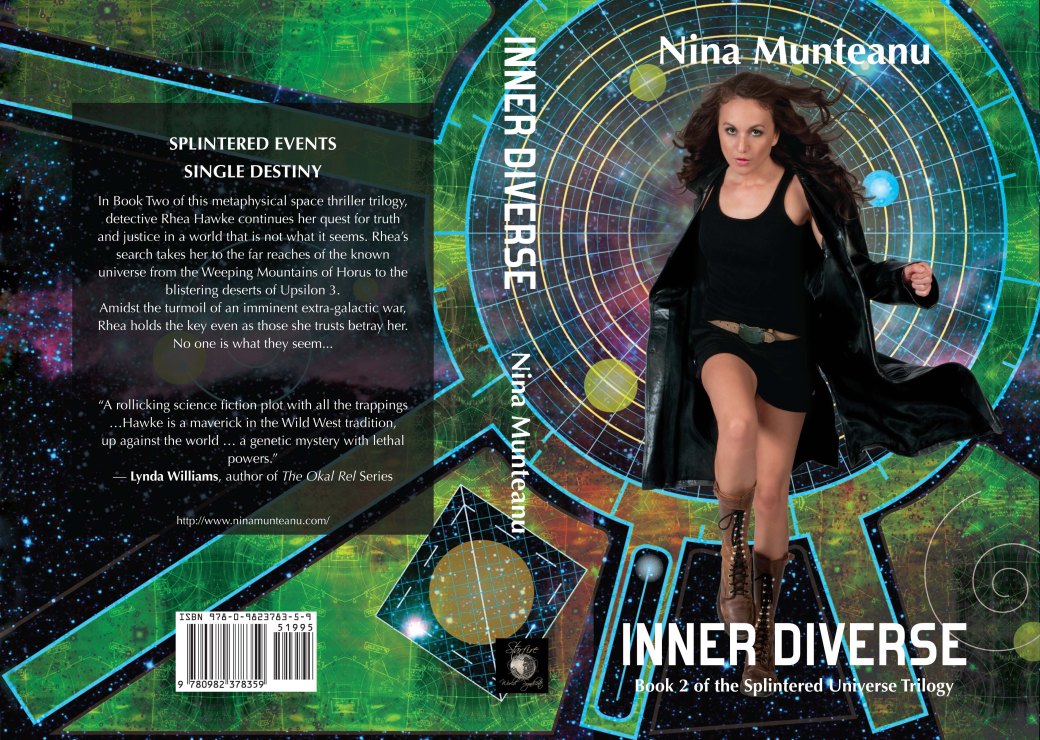
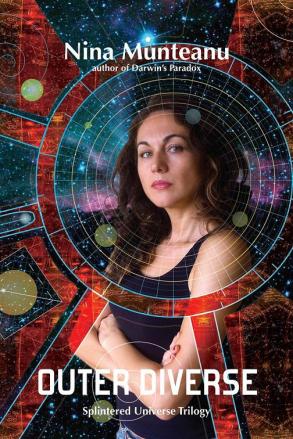
 Outer Diverse is the first book of the Splintered Universe Trilogy, set in and around the Milky Way Galaxy. The first book begins as Galactic Guardian Rhea Hawke intestigates the massacre of an entire religious sect, catapulting her into a treacherous storm of politics, conspiracy and self-discovery. Her quest for justice leads her into the heart of a universal struggle and toward an unbearable truth she’s hidden from herself since she murdered an innocent man.


 Nina Munteanu Writing Coach