Writing in Sync

hirtle beachNS

Pebbles on Hirtle Beach, NS (photo by Nina Munteanu)

“At the heart of the universe is a steady, insistent beat: the sound of cycles in sync,” says Steven Strogatz in the opening to his compelling book, Sync: the emerging science of spontaneous order. He then describes how every night along the tidal rivers of Malaysia, thousands of fireflies congregate in the mangroves and flash in unison, without any leader or cue from the environment. “Even our bodies are symphonies of rhythm, kept alive by the relentless, coordinated firing of thousands of pacemaker cells in our hearts…almost as if nature has an eerie yearning for order,” adds Strogatz. The tendency to synchronize pervades the universe, from atoms to animals, and people to planets.

To be in sync is to intuitively connect (which is what spontaneous order is) and “know”…

Each of you has felt that “knowing”: that otherworldly, euphoric wave of resonating with something that is more than the visible world: when the hairs on the back of your neck tingle as you write that significant scene or trembling with giddy energy as you create that perfect line on a painting … or glowing with a deep abiding warmth when you defend a principle … or the surging frisson you share with fellow musicians on that exquisite set piece …

These are all what I call God moments. And they don’t happen by chasing after them; they sneak up on us when we’re not looking. They come to us when we focus outward and embrace our wonder for this world. When we quiet our minds and nurture our souls with beauty. It is then that what we had been seeking naturally comes to us. Like a gift.

It’s the blue pill to a new world of synchrony.

This teaches us above all else that we are all journeying together and part of something greater.

I want to share with you my own experience of synchronicity in art. When I’m working on a story, I find that events, opportunities, actions and resources directly germane to my project present themselves: watching an applicable movie that a friend chose for us to see; picking up a newspaper (which I seldom do) and reading a relevant article; looking for something on the internet and finding something totally different (ok; that happens to me all the time); a friend out of the blue introduces a pertinent topic, or someone you haven’t seen in a long time bumps into you with significant news. As though the universe was providing me with what I needed. Well, maybe it was! Of course, my mind was focused on anything to do with my current piece. It was as though I had donned a concentrating filter, one that would amplify relevant details. I’ll go further: I was unconsciously acting in a way that was bringing me more information relevant to my project. Ask and you shall receive.

Jake Kotze says it this way: “Synchronicity happens when we notice the bleed-through from one seemingly separate thing into another—or when we for a brief moment move beyond the mind’s divisions of the world.” Swiss psychologist Carl Jung introduced synchrony in the 1920s as “temporally coincident occurrences of acausal events.” The idea of seemingly unrelated events intersecting to produce meaningful patterns has spawned new notions of thought from the scientific study of spontaneous order in the universe (synchrony), to Synchromysticism — the discovery of convergent archetypal symbols in pop culture (e.g., books, music and film). Author Sibyl Hunter tells us that “Sync operates as an undercurrent of divine awareness personified through the myriad processes and symbols that make up the building blocks of our reality. Within that current, we spin our modern-day myths into books, fairy tales and movies, subconsciously retelling ourselves the same story over and over.”

As the myth builders of today, authors tap in to the synchronicity of ancient story, of resonating archetypes and metaphor and the “mythic journey”. To write in sync.

Joseph Campbell reminds us that, “Anyone writing a creative work knows that you yield yourself, and the book talks to you and builds itself … you become the carrier of something that is given to you from the Muses or God. What the shaman or seer [or artist] brings forth is something that is waiting to be brought forth in everyone.” It’s sync in action.


Nina Munteanu is an ecologist and internationally published author of award-nominated speculative novels, short stories and non-fiction. She is co-editor of Europa SF and currently teaches writing courses at George Brown College and the University of Toronto. Visit www.ninamunteanu.ca for the latest on her books.


Importance of Setting in a Novel

I travel, always arriving in the same place—Dejan Stojanovic, The Shape

swiss-cabin02

Mountain cabin in Switzerland (photo by Nina Munteanu)

Setting grounds your writing in the reality of place and depicts the theme of your story through powerful metaphor. Without setting, characters are simply there, in a vacuum, with no reason to act and most importantly, no reason to care. Without a place there is no story. Setting serves multipurpose roles in story. It helps with plot, determines and describes character and gives metaphoric links to theme. Setting, like the force in Star Wars, provides a landscape that binds everything into context and meaning.

Place Your Story

According to acclaimed novelist Richard Russo, if you’re not writing stories that occur in a specific place, you’re missing the opportunity to add depth and character to your writing. We are creatures of our environment, adds Robert Louis Stevenson. Our outlook on life is colored by the setting in which we find ourselves. Editors have told me that they have little faith in the vision of writers who don’t clearly depict the world their characters inhabit. Imagine Thomas Hardy’s characters without Egdon Heath or Scarlet O’Hara without her beloved Tara or Dorothy without the Land of Oz.

Setting includes time, place and circumstance. These three form a kind of critical mass that creates the particular setting best suited to your story. If you change any of these it will affect the quality of the others.

Setting as Character

EcologyOfStorySettings can not only have character; they can be a character in their own right. A novelist, when portraying several characters, may often find herself painting a portrait of “place”. This is setting being “character”. The setting functions as a catalyst, and molds the more traditional characters that animate a story. The central character is often really the place, which is often linked to the protagonist. In Lord of the Rings, for instance, Frodo is very much an extension of his beloved Shire.

D.H. Lawrence suggested that Egdon Heath was the most important character in Thomas Hardy’s book Return of the Native:

Egdon, whose dark soil was strong and crude and organic as the body of a beast.–D.H. Lawrence on Return of the Native


Setting, then, comes to mean so much more. Setting personified. Setting ultimately portrays what lies at the heart of the story.

Setting as Metaphor

When you choose your setting, remember that its primary metaphoric role is to help depict theme. This is because place is destiny.

In Bong Joon-Ho’s motion picture Snowpiercer, about a train careering the world with the remains of humanity, place and destiny are welded together in tight metaphor. The train “is the world”. This dark surrealistic allegory examines all iterations of place in a class struggle between the front and tail ends of the train. In an early scene, one of the the ruling class evokes her own metaphors to remind the lower class of their place:

“Order is the barrier that holds back the flood of death. We must all of us on this train of life remain in our allotted station…Would you wear a shoe on your head? Of course you wouldn’t wear a shoe on your head. A shoe doesn’t belong on your head. A shoe belongs on your foot. A hat snowpiercer-mason-shoebelongs on your head. I am a hat. You are a shoe. I belong on the head. You belong on the foot. Yes? So it is.

In the beginning, order was proscribed by your ticket: First Class, Economy, and freeloaders like you. Eternal order is prescribed by the sacred engine: all things flow from the sacred engine, all things in their place, all passengers in their section, all water flowing, all heat rising, pays homage to the sacred engine, in its own particular preordained position. So it is.

Now, as in the beginning, I belong to the front. You belong to the tail.

When the foot seeks the place of the head, the sacred line is crossed. Know your place. Keep your place. Be a shoe.”–Minister Mason in Snowpiercer


Russo tells us that place is crucial to human destiny and the formation of human personality. “The more specific and individual things become, the more universal they feel,” says Russo. This is not an oxymoron, but an example of the principle of a truism, which comes to us in the form of paradox (like all good truisms).

Detail provides the color and texture of your story and helps it resonate with a sense of place. This does not necessarily translate into lots of exposition; but it does require creative choice of words. So, instead of “John took a drag from his cigarette as he drove his sports car along a winding road in the country” (twenty words) try something like “Vinnie sucked on a Camel as his red Corvette careered the hair-pinned curves of Hell’s Gate” (seventeen words).

Setting & Emotion

The setting may amplify a character’s emotions or contradict them, depending on the circumstance of the character, her mood, disposition, tendencies, and observational skills. And the kind of story you’re telling. Either way, setting provides an “emotional landscape” upon which a character’s own temperament may play counterpoint or may resonate in a wonderful symphony. The writer should think of the less obvious, of contrast, and how you can increase tension and emphasize the character’s situation.

Setting as Weather

Weather conveys the mood and tone of both story and character. Weather is not just part of the scenery. To a writer, weather is a device used in plot and theme. A good example is Michael Ondaatje’s The English Patient and how he used the desert setting and the hot winds to evoke mood, character, tension, theme and ultimately story:

“The desert could not be claimed or owned—it was a piece of cloth carried by winds, never held down by stones, and given a hundred shifting names long before Canterbury existed, long before battles and treaties quilted Europe and the East”–Michael Ondaatje, The English Patient

In summary, here are some suggestions that will help you create vivid, memorable and meaningful settings:

  • Don’t “tack” setting in; make it an integral part of the story; give it purpose
  • Describe selectively and with purpose—through integration in “scene” rather than exposition
  • Be specific (e.g., soft pink rose, not flower; beat up Chevy, not car; old clapboard cottage, not house)
  • FictionWriter-front cover-2nd ed-webUse similes, metaphors, and personification to breathe life into setting
  • Use the senses like sight, sound, smell, taste, feel
  • Don’t tell, show (e.g., don’t say the time is the 1920s; show the cars and dresses. Don’t tell the reader it’s raining; show them by describing the dripping trees, etc.)
  • Compare and contrast settings and relate them to the point of view characters
  • Don’t describe setting all at once in the beginning; work it in slowly throughout the story; let it unfold as the story does


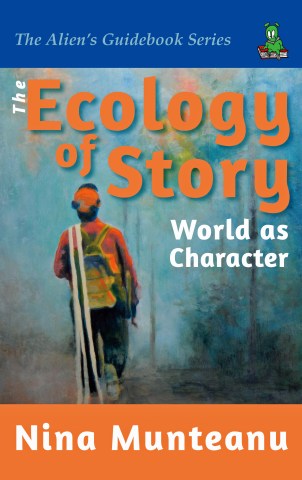
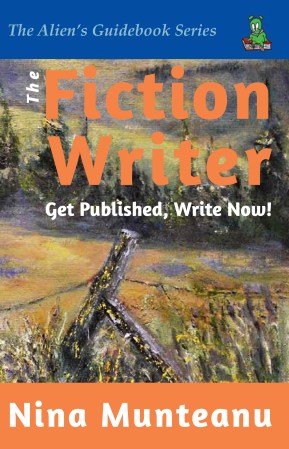
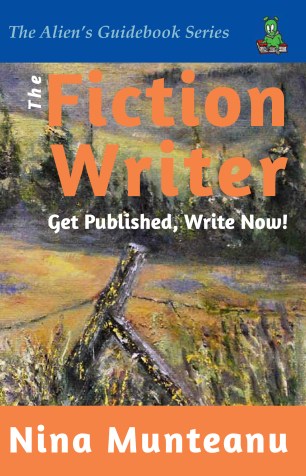
This article is an excerpt from Chapter H of The Fiction Writer: Get Pubished, Write Now! and will be the main theme of my upcoming writing guidebook Ecology of Story: World as Character.


Nina Munteanu is an ecologist and internationally published author of award-nominated speculative novels, short stories and non-fiction. She is co-editor of Europa SF and currently teaches writing courses at George Brown College and the University of Toronto. Visit www.ninamunteanu.ca for the latest on her books.

Are You a Closet Synesthete?

StoneStairs-oakforest Rouge

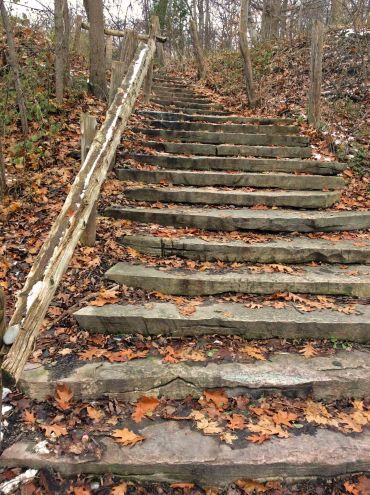
Stairway leading to Rouge River Park, ON (photo by Nina Munteanu)

“A person with synesthesia might hear and taste her husband’s voice as buttery golden brown, feel the flavor of food on her fingertips, sense the letter J as shimmering magenta or the number 5 as emerald green,” says the introduction to David Eagleman and Richard Cytowic’s 2009 book Wednesday Is Indigo Blue. The book explores the neuroscience and genetics behind the multi-sensory experience called synesthesia.

In a strange and compelling May 2008 article in Wired Magazine entitled “Poetry Comes from Our Tree-Climbing Ancestors”, Brandon Kelm asks where synesthesia comes from:

“Perhaps [synesthetes] are under the influence of hallucinogenic drugs…Or maybe they’re simply good with metaphors,” he suggests irreverently. Kelm is actually pretty close to the truth, according to neuroscientist V.S. Ramachandran, who stressed that “what appears as metaphor is a literal sensory experience for synesthetes.” This may explain why synesthesia is eight times more common among poets, artists, novelists and women than the general population. According to Eagleman and Cytowic, one in twenty people experiences synesthesia in a palpable form.

According to Ramachandran, synesthesia developed to help our ancestors climb trees. “Doing so requires a vision-informed mental map of the branches before us,” says Kelm, “as well as a touch-informed mental map of our limbs’ positions. Somehow these have to correlate. Which is quite a trick, when you think about it. Once early primates pulled off that feat of abstraction, it wasn’t long
– evolutionarily speaking — before we were drawing on cave walls and whispering sweet nothings and holding Shakespeare revivals,” Kelm adds pithily.

Synesthesia comes from syn, for together, and aisthêsis, for sensation or perception in Greek. People with synesthesia experience a blending of the senses (e.g., sight and hearing) or of characteristics in a sense modality (e.g., associating colors with written letters). According to Eagleman and Cytowic synesthesia occurs when “a triggering stimulus evokes the automatic, involuntary, affect-laden, and conscious perception of a physical or conceptual property that differs from that of the trigger.” Synesthesia can involve not only the union of two or more different sense modalities, but also different dimensions of perception, such as spatial extension, personality or gender.

Synesthetic Metaphor in Literature

According to Lakoff and Johnson, “[t]he essence of metaphor is understanding and experiencing one kind of thing in terms of another”. However, “… metaphor is not just a matter of language, that is, of mere words. … [O]n the contrary, human thought processes are largely metaphorical” (emphasis in original).

We use synesthetic metaphors all the time, without thinking about it. Examples of cross-sensory (synesthetic) metaphors include: “loud shirt,” “bitter wind” or “prickly laugh”, “dark sounds”, and “sweet smells”. Many of these cross-sensory terms have been so often used to become cliché.

I first made intentional use of synesthesic metaphors in my space thriller trilogy The Splintered Universe. The main protagonist was the human galactic detective Rhea Hawke, who’d been tecked as a young girl with the ability to smell emotions. The premise opened up for me an entire suite of delicious possibilities to describe feelings and emotions through metaphoric imagery and cross-senses (another reason I so love the genre of science fiction).

In the following scene Rhea goes against her first rule of engagement and lets a man into her life:

“Rhea, stay with me, here,” Serge whispered into my hair with sudden excitement. “Move in. Stay.”

I smelled his enticing fragrance of strawberries and musk and knew what I wanted to say.

“I’ll think about it.”

In the next scene, Rhea challenges new boyfriend, Serge, whose past she knows nothing about and he responds:

His face flushed and he smiled carelessly. “I must have dreamt it,” he said, emitting a burst of confusing aromas, a complex mixture of sweet meadow flowers, fishy smell of a lake, and the musk of bog and cottonwoods.

In the scene below, having determined that Serge is not an innocent bystander but a calculating spy, Rhea chases him to haul him into the precinct:

Then I spotted Serge. He’d run to the far end of the room.

Upon hearing me enter, he’d turned and met my gaze head on.

“Rhea!” he shouted, obviously feigning delighted surprise.

I knew he’d recognized me earlier during my pursuit. I’d smelled his spike of excitement. Now I felt him emit yet another smell, a rather pleasant mixture of fermenting fruit and young wine, and felt a thrill surge through me in response. I didn’t show it and pointed my MEC steadily at his chest with my lips pursed in venomous resolution.

A hunting dog will eventually lose its life on the mountain—old Chinese proverb.”


The Unity of the Senses

Synesthesia is far more common in children than adults. It is also thought to occur universally in infants during their first few weeks of life, reflecting a brain that is still in the process of differentiating their combined sensory experiences.

Mathematician and philosopher Gottfried Leibniz once wrote that our sense perceptions are occult qualities, whose familiarity does little to clarify their essential nature.

Writer Oyang Teng tells us that “long before brain imaging technology showed that even basic perceptual acts involve many different areas of the brain, common observation (and common sense) showed that there is no strict autonomy of any of the senses; rather, they each exist as interconnected aspects in a continuum of perception.”

In his 1927 paper, “The Unity of the Senses” Erich von Hornbostel adds that, “looking more closely, the apparent exception becomes the rule, and one must search in order to find the private property of any one sense.”

Cedars hug fence-EloraGorge

Cedars hugging stone wall in Elora Gorge Park (photo by Nina Munteanu)

Cytowic and Eagleman argue that perception is already multisensory, though for most of us its multiple dimensions exist beyond the reach of consciousness. Reality, they point out, is more subjective than most people realize. Synesthesia is a window on the mind and brain; highlighting the amazing differences in the way people see the world. “The difference between synesthetic and nonsynesthetic brains is not whether cross talk exists” Cytowic and Eagleman note “but rather its degree.”

How about that tingly feeling you get when you hear music you like, or the fact that you salivate when you see salty food? Synesthesia.

If you’re interested in whether you have more synesthesic tendencies than the average person, go to Kelm’s May 2008 article on Wired Magazine and take the test. Then let me know…

P.S. The Wired Magazine article is not available on the Internet (I read it the old fashioned way: in print). But here is a site, The Frog Croaked Blue, that will give you similar questions to answer to determine whether you’re a synesthete. When I took the test recently, I was diagnosed as not being a synesthete but with good visual imagery and a rare trait that goes hand in hand with synesthesia.


Nina Munteanu is an ecologist and internationally published author of award-nominated speculative novels, short stories and non-fiction. She is co-editor of Europa SF and currently teaches writing courses at George Brown College and the University of Toronto. Visit www.ninamunteanu.ca for the latest on her books.


Finding the Right Time and Place to Write

Look and you will find it—what is unsought will go undetected —Sophocles

UniversityCollege-WestCollonade

West colonnade of inner courtyard at University College, UofT (photo by Nina Munteanu)

During a time when I had a demanding job as an scientist with an environmental consulting job, was a devoted wife and mother and community volunteer, I wrote and successfully marketed five books, over a dozen short stories and many articles and reviews. Some people, including my publishers, thought I never slept (true) or had cloned myself (possibly). They couldn’t believe my productivity when I was so busy with life.

But I did what I did, because I’d worked out a system. One that I could live by. One that fit my lifestyle. One created out of respect for my art as part of my “busy” life of commitments.

The truth of it is that we all lead busy lives. If you are going to finish that novel you’ve been working on over the years or book of poems sitting in the bottom dresser drawer, you need to make a commitment. Aside from giving your art the respect it deserves, it comes down to creating a time and place to write.

It starts with being realistic about your daily schedules and routines and inclinations and picking a time and place accordingly. Try to be consistent. It’s actually best to create a routine related to both time and place; the key is to be realistic about it. Don’t fight your inclinations or habits; instead, build your writing into your lifestyle. This will ensure success.

Choose a Sacred Time

Gate to UC courtyard

Gate to courtyard at UofT (photo by Nina Munteanu)

Finding the time to write is critical to succeeding. If you don’t dedicate time to write, you won’t write. Believe me, you won’t. Make it sacred.

Writer Louise DeSalvo shared a common story about her experience: “Many people I know who want to write but don’t (my husband, Ernie, for example) or who want to write more than they have but say they can’t find the time (my friend Marla) have told me that taking the time to write seems so, well, self-indulgent, self-involved, frivolous even. And that finding the time to write—even a diary, much less fiction or memoir or poetry—in their busy schedules is impossible. I’ll write when I have the time, they say.”

It doesn’t work that way. You don’t find time; you must create it. Writing of any kind is a commitment you make to yourself. So, choose a time that’s right for you. If you’re a morning person, don’t pick the end of the day when you don’t function as well. Instead, pick the early morning to write, a time before everyone else gets up and the day’s distractions pile up.

It’s actually best to create a routine related to time of the day (e.g., fixed time such as every morning or right after supper) or based on some other constant in your life, say the school calendar or your daily activities. The key is to be realistic about the time(s) you’ve chosen. In other words, your goals should be realistic and realizable.

The second part of the commitment is sharing it with your family and friends so that they will respect your sacred writing time. By sharing how important it is to you, you also give them the gift of sharing the experience with you and they are more likely to respect your time alone to write. This is also why choosing a routine makes more sense; it is something your family and friends will better remember and abide by. Making it easy for others is part of making it easy for you.

Find Your Own Rhythm

BambooGarden-lookingdown

Looking down at bamboo garden of Terrence Donnelly building, UofT (photo by Nina Munteanu)

There’s no rule for when and how often you write. Because frequency and schedule of writing depends on the kind of writing you do (e.g., novel, short stories, articles, research) and on your own rhythms, you must decide what works best.

Most writers recommend that you commit to a regular writing schedule that is realistic to your overall routine and biorhythms. Some recommend you write in the morning, after a refreshing sleep; others suggest you write at night, at the end of the day when your memories are more fresh with the day’s activities and stimulations. Yet others suggest you take time out during the day to jot down relevant experiences as close to the time as the muse hits you, then spend some time at the end of the day compiling it into your work.

In the end, it’s up to you to choose what works for you and your own rhythms. When is the best time for you to write? And for how long or how many pages? Once you decide, stick to that schedule.

Choose a Sacred Place

westcollonade

West colonnade, University College, UofT (photo by Nina Munteanu)

Writing is a reflective activity that requires the right environment. The best environment is a quiet one with no interruptions and where you are alone. A reflective environment will let you find a connection with your muse. You need a place where you can relax and not worry about someone barging in or other things distracting you from your reflections. You should also feel physically comfortable and the place should meet your time requirements.

Because the suitability of a place can change with the time of day, learn the rhythms that affect the place you wish to write in. For example, the kitchen may be the centre of activity during the day but an oasis of quietude during the evening. Similarly, learn what kind of environment stimulates and nurtures your writing. Does music help or do you need complete quiet? Do you respond to nature’s soft breezes and sounds or do you prefer to surround yourself with the anonymous murmur of a crowded café for company?

writing-Cafe on Baldwin

Coffee shop on Baldwin Street, Toronto (photo by Nina Munteanu)

Places that work for me include the local coffee shop, where its desultory conversations and laughter—and wonderful smells of fresh coffee—provide a pleasant living-landscape for my muse. I also enjoy my daily walk with a notebook or iPad in the park along the river near my house. I teach writing at the University of Toronto St George campus in downtown Toronto and just recently discovered an enclave that excited my muse. The outside breezeway at Knox College, with arched ceiling and columns, adorned with hanging plants, is pure magic. The breezeway cuts through an outside courtyard of gardens and yard, populated with songbirds and the gentle rustle of a refreshing breeze. Benches and small tables and chairs line the breezeway, ensuring a writer’s sanctuary.

Where you write may reflect what you’re writing and vice versa. To some extent, you are environment and environment is you. You might try a few places first and see what happens to your muse. What you write while sitting under an apple tree in the breeze hearing the birds singing may differ from what you write while sitting in your living room by the crackling fireplace with music playing or sitting at your desk in your bedroom in total silence or in a crowded café surrounded by cheerful bustle.

Again, as with your choice of time, tell your family and friends about your sacred place. Provide rules, if you have to. Let’s say it’s a desk in the study. You may, for instance, let others know that your “mess” is part of a work in progress, perhaps even explain a little about it so they understand the nature of what you’re doing and why it should not be touched or moved or used, even while you are away from it. This will ensure that they respect your things and what you’re doing.

FictionWriter-front cover-2nd ed-webIn the end, it comes to finding the right integration and balance of time and place. Letting others know of your choices is equally important; this will ensure that they can help you, not hinder you in your writing. While writing is to a large extent an activity done in solitude, the journey is far from secluded. Ensure that you have a good support network.

This article is an excerpt from my fiction writing guidebook “The Fiction Writer: Get Published, Write Now!” (Starfire, 2009).


Nina Munteanu is an ecologist and internationally published author of award-nominated speculative novels, short stories and non-fiction. She is co-editor of Europa SF and currently teaches writing courses at George Brown College and the University of Toronto. Visit www.ninamunteanu.ca for the latest on her books.

Wake Up Your Muse: How My Cat Taught Me the Art of Being

My cat, Sammy, being...

My cat, Sammy … being…

I’m not a very patient person. I make no time for writer’s block or lingering in useless limbo over some plot issue or misbehaving minor character. I write pretty much to a tight schedule: this short story to that market by this date; edits to this book to the editor by that date; blog posts created by such and such a time; an article to another market by another date. It goes on and on. When I go to my computer to write, I write.

Then there’s Sammy. My cat.

Who likes to jump on my lap, make himself all comfortable and then lie over my arm — trapping it along with five of my typing digits. Now what??? Some of you would advise me to simply pull out my pinned arm and/or shove him off. But how can I disturb such a blissful creature? He is so content furled on me, so satisfied that he has captured that wandering appendage of business that is all his now. Content in the bliss of now. In the bliss of cat-purr-meditation…

Pinned in the moment, my mind first struggles with the need to pound out the next line. My mind then rephrases and teases out nuances of that line. Finally, it wanders out with my gaze and I find myself daydreaming in a kind of trance. Giving in to the cat-purr-meditation.

And it is here that magic happens. In the being; not in the doing.

This is the irony of writing and the muse. To write we need to live; we need to have something to write about and we need to be in that state of mind that allows us to set it to print. I am at my best as a writer when I am focused on the essence of the story, its heart and soul beating through me with a life of its own.

My cat Sammy isn’t the only vehicle to my magical muses.


Waking up the Muse

Here are a few things that help me entice those capricious muses into action:

Music: music moves me in inexplicable ways. I use music to inspire my “muse”. Every book I write has its thematic music, which I play while I write and when I drive to and from work (where I do my best plot/theme thinking). I even go so far as to have a musical theme for each character.

Walks: going for a walk, particularly in a natural environment, uncluttered with human-made distractions, also unclutters the mind and soul. It grounds you back to the simplicity of life, a good place to start.

Cycling: one of my favorite ways to clear my mind is to cycle (I think any form of exercise would suffice); just getting your heart rate up and pumping those endorphins through you soothes the soul and unleashes the brain to freely run the field.

Attend writer’s functions: go to the library and listen to a writer read from her work. You never know how it might inspire you. Browse the bookshelves of the library or bookstore. Attend a writer’s convention or conference.

Visit an art gallery, go to a movie: art of any kind can inspire creativity. Fine art is open to interpretation and can provoke your mind in ways you hadn’t thought before. If you go with an appreciative friend and discuss what you’ve seen you add another element to the experience.

Go on a trip with a friend: tour the city or, better yet, take a road trip with a good friend or alone (if you are comfortable with it). I find that travelling is a great way to help me focus outward, forget myself, and open my mind and soul to adventure and learning something new. Road trips are metaphoric journeys of the soul.

Form a writer’s group: sharing ideas with people of like mind (or not, but of respectful mind) can both inspire you and provide the seeds of ideas.

Practice Cat-Purr-Meditation: you need a willing cat for this; I find that I need to study my cat’s meditative practices; where does he most like to relax? Mine loves to look outside the window onto the back yard and garden. That’s where I take him and there, together, we breathe deep and “purr” in the moment…You can read more about purring cat meditation in my Alien Next Door post, “Perfecting the Cat Purr Meditation


Nina Munteanu is an ecologist and internationally published author of award-nominated speculative novels, short stories and non-fiction. She is co-editor of Europa SF and currently teaches writing courses at George Brown College and the University of Toronto. Visit www.ninamunteanu.ca for the latest on her books.

Surfing the Hybrid Wave of Publishing

Botanical Beach tidal pools

Botanical Beach, BC (photo by Nina Munteanu)

Bestsellers have been migrating online since Amazon.com opened its virtual doors in 1995. Now ¾ of them are online, e-books and print combined. A few years ago Borders shut its doors. Mike Shatzkin of the Shatzkin Files tells me that Barnes & Noble continues to close stores as leases expire.

Our very own Chapters/Indigo in Canada is rapidly turning into a gift store. Mid-listed and lower listed authors are finding their print books returned to them (I know; I’m one of them). Further to that, I can also state that the digital version of my books—available in multi-formats including print, audio, e-book, and graphic novel—is selling at a ratio of at least 5 to 1 over any other format sold. Amazon recently revealed that Indie and small-press books account for half of the e-book sales in its most popular and bestselling genres. In a startling and controversial statistical report, Writer Hugh Howey determined that 92% of the top-100 best-selling books in the top-selling genres (based on Amazon sales) are e-books.

Despite the challenge on the use of statistics and data reporting in the Howey study, some of the overall trends he discussed (though the study may not have proven this) are becoming obvious.

Over the past six years a mass migration into e-books has occurred—thanks to Kindle and Kobo (and several other online venues). We’ve had three years of great “hand-held delivery” of graphics—thanks to the iPad. Novels and non-fiction have blossomed over the Internet and into our cherished smart phones and other portable devices. It’s only time before consumers of illustrated books and children’s books embrace this market. One of my colleagues is counting on it. She has just completed an annotated version of an Edwardian illustrated guide to pets that is splendid with old plates and wonderful anecdotes. And it will be sold only as an e-book.

A bazillion ebook retailing models are sprouting to embrace the flourishing of individual expression and readers who use Kindle, Kobo, and other portable reading devices. For instance there’s Safari, 24symbols, Oyster, Scribd, Entitle, and Librify. Then there’s Amazon’s PRIME, a kind of “library” lending service for its subscribers. They also have Kindle Fire for kids.

The big publishers have shifted majorly to ebooks to improve their margins and profitability. Even literary agents are dabbling in the publishing business now (e.g., E-Reads, Diversion, Rosetta, Curtis Brown, Writer’s House).

This is all great news for the self-published author, who is increasingly relying on the ebook format and Internet distribution platform of social media to earn a living as a writer.

The number of self-published books that succeed is still a tiny fraction of the number of books published overall. However, this needs to be seen in the greater context: the number of successful books (as gauged by various measures of “bestselling-status”), no matter how published, has always been a crap shoot, with many books not enjoying the kind of success their authors would wish—or deserve. The number of books mid-listed and below has always been a very high percentage of the total. As with most niche markets, publishing success and sales has followed and continues to follow a long tail, with the few earning a lot stretching its long tail to the many earning a little. “The number of people reading wasn’t enough to support the number of authors publishing traditionally,” author Hugh Howey points out in an article called “I See it Half-Full”; no matter how a book is published or by whom.

What does this mean to those of you just getting started and still choosing which route to follow?

Those of us in the industry have been hearing some interesting back and forths spanning from writers like John Green who passionately maintains that he would “never self-publish” and that there is an advantage to publishing the traditional route to others like Brenna Aubrey who turned down an auctioned offer from a Big Five publisher to self-publish with no regrets and to great success.

In an article entitled “the Third Way of Book Publishing”, successful self-published author Mathew Mather argues for a hybrid approach. In the article, he shares how he became a successfully published author without the help of any of the Big Five publishers and the results were incredible:

“By self-publishing and without any help from the Big Five, I’ve gathered nearly 200,000 readers in under two years. This was only possible because of the new platforms and outlets that became available to authors in the past few years. Without them, I wouldn’t be an author, or at least, not a ‘published author’. And, because of my self-publishing success, 20th Century Fox purchased the film rights to my second novel, CyberStorm.”

Mather suggests an alternative paradigm that mixes self-publishing with traditional publishing and involves the author’s rights. Mather says that “If a writer manages to get out a self-published book that is successful, they can separate out rights for: domestic US, Canada, UK, rest of world country by country, audio rights, film and TV rights and so on.” Mather himself kept self-publishing in the US domestic market (both print and electronic) and sold off rights for foreign markets through an agent or through larger traditional publishers.

Mather cites the example of Hugh Howey, who kept his electronic publishing rights while doing print deals with other publishers.

I’ve done the same for several of my books. While I collect small royalties (12%) from my American Indie publishing house who has bought the rights to the print version of The Splintered Universe, I kept the rights to the e-book version, which I sell on Amazon KDP for a much higher royalty (70%). I make more per e-book despite its reduced retail price; and, as I mentioned above, I sell more e-books than print books, by about 5:1. Howey provides more interesting statistics for writers to consider.

This is an exciting time. The writing and publishing industry is experiencing a tidal wave of change. If you like waves and don’t mind getting a little wet, chances are you’ll enjoy an awesome ride. Publishing success now and in the future will not rely on any single model. It doesn’t matter if you use a longboard, gun, fish or bonzer. Just get up and surf that wave.

As with other facets of business, art and expression that have been touched by the Internet, storytelling is currently experiencing a renaissance of individual expression that will involve many different ways to express, communicate and distribute “story”—some yet to be imagined.


Nina Munteanu is an ecologist and internationally published author of award-nominated speculative novels, short stories and non-fiction. She is co-editor of Europa SF and currently teaches writing courses at George Brown College and the University of Toronto. Visit www.ninamunteanu.ca for the latest on her books.


Beating Today’s “S” Curve (or Why an Editor is Every Writer’s Best Friend)

the beach-2013

Man on the beach, Toronto (photo by Nina Munteanu)

I’m an ecologist and a limnologist. I conducted environmental research and investigations for over twenty years; as senior scientist I investigated and reported on environmental phenomena to both the scientific and lay community. I find it interesting when something I’ve been reporting on for over twenty years finally makes it to the mainstream; like it’s news. So, when a New York City cab driver turned to me recently and lectured me on global warming like it was the new thing, I nodded slowly in mute agreement and didn’t tell him that I’d been studying it for over twenty years.

There’s an interesting phenomenon going on out there right now. Maybe you noticed it. Economists are all abuzz with it. Social scientists and psychologists are gossiping to each other about it: the exponential growth curve—or “S” curve—that we are currently in the middle of is fueling our food shortages, oil shortages, inflation, economic collapses, tensions between countries, population rise, and everything else to do with humanity on this planet.

S curve

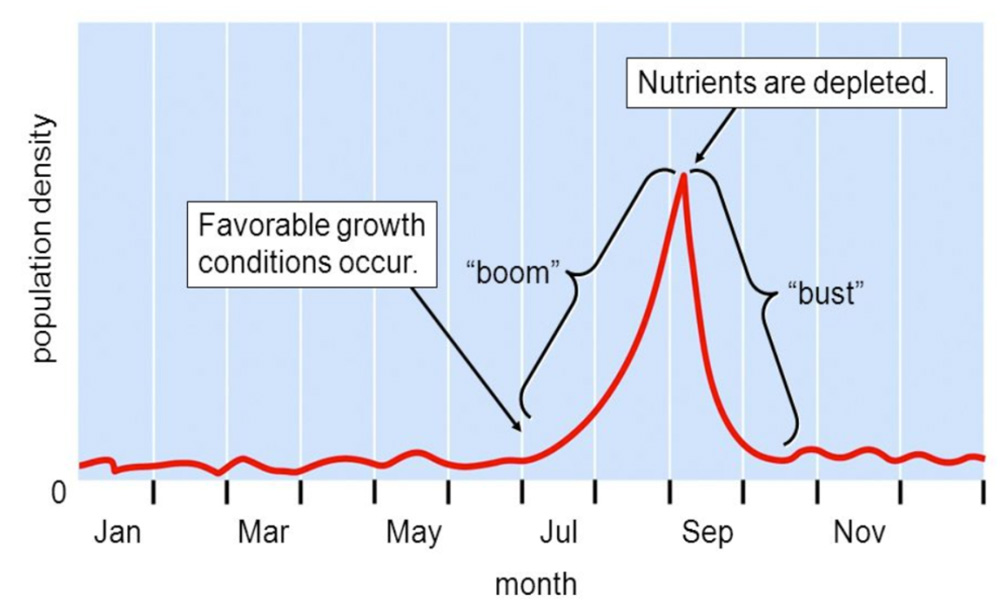
Ecologists have long been studying this biological—and sociological—phenomenon in nature. The typical “S” curve has three parts to it: 1) the beginning, where it lags and shows a slow rate of rise; 2) then the steep rise of exponential growth; and 3) the eventual leveling off when the supposed carrying capacity is reached. There is another kind of curve, the “boom and bust” curve that instead of plateauing at the end toward sustainability, plummets just as steeply back to or below levels in the first step (that’s a whole other topic and blog post).

BoomBustGraph

The ‘boom-bust’ population cycle. Note the resemblance of the human population growth curve in Fig. 1 to the exponential ‘boom’ phase of the cycle. The world community can still choose to influence the speed and depth of the coming bust phase. Source of graph: Biology: Life on Earth, 8th ed., Fig. 26-3. (taken from The Tyee Magazine)

Why am I talking to you about this? Because it has everything to do with your writing. The publishing industry is currently experiencing its own version of the “S” curve and the “boom and bust” curve (for traditional publishing houses, I’m afraid). We are currently witnessing a growing influx and legitimization of self-publishing and Indie publishing. Thanks to a few crazy success stories and the new affordable paradigm of POD digital publishing, publishing hasn’t been easier. This new model heralds an unprecedented renaissance of self-expression and creativity, shared worldwide.

Consider these statistics: in 2009, Publishers Weekly reported over 750,000 self-published/micro publisher titles, over twice the number of traditionally published titles that same year. The figures (I couldn’t find more recent ones—let me know when you do) are assuredly much higher today. From 8,000 to 11,000 new publishers currently enter the field every year and most of them are self-publishers or small indie publishers. Seventy-eight percent of titles brought out come from a small press or self-publisher. Fifty-two percent of books sold are not sold in bookstores; they are merchandised through mail order, online, in discount or warehouse stores, through book clubs, and nontraditional retail outlets.

As a function of this renaissance of self-expression, the number of books hitting the market is rising at an exponential rate. There’s that “S” curve again. Check out Amazon: they have over seven million books on their virtual shelves. And now, thanks to their new policies, it’s growing exponentially. What does this mean for you?

It used to be that the screening for excellence in books occurred behind the closed doors of prestigious publishing houses; if a book wasn’t deemed worthy of the standards or didn’t fit the style of that publishing house (with its own reputation), it was not accepted and didn’t see the light of day. The rejected and dejected author often went back to the drawing board to improve their artistic work before resubmitting. That was then. Now, works are published without prejudice in the open for the world to see.  It used to be that writers complained of their writing being “sterilized” by the editor of the publishing house, which was only conforming to the house style and their vision of what is salable. Now, authors wishing for creative control simply self-publish.

Self-publishing has created a kind of anarchy in publishing; anything can be published (so long as you have the money). And while this is incredibly liberating for authors around the world, it is also incredibly dangerous. Here’s why: once you publish your material, it will be out there for the world to see forever. That means FOREVER. It becomes a permanent record of your standards of excellence and taste; essentially a statement of who and what you are. You had better be proud of it then and for a very long time. It is no longer the responsibility of the publisher to determine publishing worthiness; the onus is on YOU, the writer. What will you do to ensure the best possible work for your readers?

Competition will become ever more fierce AFTER you’ve invested and AFTER you’ve published; your book will then compete with a world of self-published authors in addition to those published by traditional publishing houses. In order for your book to rise above the massive competition, it’s more important than ever to produce a concise, clean, clear, polished-to-perfection manuscript that you are proud of. With an awesome cover (see my July 2013 post on book jacket covers).

Self-published author Dave Bricker shares that, “Poor editing is the number one complaint heard from critics of the independent publishing industry. Though the standards of mainstream publishing houses are overrated, I’ve read many indie books where spotty spelling and lack of polished prose present barriers to enjoyable reading. Unedited authors sully the publishing waters for the rest of us.” He’s talking about poor packaging. Poor manuscript presentation can seriously undermine an author’s chances of being taken seriously. A good reputation is earned slowly and tenuously; a poor reputation, like the plummeting “boom and bust” curve can end a writer’s career.

“Why not produce a pressure-tested product that has already withstood the scrutiny of a professional critic whose standards are much higher than those of the average reader?” says Bricker. “As with your typesetting and cover design, the best route to success is to engage a professional.” He is right. If you want to be treated as a professional (by readers) then be professional and engage professionals.

What do professional editors do?

heather-short-story-Page_1

Sample of story editing (with permission of author)

Editors aren’t proofreaders, although this might be one task in several they can provide. Most editors are what are variously called structural or story editors; someone capable of commenting on the work objectively and with competence. Is the story believable? Are there unexpected temporal jumps or unexplained threads in the narrative? Are the article’s assertions properly supported? As with affairs of the heart, it’s easy to understand the problems of others and difficult to acknowledge what we’re too close to see—and if you think writing isn’t an affair of the heart, you haven’t started your book yet. Get that third-party perspective.

No one likes to be edited. Of course you feel protective of your material; that is natural. You’ve put so much into it; how could a stranger possibly understand and treat it with the respect it deserves?

Professional editors are accustomed to interacting with authors in a mutually respectful relationship. Editors have to make a living, and they would quickly find themselves unable to if they treated their clients in any way other than professionally and respectfully. A professional editor is more likely to serve your true interests in getting published than a friend or relative who likely knows little of “storytelling”, plot and character; and may side-wind you with inappropriate advice or platitudes. In fact, showing your work to a friend or relative may be the reason why you have decided that you “don’t like to be edited.” Before I was published, I once showed my work in progress to my husband, who was too close to the subject and its writer; he made very unprofessional remarks that were more damaging than helpful. If you go with a professional you will not have this problem.

Throughout history, authors have relied on their editors to be their sounding boards, to represent the eye and ear of the reader, and to help bring a viewpoint that can’t arise spontaneously in the author’s head. In the past, the traditional publishing house has typically provided this service. Many publishing houses now expect the writer to provide a manuscript that has already been edited. Indie and self-publishing scenarios leave the onus on the writer.

Two of the most common excuses that authors find for not engaging a professional editor include cost and venue.

I can’t afford an Editor: can you afford to put out a book for the world to see that is full of mistakes? If you aren’t serious enough about writing and publishing to invest in your career with good guidebooks, courses & workshops and coaching and editing, then perhaps you should rethink your career. No one would think twice about training and getting professional help to become a successful nurse or pilot. Writing is the same. For it to be successful, it requires investment. Especially if you are considering self-publishing.

Self-published author Dick Margulis reminds us that “Self-publishing is a business – the publishing business – and if you hope to succeed in it, you have to manage it like a business. You have to look at your skill set and decide which of the many tasks associated with publishing you are suited to doing yourself and which can be done more effectively and more economically by others. Your time has value, and you have to decide how it is best spent.”

It’s Just an E-Book: a common mistake, particularly with digitally published books, is the notion that because you haven’t invested in typesetting or printing you can fix the mistakes later. That is a poor notion. And a risky approach that smacks of laziness. Letting your readers find your mistakes for you is a poor show and will hurt your reputation as a writer (no matter who publishes you). With books, no matter what format, the first impression is critical. For some readers that may be the first and last time they meet you and your work. Make sure it counts. Word gets around pretty fast on the Internet. Ensure that it’s a good word.

So, now you want to find a good editor… Where can you find them?

Here, in Canada, most good professional editors belong to the professional editors association known as EAC (Editors Association of Canada). You can browse the association website for an editor’s profile with information.

Many good writers also freelance edit, like myself (see what I do as writing coach and editor under the Coaching/Teaching tab here). My Major Services Page describes my services in more detail.

the beach-2013i

Boardwalk on The Beach, Toronto (photo by Nina Munteanu)

Hiring an author/editor is a good fit, particularly if the author/editor writes in your genre interest.  SF Canada, a professional writers organization in the science fiction and fantasy genres, is another good place to find author/editors in that genre.

I know and have worked with several excellent editors, including non-fiction, technical editors, fiction editors, etc. You can drop me a line if you are looking.

And, while you’re looking, check out my interview with Jennifer D. Foster of Boldface (Toronto Branch of EAC blog) On the Author / Editor Relationship and what makes a good editor.


Nina Munteanu is an ecologist and internationally published author of award-nominated speculative novels, short stories and non-fiction. She is co-editor of Europa SF and currently teaches writing courses at George Brown College and the University of Toronto. Visit www.ninamunteanu.ca for the latest on her books.

Women Heroes in Literature, Movies and Pop Culture

rita vrataski-3

Rita Vrataski (Emily Blunt) fights a war against aliens

Some time ago on my birthday, I watched the popular — and somewhat controversial — Hunger Games. Well, controversial among some critics and followers of critics, anyway. I came across a particularly juicy article by critic Jeffrey Wells on Hollywood Elsewhere, in which he attributed the movie’s success to “reviews by certain female critics” who are “susceptible to the lore of this young-female-adult-propelled franchise.”

Whether this was true or not — and I highly doubt this — it brings up another stirring question: that of gender-bias. Is it truly still hard for a man like Wells to accept and enjoy a story which feature’s a female heroine?  Is it so hard to see a woman as a person first: championing a cause, delivering a world from evil and injustice, overcoming a great obstacle to become enlightened?

I think of my favorite stories in literature, peopled by men and women; all heroes: Tess of the d’Urbervilles, Fahrenheit 451, King Lear, Solaris, The Grapes of Wrath, 1984, Doctor Zhivago, Brave New World, Martian Chronicles, and To Kill a Mockingbird — to name just a few. The gender of the hero I empathized with was irrelevant. What remained important was their sensibilities and their actions.
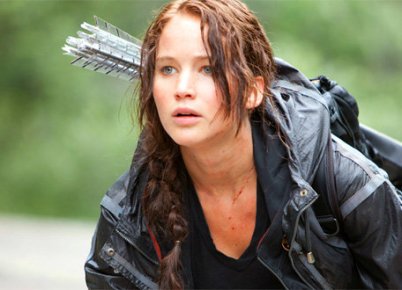
Katniss fights the system in Hunger Games

Katniss fights the system in Hunger Games

It got me thinking … What does it take to be a hero—a female hero— particularly? And does there need to be a difference? The tweets and FB-talk and Internet buzz imply that male heroes differ from female heroes; they embrace differing quests and archetypal roles and reflect different qualities. In his 2013 web-article “Saving Science Fiction From Strong Female Characters” SF author John C. Wright attempted to elucidate a more realistic portrayal of women heroes in science fiction. Unfortunately, the article relied heavily on well-established androcratic stereotypes.

The male hero stereotype in literature and films of western culture—and science fiction particularly—is often characterized by strength, courage, integrity & honor, intelligence, assertiveness, single-mindedness, faith in his quest, and boundless determination: he is the altruist warrior, often acting alone against an unfair society through his conscience. All traits honored, respected and esteemed in men. In a woman, these Boadicean qualities often qualify her as “a bitch” or a “tomboy”. She may be considered unwomanly, unlady-like, intimidating, and with lesbian tendencies. Not the sort of girl you would take home to Mummy. The exciting Becky Sharp to the prosaic but sweet Amelia. And God forbid that she is more intelligent than her male counterpart!

Kara Thrace (Starbuck) fights Cylons in Battlestar Galactica

Kara Thrace (Starbuck) fights Cylons in Battlestar Galactica

For a woman to qualify as “hero” then, must she shed her feminine qualities of compassion, kindness, tenderness, and nurturing, to express those hero-defining qualities that are typically considered “male” to become less than either? Goddess untouchable? Women deserve better than that in literature and other story media.  I have seen too many 2-dimensional female characters limited by their own stereotype in the science fiction genre—particularly in the adventure/thriller sub-genre. If they aren’t untouchable goddesses or “witches” in a gynocratic paradigm (woman-dominating), they are often delegated to the role of enabling the “real hero” on his journey through their belief in him: as Trinity enables Neo; Hermione enables Harry; Mary Jane enables Spiderman; Lois enables Superman; etc. etc. etc.
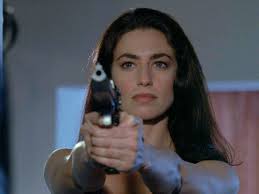
aeryn sun gun

Aeryn Sun (Claudia Black) fights “humans” in Farscape

In an opinion piece in The Detroit News, Tom Long tells us that the women in top hero-style movies have usually been and still are portrayed in “romantic, sidekick or comedic roles. Often they’re waiting to be rescued (think Princess Leia). And some of them are part of action ensembles [think X-men].” Token figures to provide added “spice”, edge and diversity. This is, according to Gitesh Pandya, editor of a box office analyst site, because female-driven action movies have a hard time selling. “Most of the action films that have become huge hits are either male-driven or ensemble.” Pandya goes on to suggest that this is because more tickets are purchased by men than by women. “The film industry has been male-dominated for so long, the people who are creating and financing these films typically put men in there as heroes.” And yet women read far more fiction than men (by a 4:1 ratio according to some sources). We are in dire need of balance and we hunger for a female hero.

Lucy: victim, predator or neither?

Lucy: victim, predator or neither?

“What does it mean for our nation or our world if we treat [women] by a different script? What are we clinging to when we cling to that script that women need men’s protection?” said Ann Folino White, assistant professor at Michigan State University. She does well to call it a script when the storytellers of a culture define our humanity: who and what we are, our values and what we strive to be. Storytellers are the shamans of our culture and our time. We are the visionaries of our future.

The recent SF action film Edge of Tomorrow provided a refreshing kind of woman hero; Rita Vrataski (Emily Blunt) is equal—in fact superior—to her male protagonist, William Cage (played by Tom Cruise) in skill, intelligence and heroic stature. What I mean by heroic stature is that her heroic journey of transformation does not play subservient to her male counterpart’s journey.

trinity-syndromeIn so many androcratic storylines, the female—no matter how complex, interesting and tough she starts out being—must demure to the male lead; as if only by bowing down to his superior abilities can she help ensure his heroic stature. Returning us right back to the cliché role of the woman supporting the leading man to complete his hero’s journey. And this often means serving as the prize for his chivalry. We see this in so many action thrillers and action adventures today: Valka in How to Train Your Dragon, Wyldstyle in The Lego Movie, Neytiri in Avatar, Trinity in The Matrix, and so many more. There’s even a name for it: the Trinity Syndrome.

Tasha Robinson writes in her excellent article entitled, We’re losing all our Strong Female Characters to Trinity Syndrome: “The idea of the Strong Female Character—someone with her own identity, agenda, and story purpose—has thoroughly pervaded the conversation about what’s wrong with the way women are often perceived and portrayed today, in comics, video-games, and film especially…it’s still rare to see films in the mainstream action/horror/science-fiction/fantasy realm introduce women with any kind of meaningful strength, or women who go past a few simple stereotypes.”

edge-of-tomorrow-emily-blunt-victory

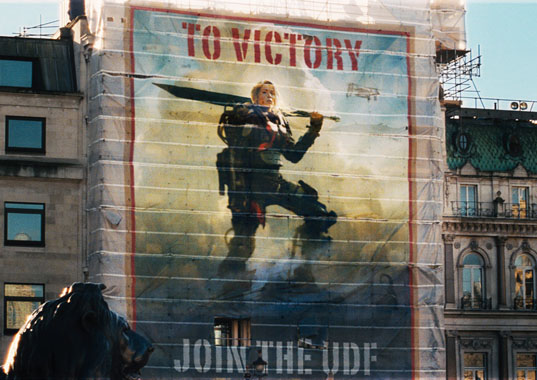
Rita Vrataski poster girl for the war

I give Edge of Tomorrow full marks for not doing this. For example, after Cage makes his case to his Squadron to go on a mission, they remain reluctant until Vrataski emerges. “I don’t expect you to follow me,” says Cage. “I do expect you to follow her.” The Angel of Verdun—or better yet, the badass Full Metal Bitch.

When a female lead is stronger than the male protagonist, some reviewers (OK—male reviewers) categorize that movie as a “woman’s story”. I’ve been told by some of my male friends that they couldn’t possibly empathize with such a character—mainly because she is a woman and she is stronger than the male lead that “they want to be”.  It would appear that men are less willing to empathize with a woman character than a woman is willing to empathize with a male character; something in itself interesting. Invariably, in many of these “goddess” stories, the male counterpart is so much “milk-toast” compared to that awesome female-warrior. And have you ever noticed that, while the male hero gets the girl, the female hero usually ends up alone? Great examples include: Buffy the Vampire Slayer; Xena: Warrior Princess; Sarah in The Terminator and of course Vasquez in Aliens. These women are amazons; they stand apart, goddess-like, unrelenting, unflinching—untouchable. It’s actually no wonder that my ex-husband dislikes Sigourney Weaver to this day—she could crush him underfoot and eat him for breakfast at a moment’s notice. And probably would!

In a superb article in NewStatesman entitled I hate Strong Female Characters, Sophia McDougall says:Divergent

“…I want to point out two things that Richard II has, that Bond and Captain America and Batman also have, that Peggy (Carter of Captain America), however strong she is, cannot attain. They are very simple things, even more fundamental than “agency”

  • Richard has the spotlight. However weak or distressed or passive he may be, he’s the main goddamn character

  • Richard has a huge range of other characters of his own gender around him, so that he never has to act as any kind of ambassador or representative for maleness. Even dethroned and imprisoned, he is free to be uniquely himself. On the posters [women are] posed way in the back of the shot behind the men, in the trailers they may pout or smile or kick things, but they remain silent. Their strength lets them, briefly, dominate bystanders but never dominate the plot. It’s an anodyne, a sop, a Trojan Horse – it’s there to distract and confuse you, so you forget to ask for more.”

There is another type of female hero. She is equal to her male counterpart. Her story is not secondary to his story; her heroic status and hero’s journey is equal to his and not because he’s been reduced to a lesser character, diminished by her or overshadowed by her; in fact they may share the same journey. Examples include: Bonnie and Clyde; Peter Chang’s Aeon Flux; Aeryn Sun and John Crichton in Farscape; Starbuck and Apollo in Battlestar Galactica…And now Vrataski and Cage in Edge of Tomorrow.

rita vrataski-cage

Cage and Vrataski discuss strategy

As with the above examples, Vrataski and Cage in Edge of Tomorrow form a team, in which together they are more than the sum of their parts. A marriage of independent autopoiesis, combining skills, abilities and vision. This is also why, in my opinion, the ending of Edge of Tomorrow is totally appropriate: not because it’s “the happy ending”; but because it carries the message of enduring collaboration of equals in a gylanic society.

So, in the end, I do agree with John C. Wright that science fiction requires whole female characters, but not for the reasons he gives.

The gylanic hero is emerging in science fiction and action-thrillers, one who will teach us more about what humanity needs now more than ever: the heroic gifts of altruism, compassion, faith, courage, passion, and endurance. She is already there, in movies and TV shows like Lucy, Edge of Tomorrow, Hunger Games, Divergence, Orphan Black, FarscapeBattlestar Galactica: fighting the dragons of prejudice, ignorance, cruelty, greed and intolerance–in partnership with her male counterpart.

image15

Aeryn Sun and John Crichton collaborate in Farscape

A list of SF books with whole and relevant female heroes–gylanic heroes– follows below. There are many more. I’ve listed these because they are ones I enjoyed and know, several being my own. Please add yours:

GYLANIC HEROES

  • The Hunger Games by Suzanne Collins (Scholastic Press). 2008. A series of books about teens forced to fight to the death on television.
  • The Steel Seraglio by Mike Carey, Linda Carey, Louise Carey and Nimit Malavia (Chizine Publications). 2012. A novel about the women of a harem in an ancient Middle Eastern kingdom, who forge themselves into an army after they’re exiled from the city of their birth — and then return to claim the city for themselves.
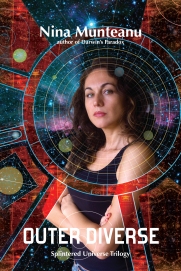
  • Front Cover ONLY-webThe Splintered Universe Trilogy by Nina Munteanu (Starfire). 2011-2014. This trilogy, starting with Outer Diverse, follows the quest of Galactic Guardian Rhea Hawke, a wounded hero who must solve the massacre of a spiritual sect that takes her on her own metaphoric journey of self-discovery to realize power in compassion and forgiveness.
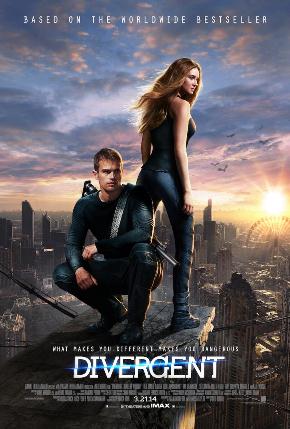
  • Divergent by Veronica Roth (Katherine Tegen Books) 2012. a young girl overcomes her assigned caste in a dystopian Chicago to realize her true self-identity, revealed to be dangerous to the very existence of her ordered society
  • Cordelia’s Honor by Lois McMaster Bujold (Baen). 1999. A woman’s journey through deception and betrayal to find honour.
  • Contact by Carl Sagan (Simon and Schuster) 1985. A woman’s quest into the unknown for benevolent intelligence in the universe.
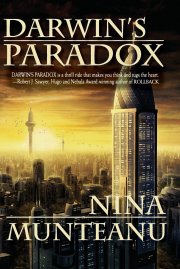
  • Darwins Paradox-2nd coverDarwin’s Paradox by Nina Munteanu (Dragon Moon Press). 2007. An eco-thriller about a woman unjustly exiled for murder and her quest for justice in a world ruled by technology and scientists.
  • Beggars in Spain by Nancy Kress (Harper Collins). 1993. A story that examines social consequences to transhumanist generic engineering.
  • His Dark Materials Trilogy by Philip Pullman (Laurel Leaf). 2003. A fantasy alternate world adventure about a young girl who discovers that the fate of the universe lies in her hands.
  • A Handmaid’s Tale by Margaret Atwood (Anchor). 1998. A chilling fable of the near future, about a monotheocratic government where women are strictly controlled and assigned roles.
  • Cover1_LastSummoner-frontcoverThe Last Summoner by Nina Munteanu (Starfire). 2012. A young baroness discovers that her strange powers enable her to change history … but at a cost. Vivianne begins her journey in the year 1410, on the eve of a great battle. She dreams of her Ritter (knight), who will save her from her ill-fated marriage and the strange events that follow. But early on, she realizes that she is the Ritter she keeps dreaming about. She must save herself and her world.

Other Relevant Articles of Interest from The Alien Next Door:

Gylany: a social system based on equality of men and women

Androcracy: a form of governing system in which rulers are male

Riane Eisler (in The Chalice and the Blade) provides examples of sociobiologists who draw on nineteenth-century Darwinism by citing Edge-of-Tomorrow-emily bluntinsect societies to support their androcratic (social and political rule by men) theories. If humanity is to truly rise victorious over the scourge of climate change—a function of our current lifestyle and paradigms—we will need to adopt a cultural evolution that embraces a partnership society heralded by new and renewed symbology, language and “myth”: It starts with embracing gylanic heroes in literature and movies. Watching them, reading about them, writing and sharing these stories for the future they speak to.
Nina Munteanu is an ecologist and internationally published author of award-nominated speculative novels, short stories and non-fiction. She is co-editor of Europa SF and currently teaches writing courses at George Brown College and the University of Toronto. Visit www.ninamunteanu.ca for the latest on her books.

The Power of Myth in Storytelling

If a being from another world were to ask you, ‘How can I learn what it’s like to be human?’ a good answer would be, ‘Study mythology.’ ”—Joseph Campbell

GiantCedars boardwalk2

Boardwalk in Giant Cedar forest, Mount Revelstoke Park, BC (photo by Nina Munteanu)

For Joseph Campbell, perhaps our era’s most influential student of mythology, myths express our basic need to explain, celebrate and immortalize the essence of life. Given that life itself has no “meaning”—it simply is—it is our stories (pulled from the ethers of our “muse”) that give meaning to life. We tell stories about how the world began, our struggles to survive, our victories against greed and evil. Each culture clothes its stories according to the place and time and associated issues. And each defines its heroes and villains accordingly. At the root of all these lies a universal and timeless human experience; where metaphor and imagery of myth transcend culture, time and place to encompass all of humanity and our striving journey toward truth, grace and peace. This is why all myth, from Plutarch’s Theseus & the Minotaur to George Lucus’s Star Wars, resonates with us, regardless of whether it was created yesterday or thousands of years ago.

Greek, Roman, Norse, African and Asian myths all address fundamental questions about our humanity: the fall of Icarus, Jason and the Argonauts, Romulus and Remus, Oedipus, Medusa, Perseus, King Arthur, Oedisseus, Vassilisa, Siegfried and the Nibelungenleid, Beowulf and Grendel, Jonah and the whale, Isolde and Tristan, Persephone and the underworld, Orpheus and Eurydice, Hercules, Osiris, Gilgamesh … the list is endless.

Artist as Mythmaker … and Shaman

Cedar roots

Cedar roots, Revelstoke Park (photo by Nina Munteanu)

“There’s an old romantic idea in German, das Volk dichtet, which says that the ideas and poetry of the traditional cultures come out of the folk. They do not,” says Campbell. “They come out of an elite experience, the experience of people particularly gifted, whose ears are open to the song of the universe.” He is referring to the artist, who speaks to “the folk”, who answer and create an interaction. “The first impulse in the shaping of the folk tradition,” says Campbell, “comes from above, not from below.” He is referring to the divine source, the muse, the gift of “seeing” bestowed on those willing to open themselves to it. According to Campbell, “The function of the artist is the mythologization of the environment and the world.” Like the shamans of ancient times, the storyteller— whether painter, writer, actor, singer or filmmaker— interprets the divinity in nature for others. We interpret unseen things for a tangible world.

Artists are the mythmakers — the shamans — of today. The ancient shaman’s authority came from individual psychological experience, not a social ordination (like a priest). A shaman’s powers were symbolized through her own familiars and the deities of her own personal experience. Her personal truth. As artists we wholly participate in our “landscape”. Like Dante, we journey to the depths of our world, become its deepest truths to emerge later and share.

The Mythic Hero’s Journey in Story

Nina-giant cedar03

Nina in bliss with giant cedar, Revelstoke Park, BC (photo by Anne Voute)

In my opinion, the best stories follow the mythic hero’s journey plot structure. This is because “hero’s journey” stories are transformative for not only the protagonist (our hero) but for readers following along and identifying with her. Stories that pull a reader through the three steps of a human being’s evolution (separation, transformation, and return) promise great depth and fulfillment. This is what great storytelling does: they take us on a transformative journey of learning, through challenges of change to realize a prevailing victory. Writers are the shamans of today and the heroes we write about are our agents of change. Through our artistic drama of metaphor, we make commentary on the world and what it means to be human.

The hero archetype is particularly interesting, given that he or she is essentially us as we journey to prevail over the obstacles of our fears, weaknesses, and disappointments. Every hero is on a quest or mission (whether she realizes it or not). The true mark of a hero is in her willingness to sacrifice something of value, perhaps even her life, on behalf of an ideal or a group and ultimately for the greater good. A hero is the ultimate altruist. And she is you, the artist.

The Power of Mythologist

tall cedar-moss

Moss-covered cedar, Revelstoke (photo by Nina Munteanu)

I recall a discussion with a young friend some time ago about her knowledge of writers vs. book titles (she knew few names of writers, even those whose works she had enjoyed, but could happily recite book titles). I realized that she chose her books based on their cover and the “promised story” within—with no attention placed on the author and no intention of following that author’s other works.

I found that focus limiting; not just because I was an author myself, but because my young friend had made the choice not to connect with the artist and his or her inherent worldview. Not acknowledging the artist is to ignore that artist’s “voice” and their subtle but deep “sharing”.

“When you find an author who really grabs you, read everything s/he has done,” says Campbell. “Don’t say, ‘oh, I want to know what so-and-so did’—and don’t read the best-seller list. Just read what this one author has given you … the world opens up in a way that is consistent with a certain point of view … When you go from one author to another, you may be able to tell us the date when each wrote such and such —but he hasn’t said anything to you.”

Related Posts:


Nina Munteanu is an ecologist and internationally published author of award-nominated speculative novels, short stories and non-fiction. She is co-editor of Europa SF and currently teaches writing courses at George Brown College and the University of Toronto. Visit www.ninamunteanu.ca for the latest on her books.

How Are You Telling Your Story?…Part 2: Voice and Narration

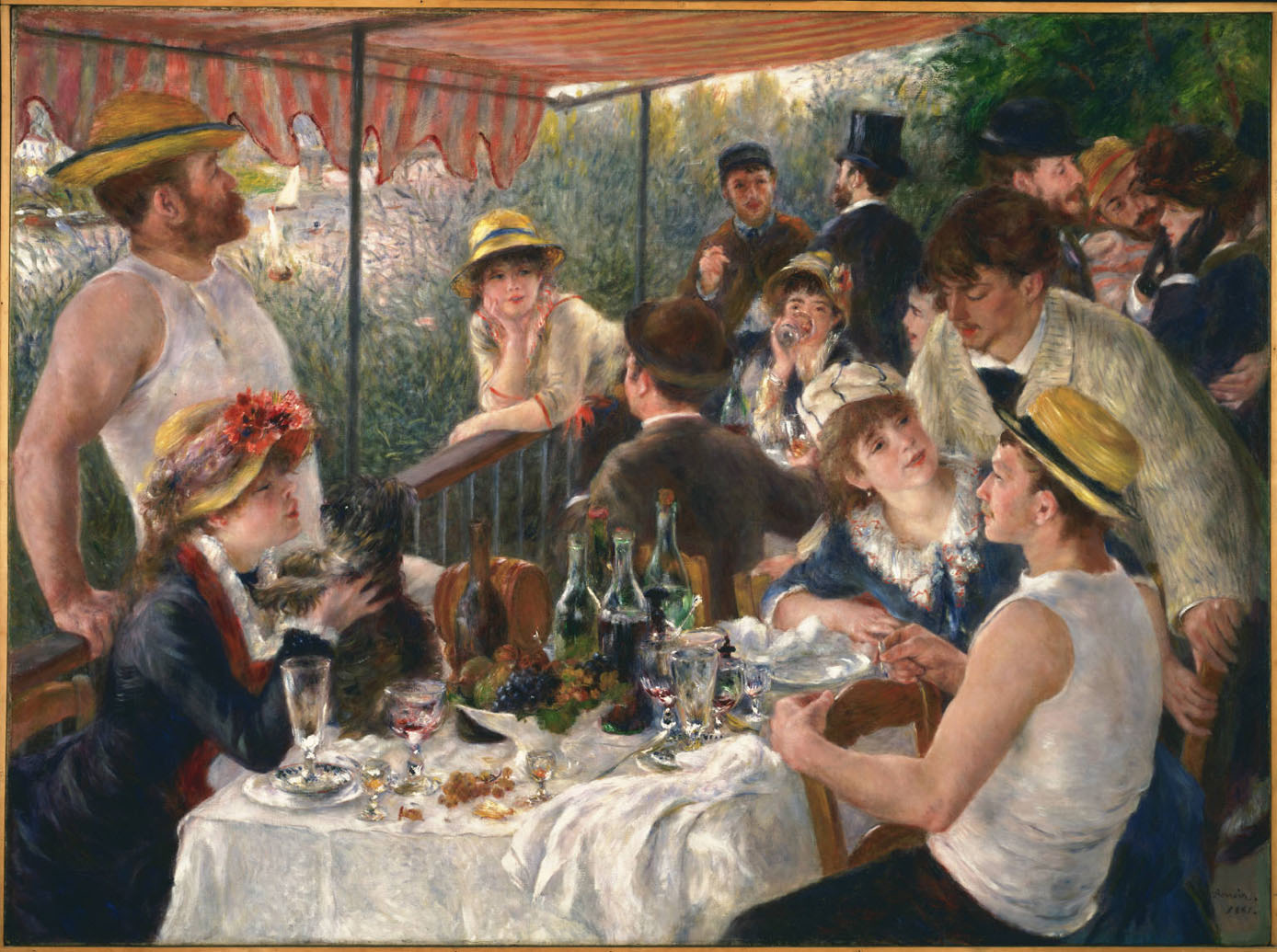
renoir-tableThe term “Voice” describes various aspects of a writer’s expression in story; it includes your unique writing style and the style you’ve chosen to adopt for the particular story you’re telling. The voice of your story is influenced by your audience—youth, adults, crazy people, etc.—as well as the subject matter and general overall theme of the story.

Voice is the feel and tone that applies to: 1) the story or book (narrative voice); 2) to each character in that story; and 3) the author’s own voice (authorial voice; in business it’s called the brand), which you carry with you in every work. It is the combination of all these “voices” that make each of your works unique. Think of a fine artist, a painter like Vincent Van Gogh, whose unique painter’s “voice” was apparent in all his Impressionistic works. The wild swirls of light and texture characterized all his paintings; yet, each individual work expressed its own unique message in Van Gogh’s artistic journey.


Authorial Voice

You express your authorial voice and the voice of your story through tone, perspective, style, language and pace. All of these reflect your intent and are ultimately expressed in the story’s overarching theme. The overarching theme is ultimately the author’s theme, the “world view” — the “so what part” — of the story. The principal character and minor characters will carry variations of the main theme, each with his or her unique voice. Invariably, the voice of the story reflects the author’s philosophy, biases and message.

Writers generally struggle in the beginning to obtain their unique “voice”, often adopting the voice of a writer they admire. Although this can help a writer define their own voice (by illuminating what they like and strive for), it can also retard an author’s unique self-expression. It is so much easier to use another’s proven formula; the danger is that you may never escape from beneath the shadow of your hero. In the area of science fiction, which I write, the internet is rich with “fan fic” (an endearing term for works based on already established stories, worlds, characters, and styles.) Many fan fic writers will not emerge from the shadow of unoriginality to find their own voice. So, take heed and be mindful of your own voice. Determine what is important to you and you will find your voice.


Narrative Voice

Narrative voice belongs to the persona telling the story. Which persona you adopt in narration depends on what kind of story you are telling, and the kind of emotional atmosphere you wish to achieve, says Crawford Kilian, Canadian author of over a dozen novels. The persona develops from the personality and attitude of the narrator, expressed through the narrator’s choice of words and depictions. Depending on your choice of POV (see my previous article on Viewpoint), the narrator of your story can be one or several main characters or you, the writer. More on this below.


Character Voice

It’s important to give each character a distinctive “voice” (including use of distinct vernacular, use of specific expressions or phrases, etc.). This is one way a reader can identify a character and find them likeable—or not.

In a manuscript I recently reviewed, I noticed that the characters spoke in a chaotic mixture of formal and casual speech. This confuses the reader and bumps them out of the story. Each person’s speech is typically consistent, reflecting their ethnic and regional background, who they hang around with, their education, history and biases. Consistency is critical; it helps readers identify with a character. They will abandon a story whose writing—and voice—is not consistent. So, my advice to this beginning writer was to pick one style for each character and stick to it.

Voice incorporates language (both speech and body movements), philosophy, and humor. How a character looks, walks, talks, laughs, is all part of this. Let’s take laughter for instance: does your character tend to giggle, titter, chortle, guffaw, belly-laugh? Does she usually put her hand over her mouth when she does? Does she do or say certain things when she’s nervous? See my upcoming article on body language for more detail.


Who Should Tell the Story?

When telling a story through the eyes of a single viewpoint character, it makes most sense to tell it through the main character, the protagonist, around whom the story usually revolves. She is the one who’s going to be chiefly affected by the events of the story. Ansen Dibell, author of The Elements of Fiction: Plot, asks the question: “Who is really at the story’s heart?” If you’re having trouble with the story of Sally and Norman from Sally’s point of view, perhaps you should try telling it through Norman’s point of view. Or perhaps your main POV character is a third person, looking on and, in turn, changed.

Narrating a story from an outsider’s viewpoint (the hidden protagonist as observer-narrator) —sometimes called displaced narrative — can also add an element of complexity and depth to a story. The Illusionist is a good example of this. This story, about Eisenheim (the Illusionist) and his beloved, is told through the cynical eyes of the city’s chief inspector, who learns to believe again through his “experience” of their story. Other examples include J.P. Hartley’s The Go-Between, Scott Fitzgerald’s The Great Gatsby, Saving Private Ryan, My Beloved, Charlotte Bronte’s Wuthering Heights, and Joanne Harris’s Chocolat.

Using a displaced viewpoint character to narrate a story works particularly well if you want to keep your main character strange and mysterious. Having an “outside” character tell the story of one or two other characters, also gives the writer a chance to add another thematic element to a story (the one belonging to the narrator). A story told through the eyes of a dreamer will be very different than one told by a ponderous thinker.

Other kinds of narration include:

  • detached autobiography (narrator looks back on long-past events; e.g., To Kill a Mockingbird by Harper Lee)
  • letters or diary (narrative told through letters, also known as the epistolary novel; e.g. my short story, Arc of Time)
  • interior monologue (narrator recounts the story as a memory; stream of consciousness is an extreme form of this narrative, e.g., Ulysses by James Joyce)


How Many Should Tell the Story?

The use of multiple viewpoints is common among writers and adds an element of richness and breadth to a story. With each added character’s POV, readers are more enlightened to the thoughts and motivations of characters in a story. When you have several characters telling the story, this is called a rotating viewpoint. A few points to follow include:

  • Alternate or rotate your differing viewpoints clearly (scene by scene, chapter by chapter, or part by part)
  • Don’t change viewpoints within a scene
  • Separate different POV scenes within chapters with extra white space or some kind of graphic (e.g., ****)
Boat-DesolationSound

Desolation Sound, BC coast (photo by Nina Munteanu)


References

Dibell, Ansen. 1999. Elements of Fiction Writing: Plot. Writer’s Digest Books. Cincinnati, Ohio. 170pp.

Killian, Crawford. 2003. “Narrative Voice”. In: Writing Fiction: http://crofsblogs.typepad.com/fiction/2003/07/narrative_ voice.html

Morrell, David. 2000. “First Blood, Third Person”. In: Fiction Writer. April, 2000.

Munteanu, Nina. 2009. The Fiction Writer: Get Published, Write Now! Starfire World Syndicate. Louisville, KY. 266pp.

Nina Munteanu is an ecologist and internationally published author of award-nominated speculative novels, short stories and non-fiction. She is co-editor of Europa SF and currently teaches writing courses at George Brown College and the University of Toronto. Visit www.ninamunteanu.ca for the latest on her books.