You walk toward English Bay to the nearest Hydrogenase Hub, where you are meeting with your team to discuss the presentation.
The hub is a floating algal farm. The farm and the elongated seed-shaped airship docked at its centre both produce biofuel—essentially hydrogen—from the microorganism Chlamydomonas reinhardtii. Your mom, a former environmental consultant and algal scientist—now she writes science fiction—explained to you that this unicellular organism has both plant and animal properties; it carries out photosynthesis but is also heterotrophic (able to use organic carbon to grow) and will in the absence of oxygen produce gaseous hydrogen and metabolites such as formate and ethanol through hydrogenase enzymes. Chlamydomonas reinhardtii was first discovered as a clean source of hydrogen back in 1939 by German scientist Hans Gaffron at the University of Chicago (ironically the same year Germany invaded Poland). Gaffron called it “photosynthetic hydrogen production by algae”; and today it is a process that produces electricity and biofuel with zero emissions.
The algae farm recycles CO2for the bio-hydrogen airship you will be boarding after your meeting in the hub. You enter the airy station, whose honeycomb circular design resembles a stylized lily pad and glance up through the high nano-glass ceiling toward the elongated seed-shaped transport rising ten stories above you. The sun glances off the diaphanous double helix frame that resembles a freshwater spirogyra. The hub you’re standing in is a floating algae farm with solar cells on top and hydro-turbines below to capture tidal energy. The algae farm recycles CO2 for the bio-hydrogen airship you will be boarding after your meeting in the hub. You enter the airy station, whose honeycomb circular design resembles a stylized lily pad and glance up through the high nano-glass ceiling toward the elongated seed-shaped transport rising ten stories above you.
The sun glances off the diaphanous double helix frame that resembles a freshwater spirogyra. The hub you’re standing in is a floating algae farm with solar cells on top and hydro-turbines below to capture tidal energy.
The concept is the “subversive architecture” of Belgian architect Vincent Callebaut and inspired by the principles of biomimicry, coined by Janine Benyus in 2002 in her book “Biomimicry: Innovation Inspired by Nature”. Callebaut conceived Hydrogenase in 2010 as a 100% self-sufficient and zero-emission transport system using algae. He claimed that a hectare of seaweeds could produce 120 times more biofuel than a hectare of colza, soya or sunflower without consuming land needed for crops or forests. He called Hydrogenase a true miniature biochemical power station. Able to absorb CO2 as the main nutrient through photosynthesis the algae, under anaerobic conditions, produce hydrogen in vitro or in bioreactors.
You swipe your PAL over the ticket booth sensor and the optional ticket-brochure pops out. You take it and read the specs between glances at the tall vessel loading in the dock of the hub. It’s really like a vertical dirigible, you think, studying the seed-shaped airship with self-cleaning “intelligent” nanostructured glass—inspired by the lotus leaf that doesn’t get wet. The semi-rigid unpressurised airship stretches vertically around an arborescent spine that twists like chloroplast ribbons 400 meters high and 180 meters in diameter.
You read that each Hydrogenase airship is covered with flexible inflatable photovoltaic cells and twenty wind turbines to maneuver and collect energy. The interior spaces provide room for housing, offices, scientific laboratories, and entertainment, and a series of vegetable gardens that provide a source of food while recycling waste.
You read that this self-sufficient organic transport flies about 2000 meters high at about 175 km/hr (twice the speed of a conventional ship). Given its ease in negotiating airspace and its ability to land and take off from virtually any location, the Hydrogenase is used by many groups in various capacities. Your friend Michael who teaches at the University of Victoria uses one as a mobile research station in his studies along the coast of northern British Columbia.
The vessel is made of “intelligent layers” and “self-separable ceramics”. Its bionic coating draws inspiration from sharkskin that is self-cleaning and flow-efficient.
Hydrogenase concept with algal farm pods and air ships
You head down the spiral staircase to the third subsea level toward the meeting room you booked earlier on your PAL. The view is spectacular from here through the nano-glass panes. Rays of shimmering light stream through a gently swaying forest of kelp. You glimpse the sun-glinted flickering of hundreds of anchovies as they school through the kelp. This floating farm is an organic purifying station of four carbon wells where the algae recycle the carbonated waste brought by the airships and, in turn, feed the airship with biohydrogen. It’s the new “gas station”, you reflect with a smile.
After your meeting with staff, you and three others of your team board the airship and settle in one of the skyview chambers. The journey is relaxing, like the BC Ferry used to be, but without the pungent smell and pollution of conventional motorized sea vessels. It’s a quiet and relaxing trip with a spectacular view of the Gulf Islands. Your team strategizes your presentation over a light lunch and Matcha lattes.
Vincent Callebaut’s Hydrogenase
The PA system sounds and a woman’s voice informs you that the ship will be making an emergency landing on Saturna Island to rescue two hikers injured at East Point. This will only add twenty minutes to the trip, the woman assures you. You don’t mind and recall the disclaimer at the bottom of the ticket. Given the ability of this airship to take off and accurately land virtually anywhere, all Hydrogenases are by law mandated to be on standby for rescue missions in rough terrain.
You pull out the ticket and read again: The Hydrogenase is affiliated with the International Red Cross and BC Coastguard. The Hydrogenase must by law respond to any distress call at sea or rough terrain associated with coastal waters. Because of this service, we cannot guarantee a timely schedule.
You recall how Hydrogenases were deployed in the last hurricane disaster off the coast of Florida last year, saving countless people trapped in the flooding that accompanied the storm. The International Red Cross uses them as flying hospitals.
Bernard frets over the time delay. He is concerned about the lack of preparation and set up time once you get into Victoria. You assuage him gently. The best preparation is sincerity, you tell him. The landscape architect Thomas Woltz, whose work you highly respect, saw himself as someone who embraces the complexity of modern life while seeking meaning and narrative in both natural and human-made environments.
“We’re storytellers,” you tell Andre. Invoking metaphor through design. “They know we’re coming and they know we’re helping someone; they’ll wait for our story. And it’s all about harmony.”
The lines of Henry David Thoreau come to you: Man’s life must be of equal simplicity and sincerity with nature, and his actions harmonize with her grandeur and beauty.
Then you point your PAL at the ServiceBot and order three more lattes. You lean back in your bamboo fabric chair and cross your legs over the leg rest.
It’s a brave new world.
Pine forest in Jackson Creek Park, ON (photo and dry brush rendition by Nina Munteanu)
Nina Munteanu is a Canadian ecologist / limnologist and novelist. She is co-editor of Europa SF and currently teaches writing courses at George Brown College and the University of Toronto. Visit www.ninamunteanu.ca for the latest on her books. Nina’s bilingual “La natura dell’acqua / The Way of Water” was published by Mincione Edizioni in Rome. Her non-fiction book “Water Is…” by Pixl Press(Vancouver) was selected by Margaret Atwood in the New York Times‘Year in Reading’ and was chosen as the 2017 Summer Read by Water Canada. Her novel “A Diary in the Age of Water” was released by Inanna Publications (Toronto) in June 2020.
I appeared recently on the Sustainably Geeky Podcast Episode 33 “Making a Splash” to talk with host Jennifer Hetzel about all things to do with water, from physics and chemistry to geography and politics. We discussed what a limnologist does (like zoom around lakes in a jet boat and collect water samples, among other things).
Here is their blurb about the episode:
“Water you waiting for? This month we talk with limnologist and cli-fi author Nina Munteanu about the water cycle and how human activity affects it. Nina discusses the importance of water in all its forms, and its affect on global warming.”
Click below to listen:
Jackson Creek in early winter high flow, ON (photo and dry brush rendering by Nina Munteanu)
Nina Munteanu is a Canadian ecologist / limnologist and novelist. She is co-editor of Europa SF and currently teaches writing courses at George Brown College and the University of Toronto. Visit www.ninamunteanu.ca for the latest on her books. Nina’s bilingual “La natura dell’acqua / The Way of Water” was published by Mincione Edizioni in Rome. Her non-fiction book “Water Is…” by Pixl Press(Vancouver) was selected by Margaret Atwood in the New York Times‘Year in Reading’ and was chosen as the 2017 Summer Read by Water Canada. Her novel “A Diary in the Age of Water” was released by Inanna Publications (Toronto) in June 2020.
I was recently interviewed by Matt Nappo on Minddog TV in New York, where we talked about the science and magic of water, climate change and how to not become cynical, the process of writing, what scares us and what takes us through it into great storytelling.
Here’s the interview:
Matt Nappo interviews limnologist and clifi author Nina Munteanu on minddog TV
Cattails oversee the snowy plain of the iced-over Trent Canal, ON (photo and dry brush rendition by Nina Munteanu)
Nina Munteanu is a Canadian ecologist / limnologist and novelist. She is co-editor of Europa SF and currently teaches writing courses at George Brown College and the University of Toronto. Visit www.ninamunteanu.ca for the latest on her books. Nina’s bilingual “La natura dell’acqua / The Way of Water” was published by Mincione Edizioni in Rome. Her non-fiction book “Water Is…” by Pixl Press(Vancouver) was selected by Margaret Atwood in the New York Times‘Year in Reading’ and was chosen as the 2017 Summer Read by Water Canada. Her novel “A Diary in the Age of Water” was released by Inanna Publications (Toronto) in June 2020.
Those who are inspired by a model other than Nature, a mistress above all masters, are laboring in vain—Leonardo daVinci
You pause at the front door of the eco-house that you and your partner designed in Vancouver’s Point Grey and pull up the collar of your jacket. The air is fresh with the promise of snow and you smile with thoughts of spring skiing at Whistler.
You glance at the time display on your Smart Glasses. You’ve decided to forego the WaveGate and walk to the café; you have plenty of time to walk through the hilly forested streets, with a view of English Bay. You want to check out the refurbished solar-house on Locarno Cresent that your company helped design. Based on a living model of Biomimicry, the house is the latest iteration of your company’s “symbiosis” model of 100% sustainability, in which people live in a cooperative and synergistic partnership with their environment. The house is an intelligent organic facility with self-cleaning floors and walls; heated, fueled and lit by organisms in a commensal relationship. Everything works on a natural cycle of harmonious renewal and natural evolution. You smile, rather self-pleased. It has taken you a few years to convince the city council to accept this new model in community design. Now, it’s happening everywhere.
It’s April 12, 2074. A special day. And a special year. The year of the wooden horse in the Chinese calendar. Also called the green horse, it’s associated with spring, growth and vitality. The horse symbolizes nobility, class speed and perseverance. Horse energy is pure unbridled spirit. Playful, wild and independent, the horse has a refined instinct that flows through action and movement. Together, these symbols promise both chaos and great opportunity. And transformation.
The year of the wooden horse only occurs every sixty years. And sixty years ago today your mom turned sixty. You release a boyish grin at what you intend to do in celebration. On that day, sixty years ago, she celebrated her sixtieth birthday with the release of Natural Selection, her collection of speculative short stories about human evolution, AI, genetic manipulation, transhumanism, and the human-‘machine’ interface. She also celebrated the local printing of Metaverse, the third book of her space detective trilogy, The Splintered Universe. It was the second book to be printed by Toronto Public Library’s newly acquired Espresso Book Machine; one of only two EBMs in Toronto at the time.
A smile slants across your face as you remember what libraries and bookstores used to look like then. Both were struggling with a changing paradigm of reading, writing and publishing. Many of the older folk feared that books—print books, particularly—were going extinct as more exciting channels of communication like videos, interactive games and instant social networking took over. Of course, that didn’t happen. “Story” and “storytelling” were simply evolving and the paradigm shift simply embraced a new model that incorporated more diverse expression. You remember conversations with your mom about Chapters-Indigo, whose face changed from a bookstore to a gift store and tchotchke filled more and more of the storefront. As large bookstores struggled to dominate, the EBM—like its lithe mammal cousins in the Cenozoic Era—created a new niche for itself: the book ATM.
The size of a Smart Car, the EBM could fit nicely in a stylish café, housing and dispensing—Tardis-style—many more books than its diminutive size. In 2014, the EBM carried over eight million titles, including commercial books and out-of print gems. That number has tripled as virtually every publisher embraced the Book ATM model to sell books.
You inhale the tantalizing aroma of freshly ground and brewed coffee before you reach Zardoz Café. The retro-style café is a converted Edwardian-style house with high arched windows and a living roof overlooked by tall sycamore trees. You climb the stairs and enter the café. Its 2020’s style interior that your company helped design is decorated in earthy tones, avant-garde art, a forest of dracaenas and ferns and a stepped creek, complete with goldfish and crayfish. A shiny brass Elektra Belle Epoque espresso maker sits at the bar, bestowing the finest fair trade coffee.
Your sweeping gaze notes several people at the small round tables, enjoying good coffee and conversation; your special guest hasn’t arrived yet. You spot the WaveGate at the back, resembling an old English pay phone. Next to it sits the EBM. Eager to do your deed before your guest arrives, you sidle to the coffee bar and catch Grace’s eye. She smiles; you’re a regular. You touch her wrist with your watch and the data passes onto her embedded interface. She taps her hand to process the book order—she insists that you not pay—then she makes your double-shot espresso—the old-fashioned way. As she grinds and taps and runs the machine, you and she chat about skiing this spring. Just as Grace hands you a perfect crema-topped espresso, the WaveGate shimmers briefly and then its door opens like an accordian.
Your mom emerges from the “tardis”, smartly dressed in an early-century blazer and skirt, and grinning like an urchin. She resembles the seventeenth Doctor a bit, you decide—the first female Doctor Who, finally! Somehow—you don’t know how she does it—her old-fashioned style manages to embrace “retro-cool”. She’s arrived from Switzerland, where she is house and cat-sitting for good friends in Gruyeres. From there she still commutes—Tardis-style—as sessional lecturer at the University of Toronto, where she maintains a tiny book-festooned office.
“Kevy!” she squeals like a girl, obviously happy to see you. You don’t cringe; you’ve grown accustomed to the ripples of interest your mom’s unalloyed enthusiasm usually creates.
“Happy birthday, Mom!” You seize her in a hug. “I’m glad you made it for your 120th birthday.” Traveling the WaveGate suits her, you consider.
“I like the tardis better than you, I think,” she says, smiling sideways at you with knowing. She’s right; you prefer the old-fashioned way of traveling, without having to reconfigure your molecules from one place to another. In fact, you prefer the old-fashioned way of doing a lot of things, you decide with an inner smile.
“I have a surprise for you, Mom,” you say with a knowing grin. Your mom likes surprises. Her eyes light up and she beams at you. You glance at Grace with a conspiratorial look. She takes the cue and starts the EBM.
“Over here,” you say, steering your mom toward the EBM, already humming like an old tomcat getting its chin scratched. Your mom bends down to watch the pages spew out of the paper holder and stack neatly in a tray, then get snatched by robotic fingers as a colour cover is created then laid below, ready to envelope the book interior. After the gluing and binding, the robots trim the book on three sides then summarily send it sliding out a chute on the side.
Your mom has guessed what the book is; but she still squeals with glee when she sees it. It’s Metaverse, of course; the book she first had printed on the EBM in Toronto’s Public Library sixty years ago on her birthday.
“I just thought you’d like another book,” you say with a laugh. Like she needs another book. But this one’s special; it’s sixty years old today. Just like she was, sixty years ago—today. You pull out your PAL and point at your mom, as she seizes the perfectly bound book. “Let me take your picture!”
She poses with the book, looking like a kid with candy. You check the image and laugh. “There it is. You don’t look a year over sixty!” You grin at your 120-year old mother.
“And you don’t look a day over twenty-three!” she teases back. You give her a slanted smile. You’re eighty-three. Beaming, she goes on, “I remember doing this exact thing sixty years ago in Toronto! Those same feelings of overwhelming gratitude and wonder are still there,” she confides. “I remember telling the CBC reporter who covered the EBM launch that it felt like a birthing.” She throws me a crooked grin. “Only the labour was on the computer instead of in the hospital!”
Visibly pleased and touched, she snatches me in a bear hug.
“This is the best present a mom could get from her son. Thanks for remembering. It’s been an incredible ride and it’s all been worth it.”
“Join me in a coffee; then I have a house to show you…” you say, smiling with pride.
The Espresso Book Machine
Many bookstores, libraries, and universities around the world are hosting the Espresso Book Machine® (EBM) by On Demand Books LLC (and associated with Lightning-Ingram). The EBM makes millions of titles available via the EspressNet® software and produces quality paperbacks in minutes at point of sale. The EBM is not a print-on-demand solution, but a powerful new digital-to-print channel that eliminates lost sales due to out-of-stock inventory or the hassle of returns.
Advantages:
Readers: millions of books, multiple languages, made on demand for you.
Bookstores, Libraries and other Retailers: sell (or lend) more titles without the extra inventory; capture the growing self-publishing market.
Publishers: the EBM offers an additional sales channel and greater visibility to a publisher’s titles. It also avoids out-of-stocks and eliminates returns.
Authors: earn additional income otherwise lost through the used-book market.
Old maple tree in Jackson Creek Park in December snow, ON (photo and dry brush rendition by Nina Munteanu)
Nina Munteanu is a Canadian ecologist / limnologist and novelist. She is co-editor of Europa SF and currently teaches writing courses at George Brown College and the University of Toronto. Visit www.ninamunteanu.ca for the latest on her books. Nina’s bilingual “La natura dell’acqua / The Way of Water” was published by Mincione Edizioni in Rome. Her non-fiction book “Water Is…” by Pixl Press(Vancouver) was selected by Margaret Atwood in the New York Times ‘Year in Reading’ and was chosen as the 2017 Summer Read by Water Canada. Her novel “A Diary in the Age of Water” was released by Inanna Publications (Toronto) in June 2020.
Nina Munteanu was recently on The Douglas Coleman Show where she and Douglas talked about writing, being scared of water, the sub-genre of eco-fiction and what Canada might have been like if the white settlers hadn’t come.
Here’s the show:
Nina Munteanu is a Canadian ecologist / limnologist and novelist. She is co-editor of Europa SF and currently teaches writing courses at George Brown College and the University of Toronto. Visit www.ninamunteanu.ca for the latest on her books. Nina’s bilingual “La natura dell’acqua / The Way of Water” was published by Mincione Edizioni in Rome. Her non-fiction book “Water Is…” by Pixl Press(Vancouver) was selected by Margaret Atwood in the New York Times‘Year in Reading’ and was chosen as the 2017 Summer Read by Water Canada. Her novel “A Diary in the Age of Water” was released by Inanna Publications (Toronto) in June 2020.
I recently appeared on Episode #142 of award-winning “Sample Chapter Podcast” where I had a wonderful interview with Jason Meuschke and read a sample chapter from my recent eco-novel “A Diary in the Age of Water.”
Jason and I talked about the writing process; what makes good and compelling fiction; creating realistic and interesting characters with flaws–like my flawed detective Rhea Hawke in The Splintered Universe Trilogy‘ writing eco-fiction in which environment can be a character; the “what ifs” in historical fiction and where we get our ideas (The Last Summoner came to me in a dream and later through a single image).
Episode 142 is here with a truly delightful author from Canada, Nina Munteanu. In the episode, Nina and Jason discuss character flaws, having the environment be a character in our prose, the “what ifs” in historical fiction, the writer’s “wavelengths”, and much more all before enjoying a magical chapter reading. Enjoy!
Here’s the podcast:
First snow in Thompson Creek marsh, ON (photo by Nina Munteanu)
Nina Munteanu is a Canadian ecologist / limnologist and novelist. She is co-editor of Europa SF and currently teaches writing courses at George Brown College and the University of Toronto. Visit www.ninamunteanu.ca for the latest on her books. Nina’s bilingual “La natura dell’acqua / The Way of Water” was published by Mincione Edizioni in Rome. Her non-fiction book “Water Is…” by Pixl Press(Vancouver) was selected by Margaret Atwood in the New York Times ‘Year in Reading’ and was chosen as the 2017 Summer Read by Water Canada. Her novel “A Diary in the Age of Water” was released by Inanna Publications (Toronto) in June 2020.
Author and reviewer Lee Hall recently compiled their list of the twenty best books they read in 2020. Says Lee:
It’s hard to believe that we’ve got to this point but we have. For all the words you could use to describe the dumpster fire that is and was 2020 I am going to use the word grateful.
Grateful for the authors who have provided me with not only an escape through their wonderful works but grateful to them for providing a vital centre pillar of content for this blog – reviews. Some of these creators have become friends and important connections in the world of online authoring for me. This post is dedicated to them and the best books I have read this year.
While the criteria of ‘best books’ is derived mainly from my own personal taste it is also influenced by how many views the review got on here along with my admiration for the author. These works are an extension of some wonderful personalities who make up an incredible community.
A truly important once in a generation read that flows like a wild river right through your imagination and heart…– Quote from my review
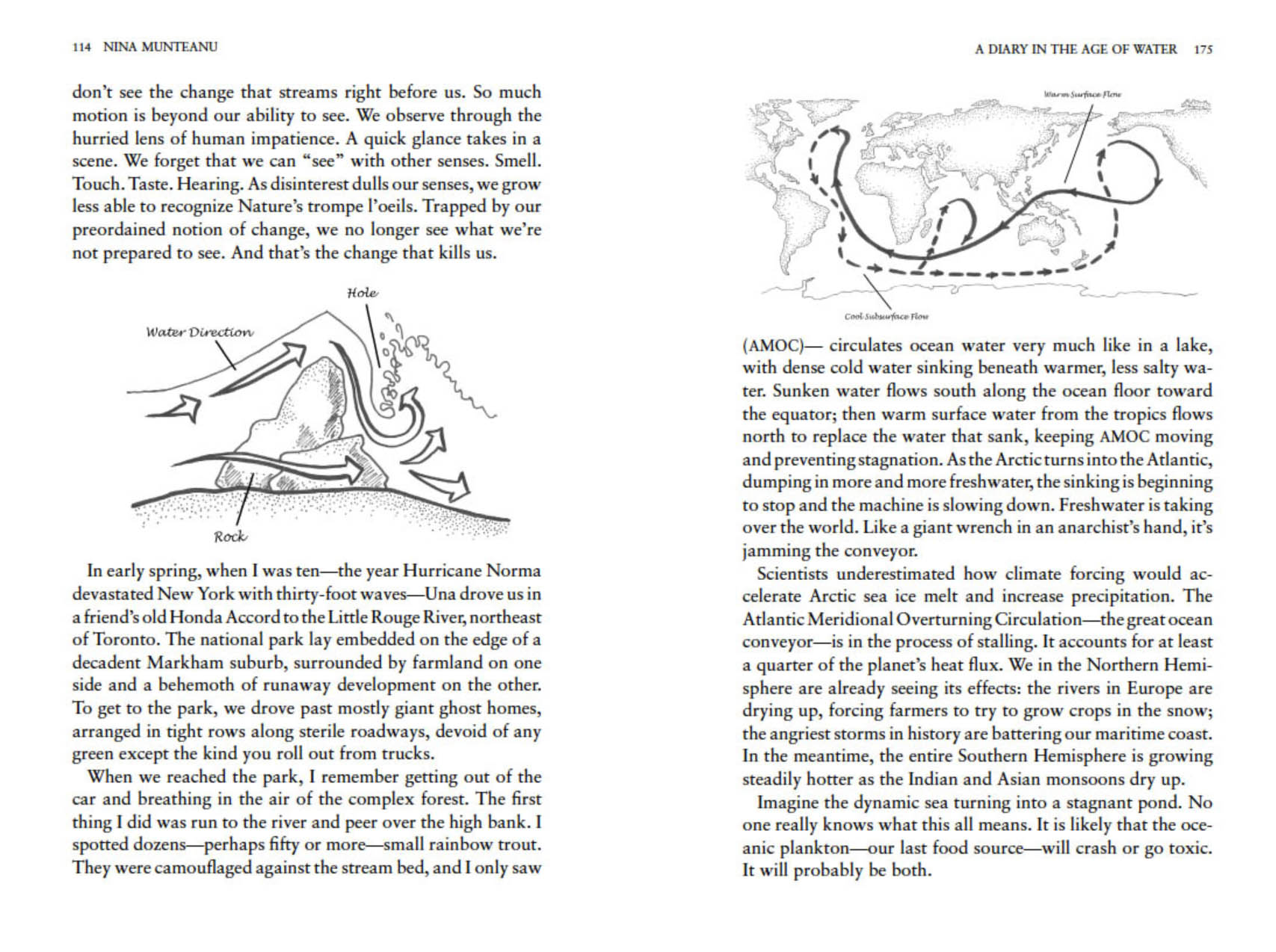
I’m being 100% serious when I say ‘A Diary in the Age of Water’ is one of the most powerful books I’ve ever read. For what it stands for is truly a statement towards our own damning of this beautiful planet and our most precious resource – water. Canadian Author Nina Munteanu has put together a masterful look at where we could possibly end up if we don’t act. This one was another Reedsy Discovery find and thus totally justified my joining of the platform well and truly!
LEE HALL
Country road in winter, ON (photo and rendition by Nina Munteanu)
Nina Munteanu is a Canadian ecologist / limnologist and novelist. She is co-editor of Europa SF and currently teaches writing courses at George Brown College and the University of Toronto. Visit www.ninamunteanu.ca for the latest on her books. Nina’s bilingual “La natura dell’acqua / The Way of Water” was published by Mincione Edizioni in Rome. Her non-fiction book “Water Is…” by Pixl Press(Vancouver) was selected by Margaret Atwood in the New York Times ‘Year in Reading’ and was chosen as the 2017 Summer Read by Water Canada. Her novel “A Diary in the Age of Water” was released by Inanna Publications (Toronto) in June 2020.
In 2007, when I started my first blog, The Alien Next Door, I wrote an article that explored the term “Darwin’s Paradox”—it’s not just the title of my science fiction thriller Darwin’s Paradox released that year by Dragon Moon Press—but a term coined by scientists to describe the paradoxical phenomenon exhibited by coral reefs.
Defying The Laws of Thermodynamics
Darwin described coral reefs as oases in the desert of the ocean. Coral reefs comprise one of the richest ecosystems on Earth, in apparent violation of the laws of thermodynamics (high productivity in a low-productivity environment). Productivity ranges from 50 to 250 times more than the surrounding ocean. How do they thrive in crystal-clear water, largely devoid of nutrients? Part of the answer lies in the coral’s efficiency in recycling nutrients like nitrate and phosphate.
First, the rough coral surface amplifies water turbulence at a microscopic level, disrupting the boundary layer that usually settles on objects under water and lets the coral “hoover” up the sparse nutrients. I stumbled upon a similar phenomenon during my grad work on temperate streams and published my serendipitous discovery in the journal Hydrobiologia. I was researching how periphyton (attached “algae”) colonized submerged glass slides and observed that the community preferred the edges of the slides because the micro-turbulence there provided more opportunity for attachment and nutrition.
Second, lots of corals also function symbiotically with specialized algae (called zooxanthelae), which provide the coral with food (through photosynthesis) and, in turn, get food from the wastes created by the coral.
Can the science of symbiosis teach us something about another Darwin’s Paradox?
The Evolution of Compassion
In a September 2013 article in the Jewish World Review, Boston Globe reporter Jeff Jacobywrote:
“Charles Darwin struggled with a paradox: If evolution is a struggle for survival, how could generosity, compassion, and other altruistic virtues have spread through natural selection? Darwin could see the clear evolutionary benefit to groups that inculcated ethical values in their members. Imagine two competing primitive tribes, equally matched — except that ‘one tribe included a great number of courageous, sympathetic, and faithful members, who were always ready to warn each other of danger, [and] to aid and defend each other.’ (Darwin, “The Descent of Man”). There was little doubt that tribes highly endowed with such virtues ‘would spread and be victorious over other tribes.’”
“How did any tribe evolve such ethical qualities in the first place?” asks Jacoby. Brave individuals who risked their lives for others “would on average perish in larger numbers than other men.” It hardly seemed possible, Darwin conceded, that, “such virtues … could be increased through natural selection, that is, by the survival of the fittest.” So, how did it and why?
Jacoby quotes Sir Jonathan Sacks, Britain’s Orthodox chief rabbi, who pointed to “the central drama of civilization: Biological evolution favors individuals,” says Sacks. “But cultural evolution favors groups.… Selfishness benefits individuals [only in the short-term and only in a limited way—my comment], but it is [ultimately] disastrous to groups, and it is only as members of a group that individuals can survive at all.”
Jacoby describes the vast literature in evolutionary psychology and sociobiology that have demonstrated humanity’s hard-wired moral capacity. “We are born with an aptitude for empathy and fairness,” said Jacoby, citing recent neurological experiments that have demonstrated that an act of generosity triggers a pleasurable response in the brain.
Abraham Lincoln summarized it in seven words: “When I do good, I feel good.” Psychologists call it the “helper’s high”. Neuroscientists and behavioral scientists are demonstrating unequivocally the benefits of altruism to our health and happiness. Scientists have designed experiments that actually trace altruism—and the pleasure we gain from it—to specific regions and systems in the brain. Key studies now provide striking evidence that our brains are wired for altruism.
The Social Brain and the Seat of Compassion
In a study published in the Proceedings of the National Academy of Sciences (Moll et al, 2006), a team of neuroscientists lead by Dr. Jordan Grafman, reported that, “when people made the decision to donate to what they felt was a worthy organization, parts of the midbrain lit up—the same region that controls cravings for food and sex.” The brain experiences a pleasurable response when we engage in good deeds that benefit others.
Dr. Grafman found that the subgenual area in the frontal lobe near the midpoint of the brain was also strongly active when his study subjects made the decision to give to charity. The area houses many receptors for oxytocin, a hormone that promotes social bonding. “The finding suggests that altruism and social relationships are intimately connected—in part, it may be our reliance on the benefits of strong interpersonal connections that motivates us to behave unselfishly,” reports Elizabeth Svoboda in the WallStreet Journal. The team also found that the nucleus accumbens, which contains neurons that release the pleasure chemical dopamine, was triggered when a person chose to help another.
A 2007 study headed by neuroscientist Scott Huettel and reported in Nature Neuroscience(Tankersley, et al., 2007) connects altruism to the posterior superior temporal cortex (pSTC), an area in the upper rear of the brain that lets us perceive goal-directed actions by someone or something else. Results suggest that altruism depends on, and may have evolved from, the brain’s ability to perform the low-level perceptual task of attributing meaning and motive in the actions of others.
“Our findings are consistent with a theory that some aspects of altruism arose out of a system for perceiving the intentions and goals of others,” said Dr. Huettel. “To be altruistic, you need to see that the people you’re helping have goals, and that your actions will have consequences for them.”
Research led by Michael Platt reported in Nature Neurosciencein 2012, showed that the anterior cingulate gyrus(ACCg) is an important nexus for the computation of shared experience and social reward. That same year researchers at Mount Sinai School of Medicine in New York published research in the journal Brainthat suggested that the anterior insular cortexis the activity centre of human empathy.
I find it both interesting and exciting that these studies link different brain regions to altruistic and compassionate behavior. “There are certain to be multiple mechanism that contribute to altruism, both in individuals and over evolutionary time,” added Huettel. This is the nature of the brain, whether we look at intelligence, motivation or physical characteristics. And I am convinced that we will someday find that many other areas—if not the entire area—of the brain are involved. Moreover, researchers have shown that engaging—or even witnessing—generous acts can reduce stress, increase immunity (e.g., increased antibody levels), and longevity.
Emiliana Simon-Thomas, science director for the Greater Good Science Center at the University of California, Berkeley, explains the chemical activity that happens in our heads when we commit acts of altruism. “There are multiple reward systems that have been tied to pleasurable feelings when people help others or contribute to the well being of the people around them,” she notes. These reward systems are comprised of three main chemicals that are released when we commit an act of kindness and feel pleasure: Dopamine, Oxytocin and Serotonin. According to Simon-Thomas, Dopamine is most closely related to hedonic pleasure — or pleasure derived from self; oxytocin is tied to more social pleasure — especially with regard to physical contact; and serotonin is implicated in a more broad mood state. “All three of these, again, are sort of intersecting and interacting, and depending on the context that you’re in, represent feelings of pleasure in different context,” she explains. “All these systems are activating and parallel, and sort of influencing one another as you go through life.” So when I do a good deed, I am rewarding myself with a cocktail of wonder drugs that please me and make me smile.
So, what I’ve known since I was a child is now proven: doing good deeds is mutually beneficial to the giver and the receiver.
Path through winter forest in the fog, ON (photo by Nina Munteanu)
Altruism in All Beings
The notion that all aspects of life on this planet—not just humanity—have the capacity to act altruistically remains controversial—even among professional scientists and researchers. We are not unique in experiencing or practicing altruism, in acting altruistically and benefiting from our own altruistic acts. It is however a matter of perspective, bias and open-mindedness. Many examples of altruistic behavior and empathy exist in the rest of the living world on our planet.
Nature’s Heroes
Scientists have been demonstrating for years that cooperation among organisms and communities and the act of pure altruism (not reciprocal altruism or kin/group selection) is, in fact, more common in Nature than most of us realize. Valid examples of true altruism in the wild in many species exist. The key here is “in the wild”—not in captivity, where inherent behavior is often modified (see my Alien Next Door article “The SamaritanParadox Revisited: The Karma Ran Over the Dogma”).
Despite the overwhelming evidence for altruism in every aspect of our world, some researchers continue to design experiments and then draw sweeping conclusions based on animals in captivity to suggest that only humanity possesses the ability to behave altruistically—and then again only by social-instruction (aka “the Selfish Gene” of Richard Dawkins vs. the “Social Gene” of Lynn Margulis).
Examples of altruism abound and range among mammals, birds, invertebrates and even Protista. Some examples include: dogs, cats, ducks, squirrels, wolves, mongooses, Meer cats, baboons, chimpanzees, vampire bats, dolphins, walruses, lemurs, African buffalo—to name a few.
de Waal explained that “evolution favors animals that assist each other if by doing so they achieve long-term benefits of greater value than the benefits derived from going it alone and competing with others” (de Waal 2006). The prevalent phenomenon of altruism is Nature’s answer to the Prisoner’s Dilemma. “Empathy evolved in animals as the main … mechanism for [individually] directed altruism,” said deWaal. And it is empathy—not self-interest—that “causes altruism to be dispensed in accordance with predictions from kin selection and reciprocal altruism theory.” deWaal further proposed that the scientific community has become polarized between evolutionary biologists on the one side, and, on the other, a discrete group of economists and anthropologists that “has invested heavily in the idea of strong reciprocity,” which demands discontinuity between humans and all other animals.
“One of the most striking consequences of the study of animal behavior,” says anthropologist Robert Sapolsky, “is the rethinking … of what it is to be human.” He notes that, “a number of realms, traditionally thought to define our humanity, have now been shown to be shared, at least partially, with nonhuman species.” (Sapolsky 2006). This makes some of us uncomfortable. To some, it threatens to make us less special. The corollary is that this demonstrates that we possess intrinsic virtue, not something “painted” on through cultural teaching or diligent personal effort. Of course, it also means that all other beings possess intrinsic value too. In the final analysis, what we generally “know” is colored by what we believe and want to continue believing.
First big snow in Thompson Creek marsh, ON (photo and dry brush rendition by Nina Munteanu)
Universal Altruism and Gaia
What does all this mean? Does the very existence of altruism demonstrate the connectivity of all life on Earth? Let’s not stop there. Does the grace of altruism reflect a fractal cosmos imbued with meaning and intent? Was it the grace of altruism that allowed it all to happen in the first place? Don’t we all come from grace?
Despite struggles with acceptance for some of us, we are emerging enlightened to the fractal existence of grace and altruism embedded in the very nature and intentions of our universe.
I come full circle to my book Darwin’s Paradox, a tale of fractal intelligence and universal cooperation. A tale of emerging awareness of Self and Other as One…Evolution through cooperation… Creative DNA…Manifestation through thought and intent…Self-organization and synchronicity…A hero’s journey…and coming Home…
In this season of gratitude, we celebrate altruism in giving and in receiving graciously.
Merry Christmas!
First snow over Thompson Creek outlet, ON (photo by Nina Munteanu)
Bradley, Brenda. 1999. “Levels of Selection, Altruism, and Primate Behavior.” The Quarterly Review of Biology, 74(2):171-194.
De Waal, Frans, with Robert Wright, Christine Korsgaard, Philip Kitcher, and Peter Singer. 2006. “Primates and Philosophers: How Morality Evolved”. Princeton: Princeton University Press.
Goodall, Jane. 1990 Through A Window: My Thirty Years with the Chimpanzees of Gombe. Boston: Houghton Mifflin.
Moll, Jorge, Frank Krueger, Roland Zahn, Matteo Pardini, Ricardo de Oliveira-Souza, and Jordan Grafman. 2006. “Human fronto-mesolimbic networks guide decisions about charitable donation.” In: Proc. Natl. Acad. Sci., USA, 103(42): 15623-15628. http://www.pnas.org/content/103/42/15623.full
Sapolsky, Robert M. 2006. “Social Cultures Among Nonhuman Primates.” Current Anthropology, 47(4):641-656.
Svoboda, Elizabeth. 2013. “What Makes a Hero? The Surprising Science of Selfishness.” Current.
Tankersley D et al. 2007. “Altruism is Associated with an Increased Response to Agency.” Nature Neuroscience, February 2007, Vol. 10(2), pp. 150-151.
Warneken, F. & Tomasello, M. 2006. “Altruistic Helping In Human Infants and Young Chimpanzees.” Science, 311, 1301–1303.
Warneken, F., Hare, B., Melis, A. P., Hanus, D. & Tomasello, M. 2007. “Spontaneous Altruism By Chimpanzees and Young Children.” PloS Biology, 5(7), e184.
de Waal, F. B. M. 2008. “Putting the Altruism Back Into Altruism: The Evolution of Empathy.” Annu. Rev. Psychol., 59, 279–300.
de Waal, F. B. M., Leimgruber, K. & Greenberg, A. R. 2008. “Giving Is Self-rewarding for Monkeys.” Proc. Natl. Acad. Sci., USA, 105, 13685–13689.
Nina Munteanu is a Canadian ecologist / limnologist and novelist. She is co-editor of Europa SF and currently teaches writing courses at George Brown College and the University of Toronto. Visit www.ninamunteanu.ca for the latest on her books. Nina’s bilingual “La natura dell’acqua / The Way of Water” was published by Mincione Edizioni in Rome. Her non-fiction book “Water Is…” by Pixl Press(Vancouver) was selected by Margaret Atwood in the New York Times ‘Year in Reading’ and was chosen as the 2017 Summer Read by Water Canada. Her novel “A Diary in the Age of Water” was released by Inanna Publications (Toronto) in June 2020.
We talked about the story, its main characters–including water as a character–and why I write about water. We also covered why the book is written partly as a diary. Margaret Atwood’s name came up a few times…
Nina Munteanu chats with Darshaun McAway of W.O.W. Podcast about her new clifi novel “A Diary in the Age of Water”: a novel about the journeys of four generations of women and their unique relationship with water during a time of great environmental change. Darshaun and Nina talk about her use of water as a character, her choice of heroines and her use of a diary format to tell the story. Nina shares that the book–set in the near future as a limnologist’s diary and the far future with an evolved human–explores the premise of a water-scarce Canada whose water now belongs to the USA, who, in turn, is owned by China. The events about which the diarist writes are based on real historic events and people. Nina brings her considerable scientific, limnological and research skills to bear in describing a future Canada both dystopic and harrowing–yet very familiar. One real event taken as premise in the book that Nina shared with Darshaun is the American NAWAPA plan of the 1960s that went to congress and was (and still is) seriously discussed for years following: the plan was to divert massive amounts of fresh water from Canada and store by inundating the Rocky Mountain Trench and piped south to hydrate dwindling aquifers in the USA.
W.O.W Interview with Nina Munteanu and Darshaun McAway
Nina Munteanu is a Canadian ecologist / limnologist and novelist. She is co-editor of Europa SF and currently teaches writing courses at George Brown College and the University of Toronto. Visit www.ninamunteanu.ca for the latest on her books. Nina’s bilingual “La natura dell’acqua / The Way of Water” was published by Mincione Edizioni in Rome. Her non-fiction book “Water Is…” by Pixl Press(Vancouver) was selected by Margaret Atwood in the New York Times ‘Year in Reading’ and was chosen as the 2017 Summer Read by Water Canada. Her novel “A Diary in the Age of Water” was released by Inanna Publications (Toronto) in June 2020.
I was recently interviewed by Canadian writer Simon Rose on my recent novel release “A Diary in the Age of Water” by Inanna Publications. Set mostly in near-future and far-future Toronto area, the book has already received some praise:
“Evoking Ursula LeGuin’s unflinching humane and moral authority, Nina Munteanu takes us into the lives of four generations of women and their battles against a global giant that controls and manipulates Earth’s water…In language both gritty and hauntingly poetic, Munteanu delivers an uncompromising warning of our future.”—Lynn Hutchinson Lee, Toronto playwright
Dragonfly.eco calls the book “an insightful novel…a cautionary tale rummaging through the forgotten drawers of time in the lives of four generations…This whirling, holistic, and evolving novel comes alive, like we imagine water does.”
The novel received a five-star review in Foreword Clarion Review and Kirkus Reviews writes: “Munteanu transmutes a harrowing dystopia into a transcendentalist origin myth. A sobering and original cautionary tale that combines a family drama with an environmental treatise.”
Part of the story is told through the diary of a limnologist (someone who studies freshwater) who witnesses and suffers through severe water taxes and imposed restrictions, dark intrigue through neighbourhood water betrayals, corporate spying and espionage, and repression of her scientific freedoms. Some people die. Others disappear… Here’s an excerpt from the interview:
What is “A Diary in the Age of Water” about?
The book is essentially a journey of four generations of women who have a unique relationship with water, through a time of extreme change through climate change and water shortage. The book spans over forty years (from the 2020s to the 2060s) and into the far future, mostly through the diary of a limnologist, which is found by a future water-being. During the diarist’s lifetime, all things to do with water are overseen and controlled by the international giant water utility CanadaCorp—with powers to arrest and detain anyone. This is a world in which China owns America and America, in turn, owns Canada.
You mention the” Age of Water” in your book. Are there other ages/epochs?
Yes. The story begins in the far future with young Kyo during the Age of Trees, after the end of the Age of Water. It is, in fact, the end of that age as well and that is why she prepares for the Exodus to “humanity’s” new home.
What inspired you to write this book?
My publisher in Rome (Mincione Edizioni) had asked me for a short story on water and politics. I wanted to write about Canada and I wanted something ironic… so I chose water scarcity in Canada, a nation rich in water. The bilingual story “The Way of Water” (“La natura dell’acqua”) resulted, which has been reprinted in several magazines and anthologies, including Cli-Fi: Canadian Tales of Climate Change (Exile Editions), Future Fiction: New Dimensions in International Science Fiction (Future Fiction/Rosarium Publishing), Little Blue Marble Magazine, and Climate Crisis Anthology (Little Blue Marble). The story was about young Hilde—the daughter of the diarist (of the novel). Hilde was dying of thirst in Toronto and the story begged for more … so the novel came from it…
Why did you choose to write your novel as a diary?
I was writing about both the far and the near future and much of it was based—like Margaret Atwood and her books—on real events and even real people. I wanted personal relevance to what was going on, particularly with climate change. I also wanted to achieve a gritty realism of “the mundane” and a diary felt right. Lynna—the diarist—is also a reclusive inexpressive character, so I thought a personal diary would help bring out her thoughts and feelings more. There’s nothing like eves-dropping to make the mundane exciting. The diary-aspect of the book characterizes it as “mundane science fiction” by presenting an “ordinary” setting for characters to play out. The tension arises more from insidious cumulative events and circumstances that slowly grow into something incendiary.
Your book has been described by various reviewers and literary types as being anything from literary fiction and FemLit to science fiction, Cli-Fi and eco-fiction How would you describe it?
Otonabee shoreline, ON (photo by Nina Munteanu)
It’s really all these things. The story carries the personal journeys of four strong and complex women characters. It gives them much agency in dealing with the climate and water crisis—socially, politically, and environmentally. One is a political activist, another a wary scientist, and another an anarchist. However, while A Diary in the Age of Water showcases strong women characters, its main climate and environmental theme carries the story through the four generations to its climax. In the end, the book’s classification will depend on the reader, who will decide which aspect of the novel resonates the most with them. The main protagonist in “A Diary in the Age of Water” is a limnologist (someone who studies freshwater); so are you. Is there any resemblance? Both Lynna and I chose to study water through the discipline of limnology; Lynna did most of her work on Canadian glaciers, while my focus was on small streams in southern Quebec. We also share similar views on the environment and humanity’s place in it. I might even have some of her character foibles … hopefully not ALL of them. However, how she chose to live that worldview—cloistered, repressed, and fearful—is not me at all. I tend to bluster, confront, and generally get into trouble. In that way, I might more resemble Lynna’s daughter. Having said that, I’d say that all good characters have a piece of the writer in them. Some dark and some light. How can they not? In this case, the resemblance with the diarist is heightened because she is depicted through her diary, which adds a gritty realism and a highly personal aspect to the first person fiction. There’s a piece of me in each of the four women depicted in the story.
You mentioned that each of the four generations of women have a singular relationship with water. What role does water play in the book?
Well, in some important way, water is the fifth character. You could say even the main character. Water is the theme that carries each woman on her personal journey with climate change and the devastation that occurs—through water, I might add. Climate change is a water phenomenon, after all… So, water—like place and setting—plays a subtle yet powerful role in the story, influencing each character in her own way and bringing them together in the overall journey of humanity during a time of great and catastrophic change.
Pond lily, ON (photo by Nina Munteanu)
The diary spans a twenty-year period in the mid-twenty-first century and describes a Canada in the grips of severe water scarcity. Tell us about that—how does a water-rich country like Canada suffer severe water scarcity?
Trent Canal, ON (photo by Nina Munteanu)
Ecologists and economists alike (who truly understand water and its global distribution and movement) will tell you that there is, in fact enough water on the planet; scarcity results from its unequal distribution, pollution and toxic input, squandering, diversion, and manipulation (one example being making rain and instructing it to fall here rather than there). Maude Barlow (Chairperson of the Council of Canadians) will tell you that Canada is currently at risk of giving away much of its water. Foreign companies are now mining Canada’s watersheds with impunity and at minimal cost. Under my premise, United States (and China) aggressively mines Canada’s groundwater, glaciers, rain and surface water through massive diversion projects to rehydrate the dwindling aquifers of the United States.
My premise is based on real events currently ongoing throughout the world. China leads the world in rainmaking and manipulation. Egypt plans to pump water from Lake Nassar into the Sahara as tensions between Egypt, and nine upstream countries for control of water in the Nile watershed increase from dams the Sudanese and Ethiopians build and as Tanzania pumps water from Lake Victoria, and Kenya diverts lakes feeding Lake Victoria to its arid eastern regions. India, Pakistan, Bangladesh, and China are in conflict over control of rivers such as the Indus, Ganges, and particularly the Brahmaputra. India’s River Link Plan impacts Bangladesh. As Pakistan, Kashmir and India fight over more and more water, the Indus dries up and no longer flows into the ocean. Meantime, Russian scientists are reviving a 1930s Soviet plan to reverse some of Siberia’s largest rivers to the parched former Soviet republics of central Asia with plans to replenish the Aral Sea. This is something very similar to the USA’s 1960 plan to divert Canada’s northward waterways south to rehydrate America’s drying midwest. Massive water diversion is also being debated within a single country; Spain’s water-rich northern region has fallen under pressure by Spain’s water-poor southern region, provoking the controversial Ebro diversion project. Norwegian university professor Terje Tvedt aptly concludes: “At the heart of these gigantic enterprises lies one of history’s great paradoxes: the more humans try to tame and regulate water by means of large-scale elaborate projects, the more water will, in turn, control society.”
Back to Canada and my not so outlandish premise: by the 2040s, Canadians are indentured to US needs through massive diversions and resulting water-use restrictions. One example, taken from precedent set in states like Colorado, is an imposed ruling by CanadaCorp that Canadians cannot collect rainwater. Something several states have already implemented.
The novel mentions a huge water diversion plan called NAWAPA. Can you tell us about that?
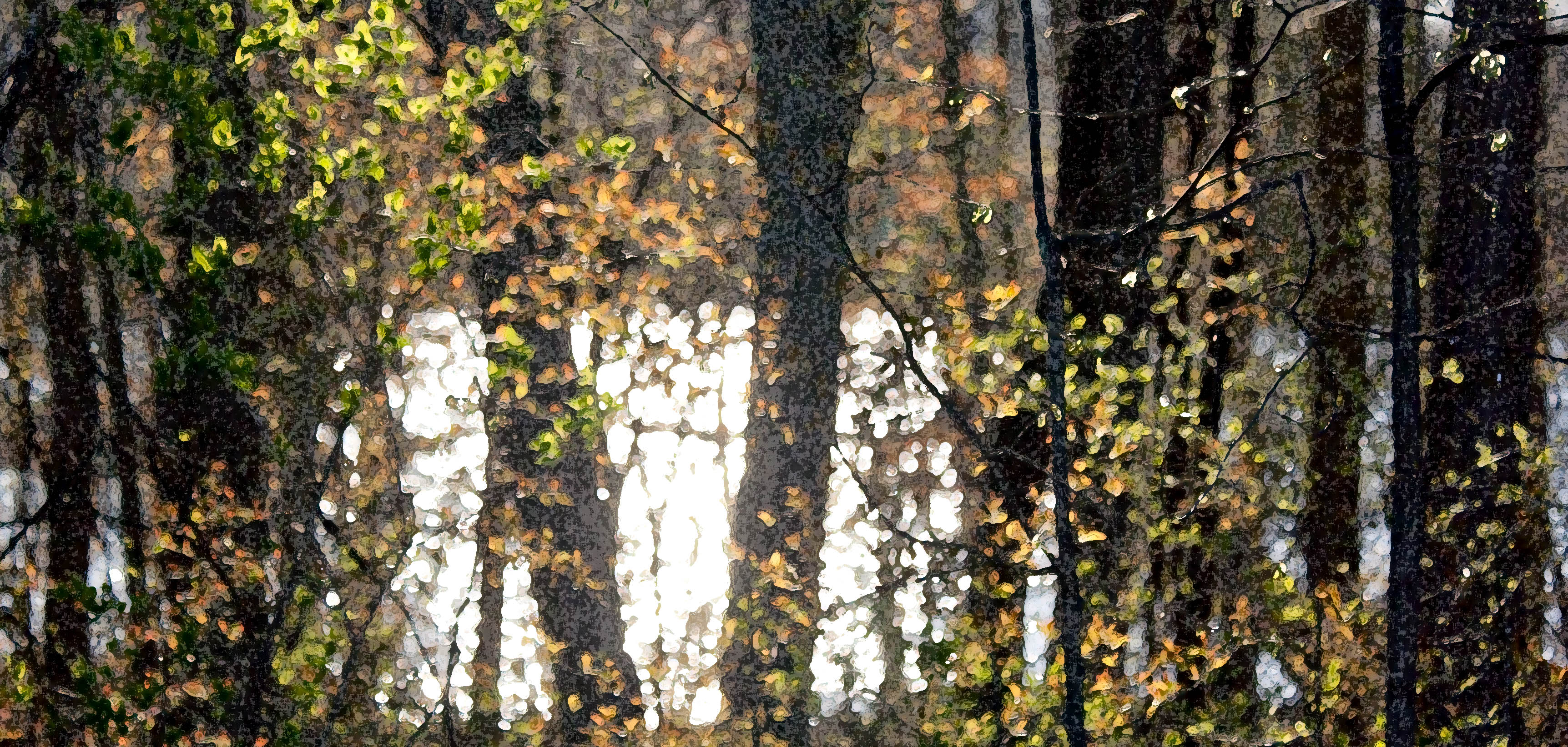
The original NAWAPA (North America Water Power Alliance) Plan was drawn up by the Pasadena-based firm of Ralph M. Parsons Co. in 1964, and had a favorable review by Congress for completion in the 1990s. The plan—thankfully never completed—was drafted by the US Army Corps of Engineers and entailed the southward diversion of a portion (if not all) of the Mackenzie and Yukon rivers in northern Canada and Alaska, now flowing into the Arctic Ocean as well as the Peace, Liard and other rivers flowing into the Pacific by creating massive dams in the north. This would cause the rivers to flow backwards into the mountains to form vast reservoirs that would flood one-tenth of British Columbia. The water would be channeled south through the 800-km Rocky Mountain Trench Reservoir into the Northern USA, and from there along various routes into the dry regions of the South, to California and reaching as far as Mexico.
NAWAPA was envisioned as the largest construction effort of all times, comprising some 369 separate projects of dams, canals, and tunnels, for water diversion. The water diversion would be accomplished through a series of connecting tunnels, canals, lakes, dams, and pump-lifts, as the trench itself is located at an elevation of 914 m (3,000 feet). To the east, a 9 m (thirty-foot) deep canal would be cut from the Peace River to Lake Superior. NAWAPA’s largest proposed dam would be 518 m (1,700 feet) tall, more than twice the height of Hoover Dam (at 221 m) and taller than any dam in the world today, including the Jinping-I Dam in China (at 305 m).
In the novel, NAWAPA-2 gets completed by 2045, which includes creating a giant inland sea in the Rocky Mountain Trench in British Columbia and a huge diversion in central Canada as well.
Very intriguing. Where can readers purchase the book?
Nina Munteanu is a Canadian ecologist / limnologist and novelist. She is co-editor of Europa SF and currently teaches writing courses at George Brown College and the University of Toronto. Visit www.ninamunteanu.ca for the latest on her books. Nina’s bilingual “La natura dell’acqua / The Way of Water” was published by Mincione Edizioni in Rome. Her non-fiction book “Water Is…” by Pixl Press(Vancouver) was selected by Margaret Atwood in the New York Times ‘Year in Reading’ and was chosen as the 2017 Summer Read by Water Canada. Her novel “A Diary in the Age of Water” was released by Inanna Publications (Toronto) in June 2020.