Exploring “The Law of Attraction for Writers” Podcast with Suzanne Lieurance & Simon Rose

Today, I’m sitting down with authors and writing coaches Suzanne Lieurance and Simon Rose to talk about their brand-new YouTube series, The Law of Attraction for Writers Podcast, which you can find at: https://www.youtube.com/@LawofAttractionforWritersPodca.

The show blends mindset, creativity, and practical writing advice — a combination that’s resonating with writers who want to manifest success and write with more ease.

Nina: Welcome, both of you!

Suzanne: Thank you! We’re so excited to finally share this project.

Simon: Yes, it’s been in the works for a while, and we’re thrilled to see writers already responding so positively.

Simon Rose and Suzanne Lieurance

Nina: Let’s start with the big question. Why create a Law of Attraction for Writers podcast?

Suzanne: Well, over the years, I’ve coached so many writers who say things like, “I’ll feel successful when I get an agent,” or “I’ll write when I have more time.” But the Law of Attraction teaches us it works the other way around — you become the person who already feels successful, and the opportunities follow. I wanted to create a podcast that helps writers understand how their thoughts, emotions, and energy shape their writing lives.

Simon: Exactly. So much of writing is mental. You can have the best outline and still feel blocked if your energy is off. We wanted to show that aligning your mindset with your goals isn’t mystical — it’s practical. You’re essentially training your brain to focus on what you want instead of what you fear.

Nina: How would you describe the podcast to someone who hasn’t tuned in yet?

Simon: Each episode focuses on one key aspect of the Law of Attraction and how it connects to the writing process. We might explore a concept like visualization, vibration, or inspired action — and then show writers how to apply that directly to their writing routines.

Suzanne: We wanted to make it accessible. It’s not just theory or motivation. We give writers clear steps they can take right away — ways to shift their thinking, attract new ideas, or rekindle their excitement for a project.

Simon: We also share personal stories. Between the two of us, we’ve seen these principles in action — in publishing, in teaching, and even in everyday creative decisions.

Nina: I love that you connect mindset with the craft of writing. Can you say more about how that works?

Suzanne: Sure. A lot of writers separate the two — mindset on one side, writing craft on the other. But they’re intertwined. You might know every writing technique out there, but if you’re doubting yourself or constantly telling yourself you’re behind, you’ll block the creative flow.


Simon: That’s why the Law of Attraction is so powerful for writers. It’s not just about “thinking positive.” It’s about intentionally setting the tone for your writing sessions, deciding what kind of writer you believe yourself to be, and letting that belief guide your actions.

Suzanne: In one episode, we talk about “energetic alignment” — how your emotional state affects the words you put on the page. When you write from frustration, the writing feels heavy. But when you write from joy or curiosity, the story expands.

Nina: You’ve both been writing coaches for years. How has it been working together on this project?

Simon: It’s been wonderful. Suzanne brings a very intuitive approach to writing and mindset, while I tend to look at things through a more analytical lens. Together, we strike a balance between the spiritual and the practical.

Suzanne: Yes! We complement each other well. Simon often grounds the big ideas in real-world examples, and I love exploring how energy and focus shape results. It’s a true partnership — and we both learn from each other in every episode.

Nina: Without giving too much away, what are some of the themes or takeaways that keep coming up in your discussions?

Suzanne: One theme that runs through everything is trust — trusting yourself, your ideas, and the timing of your success. The Law of Attraction reminds us that everything unfolds when you’re ready to receive it.

Simon: Another recurring idea is momentum. Writers often stop when things get tough, but energy builds through consistent action. You don’t have to write for hours every day — just focus on showing up with intention. That small shift can open the door to much bigger results.

Suzanne: We also talk about how to handle resistance. Every writer faces doubt or creative slumps. The podcast offers ways to turn those moments into opportunities instead of roadblocks.

Nina: You’ve chosen YouTube as your main platform. Why that format?

Simon: We wanted to make it easy and engaging. YouTube allows us to connect visually and energetically with our audience. Writers can listen while they work, which adds a more personal connection.

Suzanne: And YouTube’s format fits how writers consume content today. Many of them already use it to learn about craft and publishing. This podcast adds another layer — the inner work behind writing success.

Nina: What’s ahead for the Law of Attraction for Writers Podcast?

Suzanne: We’ll keep releasing new episodes every Tuesday. Each one will build on the idea that your energy, focus, and beliefs create your writing experience.

Simon: We’re also exploring live Q&A sessions, where writers can ask questions and share how they’ve applied the principles we discuss. It’s exciting to see a community forming around these ideas.

Suzanne: Ultimately, we want every writer to realize they’re not powerless. They can create not only their stories but also their success.

Nina: That’s such an inspiring message. Any final thoughts for writers who might be hesitant to explore this side of writing?

Suzanne: Just start listening with an open mind. You don’t have to “believe” in anything right away — just try applying one idea and see what shifts.

Simon: Yes. Writing is already an act of creation — you’re manifesting something that didn’t exist before. This podcast helps you see that same creative power working in every area of your writing life.

Nina: Beautifully said. Thank you both.


Watch: New episodes of The Law of Attraction for Writers Podcast drop every Tuesday on YouTube at https://www.youtube.com/@LawofAttractionforWritersPodca

Follow Suzanne Lieurance and Simon Rose for practical, inspiring ways to align your mindset, energy, and creativity — and manifest the writing life you’ve always imagined.

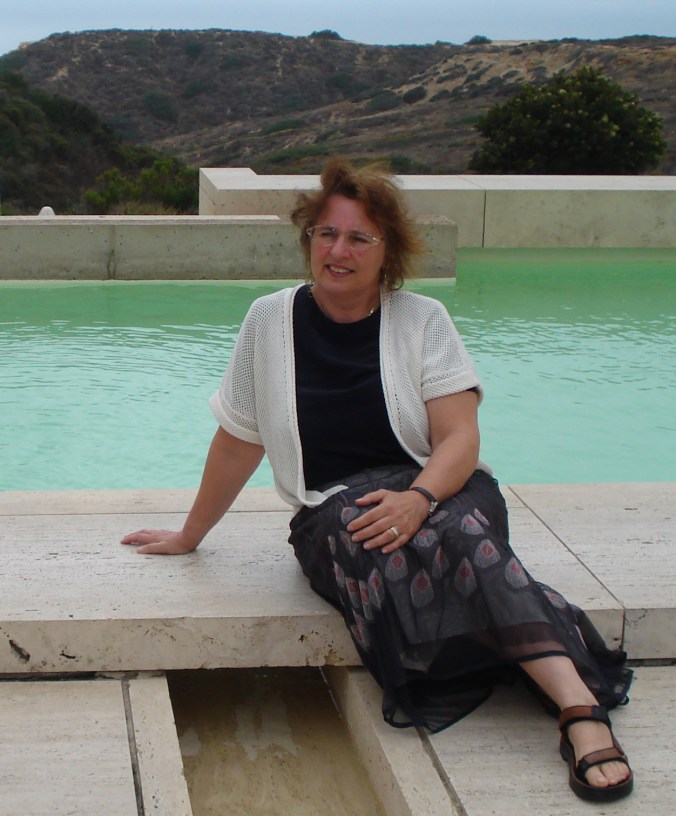
Nina Munteanu is an award-winning novelist and short story writer of eco-fiction, science fiction and fantasy. She also has three writing guides out: The Fiction Writer; The Journal Writer; and The Ecology of Writing and teaches fiction writing and technical writing at university and online. Check the Publications page on this site for a summary of what she has out there. Nina teaches writing at the University of Toronto and has been coaching fiction and non-fiction authors for over 20 years. You can find Nina’s short podcasts on writing on YouTube. Check out this site for more author advice from how to write a synopsis to finding your muse and the art and science of writing.

My Drive Across Canada: Part 4—The Rockies & Beyond

From the rolling Prairies I ascended up the foothills of the Rocky Mountains in Alberta. As I neared the mountains, they seemed to cut the sky with jagged peaks of steely grey. Rugged and unabashedly wild, they teased my spirits into flight.

Rocky Mountains, Alberta (photo by Nina Munteanu)
Canadian Rockies, AB (photo by Nina Munteanu)

The Rockies are such a wonder! I found myself thinking—well, wishing—that I had a geologist sitting in the passenger seat (instead of my companions Toulouse, Mouse and a car full of plants), telling me all about these stately mountains and their formations. All that folding, thrusting, scraping and eroding! So fascinating!

Rockies west of Banff, AB (photo by Nina Munteanu)

I did some research into The Canadian Rocky Mountains and discovered that they were formed through a combination of subduction and thrust faulting with an oceanic plate subducting beneath the North American plate.

Sketch showing subduction of ocean plate beneath the North American plate with accompanying accretionary wedge and thrusting action (image by Earle and Panchuk)

The Canadian Rocky Mountains were originally part of an ancient shallow sea half a billion years ago and formed from pieces of continental crust over a billion years old during an intense period of plate tectonic activity. Their jagged peaks of mostly sedimentary limestone (originally part of the continental shelf) and shale (originally part of the deeper ocean waters) belonged to an ancient sea floor; during the Paleozoic Era (~5-2 hundred million years ago), western North America lay beneath a shallow sea, depositing kilometers of limestone and dolomite.

Rocky Mountains near Canmore, AB (photo by Nina Munteanu)

The current Canadian Rocky Mountains were raised by the Cordilleran Orogeny, a process of mountain-building when tectonic plates started colliding ~ 200 million years ago during much of the Mesozoic Era, which extends over 187 million years from the beginning of the Triassic (252 Ma) to the end of the Cretaceous (65 Ma). This era, I’m told, was a particularly important period for the geology of western Canada. During the plate and land mass collisions, ancient seabed layers were scraped, folded and thrust upwards (through a process called thrust faulting). As plates converged, entire sheets of sedimentary rock were slowly pushed on top of other sheets, creating a situation where older rocks lie on top of younger ones.

Castle Mountain overlooks the Bow River, Canadian Rockies, AB (photo by Nina Munteanu)

According to Earle and Panchuk, several continental collisions occurred along the west coast over the Mesozoic, resulting in the formation of the Rocky Mountains and the accretion (addition) of much of British Columbia’s land mass. Starting in the early Triassic (~250 Ma) through to the Cretaceous Period (~90 Ma), continued subduction sent several continental terranes (land masses) colliding into and accreting to the western edge of North America. The Quesnel, Cache Creek, and Stikine Terranes formed the Intermontane Superterrane, which now forms BC’s interior plateau between the Rockies and the Coast Range. A hundred million years later, during the Jurassic Period, a pair of terranes—Alexander and Wrangellia—collided with the west coast to form most of Vancouver Island and Haida Gwaii as well as part of Alaska. During the Cenozoic Era, more terranes accreted with the western edge of North America.

Model of the accretion of the Superterranes to the west coast of North America during the Mesozoic Era; red toothed lines=subduction zones; dark red triangles=volcanoes (images by Earle and Panchuk, 2019)

In the Jurassic Period, the Intermontane Superterrane acted like a giant bulldozer, pushing, folding, and thrusting the existing Proterozoic and Paleozoic west coast sediments eastward and upward to form the Rocky Mountains. The same process continued into the Cretaceous as the Insular Superterrane collided with North America and pushed the Intermontane Superterrane farther east.

Cross-section of the accretion of the Intermontane Superterrane to the west coast of North America in Jurassic and early Cretaceous, with resulting compression folding and thrusting of sedimentary rocks. Late Cretaceous Insular Superterrane further pushed against the Intermontane Superterrane to create massive folding and thrusting (image from Earle and Panchuk, 2019)

Canadian geologist/author Ben Gadd explains the Canadian Rocky Mountain building through the metaphor of a rug being pushed on a hardwood floor: the rug bunches up and forms wrinkles (mountains). In Canada, the subduction (downward movement) of an oceanic tectonic plate and the terranes (slabs of land) smashing into the continent are the feet pushing the rug, the ancestral rocks are the rug, and the Canadian Shield in the middle of the continent is the hardwood floor. The Rockies, writes Gadd, were like Tibet: a high plateau, 6,000 metres above sea level. Then, in the last 60 million years, glaciers—creeping forward at 50 feet per year—stripped away the high rocks, revealing the ancestral rocks beneath and carving out steep U-shaped valleys to form the current landscape of the Rockies: jagged peaks of soft sedimentary limestone and shale overlooking steep gorges and valleys. You can watch an excellent video of the 200-million-year formation of the Rocky Mountains by Spark.

Castle Mountain, Canadian Rockies, AB (photo by Nina Munteanu)
Rockies west of Lake Louise, Alberta (photo by Nina Munteanu)

When I stopped in Canmore, Alberta, for the night, I found all the hotels solidly booked, except for a few very expensive rooms in high end hotels. It was the weekend of the Calgary Stampede and the crowds had spilled out this far, I was told. I also acknowledged that I was plum in the middle of tourist season too. But I was dead tired and it would be dark soon; so, I bit the bullet and booked an expensive room in an expensive hotel. I recalled that I was repeating my mother’s trip across Canada to settle in Victoria many years ago; she’d also driven through here in her old Datsun, brim with plants, like my Benny, and stopped in Canmore for the night. Only, she found very reasonable accommodations when she came through over four decades ago. Canmore is located in the front ranges of the Rockies, with a wonderful view of the Three Sisters and Ha Ling Peak from my hotel room.

The Three Sisters, Canmore, AB (photo by Nina Munteanu)
Temple Mountain, west of Lake Louise, Alberta (photo by NIna Munteanu)

I gave Banff and Lake Louise a miss and opted for a breakfast at some remote viewpoint after crossing the border into British Columbia. As I ate my cereal from the tailgate of my car, I felt a strange but lovely warm joy spread through me like a deep soothing balm.

I was home…

Faeder Lake, Yoho National Park, BC (photo by Nina Munteanu)

I stopped at Faeder Lake, on the western side of Yoho National Park, with a view of the Ottertail Range and Mount Vaux. Faeder Lake’s clear tourquise water—a result of fine particles of rock dust called glacial flour—enticed me for a swim.  

I stopped briefly for lunch in Golden in the Rocky Mountain Trench. The Rocky Mountain Trench is a long and deep valley walled by sedimentary, volcanic and igneous rock that extends some 1,500 km north south, spanning from Montana through British Columbia. The Trench is sometimes referred to as the “Valley of a Thousand Peaks” because of the towering mountain ranges on either side: the Rocky Mountains to the east and the Columbia, Omineca and Cassiar mountains to the west.

Rocky Mountain Trench near Golden, BC

The Trench is a large fault—a crack in the Earth’s crust—and bordered along much of its length by smaller faults. Major structural features resulted from the shifting and thrusting of tectonic plates of the crust during the early Cenozoic Era (65 million years ago) during mountain formation discussed above. The ridges of fractured crust pulled apart and the land in between dropped, creating the floor of the Trench. Major rivers that flow through the trench include the Fraser, Liard, Peace and Columbia rivers.

The Rocky Mountain Trench features in two of my books: A Diary in the Age of Water (Inanna Publications) and upcoming novel Thalweg. In both novels, which take place in the near future, the trench has been flooded to create a giant inland sea to serve as water reservoir and hydropower to the USA. You can read an excerpt in my article “A Diary in the Age of Water: The Rocky Mountain Trench Inland Sea.” The article also talks about the original 1960s NAWAPA plan by Parsons Engineering to flood the trench to service dry sections of the US by diverting and storing massive amounts of Canadian water. Proponents are still talking about it!

Mount Macdonald, Rogers Pass, BC (photo by Nina Munteanu)

I entered Glacier National Park, driving through several snow & avalanche sheds at Rogers Pass, in the heart of the Selkirk Range of the Columbia Mountains. This part of the drive was spectacular as mountains towered close and steep above me like sky scrapers, fanning out as the bright green vegetation crept resolutely up their scree slopes.

Selkirk Mountains and Mount Macdonald in Roger’s Pass; Google location (image by Google Maps)
Selkirk Range at Rogers Pass, BC (photos by Nina Munteanu)

The highway followed the Illecillewaet River as it wound southwest to Arrow Lake from it’s the glaciers east. I soon reached Revelstoke National Park and stopped at the Giant Cedars Boardwalk Trail, located about 30 km east of Revelstoke, between the Monashee Mountains, west, and the Selkirk Range, east.

.
Boardwalk through ferns, devils club and giant cedars, Giant Cedar Boardwalk, Revelstoke National Park, BC (photo by Nina Munteanu)

The Giant Cedars Boardwalk Park is a rare inland temperate rainforest ecosystem, receiving significant precipitation from Pacific weather systems that rise over the Columbia Mountains and dump here. It is a lush and humid old-growth forest with rich diversity of plant and animal life that resembles a coastal rainforest. Dominated by Western Red Cedars and Western Hemlocks—with some Douglas fir, paper birch and Bigleaf maple—the forest floor is a rich understory of salal, devil’s club, several berry shrubs and a diversity of ferns—oak fern, sword fern, and licorice fern. All was covered with a dense carpet of mosses, lichens, liverworts and fungi.

Above: moss-covered Red Cedar; Below: Devil’s club; Giant Cedar Boardwalk Trail, Revelstoke National Park, BC (photos by Nina Munteanu)

I followed the boardwalk through a cathedral of towering trees, among ancient cedars, whose fibrous, thick trunks loomed high to pierce the sky. Some are over 500 years old. I found that one large cedar trunk beside the boardwalk was ‘smooth from loving’ as I leaned against it and stroked its bark, no longer fibrous but burnished smooth and shiny. 

.
Nina leans against a giant red cedar, fibrous bark smoothed from copious stroking of hands, Giant Cedar Boardwalk Park, BC (photo by Anne Voute)

I reached Revelstoke just after 6 pm and, to celebrate, I booked a room at the Regent Hotel. After a walk through the ski resort town, alive with young tourists, I returned to the hotel restaurant, I treated myself to a celebratory salmon dinner with garlic mashed potatoes and mixed veggies. I even I had a dessert—Tiramisu with a cup of tea—and went to bed sated, happy and tired. As soon as my head hit the pillow, I was in dreamland.

Revelstoke and the Regent Hotel; my celebratory meal there (photos by Nina Munteanu)
Chaparral near Merritt, BC (photo by Nina Munteanu)
Two types of sage brush near Merritt, BC (photo by Nina Munteanu)

The next day, I descended southwest from the Selkirk Range, passing through Kamloops and then arriving at Merritt, in the heart of the Nicola Valley, an area of dry forests, grasslands, sagebrush, alpine meadows, and wetlands. This was range country, dry, golden and rolling with the peppery scent of sage. The most visible and dominant vegetation included big sage (Artemisia tridentata) and bluebunch wheatgrass (Pseudoroegneria spicata) with the odd Ponderosa Pine (Pinus ponderosa) dotting the dry landscape.

Sagebrush country at Merritt, BC (photo by NIna Munteanu)
Sagebrush country near Merritt, BC (photo by Nina Munteanu)

From there, I drove south along the Coquihalla Highway in the Cascades Range to Hope, where I treated myself to an ice cream cone and ate it overlooking the mighty Fraser River. I followed the Fraser west to Vancouver, where it empties into the Pacific Ocean.

My last stop before reaching my good friend’s place in Ladner (where I would stay until I found my own place) was the Four Winds Brewery on Tilbury Road, where I bought a case of beer for the pizza we would share once I got there.

Home sweet home.

References:

Gadd, Ben. 2008. “Canadian Rockies Geology Road Tours.” Corax Press.

Earle, Steven and Karla Panchuk. 2019. “Physical Geology”, 2nd edition: Chapter 21: Geological History of Western Canada, 21.4, Western Canada during the Mesozoic.” BCcampus. OpenTextBC/Physical Geology

Munteanu, Nina. 2020. “A Diary in the Age of Water.” Inanna Publications, Toronto. 328 pp.

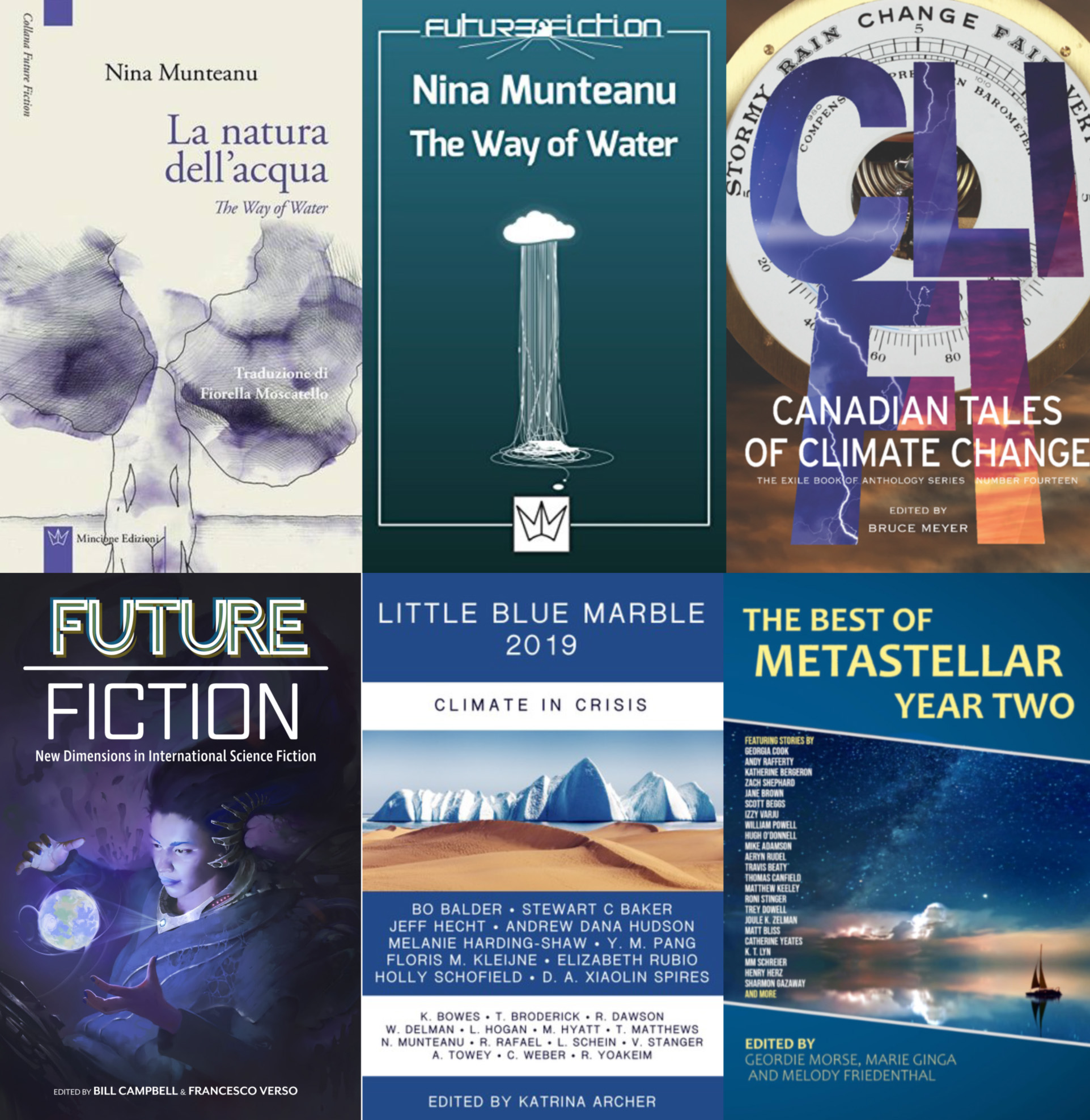
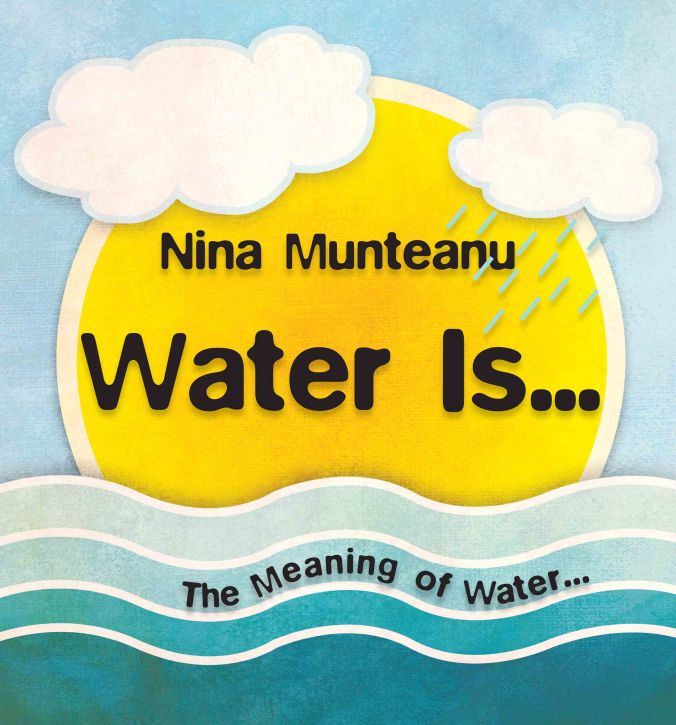
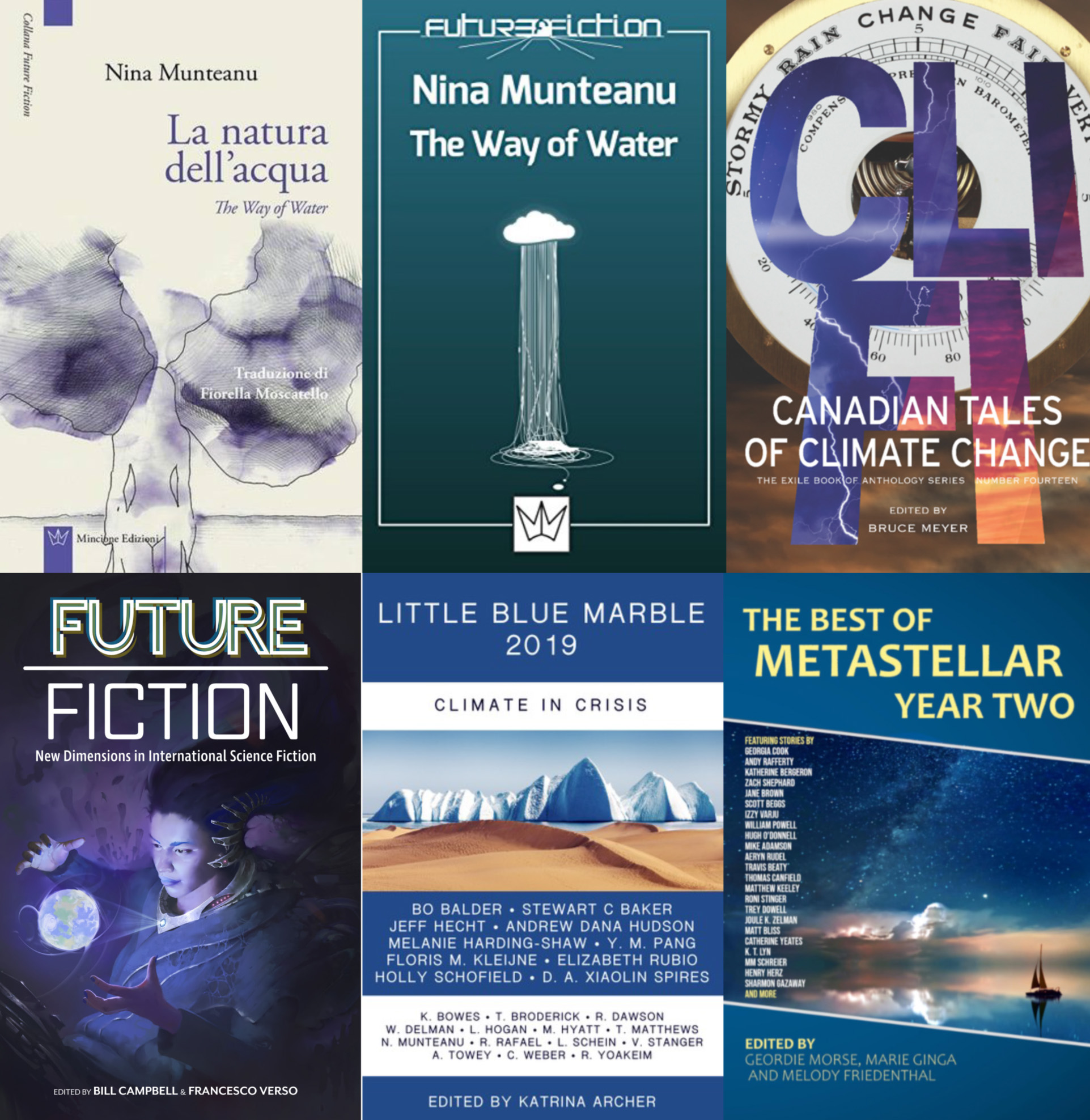
Nina Munteanu is a Canadian ecologist / limnologist and novelist. She is co-editor of Europa SF and currently teaches writing courses at George Brown College and the University of Toronto. Visit www.ninamunteanu.ca for the latest on her books. Nina’s bilingual “La natura dell’acqua / The Way of Water” was published by Mincione Edizioni in Rome. Her non-fiction book “Water Is…” by Pixl Press (Vancouver) was selected by Margaret Atwood in the New York Times ‘Year in Reading’ and was chosen as the 2017 Summer Read by Water Canada. Her novel “A Diary in the Age of Water” was released by Inanna Publications (Toronto) in June 2020.

My Drive Across Canada: Part 3—The Prairies

I emerged from the Lake of the Woods boreal forest into Manitoba’s true flatlands as I neared Winnipeg. Though, the eastern part of Manitoba was similar to the boreal hills of Ontario, it soon leveled out into flat stretches of prairie grasslands, and expansive fields of various crops including bright yellow fields of blooming canola.

Canola field in Saskatchewan (photo by Nina Munteanu)

It was early July and I’d caught it at its peak in flowering. Bright waves of yellow continued from Manitoba into Saskatchewan, where canola seemed to take over the land. At times all I saw was lemon yellow all the way to the horizon in all directions. Canola accounts for the largest area of land dedicated to any single crop in Saskatchewan. I’m told that there are over 22 million acres of canola growing in that province.

Train lumbers across a horizon of canola, west of Winnipeg, Manitoba (photo by Nina Munteanu)

Canola is a member of the crucifer family; it is a cool season crop that grows particularly well on the prairies, where cool nights and hot days allow it to develop its unique fatty acid profile. The name Canola was registered as a trademark in Canada in 1978. The name is essentially an acronym for CANadian Oil Low Acid. Prior to canola oil, most of the oil Canadians used for food purposes was imported. The canola plant was developed by two Canadian prairie plant scientists, Dr. Baldur Stefansson and Dr. Keith Downey, who bred rapeseed populations to develop a crop that would meet consumer demand for a healthy, edible oil product. Harvested seeds are crushed to produce canola oil, with the remainder used to create a high-protein meal for livestock and human consumption. Canola is kind of cool, given its versatile use from cooking oil pant-based protein, biofuel, animal feed to possibly even clothing!

Bridge across the Assiniboine River for the Trans Canada Highway

Before reaching Winnipeg, I crossed the Red River at Selkirk. This large river floods almost every  spring, covering large areas of flat land with muddy water. I touched on the Red River in an article I wrote about the impact of current agricultural practices on river dynamics and eventual flooding in the Niverville Citizen.

Nina Munteanu talks about watersheds in the Niverville Citizen

After passing through Winnipeg, near Portage La Prairie, Manitoba, I crossed the iconic Assiniboine River, as it flows from Saskatchewan and parallels the Trans Canada Highway as it flows east to Winnipeg to join the Red River.

Train crossing the Trans Canada Highway in Saskatchewan (photo by Nina Munteanu)

Driving through the prairies on the Trans Canada Highway, I often had to stop for a train crossing or slow down as a slow farm vehicle cut across my path on the highway. Here, the Trans Canada was just another country road and I was competing with tractors, farm vehicles and, in some cases, horse and wagon.

I made good time, driving the straight roads along flat and gently rolling landscapes sculpted by wind and water. This was big sky country, and I recalled that this was all a giant shallow and warm inland sea in prehistoric times.

Depiction of the prehistoric inland sea in Canada

Called the Western Interior Seaway, this Cretaceous inland sea stretched from the Arctic Ocean down to the Gulf of Mexico, connecting the two oceans and separating the continent into eastern (Appalachia) and western (Laramidia) landmasses and covering what is now most of Manitoba, Saskatchewan and part of Alberta. Existing from about 100 to 66 million years ago, this shallow marine sea supported a rich and diverse marine life, including the shell-crushing durophagous Ptychodus mortoni, apparently 10 metres long. I thought all this as I raced across a giant dry ocean of grass waving in the wind. I imagined myself a crab scuttling along the ocean floor beneath 760 m of water as giant sharks, 13-metre long mosasaurs and other exotic creatures swam leisurely above me. Is that why I found myself speeding along the highway and crossing into Saskatchewan before I knew it?

Sodium sulphate deposits of salt mine near Chaplin Lake, Saskatchewan (photo by NIna Munteanu)

Near the village of Chaplin, Saskatchewan, I stumbled on a moonscape of white chalk-like hills. This was the sodium sulphate mine on the northern shore of Chaplin Lake, a salt lake that is a major stop over for migratory birds that feed on its brine shrimp. I discovered that the lake formed in the late Pleistocene when glaciers shaped the landscape and deposited salts and other minerals into the soil and bedrock. As the glaciers receded in the late Pleistocene, meltwater channels dried and left isolated depressions filled with meltwater and groundwater rich in dissolved salts from underlying glacial deposits. Hot, dry summers and persistent winds common in the Saskatchewan prairies increased evaporation and concentrated salts, leading to crystalline sodium sulphate deposits, which created the salt lake. The salt mine started in 1947 and today is one of the largest producers of anhydrous sodium sulphate in North America with production capability of 285,000 tons per year.

Map showing Chaplin Lake
Salt deposits on the side of the road, near Chaplin, Sask (photo by NIna Munteanu)
Flat sage-grasslands plain under a darkening sky, near Piapot, Saskatchewan (photo by NIna Munteanu)

I continued through the Great Plains, west toward Alberta, across a rolling grassland mingled with sage. Along the stretch from Chaplin Lake past Swift Current through Piapot, the terrain grew distinctly dry and chaparral-like. I spotted various types of sage everywhere.  

I saw two types of native sage: left is Artemisia frigida; right is Artemisia ludoviciana (photos by NIna Munteanu)

Three types of native sage live in the grasslands of Saskatchewan: Pasture Sage or Prairie Sagewort (Artemisia frigida), Prairie Sage (Artemisia ludoviciana), and Silver Sagebrush (Artemisia cana). Pasture sage is an ‘increaser’ species; its population grows as rangeland condition deteriorates. It is a good indicator of overgrazing.

I also found ‘frothy’ clusters of pretty tiny white 5-petaled flowers that I finally identified as Prairie Baby’s Breath (Gypsophila paniculata), growing by the roadside and in the grasslands of Saskatchewan. The pretty tiny white 5-petaled flowers It’s a much branched perennial, the inflorescence often giving the plant a dome shape. Foliage is glaucous and plants are glabrous except for small hairs on the calyx. This plant has been designated a noxious weed in Saskatchewan.

Bunches of Gypsophila paniculata in a Saskatchewan grassland (photo by Nina Munteanu)
Close up of Gypsophila paniculata, Sask (photo by Nina Munteanu)

Then, in no time, I crossed the border and was approaching Medicine Hat in Alberta. But that’s Part 4 of this journey.

Rolling prairie hills near Medicine Hat, AB (photo by Nina Munteanu)

Nina Munteanu is a Canadian ecologist / limnologist and novelist. She is co-editor of Europa SF and currently teaches writing courses at George Brown College and the University of Toronto. Visit  www.ninamunteanu.ca for the latest on her books. Nina’s bilingual “La natura dell’acqua / The Way of Water” was published by Mincione Edizioni in Rome. Her non-fiction book “Water Is…” by Pixl Press (Vancouver) was selected by Margaret Atwood in the New York Times ‘Year in Reading’ and was chosen as the 2017 Summer Read by Water Canada. Her novel “A Diary in the Age of Water” was released by Inanna Publications (Toronto) in June 2020.

My Drive Across Canada: Part 2—Boreal Forest

The second leg of my drive west from Peterborough, took me past Thunder Bay, northwest from Lake Superior and into the heart of the boreal forest. Named after Boreas, the Greek god of the Northwind, the boreal forest is also called taiga (a Russian word from Yakut origin that means “untraversable forest”). Canada’s boreal forest is considered the largest intact forest on Earth, with around three million square kilometres still undisturbed by roads, cities and industrial development.

Canaada’s Boreal Forest

The boreal forest is the largest forest region in Ontario, covering two thirds of the province—some 50 million hectares—from the Great Lakes-St. Lawrence forest to the Hudson Bay Lowlands. 

I drove the Trans-Canada Highway (Hwy 17) through mixed coniferous forest, wetlands and marsh. The highway generally marks the boundary or transition zone between true Boreal Forest and the Great Lakes-St. Lawrence Forest, both dominated by coniferous trees.

Marshy river and spruce forest, north of Wawa, ON (photo by Nina Munteanu)

I stopped at English River overnight and the following morning woke to the echoing calls of two loons on the lake. I left at dawn with a peach sky behind me and a dark charcoal sky ahead of me. Soon the dark clouds unburdened themselves and the rain fell in a deluge as I continued west, barely making out the dense forest through flapping windshield wipers. The forest here was a mix of balsam fir, white and black spruce, white pine, aspen and white birch.

Spruce forest with birch and ground cover of moss and lichen, off Trans-Canada Highway, ON (photo by Nina Munteanu)

When the rain abated to a steady sprinkle, I ventured out to photograph the spruce-moss-lichen forest by the side of the road. I stood in the drizzle and set up my tripod and camera to take my shots, careful not to tread on the reindeer lichen. Reindeer lichen is highly susceptible to trampling. Branches break off easily and they take decades to recover. This foliose lichen is a key food source for reindeer and caribou during the winter; it also helps stabilize soil and recycles nutrients.

Spruce-moss-lichen forest off Trans-Canada Highway, ON (photo by Nina Munteanu)
Spruce-moss-lichen forest by Trans-Canada Highway, ON (photo by Nina Munteanu)

I drove into the tiny community of Vermillion Bay on Highway 17, looking forward to stopping in Quacker’s Diner for a hearty breakfast as advertised by a fetchy sign on the road. Alas, the place had closed long ago, according to the lady at the Moose Creek Trading Co., and hadn’t been replaced. And she couldn’t suggest anything else in the village. Disappointed, I felt I was truly in the middle of nowhere…

Sign for Nowhere, ON (photo by Nina Munteanu)

Then, a ways down the main road, I spotted the sign: “Nowhere Craft Chocolate & Coffee Roastery” and felt like I’d entered a dream-state where the north was run by hipsters.

Benny reaches Nowhere in Ontario, Vermillion Bay (photo by Nina Munteanu)

It was a husband and wife team who ran this wonderful craft bean-to-bar chocolate making and coffee roasting enterprise.

Filling my dark roast coffee order (photo by Nina Munteanu)

No sooner had I started to feel like I was back in trendy southern Ontario, when I met one of the locals, Simon, who worked in the bush and was patiently waiting for some dark roasts to take back to his buddies. We got to chatting and he shared some colourful stories about ‘the bush’ and folks who live in it, reminding me where I really was.

Coffee in hand, Simon stands next to his ATV with cooler, ready to return to ‘the bush’ (photo by Nina Munteanu)

When I mentioned the experience to a friend, she made the astute comment: “It is somehow satisfying to think of loggers and trappers and campers emerging out of the forests to go have a great cup of coffee and a hunk of chocolate. Why does that seem totally normal for Canada?”

Coffees from Nowhere
Chocolates from Nowhere

The Nowhere craft chocolate I bought—dark chocolate infused with ginger and Colombian coffee—was the best chocolate I’ve tasted this side of Switzerland. I bought some dark blends of Nowhere Coffee and continued my journey, happy despite no breakfast.

Black Spruce Forest

The black spruce (Picea mariana) dominates much of Canada’s boreal forests, frequently occurring in the Canadian Shield ecoregion where it forms extensive stands with groundcover of various mosses and reindeer lichen. Which of the two groundcover types depends on soil conditions and gaps in the forest from disturbance or fire.

Black spruce forest with moss and lichen ground cover, east of Dryden, ON (photo by Nina Munteanu)

The black spruce tree thrives in acidic peatlands, bogs and poorly drained mineral soils in wet, cold environments, but also grows in drier soils. It is particularly common on histosols (soils with peat and muck) on the Canadian Shield. Fires play a significant role in its regeneration as it replaces pioneer species such as white birch and tamarack after a fire, and grows with lichen and moss.

Marshland with black spruce, boreal forest north of Wawa, ON (photo by Nina Munteanu)

Mosses & Lichen Groundcover of Spruce-Dominated Forest

Both mosses and lichen (particularly reindeer lichen) help cool the forest by regulating evaporation and soil temperature; they can also fix nitrogen from the air, providing this key nutrient to an often nitrogen-limited ecosystem.

Spruce forest with feathermoss ground cover, ON (photo by Nina Munteanu)

This spruce-moss woodland is typified by fairly dense closed canopy of black spruce (Picea mariana), along with white spruce (Picea glauca), balsam fir (Abies balsamea), paper birch (Betula papyrifera) and trembling aspen (Populus tremuloides); this association creates a fairly shaded environment on the forest floor, inviting groundcover of various mosses such as feathermosses and Sphagnum that thrive in stable moist, shaded conditions.

Various mosses that typify the spruce-moss woodland in the boreal forest: A. Ostrich Plume Moss (photo by iNaturist); B. Red-Stemmed Feathermoss (photo by Ohio Moss and Lichen Association); C. Glittering Feathermoss; and D. Haircap moss with sundew (photographs by Nina Munteanu)

Common mosses in the spruce-dominated forest include Knight’s Plume Moss (Ptilium crista-castrensis), Red-Stemmed Feathermoss (Pleurozium schreberi), Glittering Feathermoss (Hylocomium splendens), and various species of Sphagnum. Knight’s Plume Moss and Sphagnum are key carbon cyclers in the poorly drained acidic boreal forest, contributing significantly to net primary productivity. They decompose slowly, leading to substantial organic matter accumulation.  Sphagnum in particular influences soil organic matter and carbon consumption during wildfires. Due to their ability to retain water, their acidity and resistance to decay, Sphagnum plays a crucial role in both the development and long-term persistence of peatlands where black spruce likes to live.

Various species of Sphagnum: A. Sphagnum squarrosum; B.Sphagnum papillosum; C. Sphagnum magellanicum; and D. Sphagnum papillosum (photos by Nina Munteanu)
Gray Reindeer Lichen (Cladonia rangiferina) colonizing granite outcrop in Catchacoma Forest, ON (photo by Nina Munteanu)

Spruce-lichen woodlands are characterized by an open canopy of black spruce trees, often with jack pine (Pinus banksiana) and white birch (Betula papyrifera) and a ground layer of mostly lichens, particularly fruticose species such as Cladonia rangiferina, C. mitis and C. stellaris.  This association is typically found on well-drained, often drier soils and may experience more extreme temperature fluctuations than spruce-moss associations. Through their release of acids that break down rock and organic matter, fruticose lichens contribute to soil formation.

Close up of a similar reindeer lichen species, Cladonia uncialis with Bristly Haircap Moss, on Catch Rock, ON (photo by Nina Munteanu)

A dense Cladonia mat also creates a microclimate that helps retain moisture. Lichen may also inhibit spruce regeneration, maintaining the open, park-like nature of lichen woodlands through the release of allelochemicals, such as usnic acid, that inhibit growth of plants and other lichen. Spruce-lichen woodlands may represent a stage in forest succession moving toward a closed-crown forest and may result from fire and insect disturbances that create openings in the forest canopy.

Spruce forest, showing reindeer lichen ground cover in foreground closest to the highway and moss ground cover upslope, ON (photo by Nina Munteanu)

This is what I observed where I’d stopped the car by the side of the road; closer to the disturbance of the open road, reindeer lichens—likely Cladonia rangiferina, C. mitis and C. stellaris—formed a thick continuous mat on the ground, which was fairly open with young spruce growing here and there. Further up the slope, where the canopy became more closed with mature trees, the mosses dominated the ground.

Boreal Wetlands & Kabenung Lake

Wetland north of Wawa, ON (photo by Nina Munteanu)

On my drive through the boreal forest north of Wawa, I encountered extensive wetlands—mostly marshes, bogs and fens, forming winding networks of water habitats. These water features are key to the environment’s water regulation, excellent carbon stores and provide habitat for many species. Boreal wetlands are seasonally or permanently waterlogged (up to 2 metres deep) with plant life adapted to wet conditions, including trees, shrubs, grasses, moss and lichen. Organic wetlands (peatlands or muskegs) such as bogs and fens accrue deep organic deposits. Mineral wetlands (marshes, swamps and open water) have shallow organic deposits; these open water systems have nutrient-rich soils.

Kabenung Lake, ON (photo by Nina Munteanu)

I stopped at Kabenung Lake, considered a prime fishing lake, supporting diverse populations that include Northern Pike, Whitefish, Bass, Walleye, Brook Trout, Lake Trout, and Perch. Judging by the map, I had only a small view of the large convoluted 16 km long lake from the highway. The angler’s bathymetric map suggests a maximum depth of fifteen metres near the lake’s centre.

Kabenung Lake, north of Wawa, ON (photo by Nina Munteanu)

Before my journey west took me out of Ontario (and the boreal forest) into Manitoba’s flat prairie, I continued on the Canadian Shield across rugged terrain dominated by conifer trees with ancient Archean rock outcrops of granite and gneiss revealed in rock cuts on the highway. I reached Kenora, a charming old town with character architecture and a vibrant downtown. The town is located in the Lake of the Woods area, near the transition to the Great Lakes-St. Lawrence Forest to the south and the Aspen Parkland to the west. I saw lots of spruce, fir and pine alongside birch, maple and poplar. Lake of the Woods is a huge lake about 4349 km2 with over 14,000 islands with a highly convoluted shoreline and serves as an active hub for fishing, recreation and sightseeing.

Lake of the Woods Brewing Company, Kenora, ON (photo by Nina Munteanu)

In Kenora, I made a short stop at the craft brewery Lake of the Woods Brewing Company, bought some Sneaky Peach Pale Ale to take with me, and continued west to the Manitoba border.

Nina with her Sneaky Peach Ale, Kenora, ON

On my way, I had to stop the car to let a red fox cross the road. It looked like it owned the road, just sashaying across in a confident trot and smiling at me…Yes, smiling!

Benny on a road in the boreal forest, east of Kenora, ON (photo by Nina Munteanu)

References:

Houle, Gilles and Louise Fillon. 2003. “The effects of lichens on white spruce seedling establishment and juvenile growth in a spruce-lichen woodland of subarctic Québec.” Ecoscience 10(1): 80-84.

Payette, Serge, Najat Bhiry, Ann Delwaide and Martin Simard. 2000. “Origin of the lichen woodland at its southern range limit in eastern Canada: the catastrophic impact of insect defoliators and fire on the spruce-moss forest.” Canadian J. of Forest Res. 20(2).

Rydin, Håkan, Urban Gunnarsson, and Sebastian Sunberg. 2006. “The Role of Sphagnum in Peatland Development and Persistence.” In: Boreal Peatland Ecology, Ecological Studies 188, R. K. Wieder and D. H. Vitt (eds) Springer-Verlag Berlin Heidelberg, pp 47-65.

Nina Munteanu is a Canadian ecologist / limnologist and novelist. She is co-editor of Europa SF and currently teaches writing courses at George Brown College and the University of Toronto. Visit  www.ninamunteanu.ca for the latest on her books. Nina’s bilingual “La natura dell’acqua / The Way of Water” was published by Mincione Edizioni in Rome. Her non-fiction book “Water Is…” by Pixl Press(Vancouver) was selected by Margaret Atwood in the New York Times ‘Year in Reading’ and was chosen as the 2017 Summer Read by Water Canada. Her novel “A Diary in the Age of Water” was released by Inanna Publications (Toronto) in June 2020.

Returning Home…

Nina stands next to a giant redcedar, BC (photo by Anne Voute)

It’s been a few months since I moved back to British Columbia from Ontario.

I don’t have a place to live yet (currently crashing at a friend’s place, thanks to her kindness), but it feels right. And, more importantly, it feels like home.

Nina, early days in BC (photo H. Klassen)

I first came to BC over five decades ago, shortly after I graduated from Concordia University in Montreal. I started my first teaching job at the University of Victoria on Vancouver Island, first worked as an environmental consultant in Richmond, met my husband-to-be in Vancouver, wrote and published my first novel in Delta and raised my son in the village of Ladner, overlooking the Fraser River Estuary. I have deep nurturing roots here with family and friends. And wonderful memories.

Various winter scenes in Ontario (photos by Nina Munteanu)
Nina ‘snowbear’ enjoys a winter storm, ON (photo by M. Cox)
Hayes Line Road in the colours of autumn, ON (photo by NIna Munteanu)

As the seasons progress, I find that I do miss aspects of Ontario. I left behind a rich environment that closely reflected where I’d grown up as a kid, in the Eastern Townships of Quebec: the cold crisp snowy winters and colourful windy autumns of maple-beech forests. These feel like home too. I spent many days driving the country roads of the Kawarthas without a map, looking for adventure and a cup of good coffee at the end of it. In winter, I daily walked through knee-deep snow in magical forests, snow glinting under the moonlight. I frequented several favourite forests over the seasons, some old-growth like the Catchacoma old-growth hemlock forest, the Mark S. Burnham Maple-Beech-Hemlock-Cedar forest, the pine-cedar mixed forest of Jackson Creek, the Trent Nature Sanctuary cedar-pine mixed forest and the South Drumlin Maple-Beech forest. These, I will miss. They were a life-line to a sacred and holy part of my existence.

Nina studies a lilac bush, ON (photo by Nina Munteanu)

I am building new memories of this new-old home, with more mature eyes and mind. When I left BC 15 years ago after my divorce, and son studying at university, to seek adventure across Canada (I spent several years on the east coast in Nova Scotia), I finally settled in Ontario, where I found fulfillment teaching at the University of Toronto. It was there, in Ontario, where I honed my ecological knowledge and rekindled my love for lichen and fungi. I immersed myself in their study and rediscovered a fascinating miniature world. I studied trees with more diligence, identifying virtually all the key species in the Carolinian forests I visited—and the fungi and lichens that grew on them and around them. I’ve become something of an expert in lichenology, able to identify many of the species I encounter, and also to understand their complex and fascinating ecology.

Various lichens, from top left: Punctellia reducta, Xanthoria elegans, Rizocarpon geographicum, Cladonia uncialis, and Cladonia pyxidata (photos by Nina Munteanu)

I now bring that new knowledge and appreciation back to coastal BC—my old and new home— with an excitement for more adventure in its magnificent rainforests, its small rural communities and coastal villages—and the cup of coffee at the end of it.

Port Renfrew, BC (photo by Nina Munteanu)

Nina checks her camera, Highland Creek, ON (photo by M. Cox)

p.s. When you know what to look for, you will see it; not before. That’s likely a tautology; but I found that it has applied to me over the years. And nowhere has it been more obvious to me than in my travels across Canada. My first trip across Canada was five decades ago, as a young sprite, heading west to do my PhD. I went by train and, though I saw much beauty, it passed me at speed. When I drove east to the coast, I recall lots and lots of trees, little else. But, my recent trip west from Ontario was landmarked with a new knowledge and appreciation for so many more layers of my environment; it became eye-opening. What I’d only remembered in the past as “so many trees”, became a fractal journey through boreal layers. I saw so much! I discovered so many ‘friends’: lichens, trees, rock formations, environments that I’d identified in my previous adventures. I became excited by it all. I was in a constant state of wonder. This was how I needed to see Canada. With a wide-open mind and the spirit of adventure.

I look forward to re-immersing myself in these coastal BC ecosystems with that same new understanding, and better informed eyes and mind.

Let it be.

Heron oversees activities in Ladner Marsh, BC (photo by NIna Munteanu)
Nina walks Highland Creek, ON (photos by M. Cox)

Nina Munteanu is a Canadian ecologist / limnologist and novelist. She is co-editor of Europa SF and currently teaches writing courses at George Brown College and the University of Toronto. Visit  www.ninamunteanu.ca for the latest on her books. Nina’s bilingual “La natura dell’acqua / The Way of Water” was published by Mincione Edizioni in Rome. Her non-fiction book “Water Is…” by Pixl Press(Vancouver) was selected by Margaret Atwood in the New York Times ‘Year in Reading’ and was chosen as the 2017 Summer Read by Water Canada. Her latest novel “A Diary in the Age of Water” was released by Inanna Publications (Toronto) in June 2020.

My Books Are Feeding Meta’s AI Brat

On March 20, 2025, in an article in The Atlantic entitled “The Unbelievable Scale of AI’s Pirated-Books Problem”, Alex Reisner disclosed how META pirated millions of books and research papers to train their flagship AI model Llama 3 to be competitive with products like ChatGPT. Reasons for this illegal action is simply time; asking permission and licensing takes too much time and is too expensive.

On the same day, The Atlantic provided a link to LibGen (the pirated-books database that Meta used to train its AI) so authors could search its collection of millions of illegally captured books and scientific papers. I went there and searched my name for my novels, non-fiction books and scientific papers and discovered several of my works in their AI training collection.

Two of my many scientific papers appeared in LibGen under my scientific author name Norina Munteanu. The first scholarly article came from my post grad work at the University of Victoria on the effects of mine tailing effluent on an oligotrophic lake, published in 1984 in Environmental Pollution Series A, Ecological and Biological Volume 33, Issue 1. The second article on the effect of current on settling periphyton came from my M.Sc. ecology research published in 1981 in Hydrobiologia, Volume #78.

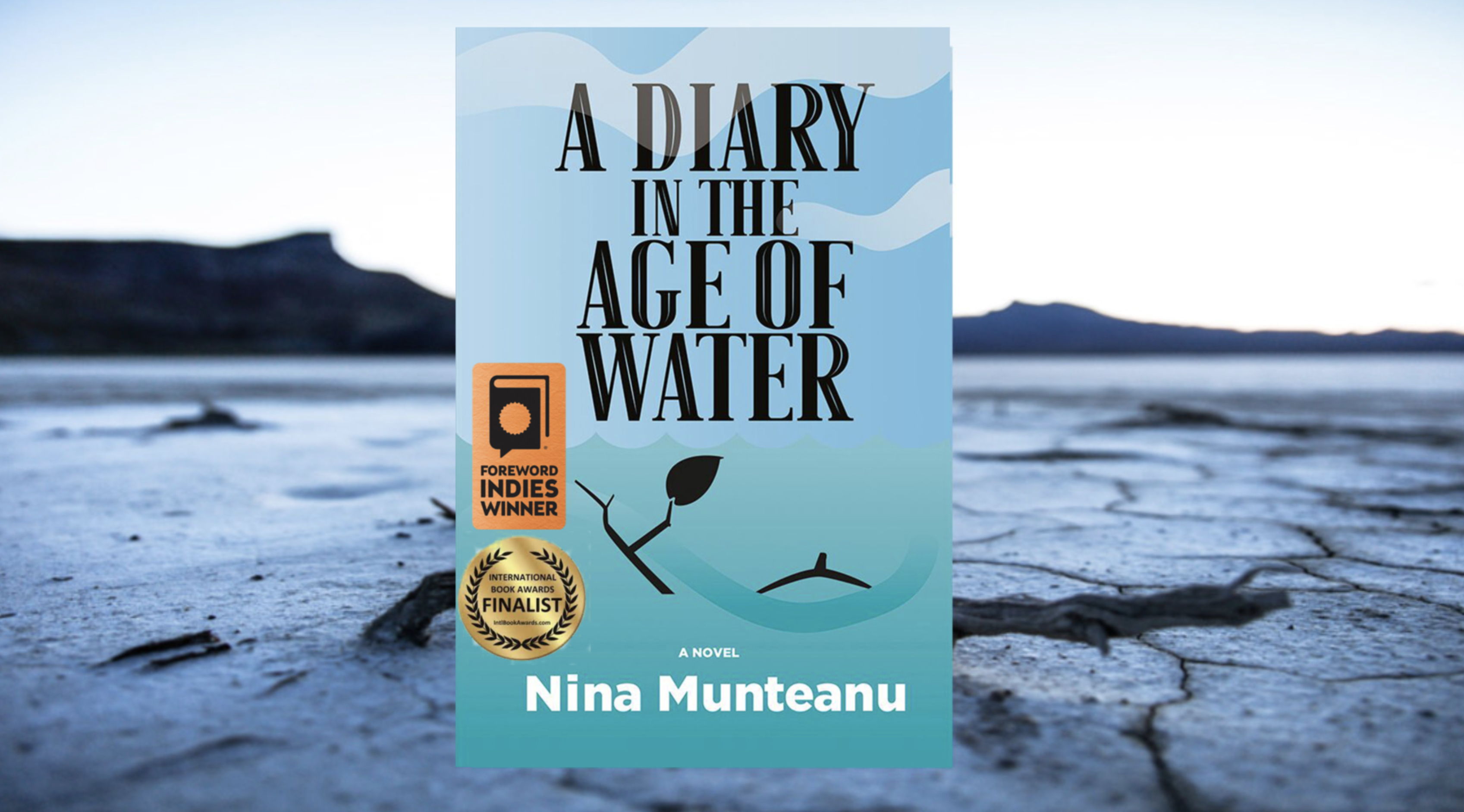
Three of my thirteen novels appeared in LibGen under my fiction author name Nina Munteanu. I found it interesting how their bots captured a good range of my works. These included two of my earliest works. Collision with Paradise (2005) is an ecological science fiction adventure and work of erotica; Darwin’s Paradox (2007) is a science fiction medical-eco thriller that features the domination of society by an intelligent AI community. The bots also found my latest novel, A Diary in the Age of Water (2020), a climate thriller and work of eco-fiction that follows four generations of women and their relationship to water.

Each of these works has been highly successful in sales and has received a fair bit of attention and recognition.

When Genevieve Dubois, Zeta Corp’s hot shot starship pilot, accepts a research mission aboard AI ship ZAC to the mysterious planet Eos, she not only collides with her guilty past but with her own ultimate fantasy. On a yearning quest for paradise, Genevieve thinks she’s found it in Eos and its people; only to discover that she has brought the seed of destruction that will destroy this verdant planet.

Recognition: Gaylactic Spectrum Award (nominee)

Collision with Paradise is ideal for readers who enjoy dark, introspective science fiction that explores complex moral dilemmas and psychological depth within a lush mythologically-rich setting.”The Storygraph

A devastating disease. A world on the brink of violent change. And one woman who can save it or destroy it all. Julie Crane must confront the will of the ambitious virus lurking inside her to fulfill her final destiny as Darwin’s Paradox, the key to the evolution of an entire civilization. Darwin’s Paradox is a novel about a woman s fierce love and her courageous journey toward forgiveness, trust, and letting go to the tide of her heart.

Recognition: Readers Choice Award (Midwest Book Review); Readers Choice (Delta Optimist); Aurora Award (nominee)

Darwin’s Paradox is a thrill ride that makes you think and tugs the heart.”Robert J. Sawyer, Hugo and Nebula Award winning author of Rollback

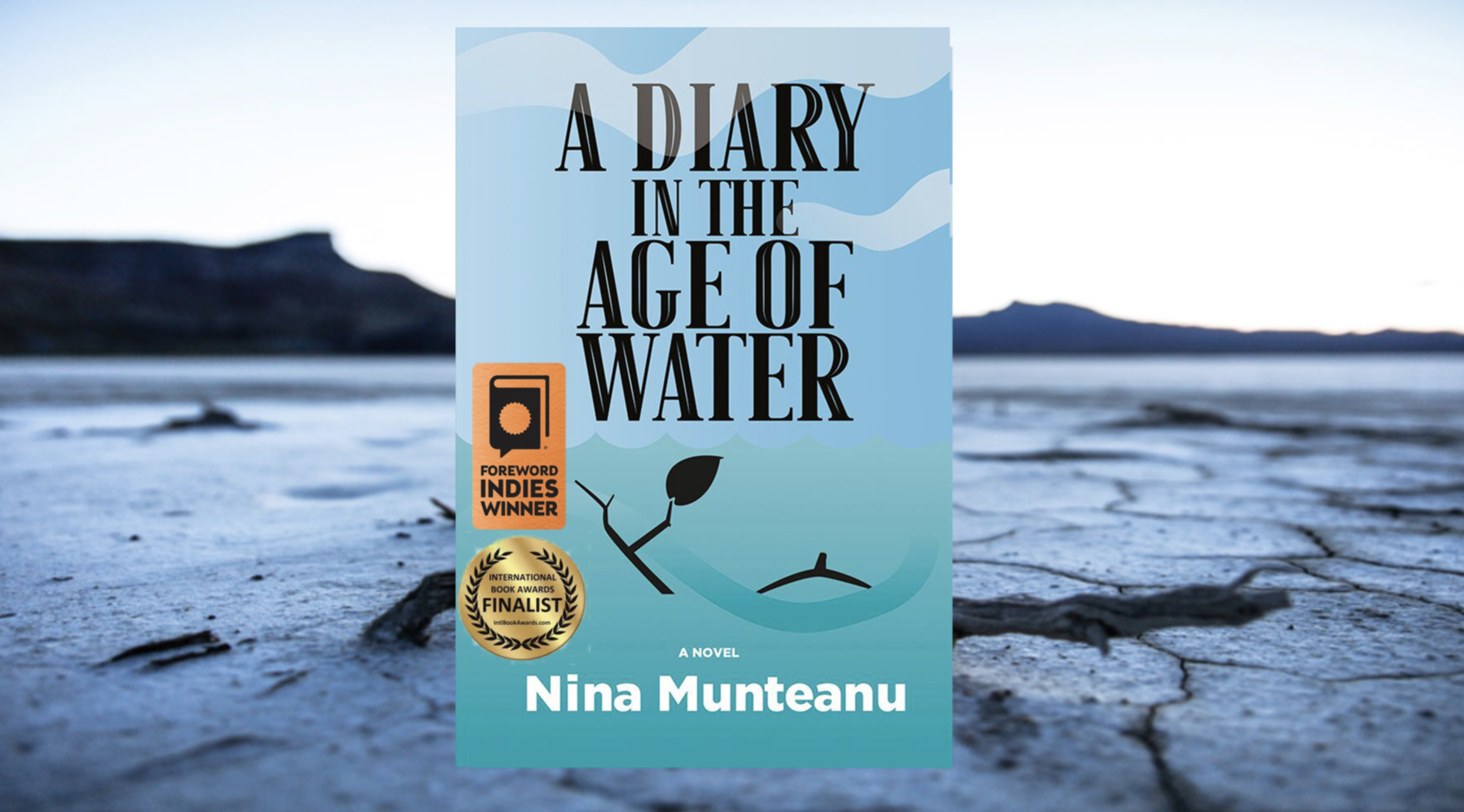
This gritty memoir describes a near-future Toronto in the grips of severe water scarcity during a time when China owns the USA and the USA owns Canada. A Diary in the Age of Water follows the climate-induced journey of Earth and humanity through four generations of women, each with a unique relationship to water. The diary spans a twenty-year period in the mid-twenty-first century of 33-year-old Lynna, a single mother and limnologist of international water utility CanadaCorp, and who witnesses disturbing events that she doesn’t realize will soon lead to humanity’s demise. 

Recognition: 2020 Foreword Indies Book of the Year Award (Bronze); 2020 Titan Literary Book Award (Silver); 2021 International Book Award (Finalist).

“If you believe Canada’s water will remain free forever (or that it’s truly free now) Munteanu asks you to think again. Readers have called ‘A Diary in the Age of Water’ “terrifying,” “engrossing,” and “literary.” We call it wisdom.”—LIISBETH

The April 3, 2025 article by Ella Creamer of The Guardian noted that a US court filing alleged that Meta CEO Mark Zuckerberg approved the company’s use of the notorious “shadow library”, LibGen, which contains more than 7.5 million books and 81 million research papers. According to Toby Walsh, leading AI researcher at the University of New South Wales: “As far as we know, there was an explicit instruction from Mark Zuckerberg to ignore copyright.”

This begs the question of the role and power of copyright law.

“Copyright law is not complicated at all,” said Richard Osman, author of The Thursday Murder Club series. “If you want to use an author’s work you need to ask for permission. If you use it without permission you’re breaking the law. It’s so simple.”

If it’s so simple then why is Meta and others getting away with it? For its defence, the tech giant is claiming “fair use”, relying on this term permitting the limited use of copyrighted material without the owner’s permission (my italics).

It would seem that just as Trump trumped the presidency, Zuckerberg and his AI minion bots have trumped the copyright law—by flagrantly violating it and getting away with it—so far (on both counts).

The actions of Meta were characterized by Society of Authors chair Vanessa Fox O’Louglin as “illegal, shocking, and utterly devastating for writers.” O’Louglin added that “a book can take a year or longer to write. Meta has stolen books so that their AI can reproduce creative content, potentially putting these same authors out of business.”

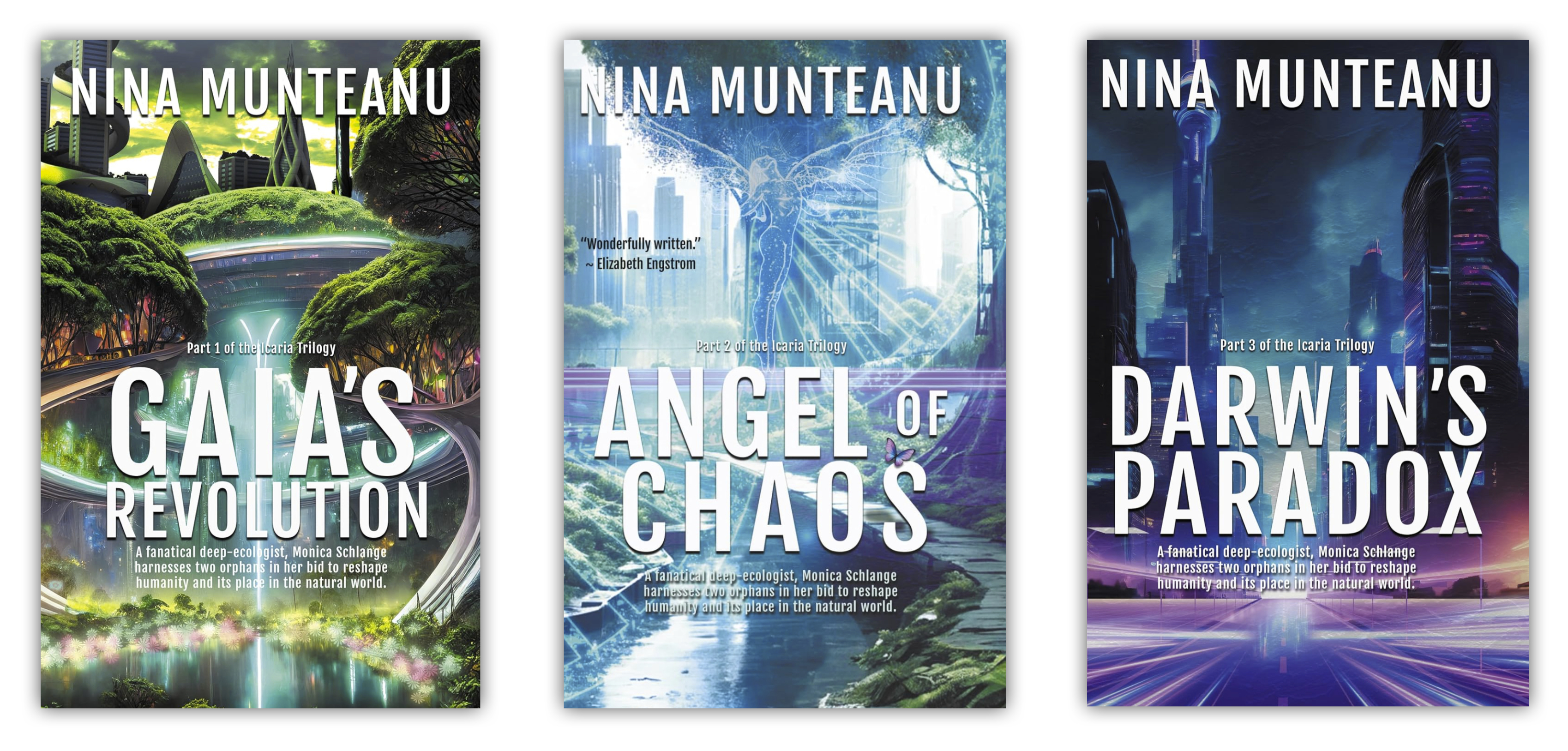
Three of my novels pirated for AI training

Reflecting many authors’ outrage throughout the world, Novelist AJ West remarked, “To have my beautiful books ripped off like this without my permission and without a penny of compensation then fed to the AI monster feels like I’ve been mugged.” Australian Author Sophie Cunningham said, “The average writer earns about $18,000 a year on their writing. It’s one thing to be underpaid. It’s another thing to find that [their] work is being used by a company that you don’t trust.” Bestselling author Hannah Kent said, “If feels a little like my body of work has been plundered.” She adds that this, “opens the door to others also feeling like this is an acceptable way to treat intellectual copyright and creatives who already…are expected to [contribute] so much for free or without due recompense.” Both Kent and Cunningham exhort governments to weigh in with more powerful regulation. And this is precisely what may occur. Nicola Heath of ABC.net.au writes, “the outcomes of the various AI copyright infringement cases currently underway in the US will shape how AI is trained in the future.”

According to The March 20, 2025 Authors Guild article “Meta’s Massive AI Training Book Heist: What Authors Need to Know,” legal action is underway against Meta, OpenAI, Microsoft, Anthopic, and other AI companies for using pirated books. The Authors Guild is a plaintiff in the class action lawsuit against OpenAI, along with John Grisham, Jodi Picoult, David Baldacci, George R.R. Martin, and 13 other authors, but the claims are made on behalf of all US authors whose works have been ingested into GPT. 

The Authors Guild suggests five things authors can do to defend their rights:

  1. Send a formal notice: If your books are in the LibGen dataset, send a letter to Meta and other AI companies stating they do not have the right to use your books.
  2. Join the Authors Guild: You should join the Guild and support our joint advocacy to ensure that the writing profession remains alive and vibrant in the age of AI. We give authors a voice, and there is power in numbers. We can also help you ensure that your contracts protect you against unwanted AI use of your work. 
  3. Protect your works: Add a “NO AI TRAINING” notice on the copyright page of your works. For online work, you can update your website’s robots.txt file to block AI bots.
  4. Get Human Authored certification: Distinguish your work in an increasingly AI-saturated market with the Authors Guild’s certification program. This visible mark verifies your book was created by a human, not generated by AI.
  5. Stay informed. The Authors Guild suggest signing up for the free Guild biweekly newsletter to keep updated on lawsuits and legislation that could impact you and your rights. The legal landscape is changing rapidly, and they are keeping close watch. 

How do I feel about all this? As a female Canadian author of climate fiction? As a thinking, feeling human being living in The Age of Water? Well, to tell the truth, it kinda makes me want a donut*…

 *as delivered by James Holden in Season 3, Episode 7 of “The Expanse”

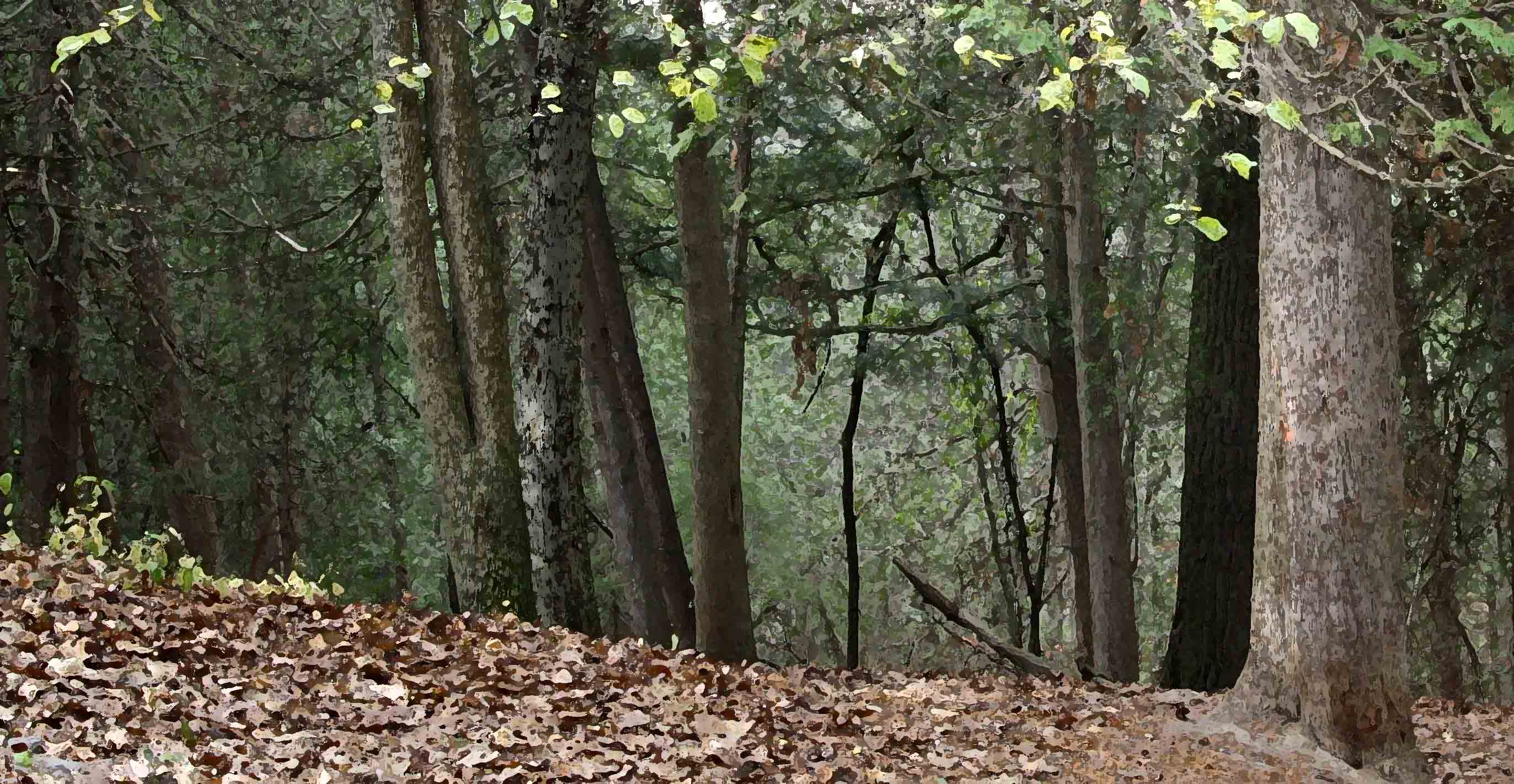
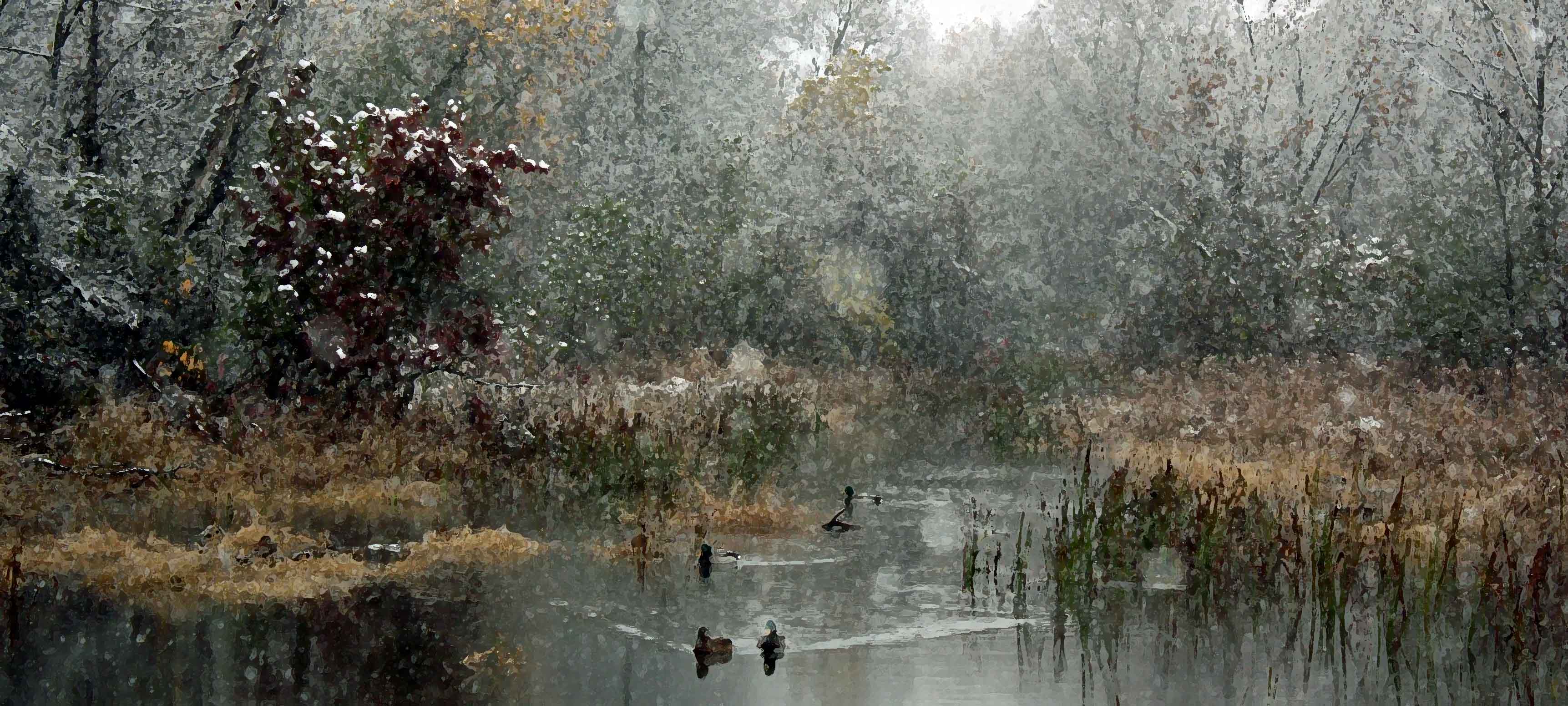
Aspens in fall, ON (photo and rendition by Nina Munteanu)

Nina Munteanu is a Canadian ecologist / limnologist and novelist. She is co-editor of Europa SF and currently teaches writing courses at George Brown College and the University of Toronto. Visit  www.ninamunteanu.ca for the latest on her books. Nina’s bilingual “La natura dell’acqua / The Way of Water” was published by Mincione Edizioni in Rome. Her non-fiction book “Water Is…” by Pixl Press (Vancouver) was selected by Margaret Atwood in the New York Times ‘Year in Reading’ and was chosen as the 2017 Summer Read by Water Canada. Her novel “A Diary in the Age of Water” was released by Inanna Publications (Toronto) in June 2020.

Nina Munteanu Identified as a Leading Voice in Eco-SciFi Fiction

Inventor/author Kyo Hwang Cho recently identified Nina Munteanu, Kim Stanley Robinson, Jeff VanderMeer, and Richard Powers as Leading Voices in Eco-Science Fiction in an article on the LinkedIn Skyhome Newsletter.

Cho wrote:

Kim Stanley Robinson: Robinson is renowned for integrating ecological themes into his narratives. His works like The Ministry for the Future and the Mars Trilogy explore climate change, sustainability, and alternative socio-economic systems. His stories often centre around scientists striving for environmental reform.

Jeff VanderMeer: Best known for the Southern Reach Trilogy, beginning with Annihilation, VanderMeer delves into a nature-reclaimed mystery zone called Area X. His work blends ecological concerns with surreal and speculative storytelling, offering a unique lens on environmental collapse.

Richard Powers: While not strictly a science fiction author, Powers’s novels such as The Overstory and Playground revolve around nature’s impact on human lives and vice versa. His writing emphasizes the deep interconnectedness of species and ecosystems.

Nina Munteanu: A Canadian ecologist and writer, Munteanu’s stories explore how humans interact with the environment. Her narratives often examine the intersection of science, climate crisis, and spiritual transformation.

Cho included the following Noteworthy Eco-Science Fiction Works:

  • “The Ministry for the Future”: A speculative exploration of global climate crisis responses through policy, activism, and emergent technology.
  • “Annihilation”: A surreal expedition into a wilderness zone that defies scientific explanation, echoing the unpredictability of nature itself.
  • “The Overstory”: A web of interconnected lives bound by trees, showing how the natural world can act as both witness and protagonist. [Inclusion of this book in the eco-SciFi subgenre is a stretch: however, like my own book, there are elements of speculation, and some subtle fantastical elements that one can argue place it in a scifi setting]
  • “A Diary in the Age of Water”: A dystopian look at a future shaped by water scarcity, societal collapse, and ecological memory.

Cho defines Eco-SciFi this way: “Eco-SciFi is a subgenre of SciFi that foregrounds ecological consciousness, blending speculative fiction with climate science, ethics, and planetary survival.” He includes a table that distinguishes Eco-SciFi from traditional Sci-Fi in several core areas from core theme, tone and motivation to protagonists and ‘message.’

Nina Munteanu is a Canadian ecologist / limnologist and novelist. She is co-editor of Europa SF and currently teaches writing courses at George Brown College and the University of Toronto. Visit  www.ninamunteanu.ca for the latest on her books. Nina’s bilingual “La natura dell’acqua / The Way of Water” was published by Mincione Edizioni in Rome. Her non-fiction book “Water Is…” by Pixl Press (Vancouver) was selected by Margaret Atwood in the New York Times ‘Year in Reading’ and was chosen as the 2017 Summer Read by Water Canada. Her novel “A Diary in the Age of Water” was released by Inanna Publications (Toronto) in June 2020.

Through the Portal Anthology Wins BC Writers Award

On August 23, 2025, Through the Portal: Tales for a Hopeful Dystopia, edited by Lynn Hutchinson Lee and Nina Munteanu for Exile Editions, won the BC Sunshine Coast Award for 2025.

The fiction prize was award to Exile Edition’s 20th anthology along with three other fiction works that include Blackheart Man by Nalo Hopkinson, The Cipher by Genni Gunn, and Inside Outside by Faye Arcand.

Here is what the judges said about Through the Portal:

“Every story in here is a delicious short gem.”

“An ambitious project with an unusual slant of positivity in the face of a dystopian future has turned into a solid piece of work, incorporating a good range of stories, some very literary and abstract, others simple tales of destruction and regrowth or the hope of regrowth.”

“Characters and situations in the selected stories show optimism and the power of the human spirit across a wide array of possible near- and far-term futures.”

“Most of the situations are inherently believable based on what we know about climate, industry, and the powerful politics of denialism.”

Nina Munteanu is a Canadian ecologist / limnologist and novelist. She is co-editor of Europa SF and currently teaches writing courses at George Brown College and the University of Toronto. Visit www.ninamunteanu.ca for the latest on her books. Nina’s bilingual “La natura dell’acqua / The Way of Water” was published by Mincione Edizioni in Rome. Her non-fiction book “Water Is…” by Pixl Press (Vancouver) was selected by Margaret Atwood in the New York Times ‘Year in Reading’ and was chosen as the 2017 Summer Read by Water Canada. Her novel “A Diary in the Age of Water” was released by Inanna Publications (Toronto) in June 2020.

My Short Story “The Polywater Equation” (Die Polywasser-Gleichung) in “Tales of Science II” Anthology

Author Nina Munteanu holding copy of Tales of Science II (photo by Jane Raptor)

A few weeks ago, I looked into my mail box and found my contributor’s copy of “Tales of Science II” Anthology (edited by Marianne Labisch & Kiran Ramakrishnan) with my short story Die Polywasser-Gleichung (“The Polywater Equation”) inside. Beaming, I did a little dance because the anthology was marvelous looking! And it was all in German! (My mother is German, so I could actually read it; bonus!).

This science-fiction anthology, for which I was invited to contribute, collected seventeen short stories, all based on sound science. Here’s how the book jacket blurb (translated from German) describes the anthology:

It’s all just fiction. Someone made it up; it has nothing to do with reality, right? Well, in this anthology, there’s at least a grain of truth in all the stories, because scientific sponsors collaborated with authors. Here, they looked into the future based on current research What does such an experiment look like? See for yourself what the authors and scientific sponsors have come up with: about finding a way to communicate with out descendants, finding the ideal partner, conveying human emotions to an AI, strange water phenomena [that’s my story], unexpected research findings, lonely bots, and much more. The occasion for this experiment is the 20th anniversary of the microsystems technology cluster microTEC Südwest e. V.

(cover image and illustrations by Mario Franke and Uli Benkick)

In our initial correspondence, editor Marianne Labisch mentioned that they were “looking for short stories by scientists based on their research but ‘spun on’ to create a science fiction story;” she knew I was a limnologist and was hoping I would contribute something about water. I was glad to oblige her, having some ideas whirling in my head already. That is how “The Polywater Equation” (Die Polywasser-Gleichung) was born.

I’d been thinking of writing something that drew on my earlier research on patterns of colonization by periphyton (attached algae, mostly diatoms) in streams using concepts of fluid mechanics. Elements that worked themselves into the story and the main character, herself a limnologist, reflected some aspects of my own conflicts as a scientist interpreting algal and water data (you have to read the story to figure that out).

My Work with Periphyton

As I mentioned, the short story drew on my scientific work, which you can read about in the scientific journal Hydrobiologia. I was studying the community structure of periphyton (attached algae) that settled on surfaces in freshwater streams. My study involved placing glass slides in various locations in my control and experimental streams and in various orientations (parallel or facing the current), exposing them to colonizing algae. What I didn’t expect to see was that the community colonized the slides in a non-random way. What resulted was a scientific paper entitled “the effect of current on the distribution of diatoms settling on submerged glass slides.”

A. Distribution of diatoms on a submerged glass slide parallel to the current; treated diatom frustules are white on a dark background. B. diagram of water movement around a submerged glass slide showing laminar flow on the inner face and turbulent flow on the edges (micrograph photo and illustration by Nina Munteanu)

For more details of my work with periphyton, you can go to my article called Championing Change. How all this connects to the concept of polywater is something you need to read in the story itself.

The Phenomenon of Polywater

The phenomenon started well before the 1960s, with a 19th century theory by Lord Kelvin (for a detailed account see The Rise and Fall of Polywater in Distillations Magazine). Kelvin had found that individual water droplets evaporated faster than water in a bowl. He also noticed that water in a glass tube evaporated even more slowly. This suggested to Kelvin that the curvature of the water’s surface affected how quickly it evaporated.

Soviet chemist Boris Deryagin peers through a microscope in his lab

In the 1960s, Nikolai Fedyakin picked up on Lord Kelvin’s work at the Kostroma Technological Institute and through careful experimentation, concluded that the liquid at the bottom of the glass tube was denser than ordinary water and published his findings. Boris Deryagin, director of the Institute of Physical Chemistry in Moscow, was intrigued and his team confirmed that the substance at the bottom of the glass tube was denser and thicker than ordinary water and had additional anomalous properties. This phase of water had a thick, gel-like consistency; it also had a higher stability, like a polymer, over bulk water. It demonstrated a lower freezing point, a higher boiling point, and much higher density and viscosity than ordinary water. It expanded more than ordinary water when heated and bent light differently. Deryagin became convinced that this “modified water” was the most thermodynamically stable form of water and that any water that came into contact with it would become modified as well. In 1966, Deryagin shared his work in a paper entitled “Effects of Lyophile Surfaces on the Properties of Boundary Liquid Films.” British scientist Brian Pethica confirmed Deryagin’s findings with his own experiments—calling the odd liquid “anomalous water”—and published in Nature. In 1969, Ellis Lippincott and colleagues published their work using spectroscopic evidence of this anomalous water, showing that it was arranged in a honeycomb-shaped network, making a polymer of water—and dubbed it “polywater.” Scientists proposed that instead of the weak Van der Waals forces that normally draw water molecules together, the molecules of ‘polywater’ were locked in place by stronger bonds, catalyzed somehow by the nature of the surface they were adjacent to.

Molecular structure of polywater

This sparked both excitement and fear in the scientific community, press and the public. Industrialists soon came up with ways to exploit this strange state of water such as an industrial lubricant or a way to desalinate seawater. Scientists further argued for the natural existence of ‘polywater’ in small quantities by suggesting that this form of water was responsible for the ability of winter wheat seeds to survive in frozen ground and how animals can lower their body temperature below zero degrees Celsius without freezing.

When one scientist discounted the phenomenon and blamed it on contamination by the experimenters’ own sweat, the significance of the results was abandoned in the Kuddelmuddel of scientific embarrassment. By 1973 ‘polywater’ was considered a joke and an example of ‘pathological science.’ This, despite earlier work by Henniker and Szent-Györgyi, which showed that water organized itself close to surfaces such as cell membranes. Forty years later Gerald Pollack at the University of Washington identified a fourth phase of water, an interfacial water zone that was more stable, more viscous and more ordered, and, according to biochemist Martin Chaplin of South Bank University, also hydrophobic, stiffer, more slippery and thermally more stable. How was this not polywater?

The Polywater Equation

In my story, which takes place in Berlin, 2045, retired limnologist Professor Engel grapples with a new catastrophic water phenomenon that looks suspiciously like the original 1960s polywater incident:

The first known case of polywater occurred on June 19, 2044 in Newark, United States. Housewife Doris Buchanan charged into the local Water Department office on Broad Street with a complaint that her faucet had clogged up with some kind of pollutant. She claimed that the faucet just coughed up a blob of gel that dangled like clear snot out of the spout and refused to drop. Where was her water? she demanded. She’d paid her bill. But when she showed them her small gel sample, there was only plain liquid water in her sample jar. They sent her home and logged the incident as a prank. But then over fifty turbines of the combined Niagara power plants in New York and Ontario ground to a halt as everything went to gel; a third of the state and province went dark. That was soon followed by a near disaster at the Pickering Nuclear Generating Station in Ajax, Ontario when the cooling water inside a reactor vessel gummed up, and the fuel rods—immersed in gel instead of cooling water—came dangerously close to overheating, with potentially catastrophic results. Luckily, the gel state didn’t last and all went back to normal again.

If you read German, you can pick up a copy of the anthology in Dussmann das KulturKaufhaus or Thalia, both located in Berlin but also available through their online outlets. You’ll have to wait to read the English version; like polywater, it’s not out yet.

References:

Chaplin, Martin. 2015. “Interfacial water and water-gas interfaces.” Online: “Water Structure and Science”: http://www1.lsbu.ac.uk/water/interfacial_water.html  

Chaplin, Martin. 2015. “Anomalous properties of water.” Online: “Water Structure and Science: http://www1.lsbu.ac.uk/water/water_anomalies.html  

Henniker, J.C. 1949. “The depth of the surface zone of a liquid”. Rev. Mod. Phys. 21(2): 322–341.

Kelderman, Keene, et. al. 2022. “The Clean Water Act at 50: Promises Half Kept at the Half-Century Mark.” Environmental Integrity Project (EIP). March 17. 75pp.

Munteanu, N. & E. J. Maly, 1981. The effect of current on the distribution of diatoms settling on submerged glass slides. Hydrobiologia 78: 273–282.

Munteanu, Nina. 2016. “Water Is…The Meaning of Water.” Pixl Press, Delta, BC. 584 pp.

Pollack, Gerald. 2013. “The Fourth Phase of Water: Beyond Solid, Liquid and Vapor.” Ebner & Sons Publishers, Seattle WA. 357 pp. 

Ramirez, Ainissa. 2020. “The Rise and Fall of Polywater.” Distillations Magazine, February 25, 2020.

Szent-Györgyi, A. 1960. “Introduction to a Supramolecular Biology.” Academic Press, New York. 135 pp. 

Roemer, Stephen C., Kyle D. Hoagland, and James R. Rosowski. 1984. “Development of a freshwater periphyton community as influenced by diatom mucilages.” Can. J. Bot. 62: 1799-1813.

Schwenk, Theodor. 1996. “Sensitive Chaos.” Rudolf Steiner Press, London. 232 pp.

Szent-Györgyi, A. 1960. “Introduction to a Supramolecular Biology.” Academic Press, New York. 135 pp. 

Wilkens, Andreas, Michael Jacobi, Wolfram Schwenk. 2005. “Understanding Water”. Floris Books, Edinburgh. 107 pp.

Nina Munteanu is a Canadian ecologist / limnologist and novelist. She is co-editor of Europa SF and currently teaches writing courses at George Brown College and the University of Toronto. Visit www.ninamunteanu.ca for the latest on her books. Nina’s bilingual “La natura dell’acqua / The Way of Water” was published by Mincione Edizioni in Rome. Her non-fiction book “Water Is…” by Pixl Press (Vancouver) was selected by Margaret Atwood in the New York Times ‘Year in Reading’ and was chosen as the 2017 Summer Read by Water Canada. Her novel “A Diary in the Age of Water” was released by Inanna Publications (Toronto) in June 2020.

“A Diary in the Age of Water” Required Reading at Memorial University

A Diary in the Age of Water” at the Memorial University Bookstore

Instructor Keif Godbout-Kinney has made my eco-fiction novel A Diary in the Age of Water required reading in their course Feminist Practices and Global Change (GNDR 3008) at Memorial University, Newfoundland. The book is currently selling at the Memorial University Bookstore.

The Gender Studies course examines connections between feminist theories and activism for social and political change on a global scale.

My novel, told mostly through the diary of a limnologist, describes a world in the grips of severe water scarcity during a time when China owns the USA and the USA owns Canada. The diary spans a twenty-year period in the mid-twenty-first century of 33-year-old Lynna, a single mother who works in Toronto for CanadaCorp, an international utility that controls everything about water, and who witnesses disturbing events that she doesn’t realize will soon lead to humanity’s demise. A Diary in the Age of Water follows the climate-induced journey of Earth and humanity through four generations of women, each with a unique relationship to water. The novel explores identity and our concept of what is “normal”—as a nation and an individual—in a world that is rapidly and incomprehensibly changing.

Nina Munteanu is a Canadian ecologist / limnologist and novelist. She is co-editor of Europa SF and currently teaches writing courses at George Brown College and the University of Toronto. Visit www.ninamunteanu.ca for the latest on her books. Nina’s bilingual “La natura dell’acqua / The Way of Water” was published by Mincione Edizioni in Rome. Her non-fiction book “Water Is…” by Pixl Press (Vancouver) was selected by Margaret Atwood in the New York Times ‘Year in Reading’ and was chosen as the 2017 Summer Read by Water Canada. Her novel “A Diary in the Age of Water” was released by Inanna Publications (Toronto) in June 2020.