
.
In my 2007 novel Darwin’s Paradox and its 2010 prequel Angel of Chaos—dystopian tales set in an unrecognizable post-climate change Canada at the end of the 21st Century—the father of the main character lectures his impressionable young daughter about how climate change helped create the heathland scrub that replaced the mixed woodlands of the old Carolinian and sub-Boreal environments:
“What’s over there?” She points to a far, dark hill.
“Woodland. This was all forest before the cities got built and the climate changed.”
“Climate changed?”
“Yes, honey.” He focuses on the distance. “Caused the revolution thirty years ago. Since then the Ecologists have virtually eliminated our greenhouse gas emissions. Of course, the planet will be feeling the effects of global warming for decades to come. Perhaps centuries.”
“They saved the planet, didn’t they?”
His brows knit. “Perhaps they did, perhaps they didn’t,” he says enigmatically.
I’d originally written the novel and its prequel in the seventies, before entering university. So, you might think that I was incredibly imaginative and prescient to come up with such climate devastation. But this simply isn’t so (well, not entirely, anyway). Just as with Margaret Atwood—who says: “When I wrote the Handmaid’s Tale, nothing went into it that had not happened in real-life somewhere at some time”—I was simply reading the signs.

.
When it came to climate change, of course, I had some help. During my days at university, studying limnology, and in the 1980s and ‘90s when I worked as an environmental scientist and consultant, I encountered evidence of a changing environment and climate; people in the environmental sciences certainly knew the dangers of climate change long before it entered the common zeitgeist.
Science fiction dystopias aren’t so much predictive as realistically projecting possibilities based on current or past social patterns (these past social patterns, as Santayana notes, have a way of returning to us when we don’t pay attention to them). This notion lies at the root of the term cautionary tale and what makes one truly harrowing or terrifying; we sense to our very core how likely these scenarios are.

Response to my 2020 cautionary tale A Diary in the Age of Water reflects this visceral reaction by readers who shared that this blur of fiction with non-fiction and sense of realism—a “this could happen” quality—totally unbalanced them and engrossed them. Comments included “unique and captivating,” “unsettling and yet deliciously readable,” “strangely compelling” “scary and comforting at the same time,” “made my heart clench,” “a book of genuine power.”

.
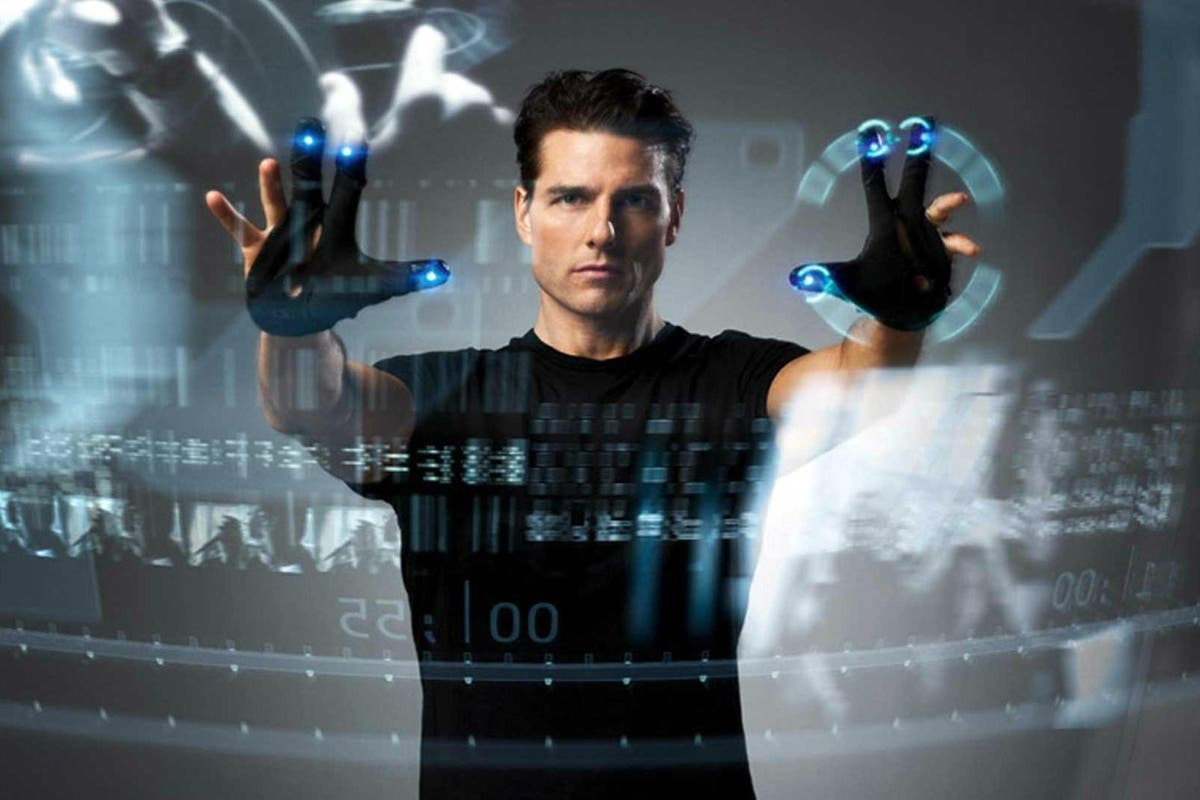
Indeed, many successful predictions have been made in speculative fiction. In 1961, Stanislaw Lem’s novel Return From the Stars predicted the invention of the touch pad, iPhone, iPad and Kindle. The telescreens that monitored the citizens of George Orwell’s Oceania in his dystopian 1949 novel Nineteen Eighty-Four was reflected, twenty years later, in the first CCTV installed in the United Kingdom. Philip K. Dick’s Minority Report accurately predicted personalized ads, voice-controlled homes, facial and optical recognition, and gesture-based computing. Self-driving cars were showcased in many speculative books and films such as Bladerunner, and Isaac Asimov’s I, Robot.
.
But many speculations have also not been realized. No flying cars—OK, some companies such as Toyota, Hyundai and Tesla are working on prototypes. While NASA plans to construct a surface habitat called Artemis Base Camp so that astronauts can remain on the moon’s surface for days or perhaps even weeks, it is far from happening soon. Also, no rotating space stations and space elevator—yet.
Many envisioned totalitarian/dystopian states in speculative fiction have also not been realized (e.g. We, Nineteen Eighty-Four, Brave New World, Fahrenheit 451, Handmaid’s Tale, Hunger Games, The Dispossessed, V for Vendetta )—though one could argue that aspects of each world envisioned by an author has occurred or is occurring in some form. One need only recall Edward Snowdon’s disclosures of NSA’s insidious surveillance to see parallels with Orwell’s Nineteen Eighty-Four. And as Margaret Atwood famously said in the quote above, nothing goes into her stories “that have not happened in real-life somewhere at some time.”
“The function of science fiction is not only to predict the future but to prevent it.”
Ray Bradbury
There are, in most cases, no technological impediments to the flying car, the jetpack, and moon-bases; only cultural ones. “These SF predictions ought to be viewed as visions of where we could be, as opposed to where we will be, or, keeping Bradbury in mind, visions of where we don’t want to go and, thankfully, have mostly managed to avoid to date,” says Steve Davidson of Grasping for the Wind. “Perhaps it’s all cultural,” he adds. Science fiction writer and futurist David Brin says that he is “more interested in exploring possibilities than likelihoods, because a great many more things might happen than do.”
In his book Four Futures: Life After Capitalism Peter Frase writes: “the importance of assessing possibility rather than likelihood is that it puts our collective action at the centre, while making confident predictions only encourages passivity.” In his 2010 essay, David Brin cites Orwell’s 1984 as a “self-preventing prophecy” that helped prevent the scenario (at least in its fullest).
George Orwell wrote his dystopian satire in 1949 about a mind-controlled society in response to the Cold War. The book was a metaphor “against totalitarianism and for democratic socialism,” said Orwell in his 1947 essay Why I Write, adding that, “Good prose is like a windowpane.” Was Orwell’s Nineteen Eighty-Four a failed novel because the real 1984 didn’t turn out quite like his 1984? Hardly. Hugo Award-winning novelist Robert J. Sawyer argues that we consider it a success, “because it helped us avoid that future. So just be happy that the damn dirty apes haven’t taken over yet.”
References:
Brin, David. 2010. “The Self-Preventing Prophecy: Or How a Dose of Nightmare Can Help Tame Tomorrow’s Path.” in Abbott Gleason et al. eds., On Nineteen Eighty-Four: Orwell and Our Future. Princeton University Press, Princeton, p.222.
Frase, Peter. 2016. “Four Futures: Life After Capitalism.” Verso Press, London. 150pp.


Nina Munteanu is a Canadian ecologist / limnologist and novelist. She is co-editor of Europa SF and currently teaches writing courses at George Brown College and the University of Toronto. Visit www.ninamunteanu.ca for the latest on her books. Nina’s bilingual “La natura dell’acqua / The Way of Water” was published by Mincione Edizioni in Rome. Her non-fiction book “Water Is…” by Pixl Press(Vancouver) was selected by Margaret Atwood in the New York Times‘Year in Reading’ and was chosen as the 2017 Summer Read by Water Canada. Her novel “A Diary in the Age of Water” was released by Inanna Publications (Toronto) in June 2020.




 We are now living in the Age of Water. Water is the new “gold”, with individuals, corporations and countries positioning themselves around this precious resource. Water is changing everything. The Age of Water Podcast covers anything of interest from breaking environmental news to evergreen material. This also includes human interest stories, readings of eco-literature, discussion of film and other media productions of interest.
 Nina Munteanu’s


 Claudiu suggested doing the podcast during a discussion we had about what we could do to make a difference and to help bring more awareness about the environmental challenges we face in water issues and geopolitics.

 There were stories in sweat. The sweat of a woman bent double in an onion field, working fourteen hours under the hot sun, was different from the sweat of a man as he approached a checkpoint in Mexico, praying to La Santa Muerte that the federales weren’t on the payroll of the enemies he was fleeing…Sweat was a body’s history, compressed into jewels, beaded on the brow, staining shirts with salt. It told you everything about how a person had ended up in the right place at the wrong time, and whether they would survive another day.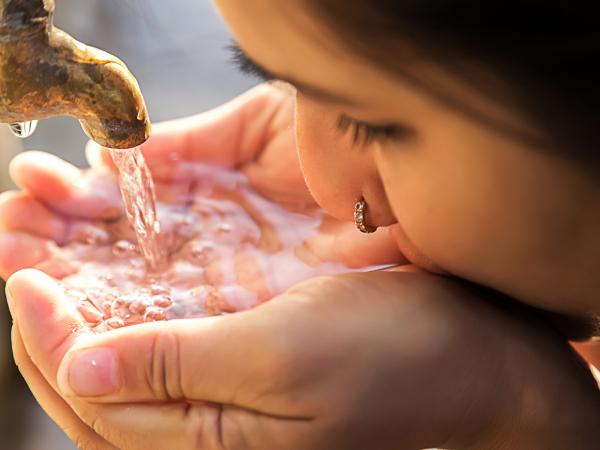
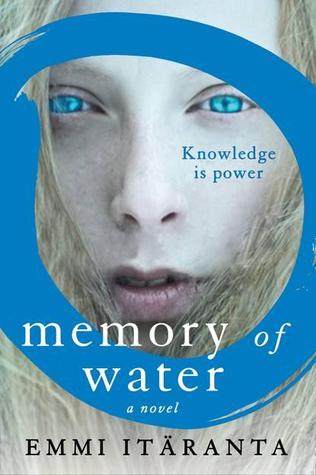
 My upcoming novel by Inanna Publications—A Diary in the Age of Water coming out in 2020—explores the socio-political consequences of corruption in Canada, now owned by China and America as an indentured resource ‘reservoir’; it is a story told through four generations of women and their unique relationship with water during a time of great unheralded change. On February 17, 2046, limnologist Lynna writes in her diary about her mother Una: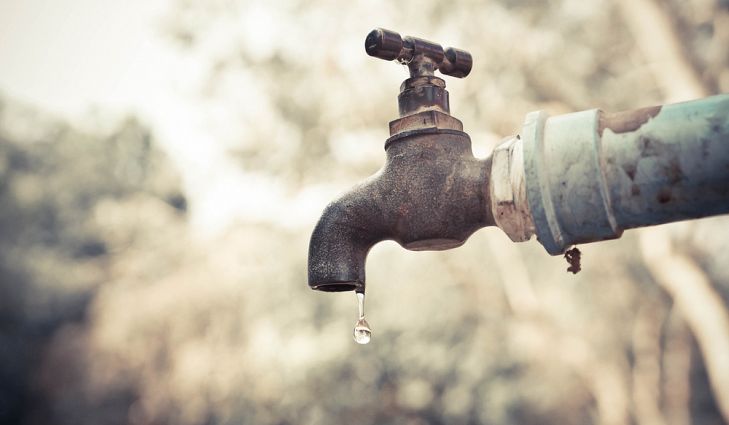
 Science fiction explores our water crisis through premises of extreme water shortage and devastating violence (floods, droughts and storms), water diversion, and hoarding. Premises explore weather manipulation, the consequences of extensive deforestation and the massive extinction of species. As with my own book A Diary in the Age of Water, Claudiu Murgan’s Water Entanglement explores water as a character, as though water has gone rogue, unruly. Perhaps even vengeful…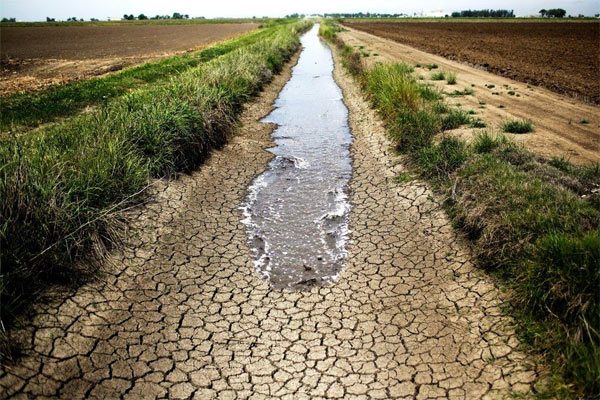
 A tidal wave of TV shows and movies currently explore—or at least acknowledge—the devastation we are forcing on the planet. Every week Netflix puts out a new science fiction show that follows this premise of Earth’s devastation: 3%; The 100; The Titan; Orbiter 9; even Lost in Space.
 Ellen Szabo, author of Saving the World One Word at a Time: Writing Cli-Fi suggests that the ability to make environmental issues less political and more personal (through story) permits more engagement by readers and a higher likelihood of action toward justice: we are more likely to take action on the things we love and know. It’s all about connection.


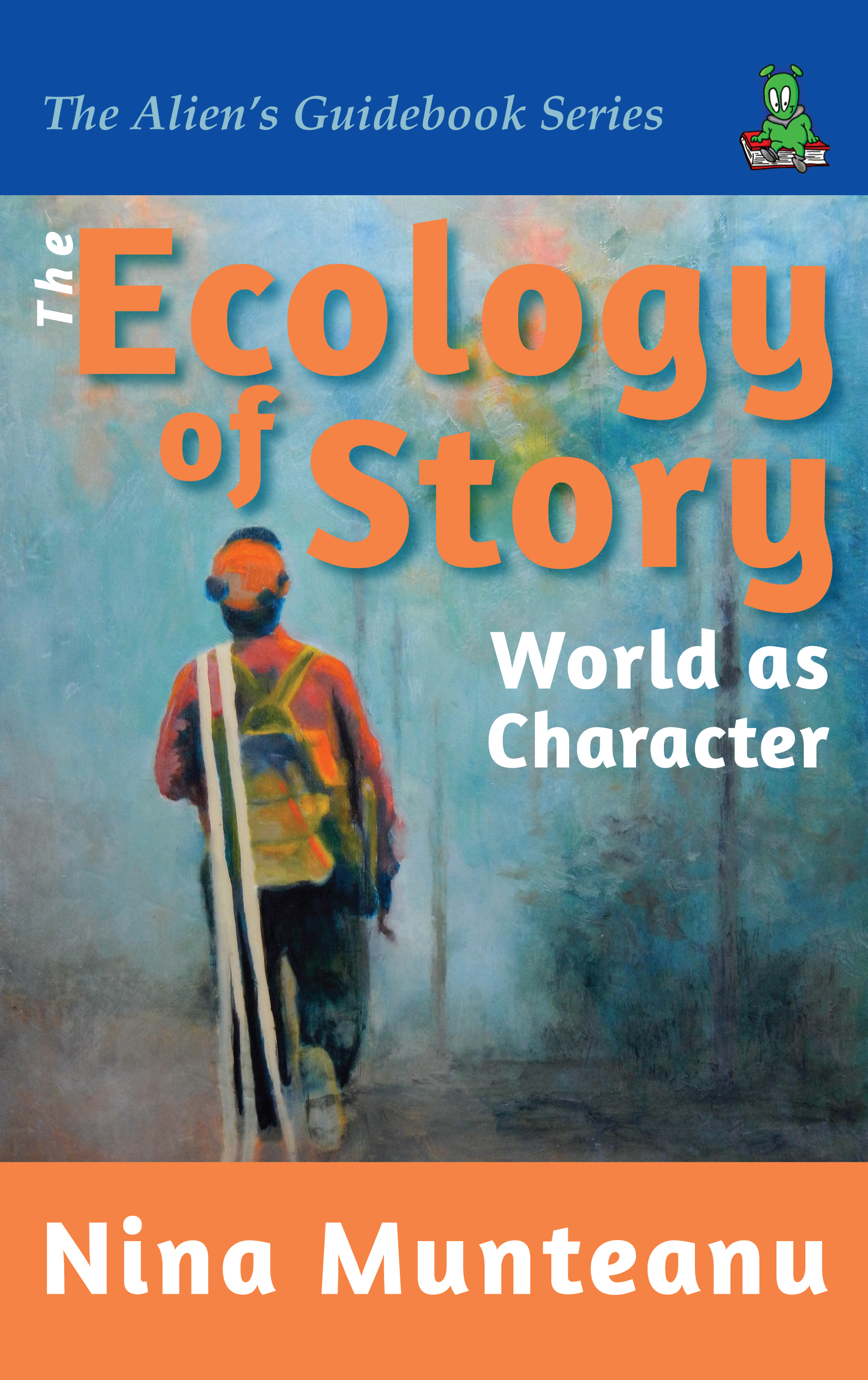 This article is an excerpt from
 Every year, near Christmas,
 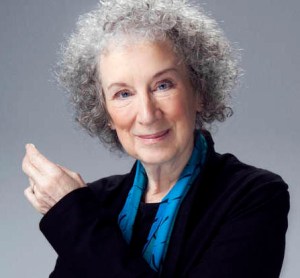 Margaret Atwood is a winner of the Arthur C. Clarke Award and the Prince of Asturias Award for Literature as well as the Booker Prize (several times) and the Governor General’s Award. Animals and the environment feature in many of her books, particularly her speculative fiction, which reflects a strong view on environmental issues.
 “
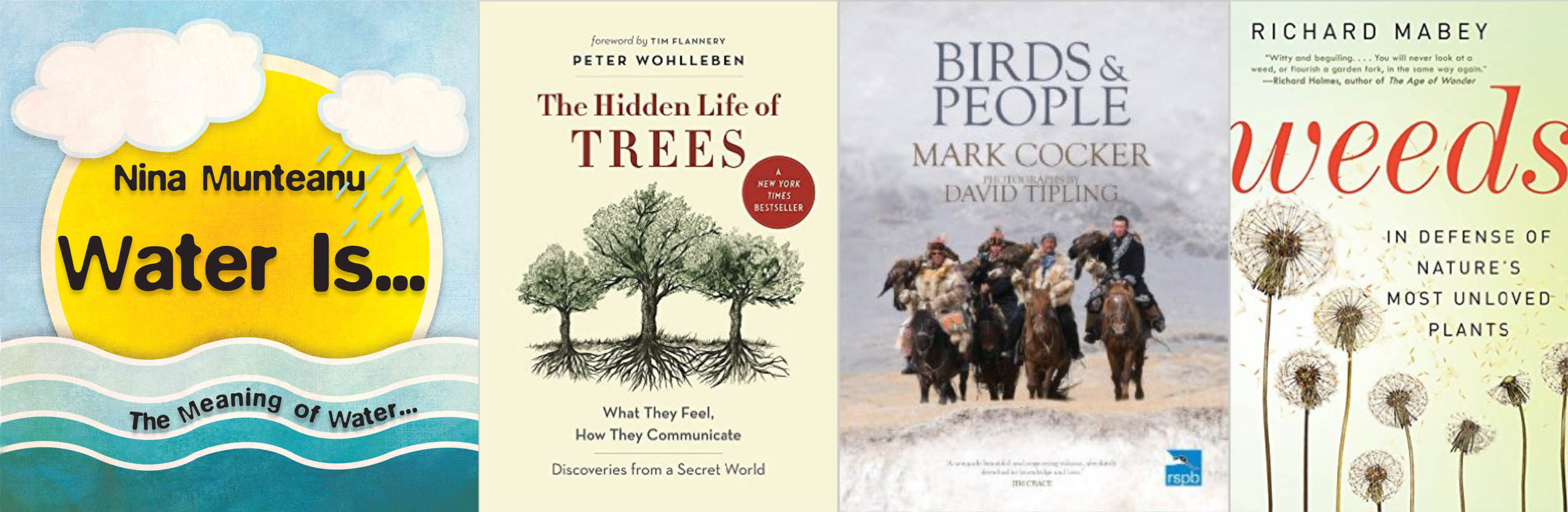
“ “The Hidden Life of Trees: What They Feel, How They Communicate—Discoveries From a Secret World” (Greystone Books) by Peter Wohlleben. In The Hidden Life of Trees, Peter Wohlleben shares his deep love of woods and forests and explains the amazing processes of life, death, and regeneration he has observed in the woodland and the amazing scientific processes behind the wonders of which we are blissfully unaware. Much like human families, tree parents live together with their children, communicate with them, and support them as they grow, sharing nutrients with those who are sick or struggling and creating an ecosystem that mitigates the impact of extremes of heat and cold for the whole group. As a result of such interactions, trees in a family or community are protected and can live to be very old. In contrast, solitary trees, like street kids, have a tough time of it and in most cases die much earlier than those in a group. Drawing on groundbreaking new discoveries, Wohlleben presents the science behind the secret and previously unknown life of trees and their communication abilities; he describes how these discoveries have informed his own practices in the forest around him. As he says, a happy forest is a healthy forest, and he believes that eco-friendly practices not only are economically sustainable but also benefit the health of our planet and the mental and physical health of all who live on Earth.
 “Weeds: In Defense of Nature’s Most Unloved Plants” (Ecco) by Richard Mabey. “They’re better for you than you think,” says Atwood. “They hold the waste spaces of the world in place, and you can eat some of them.” Ever since the first human settlements 10,000 years ago, weeds have dogged our footsteps. They are there as the punishment of ‘thorns and thistles’ in Genesis and , two millennia later, as a symbol of Flanders Field. They are civilisations’ familiars, invading farmland and building-sites, war-zones and flower-beds across the globe. Yet living so intimately with us, they have been a blessing too. Weeds were the first crops, the first medicines. Burdock was the inspiration for Velcro. Cow parsley has become the fashionable adornment of Spring weddings. Weaving together the insights of botanists, gardeners, artists and poets with his own life-long fascination, Richard Mabey examines how we have tried to define them, explain their persistence, and draw moral lessons from them. One persons weed is another’s wild beauty.
 “Birds and People” (Jonathan Cape) by Mark Cocker. “Vast, historical, contemporary, many-levelled,” says Atwood. “We’ve been inseparable from birds for millenniums. They’re crucial to our imaginative life and our human heritage, and part of our economic realities.” Vast in both scope and scale, the book draws upon Mark Cocker’s forty years of observing and thinking about birds. Part natural history and part cultural study, it describes and maps the entire spectrum of our engagements with birds, drawing in themes of history, literature, art, cuisine, language, lore, politics and the environment. In the end, this is a book as much about us as it is about birds.


 For me this represents a palpable and gestalt cultural awakening in the realm of the “feminine archetype”.
 I mentioned that the majority of my stories are science fiction (SF). SF is a literature of allegory and metaphor and deeply embedded in culture. It draws me because it is the literature of consequence exploring large issues faced by humankind. In a February 2013 interview in The Globe and Mail I described how by its very nature SF is a symbolic meditation on history itself and ultimately a literature of great vision: “Speaking for myself, and for the other women I know who read science fiction, the need is for good stories featuring intelligent women who are directed in some way to make a difference in the world…The heroism [of women] may manifest itself through co-operation and leadership in community, which is [often] different from their die-hard male counterparts who want to tackle the world on their own. Science fiction provides a new paradigm for heroism and a new definition of hero as it balances technology and science with human issues and needs.”
 We’ve progressed from the biological to the mechanical to the purely mental, from the natural world to a manufactured world to a virtual world, writes philosopher and writer Charles Eisenstein. According to Carolyn Merchant, professor at UC Berkley, early scientists of the 1600s used metaphor, rhetoric, and myth to develop a new method of interrogating nature as “part of a larger project to create a new method that would allow humanity to control and dominate the natural world.”
 Competition is a natural reaction based on distrust—of both the environment and of the “other”—both aspects of “self” (as part) separated from “self” (as whole). The greed for more than is sustainable reflects an urgent fear of failure and a sense of being separate. It ultimately perpetuates actions dominated by self-interest and is the harbinger of “the Tragedy of the Commons”.
 Examples of creative cooperatives exist throughout the world, offering an alternative to the traditional model of competition. Cultural creatives are changing the world, Ruche tells us. These creatives, while being community-oriented with an awareness of planet-wide issues, honor and embody feminine values, such as empathy, solidarity, spiritual and personal development, and relationships. Mechanisms include reciprocity, trust, communication, fairness, and a group-sense of belonging. I give examples in my upcoming book “Water Is…” by Pixl Press, due in Spring 2016.
 Nina Munteanu is an ecologist and internationally published author of award-nominated speculative novels, short stories and non-fiction. She is co-editor of Europa SF and currently teaches writing courses at George Brown College and the University of Toronto. Visit
  Nina Munteanu Writing Coach