
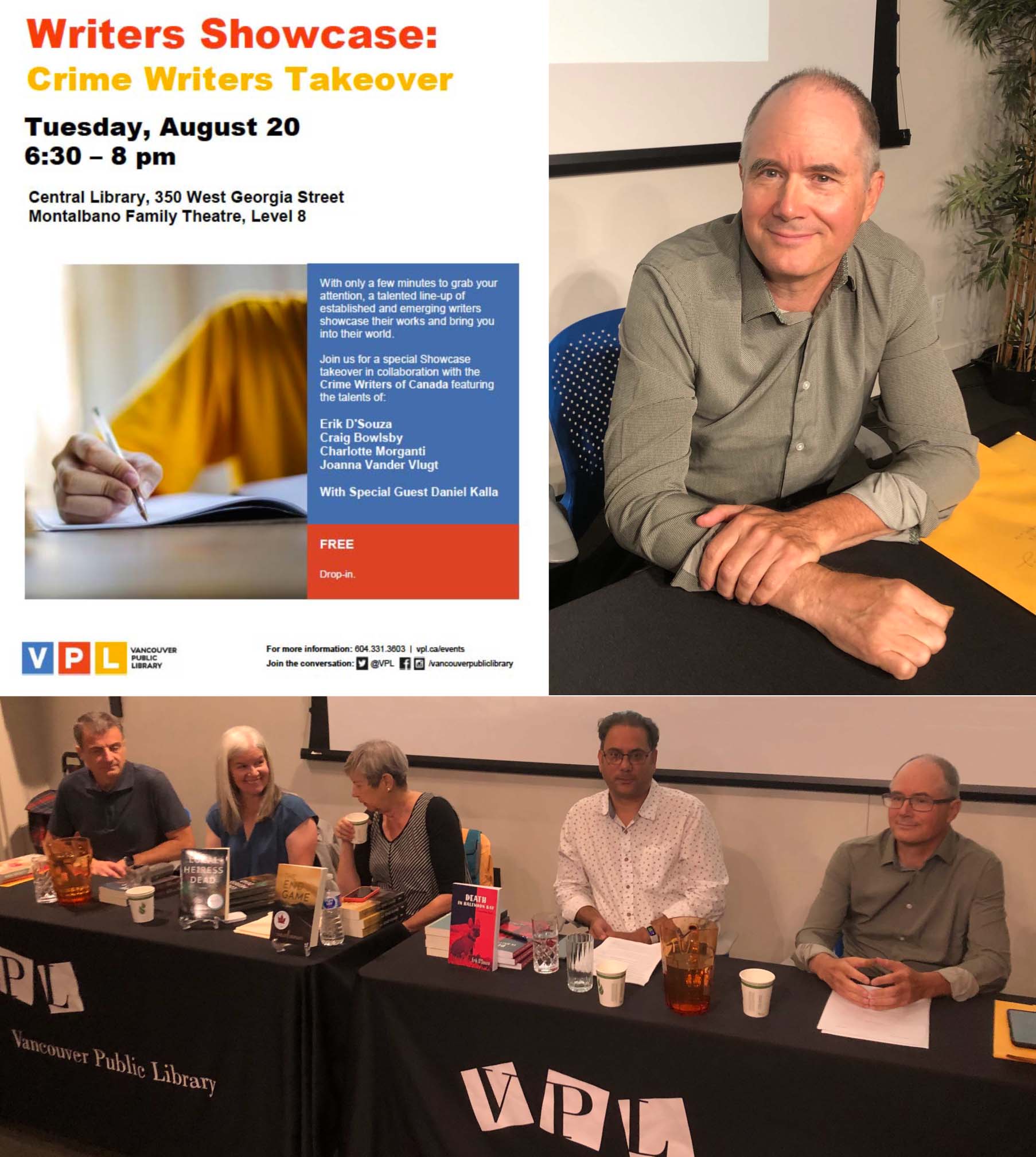
I was recently at Vancouver’s Central Library on Georgia Street to listen to my colleague Craig Bowlsby give a reading from his much anticipated novel Requiem for a Lotus. He was joined by four other crime writers who gave readings that evening, including Daniel Kalla who read from his 2024 book High Society.
My Books
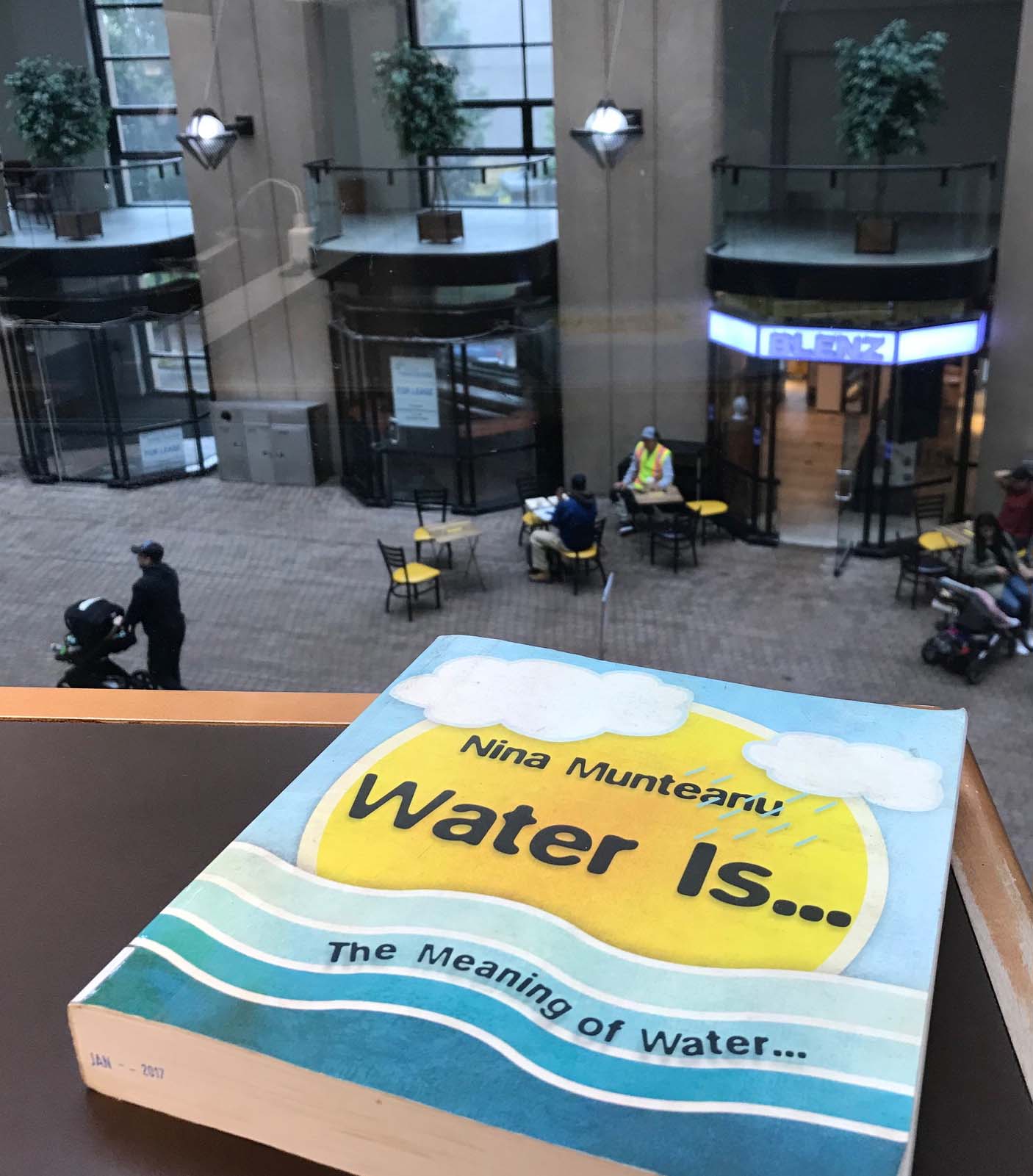
Feeling whimsical on my way out, I asked the librarian if the library carried any of Nina Munteanu’s books. They did, and plenty of them! Most of my science fiction books were on their shelves as well as my historical fantasy The Last Summoner, my writing guide The Fiction Writer, and my nonfiction book on water Water Is…The Meaning of Water.
I returned the next day to check out my books and to enjoy the wonderful setting of this large and iconic Coliseum-inspired library in downtown Vancouver. It was a typical Vancouver drizzly day; a good day to spend in a library, I thought.

I found Water Is… on the ground floor among other books on water. My science fiction books were up on the fourth floor, clustered with my historical fantasy The Last Summoner. Books included Darwin’s Paradox and two books of my Splintered Universe Trilogy, Inner Diverse and Metaverse; Outer Diverse was out with a customer. They also had my short story collection Natural Selection.

The Library
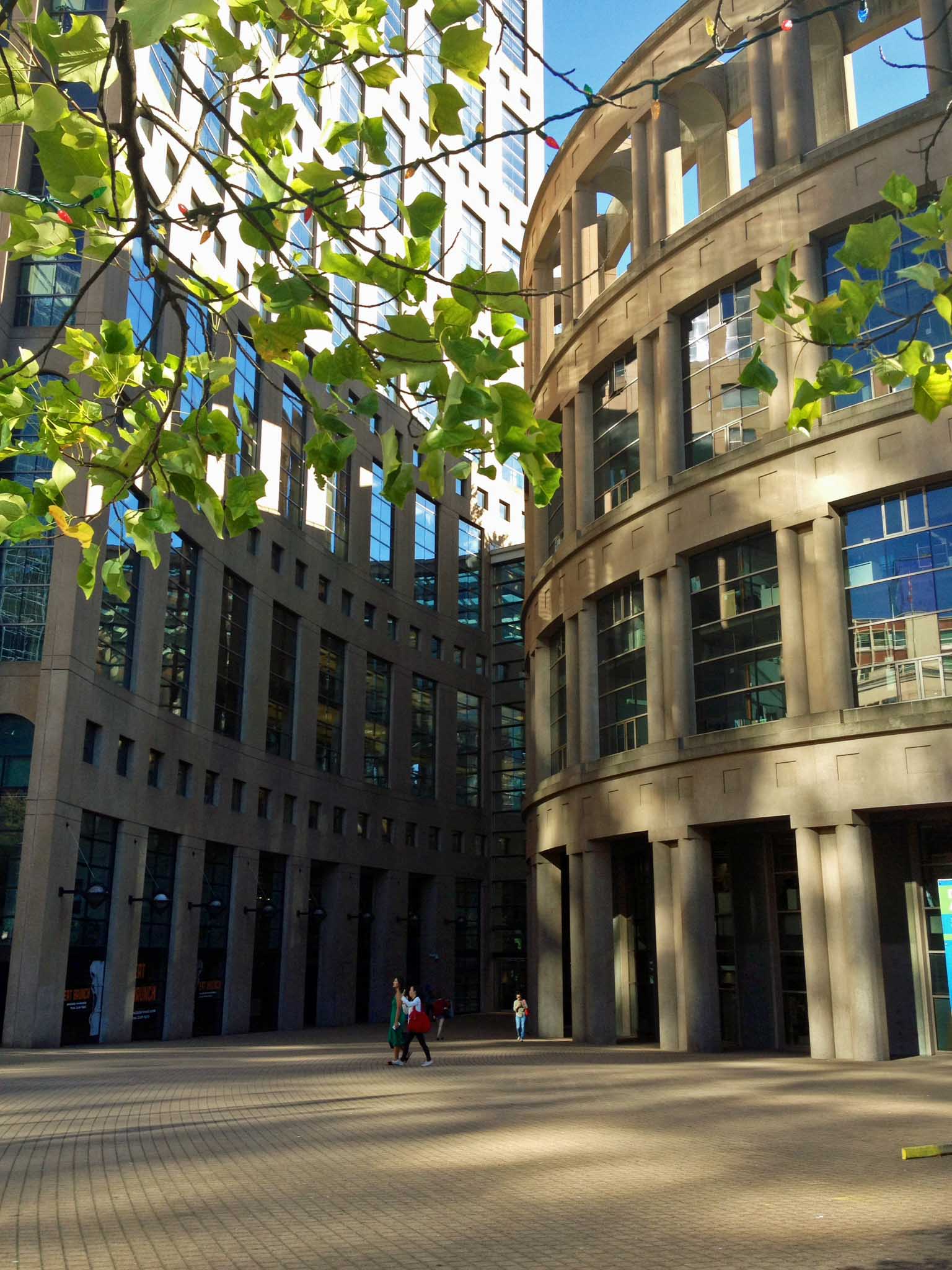
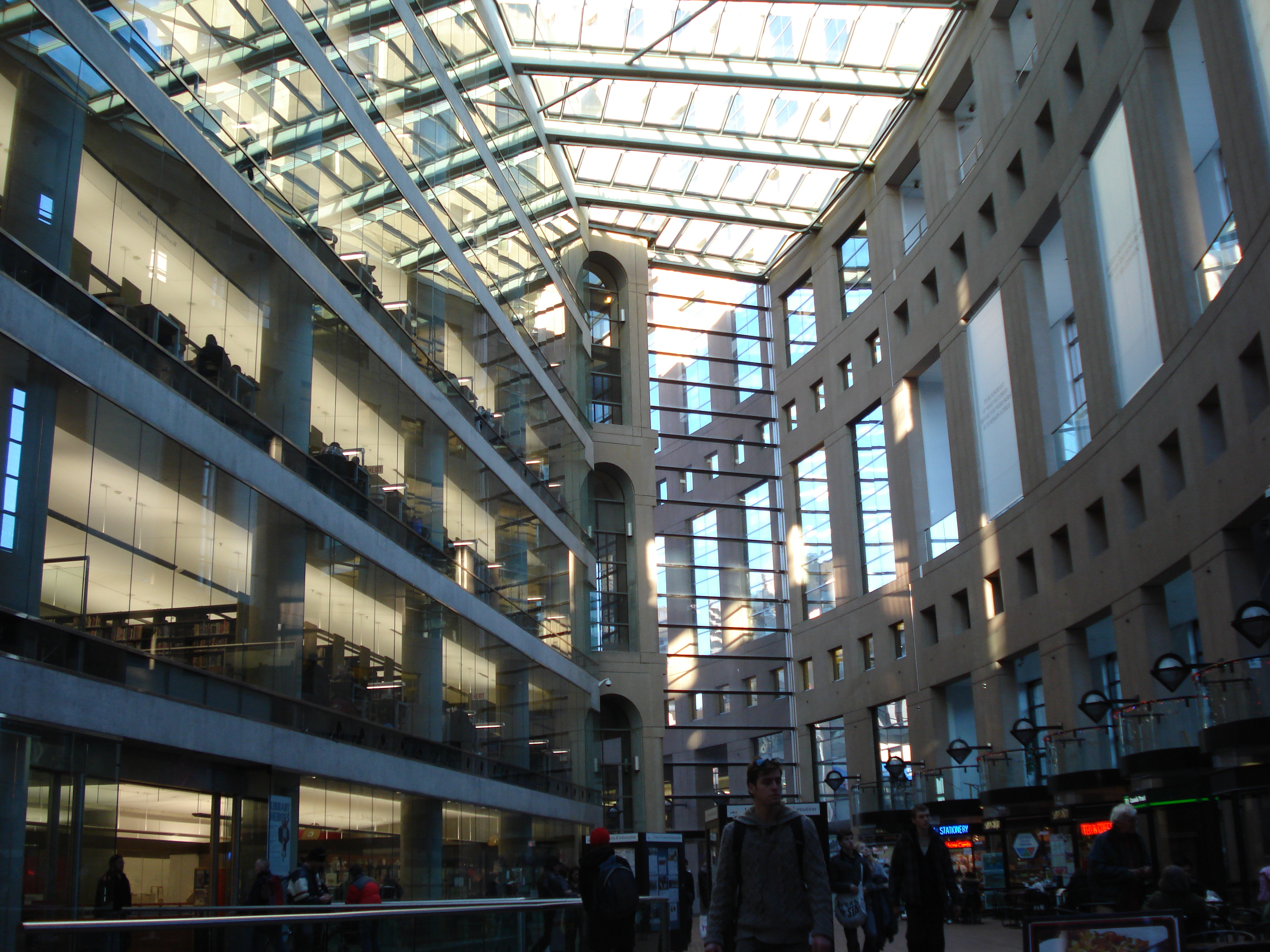
The Vancouver Central Library is an iconic feature of downtown Vancouver. Its Coliseum-style architecture lends a note of gravitas and traditional beauty to the nouveau chic revitalized downtown. Occupying an entire city block in the eastward expansion of Vancouver’s downtown core, the library complex along with federal office building tower is made of sandstone-coloured precast concrete. The building exterior is covered in granite quarried in Horsefly, BC and built to the highest seismic standards. In the words of Safdie Architects: “the heart of the Vancouver Public Library is a spiraling grand urban room that draws the public into Library Square as both a quiet place for study and contemplation and a vital community meeting place.”
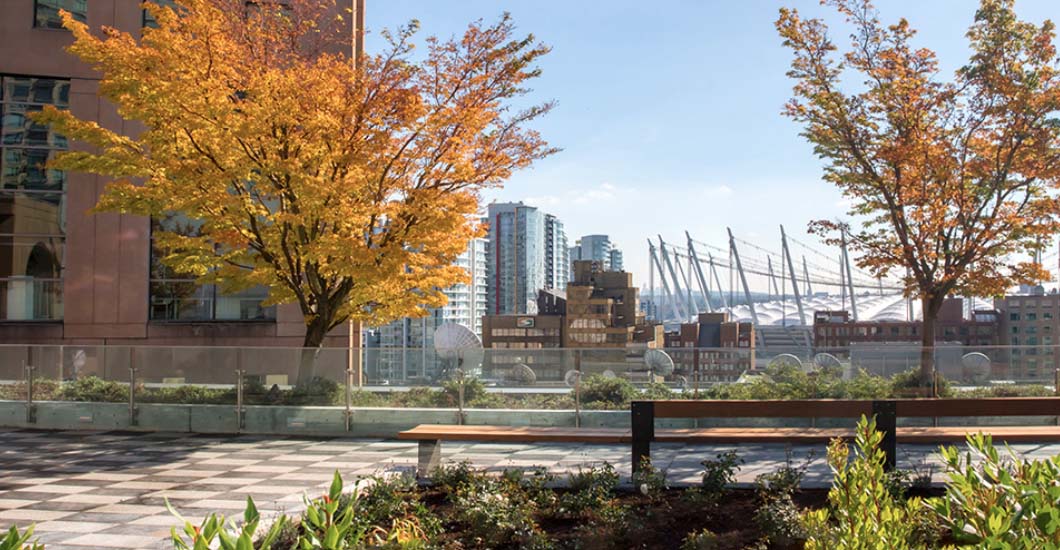
The library opened in May of 1995; then expansion of the upper floors began in June 2017. As the lease came due on the upper two floors (levels 8 and 9), the library undertook planning to transform the area and offer much needed community spaces. Rather than featuring traditional collections, the expansion now provides meeting rooms, a glass enclosed reading room, an 80-seat theatre (where I listened to Craig read his book), an exhibition space, as well as a long awaited public rooftop garden and outdoor terraces. Original architects (Moshe Safdie & Associates with local partners DA Architects) were retained to design the new expansion. Cornelia Hahn Oberlander, the landscape architect responsible for the green roof, designed the long-awaited rooftop gardens.
The Environs
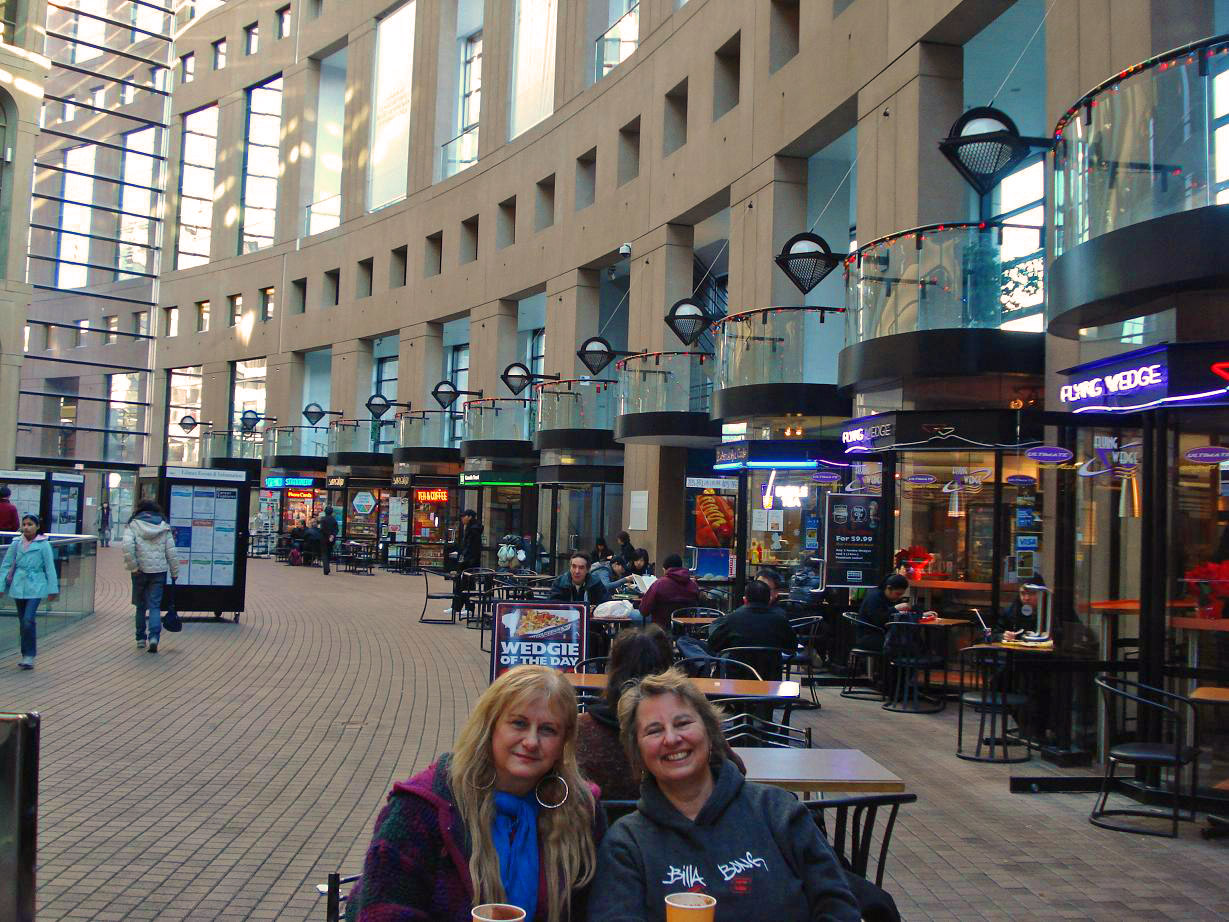
I spent a drizzly morning and afternoon in the library with its spacious atrium along with bookstore and Blenz coffee bar, and other interesting places on Georgia Street nearby.

Close by, at Glowbal, I treated myself to a wonderful lunch on their heated patio undercover. I then dashed through the rain to Telus Gardens next door that I found attractive, fresh and welcoming with its succulent jungle of plants, fragrant orchids and swimming koi ponds. I sipped my London Fog and ate a wonderful apple custard caramel croissant (from Café Bisou), while sitting in a flower-petal chair and enjoying the blissful serenade of a piano player.

The day of sensual pleasures and intellectual satisfaction was complete!
Next time you find yourself in Vancouver’s downtown, check out my books at the Central Library and enjoy the vibrant downtown core.


Nina Munteanu is a Canadian ecologist / limnologist and novelist. She is co-editor of Europa SF and currently teaches writing courses at George Brown College and the University of Toronto. Visit www.ninamunteanu.ca for the latest on her books. Nina’s bilingual “La natura dell’acqua / The Way of Water” was published by Mincione Edizioni in Rome. Her non-fiction book “Water Is…” by Pixl Press (Vancouver) was selected by Margaret Atwood in the New York Times ‘Year in Reading’ and was chosen as the 2017 Summer Read by Water Canada. Her novel “A Diary in the Age of Water” was released by Inanna Publications (Toronto) in June 2020.

 This all begs the question of what art truly is and should be. Susan Sontag suggested that “real art makes us nervous.” The genius of art skirts the edge of propriety and comfort to ask the questions that help us define our own humanity. Oscar Wilde remarked, “an idea that is not dangerous is unworthy of being an idea at all.” Benjamin Franklin suggested that, “if all printers were determined not to print anything till they were sure it would offend nobody, there would be very little printed.”
 Nina Munteanu is an ecologist and internationally published author of award-nominated speculative novels, short stories and non-fiction. She is co-editor of Europa SF and currently teaches writing courses at George Brown College and the University of Toronto. Visit
  Nina Munteanu Writing Coach