A November mist settles on Thompson Creek marsh, ON (photo by Nina Munteanu)
In January of this year, I posted a shot I’d taken in early winter of a marsh I often visit. That morning was cool and a thick mist lurked in the marsh like a shadow, giving it a mysterious timeless quality. A quiet stillness had settled like dew on everything, muting both colour and sound into a hush of anticipation. The stillness made me feel as though I’d entered a John Atkinson Grimshaw painting. A moody darkness pervaded the bare braided trees and the marsh oozed the scent of humus and wet vegetation. I inhaled it all deeply.
The image I posted caught the attention of colleague writer and publisher Lorina Stephens, who is also a superlative artist and painter. Inspired, she responded to my image with a painting.
The Painting:
Lorina Stephen’s ekphrastic painting entitled “Fog on West Grey Pond”
“I very much wanted to create that feeling of dreamscape that often happens in still waters, of there being something out there in the mist, of that sense of wonder and mystery. So, for this painting, it meant employing a gentle hand, allowing pigment to flow and pool, waiting until water had evaporated slightly, and then using a small, natural sponge to dab out areas to allow the white of the paper to shine through, then as the paper dried in an hour or so, or in some cases the next day, brushing in details little by little, from soft washes to hard lines, in order to create depth and definition.
It always amazes me when depth of field happens on the two dimensions of paper, that in this flat, thin sheet of paper I can take my viewer out and away into the distance, through a portal to another place, and in this case perhaps create that sense of the dampness and chill of a foggy day.”
Biography of Lorina Stephens
Lorina Stephens has been painting since the age of 14 when she studied under well-known, award-winning Ontario landscape artist, Dorothy Milne-Eplett. In those days it was oils and mostly copy-painting, although there were originals. Most of those paintings ended up in a collection under patreon, Oscar LaBerge, who was a construction worker in Newmarket, Ontario.
In the 1980s, Lorina rediscovered watercolours during an intensive 12 week Georgian College course, during which time the Tottenham Art Association was formed, and juried shows ensued, as well as solo exhibitions in galleries in Central Ontario.
.
Then the recession of the 1990s happened, and art became a way to stretch the family budget by way of hawking wares at the Orangeville Farmers Market, what Lorina came to call “painting pretty pictures for tourists”. These days Lorina paints simply as a way of expressing her love of the land, the ineffable communication that exists in the vast expanse of Canadian geography.
Lorina inherited from her mother a lifetime supply of watercolour paper. Among all those papers is a block of 7″ x 10″ Arches 140 lb hot pressed paper. That began a journey of studies.
Hot pressed paper has its own set of demands, having a very smooth finish and thus doesn’t absorb water the way of cold pressed, and the weight also means it tends to buckle and warp easily in larger sizes. Lorina addresses that by using a tempered glass painting desk, and creating a suction seal with water between the glass and paper, rather than the frustration of stretching paper onto a surface with masking tape. Using hot pressed paper also allows for some pretty interesting results by way of sponging and wiping out areas, and accepting precise detail work when the paper is dry. Her palette of colours is mostly transparent, with the addition of some pretty aggressively staining bullies added in.
Thompson Creek marsh on a foggy November morning, ON (photo by Nina Munteanu)
.
Nina Munteanu is a Canadian ecologist / limnologist and novelist. She is co-editor of Europa SF and currently teaches writing courses at George Brown College and the University of Toronto. Visit www.ninamunteanu.ca for the latest on her books. Nina’s bilingual “La natura dell’acqua / The Way of Water” was published by Mincione Edizioni in Rome. Her non-fiction book “Water Is…” by Pixl Press (Vancouver) was selected by Margaret Atwood in the New York Times ‘Year in Reading’ and was chosen as the 2017 Summer Read by Water Canada. Her novel “A Diary in the Age of Water” was released by Inanna Publications (Toronto) in June 2020.
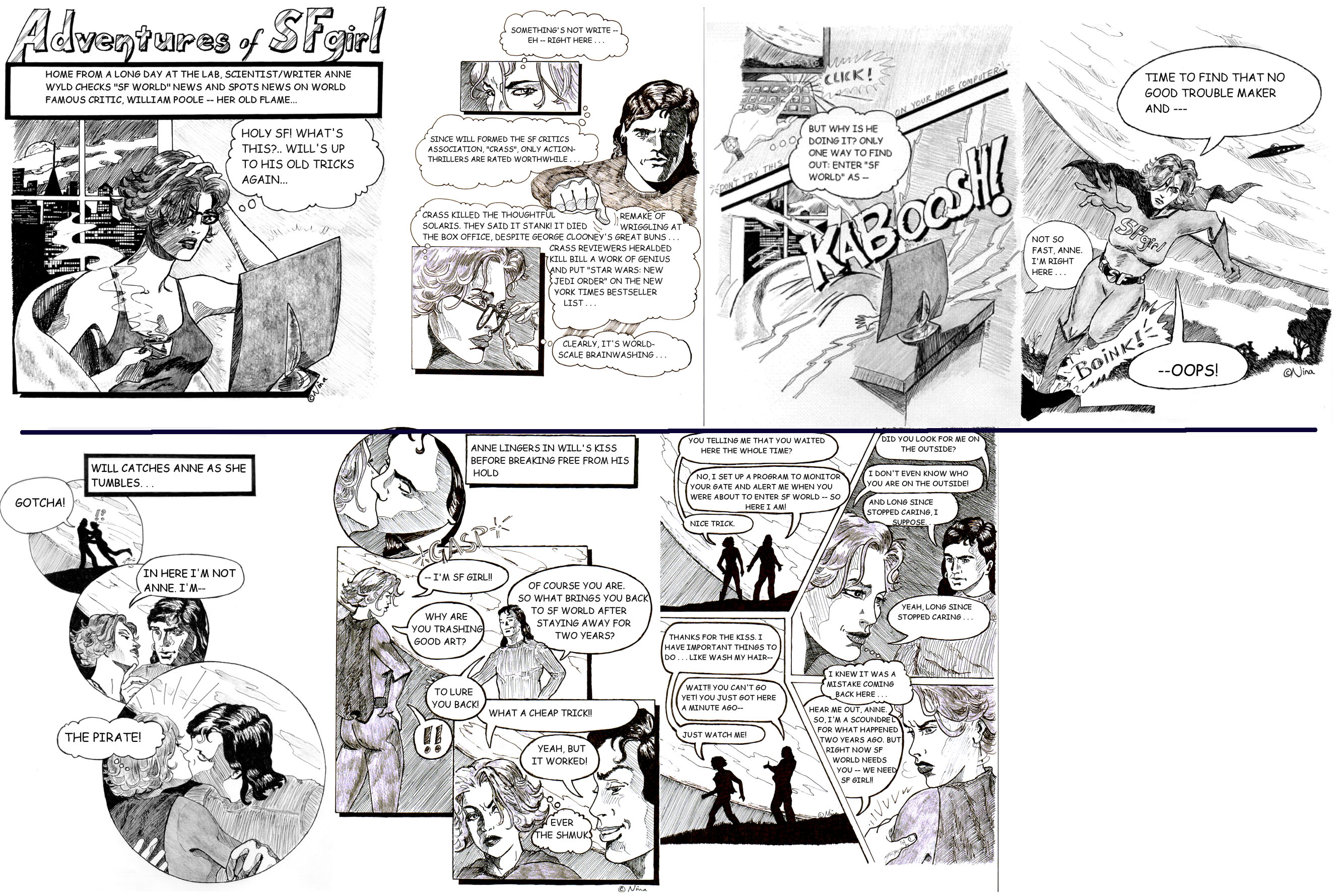
When I was little, I wanted to be a storyteller, a cartoonist specifically. I was reading graphic novels before I could read. That didn’t stop me from understanding what was going on. Being a virtual learner and an artist, I understood context: expressions, body language…
Nina, age three, pretending to read (photo by Martha Munteanu)
.
.
I wrote and drew wild adventure thriller detective stories and stories about exploring other planets. While my first love was telling stories, I was called by the needs of the environment. This percolated through me as I grew up and wouldn’t let go. When I could read and write, I still read graphic novels; I wrote and illustrated short stories about the environment, dystopian tales that focussed on how we were destroying our planet.
.
At school, I loitered in the hallways, pasting subversive posters on the walls. They were a call to action: Restrain … Reuse … Repurpose … Recycle … Remain true to the environment. I wrote in the school paper. I quoted global statistics, mentioned global warming (yes, people knew about it back in the ‘60s and ‘70s), and submitted cheesy emotional drawings of pollution and toxic waste.
By the time I was ready to go to university (I’d been accepted early into the fine arts program at Concordia University in Montreal), I switched my major on registration day. Like a horse bolting from a fire, I charged out of the arts and into the sciences. I’d heard environment’s call for help and had notions of becoming an environmental lawyer. I kept a few arts courses as electives but focused on a biology degree in the environmental sciences. I understood that the tools I needed to wield as an eco-warrior in law were rooted in science.
.
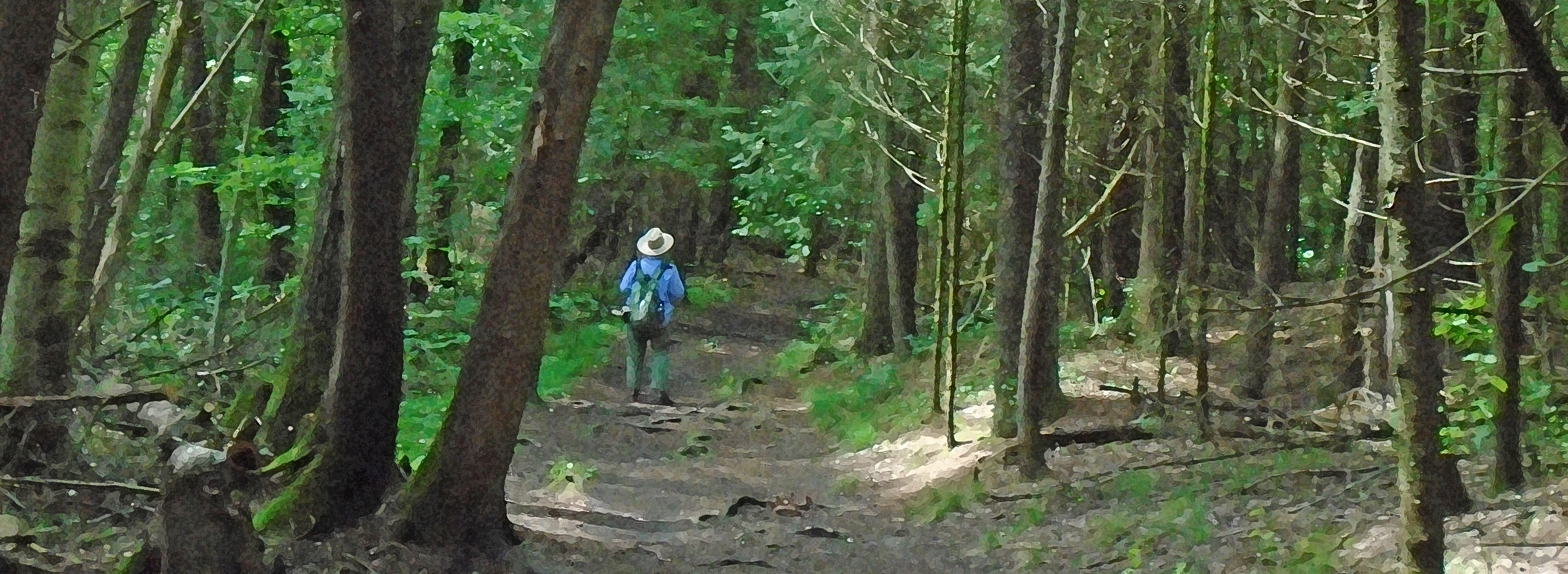
A twenty-some old Nina exploring the forest
.
I learned something about ecology, botany, animal, plant, and cell physiology, genetics and biochemistry, and limnology (the study of water systems). The sciences fascinated me and I became entranced in the study of how the natural world worked. I was particularly attracted by lichens, plant-like organisms called cryptogams that grow like miniature forests on substrates—trees,fence posts, rock, cement. My attraction was partly because these often overlooked organisms were actually more of a symbiotic community or mini-ecosystem: an intriguing community of fungi, algae, cyanobacteria, bacteria and yeast growing together. I felt that on some level, lichen had much to teach us on lifestyle and approach to living on this planet. They’d been around for millennia, a lot longer than we’ve been.
Having long abandoned law (I convinced myself that I wasn’t cut out for it; maybe I was but that’s another universe), I decided to pursue lichen ecology for my masters degree. But fate had another path in mind for me. The botany professor who I wished to study under was retiring and no one was taking her place. She referred me to the limnology professor and he got me interested in another microscopic community: periphyton (the algae and associated organisms that colonize plants, rock and cement in water).
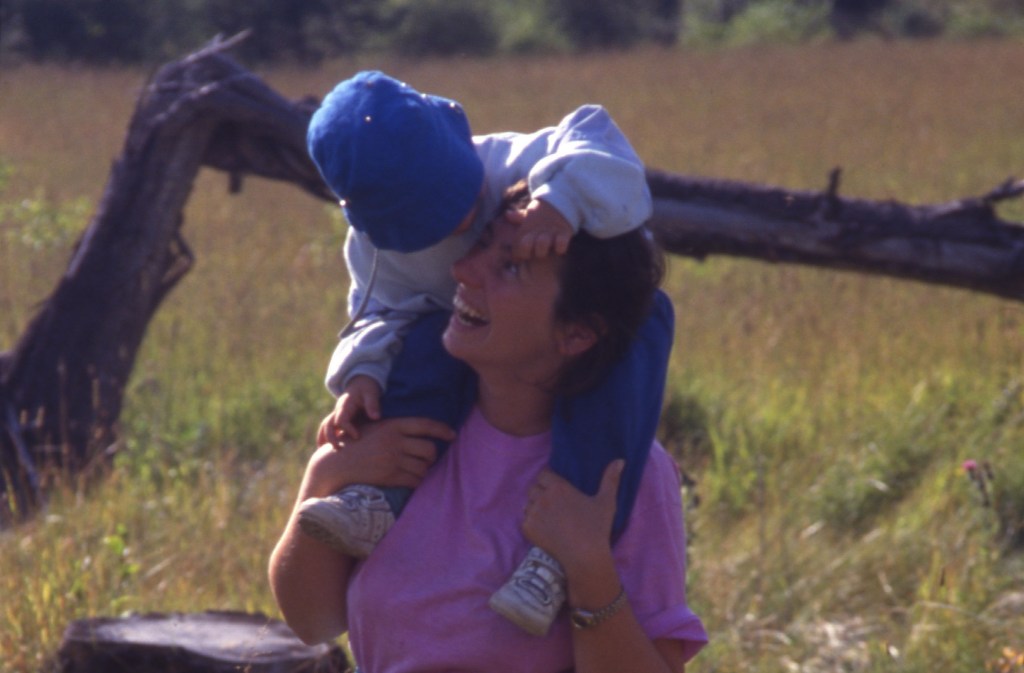
Nina and son Kevin explore nature (photo by Herb Klassen)
.
I’d come somewhat full circle to be an eco-warrior, pursuing environmental problems (and corporate mischief) through biology rather than law. I designed and conducted environmental impact assessments and recommended mitigation, restoration, and remediation procedures to various clients from lakefront communities and city planners to mining companies dealing with leaky tailings ponds and pulp mills discharging effluent into the ocean.
.
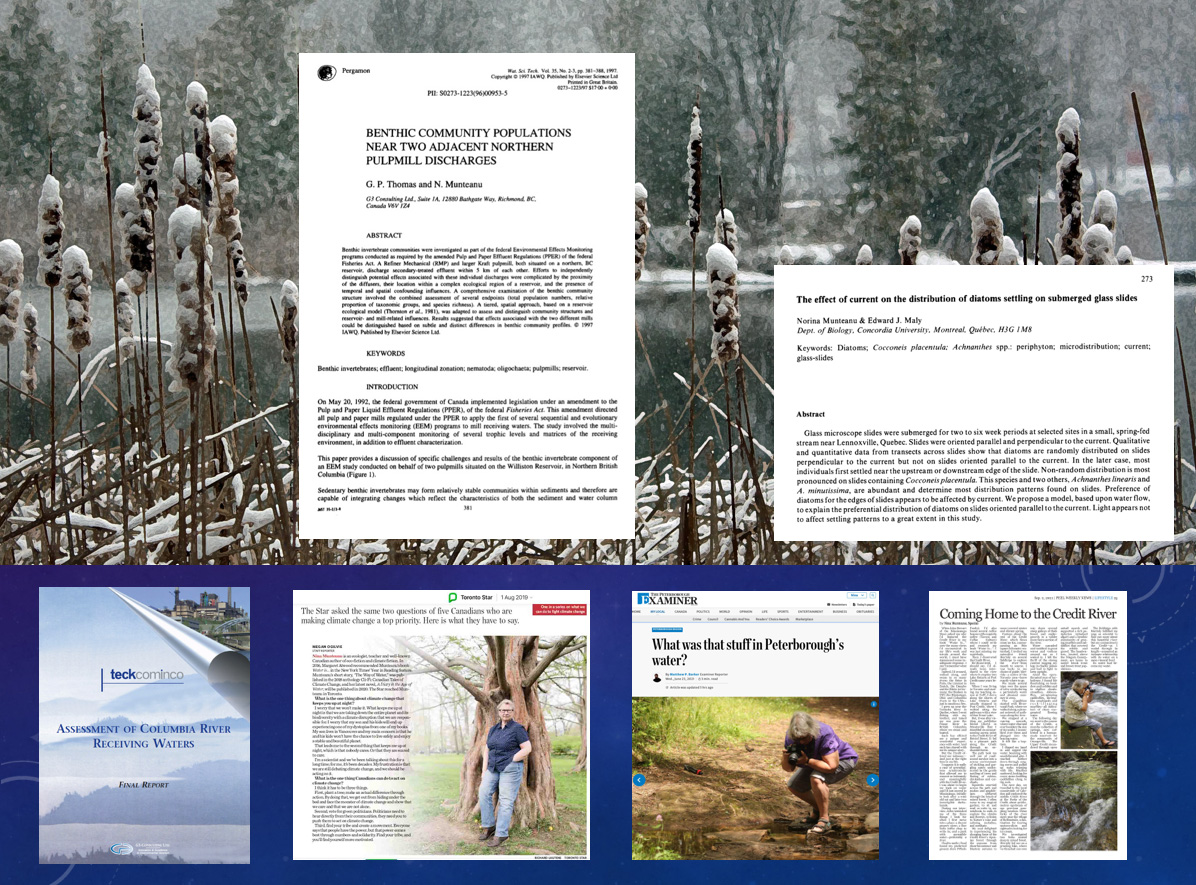
Various reports, scientific papers and articles I’ve written or been interviewed for
.
It worked for me. I consulted for twenty-some years. It was for the most part both satisfying and encouraging. I felt as though I was making a difference: mostly through educating my clients. But that became less and less the case as the consulting firms I worked for, and the corporations they worked for, seemed to have less and less integrity. They also seemed to care less about the environment and more about profit.
So, just as I’d done on the day of registration at university, I bolted like a horse in a fire and quit my job as a consultant. I never returned to consulting.
Nina photographing pollution of a small creek entering a drinking water source (photo by Matthew Barker, Peterborough Examiner)
My sights went back to storytelling, journalism, and reporting/interviews. Mostly eco-fiction. Creating narratives that would hopefully move people, nudge them to act for the environment. Change their worldview somewhat into eco-friendly territory. Make them care. I’m still an eco-warrior, but my pen and my storytelling is my tool.
The word is a powerful tool. And the stories that carry them are vehicles of change.
Nina Munteanu wandering the Emily Tract forest, ON (photo by Merridy Cox)
.
Nina Munteanu is a Canadian ecologist / limnologist and novelist. She is co-editor of Europa SF and currently teaches writing courses at George Brown College and the University of Toronto. Visit www.ninamunteanu.ca for the latest on her books. Nina’s bilingual “La natura dell’acqua / The Way of Water” was published by Mincione Edizioni in Rome. Her non-fiction book “Water Is…” by Pixl Press (Vancouver) was selected by Margaret Atwood in the New York Times ‘Year in Reading’ and was chosen as the 2017 Summer Read by Water Canada. Her novel “A Diary in the Age of Water” was released by Inanna Publications (Toronto) in June 2020.
The environment and how we treat it has always been important to me since I was a child. My passion for storytelling morphed into writing, but the underlying spark came through environmental activism. I got a university degree in aquatic ecology, published numerous papers, and now write eco-fiction that is grounded in accurate science with a focus on human ingenuity and compassion. The most meaningful and satisfying eco-fiction is ultimately optimistic literature that explores serious issues with heroic triumph. Each of these five favourites intimately connects human to environment. Each novel moved me to think and deeply care.
The Books I Picked & Why
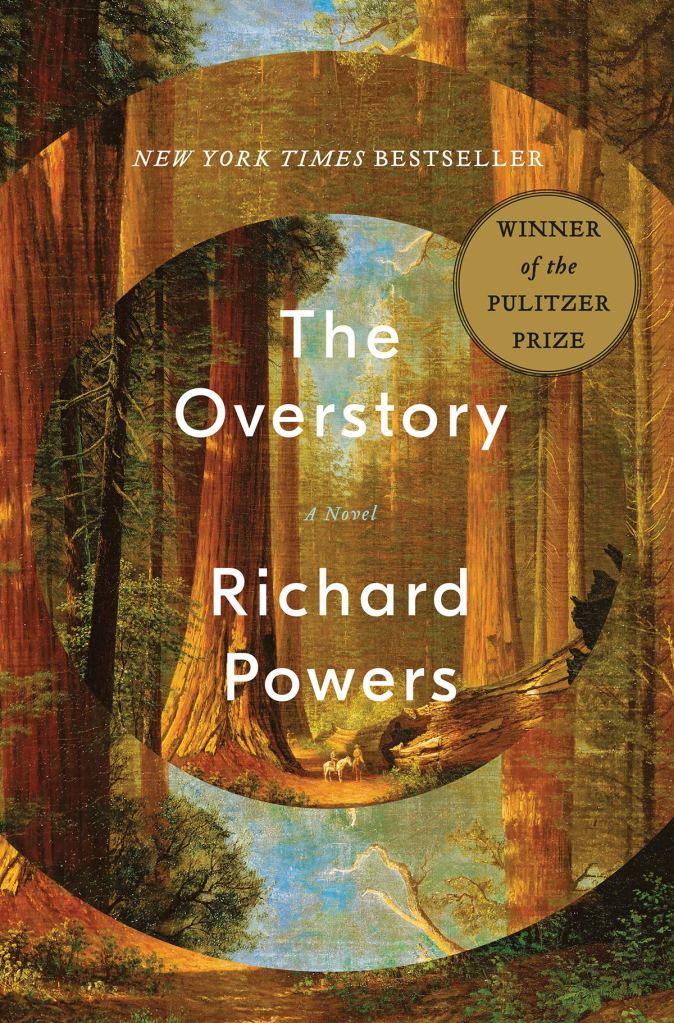
The Overstory
by Richard Powers
What resonated with me on so many levels was the author’s use of lyrical and beautiful language in describing trees and forests: as characters. I’m an ecologist and I felt a particular kinship with the botanist Patricia Westerford, a disabled introvert who must swim against the hegemonic tide with heretical ideas. When she argues that trees communicate, learn, trade goods and services, have intelligence and society, her scientific peers ridicule her and end her university career. This story is as much her triumph over overwhelming challenges as it is about the dwindling majestic forests that must quietly endure our careless apathy as they continue to offer their gift of life-giving oxygen and medicinal aerosols for hundreds of years.
.
Barkskins
by Annie Proulx
This 600-year saga about human-environment interaction through the forest industry in Canada evoked emotional connections with my environment, the Canadian forests, and the plight of indigenous Canadians. From the arrival of the Europeans in pristine forest to its destruction under the veil of global warming, Proulx weaves generational stories of two settler families into a crucible of terrible greed and tragic irony. The bleak impressions by the immigrants of a harsh environment crawling with pests underlie their combative mindset of a presumed infinite resource. I was particularly moved by the linked fate between the Mi’kmaq and the majestic pine forests, how both were similarly mistreated and changed. This history is also my legacy. As the daughter of immigrants, I felt both educated and moved.
.
The Breathing Hole
by Colleen Murphy, Siobhan Arnatsiaq-Murtphy and more
What struck me most was the use of simple language to portray powerful intimacy and connection between human and animal, and by extension, environment. Murphy’s humorous dialogue, together with sparing, often ironic, descriptions, struck deep into my heart. The play starts in 1535 on an ice shelf up north—when an Inuk widow risks her life to save a lost one-eared polar bear cub on an ice floe, and adopts him. In the last scene five hundred years later in the oily waters of the Northwest Passage, the same bear—starving and cruelly injured by eco-tourists on a cruise ship—struggles to keep from drowning. No one on the ship cares. No one weeps for him. But I did. I wept for him and for his world destroyed by apathy.
.
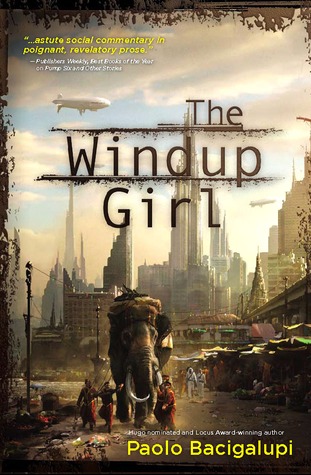
The Windup Girl
by Paolo Bacigalupi
Paolo Bacigalupi’s biopunk science fiction novelexplores a 23rd-century post-food crash Thailand after global warming has raised sea levels and depleted carbon fuel sources. The main character, Emiko, is a ‘windup,’ a modified human who is vilified and abused by humanity, despite her abilities. I was struck by how well this work of ‘mundane science fiction’ used Emiko as an avatar for a trickster Nature after abuse by humanity through the disrespect of reckless gene-hacking, greedy corporate espionage, and arbitrary foreign takeovers. I cheered Emiko’s breakaway from her oppressors as she emerged from a cloak of obedience and embraced her survival in this changing world of unintended consequences—only realizing later that I was cheering for that changing world and the optimism it promised.
.
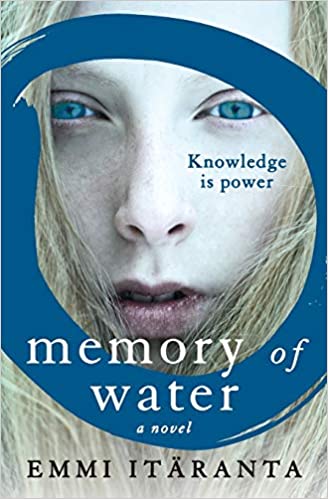
Memory of Water
by Emmi Itäranta
This book features a passion of mine as an ecologist and mother: water and how we treat it. Life-giving symbols of water flow throughout this story, which explores a post-climate change world of sea level rise in which freshwater is severely rationed due to scarcity. Water’s very nature is tightly interwoven with the main character, Noria, a tea master who guards a secret spring in the fell by her house against cruel government agents who would kill her for water crimes. In prose both sensual and lyrical, this book explores honor, sacrifice, betrayal, and friendship, and how each can be victimized through commodification in a power play of ideology. I found myself pulled in by the intrigue even as I cherished and lingered in the beautiful metaphoric prose.
.
Explore my eco-fiction book:
A Diary in the Age of Water follows the climate-induced journey of Earth and humanity through four generations of women, each with a unique relationship to water.
Centuries from now, in a dying boreal forest in what used to be northern Canada, Kyo, a young acolyte called to service in the Exodus, yearns for Earth’s past—the Age of Water—before the “Water Twins” destroyed humanity. Looking for answers and plagued by vivid dreams of this holocaust, Kyo discovers the diary of Lynna, a limnologist from that time of severe water scarcity just prior to the destruction. In her work for a global giant that controls Earth’s water, Lynna witnesses and records in her diary the disturbing events that will soon lead to humanity’s demise.
The feminist book review site Liisbeth recently wrote about A Diary in the Age of Water: “If you believe Canada’s water will remain free forever (or that it’s truly free now) Munteanu asks you to think again. Readers have called A Diary in the Age of Water “terrifying,” “engrossing,” and “literary.” We call it wisdom.”
Marcescent beech leaves among evergreen hemlocks, ON (photo by Nina Munteanu)
.
Nina Munteanu is a Canadian ecologist / limnologist and novelist. She is co-editor of Europa SF and currently teaches writing courses at George Brown College and the University of Toronto. Visit www.ninamunteanu.ca for the latest on her books. Nina’s bilingual “La natura dell’acqua / The Way of Water” was published by Mincione Edizioni in Rome. Her non-fiction book “Water Is…” by Pixl Press (Vancouver) was selected by Margaret Atwood in the New York Times ‘Year in Reading’ and was chosen as the 2017 Summer Read by Water Canada. Her novel “A Diary in the Age of Water” was released by Inanna Publications (Toronto) in June 2020.
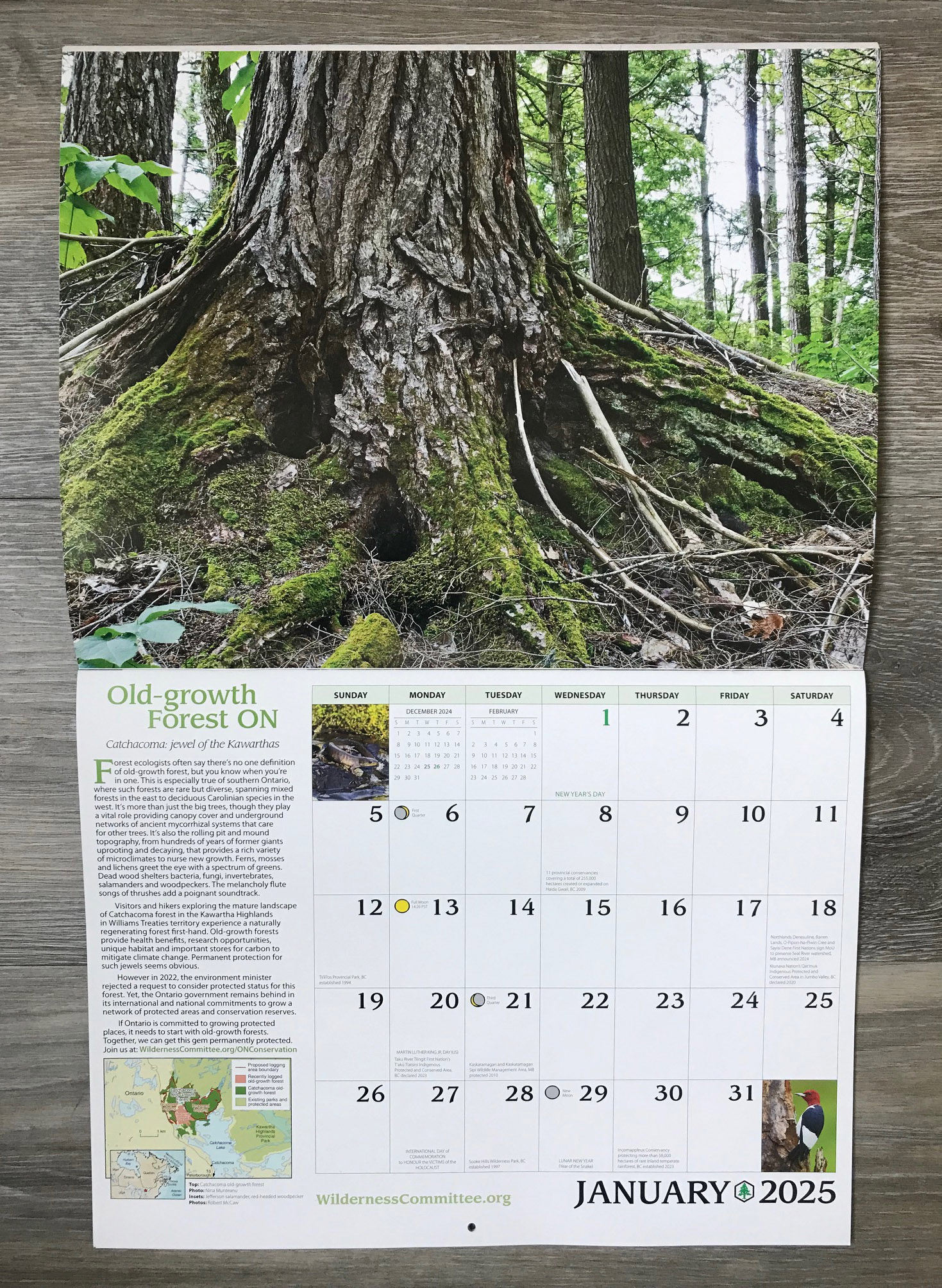
I recently received my copies of the 2025 Wild Canada calendar put out by WildernessCommittee.ca. The calendar has 12 months of gorgeous images of wild and sacred places throughout Canada; heartfelt and informative stories accompany each image.
2025 Wild Canada calendar featuring January spread
My own photo of an old-growth hemlock in Catchacoma Forest, Ontario, is featured for January! Go check out the Wilderness Committee site then go to their store to see the whole calendar. It’s worth buying for its beauty and its meaningful narratives. And it is an excellent way to support a worthwhile cause.
Nina Munteanu is a Canadian ecologist / limnologist and novelist. She is co-editor of Europa SF and currently teaches writing courses at George Brown College and the University of Toronto. Visit www.ninamunteanu.ca for the latest on her books. Nina’s bilingual “La natura dell’acqua / The Way of Water” was published by Mincione Edizioni in Rome. Her non-fiction book “Water Is…” by Pixl Press (Vancouver) was selected by Margaret Atwood in the New York Times ‘Year in Reading’ and was chosen as the 2017 Summer Read by Water Canada. Her novel “A Diary in the Age of Water” was released by Inanna Publications (Toronto) in June 2020.
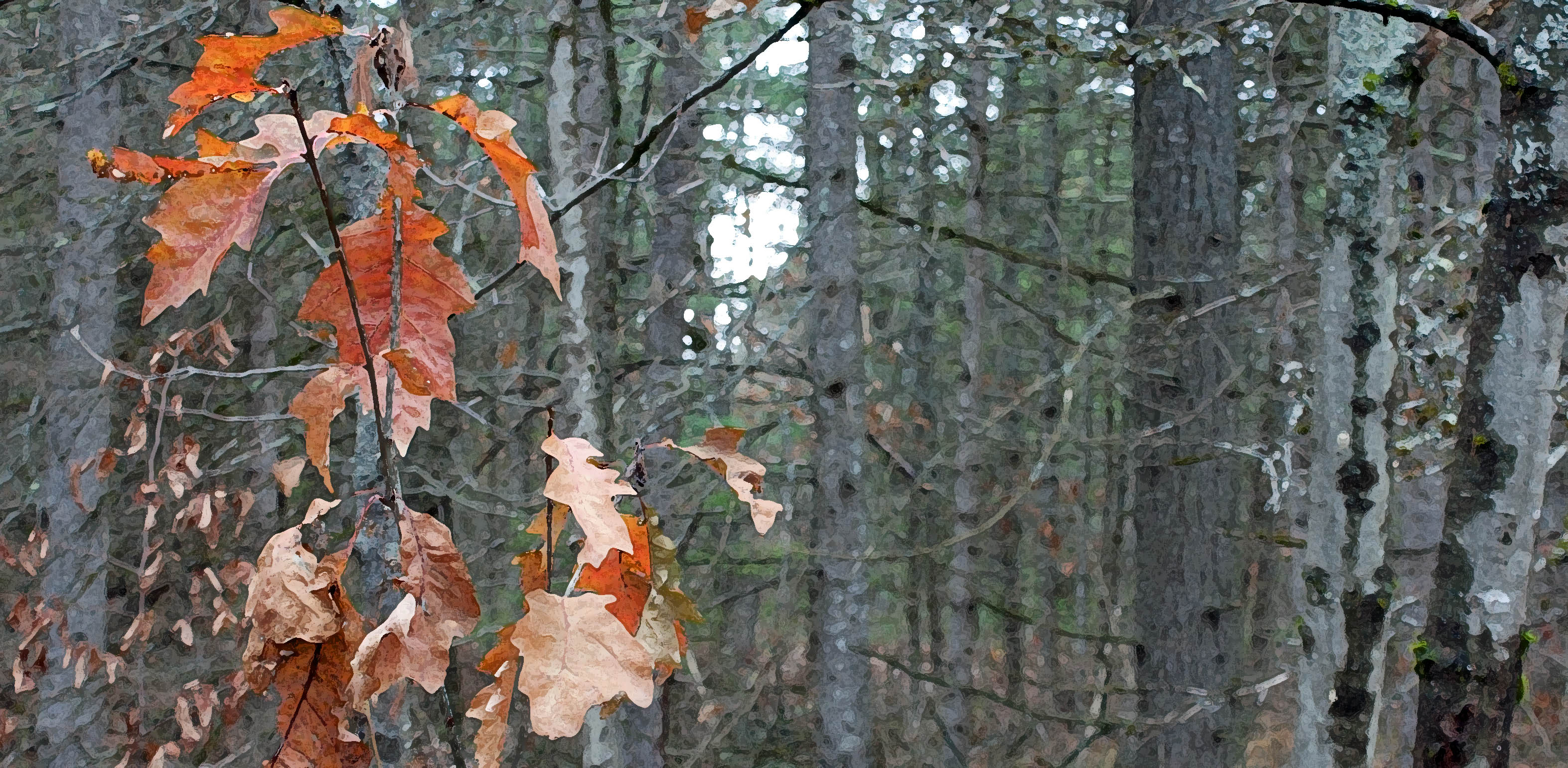
Marcescent oak leaves tremble in the cold wind of November, Petroglyph Park, ON (photo and rendition by Nina Munteanu)
I parked my car by the closed gate and walked inside along the road. The park was closed but not for me, I thought. The walk through this magnificent pine forest with its fresh pungent aromas of coming winter, invigorated me with thoughts of hope and wonder. I felt at home in this unviolated forest. It felt natural and I realized that I was desperately seeking “natural”…
Oak leaves blaze in the grey-green hemlock-pine forest, Petroglyph Park, ON (photo and rendition by Nina Munteanu)
I live close to a riparian forest and a large river. But there is little natural about it. Despite supporting an abundance of wildlife (e.g., squirrels, chipmunks, muskrat, skunk, groundhog, mink, ermine, voles, and red fox), the forest is disturbed and infested with invasive species. When I walk through this forest, the sounds of traffic are never far away, and I yearn for the sounds and smells of Nature inviolate.
Small trail through pine and aspen to the meromictic lake in Petroglyph Park, ON (photo and rendition by Nina Munteanu)
Petroglyph Park lies in the Kawartha Region of Ontario and is an hour’s drive north of where I live. Here, the sounds of Nature prevail: the wind raking through pines, the shrill haunting cry of a bluejay or aggressive chittering of a red squirrel. Nothing else. It was gloriously silent; except for the sound of my boots crunching along the trail or when I scared up a deer that scampered with the rush and rattle of leaves through the anonymity of the brush into a deep silence.
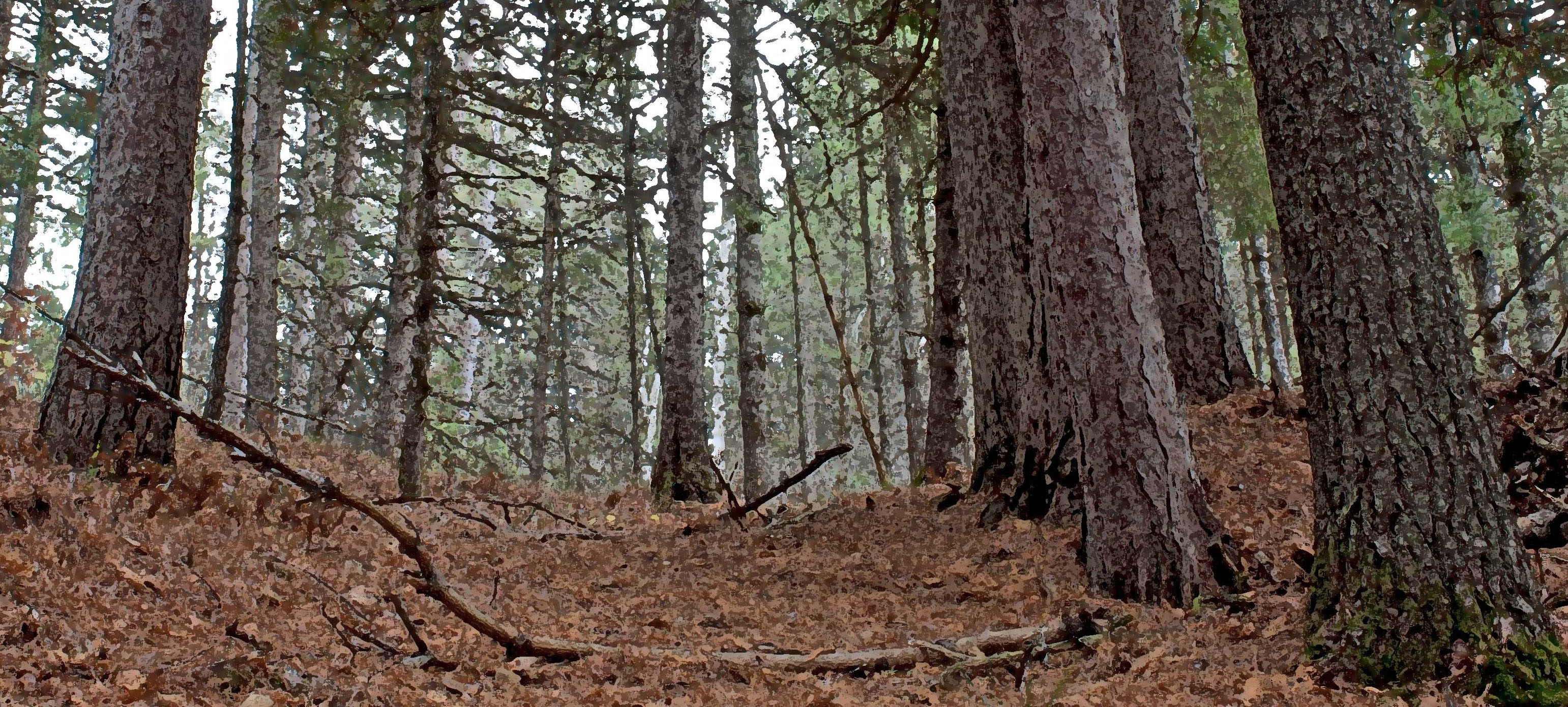
Road through tall red pine forest, Petroglyph Park, ON (photo and rendition by Nina Munteanu)
It was a crisp and fresh November day. I’d packed a lunch and my camera and set off down the road and along various trails to explore the park, not worried about getting lost.
Forest fades from single oak tree into a fog of grey-green pine and hemlock, Petroglyph Park (photo and rendition by Nina Munteanu)
And I did get wonderfully lost, particularly when I ventured off the main trail, seeking adventure. I didn’t mind being lost; when you lose yourself you find another part of you through adventure…
Marcescent beech and oak trees add bronze colour to the grey-green of the pine forest, Petroglyph Park, ON (Photo and rendition by Nina Munteanu)
It’s early winter, when the chill winds carve through mixed forests in a restless howl, snatching leaves of deciduous trees and sending them flying. But in this primeval ancient forest of evergreens, the few deciduous trees mimic their conifer cousins by stubbornly clutching their leaves. In winter, the leaves of oak and beech trees cling to their branches, marcescent. To the silver greens of pine and hemlock, they add flames of copper and gold
Red pine trees tower over a deer trail near the lake, Petroglyph Park, ON (photo and rendition by Nina Munteanu)
I found myself walking on the spongy ground, a carpet of leaves, needles and debris, not far from Gilford Lake, among a tall stand of red pines, whose thick canopy created a green ceiling overhead. Breathing in the strong scent of pine and loam, I set up my camera and tripod to capture the mood of a natural path through the forest. I’d just set up the camera, hand poised on the shutter, when a deer wandered in front of me—just three metres away! It saw me and stopped mid-step. We stared at one another in a halting pause, a moment made eternity. Then the deer leapt gracefully away, disappearing within seconds into the dark forest and leaving me in the silence of rapture. I felt laughter tease up my throat; I hadn’t taken a picture.
Road winds through the mixed forest in Petroglyph Park, ON (photo and rendition by Nina Munteanu)
Winding road through mixed forest in Petroglyph Park, ON (photo and rendition by Nina Munteanu)
My walk through this natural forest is both thrilling and comforting, uplifting and restful. I am living outside myself, sensing the textures, sounds and tastes of the forest—in sublime discovery. It is here, where the sounds and smells of the natural world abide, without regard to me, that I feel most at home.
I am simply being…
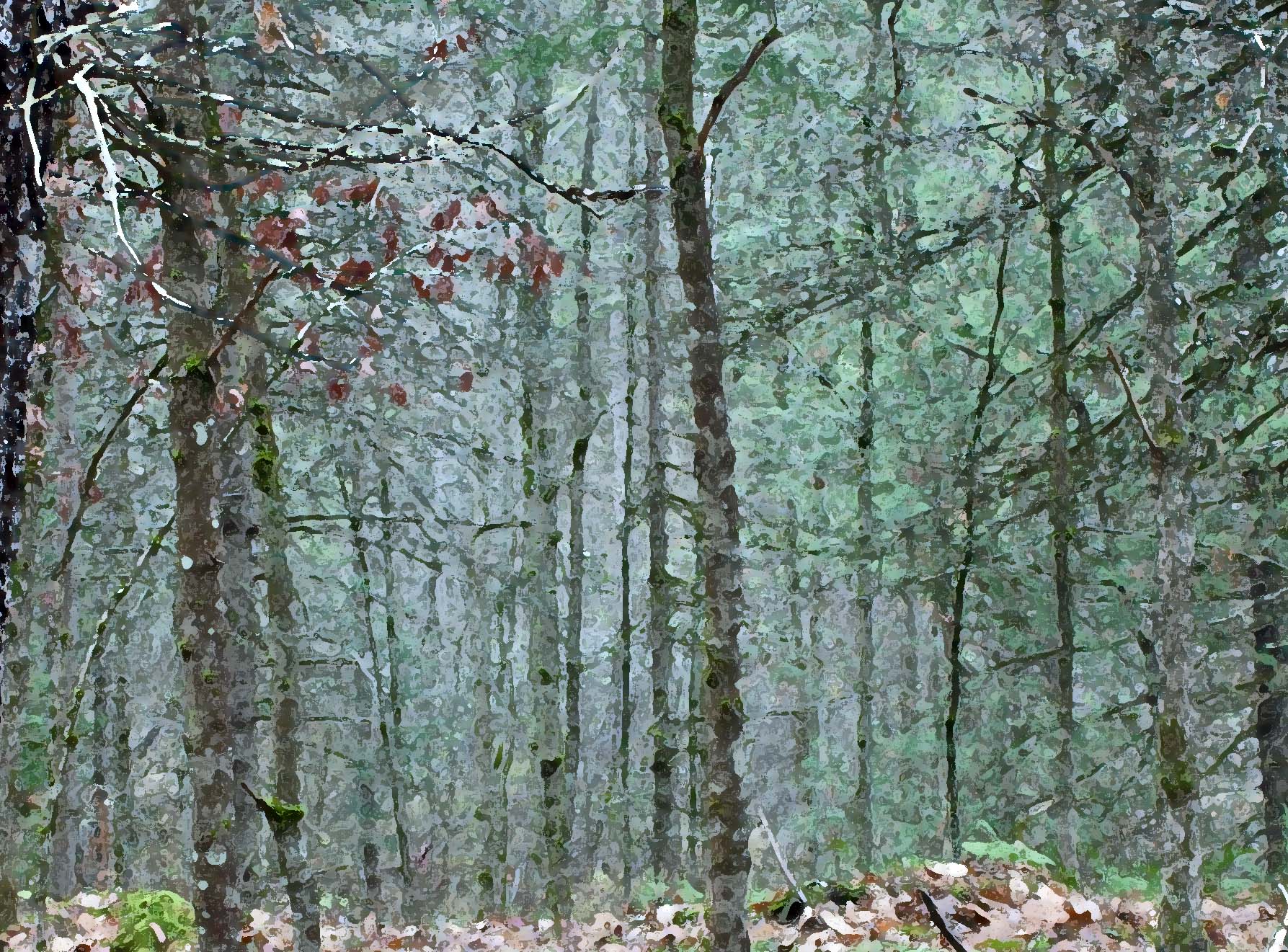
Mixture of oak, beech, pine and hemlock conspire in a wash of colour and texture, Petroglyph Park, ON (photo and rendition by Nina Munteanu)
Nina Munteanu is a Canadian ecologist / limnologist and novelist. She is co-editor of Europa SF and currently teaches writing courses at George Brown College and the University of Toronto. Visit www.ninamunteanu.ca for the latest on her books. Nina’s bilingual “La natura dell’acqua / The Way of Water” was published by Mincione Edizioni in Rome. Her non-fiction book “Water Is…” by Pixl Press (Vancouver) was selected by Margaret Atwood in the New York Times ‘Year in Reading’ and was chosen as the 2017 Summer Read by Water Canada. Her novel “A Diary in the Age of Water” was released by Inanna Publications (Toronto) in June 2020.
I recently gave my lecture / workshop on the Hero’s Journey plot approach to a group of writers for Culture Days in Newmarket, Ontario.
The event, organized by the WCYR (Writing Community of York Region), took place in the art gallery of the Old Town Hall, located in the old downtown part of the city—an attractive section of streets and lanes with eclectic shops, cafés, bistros and bookstores for curious amblers.
Bustling Main Street near the Old Town Hall, Newmarket, ON
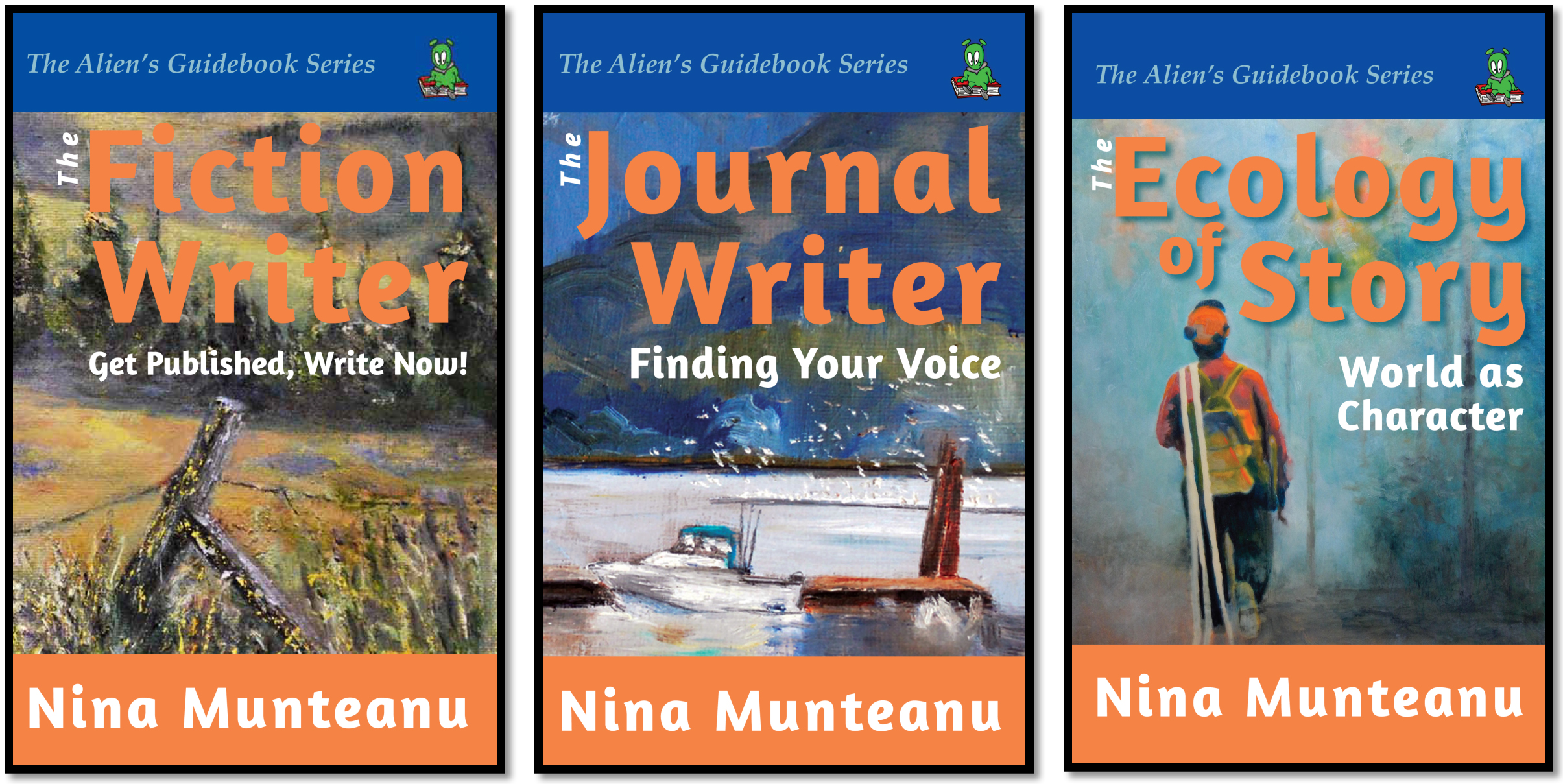
Three guidebooks of the Alien Guidebook series for writers
Cathy Miles, the program coordinator, encouraged me to brings books for sale, so I certainly included the three books of my Alien Guidebook Series on writing: The Fiction Writer, The Journal Writer, and The Ecology of Story, all also available at Amazon, Kobo, Barnes & Noble and other quality bookstores, which I sold for a workshop price. Cathy gave me a wonderful introduction to a room full of eager writers and I also had the pleasure of meeting Janice Luttrell, the Recreation Programmer with the City of Newmarket, who was hosting the event as part of Newmarket’s Culture Days.
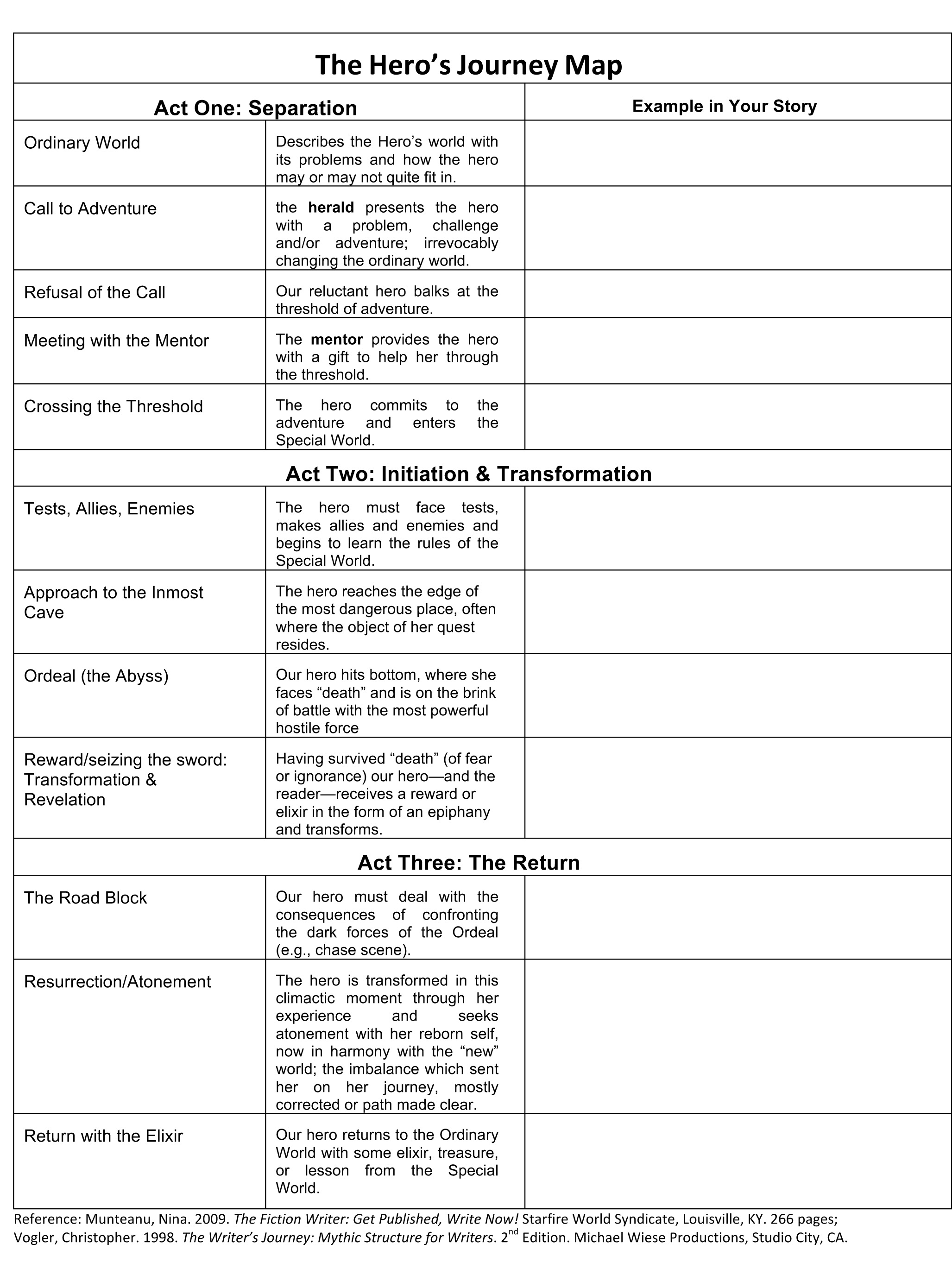
Drawing from several chapters in The Fiction Writer, I introduced the Hero’s Journey map structure, based on Ingrid Sundberg’s plot structure, and discussed the 12-step hero’s journey according to mythologist Joseph Campbell.
We also discussed the seven chief archetypes associated with the journey steps: hero, mentor, herald, threshold guardian, trickster, shapeshifter, and shadow.
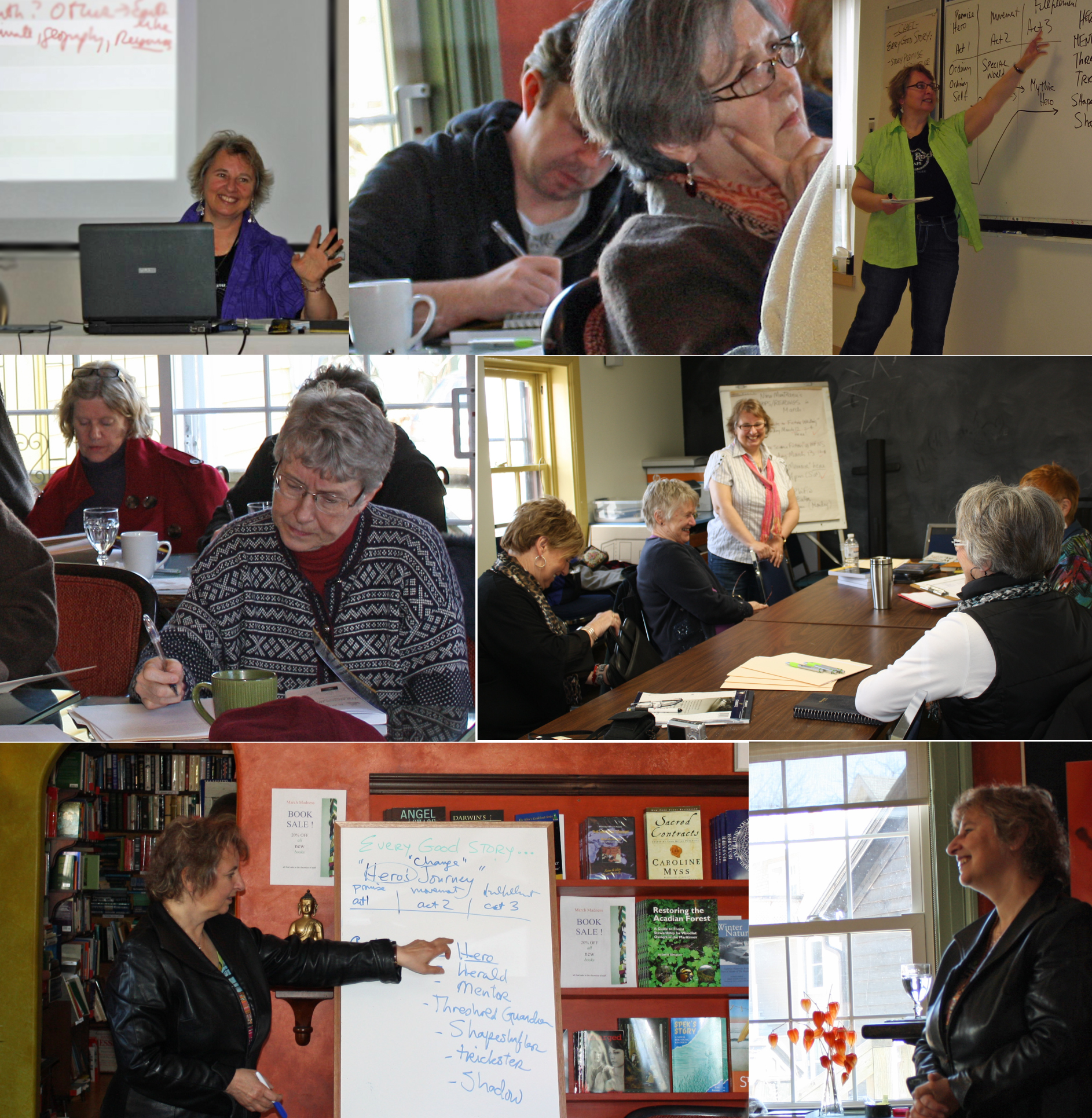
Nina teaching “The Hero’s Journey” plot approach over the years in Nova Scotia, BC and Ontario
I’ve given this workshop many times and always enjoyed the lights that came on in participants; this time was no different. My session was fun and very well received. I saw lots of interest and received many good questions—a sure sign. One participant was quoted as saying:
“What a great event! Your presentation was insightful. I really appreciated being able to follow along in the book while listening to your explanations. That is going to help me remember the concepts as I read the book and then apply them to my writing.”
The WCYR book table at the event (photo by Nina Munteanu)
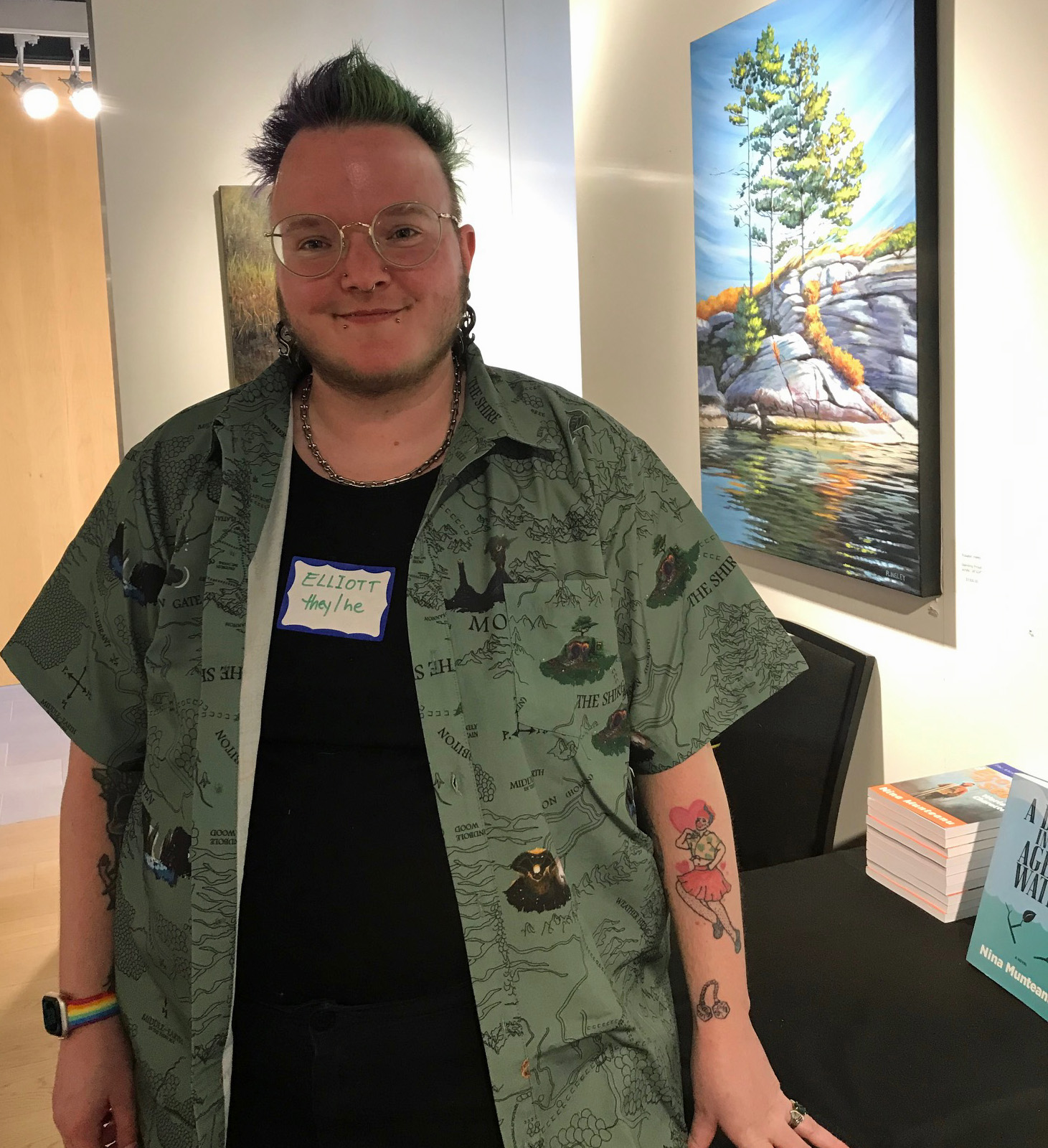
Elliott sells my books at the WCYR book table (photo by Nina Munteanu)
All in all, it was a good day…
Nina Munteanu is a Canadian ecologist / limnologist and novelist. She is co-editor of Europa SF and currently teaches writing courses at George Brown College and the University of Toronto. Visit www.ninamunteanu.ca for the latest on her books. Nina’s bilingual “La natura dell’acqua / The Way of Water” was published by Mincione Edizioni in Rome. Her non-fiction book “Water Is…” by Pixl Press (Vancouver) was selected by Margaret Atwood in the New York Times ‘Year in Reading’ and was chosen as the 2017 Summer Read by Water Canada. Her novel “A Diary in the Age of Water” was released by Inanna Publications (Toronto) in June 2020.
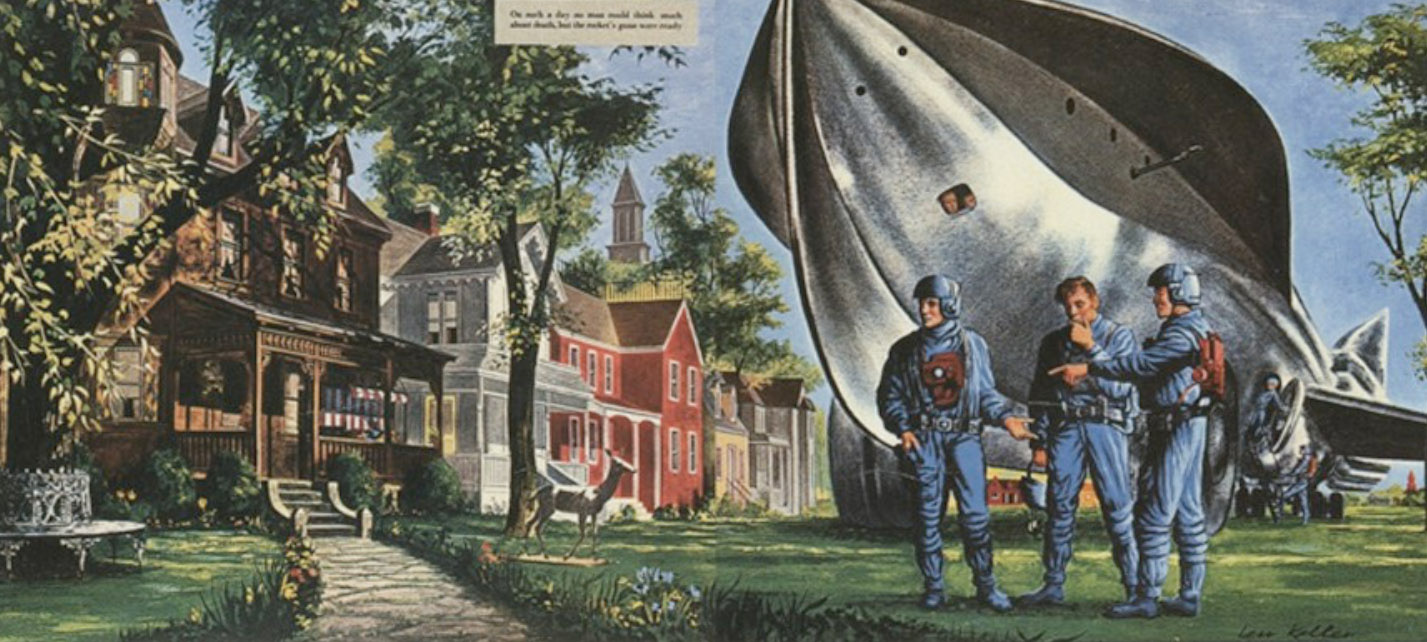
Illustration depicting ‘Rocket Summer’ (image from The Black Cat Moan)
They came because they were afraid or unafraid, happy or unhappy. There was a reason for each man. They were coming to find something or get something, or to dig up something or bury something. They were coming with small dreams or big dreams or none at all
Ray Bradbury, The Martian Chronicles
When I was but a sprite, and before I became an avid reader of books (I preferred comic books), I read Ray Bradbury’s The Martian Chronicles. It changed me, what I thought of books and what I felt about the power of stories. It made me cry. And perhaps that was when I decided to become a writer. I wanted to move people as Bradbury had moved me.
The 1970 Bantam book jacket aptly describes The Martian Chronicles as, “a poetic fantasy about the colonization of Mars. The story of familiar people and familiar passions set against incredible beauties of a new world…A skillful blending of fancy and satire, terror and tenderness, wonder and contempt.”
.
Rockets land on Mars overlooking Bradbury Lane (illustration from Sutori)
.
The Martian Chronicles isn’t really about Mars. True to Bradbury’s master metaphoric storytelling, The Martian Chronicles is about humanity. Who we are, what we are and what we may become. What we inadvertently do—to others, and finally to ourselves—and how the irony of chance can change everything. Despite the knowledge of no detectable amounts of oxygen, Bradbury gave Mars a breathable atmosphere: “Mars is a mirror, not a crystal,” he said, using the planet for social commentary rather than to predict the future.
From “Rocket Summer” to “The Million-Year Picnic,” Ray Bradbury’s stories of the colonization of Mars form an eerie tapestry of past and future. Written in the 1940s, the chronicles long with the nostalgia of shady porches with pitchers of lemonade, ponderously ticking grandfather clocks, and comfortable sofas. Expedition after expedition leave Earth to investigate and colonize Mars. Though the Martians guard their mysteries well, they succumb to the diseases that come with the rocketeers and grow extinct—not unlike the quiet disappearance of the golden toad, the Pinta giant tortoise, or the Bramble Cay melomys. Humans, with ideas often no more lofty than starting a tourist hot-dog stand, bear no regret for the native alien culture they exploit and eventually displace.
It is a common theme of human colonialism and expansionism, armed with the entitlement of privilege. Mars is India to the imperialistic British Empire. It is Rwanda or Zaire to the colonial empire of the cruel jingoistic King Leopold II of Belgium. Mars is Europe to Nazi Germany’s sonderweg. We need look no further than our own Canadian soil for a reflection of this slow violence of disrespect and apathy by our settler ancestors on the indigenous peoples of Canada.
Mars was a distant shore, and the men spread upon it in waves… Each wave different, and each wave stronger.
The Martian Chronicles
Tyler Miller of The Black Cat Moan makes excellent commentary in their 2016 article entitled “How Ray Bradbury’s ‘The Martian Chronicles’ changed Science Fiction (and Literature).”The article begins with a quote from Argentinean author Jorge Luis Borges (in the introduction to the Spanish-language translation of The Martian Chronicles: “What has this man from Illinois done, I ask myself when closing the pages of this book, that episodes from the conquest of another planet fill me with horror and loneliness?”
.
Remember, this was the 1950s … halfway through a century dominated by scientific discovery, and expansion. The 1950s saw developments in technology, such as nuclear energy and space exploration. On the heels of the end of World War II, the 1950s was ignited by public imagination on conquering space, creating technological futures and robotics. The 1950s was considered by some as the real golden age for science fiction, still a kind of backwater genre read mostly by boys and young men, that told glimmering tales of adventure, exploration, and militarism, of promising technologies, and often-androcratic societies who used them in the distant future to conquer other worlds full of strange and disposable alien beings in the name of democracy and capitalism. (In some ways, this is still very much the same.Though, it is thankfully changing…)
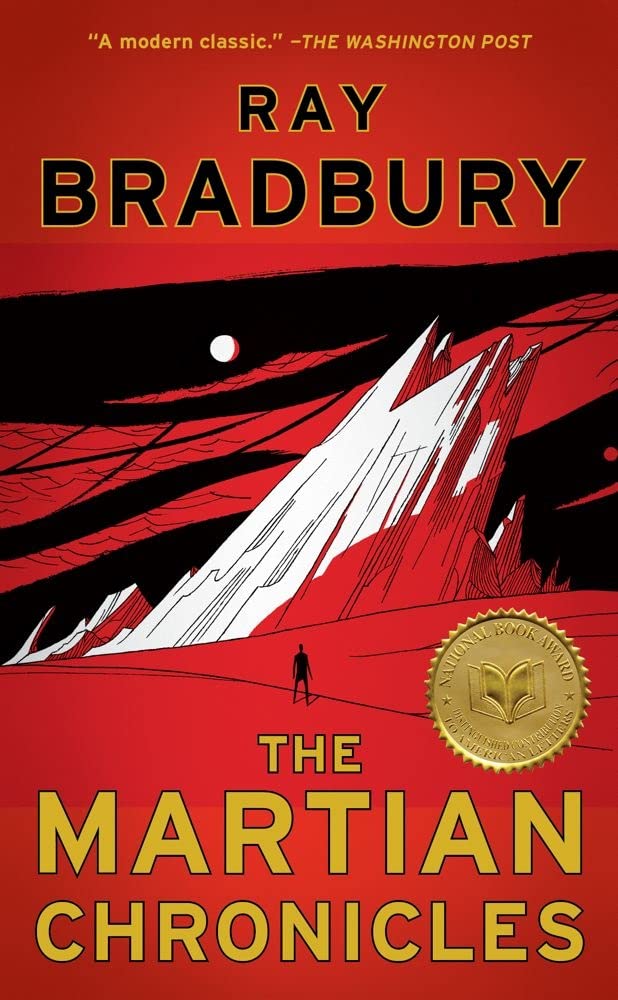
(Bantam 1951 1st edition cover)
Many scientists deeply involved in the exploration of the solar system (myself among them) were first turned in that direction by science fiction. And the fact that some of that science fiction was not of the highest quality is irrelevant. Ten year‐olds do not read the scientific literature.
Carl Sagan, 1978
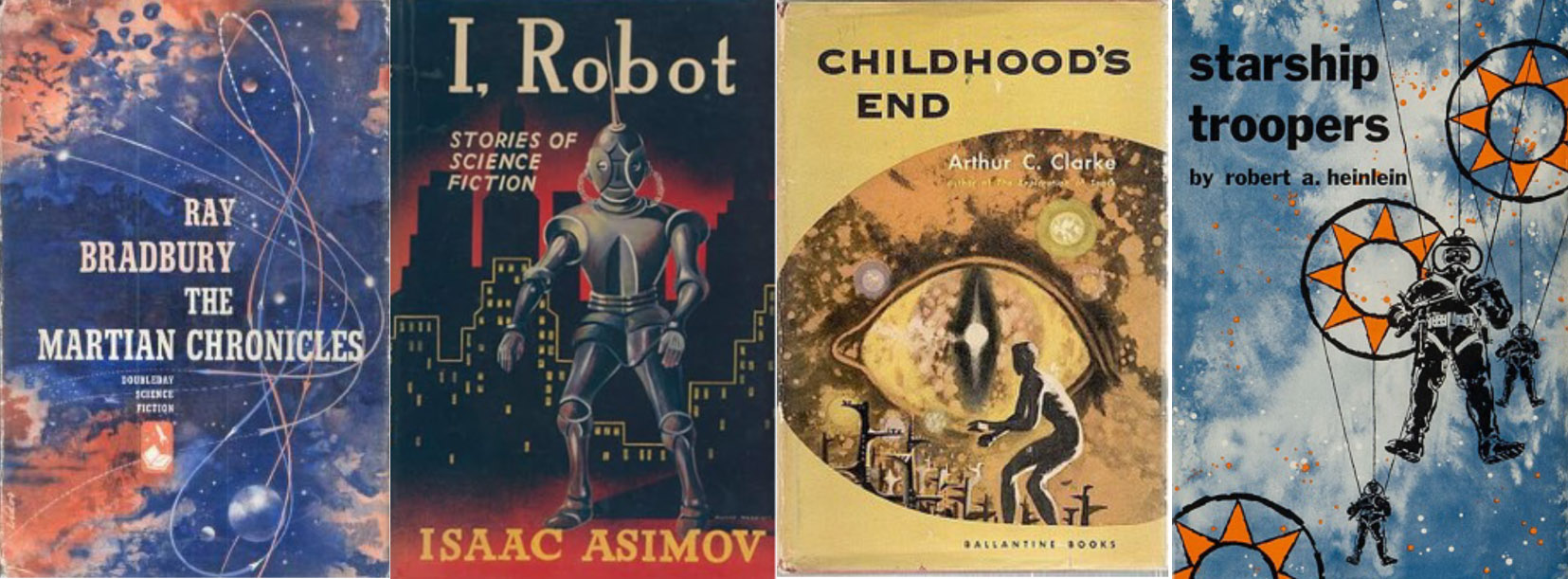
First edition book covers of Martian Chronicles (Doubleday, 1950); I, Robot (Grayson & Grayson, 1952); Childhood’s End (Ballantine Books, 1953); and Starship Troopers (G.P. Putnam’s Sons, 1959)
Large idea-driven SF works that typified this time period included Robert A. Heinlein’s Starship Troopers, Arthur C. Clarke’s Childhood’s End, Isaac Asimov’s I, Robot and his Foundation series.
It was at this time that Ray Bradbury published The Martian Chronicles. Though filled with the requisite rocket ships, gleaming Martian cities, ray guns, and interplanetary conquest, from the very start—as Borges noted—The Martian Chronicles departed radically from its SF counterparts of the time.
(Illustration on album cover of “Rocket Summer”, music by Chris Byman)
Instead of starting with inspiring technology or a stunning action sequence, or a challenging idea or discovery, Bradbury’s The Martian Chronicles opens with a domestic scene.
One minute it was Ohio winter, with doors closed, windows locked, the panes blind with frost, icicles fringing every roof, children skiing on the slopes, housewives lumbering like great black bears in their furs along the icy streets.
And then a long wave of warmth crossed the small town. A flooding sea of hot air; it seemed as if someone had left a bakery door open. The heat pulsed among the cottages and bushes and children. The icicles dropped, shattering, to melt. The doors flew open. The windows flew up. The children worked off their wool clothes. The housewives shed their bear disguises. The snow dissolved and showed last summer’s ancient green lawns.
Rocket summer. The words passed among the people in the open air, airing houses. Rocket summer. The warm desert air changing the frost patterns on the windows, erasing the art work. The skis and sleds suddenly useless. The snow, falling from the cold sky upon the town, turned to a hot rain before it touched the ground.
Rocket summer. People leaned from their dripping porches and watched the reddening sky.
The rocket lay on the launching field, lowing out pink clouds of fire and oven heat. The rocket stood in the cold winter morning, making summer with every breath of its mighty exhausts. The rocket made climates, and summer lay for brief moment upon the land…
Ray Bradbury, The Martian Chronicles, Rocket Summer
Bradbury’s focus was on the domestic. Housewives fighting off the ice and snow of Ohio. A Martian woman “cleaning the house with handfuls of magnetic dust which, taking all dirt with it, blew away on the hot wind.”
They had a house of crystal pillars on the planet Mars by the edge of the empty sea, and every morning you could see Mrs. K eating the golden fruits that grew from the crystal walls, or cleaning the house with handfuls of magnet dust which, taking all dirt with it, blew away on the hot wind. Afternoons, when the fossil sea was warm and motionless, and the wine trees stood stiff in the yard…you could see Mr. K in his room, reading from a metal book with raised hieroglyphs over which he brushed his hand, as one might play a harp. And from the book, as his fingers stroked, a voice sang, a soft ancient voice, which told tales of when the sea was red steam on the shore and ancient men had carried clouds of metal insects and electric spiders into battle…
This morning Mrs. K stood between the pillars, listening to the desert sands heat, melt into yellow wax, and seemingly run on the horizon.
Something was going to happen.
She waited.
Ray Bradbury, The Martian Chronicles, Ylla
Bradbury’s gift to literature—and to his SF genre—was his use of metaphor. Unlike the science fiction of his colleagues, Bradbury’s stories are a lens to study the past and the present. According to Miller, “The Earthmen’s exploration and desolation of Mars allowed Bradbury to look not forward but backward at exploration and desolation on Earth, namely the European arrival in the New World. Just as Europeans landed in North and Central America wholly unprepared for what they found there, Bradbury’s Earthmen are unprepared time and again for the wonder and the horror of Mars. And just as European diseases decimated native people in the Americas, it is chicken-pox which wipes out the Martians.”
.
.
The back cover of the 2012 mass market paperback Simon & Schuster Reprint edition of The Martian Chronicles reads:
Bradbury’s Mars is a place of hope, dreams and metaphor—of crystal pillars and fossil seas—where a fine dust settles on the great, empty cities of a silently destroyed civilization. It is here the invaders have come to despoil and commercialize, to grow and to learn—first a trickle, then a torrent, rushing from a world with no future toward a promise of tomorrow. The Earthman conquers Mars … and then is conquered by it, lulled by dangerous lies of comfort and familiarity, and enchanted by the lingering glamour of an ancient, mysterious native race.
“Ask me then, if I believe in the spirit of the things as they were used, and I’ll say yes. They’re all here. All the things which had uses. All the mountains which had names. And we’ll never be able to use them without feeling uncomfortable. And somehow the mountains will never sound right to us; we’ll give them new names, but the old names are there, somewhere in time, and the mountains were shaped and seen under those names. The names we’ll give to the canals and the mountains and the cities will fall like so much water on the back of a mallard. No matter how we touch Mars, we’ll never touch it. And then we’ll get mad at it, and you know what we’ll do? We’ll rip it up, rip the skin off, and change it to fit ourselves.”
“We won’t ruin Mars,” said the captain. “It’s too big and too good.”
“You think not? We Earth Men have a talent for ruining big, beautiful things.”
Ray Bradbury, The Martian Chronicles, And the Moon be Still as Bright
Ray Bradbury’s The Martian Chronicles is a profound and tender analysis of the quiet power humanity can wield unawares and how we define and treat ‘the other.’ It is a tragic tale that reflects only too well current world events where the best intended interventions can go awry. From the meddling friend who gossips to “help” another (only to make things worse) to the righteous “edifications” of a religious group imposing its “order” on the “chaos” of a “savage” peoples … to the inadvertent tragedy of simply and ignorantly being in the wrong place at the wrong time (e.g., the introduction of weeds, disease, etc. by colonizing “aliens” to the detriment of the native population; e.g., smallpox, AIDs, etc.). Bradbury is my favourite author for this reason (yes, and because he makes me cry…)
.
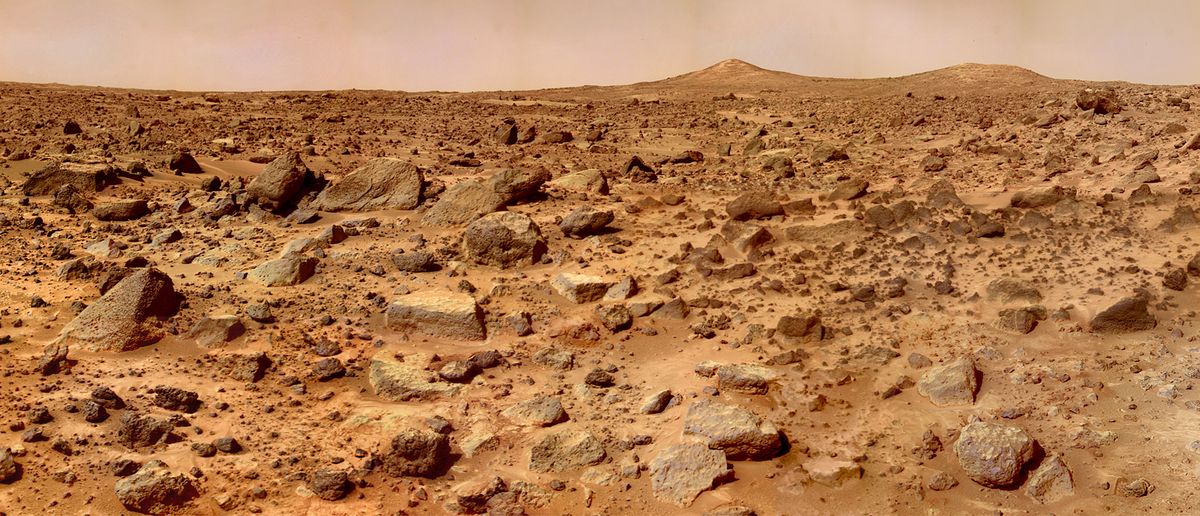
Mars terrain (photo by NASA)
Nina Munteanu is a Canadian ecologist / limnologist and novelist. She is co-editor of Europa SF and currently teaches writing courses at George Brown College and the University of Toronto. Visit www.ninamunteanu.ca for the latest on her books. Nina’s bilingual “La natura dell’acqua / The Way of Water” was published by Mincione Edizioni in Rome. Her non-fiction book “Water Is…” by Pixl Press (Vancouver) was selected by Margaret Atwood in the New York Times ‘Year in Reading’ and was chosen as the 2017 Summer Read by Water Canada. Her novel “A Diary in the Age of Water” was released by Inanna Publications (Toronto) in June 2020.
Fence and post at marsh during a rain, ON (photo by Nina Munteanu)
The Universe is made of stories, not atoms—Muriel Rukeyser
Canadian writer Mary Woodbury tells us that: “Fiction exploring humanity’s impacts on nature is becoming more popular [and] has the distinct ability to creatively engage and appeal to readers’ emotions. In fact, it can stir environmental action.” A survey she took in 2020 showed that “88% of its participants were inspired to act after reading ecological fiction.”
Eco-Fiction (short for ecological fiction) is a kind of fiction in which the environment—or one aspect of the environment—plays a major role, either as premise or as character. “Principled by real science and exalting our planet’s beauty, these stories are works of art. They live within classic modes of fiction exploring the human condition, but also integrate the wild,” writes Woodbury. At the heart of eco-fiction are strong relationships forged between the major character on a journey and an aspect of their environment and place. Environment and place can illuminate through the sub-text of metaphor a core aspect of the main character and their journey.
Green architecture design by Vincent Callebaut
All great literature distills its art form through the exploration of relationship: our relationship with technology, with science, Nature, God, our children, each other, our history. Science fiction illuminates our history and our very humanity by examining our interaction with “the other”—the unfamiliar, the feared, the often downtrodden, the invisible, the ignored. This is the hero’s journey. And it is through this journey relating to the “other” (whether it’s Earth or an alien planet, its water, environment and issues, and its varied peoples and cultures) that our hero discovers herself and her gift to the world. When will we stop portraying Nature as “other”?…
Green neighbourhood design by Vincent Callebaut
We currently live in a world in which climate change and associated water crisis pose a very real existential threat to most life currently on the planet. The new normal is change. And it is within this changing climate that eco-fiction is realizing itself as a literary pursuit worth engaging in. The emergence of the term eco-fiction as a brand of literature suggests that we are all awakening—novelists and readers of novels—to our changing environment. We are finally ready to see and portray environment as an interesting character with agency and to read this important and impactful literature.
Lavender farm and house design by Vincent Callebaut
Many readers are currently seeking fiction that describes environmental issues but also explores a successful paradigm shift: fiction that accurately addresses our current issues with intelligence and hope. This is reflected in the growing popularity of several emerging sub-genres of fiction such as solar punk, optimistic climate fiction, clifi, eco-lit, hope punk, and others. The power of envisioning a certain future is that the vision enables one to see it as possible. Eco-fiction—and all good science fiction—uses metaphor to study the world and the consequences of humanity’s actions through microcosmic dramatization. What makes this literature particularly exciting is: 1) its relevance to our current existential situation; and 2) that it often provides a way forward.
Solarpunk world imagined (image by Imperial Boy)
The Way Forward with Solarpunk
In his 2014 article “Solarpunk: Notes toward a manifesto” in Hieroglyph Adam Flynn writes of under-30 futurists: “Many of us feel it’s unethical to bring children into a world like ours. We have grown up under a shadow, and if we sometimes resemble fungus it should be taken as a credit to our adaptability.”
“We’re solarpunks because the only other options are denial or despair.”
ADAM FLYNN
Solarpunk, says Flynn, “is about finding ways to make life more wonderful for us now, and more importantly for the generations that follow us—i.e., extending human life at the species level, rather than individually.” Our future, asserts Flynn, “must involve repurposing and creating new things from what we already have (instead of 20thcentury “destroy it all and build something completely different” modernism).” Solarpunk futurism “is not nihilistic like cyberpunk and it avoids steampunk’s potentially quasi-reactionary tendencies: it is about ingenuity, generativity, independence, and community.”
“Hydrogenase” algae-powered airships by Vincent Callebaut
The ‘punk’ suffix comes from the oppositional quality of solarpunk; opposition that begins with infrastructure as a form of resistance. Flynn tells us that solarpunk draws on the ideal of Jefferson’s yeoman farmer, Ghandi’s ideal of swadeshi, and countless other traditions of innovative dissent.
“Hyperion” eco-neighbourhood design by Vincent Callebaut
“Solarpunk is a future with a human face and dirt behind its ears.”
ADAM FLYNN
In response to Flynn’s article, Bob Vanderbob writes, “going solar is a deep mental shift: it will be the central metaphor of our future civilization.”
Green Paris design by Vincent Callebaut
Musician photographer Jay Springett calls solarpunk, “a movement in speculative fiction, art, fashion, and activism that seeks to answer and embody the question ‘what does a sustainable civilization look like, and how can we get there?’… At once a vision of the future, a thoughtful provocation, and an achievable lifestyle.” Jennifer Hamilton observes in The Conversation that “as a category of fiction, solarpunk remains a fringe dweller…Nevertheless, the aesthetic sensibilities of the subculture are starting to emerge.” Hamilton asserts that “the focus on the cultural change that will necessarily accompany the full transition to renewable energy is the defining feature of solarpunk.” She adds, “we usually ask ‘can renewables replace fossil fuels?’ … solarpunks ask ‘what kind of world will emerge when we finally transition to renewables?’ and their [works] are generating an intriguing answer.”
Beach house design by Vincent Callebaut
How Eco-Fiction Inspires and Galvanizes
Readers responded to Mary Woodbury’s survey question “Do you think that environmental themes in fiction can impact society and if so, how?” with these observations:
Environmental fiction encourages empathy and imagination. Stories can affect us more than dry facts. Fiction reaches us more deeply than academic understanding, moving us to action.
Environmental fiction triggers a sense of wonder about the natural world, and even a sense of loss and mourning. Stories can immerse readers into imagined worlds with environmental issues similar to ours.
Environmental fiction raises awareness, encourages conversations and idea-sharing. Fiction is one way that helps to create a vision of our future. Cautionary tales can nudge people to action and encourage alternative futures. Novels can shift viewpoints without direct confrontation, avoid cognitive dissonance, and invite reframed human-nature relationships through enjoyment and voluntary participation.
Environmental themes can reorient our perspective from egocentrism to the greater-than-human world.
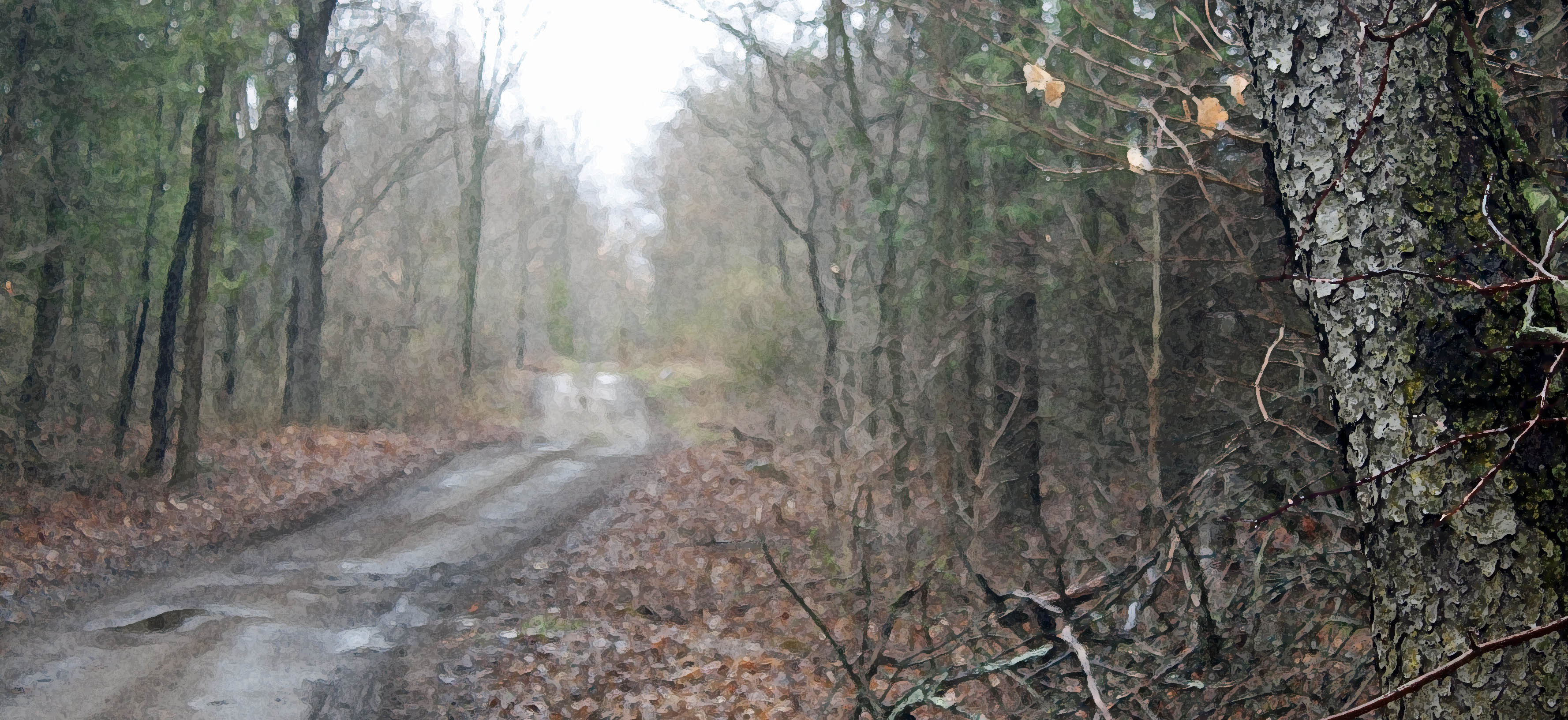
Dirt road in Kawarthas during a misting rain, ON (photo and rendition by Nina Munteanu)
Why Our Stories Are Important
We are all storytellers. We share our curiosity with great expression; our capacity and need to tell stories is as old as our ancient beginnings. From the Palaeolithic cave paintings of Lascaux to our blogs on the Internet, humanity has left a grand legacy of “story” sharing. Evolutionary biologist and futurist Elisabet Sahtouris tells us that, “whether we create our stories from the revelations of religions or the researches of science, or the inspirations of great artists and writers or the experiences of our own lives, we live by the stories we believe and tell to ourselves and others.”
Compelling stories resonate with the universal truths of metaphor that reside within the consciousness of humanity. According to Joseph Campbell, this involves an open mind and a certain amount of humility; and giving oneself to the story … not unlike the hero who gives her life to something larger than herself. Fiction becomes memorable by providing a depth of meaning. Stories move with direction, compel with intrigue and fulfil with awareness and, sometimes, with understanding. The stories that stir our hearts come from deep inside, where the personal meets the universal, through symbols or archetypes and metaphor.
Ultimately, we live by the narratives we share. “What you think, you become,” said Buddha.
In my writing guidebook The Ecology of Story: World as Character, I write: “When a writer is mindful of place in story and not only accurately portrays environment but treats it as a character, then her story will resonate with multilayers of meaning.”
Poplar stand in the Kawarthas, ON (photo and rendition by Nina Munteanu)
Changing the Narrative…
I was recently interviewed by Forrest Brown on Stories for Earth Podcast in which we discussed the need to change our narrative (particularly our colonial neoliberal capitalist narrative) and various ways to do this, taking into account the challenges posed by belief and language. Lessons from our indigenous wise elders will play a key role in our change toward genuine partnership with the Earth.
“We need to have a whole cultural shift, where it becomes our culture to take care of the Earth, and in order to make this shift, we need storytelling about how the Earth takes care of us and how we can take care of her.” ― Ayana Elizabeth Johnson,All We Can Save: Truth, Courage, and Solutions for the Climate Crisis
“This world, in which we are born and taken our being, is alive. It is not our supply house and sewer; it is our larger body. The intelligence that evolved us from stardust and interconnects us with all beings is sufficient for the healing of our Earth community, if we but align with that purpose. Our true nature is far more ancient and encompassing than the separate self defined by habit and society. We are as intrinsic to our living world as the rivers and trees, woven of the same intricate flows of matter/energy and mind. Having evolved us into self-reflexive consciousness, the world can now know itself through us, behold its own majesty, tell its own stories–and also respond to its own suffering.”
JOANNA MACY and CHRIS JOHNSTONE, “Active Hope”
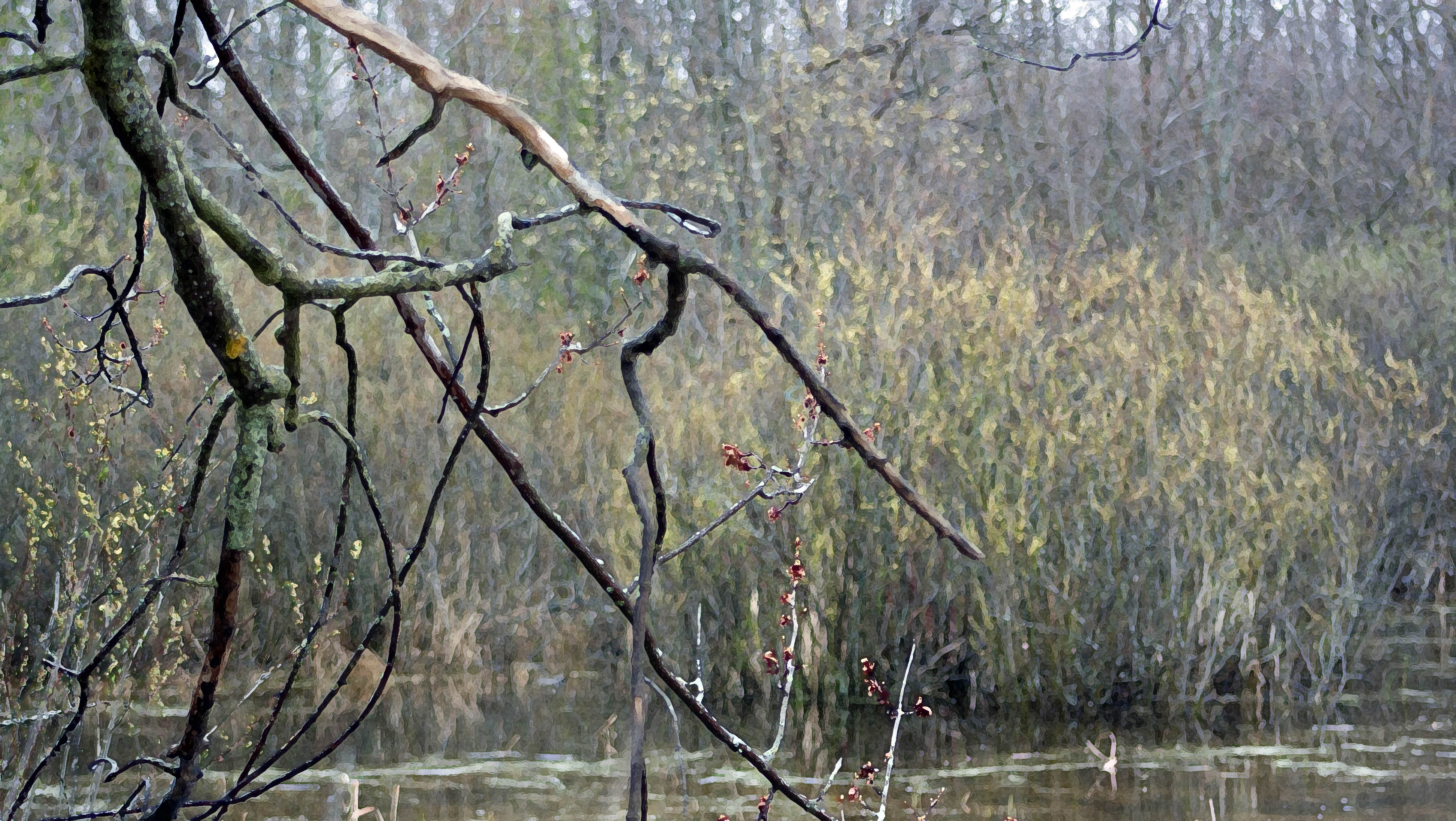
Swamp forest in Kawartha region, ON (photo and rendition by Nina Munteanu)
References:
Campbell, Joseph, Bill Moyers. 1991. “The Power of Myth.” Anchor. 293pp.
Sahtouris, Elisabet. 2014. “Ecosophy: Nature’s Guide to a Better World.” Kosmos, Spring/Summer 2014: 4-9pp.
Nina Munteanu is a Canadian ecologist / limnologist and novelist. She is co-editor of Europa SF and currently teaches writing courses at George Brown College and the University of Toronto. Visit www.ninamunteanu.ca for the latest on her books. Nina’s bilingual “La natura dell’acqua / The Way of Water” was published by Mincione Edizioni in Rome. Her non-fiction book “Water Is…” by Pixl Press (Vancouver) was selected by Margaret Atwood in the New York Times ‘Year in Reading’ and was chosen as the 2017 Summer Read by Water Canada. Her novel “A Diary in the Age of Water” was released by Inanna Publications (Toronto) in June 2020.
“If you have an apple and I have an apple and we exchange apples then you and I will still each have one apple. But if you have an idea and I have an idea and we exchange these ideas, then each of us will have two ideas.”—George Bernard Shaw
At Calgary’s When Words Collide some years ago, I moderated a panel on Eco-Fiction with publisher/writer Hayden Trenholm, and writers Michael J. Martineck, Sarah Kades, and Susan Forest. The panel was well attended; panelists and audience discussed and argued what eco-fiction was, its role in literature and storytelling generally, and even some of the risks of identifying a work as eco-fiction.
Someone in the audience brought up the notion that “awareness-guided perception” may suggest an increase of ecological awareness in literature when it is more that readers are just noticing what was always there. Authors agreed and pointed out that environmental fiction has been written for years and it is only now—partly with the genesis of the term eco-fiction—that the “character” and significance of environment is being acknowledged beyond its metaphor; for its actual value. It may also be that the metaphoric symbols of environment in certain classics are being “retooled” through our current awareness much in the same way that Aldous Huxley’s Brave New World or George Orwell’s Nineteen Eighty Four are being re-interpreted—and newly appreciated— in today’s world of pervasive surveillance and bio-engineering.
I would submit that if we are noticing it more, we are also writing it more. Artists are cultural leaders and reporters, after all. I shared my own experience in the science fiction classes I was teaching at UofT and George Brown College, in which I noted a trend of increasing “eco-fiction” in the works in progress that students were bringing in to workshop in class. Students were not aware that they were writing eco-fiction, but they were indeed writing it.
I started branding my writing as eco-fiction a few years ago. Prior to that—even though my stories were strongly driven by an ecological premise and strong environmental setting—I described them as science fiction and many as technological thrillers. Environment’s role remained subtle and—at times—insidious. Climate change. Water shortage. Environmental disease. A city’s collapse. War. I’ve used these as backdrops to explore relationships, values (such as honour and loyalty), philosophies, moralities, ethics, and agencies of action. The stuff of storytelling.
Environment, and ecological characteristics were less “theme” than “character,” with which the protagonist and major characters related in important ways.
Just as Bong Joon-Ho’s 2014 science fiction movie Snowpiercer wasn’t so much about climate change as it was about exploring class struggle, the capitalist decadence of entitlement, disrespect and prejudice through the premise of climate catastrophe. Though, one could argue that these form a closed loop of cause and effect (and responsibility).
The self-contained closed ecosystem of the Snowpiercer train is maintained by an ordered social system, imposed by a stony militia. Those at the front of the train enjoy privileges and luxurious living conditions, though most drown in a debauched drug stupor; those at the back live on next to nothing and must resort to savage means to survive. Revolution brews from the back, lead by Curtis Everett (Chris Evans), a man whose two intact arms suggest he hasn’t done his part to serve the community yet.
Minister Mason (Tilda Swinton), an imperious yet simpering figure who serves the ruling class without quite being part of it, reminds the lower class that:
“We must all of us on this train of life remain in our allotted station. We must each of us occupy our preordained particular position. Would you wear a shoe on your head? Of course you wouldn’t wear a shoe on your head. A shoe doesn’t belong on your head. A shoe belongs on your foot. A hat belongs on your head. I am a hat. You are a shoe. I belong on the head. You belong on the foot. Yes? So it is. In the beginning, order was prescribed by your ticket: First Class, Economy, and freeloaders like you…Now, as in the beginning, I belong to the front. You belong to the tail. When the foot seeks the place of the head, the sacred line is crossed. Know your place. Keep your place. Be a shoe.”
Ecotones are places where “lines are crossed,” where barriers are breached, where “words collide” and new opportunities arise. Sometimes from calamity. Sometimes from tragedy. Sometimes from serendipity.
When environment shapes a story as archetype—hero, victim, trickster, shadow or shape shifter—we get strong eco-fiction. Good eco-fiction, like any good story, explores the choices we make and the consequences of those choices. Good eco-fiction ventures into the ecotone of overlap, collision, exchange and ultimate change.
In my non-fiction book Water Is… I define an ecotone as the transition zone between two overlapping systems. It is essentially where two communities exchange information and integrate. Ecotones typically support varied and rich communities, representing a boiling pot of two colliding worlds. An estuary—where fresh water meets salt water. The edge of a forest with a meadow. The shoreline of a lake or pond.
For me, this is a fitting metaphor for life, given that the big choices we must face usually involve a collision of ideas, beliefs, lifestyles or worldviews: these often prove to enrich our lives the most for having gone through them. Evolution (any significant change) doesn’t happen within a stable system; adaptation and growth occur only when stable systems come together, disturb the equilibrium, and create opportunity. Good social examples include a close friendship or a marriage in which the process of “I” and “you” becomes a dynamic “we” (the ecotone) through exchange and reciprocation. Another version of Bernard Shaw’s quote, above, by the Missouri Pacific Agriculture Development Bulletin reads: “You have an idea. I have an idea. We swap. Now, you have two ideas and so do I. Both are richer. What you gave you have. What you got I did not lose. This is cooperation.” This is ecotone.
I think we are seeing more eco-fiction out there because ecosystems, ecology and environment are becoming more integral to story: as characters in their own right. I think we are seeing more eco-fiction out there because we are ready to see it. Just as quantum physics emerged when it did and not sooner, an idea—a thought—crystalizes when we are ready for it.
Don’t stay a shoe … go find an ecotone. Then write about it.
Thirty-Six Eco-Fiction Books Worth Reading…
Nina Munteanu is a Canadian ecologist / limnologist and novelist. She is co-editor of Europa SF and currently teaches writing courses at George Brown College and the University of Toronto. Visit www.ninamunteanu.ca for the latest on her books. Nina’s bilingual “La natura dell’acqua / The Way of Water” was published by Mincione Edizioni in Rome. Her non-fiction book “Water Is…” by Pixl Press (Vancouver) was selected by Margaret Atwood in the New York Times ‘Year in Reading’ and was chosen as the 2017 Summer Read by Water Canada. Her novel “A Diary in the Age of Water” was released by Inanna Publications (Toronto) in June 2020.
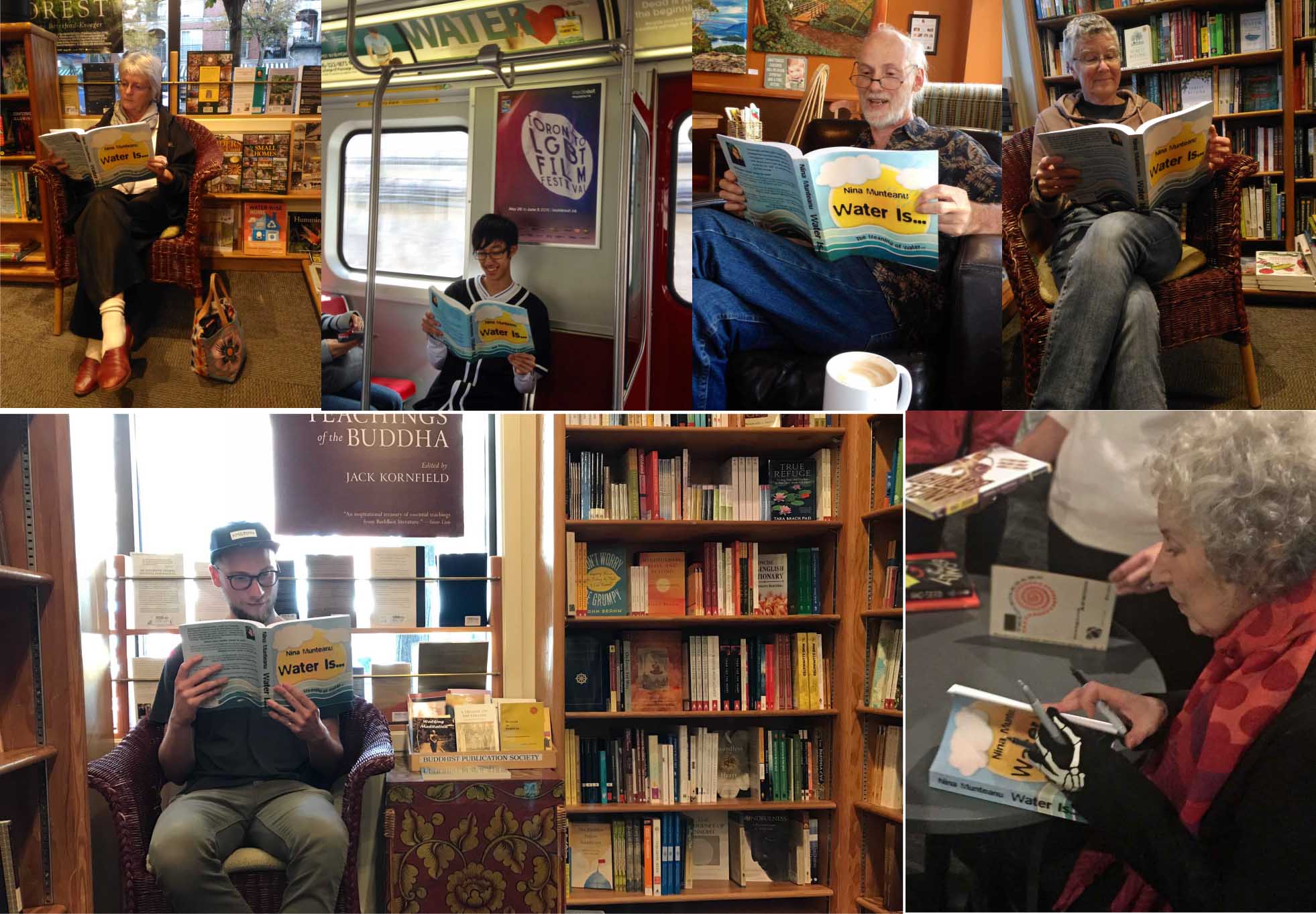
People reading “Water Is…”in Vancouver and Toronto
Margaret McCaffery, chair of the PROBUS Toronto Speakers Committee invited me some time ago to speak to their club in June of 2024 on my experience with water: as scientist, mother, and environmentalist. The audience was mostly retired professional and business people with enquiring minds. I gave my Powerpoint talk in the Holy Rosary Parish Hall on St. Clair West and then enjoyed a vigorous session of challenging and interesting questions to which I responded with equal vigour.
Here is the blurb for the presentation:
Canadian limnologist Nina Munteanu explores the many dimensions of water through her journey with water as mother, educator, and scientist. She describes an emotional connection with nature that compels us to take care of our environment with love versus a sense of duty.
Nina’s talk draws on her book Water Is… The Meaning of Water, part history, part science and part philosophy and spirituality. The book examines water’s many anomalous properties and what these meant to us. In sharing her personal journey with this mysterious elixir, Nina explores water’s many ‘identities’ and, ultimately, our own. Water Is… was Margaret Atwood’s first choice in the 2016 New York Times ‘Year in Reading.’ Water is… will be available for sale at the talk.
I started with my story as a child, growing up in the Eastern Townships of Canada
I defined “limnology” and talked about my career as a limnologistand environmental consultant
I discussed some of water’s anomalous properties, all life-giving
I brought in some interesting things about water…
I tied my journey with water to family and friends and my watershed
I ended my talk with a discussion of the Watermark Project to catalogue significant stories to water bodies all over the world
I also brought my latest eco-clifi novel A Diary in the Age of Water for sale. It interested quite a few people and generated several wonderful discussions.
Nina Munteanu and her latest eco-novel
Nina Munteanu is a Canadian ecologist / limnologist and novelist. She is co-editor of Europa SF and currently teaches writing courses at George Brown College and the University of Toronto. Visit www.ninamunteanu.ca for the latest on her books. Nina’s bilingual “La natura dell’acqua / The Way of Water” was published by Mincione Edizioni in Rome. Her non-fiction book “Water Is…” by Pixl Press (Vancouver) was selected by Margaret Atwood in the New York Times ‘Year in Reading’ and was chosen as the 2017 Summer Read by Water Canada. Her novel “A Diary in the Age of Water” was released by Inanna Publications (Toronto) in June 2020.


































 Nina Munteanu Writing Coach