
Dialogue spices narrative and increases pace because it is read more quickly. Dialogue is pleasing to the reader’s eye and gets readers involved. Dialogue is action.
Five tools for achieving relevant and exciting dialogue include: showing not telling; simplification; voice; interactive devices, and use of narrative.
Defining Dialogue and its Purpose in Story
Good dialogue neither mimics actual speech (e.g., it’s not usually mundane, repetitive or broken with words like “uh”) nor does it educate the reader through long discourse (unless the character is that kind of person). Good dialogue in a story should be somewhere in the middle. While it should read as fluid conversation, dialogue remains a device to propel the plot or enlighten the reader to the character of the speaker). No conversation follows a perfect linear progression. People interrupt one another, talk over one another, often don’t answer questions posed to them or avoid them by not answering them directly. These can all be used by the writer to establish character, tension, and relationship.
The writer uses dialogue to move the story along, increase tension and speed up pace. Dialogue helps define setting, characters and objects. It allows characters to confront each other and crystallizes relationships and situations. Dialogue can effectively deliver a punch or blow in a conflict. It can cue into a transition to a new scene
Show, Don’t Tell
Beginning writers commonly use dialogue to explain something that both participants should already know but the reader doesn’t. It is both awkward and unrealistic and immediately exposes the writer as a novice. Writers should avoid the use of “As you know…” It’s better to keep the reader in the dark for a while than to use dialogue to explain something. On the same note, characters should talk to one another, not indirectly to the reader through polemic or long dissertation and exposition.
Use Relevant Tag Lines and Reduce Them
When using tag lines for dialogue, take care to avoid the use of redundant tag lines. For instance: “I’m sorry,” he apologized; “Do you have a dog?” she asked. The primary purpose of a tag is to establish whois speaking, not necessarily how; the howis usually achieved through the actual speech. Novice writers tend to avoid “said” and replace with creative but distracting verbs (e.g., snarled, hissed, purred) or add excessive speech modifiers (e.g., he said pleadingly or he said dramatically). Instead, look for ways to express the way they said it in actual dialogue. Let the dialogue speak for itself. In the example—“He can’t be there!” she said in disbelief—disbeliefis unnecessary because the dialogue already shows it. In truth, most professional writers use said and let the dialogue do the talking.
Develop Character “Voice” & Speech Signatures
Each of us develops our own idiosyncratic way of speaking, based on our ethnic background, the community or region we grew up in, our education and the circles we frequent. Writers can create a character’s distinctive “voice” by introducing a unique vernacular to each character. This can take on the form of a certain repeated phrase, a body movement (itself a “language”), a stutter or speech intonation or accent. For instance, I know a person who adds “don’t you think?” to almost everything he says. This says something about how that person thinks. Another person I know uses “do you see?” at the end of his phrase. Again, rather revealing. The writer can add additional depth to these specific traits by linking them to metaphor.
Use Oblique Conversation & Overlapping Speech
People often don’t respond directly to questions posed them. This may be due to them avoiding the question or excitement or rudeness. The writer can make use of these as devices to enlighten the reader on theme, plot and character, while making the conversation more interesting and realistic. People cut each other off or talk over one another all the time. You can incorporate this into your dialogue to achieve a note of hastiness, abruptness, nervousness or panic.
Intersperse Dialogue with Descriptive Narrative
Many beginning writers forget to “ground” the reader with sufficient cues as to where the characters are and what they’re doing while they are talking. This phenomenon is so common, it even has a name. It’s called “talking heads.” As writers we must achieve a balance between a lack of setting, which disorients the reader, and info-dump, which halts conversation and slows pace considerably. Narrative can also be used to contradict what’s actually said through body language or by simply telling the reader. My previous article “title” discusses ways you can use body language to reveal subtle undercurrent of communications between characters, the comic or tragic elements behind dialogue, and a character’s true feelings. Here are some examples:
“How did it go?”
“Great,” he lied.
“Yes, I feel so much better now,” she said, eyes wandering from his.
Well, you get the picture. And I just revealed myself as a visual thinker…

Nina Munteanu is a Canadian ecologist / limnologist and novelist. She is co-editor of Europa SF and currently teaches writing courses at George Brown College and the University of Toronto. Visit www.ninamunteanu.ca for the latest on her books. Nina’s bilingual “La natura dell’acqua / The Way of Water” was published by Mincione Edizioni in Rome. Her non-fiction book “Water Is…” by Pixl Press(Vancouver) was selected by Margaret Atwood in the New York Times‘Year in Reading’ and was chosen as the 2017 Summer Read by Water Canada. Her novel “A Diary in the Age of Water” was released by Inanna Publications (Toronto) in June 2020.

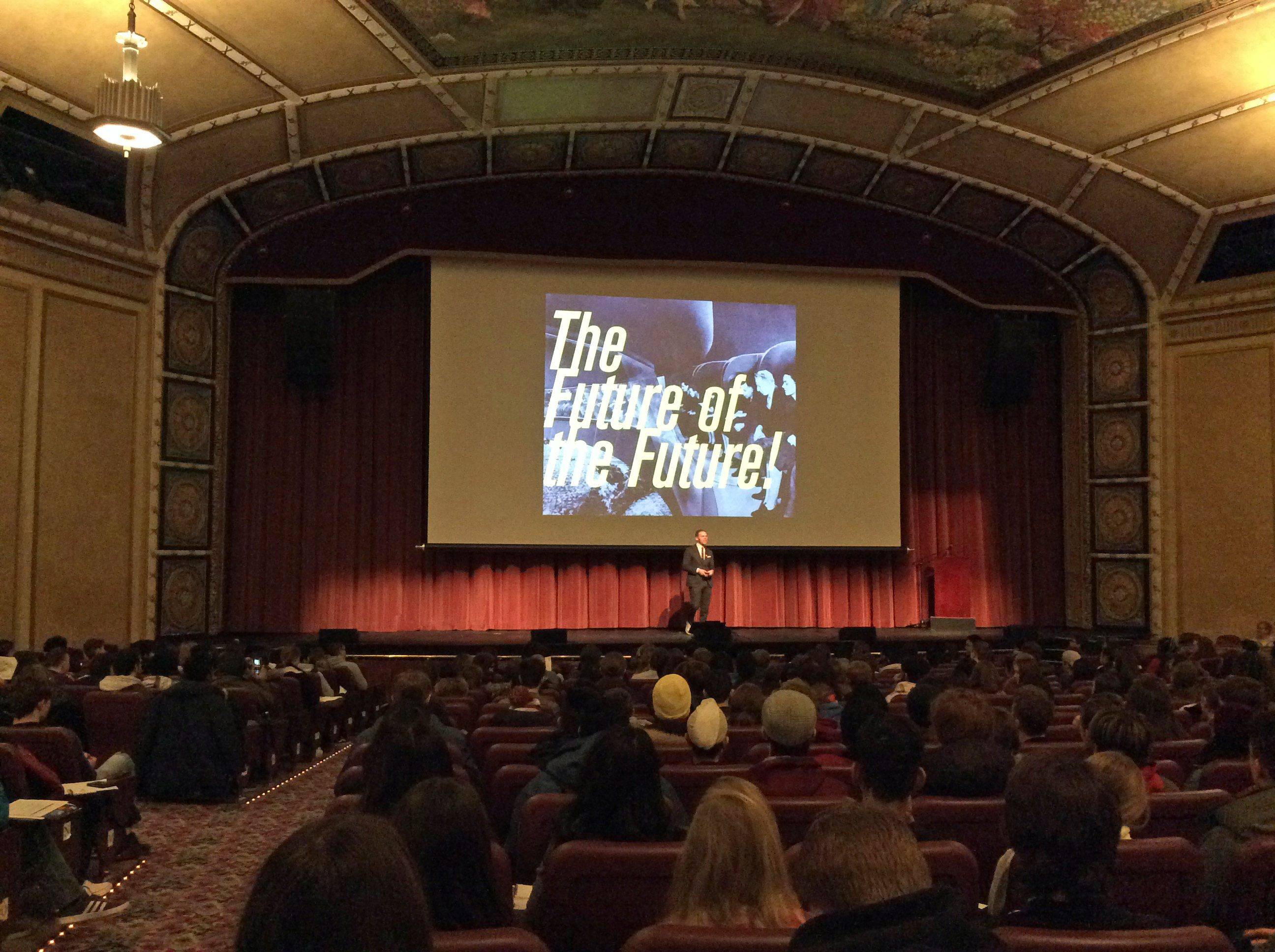
 Journalist, urbanist and futurist Greg Lindsay gave a rousing keynote speech to start the conference. Greg spoke about the future of cities, technology, and mobility. He is the director of applied research at NewCities and director of strategy at its mobility offshoot CoMotion. He also co-authored the international bestseller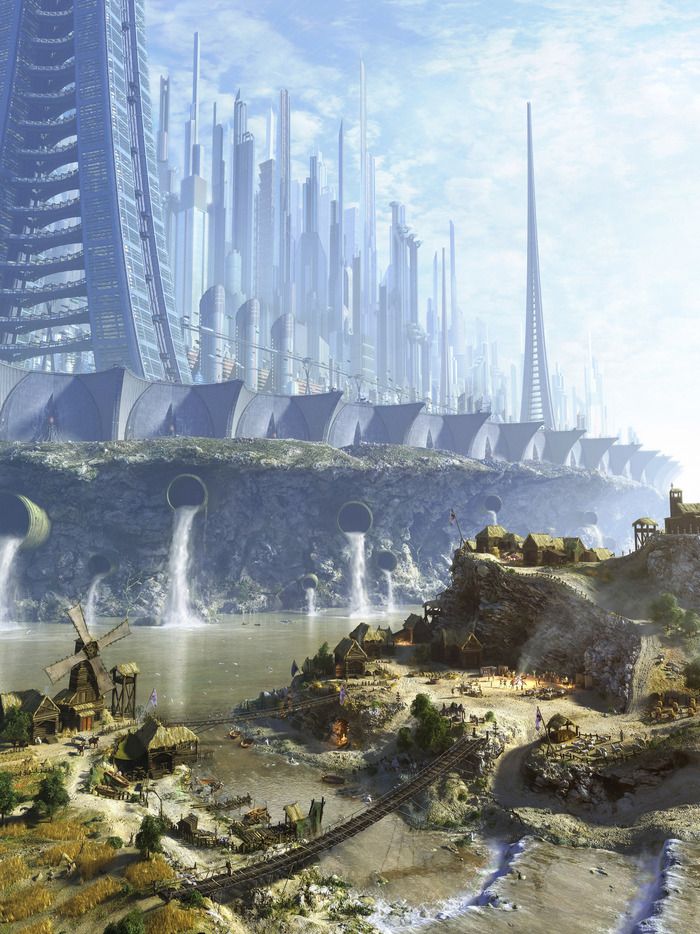

 We then discussed future implications of water scarcity (and geopolitical conflict) and some of the things individuals and communities can do. Much of the talk drew from my recent book
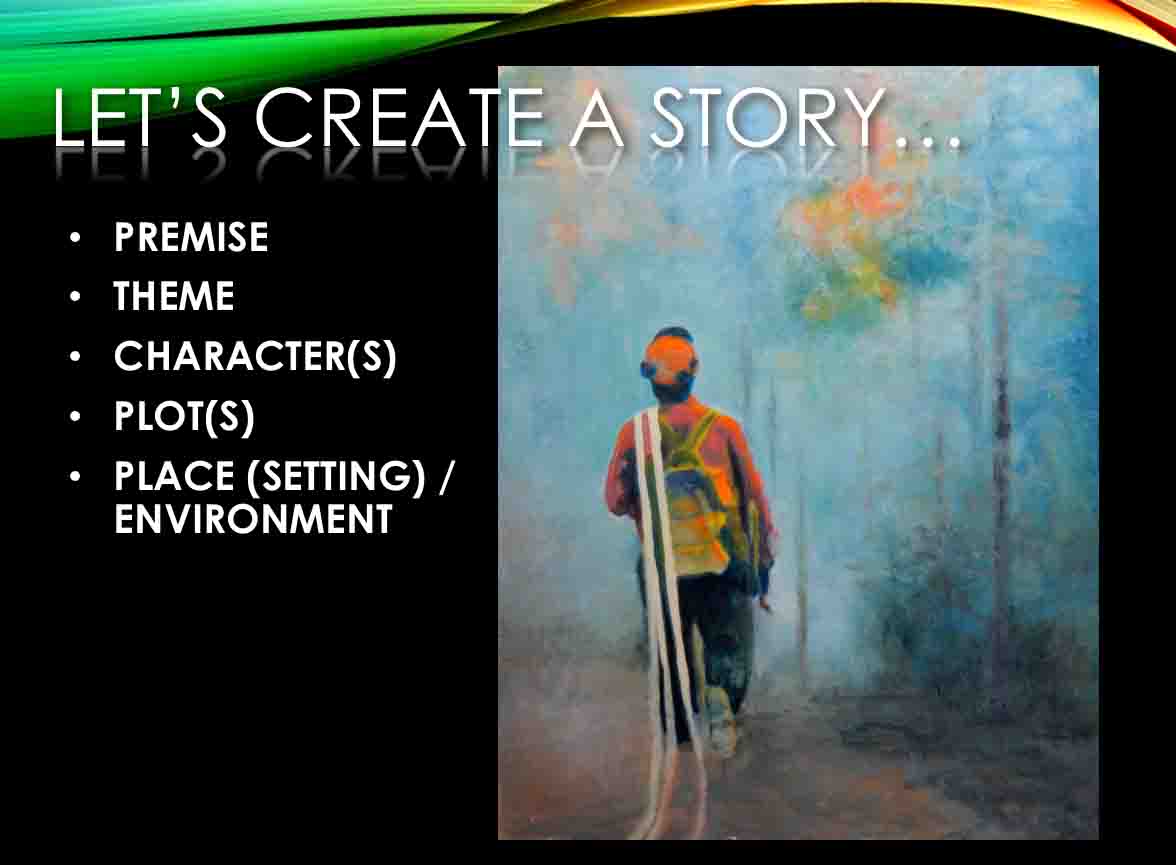
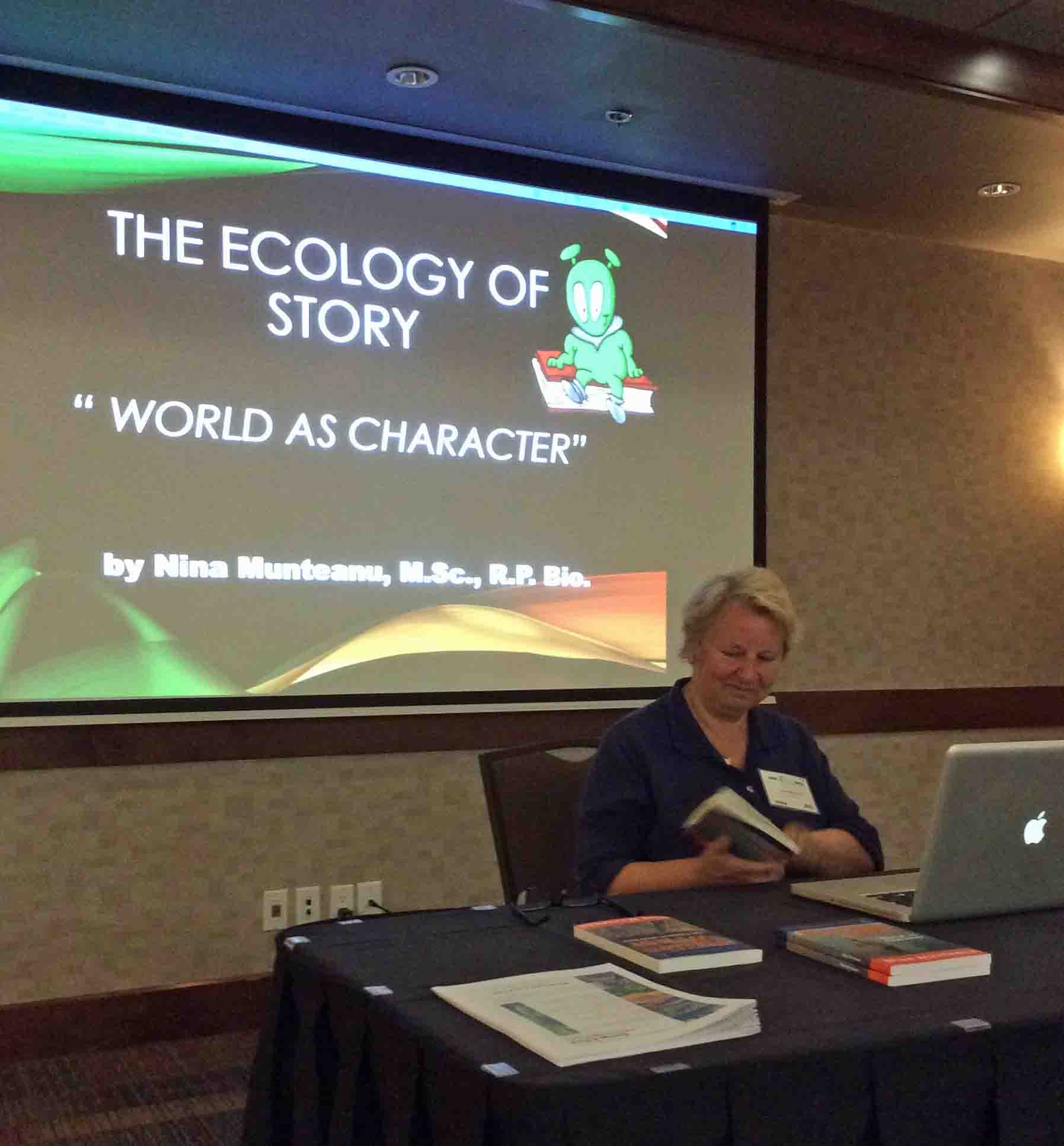
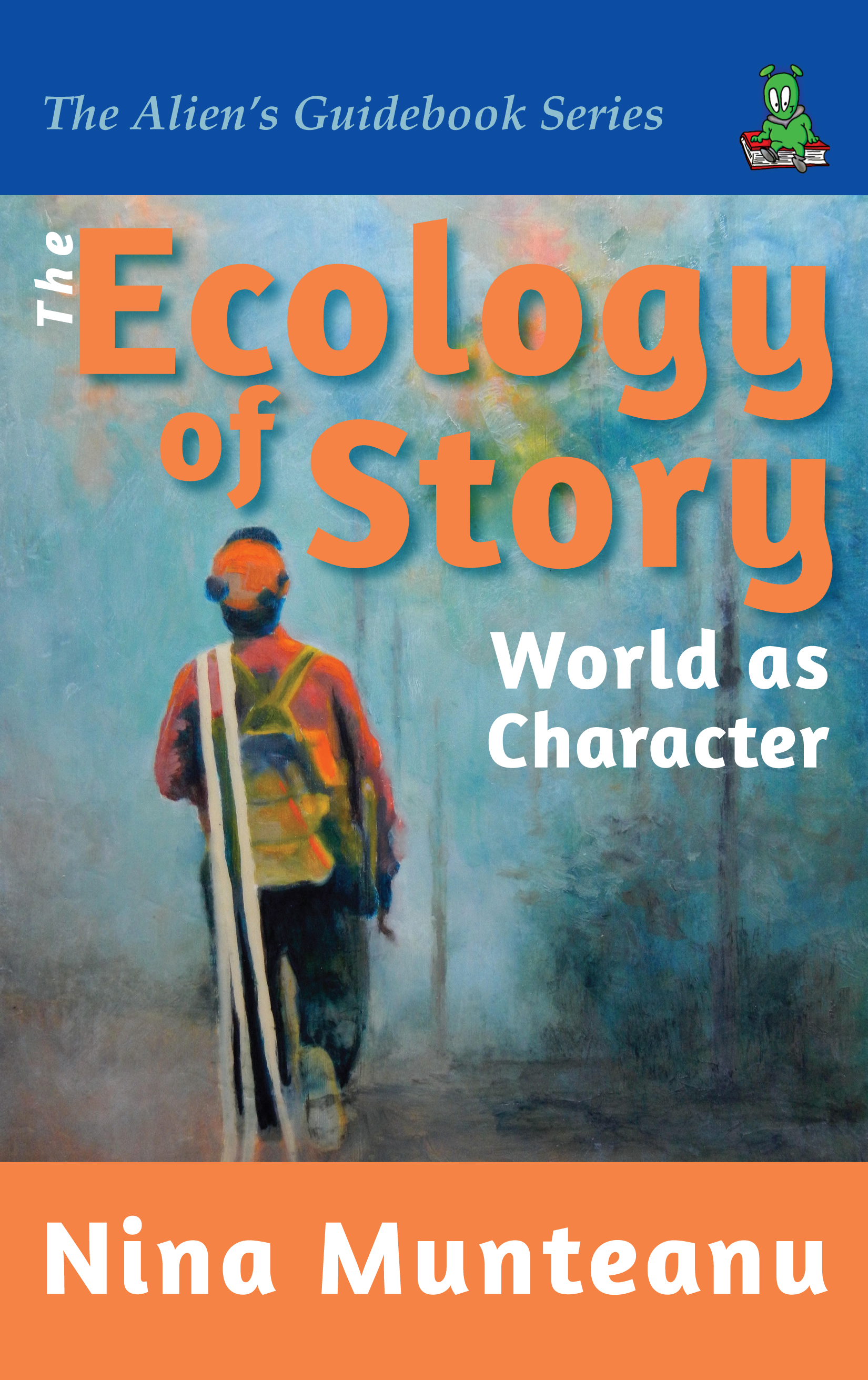 I recently gave a 2-hour workshop on “ecology of story” at Calgary’s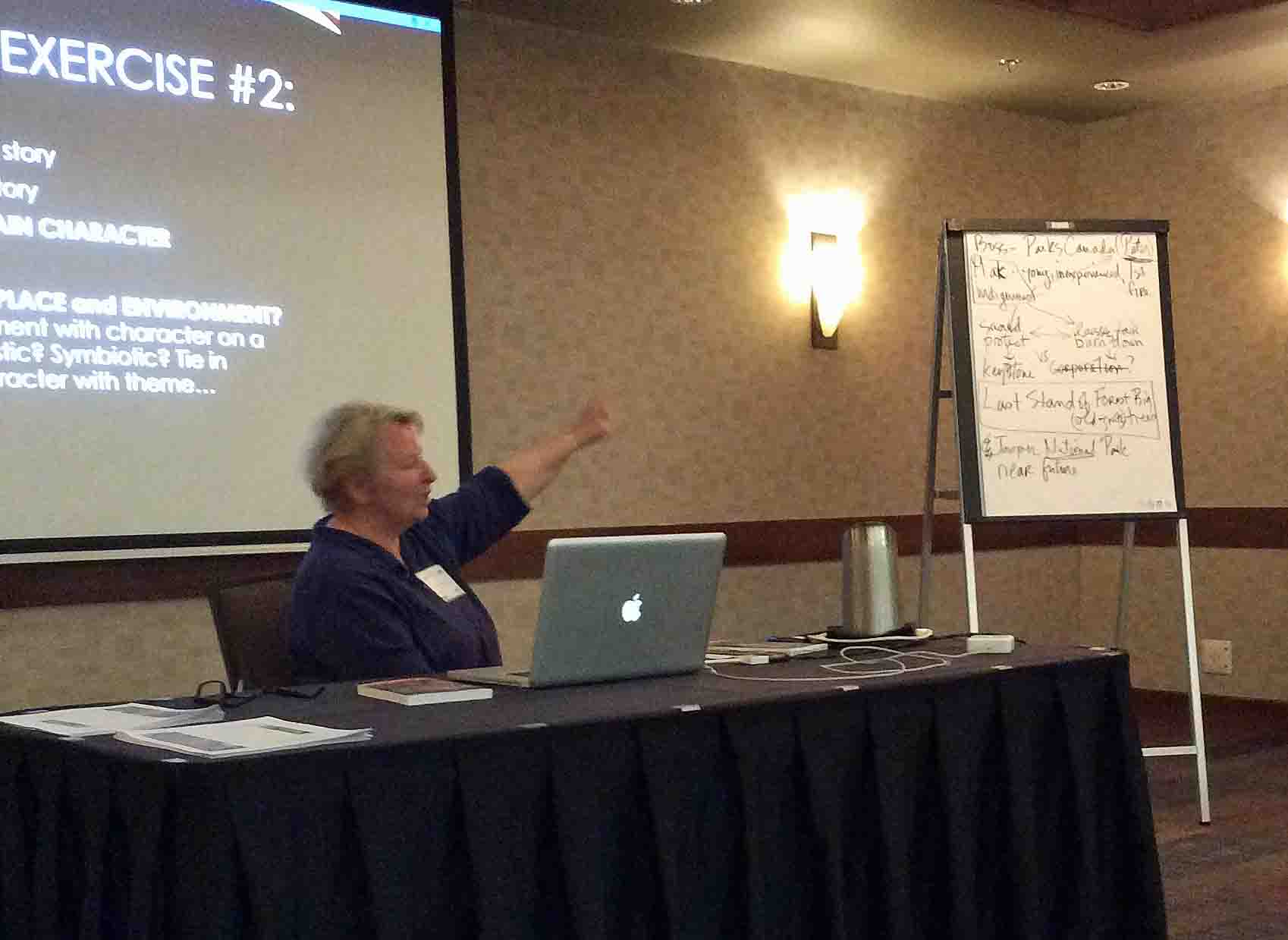



 Nina is a Canadian scientist and novelist. She worked for 25 years as an environmental consultant in the field of aquatic ecology and limnology, publishing papers and technical reports on water quality and impacts to aquatic systems. Nina has written over a dozen eco-fiction, science fiction and fantasy novels. An award-winning short story writer, and essayist, Nina currently lives in Toronto where she teaches writing at the University of Toronto and George Brown College. Her non-fiction book “Water Is…”—a scientific study and personal journey as limnologist, mother, teacher and environmentalist—was picked by Margaret Atwood in the New York Times as 2016 ‘The Year in Reading’. Nina’s most recent novel “A Diary in the Age of Water”— about four generations of women and their relationship to water in a rapidly changing world—will be released in 2020 by Inanna Publications.
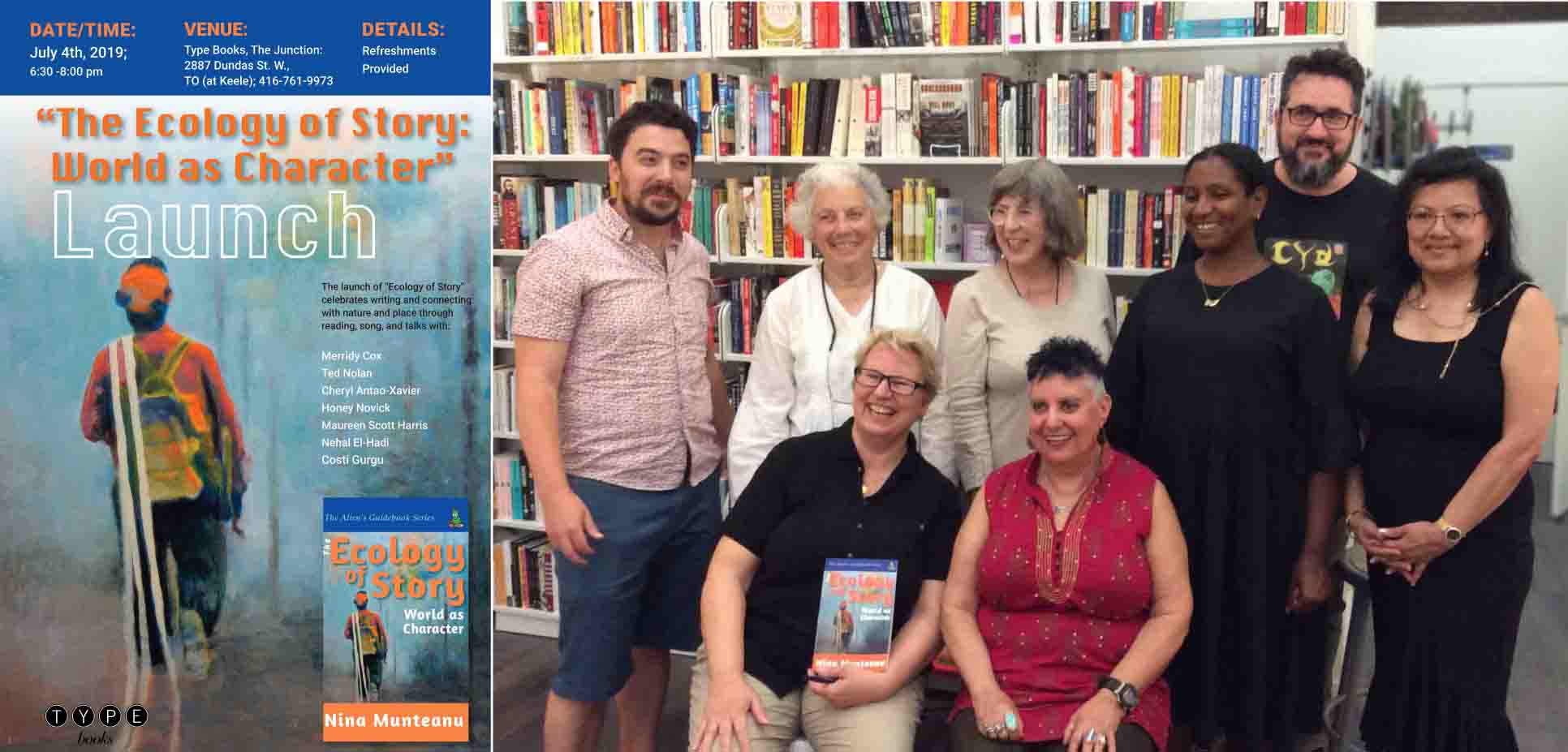
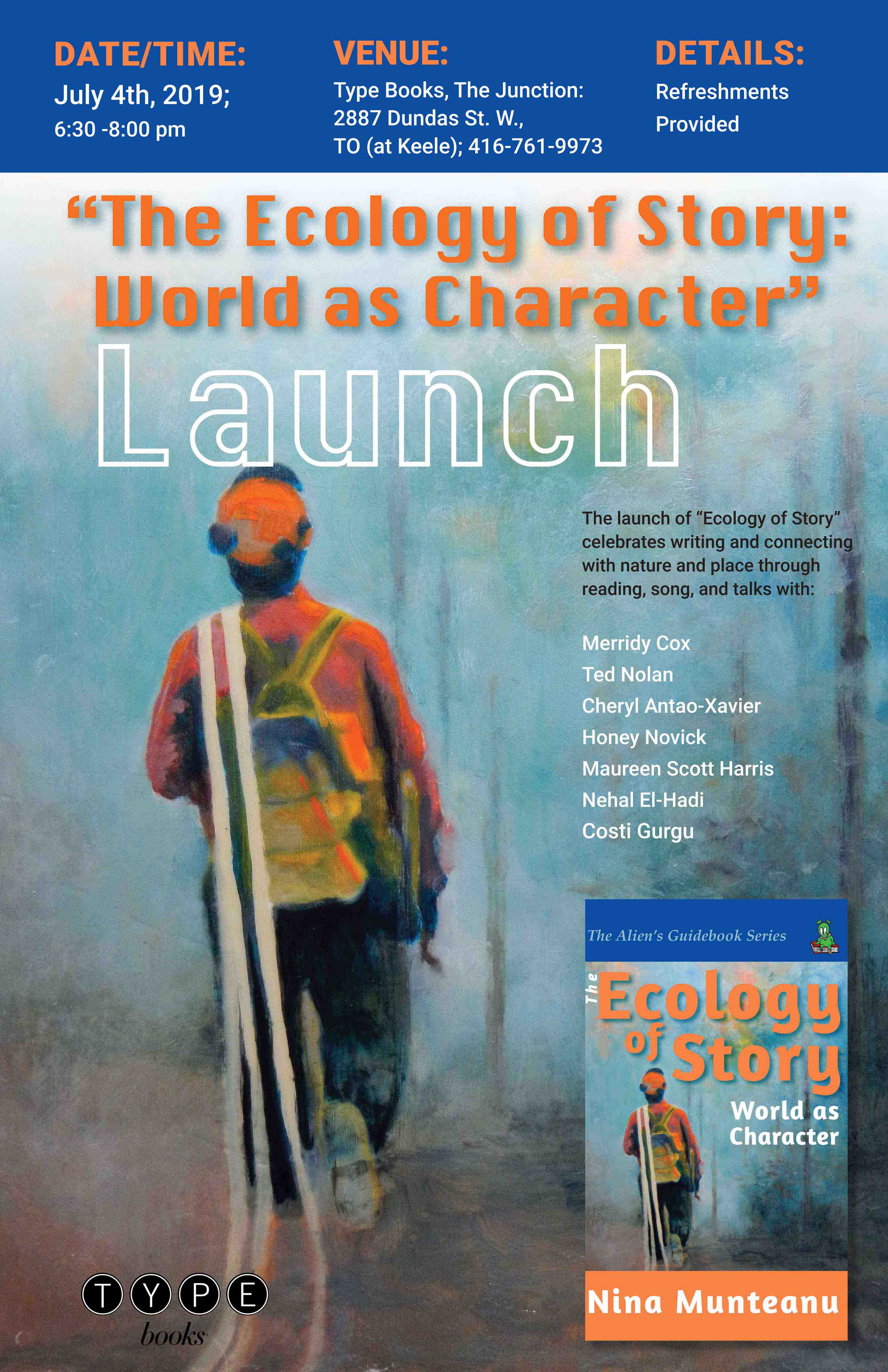 UofT instructor and writer Nina Munteanu launched the third book in her acclaimed “how to write” series at Type Books, Toronto, on July 4th, 2019. The launch of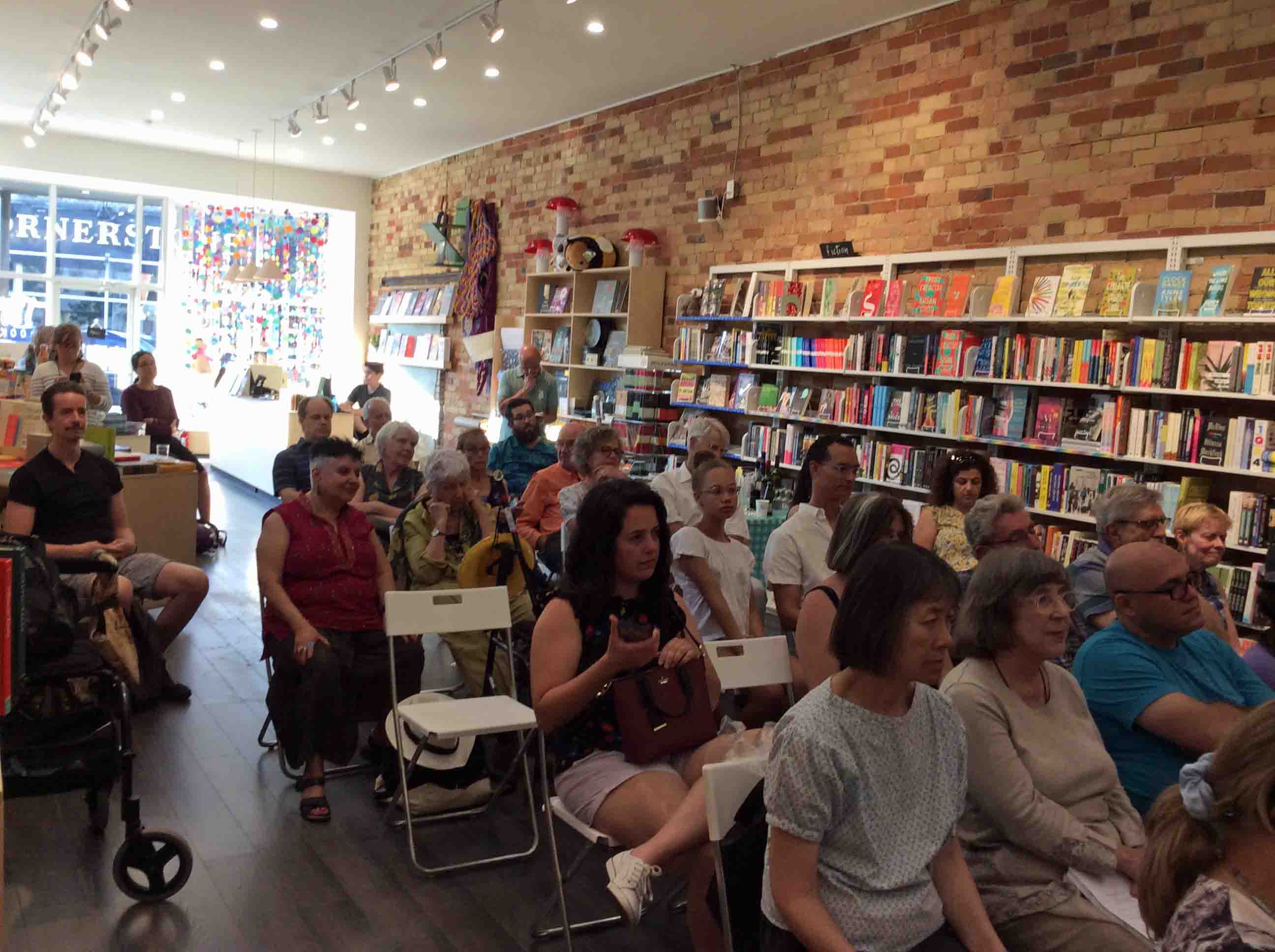
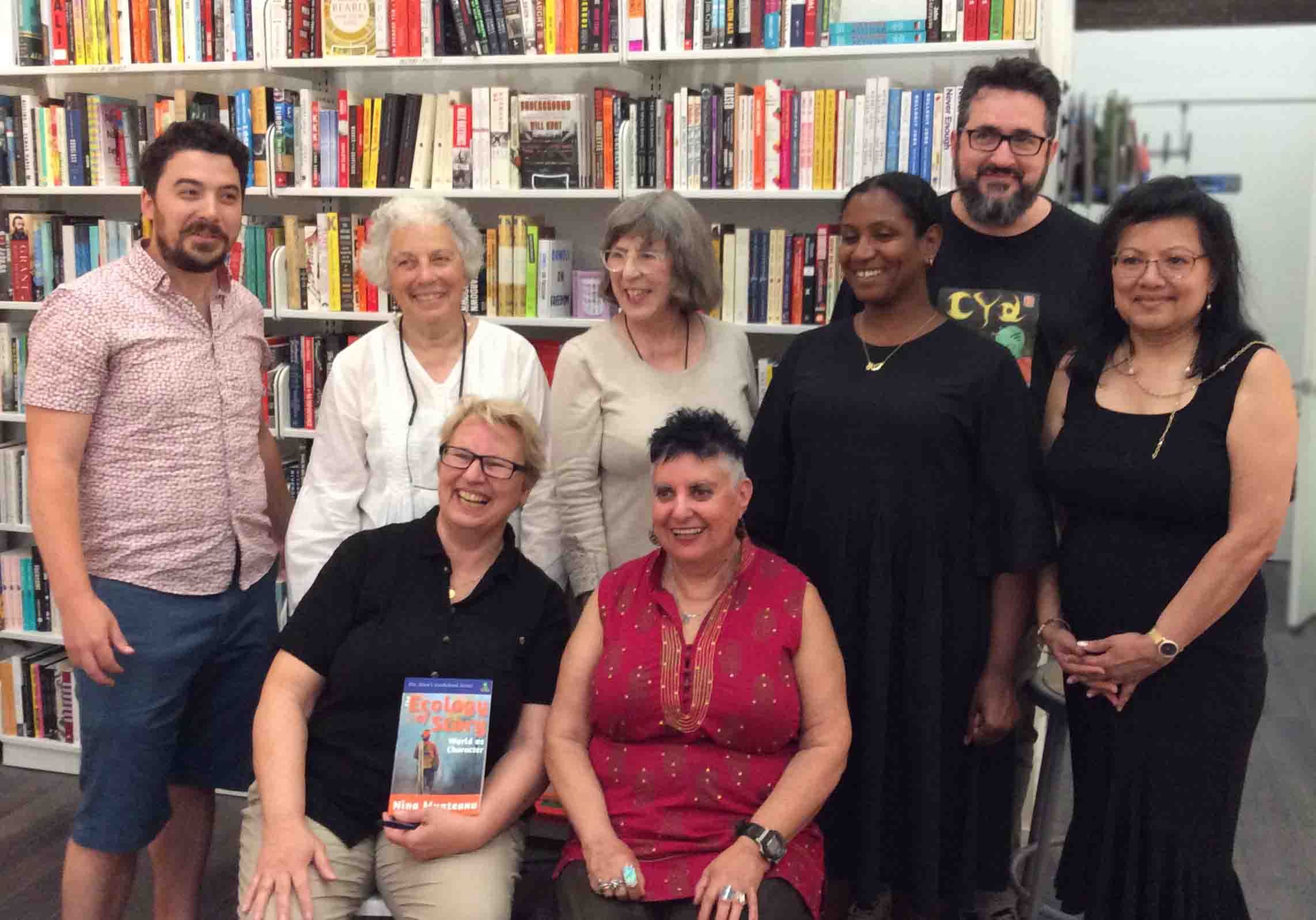
 Honey Novick is a poet, voice teacher, singer and songwriter. Honey is the winner of the Empowered Poet Award, CAPAC, Yamaha Classical Music Competition in Japan, among others. Honey wrote music for CBC’s Morningside and sang for Prime Minister Pierre Elliot Trudeau.
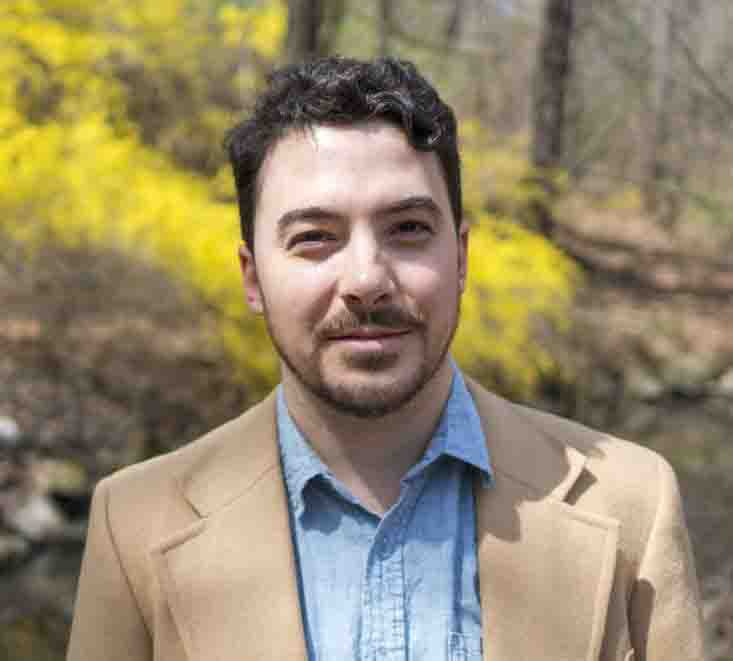 Ted Nolan—E. Martin Nolan—is a poet, essayist, editor and voice of the trees. He teaches in the Engineering Communication Program at the University of Toronto and is a PhD Candidate in Applied Linguistics at York University. His latest work is a chapbook written in collaboration with some trees entitled: “Trees Hate Us.”
 Maureen Scott Harris is a poet, essayist, and rare books cataloguer. A UofT grad in Library Science, she received the Trillium Book Award for poetry for Drowning Lessons and was the first non-Australian to be awarded the 2009 WildCare Tasmania Nature Writing Prize for her essay, “Broken Mouth: Offerings for the Don River, Toronto.”
 Nehal El-Hadi is a writer, researcher, editor and journalist, who explores the intersections of body, technology, and space. Her writing has appeared in academic journals, literary magazines, and forthcoming in anthologies and edited collections. She is currently a visiting scholar at York University and sessional faculty at the University of Toronto.
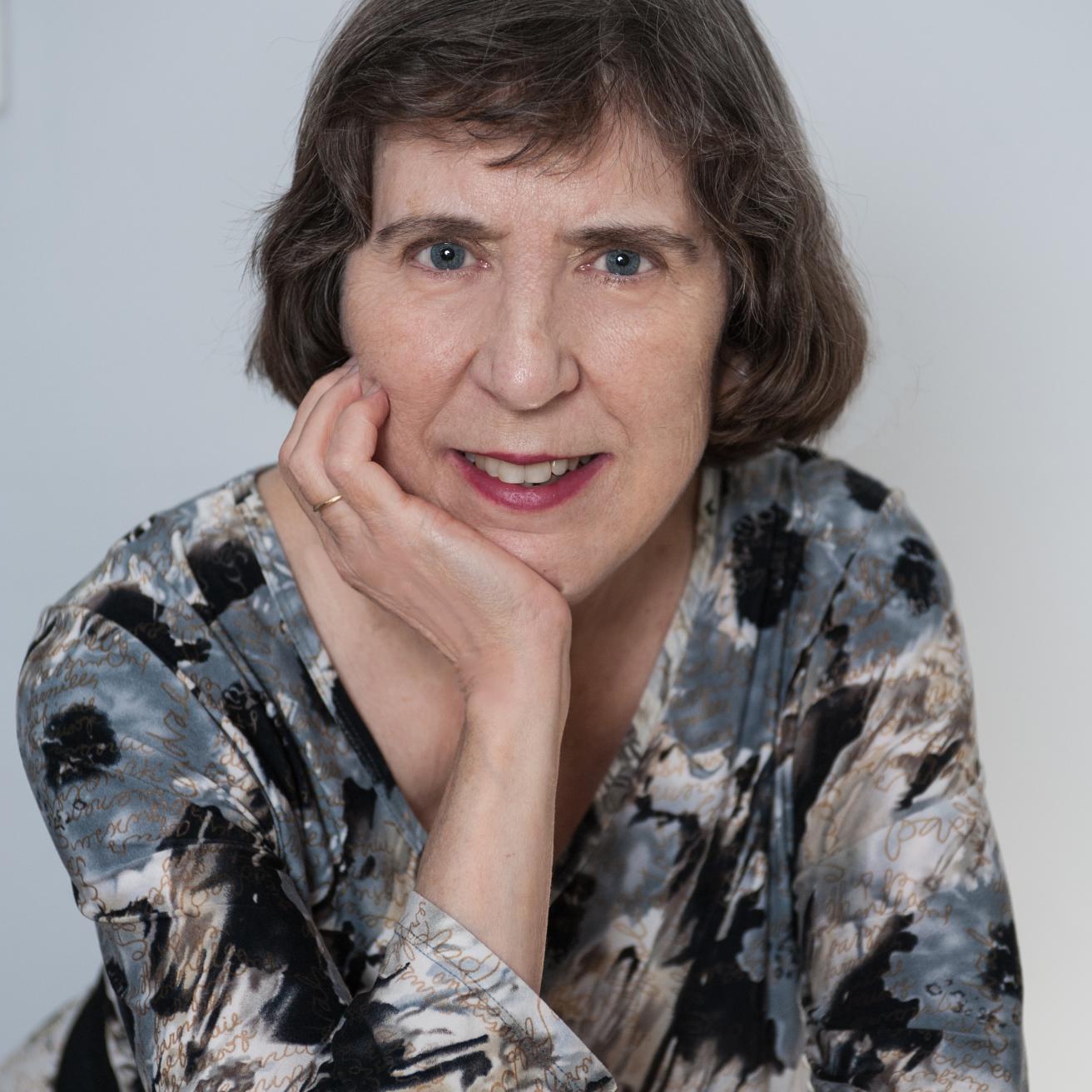 Merridy Cox is a naturalist, photographer, editor, indexer and poet. She is also managing editor of Lyrical Leaf Publishing. Merridy has a degree in biology and museum studies; her poetry focuses mostly on the natural world around her; her poems and photographs are published in several literary anthologies. She has edited several books, including this one!
 Costi Gurgu is a graphic designer and illustrator as well as an award-winning science fiction and fantasy novelist and short story writer who is published in anthologies and magazines throughout the world. He is a former lawyer and was art director for lifestyle and fashion magazines in Europe before moving to Canada. His latest novel—RecipeArium—was called the new new weird by Robert J. Sawyer and was nominated for an Aurora Award.
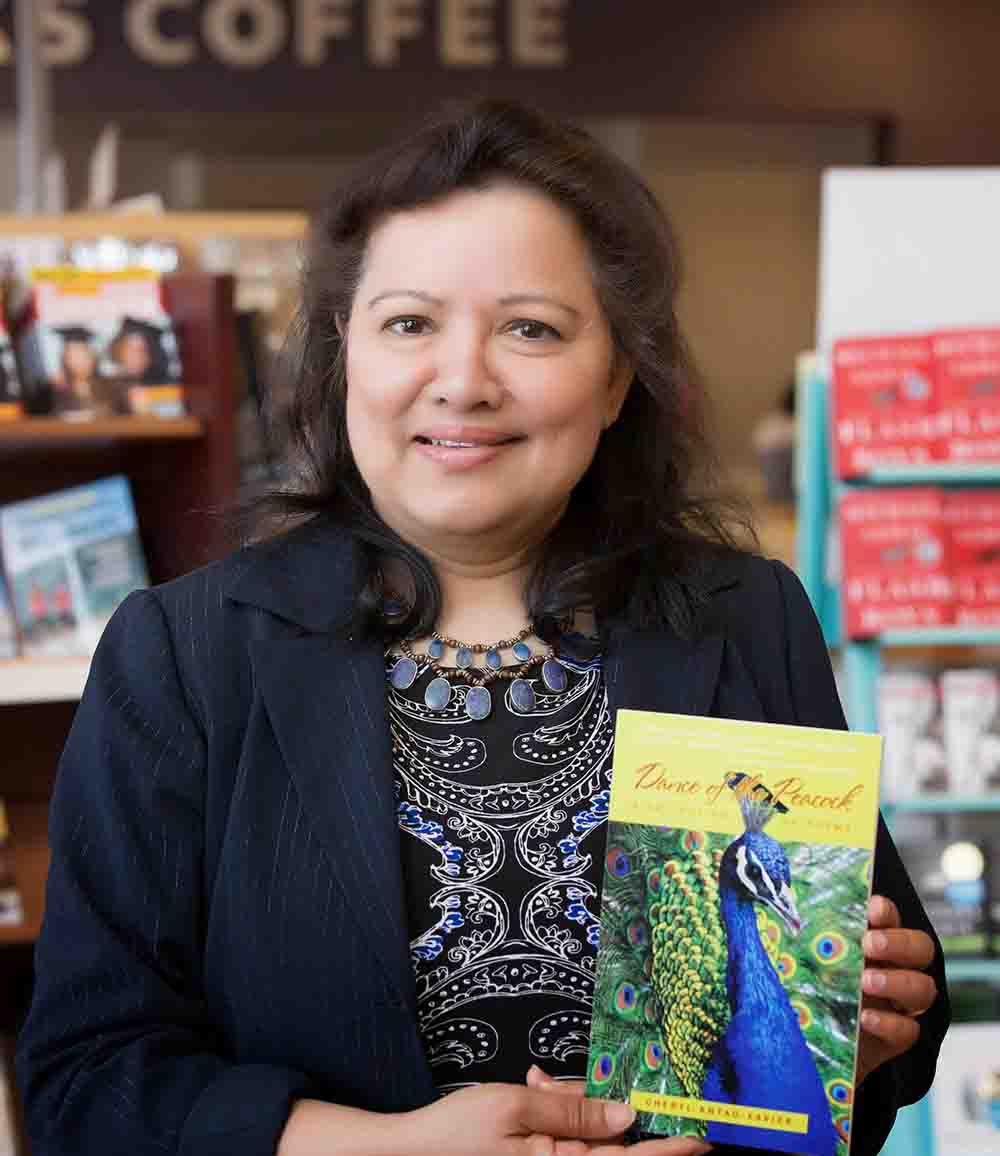 Cheryl Antao-Xavier is an editor, interior book designer and publisher with IOWI. She has been publishing emergent writers since 2008 and continues to offer self-publishing solutions to writers and companies and organizations. She recently released her book: “Self-Publishing the Professional Way: 5 Steps from Raw Manuscript to Publishing.”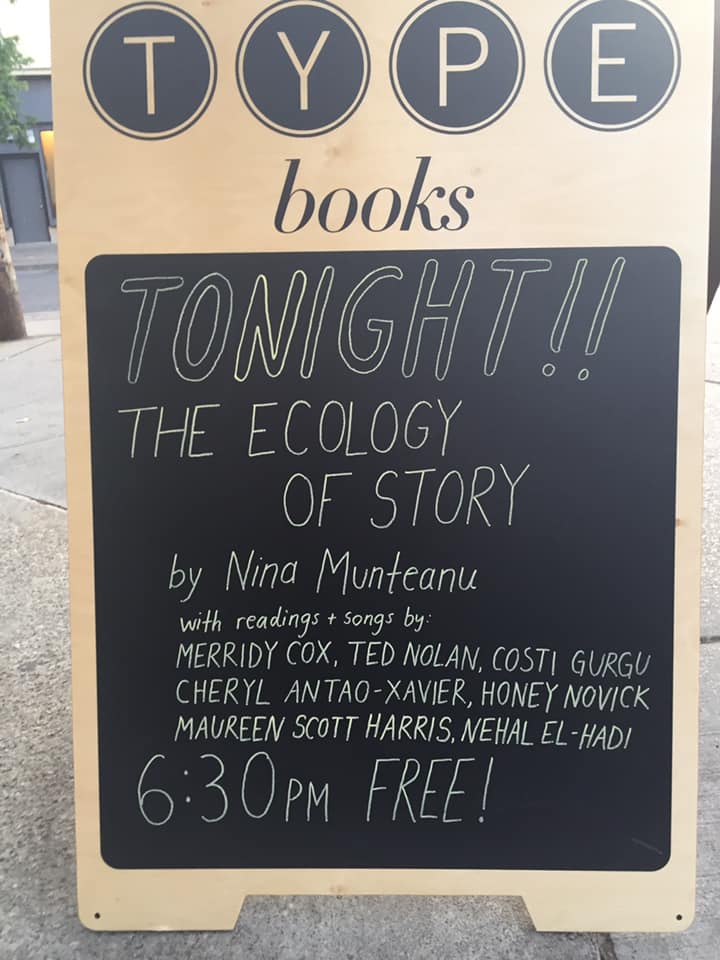

 “I was fascinated by Nina’s clear and extremely interesting lecture on the hero’s journey. Maybe all writers have a novel in their heads they want to write one day, and the techniques Nina shared with us will help me when I get to that point. In fact, because of her, I may get there a lot sooner than I had planned.”— Zoe M. Hicks, Saint Simon’s Island, GA
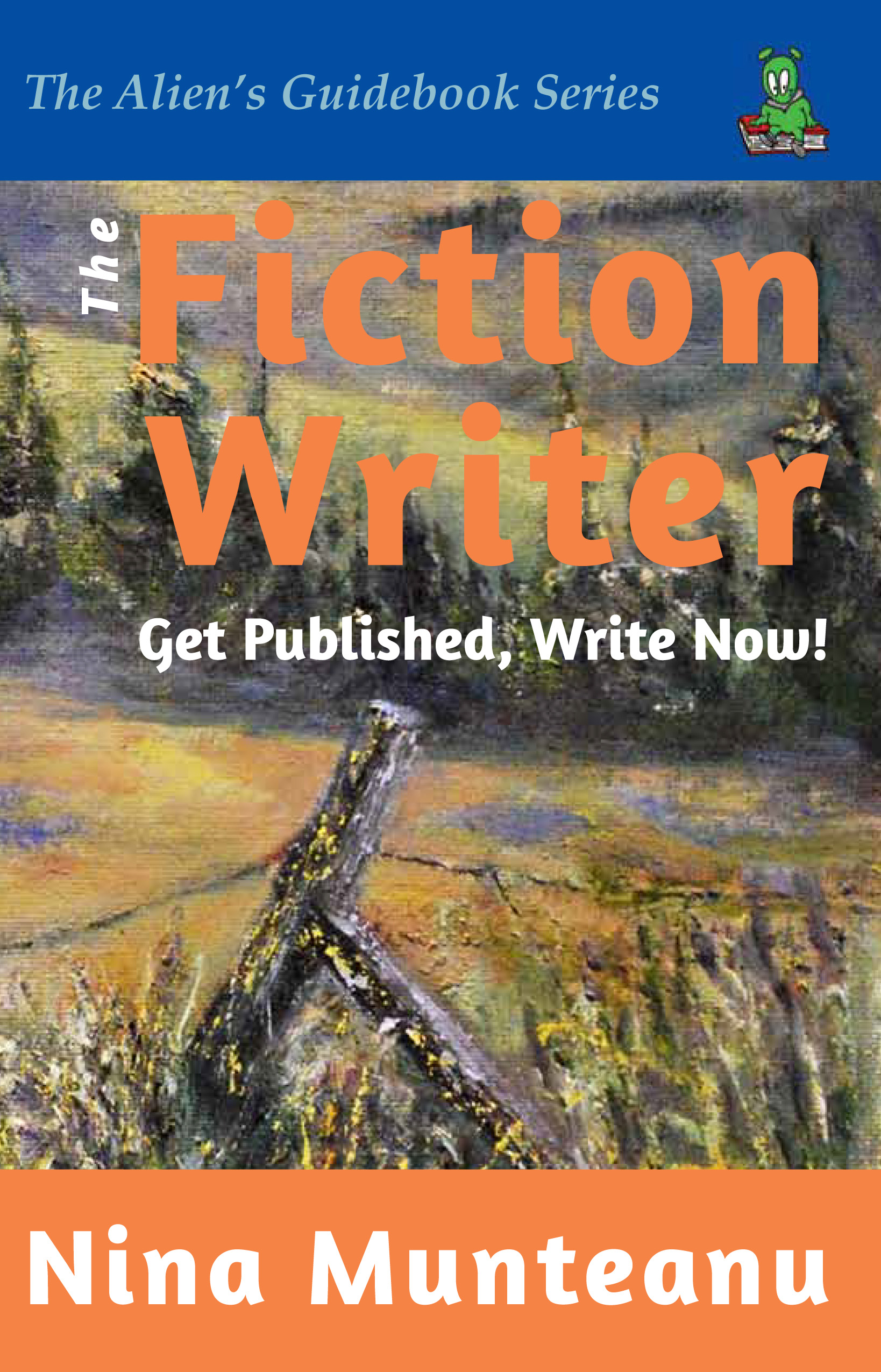 “The Fiction Writer is at the top of the required reading list for my Writer’s Workshop students. With its engagingly direct, conversational style and easily accessible format, it is a veritable cornucopia of hands-on help for aspiring writers of any age…the quintessential guidebook for the soon-to-be-published.”—Susan McLemore, Writing Instructor


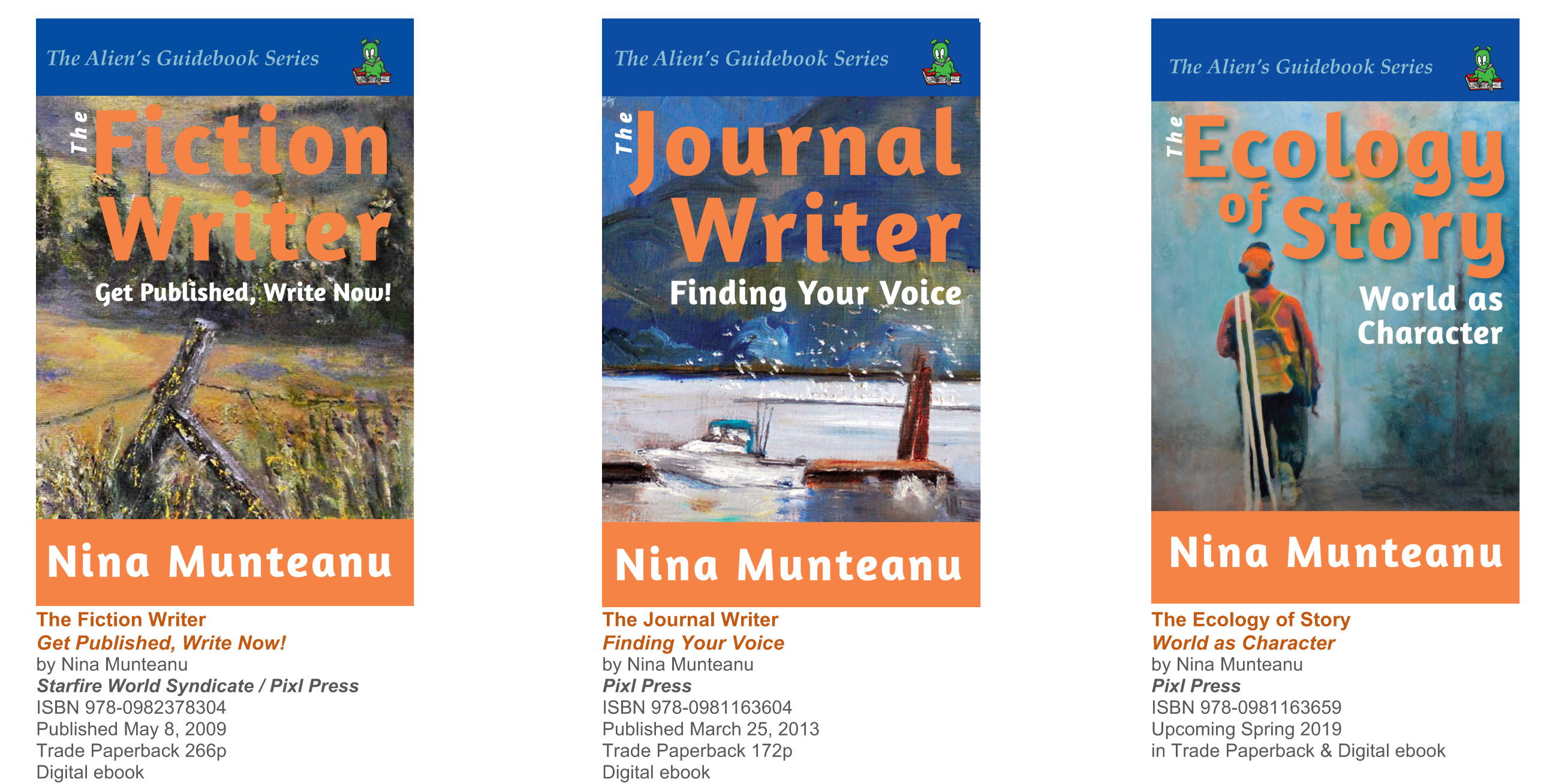
 Writer Timea Noemi selected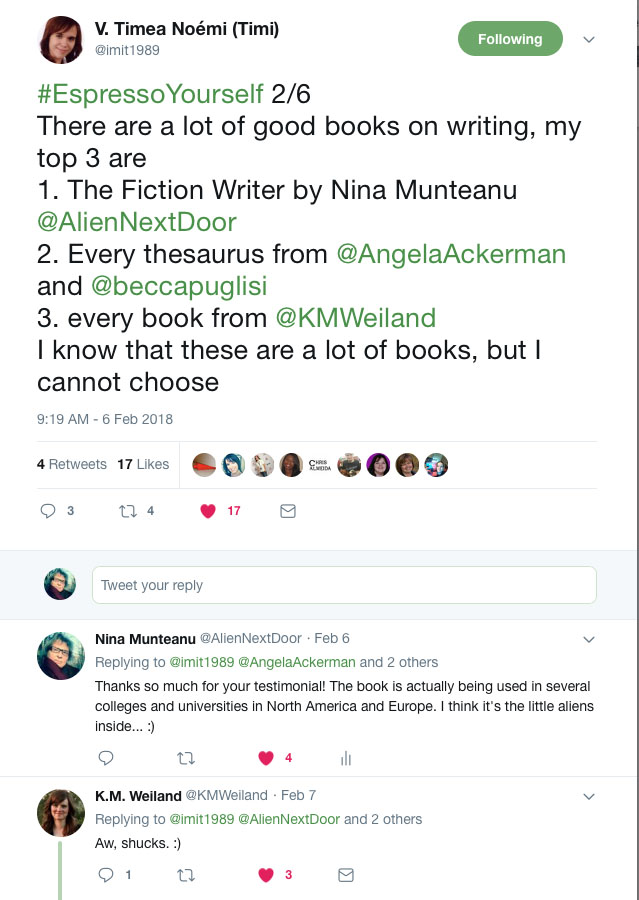
 Timea Noemi also recommended the Romanian translated version of
 Cu plecere, Timi!
 My father is originally from Romania and grew up in Bucharest. So, I was delighted to attend the launch of
 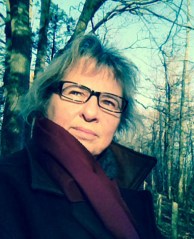 Nina Munteanu is an ecologist, limnologist and internationally published author of award-nominated speculative novels, short stories and non-fiction. She is co-editor of Europa SF and currently teaches writing courses at George Brown College and the University of Toronto. Visit
  Nina Munteanu Writing Coach