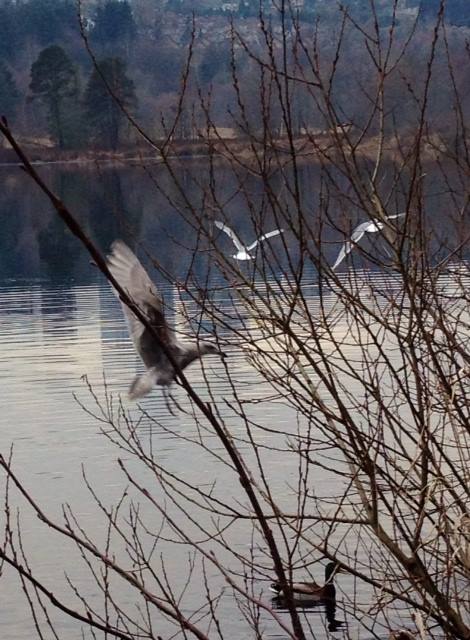
The Western Woman Will Save the World

Some years ago now, when the Dalai Lama was attending the 2009 Vancouver Peace Summit, he was quoted as saying, “The world will be saved by the western woman.”

This set the media buzzing on what His Holiness meant and—perhaps more importantly—how his statement resonates with us, and how his “call” affects the western woman.

Marianne Hughes, executive director of the Interaction Institute for Social Change (IISC), pondered the idea of the aging woman as hag (originally a representation of feminine power) and how it relates to the Dalai Lama’s statement on her blog. “I’m not entirely sure what [the Dalai Lama] meant,” said Hughes, “But I am wondering if when he travels across the globe and sees so many of our sisters impoverished and repressed he sees western women of all ages in a position to speak out for justice and to take on the responsibilities of “the hag”… to take loving care of the planet and its people.”


The original meaning of the word “hag” in Gaelic originally referred to a saint with great powers who was responsible for the land, the waters and the people. The term has since been distorted through patriarchal propaganda into something far less flattering and powerful. The “Hag” is currently being redefined as a strong, beautiful and ageless woman and has its similarities with “the Crone”, the third stage of a woman’s life and evolution from maiden to mother to crone. Postmenopausal women currently comprise the largest demographic group in America. With our increased lifespan, the ancient tripartite divisions of Maiden, Mother, and Crone are more meaningful in women’s lives as the Crone stage occupies one third of our lifespan. Moreover, our current Crone generation (those born in the forties and fifties) is the first in the history of humankind that can claim (and has already claimed) economic autonomy and power.

According to Dr. Linda E. Savage (author of “Reclaiming Goddess Sexuality”) “Each stage of a woman’s life is organized around what Goddess Cultures called the blood mysteries: menarche, (the first monthly flow of blood); childbirth, which is accompanied by blood from birthing; and menopause, when a woman’s “wise blood” remains inside her to give her wisdom. These are still powerful landmarks, which profoundly influence women’s lives. They function as psychological gateways to the change in consciousness required by each new stage.”

Savage describes the Crone as a powerful shamanic figure in society: “The developmental task of the Crone Stage is sharing wisdom. In Neolithic times, Crone women were the tribal matriarchs. Their heightened awareness of human nature yielded great insight and they were the source of wise counsel for important decisions. Spiritually, this is the Mastery phase. The Wise Woman teaches knowledge gained from her skills and life experience. It is a time of reaching into her spiritual depths, utilizing her powers of intuition, and finding meaning in her visions from the dream world. Some Crone women are masters of healing at the highest level. The Crone Stage of life, more than any other, is a time of giving back to society the cumulative wisdom of the years. Many women have an urge to speak out, to organize others, to take action. They have the energy to get more involved in the world-at-large. It is often Crone energy that leads to changes being made in society. As the Crone woman moves further into her life path she feels the urge to teach others and to cultivate her passions. It can be the most productive time in womens’ lives.”

Crone energy isn’t necessarily limited to Crones. It is an energy that may be carried by anyone at any age. Ariane de Bonvoisin, writing for the Huffington Post, made the following observation:

“Most people I meet have a new fear—the fear of not being relevant, the fear of not making a difference, the fear of working on things that don’t really matter in the important times of transition we live in. We’re hungry to be part of making things better. We want to create, we want to do what we love again and find our voice. We sense intuitively that we have a critical role to play in shaping the future of our world. And yet, so many of us give in to excuses of not being good enough, young enough, smart enough, wealthy enough, creative enough. We still play small, still give in to the ‘victim’ archetype. We still buy into what society’s beliefs are and put them right above our own. But we don’t really have time for these fears. If I could create a vaccine, instead of the flu one, I’d create one against fear. It’s what holds us back, every one of us, in every area of our life. And, while we’re holding back, time just moves on faster than ever. We are at a critical time in the evolution of our planet, a time where each one of us is waking up. We feel it.

Our intuition is growing more acute. Our inner microphone, as I like to call it, is getting harder and harder to turn off, so that we can’t just go along with our normal day. There’s a rise in consciousness where we feel more connected to others, a part of something bigger going on, where we each have a role to play. The most important thing isn’t to get the promotion, or stay in the marriage, or lose those 10 pounds. The most important thing is for us to remember who we are—why we are here—to do the inner work and find what are our ‘spiritual’ reasons for being on the planet. Yes we do have something great to accomplish. Now. At any age. Wherever we are.”

I found yet another revealing comment on her blog post that reminded me of another statement by His Holiness: that the next Dalai Lama might be a woman. The commentator told the story of the Buddhist Goddess Tara, who is highly revered in Tibet and was a most promising student of Buddhism. The monks told her she should come back as a man so that she could reincarnate and finish her spiritual journey and become a Buddha. She responded that male/female has no meaning since spiritual beings have perfectly balance aspects of both and in reality can incarnate as either gender. She made a resolution to always come back as a woman. I see this proclamation as a metaphor for choosing “feminine wisdom” or “Goddess Wisdom”, represented by the depth of forgiveness, kindness, tenderness, openness, vulnerability, tolerance, honor, integrity, sacred courage, humility, trust and faith.

So, why “the Western Woman”? We are not particularly known on the globe for these traits, nor does the western philosophy we espouse typically embrace these ideal traits. The western woman has more often been stereotyped (and vilified) with the following characteristics: vanity, pride, shallowness, self-centeredness, self-serving ambition, competitiveness, and pettiness.

While we can, in fact, accept these as our stereotypic weaknesses (it is part of our shallow consumer culture and capitalist model, after all), it is for this very reason that the western woman represents the salvation of the world. Not only do we have the means, as Marianne Hughes pointed out, but we are in the best position to convince.

It is our destiny. We too are on a hero’s journey

We are the necessary paradox that spawns evolution. The darkness that sparks light. The chaos that creates stability. The inertia that initiates change.

Viburnam berries, ON (photo by Nina Munteanu)

Nina Munteanu is a Canadian ecologist / limnologist and novelist. She is co-editor of Europa SF and currently teaches writing courses at George Brown College and the University of Toronto. Visit www.ninamunteanu.ca for the latest on her books. Nina’s bilingual “La natura dell’acqua / The Way of Water” was published by Mincione Edizioni in Rome. Her non-fiction book “Water Is…” by Pixl Press(Vancouver) was selected by Margaret Atwood in the New York Times ‘Year in Reading’ and was chosen as the 2017 Summer Read by Water Canada. Her novel “A Diary in the Age of Water” was released by Inanna Publications (Toronto) in June 2020.

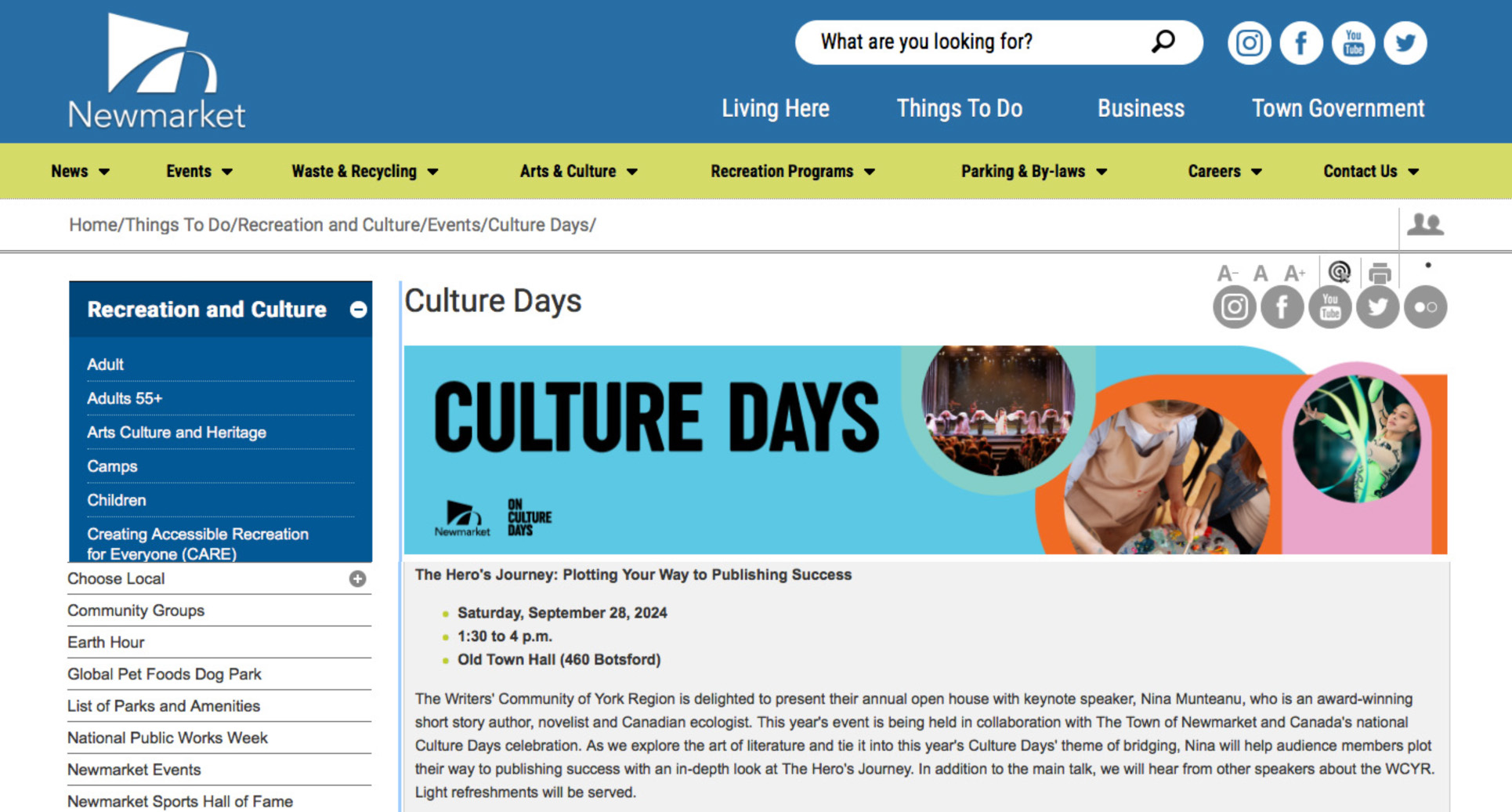
Nina Munteanu Workshops “Hero’s Journey” with Writers in Newmarket

I recently gave my lecture / workshop on the Hero’s Journey plot approach to a group of writers for Culture Days in Newmarket, Ontario.

The event, organized by the WCYR (Writing Community of York Region), took place in the art gallery of the Old Town Hall, located in the old downtown part of the city—an attractive section of streets and lanes with eclectic shops, cafés, bistros and bookstores for curious amblers. 

Bustling Main Street near the Old Town Hall, Newmarket, ON

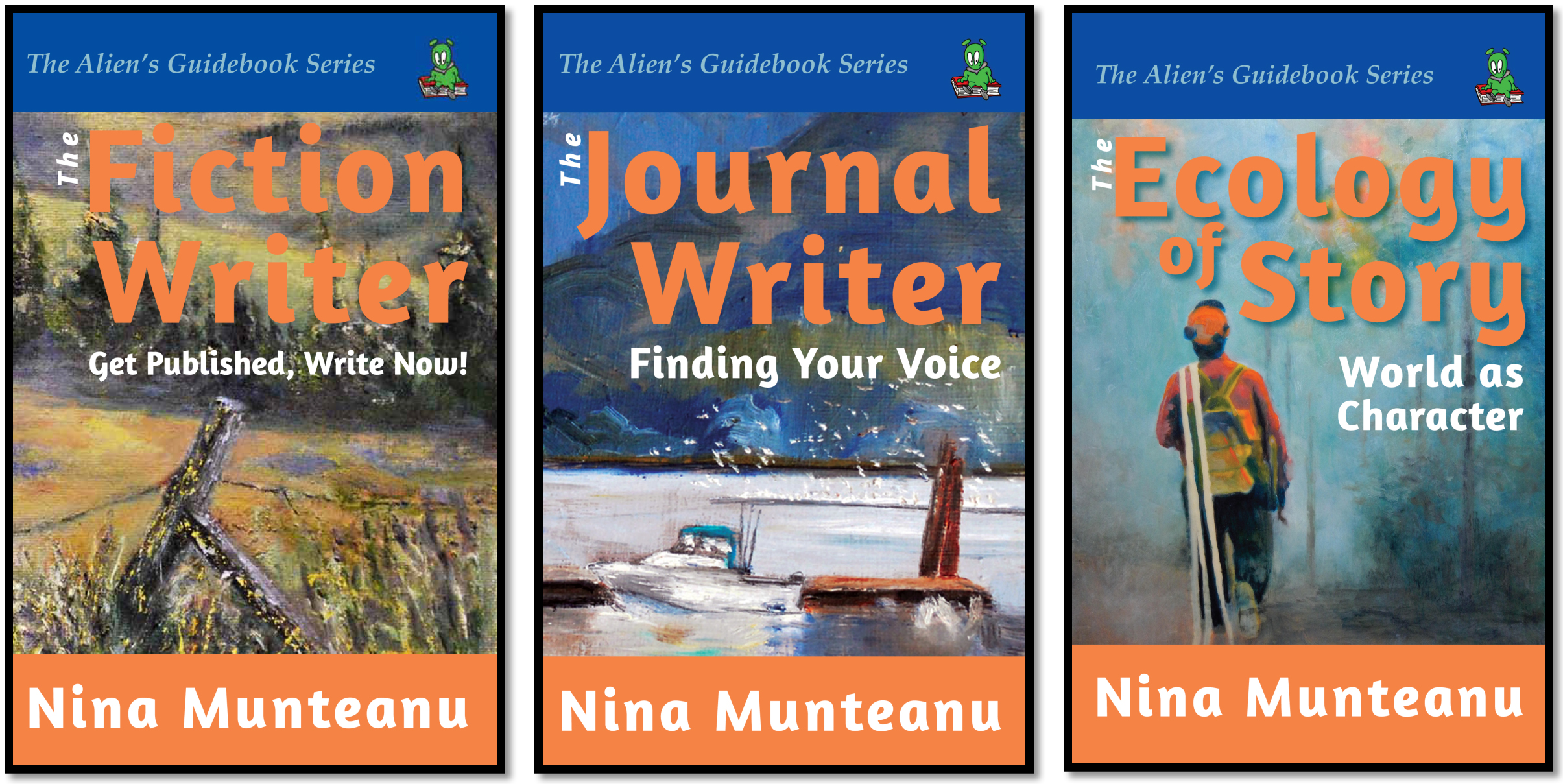
Three guidebooks of the Alien Guidebook series for writers

Cathy Miles, the program coordinator, encouraged me to brings books for sale, so I certainly included the three books of my Alien Guidebook Series on writing: The Fiction Writer, The Journal Writer, and The Ecology of Story, all also available at Amazon, Kobo, Barnes & Noble and other quality bookstores, which I sold for a workshop price. Cathy gave me a wonderful introduction to a room full of eager writers and I also had the pleasure of meeting Janice Luttrell, the Recreation Programmer with the City of Newmarket, who was hosting the event as part of Newmarket’s Culture Days.

Hero’s Journey Plot Structure (Ingrid Sundberg, 2013)

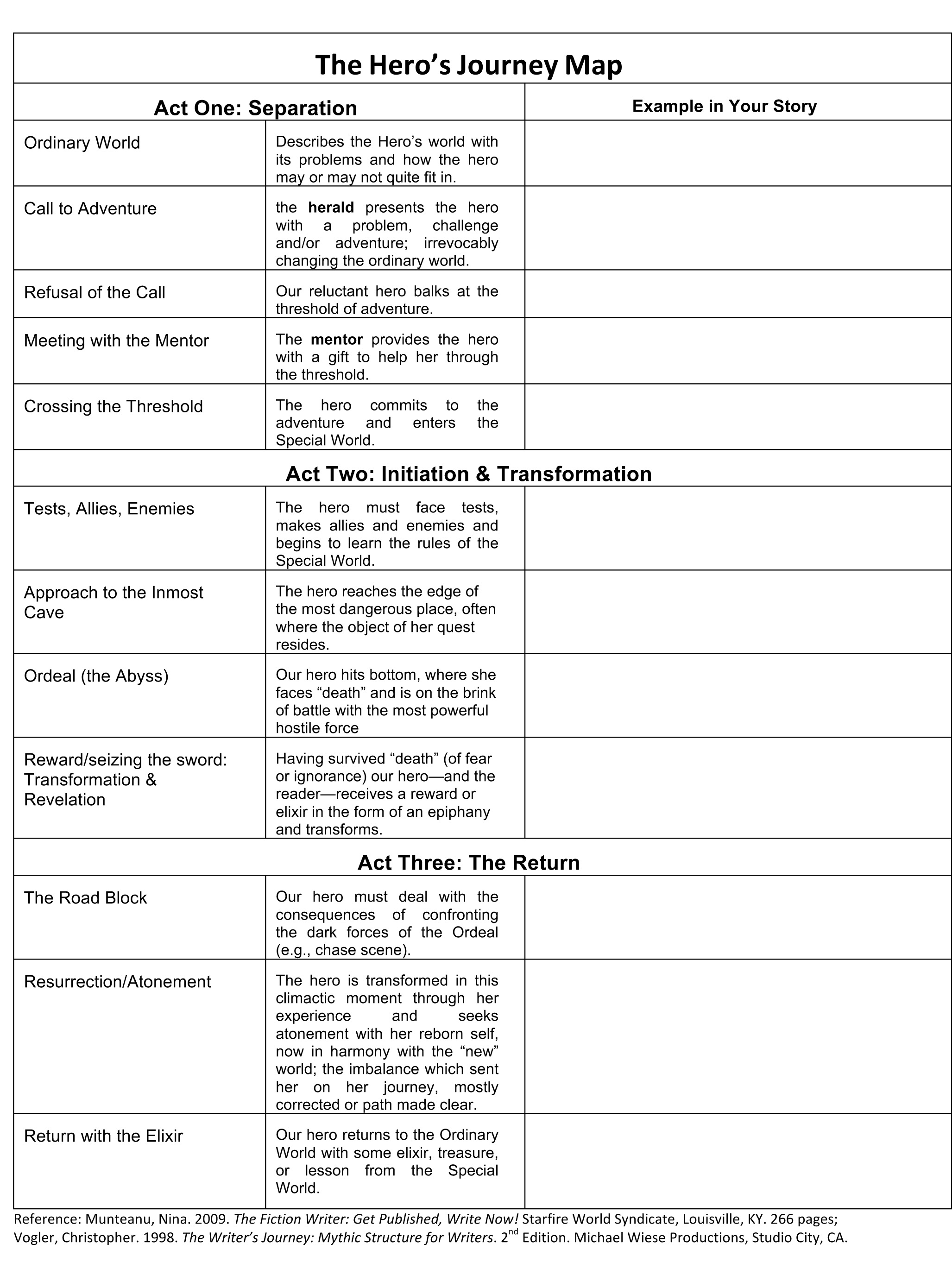
Drawing from several chapters in The Fiction Writer, I introduced the Hero’s Journey map structure, based on Ingrid Sundberg’s plot structure, and discussed the 12-step hero’s journey according to mythologist Joseph Campbell.

We also discussed the seven chief archetypes associated with the journey steps: hero, mentor, herald, threshold guardian, trickster, shapeshifter, and shadow.

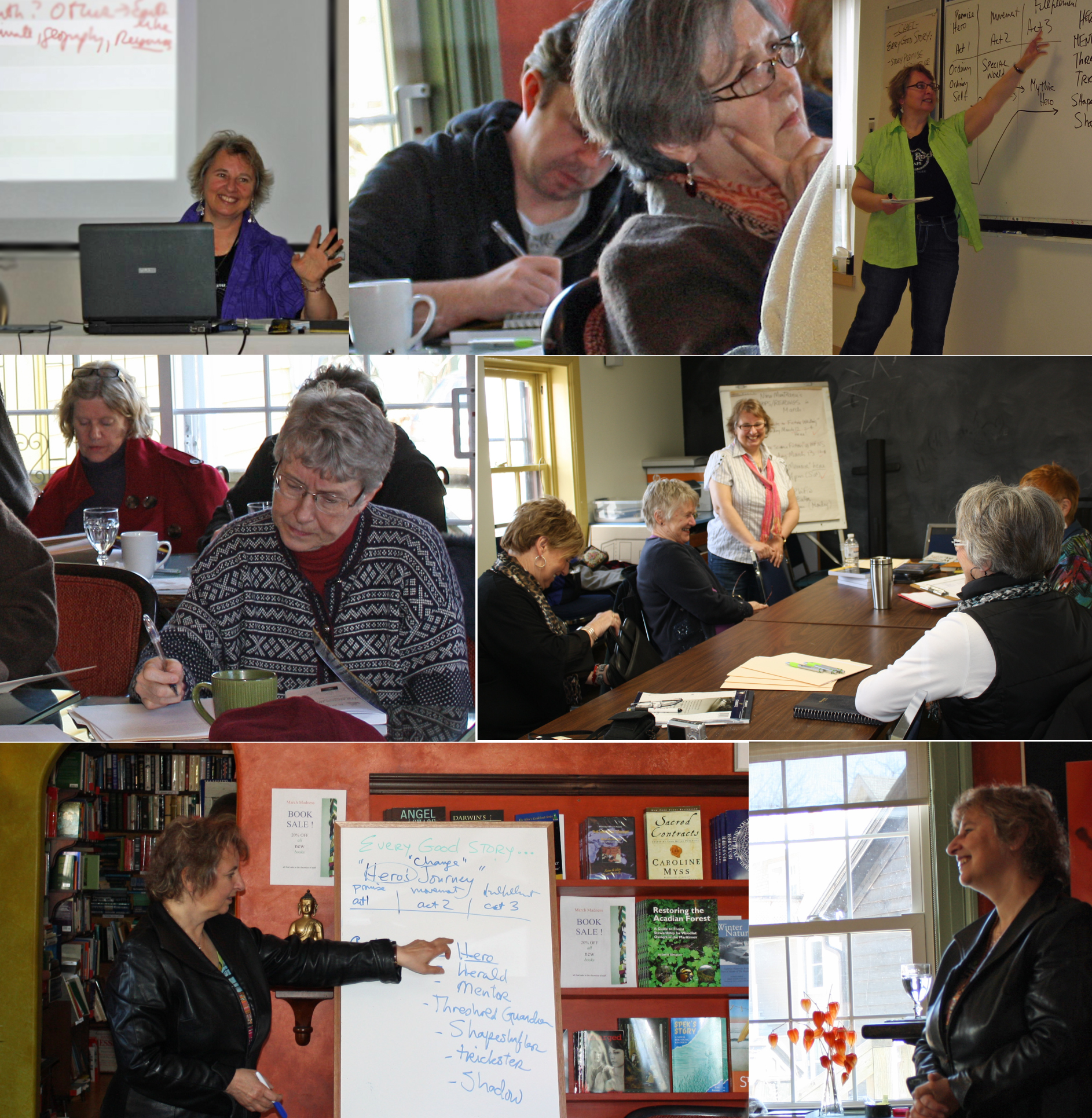
Nina teaching “The Hero’s Journey” plot approach over the years in Nova Scotia, BC and Ontario

I’ve given this workshop many times and always enjoyed the lights that came on in participants; this time was no different. My session was fun and very well received. I saw lots of interest and received many good questions—a sure sign. One participant was quoted as saying:

“What a great event! Your presentation was insightful. I really appreciated being able to follow along in the book while listening to your explanations. That is going to help me remember the concepts as I read the book and then apply them to my writing.” 

The WCYR book table at the event (photo by Nina Munteanu)

People bought every copy of my Fiction Writer, my Journal Writer and most of my Ecology of Story that sat on the book table. I also sold many of my fiction books, including my short story collection Natural Selection (also selling on Kobo) and my latest novel A Diary in the Age of Water. I sold-out of my non-fiction book Water Is…, which had received a wonderful testimonial from Margaret Atwood in the New York Times ‘Year in Reading.’

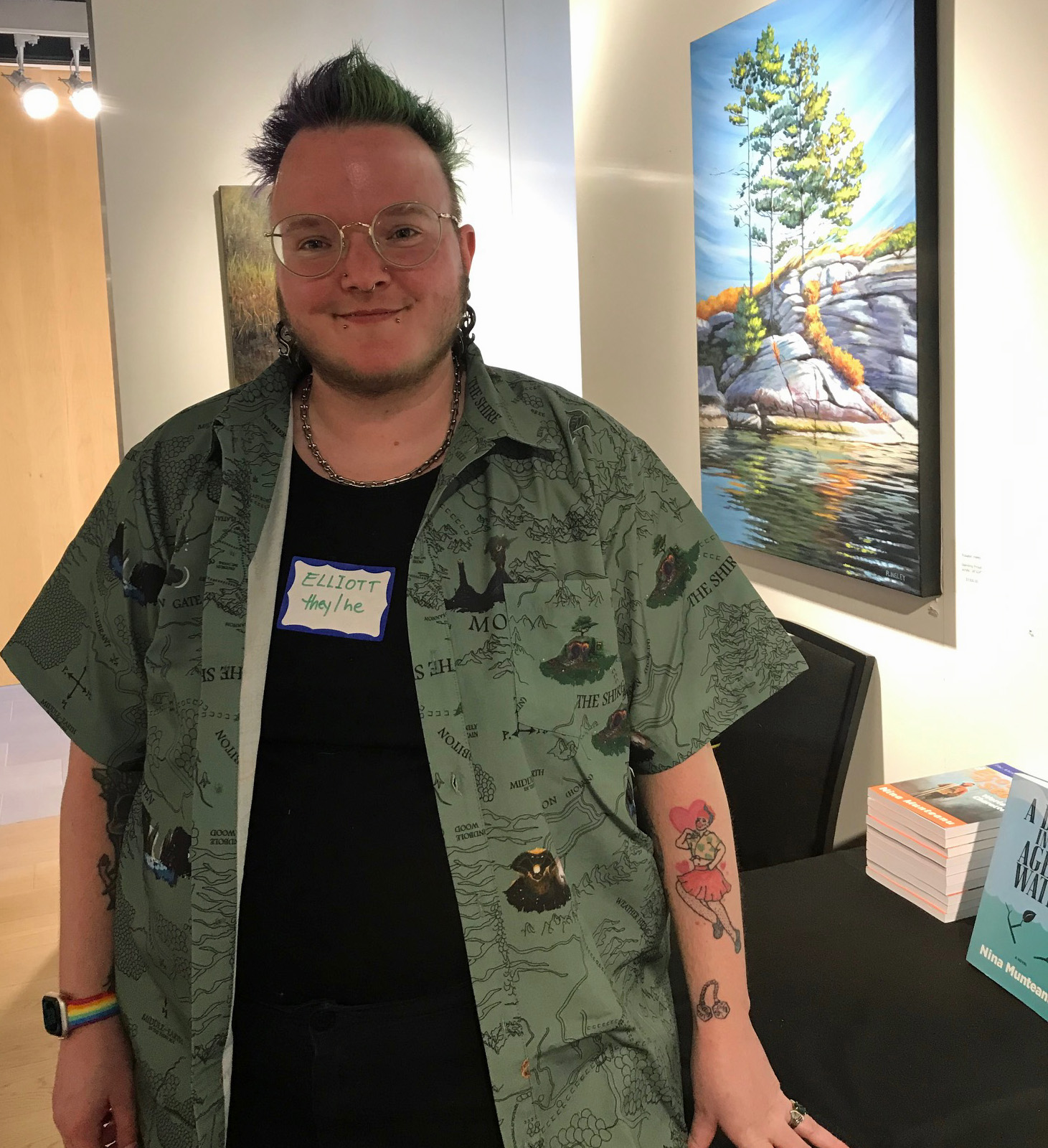
Elliott sells my books at the WCYR book table (photo by Nina Munteanu)

All in all, it was a good day…

Nina Munteanu is a Canadian ecologist / limnologist and novelist. She is co-editor of Europa SF and currently teaches writing courses at George Brown College and the University of Toronto. Visit www.ninamunteanu.ca for the latest on her books. Nina’s bilingual “La natura dell’acqua / The Way of Water” was published by Mincione Edizioni in Rome. Her non-fiction book “Water Is…” by Pixl Press (Vancouver) was selected by Margaret Atwood in the New York Times ‘Year in Reading’ and was chosen as the 2017 Summer Read by Water Canada. Her novel “A Diary in the Age of Water” was released by Inanna Publications (Toronto) in June 2020.

The A to Z of Writing Fiction: J, K, L …

Snowing in the Kawarthas, ON (photo and rendition by Nina Munteanu)

In this series of articles, I draw from key excerpts of my textbook on how to write fiction The Fiction Writer: Get Published, Write Now! whose 26 chapters go from A to Z on the key aspects of writing good and meaningful fiction.

J is for a Hero’s Journey

The Hero’s Journey is essentially the three-act structure of the ancient Greek play, according to Ridley Pearson (Writer’s Digest, 2007). The three-act structure was handed down to us thousands of years ago and consists of Beginning, Middle, and End (otherwise known as Opening, Development, Conclusion or “the decision to act”, “the action” and “the consequences of the action”).

the Hero’s Journey duplicates the steps of the rite of passage and is a process of self-discovery and self-integration. The Hero’s Journey is a concept drawn from the depth psychology of Swiss psychologist Carl Jung and the scholar and mythologist Joseph Campbell, author of The Hero with a Thousand Faces. Jung proposed that symbols appear to us when there is a need to express what thought cannot think or what is only divined or felt. Jung discovered reoccurring symbols among differing peoples and cultures, unaffected by time and space. He described these shared symbols as archetypes. Ultimately, the hero’s journey is the soul’s search for home. It is a long and tortuous journey of the soul seeking enlightenment-redemption-salvation only to find it by returning “home” (though, often not the home previously envisioned). It is a journey we all take, in some form.

Assigning an archetype to a character allows the writer to clarify that character’s role in the story as well as to determine the overall theme of the story itself. Archetypes are therefore an important tool in the universal language of storytelling, just as myth serves the overall purpose of supplying “the symbols that carry the human spirit forward.” (Joseph Campbell). Seven useful archetypes include: hero; mentor; herald; threshold guardian; shapeshifter, shadow; and trickster.

K is for Write About What You Know

The advice, “write what you know” isn’t about literal truths; it’s about what you know inside. As SF author Marg Gilks says, “You know more than you think.”

In an article in Writing World, Gilks discusses how a writer can use her own knowledge and experiences in everyday life and translate them into something far from ordinary. You start with universal experiences.

Get emotional: What excites you; what frightens you; what angers you, makes you sad, happy. These are emotions we all feel. When we give our characters experiences similar to our own, we breathe life into both character and experience and provide the reader an anchor for her heart.

Get sensational: You know how it feels when the sun shines on your face or the rain drenches you. You know how it feels to have your knees shake with fatigue after a long climb on a hot day or the invigorating freshness of a cool lake in summer.

Get people around you: My neighbor has a funny way of focusing his gaze slightly off me when he talks, as if he can’t look me directly in the eyes. When the paperboy approaches my house to deliver the paper, he strides with a lilting gait as he listens to hip-hop on his iPod.

Drawing from what you observe and know of the people around you is one of a writer’s most treasured resources for character description. I always carry a notebook with me no matter where I go, even if it’s only to the grocery store. Doing research is another way of “knowing” something. Once you have done the research, you certainly know about a subject, rovided you’ve done a good enough job.

A writer is like a magician. You play upon what readers all “know” then surprise them with the unexpected. Unleashing your imagination and letting it soar while grounding yourself in the realities of universal truths is the stuff of which stories are made. This is what most of us mean when we say “write what you know.”

L is for Long Form, Short Form

Figuring out what you are writing isn’t always as easy as you think. Many of us when we begin a story may think we are writing a short story when we are actually writing a novel; or vice versa. I had several editors of magazines tell me just that: “This feels more like a novel than a short story” they said—and rejected it. So, what are you really writing? Or, more to the point, what should you be writing?

A short story only has 5,000 words to get your story across while a novel has over ten times that many words to do the same. It follows then that the short story format is a simpler one. Novels provide a sense of change, growth and solutions to problems and conflicts. Short stories must be more succinct, contain fewer characters and subplots, have less complicated story arcs and a single theme. A short story is a poem to a novel’s prose. A short story is a statement to a novel’s argument.

“If the novel is a landscape, the short story is a close-up,” says Shelley Lowenkopf in a short story workshop entitled Telling Tales. Lowenkopf adds, “The short story is an event, a moment in time, captured as if by accident … The short story doesn’t have the luxury of depicting change; the closest it can come is awareness.” A short story, more than a novel, has the power to transport, disturb and enlighten.

The Fiction Writer: Get Published, Write Now! (Starfire World Syndicate) May 2009. Nominated for an Aurora Prix Award. Available through Chapters/IndigoAmazonThe Book Depository, and Barnes & Noble.

The Fiction Writer is a digest of how-to’s in writing fiction and creative non-fiction by masters of the craft from over the last century. Packaged into 26 chapters of well-researched and easy to read instruction, novelist and teacher Nina Munteanu brings in entertaining real-life examples and practical exercises. The Fiction Writer will help you learn the basic, tried and true lessons of a professional writer: 1) how to craft a compelling story; 2) how to give editors and agents what they want; and 3) how to maintain a winning attitude.

“…Like the good Doctor’s Tardis, The Fiction Writer is larger than it appears… Get Get Published, Write Now! right now.”

David Merchant, Creative Writing Instructor
Snowing in a cedar forest, ON (photo and rendition by Nina Munteanu)

Click here for more about my other guidebooks on writing.

Nina Munteanu is a Canadian ecologist / limnologist and novelist. She is co-editor of Europa SF and currently teaches writing courses at George Brown College and the University of Toronto. Visit www.ninamunteanu.ca for the latest on her books. Nina’s bilingual “La natura dell’acqua / The Way of Water” was published by Mincione Edizioni in Rome. Her non-fiction book “Water Is…” by Pixl Press (Vancouver) was selected by Margaret Atwood in the New York Times ‘Year in Reading’ and was chosen as the 2017 Summer Read by Water Canada. Her novel “A Diary in the Age of Water” was released by Inanna Publications (Toronto) in June 2020.
Movie Review: Reaching for “Elysium”–Why the movie could have been great but wasn’t

In the “Hero’s Journey” myth, Elysium (or the Elysium Fields in Greek mythology) is the paradise that true heroes go to when they die (think of Frodo in Lord of the Rings and the hero in The Gladiator). To the ancient Greeks, Elysium was a place at the ends of the earth where heroes, favoured by the gods for their altruism, went. It is a state or place of perfect happiness; the equivalent of Heaven.

Elysium is also the name given to the Earth-orbiting space station of Neill Blomkamp’s (District 9) new science fiction political allegory of the same name. Elysium is where the privileged live in luxury and perfect health (thanks to health-pods) — after they abandoned Earth to the squalor they no doubt helped create. This is not made clear enough for me and is one of the film’s major weaknesses, in my opinion (more on that below).

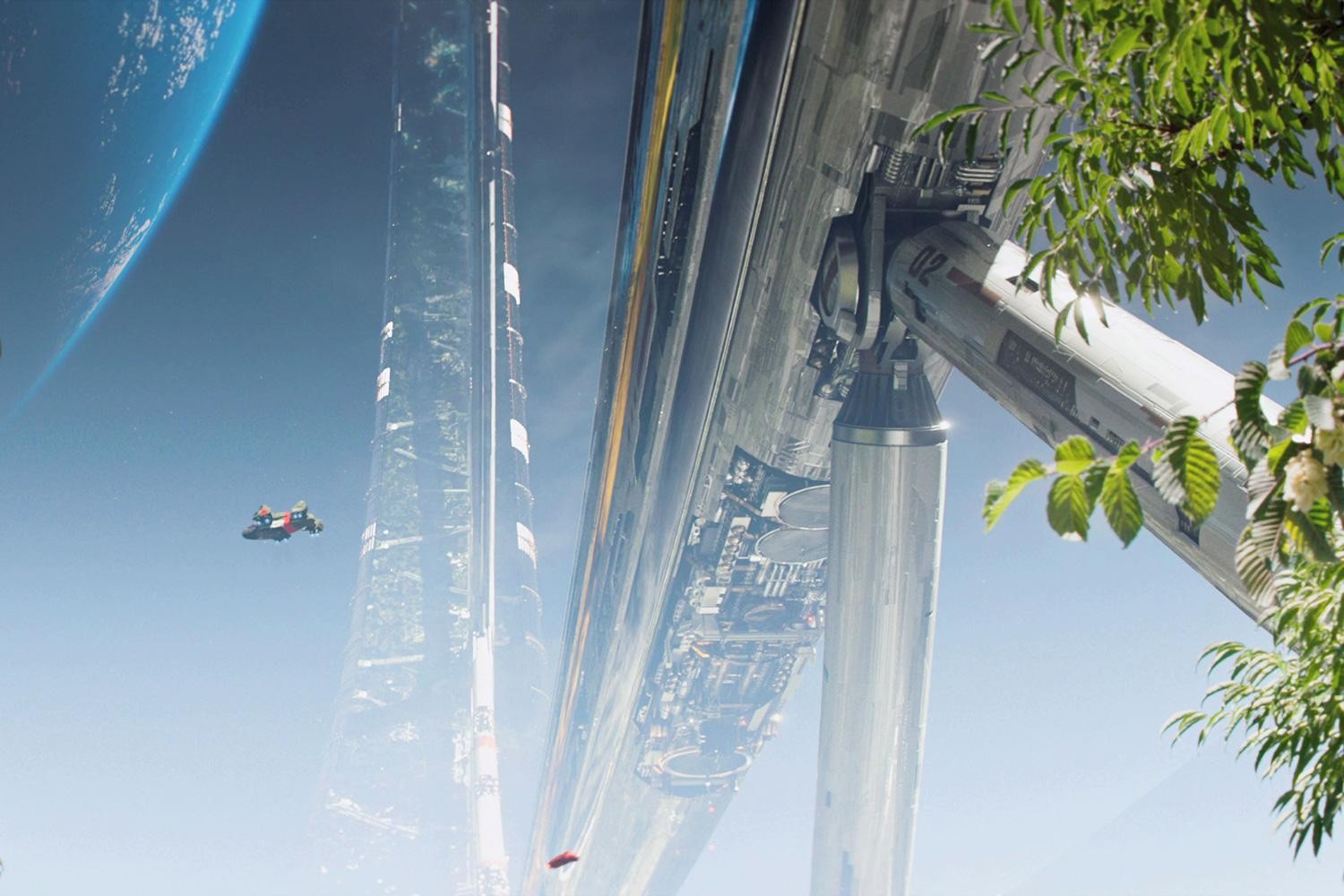
Earth seen from Elysium

The year is 2154 in a Los Angeles that strangely resembles the slum shanties of Johannesburg, South Africa (where Blomkamp filmed District 9).  We soon learn that Earth struggles in the mire of humanity’s waste in a state of general social strife. Abandoned by the wealthy elite (who have moved to Elysium), the rest of an overpopulated humanity lives in the squalor of abject poverty without food, healthcare, or the motivation to live. I, for one, would have liked to know a little of how humanity devolved so dramatically on a planetary scale.

A Different Hero’s Journey

From the time he was a young orphan, Max Da Costa (Matt Damon; Maxwell Perry Cotton) dreamed of going to Elysium, its impressive phantom form visible in the daytime sky. He promised his childhood love Frey (sympathetically played by Alice Braga and Valentina Giros) that he would take her there, to paradise. His mentor, a kind mother-figure nun at the orphanage, gives him the hero’s talisman (a locket with a picture of Earth inside), and prophesizes, “Es su destino hacer algo maravilla cuando tu es hombre” (“It is your destiny to do something great when you are a man”). She reminds him that when he gets to Elysium, he will see the most beautiful thing: planet Earth. “You see how beautiful it is,” she says to him as he gazes out at the ghost of Elysium in the sky. Then, as she hands him the locket with Earth inside, she adds, “look how beautiful we are from there. Never forget where you come from.”  Seen from this perspective, the planet Earth is a beautiful thing to behold.

Max and Spider share a heated conversation

Max is a reformed criminal who, like Blomkamp’s “workaday” anti-hero in District 9 (Sharlto Copley), is not very hero-like until the last five minutes of the film, when he has his personal epiphany and decides to act altruistically rather than self-servingly. This is a pattern that Blomkamp has used before; the reluctant-hero (Wikus Van De Merwe) of District 9 was an unimpressive man with many obvious blemishes. A rather unlikeable man until he makes his heroic decision in the end. This is where Blomkamp’s heroes differ from most action movie heroes, who generally start their journey from higher positions on the evolutionary scale. Blomkamp’s heroes must journey farther to gain their hero-status; they are perhaps more realistic portrayals of ordinary men who finally shine under extra-ordinary circumstances. Men who we start out disliking—hating, even—but find ourselves cheering for, perhaps even crying for. Max’s behaviour defines that true hero: rising from his need to save himself to his quest to save humanity—at the cost of his own life. But, as with the ordinary man, it is only when he connects a personal quest to save the daughter of his first love to his global quest to save Earth that Max transforms into the altruistic mythic hero he is destined to become. Everything came together at the film’s end, in a montage of scenes that depict the locket of the planet Earth in his dying hand (Earth is Home; save the planet), the demise of a police state, the saviour of his love’s daughter, and med-pods landing on Earth to dispense aid to the dying masses.

Elysium orbiting the Earth

A Story About the Planet Earth

Ironically, it is to do with our beloved planet Earth that I felt in Elysium the most discord in plot/thematic story treatment and lack of resonance. Blomkamp begins with the planet and he ends his film with the planet. The symbolism is clear: in the stylish shots of Earth seen from Elysium (and vice versa); in the strategic scenes of Max and the image in his precious locket of not his childhood love Frey but of planet Earth; and his mentor’s advice to Max, delivered in one of the most powerful scenes of the movie. Yet, Blomkamp fails to follow through to give us that visceral connection. Why is the planet so important? How is Max connected to it or anyone else, for that matter. What is Spider’s story (Wagner Moura), a latter-day Che-Guevara, who fervently leads the proletarian rebellion of Earth? Who, why and how did the planet come to be so destroyed? There is not one ounce of suggestion, backstory or context. This is an important consideration; because without it, instead of feeling total resolution and redemption in the end, I felt a disconnect to those masses being helped and even some distrust in their fate and direction. Instead of feeling true victory, I felt ambivalence.  

Called a “sci-fi socialist film” by P.J. Gladnick of Newsbusters.org, Elysium is clearly an attempt at examining and dramatizing the social segregation of humanity and economic fascism: a dystopia that promises commentary on social and economic issues in society today. However, I felt that its delivery was compromised by Blomkamp’s choice to focus more on action tech at the expense of good backstory, context and empathic character development. I’m not saying that it’s a bad story. It is a very good story; it’s just that it could have been a great story. The heart of the story—delivered through the main protagonist—lacks the global connection it could have had. This is not, as some reviewers suggest, due to any infirmity of the hero, his antagonists, or lack of symbolism (of which there is much), but the lack of context, backstory and richness of setting (I’m not talking about the visible setting, which was spectacular, elegant and stylish). It comes back to how each character relates to “home”, the planet, and to each other.

Matt Goldberg of Collider.com says that, “Elysium‘s message about economic inequality is couched in a finely-drawn sci-fi world, but the power of that message becomes diminished when we cease to care about the messenger.” Detroit News Tom Long added that, “Elysium is the sort of big, noisy sci-fi film that seems to want to say something but opts instead to concentrate on fight scenes involving gimmickry.” While I appreciated the depth and breadth of Blomkamp’s references to pop culture from an Armani-clad female Darth Vader to the Judeo-Christian references and symbolism, it just didn’t hold its promise.

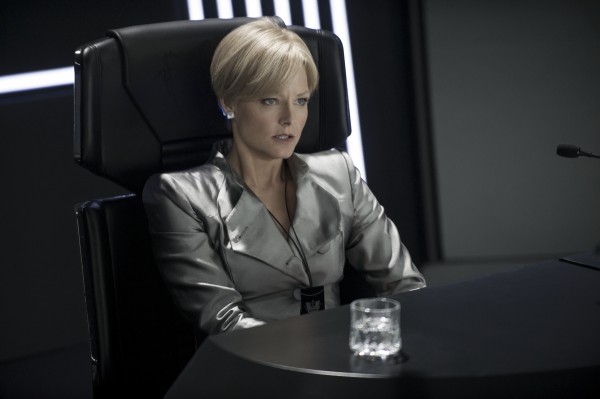
Jodi Foster plays Defence Secretary Delacourt, the threshold guardian of Elysium

What began as a promising exploration about an important social issue, devolved into a sequence of ever-escalating gratuitous gore and violence—clearly aimed for a different audience.

Elysium

Nina Munteanu is a Canadian ecologist / limnologist and novelist. She is co-editor of Europa SF and currently teaches writing courses at George Brown College and the University of Toronto. Visit www.ninamunteanu.ca for the latest on her books. Nina’s bilingual “La natura dell’acqua / The Way of Water” was published by Mincione Edizioni in Rome. Her non-fiction book “Water Is…” by Pixl Press (Vancouver) was selected by Margaret Atwood in the New York Times ‘Year in Reading’ and was chosen as the 2017 Summer Read by Water Canada. Her novel “A Diary in the Age of Water” was released by Inanna Publications (Toronto) in June 2020.
Book Review: Craig Russell’s “Fragment” in the time of COVID-19

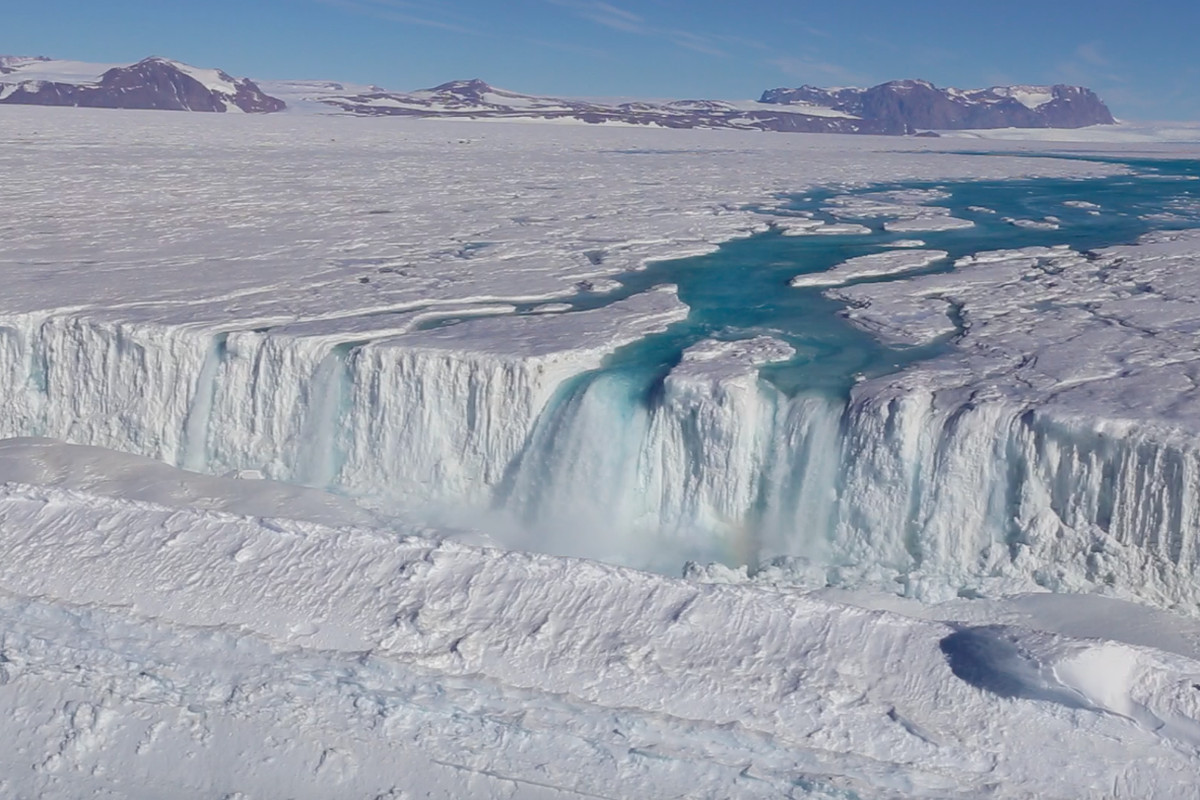
Fragment-CraigRussellCraig Russell begins his eco-thriller Fragment with a TV interview of glaciologist Kate Sexsmith in Scott Base Antarctica. The interview is interrupted by what turns out to be four runaway glaciers that have avalanched into the back of the Ross Ice Shelf and a fragment the size of Switzerland surges out into the open sea. Hence the title: Fragment.

The original slide / wave and ensuing tsunami wipes out both Scott Station and the American McMurdo Station. The TV station records the moment:

Where Kate had stood to touch the map of Antarctica moments before, something hit the wall like an artillery round. It left a ragged hole through wall and map alike, framing an eerie light-show. A sheet of jewels flickered, glinting greens and blues, until a white mountain appeared and the screen went black.

Ross Ice Shelf 4

Ross Ice Shelf, Antartica

With astute prescience, Russell reveals humanity’s behaviour in the stress of such a momentous event: from scientists who understand the global significance of this rogue fragment to those who minimize its effect such as the media and tourist industry who wish to exploit this anomaly and self-centred politicians obsessed with protecting their status.

antarctic-glaciers

Antartica


snowball in senate

Senator Inhofe and infamous snow ball

My first thought was: he’s stereotyping a little. Then COVID-19 broke out to become a global pandemic. The reactions of scientists, media and certain politicians (e.g. the Trumps of the world) have played out with COVID-19 just as Russell had predicted with Fragment. Then again, good science fiction reaches deeply into a society’s core being, our motivations, fears and strengths; this is why science fiction is so eerily good at predicting. The best way to predict possibilities of the future is to understand the present and, as Russell demonstrates, science fiction writers are in touch with the zeitgeist of the world.

Reflecting the American government’s ridiculous denial of climate change, and calling to mind Republican Senator Inhofe’s snow ball in the senate scene, Russell’s character David Rookland (Washington’s Science Advisor) uses the glacier avalanche and fragment that he (purposely) misunderstands to illustrate with equal lack of logic the same misguided myth: “these theorists claim that around the world, glaciers have been receding. Thankfully, as you can see in the second photo, dear old Mother Nature has proven them wrong again.”

blue whale 2

Blue whale


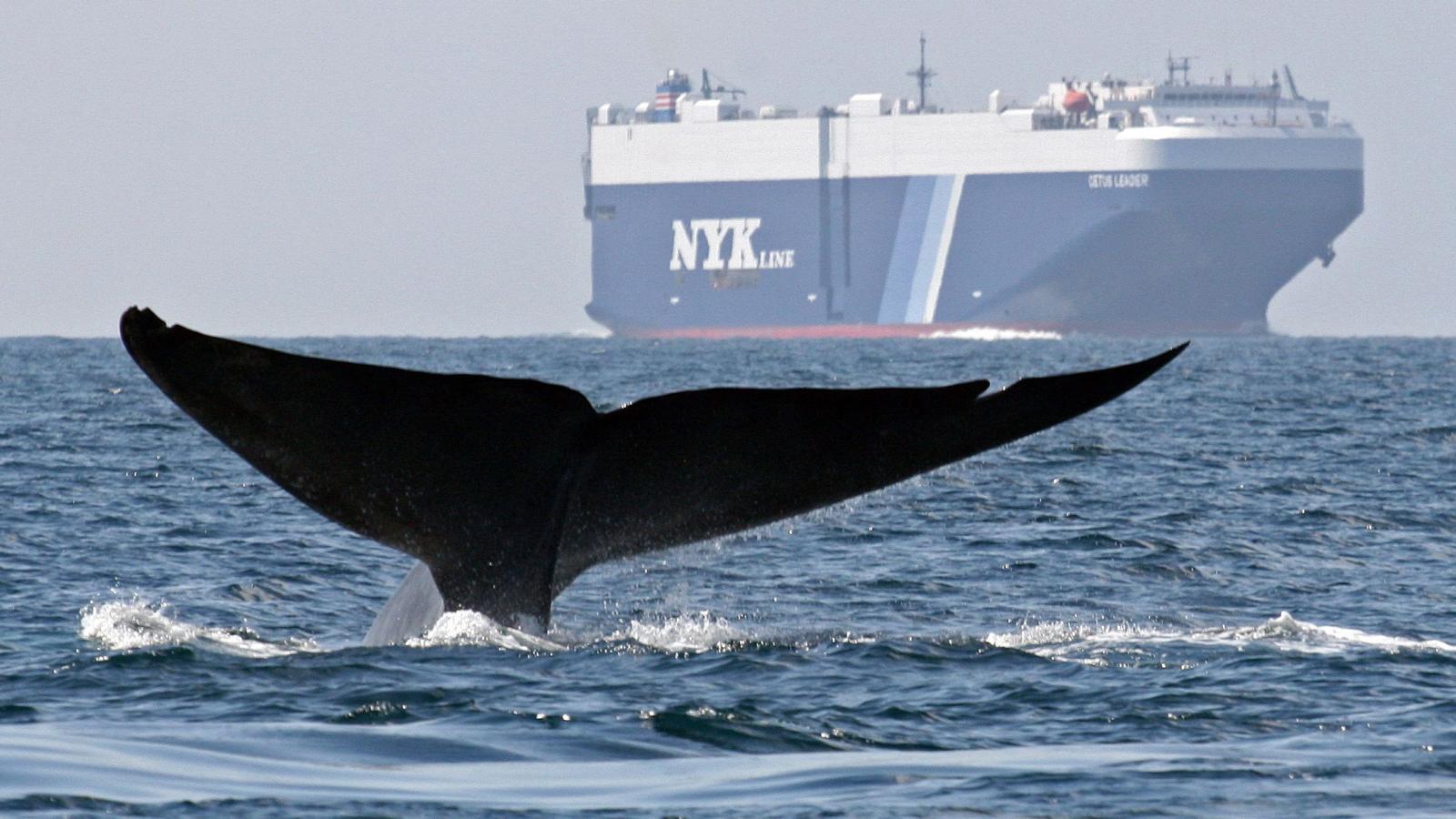
Russell’s chapters devoted to the POV of character Ring, a young blue whale also fragmented from his pod, are particularly touching and powerful. Chased alternatively by Killer whales and human hunters, Ring must warn his kind of the danger posed by the fragment. In one chapter Ring observes that “there’s a special taste to the air here, a tang carried north from the twin Smoking Mountains, which send their steamy vapors into the sky forever.”

Russell then weaves an inspiring legend among the blues about a whale named Long-Throat and the “hard/noisy things” that came to hunt. Men slaughtered so many and scattered the pods in all directions. According to the legend of Long-Throat, the faint bitter smell of the Smoking Mountains brought the pods together again. This had been a time, thinks Ring, when the pods were not afraid to be different, or of new places and strange experiences. But no more. “The Slaughter scarred his race and young Blues are fed fear with their mother’s milk. Fear that never heals, never sleeps. Fight it though he may, that fear lives inside him too.” Ring hopes that, by facing this new fear of the fragment and its incredible power to devastate (any whale caught under its massive moving force will drown), “the old fear can be allowed to sink away.” His course is clear: he must compose a new song to warn other blues. Ring ends up doing far more than sound the warning of the moving behemoth to his people when he is discovered by an American nuclear missile submarine. What follows is what I think is the real story and its magic.

Ross Ice Shelf

Ross ice shelf, Antarctica

The book is appropriately titled Fragment because in some ways the fragment is a main character, carrying the theme. It is herald, harbinger, and misunderstood by many. Its power is greatly underestimated by others, and it is set apart from its fold to become something else. Like Ring and his people. Like humanity, even. Just as the Corona virus pandemic (currently ravaging the world as I write this article) promises to change every aspect of our world, so too does the fragment.

The fragment: “….Its northern rim is a world of chaos. Pack-ice, bulldozed by the Fragment, has been swept up into a bramble, miles deep, piled up and over itself in a frozen explosion. The corpses of countless penguins lie within, broken by the onslaught. Behind this jumble rises the Wall. A hundred metres above the water line and six hundred below, the Shelf is old, formed before Columbus stumbled his way across the Atlantic. In the Fragment’s back, imbedded like spears, are vast sections of the four glaciers. Byrd, Nimrod, Beardmore, and Shackleton. Truly ancient, each is a fortress, hard as granite, laminated layer upon layer over millennia…The creatures of the sea meet the wall in their millions. The air breathers, penguins, seals, dolphins, and so on, have no hope. They swim and die, exhausted and drowned. For many of the water breathers like fish and squid, the drop in temperature near the Fragment is too much…Some species of fish, well able to withstand the cold, succumb instead to the unfamiliar fresh water that has begun to pool around the Fragment.”–Craig Russell, Fragment

In a scene near the end of the book, which could be taken out of our current COVID-19 crisis, Russell describes how carefully considered warnings by scientists are downplayed as “alarmist” resulting in devastating inaction:

When Kate Sexsmith presents a possible scenario of the Fragment smashing into Europe, the Chairman of the European Fragment Conference counters with “in that highly unlikely event” all is under control by the world community. To this dangerous platitude, Sexsmith challenges (only to receive a mealy-mouthed double-speak reply):

“Respectfully, Mr. Chairman, [says Sexsmith] the world has faced plenty of hurricanes, tidal waves, and earthquakes. But we have no historical event to compare with the Fragment. And Europe isn’t the only place in danger. There are millions of people at risk on the Caribeean islands. Many are poorly educated and have no resources of their own. When do we mov them? How do we move them? Who is prepared to take them in? And based on Stanley [which was totally destroyed by the Fragment] who is prepared to take them in on a permanent basis?”

“We are not blind to these concerns, Doctor [says the chairman]. But we must take a balanced view. We cannot simply adopt an alarmist approach. Our scientific community’s reputation for sound council is too important to risk…”

But when great disaster strikes, all peoples (whales and humanity) come together in solidarity. With new humility, kindness and wisdom. I was astonished at the way Russell pulled things together toward a unique resolution. I give Craig Russell five stars for the courage to end his book the way he did. It was pure magic. The kind of magic we all want to see more of in this currently beleaguered, divisive and consumer-obsessed world.

Antarctica ice

Antartica

As Dutch trends forecaster Li Edelkoort said of COVID-19, the Fragment “might just turn the world around for the better [as] an amazing grace for the planet.”

Antarctica melting

Antarctica melting


Whales and Intelligence:

Scientists are still finding ways to assess “intelligence”, particularly in life that isn’t human. Whales have been shown to have emotional intelligence. They show signs of empathy, grief, joy, and playfulness. All of these learned behaviors, types of intelligence, and signs of teamwork have led scientists to think about groups of whales in new ways.

blue-whales-commercial-whaling-shipping-population-endangered-species-ocean-sea-whale-whaling-hunting-recovery

Blue whale

Most humans believe that our ability to communicate is far more complex and evolved than that of other animals, but cetaceans may be superior. According to a comparison of cetacean to primate brains from Michigan State University, “They have the distinct advantage over us in that their primary sense is the same as their primary means of communication, both are auditory. With primates, the primary sense is visual and the primary means of communication is auditory.” Communication is so great in cetaceans that there is a strong possibility they are able to literally project an “auditory image” that replicates a sonar message they may receive.  MSU describes it this way: “So a dolphin wishing to convey the image of a fish to another dolphin can literally send the image of a fish to the other animal. The equivalent of this in humans would be the ability to create instantaneous holographic pictures to convey images to other people.”

Specialized brain cells called spindle neurons are most often associated with an organism’s ability to “recognize, remember, reason, communicate, perceive, adapt to change, problem solve and understand.” Spindle neurons have been isolated in the brains of both whales and dolphins, which suggests that whales do a lot more thinking than previously thought. Dolphins, for example, have been known to recognize themselves in mirrors, solve problems, follow recipes, and associate a part of their anatomy with that of a human’s (such as when a dolphin waves it’s fin whenever a trainer waves their arm). Recent studies even indicate that dolphins are capable of creating personalized whistles that act as names for individual members of a pod. With this name, dolphins are able to communicate more efficiently while roaming the open seas.

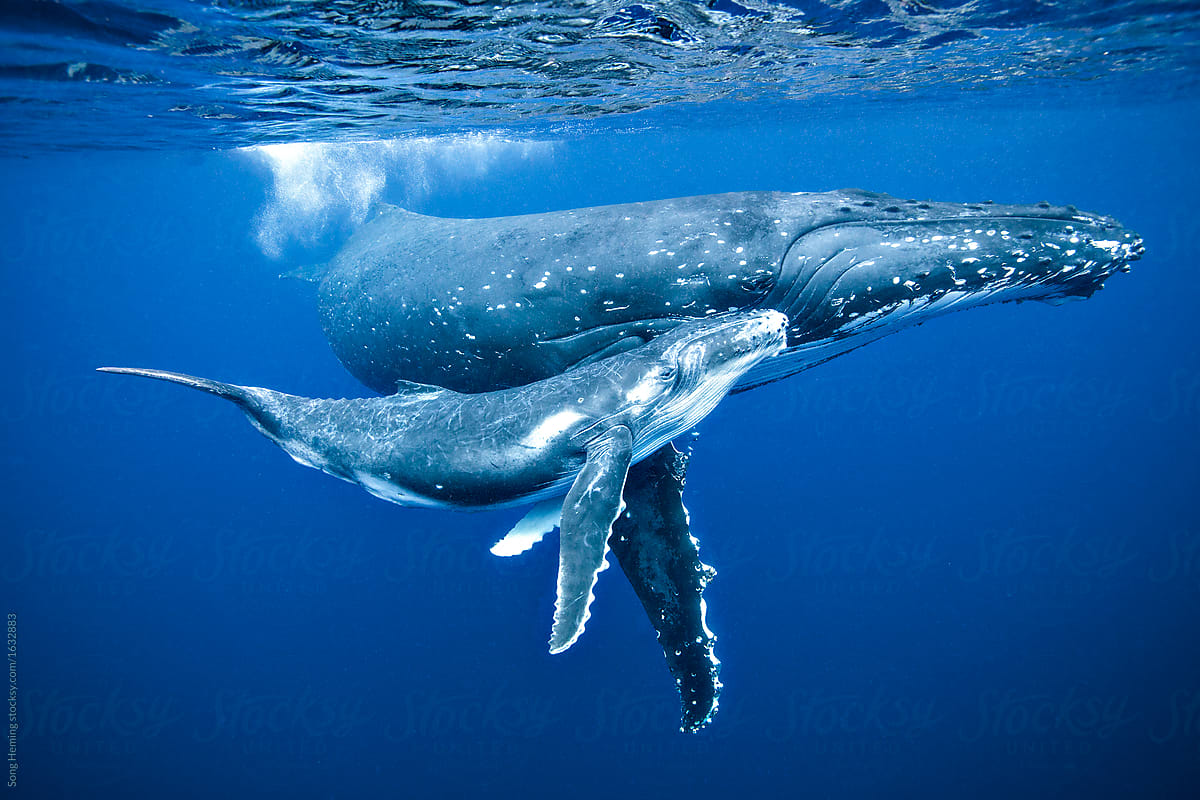
mother calf humpback whale

Mother humpback and her calf

In a Scientific American article entitled “Are Whales Smarter Then We Are?” R. Douglas Fields writes: Logically, brain function and intelligence must relate to the number of neurons. Intelligence resides in the neocortex (the thin, convuluted “rind” of the brain) rather than in other, underlying areas devoted to controlling vital housekeeping functions for the body, so Eriksen and Pakkenberg focused their investigation there. The frontal lobes of the dolphin brain are comparatively smaller than in other mammals, but the researchers found that the neocortex of the Minke whale was surprisingly thick. The whale neocortex is thicker than that of other mammals and roughly equal to that of humans (2.63 mm). However, the layered structure of the whale neocortex is known to be simpler than that of humans and most other mammals. In particular, whales lack cortical layer IV, and thus have five neocortical layers to humankind’s six. This means that the wiring of connections into and out of the neocortex is much different in whales than in other mammals. The researchers’ cellular census revealed that the total number of neocortical neurons in the Minke whale was 12.8 billion. This is 13 times that of the rhesus monkey and 500 times more than rats, but only 2/3 that of the human neocortex. What can account for the fact that whales have bigger brains — and similarly thick neocortexes — but fewer neurons? Eriksen and Pakkenberg found that there were 98.2 billion non-neuronal cells, called glia, in the Minke whale neocortex. This is the highest number of glial cells in neocortex seen in any mammal studied to date. The ratio of neocortical glial cells to neocortical neurons is 7.7 to 1 in Minke whales and only 1.4 to 1 in humans. This finding may indicate a tendency for larger glia/neuron ratios as brain mass increases to support the growing neurons. But when one considers other recent research revealing that glia play an important role in information processing (see “The Other Half of the Brain,” fromn Sci. Am. April 2004), one is left to wonder. Is the whale brain intellectually weaker than the human brain, or just different? They have fewer neurons but more glia, and in traditional views of the glia, the neurons count for much more.

In her article in One Green Planet entitled “Whales and Dolphins Might Be The Smartest Animals”, Madison Montgomery leaves us a strong message and exhortation: “While it appears that cetaceans have incredible abilities to feel emotions, understand complex problems and communicate in ways we can’t even imagine, humans don’t seem to value this. Because we assume we are so smart, we put the other creatures of the world underneath us. Knowing how dynamic cetaceans are, keeping them in glorified bathtubs and forcing them to do tricks for food is insulting and cruel. Could you imagine the pain of living in a small room your entire life and having to do flips to be fed? Sounds like a miserable existence, doesn’t it?”

As a postscript, Fragment was selected by the American National Oceanic and Atmospheric Administration (NOAA) for their “Planet Stewards” 2023-2024 Book Club.

nina-2014aaa

Nina Munteanu is a Canadian ecologist / limnologist and novelist. She is co-editor of Europa SF and currently teaches writing courses at George Brown College and the University of Toronto. Visit www.ninamunteanu.ca for the latest on her books. Nina’s bilingual “La natura dell’acqua / The Way of Water” was published by Mincione Edizioni in Rome. Her non-fiction book “Water Is…” by Pixl Press (Vancouver) was selected by Margaret Atwood in the New York Times ‘Year in Reading’ and was chosen as the 2017 Summer Read by Water Canada. Her novel “A Diary in the Age of Waterwill be released by Inanna Publications (Toronto) in June 2020.


Nina Munteanu Talks about The Splintered Universe with Simon Rose

Author, writer, coach and consultant Simon Rose interviews Nina Munteanu about The Splintered Universe Trilogy, now out in three formats: print, ebook, and audiobook. Listen to a sample from each of the trilogy audiobooks on Audible:

audible listen

Here’s Simon’s interview with me:

SimonRose site

nina interview 3

Nina interview 2

nina interview 4

nina interview 5

nina interview 6

In Metaverse, the third and last book of The Splintered Universe Trilogy, Detective Rhea Hawke travels back to Earth, hoping to convince an eccentric mystic to help her defend humanity from an impending Vos attack—only to find herself trapped in a deception that promises to change her and her two worlds forever.

You can listen to a sample recording of Outer Diverse, Inner Diverse, and Metaverse through Audible. Read The Splintered Universe reviews on Goodreads.

Microsoft Word - trilogy-poster03.docx

Nina Highland Cr 1

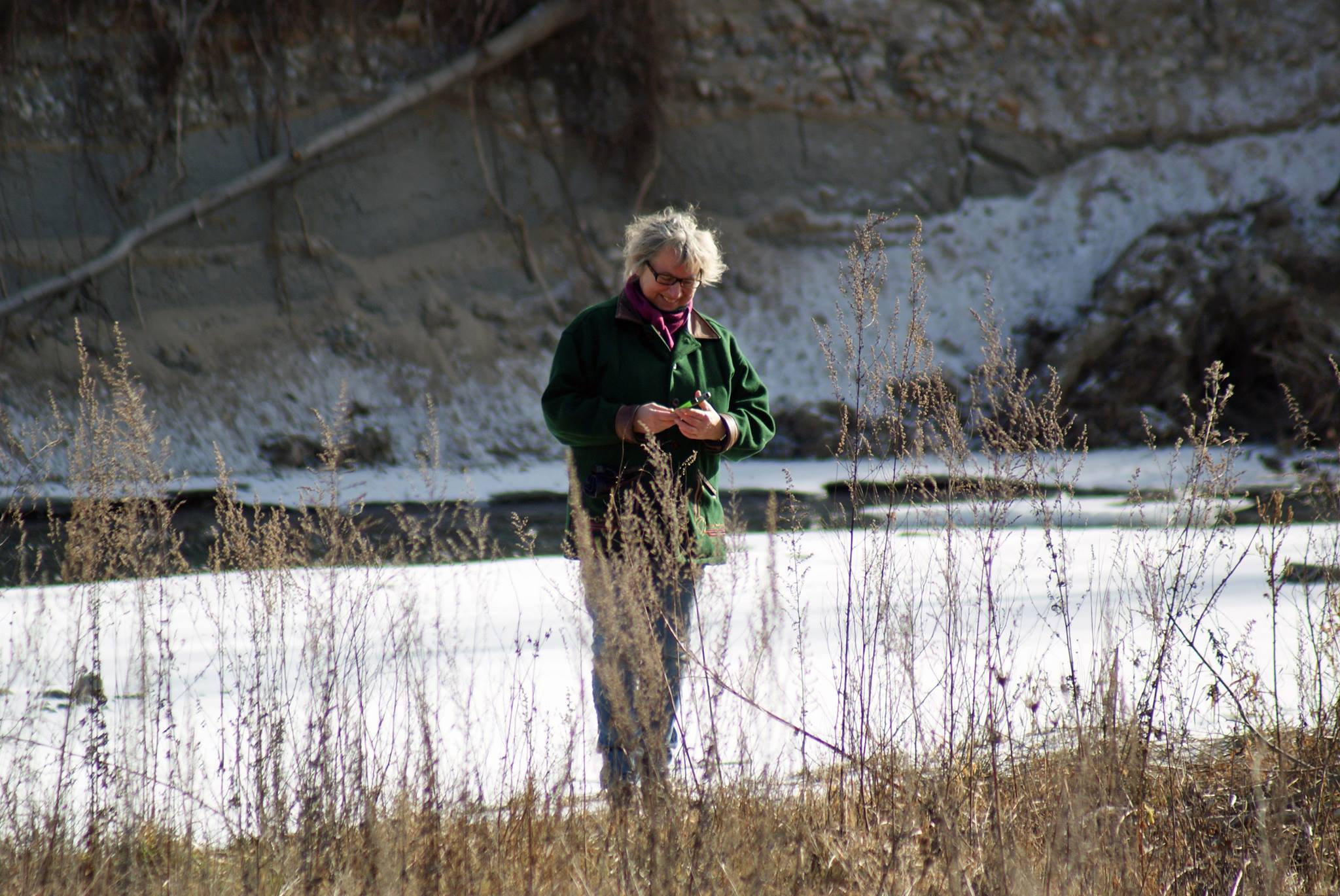
Nina checks her photos, Highland Creek, ON (photo by Merridy Cox)

nina-2014aaa

Nina Munteanu is a Canadian ecologist / limnologist and novelist. She is co-editor of Europa SF and currently teaches writing courses at George Brown College and the University of Toronto. Visit www.ninamunteanu.ca for the latest on her books. Nina’s bilingual “La natura dell’acqua / The Way of Water” was published by Mincione Edizioni in Rome. Her non-fiction book “Water Is…” by Pixl Press (Vancouver) was selected by Margaret Atwood in the New York Times ‘Year in Reading’ and was chosen as the 2017 Summer Read by Water Canada. Her novel “A Diary in the Age of Water” will be released by Inanna Publications (Toronto) in 2020.

What Kind of Hero is Rhea Hawke?

OuterDiverse-front cover

Rhea Hawke on the cover of Outer Diverse

“Rhea Hawke…I want to be her when I grow up.”—Amazon Review

Something is changing for women—and for men too. I’m talking about storytelling—and what makes a hero. Only a few years ago, no one would have predicted the success of Wonder Woman, which portrays a well-rounded female hero as both “badass” warrior (strong, determined and violent) and kind (compassionate, nurturing, empathetic and inclusive).

The male hero stereotype of western neoliberal-corporate culture—and science fiction particularly—has often been characterized by strength, courage, honor, intelligence, and assertive single-mindedness. He is the altruist warrior, often acting alone against an unfair society: all traits honored, respected and esteemed in men. In a woman, these Boadicean qualities often taint her as “bitch”, “bossy”, “cold” or even heartless. She may be considered unwomanly, unlady-like, intimidating, and untouchable (as in lesbian).

In the patriarchal model, a woman “hero” must shed her feminine nurturing qualities of kindness, tenderness, and inclusion, to express those hero-defining qualities that are typically considered male. I have seen too many 2-dimensional female characters limited by their own stereotype in the science fiction genre—particularly in the adventure/thriller sub-genre. If they aren’t untouchable goddesses or “witches”, they are often delegated to enabling the “real hero” on his journey through their belief in him: as Trinity enables Neo; Hermione enables Harry; and Lois enables Superman. In so many of these storylines, the female—no matter how complex, interesting and tough she starts out being—demures to the male lead to support his hero’s journey—without considering her own. And this often means serving as the prize for his chivalry. There’s even a name for it: the Trinity Syndrome.

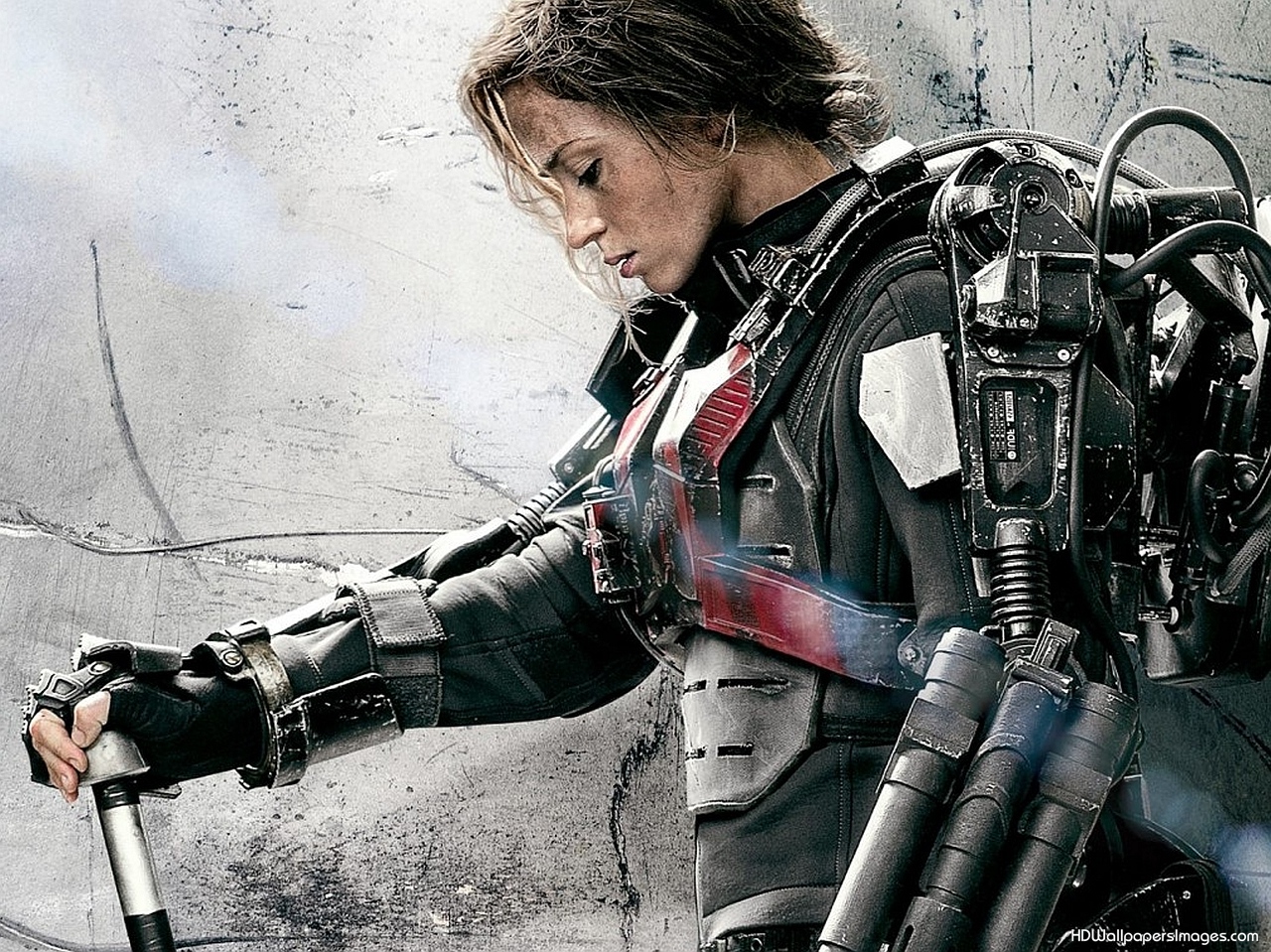
edge-of-tomorrow-emily-blunt

Rita Vratasky (Emily Blunt) in Edge of Tomorrow

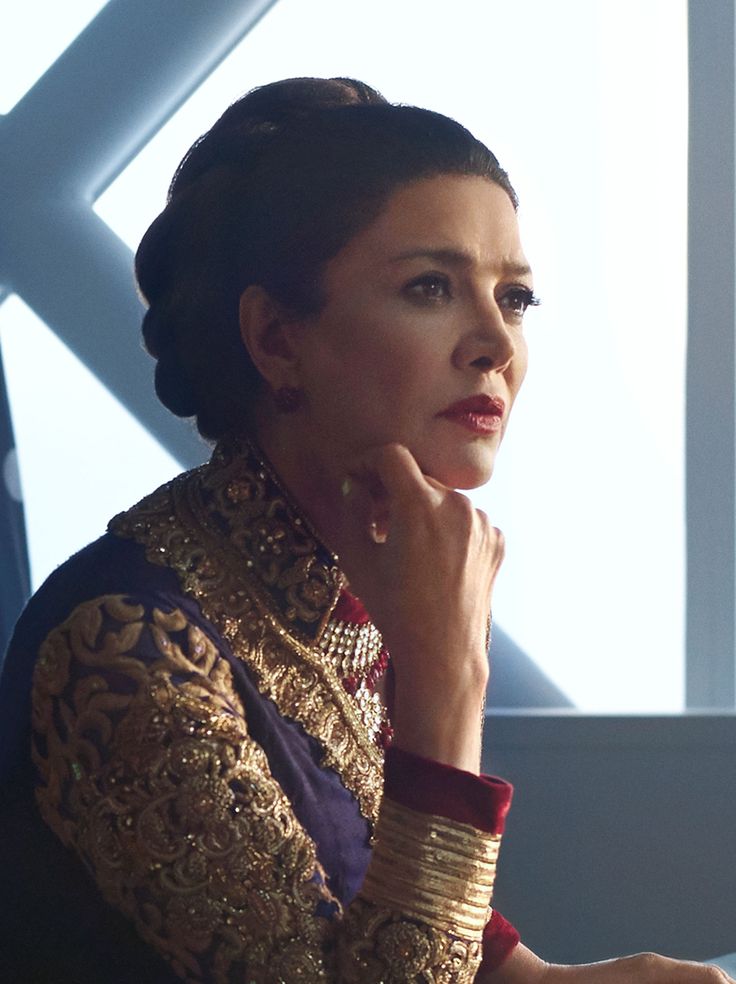
chrisjenavasarala-theexpanse

Avasarala (Shohreh Aghdashloo) in The Expanse

A different kind of hero is gaining momentum in science fiction and action-thrillers in which the heroic gifts of altruism, compassion, faith, courage, passion, and endurance drive the female lead. We see her in movies and TV shows like Edge of Tomorrow, Hunger Games, Divergence, Orphan Black, Farscape, Battlestar Galactica and The Expanse. Even Game of Thrones.

She fights the dragons of prejudice, ignorance, cruelty, greed and intolerance–either in partnership with her male counterpart or alone.

****

Enter Rhea Hawke, Galactic Guardian: wounded hero with a massive grudge. She’s the only human in a galactic police force of giant alien Eosians (who she despises). In the early scenes of Outer Diverse, Rhea is a “badass”; but she’s also far from heroic—displaying cynicism, open racism and even cruelty to her own colleagues. And yet, in her stubborn resolve to solve the massacre of a spiritual sect—even after she’s fired for killing her suspect—and to solve the mystery of the alien spectre of the Vos (who destroyed her home planet Earth), Rhea betrays a humane need to right all wrongs, including her own.

rhea-contemplative01

Rhea Hawke (Vali Gurgu)

Rhea’s journey is large—epic, even. It’s a journey of transformation, both literally and figuratively. Her journey of self-discovery will take her across the galaxy, only to find that compassion and forgiveness were with her all along. She just needed to uncover them to find her whole self. Her sometimes foil and love-interest, Serge, continually bates her, challenges her and even betrays her. By turns a foil and an ally, Serge is Rhea’s perfect counterpart; not weaker or stronger, he is an equal to her. A true partner. And their banter is some of the most rewarding writing I’ve done in my career.

When Galactic Guardian Rhea Hawke investigates the genocide of an entire spiritual sect, she collides not only with dark intrigue but with her own tarnished past. Her quest for justice catapults Rhea into the heart of a universal struggle across alien landscapes of cruel beauty and toward an unbearable truth she’s hidden from herself since she murdered an innocent man.

Get the complete Splintered Universe Trilogy. Available in ALL THREE FORMATS: print, ebook, and audiobook. Read the Splintered Universe reviews on Goodreads.

audible listen

Microsoft Word - trilogy-poster03.docx

nina-2014aaa

Nina Munteanu is a Canadian ecologist / limnologist and novelist. She is co-editor of Europa SF and currently teaches writing courses at George Brown College and the University of Toronto. Visit www.ninamunteanu.ca for the latest on her books. Nina’s bilingual “La natura dell’acqua / The Way of Water” was published by Mincione Edizioni in Rome. Her non-fiction book “Water Is…” by Pixl Press (Vancouver) was selected by Margaret Atwood in the New York Times ‘Year in Reading’ and was chosen as the 2017 Summer Read by Water Canada. Her novel “A Diary in the Age of Water” will be released by Inanna Publications (Toronto) in 2020.

Why Women Will Save the Planet

I was recently told I was fear-mongering and missing the facts by a person on Facebook when I revealed the environmental dangers of using (and abusing) single-use plastics (specifically Styrofoam); earlier that day a gentleman called me an anarchist after I promoted individual responsibility over government and corporate responsibility on the issue of bottled water in Canada.

At the time, these accusations upset me—I’m a scientist, after all, and truth is #1. Then I realised that they were part of my journey toward activism to save this planet and humanity along with it. It was, in fact, a good day for me. I did have the facts; and they were scary. And, in revealing them and expressing my opinions, I had succeeded in breaking people’s inertia and had challenged them to think outside their comfort zone.  I had created fear in them and I had created anarchy in their ordered world. This promted a strong defensive response. The more intense their defence, the more I’d upset their comfortable inertia. That is what happens when you break through a hegemony or dogma and challenge people to re-evaluate and change their actions or habits—essentially forcing them out of their complacency and bringing it back to personal responsibility.

In both cases, I’d brought it back to personal responsibility and personal action. Too many of us settle for a narrative in which others—often not clearly identified—are responsible–not us.

So, perhaps I am inciting fear. Fear in those who have become or choose to remain too complacent. Good; we are in a planetary and existential crisis. And perhaps I am rather an anarchist; disrupting a system and self-belief that is entrenched and not sustainable.

But that comes at a price.

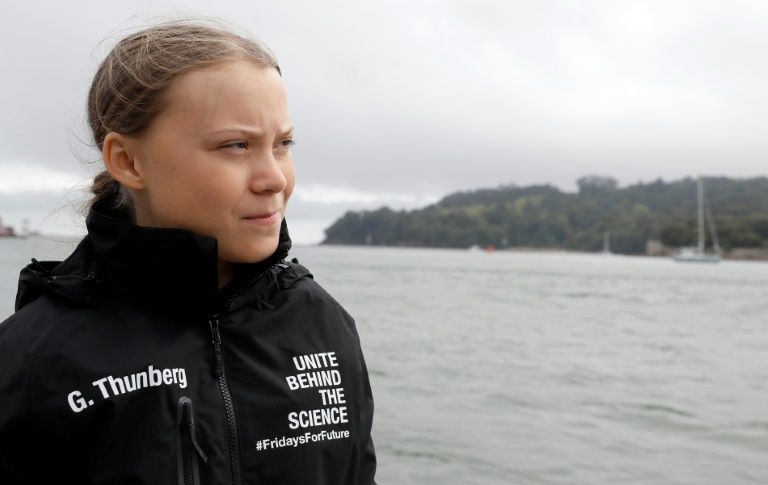
Greta Thunberg raincoat

Greta Thunberg begins a wave of climate activism

I’m thinking of young climate activist Greta Thunberg, who recently captured the attention of the world in her brave sail across the Atlantic to attend the UN’s Climate Summit and other meetings in the US in addition to her climate strike and rally march in Montreal, Canada, which drew close to half a million people (old and young).

Greta Thunberg Sails Carbon-neutral  Yacht To New York

Greta Thunberg

Earlier, at the World Economic Forum Annual Meeting in Davos, Switzerland, Greta delivered her now iconic speech:

“Adults keep saying we owe it to the young people, to give them hope,” Thunberg said, “But I don’t want your hope. I don’t want you to be hopeful. I want you to panic. I want you to feel the fear I feel every day. I want you to act. I want you to act as you would in a crisis. I want you to act as if the house is on fire, because it is.”

In a recent poll, one out of three Germans said that Thunberg has changed their views on climate change. But that, too, has come at a price.

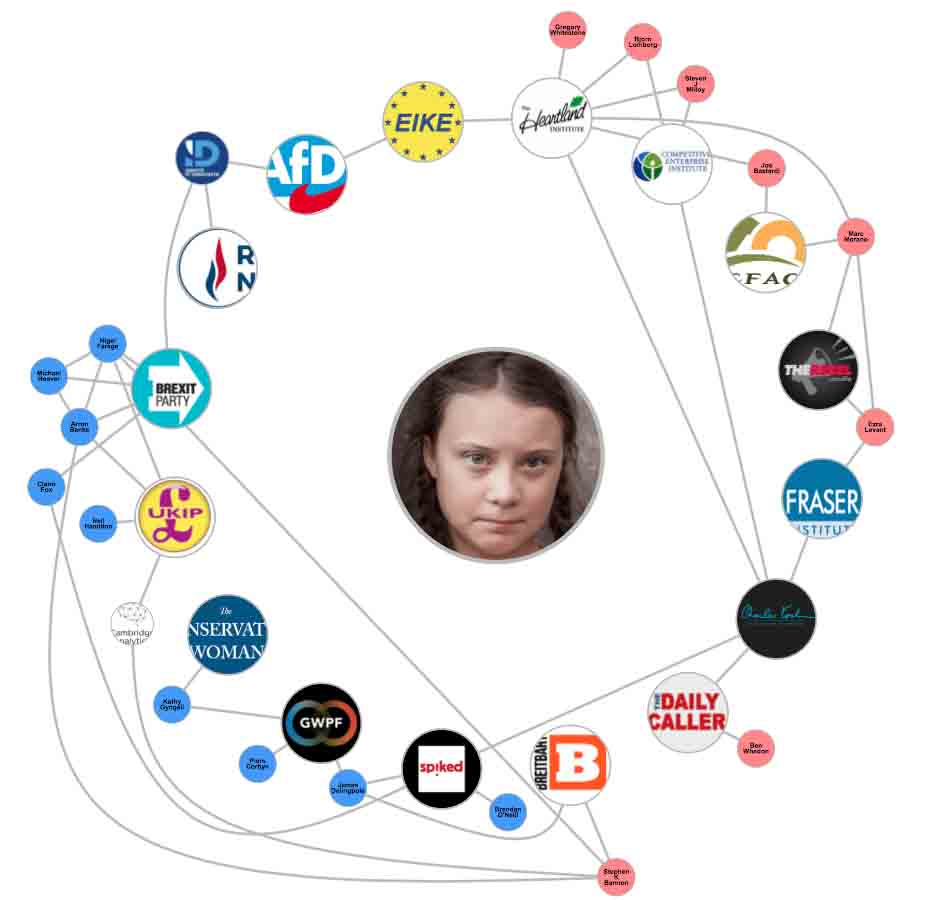
A tsunami of rage and shameless vitriol was unleashed by conservative men (many with close ties to the fossil fuel profit machine) at this young and brave girl during her 15-day trip across the Atlantic. Their attacks have grown increasingly more personal and vulgar as she has gained world attention. For example, political scientist, economist and climate “skeptic” Bjorn Lomborg (associated with the Heartland Institute and Competitive Enterprise Institute) repeatedly mocked and criticized the 16-year old activist. Using highly inappropriate and unprofessional language (the worst I won’t repeat here), he and others have accused her of being a “puppet”, “naïve”, “unrealistic”, and a “fanatic.” Others like Australian columnist Andrew Bolt have personally attacked Thunberg with reprehensible and boorish remarks about her age and mental health.

Lobbyists Against Greta

oil-profit lobbyists behind shameless vitriol against Greta Thunberg (from Desmog UK)

Andrew Mitrovica’s Opinion piece entitled “Who Is Afraid of Greta Thunberg?” provides eloquent summary: “Of course, the marauding swarm of vitriolic right-wing climate-change deniers see Thunberg—not how the prophetic Zinn envisioned her—but as a tiny, pretentious zealot who threatens the existing order. Their order. Their comforts. Their traditional ‘way of life’.”

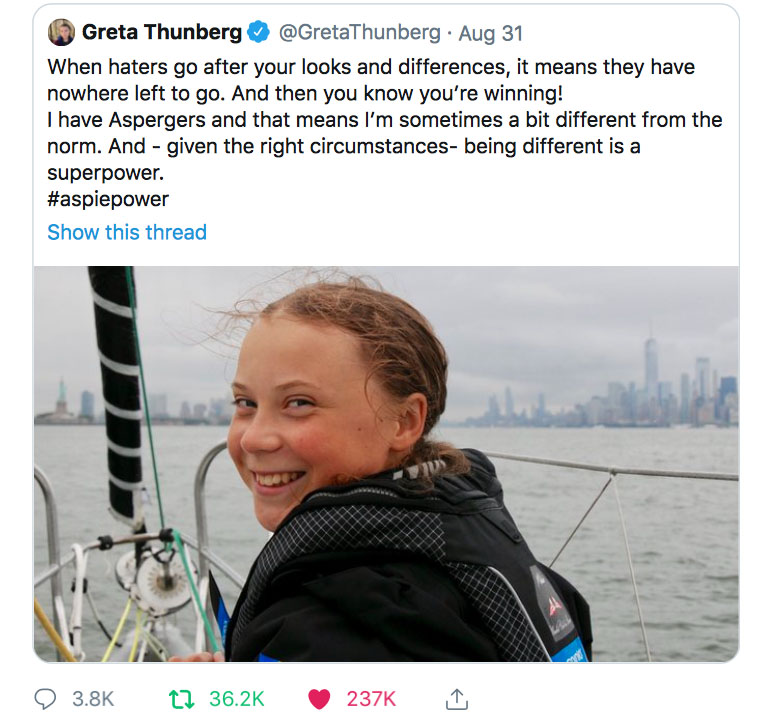
Greta—who wears a windbreaker that reads “Unite Behind the Science”— responded in a brave and wonderful tweet:

GretaThunberg-Tweet

Her tweet was followed immediately by one by Alexandria Ocasio-Cortez:


AlexandriaOcasio-Cortez Tweet

This follows a recent finding by researchers that 99% of Republicans are science illiterate and 44% believe that the scientific method can be used to produce any conclusion the researcher wants. Of course the whole point of the scientific method is to prevent this.

Soon after, Martin Gelin wrote an article entitled, “The Misogyny of Climate Deniers” in the August 2019 issue of The New Republic. The subtitle reads: “Why do right-wing men hate Greta Thunberg and Alexandria Ocasio-Cortez so much? Researchers have some troubling answers to that question.”

Greta on boat2

Greta Thunberg sailing to New York

Gelin writes, “On [Thunberg’s] first day of sailing, a multi-millionaire Brexit activist (Arron Banks) tweeted that he wished a freak accident would destroy her boat. A conservative Australian columnist (Andrew Bolt) called her a ‘deeply disturbed messiah of the global warming movement,’ while the British far-right activist David Vance attacked the ‘sheer petulance of this arrogant child.’ … Former Trump staffer Steve Milloy recently called Thunberg a ‘teenage puppet,’ and claimed that ‘the world laughs at this Greta charade,’ while a widely shared far-right meme showed Trump tipping The Statue of Liberty to crush her boat.”

Fierce and undeterred by cohorts of grown human males unable to deal with her, Greta Thunberg gave a scorching speech at the United Nations during her visit to America: “We are in the beginning of a mass extinction, and all you can talk about is money and fairy tales of eternal economic growth,” she admonished a crowd of world leaders. “How dare you.” Her equally scorching look of Donald Trump who rudely ignored her to mumble some nonsense to the press, has become a popular meme. The mashup by Fatboy Slim of Greta Thunberg’s UN speech “Right here, right now” went viral on YouTube.

Greta-trump 2

Greta Thunberg and Donald Trump at the UN climate summit

Of course, this was followed by utterly shameless and cruel vulgarisms by adult bullies that included suggestions to punish her and give her a spanking.

Disinterested in whether she’s liked and undeterred by childish name calling, the activist teenager remained resolute with her weapon: shame.  At every opportunity, Greta Thunberg steadfastly called out adults over twenty years her senior on what they have failed to do; she did it in words that are simple, precise and direct.

After Senator Tom Carper tried to placate her by telling her that young people would soon have the chance to run for office themselves, she returned: “We don’t want to become politicians; we don’t want to run for office. We want you to unite behind the science.”

Carrying herself with admirable focus and buoyed by her dedication to her cause, Greta Thunberg delivered a scintillating speech to close to half a million climate marchers in Montreal:

“Some would say we are wasting lesson time; we say we are changing the world… The people have spoken. And we will continue to speak until our leaders listen and act. We are the change and change is coming.”

greta thunberg speech in montreal

Greta Thunberg speaking in Montreal

In a recent article in the Washington Post, entitled “Greta Thunberg Weaponized Shame in an Era of Shamelessness”, Monica Hesse writes: “We live in an era that has become impervious to shame. An era defined by a president who views it as a weakness. Shame has become an antiquated emotion and a useless one. It’s advantageous, we’ve learned, to respond to charges of indecency with more indecency: attacks, misdirection, faux-victimhood.”

But real shaming—the kind that mothers do with their errant boy-bullies—is precisely what Greta is doing. This kind of shaming cuts deep, because it is the deep and recognizable truth. And it is done through the “mother archetype”—the most powerful energy on this planet.

Gelin tells us that the prominently older white men who are leading these attacks on Greta Thunberg (and by association, other prominent female climate activists such as Alexandria Ocasio-Cortez) “is consistent with a growing body of research linking gender reactionaries to climate-denialism.”

Alexandria Ocasio-Cortez

Alexandria Ocasio-Cortez

Scientists Jonas Anshelm and Martin Hultman in the journal NORMA  analyzed the language of a focus group of climate skeptics, to discover a major theme:

“for climate skeptics … it was not the environment that was threatened, it was a certain kind of modern industrial society built and dominated by their form of masculinity.”

On the heels of the #MeToo movement, climate activism—largely led by strong females—appears to threaten gender identity of conservative males. Right-wing nationalism, anti-feminism, and climate denialism appear inextricably linked. I would add that their lack of respect for and acknowledgement of indigenous peoples is by default part of the package, given that indigenous peoples are so tied to the land and the ecosystem (being destroyed). One need only look to what is currently happening in Brazil for an atrocious example of this kind of male-bully behaviour.

Climate science for skeptics becomes feminized and viewed as “oppositional to assumed entitlements of masculine primacy,” write Hultman and Paul Pule in the 2019 book “Climate Hazards, Disasters, and Gender Ramifications.” Hultman identifies a set of values and behaviours connected to a form of masculinity identified with industrial patriarchy. These males “see the world as separated between humans and nature. They believe humans are obliged to use nature and its resources to make products out of them. And they have a risk perception that nature will tolerate all types of waste. It’s a risk perception that doesn’t think of nature as vulnerable and as something that is possible to be destroyed. For them, economic growth is more important than the environment,” which they choose not to understand—just like women.

The gender gap in the United States is characterized by men who perceive climate activism as inherently feminine. This was demonstrated in a 2017 article in Scientific American entitled, “Men Resist Green Behavior as Unmanly.”  Researchers Aaron R. Brough and James E.B. Wilkie argue that “women have long surpassed men in the arena of environmental action; across age groups and countries, females tend to live a more eco-friendly lifestyle. Compared to men, women litter less, recycle more, and leave a smaller carbon footprint.” While some researchers have demonstrated that women’s prioritization of altruism may help explain this gender gap in green behaviour, the research done by Brough and Wilkie’s—involving more than 2,000 American and Chinese participants— showed that men linked eco-friendliness with femininity and a risk to their masculinity. These findings, coupled with a natural inclination for anti-feminism by older white conservative males, places them at the centre of a major reactionary backlash against climate action.

Gelin ends on a sober note: “As conservative parties become increasingly tied to nationalism, and misogynist rhetoric dominates the far-right, Hultman and his fellow researchers at Chalmers University worry that the ties between climate skeptics and misogyny will strengthen. What was once a practical problem, with general agreement on the facts, has become a matter of identity. And fear of change is powerful motivation.”

Nina-Kevin playing

Nina Munteanu hiking with her son

When fear powers motivation, we must counter with something stronger: hope through action, compassion, and community. And, again, women are in great abundance of these.

“Keep inspiring and organizing,” says Alexandria Ocasio-Cortez to young Greta. “We’re going to save the planet. All of us, together.”

We are all, after all, “the mother.” So, while the old guard of conservative immature men obsess in saving their egos and identities in this crisis, and put up walls of vitriol, name-calling, “flaming”, and “trolling,” it’s up to us, mature women, to really save the planet, the mother of us all.

So, why will women save the planet? Because “Mother Knows Best,” after all…

Time for a paradigm shift. We’re not in the fifties anymore…


nina-2014aaa

Nina Munteanu is a Canadian ecologist / limnologist and novelist. She is co-editor of Europa SF and currently teaches writing courses at George Brown College and the University of Toronto. Visit www.ninamunteanu.ca for the latest on her books. Nina’s bilingual “La natura dell’acqua / The Way of Water” was published by Mincione Edizioni in Rome. Her non-fiction book “Water Is…” by Pixl Press (Vancouver) was selected by Margaret Atwood in the New York Times ‘Year in Reading’ and was chosen as the 2017 Summer Read by Water Canada. Her novel “A Diary in the Age of Water” will be released by Inanna Publications (Toronto) in 2020.


Write and Publish, Part 8: The Hero’s Journey Plot Approach

Plot your way to success. nine-time novelist and short story author Nina Munteanu describes successful plot approaches in storytelling, including The Hero’s Journey.


The Write and Publish Series

You want to write but don’t know how to get started? The Write and Publish Series focuses on:

  • How to find time to write around your busy schedule
  • How to make the most of your present resources
  • How to get inspired and motivate yourself to write
  • How to write, finish and submit your work

This 7-part series of lectures consists of: 1) Nina’s 5-Ps to Success; 2) Redefine Yourself as an Author; 3) Time and Space to Write; 4) Adopt a Winning Attitude; 5) Write What Excites You; 6) How to Beat Writer’s Block; 7) How to Keep Motivated; and 8) Plot Approaches including the Hero’s Journey.

Nina-Heros Journey

The Writer’s Toolkit

This series of lectures and workshops is part of Nina Munteanu’s “The Writer’s Toolkit”, available as three workshops and DVDs for writers wishing to get published. This 6-hour set of three discs contains lectures, examples and exercises on how to get started and finish, writing craft, marketing and promotion. Available through the author (nina.sfgirl@gmail.com).

nina-smiling-close

Nina gives a writing workshop in Mahone Bay, Nova Scotia

the writers toolkit-front-WEBI was fascinated by Nina’s clear and extremely interesting lecture on the hero’s journey.  Maybe all writers have a novel in their heads they want to write one day, and the techniques Nina shared with us will help me when I get to that point.  In fact, because of her, I may get there a lot sooner than I had planned.”— Zoe M. Hicks, Saint Simon’s Island, GA

Nina Munteanu’s command of the subject matter and her ability to explain in a way that the audience understood was excellent. As a hopeful author, I found her words inspiring.”—Amanda Lott, Scribblers Writers’ Retreat, GA

Rarely have I encountered someone of Nina’s considerable talent and intellect tied to such an extraordinary work ethic…A gifted and inventive writer, Nina is also an excellent speaker who is able to communicate complicated ideas in simple terms and generate creative thought in others. Her accessible, positive approach and delightful sense of humor set people at ease almost immediately.”–Heather Dugan, Ohio writer and voice artist

What you’ve done for me, Nina, is you’ve just opened up a whole new world. You’ve shown me how to put soul into my books.”–Hectorine Roy, Nova Scotia writer

nina-teaching-with-fiction-writer_edited-1

Nina teaching a workshop in Halifax, Nova Scotia

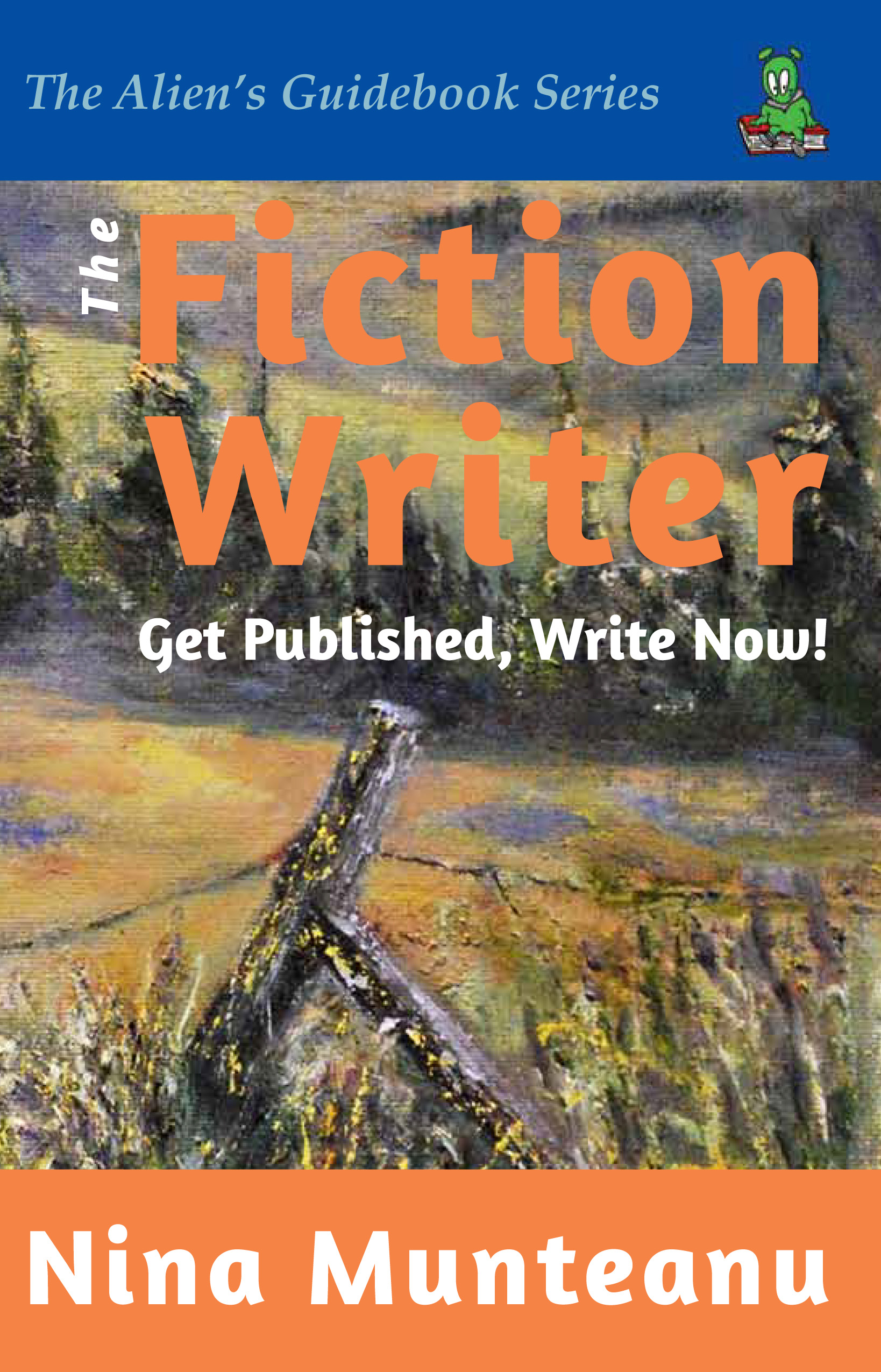
The Writer’s Toolkit workshops were based on my award-nominated fiction writing guide: The Fiction Writer: Get Published, Write Now! Chapter P describes various plot approaches and Chapter J focuses specifically on the Hero’s Journey Plot Approach.

FictionWriter-front cover-2nd ed-web“…Like the good Doctor’s Tardis, The Fiction Writer is larger than it appears… Get Get Published, Write Now! right now.”—David Merchant, Creative Writing Instructor

The Fiction Writer: Get Published, Write Now! (Starfire World Syndicate) is a digest of how-to’s in writing fiction and creative non-fiction by masters of the craft from over the last century. Packaged into 26 chapters of well-researched and easy to read instruction, novelist and teacher Nina Munteanu brings in entertaining real-life examples and practical exercises. The Fiction Writer will help you learn the basic, tried and true lessons of a professional writer: 1) how to craft a compelling story; 2) how to give editors and agents what they want and 3) how to maintain a winning attitude.

The Fiction Writer is at the top of the required reading list for my Writer’s Workshop students. With its engagingly direct, conversational style and easily accessible format, it is a veritable cornucopia of hands-on help for aspiring writers of any age…the quintessential guidebook for the soon-to-be-published.”—Susan McLemore, Writing Instructor

As important a tool as your laptop or your pen.”—Cathi Urbonas, Halifax writer

Has become my writing bible.”—Carina Burns, author of The Syrian Jewelry Box

I highly recommend this book for any writer wishing to get published.”—Marie Bilodeau, acclaimed author of Destiny’s Blood

I’m thoroughly enjoying the book and even learning a thing or two!”—Robert J. Sawyer, Hugo and Nebula Award-winning author of Wake

nina-workshop 2

Nina teaching a workshop in Calgary, Alberta

The Fiction Writer is the first of a series of writing guides, which consist so far of: The Journal Writer: Finding Your Voice; and The Ecology of Story: World as Character.

Microsoft Word - Three Writing Guides.docx


Nina Munteanu

Nina Munteanu next to metasequoia tree in The Beach (photo by Richard Lautens)

nina-2014aaa

Nina Munteanu is a Canadian ecologist / limnologist and novelist. She is co-editor of Europa SF and currently teaches writing courses at George Brown College and the University of Toronto. Visit www.ninamunteanu.ca for the latest on her books. Nina’s bilingual “La natura dell’acqua / The Way of Water” was published by Mincione Edizioni in Rome. Her non-fiction book “Water Is…” by Pixl Press (Vancouver) was selected by Margaret Atwood in the New York Times ‘Year in Reading’ and was chosen as the 2017 Summer Read by Water Canada. Her novel “A Diary in the Age of Water” will be released by Inanna Publications (Toronto) in 2020.

Ecology of Story: Place as Character & Archetype

Birds deer lake

Birds flying over Deer Lake, BC (photo by Nina Munteanu)

A novelist, when portraying several characters, may often find herself painting a portrait of a place. This is place being “character.” Place functions as a catalyst, and molds the more traditional characters that animate a story. Think of any of your favorite books, particularly the epics: The Wizard of Oz, Tale of Two Cities, Doctor Zhivago, Lord of the Rings, The Odyssey, etc. In each of these books the central character is the place, which is firmly linked to its main character. How much is Frodo, for instance, an extension of his beloved Shire? They are one in the same. Just as the London of Charles Dickens spawned Scrooge.

Place ultimately portrays what lies at the heart of the story. Place as character serves as an archetype that story characters connect with and navigate in ways that depend on the theme of the story. A story’s theme is essentially the “so what part” of the story. What is at stake for the character on their journey. Theme is the backbone—the heart—of the story, driving characters to journey through time and place toward some kind of fulfillment. There is no story without theme. And there is no theme without place.

Things to consider about place as character begin with the POV character and how they interact with their environment and how they reflect their place. For instance is that interaction obvious or subtle? Is that environment constant or changing, stable or unstable, predictable, or variable? Is the place controllable or not, understandable or not? Is the relationship emotional, connected to senses such as memory?

I discuss archetypes in detail, particularly as part of the “Hero’s Journey” in Chapter J of The Fiction Writer. In summary, archetypes are ancient patterns of personality shared universally by humanity (e.g. the “mother” archetype is recognized by all cultures). When place acts as an archetype or symbol in story—particularly when linked to theme—it provides a depth of meaning that resonates through many levels for the reader. From obvious to subtle.

A subtle yet potent example of this is provided by Annie Proulx’s novel The Shipping News; Proulx uses subtle body language of her protagonist to provide a strong sense of place. The main character, Quoyle, displays a self-conscious gesture of covering his strong native chin with his hand until he leaves New York to his homeland of Newfoundland from where he is descended— a place where he can live a natural and graceful life without apology.

In Ray Bradbury’s The Martian Chronicles, Mars symbolizes a new Eden—though unimagined. Like Bradbury’s aboriginal Martians—who are mostly invisible—the planet is a mirror that reflects humanity’s best and worst. Who we are, what we are, what we bring with us and what we may become. What we inadvertently do—to others, and finally to ourselves—and how the irony of chance can change everything.

Martian ChroniclesThey came because they were afraid or unafraid, happy or unhappy. There was a reason for each man. They were coming to find something or get something, or to dig up something or bury something. They were coming with small dreams or big dreams or none at all.
The 1970 Bantam book jacket aptly calls The Martian Chronicles, “a story of familiar people and familiar passions set against incredible beauties of a new world … A skillful blending of fancy and satire, terror and tenderness, wonder and contempt.”

Written in the 1940s, The Martian Chronicles drip with a nostalgic atmosphere — shady porches with tinkling pitchers of lemonade, grandfather clocks, chintz-covered sofas. But longing for this comfortable past proves dangerous in every way to Bradbury’s characters — the golden-eyed Martians as well as the humans. Starting in the far-flung future of 1999, expedition after expedition leaves Earth to explore Mars. The chameleon-like Martians guard their mysteries well, but soon succumb to the diseases that arrive with the rockets — recapitulating the tragedies that European colonization imposed on our indigenous peoples. Colonists appear on Mars, most of them with ideas no more lofty than starting a hot-dog stand, and with no respect for the culture they are impacting and an entire people they are destroying. Bradbury weaves metaphor into the opening when the heat of a rocket ship turned an Ohio dark winter into summer:

Rocket summer. The words passed among the people in the open, airing houses. Rocket summer. The warm desert air changing the frost patterns on the windows, erasing the art work. The skis and sleds suddenly useless. The snow, falling from the cold sky upon the town, turned to a hot rain before it touched the ground.

Rocket summer. People leaned form their dripping porches and watched the reddening sky. The rocket lay on the launching field, blowing out pink clouds of fire and even heat. The rocket stood in the cold winter morning, making summer with every breath of its mighty exhausts. The rocket made climates, and summer lay for a brief moment on the land…

What unfolds is a profound and tender analysis of the quiet yet devastating power humanity can wield unawares. Bradbury paints a multi-layered tapestry of hopes and dreams through metaphor. To Bradbury everything a writer writes is metaphor. Metaphor is powerful through perspective. It makes the ordinary strange and the strange ordinary.

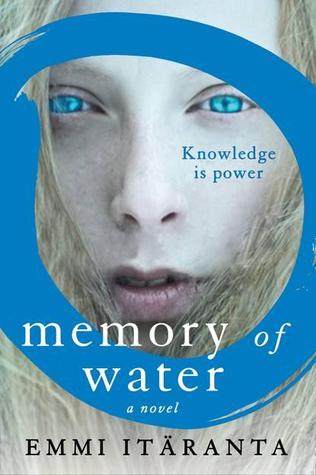
MemoryOfWater_Emmi ItarantaIn Emmi Itäranta’s Memory of Water—about a post-climate change world of sea level rise—water is a powerful archetype, whose secret tea masters guard with their lives:
The story tells that water has a consciousness, that it carries in its memory everything that’s ever happened in this world, from the time before humans until this moment, which draws itself in its memory even as it passes. Water understands the movements of the world; it knows when it is sought and where it is needed. Sometimes a spring or a well dries for no reason, without explanation. It’s as if the water escapes of its own will, withdrawing into the cover of the earth to look for another channel. Tea masters believe there are times when water doesn’t wish to be found because it knows it will be chained in ways that are against its nature.

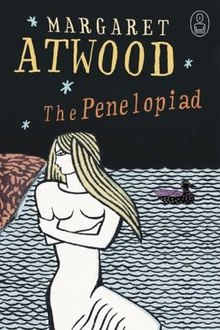
ThePenelopiadWater, with its life-giving properties and other strange qualities, has been used as a powerful metaphor and archetype in many stories: from vast oceans of mystery, beauty and danger—to the relentless flow of an inland stream. Margaret Atwood’s The Penelopiad is just one example:
Water does not resist. Water flows. When you plunge your hand into it, all you feel is a caress. Water is not a solid wall, it will not stop you. But water always goes where it wants to go, and nothing in the end can stand against it. Water is patient. Dripping water wears away a stone. Remember that, my child. Remember you are half water. If you can’t go through an obstacle, go around it. Water does.

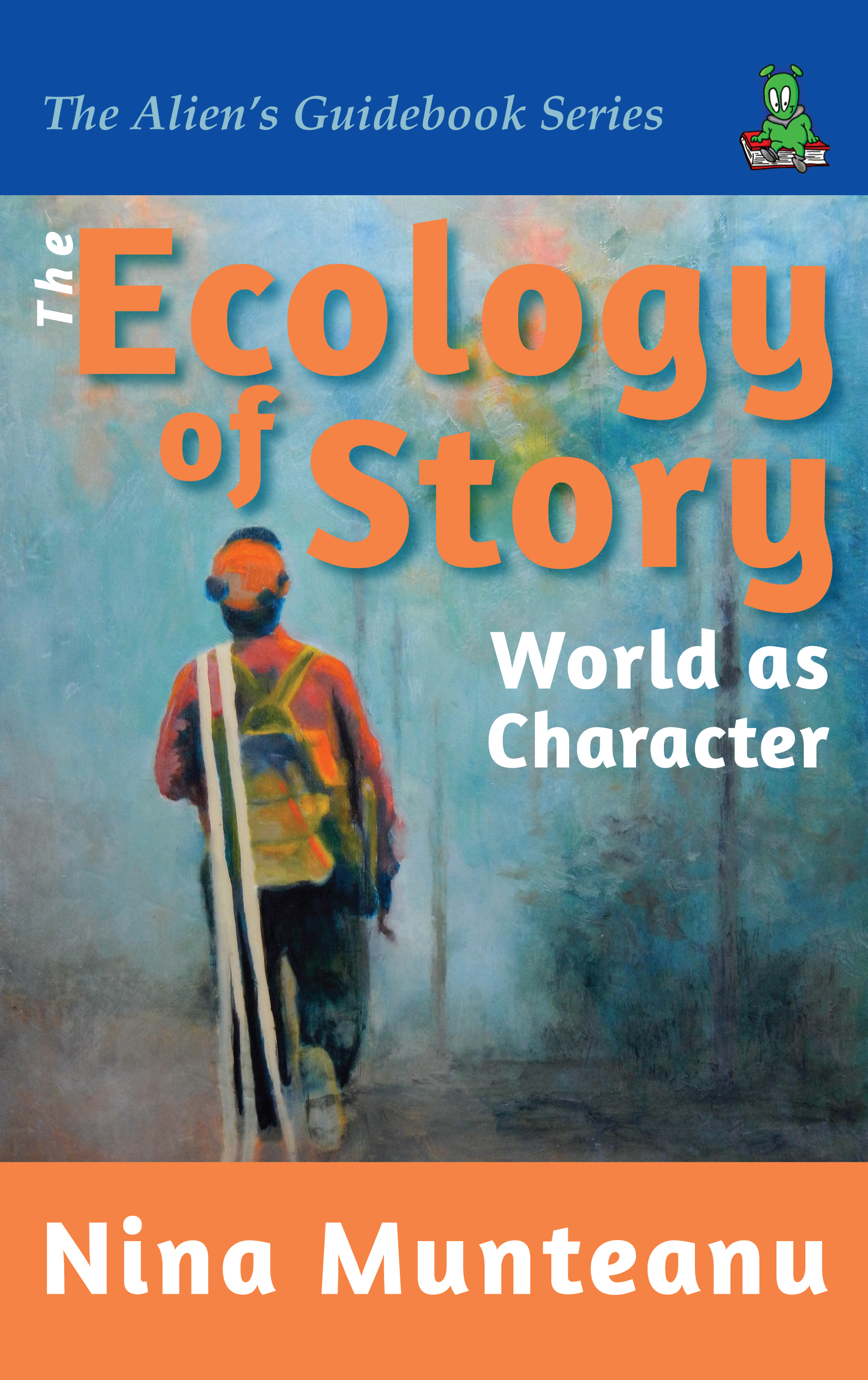
MockUpEcology copyThis article is an excerpt from “The Ecology of Story: World as Character” released in June 2019 by Pixl Press.

From Habitats and Trophic Levels to Metaphor and Archetype…

Learn the fundamentals of ecology, insights of world-building, and how to master layering-in of metaphoric connections between setting and character. Ecology of Story: World as Character is the 3rd guidebook in Nina Munteanu’s acclaimed “how to write” series for novice to professional writers.


Microsoft Word - Three Writing Guides.docx


nina-2014aaa

Nina Munteanu is a Canadian ecologist / limnologist and novelist. She is co-editor of Europa SF and currently teaches writing courses at George Brown College and the University of Toronto. Visit www.ninamunteanu.ca for the latest on her books. Nina’s bilingual “La natura dell’acqua / The Way of Water” was published by Mincione Edizioni in Rome. Her non-fiction book “Water Is…” by Pixl Press (Vancouver) was selected by Margaret Atwood in the New York Times ‘Year in Reading’ and was chosen as the 2017 Summer Read by Water Canada. Her novel “A Diary in the Age of Water” will be released by Inanna Publications (Toronto) in 2020.