What Genre Is My Story? Is it Eco-Fiction or Something Else?

Illustration depicting Ray Bradbury’s ‘Rocket Summer’ in The Martian Chronicles (image from The Black Cat Moan)

Twenty years ago, when I started seriously publishing short stories and novels, the environment was not recognized by the public or writers as an entity that deserved a literary category. Nature and environment were mostly portrayed and viewed as passive entities, to conquer, subdue, exploit and destroy at will (particularly in science fiction—with some notable exceptions such as The Martian Chronicles by Ray Bradbury). Environment and Nature were not generally considered characters on a journey like the progatonist and other major characters; the environment lacked agency and was often ‘othered’ as dangerous, treacherous and unknowable.

Despite the fact that eco-fiction has in fact been in existence for centuries, use of this literary term is quite recent. Its first recognized use was in 1971, appearing as the title in John Stadler’s anthology published by Washington Square Press, which compiled environmental scifi works from the 1930s to the 1960s.

Defining Eco-Fiction
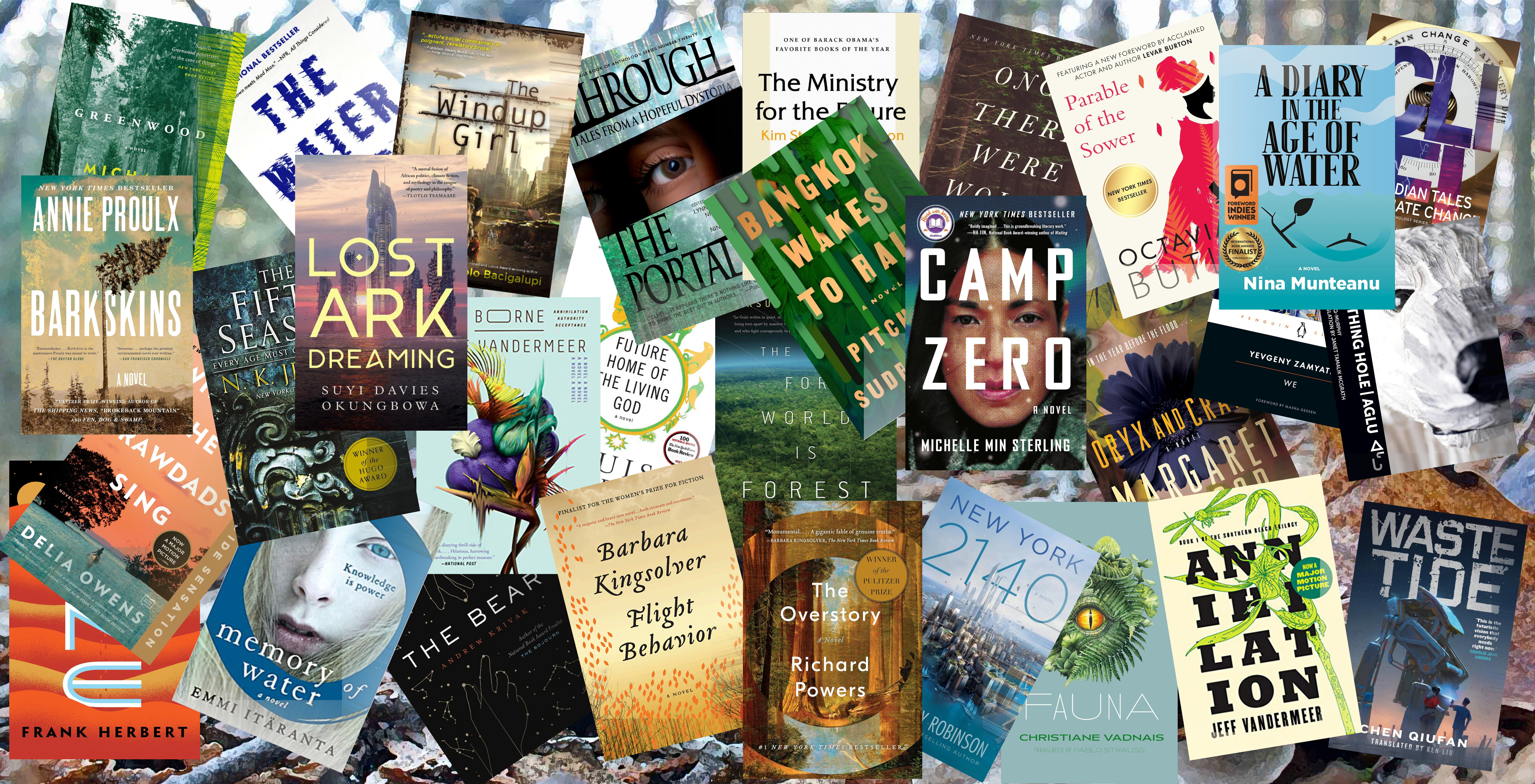
Thirty works of impactful eco-fiction

Author / scholar Mary Woodbury defines eco-fiction as “made up of fictional tales that reflect important connections, dependencies, and interactions between people and their natural environments.” In her article “Eco-Fiction—The SuperGenre Hiding in Plain Sight”, Judith defines eco-fiction as literature that “portrays aspects of the natural environment and non-human life as an evolving entity with agency in its relationship between and interaction with human characters.” In the preface to his 1995 book Where the Wild Boks Are: A field guide to Eco-Fiction, Jim Dwyer provides four criteria for eco-fiction:

  1. The nonhuman environment is present not merely as a framing device but as a presence that begins to suggest that human history is implicated in natural history
  2. The human interest is understood to be not the only legitimate interest
  3. Human accountability to the environment is part of the text’s ethical orientation
  4. Some sense of the environment as a process rather than as a constant or a given is at least implicit in the text.

These designations could be easily met by prehistoric cave art and first nations artwork and storytelling. These definitions also allow for the inclusion of many classics defined as eco-fiction from Herman Melville’s Moby Dick and Thomas Hardy’s Return of the Native to John Wyndham’s Day of the Triffids.

Evolving Eco-Fiction & Eco-SciFi

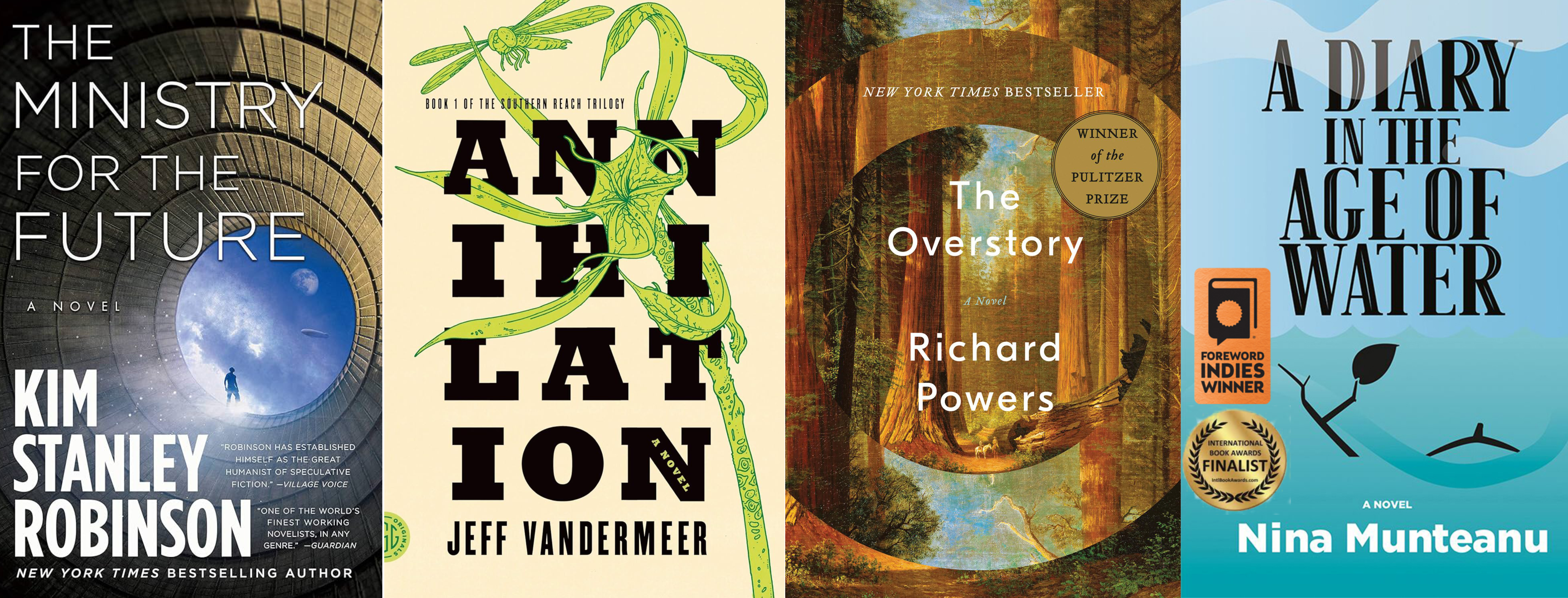
Like the environment it describes, Eco-Fiction is changing and evolving as a genre. Inventor/author Kyo Hwang Cho used the genre designation of Eco-SciFi when he recently identified me along with Kim Stanley Robinson, Jeff VanderMeer, and Richard Powers as Leading Voices in Eco-Science Fiction. Cho defines Eco-SciFi as: “a subgenre of SciFi that foregrounds ecological consciousness, blending speculative fiction with climate science, ethics, and planetary survival.” He includes a table that distinguishes Eco-SciFi from traditional Sci-Fi in several core areas from core theme, tone and motivation to protagonists and ‘message.’ The table can also be used to distinguish this sub-genre from other sub-categories within the umbrella term eco-fiction.

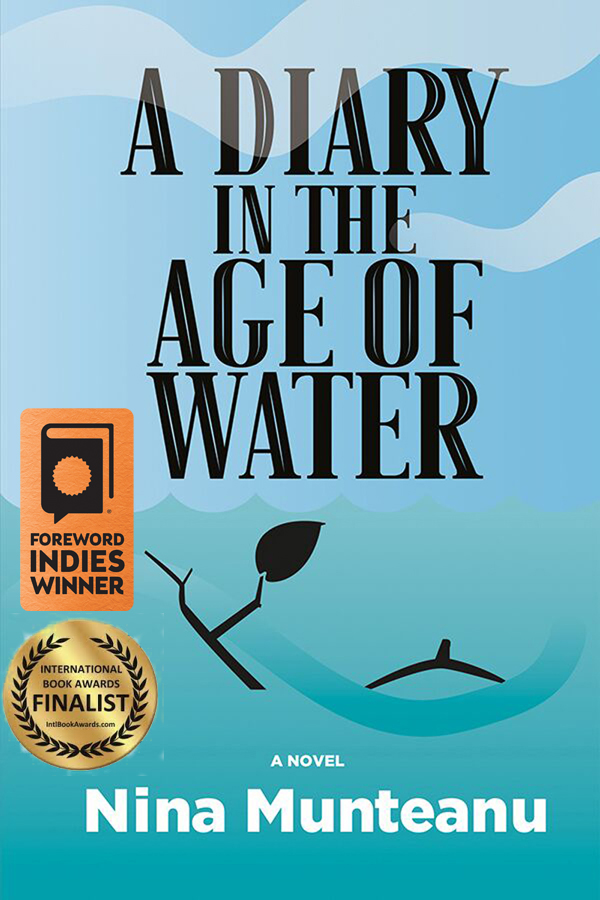
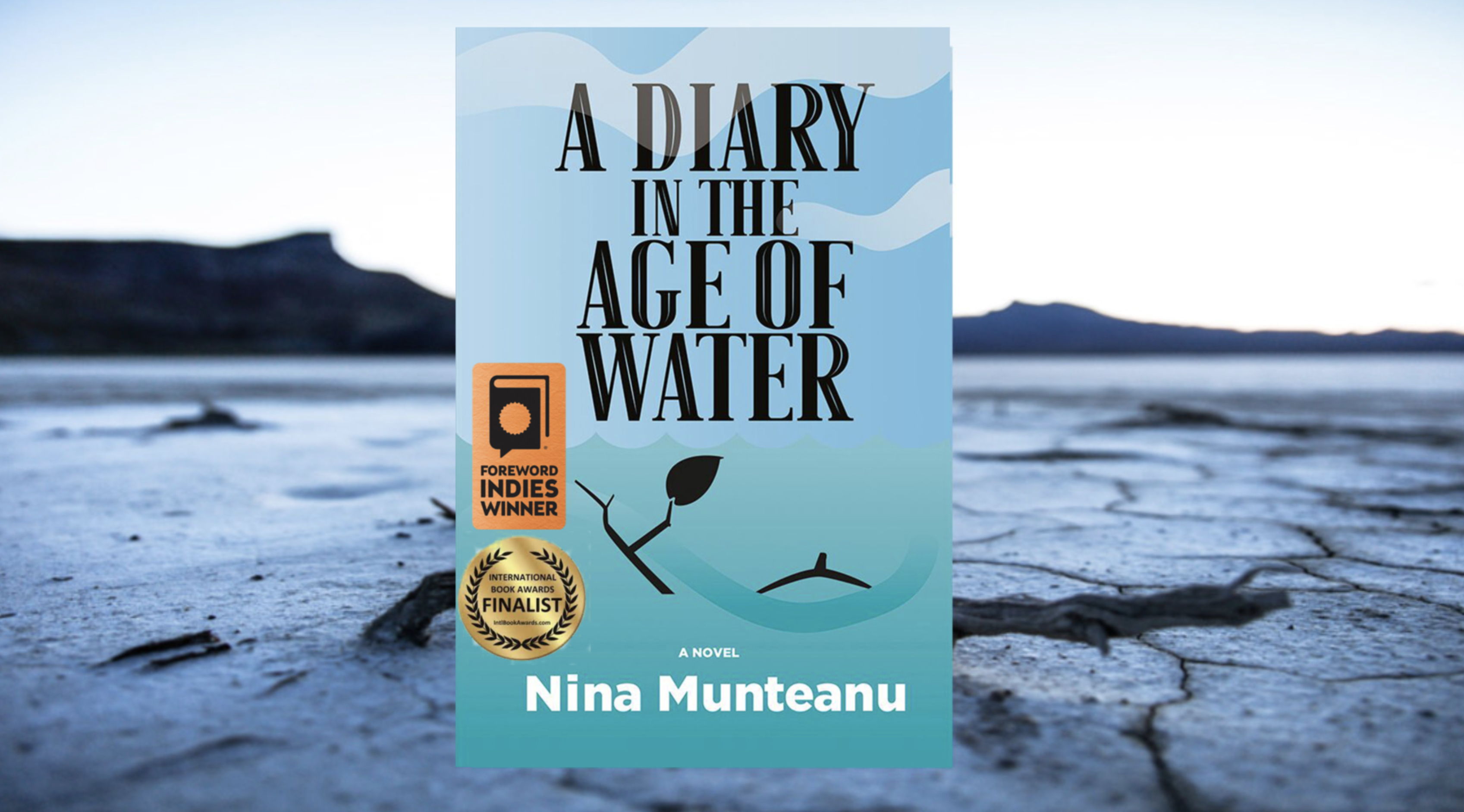
Cho described me as a Canadian ecologist and writer whose “stories explore how humans interact with the environment. Her narratives often examine the intersection of science, climate crisis, and spiritual transformation.” He described A Diary in the Age of Water as a noteworthy work of eco-science fiction: “a dystopian look at a future shaped by water scarcity, societal collapse, and ecological memory.”

Categories of Eco-Fiction

Partially due to this literature’s growing popularity there are currently many categories within and overlapping with eco-fiction; these include: climate fiction or clifi; solarpunk; eco literature, eco-horror, eco-punk, hopeful dystopia, mundane science fiction, speculative fiction, and weird fiction. Each of these focuses on particular idiosyncracies within the literary form that uniquely identify a work.

For instance, A Diary in the Age of Water has been variously described by reviewers and readers as eco-fiction, speculative fiction, science fiction or scifi, Fem-lit, mundane science fiction, hopeful dystopia, hopepunk or solarpunk, ecological science fiction or Eco-Sci-Fi. All to say that these designations and sub-genres are somewhat arbitrary and overlap; they may ultimately depend on the reader’s expectations of the work, and their own worldview and predilections. Given the still relevant reason for genre identification (to be able to best find the book in a brick and mortar or virtual bookstore), this makes sense; a work may easily satisfy several reader perspectives and therefore merit many sub-genre descriptors.

Eco-SciFi and mundane science fiction can be viewed this way. In an interview on Solarpunk Futures, I describe mundane science fiction as a sub-genre of science fiction that is very much like speculative fiction in that this sub-genre focuses on scenarios on Earth and involves matters to do with everyday life—hence the term mundane. Given the speculative aspect of mundane science fiction (e.g., set on Earth, often in the near-future), much of what Cho describes as Eco-SciFi also fits the designation of mundane science fiction. in my article “The Power of Diary in Fiction,” I describe Paolo Bacigalupi’s The Windup Girl, Emmi Itäranta’s Memory of Water and my own novel A Diary in the Age of Water as examples of mundane science fiction. Other good examples of mundane science fiction or Eco-SciFi include Kim Stanley Robinson’s New York 2041, Pitchaya Sudbanthad’s Bangkok Wakes to Rain and Michelle Min Sterling’s Camp Zero. These can all be labelled clifi as well. Min Sterling’s book also fits well under Femlit, Feminist Eco-Fiction, and Hopeful Dystopia.

The determining features provided by Cho that distinguish Eco-Sci-Fi help distinguish works that fall more easily into science fiction from those that better fit within the category of literary fiction or climate fiction.

Eco-Fiction—like Science Fiction—is a large category and provides a kind of umbrella term for all environmental fiction in which the environment plays a central role that informs the plot, theme and character-journey. In literature, it serves many literary works that do not include scifi aspects (e.g. fantastical or speculative); because of this, reserving the sub-genre of Eco-SciFi for those that do include fantastical elements makes sense. For non scifi works of Eco-Fiction, I would suggest using the term Eco-Lit (ecological literature), a term already in existence that incorporates the word ‘literature’ to suggest a type of literary fiction.

Ecological Literature or Eco-Lit

Eco-Lit—unlike Eco-SciFi—tends to restrict its narrative to the current time, does not include fantastical or speculative elements, and tends to use the ecological or climate elements more as metaphorical setting to examine personal drama. In all eco-fiction, however, the environmental setting/characteristic remains central to the story—as theme and/or premise— which would not work without it. Good examples of Eco-Lit include Migration and Once There Were Wolves by Charlotte McConaghy, Flight Behavior and Prodigal Summer by Barbara Kingsolver, and Greenwood by Michael Christie. In each of these works, the environmental characteristic sparks, motivates, and helps direct the actions of the main protagonist. For instance, in Flight Behavior, if the protagonist Dellarobia Turnbow had not encountered the changed migration of the monarchs (as a result of climate change), she would not have taken a drastic turn in her own journey.  

Thomas Hardy’s 1878 Return of the Native was a work of powerful literary eco-fiction (Eco-Lit) that gave Egdon Heath powerful agency over the other traditional characters: destroying, enabling, enlightening, strengthening, isolating. 

Eco-Fiction as Hyperobject

Some have suggested that eco-fiction be considered a supergenre, given that it defies strict boundaries. Elements of eco-fiction can be found in many other genres, from romance or thriller to science fiction or historical, suggesting that it is more a state of being than a category with static boundaries; more like a door or a window than a room. In my opinion, eco-fiction encompasses more than a genre or category; it is a hyperobject that has been with us since storytelling was born.  In his book Hyperobjects, philosopher Timothy Morton attempts to synthesize the still divergent fields of quantum theory (weirdness of tiny objects) and relativity (weirdness of large objects), inserting them into philosophy and art. According to Morton, a hyperobject is an entity that is massively distributed in space and time, making it difficult to grasp its totality or experience it as a single, unified object. Morton argues that the hyperobjects of the Anthropocene, such as global warming, climate or oil that have extensive time/space presence, have newly become visible to humans—mainly due to the very mathematics and statistics that helped to create these disasters. Glimpsing them through our copious data, hyperobjects “compel us to think ecologically, and not the other way around.”

I think that much of the fiction that authors write touches on climate and environment, whether they realize it or not, whether they are conscious of it or not. Climate and environment are both large, yet penetrating at the cellular level—influencing us in so many ways from obvious and literal to subtle and visceral. Try as we might—and we have for centuries tried—to separate ourselves and ‘other’ environment, we can’t escape it. “We are always inside an object,” says Morton. Hyperobjects show us that “there is no centre and we don’t inhabit it.”

I’ve created my own table, fashioned after Cho’s, and adapted to include Eco-Lit with pertinent examples:

Categories of Fiction Genres Related to Ecology and Environment
 SciFiEco-Fiction
Eco-SciFiEco-Lit
SettingScience, technology, space, time travel, AI, aliens, etc.* driven by elements of science fact or fictionEcological systems, environmental collapse, climate change, sustainability.* Some element of science fact or fiction; speculative fictionEcological systems, environmental effects, climate change, sustainability
ToneOften futuristic, space-based, dystopian, or technologically advanced societies*Earth-centred or near-future settings deeply affected by ecological factors*Earth-centred, mostly current settings, affected in some way by ecological factors; celebrates Nature in some way
MotivationCuriosity, innovation, power struggles, survival in altered realities*Preservation, adaptation, environmental justice, ethical stewardship*Environmental awareness and action, human justice, introspection, reflection, identity
StoryCan be optimistic, dystopian, neutral, techno-utopian, or apocalyptic* often focussing on human justice, alternative civilizations; allegoricalOften cautionary, reflective, grounded in real world environmental urgency* often extrapolating into dystopian future, optimistic dystopia; metaphoricGrounded in real and usually current world with undertones of environmental urgency, reflective, illuminating; literary
ProtagonistsScientists, explorers, rebels, AI, aliens, engineers* othersEnvironmentalists, ecologists, farmers, indigenous communities, climate activists* others connected to environmentOrdinary people, often linked in some intimate and actionable way to Nature
ExamplesDune (Herbert) I, Robot (Asimov) Neuromancer (Gibson) 1984 (Orwell) Brave New World (Huxley) The Martian Chronicles (Bradbury) Childhood’s End (Clarke)The Ministry for the Future (Robinson) Annihilation (VanderMeer) A Diary in the Age of Water (Munteanu) The Windup Girl (Bacigalupi) Memory of Water (Itaranta) Waste Tide (Quifan) Camp Zero (Min Sterling) Bangkok Wakes to Rain (Sudbanthad) Lost Arc Dreaming (Okungbowa)Flight Behavior (Kingsolver) Migration by (McConaghy) Greenwood (Christie) Barkskins (Proulx) The Overstory (Powers) Oil on Water (Habila) Where the Crawdads Sing (Owens) Return of the Native (Hardy) Moby Dick (Melville)
MessageBroad speculative insight into human potential* & survival, future tech, and evolution of civilizationWarns pf ecological degradation, offers alternative visions of coexistence* often through personal or community perspectiveExploration of the human spirit, growth and inspiration through personal environmental awareness and action
StructureOften premise-based or plot-based; environment often ‘othered’Theme-based and character-based; environment often with agencyCharacter-based; environment may be metaphoric character with or without agency

*descriptions taken directly from Cho’s article

References:

Morton, Timothy. 2013. “Hyperobjects: Philosophy and Ecology After the End of the World.” University of Minnesota Press, Minneapolis. 240pp.

Nina Munteanu is a Canadian ecologist / limnologist and novelist. She is co-editor of Europa SF and currently teaches writing courses at George Brown College and the University of Toronto. Visit www.ninamunteanu.ca for the latest on her books. Nina’s bilingual “La natura dell’acqua / The Way of Water” was published by Mincione Edizioni in Rome. Her non-fiction book “Water Is…” by Pixl Press (Vancouver) was selected by Margaret Atwood in the New York Times ‘Year in Reading’ and was chosen as the 2017 Summer Read by Water Canada. Her novel “A Diary in the Age of Water” was released by Inanna Publications (Toronto) in June 2020.

The A to Z of Writing Fiction: G, H, I…

Snowing in the Kawarthas, ON (photo and rendition by Nina Munteanu)

In this series of articles, I draw from key excerpts of my textbook on how to write fiction The Fiction Writer: Get Published, Write Now! whose 26 chapters go from A to Z on the key aspects of writing good and meaningful fiction.

G is for Defining your Genre & Going Beyond It

Although genres are not precisely definable, genre considerations are one of the most important factors in determining what a person will see or read. Many genres have built-in audiences and corresponding publications that support them, such as magazines and websites.

For a long time people considered that books and movies that are difficult to categorize into a genre were likely to be less successful commercially. This is no longer the case, thanks to online bookstores like Amazon, that are able to ‘shelve’ books under multiple categories for people to find. In fact, having your book cross several genres (called “cross-genre” or slipstream) may even provide an advantage in that your book will occupy not just one but several niches—akin to placing your bets on several horses rather than just one.

So, if you haven’t figured out what genre your writing falls under, start figuring it out now; your future publisher and marketer will want to know because they, in turn, have to tell their distributor and bookseller where to shelve the book. This is why you need to do this, no matter what you think of categorizing your work; the alternative is leaving it to Jack in the marketing department who may not have even read your book, but used the cover picture to figure it out. Yikes!

The key to this exercise, whether your work falls under one or more categories, is to understand your work well enough to be able to categorize it. And, by all means, break the rules of categorizing—just know why you are.

H is for House or Home…Creating Memorable Settings

Setting fulfills most of the core aspects of a story. Without a place there is no story. Setting serves multipurpose roles from helping with plot, determining and describing character to providing metaphoric links to theme. Setting, like the force in Star Wars, provides a landscape that binds everything into context and meaning. Without setting, characters are simply there, in a vacuum, with no reason to act and most importantly, no reason to care.

Settings can not only have character; they can be a character in their own right. A novelist may often find herself, when portraying several characters, painting a portrait of place. This is setting being “character”. The setting functions as a catalyst, and molds the more traditional characters that animate a story. Think of any of your favourite books, particularly the epics: The Wizard of Oz, Tale of Two Cities, Doctor Zhivago, Lord of the Rings, The Odyssey, etc. In each of these books the central character is really the place, which is inexorably linked to its main character.

Settings depict the theme of your story through metaphor. The setting and all the objects in it are described to your reader through your POV character. This gives you an excellent opportunity to show the mood, temperament, judgment and bias of your character and their place in their world.

I is for Interviews and other Weird Experiences

As a writer of either fiction or non-fiction, you will at some time require information from a real person. Depending on the nature of your research and its intended destination and audience, you may wish to conduct anything from a casual phone or email enquiry to a full-blown formal face-to-face interview. This will also depend on who you are interviewing, from a neighbour to a government official. The pillars of good journalism include:

  • thoroughness
  • accuracy
  • fairness and
  • transparency.

Here are some tips on what to do:

  • Do your research ahead of time: read up on your subject and include both sides of an issue (if that’s relevant). This helps you to respond intelligently with better follow-up questions.
  • Ask open-ended questions: avoid yes and no questions and get them to elaborate. Asking “why” solicits explanation, which will give your article depth.
  • Ask for examples: this provides a personal aspect to the article that gives it warmth and makes it more interesting.
  • Ask personal questions: what’s the worst thing that can happen? They can simply say no; the up side is you may get a gem. The personal angle from the interviewee’s perspective gives your
  • article some potential emotional aspect that gives it human-interest.
  • Ask the interviewee for any further thoughts to share: it’s an innocuous question, but can offer-up more gems. What it provides you with is the possibility of getting something you might not have thought of, sparked by your conversation.

Here are some tips on what NOT to do:

  • “There’s no rush.” Never reveal your deadline. Think about it; what do you normally do when there’s a deadline? Right…say it’s sooner than it really is.
  • “I’ve never covered this topic before.” This kind of information is inappropriate and may make your interviewee uncomfortable (worrying about your unproven abilities to properly interview her instead of focusing on her). Besides, it’s not what you know but what you learn that counts.
  • “I’ll be using what you say extensively.” Don’t assume and make promises you may not be able to keep, until after the interview.
  • “I don’t get it.” If you don’t understand something, get clarification rather than make a negative remark that tends to stop them dead in their tracks.“You can review the piece before it’s published.” This is something that can be dealt with over the phone to confirm facts; the source doesn’t need to see the whole piece before it’s published.
  • “This is going to be a fantastic article!” Keep your tone professional; there’s nothing wrong with being positive, but you should maintain a professional attitude that inspires confidence in the interviewee.

The Fiction Writer: Get Published, Write Now! (Starfire World Syndicate) May 2009. Nominated for an Aurora Prix Award. Available through Chapters/IndigoAmazonThe Book Depository, and Barnes & Noble.

The Fiction Writer is a digest of how-to’s in writing fiction and creative non-fiction by masters of the craft from over the last century. Packaged into 26 chapters of well-researched and easy to read instruction, novelist and teacher Nina Munteanu brings in entertaining real-life examples and practical exercises. The Fiction Writer will help you learn the basic, tried and true lessons of a professional writer: 1) how to craft a compelling story; 2) how to give editors and agents what they want; and 3) how to maintain a winning attitude.

“…Like the good Doctor’s Tardis, The Fiction Writer is larger than it appears… Get Get Published, Write Now! right now.”

David Merchant, Creative Writing Instructor
Snowing in cedar forest, ON (photo and rendition by Nina Munteanu)

Click here for more about my other guidebooks on writing.

Nina Munteanu is a Canadian ecologist / limnologist and novelist. She is co-editor of Europa SF and currently teaches writing courses at George Brown College and the University of Toronto. Visit www.ninamunteanu.ca for the latest on her books. Nina’s bilingual “La natura dell’acqua / The Way of Water” was published by Mincione Edizioni in Rome. Her non-fiction book “Water Is…” by Pixl Press (Vancouver) was selected by Margaret Atwood in the New York Times ‘Year in Reading’ and was chosen as the 2017 Summer Read by Water Canada. Her novel “A Diary in the Age of Water” was released by Inanna Publications (Toronto) in June 2020.

Limestone Genre Expo—One of Kingston’s Gems

Nina-Hali-clifi2

Nina Munteanu and Halli Villegas

I recently attended the Limestone Genre Expo in Kingston, Ontario. Held at the St. Lawrence College campus—ideally suited to a literary festival—the expo featured panels, readings, and workshops.

The festival was well attended by local, Canadian and international authors, editors, publishers, and readers—all committed to exploring literature, the arts and to having a good time.

Authors included Tanya Huff, Nancy Kilpatrick, Caro Soles, Violette Malan, Rick Blechta, Matthew Bin and Eve Langlais, among many others.

Nina-books-Limestone2016

Science Fiction GOH in 2016

Publishers included Exile Editions, Chizine Publications, Bundoran Press and others. Exile Editions recently published their anthology “Cli Fi: Canadian Tales of Climate Change” in which my story “The Way of Water” appears.

I was Limestone’s Science Fiction Guest of Honour last year; this year I got to relax and I sat on three panels.

NancyKilpatrick-limestone

Nancy Kilpatrick

In “Alternative Histories to Cyberpunk“, I was joined on the panel by Matthew Bin, Maldonado Skaff-Koren, Eric Desmarais, Michael Romaric, Dominic Bercier, and A.A. Jankiewicz with moderator Sean Moreland. We mostly discussed the literary device of alternative timelines and unanimously concluded that visionary science fiction that “failed” to predict the future was successful alternative “history”. This theme continued in the science fiction panel.

Cover1_LastSummoner-frontcoverI brought up the notion of history’s quantum properties, a braided flow of multi-dimensional and entangled realities. This served as premise for my alternative historical time-travel fantasy The Last Summoner, which takes place in fifteenth century Poland. On her fourteenth birthday, the baroness Vivianne Von Grunwald discovers that she can change history as an aeon; but she soon realizes that, while she is able to change some disastrous historic event, its entangled “destiny” indelibly moves closer to the original consequence than her intended one: yet another disaster. My scientific approach to alternate history is what excited me to write this, my only fantasy so far among a dozen science fiction novels.
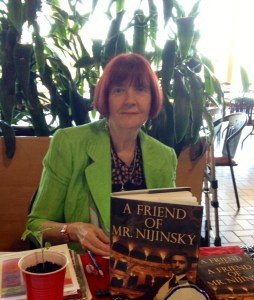
CaroSoles

Caro Soles

In the panel “The Science behind Science Fiction” I was joined by Katherine Prairie, Anita Dolman, Matthew Bin, Lisa Tooey, Kristen Kiomall, and A.A. Jankiewicz with moderator Caroline Frechette. We discussed the utility and risk of using pseudoscience in a science fiction story, a genre known for expectations of accuracy and prescience. In 1979, Ray Bradbury wrote: People ask me to predict the future, when all I want to do is prevent it. Better yet, build it. Predicting the future is much too easy, anyway. You look at the people around you, the street you stand on, the visible air you breathe, and predict more of the same. To hell with more. I want better.”

TanyaHuff-signing

Tanya Huff signs one of her books

Depending on whether the story is considered hard SF or soft SF, this level of accuracy in both actual science presented as premise and ability to predict science and technology will vary. Given that science fiction is largely metaphoric, the predictability of an SF story is secondary to the story’s value as metaphor and allegory. The consensus of the panel was that the audience determined the importance of precision and accuracy. In the final analysis, if the story is grounded in its own consistency, anything is possible.

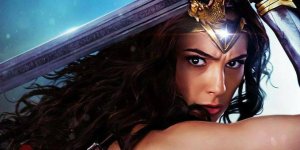
WonderWoman

Wonder Woman (Gal Gadot)

In “Women in Genre” I was joined by Violette Malan, Nancy Kilpatrick, Eve Langland, Alyssa Cooper, Janet Kellogg, and Liz Lindsay with moderator Sandra Kasturi. The banter was by turns fun and edgy, all lubricated with good humour by all participants. As a writer of science fiction and fantasy of which 90% feature a “strong female protagonist”, I brought up the controversy of what, in fact, determines a good female lead in story. Why do so many heroines still provide just a kick-ass version of a male hero? Why are so many female protagonist heroes still defined by the rules of what makes a male a hero? Where are the real women?

Politics south of us aside—along with Margaret Atwood’s all too realistic Handmaid’s Tale (currently playing on Bravo TV), we discussed the recent push-back in Texas on the all-women showing of “Wonder Woman,” which prompted many heated tweets. The Atlantic recently published an article on the film—and surrounding events—entitled “Wonder Woman, Heroine of the Post-Truth Age.”wonder-woman-movie-poster

Wonder Woman is set at the height of World War I, but is otherwise a decidedly modern movie,” writes Megan Garber of The Atlantic. “It stars a woman (Gal Gadot) and treats a man, Steve (Chris Pine), as its damsel-in-distress. It has managed, even before its release, to enrage men’s-rights activists, which is quickly becoming a reliable measure of a movie’s modernity.”

wonderwoman-golden lassoWonder Woman uses a unique weapon, the Golden Lasso, known as the Lasso of Truth—because it compels anyone wrapped by it to reveal the truth.

When William Moulton Marston—scientist and inventor of the polygraph machine— created the Wonder Woman character, he envisioned a warrior who was also an investigator of truth. “Frankly,” he said, “Wonder Woman is psychological propaganda for the new type of woman who should, I believe, rule the world.” He believed that a world that gave women more power—politically and otherwise—would be more peaceful, more empathetic, more worthy, writes Garber. “And so Wonder Woman is a work that is decidedly at home, across its dimensions, in the world of 2017—a world that is on the one hand newly recognizing women’s widespread capabilities, but that is on the other deeply anxious about ‘alternative facts,’ about ‘fake news,’ about politically weaponized lies, about falsehoods that are uttered with no seeming consequence. The princess’s lasso, that shimmering metaphor for objective truth, is a symbol of aspiration; seen in another way, though, it is a symbol of despair. Here, in this wobbling weapon, is “wonder” as in awe; here, too, is “wonder” as in uncertainty. Here is a tool of truth that is decidedly ambivalent about its own powers. “How do I know you’re not lying to me right now?” the princess asks the spy. And the only way she can know for sure is to trust, paradoxically, in magic.”

Magic is OK, though. It is, after all, the stuff from which we draw when we write.

Nina-SF GOH-Limestone Genre Expo

Nina Munteanu, Science Fiction GOH at Limestone Genre Expo 2016

nina-2014aaNina Munteanu is an ecologist and internationally published author of award-nominated speculative novels, short stories and non-fiction. She is co-editor of Europa SF and currently teaches writing courses at George Brown College and the University of Toronto. Visit www.ninamunteanu.ca for the latest on her books.

What Genre Are You Writing … And Marketing?

Our multiplex world of discerning consumers is getting used to having what they consume laid out clearly and categorized. Literature is no different. Since the time of the ancient Greeks, when Aristotle proclaimed in his Poetics that poetry could be categorized into many “species”, critics have endeavored to label art to help the “commoner” interpret it.

Defining Genre

The word “genre” comes from the French word for “kind” or “gender” and provides a loose set of criteria for a category of composition. People in the book industry often use it to categorize literature.

“Genre” is notoriously difficult to define. For instance, what kinds of literary form should properly be called genres? Poetry is generally thought of as a literary “mode”, being too broad and too varied to be called a “genre”. The various types and forms of poetry are more properly called genres, such as the epic or the lyric.

A genre can be defined either by the formal properties of the work, or by its subject matter. A poem can be called a sonnet if it is 14 lines long, or described as an elegy if it speaks of the death of a loved or admired person.

Although genres are not precisely definable, genre considerations are one of the most important factors in determining what a person will see or read. Many genres have built-in audiences and corresponding publications that support them, such as magazines and websites. Some people think that books and movies that are difficult to categorize into a genre are likely to be less successful commercially. They’re probably right. And this is why we do it.

So, if you haven’t figured out what “genre” your writing falls under, start figuring it out now; your future publisher and marketer will want to know because they, in turn, have to tell their distributor and bookseller where to shelve the book. This is why you need to do this; the alternative is leaving it to Jack in the marketing department who may not have even read your book, but used the cover picture to figure it out. Yikes!

Genre Categories

Today’s Teacher provides the following list for genres in literature:

  • Biography/autobiography
  • Fantasy
  • Historical Fiction
  • Myths & Legends
  • Poetry
  • Science Fiction
  • Fairy Tales
  • Folk Tales
  • Mystery
  • Realistic Fiction
  • Non-Fiction
  • Short stories

They were pretty good in identifying the major genres but they missed Romance, Westerns, Horror, Erotica, Literary Fiction, Humor, and Young Adult (if you want to call that a genre). The point I’m making is that each person is bound to come up with a different list of genre categories. Go to five of your favorite bookstores (not just the chain stores, but the independent bookstores) and see for yourself how the professionals do it. It’s a miserable confusing mess. I’ve seen science fiction thrown in with fantasy and the whole category called “fantasy”. I’ve seen Diana Gabaldon’s historical time traveler series shelved under romance, mainstream and science fiction or fantasy depending on the bookstore. In truth, it’s all of these. Which brings us to cross-genre literature.

Crossing the Genre Lines

“Cross-genre”, also called “slipstream” or “interstitial fiction” or “fabulation”, is most commonly defined as fiction that crosses genre boundaries. Unless you’re Bruce Sterling, that is, who defines slipstream as:

A contemporary kind of writing which has set its face against consensus reality. It is fantastic, surreal sometimes, speculative on occasion, but not rigorously so. It does not aim to provoke a ‘sense of wonder’ or to systematically extrapolate in the manner of classic science fiction. Instead, this is a kind of writing that simply makes you feel very strange; the way that living in the late twentieth century makes you feel, if you are a person of a certain sensibility. We could call this kind of fiction Novels of Postmodern Sensibility, but that looks pretty bad on a category rack, and requires an acronym besides; so for the sake of convenience and argument, we will call these books ‘slipstream.’

“…Simply makes you feel strange”? Although lots of writing may do that to me (of course, I’m strange already), I’m not sure that I would define “slipstream” as writing that “makes you feel strange”. This is because I don’t think you can pin it down; it’s too slippery a “creature”. However, I think that this form (or is it a movement?) is promising to be one of the most exciting things occurring in literature today.

Patrick Kelly, in Asimov’s Science Fiction, wrote:

Today, we have literally many dozens of writers in both mainstream and genre who are working from these influences and creating new forms of cross-pollination. The problem with talking about cross-genre is that it’s not a single movement–it’s a bunch of individual writers pursuing individual visions that tend to simply share some of the same diverse influences. So it’s difficult to pin down and say ‘this is what it is and what it isn’t.’ That’s what is exciting to me about it–that it is difficult to categorize. In a sense, that means it’s a complex, organic creature.

Some popular “cross-genre” mixes include:

  • Action comedy = action + comedy
  • Black comedy (tragicomedy) = tragedy + comedy
  • Comedy-drama (dramedy) = comedy + drama
  • Romantic comedy = romance + comedy
  • Science fiction Western = science fiction + western

A friend of mine who is part Cree writes “slipstream” or “cross-genre” works that are essentially unclassifiable. Although she is a great writer, she has yet to find a publisher. I know why; they don’t know how to market her books to the booksellers. Where do you put them on the bookshelf? What a conundrum for the publisher and bookseller alike.

But, things are changing and hopefully my friend will see the results of that change. The irony of “slipstream” defying categorization is that it may be the next bestseller.

“From the ‘Lord of the Rings’ box-office smashes in the theaters to adults reading ‘Harry Potter’ books on their commute, it seems that the fantasy genre has permeated the mainstream,” notes Alana Abott, with Thomson Gale (an e-research and educational publishing firm). “The publishing industry has noticed, and new books combining familiar mainstream forms such as historical fiction, romance, and chick-lit are beginning to see an influx of magic.” Cross-pollination is cool. Cross-genre is “in”.

What genre are you writing?

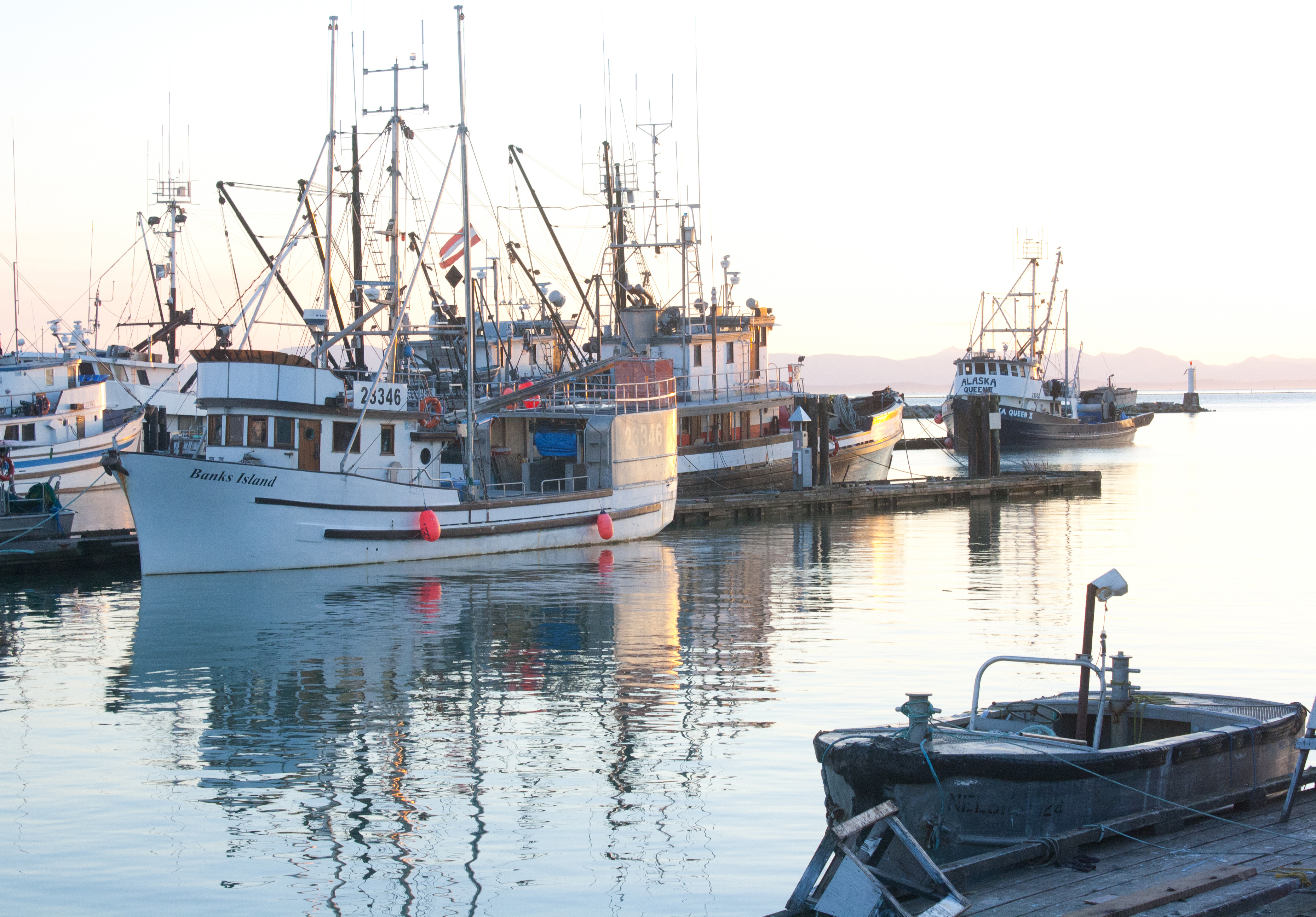
Steveston-boats

Steveston, BC (photo by Nina Munteanu)


nina-2014aaNina Munteanu is an ecologist and internationally published author of award-nominated speculative novels, short stories and non-fiction. She is co-editor of Europa SF and currently teaches writing courses at George Brown College and the University of Toronto. Visit www.ninamunteanu.ca for the latest on her books.