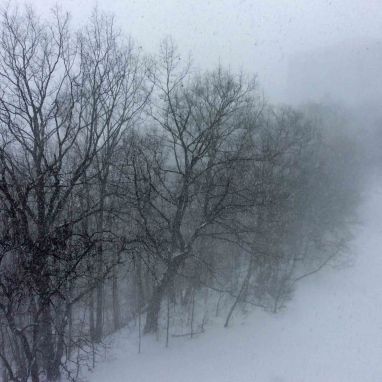
Trees in snow and fog, Ontario
When I first heard the writer’s edict “write what you know” I rejoined: but I write science fiction—I write about the unknown. What I still had to learn was that by describing “the other” SF really describes “us”. We explore ourselves through our relationship with the unknown. We do this by ensuring that all our plotlines reflect theme.
Write About What You Know
How many times have you been told to write about what you know? And how many times have you trusted that advice? Well, how interesting is that?!? We think our lives are dull, boring, and mundane. We write – and read – to get away from it, don’t we?

Nina Munteanu hikes along Highland Creek, Ontario (photo by Merridy Cox)
Well, yes…and no…
In the final analysis, even good “escapist” writing, like some science fiction, despite its alien settings and creatures of imagination, is grounded in the realities of our every-day lives, which form the basis of human nature. Love, ambition, trust, hate, envy, honor, courage. All these are universal human traits which the writer taps into and ultimately writes about.
“In the 19th century, John Keats wrote to a nightingale, an urn, a season. Simple, everyday things that he knew,” say Kim Addonizio and Dorianne Laux in The Writer’s Guide to Creativity. “Walt Whitman described the stars, a live oak, a field. They began with what they knew, what was at hand, what shimmered around them in the ordinary world.”
Writing about what you know isn’t about literal truths; it’s about what you know inside your heart. Write from the inside out. Write about what excites you; what frightens you; what angers you, makes you sad, happy. As SF author Marg Gilks says, “You know more than you think.”
Twisted Truths & Inner Knowledge
Writers can use our own knowledge and experiences in everyday life and translate them into something far from ordinary. You start with universal experiences.
Get Emotional
What excites you; what frightens you; what angers you, makes you sad, happy. These are emotions we all feel. When we give our characters experiences similar to our own, we breathe life into both character and experience and provide the reader an anchor for her heart.
Get Sensational
You know how it feels to have your knees shake with fatigue after a long climb or the hair-raising trepidation of walking into a dark place. Use these sensations to make your writing more sensual with added dimensions of reality.
Get People Around You
My neighbor has a funny way of focusing his gaze slightly off me when he talks, like he can’t look me directly in the eyes. When he approaches my house to deliver the paper, Dennis strides with a lilting gait as he listens to hip-hop on his ipod.
Drawing from what you observe and know of the people around you is one of a writer’s most treasured resources for character description. I always carry a notebook with me no matter where I go, even if it’s only to the grocery store.
The Magic of Storytelling

Deer Lake, Burnaby, BC (photo by Nina Munteanu)
A writer is like a magician. You play upon what readers all “know” then surprise them with the unexpected.
Unleashing your imagination and letting it soar while grounding yourself in the realities of universal truths is the stuff of which stories are made. This is what most of us mean when we say “write what you know.”
“Unless you are writing about a personal tragedy,” says Tina Morgan of Fiction Factor, “you will have to use your imagination. Use the creativity that drives you to write in the first place. Take those feelings you have every day and amplify them. Make them more intense, more vivid. Before you know it, you will be ‘writing what you know’.”
“Next time you hear ‘write what you know,’ ” says Gilks, “you’ll realize that you know an awful lot about what matters most in a story’s success. It’s waiting only to be shaped by your imagination.”
Write Real
Literary Agent, Rachelle Gardner, provided a great definition of “write what you know” on her blog. Here’s an excerpt:
Most people think “write what you know” means you have to put characters in situations you’re personally familiar with. If you’re a mom with five kids, you should write a mom story. If you’ve fought cancer and won, you should write about that. But in my opinion, that’s not what it means.
Write what you know means write with authenticity about thoughts, feelings, experiences of life. Be honest. Write from a deep place. Don’t write from the surface. Whether you’re writing about parenthood or cancer or anything else… be real.
—Rachell Gardner
Don’t reflect what you know from other people or the media… write what you know from your own inner life.
An excerpt of this article appeared in CBC’s Canada Writes.


 J.K. Rowling was an unemployed single mother on public assistance when she wrote the first book. The book was rejected by over a dozen publishers before a small British publisher, Bloomsbury, said yes.
 John Steinbeck worked through many odd jobs before earning enough to work as a full time writer. His day jobs included: apprentice painter, fruit picker, estate caretaker and Madison Square Garden construction worker. He also ran a fish hatchery in Lake Tahoe and did guided tours there.
 Margaret Atwood worked in a coffee shop. She says her first job experience was NOT ideal: She had to deal with a difficult cash register, a rude ex-boyfriend who would come by just to stare at her and barely tip, and fellow employees who were definitely not friendship material.
 Before his writing career blossomed, William Faulkner worked for the postal service, as postmaster at the University of Mississippi. In his resignation note, he summarized the struggle of art and commerce faced by most authors: “As long as I live under the capitalist system I expect to have my life influenced by the demands of moneyed people. But I will be damned if I propose to be at the beck and call of every itinerant scoundrel who has two cents to invest in a postage stamp. This, sir, is my resignation.”
 In a 1953 interview, J.D. Salinger shared that he had served as entertainment director on the HMS Kungsholm, a Swedish luxury liner. He drew on the experience for his short story “Teddy”, which takes place on a liner.
 Ursula Le Guin struggled initially to be published in the mainstream fiction world, but her first three novels, Rocannon’s World, Planet of Exile and City of Illusions, put her on the sci-fi map.
 An accomplished tenor, James Joyce made money singing for his supper before his work was published.
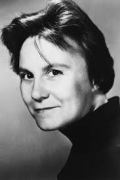 Harper Lee worked as a reservation clerk for Eastern Air Lines for several years, writing stories in her spare time. A windfall came when a friend offered her a Chirsmas gift of one year’s wages and one year off to write whatever she pleased; she wrote the first draft of “To Kill a Mockingbird”.
 Stephen King was a janitor for a high school as he struggled to get his fiction published. His time wheeling the cart through the halls inspired him to write the opening girl’s locker room scene in “Carrie”, his breakout novel.
 Kurt Vonnegut managed Americas first Saab dealership in Cape Cod during the late 1950s, a job he joked about in a 2004 essay, “I now believe my failure as a dealer … explains what would otherwise remain a deep mystery: why the Swedes have never given me a Nobel prize for literature.”
 When Virginia Woolf’s brilliant novels failed to find a publisher, she and her husband Leonard bought a printing press and set up their own publishing compay Hogarth Press in their living room. They published Woolf’s masterful novels, such as Orlando and To The Lighthouse, as well as T.S. Eliot’s The Waste Land, among other classics of the era.
 T.S. Eliot worked as a clerk for Lloyds Bank of London. During that time, he composed “The Waste Land”.
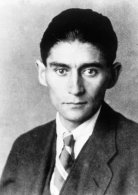 Franz Kafka served as the Chief Legal Secretary of the Workmen’s Accident Insurance Institute. Obviously.
 and The Hitchhiker’s Guide to the Galaxy author Douglas Adams was no exception: At one point, he served as a bodyguard for a wealthy Arabian family while he wrote for radio shows and Monty Python. Good writers are good multitaskers!
 James A. Michener was a teacher before writing only at age 40. He Michener is notable more for his output than his age. The Tales of the South Pacific author (whose Pulitzer Prize-winning book would later be adapted into a Broadway musical) wrote a staggering 40 books after the age of 40—nearly a
 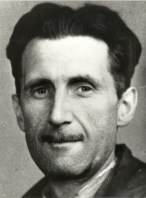 book a year—after spending much of his life as a teacher.
 Nina Munteanu is an ecologist, limnologist and internationally published author of award-nominated speculative novels, short stories and non-fiction. She is co-editor of Europa SF and currently teaches writing courses at George Brown College and the University of Toronto. Visit

 Nina Munteanu is an ecologist, limnologist and internationally published author of award-nominated speculative novels, short stories and non-fiction. She is co-editor of Europa SF and currently teaches writing courses at George Brown College and the University of Toronto. Visit
  Nina Munteanu’s near-future speculative short story “The Way of Water” in Bruce Meyer’s (editor) “Cli Fi: Canadian Tales of Climate Change”, published by
 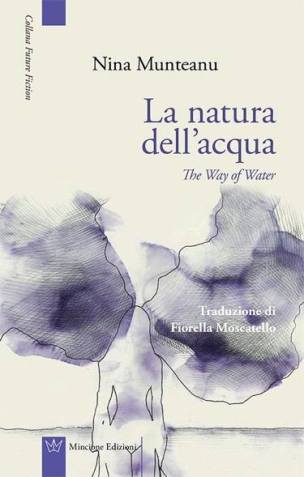 A bilingual print book by
 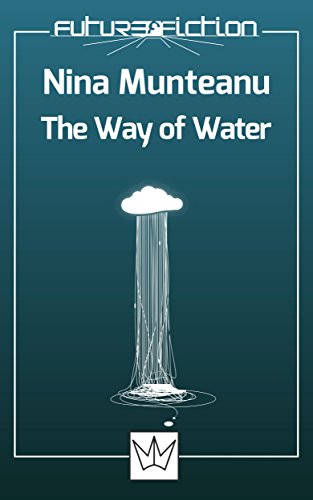 ” ‘The Way of Water’ is to be ‘a shapeshifter,’ says Nina Munteanu in her dystopian narrative, where she draws a dark scenario and, unfortunately, not too improbable in the near future. In the universe of the story water has become a very precious commodity: rationed consumption, credits (always of water) accounted for and debts collected…The Chinese multinationals have exchanged the public debt of other states with their water reserves with which, now, they can control the climate, deciding when and where it will rain. Who understands this dirty game has been silenced, like Hilda’s mother, a limnologist, inexplicably arrested and never returned; like the daughter of two water vendors, mysteriously disappeared, after having decided not to bow to economic powers: Hanna, who now prefers secure virtual identities to evanescent real appearances. Water. The two, like the covalent bond of a complex molecule, develop a relationship of attraction and repulsion that will first make them meet and then, little by little, will change into a tormented love but, at the same time, so pure as to cause Hilda at great risk, to make an extreme decision that will allow Hanna to realize the strange prophecy that the internal voice, perhaps the consciousness of water, had resonated in the two women for a long time.
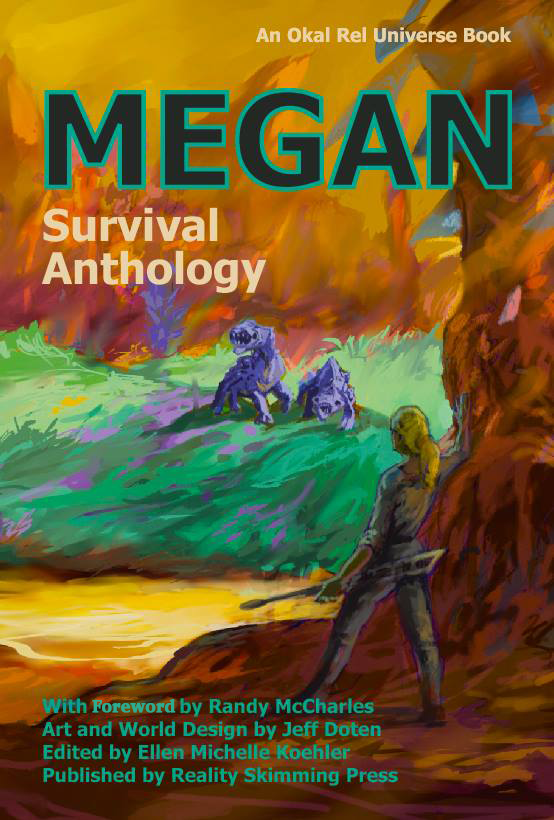
 “The Way of Water” will also appear alongside a collection of international works (including authors from Greece, Nigeria, China, India, Russia, Mexico, USA, UK, Italy, Canada (yours truly), Cuba, and Zimbabwe) in Bill Campbell and Francesco Verso’s

 After she and fellow colonists crash land on the hostile jungle planet of Mega, rebel-scientist Izumi, widower and hermit, boldly sets out against orders on a hunch that may ultimately save her fellow survivors—but may also risk all. As the other colonists take stock, Izumi—obsessed with discovery and the need to save lives—plunges into the dangerous forest, which harbors answers, not only to their freshwater problem, but ultimately to the nature of the universe itself. Mega was a goldilocks planet—it had saltwater and supported life—but the planet also possessed magnetic-electro-gravitational anomalies and a gravitational field that didn’t match its size and mass. The synchronous dance of its global electromagnetic field suggested self-organization to Izumi, who slowly pieced together Mega’s secrets: from its “honeycomb” pools to the six-legged uber-predators and jungle infrasounds—somehow all connected to the water. Still haunted by the meaningless death of her family back on Mars, Izumi’s intrepid search for life becomes a metaphoric and existential journey of the heart that explores how we connect and communicate—with one another and the universe—a journey intimately connected with water.
 Fingal’s Cave
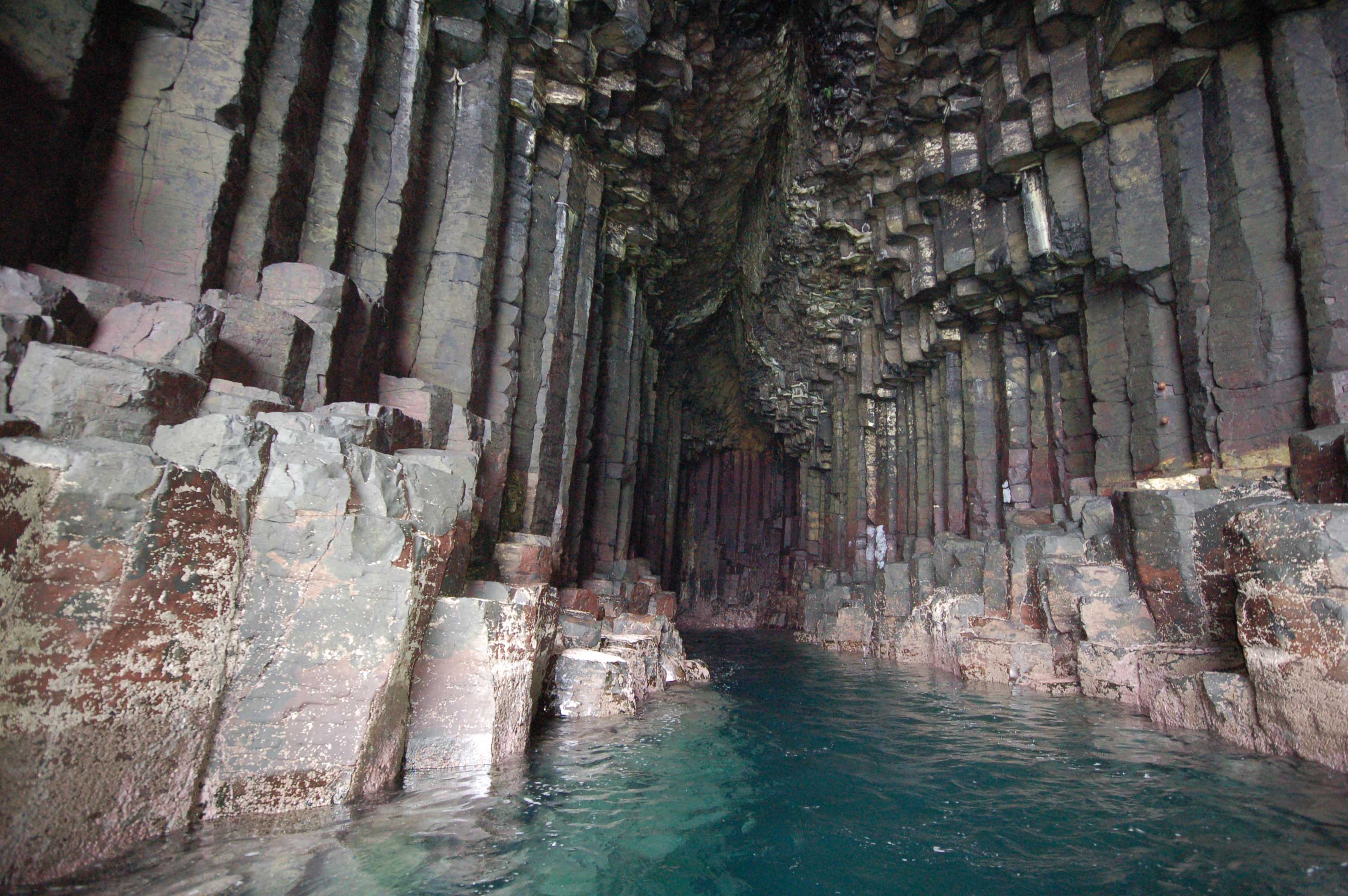 Fingal’s Cave is a sea cave on the uninhabited island of Staffa in the Inner Hebrides of Scotland. The cave is formed entirely from hexagonally jointed basalt columns in a Paleocene lava flow (similar to the Giant’s Causeway in Northern Ireland). Its entrance is a large archway filled by the sea. The eerie sounds made by the echoes of waves in the cave, give it the atmosphere of a natural cathedral. Known for its natural acoustics, the cave is named after the hero of an epic poem by 18th century Scots poet-historian James Macpherson. Fingal means “white stranger”.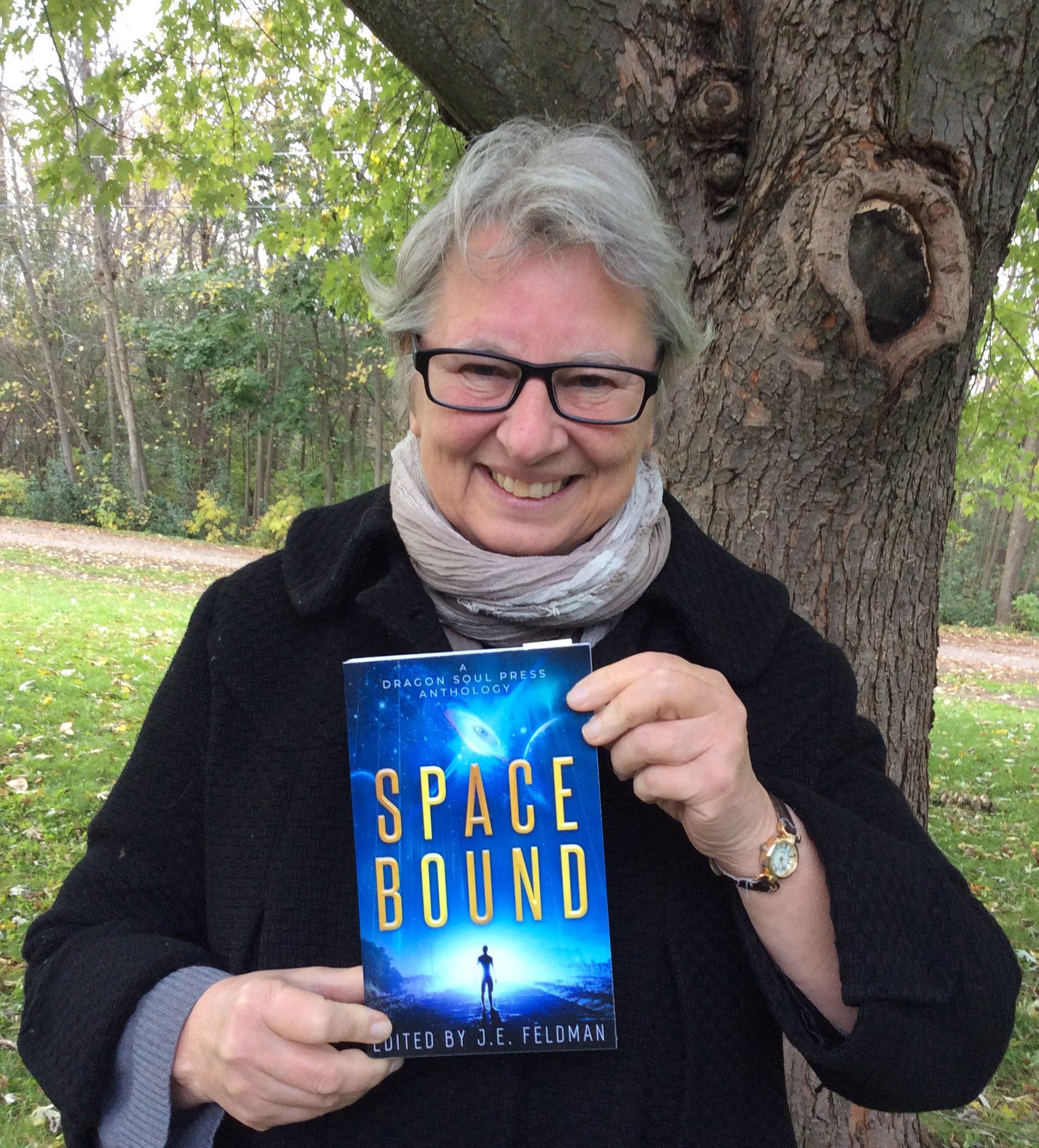


 Arizona State University’s Imagination and Climate Futures Initiative is again hosting a Climate Fiction Short Story Contest. In years past they invited writers from around the world to submit speculative fiction stories that explore climate change to narrate a world in flux. Previous contests received submissions from 67 different countries and 12 finalists were published in a digital anthology “Everything Change”.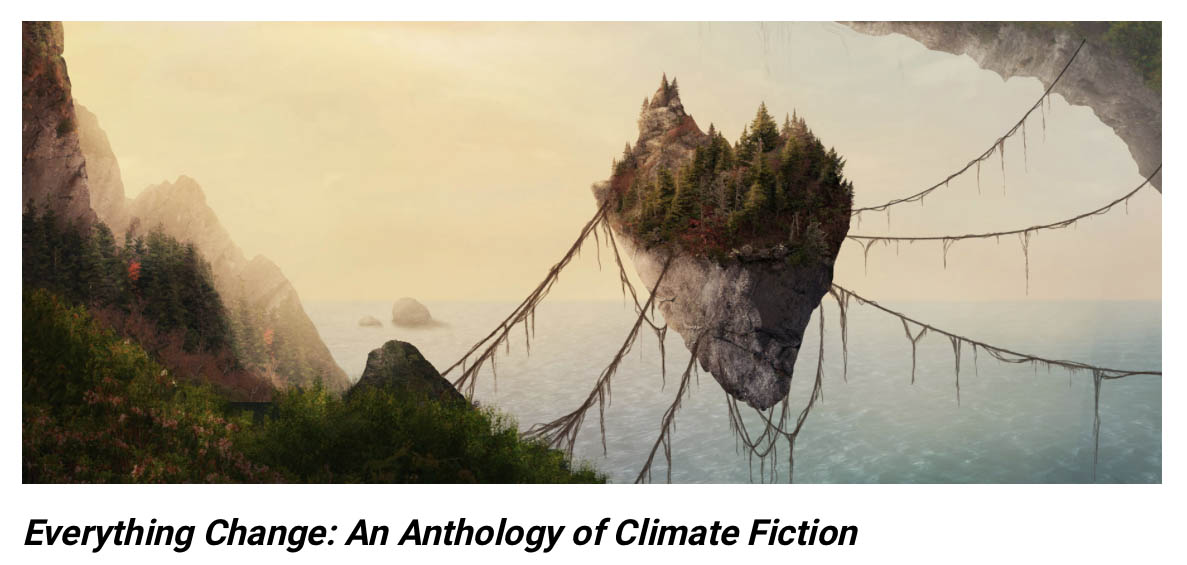

 When I was just beginning as a novelist, the publisher guideline request “submit a synopsis and sample chapters” was intimidating to say the least. There was something terrifyingly daunting about writing a succinct compelling summary of my 300-page novel packaged into just a few pages. As author Katherine Eliska Kimbriel said, “The instinctive response [of the author] is to clap on a helmet and start digging a trench.” I had a right to be terrified. In some ways the synopsis is the hardest thing for a novelist to write. Yet it is the first thing most publishers and agents want (and have time) to see of your cherished project (aside from those sample chapters, of course). Every fiction writer who wants to sell in the current market must know how to write a synopsis because that’s what an editor wants to see first. Most editors (if they’re good) are overworked with scarce enough time to answer their phones, much less their emails.
 A synopsis of your novel goes beyond the outline to help polish elements of story arc, characterization with plot and setting with story. The synopsis can answer questions perplexing the author, stuck on a scene or plot item. It helps you weave your novel’s elements into a well-integrated story that is compelling at many levels. Because the synopsis is based on emotional turning points (related to theme), character dramatization of the premise is a key foundation. It makes sense to write drafts of your synopsis as you go along in the novel; that way it’s useful to both you and to the editor and then it’s more or less written when you need to submit it along with sample chapters…and not quite as daunting a task either.
 Nina Munteanu is an ecologist and internationally published author of award-nominated speculative novels, short stories and non-fiction. She is co-editor of Europa SF and currently teaches writing courses at George Brown College and the University of Toronto. Visit
 Unclutter your writing: There is a Mennonite adage that applies to writing: “less is more”. Sentences in early works tend to be full of extra words (e.g., using “ing” verbs, add-ons like “he started to think” instead of simply “he thought”). Cut down the words in your paragraphs (often in the intro chapters) by at least 20%. Be merciless; you won’t miss them, believe me, and you will add others later in your second round of edits.
