I love using the em dash. Along with the semi-colon, it’s my go-to punctuation. And before you ask—no, I don’t use AI in my writing.
Lately, I’ve discovered that use of the em dash has come under criticism by writers and discerning readers, given its apparently overwhelming use by AI. The appearance of em dashes in script is now considered a “tell” that a written work was AI-generated.
.
.
I’m told that em dashes were deeply embedded in the AI learning algorithms—they were everywhere in human-generated training data such as books, articles, essays because we used them so often. Because they weren’t flagged as risky during training, they became a default. AI learns through pattern mimicry by sifting through massive text datasets (that have included my own works of fiction and non-fiction;by the way, I use the em dash a lot because I love what it does for a sentence). One theory suggests that em dashes are preferred by autoregressive models for waving tokens or providing structural breaks. Its use has its own name: the “ChatGPT hyphen.” The discussion alone has brought more attention to the em dash, mostly negative attention.
As a result of em dash’s association with LLM-generated text, some writers have started avoiding the use of em dashes altogether to prevent their work from being labelled fake—despite its legitimate appearance in human writing for centuries.
This is a real shame.
Because, the em dash is a visual and versatile tool to achieve an emphasized pause, the equivalent to a raised eyebrow, a dramatic mid-sentence shift in thought, or a noteworthy point to consider. Used correctly and with intention, the em dash provides depth, contextual complexity and three dimensionality within an otherwise unidirectional sentence. The em dash singles out a thought, raises it above the script to show its merit amid the greater sentence concept. What is often achieved is more complex and layered with additional meaning and clarity. The visual nature of the em dash—how it looks in a sentence—is also important. Because, as writer Bill Zinsser says, “Writing is visual—it catches the eye before it has a chance to catch the brain.” There’s a kind of aesthetic nature to how writing sits on a page; this is also why paragraphing—breaking up long text into shorter paragraphs on a page—is so important. The white space created by these breaks subliminally signals the reader, giving them a chance to breathe as they read. The presence of an em dash similarly signals the reader to read the enclosed phrase apart—yet remaining an important part—of the sentence.
Here’s how The Chicago Manual of Style explains it:
“The em dash has several uses. It allows, in a manner similar to parentheses, an additional thought to be added within a sentence by sort of breaking away from that sentence—as I’ve done here. Its use or misuse for this purpose is a matter of taste, and subject to the effect on the writer’s or reader’s “ear.” Em dashes also substitute for something missing. For example, in a bibliographic list, rather than repeating the same author over and over again, three consecutive em dashes (also known as a 3-em dash) stand in for the author’s name. In interrupted speech, one or two em dashes may be used: “I wasn’t trying to imply—” “Then just what were you trying to do?””
After announcing that the em dash is their favourite punctuation, Bavesh Rajaraman listed the several ways you can use this punctuation:
1. use it like how I regularly do, with bridging sentences, kind of like a longer comma, or a semicolon.
2. use it like a colon: “Some examples of transition metal atoms are — Co, Ni, Fe”
3. use it like a parenthesis, to add extra detail, or clarify. “The Wheel of Time has been an incredibly strong fantasy series — till book 6 where I’m currently at — with size and scope incomparable to its contemporaries”
4. use it to interrupt a speaker: “Melissa, I’m gonna be leaving for work, make sure to keep the door — “ as Klein heard the door thud, “I guess she understood the assignment,” he lampooned as he headed for work.
5. use it as something more important than demarcated in parenthesis. Here’s a snippet from Brandon Sanderson’s Essay “Outside”: “When you’re very young, it’s proximity — not shared interests — that makes friends. This often changes as you age. By fourteen, John had found his way to basketball, parties, and popularity. I had not.”— Brandon Sanderson, 2023
Celebrated poets and writers—including Emily Dickinson, Henry James, Virginia Woolf, and Stephen King—have used the em dash for emphasis, as bridge or interruption, or to set off parenthetical thoughts, create unique rhythms and cadence in their writing. The poet Emily Dickinson was known to use dashes instead of commas or periods to create pauses, express emotion and link ideas in her poetry. These celebrated authors used the em dash for emphasis and interruption, drawing attention to a phrase or to intentionally break a sentence’s flow. They used the em dash as appositives, to set off additional information with more impact. They used the em dash to create rhythm and pacing. They used the em dash to create a unique voice and style. The em dash is an uber-punctuation! And it’s been around since the early 1800s, adding style, pizazz, rhythm and depth to all types of writing.
I wish I had this quote from Rajaraman when I was submitting my fiction to editors, who seemed to like to remove most of my em dashes and replace them with boring commas:
“The em dash is a fiction writer’s spell-casting focus, it’s their ultimate pacing tool; used to fix the flow of a sentence. There’s no such thing as too many em dashes in literature.”
Canadian journalist Clive Thompson wrote, “Writers worry they overuse it. They shouldn’t—it’s awesome.”
All to say forget the internet conspiracy theories that em dashes are a telltale sign of AI writing; forget that ChatGPT can’t stop using them even when users tell it to stop. The em dash is not a sign of AI, but that AI was trained on good writing—good human writing. FVR at WellVersed.com adds that it’s “not a robot glitch—it’s a writer’s signature.”
So, I for one, will continue using the em dash liberally, as I have for the past forty years—long before ChatGPT hiccupped into our writing lives and long after.
.
Robot copying the em dash
.
References:
Csutoras, Brent. 2025. “The Em Dash Dilemma: How a Punctuation Mark Became AI’s Stubborn Signature.” Medium, April 29, 2025.
Rajaraman, Bavesh. 2025. “An Era to its Knee: An Em-dash Retrospective.” The Jabber Junction, July 29, 2025.
Nina Munteanu is an award-winning novelist and short story writer of eco-fiction, science fiction and fantasy. She also has three writing guides out: The Fiction Writer; The Journal Writer; and The Ecology of Writing and teaches fiction writing and technical writing at university and online. Check the Publications page on this site for a summary of what she has out there. Nina teaches writing at the University of Toronto and has been coaching fiction and non-fiction authors for over 20 years. You can find Nina’s short podcasts on writing on YouTube. Check out this site for more author advice from how to write a synopsis to finding your muse and the art and science of writing.
It was several years ago, in 2020, that Terry Birdgenaw approached me as a writing coach to look at his first novel. When he described its premise, I was hooked right away and agreed to give it an editorial review. It was the beginning of a wonderful and rich experience with Terry’s books, now a series entitled The Antunite Chronicles. From the start, I was impressed and fascinated with his imagination and accurate use of science to produce a diverting allegorical CliFi series about cyborg insects on a far-away planet that serves as metaphor to developing autocracies on Earth.
Terry has three books out, with a fourth upcoming. The three books in this YA series take place on a far-away planet and moon, serving as a political and environmental allegory of an evolving technological society and failed democracy. They include: Antuna’s Story; The Rise and Fall of Antocracy; and Antunites Unite. The theme of induced climate change and environmental destruction runs deeply through the first three books. The fourth book, soon to release, is Cyborg Contact, which returns us to Earth. I’ll let Terry describe the series in the following interview I conducted with him on November 26:
.
Nina: Your background and expertise is in neuroscience and psychology with over 150 scientific publications. You are Harold Griffith Professor of Anesthesia Research at McGill University in Montreal and your main research focus is on the mechanisms underlying neuroplasticity and its influence on the perception of pain. What got you started writing this incredible series, an adventure story that embraces ecology and entomology? What gave you the idea to create this imaginative modern allegory on the evolution of a technological society using insects as your main characters?
Terry: Oddly enough, I was not originally planning to write fiction. My inspiration came from my school librarian wife, Ann Birdgenaw, when she began writing the second book of her children’s chapter book series, Black Hole Radio. Her series features fifth-grade kids who travel through a wormhole to different planets, aiding the inhabitants they discover. She was considering what kind of planet and civilization her explorers would encounter, and I gave her some ideas about a giant cyborg-insect world that she ran with. Having some skin in the game, I participated beyond my welcome, offering plotlines that were far too advanced for her 7- to 11-year-old readers. Graciously, Ann suggested I take my ideas and write the backstory for her book, Black Hole Radio – Bilaluna, but target my book at young adults and adults. Thus began my fiction writing adventure. It was a rough start, but with the help of a tolerant book coach, my planned novella rapidly expanded to a trilogy. Perhaps a quick study because of years of scientific writing, I still credit Nina with opening in me an imaginative creativity I never knew I possessed.
.
Nina: The narrative of your stories is from the POV of various insects and in some way, the stories are dramatizations of real and accurate ecological relationships of insects with their environment and each other. How did you prepare for this—both in relaying accurate ecologies and in realizable dramatization and characterization of your main characters—all insects? How did you avoid what I would call the Disney-effect: anthropomorphising insect characters into human archetypes to achieve reader engagement? How did you create that balance between realistic representation and empathic portrayal?
Terry: Although my books are parodies with characters who face political and ecological problems and anthropomorphise human dilemmas, I did not want them to be simply furry or slimy stand-ins for the humans they satirize. Thus, I drew on my long-standing expertise as a scientific researcher to delve deeply into entomology, ecology and environmental science. Fascinated by the richness of insect activities and interactions and the similarity between insect and human behaviour, I endeavoured to exploit my newly acquired knowledge within the pages of my story. I was inspired both by Orwellian dystopias and works such as Bernard Werber’s Empire of the Ants and Laline Paull’s The Bees. But more than that, I learned to let myself be taken into the world my insects lived in, experiencing both their instinctive realities and the human predicaments I intended to lampoon in equal measure.
.
Nina: I noticed some fun metaphoric descriptions and expressions that incorporated insect terms to represent human counterparts. Did these come to you easily or were they a lot of work over time? Can you describe the process you used? For instance, did you spend a lot of time watching ants on the sidewalk?
Terry: Some phrases like ‘she shook her antenna to tune her attention’, ‘I took that as a back-clawed compliment’, or ‘he is such a hindgut hole’ came easily to me as differences in insect and human anatomy necessitated them. Others, like the expressions explained in my dictionary of pheromonal insect emotions, took much more reflection. This literary technique was inspired by your writing guide, The Fiction Writer, when you described how to add colour to one’s writing by using word pairings that mix up the senses, like the well-known one ‘biting cold’. This excellent advice led me to develop an extensive lexicon of insect emotions/non-verbal speech, including word combinations such as abrasive aroma, bitter bouquet, frosty fragrance, and vacillating vapour. They were not all alliterations, but some, like ‘she emitted an effervescent essence, were clearly intended to be. I didn’t watch ants walking, but I thought a lot about how they might communicate their emotions pheromonally.
.
Nina: One of the things I enjoyed throughout your series is how you seamlessly imparted interesting facts about insects on our planet in the storytelling. I learned a lot about various insects! Tell us a little about the process you used to achieve this so effectively.
Terry: As a long-time researcher, I have learned how to find and use facts from scientific literature and reliable web-based information on many subjects within and outside my scientific field. Insect behaviour is little known, but often fascinating, and I enjoyed both discovering many details and incorporating them into fiction scenes. Sometimes I was required to dig even deeper than I initially expected to make my stories scientifically accurate. One of these cases had a very significant impact on a critical component of my book’s key plot. In Antunites Unite, ants are separated into a hierarchy of castes based on exoskeleton colour. Although clearly an anti-racism story, I originally wrote it with black ants as oppressors of both brown and red ants. Perhaps influenced by previous literature and movies, where the bad guys are often dressed in black, I had a feeling that some readers might interpret my choice as having a racist underpinning. I convinced myself that readers would not take the colour choice as representative of human ethnicity. However, the last beta reader to comment on the book made such an interpretation and confirmed my fear that some readers might see it as the opposite of my intention. So, while I debated altering the colour schemes, I dug deeper into the entomological discovery of a phenomenon my story paralleled, involving what entomologists call slave-maker ants. When my extensive research confirmed that red ants are more often the ants using raids to steal the eggs of other ants to be raised as slave-like workers for the dominant reds, I knew I had to reverse the colours. And this was no easy task, because all the characters in each caste took names that reflected their colour, like Ruby and Obsidiant. There were also many humorous references to colour, such as black widow spiders and lava fields, that needed to be reworked. It was an editing nightmare: Rose became Raven, and Raven – Rose, while Cole gave way to Clay, and Jett morphed to Jasper, etc., etc., etc. But in the end, it was true to nature and avoided any unwanted racial interpretations.
.
Nina: In your first three books—a political modern satire on developing autocracies and human-induced climate change—you explore the technological and biological evolution of an insect exo-community in which certain species—ants for instance—acquire the ability to become cyborgs, ANTs, growing in size and abilities to navigate their world more effectively with related achievements—and consequences. As an ecologist, I was fascinated by how you portrayed the changing relationship of these beings to their environment as they evolved. Do you see a parallel with human society? Can you elaborate on this?
Terry: Yes, on a macro level. That is, technology can benefit society immensely, but it can also cause significant harm when coupled with greed, wilful ignorance of scientific warnings, and leaders misleading the public. I highlight one line of poetry written by my narrator in The Rise and Fall of Antocracy: “Like Peter and the crows, tis science, truth and reality denied ere climate is crucified.” Cyborg insects were created to enhance the production of honey, which was their currency. Cyborg ants, who most craved both power and honey, deceived the public to the detriment of the environment and ignored the science that provided evidence of environmental changes, which most insectoids on the planet denied. Perhaps an obvious cataclysmic message to those in our world, but many on this Earth apparently need to be hit over the head to see where this all may lead.
.
Nina: Tell us about your latest book, the fourth in the series, Cyborg Contact, in which one of the cyborg ANTs returns to Earth through a wormhole with an important mission. I found that, while the first three books served as satirical allegory to a developing technological society through the evolving insect communities, the fourth book—being a first contact—shifts into more of an exploration of ‘the other,’ its perception and treatment by humans and their civilizations. Can you expand on this? How does humanity’s perception and treatment of the ‘other’ factor into our treatment of our environment and the growing phenomenon of climate change?
Terry: I might disagree and point out that ‘exclusion of the other’ is a dominant theme in all four books. The difference is that in Cyborg Contact, the main character embodies ‘the other’, so it hits home more strongly. What could be more ‘otherly’ than an alien (from another planet) who is treated like an illegal alien and hunted by ICE agents? And, too, aside from being hunted, many other dangers the alien experiences on Earth, including hurricanes, droughts, mudslides, and forest fires, are all caused by climate change, which has accelerated in the near-future North America our hero traverses. It seems that for some world leaders, a lack of empathy for others is paired with a disregard for the environment.
.
Nina: Who is reading your books? And who should be who isn’t?
Terry: They are read by both young adults and adults; sometimes by parents reading to their pre-teens. They are not New York Times best sellers, but are highly celebrated by those who have read them. They should be read by all sci-fi and fantasy readers aged 13 and up who enjoy a thought-provoking read, except those who support fascism.
.
Nina: How have your books been generally received? I understand that your trilogy has won the Firebird Book Award. Congratulations! What are people saying about your books?
Terry: Editorial reviews have been stellar, and the books have received awards from most of the contests to which they have been entered. Awards for all three books include Gold Medal/Badge (Readers’ Favourite, Literary Titan), First Place Prize (Firebird, Entrada Incipere), Silver & Bronze Medal (Firebird, Bookfest), Honourable Mention (Readers’ Favourite), and Finalist (American Writing Awards, Chanticleer, The Wishing Shelf). Most notable review comments describe the books as: “soon-to-be a bestseller”, “takes speculative fiction to a new level”, “fantastical to a degree not seen elsewhere in any Sci-Fi dystopian fiction”, “as big in spirit as any literary giant in the genre” and “holds its ground next to Brave New World, Dune, Animal Farm, and 1984”. These reviews have “blown me away”, like an enthusiastic reader’s comment on Antuna’s Story.
.
Nina: What’s next for Terry Birdgenaw?
Terry: Finish editing Book 4 and writing a dystopian novel featuring humans for a change.
.
Nina: That sounds very intriguing! Thanks for coming out for the interview, Terry.
Terry: My pleasure, Nina.
.
The first three books of the Antunite Chronicles series by Terry Birdgenaw
.
You can find Terry’s books all over the place, including Amazon. Find out more about Terry on his website and check out Terry’s interview on SF Canada in which he talks more about his heritage and interests.
Terry Birdgenaw and one of his fans
.
Terry Birdgenaw with Narrant at award ceremonies
.
Nina Munteanu is a Canadian ecologist / limnologist and novelist. She is co-editor of Europa SF and currently teaches writing courses at George Brown College and the University of Toronto. Visit www.ninamunteanu.ca for the latest on her books. Nina’s bilingual “La natura dell’acqua / The Way of Water” was published by Mincione Edizioni in Rome. Her non-fiction book “Water Is…” by Pixl Press (Vancouver) was selected by Margaret Atwood in the New York Times ‘Year in Reading’ and was chosen as the 2017 Summer Read by Water Canada. Her novel “A Diary in the Age of Water” was released by Inanna Publications (Toronto) in June 2020.
I teachscholarly writing at the University of Toronto through several writing centres; I’m helping students with their assignments in engineering, the health sciences and humanities. All are generating scholarly papers on various topics with various purposes; anything from a critical assessment, literature review, position paper, or reflection essay to a lessons learned document, research proposal, or thesis chapter. Everyone is using some kind of AI when generating, writing and editing their works. And there are plenty of AI tools to choose from. Some of the most common AI tools used by my students include: Grammarly for grammar; Perplexity as a research tool, text summarizer and conversational AI search engine; Paperpal for editing, Google Scholar as a search engine, ChatGPT to summarize works, brainstorm ideas, provide quiz questions, or even generate human-like text in a first draft.
All these assignments are purpose-built and students must successfully address their assignment requirements to succeed. In some ways, the idea, topic and handling of the topic are assigned; the student need only carefully and clearly address it.
But, when creating something new, like a piece of fiction or even a non-fiction article, professional writers are essentially walking into a new world, not restricted by “assignment guidelines or requirements”; they truly must face the blank page.
.
The blank pages of a notebook (photo by Nina Munteanu)
.
There’s no precedence for creating a piece of fiction. Yes, certainly inspiration is involved, but the work of something unique must start with a blank page. Professional writers often dread facing the blank page. It even has a name: blank page syndrome, or writer’s block, the feeling of being overwhelmed or even paralyzed by the prospect of starting. Alex Elkjær Vasegaard tells us that “it may come from the fear of not being good enough, of not knowing enough, or of the vastness of the potential ahead.”
I recently read a post on LinkedIn by writing colleague Erik Buchanan, which resonated with me. I asked his permission to quote it here and he gladly gave it:
Just got a recommended post from a marketing person claiming that using AI allows you to get past the hardest part of writing: “the blank page.”
I blocked them, and I’m putting what I was going to reply to them here instead, because they are not a person who will be open to this rant:
If you cannot get past the blank page, you are not a writer.
If you use AI to get past the blank page, you’re still not a writer, and now you’re a thief.
You’re using other writers’ words, fed into an information aggregator and splatted out like a drunk’s meal vomited onto the sidewalk. And you’re scooping it up and claiming it’s fresh food.
You want to write? Write something.
Speaking as one who has written 18 novels (more than half ghostwritten for money), 150 articles, short stories, instruction manuals, sales copy, website copy, commercial scripts, short films and now a feature film (currently being re-written) it’s not that hard.
Using AI means you’re too lazy to learn the craft.
Don’t do it.
.
A blank page is more than a simple page that is empty. It offers something new, without precedence to write, draw or create. Whether it’s a physical sheet of paper in a notebook or a white space in a digital document, the blank page represents a fresh beginning and wonderful potential for unique creation.
.
Erik’s point is so Germaine to the creative writing process. The blank page is an open door to possibility; it is a writer’s first step in creating something uniquely their own. Plot, character, setting and language—such as technique, style, words and phrases—certainly make a novel wonderful to read; but it is the unique idea, the spark, the premise and theme that carry that novel into greatness and keep it memorable.
Coming up with first words on a blank page (photo by Nina Munteanu)
.
Poet Alberto Blanco challenges our notion of the blank page being blank: From the tree it was made from, the rain and sun that allowed the tree to grow, and the people that created it, it soon becomes clear that a blank page contains the whole cosmos.
In “The Blank Page: A Meditation on the Creative Process and Life’s Journey” Alex ElkjærVasegaard describes the blank page as “an expanse of white, unsullied by ink or pixels. It’s the void that calls for creation. It’s the challenge that every artist, writer, and thinker faces. But isn’t that just a beautiful metaphor for life itself?”
Erik, I too would have blocked that marketer. I doubt they are a writer…
.
“Who then … tells a finer tale than any of us? Silence does. And where does one read a deeper tale than upon the most perfectly printed page of the most precious book? Upon the blank page. When a royal and gallant pen, in the moment of its highest inspiration, has written down its tale with the rarest ink of all — where, then, may one read a still deeper, sweeter, merrier and more cruel tale than that? Upon the blank page.”—Karen Blixen, Last Tales
.
Maple beech forest in early spring, ON (photo and rendition by Nina Munteanu)
.
Nina Munteanu is a Canadian ecologist / limnologist and novelist. She is co-editor of Europa SF and currently teaches writing courses at George Brown College and the University of Toronto.
Visit www.ninamunteanu.ca for the latest on her books. Nina’s bilingual “La natura dell’acqua / The Way of Water” was published by Mincione Edizioni in Rome. Her non-fiction book “Water Is…” by Pixl Press (Vancouver) was selected by Margaret Atwood in the New York Times ‘Year in Reading’ and was chosen as the 2017 Summer Read by Water Canada. Her novel “A Diary in the Age of Water” was released by Inanna Publications (Toronto) in June 2020.
In his 2006 book The Seven Basic Plots: Why We Write Stories, Christopher Booker tells us that there are seven types of plots in story. One is entitled “Overcoming the Monster,” an underdog story where the hero sets out to destroy an evil to restore safety to the land. It is a story I admire and never tire of. The evil force is typically much larger than the hero, who must find a way, often through great courage, strength, inventive cunning—and help from her community—to defeat the evil force. This is the story of David and Goliath, of Beowulf and Grendel, of Luke Skywalker and Darth Vader in Star Wars, of Jake Sully and Miles Quaritchs in Avatar—notice, all men who, for the most part, do their hero-ing alone. I may get to that later (in another post)…
The “Overcoming the Monster” plot, whether told literally or through metaphor, reflects an imbalance in the world—usually of power—that the hero must help right.
Enter the “Monster” DuPont…
DuPont Washington Works plant in Parkersburg, West Virginia
The true story of DuPont’s decades-long evil maleficence reflects the great power imbalance of many large corporations and the evil they enact through willful deception and mischief to increase profit, their god.
This brings me to my heroic journey. For in some terrible way, the story of DuPont is also my story. One of power imbalance, of deception and ignorance. Their deception; my ignorance:
.
In 1954, the year I was born, during the ramp up for the Teflon rollout at DuPont’s Washington Works plant in Parkersburg, toxicologist R.A. Dickison noted possible toxicity of the surfactant C8 (PFOA or Perfluorooctanoic Acid) used to make Teflon. DuPont ignored the warning and proceeded to roll it out for mass use.
1950s DuPont ad for the Teflon “Happy Pan”
.
In 1961, while I was contending with recess bullies in grade two, DuPont rolled out their Teflon-coated “Happy Pan” with the full knowledge that C8 was a toxic endocrine disruptor and caused cancer. DuPont’s chief toxicologist Dorothy Hood cautioned executives in a memo that the substance was toxic and should be “handled with extreme care.” She explained that a new study had found enlarged livers in rats and rabbits exposed to C8, confirming that the chemical was toxic. It didn’t stop the roll out.
In 1962, while I was exploring my artistic talents at school,DuPont scientists conducted tests on humans, asking a group of volunteers to smoke cigarettes laced with C8. Nine out of ten people in the highest-dosed group were noticeably ill for an average of nine hours with flu-like symptoms that included chills, backache, fever, and coughing. Further experiments by DuPont linked C8 exposure to the enlargement of rats’ testes, adrenal glands, and kidneys.
In 1964, I was ten years old and struggling with my Grade 5 teacher who was trying to curb my unique self-expression. I was already aware of environmental imbalance and destruction in the world. My pet peeve was littering because it demonstrated great disrespect for others and the environment. I told environmental stories. That year DuPont had already begun its great deception; having confirmed the toxicity of C8, they simply watched (and recorded) as this cancer-causing endocrine disruptor injured, maimed and killed their own workers. The company did nothing to prevent it and they told no one.
In 1965, I was in the process of figuring out my heroic self and my unique gift to the world in Grade seven: was it in fine arts and advertising? Writing and storytelling? Environmentalism and law? Internal DuPont memos revealed that preliminary studies showed even low doses of a related surfactant to Teflon could increase the size of rats’ livers, a classic response to poison.
In the mid- to late-60s, I became an environmental activist, putting up posters and writing in the school paper. I wrote letters to industry and politicians, trying to incite interest in being good corporate citizens and promoting global environmental action. I remember a well-meaning teacher chiding me for my extravagant worldview. “Stick to little things and your community—like recycling,” he suggested patronizingly. I remember the shock of realizing that not everyone felt the planet like I did. Perhaps it was a teenage-thing, or a girl-thing, or a nina-thing. I prayed it wasn’t just a nina-thing…
I started writing stories in high school. Mostly eco-fiction, though I didn’t know that’s what it was at the time. There was no genre called eco-fiction back then. It all went under the umbrella of scifi.
In 1969, at fifteen, I wrote my first dystopia, Caged in World. The eco-novel was about a subway train driver and a data analyst caught in the trap of a huge lie. The story later morphed into Escape from Utopia. Several drafts and years later the novel became the eco-medical thriller Angel of Chaos, published in 2010. The story is set in 2095 as humanity struggles with Darwin’s Disease—a mysterious neurological environmental pandemic assaulting Icaria 5, an enclosed city within the slowly recovering toxic wasteland of North America. The city is run by deep ecologists who call themselves Gaians, and consider themselves guardians of the planet. The Gaians’ secret is that they are keeping humanity “inside” not to protect humanity from a toxic wasteland but to protect the environment from a toxic humanity.
Lawyer Robert Bilott (Mark Ruffalo) investigates leachate-infected cows from nearby DuPont landfill (photo from film “Dark Waters”)
.
In the early 1970s, I entered university and contemplated becoming an environmental lawyer; I wrote short stories, mostly eco-fiction, and joined marches protesting environmental destruction by large corporations. DuPont confirmed that C8 not only persisted in the environment; it bioaccumulated in animals. In 1979, when I graduated with a Master of Science degree in limnology/ecology, DuPont circulated an internal memo in which humans exposed to C8 were referred to as “receptors,” describing how scientists found “significantly higher incidence of allergic, endocrine and metabolic disorders” as well as “excess risk of developing liver disease.” DuPont kept this knowledge to themselves and withheld it from EPA.
In the late 1970s early ‘80s, while I was addressing local environmental issues as a practicing limnological consultant, DuPont was dumping 7,100 tons of PFOA-laced sludge into unlined ‘‘digestion ponds’’: open, unlined pits on the Washington Works property, from which the chemical could seep straight into the ground. PFOA entered the local water table, which supplied drinking water to the communities of Parkersburg, Vienna, Little Hocking and Lubeck — more than 100,000 people.
Effects of PFOA (birth defect in Bucky Bailey whose mother was on the Teflon line without protection during her first trimester; blackening teeth from the excessive fluoride, from scene in “Dark Waters”)
.
In 1981, when I got my first job as a limnologist and environmental consultant in Vancouver, DuPont confirmed that C8 caused birth defects in its own workers—and did not warn its workers. A DuPont pathologist confirmed that the observed fetal eye defects were due to C8. With that confirmation the pregnancy study was quietly abandoned and a decision made not to inform EPA. Less than a year later DuPont created false data for EPA then moved women of childbearing age back into areas with C8 exposure. Many in the company coined the term “Teflon flu” to describe the ill-effects of working close to the compound. By 1982, DuPont had confirmed the high toxicity of C8/PFOA in humans.
In 1984, a year after I formed my own consulting company Limnology Services in Vancouver, DuPont staffers secretly tested their community’s drinking water and found it to contain alarming levels of C8. Deciding that any cleanup was likely to cost too much and tarnish their reputation, DuPont chose to do nothing. In fact, they scaled up their use of C8 in Teflon products and bought land to dump their toxic sludge in unlined landfills. Deaths in DuPont workers from leukemia and kidney cancer climbed.
In 1989, at 35 years old, and still blissfully unaware of DuPont’s nefarious activities, I continued consulting for my own company Limnology Services, addressing mostly local environment issues with communities and local governments. By that year, DuPont employees found an elevated number of leukemia deaths at the West Virginia plant, followed by an inordinately high number of kidney cancers among male workers. Earl Tennant, whose farm was close to the DuPont landfill at Dry Run creek, sent videos of foamy water and diseased cows to the West Virginia Department of Environmental Protection; state regulators documented “numerous deficiencies in the landfill operation and erosion gullies that funnelled waste into Dry Run creek; DuPont made a deal with the department: the company paid a $250,000 fine and the department took no further action against the landfill. (The official who negotiated the deal later became a DuPont consultant.)
Throughout the 90s, I started teaching college biology and university environmental education courses in Vancouver. The magazine Shared Vision Magazine published my first article “Environmental Citizenship” in 1995. Meantime, DuPont’s Washington Works plant pumped hundreds of thousands of pounds of PFOA sludge, powder and vapor through stacks into the atmosphere and outfall pipes into the Ohio River.
In 1996, I was consulting for local industry and municipalities. By then, C8 was in the drinking water of Parkersburg and other communities. Despite what they knew of C8’s toxicity, DuPont kept it a secret (no one else was testing for PFOA because it was unregulated).
Farmer Tennant and lawyer Rob Billot encounter a leachate-infected mad cow in the 2019 film “Dark Waters”
.
In 1999, still serving as environmental consultant to mining and pulp mill companies, I still knew nothing about DuPont’s duplicitous environmental atrocities. 3M—troubled by its studies on C8 with monkeys—notified EPA and phased out PFOS and PFOA; DuPont started producing its own PFOA. On behalf of Earl Tennant whose cattle were dying adjacent to DuPont’s landfill site, lawyer Rob Bilott filed a small suit against DuPont to gain legal discovery and starting the decade-long process of finally unravelling the buried truth of their insidious criminality–over thirty years after DuPont knew and did nothing.
In 2003, I continued consulting as an environmental scientist in ignorance of DuPont’s misdealings, though by now much had come out in the press. By that year, DuPont had knowingly dispersed almost 2.5 million pounds of harmful C8 from its Washington Works plant into the air and water of the mid-Ohio River Valley area.
DuPont’s Washington Works plant in Parkersburg, West Virginia
.
In 2004, DuPont agreed to settle the class-action suit filed by lawyer Rob Bilott. Under the terms of the settlement, the company was not obliged to pull C8 from the market. The best the EPA could negotiate was a voluntary phase-out by 2015. That same year There It Is reported on how DuPont denied poisoning consumers with Teflon products. The dangers and spread of PFOA and other forever chemicals appeared more and more in the scientific literature (see the reference list below, which is by no means exhaustive).
In 2007, Darwin’s Paradox, my eco-fiction novel about an environmental pandemic, was published by Dragon Moon Press in Calgary, Alberta. Four years earlier, the law had finally caught up to DuPont, but not before they had dispersed 2.5 million pounds of harmful C8 from their Washington Works plant into the air and water of the mid-Ohio River Valley area. It would be another twelve years before DuPont would stop making C8 (in 2015) and another four years after that when C8 would be banned from use globally (2019). PFOA is still unregulated by EPA; the best they can do is issue a non-enforceable health advisory set at 70 parts per trillion.
In 2012, shortly after I moved to Nova Scotia to write for a living (having quit environmental consulting due to disillusionment with integrity of companies I worked for), the C8 Science Panel, tasked to study the possible health effects of PFOA in a highly exposed population in the mid-Ohio Valley, determined a probable link between C8 exposure and six disease categories: kidney cancer, testicular cancer, ulcerative colitis, thyroid disease, preeclampsia, and high cholesterol.
In 2015, two years after I began teaching writing at the University of Toronto, DuPont began a series of complex transactions that transferred its responsibility for environmental obligations and liabilities associated with PFAS (C8) onto other entities such as Chemours, Corteva, and NewDupont. A year later New York Times Magazineran a story “The Lawyer Who Became DuPont’s Worst Nightmare” and Sharon Lerner of The Intercept ran an in-depth series on DuPont’s duplicitous criminality: “The Teflon Toxin: DuPont and the Chemistry of Deception.”
In 2017, DuPont and its spinoff company Chemours agreed to settle a lawsuit with roughly 3,500 people living near the Parkersburg plant in both West Virginia and Ohio and many ailing from toxicity-related problems. The company agreed to pay $671 million. That’s one day’s sales in a $27 billion annual profit stream. The Fayetteville Observer reported that this “Discontinued chemical [was] still in well water” after DuPont agreed in 2009 to stop using C8. They noted that the company was facing a class action lawsuit from thousands of people in Ohio and West Virginia for discharging the toxic chemical into the Ohio River since the 1950s.
In 2019—sixty-seven years after DuPont knew PFOA was toxic and did nothing—this forever chemical was finally banned globally under the Stockholm Convention. Unfortunately, by 2019, PFOA was already literally everywhere on the planet in concentrations considered unsafe. Given its high water-solubility, long-range transport potential, and lack of degradation in the environment, PFOA persists in groundwater and is ubiquitously present in oceans and other surface water around the globe. It is found in remote areas of the Arctic and Antarctic (where it was not used or manufactured), no doubt transported there through ocean currents and in the air, bound on particles. NBC Newsran a news piece about ‘forever chemicals’ contaminating drinking water near military bases. The Guardian ran a news article: “Companies deny responsibility for toxic ‘forever chemicals.’” In Maine, The Portland Press Herald ran a story: “Households are awash in ‘forever chemicals’.”
In 2020, NBC News revealed that DuPont was still avoiding its responsibility to clean up its C8 mess and compensate those harmed by DuPont’s negligence.
In 2022, I finally learned about DuPont’s decades-long environmental dispersal of toxic PFOA (C8) and their criminal deception throughout this life time. I’d lived through DuPont’s entire six decades of deception in ignorance.
Poster for the 2019 film “Dark Waters” on DuPont’s criminal activities and the lawyer who exposed them
.
In 2022, three years after its release, I chanced upon “Dark Waters,” the 2019 film starring Mark Ruffalo who plays lawyer Robert Bilott, the man who took DuPont to court in 2002. I found out seven years after DuPont was forced to stop using PFOA and a lifetime after they started their egregious pollution and deception in the 1950s. For over six decades, from when I was born to well into my sixties, DuPont executives chose to:
Below are the faces of the DuPont men and women who sanctioned–encouraged–the willful harm of other life. Despite knowing the danger posed by exposure to PFOAs to people, these DuPont CEOs chose to: 1) continue to poison the environment and people, 2) cover up their actions from authorities, and 3) fight the courts and regulators from doing the right thing when they were caught. No one went to jail. No one was fired. They just paid $$$ and shamefully kept going. These people are criminals.
DuPont CEOs from 1950-2019 who sanctioned release of PFOA into the environment then covered it up: Crawford H. Greenewalt, Lammot Copeland, Charles B. McCoy, Edward G. Jefferson, Richard E. Heckert, Edgar S. Woolard, John A. Krol, Charles O. Holliday Jr., Ellen Kullman, Edward D. Breen
.
It’s not over either; DuPont currently uses other PFAS compounds that are unregulated but whose toxicity is being found to be as potent. And, of course, these other ‘forever chemicals’ are finding themselves everywhere. I was ignorant of all this the whole time. Meantime, I am drinking DuPont’s forever chemicals, I am eating DuPont’s forever chemicals, and I am feeling DuPont’s forever chemicals falling on my face in the rain.
My hard lesson: Ignorance breeds complacency and hubris; both will lead to downfall.
To return to the “Overcoming the Monster” story plot and the monster archetype, I’m convinced that it isn’t the Darth Vaders or Miles Quaritchs we must overcome. Yes, they are monsters, but they serve a greater monster. For Vader it was Emperor Palpatine and for Quaritch it was the executives of the RDA Corporation. While Vader and Quaritch may be the face of evil, true evil lurks behind them, orchestrating, in the shadows. It is an evil we must fight internally, because each of us carries that potential evil inside us—in the urge to cheat on our taxes; in looking for the free ride (there are no free rides); in coveting what others have when what we have is enough; in embracing self-deception through unsubstantiated narratives and confabulation; and in choosing to remain ignorant to suit a short-sighted and self-serving agenda. I’m guilty too.
I hope some aspects of the hero that live in me, as with everyone, are helping to overcome the monster by writing about it in articles I share here and elsewhere and by presenting a different narrative—one of resistance and hope—through my fiction.
In a post on The Meaning of Water, I list which CEO was on watch and responsible for each criminal atrocity enacted. The post also goes into more detail on the six decade history of DuPont’s criminal atrocities and great deception. For more detail on each decade of atrocity and deception, check out my posts by decade: 1950s, 1960s, 1970s, 1980s, 1990s, and 2000s. What follows into the present day is perhaps even more atrocious, given that all is supposedly out in the open. This predatory company continues to bribe officials, lie and deny, threaten the weak, and so much more.
p.s. To understand the nature of industrial duplicity of large corporations such as DuPont, I highly recommend reading the 2023 study by Nadia Gaber and colleagues in the Annals of Global Health. The authors evaluated previously secret industry documents on PFAS to understand the significant delayed disclosure of harm posed by PFAS: from its production in the 1940s, to suggestions of toxicity in the 1950s, to irrefutable knowledge of PFAS toxicity in the 1960s, and–due to lack of transparency and suppression of scientific findings–public knowledge of this only arising in the late 1990s (mainly because of legal suits and discovery).
.
References:
Ahrens L. 2011. “Polyfluoroalkyl compounds in the aquatic environment: a review of their occurrence and fate.” J Environ Monit 13: 20–31. 10.1039/c0em00373e
Barton CA, Butler LE, Zarzecki CJ, Laherty JM. 2006. “Characterizing perfluorooctanoate in ambient air near the fence line of a manufacturing facility: comparing modeled and monitored values.” J Air Waste Manage Assoc 56: 48–55. 10.1080/10473289.2006.10464429
Barton CA, Kaiser MA, Russell MH. 2007. “Partitioning and removal of perfluorooctanoate during rain events: the importance of physical-chemical properties.” J Environ Monit 9: 839–846. 10.1039/b703510a
Busch J, Ahrens L, Xie Z, Sturm R, Ebinghaus R. 2010. “Polyfluoroalkyl compounds in the East Greenland Arctic Ocean.” J Environ Monit 12: 1242–1246. 10.1039/c002242j
Gaber, Nadia, Lisa Bero, and Tracey J. Woodruff. 2023. “The Devil they Knew: Chemical Documents Analysis of Industry Influenc on PFAS Science.” Ann Glob Health 89(1): 37.
McMurdo CJ, Ellis DA, Webster E, Butler J, Christensen RD, Reid LK. 2008. “Aerosol enrichment of the surfactant PFO and mediation of the water-air transport of gaseous PFOA.” Environ Sci Technol 42: 3969–3974. 10.1021/es7032026
Paustenbach, Dennis, Julie Panko, Paul K. Scott, and Kenneth M. Unice. 2007. “A Methodology for Estimating Human Exposure to Perfluorooctanoic Acid (PFOA): A Retrospective Exposure Assessment of a Community (1951-2003)” Journal of Toxicology and Environmental Health
Prevedouros K, Cousins IT, Buck RC, Korzeniowski SH. 2006. “Sources, fate and transport of perfluorocarboxylates” Environ Sci Technol 40: 32–44. 10.1021/es0512475
Velez, M.P., T.E. Arbuckle, W.D. Fraser. 2015. “Maternal exposure to perfluorinated chemicals and reduced fecundity: the MIREC study.” Human Reproduction 30(3): 701-9.
Vierke, Lena, Claudia Staude, Annegret Biegel-Engler, Wiebke Drost, and Christoph Schulte. 2012. “Perflurorooctanoic acid (PFOA)–main concerns and regulatory developments in Europe from an environmental point of view.” Environmental Sciences Europe 24: 16
Yamashita N, Kannan K, Taniyasu S, Horii Y, Petrick G, Gamo T. 2005. “A global survey of perfluorinated acids in oceans.” Mar Pollut Bull 51: 658–668. 10.1016/j.marpolbul.2005.04.026
.
Nina Munteanu is a Canadian ecologist / limnologist and novelist. She is co-editor of Europa SF and currently teaches writing courses at George Brown College and the University of Toronto. Visit www.ninamunteanu.ca for the latest on her books. Nina’s bilingual “La natura dell’acqua / The Way of Water” was published by Mincione Edizioni in Rome. Her non-fiction book “Water Is…” by Pixl Press (Vancouver) was selected by Margaret Atwood in the New York Times ‘Year in Reading’ and was chosen as the 2017 Summer Read by Water Canada. Her novel “A Diary in the Age of Water” was released by Inanna Publications (Toronto) in June 2020.
Snowy marsh in spring, ON (photo and rendition by Nina Munteanu)
In this series of articles, I draw from key excerpts of my textbook on how to write fictionThe Fiction Writer: Get Published, Write Now! whose 26 chapters go from A to Z on the key aspects of writing good and meaningful fiction.
X is for Use eXceptional Language … but Don’t Overdo it
What makes some writing stunning and other writing lackluster? Mostly, it’s the language—the words—you use. And, it isn’t just what words you use; it’s how you use them. Here are a few things you need to consider when translating your work into something that sings:
Use active verbs and reduce modifiers: many writers, not just beginners, slide into the pattern of using passive and weak verbs (e.g., were, was, being, etc.). Then they add a modifier to strengthen it. It doesn’t. Actively look for strong, vivid verbs. This is a key to good writing. I can’t emphasize this enough.
Avoid using excessive prose: novice writers often use too many words to describe an event, action or scene. An overabundance of words slows down the story and obscures plot and action.
Use alliteration, metaphor, simile, personification (but don’t overuse): these devices bring lyricism and cadence and powerful imagery to your prose. However, as with anything powerful, you need to use these judiciously. Use them where you wish to convey a strong image and to punctuate your prose.
Be mindful of word-accuracy: more often than you might think, a writer inadvertently misuses a word to convey an idea or emotion.
Read your writing aloud & punctuate your pauses. Reading out loud helps define cadence, tone and pace of your prose and streamlines your writing. When you read aloud, pay attention to where you naturally pause. You may wish to put in a comma, semi-colon or period there.
Size your paragraphs: paragraphs are visual elements that help people read; they break up text on a page in logical places to provide white space for reader ease. This is one of the reasons some passages are harder to read than others; long paragraphs are more tiring to the eye. Find those logical breaks and put them in.
Size your sentences: as with paragraphs, overly long sentences can try a reader’s patience and you may lose them entirely. Too many short choppy sentences can also reduce your prose to a mundane level. Varying your sentence length in a paragraph creates the lyricism and cadence that makes prose enjoyable to read.
Y is for Yesterday, Today, and Tomorrow
Have you taken the time to consider tense in your story? While most stories are told in the past tense (e.g., Vinnie ran out of the house), I’ve seen many written in the present tense (e.g., Vinnie runs out of the house). You see the latter more in literary and esoteric works, where the immediacy and dream-like quality of present tense is in keeping with the kind of story being told. I write mostly genre fiction (e.g., science fiction, SF thrillers, historical fantasy, etc.) where the story-telling is normally fast-paced. These read better in the past tense. Stories which follow a more reflective tone can be quite powerful in the present tense.
In her series The Dragon Quartet, Marjorie B. Kellogg alternates from past tense to present tense as she hops from one protagonist’s point of view to the other’s. This deliberate shift in tense between sections works very well. The key is that she is consistent.
In the manuscripts that I read for novice writers I often find what I call uncontrolled shifting of tense within a sentence or paragraph. OWL provides these hints:
Use past tense to narrate events and to refer to ideas as historical entities.
Use present tense to state facts, to refer to perpetual or habitual actions, and to discuss your own ideas or those expressed by an author in a particular work; also to describe action in a literary work, movie, or other fictional narrative.
Future action may be expressed in a variety of ways, including the use of will, shall, is going to, are about to, tomorrow and other adverbs of time, and a wide range of contextual cues.
Z is for The Zen of Passionate Writing
Ralph Keyes, author of The Courage to Write, admits that “what makes writing so scary is the perpetual vulnerability of the writer. It’s not the writing as such that provokes our fear so much as other people’s reaction to our writing.” In fact, adds Keyes, “the most common disguise is fear of them, their opinion of us, when it’s actually our own opinion of ourselves that we’re worried about.” Keyes suggests that ultimately “mastering techniques [of style and craft] will do far less to improve writing than finding the will, the nerve, the guts to put on paper what you really want to say.”
Welcome to the threshold of your career as a writer. This is where many aspiring writers stop: in abject fear, not just of failure but of success. The only difference between those that don’t and those that do, is that the former come to terms with their fears, in fact learn to use them as a barometer to what is important. How do you get past the fear of being exposed, past the anticipated disappointment of peers, past the terror of success? The answer is passion. If you are writing about something you are passionate about, you will find the courage to see it through.
This is ultimately what drives a writer to not just write but to publish: the need to share one’s story, over and over again. Some of us only have one story we need to tell (Margaret Mitchell only needed to tell one, Gone With the Wind); others of us have many to tell. Either way, what is key here is that to prevail, persist, and ultimately succeed, a writer must have conviction and believe in his or her writing. You must believe that you have something to say that others want to read. Ask yourself why you are a writer. Your answer might surprise you.
The first step is to acknowledge your passion and own it. Flaunt it, even. Find your conviction, define what matters and explore it to the fullest. You will find that such an acknowledgement will give you the strength and fortitude to persist and persevere, particularly in the face of those fears. Use the fears to guide you into that journey of personal truths. Frederick Busch described it this way: “You go to dark places so that you can get there, steal the trophy and get out.”
Every writer, like her protagonist, is on a Hero’s Journey. Like the Hero of our epic, we too must acknowledge the call, pass the threshold guardian, experience the abyss and face the beast before we can return “home” with our prize.
The Fiction Writer is a digest of how-to’s in writing fiction and creative non-fiction by masters of the craft from over the last century. Packaged into 26 chapters of well-researched and easy to read instruction, novelist and teacher Nina Munteanu brings in entertaining real-life examples and practical exercises. The Fiction Writer will help you learn the basic, tried and true lessons of a professional writer: 1) how to craft a compelling story; 2) how to give editors and agents what they want’ and 3) how to maintain a winning attitude.
“…Like the good Doctor’s Tardis, The Fiction Writer is larger than it appears… Get Get Published, Write Now! right now.”
David Merchant, Creative Writing Instructor
Otonabee River glistens under a spring sun, ON (photo and rendition by Nina Munteanu)
Nina Munteanu is a Canadian ecologist / limnologist and novelist. She is co-editor of Europa SF and currently teaches writing courses at George Brown College and the University of Toronto. Visit www.ninamunteanu.ca for the latest on her books. Nina’s bilingual “La natura dell’acqua / The Way of Water” was published by Mincione Edizioni in Rome. Her non-fiction book “Water Is…” by Pixl Press (Vancouver) was selected by Margaret Atwood in the New York Times ‘Year in Reading’ and was chosen as the 2017 Summer Read by Water Canada. Her novel “A Diary in the Age of Water” was released by Inanna Publications (Toronto) in June 2020.
Snowy marsh in spring, ON (photo and rendition by Nina Munteanu)
In this series of articles, I draw from key excerpts of my textbook on how to write fiction The Fiction Writer: Get Published, Write Now! whose 26 chapters go from A to Z on the key aspects of writing good and meaningful fiction.
W is for Who, Where, When and Why of Doing Research
Research is something many writers dislike and find daunting or even intimidating. In truth, as a writer, you are doing research all the time: when you’re riding the bus or train to work, when you’re traveling on vacation, when you’re having a lively discussion—or better yet an argument— with a friend or colleague. Everything you experience and observe is research. This is what I call non-directed research. It’s also called living. Writers, like all artists, are reporters of life, actively participating and passively observing. A writer is an opportunist, gathering her data through her daily life experiences. Writing fiction draws on this but also on much more…
When writing about a realizable and believable world, whether it takes place in contemporary New York or far future planet Zero, you will need impeccable world building (which includes setting, circumstances, surrounding characters and events) and that will always ultimately require research. you will find very quickly that in order to build a consistent world (even if it’s mostly from your own imagination), you will need to draw upon something real to anchor your imaginary world upon. Whether this reflects a powerful myth or forms an alternative version of a real society, you will still need to apply some rules to follow, so you don’t lose your reader.
With so many useful internet sites and search engines, research has become far easier. But there is also more risk. Finding and confirming information as reliable is an important aspect of doing research. When doing research, particularly on the Internet (but anywhere), you should do several things:
• Use more than one source, particularly for important things; this will give you a wider range of material from which to discern accuracy and reliability.
• Verify your sources and preferably cross reference to measure out objective “truth” versus bias.
• Try to use primary sources (original) vs. secondary or tertiary sources (original cited and open to interpretation); the closer you are to the original source, the closer you are to getting the original story.
• When going to more than one source, try to get a range of different source-types (e.g., conservative newspaper versus blog versus special interest site, etc.) to gain a full range of insight into the issue you’re researching.
Don’t forget that highly valuable and satisfying research can take on the form of interview. You can gain incredible insight into the subject of your research by using a live expert. The advantages he or she has to a book or online database is that they interact with you and may give you something you didn’t even know you needed. Experts include people in your community, your neighbors and friends, professionals in business and in the universities and other educational facilities. Special interest forums and sites can be used to access people to interview.
I keep a journal or scrapbook for every novel I write. This permits me to do several things:
1. Organize relevant research material into one place for easy access (which makes up for my appalling note taking practices).
2. Satisfy my inclination for info dump and expository back-story by providing a place to house it—in my journal, where it belongs, instead of in the story.
By the time I was through with it, the journal I’d kept of my last book—a historical fantasy set in medieval Prussia and modern-day Paris—was its own rich compendium of interesting information, lovingly put together with photos of Paris, drawings and sketches of castles, armour, and long swords, maps of great battles, spreadsheets of timelines and family trees and, of course, commentary on all the great cafés and patisseries in Paris between Rue Princess and Boulevard Saint-Michel.
The Fiction Writer is a digest of how-to’s in writing fiction and creative non-fiction by masters of the craft from over the last century. Packaged into 26 chapters of well-researched and easy to read instruction, novelist and teacher Nina Munteanu brings in entertaining real-life examples and practical exercises. The Fiction Writer will help you learn the basic, tried and true lessons of a professional writer: 1) how to craft a compelling story; 2) how to give editors and agents what they want’ and 3) how to maintain a winning attitude.
“…Like the good Doctor’s Tardis, The Fiction Writer is larger than it appears… Get Get Published, Write Now! right now.”
David Merchant, Creative Writing Instructor
Otonabee River glistens under a spring sun, ON (photo and renditionby Nina Munteanu)
Nina Munteanu is a Canadian ecologist / limnologist and novelist. She is co-editor of Europa SF and currently teaches writing courses at George Brown College and the University of Toronto. Visit www.ninamunteanu.ca for the latest on her books. Nina’s bilingual “La natura dell’acqua / The Way of Water” was published by Mincione Edizioni in Rome. Her non-fiction book “Water Is…” by Pixl Press (Vancouver) was selected by Margaret Atwood in the New York Times ‘Year in Reading’ and was chosen as the 2017 Summer Read by Water Canada. Her novel “A Diary in the Age of Water” was released by Inanna Publications (Toronto) in June 2020.
Light snow falls by the river, ON (photo and rendition by Nina Munteanu)
In this series of articles, I draw from key excerpts of my textbook on how to write fiction The Fiction Writer: Get Published, Write Now! whose 26 chapters go from A to Z on the key aspects of writing good and meaningful fiction.
T is for Don’t Tell; Show
While telling may be more direct and economical in words, showing is more evocative, more vivid, more cinematic. And, ultimately, more engaging. This is what showing does; it engages the reader by luring them into the experience of the story. Telling simply imparts information to you without engaging your emotions. Showing, by its very nature, invites you to experience the event being described. Showing also reveals something about the narrator (usually the main POV character) through their observation.
Novice writers (and some professionals) often fall into the trap of info dumping instead of presenting information dramatically (i.e., showing it). Unless you’re Gabriel García Márquez, who can write superb exposition for pages, the best way is to dramatize your description. It takes courage and confidence to say less and let the reader figure it out. Exposition needs to be broken up and appear in the right place as part of the story. Story is paramount. Telling is one of the things beginning writers do most and editors will know you for one right away. Think of the story as a journey for both writer and reader. The writer makes a promise to the reader that s/he will provide a rip-roaring story and the reader comes onside, all excited. This is done through a confident tease in the beginning and slow revelation throughout the story to keep it compelling. Exposition needs to be very sparingly used, dealt out in small portions.
Telling has its place in narrative. Telling is very useful when you need to let the reader know about an event or action that you do not want to describe in vivid detail; for instance, a scene that isn’t critical. For example:
Sally raced to the airport to catch the plane.
Simple and succinct telling works effectively as transitional narrative. Instead of spending time with this rather mundane journey through city traffic, we can move forward in a sentence to where the action on the plane—the next critical scene—will occur. Telling sentences serve as bridges for critical showing scenes.
When you show your work to editors, agents and fellow writers and they describe it as “evocative”, “cinematic” or “vivid”, take heart—you are showing. If, on the other hand you receive a response that uses the word “padded”, you know you’ve been telling a bit more than you should.
U is for Unclutter Your Writing: Less is More
“Fiction by new writers often suffers from excessive length,” says author Maya Kaathryn Bohnhoff. “Inflated prose is frequently a contributing factor. Too many words are devoted to recounting basic events.” She’s talking about telling versus showing and info-dumping with description that slows action.
One of the best ways to unclutter your writing is to simplify it. This doesn’t necessarily mean that you have to be a Spartan and write sparingly like Hemingway. The model of achieving “simple” within “complex” is as hard to understand as chaos theory and autopoiesis. So, I won’t bother. But I will talk about various writing components that would benefit from simplification.
Fluid writing lies at the basis of uncluttered prose. Here are a few suggestions:
Cut down extraneous words: when constructing a scene, it is wise to pay attention to cadence, rhythm, number of phrases or clauses and general length of sentences. Sentences in early works tend to be full of extra words (e.g., using “ing” verbs, add-ons like “he started to think” instead of simply “he thought”) that slow down narrative. Try reading your sentences out loud; this practice often helps you to find the clutter.
Use active & powerful verbs. Active verbs are the key to vivid writing; and, ironically, to uncluttering your writing.
Cut down the words in your paragraphs: pay particular attention to your intro chapters and cut down your words by at least 20%. Be merciless; you won’t miss them, believe me, and you will add others later in your second round of edits. Find the most efficient way to say what you mean. You are guaranteed to achieve this if you follow suggestion number 2.
Reduce redundancy: a common phenomenon with many writers, including those who write nonfiction, is that the introductory sentence of a narrative paragraph is often paraphrased unnecessarily in the very next sentence; as though the writer didn’t trust the reader to get it the first time. Lack of confidence and experience is common with novice authors and is something that you must learn to combat. Say it once and say it right the first time.
Show, don’t tell: Embracing this way of writing may be the single most effective way to reduce clutter and enhance the vividness of your writing at the same time. While showing may in fact add more words than simple telling, the way it is read (mostly in the form of action) makes up for the added words.
V is for Voices in Your Head
Your voice and story is expressed through tone, perspective, style, language and pace. All of these reflect your intent and are ultimately expressed in the story’s overarching theme. The overarching theme is ultimately the author’s theme, the “world view” of the story. The principal character and minor characters will carry variations on the main theme, each with his or her unique voice.
It’s important to give each character a distinctive “voice” (including use of distinct vernacular, use of specific expressions or phrases, etc.). This is one way a reader can identify a character and find them likeable — or not. In a manuscript I recently reviewed, I noticed that each character spoke in a mixture of formal and casual speech. This confuses the reader and bumps them out of the fictive dream. Most people’s speech is more consistent. Consistency is very important for readers; it helps them identify with a character. They will abandon a story whose writing—and voice—is not consistent. So, my advice to this beginning writer was to pick one style for each character and stick to it. Voice incorporates language (both speech and body movements), philosophy, and humor. How a character looks, walks, talks, laughs, is all part of this.
The story’s viewpoint can be told from several perspectives and which one you choose can be critical to how your story comes across. Different stories lend themselves to different narrative styles and points of view (POVs). David Morrell, author of First Blood, warns that some writers may “select a viewpoint merely because it feels natural, but if you…don’t consider the implications of your choice…your story might fight you until you abandon it, blaming the plot when actually the problem is how you’re telling it.” (Fiction Writer, April 2000). The choices are several:
• omniscient
• third person limited
• first person
• second person
When telling a story through the eyes of a single viewpoint character, it makes most sense to tell it through the main character, the protagonist, around whom the story usually revolves. She is the one who’s going to be chiefly affected by the events of the story.
The use of multiple viewpoints is common among writers and adds an element of richness and breadth to a story. With each added character’s POV, readers are more enlightened to the thoughts and motivations of characters in a story. When you have several characters telling the story, this is called a rotating viewpoint. A few points to follow include:
• Alternate or rotate your differing viewpoints clearly (scene by scene, chapter by chapter, or part by part)
• Don’t change viewpoints within a scene
• Separate different POV scenes within chapters with extra white space or some kind of graphic (e.g., ****)
The Fiction Writer is a digest of how-to’s in writing fiction and creative non-fiction by masters of the craft from over the last century. Packaged into 26 chapters of well-researched and easy to read instruction, novelist and teacher Nina Munteanu brings in entertaining real-life examples and practical exercises. The Fiction Writer will help you learn the basic, tried and true lessons of a professional writer: 1) how to craft a compelling story; 2) how to give editors and agents what they want’ and 3) how to maintain a winning attitude.
“…Like the good Doctor’s Tardis, The Fiction Writer is larger than it appears… Get Get Published, Write Now! right now.”
David Merchant, Creative Writing Instructor
Snowy marsh in spring, ON (photo and rendition by Nina Munteanu)
Nina Munteanu is a Canadian ecologist / limnologist and novelist. She is co-editor of Europa SF and currently teaches writing courses at George Brown College and the University of Toronto. Visit www.ninamunteanu.ca for the latest on her books. Nina’s bilingual “La natura dell’acqua / The Way of Water” was published by Mincione Edizioni in Rome. Her non-fiction book “Water Is…” by Pixl Press (Vancouver) was selected by Margaret Atwood in the New York Times ‘Year in Reading’ and was chosen as the 2017 Summer Read by Water Canada. Her novel “A Diary in the Age of Water” was released by Inanna Publications (Toronto) in June 2020.
Light snow falls by the river, ON (photo and rendition by Nina Munteanu)
In this series of articles, I draw from key excerpts of my textbook on how to write fiction The Fiction Writer: Get Published, Write Now! whose 26 chapters go from A to Z on the key aspects of writing good and meaningful fiction.
Q is for Queries & Other Quests
A query letter is your letter of enquiry to a publisher/editor or agent regarding the possible publication or representation of your work. “It’s a writer’s introduction, our calling card and, hopefully, our foot in the door,” says Lynn Flewelling, author of Luck in the Shadows. “Some agents and editors glance at the letter but read the chapters first,” she adds. “Others read the query and reject the chapters unseen if the letter doesn’t sing. You never know, so write the letter like it’s the one thing standing between you and success. It just might be.”
In her book, The Sell Your Novel Toolkit, Elizabeth Lyon dissects the query into:
Lead: using a creative hook (direct immersion in the story; discussion of the period, setting or milieu; or presentation of the theme of the book) or business hook (with particulars about the book, comparisons with others, and author’s credentials and awards)
Body: short synopsis, either story- or characterization/theme-focused; brief biography with credentials, etc.
Conclusion: closing sentences; the “handshake”
Polish and be professional:
Ensure that there are no spelling or grammatical errors
Make sure your editor’s name is correct as well as the publication name and address
Use standard letter format and standard paper (keep it simple and professional) and stay away from fancy patterns or coloured paper
Keep the letter to one page if possible
Include a self-addressed stamped envelope (SASE) for mailed queries
Include your name, postal address, email address and phone number
John Hewitt provides a good list of what NOT to do in a query letter. Here are a few:
Don’t mention who has rejected the piece before
Don’t apologize for any weaknesses
Don’t ask for advice, comments or criticism/analysis
Don’t gush about how excited you are about being published
Don’t go on about this being your first
Don’t include a lot of personal information about yourself
Don’t provide several projects in the same query, unless they are related and part of a series
Don’t query the same editor twice
Don’t discuss copyright information, or payment
Don’t include inappropriate off-subject samples
R is for How to Reject Rejection Letters
In a 1999 article in Writer’s Journal, Dennis E. Hensley, associate professor of English at Taylor University Fort Wayne and author of Writing for Profit, told the story of when his writing teacher in college tried to console him after a short story of his had been rejected for the umpteenth time. “Listen,” she had said, “you weren’t rejected, your manuscript was.” He didn’t quite see it that way. “It was my title, my lead, my characters, my plot and my ending,” he’d responded. “No one else had anything to do with it. If the story was rejected, then let’s face it: as a writer, I was rejected.” Rejection is still rejection. Thirty years later, Hensley adds that he still gets rejection letters and he is still not overjoyed to receive them. As time goes on and you become a more seasoned writer, you develop a business-attitude and an objective way of viewing rejection letters. The irony is that it is the beginner writer who is more likely to get rejections.
Think of rejection as part of a road to success. The bottom line is that if you have never been rejected then you haven’t really tried, have you? Rejection really is the first step toward acceptance. With anything that is worth doing, there is risk and there is vulnerability. So too in writing. In order to publish, you have to risk being rejected. In fact, count on it. YOUR WORK WILL BE REJECTED. The good news is that at some point your work will also BE ACCEPTED; count on that too.
My Bus-Terminal Approach: One way to see your way through rejection is to find ways to distance yourself from your story once you’ve sent it off and to see the whole process of submission-rejection-acceptance as a business. The very best way to do this is to submit lots of stories and to keep submitting them. With novels, this is a little harder to do but you can certainly be working on the next one once you’ve submitted the first. When I was writing short stories, I kept a list of what and where I submitted, along with the most important item: where to submit NEXT. At any given time, I made sure that I had at least x-number of submissions out there and each story had a designated place to go if it returned. As soon as a story came back from magazine A, I simply re-packaged it and sent it to magazine B. The critical part of the list was to have a contingency for each story: the next place where I would send the story once it returned. I was planning on the story being rejected with the hope that it would be accepted; that way, a rejection became part of a story’s journey rather than a final comment. I ran my submissions like a bus terminal. A story was in and out so fast it never had a chance to cool off. And, since I had five other pieces out there, I could do this with little emotion. I was running a fast-paced “story depot”, after all. All my stories had to be out there as soon as possible; if they were sitting in the terminal, they were doing nothing for me. This approach really worked for me.
S is for Get Sensual
Writers can provide readers with a rich spectrum of sensuality such as what a place smells like, the texture of an object, the taste of a food, as well as the nuances of light and sound. Readers don’t just “watch” a character in a book; they enter the character’s body and “feel”.
So, how do writers satisfy the readers’ need to experience the senses fully? Description, yes. But how cold is cold? What does snow really smell like? What colour is that sunset? How do you describe the taste of wine to a teetotaler? Ultimately, literal description doesn’t quite cut it. To have the sense really sink in and linger with the reader, it should be linked to the emotions and memories of the character experiencing it. By doing this, you are achieving several things at the same time:
• You’re describing the sense as the character is experiencing it—emotionally
• You’re revealing additional information on the character through his/her reaction
• You’re likely creating a more compelling link for the reader’s own experience of the sense
There are several tools a writer may use to achieve this. Here are a few:
• Use metaphor to describe the sense
• Link the sense to memories
• Use synesthesia (cross-sensory metaphor) to describe the sense
• Link the sense psychologically to an emotion or attitude
• Relate to the sense in a different way (e.g., a visual scene from the point of view of a painter)
The use of metaphor when used to describe an object or place through one or several senses adds a dimension of emotion, tone and direction. While all five of our senses can be linked to memories, two of them stand out. Smell and taste let us sample the chemicals around us for information.
“Memory lies coiled within us like a magician’s trick handkerchief, and a simple smell or taste can pluck the tiniest corner and pull out the world,” says Fitch. “Smell is different from all the other senses in a very special way. A smell from your distant past can unleash a flood of memories that are so intense and striking that they seem real,” says Dr. Karl (Kruszelnicki), author of Great Moments in Science (1984). “This kind of memory, where an unexpected re-encounter with a scent from the distant past brings back a rush of memories, is called a ‘Proustian Memory’”.
Ironically, smell, along with taste, is often neglected in our own overt observations and in writing. By consciously attending to these two senses alone, the writer is assured of engaging the reader’s more deeply rooted sensuality.
The Fiction Writer is a digest of how-to’s in writing fiction and creative non-fiction by masters of the craft from over the last century. Packaged into 26 chapters of well-researched and easy to read instruction, novelist and teacher Nina Munteanu brings in entertaining real-life examples and practical exercises. The Fiction Writer will help you learn the basic, tried and true lessons of a professional writer: 1) how to craft a compelling story; 2) how to give editors and agents what they want’ and 3) how to maintain a winning attitude.
“…Like the good Doctor’s Tardis, The Fiction Writer is larger than it appears… Get Get Published, Write Now! right now.”
David Merchant, Creative Writing Instructor
Snowy marsh in spring, ON (photo and rendition by Nina Munteanu)
Nina Munteanu is a Canadian ecologist / limnologist and novelist. She is co-editor of Europa SF and currently teaches writing courses at George Brown College and the University of Toronto. Visit www.ninamunteanu.ca for the latest on her books. Nina’s bilingual “La natura dell’acqua / The Way of Water” was published by Mincione Edizioni in Rome. Her non-fiction book “Water Is…” by Pixl Press (Vancouver) was selected by Margaret Atwood in the New York Times ‘Year in Reading’ and was chosen as the 2017 Summer Read by Water Canada. Her novel “A Diary in the Age of Water” was released by Inanna Publications (Toronto) in June 2020.
Snowing in a cedar forest, ON (photo and rendition by Nina Munteanu)
In this series of articles, I draw from key excerpts of my textbook on how to write fiction The Fiction Writer: Get Published, Write Now! whose 26 chapters go from A to Z on the key aspects of writing good and meaningful fiction.
M is for Master the Metaphor & Other Things
During a brainstorming session, my business partner quizzed me on the major problems that writers face: “What are their Waterloos?” She was using metaphor to make a point. You don’t have to look very far to find examples; everyday speech is full of them: like “raining cats and dogs; “table leg”; and “old flame”.
Metaphor directly compares seemingly unrelated subjects. It is, therefore, considered more powerful than an analogy, which may acknowledge differences. Other rhetorical devices in the ‘metaphor family’ that involve comparison include metonymy, synecdoche, personification, simile, allegory and parable. While these share common attributes with metaphor, each compares in a different way.
The term synecdoche substitutes a part for a whole or a whole for a part (e.g., the expression “all hands on deck” refers to the men; or the expression “use your head” refers to your brain). Synecdoche is a common way to emphasize an important aspect of a character.
Metonymy uses one word to describe and represent another (e.g. the suits from Wall Street). Metonymy works by association whereas metaphor works through similarity.
Personification gives an idea, object or animal the qualities of a person (e.g., the darkness embraced her; the creek babbled over the rocks).
Similes can imply comparison (e.g., His mind is like a sword) or be explicit (e.g., His mind is sharp like a sword). This is what makes the simile such a useful tool to the writer: you can choose to be vague, letting the reader infer the relationship, or be direct.
Simile: His love was like a slow dance
Metaphor: Love danced in her heart
Allegory is an extended metaphor in which an object, person or action is equated with the meaning that lies outside the narrative. In other words, allegory has both a literal and a representative meaning.
The kinds of metaphor you use (extended metaphors particularly) rely a great deal on your narrative voice, the type of story you’re telling, and the language you’re using. Here are two from Raymond Chandler’s The Long Goodbye:
His hair was bone white.
I got the drunk up [the stairs] somehow. He was eager to help but his legs were rubber.
The metaphor is often tied in to the overall theme or plot line of the story, providing tone to the story and sometimes foreshadowing.
N is for Now It’s Time for Revision
Ten things you should consider when revising your first (and subsequent) draft(s).
1. Let your work breathe: once you’ve completed your draft, set it aside for a while. This lets you make objective observations about your writing when you return.
2. Dig deep: now that you have the whole story before you, you can restructure plotlines, subplots, events and characters to best reflect your overall story. Don’t be afraid to remove large sections; you will likely add others. You may also merge two characters into one or add a character or change a character’s gender or age.
3. Take Inventory: it’s good to take stock of how each chapter contributes to plotline and theme; root out the inconsistencies as you relate the minutiae to the whole.
4. Highlight the Surges: some passages will stand out as being particularly stunning; pay attention to them in each chapter and apply their energy to the rest of your writing.
5. Purge & Unclutter: make a point of shortening everything; this forces you to use more succinct language, replacing adjectives and adverbs with power-verbs. Liken it to writing for a magazine with only so much space (check out Chapter U for more ideas). Doing this will tighten prose and make it more clear. Reading aloud, particularly dialogue, can help streamline your prose.
6. Point of view: this is the time to take stock of whether you’ve chosen the best point of view for the story. You may wish to experiment with different points of view at this stage and the results may surprise you.
7. Make a plot promise: given that you are essentially making a promise to your readers, it is advisable that you revisit that promise. Tie up your plot points; don’t leave any hanging unless you’re intentionally doing this, but be aware that readers don’t generally like it. Similarly, if you’ve written a scene that is lyrical, beautiful and compelling but doesn’t contribute to your plotline, nix it. But keep it for another story; chances are, it will work elsewhere. The trick is to file it where you can later find it.
8. Deepen your characters: the revision process is an ideal time to add subtle detail to your main characters. A nervous scratch of his beard, an absent twisting of the ring on her finger, the frequent use of a particular expression: all these can be worked in throughout the story, in your later drafts. Even minor characters can shine and be unique. When you paint your minor characters with more detail, you create a more three-dimensional tapestry for your main characters to walk through. This heightens realism in your story and involvement of your reader.
9. Write scenes: use the revision process to convert flat narrative into “scene” through dramatization. Narrative summaries read like lecture or polemic. They tend to be passive, slow, and less engaging. Scenes include action, tension and conflict, dialogue and physical movement.
10. Be concrete: Rosenfeld describes your novel as a world in which your reader enters and wants to stay in for a while. You make it easy for her by adding concrete details for her to envision and relate to. Ground your characters in vivid setting, rich but unobtrusive detail. Don’t abandon them to a generic and prosaic setting, drinking “beverages” and driving “vehicles” on “roads”; instead brighten up their lives by having them speeding along Highway 66 in a Mini Cooper, while sipping a Pinot Noir.
O is for Outline or Synopsis?
A synopsis is NOT an outline. Both are useful to the writer, yet each serves a very different purpose. An outline is a tool (usually just for the writer) that sketches plot items of a book. It provides a skeleton or framework of plot, people, places and their relationships to the storyline. It permits the writer to ultimately gauge scene, setting, and character depth or even determine whether a character is required (every character must have a reason to be in the book, usually to move the plot). To put it basically, the outline describes what happens when and to whom, while the synopsis includes why.
Elizabeth Lyon, author of The Sell Your Novel Toolkit, suggests that a synopsis should usually include these seven items:
• Theme
• Setting and Period
• Plot summary
• Character sketches
• Dialogue
• Emotional turning points
• Subplots
The theme, explains Lyons, “provides a rudder for an entire novel.” She suggests condensing it into one sentence or phrase: to have a friend you must be a friend; cooperation lies at the heart of evolution; love is the true source of human wealth; there’s no place like home. You can also portray your theme in a single word (e.g., forgiveness, revenge, trust, prejudice, evolution).
Lyon suggests that the plot summary is like a skeleton upon which to flesh out character and theme. Two things you need to consider are that 1) you must summarize the complete novel (beginning, middle and end) and 2) you should not confuse a plot summary (essentially an outline) with a synopsis, which incorporates more than plot. “The best-written and most impressive synopses,” says Lyon, “are those that make it clear that a story is character driven.” Lyon recommends that you limit your sketches to the main characters that drive principle theme in the story.
The first sentence of my synopsis of Collision with Paradise focuses on the main character:
When Genevieve Dubois, Zeta Corp’s hot shot starship pilot accepts a research mission aboard ZAC I to the mysterious planet Eos, she not only collides with her guilty past but with her own ultimate fantasy.
While the sentence conveys information about the plot, it is given from the viewpoint of a character’s motivations and feelings. The reader is informed at the outset that character development is at the heart of the story.
The emotional turning points are the focal events that are directly linked to the theme of the story. These are the “so what” parts of the story plot—where the character reaches an epiphany and, as a result, changes—and are ultimately linked to the climax of the story.
The Fiction Writer is a digest of how-to’s in writing fiction and creative non-fiction by masters of the craft from over the last century. Packaged into 26 chapters of well-researched and easy to read instruction, novelist and teacher Nina Munteanu brings in entertaining real-life examples and practical exercises. The Fiction Writer will help you learn the basic, tried and true lessons of a professional writer: 1) how to craft a compelling story; 2) how to give editors and agents what they want’ and 3) how to maintain a winning attitude.
“…Like the good Doctor’s Tardis, The Fiction Writer is larger than it appears… Get Get Published, Write Now! right now.”
David Merchant, Creative Writing Instructor
Light snow falling by the river, ON (photo and rendition by Nina Munteanu)
Nina Munteanu is a Canadian ecologist / limnologist and novelist. She is co-editor of Europa SF and currently teaches writing courses at George Brown College and the University of Toronto. Visit www.ninamunteanu.ca for the latest on her books. Nina’s bilingual “La natura dell’acqua / The Way of Water” was published by Mincione Edizioni in Rome. Her non-fiction book “Water Is…” by Pixl Press (Vancouver) was selected by Margaret Atwood in the New York Times ‘Year in Reading’ and was chosen as the 2017 Summer Read by Water Canada. Her novel “A Diary in the Age of Water” was released by Inanna Publications (Toronto) in June 2020.
Snowing in the Kawarthas, ON (photo and rendition by Nina Munteanu)
In this series of articles, I draw from key excerpts of my textbook on how to write fiction The Fiction Writer: Get Published, Write Now! whose 26 chapters go from A to Z on the key aspects of writing good and meaningful fiction.
J is for a Hero’s Journey
The Hero’s Journey is essentially the three-act structure of the ancient Greek play, according to Ridley Pearson (Writer’s Digest, 2007). The three-act structure was handed down to us thousands of years ago and consists of Beginning, Middle, and End (otherwise known as Opening, Development, Conclusion or “the decision to act”, “the action” and “the consequences of the action”).
the Hero’s Journey duplicates the steps of the rite of passage and is a process of self-discovery and self-integration. The Hero’s Journey is a concept drawn from the depth psychology of Swiss psychologist Carl Jung and the scholar and mythologist Joseph Campbell, author of The Hero with a Thousand Faces. Jung proposed that symbols appear to us when there is a need to express what thought cannot think or what is only divined or felt. Jung discovered reoccurring symbols among differing peoples and cultures, unaffected by time and space. He described these shared symbols as archetypes. Ultimately, the hero’s journey is the soul’s search for home. It is a long and tortuous journey of the soul seeking enlightenment-redemption-salvation only to find it by returning “home” (though, often not the home previously envisioned). It is a journey we all take, in some form.
Assigning an archetype to a character allows the writer to clarify that character’s role in the story as well as to determine the overall theme of the story itself. Archetypes are therefore an important tool in the universal language of storytelling, just as myth serves the overall purpose of supplying “the symbols that carry the human spirit forward.” (Joseph Campbell). Seven useful archetypes include: hero; mentor; herald; threshold guardian; shapeshifter, shadow; and trickster.
K is for Write About What You Know
The advice, “write what you know” isn’t about literal truths; it’s about what you know inside. As SF author Marg Gilks says, “You know more than you think.”
In an article in Writing World, Gilks discusses how a writer can use her own knowledge and experiences in everyday life and translate them into something far from ordinary. You start with universal experiences.
Get emotional: What excites you; what frightens you; what angers you, makes you sad, happy. These are emotions we all feel. When we give our characters experiences similar to our own, we breathe life into both character and experience and provide the reader an anchor for her heart.
Get sensational: You know how it feels when the sun shines on your face or the rain drenches you. You know how it feels to have your knees shake with fatigue after a long climb on a hot day or the invigorating freshness of a cool lake in summer.
Get people around you: My neighbor has a funny way of focusing his gaze slightly off me when he talks, as if he can’t look me directly in the eyes. When the paperboy approaches my house to deliver the paper, he strides with a lilting gait as he listens to hip-hop on his iPod.
Drawing from what you observe and know of the people around you is one of a writer’s most treasured resources for character description. I always carry a notebook with me no matter where I go, even if it’s only to the grocery store. Doing research is another way of “knowing” something. Once you have done the research, you certainly know about a subject, rovided you’ve done a good enough job.
A writer is like a magician. You play upon what readers all “know” then surprise them with the unexpected. Unleashing your imagination and letting it soar while grounding yourself in the realities of universal truths is the stuff of which stories are made. This is what most of us mean when we say “write what you know.”
L is for Long Form, Short Form
Figuring out what you are writing isn’t always as easy as you think. Many of us when we begin a story may think we are writing a short story when we are actually writing a novel; or vice versa. I had several editors of magazines tell me just that: “This feels more like a novel than a short story” they said—and rejected it. So, what are you really writing? Or, more to the point, what should you be writing?
A short story only has 5,000 words to get your story across while a novel has over ten times that many words to do the same. It follows then that the short story format is a simpler one. Novels provide a sense of change, growth and solutions to problems and conflicts. Short stories must be more succinct, contain fewer characters and subplots, have less complicated story arcs and a single theme. A short story is a poem to a novel’s prose. A short story is a statement to a novel’s argument.
“If the novel is a landscape, the short story is a close-up,” says Shelley Lowenkopf in a short story workshop entitled Telling Tales. Lowenkopf adds, “The short story is an event, a moment in time, captured as if by accident … The short story doesn’t have the luxury of depicting change; the closest it can come is awareness.” A short story, more than a novel, has the power to transport, disturb and enlighten.
The Fiction Writer is a digest of how-to’s in writing fiction and creative non-fiction by masters of the craft from over the last century. Packaged into 26 chapters of well-researched and easy to read instruction, novelist and teacher Nina Munteanu brings in entertaining real-life examples and practical exercises. The Fiction Writer will help you learn the basic, tried and true lessons of a professional writer: 1) how to craft a compelling story; 2) how to give editors and agents what they want; and 3) how to maintain a winning attitude.
“…Like the good Doctor’s Tardis, The Fiction Writer is larger than it appears… Get Get Published, Write Now! right now.”
David Merchant, Creative Writing Instructor
Snowing in a cedar forest, ON (photo and rendition by Nina Munteanu)
Nina Munteanu is a Canadian ecologist / limnologist and novelist. She is co-editor of Europa SF and currently teaches writing courses at George Brown College and the University of Toronto. Visit www.ninamunteanu.ca for the latest on her books. Nina’s bilingual “La natura dell’acqua / The Way of Water” was published by Mincione Edizioni in Rome. Her non-fiction book “Water Is…” by Pixl Press (Vancouver) was selected by Margaret Atwood in the New York Times ‘Year in Reading’ and was chosen as the 2017 Summer Read by Water Canada. Her novel “A Diary in the Age of Water” was released by Inanna Publications (Toronto) in June 2020.


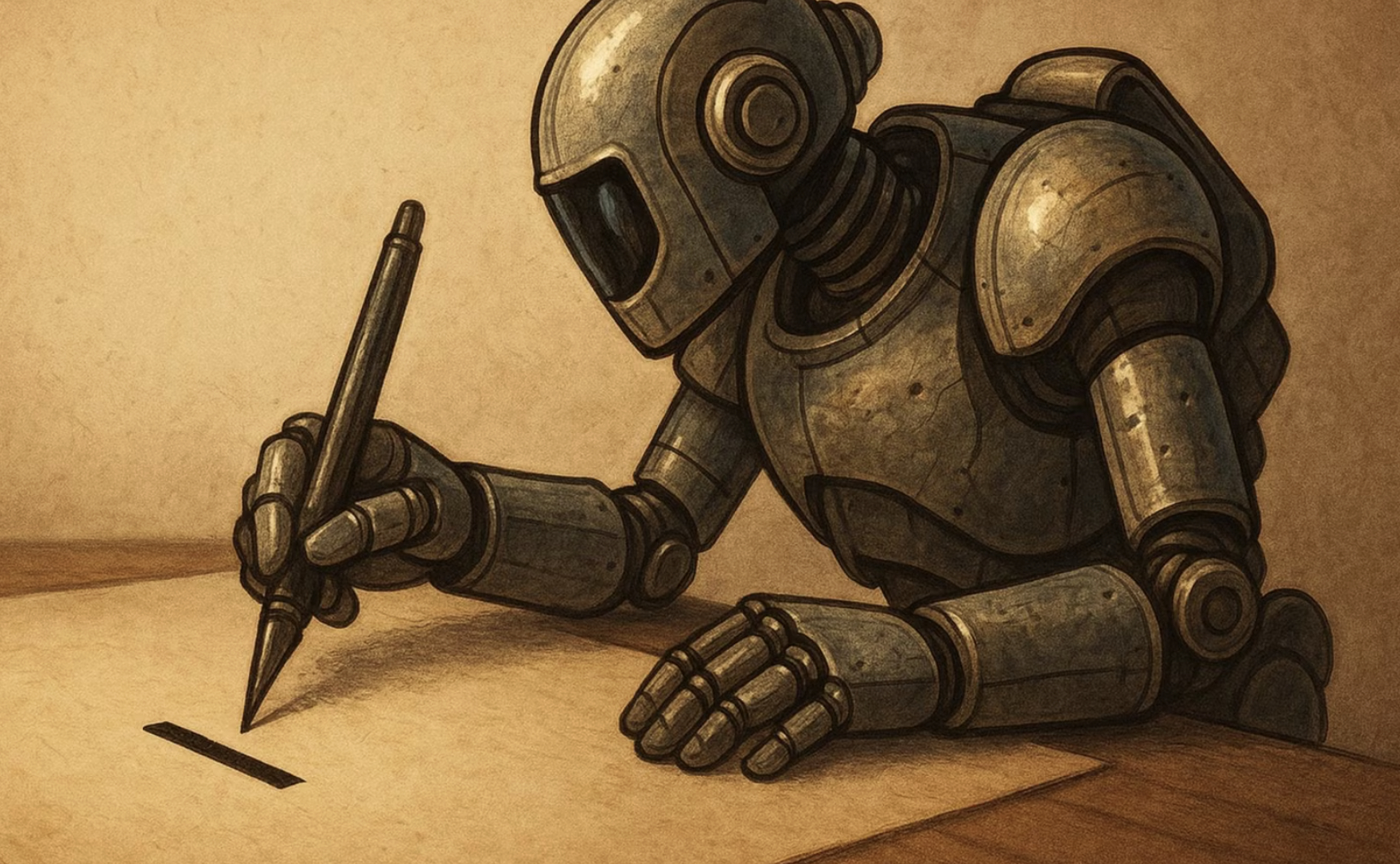

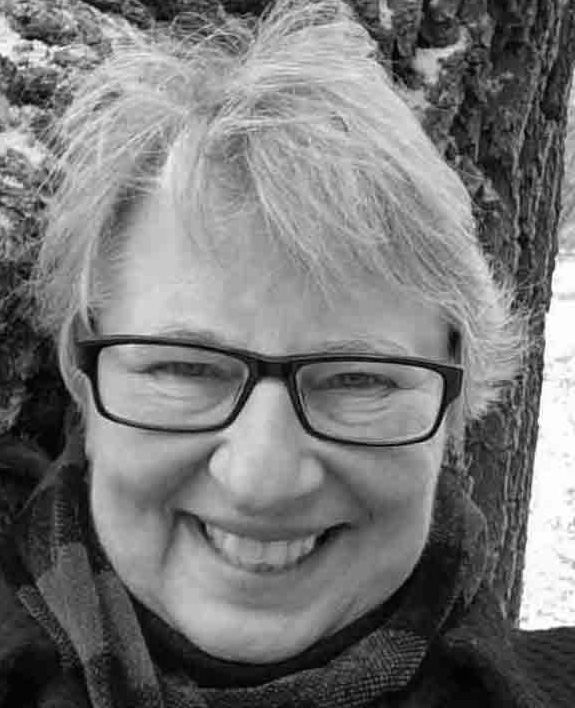

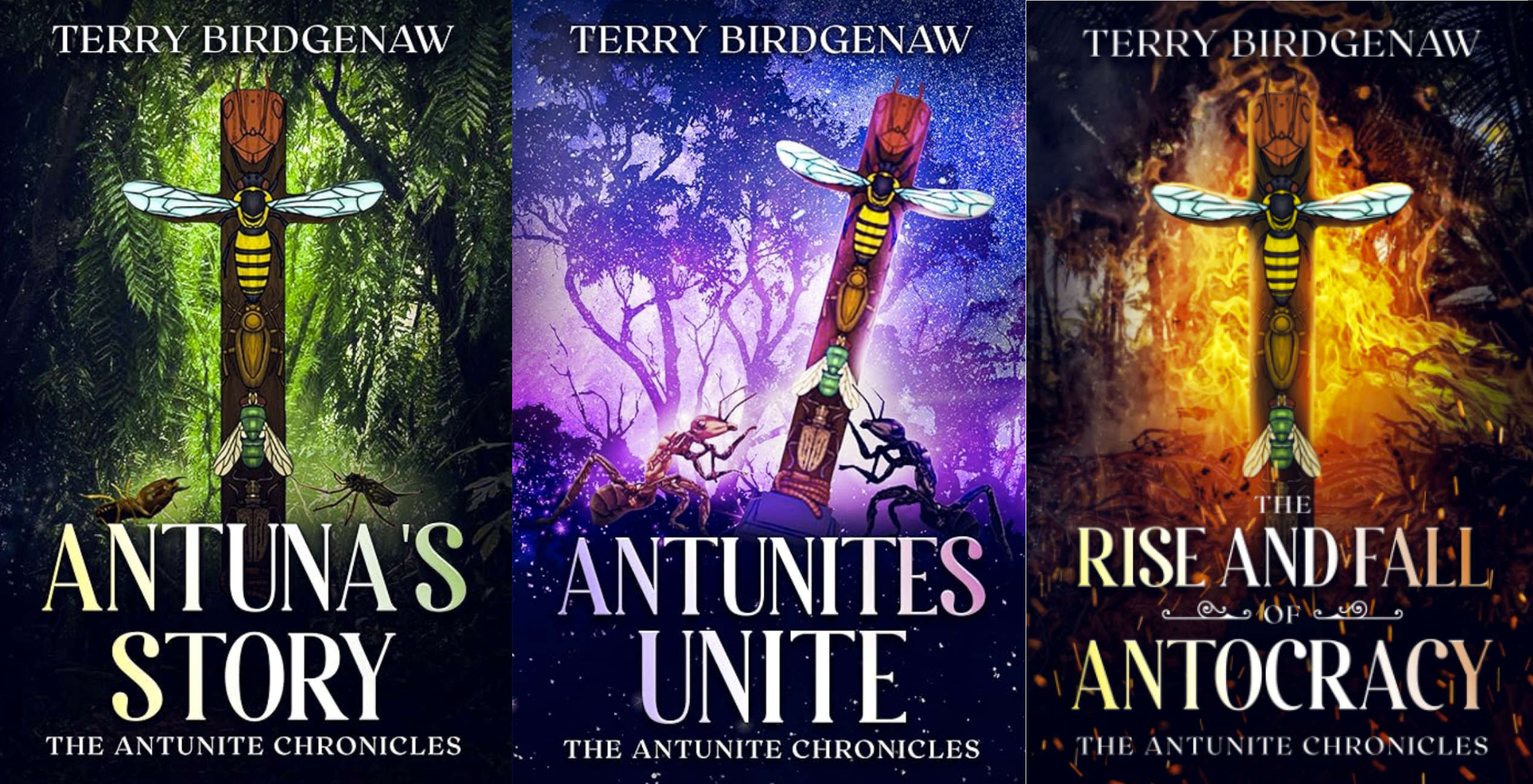
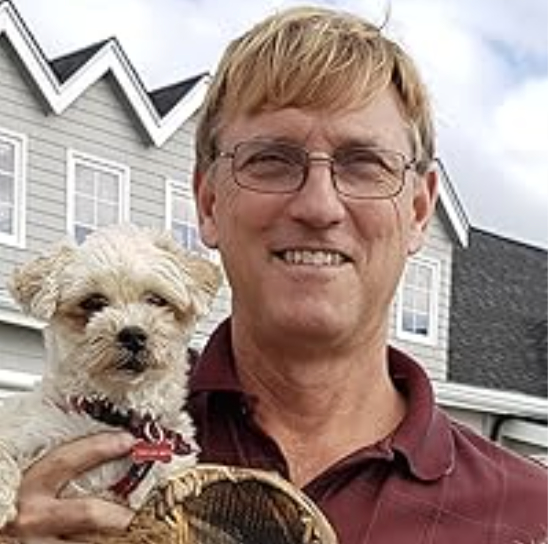
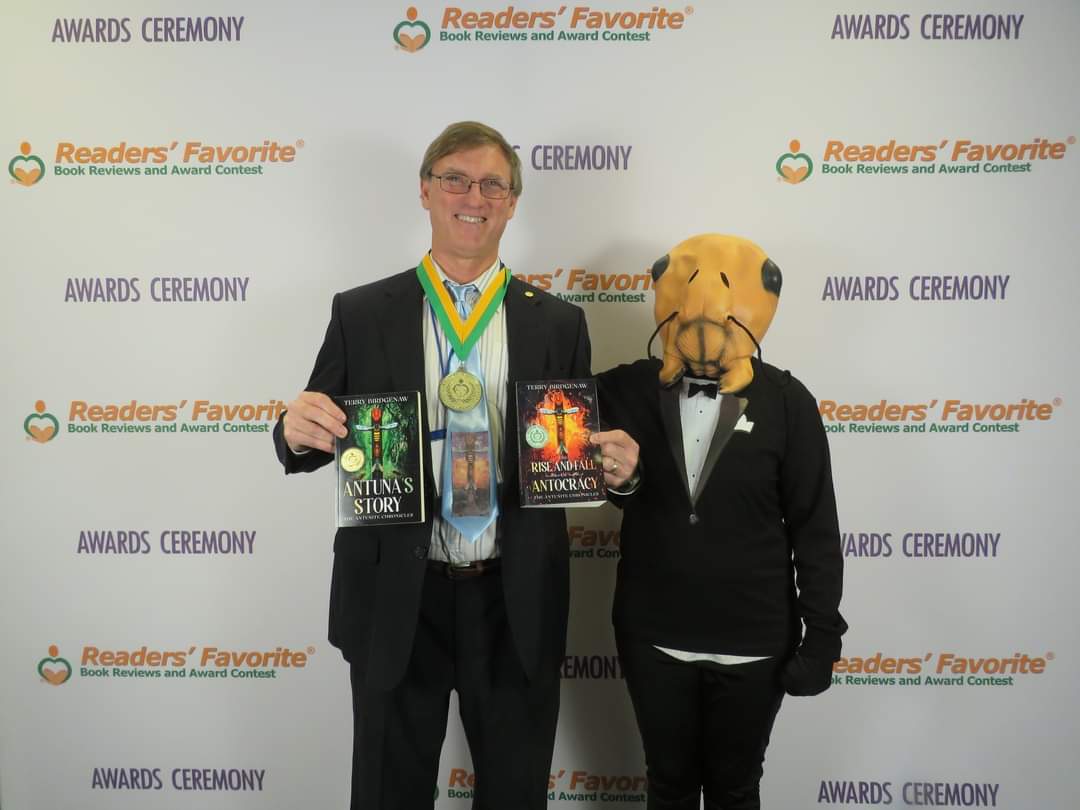

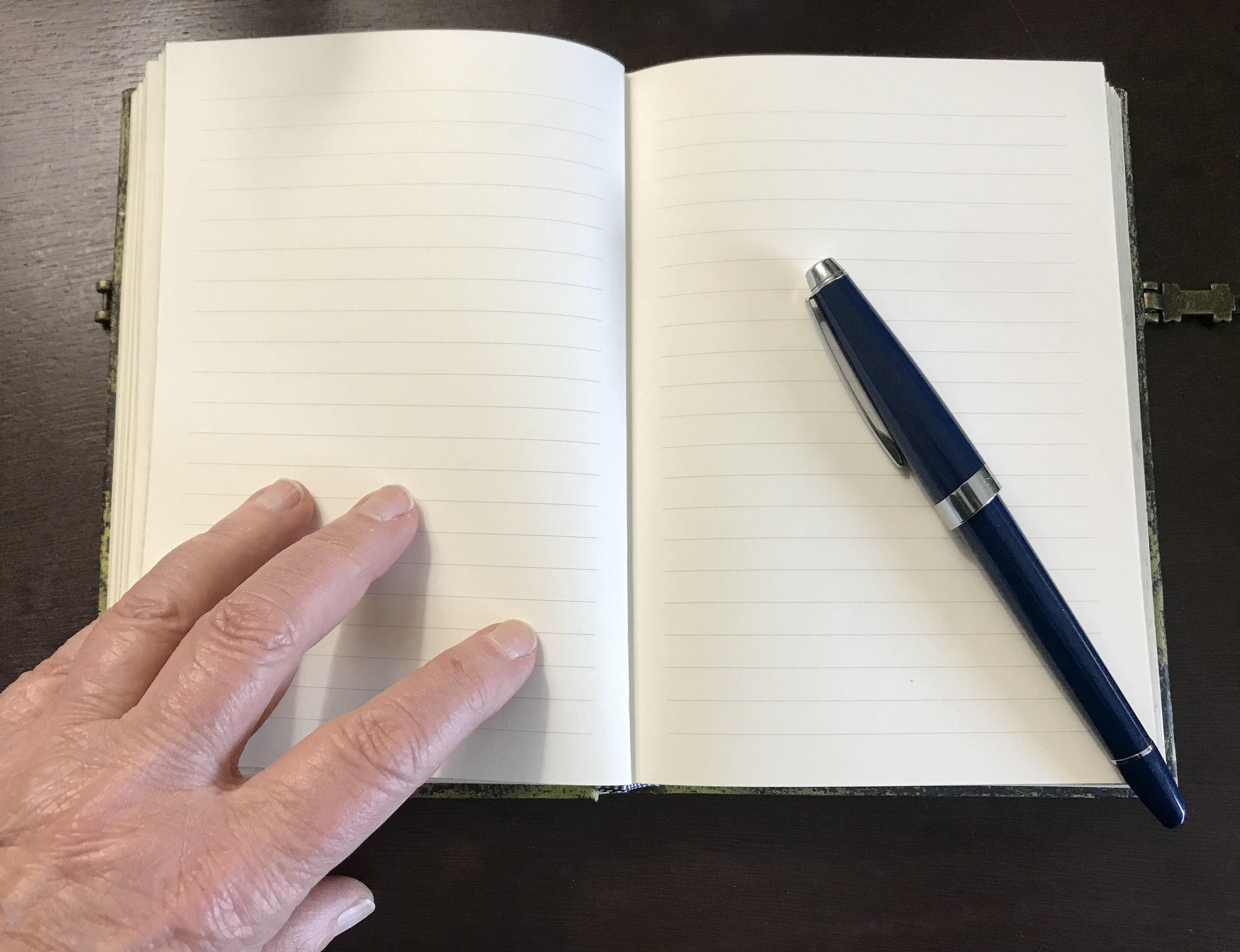

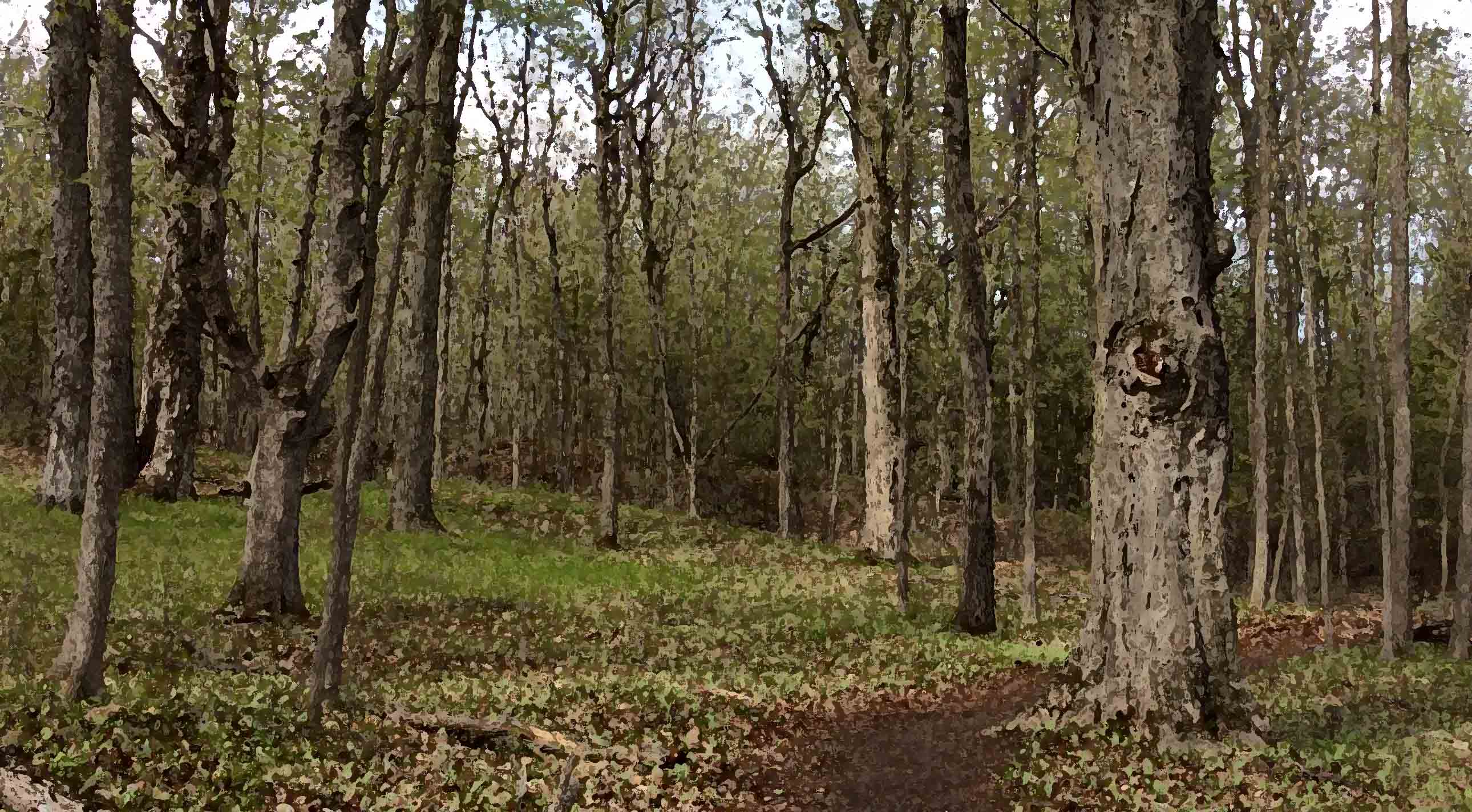
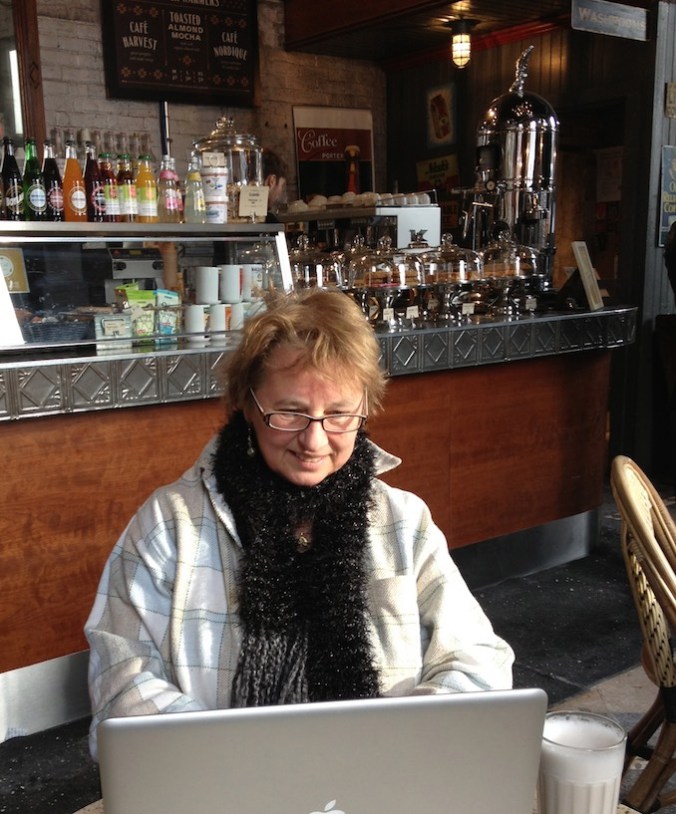


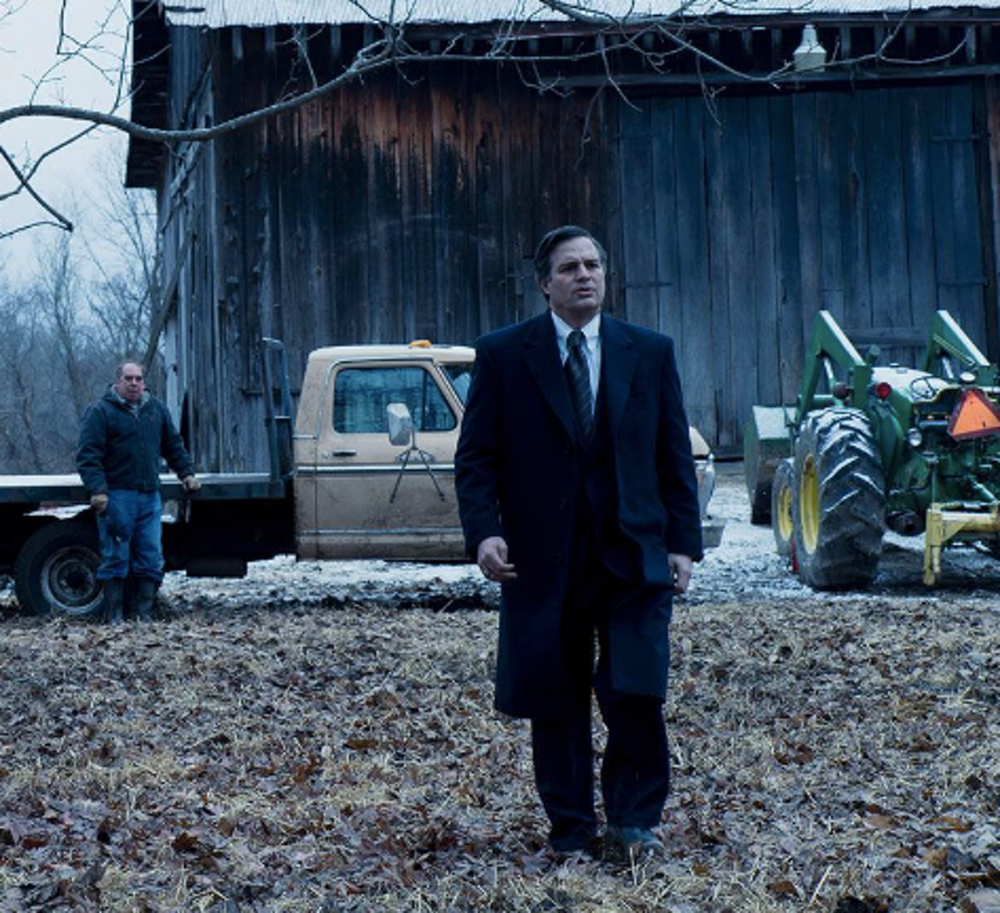
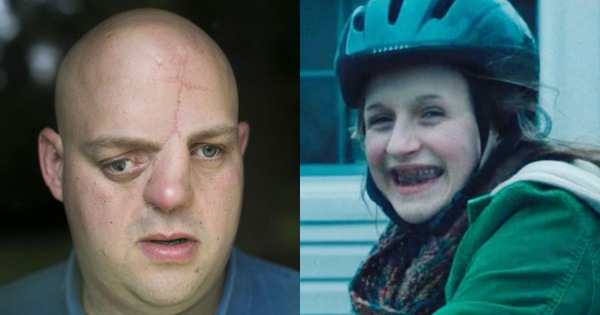
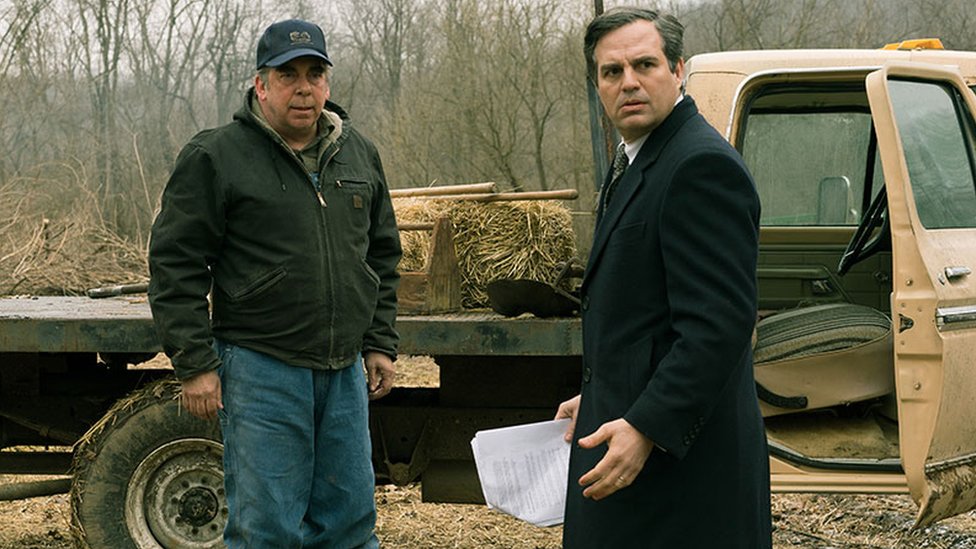

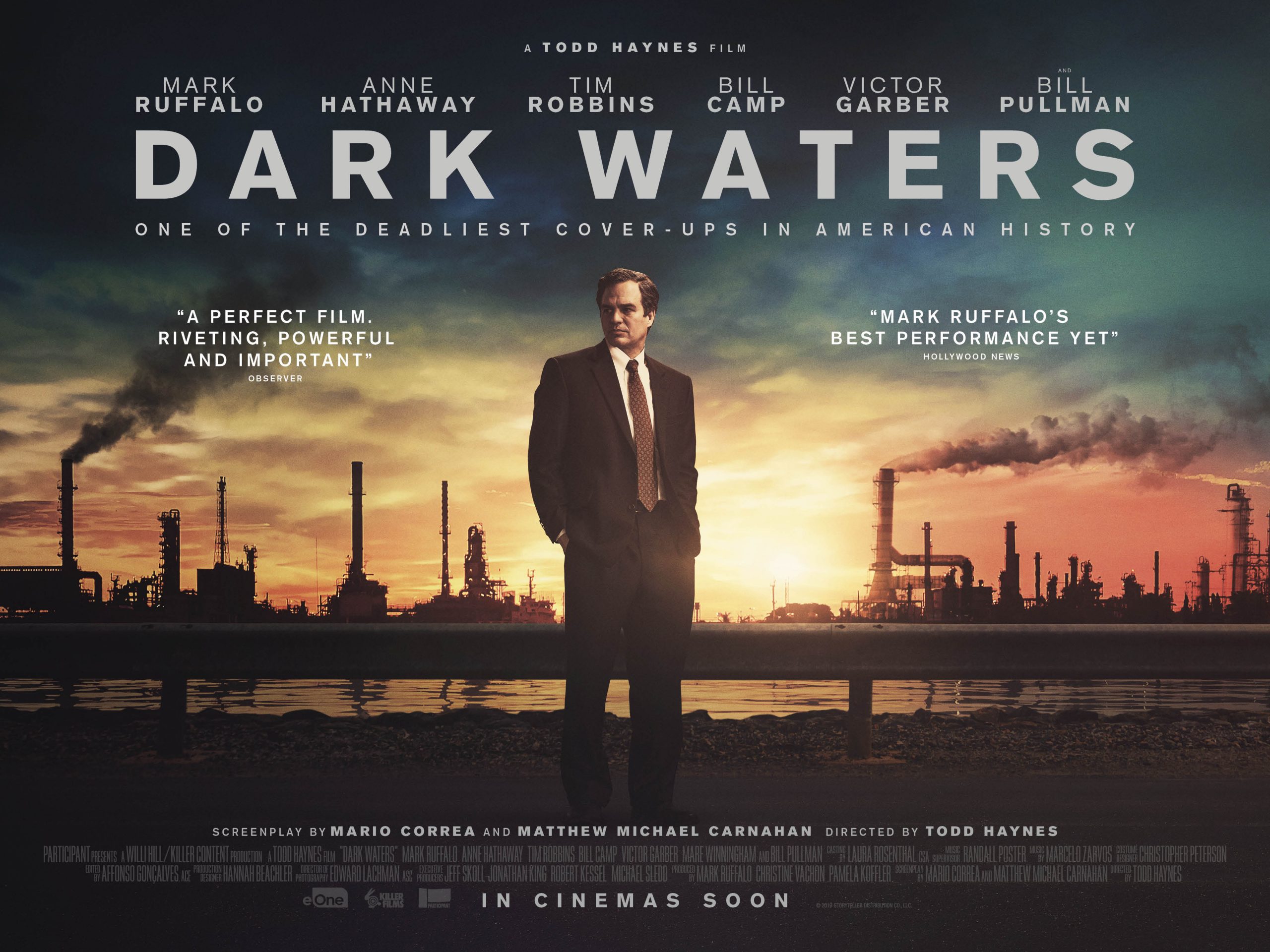



 Nina Munteanu Writing Coach