My Three Favourite Reads in 2025

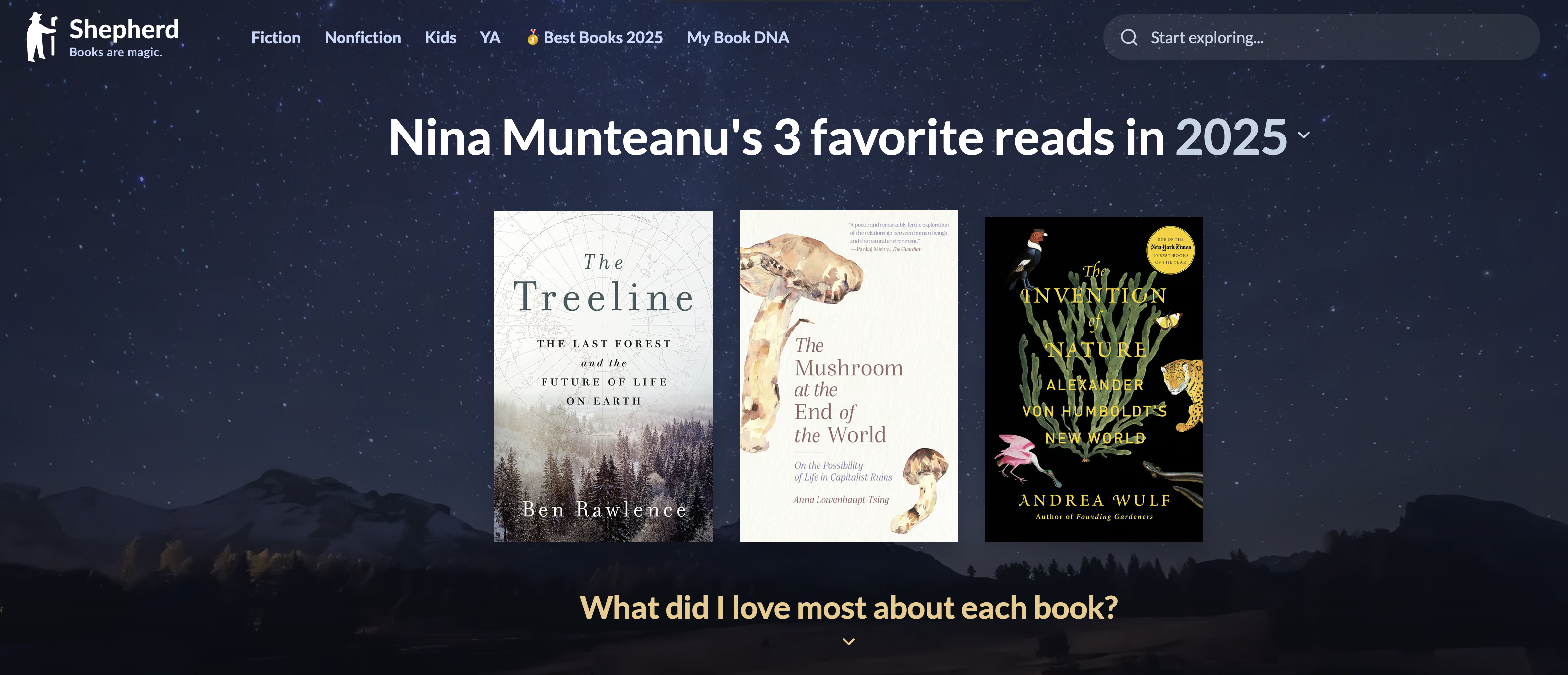
As with previous years, Shepherd invited me to post my three favourite reads of 2025. These aren’t necessarily books published in 2025; just books I read in that year. Each time I do this, I find that, without conscious intent, my favourites fall under a general theme that have touched me that year. Past favourite reads included Feminist Eco-Fiction in 2023 and Cautionary Eco-Fiction in 2024.

2025 yielded a non-fiction book theme; books that touch on humanity’s understanding—or lack of understanding—of our fragile environment and the importance of humility and collaboration to our survival on a changing planet. Here are my three favourites:

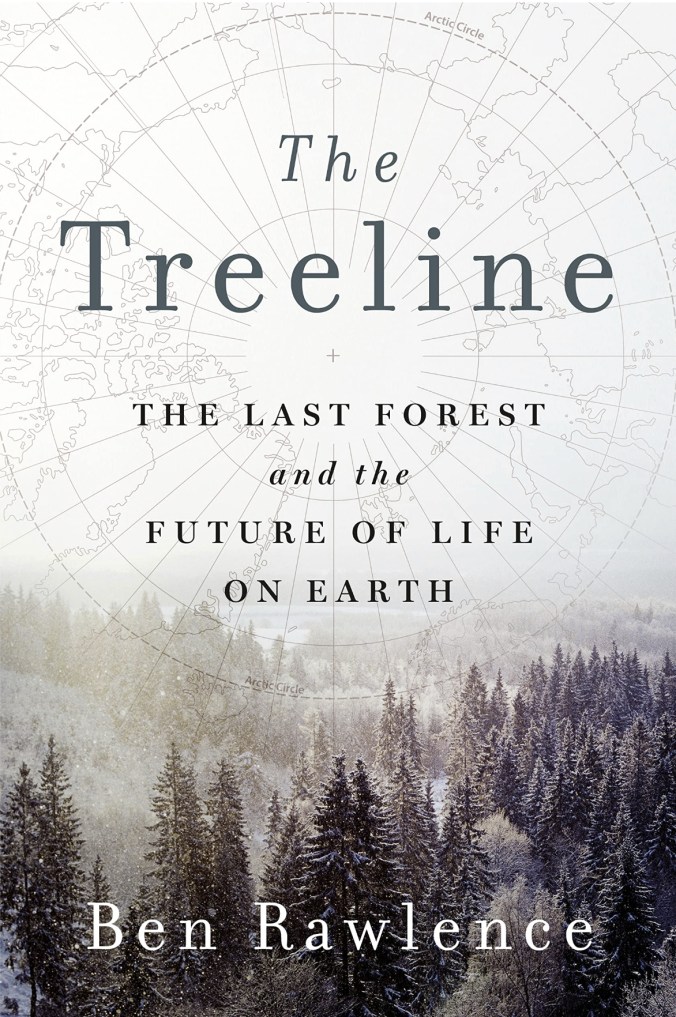
Treeline (St. Martin’s Press, 2022) by Ben Rawlence

This book made me think. It made me cry. It made me despair. It also gave me hope. I was gripped by Rawlence’s honest and unflinching exploration on the moving treeline with climate change and what it will mean for humanity. Rawlence describes the forests of the world as the ‘heartbeat of the planet,’ the cycles of breathing and the pulses of life from the spike of oxygen in the spring when trees put out their leaves to the peaks and troughs over day and night that regulate plant photosynthesis and respiration. Their breaths are getting shallower, he writes. With more carbon dioxide in the air the trees inhale less and exhale less oxygen.

Beautifully written and rigorously reported, Rawlence invited me on a journey of the major treelines over the globe from Scotland, Norway and Russia, to Alaska, Canada and Greenland. Throughout his description of a warming world and a vanishing way of life, Rawlence meditates on the many repercussions on how humans live. There is warning. And there is optimism. This is an important book.

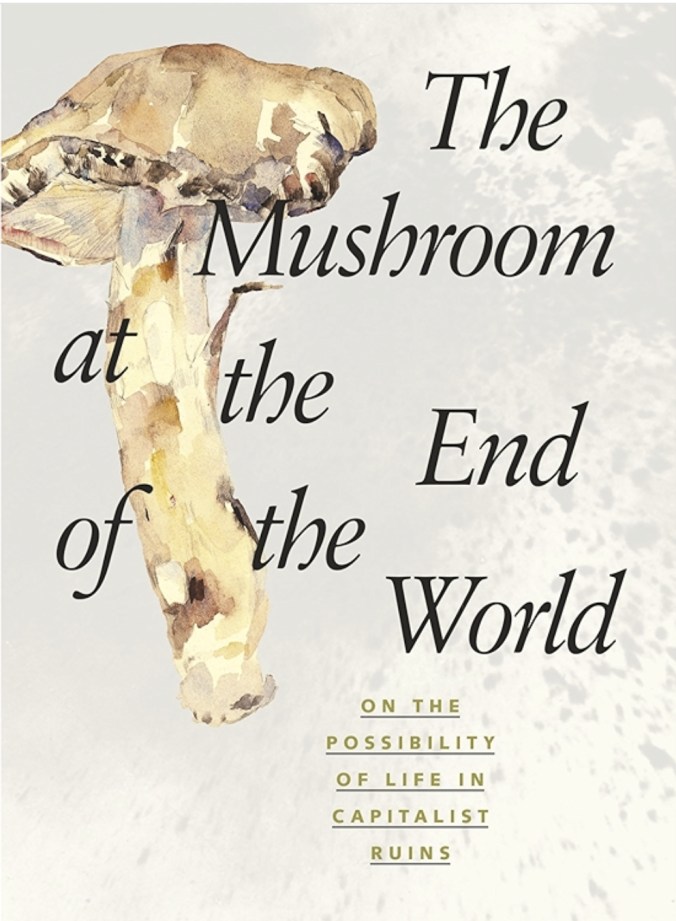
The Mushroom at the End of the World (Princeton University Press, 2021) by Anna Lowenhaupt Tsing

Tsing’s colourful narrative drew me into a metaphoric study of humanity’s journey through the ecology and commerce of the rare Matsutake mushroom. Both treatise on industrial capitalism and parable of survival and renewal under post-capitalist ruin, Tsing’s brilliant storytelling uses the matsutake mushroom and its industry to explore our ecological crisis: how it came about, what drives its continuation and what the consequences may look like.

The matsutake mushroom is considered a weed, growing in human-disturbed forests in the Northern Hemisphere; yet it is prized for its gourmet value. Tsing’s investigation of this rare sought-after mushroom, serves as an excellent metaphor for the study of a post-industrialist world and the promise of life after ruin. Tsing draws together a web of interconnected human and natural ecologies—from the foragers in Oregon and the Hmong jungle fighters to the capitalist traders and Japanese gourmets—to tell a fascinating tale of intrigue, greed, and violence. Laced throughout the story, are her personal reflections on the possibilities of collaborative survival of human and nonhuman.

The book is simply brilliant. The writing riveting. The story important. 

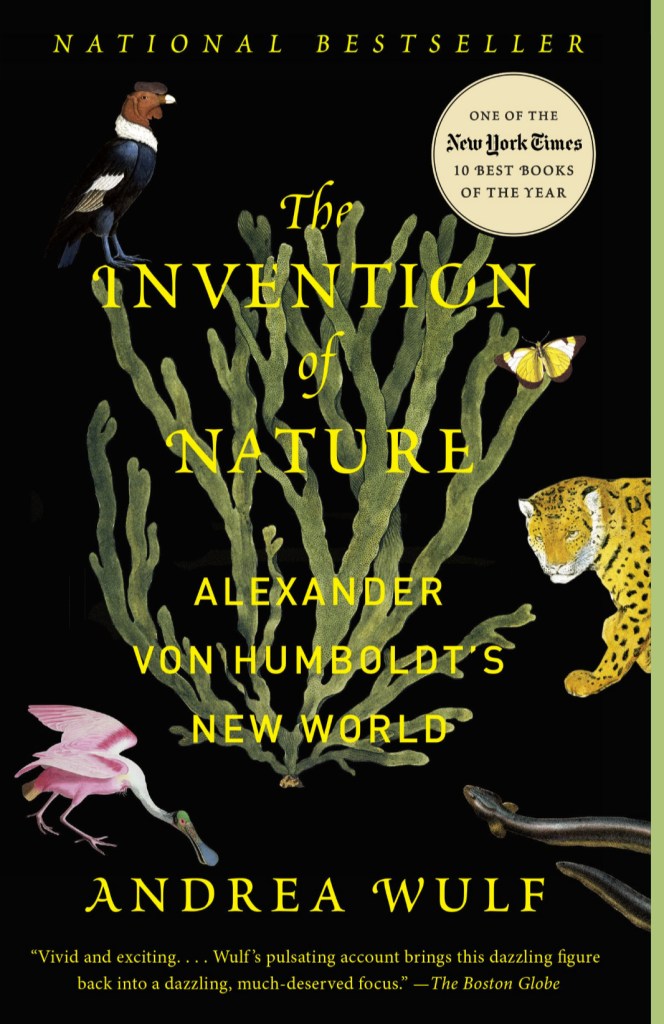
The Invention of Nature: Alexander von Humboldt’s New World (Vintage, 2016) by Andrea Wulf

I was riveted by this fascinating and illuminating biography of a visionary German naturalist and polymath—mostly forgotten—brought back to life through vivid narrative and seamless research to interesting detail. Wulf’s storytelling style drew me into this man’s incredible life, a planetologist way ahead of his time, who predicted human-induced climate change, and formulated a radical concept of nature as both a complex and intertwined global entity—long before Lovelock and Margulis came up with the Gaia Hypothesis in the 1960s.

Humboldt was the first ecologist, practicing the science of ecology for fifty years by the time German scientist Ernst Haeckel created a name for it (ökologie) in 1869. Humboldt embraced Schelling’s naturphilosophie, which espoused an organic and dynamic worldview as an alternative to the atomist and mechanist outlook that prevailed at the time. He saw nature as a living organism, animated by dynamic forces. True to his holistic vision, Humboldt invented global temperature isopleths—still used today. It is no surprise that the world’s first ecologist would also predict humanity’s devastating effect on global climate.

I found Wulf’s biography of von Humboldt fascinating, surprising, often sad, and poignant. What struck me the most was how von Humboldt’s discoveries and predictions were lost to the world with devastating effect. He made the connection and warned of human-induced climate change 200 years ago. If civilization had only heeded his warning!

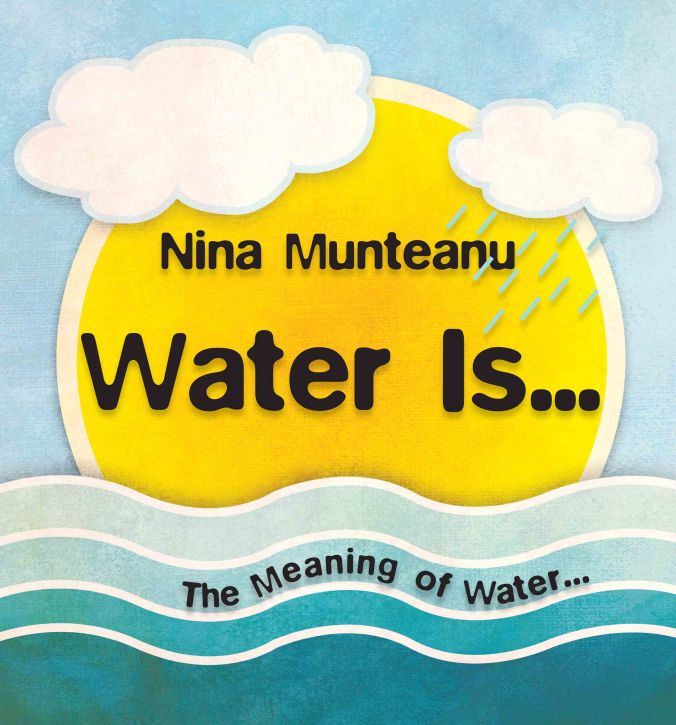
Water Is… The Meaning of Water (Pixl Press, 2016) by Nina Munteanu

My own non-fiction book Water Is…The Meaning of Water—a celebration of water in all its facets—is offered here as fitting this theme of celebrating Nature and educating us on how to live more lightly and responsibly. Here’s what the publisher’s blurb says:

Internationally published author, teacher and limnologist Nina Munteanu explores one of the most important substances of Earth. Nina Munteanu’s Water Is… The Meaning of Water represents the culmination of over twenty-five years of dedication as limnologist and aquatic ecologist in the study of water. As a research scientist and environmental consultant, Nina studied water’s role in energizing and maintaining the biomes, ecosystems, and communities of our precious planet. During her consulting career for industry and government, Nina discovered a great disparity between humanity’s use, appreciation and understanding of water. This set in motion a quest to further explore our most incredible yet largely misunderstood and undervalued substance. Part history, part science and part philosophy and spirituality, Water Is… combines personal journey with scientific discovery that explores water’s many “identities” and ultimately our own.

Water Is… was chosen by Margaret Atwood that year as one of her favourites in The New York Times ‘Year in Reading.’

Nina Munteanu is an award-winning novelist and short story writer of eco-fiction, science fiction and fantasy. She also has three writing guides out: The Fiction WriterThe Journal Writer; and The Ecology of Writing and teaches fiction writing and technical writing at university and online. Check the Publications page on this site for a summary of what she has out there. Nina teaches writing at the University of Toronto and has been coaching fiction and non-fiction authors for over 20 years. You can find Nina’s short podcasts on writing on YouTube. Check out this site for more author advice from how to write a synopsis to finding your muse and the art and science of writing.

Book Review: Nina’s “Favourite 3 Reads Of 2023– Feminist Eco-Fiction

In late 2023, I was invited by Shepherd to post an article of my favourite three reads of 2023. I had earlier that year posted on Shepherd an article describing what I considered to be the best eco-fiction books that make you care and give you hope.

I started out by reviewing what I had read in 2023. It looked like I’d read about thirty odd books, almost half and half non-fiction to fiction. That’s not many, but I’m a slow reader. I pore through each book at a snail’s pace, spending time making notes with some, particularly the non-fiction books, which I use to research my writing. With fiction, I dive in deep and thoroughly savor each word and sentence like a mouthful of an excellent meal made with loving hands. Books varied from non-fiction scholarly works on forest ecosystems (The Treeline by Ben Rawlence) and post-capitalism (Four Futures by Peter Frase) to literary fiction, political thrillers, speculative fiction, clifi, and eco-fiction.

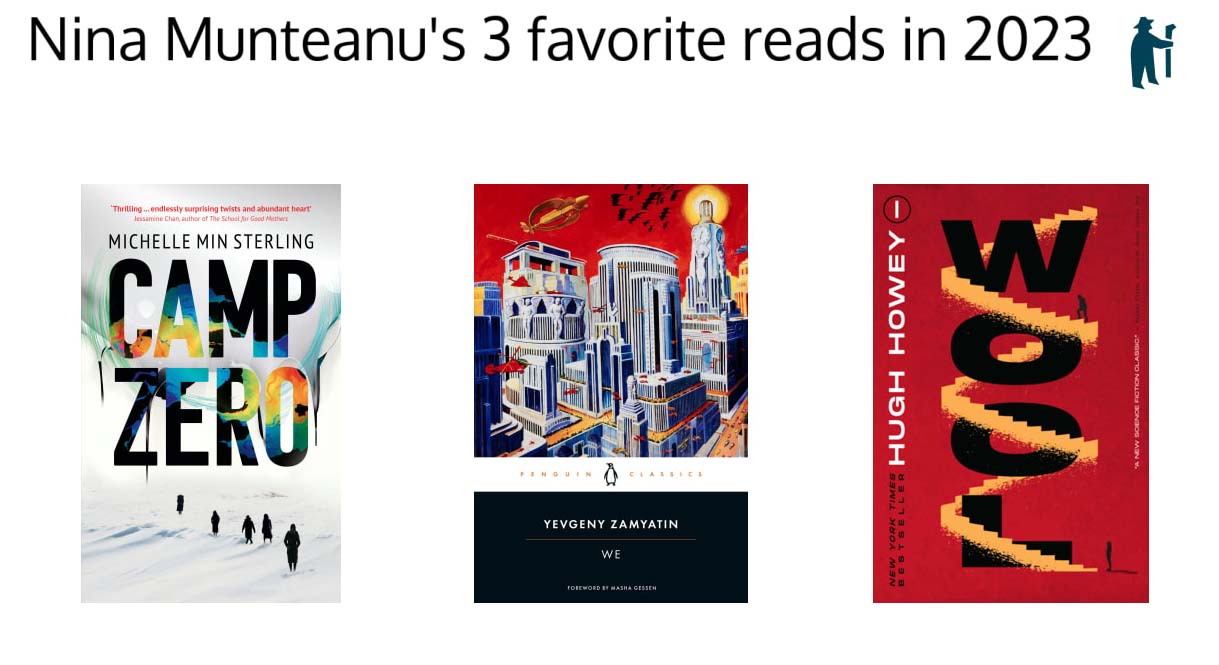
It was a tough choice, but I came up with three choices and a thematic rationale that resonated with me and made a deep kind of sense for that year: all three books were eco-fiction of sorts and featured hopeful stories of strong women, acting out of compassion and in solidarity with intelligence, kindness and courage. For me, 2023 was a year of strong feminine energy for the planet and my favourite books reflect that. Here they are (read the original article on Shepherd here):

The first of my favourite three books of 2023 is Michelle Min Sterling’s Camp Zero.

Set in the remote Canadian north—a place I love for its harsh beauty—this feminist climate fiction explores a warming climate through the perilous journeys of several female characters, each relating to her environment in different ways. Each woman exerts agency in surprising ways that include love, bravery and shared community. The strength of female power carried me through the pages like a braided river heading to a singular ocean. These very different women journey through the dark ruins of violent capitalism, colonialism and patriarchy—flowing past and through hubristic men pushing north with agendas and jingoistic visions—to triumph in an ocean of solidarity. I empathized with each woman as she found her strength and learned to wield true heroism—one based on collaboration and humble honesty.

My second favourite book of 2023 is Yevgeni Zamyatin’s We.

I enjoyed this 1920 hopeful dystopia for its courageous and unprecedented feminism. While the story centres on logical D-503, a man vacuously content as a number in the One State, it is I-330—Zamyatin’s unruly heroine—who stole my attention. Confident, powerful and heroic, the liberated I-330 embraces the Green Wind of change to influence D-503. A force of hope and resilience, she braves torture to successfully orchestrate a revolution that breaches the Green Wall—feats typically relegated to a male protagonist in novels of that era. When pregnant O-90 refuses to surrender her child to the State, I-330 helps her escape to the outside, where the Green Wind of freedom blows. I resonated with Zamyatin’s cautionary tale on the folly of logic without love and Nature.

My third favourite book of 2023 is Hugh Howie’s Wool (first of the SILO series).

Juliette—humble and gutsy, kind and relentlessly motivated in her journey for the truth—kept the pages turning for me. Juliette is a mechanic from the Down-Deep of the underground Silo, humanity’s last refuge to a toxic world. When Juliette inexplicably lands the job of sheriff, she treats her new position as a tool to seek the truth about her lover’s mysterious recent death. At her own peril, she pulls on threads that ultimately reveal a great conspiracy.

Juliette’s literal and metaphoric rise from the Down-Deep to the Up-Top is a feminist’s journey that transcends intersectional barriers as she battles small-minded men of power and maintains her integrity by refusing to abide by the inhumane Up-Top rules of order. By the end, I sensed a victory for humankind through womankind.

Also check out Shepherd’s 100 best books of 2023.

You might be interested in two of my own eco-fiction novels that feature several strong female protagonists:

Darwin’s Paradox follows the complex dynamic of a brave mother and her willful teenage daughter, both ‘gifted’ by a virus living inside them. Accused of murder and deliberately spreading the virus that killed many, Julie fled the enclosed city and settled in the climate wastelands with her husband and their child. Years later, when their harsh refuge is threatened by city forces seeking mother and daughter for experimentation, Julie leaves her family and gives herself up to the city, hoping they will abandon pursuing her daughter. Still psychically connected to the city’s AI community (now evolving into an autonomous entity with the intelligent virus), Julie entangles with political intrigue while her daughter, who followed her to the city, stumbles into her mother’s violent past. 

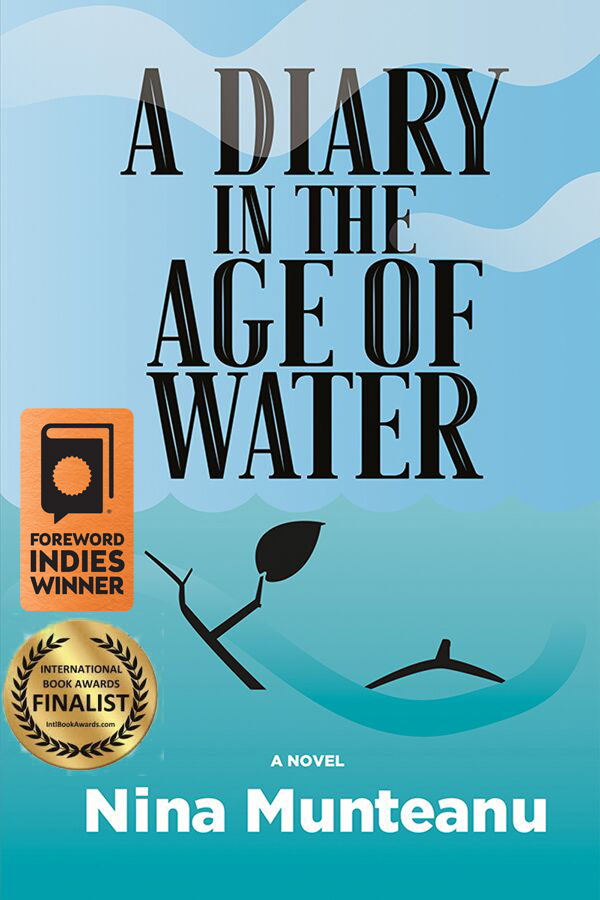
A Diary in the Age of Water follows the climate-induced journey of Earth and humanity through four generations of women, each with a unique relationship to water. Centuries from now, in a dying boreal forest in what used to be northern Canada, Kyo, a young acolyte called to service in the Exodus, yearns for Earth’s past—the Age of Water—before the “Water Twins” destroyed humanity. Looking for answers and plagued by vivid dreams of this holocaust, Kyo discovers the diary of Lynna, a limnologist from that time of severe water scarcity just prior to the destruction. In her work for a global giant that controls Earth’s water, Lynna witnesses and records in her diary the disturbing events that will soon lead to humanity’s demise.

.

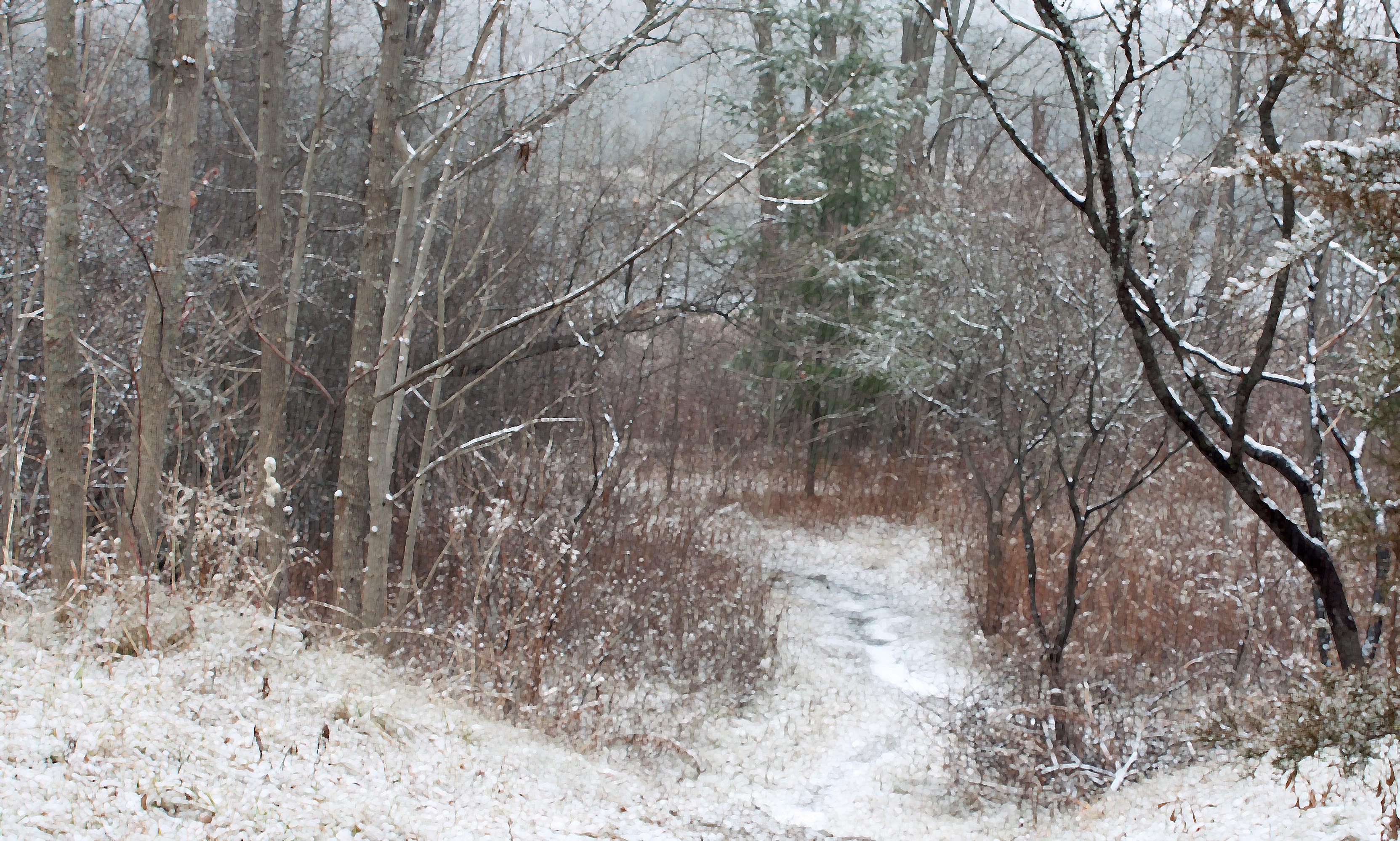
Path through a mixed forest in early winter, ON (photo and rendition by Nina Munteanu)

Nina Munteanu is a Canadian ecologist / limnologist and novelist. She is co-editor of Europa SF and currently teaches writing courses at George Brown College and the University of Toronto. Visit www.ninamunteanu.ca for the latest on her books. Nina’s bilingual “La natura dell’acqua / The Way of Water” was published by Mincione Edizioni in Rome. Her non-fiction book “Water Is…” by Pixl Press (Vancouver) was selected by Margaret Atwood in the New York Times ‘Year in Reading’ and was chosen as the 2017 Summer Read by Water Canada. Her novel “A Diary in the Age of Water” was released by Inanna Publications (Toronto) in June 2020.

“A Diary in the Age of Water” Listed as Ecological Fiction That Inspires Action

In the Spring issue of Ecology & Action, Mary Woodbury, author and publisher of Dragonfly.eco, lists some of her favourite Eco-Fiction that Inspires Action. Among them is Nina Munteanu’s eco-novel “A Diary in the Age of Water.”

“Fiction exploring humanity’s impacts on nature is becoming more popular. It has the distinct ability to creatively engage and appeal to readers’ emotions. In fact, it can stir environmental action. A survey I took last year showed that 88% of its participants were inspired to act after reading ecological fiction.

Principled by real science and exalting our planet’s beauty, these stories are works of art. They live within classic modes of fiction exploring the human condition, but also integrate the wild. They can be referred to as “rewilded stories.” The following Canadian titles are some of my favourites in this genre.”

MARY WOODBURY

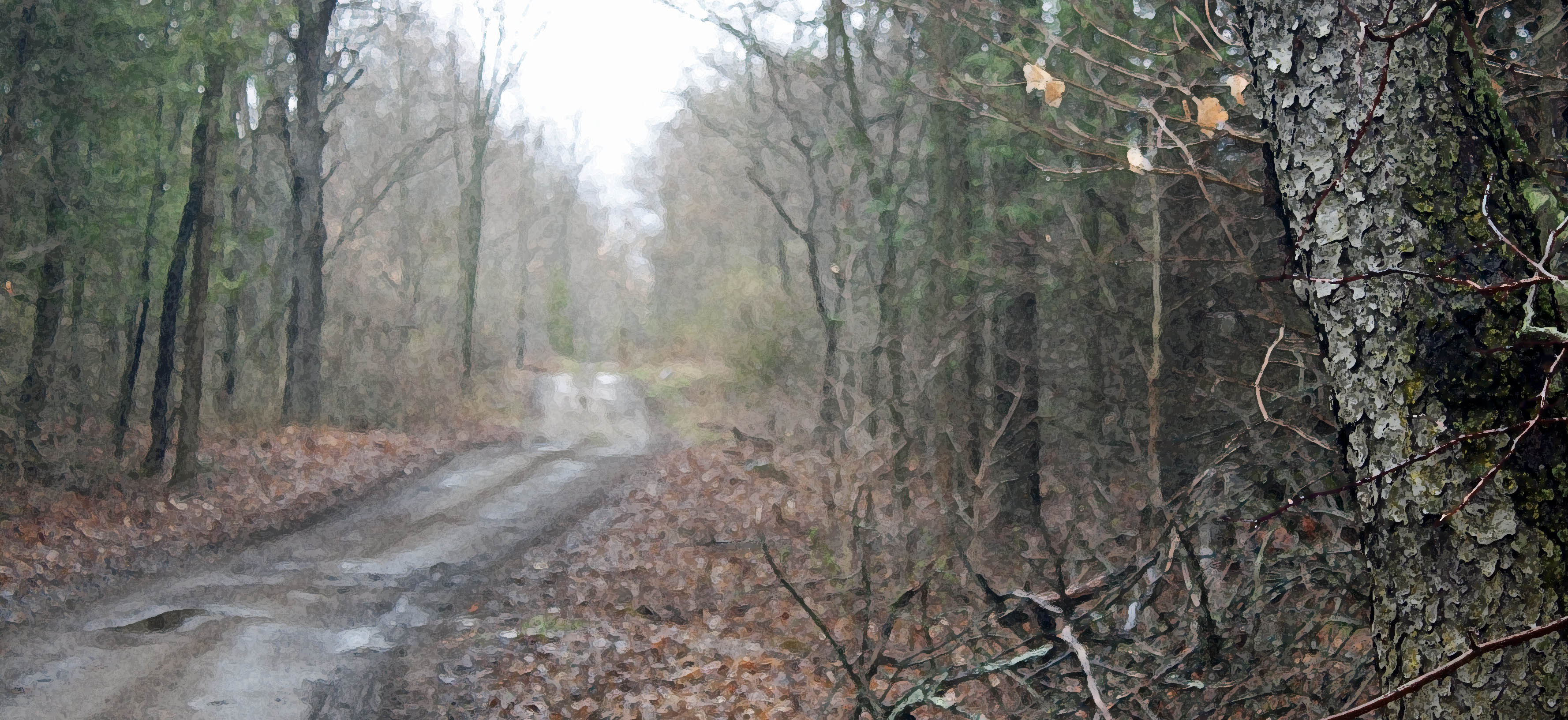
Dirt road to Long Lake in a misty light rain in early spring, ON (photo and dry brush rendition by Nina Munteanu)

Nina Munteanu is a Canadian ecologist / limnologist and novelist. She is co-editor of Europa SF and currently teaches writing courses at George Brown College and the University of Toronto. Visit www.ninamunteanu.ca for the latest on her books. Nina’s bilingual “La natura dell’acqua / The Way of Water” was published by Mincione Edizioni in Rome. Her non-fiction book “Water Is…” by Pixl Press(Vancouver) was selected by Margaret Atwood in the New York Times‘Year in Reading’ and was chosen as the 2017 Summer Read by Water Canada. Her novel “A Diary in the Age of Water” was released by Inanna Publications (Toronto) in June 2020.