Thirty Impactful Eco-Fiction Books

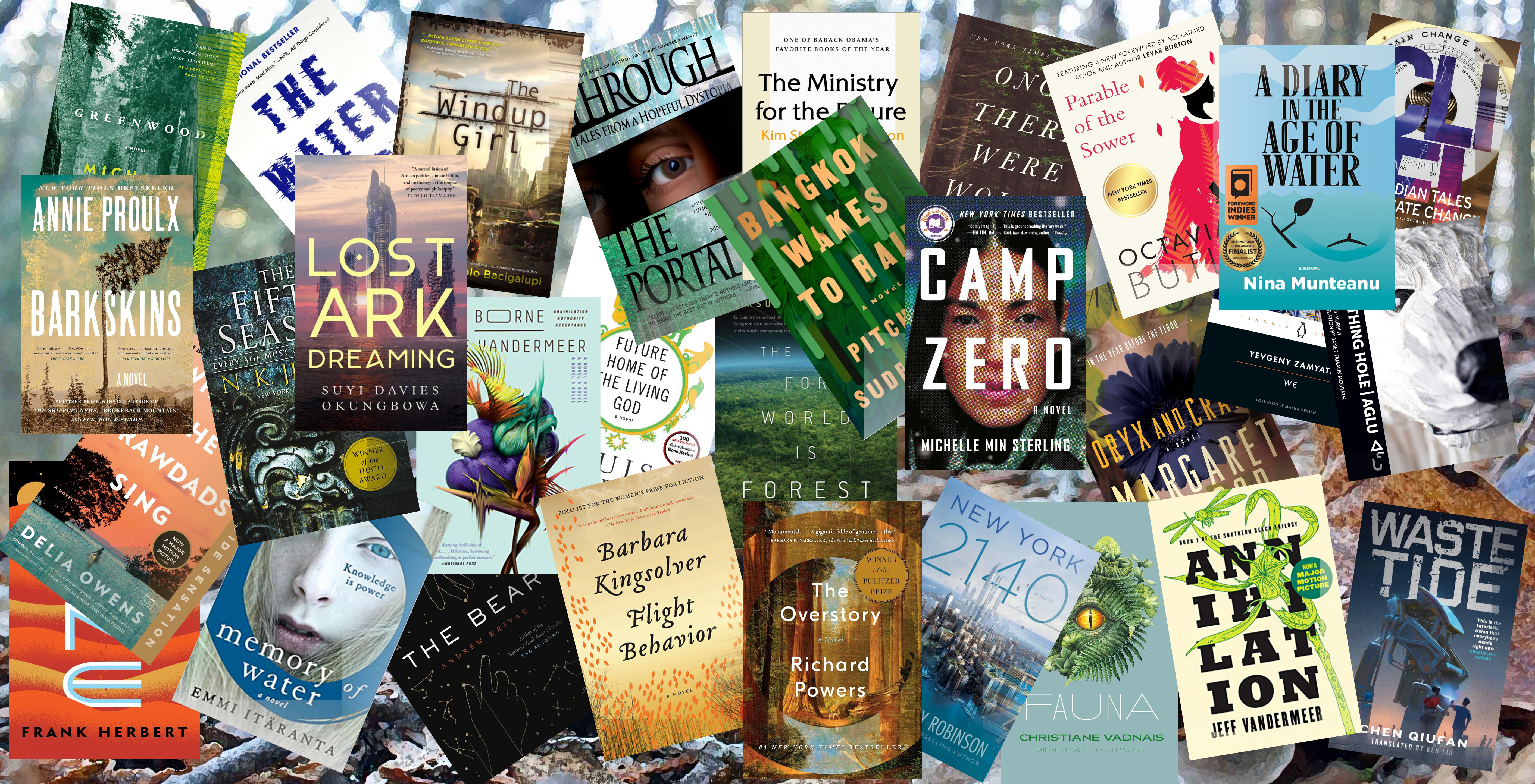
Here is my current list of 30 favourite eco-fiction novels and short story collections that have impacted me, and incited me to think, to feel and to act.

Flight Behavior is a multi-layered metaphoric study of “flight” in all its iterations: as movement, flow, change, transition, beauty and transcendence. Flight Behavior isn’t so much about climate change and its effects and its continued denial as it is about our perceptions and the actions that rise from them: the motives that drive denial and belief. When Dellarobia questions Cub, her farmer husband, “Why would we believe Johnny Midgeon about something scientific, and not the scientists?” he responds, “Johnny Midgeon gives the weather report.” Kingsolver writes: “and Dellarobia saw her life pass before her eyes, contained in the small enclosure of this logic.”

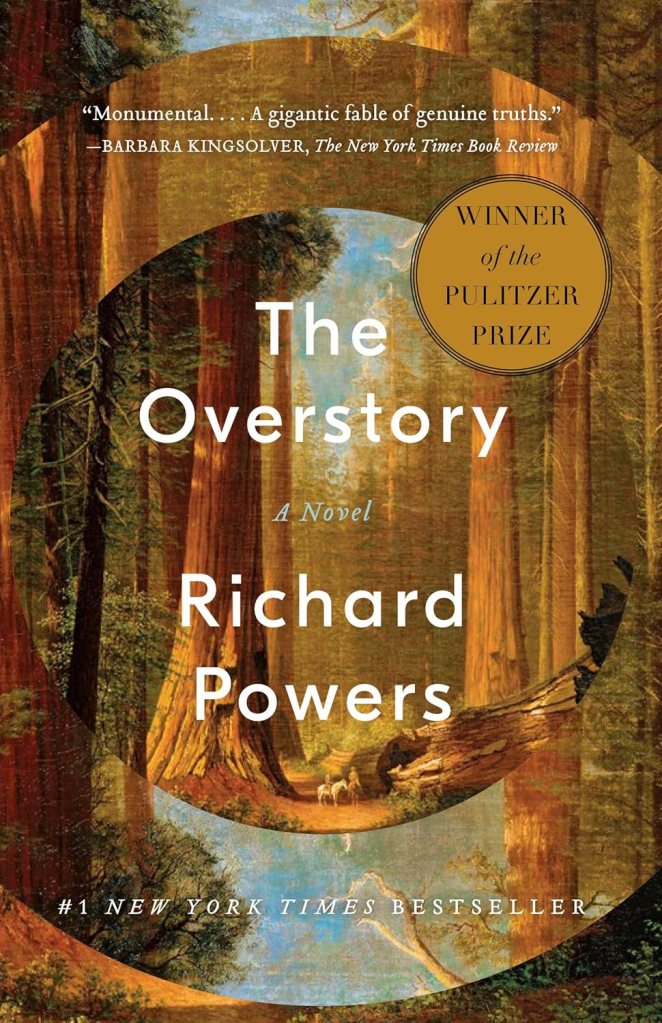
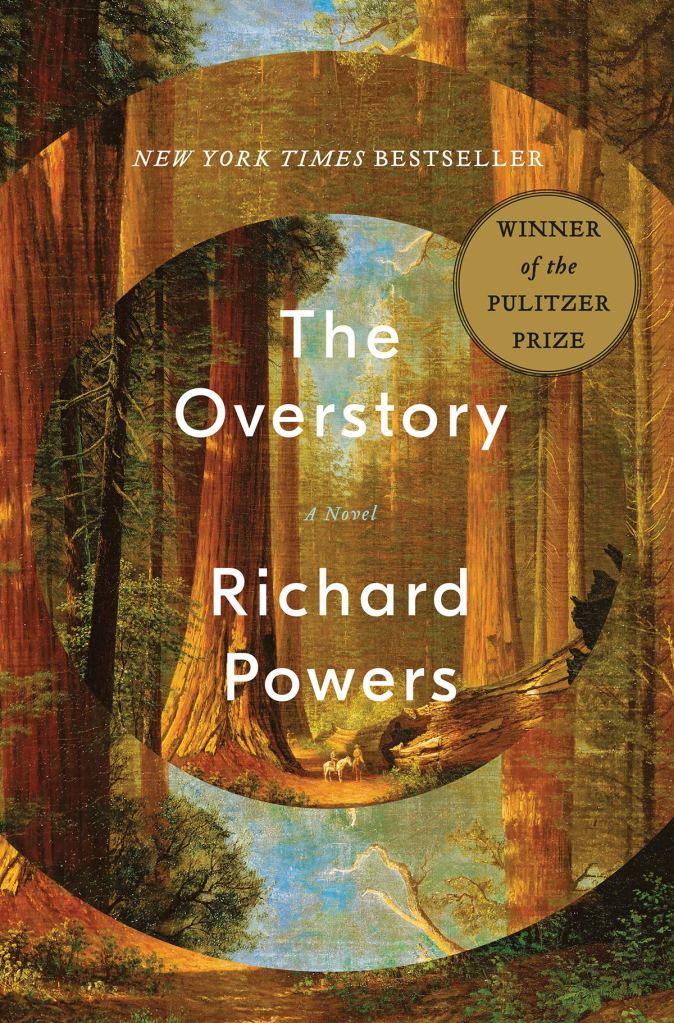
The Overstory follows the life-stories of nine characters and their journey with trees–and ultimately their shared conflict with corporate capitalist America. At the heart of The Overstory is the pivotal life of botanist Patricia Westerford, who will inspire movement. Westerford is a shy introvert who discovers that trees communicate, learn, trade goods and services—and have intelligence. When she shares her discovery, she is ridiculed by her peers and loses her position at the university. What follows is a fractal story of trees with spirit, soul, and timeless societies–and their human avatars.

The Maddaddam Trilogy is a work of speculative dystopian fiction that explores the premise of genetic experimentation and pharmaceutical engineering gone awry. On a larger scale the cautionary trilogy examines where the addiction to vanity, greed, and power may lead. Often sordid and disturbing, the trilogy explores a world where everything from sex to learning translates to power and ownership. The dark poetry of Atwood’s smart and edgy slice-of-life commentary is a poignant treatise on our dysfunctional society. Atwood accurately captures a growing zeitgeist that has lost the need for words like honor, integrity, compassion, humility, forgiveness, respect, and love in its vocabulary. And she has projected this trend into an alarmingly probable future. This is subversive eco-fiction at its best. 

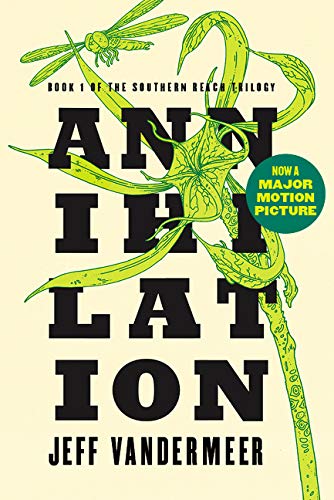
Annihilation is a science fiction eco-thriller that explores humanity’s impulse to self-destruct within a natural world of living ‘alien’ profusion. Annihilation is a bizarre exploration of how our own mutating mental states and self-destructive tendencies reflect a larger paradigm of creative-destruction—a hallmark of ecological succession, change, and overall resilience. VanderMeer masters the technique of weaving the bizarre intricacies of ecological relationship, into a meaningful tapestry of powerful interconnection. Bizarre but real biological mechanisms such as epigenetically-fluid DNA drive aspects of the story’s transcendent qualities of destruction and reconstruction. On one level Annihilation acts as parable to humanity’s cancerous destruction of what is ‘normal’ (through climate change and habitat destruction); on another, it explores how destruction and creation are two sides of a coin.

Barkskins chronicles two wood cutters who arrive from the slums of Paris to Canada in 1693 and their descendants over 300 years of deforestation in North America. Proulx weaves generational stories of two settler families into a crucible of terrible greed and tragic irony. The bleak impressions by immigrants of a harsh environment crawling with pests underlies the combative mindset of the settlers who wish only to conquer and seize what they can of a presumed infinite resource. From the arrival of the Europeans in pristine forest to their destruction under the veil of global warming, Proulx lays out a saga of human-environmental interaction and consequence that lingers with the aftertaste of a bitter wine.

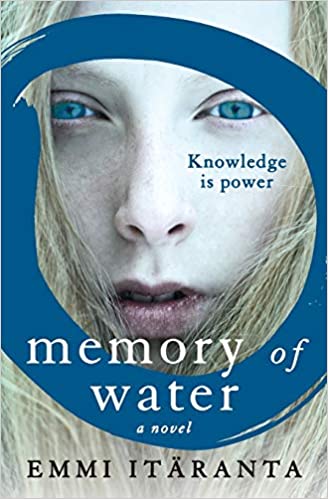
Memory of Water is a work of speculative fiction about a post-climate change world of sea level rise. Symbols of water as shapeshifter archetype and its omnipotent life-  and death-giving associations flow throughout the story, from the ‘fishfires’ in the northern skies to the painted blue circles on the doors of water criminals about to die. Water couples to main character Tea Master Noria, to explore consequences of commodification and exploitation. Teamaster Noria Kaitio guards its secrets; she alone knows the location of the hidden water source, coveted by the new government. Told in the literary fiction style of emotional nuances, Itäranta’s lyrical narrative follows a deceptively quiet yet tense pace that builds like a slow tide into compelling crisis and a poignant end.

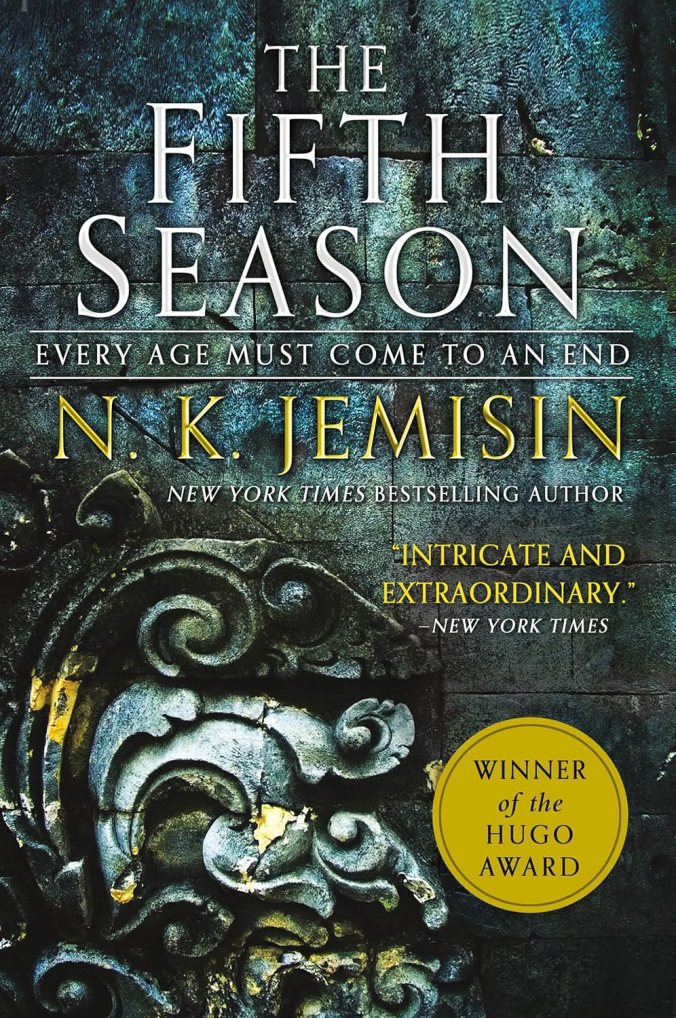
The Broken Earth Trilogy is a fantasy trilogy set in a far-future Earth devastated by periodic cataclysmic storms known as ‘seasons.’ These apocalyptic events last over generations, remaking the world and its inhabitants each time. Giant floating crystals called Obelisks suggest an advanced prior civilization. The first book of the trilogy introduces Essun, an Orogene—a person gifted with the ability to draw magical power from the Earth such as quelling earthquakes. The trilogy focuses on the dangers of marginalization, oppression, and misuse of power. Jemison’s cautionary dystopia explores the consequence of the inhumane profiteering of those who are marginalized and commodified.

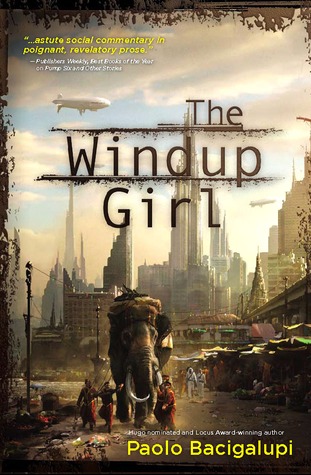
The Windup Girl is a work of mundane science fiction that occurs in 23rd century post-food crash Thailand after global warming has raised sea levels and carbon fuel sources are depleted. Thailand struggles under the tyrannical boot of predatory ag-biotech multinational giants that have fomented corruption and political strife through their plague-inducing genetic manipulations. The rivalry between Thailand’s Minister of Trade and Minister of the Environment represents the central conflict of the novel, reflecting the current global conflict of neoliberal promotion of globalization and unaccountable exploitation with the forces of sustainability and environmental protection. Given the setting, both are extreme and there appears no middle ground for a balanced existence using responsible and sustainable means. The Windup Girl, Emiko, who represents the future, is precariously poised.

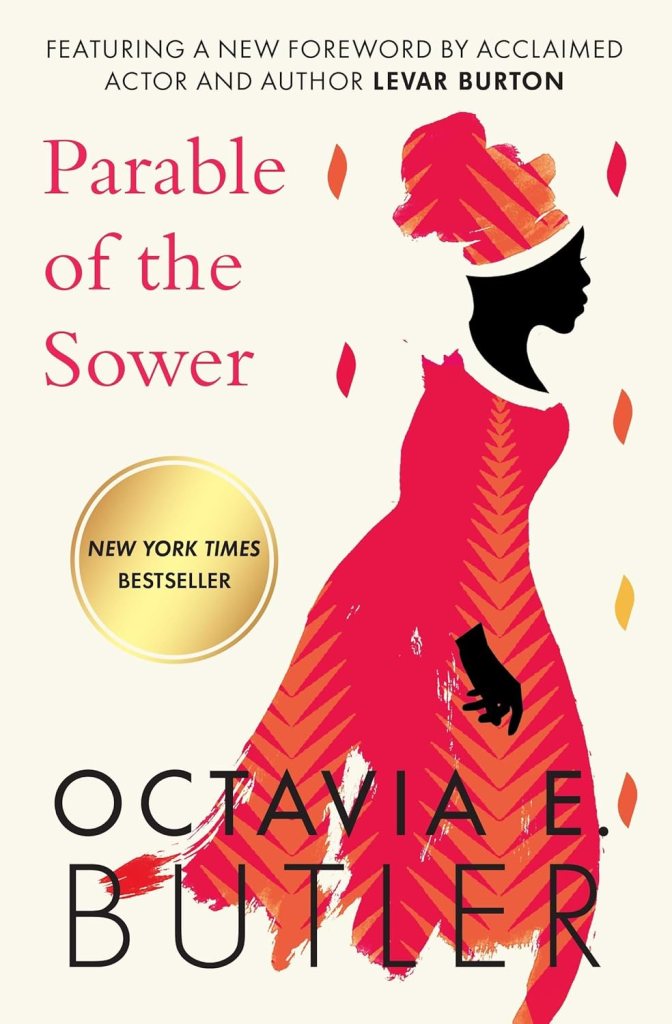
Parable of the Sower is a science fiction dystopian novel set in 21stcentury America where civilization has collapsed due to climate change, wealth inequality and greed. Parable of the Soweris both a coming-of-age story and cautionary allegorical tale of race, gender and power. Told through journal entries, the novel follows the life of young Lauren Oya Olamina—cursed with hyperempathy—and her perilous journey to find and create a new home. What starts as a fight to survive inspires in Lauren a new vision of the world and gives birth to a new faith based on science: Earthseed. Written in 1993, this prescient novel and its sequel Parable of the Talent speak too clearly about the consequences of “making America Great Again.”

The Water Knife is set in the near-future in the drought-stricken American southwest, where corrupt state-corporations have supplanted the foundering national government. Water is the new gold—to barter, steal, and murder for. Corporations have formed militias and shut down borders to climate refugees, fomenting an ecology of poverty and tragedy. Massive resorts—arcadias—constructed across the parched landscape, flaunt their water-wealth in the face of exploited workers and gross ecological disparity. Water is controlled by corrupt gangsters and “water knives” who cleverly navigate the mercurial nature of water rights in a world where “haves” hydrate and “have nots” die of thirst.

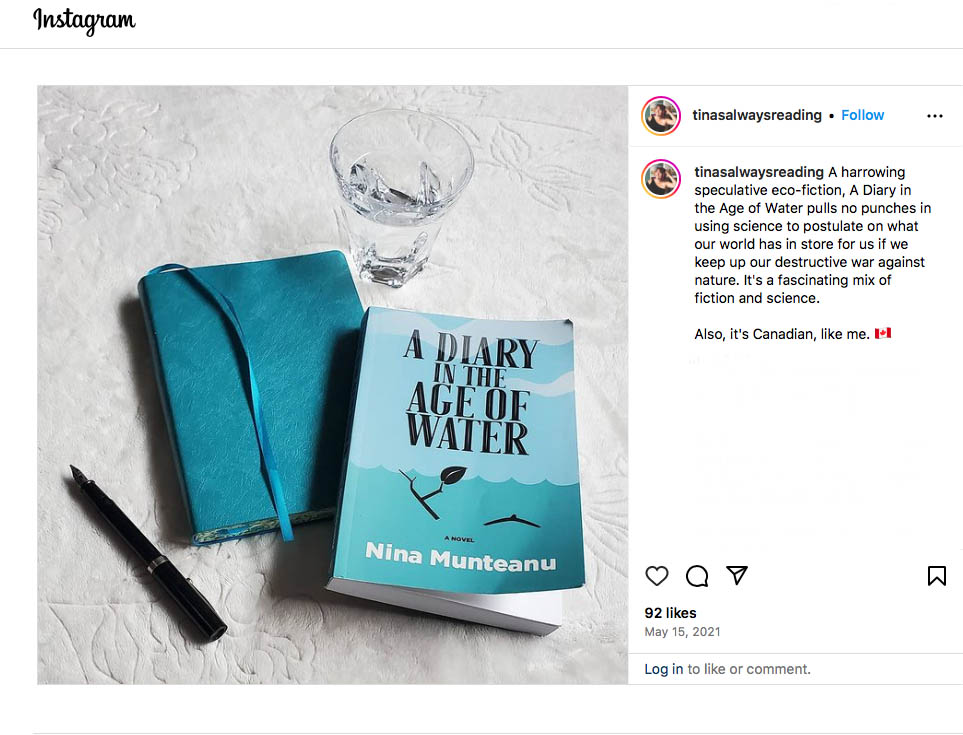
A Diary in the Age of Water explores the socio-political consequences of corruption in Canada, now owned by China and America as an indentured resource ‘reservoir’; it is a story told through four generations of women and their unique relationship with water during a time of great unheralded change. Centuries from now, in a dying boreal forest in what used to be northern Canada, Kyo, a young acolyte called to service in the Exodus, yearns for Earth’s past—the Age of Water—before the “Water Twins” destroyed humanity. Looking for answers and plagued by vivid dreams of this holocaust, Kyo discovers the diary of Lynna, a limnologist from that time of severe water scarcity just prior to the destruction. In her work for a global giant that controls Earth’s water, Lynna witnesses and records in her diary the disturbing events that will soon lead to humanity’s demise.

Waste Tide is an eco-techno thriller with compelling light-giving characters who navigate the dark bleak world of profiteers and greedy investors. Mimi is a migrant worker off the coast of China who scavenges through piles of hazardous technical garbage to make a living. She struggles, like the environment, in a larger power struggle for profit and power; but she finds a way to change the game, inspiring others. The story of Mimi and Kaizong—who she inspires—stayed with me long after I put the book down.

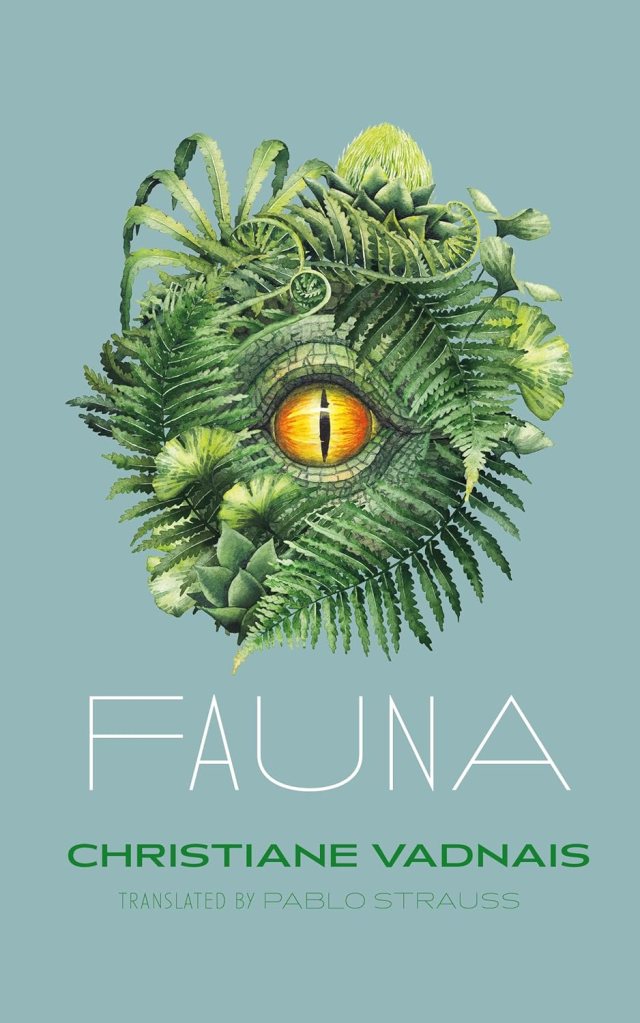
Fauna is at once beautiful and terrifying. Vadnais’s liquid prose immersed me instantly in her flowing story about change in this Darwinian eco-horror ode to climate change. I felt connected to the biologist Laura as she navigated through a torrent of rising mists and coiling snakes and her own transforming body with the changing world around her. It was an emotional rollercoaster ride that made me think.

The Word for World is Forest chronicles the struggles of the indigenous people under the conquering settlers through empathetic characters. The irony of what the indigenous peoples must do to save themselves runs subtle but tragic throughout the narrative. Given its relevance to our own colonial history and present situation, this simple tale rang through me like a tolling bell.

The Breathing Hole story begins in 1535, when the Inuk widow Hummiktuq risks her life to save a lost one-eared polar bear cub on an ice floe and adopts him. She names him Angu’ruaq. We soon learn that Angu’ruaq is timeless when we encounter him in scenes over the centuries from the Franklin Expedition in 1845 (who he helps by bringing them food) to 2031 when Angu’ruaq—old, hungry, his fur yellowing—returns to the breathing hole where long-dead Hummiktuq rescued him. By then the glaciers have receded and the ground is slush. Murphy’s spare and focused narrative achieves a timeless, dreamlike quality that plays strongly on the emotional connections of the reader; it elicits immense empathy for the Other in a deeply moving saga on the tragic dance of colonialism and climate change.

The Bear by Andrew Krivak is a fable of a post-anthropocene Earth told through the point of view of a young girl—possibly the only remaining human in the world—and the bear that guides her. Unlike the polar bear of The Breathing Hole, who remains silent and is clearly victimized by humanity’s actions, the black bear of The Bear lives with agency in a post-anthropocene world; he proselytizes and tells stories to instruct the girl on living harmoniously with Nature. His actions and elegant use of speech reflect his archetype as mentor in this story. This is foreshadowed in the fairytale the girl’s father recounts to her of a bear that saved a village from a cruel despot through cleverness and a sense of community.

Dune uses powerful world building and symbols of desert, water and spice coupled to the indigenous Fremen, to address exploitation and oppression by colonial greed.

The novel chronicles the journeys of new colonists and indigenous peoples of the desert planet Arrakis, enslaved by its previous colonists. The planet known as Dune lies at the heart of an epic story about taking, giving and sharing. The planet also serves as symbol to any new area colonized by settlers and already inhabited by Othered indigenous. It is the Mars of Martian Chronicles, the Bangkok of The Windup Girl, the North America of Barkskins.  

Camp Zero, set in the remote Canadian north, is a feminist climate fiction that explores a warming climate through the perilous journeys of several female characters, each relating to her environment in different ways. Each woman exerts agency in surprising ways that include love, bravery and shared community. The strength of female power carried me through the pages like a braided river heading to a singular ocean. These very different women journey through the dark ruins of violent capitalism, colonialism and patriarchy—flowing past and through hubristic men pushing north with agendas and jingoistic visions—to triumph in an ocean of solidarity. I empathized with each woman as she found her strength and learned to wield true heroism—one based on collaboration and humble honesty.

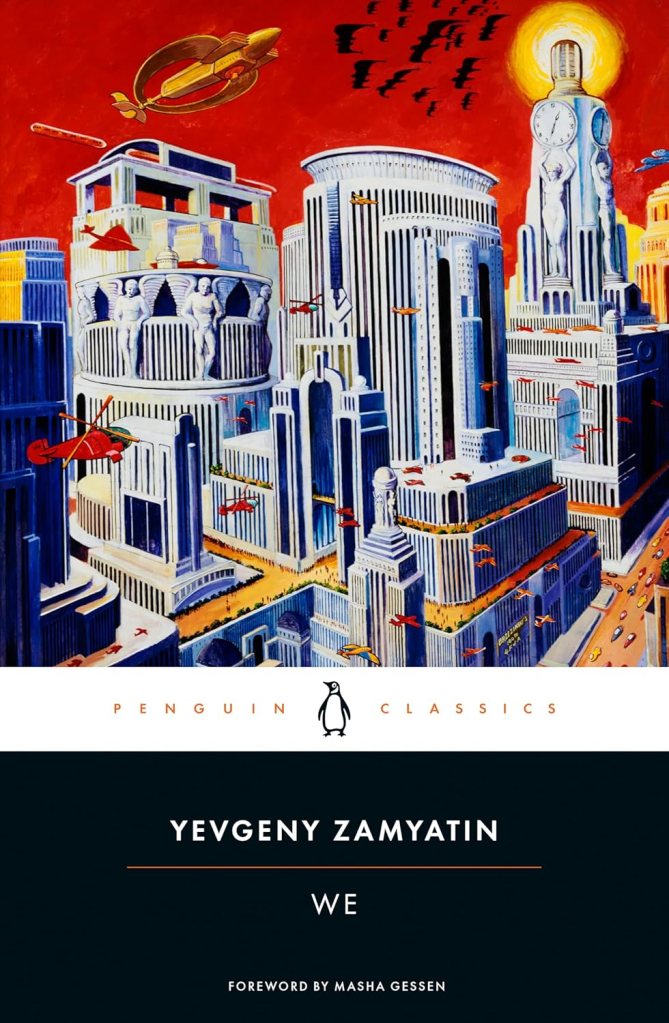
We, written in 1920, is a hopeful dystopic work of courageous and unprecedented feminism. While the story centres on logical D-503, a man vacuously content as a number in the One State, it is I-330—Zamyatin’s unruly heroine—who stole my attention. Confident, powerful and heroic, the liberated I-330 embraces the Green Wind of change to influence D-503. A force of hope and resilience, she braves torture to successfully orchestrate a revolution that breaches the Green Wall—feats typically relegated to a male protagonist in novels of that era. When pregnant O-90 refuses to surrender her child to the State, I-330 helps her escape to the outside, where the Green Wind of freedom blows. I resonated with Zamyatin’s cautionary tale on the folly of logic without love and Nature.

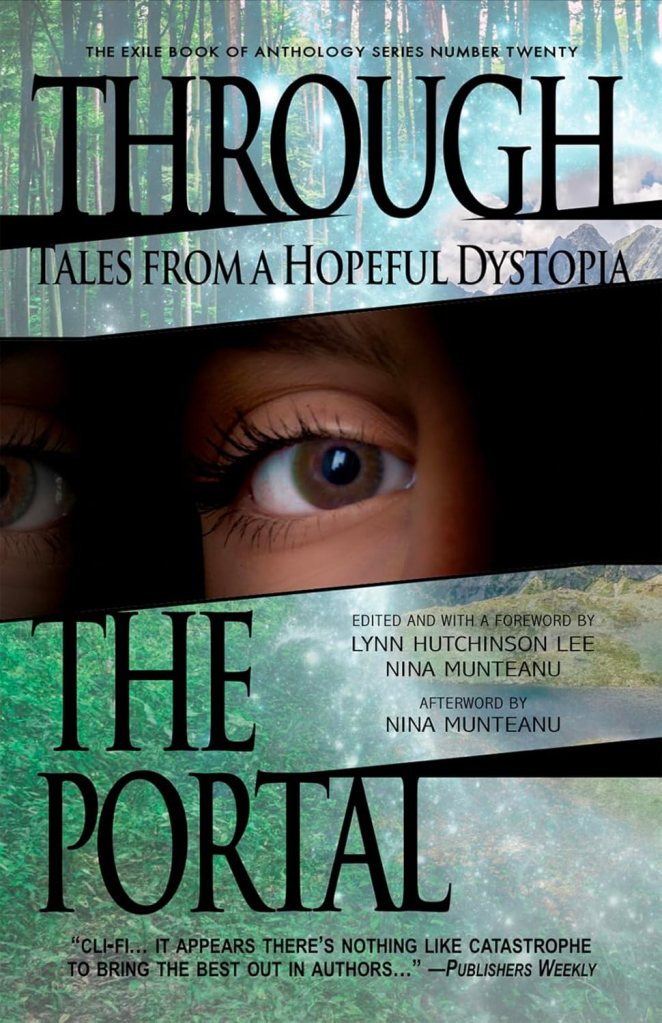
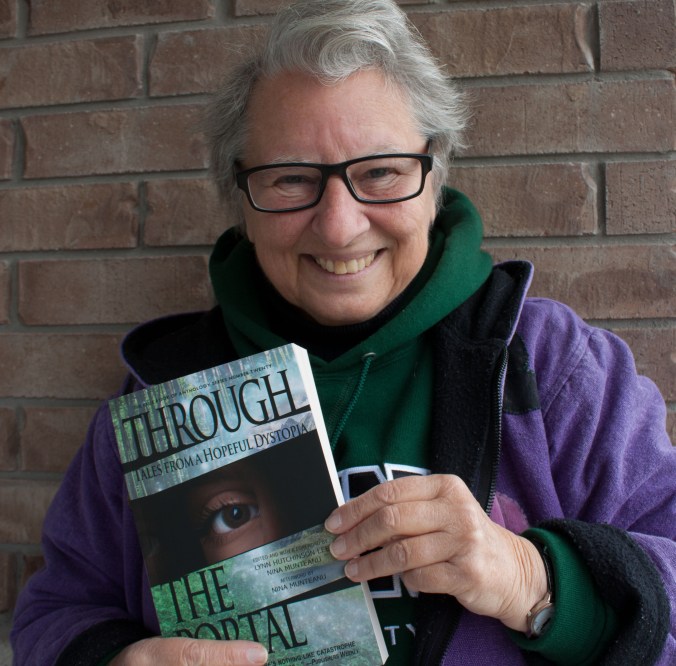
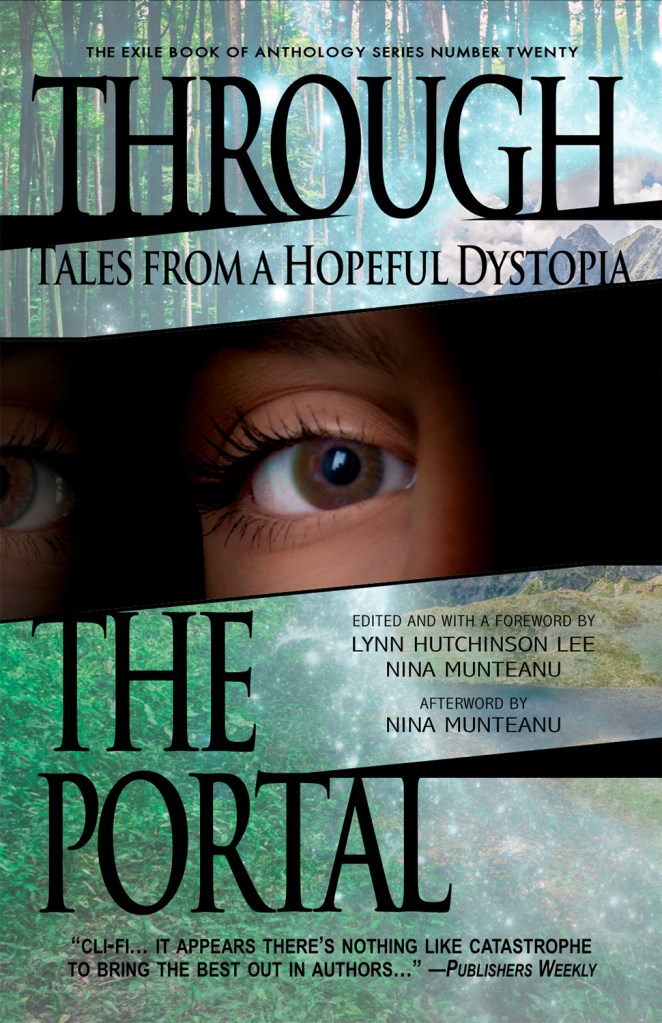
In Through the Portal: Tales from a Hopeful Dystopia, award-winning authors of speculative fiction Lynn Hutchinson Lee and Nina Munteanu present a collection that explores strange new terrains and startling social constructs, quiet morphing landscapes, dark and terrifying warnings, lush newly-told folk and fairy tales.

I list other significant and impactful eco-fiction books below:

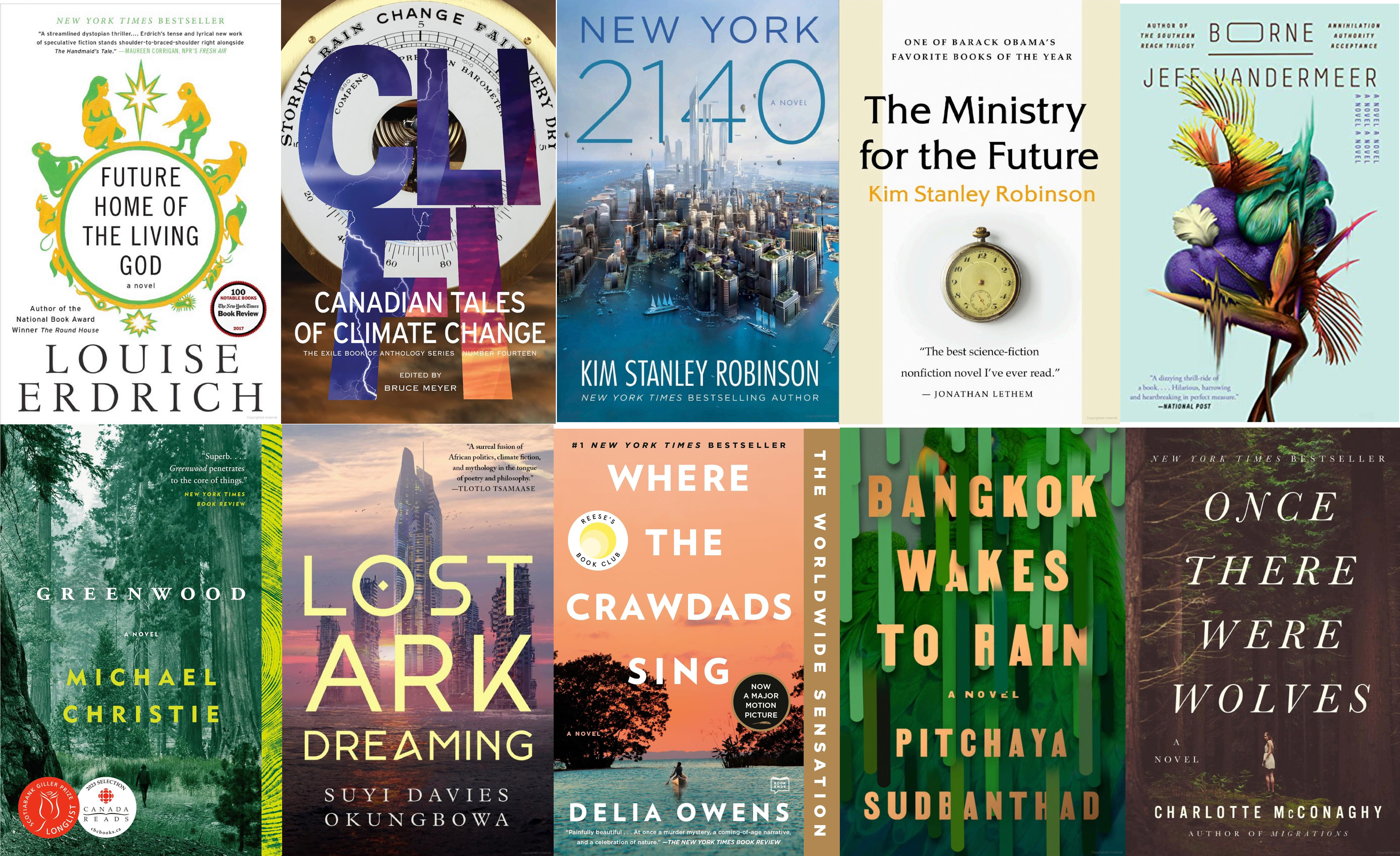
  • New York 2140 by Kim Stanley Robinson
  • Canadian Tales of Climate Change (edited) by Bruce Meyer
  • Ministry for the Future by Kim Stanley Robinson
  • Borne by Jeff Vandermeer
  • Bangkok Wakes to Rain by Pitchaya Sudbanthad 
  • Future Home of the Living God by Louise Erdrich
  • Lost Arc Dreaming by Suyi Davies Okungbowa
  • Greenwood by Micheal Christie
  • Where the Crawdads Sing by Della Owens
  • Once There Were Wolves by Charlotte McConaghy

Nina Munteanu is a Canadian ecologist / limnologist and novelist. She is co-editor of Europa SF and currently teaches writing courses at George Brown College and the University of Toronto. Visit www.ninamunteanu.ca for the latest on her books. Nina’s bilingual “La natura dell’acqua / The Way of Water” was published by Mincione Edizioni in Rome. Her non-fiction book “Water Is…” by Pixl Press (Vancouver) was selected by Margaret Atwood in the New York Times ‘Year in Reading’ and was chosen as the 2017 Summer Read by Water Canada. Her novel “A Diary in the Age of Water” was released by Inanna Publications (Toronto) in June 2020.
Significant Science Fiction TV Series—Part 1, Shows that Touch on Justice and Science & Technology: #3 — OCCUPIED

I’ve selected ten TV series that have intrigued me, moved me, and stayed with me for various reasons that touch on: abuse of justice, including eco-justice and environmental abuse; technology use and abuse; and the effects and horrors of climate change.

Some are well known; others not so well known. All approach storytelling with a serious dedication to depth of character, important themes, realistic world building, and excellent portrayal by actors. The world-building is extremely well done—in some cases rivalling Ridley Scott’s best—with convincing portrayals of worlds that are at times uncanny in their realism. Worlds that reflect story from an expansive landscape to the mundane minutiae of daily life: like the cracked phone device of Detective Miller in The Expanse or the dirty fingernails of engineer Juliette Nichols in the Down Deep of Silo. Stories vary in their treatment of important themes from whimsical and often humorous ironies to dark and moody treatises on existential questions. In my opinion, these TV series rival the best movies out there, often reflecting large budgets (but not always) and a huge commitment by producers. The ten TV series I’ve selected here come from around the world: Brazil, Germany, France, Norway, Canada and the United States.

In Part 1, I look at five TV series that touch on ethical issues we are facing today; issues that reach far into existential questions of what it means to be human. These TV series explore synthetic biology, cloning and gene editing, and justice in space colonization and exploitation.

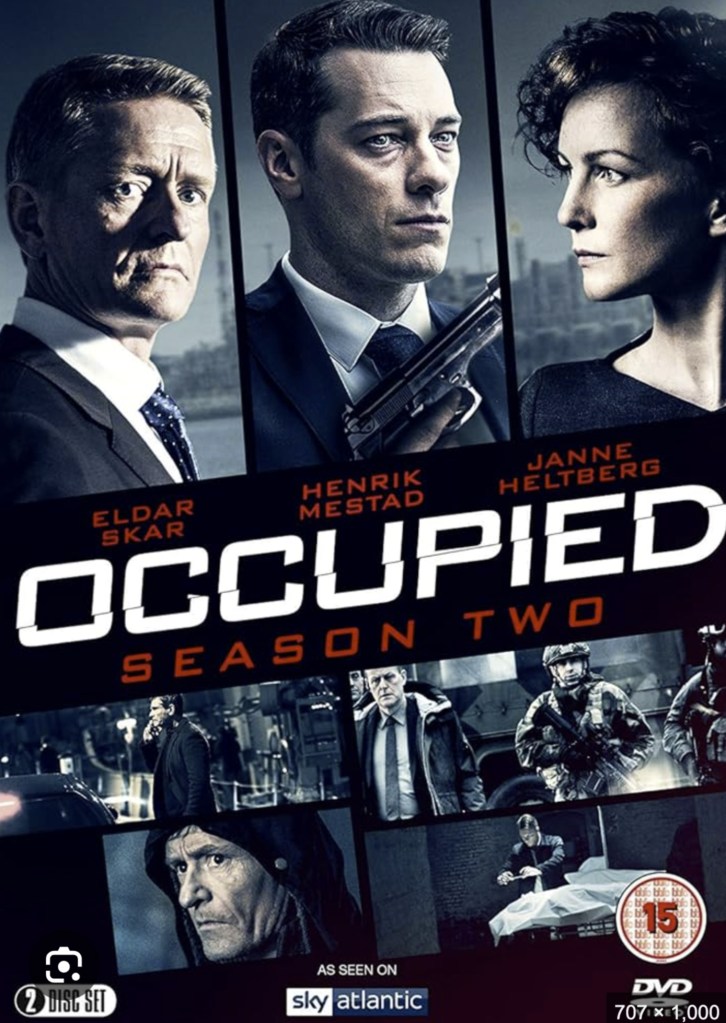
Prime Ministerial bodyguard Hans Martin Djupbik (Eldar Skar) chases a would-be assassin

OCCUPIED: A Real and Present Threat

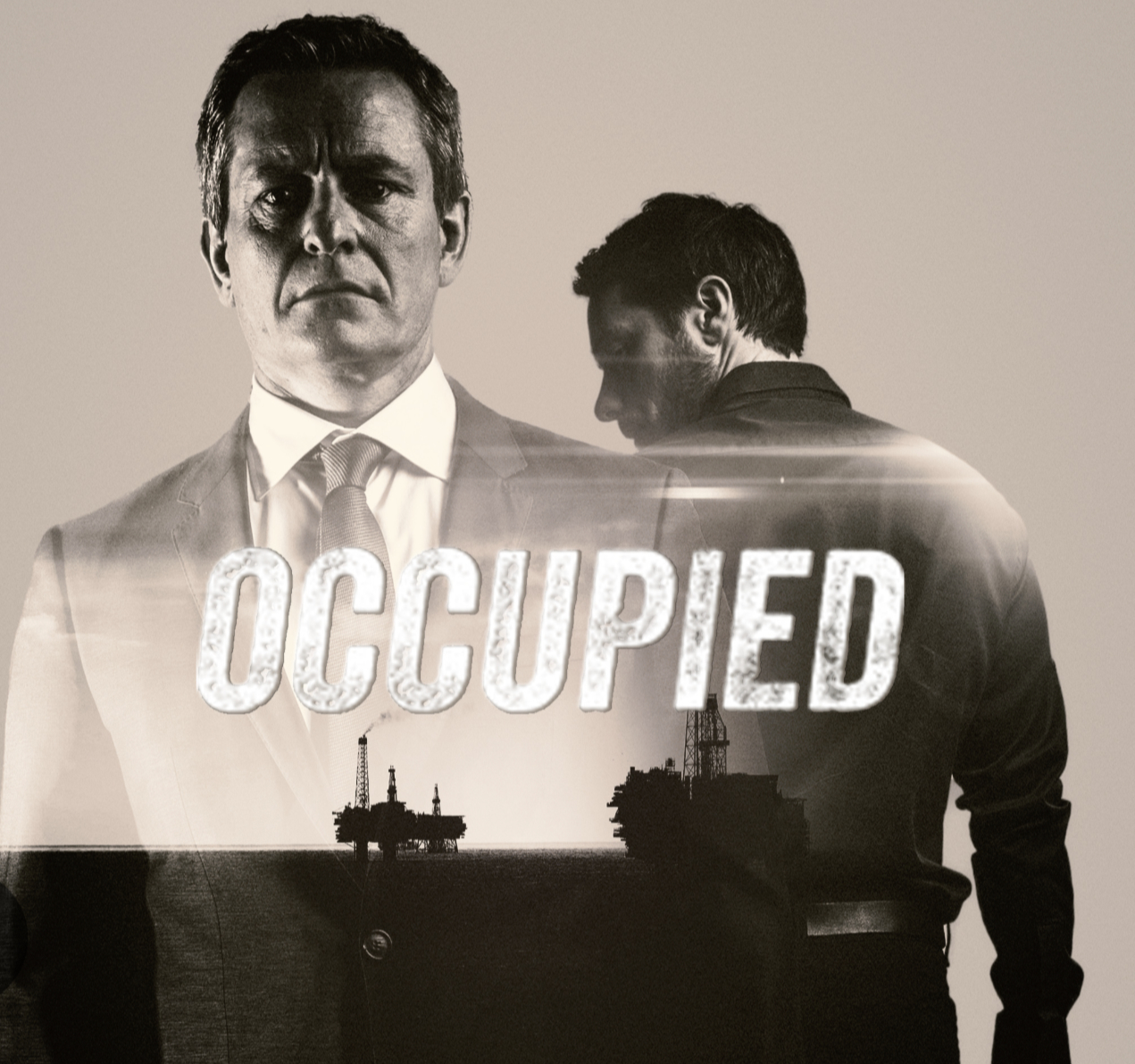
In 2016, Occupied (Okkupert), Norway’s most expensive television production to date captivated viewers across Europe. A political thriller about a Green prime minister, committed to renewable energy, overthrown by close neighbour Russia to control his country’s abundant natural gas and oil reserves gripped many viewers, left on the edge of their seats when episode 10 failed to resolve the deadlock. In a review entitled “Bear Lurking in the Fjords” Mark Melton of Providence noted that the first episode of Occupied broke the channel’s rating records as more than 50% of viewers aged 20 to 49 watched, and the show went on to Netflix with English subtitles.

The Norwegian Prime Minister Jesper Berg (Henrik Mestad) faces hard decisions in Occupied

Melton shares the intriguing premise. “Sometime in the near future, civil wars prevent Middle Eastern countries from exporting enough oil to meet global demand. Energy independent due to shale gas, an isolationist United States no longer sees a need to have a global presence and pulls out of NATO [shades of the present!] Meanwhile, global warming has become so rampant that a hurricane hits Norway and kills over 600 people. In response, Norwegians elect environmentalists who halt all oil production to help stop climate change. Without Norway’s oil, the European Union falls into a crippling recession. Because the Norwegian Prime Minister refuses to budge, the EU asks Russia to occupy Norway and restart oil production.”

What follows is a captivating three season political action-thriller that explores potential real-life questions for leaders throughout the world. When the first season of Occupied aired, the Russians were a fictional threat. Now, it seems, reality has caught up to fiction.

Melton writes that when Jo Nesbø, a well known Norwegian crime novelist, first pitched the story, people told him the idea was far-fetched. Then the real-world Russian invasion happened on the day the show started shooting, adding tremendous relevance to the fiction envisaged. Given the post-Crimea tensions (and what is now happening in the Ukraine), it is not surprising that the Russian government is not pleased with Occupied adds Melton. Before the show aired, the Russian ambassador in Oslo complained that the show would frighten “the Norwegian audience with a non-existing threat from the east.”

The three season series moves at a swift pace with Season One quickly instating the Russian occupation as the Norwegian PM Jesper Berg (Henrik Mestad) sells Norway’s future to prevent bloodshed from its Russian aggressors. Resistance flares up and intrigue rises from all quarters including the Russian occupiers with some Norwegians profiting from the occupation and others arming themselves and doing sabotage.

Hans Martin Djupbik (Eldar Skar) stops an assassination

I found Prime Ministerial bodyguard Hans Martin Djupbik (Eldar Skar), who at one point saves the life of Russian Ambassador Irina Sidorova (Ingeborga Dapkunaite), one of the show’s most intriguing characters. Eventually becoming head of state security, Hans Marin plays a difficult balancing act between Norwegian and Russian interests in the conflict between principle and realpolitik. Ultimately, this unsustainable position impacts him on several levels, including his personal life, as forces literally pull him apart.

Melton notes that Hans Martin first appears as an archetypal hero who uses his position in security and intelligence to help save democracy. And viewers, says Melton, have many opportunities to cheer for him. However, given his unique position and relationship with the Russian occupiers, his actions at times become morally ambiguous and this catches up with him in season three, which is a heartbreaker. I wasn’t happy with how it ended for Hans Martin, who, in my opinion was not just a main protagonist, but also the show’s chief casualty and archetype for integrity and even innocence. It was hard to watch as the relentless political machinations seized him in a vicious spider web of nefarious intrigue even as he tried so hard to play fair throughout. Given the show’s trajectory, the shocking end of season three seemed inevitable and necessary; for in his final and tragic act, Hans Martin re-affirmed his integrity and archetype as hero for democracy and freedom.

In a ruthless war for resources and sovereignty, Hans Martin—like heroic integrity—becomes the main casualty.

Hans Martin Djupbik (Eldar Skar) follows a lead

Given the current situation today, Occupied appears frighteningly prescient and possible. “Democracy is a key value that becomes a rallying cry for the resistance,” writes Melton. “Without a strong NATO these characters struggle to preserve their freedoms and democracy. Norway spends more on its military today than it did at the end of the Cold War (adjusted for inflation), but other NATO countries provide equipment and personnel necessary for Norway’s defense. It is easy to understand why Norwegians may fear a world without the alliance. Occupied has reminded European audiences what Russia has already done,” and what it may yet do…

The Norwegian PM and his aide discuss next moves

The intriguing machinations of geopolitics aside, Occupied is foremost an environmental thriller about the specter of climate change. In 2020, Taylor Antrim of Vogue writes: “Occupied is the most relevant thing on TV right now, a hyper-entertaining drama that treats the climate emergency with the seriousness it deserves.” In his review entitled, “Occupied is the Climate-Crisis Thriller You Should Be Watching,” Antrim tells us that “Norway is one of those hyper-progressive, enlightened countries that should be free of the world’s social ills—but what unfolds on Occupied is a cheat sheet of all the disquieting trends of our time. First, the country becomes gripped by nativism, with ‘Free Norway’ activists turning on ordinary Russians living within their borders. Then there are escalating acts of domestic terrorism and violence. And by season three, in which climate warriors turn to guerrilla cyber tactics and Free Norway activists commit grotesque acid attacks on accused Russian collaborators, Berg has been transformed from an idealist into a power-mad operator. The brilliance of the show is you never know whom to root for. The stalwart and handsome head of the security services? The crusading Marxist journalist? The steely Russian diplomat who understands realpolitik better than anyone?”

Russisn diplomat Irina Sidorova and head of Norwegian Security Hans Martin talk deals

In the end, Antrim exhorts: “Occupied may be entertainment, but the extreme measures its young eco-activists are fighting for (an entirely renewables-based energy system) no longer seem extreme. This is a show that understands that we are marching toward a tipping point, and by the climactic end of the season a desperate, riven country is demanding that the world change its path at any cost.”

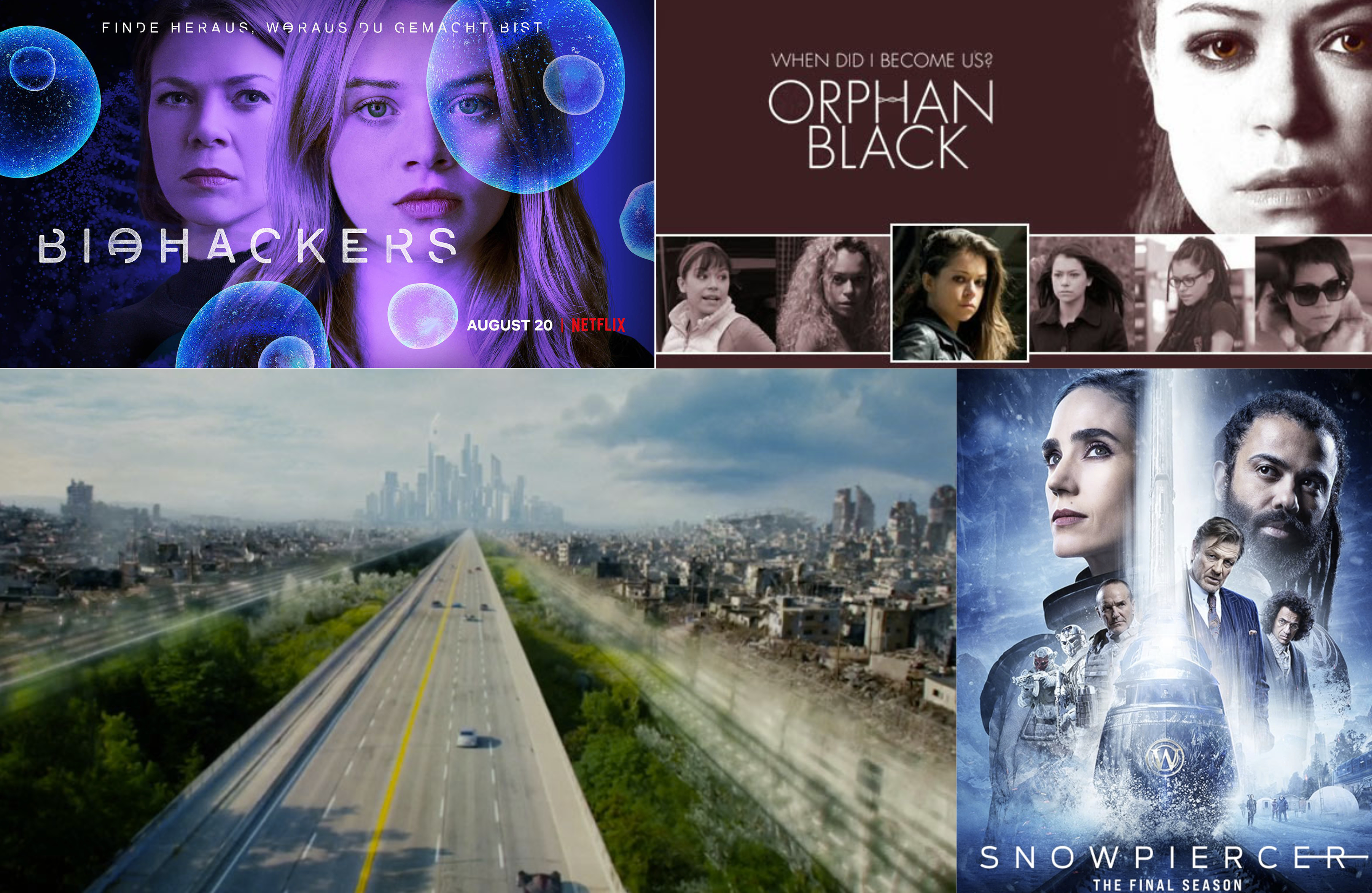
Ten Significant Science Fiction TV Series:

Biohackers (Germany)
Orphan Black (Canada)
Occupied (Norway)
Missions (France)
Expanse (USA)
Incorporated (USA)
3% (Brazil)
Snowpiercer (USA)
Silo (USA)
Extrapolations (USA)

Nina Munteanu is a Canadian ecologist / limnologist and novelist. She is co-editor of Europa SF and currently teaches writing courses at George Brown College and the University of Toronto. Visit www.ninamunteanu.ca for the latest on her books. Nina’s bilingual “La natura dell’acqua / The Way of Water” was published by Mincione Edizioni in Rome. Her non-fiction book “Water Is…” by Pixl Press (Vancouver) was selected by Margaret Atwood in the New York Times ‘Year in Reading’ and was chosen as the 2017 Summer Read by Water Canada. Her novel “A Diary in the Age of Water” was released by Inanna Publications (Toronto) in June 2020.

Double Book Launch at Free Times Café, Toronto

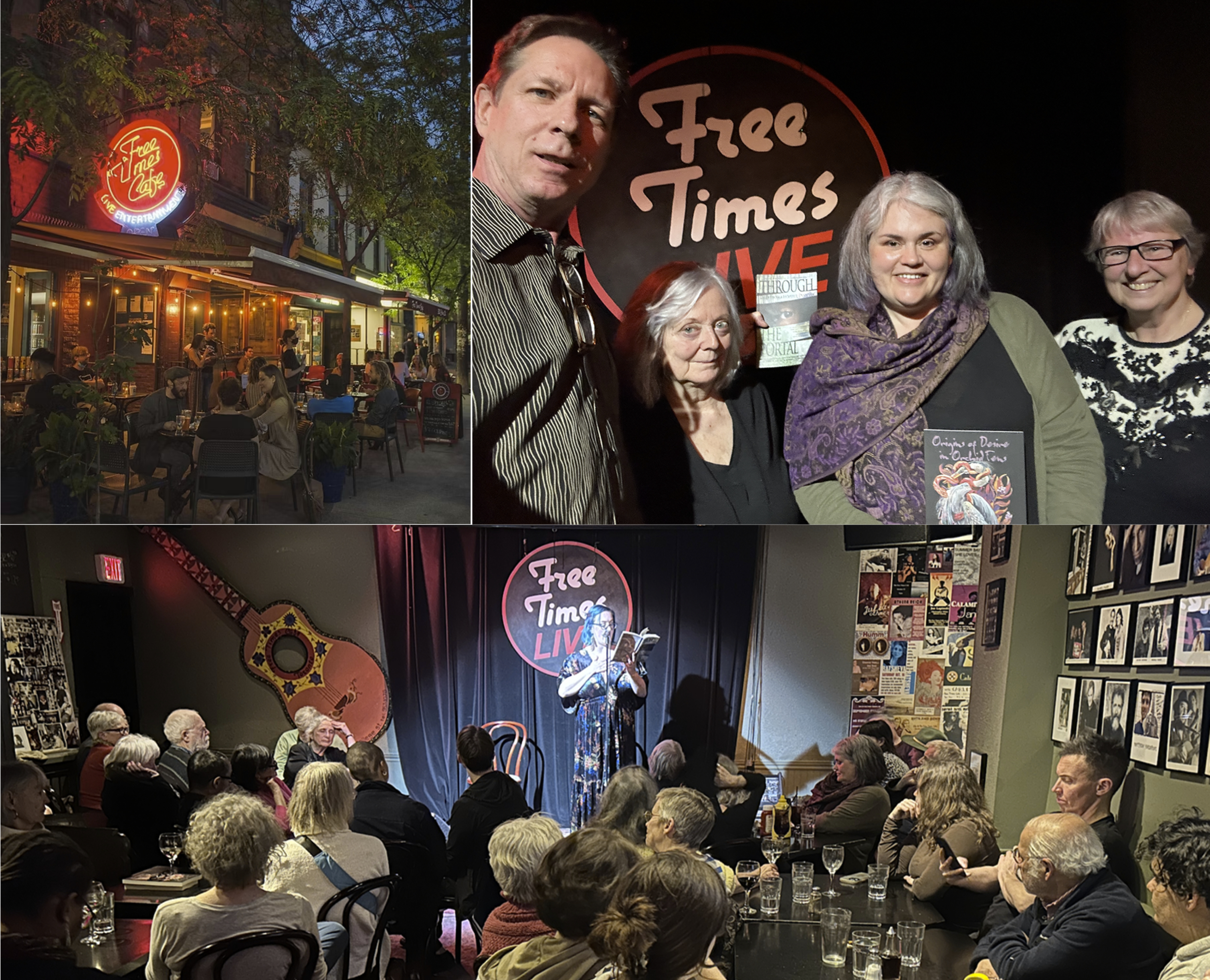
Free Times Cafe venue at night (photo by Ashish Pillai)

Appropriately, on the eve of Earthday, Exile Editions and Stelliform Press launched two eco-fiction books at one of Toronto’s oldest and established cultural/dining venues, Free Times Café, by Kensington Market. Both books were works of eco-fiction and climate fiction that focused on issues of environmental treatment and destruction. Both works focused on hope.

Top left: Free Times Cafe venue at night (photo by Nick Wons). Top right: Michael Callaghan of Exile Editions, Lynn Hutchinson Lee, Selena Middleton of Stelliform Press, Nina Munteanu. Bottom: Lynne Sargent reads from Portal.

Exile launched their anthology Through the Portal: Tales of a Hopeful Dystopia, edited by Lynn Hutchinson Lee and Nina Munteanu. It was their twentieth in a series; this one focused on hope in a climate-changing world that is progressively becoming more dystopic. Short stories and poems were read by authors.

Top left: Ursula Pflug reads from Portal. Top right: Michael Callaghan introduces the anthology. Bottom: Lynn Hutchinson Lee reads from her novel Origins of Desire in Orchid Fens.

Stelliform launched Origins of Desire in Orchid Fens a novel written by Lynn Hutchinson Lee, who read several excerpts of her novel.

Both works have received much praise.

Nina Munteanu is a Canadian ecologist / limnologist and novelist. She is co-editor of Europa SF and currently teaches writing courses at George Brown College and the University of Toronto. Visit www.ninamunteanu.ca for the latest on her books. Nina’s bilingual “La natura dell’acqua / The Way of Water” was published by Mincione Edizioni in Rome. Her non-fiction book “Water Is…” by Pixl Press (Vancouver) was selected by Margaret Atwood in the New York Times ‘Year in Reading’ and was chosen as the 2017 Summer Read by Water Canada. Her novel “A Diary in the Age of Water” was released by Inanna Publications (Toronto) in June 2020.

Call for Submissions–ECO24

Apex Book Company (publisher of Apex Magazine) has extended their deadline for short stories to appear in their anthology “ECO24, The Year’s Best Speculative Ecofiction” edited by Marissa van Uden. They are looking to purchase non-exclusive world anthology rights for only previously published short stories of eco-fiction published in the last calendar year (Jan 1 to Dec 31 2024) to publish in their imprint Violet Lichen Books.

Here is their description of the eco-fiction anthology:

This anthology “showcases some of the most vivid, thought-provoking, and emotionally affecting ecofiction published in the previous calendar year. Speculative ecofiction is defined as stories that explore our place in the natural world and our relationships to non-human life (e.g. focused on themes related to ecology, nature, the environment, climate, conservation, wildlife and animal rights) and which also fall into speculative genres such as science fiction, fantasy, Weird fiction, New Weird, anthropomorphic fantasy, magical realism.

Ecofiction engages with some of the most urgent issues facing us today and also looks ahead to the possibilities of the future. Even when dealing with dark or tragic themes, ecofiction stories are expressions of our human connection to the most beautiful planet we know, and to all of earthlife.

Check their site for SUBMISSION GUIDELINES.

Nina Munteanu is a Canadian ecologist / limnologist and novelist. She is co-editor of Europa SF and currently teaches writing courses at George Brown College and the University of Toronto. Visit www.ninamunteanu.ca for the latest on her books. Nina’s bilingual “La natura dell’acqua / The Way of Water” was published by Mincione Edizioni in Rome. Her non-fiction book “Water Is…” by Pixl Press (Vancouver) was selected by Margaret Atwood in the New York Times ‘Year in Reading’ and was chosen as the 2017 Summer Read by Water Canada. Her novel “A Diary in the Age of Water” was released by Inanna Publications (Toronto) in June 2020.

My Eco-Journey with DuPont…                           

In his 2006 book The Seven Basic Plots: Why We Write Stories, Christopher Booker tells us that there are seven types of plots in story. One is entitled “Overcoming the Monster,” an underdog story where the hero sets out to destroy an evil to restore safety to the land. It is a story I admire and never tire of. The evil force is typically much larger than the hero, who must find a way, often through great courage, strength, inventive cunning—and help from her community—to defeat the evil force. This is the story of David and Goliath, of Beowulf and Grendel, of Luke Skywalker and Darth Vader in Star Wars, of Jake Sully and Miles Quaritchs in Avatar—notice, all men who, for the most part, do their hero-ing alone. I may get to that later (in another post)…

The “Overcoming the Monster” plot, whether told literally or through metaphor, reflects an imbalance in the world—usually of power—that the hero must help right.

Enter the “Monster” DuPont…

DuPont Washington Works plant in Parkersburg, West Virginia

The true story of DuPont’s decades-long evil maleficence reflects the great power imbalance of many large corporations and the evil they enact through willful deception and mischief to increase profit, their god.

This brings me to my heroic journey. For in some terrible way, the story of DuPont is also my story. One of power imbalance, of deception and ignorance. Their deception; my ignorance:

In 1954, the year I was born, during the ramp up for the Teflon rollout at DuPont’s Washington Works plant in Parkersburg, toxicologist R.A. Dickison noted possible toxicity of the surfactant C8 (PFOA or Perfluorooctanoic Acid) used to make Teflon. DuPont ignored the warning and proceeded to roll it out for mass use.

1950s DuPont ad for the Teflon “Happy Pan”

In 1961, while I was contending with recess bullies in grade two, DuPont rolled out their Teflon-coated “Happy Pan” with the full knowledge that C8 was a toxic endocrine disruptor and caused cancer. DuPont’s chief toxicologist Dorothy Hood cautioned executives in a memo that the substance was toxic and should be “handled with extreme care.” She explained that a new study had found enlarged livers in rats and rabbits exposed to C8, confirming that the chemical was toxic. It didn’t stop the roll out.

In 1962, while I was exploring my artistic talents at school, DuPont scientists conducted tests on humans, asking a group of volunteers to smoke cigarettes laced with C8. Nine out of ten people in the highest-dosed group were noticeably ill for an average of nine hours with flu-like symptoms that included chills, backache, fever, and coughing. Further experiments by DuPont linked C8 exposure to the enlargement of rats’ testes, adrenal glands, and kidneys.

In 1964, I was ten years old and struggling with my Grade 5 teacher who was trying to curb my unique self-expression. I was already aware of environmental imbalance and destruction in the world. My pet peeve was littering because it demonstrated great disrespect for others and the environment. I told environmental stories. That year DuPont had already begun its great deception; having confirmed the toxicity of C8, they simply watched (and recorded) as this cancer-causing endocrine disruptor injured, maimed and killed their own workers. The company did nothing to prevent it and they told no one.

In 1965, I was in the process of figuring out my heroic self and my unique gift to the world in Grade seven: was it in fine arts and advertising? Writing and storytelling? Environmentalism and law? Internal DuPont memos revealed that preliminary studies showed even low doses of a related surfactant to Teflon could increase the size of rats’ livers, a classic response to poison.

In the mid- to late-60s, I became an environmental activist, putting up posters and writing in the school paper. I wrote letters to industry and politicians, trying to incite interest in being good corporate citizens and promoting global environmental action. I remember a well-meaning teacher chiding me for my extravagant worldview. “Stick to little things and your community—like recycling,” he suggested patronizingly. I remember the shock of realizing that not everyone felt the planet like I did. Perhaps it was a teenage-thing, or a girl-thing, or a nina-thing. I prayed it wasn’t just a nina-thing

I started writing stories in high school. Mostly eco-fiction, though I didn’t know that’s what it was at the time. There was no genre called eco-fiction back then. It all went under the umbrella of scifi.

In 1969, at fifteen, I wrote my first dystopia, Caged in World.  The eco-novel was about a subway train driver and a data analyst caught in the trap of a huge lie. The story later morphed into Escape from Utopia. Several drafts and years later the novel became the eco-medical thriller Angel of Chaos, published in 2010. The story is set in 2095 as humanity struggles with Darwin’s Disease—a mysterious neurological environmental pandemic assaulting Icaria 5, an enclosed city within the slowly recovering toxic wasteland of North America. The city is run by deep ecologists who call themselves Gaians, and consider themselves guardians of the planet. The Gaians’ secret is that they are keeping humanity “inside” not to protect humanity from a toxic wasteland but to protect the environment from a toxic humanity.

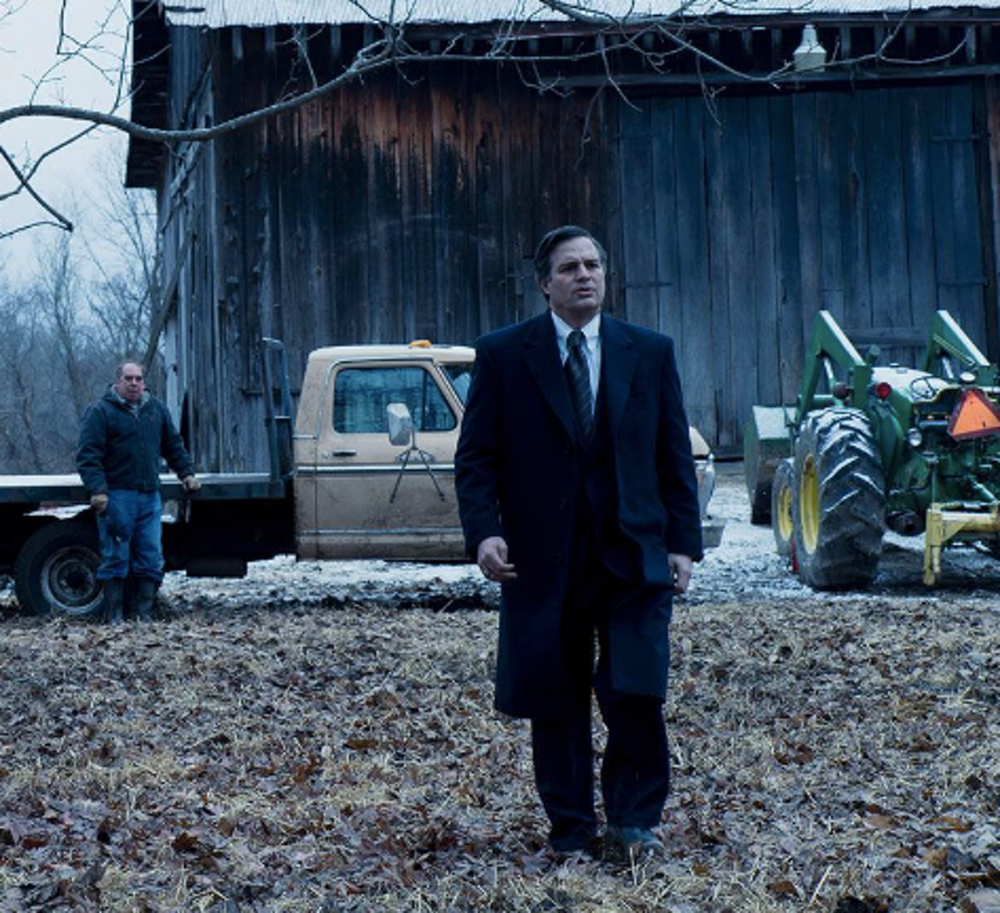
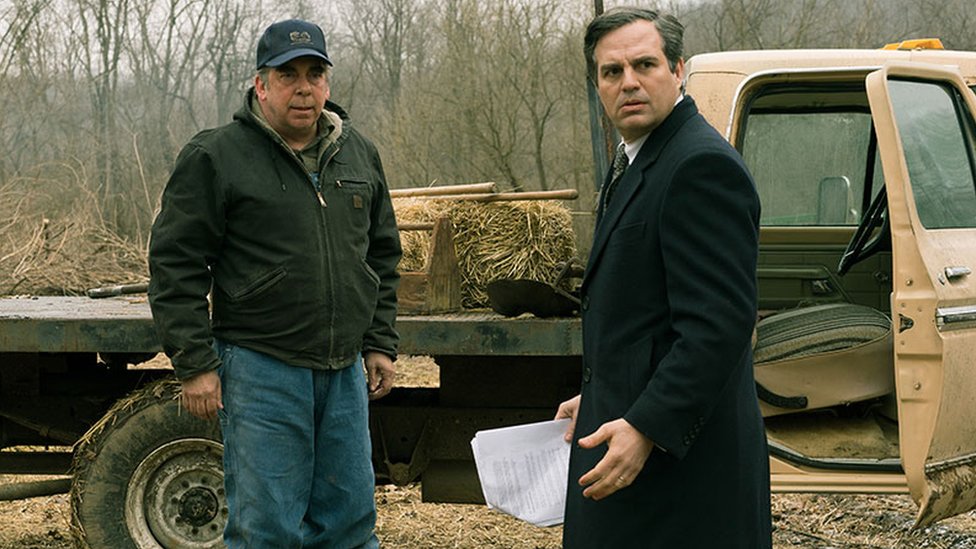
Lawyer Robert Bilott (Mark Ruffalo) investigates leachate-infected cows from nearby DuPont landfill (photo from film “Dark Waters”)

In the early 1970s, I entered university and contemplated becoming an environmental lawyer; I wrote short stories, mostly eco-fiction, and joined marches protesting environmental destruction by large corporations.  DuPont confirmed that C8 not only persisted in the environment; it bioaccumulated in animals. In 1979, when I graduated with a Master of Science degree in limnology/ecology, DuPont circulated an internal memo in which humans exposed to C8 were referred to as “receptors,” describing how scientists found “significantly higher incidence of allergic, endocrine and metabolic disorders” as well as “excess risk of developing liver disease.”  DuPont kept this knowledge to themselves and withheld it from EPA.  

In the late 1970s early ‘80s, while I was addressing local environmental issues as a practicing limnological consultant, DuPont was dumping 7,100 tons of PFOA-laced sludge into unlined ‘‘digestion ponds’’: open, unlined pits on the Washington Works property, from which the chemical could seep straight into the ground. PFOA entered the local water table, which supplied drinking water to the communities of Parkersburg, Vienna, Little Hocking and Lubeck — more than 100,000 people.

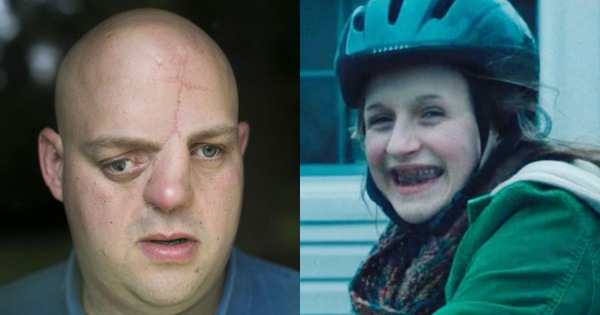
Effects of PFOA (birth defect in Bucky Bailey whose mother was on the Teflon line without protection during her first trimester; blackening teeth from the excessive fluoride, from scene in “Dark Waters”)

In 1981, when I got my first job as a limnologist and environmental consultant in Vancouver, DuPont confirmed that C8 caused birth defects in its own workers—and did not warn its workers. A DuPont pathologist confirmed that the observed fetal eye defects were due to C8. With that confirmation the pregnancy study was quietly abandoned and a decision made not to inform EPA. Less than a year later DuPont created false data for EPA then moved women of childbearing age back into areas with C8 exposure. Many in the company coined the term “Teflon flu” to describe the ill-effects of working close to the compound. By 1982, DuPont had confirmed the high toxicity of C8/PFOA in humans.

In 1984, a year after I formed my own consulting company Limnology Services in Vancouver, DuPont staffers secretly tested their community’s drinking water and found it to contain alarming levels of C8. Deciding that any cleanup was likely to cost too much and tarnish their reputation, DuPont chose to do nothing. In fact, they scaled up their use of C8 in Teflon products and bought land to dump their toxic sludge in unlined landfills. Deaths in DuPont workers from leukemia and kidney cancer climbed.

In 1989, at 35 years old, and still blissfully unaware of DuPont’s nefarious activities, I continued consulting for my own company Limnology Services, addressing mostly local environment issues with communities and local governments. By that year, DuPont employees found an elevated number of leukemia deaths at the West Virginia plant, followed by an inordinately high number of kidney cancers among male workers. Earl Tennant, whose farm was close to the DuPont landfill at Dry Run creek, sent videos of foamy water and diseased cows to the West Virginia Department of Environmental Protection; state regulators documented “numerous deficiencies in the landfill operation and erosion gullies that funnelled waste into Dry Run creek; DuPont made a deal with the department: the company paid a $250,000 fine and the department took no further action against the landfill. (The official who negotiated the deal later became a DuPont consultant.)

Throughout the 90s, I started teaching college biology and university environmental education courses in Vancouver. The magazine Shared Vision Magazine published my first article “Environmental Citizenship” in 1995. Meantime, DuPont’s Washington Works plant pumped hundreds of thousands of pounds of PFOA sludge, powder and vapor through stacks into the atmosphere and outfall pipes into the Ohio River.

In 1996, I was consulting for local industry and municipalities. By then, C8 was in the drinking water of Parkersburg and other communities. Despite what they knew of C8’s toxicity, DuPont kept it a secret (no one else was testing for PFOA because it was unregulated).

Farmer Tennant and lawyer Rob Billot encounter a leachate-infected mad cow in the 2019 film “Dark Waters”

In 1999, still serving as environmental consultant to mining and pulp mill companies, I still knew nothing about DuPont’s duplicitous environmental atrocities. 3M—troubled by its studies on C8 with monkeys—notified EPA and phased out PFOS and PFOA; DuPont started producing its own PFOA. On behalf of Earl Tennant whose cattle were dying adjacent to DuPont’s landfill site, lawyer Rob Bilott filed a small suit against DuPont to gain legal discovery and starting the decade-long process of finally unravelling the buried truth of their insidious criminality–over thirty years after DuPont knew and did nothing.

In 2003, I continued consulting as an environmental scientist in ignorance of DuPont’s misdealings, though by now much had come out in the press. By that year, DuPont had knowingly dispersed almost 2.5 million pounds of harmful C8 from its Washington Works plant into the air and water of the mid-Ohio River Valley area.

DuPont’s Washington Works plant in Parkersburg, West Virginia

In 2004, DuPont agreed to settle the class-action suit filed by lawyer Rob Bilott. Under the terms of the settlement, the company was not obliged to pull C8 from the market. The best the EPA could negotiate was a voluntary phase-out by 2015. That same year There It Is reported on how DuPont denied poisoning consumers with Teflon products. The dangers and spread of PFOA and other forever chemicals appeared more and more in the scientific literature (see the reference list below, which is by no means exhaustive).

In 2007, Darwin’s Paradox, my eco-fiction novel about an environmental pandemic, was published by Dragon Moon Press in Calgary, Alberta. Four years earlier, the law had finally caught up to DuPont, but not before they had dispersed 2.5 million pounds of harmful C8 from their Washington Works plant into the air and water of the mid-Ohio River Valley area. It would be another twelve years before DuPont would stop making C8 (in 2015) and another four years after that when C8 would be banned from use globally (2019). PFOA is still unregulated by EPA; the best they can do is issue a non-enforceable health advisory set at 70 parts per trillion.

In 2012, shortly after I moved to Nova Scotia to write for a living (having quit environmental consulting due to disillusionment with integrity of companies I worked for), the C8 Science Panel, tasked to study the possible health effects of PFOA in a highly exposed population in the mid-Ohio Valley, determined a probable link between C8 exposure and six disease categories: kidney cancer, testicular cancer, ulcerative colitis, thyroid disease, preeclampsia, and high cholesterol.  

In 2015, two years after I began teaching writing at the University of Toronto, DuPont began a series of complex transactions that transferred its responsibility for environmental obligations and liabilities associated with PFAS (C8) onto other entities such as Chemours, Corteva, and NewDupont. A year later New York Times Magazine ran a story “The Lawyer Who Became DuPont’s Worst Nightmare” and Sharon Lerner of The Intercept ran an in-depth series on DuPont’s duplicitous criminality: “The Teflon Toxin: DuPont and the Chemistry of Deception.”

In 2017, DuPont and its spinoff company Chemours agreed to settle a lawsuit with roughly 3,500 people living near the Parkersburg plant in both West Virginia and Ohio and many ailing from toxicity-related problems. The company agreed to pay $671 million. That’s one day’s sales in a $27 billion annual profit stream. The Fayetteville Observer reported that this “Discontinued chemical [was] still in well water” after DuPont agreed in 2009 to stop using C8. They noted that the company was facing a class action lawsuit from thousands of people in Ohio and West Virginia for discharging the toxic chemical into the Ohio River since the 1950s.

In 2019—sixty-seven years after DuPont knew PFOA was toxic and did nothing—this forever chemical was finally banned globally under the Stockholm Convention. Unfortunately, by 2019, PFOA was already literally everywhere on the planet in concentrations considered unsafe. Given its high water-solubility, long-range transport potential, and lack of degradation in the environment, PFOA persists in groundwater and is ubiquitously present in oceans and other surface water around the globe. It is found in remote areas of the Arctic and Antarctic (where it was not used or manufactured), no doubt transported there through ocean currents and in the air, bound on particles. NBC News ran a news piece about ‘forever chemicals’ contaminating drinking water near military bases. The Guardian ran a news article: “Companies deny responsibility for toxic ‘forever chemicals.’” In Maine, The Portland Press Herald ran a story: “Households are awash in ‘forever chemicals’.”

In 2020, NBC News revealed that DuPont was still avoiding its responsibility to clean up its C8 mess and compensate those harmed by DuPont’s negligence.

In 2022, I finally learned about DuPont’s decades-long environmental dispersal of toxic PFOA (C8) and their criminal deception throughout this life time. I’d lived through DuPont’s entire six decades of deception in ignorance.

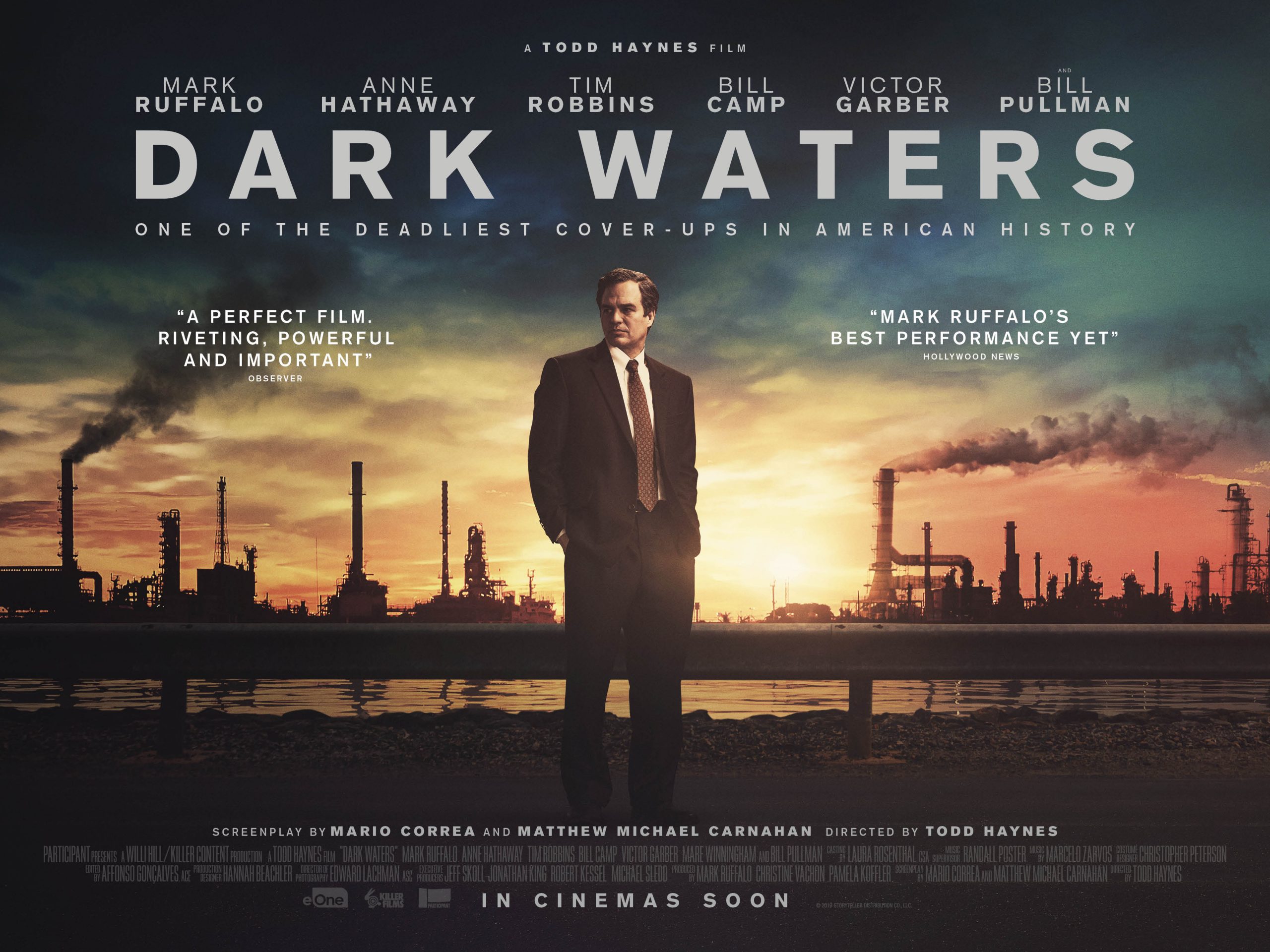
Poster for the 2019 film “Dark Waters” on DuPont’s criminal activities and the lawyer who exposed them

In 2022, three years after its release, I chanced upon “Dark Waters,” the 2019 film starring Mark Ruffalo who plays lawyer Robert Bilott, the man who took DuPont to court in 2002. I found out seven years after DuPont was forced to stop using PFOA and a lifetime after they started their egregious pollution and deception in the 1950s. For over six decades, from when I was born to well into my sixties, DuPont executives chose to:

1. continue using toxic C8 despite its proven toxicity;
2. expose C8 to their own workers without telling them (and even testing their workers without telling them why);
3. dispose of C8 unsafely, releasing the toxin into the communities and the environment;
4. cover up and deny that they did, when they were caught in the act.

No one went to jail.

Below are the faces of the DuPont men and women who sanctioned–encouraged–the willful harm of other life. Despite knowing the danger posed by exposure to PFOAs to people, these DuPont CEOs chose to: 1) continue to poison the environment and people, 2) cover up their actions from authorities, and 3) fight the courts and regulators from doing the right thing when they were caught. No one went to jail. No one was fired. They just paid $$$ and shamefully kept going. These people are criminals. 

DuPont CEOs from 1950-2019 who sanctioned release of PFOA into the environment then covered it up: Crawford H. Greenewalt, Lammot Copeland, Charles B. McCoy, Edward G. Jefferson, Richard E. Heckert, Edgar S. Woolard, John A. Krol, Charles O. Holliday Jr., Ellen Kullman, Edward D. Breen

It’s not over either; DuPont currently uses other PFAS compounds that are unregulated but whose toxicity is being found to be as potent. And, of course, these other ‘forever chemicals’ are finding themselves everywhere. I was ignorant of all this the whole time. Meantime, I am drinking DuPont’s forever chemicals, I am eating DuPont’s forever chemicals, and I am feeling DuPont’s forever chemicals falling on my face in the rain.

My hard lesson: Ignorance breeds complacency and hubris; both will lead to downfall.

To return to the “Overcoming the Monster” story plot and the monster archetype, I’m convinced that it isn’t the Darth Vaders or Miles Quaritchs we must overcome. Yes, they are monsters, but they serve a greater monster. For Vader it was Emperor Palpatine and for Quaritch it was the executives of the RDA Corporation. While Vader and Quaritch may be the face of evil, true evil lurks behind them, orchestrating, in the shadows. It is an evil we must fight internally, because each of us carries that potential evil inside us—in the urge to cheat on our taxes; in looking for the free ride (there are no free rides); in coveting what others have when what we have is enough; in embracing self-deception through unsubstantiated narratives and confabulation; and in choosing to remain ignorant to suit a short-sighted and self-serving agenda. I’m guilty too.

I hope some aspects of the hero that live in me, as with everyone, are helping to overcome the monster by writing about it in articles I share here and elsewhere and by presenting a different narrative—one of resistance and hope—through my fiction.

A recent example is the December 31, 2024 release of Through the Portal: Tales from a Hopeful Dystopia, published by Exile Editions and edited by Lynn Hutchinson Lee and me. The anthology features over thirty eco-fiction short stories, flash fiction, and poetry that celebrate the spirit of humanity in a changing world.

In a post on The Meaning of Water, I list which CEO was on watch and responsible for each criminal atrocity enacted. The post also goes into more detail on the six decade history of DuPont’s criminal atrocities and great deception. For more detail on each decade of atrocity and deception, check out my posts by decade: 1950s, 1960s, 1970s, 1980s, 1990s, and 2000s. What follows into the present day is perhaps even more atrocious, given that all is supposedly out in the open. This predatory company continues to bribe officials, lie and deny, threaten the weak, and so much more.

p.s. To understand the nature of industrial duplicity of large corporations such as DuPont, I highly recommend reading the 2023 study by Nadia Gaber and colleagues in the Annals of Global Health. The authors evaluated previously secret industry documents on PFAS to understand the significant delayed disclosure of harm posed by PFAS: from its production in the 1940s, to suggestions of toxicity in the 1950s, to irrefutable knowledge of PFAS toxicity in the 1960s, and–due to lack of transparency and suppression of scientific findings–public knowledge of this only arising in the late 1990s (mainly because of legal suits and discovery).

References:

Ahrens L. 2011. “Polyfluoroalkyl compounds in the aquatic environment: a review of their occurrence and fate.” J Environ Monit 13: 20–31. 10.1039/c0em00373e

Barton CA, Butler LE, Zarzecki CJ, Laherty JM. 2006. Characterizing perfluorooctanoate in ambient air near the fence line of a manufacturing facility: comparing modeled and monitored values.” J Air Waste Manage Assoc 56: 48–55. 10.1080/10473289.2006.10464429

Barton CA, Kaiser MA, Russell MH. 2007. “Partitioning and removal of perfluorooctanoate during rain events: the importance of physical-chemical properties.” J Environ Monit 9: 839–846. 10.1039/b703510a

Busch J, Ahrens L, Xie Z, Sturm R, Ebinghaus R. 2010. “Polyfluoroalkyl compounds in the East Greenland Arctic Ocean.” J Environ Monit 12: 1242–1246. 10.1039/c002242j

Gaber, Nadia, Lisa Bero, and Tracey J. Woodruff. 2023. “The Devil they Knew: Chemical Documents Analysis of Industry Influenc on PFAS Science.” Ann Glob Health 89(1): 37.

McMurdo CJ, Ellis DA, Webster E, Butler J, Christensen RD, Reid LK. 2008. “Aerosol enrichment of the surfactant PFO and mediation of the water-air transport of gaseous PFOA.” Environ Sci Technol 42: 3969–3974. 10.1021/es7032026

Paustenbach, Dennis, Julie Panko, Paul K. Scott, and Kenneth M. Unice. 2007. “A Methodology for Estimating Human Exposure to Perfluorooctanoic Acid (PFOA): A Retrospective Exposure Assessment of a Community (1951-2003)” Journal of Toxicology and Environmental Health

Prevedouros K, Cousins IT, Buck RC, Korzeniowski SH. 2006. “Sources, fate and transport of perfluorocarboxylates” Environ Sci Technol 40: 32–44. 10.1021/es0512475

Velez, M.P., T.E. Arbuckle, W.D. Fraser. 2015. “Maternal exposure to perfluorinated chemicals and reduced fecundity: the MIREC study.” Human Reproduction 30(3): 701-9.

Vierke, Lena, Claudia Staude, Annegret Biegel-Engler, Wiebke Drost, and Christoph Schulte. 2012. “Perflurorooctanoic acid (PFOA)–main concerns and regulatory developments in Europe from an environmental point of view.” Environmental Sciences Europe 24: 16

Yamashita N, Kannan K, Taniyasu S, Horii Y, Petrick G, Gamo T. 2005. “A global survey of perfluorinated acids in oceans.” Mar Pollut Bull 51: 658–668. 10.1016/j.marpolbul.2005.04.026

Nina Munteanu is a Canadian ecologist / limnologist and novelist. She is co-editor of Europa SF and currently teaches writing courses at George Brown College and the University of Toronto. Visit www.ninamunteanu.ca for the latest on her books. Nina’s bilingual “La natura dell’acqua / The Way of Water” was published by Mincione Edizioni in Rome. Her non-fiction book “Water Is…” by Pixl Press (Vancouver) was selected by Margaret Atwood in the New York Times ‘Year in Reading’ and was chosen as the 2017 Summer Read by Water Canada. Her novel “A Diary in the Age of Water” was released by Inanna Publications (Toronto) in June 2020.
Eco-Fiction Books that Make You Care and Give You Hope

Some time ago, Shepherd invited me to share some of my favourite stories and why I picked them. I decided to feature novels that moved me greatly and inspired me to action. I chose five works of eco-fiction that made me care and gave me hope.

The environment and how we treat it has always been important to me since I was a child. My passion for storytelling morphed into writing, but the underlying spark came through environmental activism. I got a university degree in aquatic ecology, published numerous papers, and now write eco-fiction that is grounded in accurate science with a focus on human ingenuity and compassion. The most meaningful and satisfying eco-fiction is ultimately optimistic literature that explores serious issues with heroic triumph. Each of these five favourites intimately connects human to environment. Each novel moved me to think and deeply care.

The Books I Picked & Why

The Overstory

by Richard Powers

What resonated with me on so many levels was the author’s use of lyrical and beautiful language in describing trees and forests: as characters. I’m an ecologist and I felt a particular kinship with the botanist Patricia Westerford, a disabled introvert who must swim against the hegemonic tide with heretical ideas. When she argues that trees communicate, learn, trade goods and services, have intelligence and society, her scientific peers ridicule her and end her university career. This story is as much her triumph over overwhelming challenges as it is about the dwindling majestic forests that must quietly endure our careless apathy as they continue to offer their gift of life-giving oxygen and medicinal aerosols for hundreds of years. 

Barkskins

by Annie Proulx

This 600-year saga about human-environment interaction through the forest industry in Canada evoked emotional connections with my environment, the Canadian forests, and the plight of indigenous Canadians. From the arrival of the Europeans in pristine forest to its destruction under the veil of global warming, Proulx weaves generational stories of two settler families into a crucible of terrible greed and tragic irony. The bleak impressions by the immigrants of a harsh environment crawling with pests underlie their combative mindset of a presumed infinite resource. I was particularly moved by the linked fate between the Mi’kmaq and the majestic pine forests, how both were similarly mistreated and changed. This history is also my legacy. As the daughter of immigrants, I felt both educated and moved.  

The Breathing Hole

by Colleen Murphy, Siobhan Arnatsiaq-Murtphy and more

What struck me most was the use of simple language to portray powerful intimacy and connection between human and animal, and by extension, environment. Murphy’s humorous dialogue, together with sparing, often ironic, descriptions, struck deep into my heart. The play starts in 1535 on an ice shelf up north—when an Inuk widow risks her life to save a lost one-eared polar bear cub on an ice floe, and adopts him. In the last scene five hundred years later in the oily waters of the Northwest Passage, the same bear—starving and cruelly injured by eco-tourists on a cruise ship—struggles to keep from drowning. No one on the ship cares. No one weeps for him. But I did. I wept for him and for his world destroyed by apathy. 

The Windup Girl

by Paolo Bacigalupi

Paolo Bacigalupi’s biopunk science fiction novelexplores a 23rd-century post-food crash Thailand after global warming has raised sea levels and depleted carbon fuel sources. The main character, Emiko, is a ‘windup,’ a modified human who is vilified and abused by humanity, despite her abilities. I was struck by how well this work of ‘mundane science fiction’ used Emiko as an avatar for a trickster Nature after abuse by humanity through the disrespect of reckless gene-hacking, greedy corporate espionage, and arbitrary foreign takeovers. I cheered Emiko’s breakaway from her oppressors as she emerged from a cloak of obedience and embraced her survival in this changing world of unintended consequences—only realizing later that I was cheering for that changing world and the optimism it promised. 

Memory of Water

by Emmi Itäranta

This book features a passion of mine as an ecologist and mother: water and how we treat it. Life-giving symbols of water flow throughout this story, which explores a post-climate change world of sea level rise in which freshwater is severely rationed due to scarcity. Water’s very nature is tightly interwoven with the main character, Noria, a tea master who guards a secret spring in the fell by her house against cruel government agents who would kill her for water crimes. In prose both sensual and lyrical, this book explores honor, sacrifice, betrayal, and friendship, and how each can be victimized through commodification in a power play of ideology. I found myself pulled in by the intrigue even as I cherished and lingered in the beautiful metaphoric prose.

Explore my eco-fiction book:

A Diary in the Age of Water follows the climate-induced journey of Earth and humanity through four generations of women, each with a unique relationship to water.

Centuries from now, in a dying boreal forest in what used to be northern Canada, Kyo, a young acolyte called to service in the Exodus, yearns for Earth’s past—the Age of Water—before the “Water Twins” destroyed humanity. Looking for answers and plagued by vivid dreams of this holocaust, Kyo discovers the diary of Lynna, a limnologist from that time of severe water scarcity just prior to the destruction. In her work for a global giant that controls Earth’s water, Lynna witnesses and records in her diary the disturbing events that will soon lead to humanity’s demise.

Recently I felt honoured to have A Diary in the Age of Water included as one of several eco-fiction novels that inspired action.

The feminist book review site Liisbeth recently wrote about A Diary in the Age of Water: “If you believe Canada’s water will remain free forever (or that it’s truly free now) Munteanu asks you to think again. Readers have called A Diary in the Age of Water “terrifying,” “engrossing,” and “literary.” We call it wisdom.”

Marcescent beech leaves among evergreen hemlocks, ON (photo by Nina Munteanu)

Nina Munteanu is a Canadian ecologist / limnologist and novelist. She is co-editor of Europa SF and currently teaches writing courses at George Brown College and the University of Toronto. Visit www.ninamunteanu.ca for the latest on her books. Nina’s bilingual “La natura dell’acqua / The Way of Water” was published by Mincione Edizioni in Rome. Her non-fiction book “Water Is…” by Pixl Press (Vancouver) was selected by Margaret Atwood in the New York Times ‘Year in Reading’ and was chosen as the 2017 Summer Read by Water Canada. Her novel “A Diary in the Age of Water” was released by Inanna Publications (Toronto) in June 2020.

Ironic Tragedy of Forever Chemicals & Growing Infertility: Are We Solving Our Own Population Explosion Through Toxicity?

In the passage below of my eco-fiction dystopian novel A Diary in the Age of Water, the year is 2065 and the diarist Lynna (a limnologist at the University of Toronto) reflects on the steeply growing infertility in humans and our tenuous future. Lynna draws on the factual study published close to fifty years earlier (in 2017) by Hagai Levine and others at the Hebrew University of Jerusalem, who found that sperm counts among western men had reduced close to 60% in four decades:

Back in ’49, Daniel and I had several discussions about the environmental triggers and epigenetic mechanisms of infertility in humans. Daniel went on about how it was all about the men. While women showed signs of increased infertility, men’s rate of infertility was more than double that of the women, he said. Taking an inappropriately gleeful tone, Daniel cited the classic 2017 paper by the Hebrew University of Jerusalem, the one that started it all. Their findings were startling: men’s sperm count in North America, Europe, Australia, and New Zealand had diminished by sixty percent in forty years, between 1973 and 2011. The scientists predicted that by 2060, virtually all men in these parts of the world would have little to no reproductive capacity.

It’s 2065 and they’re right. Only it’s worse. Before the twenties, only the developed countries seemed to be affected, but then sperm counts started to plummet in South American countries, like Argentina and Brazil, where GMO, pesticides, and solvent manufacturing were exploding.

You get out what you put into the ground. India and Asia—where endocrine-disruptive chemicals are finding their way into the water—are reporting very low sperm counts in their men as well as higher incidents of intersex humans.

You get out what you put into the water. We are over two thirds water, after all. I find it a little ironic that we’ve inadvertently produced a non-discriminatory way to control the problem of humanity’s overpopulation. Infertility. And that infertility results from defiling the environment we live in.

But now climate change is shouldering its way in. Climate change is shutting us down.

Is this the first sign of our impending extinction?

–excerpt from “A Diary in the Age of Water”

That environmental perturbations impact our ability to reproduce has been proven. In their 2017 article, Levine et al. write that:

“Sperm count and other semen parameters have been plausibly associated with multiple environmental influences, including endocrine disrupting chemicals (Bloom et al., 2015; Gore et al., 2015), pesticides (Chiu et al., 2016), heat (Zhang et al., 2015) and lifestyle factors, including diet (Afeiche et al., 2013; Jensen et al., 2013), stress (Gollenberg et al., 2010; Nordkap et al., 2016), smoking (Sharma et al., 2016) and BMI (Sermondade et al., 2013; Eisenberg et al., 2014a). Therefore, sperm count may sensitively reflect the impacts of the modern environment on male health throughout the life course (Nordkap et al., 2012).”

This rain falling on an Ontario marsh most certainly contains forever chemicals (photo by Nina Munteanu)

Thanks to chemical companies such as DuPont and others, forever chemicals are currently in rain water globally, and in many places in unhealthy concentrations. These endocrine-disrupting and cancer-causing chemicals often end up in drinking water and include PCBs, phthalates, PFAS, BPAs (used in pesticides, children’s products, industrial solvents and lubricants, food storage, electronics, personal care products and cookware).

If you observe a terrible irony in this short list, also know that the chemical companies, such as DuPont, have known about the dangers posed by these products for decades and decided to keep it a secret.

Heavy rain in Mississauga, ON (photo by Nina Munteanu)

Nina Munteanu is a Canadian ecologist / limnologist and novelist. She is co-editor of Europa SF and currently teaches writing courses at George Brown College and the University of Toronto. Visit www.ninamunteanu.ca for the latest on her books. Nina’s bilingual “La natura dell’acqua / The Way of Water” was published by Mincione Edizioni in Rome. Her non-fiction book “Water Is…” by Pixl Press (Vancouver) was selected by Margaret Atwood in the New York Times ‘Year in Reading’ and was chosen as the 2017 Summer Read by Water Canada. Her novel “A Diary in the Age of Water” was released by Inanna Publications (Toronto) in June 2020.

Why Writing and Reading Eco-Fiction Will Save the World—From CliFi to Solarpunk

Fence and post at marsh during a rain, ON (photo by Nina Munteanu)

The Universe is made of stories, not atoms—Muriel Rukeyser

Canadian writer Mary Woodbury tells us that: “Fiction exploring humanity’s impacts on nature is becoming more popular [and] has the distinct ability to creatively engage and appeal to readers’ emotions. In fact, it can stir environmental action.” A survey she took in 2020 showed that “88% of its participants were inspired to act after reading ecological fiction.”

Eco-Fiction (short for ecological fiction) is a kind of fiction in which the environment—or one aspect of the environment—plays a major role, either as premise or as character. “Principled by real science and exalting our planet’s beauty, these stories are works of art. They live within classic modes of fiction exploring the human condition, but also integrate the wild,” writes Woodbury. At the heart of eco-fiction are strong relationships forged between the major character on a journey and an aspect of their environment and place. Environment and place can illuminate through the sub-text of metaphor a core aspect of the main character and their journey. 

Green architecture design by Vincent Callebaut

All great literature distills its art form through the exploration of relationship: our relationship with technology, with science, Nature, God, our children, each other, our history. Science fiction illuminates our history and our very humanity by examining our interaction with “the other”—the unfamiliar, the feared, the often downtrodden, the invisible, the ignored. This is the hero’s journey. And it is through this journey relating to the “other” (whether it’s Earth or an alien planet, its water, environment and issues, and its varied peoples and cultures) that our hero discovers herself and her gift to the world. When will we stop portraying Nature as “other”?…

Green neighbourhood design by Vincent Callebaut

We currently live in a world in which climate change and associated water crisis pose a very real existential threat to most life currently on the planet. The new normal is change. And it is within this changing climate that eco-fiction is realizing itself as a literary pursuit worth engaging in. The emergence of the term eco-fiction as a brand of literature suggests that we are all awakening—novelists and readers of novels—to our changing environment. We are finally ready to see and portray environment as an interesting character with agency and to read this important and impactful literature.

Lavender farm and house design by Vincent Callebaut

Many readers are currently seeking fiction that describes environmental issues but also explores a successful paradigm shift: fiction that accurately addresses our current issues with intelligence and hope. This is reflected in the growing popularity of several emerging sub-genres of fiction such as solar punk, optimistic climate fiction, clifi, eco-lit, hope punk, and others. The power of envisioning a certain future is that the vision enables one to see it as possible. Eco-fiction—and all good science fiction—uses metaphor to study the world and the consequences of humanity’s actions through microcosmic dramatization. What makes this literature particularly exciting is: 1) its relevance to our current existential situation; and 2) that it often provides a way forward. 

Solarpunk world imagined (image by Imperial Boy)

The Way Forward with Solarpunk

In his 2014 article “Solarpunk: Notes toward a manifesto” in Hieroglyph Adam Flynn writes of under-30 futurists: “Many of us feel it’s unethical to bring children into a world like ours. We have grown up under a shadow, and if we sometimes resemble fungus it should be taken as a credit to our adaptability.”

“We’re solarpunks because the only other options are denial or despair.”

ADAM FLYNN

Solarpunk, says Flynn, “is about finding ways to make life more wonderful for us now, and more importantly for the generations that follow us—i.e., extending human life at the species level, rather than individually.” Our future, asserts Flynn, “must involve repurposing and creating new things from what we already have (instead of 20thcentury “destroy it all and build something completely different” modernism).” Solarpunk futurism “is not nihilistic like cyberpunk and it avoids steampunk’s potentially quasi-reactionary tendencies: it is about ingenuitygenerativityindependence, and community.”

“Hydrogenase” algae-powered airships by Vincent Callebaut

The ‘punk’ suffix comes from the oppositional quality of solarpunk; opposition that begins with infrastructure as a form of resistance. Flynn tells us that solarpunk draws on the ideal of Jefferson’s yeoman farmer, Ghandi’s ideal of swadeshi, and countless other traditions of innovative dissent

“Hyperion” eco-neighbourhood design by Vincent Callebaut

“Solarpunk is a future with a human face and dirt behind its ears.”

ADAM FLYNN

In response to Flynn’s article, Bob Vanderbob writes, “going solar is a deep mental shift: it will be the central metaphor of our future civilization.” 

Green Paris design by Vincent Callebaut

Musician photographer Jay Springett calls solarpunk, “a movement in speculative fiction, art, fashion, and activism that seeks to answer and embody the question ‘what does a sustainable civilization look like, and how can we get there?’… At once a vision of the future, a thoughtful provocation, and an achievable lifestyle.” Jennifer Hamilton observes in The Conversation that “as a category of fiction, solarpunk remains a fringe dweller…Nevertheless, the aesthetic sensibilities of the subculture are starting to emerge.” Hamilton asserts that “the focus on the cultural change that will necessarily accompany the full transition to renewable energy is the defining feature of solarpunk.” She adds, “we usually ask ‘can renewables replace fossil fuels?’ … solarpunks ask ‘what kind of world will emerge when we finally transition to renewables?’ and their [works] are generating an intriguing answer.”

Beach house design by Vincent Callebaut

How Eco-Fiction Inspires and Galvanizes

Readers responded to Mary Woodbury’s survey question “Do you think that environmental themes in fiction can impact society and if so, how?” with these observations:

  • Environmental fiction encourages empathy and imagination. Stories can affect us more than dry facts. Fiction reaches us more deeply than academic understanding, moving us to action.
  • Environmental fiction triggers a sense of wonder about the natural world, and even a sense of loss and mourning. Stories can immerse readers into imagined worlds with environmental issues similar to ours.
  • Environmental fiction raises awareness, encourages conversations and idea-sharing. Fiction is one way that helps to create a vision of our future. Cautionary tales can nudge people to action and encourage alternative futures. Novels can shift viewpoints without direct confrontation, avoid cognitive dissonance, and invite reframed human-nature relationships through enjoyment and voluntary participation.
  • Environmental themes can reorient our perspective from egocentrism to the greater-than-human world.
Dirt road in Kawarthas during a misting rain, ON (photo and rendition by Nina Munteanu)

Why Our Stories Are Important

We are all storytellers. We share our curiosity with great expression; our capacity and need to tell stories is as old as our ancient beginnings. From the Palaeolithic cave paintings of Lascaux to our blogs on the Internet, humanity has left a grand legacy of “story” sharing. Evolutionary biologist and futurist Elisabet Sahtouris tells us that, “whether we create our stories from the revelations of religions or the researches of science, or the inspirations of great artists and writers or the experiences of our own lives, we live by the stories we believe and tell to ourselves and others.”

Compelling stories resonate with the universal truths of metaphor that reside within the consciousness of humanity. According to Joseph Campbell, this involves an open mind and a certain amount of humility; and giving oneself to the story … not unlike the hero who gives her life to something larger than herself. Fiction becomes memorable by providing a depth of meaning. Stories move with direction, compel with intrigue and fulfil with awareness and, sometimes, with understanding. The stories that stir our hearts come from deep inside, where the personal meets the universal, through symbols or archetypes and metaphor.

Ultimately, we live by the narratives we share. “What you think, you become,” said Buddha.

In my writing guidebook The Ecology of Story: World as Character, I write: “When a writer is mindful of place in story and not only accurately portrays environment but treats it as a character, then her story will resonate with multilayers of meaning.”

Poplar stand in the Kawarthas, ON (photo and rendition by Nina Munteanu)

Changing the Narrative…

I was recently interviewed by Forrest Brown on Stories for Earth Podcast in which we discussed the need to change our narrative (particularly our colonial neoliberal capitalist narrative) and various ways to do this, taking into account the challenges posed by belief and language. Lessons from our indigenous wise elders will play a key role in our change toward genuine partnership with the Earth.

“We need to have a whole cultural shift, where it becomes our culture to take care of the Earth, and in order to make this shift, we need storytelling about how the Earth takes care of us and how we can take care of her.” ― Ayana Elizabeth Johnson, All We Can Save: Truth, Courage, and Solutions for the Climate Crisis

“This world, in which we are born and taken our being, is alive. It is not our supply house and sewer; it is our larger body. The intelligence that evolved us from stardust and interconnects us with all beings is sufficient for the healing of our Earth community, if we but align with that purpose. Our true nature is far more ancient and encompassing than the separate self defined by habit and society. We are as intrinsic to our living world as the rivers and trees, woven of the same intricate flows of matter/energy and mind. Having evolved us into self-reflexive consciousness, the world can now know itself through us, behold its own majesty, tell its own stories–and also respond to its own suffering.” 

JOANNA MACY and CHRIS JOHNSTONE, “Active Hope”
Swamp forest in Kawartha region, ON (photo and rendition by Nina Munteanu)

References:

Campbell, Joseph, Bill Moyers. 1991. “The Power of Myth.” Anchor. 293pp.

Munteanu, Nina. 2016. “Water Is… The Meaning of Water.” Pixl Press, Delta, B.C. 584pp.

Munteanu, Nina. 2019. “The Ecology of Story: World as Character.” Pixl Press, Delta, B.C. 200pp.

Sahtouris, Elisabet. 2014. “Ecosophy: Nature’s Guide to a Better World.” Kosmos, Spring/Summer 2014: 4-9pp. 

Nina Munteanu is a Canadian ecologist / limnologist and novelist. She is co-editor of Europa SF and currently teaches writing courses at George Brown College and the University of Toronto. Visit www.ninamunteanu.ca for the latest on her books. Nina’s bilingual “La natura dell’acqua / The Way of Water” was published by Mincione Edizioni in Rome. Her non-fiction book “Water Is…” by Pixl Press (Vancouver) was selected by Margaret Atwood in the New York Times ‘Year in Reading’ and was chosen as the 2017 Summer Read by Water Canada. Her novel “A Diary in the Age of Water” was released by Inanna Publications (Toronto) in June 2020.

Crossing into the Ecotone to Write Meaningful Eco-Fiction

If you have an apple and I have an apple and we exchange apples then you and I will still each have one apple. But if you have an idea and I have an idea and we exchange these ideas, then each of us will have two ideas.”—George Bernard Shaw

At Calgary’s When Words Collide some years ago, I moderated a panel on Eco-Fiction with publisher/writer Hayden Trenholm, and writers Michael J. Martineck, Sarah Kades, and Susan Forest. The panel was well attended; panelists and audience discussed and argued what eco-fiction was, its role in literature and storytelling generally, and even some of the risks of identifying a work as eco-fiction.

Someone in the audience brought up the notion that “awareness-guided perception” may suggest an increase of ecological awareness in literature when it is more that readers are just noticing what was always there. Authors agreed and pointed out that environmental fiction has been written for years and it is only now—partly with the genesis of the term eco-fiction—that the “character” and significance of environment is being acknowledged beyond its metaphor; for its actual value. It may also be that the metaphoric symbols of environment in certain classics are being “retooled” through our current awareness much in the same way that Aldous Huxley’s Brave New World or George Orwell’s Nineteen Eighty Four are being re-interpreted—and newly appreciated— in today’s world of pervasive surveillance and bio-engineering.

I would submit that if we are noticing it more, we are also writing it more. Artists are cultural leaders and reporters, after all. I shared my own experience in the science fiction classes I was teaching at UofT and George Brown College, in which I noted a trend of increasing “eco-fiction” in the works in progress that students were bringing in to workshop in class. Students were not aware that they were writing eco-fiction, but they were indeed writing it.

I started branding my writing as eco-fiction a few years ago. Prior to that—even though my stories were strongly driven by an ecological premise and strong environmental setting—I described them as science fiction and many as technological thrillers. Environment’s role remained subtle and—at times—insidious. Climate change. Water shortage. Environmental disease. A city’s collapse. War. I’ve used these as backdrops to explore relationships, values (such as honour and loyalty), philosophies, moralities, ethics, and agencies of action. The stuff of storytelling.

Environment, and ecological characteristics were less “theme” than “character,” with which the protagonist and major characters related in important ways.

Just as Bong Joon-Ho’s 2014 science fiction movie Snowpiercer wasn’t so much about climate change as it was about exploring class struggle, the capitalist decadence of entitlement, disrespect and prejudice through the premise of climate catastrophe. Though, one could argue that these form a closed loop of cause and effect (and responsibility).

The self-contained closed ecosystem of the Snowpiercer train is maintained by an ordered social system, imposed by a stony militia. Those at the front of the train enjoy privileges and luxurious living conditions, though most drown in a debauched drug stupor; those at the back live on next to nothing and must resort to savage means to survive. Revolution brews from the back, lead by Curtis Everett (Chris Evans), a man whose two intact arms suggest he hasn’t done his part to serve the community yet.

Minister Mason (Tilda Swinton), an imperious yet simpering figure who serves the ruling class without quite being part of it, reminds the lower class that: 

We must all of us on this train of life remain in our allotted station. We must each of us occupy our preordained particular position. Would you wear a shoe on your head? Of course you wouldn’t wear a shoe on your head. A shoe doesn’t belong on your head. A shoe belongs on your foot. A hat belongs on your head. I am a hat. You are a shoe. I belong on the head. You belong on the foot. Yes? So it is.  In the beginning, order was prescribed by your ticket: First Class, Economy, and freeloaders like you…Now, as in the beginning, I belong to the front. You belong to the tail. When the foot seeks the place of the head, the sacred line is crossed. Know your place. Keep your place. Be a shoe.”

Ecotones are places where “lines are crossed,” where barriers are breached, where “words collide” and new opportunities arise. Sometimes from calamity. Sometimes from tragedy. Sometimes from serendipity.

When environment shapes a story as archetype—hero, victim, trickster, shadow or shape shifter—we get strong eco-fiction. Good eco-fiction, like any good story, explores the choices we make and the consequences of those choices. Good eco-fiction ventures into the ecotone of overlap, collision, exchange and ultimate change.

In my non-fiction book Water Is… I define an ecotone as the transition zone between two overlapping systems. It is essentially where two communities exchange information and integrate. Ecotones typically support varied and rich communities, representing a boiling pot of two colliding worlds. An estuary—where fresh water meets salt water. The edge of a forest with a meadow. The shoreline of a lake or pond.

For me, this is a fitting metaphor for life, given that the big choices we must face usually involve a collision of ideas, beliefs, lifestyles or worldviews: these often prove to enrich our lives the most for having gone through them. Evolution (any significant change) doesn’t happen within a stable system; adaptation and growth occur only when stable systems come together, disturb the equilibrium, and create opportunity. Good social examples include a close friendship or a marriage in which the process of “I” and “you” becomes a dynamic “we” (the ecotone) through exchange and reciprocation. Another version of Bernard Shaw’s quote, above, by the Missouri Pacific Agriculture Development Bulletin reads: “You have an idea. I have an idea. We swap. Now, you have two ideas and so do I. Both are richer. What you gave you have. What you got I did not lose. This is cooperation.” This is ecotone.

I think we are seeing more eco-fiction out there because ecosystems, ecology and environment are becoming more integral to story: as characters in their own right. I think we are seeing more eco-fiction out there because we are ready to see it. Just as quantum physics emerged when it did and not sooner, an idea—a thought—crystalizes when we are ready for it.

Don’t stay a shoe … go find an ecotone. Then write about it.

Thirty-Six Eco-Fiction Books Worth Reading…

Nina Munteanu is a Canadian ecologist / limnologist and novelist. She is co-editor of Europa SF and currently teaches writing courses at George Brown College and the University of Toronto. Visit www.ninamunteanu.ca for the latest on her books. Nina’s bilingual “La natura dell’acqua / The Way of Water” was published by Mincione Edizioni in Rome. Her non-fiction book “Water Is…” by Pixl Press (Vancouver) was selected by Margaret Atwood in the New York Times ‘Year in Reading’ and was chosen as the 2017 Summer Read by Water Canada. Her novel “A Diary in the Age of Water” was released by Inanna Publications (Toronto) in June 2020.

Sound & Fury Reviews “A Diary in the Age of Water” by Nina Munteanu

I recently came across this beautiful Instagram post by TinasAlwaysReading, and was reminded of a wonderfully in-depth review of my eco-fiction novel A Diary in the Age of Water that Tina did on Sound & Fury Book Reviews.
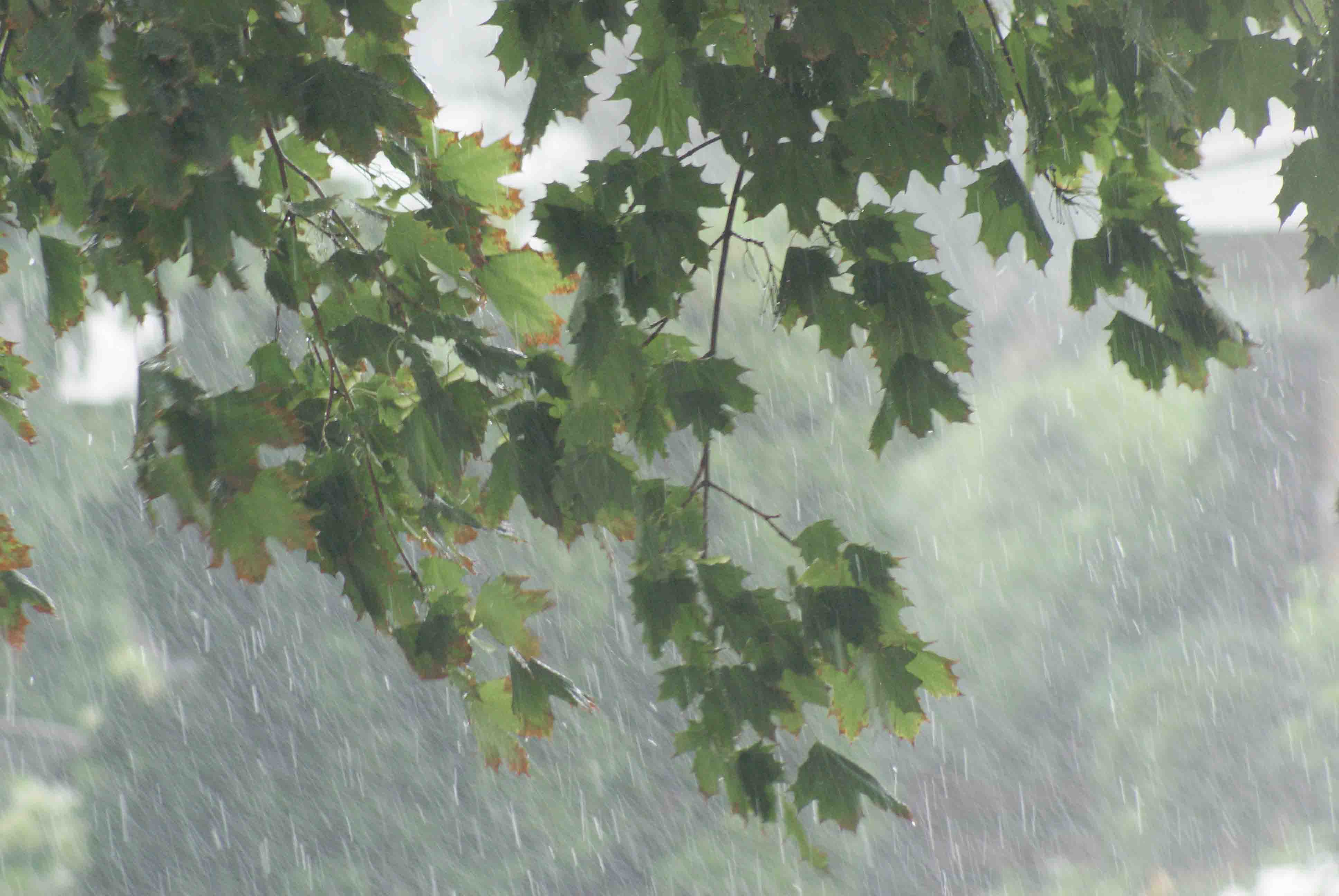
You can watch the review below:

Sound & Fury reviews “A Diary in the Age of Water” by Nina Munteanu

Nina Munteanu is a Canadian ecologist / limnologist and novelist. She is co-editor of Europa SF and currently teaches writing courses at George Brown College and the University of Toronto. Visit www.ninamunteanu.ca for the latest on her books. Nina’s bilingual “La natura dell’acqua / The Way of Water” was published by Mincione Edizioni in Rome. Her non-fiction book “Water Is…” by Pixl Press (Vancouver) was selected by Margaret Atwood in the New York Times ‘Year in Reading’ and was chosen as the 2017 Summer Read by Water Canada. Her novel “A Diary in the Age of Water” was released by Inanna Publications (Toronto) in June 2020.