Sharing Nature’s Secrets And When Trees Share the Dirt…

EcologyOfStoryOne of the lectures I give to my science fiction writing students is called “Ecology in Storytelling”. It’s usually well attended by writers hoping to gain better insight into world-building and how to master the layering-in of metaphoric connections between setting and character.1

I talk about the adaptations of organisms to their changing environments. I describe the trophic (energy) relationships from producers to consumers and destroyers in a complex cycle of creative destruction. Students perk up when I discuss some of the more strange and interesting adaptations of organisms to their environment: twisted stories of adaptations and strategies that involve feeding, locomotion, reproduction and shelter.

Purposeful Miscommunication & Other Lies

For instance, the Alcon blue butterfly hoodwinks ants into caring alconbluebutterfly-antsfor its larvae. They do this by secreting a chemical that mimics how ants communicate; the ants in turn adopt the newly hatched caterpillars for two years. There’s a terrible side to this story of deception. The Ichneumon wasp, upon finding an Alcon caterpillar inside an ant colony, secretes a pheromone that drives the ants into confused chaos; allowing it to slip through the confusion and lay its eggs inside the poor caterpillar. When the caterpillar turns into a chrysalis, the wasp eggs hatch and consume it from inside.

This reads like something out of a noir thriller. Or better yet, a horror story. Nature is large, profligate, complex and paradoxical. She is by turns gentle and cruel. Creative and destructive. Competitive and cooperative. Idle and nurturing.

When I bring in extremophiles, who thrive in places you and I would cringe to set foot in, students’ imaginations run wild with ideas. I describe a panoply of weird adaptations in Nature—involving poisons, mimicry and deception, phototaxis and something called anhydrobiosis, which permits the tiny tardigrade to shrivel into a tun in the absence of water then revive after a 100 years with just a drop of water.

water-bear03

Tardigrade

All this adaptation hinges on communication. How an organism or population communicates with its environment and among its own. Examples of “strange” communication are the purview of the science fiction writer … and already the nature of our current world—if you only know where to look. The scope of how Nature communicates—her devices and intentions—embraces the strange to the astonishing. From using infrasound to chemical receptors and sensing magnetic fields. To allelopathy. Aggressive symbiosis. And so much more.

When Trees Share the Dirt

“Trees are the foundation of a forest, but a forest is much more than what you see,” says University of British Columbia forest ecologist Suzanne Simard.

suzanne-simard-portrait

Suzanne Simard

Simard, who has published hundreds of papers over 30 years of research, suggests a kind of “intelligence” when she describes the underground world “of infinite biological pathways that connect trees and allow them to communicate” In a forest. This communication allows the forest to behave as if it was a single organism, says Simard. Her early in situ experiments showed solid evidence that tree species, such as Paper Birch and Douglas Fir communicated in a cooperative manner underground through an underground mutualistic-symbiosis involving mycorrhizae (e.g., fungus-root). These trees were conversing in the language of carbon and nitrogen, phosphorus, water, defense signals, allelo-chemicals, and hormones via a network of mycelia. Fungal threads form a mycelium that infects and colonizes the roots of all the trees and plants. Simard compares this dense network to the Internet, which also has nodes and links—just as the forest.

forest-conversing

Myccorhyzae and fungal highways

Fungal highways link each tree and plant to its community, with busiest nodes called hub trees or mother trees. Calling them mother trees is appropriate, given that they nurture their young in the understory; sending excess carbon to the understory trees, which receive less light for photosynthesis. “In a single forest,” says Simard, “a mother tree can be connected to hundreds of other trees.” These mature trees act as nodal anchors—like major hub sites on the Internet—for tree groupings; according to Simard, they look after their families, nurture seedlings and even share wisdom—information—when they are injured or dying.

Simard made another incredible discovery: that mother trees “recognize their kin.” In experiments her team ran using related and unrelated seedlings, the mother tree preferentially sent its excess carbon to kin over non-kin seedlings.

These discoveries pose some serious implications in how we do and should manage our forests. “You can take out one or two hub trees, but there’s a tipping point,” says Simard. “You take out one too many and the whole system collapses.”

Simard shared that “in 2014 the World Resources Institute reported that Canada in the past decade has had the highest forest disturbance rate of any country worldwide…In Canada it’s 3.6% per year…about four times the rate that is sustainable.”

“Massive disturbance at this scale is known to affect hydrological cycles, degrade wildlife habitat and emit greenhouse gases back to the atmosphere, which creates more disturbance and more tree die-backs,” says Simard. She adds that the practice of planting commercially valued species at the expense of the indigenous aspens and birches lacks complexity and promotes vulnerability to disease. It’s creating “a perfect storm,” Simard concludes.

Trees & Climate Change

A major international report on climate change shows that wildlife habitats will be dramatically impacted around the world. In Canada, this could fundamentally alter 65 per cent of its existing natural habitat in the boreal and Arctic regions, where warming will be the greatest. The report says that seven Canadian provinces – Ontario, Quebec, Alberta, British Columbia, the Yukon, Newfoundland and Labrador and Manitoba – will have more than half of their natural habitat at risk.

Simard asks: “Instead of weakening our forests, how can we reinforce them and help them deal with climate change?” She suggests four simple solutions:

  1. Get out into the forest and re-establish local involvement in our forests, using management techniques based on local knowledge
  2. Save our old-growth forests, the repositories of genetic material, mother trees and micorhizal networks
  3. Save the mother trees when cutting trees
  4. Regenerate our forests with a diversity of species types and structures

“Forests aren’t just a bunch of trees competing with each other; they are super-cooperators,” Simard points out. “The great thing about forests,” she reminds us, “is that as complex systems, they have an enormous capacity to self-heal.”

How Healing Trees Can Heal Us

Aside from being highly evolved water management specialists, trees are chemical factories that broadcast a host of aerosols into the atmosphere around them. Researchers have found over 120 substances, of which only half could be identified. These aerosols are part of a sophisticated survival strategy, writes botanist and biochemist Diana Beresford-Kroeger. Studies have shown that willows, poplars and maples warn each other about insect attacks; undamaged trees then pump bug-repelling chemicals to ward off the attack. Black walnut trees emit juglone, an aerosol that repels competing nearby plants and some insects. Scientists demonstrated that airborne communication between individual sagebrush plants (called “eavesdropping”) helped neighbouring plants resist attacks. The monoterpenes like pinene and linene can relieve asthma and even fight cancer.

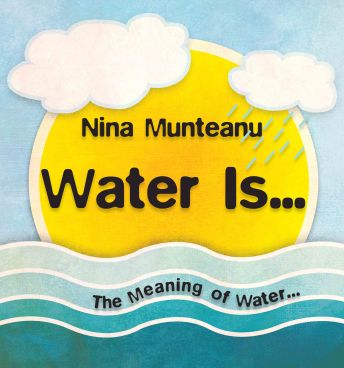
Water Is-COVERYou can read more about this in my book “Water Is…” (Pixl Press).

1I give several lectures based on this general topic of world building for writers. One I gave recently, at CanCon2016 in Ottawa, focused on aquatic worlds, my scientific area of expertise. These lectures are based on my upcoming guidebook “The Ecology of Story: World as Character”

.

.

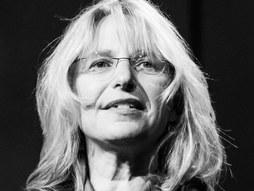
nina-2014aaNina Munteanu is an ecologist and internationally published author of award-nominated speculative novels, short stories and non-fiction. She is co-editor of Europa SF and currently teaches writing courses at George Brown College and the University of Toronto. Visit www.ninamunteanu.ca for the latest on her books. Read Nina’s climate/eco-fiction Darwin’s Paradox, Angel of Chaos and Natural Selection.

A Rose By Any Other Name…

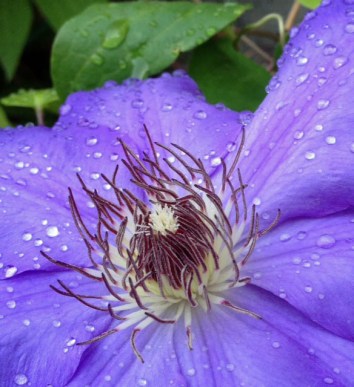
clematis5

Clematis (photo by Nina Munteanu)

…Would it smell as sweet? When Shakespeare first used that now famous line spoken by Juliet in Romeo and Juliet, he was no doubt evoking the importance of representative symbolism while suggesting that the true nature of the thing had its intrinsic value beyond its icon. Or did it? “’Tis but thy name that is my enemy,” Juliet goes on to say. “Thou art thyself.” Surely, in society, a name embodies the thing; the part the whole. We even have a word for that kind of metaphor. It’s called synecdoche.

It does bring to mind the importance of names in culture and literature. The name of a thing may often link it to its invariable destiny. Or is it the other way around? And does it matter, in the final analysis, whether “the name” is the function of existentialist predilection or the end result of fatalistic determination. Of the egg and the chicken, which comes first? And does it matter? Even for a writer—artist and “God of story”—this is not totally clear. How will we choose and how will we be interpreted?


My Name…

Nina_Woods_5

Nina hiking in an Ontario forest (photo by Merridy Cox)

Take my name, for instance. When I tell people my name I often add that my last name, Munteanu, means “from the mountain” in Romanian. I often fanaticized that my ancestors had come from the Transylvanian Alps of Romania. What I often forget to tell people is that my first name, Nina, means “little girl” in Italian, Spanish and Russian and God knows what other language in the universe. If you were to put the two names together, you would get the archetype represented by Heidi or Pipi Longstocking—depending on what kind of attitude you cared to promote. While I admired the feisty Swedish redhead’s unconventionality and fortitude, I, gravitated to the Heidi image—I identified with that spirited but ever-so-cute Shirley Temple version of an orphan girl who comes down from the pure fresh mountains and brings joy and laughter to the cynical world around her. As a child, I empathized with her stubborn crusade for truth and justice: that famous pout and little stomp of her foot as Heidi stood up to those big bullies and managed to endear herself into the hearts of everyone.

Okay. I’m not Heidi. But that archetype resonated with me as I was growing up. In some way, my empathy with the Heidi archetype played a role in my life-choices. Whether this resulted from gestalt psychology or universal determinism is likely not important. What is important in storytelling is how we as artists use this in our choice of names: all kinds of names, from places to events, to people and things (which for me as a science fiction and fantasy writer is equally important, given that many of the terms I use I created from my imagination). Let’s look at some examples…


Names in Literature and Film…

the MatrixNeo in The Matrix is an anagram for “One”. Before he changes his name to Neo, he goes by the name of Thomas Anderson. Thomas is Hebrew for “twin” (e.g., Agent Smith tells Neo, “you have been living two lives.”). Of course, Thomas was also one of Jesus’s disciples, the one who doubted. The Wachowski Brothers chose the names of all their main characters with careful purpose. Morpheus (the god of dreams, who takes Neo out of his dream); Trinity (who connects and unifies the “father” the “son” and the “holy spirit” through her faith).

Atticus in To Kill a Mockingbird is a true country gentleman and modern knight, espousing the chivalric code of courage, humility, justice and service. Atticus draws an association from Attica of ancient Greece in which Athens was located. A place renowned for its wisdom, rational approach to life and its belief in justice. 

Luke Skywalker in George Lucas’s Star Wars is another clearly allegorical name that evokes the hero’s journey. Luke, besides reflecting Lucus’s alter-ego, also means “light”. The name Skywalker effectively portrays a god-like individual who must wander far in a heavenly walkabout on his quest for freedom and justice and the light of truth. George Lucas created allegorical identities with most of his Star Wars characters from Han Solo to Princess Leia Organa.

Becky Sharp in William Thackery’s Vanity Fair dispensed her “sharp” wit to manipulate her entire world from the dull-witted Amelia Sedley to her high society suitors. Her last name also carries connotations of a “sharper” or con-man.

Scarlet O’Hara of Margaret Mitchel’s Gone with the Wind was a woman who breathed fire and passion.  She epitomized the famous quote of Victor Frankl:  what is to give light must endure burning. She burns all right; and lives—humbled and enlightened and even more determined.

John Crichton-S1

John Crichton (Ben Browder)

John Crichton in David Kemper’s Farscape. Choosing the name John for the main character identified him as a “universal everyman” and representative of humanity, from his frequent references to pop culture to his off-colour jokes about humanity in general. The name also identifies the kind of hero he portrays. He is not some super-hero with extra-ordinary powers or qualities. He is an ordinary man who finds himself in extraordinary circumstances; he is you and me. Together with the name Crichton, this associates him with adventuring, generosity, idealism and inspiration. Indeed, this character proves himself a very different kind of hero. John Crichton is a diplomat, a humorist, a clown, an intellectual and strategist all rolled into one. A warrior poet.

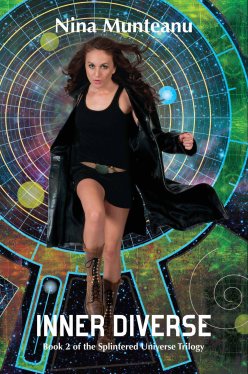
Inner-diverse-front-cover-WEB

Rhea Hawke, Galactic Guardian

I chose the name Rhea Hawke in my trilogy The Splintered Universe to represent the complex and paradoxical nature of the lead character. The Titan Goddess Rhea is the mother of all gods, including Zeus, giving birth and nurturing all that she has created. Those of you who have read Outer Diverse, Inner Diverse and Metaverse (Books 1 to 3 of The Splintered Universe Trilogy) will recognize that Rhea Hawke is, in fact, an agent of death. She is essentially an assassin for the Galactic Guardians; one who invented a much coveted devastating weapon of mass destruction, the MEC (that selectively maims, kills or leaves alone any species based on their unique DNA signature).  This aspect of her character of course fits with the hawk, the stealthy keen-eyed predator. A creative predator. But, there is a nurturing, soft and “mothering” side to Rhea beneath her predatory bravado. It reveals itself through sub-text and subtle metaphor. Rhea Hawke is ultimately a paradox. Like her name. Like most of us.

Cover1_LastSummoner-frontcoverLady Vivianne Schoen, the Baroness von Grunwald, in my historical fantasy The Last Summoner, is a being of light who can travel time-space and must alter history starting with the Battle of Grunwald in 1410. Her first name derives from the Latin vivus meaning alive or the French word vivre for life. And live she must—for over six hundred years— if she is to succeed in recasting history to make this a better world. There is an ironic layer to her name, but I can’t reveal it here for those who haven’t yet read the book. In future Paris she meets François Rabelais, named after the 15th Century satirist, philosopher and dissident. While this youth on the surface represents the antithesis of the medieval scholar, he finally reveals himself as a philosopher warrior and humanist like his 15th Century namesake.


Names as Symbols of a Changing Culture…

Names—what we call things—are supreme icons for a culture of a time and place to identify and define its archetypes, values, symbols and hegemonies. Names define an entire zeitgeist.

Think of the word chivalry. Derived from the 11th Century French term chevalier (horseman), the term came to be understood in the 12th Century and later as a moral, religious and social code of knightly conduct. The code generally emphasized the virtues of courage, honor, purity and service. The term also described an idealization of the life and manners of the knight at home in his castle and with his court, embodying notions of “courtly love” and devotion to God and country. However, when it originated in the 11th Century, chivalry meant simply the “status of fee associated with military follower owning a war horse.”

The Sufi word futuwwa shares similar connotations to chivalry and virtue. Futuwwa was also the name of ethical urban guilds in Medieval Muslim realms that emphasized the virtues of honesty, peacefulness, gentleness, generosity, avoidance of complaint and of hospitality in life. However, Al-Futuwa was also the name of the Arab-Nationalist Young Arab Association and the Hitler-Jugend style pan Arab fascist nationalistic youth movement in Iraq in the 1930s to 50s.

clematis2

Clematis (photo by Nina Munteanu)

Speaking of Hitler and Nazi Germany, another name and symbol, the swastika—which in the modern post-WW2 world has become synonymous with fascism and anti-Semitism—was in fact an ancient symbol of prosperity that represented the revolving sun, fire or life. In the ancient language of Sanskrit, swastika means “well-being”. It was used widely in ancient Mesopotamia, South and Central American Mayan art, by the Navajos and continues to symbolize the four possible places of rebirth in Jainism and night-magic-purity-destruction to Hindus.

Choose your names carefully and with purpose.


nina-2014aaNina Munteanu is an ecologist and internationally published author of award-nominated speculative novels, short stories and non-fiction. She is co-editor of Europa SF and currently teaches writing courses at George Brown College and the University of Toronto. Visit www.ninamunteanu.ca for the latest on her books. Read Nina’s climate/eco-fiction Darwin’s Paradox, Angel of Chaos and Natural Selection.


When Art Tangos with Science

Imagination is more important than knowledge—Albert Einstein


patterns-Cedar log moss2-LR

Cedar log (photo by Nina Munteanu)

I tell stories. I’m also a scientist. I use the scientific method in my research to seek truth; I also find truth presented to me through the symbols of intuition.

A few years ago, I was introduced to Krista Fogel, a University of British Columbia masters student, who was investigating the use of creative art in high-ability scientists. She named her thesis: “The Self-Perceived Experience of Investigating Science with an Artistic Spirit: A Hermeneutic Phenomenological Study of High Ability Scientists Who Also Engage in the Arts”. Hermeneutic, by the way, is the development and study of theories of the interpretation and understanding of texts (I had to look it up) and phenomenology is an approach to philosophy through the study of phenomena.

Krista wanted to interview me as part of her project. I was flattered, of course. Me, a High Ability Scientist? Who’d told her that? Once I got past my own humble angst, I found Krista’s questions bracing; they reopened a world of compelling ideas I had carried with me for some time. The concept of using art to do good science has dwelled inside me since registration day at Concordia University when I quit my fine arts program to pursue a science degree only to come full circle and write fiction. I got my Masters Degree in Ecology and Limnology and was then working as a scientist for an environmental consulting firm (I now write and teach writing full time). I did research, drove boats, collected samples and analyzed data then wrote up my findings and made recommendations. I wrote science fiction novels on the side.

“History shows that eminent scientists, such as Leonardo da Vinci, also engaged in the arts,” said Fogel. She went on to cite 400 other famous scientists who also practiced art at a high level. “If not entirely engaged in the arts, scientists throughout history have at least engaged in science with an artistic spirit. Scientists and artists use common tools for thinking such as intuition and imaginative processes.”

Krista and I met several times at the local Starbucks, where I “toked” on coffee as she fumbled with her notes. A young gal with a direct but unassuming gaze and a gentle smile, Krista asked me to share my personal experience of mixing art with science. Every good scientist is an artist at heart: science is the tool and art is the process.

Fogel concluded that when conducting scientific investigations with an artistic spirit, the scientist holds her heart central, from which the artist springs. This “allows us to connect with serendipitous occurrences, which breed discovery,” Fogel added.

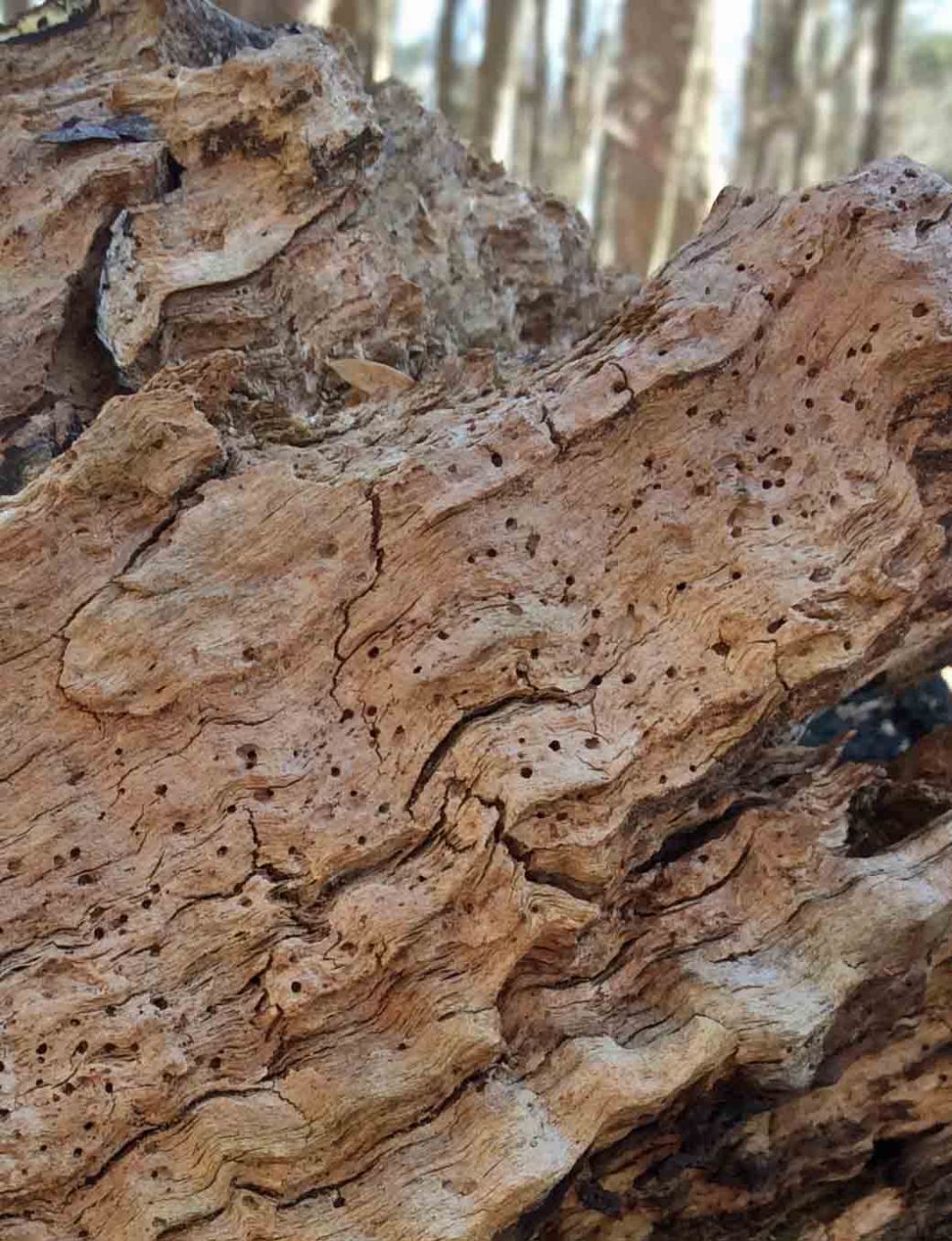
patterns2-log-beetl holes-LR

Decaying log with insect bore holes (photo by Nina Munteanu)

You can train your mind as both artist and scientist to become more aware of serendipitous occurrences around you. I call it being in sync and wrote about it in a previous article here (“Writing in Sync”). Often, when I’m researching a novel, I pick up things serendipitously. Something will come up that just fits with what I was searching for. An article pops up in the news. Or I’m talking to someone and they bring up just the topic I am researching. These things always happen to me. This occurs not only in my fiction writing but in my scientific pursuits. Some years ago, I was doing a pollution study using glass slides for colonizing algae to compare communities of an urban stream to those of an agricultural stream. I was really looking to see the difference between communities of these different stream environments when I discovered that the algae were colonizing the glass surfaces according to the current. Compelled with more questions of why, how and what if, I pursued this new line of research (which turned out to be far more interesting than my original research premise) and wrote several ground-breaking papers on it.

Indeed, questions like “why” and “what if” are germane to both art and science; the ‘what if’ question is the science fiction writer’s mantra and the premise, which comes from the artist part of you: imagination and an inquisitive and open mind. The idea of seemingly unrelated events intersecting to produce meaningful patterns has spawned new notions of thought from the scientific study of spontaneous order in the universe (synchrony), to Synchromysticism — the discovery of convergent archetypal symbols in pop culture (e.g., books, music and film).

Writer and philosopher Jake Kotze suggests that, “Synchronicity happens when we notice the bleed-through from one seemingly separate thing into another — or when we for a brief moment move beyond the mind’s divisions of the world.” Synchronicity and serendipitous discovery, like metaphor, appears when we change the way we look at things.

Serendipitous discovery comes to us through peripheral vision. Like our muse, it doesn’t happen by chasing after it; it sneaks up on us when we’re not looking. It comes to us when we focus outward and embrace our wonder for this world. When we quiet our minds and nurture our souls with beauty. It is then that what we had been seeking naturally comes to us. Like a gift.

Author Sibyl Hunter tells us that “Sync operates as an undercurrent of divine awareness personified through the myriad processes and symbols that make up the building blocks of our reality. Within that current, we spin our modern-day myths into books, fairy tales and movies, subconsciously retelling ourselves the same story over and over.” This also holds true in the models and metaphors of scientific genius, which often spring from the creativity of an intuitive heart and imaginative mind.

According to Mark A. Runco (California State University) “creativity depends on originality, while accomplishment and achievement reflect other problem-solving skills. Creative thinking involves at least three things: 1) the cognitive capacity to transform experience into original interpretations, 2) an interest in producing original interpretations, and 3) discretion.” The title of Piaget’s monograph, To Understand Is to Invent, reflects the fact that we do not have an authentic understanding of our experience until we construct that understanding for ourselves. In other words, “it is one thing to memorize some datum; it is quite another to discover it for one’s self; only then do we understand,” says Runco. Fogel concurs: “what Piaget called invention is a kind of creation, a creation of personal meaning. Piaget tied assimilation to imaginative play into creative interpretation.”

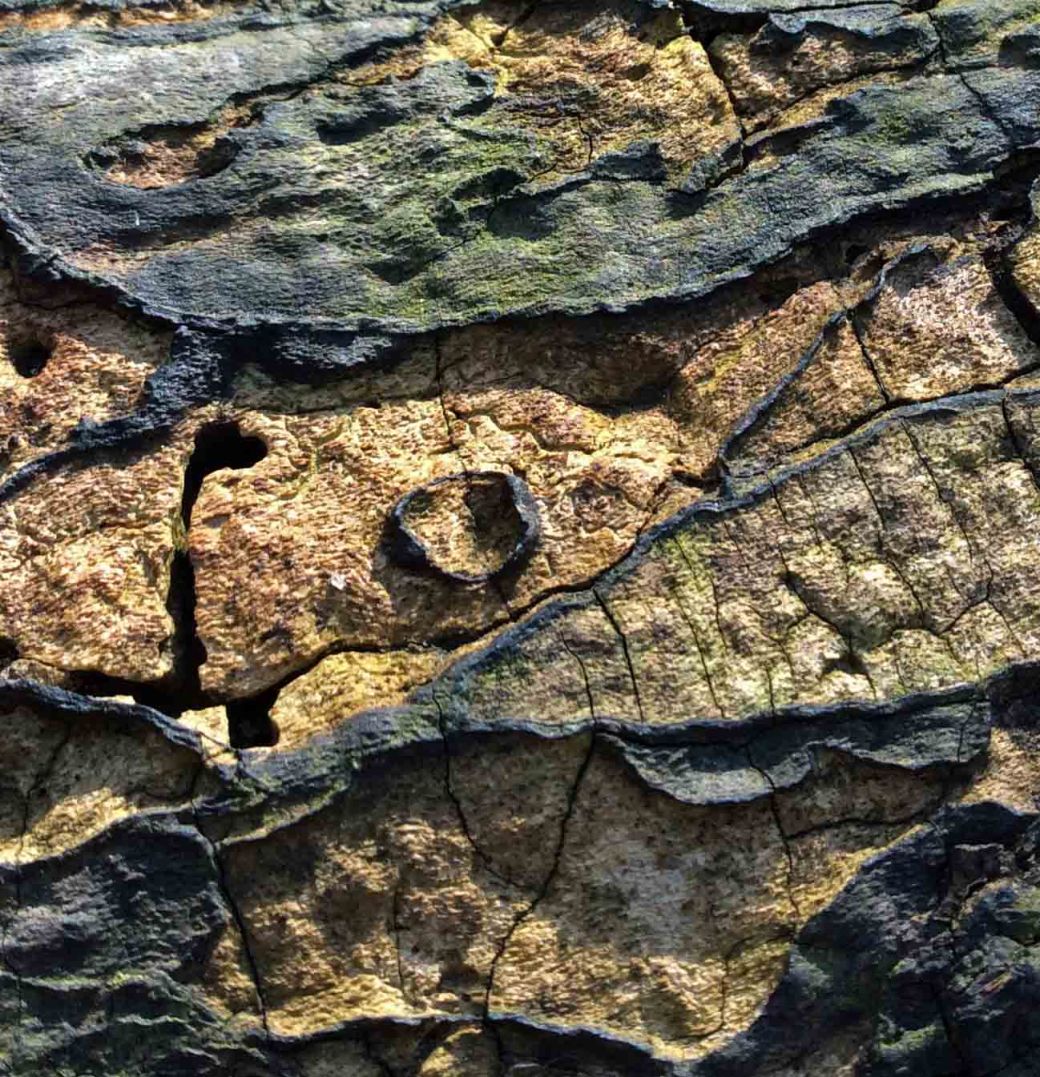
Blue-green fungus pattern

Decaying log displaying spalting (photo by Nina Munteanu)

According to Dean Keith Simonton (University of California), even the most illustrious creative geniuses of history have careers riddled by both hits and misses, both successes and failures. He uses Albert Einstein as an example. A man who has achieved almost mythical status as a genius, Einstein’s career “was plagued by terrible ideas, false starts and surprising disasters.” Simonton tells the story of Einstein’s debate with Niels Bohr over the implications of quantum theory, in which Einstein offered a series of arguments that Bohr countered. Bohr once even pointed out that Einstein failed to take into consideration the theory of relativity! According to some, Einstein wasted the final years of his career working on a unified field theory that was almost universally rejected by his colleagues. Einstein defended his missteps by noting that errors can advance science so long as they are not trivial; the greater the error, the greater the opportunity for new perspective and discovery.

It is left for us to simply recognize the dance.


nina-2014aaNina Munteanu is an ecologist and internationally published author of award-nominated speculative novels, short stories and non-fiction. She is co-editor of Europa SF and currently teaches writing courses at George Brown College and the University of Toronto. Visit www.ninamunteanu.ca for the latest on her books. Read Nina’s climate/eco-fiction Darwin’s Paradox, Angel of Chaos and Natural Selection.


Eight Ways to Move From Prosaic to Spectacular

Nina-reading-Ward Is

Reading on Algonquin Island, Lake Ontario (photo by Nina Munteanu)

What makes some writing stunning and other writing lackluster? Mostly, it’s the language—the words—you use. And, it isn’t just what words you use; it’s how you use them. Here are a few things you need to consider when translating your work into something that “sings”.

  1. Use Active Verbs and Reduce Modifiers

Many writers, not just beginners, slide into the pattern of using passive and weak verbs (e.g., were, was, being, etc.). Then they add a modifier to strengthen it. It doesn’t. Actively look for strong, vivid verbs. This is the key to good writing. Active and powerful verbs move a story forward. For instance, which version is more compelling?

Jill was walking quickly into the room.

or…

Jill stomped into the room.

The second example not only more quickly and efficiently demonstrates how Jill entered the room, but demonstrates with what attitude. There is no substitute for the use of powerful, appropriate verbs in sentences.   

2. Avoid Excessive & Meaningless Prose

Novice writers often use too many words to describe an event, action or scene. An overabundance of words slows down the story and obscures plot and action. Excessive prose includes:

Repetition: many beginning writers will often first tell then show in a scene. You don’t need to do both; trust the reader to get the “show”.

Extraneous words: e.g. “he started to think” instead of “he thought”; use of the obvious such as “she saw the big man lying on the bed” instead of “a big man lay on the bed” (“she saw” is implied through her POV). This second example also demonstrates how you can shift the readers’ attention from “her seeing” (in the first phrase) to “the man lying” on the bed (in the revised phrase). This simple change can create a much more powerful sentence through the seamless shift in reader attention.

Dull description not related to plot: I recently edited a writer’s over 400-page urban fantasy that contained far too much ordinary detail. Detail that, in small doses, may have enlightened the reader on the qualities of the protagonist; but in larger doses ground the narrative to a boring halt.

When you look for a more efficient and purposeful way to say something, you cut out unnecessary detail. Remember that virtually all description should be related to the plot and theme of the story.

3. Use Alliteration, Metaphor, Simile, Personification

These devices bring lyricism and cadence and powerful imagery to your prose. However, as with anything powerful, you need to use these judiciously. Use them where you wish to convey a strong image and to punctuate your prose.

4. Be Mindful of Word Accuracy

More often than you might think, a writer inadvertently misuses a word to convey an idea or emotion. For instance, let’s consider the following sentence, which describes a character’s reaction to a dog being cruelly mishandled:

“What are they doing?” Jack said crossly.

The modifier crossly suggests that Jack lacks compassion; it infers petulant annoyance.

“What are they doing?” Jack scowled.

Scowled still suggests the same icy disdain, though it may have been delivered with false bravado or through genuine discomfort from a hidden compassion. If the writer wished to convey shock, disgust or compassion, the following would better represent that sentiment:

“What are they doing?” Jack said, eyes wide.

Or:

“What are they doing?” Jack stammered.

5. Avoid Using Words like “Felt” or “Seem”

These “telly” words prevent the reader from directly experiencing the story by imposing a level of interpretation. For example, “he felt himself falling” can be improved to “he fell”. If you want to spice up the phrase, use another verb: “he toppled” “he stumbled” or “he crashed”.

6. Read your Writing Aloud & Punctuate Your Pauses

It isn’t just a clever metaphor when they say your writing style is called your “voice”; because your readers “listen” to what you write. Reading out loud helps define cadence, tone and pace of your prose and streamlines your writing. When you read aloud, pay attention to where you naturally pause. You may wish to put in a comma, semi-colon or period there.

7. Size and Vary Your Paragraphs  

Paragraphs are visual elements that help people read; they break up text on a page in logical places to provide white space for reader ease. I’ve heard people quote the “two-inch” rule for maximum paragraph length and I concur. This is one of the reasons some passages are harder to read than others; long paragraphs are more tiring to the eye. Find those logical breaks and put them in. Varying paragraph length creates a more interesting story “landscape” for the reader. Don’t be afraid to go to some extremes like using the one sentence – or even one word – paragraph.

Looking at Ward Island from Algonquin Is.

View of Ward Island from Algonquin Island (photo by Nina Munteanu

8. Size and Vary Your Sentences  

As with paragraphs, overly long sentences can try a reader’s patience and you may lose them entirely. Too many short choppy sentences can also reduce your prose to a mundane level. Varying your sentence length in a paragraph creates the lyricism and cadence that makes prose enjoyable to read.

For more tips on how to improve your writing for publication, go check my writing guide series The Alien Guidebook Series.

nina-2014aaNina Munteanu is an ecologist and internationally published author of award-nominated speculative novels, short stories and non-fiction. She is co-editor of Europa SF and currently teaches writing courses at George Brown College and the University of Toronto. Visit www.ninamunteanu.ca for the latest on her books. Read Nina’s climate/eco-fiction Darwin’s Paradox, Angel of Chaos and Natural Selection.

The Writer-Editor Relationship, Part 2: Five Things Writers Wish Editors Knew—and Followed

patterns-Cedar log moss2-LR

Cedar log (photo by Nina Munteanu)

In my previous article, “The Writer-Editor Relationship, Part 1: Editors Preparing Writers,” I focused on clarifying expectations between editors and writers from the editor’s point of view. Part 2, this article, focuses on this same relationship from the writer’s point of view.

Clarity of expectation, honesty, and mutual respect are key features in a productive and successful writer-editor relationship. Writers expect editors to inform them if their expectations are out of line, and writers rely on editors’ honesty and transparency to let them know if they are comfortable with the task being asked of them. This, of course, is predicated on the editor’s full understanding of what that task is; again, it is the responsibility of the editor to determine the scope of work from the author—just as a doctor will ask key questions to diagnose a patient. If an editor has reservations, caveats, or limitations with the project, these should be shared upfront. Honesty is always best, and it should start right from the beginning so that mutual respect is cemented.

Below is a list of five things that writers wish editors knew—and followed.

  1. Edit to preserve the writer’s voice through open and respectful dialogue

Losing your voice to the “hackings of an editor” is perhaps a beginner writer’s greatest fear. This makes sense, given that a novice writer’s voice is still in its infancy; it is tentative, evolving, and striving for an identity. While a professional editor is not likely to “hack,” the fear may remain well-founded.

A novice’s voice is often tangled and enmeshed in a chaos of poor narrative style, grammatical errors, and a general misunderstanding of the English language. Editors trying to improve a novice writer’s narrative flow without interfering with voice are faced with a challenge. Teasing out the nuances of creative intent amid the turbulent flow of awkward and obscure expression requires finesse—and consideration. Good editors recognize that every writer has a voice, no matter how weak or ill-formed, and that voice is the culmination of a writer’s culture, beliefs, and experiences. Editing to preserve a writer’s voice—particularly when it is weak and not fully formed—needs a “soft touch” that invites more back-and-forth than usual, uses more coaching-style language, and relies on good feedback.

An editor colleague of mine consistently accompanies her edits with the question, “Does this change preserve your meaning?” This prompt both focuses on “voice” and reminds the writer that the editor is considering it, which fosters a nurturing environment of mutual respect. Editors who are not familiar with working with writers in the early stage of their careers may wish to defer to one who is more experienced.

Editors also need to consider how the author’s narrative voice harmonizes with the standard in the author’s targeted genre and niche market. Pursuing respectful and open dialogue about how the author’s voice fits or doesn’t fit that standard is another responsibility of a good editor and one an author will come to rely on—particularly early on in their career.

  1. Understand—and embrace—the market and genre of your writer

Writers are often told to write what they know. This edict applies equally to editors: edit what you “know” and understand. Each form of writing—from literary and genre fiction to journalism, the memoir, and technical writing—encompasses an overall style, culture and vision, associated language, and even “jargon” that is important to understand to succeed with readers. Even writers who subvert the trope need to first understand what they are subverting, and so does the editor.

I write and edit science fiction and fantasy. I do it very well, because I have a passion for it and I intimately understand its world and language, including where the boundaries lie and where the risks—and sublime nuances of originality—also lie. I worked as a scientist for over 20 years and have published papers in peer-reviewed journals, so I am comfortable editing technical and scientific papers. I live that world. On the other hand, I do not read, nor do I understand or care for, the horror fiction genre. Not only would I do a lousy job editing a work of horror, but I wouldn’t provide the discerning editorial advice to best place that work in the horror market. It is in the area of market niche that one editor will shine over another based on their familiarity with, and current activity in, that industry sector. This is ultimately what writers are paying for: the multi-layered understanding of the editor that comes with a full embrace of that world.

Editors should ensure a good fit and the best chance for success by not taking on work in a genre with which they are neither familiar nor comfortable. Think of the author. Which leads me to the next point:

  1. Be honest and practice moral integrity: Don’t take on a writer’s work unless you like and believe in it

 When I was starting out as a writer with my first novel, I shopped it around to many agents, hoping for representation. While the book was eventually published with great success, many agents had rejected it. Literary agents take on clients and shop their books to publishing houses. They usually charge a percentage of the take and are not paid (if they are good agents) until the book is sold to a publishing house. Payment, therefore, is predicated on success. In many cases, an agent would respond with good things to say about my first manuscript but would not take it on, citing this common phrase: “It just didn’t excite me enough.” I was initially puzzled by this response. If they liked it, why didn’t they take it on? But “I like” isn’t the same as “I’m excited.” I soon realized the importance that excitement played in the agent’s business. They were my advocate, after all. If they weren’t eager about the book, how could they sell it to someone else? And if they couldn’t sell it to someone else, how could they get paid?

While the editor is usually paid up front and/or upon deliverable, they fulfill a similar role: that of advocate. If an editor takes on a writer’s work without enjoying it or believing in it, they are much less likely to do a good job. And both lose when that happens.

When we just do a job for the money and not for the passion of doing something well, we run the risk of losing on all fronts. We run the risk of being dishonest in our assessments and then doing a shabby job. And then losing our reputation. Be an advocate and be honest; sometimes, that means saying “no” to a project and explaining why. The writer will benefit and will thank you for it—if not right away, then eventually.

  1. Edit professionally and appropriately to promised deliverable

In my capacity as writing coach, I have met with several writers who have complained that their work had been insufficiently or inappropriately edited. This can occur for several reasons: (a) lack of time; (b) incompetence; or (c) inappropriate match-up.

  • Lack of time 

As a writer, I once experienced an insufficient copy edit by a freelance professional editor. In fact, this particular editor was a good editor and had impeccably edited a previous work of mine. When I submitted my “edited” work to a beta reader, he pointed out many places that my copy editor had missed. A few is OK, but she’d missed many. From subsequent correspondence, I deduced that my editor had been overrun with other projects and had skimmed mine a little too fast. Unfortunately, this was unacceptable, given that I’d agreed to pay her a professional rate for a specific deliverable: a copy-edited, proofed, and publication-ready manuscript.

The ultimate message here for editors is, don’t take on a writer’s work and make promises of delivering until you know what you’re getting into and know that you can do it in the time you suggested. Honesty is best here. If you are too busy to meet the specified deadline, say so and refer the writer to another respected editor if they can’t wait. And don’t worry about “losing” the client—you haven’t. But that editor I mentioned in the previous paragraph did.

  • Incompetence 

Unfortunately, most editors who are incompetent are unaware of it. One of my professional writer-editor colleagues at SF Canada invoked the Dunning-Kruger Effect (“at a certain point, people who really don’t know something don’t know that they don’t know it”) to share her story of what passes for editorial input in “an age of homonym errors.” She suggested that some self-appointed editors are convinced they have significant skills but allow a large error rate.

This is where organizations like Editors Canada become invaluable. Editors Canada certifies editors for skills in various editing fields and forms (that is, structural-, stylistic-, and copy editing and proofreading). If you are a professional editor with certification, ensure that you make this known to the writer; many writers not only don’t understand the various editing forms (for example, copy editing vs. structural editing), they also don’t necessarily recognize competence until after the job is done—when it’s too late.

  • Inappropriate match-up 

This is similar to point 2, which talks about matching writer and editor through genre and market. A good fit also includes temperament, schedules, communication style, and other considerations that will affect the editor-writer relationship and the natural progress of the project. As editor, I have encountered a few clients whose communications with me created tension and misunderstanding. We mutually agreed to terminate our arrangement early on, which saved much tension and grief. The transparency of the relationship allowed us to recognize the mismatch early on and attend to it before it became problematic and wasted both our time and efforts.

  1. Keep the relationship—and language—professional and respectful 

Without necessarily expressing this, the majority of writers—particularly beginning writers and, by default, indie/self-published writers—seek a professional editor who will treat them with respect. What this translates into is the use of professional language, tone, and behaviour. Writers aren’t looking for an editor to be their “friend.” Writers are also not looking for a professional editor to validate their work or them as people. Writers seek professional editors to give them honest and helpful advice that will help them create the very best work they can for eventual publication.

Simple. Not so simple.

As an editor who is also a writer (who gets edited a lot), I provide rationale as much as I can for the suggestions I make to writers. This helps establish and maintain a respectful and collaborative relationship between author and editor through the use of professional language, tone, and behaviour. Think of it as a doctor-patient relationship; I’ve dropped doctors like hot potatoes who are not willing to sit with me as an equal and discuss their prognoses. I want to know why, and ultimately, it’s my decision. The editor is an expert, but so is the writer.

The writer-editor relationship is foremost a professional one. As an editor, I feel it is my duty to promote integrity and respect with the writer, and this hopefully within a safe and nurturing environment for the achievement of mutual excellence.

This article was copy edited by Nicole North.


Nina MunteanuNina Munteanu is an ecologist and internationally published author of award-nominated speculative novels, short stories and non-fiction. She is co-editor of Europa SF and currently teaches writing courses at George Brown College and the University of Toronto. Visit www.ninamunteanu.ca for the latest on her books.

Nina Talks Water at Word Up in Barrie

Unity Market-outside

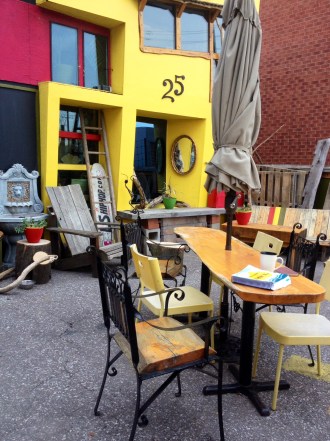
Unity Market & Cafe outside patio

Every month on the second Thursday, Word Up in Barrie hosts readings by writers, poets, and spoken word artists. From pros to amateurs, and all genres of writing, Word Up’s open mic has welcomed writers of all genres, from amateurs to winners of the Governor General’s Award.

The volunteer run group holds its reading night at the artisanal Unity Market and Café, on Toronto Street, just a walk away from Barrie’s charming downtown core and harbor on Lake Simcoe. Apart from its famous “scuffins” (an amalgam of muffin and scone, generously filled with savory goodness), the market is a gestalt meeting place for creativity, holding events almost daily.

I heartily accepted when Linda Laforge invited me to speak about my last project to those in attendance last Thursday. My latest book is Water Is…, a non-fiction work that took me three years to write and the culmination of a career and life with water.

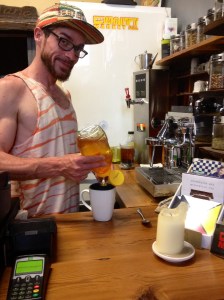
Shane-Unity Market

Shane making a tea

I talked about how the book came about—linking it to how I came about—and the process of research and writing—which morphed into something beyond what I had initially conceived. The book in some ways wrote itself, telling me to go here and there; gathering friends and colleagues to me—some from far away—to provide important information I needed to put into the book.

I ended my talk with a description of the Watermark Project, a Lake Ontario Water Keepers initiative to give narrative to our connections with water—exactly what I’d intended with Water Is…

Barrie-tulips

Barrie harbor front

What followed was an open mic that resonated with water connections from a short story about death to learning how to heal with water. Damian Lopes, Barrie’s Poet Laureate, delivered a compelling poem on Canadian sociopolitics.

The open mic closed with Shane Dennis’s freestyle oration—a spontaneous stream-of-consciousness flow of powerful imagery that both summarized the night’s readings and set it aflame and into flight.

Damian Lopes won the raffle for a free Water Is… book. And I sold a few books to a few hydrophiles. A wonderful evening!

Thanks, Linda, Aaron, Bruce and Shane!


For more about my book Water Is… and about water see TheMeaningOfWater.com.

word up banner

Nina at Word Up-Barrie

On Ecology, Women and Science Fiction: Part 2, Praxis

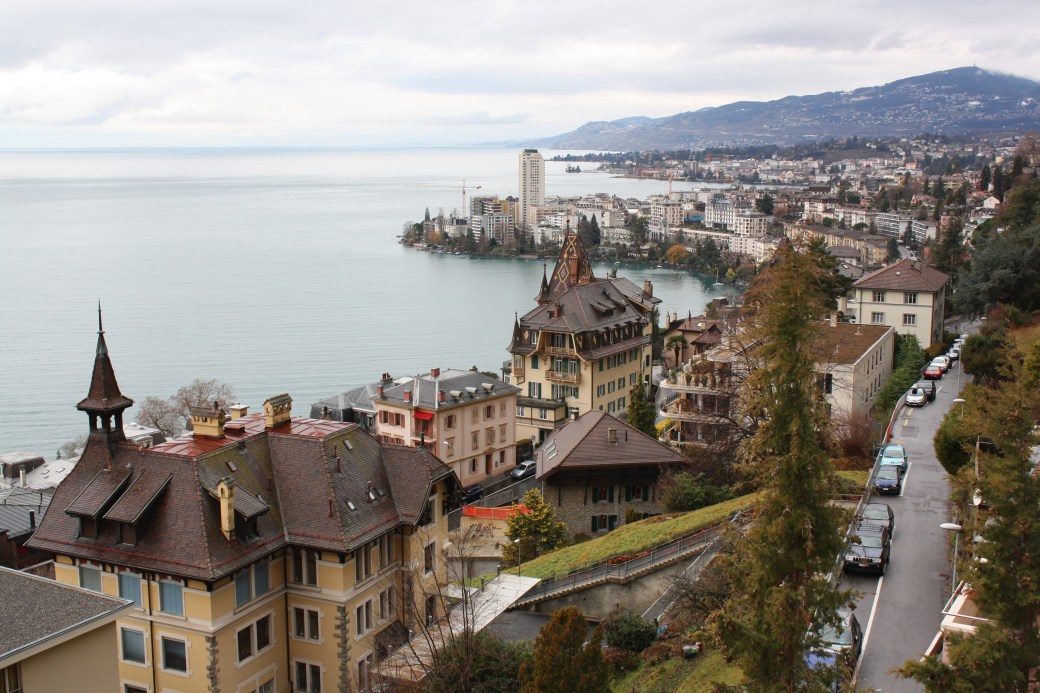
montreux-road from b&b

Montreux, Switzerland (photo by Nina Munteanu)

In Part 1, Gnosis, I explored the nature of our current worldview, its shifting face and how literature and women writers have both contributed and enlightened this shift.

I talked with four women, all in the science fiction or eco-fiction genres; two are writers, and two are publishers. We discussed this shift, what it looks like, what the “feminine archetype” means and the nature of “Optimistic SF.”

When asked to describe SF today, Lynda Williams, author of the Okal Rel series, argued that, “SF is mainstream now … It has grown up, emotionally, from being about wish-fulfilling technologies … to embracing the social implications of change.” Stephanie Johanson, editor and co-publisher of Neo-opsis Science Fiction Magazine, notes that, “Science fiction often reflects the views of the day, following and expanding on newer technologies.” Williams adds that SF fiction has gained a literary presence, but at some expense: “now there’s a sordid fascination, in a lot of self-consciously dark SF, with self-interested cynicism and extended analogies to drug addiction as a means of coping with reality.” Johanson provided a different perspective. “Stories that predict doom have been around since the beginning of SF,” she argued. “But lately perhaps there might be more stories with a glimmer of hope … perhaps it won’t be science that destroys us … the right sciences might actually save us.” Editor and Publisher of On Spec Magazine, Diane Walton shares that she is seeing a lot of Post-Apocalyptic submissions, “mainly because it’s interesting to put your characters in a setting where the rules don’t apply any more. They have to try to rebuild the life and security and order they used to have, or else revert to savagery, or else adapt to a whole new set of circumstances—the choices are endless. Except zombies. I don’t want to see any more zombies.”

When asked if SF had a role in literature, Johanson suggested that, “SF has fewer limitations and more frontiers to explore than other genres.” Both Johanson and Walton suggest that its main role is to challenge our preconceived notions of the world and “open up the mind to new possibilities.” Walton and Williams agree that SF is recognized more today as “real” literature rather than being dismissed as “escapism.” Williams shares that SF’s roots are as old as myth. “Like myths and bible stories, SF is an instructive literature, pointing out how things can go wrong (or right) and why. The growing up SF has done since the 1950s lies in an increasing recognition that [humanity is its] own worst enemy and a better understanding of human nature is crucial to the problems we face, not just the hard sciences.”

I shared that I had witnessed (at least in my classrooms and writing workshops) a rising ecological awareness, reflected in a higher percentage of new writers bringing in works-in-progress (WIPs) that were decidedly “eco-fiction” or “climate fiction.”

“I have always gravitated towards, and often found, literature with ecological components,” Sarah Kades, author of Claiming Love confides. She then adds, “But I do agree with you that ecological awareness is not only gaining momentum, it is front and centre for many, and as such, we are naturally finding it more and more in literature.”

“I never thought of my own work as ecological,” shares Williams. “But it’s true: the underlying issue in it is how does, or can, the collective will prevent groups or individuals from destroying what is irreplaceably precious…Yes, I think SF has graduated from a fascination with building bigger death rays to tackling questions of how we avoid committing the unthinkable while still indulging in lots of entertaining conflict. Because conflict must exist in any story. We wouldn’t be human without it. There’s plenty of conflict in an ecosystem, too, but it stays balanced. SF used to be optimistic about scientific discoveries shifting the system out of balance in the direction of net gain for humankind. And this has happened. Even today’s poor are richer than yesterday’s. What worries us, increasingly, is whether some sudden imbalance could tip us into irreversible catastrophe because unlike 1950s readers we don’t trust smart and powerful people to act sanely in their quest for power.”

“I think that authors have come to a realization that the setting of a book can be just as strong a character (and character-builder) as the people in it,” says Walton. “Humans are so vulnerable, and must depend on their brains and skills at manipulating the environment to be able to adapt to harsh and potentially life-threatening situations…We don’t have fur, for example, or the ability to burrow under the sand to find shelter from a hot sun. So the books that embrace the environment, and that use it to present character-building challenges to the protagonists, can be more interesting than just a ‘good guys against bad guys’ story in any genre.”

Johanson provokes with the concept of awareness-guided perception—itself a valid cultural metric: “Perhaps there is an increase of ecological awareness in literature, or perhaps we are just noticing stories that have always been there.” This notion was discussed in a recent panel on Eco-Fiction in which I participated with Susan Forrest, Michael J. Martineck, Hayden Trenholm, and Sarah Kades at the writer’s festival When Words Collide in Calgary. One author pointed out that environmental fiction has been written for years and it is only now—partly with the genesis of the term eco-fiction—that the “character” and significance of environment is being acknowledged beyond its metaphor; for its actual value. It may also be that the metaphoric symbols of environment in certain classics are being “retooled” through our current awareness much in the same way that Aldous Huxley’s Brave New World or George Orwell’s Nineteen Eighty Four are being re-interpreted—and newly appreciated— in today’s world of pervasive surveillance and bio-engineering. Johanson cites Brian Aldiss’ Helliconia trilogy, John Varley’s Titan trilogy, Joan D. Vinge’s The Snow Queen, and the works of Jules Verne. Classic titles Walton remembers from her younger days include John Brunner’s Stand on Zanzibar and Ursula K. LeGuin’s The Word for World is Forest; and more recently, The Windup Girl by Paolo Bacigalupi. Walton includes the 1965 Dune series by Frank Herbert, given that the environment of the desert and how humanity has adapted to it plays a major role in the series.

I proposed that an awakening to the feminine archetype (cooperation, compassion, relationship, altruism) is occurring and currently reflected in literature. Johanson suggested that, “If [cooperation, compassion, relationship, and altruism] are used in balance with science and logic, there can be an optimistic future.” Had she seen this increasing in literature? “I don’t think so, but perhaps I have been reading the wrong stories,” Johanson admits. Kades shares a different perception. “I would definitely agree there is an awakening to the feminine archetype in our culture as a whole, and literature is reflecting this,” she argues. “The books that resonate most strongly for me are the ones that honour and celebrate both the feminine and masculine, stories that demonstrate mutual respect and successful collaboration between men and women. Throw humour and romance in there, too, and it’s irresistible.”

Walton observes that, “It’s definitely something that drives a story in a different direction from the more “male” pursuits of taking everything by force, or the lone-wolf hero solving problems without any collaboration with others.” She confides, “I loved the new Mad Max film, where compassion and collaboration made the story come alive. And yet, it has been accused, by some, of being a feminist propaganda film.”

Williams answers with a tale of two characters. “Amel, my prince-raised-as-pauper, is a hero of the pol virtues. Loosely speaking, we could call the pol virtues feminine. Horth Nersal, on the other hand, is an alpha male—a hero of the rel variety in Okal Rel theology. There are important female characters in my saga, but I have to confess my teenage self was simply more fascinated with heroic males for reasons inaccessible to my older, sager self. So, in my own work I could make the case that Amel’s problem-solving and character development is absolutely an example of an awakening to the feminine archetype. And he does wind up in power. But even as Amel gets his act together, after book six, and learns to use his more subtle kind of influence to make the world behave, Horth Nersal starts stealing the spotlight. I don’t quite know how this happened. And maybe Amel’s central, anchoring role throughout the series argues in favor of the feminine principle dominating. But I think the Amel/Horth dilemma isn’t unique to my own work. I see it crop up in other SF where, on the face of things, one might say the feminine archetype is in ascendance.”

Can we (as writers and editors and otherwise) foster such a change in worldview and gain a sense of place, purpose and meaning in our lives through it?

“If writers are writing stories to change the world, and I hope some are, then they should write stories that first entertain,” Johanson advises writers. “It doesn’t matter how great a theory, or how good an idea, if it doesn’t entertain, fewer people will read it. This also applies to editors. Karl and I decided early on that we wanted to teach people with the stories we published in Neo-opsis Science Fiction Magazine. We wanted our readers so entertained that they wouldn’t necessarily realize that their views had just been broadened.”

“As a writer I feel a rather persuasive responsibility to help foster positive social change,” says Kades. “For me it is considerable motivation of the stories that take turns between calming, weaving, and banging around in my head, eager to get out. And stories don’t have to tackle epic social issues to be a conduit of positive social change. Stories that create new ‘normals’ of compassion, respect and tolerance are just as important and interesting as stories that address specific social issues. To create change, first we must imagine it. Writers can help with that.”

“I’ve been reading and thinking a lot about meaning and purpose these days,” Williams confides. “First, we need to foster creativity in others and respect it in ourselves. But in both cases we must challenge our creative cravings to do work. I personally believe the richest entertainment comes not just from simple wish-fulfillment narratives – although these are fun and perfectly at home in epic literature – but from touching a raw nerve here and there, and making sure the ‘bad guys’ are at least as realistic as the heroes, not just straw men defeated by a better ray guy. Best of all, can a resolution be found in which the bad guys co-exist with their conquerors? At least think about it, and how your society might avoid problems cropping up again, and make that part of the fabric of your tale.”

“I’m not sure I agree with this being part of my role as an editor,” Walton shared. “It may be that I am drawn more to the kinds of books and stories that espouse this concept, and thus more likely to buy them to publish. We are all gatekeepers of some kind or another. One thing that is interesting is the recent brouhaha over the Hugo awards, where, I think, the various ‘puppy’ slates would look on any sort of eco-fiction that embraced the feminine archetype as being something only a Social Justice Warrior would like. Some people just don’t want their worldview changed, I guess.”

…Which brings me to “Optimistic SF” and what it represents. In a recent discussion with Lynda Williams over several Schofferhofers at Sharkey’s Pub in Vancouver, we shared our thoughts on how the evolution of the science fiction genre and the place that optimism holds in literature and art, generally. Is “saving the world” and “The Hero’s Journey” still viable in literature today? And how many Schofferhofers does it take to get there?

“I’ve asked people to help me define ‘Optimistic SF’ on my blog,” Lynda shares. “Check out what we’ve got so far at http://realityskimming.com/2015/09/10/fall2015optimisticsf/ and leave your own suggestions if something springs to mind. My own definition has to do with how a story makes me feel. If I’m entertained and emerge feeling there’s some point to living another day rather than convinced human beings are a bad idea best eliminated quickly before they do more harm, it’s optimistic SF. I want to encourage the notion that it’s not dumb or simple minded to strive for improving the world or defending moral behavior when feasible.”

Johanson adds that, “I became a fan of SF, because of stories that I might now classify as ‘Optimistic SF’, stories that made me look forward to the future, characters that I would love to have as friends, and places I wanted to explore. Optimistic literature to me isn’t free from problems. It wouldn’t be a story if everything was splendid. It is conflict that makes a story, but optimistic SF solves problems, and by the end of the story things are looking that much brighter. Anne McCaffrey wrote a lot of ‘Optimistic SF’. I was very fond of her Dragons of Pern series, though the later books by her son Todd McCaffrey seem far less optimistic in nature. I found many of Larry Niven’s novels to be optimistic, like the Ringworld books. Lynda Williams’ Okal Rel novels have a lot of suffering in them, but her series has always seemed like ‘Optimistic SF’.” For Johanson, optimistic SF has at least one optimistic character, one positive goal achieved and a positive [resolved as opposed to ‘happy’] ending, not “leaving evil posed to strike.” She suggests that this includes “overcoming adversity, exploring, discovering, and/or self-growth.”

Walton submits that optimistic SF is, in fact, a challenge to write, “because you still need to have some kind of antagonist (be it human, alien or environment) to make the protagonist want or need something enough to take risks and go on that literary journey. Maybe the optimism comes from stories that are ‘less dark’ than others?”

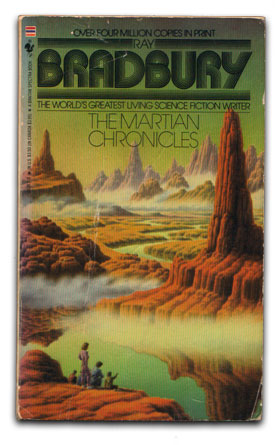
Lynda Williams openly shared her ambitions for her recent publishing venture, Reality Skimming Press: “Reality Skimming Press is my answer to how to continue being creative now I’m post-published. Not just to keep the Okal Rel Saga in print, although that’s my core motivation for even considering becoming a publisher. But to be brazen enough to talk about ideas and art and what it means to be optimistic, for example, instead of bowing to the demands of commercial success and elusive, fickle fame. Arguably, Reality Skimming Press is the ultimate feminine solution where the meaningfulness of the work and quality of the relationships, on and off the page, trump the call to do battle for the big prizes. Success is lovely, of course. And showers of gold and fame wouldn’t be scornfully rejected. It’s more a case of asking the question: ‘Would I do this even if I never got rich or famous?’ And if the answer is ‘yes’ to have the courage to keep enjoying the journey.”martian_chronicles
Sarah Kades echoed my initial discovery in “responsibility and connection,” noted in my first article, with her admission: “It was rather startling [to] first realize [that] the responsibility I feel [in writing] socially relevant stories is not universally held among writers. It is not, which is of course just fine; it just surprised me because of how [strong] it is in me. The knowledge brought my writing and my voice into sharper focus for me.”


nina-LL-interviewe-closerNina Munteanu is an award-winning Canadian ecologist and novelist. In addition to eight published novels, she has authored short stories, articles and non-fiction books, which have been translated into several languages throughout the world. She is currently an editor of European zine Europa SF and writes for Amazing Stories. Nina teaches writing at George Brown College and the University of Toronto. Her latest book “Water Is…” (release May 10 2016 by Pixl Press; available for pre-order April 12) is a non-fiction examination of the meaning of water.

Lynda WilliamsLynda Williams is the author of the ten-novel Okal Rel Saga and editor of the growing collection of works by Hal Friesen, Craig Bowlsby, Krysia Anderson, Elizabeth Woods, Nina Munteanu, Randy McCharles and others writing works set in the ORU. As a publisher, she is working with Kyle Davidson, Jeff Doten, Sarah Trick, Jennifer Lott, Paula Johanson, Lynn Perkins and Yukari Yamamoto in re-inventing publishing through Reality Skimming Press. Lynda holds three degrees and works as Learning Technology Analyst and manager of the Learn Tech support team at Simon Fraser University. She teaches part-time at BCIT.

Sarah KadesSarah Kades hung up her archaeology trowel and bid adieu to Traditional Knowledge facilitation to share her love of the natural world and happily-ever-afters. She writes literary romantic eco-fiction where nature, humour and love meet. She lives in Calgary, Canada with her family. Connect with Sarah on Facebook, Twitter and www.sarahkades.com.


Stephanie and IsaacStephanie Johanson is the art director, assistant editor, and co-owner of Neo-opsis Science Fiction Magazine, publishing since 2003. She is an artist who has worked in a variety of media, though painting and soapstone carving are her passions. Stephanie paints realism with a hint of fantasy, often preferring landscapes as her subjects. Examples of her work can be viewed on the Neo-opsis Science Fiction Magazine website at www.neo-opsis.ca/art.

.
Diane-Walton02Diane Walton is currently serving a life sentence as Managing Editor of On Spec Magazine, and loving every minute of it. She and her lovely and talented husband, Rick LeBlanc, share their rural Alberta home with three very entitled cats. 


On Ecology, Women and Science Fiction: Part 1, Gnosis

montreux-panorama

Montreux, Switzerland (photo by Nina Munteanu)

I’m an ecologist. We look at why things happen and work, and—perhaps most importantly—how they affect one another. Ecology is the science of relationships and consequence. I taught at the University of Victoria for several years then conducted environmental assessments as a limnologist (aquatic ecologist) for environmental consulting firms in British Columbia.

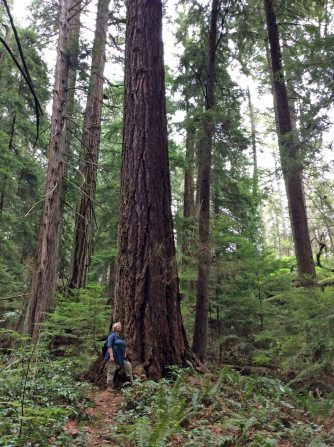
Nina looking up dougfir-LHP

Nina next to giant Douglas fir, Vancouver (photo by Margaret Ross)

My short stories and novels are—no big surprise—mostly eco-fiction. It’s been that way since I started high school in Quebec, in fact. That first year, when I fervently expressed exhortations for global environmental action, a well-meaning, but myopic teacher chided me for my extravagant worldview. “Stick to little things and your community—like recycling,” he’d suggested patronizingly.

I remember the shock of realizing that not everyone felt the planet like I did. Perhaps it was a teenage-thing, or a girl-thing, or a nina-thing. I prayed it wasn’t just a nina-thing…

For the past few years I’ve been teaching writing at the University of Toronto and George Brown College in Ontario. I teach a workshop-style class that involves students bringing in and working on their current Work-In-Progress (WIP). And I’ve been noticing an interesting trend. Something cool is happening in my classes. More and more students are bringing in WIPs on ecological and global environmental issues. Many of the stories involve a premise of environmental calamity, but not in the same vain as previous environmental disasters that depict “man” against Nature. These works give the Earth, Nature or Water an actual voice (as a character). And a protagonist who learns to interact with it cooperatively.

EcologyOfStoryFor me this represents a palpable and gestalt cultural awakening in the realm of the “feminine archetype”.

The history of storytelling and of humanity’s evolution—how we relate to each other and our environment—are inextricably tied. The stories we tell—whether fiction or non-fiction—reflect who we are, what we value, and what we will become. Good stories are about relationships and their consequences.

Our capacity—and need—to share stories is as old as our ancient beginnings. From the Paleolithic cave paintings of Lascaux to our blogs on the Internet, humanity has left a grand legacy of ‘story’ sharing. Evolutionary biologist and futurist Elisabet Sahtouris tells us that, “whether we create our stories from the revelations of religions or the researches of science, or the inspirations of great artists and writers or the experiences of our own lives, we live by the stories we believe and tell to ourselves and others.”

Front Cover ONLY-webI mentioned that the majority of my stories are science fiction (SF). SF is a literature of allegory and metaphor and deeply embedded in culture. It draws me because it is the literature of consequence exploring large issues faced by humankind. In a February 2013 interview in The Globe and Mail I described how by its very nature SF is a symbolic meditation on history itself and ultimately a literature of great vision: “Speaking for myself, and for the other women I know who read science fiction, the need is for good stories featuring intelligent women who are directed in some way to make a difference in the world…The heroism [of women] may manifest itself through co-operation and leadership in community, which is [often] different from their die-hard male counterparts who want to tackle the world on their own. Science fiction provides a new paradigm for heroism and a new definition of hero as it balances technology and science with human issues and needs.”

Author Marie Bilodeau in the same interview added that, “the best part about writing science fiction is showing different ways of being without having your characters struggle to gain rights. Invented worlds can host a social landscape where debated rights in this world – such as gay marriage, abortion and euthanasia – are just a fact of life.”

Once the almost exclusive domain of male writers and readers, SF has been steadily changing, attracting more women writers and women readers. It is no coincidence that mainstream literary fiction writer Margaret Atwood began to write science fiction (which she still calls speculative fiction) in the 1980s with Handmaid’s Tale, and that her last five books are pure science fiction, mostly dystopias that explore the evolution of humanity.

Science fiction is maturing.

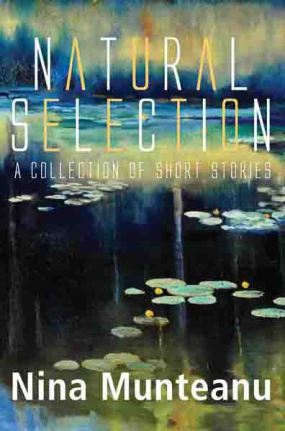
NaturalSelection-front-webWe’ve progressed from the biological to the mechanical to the purely mental, from the natural world to a manufactured world to a virtual world, writes philosopher and writer Charles Eisenstein. According to Carolyn Merchant, professor at UC Berkley, early scientists of the 1600s used metaphor, rhetoric, and myth to develop a new method of interrogating nature as “part of a larger project to create a new method that would allow humanity to control and dominate the natural world.”

“The modern self,” writes Eisenstein, has become, “a discrete and separate subject in a universe that is other [something SF writers know and write about]. It is the economic man of Adam Smith; it is the skin-encapsulated ego of Alan Watts; it is the embodied soul of religion; it is the selfish gene [of Richard Dawkins].”

Darwins Paradox-2nd coverCompetition is a natural reaction based on distrust—of both the environment and of the “other”—both aspects of “self” (as part) separated from “self” (as whole). The greed for more than is sustainable reflects an urgent fear of failure and a sense of being separate. It ultimately perpetuates actions dominated by self-interest and is the harbinger of “the Tragedy of the Commons”.

According to Elisabet Sahtoutis, humanity is currently poised on a tipping point. Thousands of years of national and corporate empire-building have reached a tipping point in planetary exploitation, says Sahtouris, “where enmities are more expensive in all respects than friendly collaboration.”

Competition naturally gives way to creative cooperation as trust in both “self” and the “other” develops and is encouraged. “Communities with many cooperators and altruists do better than groups dominated by narrow and selfish thinking,” writes Alain Ruche, strategist for the Secretary General of the EU External Service. Ruche adds that a biological predisposition to cooperate appears to be independent of culture.

Water Is-COVERExamples of creative cooperatives exist throughout the world, offering an alternative to the traditional model of competition. Cultural creatives are changing the world, Ruche tells us. These creatives, while being community-oriented with an awareness of planet-wide issues, honor and embody feminine values, such as empathy, solidarity, spiritual and personal development, and relationships. Mechanisms include reciprocity, trust, communication, fairness, and a group-sense of belonging. I give examples in my upcoming book “Water Is…” by Pixl Press, due in Spring 2016.

In the September 2009 Peace Summit in Vancouver B.C., the Dalai Lama shared that “the world will be saved by the western woman.” This “call to adventure” by His Holiness reflects the hero’s journey steps suggested by Richard Tarnas in the epilogue of his book The Passion of the Western Mind: “the driving impulse of the West’s masculine consciousness has been its dialectical quest not only to realize itself, to forge its own autonomy, but also, finally, to recover its connection with the whole, to come to terms with the great feminine principle in life…to reunite with the mystery of life, of nature, of soul.”

Log over water forest-DeasPark

Deas park, BC (photo by Nina Munteanu)

Poised and ready, rising from its previous dualistic perception, the soul finds Home in Wholeness, and returns to the intrinsic truth of the world. The world realizes itself within and through the human mind, projecting a fractal vision of a holonomic universe.

To return to science fiction, my point is that the stories I’m seeing more and more—whether by established writers or by my own students—are reflecting this emerging worldview. It is the worldview of Jung and synchronicity; of David Bohm and “implicate order”; of Rudolf Steiner and “cosmic intelligence”, of biochemist Mae-Wan Ho and “quantum entanglement”, of Frans de Waal and “empathy”, and of Matt Ridley and “altruism”.

In Part 2 (Praxis), I provide examples and interviews with other writers.


nina-2014aaNina Munteanu is an ecologist and internationally published author of award-nominated speculative novels, short stories and non-fiction. She is co-editor of Europa SF and currently teaches writing courses at George Brown College and the University of Toronto. Visit www.ninamunteanu.ca for the latest on her books.
 

How to Write Science Fiction at George Brown College April 2016

nina-workshop 2This April, I will teach my 12-week long writing course on how to write science fiction.  The 12-week course “Creating Science Fiction” runs TUESDAY nights from 6:15 to 9:15 starting April 5th through to June 21st at George Brown College on King Street in Toronto and costs $285.

“Creating Science Fiction” is now part of George Brown’s Creative Writing Certificate.

See the description below:

Microsoft Word - GBC-SF course-APRIL2016 AD.docx

Meant for both beginning writers and those already published, the 12-week course is run like a workshop with student input and feedback on student’s WIPs.
.spaceship02
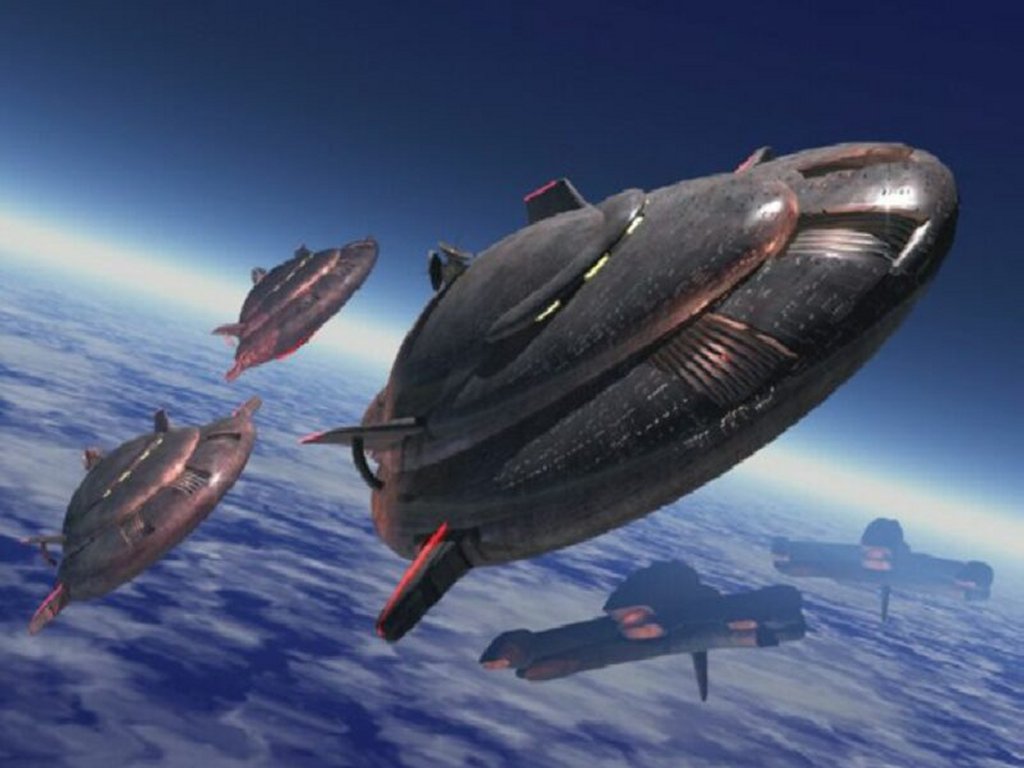
I explore with students the essential tools used in the SF genre (including world building, research and plot approaches). Students will work toward a publishable original piece by learning to generate and follow through with premise, idea and theme.
George Brown College is located on 200 King Street, Toronto, Canada.
.
nina-2014aaNina Munteanu is an ecologist and internationally published author of award-nominated speculative novels, short stories and non-fiction. She is co-editor of Europa SF and currently teaches writing courses at George Brown College and the University of Toronto. Visit www.ninamunteanu.ca for the latest on her books.
What Genre Are You Writing … And Marketing?

Our multiplex world of discerning consumers is getting used to having what they consume laid out clearly and categorized. Literature is no different. Since the time of the ancient Greeks, when Aristotle proclaimed in his Poetics that poetry could be categorized into many “species”, critics have endeavored to label art to help the “commoner” interpret it.

Defining Genre

The word “genre” comes from the French word for “kind” or “gender” and provides a loose set of criteria for a category of composition. People in the book industry often use it to categorize literature.

“Genre” is notoriously difficult to define. For instance, what kinds of literary form should properly be called genres? Poetry is generally thought of as a literary “mode”, being too broad and too varied to be called a “genre”. The various types and forms of poetry are more properly called genres, such as the epic or the lyric.

A genre can be defined either by the formal properties of the work, or by its subject matter. A poem can be called a sonnet if it is 14 lines long, or described as an elegy if it speaks of the death of a loved or admired person.

Although genres are not precisely definable, genre considerations are one of the most important factors in determining what a person will see or read. Many genres have built-in audiences and corresponding publications that support them, such as magazines and websites. Some people think that books and movies that are difficult to categorize into a genre are likely to be less successful commercially. They’re probably right. And this is why we do it.

So, if you haven’t figured out what “genre” your writing falls under, start figuring it out now; your future publisher and marketer will want to know because they, in turn, have to tell their distributor and bookseller where to shelve the book. This is why you need to do this; the alternative is leaving it to Jack in the marketing department who may not have even read your book, but used the cover picture to figure it out. Yikes!

Genre Categories

Today’s Teacher provides the following list for genres in literature:

  • Biography/autobiography
  • Fantasy
  • Historical Fiction
  • Myths & Legends
  • Poetry
  • Science Fiction
  • Fairy Tales
  • Folk Tales
  • Mystery
  • Realistic Fiction
  • Non-Fiction
  • Short stories

They were pretty good in identifying the major genres but they missed Romance, Westerns, Horror, Erotica, Literary Fiction, Humor, and Young Adult (if you want to call that a genre). The point I’m making is that each person is bound to come up with a different list of genre categories. Go to five of your favorite bookstores (not just the chain stores, but the independent bookstores) and see for yourself how the professionals do it. It’s a miserable confusing mess. I’ve seen science fiction thrown in with fantasy and the whole category called “fantasy”. I’ve seen Diana Gabaldon’s historical time traveler series shelved under romance, mainstream and science fiction or fantasy depending on the bookstore. In truth, it’s all of these. Which brings us to cross-genre literature.

Crossing the Genre Lines

“Cross-genre”, also called “slipstream” or “interstitial fiction” or “fabulation”, is most commonly defined as fiction that crosses genre boundaries. Unless you’re Bruce Sterling, that is, who defines slipstream as:

A contemporary kind of writing which has set its face against consensus reality. It is fantastic, surreal sometimes, speculative on occasion, but not rigorously so. It does not aim to provoke a ‘sense of wonder’ or to systematically extrapolate in the manner of classic science fiction. Instead, this is a kind of writing that simply makes you feel very strange; the way that living in the late twentieth century makes you feel, if you are a person of a certain sensibility. We could call this kind of fiction Novels of Postmodern Sensibility, but that looks pretty bad on a category rack, and requires an acronym besides; so for the sake of convenience and argument, we will call these books ‘slipstream.’

“…Simply makes you feel strange”? Although lots of writing may do that to me (of course, I’m strange already), I’m not sure that I would define “slipstream” as writing that “makes you feel strange”. This is because I don’t think you can pin it down; it’s too slippery a “creature”. However, I think that this form (or is it a movement?) is promising to be one of the most exciting things occurring in literature today.

Patrick Kelly, in Asimov’s Science Fiction, wrote:

Today, we have literally many dozens of writers in both mainstream and genre who are working from these influences and creating new forms of cross-pollination. The problem with talking about cross-genre is that it’s not a single movement–it’s a bunch of individual writers pursuing individual visions that tend to simply share some of the same diverse influences. So it’s difficult to pin down and say ‘this is what it is and what it isn’t.’ That’s what is exciting to me about it–that it is difficult to categorize. In a sense, that means it’s a complex, organic creature.

Some popular “cross-genre” mixes include:

  • Action comedy = action + comedy
  • Black comedy (tragicomedy) = tragedy + comedy
  • Comedy-drama (dramedy) = comedy + drama
  • Romantic comedy = romance + comedy
  • Science fiction Western = science fiction + western

A friend of mine who is part Cree writes “slipstream” or “cross-genre” works that are essentially unclassifiable. Although she is a great writer, she has yet to find a publisher. I know why; they don’t know how to market her books to the booksellers. Where do you put them on the bookshelf? What a conundrum for the publisher and bookseller alike.

But, things are changing and hopefully my friend will see the results of that change. The irony of “slipstream” defying categorization is that it may be the next bestseller.

“From the ‘Lord of the Rings’ box-office smashes in the theaters to adults reading ‘Harry Potter’ books on their commute, it seems that the fantasy genre has permeated the mainstream,” notes Alana Abott, with Thomson Gale (an e-research and educational publishing firm). “The publishing industry has noticed, and new books combining familiar mainstream forms such as historical fiction, romance, and chick-lit are beginning to see an influx of magic.” Cross-pollination is cool. Cross-genre is “in”.

What genre are you writing?

Steveston-boats

Steveston, BC (photo by Nina Munteanu)


nina-2014aaNina Munteanu is an ecologist and internationally published author of award-nominated speculative novels, short stories and non-fiction. She is co-editor of Europa SF and currently teaches writing courses at George Brown College and the University of Toronto. Visit www.ninamunteanu.ca for the latest on her books.